
As the political situation in the Maldives deteriorates, peace and security in the Indian Ocean is increasingly in jeopardy. With China seeking to capitalize on its support for the authoritarian president, Abdulla Yameen, to expand its influence in the region, the crisis has become a defining moment for India.
BRAHMA CHELLANEY, Project Syndicate
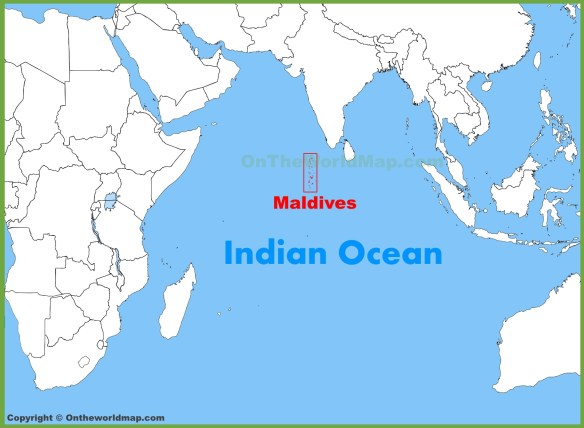
The Maldives – that beautiful Indian Ocean country comprising more than 1,000 coral islands – is known the world over as a tranquil and luxurious travel destination. But the country is now being roiled by a political crisis so severe that international advisories are cautioning against travel there.
The rule of law in the Maldives has been steadily deteriorating ever since President Abdulla Yameen came to power in 2013. The situation escalated sharply earlier this month, when Yameen refused to comply with the Supreme Court’s unanimous order quashing the convictions, which he had engineered, of nine opposition figures – including the exiled former president, Mohamed Nasheed – on terrorism charges. Instead of freeing those whose sentences were nullified, Yameen declared a state of emergency and jailed two of the Supreme Court’s five judges, including the chief justice.
To be sure, authoritarianism is not new to the Maldives. Indeed, Nasheed is the only democratically elected, non-autocratic president the country has had since it gained independence from Britain in 1965. His tenure lasted just over three years, until, in 2012, he was forced at gunpoint to resign.
But the Maldives’ sordid politics is having an increasingly far-reaching impact, not least because it is closely linked to radical Islam. On the day Nasheed was overthrown, Islamists ransacked the Maldives’ main museum, smashing priceless Buddhist and Hindu statues and erasing all evidence of the country’s pre-Islamic roots. On a per capita basis, the Maldives has sent the highest number of foreign fighters to support terrorist groups in Syria and Iraq.
Moreover, the Maldives sits astride critical shipping lanes in the Indian Ocean, making it vital to security in the region. As a result, the country’s deteriorating political conditions are increasingly capturing the international community’s attention. Democratic powers, from the United States to India, are calling upon the United Nations to intervene in the crisis, while China, seeking to advance its own interests in the Indian Ocean, is defending the graft-tainted Yameen.
The increasingly close relationship between China and the Maldives represents a significant shift from the past, when India was the country’s primary regional partner. Maldivians are mainly of Indian and Sri Lankan origin, and have strong cultural and economic ties to those countries. Their country has traditionally been viewed as part of India’s sphere of influence.
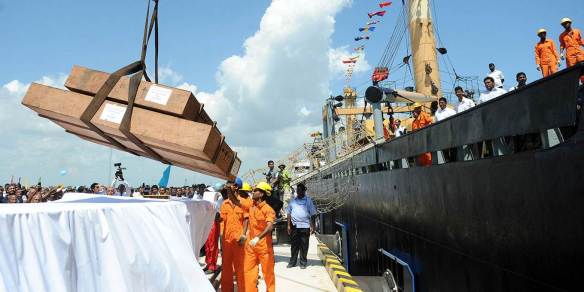
But, in recent years, China has been eroding India’s influence in the Maldives, as part of its effort to build its “string of pearls”: a chain of military installations and economic projects aimed at projecting Chinese power in the Indian Ocean. Just as China recently secured the Sri Lankan port of Hambantota on a 99-year lease, it has, according to Nasheed, quietly acquired 17 islands in the heavily indebted Maldives for investment purposes.
But, betraying its strategic objectives, China has also sent warships to visit the Maldives. If China, which has stepped up military pressure on India along their Himalayan frontier, turned one of the Maldivian islands into a naval base, it would effectively open a maritime front against India – a milestone in China’s strategic encirclement of its neighbor.
The Maldivian crisis thus is a defining moment for India. Will India intervene militarily, as Nasheed and other Maldivian opposition leaders have requested, or will it allow Yameen to continue to enable China to pursue its strategic objectives in the region?
There is some precedent for an Indian military intervention in the Maldives. In 1988, India snuffed out a coup attempt against the autocratic Maumoon Abdul Gayoom engineered by a Maldivian businessman with the aid of armed mercenaries, especially Sri Lankan Tamil separatists. Thanks to India’s swift military action, Gayoom would hold onto power for another two decades.
Yet when the country’s first and only democratically elected president beseeched India in 2012 to rescue him from the Islamist forces laying siege to his office, India looked the other way. India’s government felt betrayed by Nasheed’s own burgeoning relationship with China. Not only had Nasheed awarded China its first infrastructure contracts; just three months before his ouster, he had inaugurated the new Chinese embassy in the capital, Malé, on the same day that India’s then-prime minister, Manmohan Singh, arrived for a regional summit.
Today, an Indian intervention could be dicey, not least because no legitimate authority is inviting India to send in forces. Indian paratroopers could gain effective control of Malé within a few hours. But what would the endgame be? Amid rising Islamist influence and shifting political allegiances among the handful of powerful families that dominate the Maldives’ economy and politics, finding reliable allies committed to – much less capable of – protecting democratic freedoms would prove a daunting challenge.
Moreover, even if Yameen were ousted and the country held a democratic election, it is unlikely that China’s influence could be contained. As the experiences of Bangladesh, Myanmar, Nepal, and Sri Lanka illustrate, China has outmaneuvered India diplomatically, even when dealing with democratically elected governments. Indeed, it did so in the Maldives itself, with Nasheed. Because the country’s debt will continue to rise, regardless of its leadership, China will retain its favorite source of leverage.
India, with its proximity and historical ties to the Maldives, may seem to hold a strong hand. But it has a lot to lose if it aggravates an already volatile political situation in its maritime backyard by intervening militarily.
India’s best option is to hold out a credible threat of military action, while imposing, together with other democratic powers, economic sanctions that undercut support for Yameen among the Maldivian elite, many of whom own the luxury resorts that now have far too many empty rooms. With them on side, perhaps the international community would be able to ensure that the presidential election scheduled for later this year is fair and inclusive – and supervised by the UN. That is the only way to end the crisis, and restore peace to an Indian Ocean paradise.
 Brahma Chellaney, Professor of Strategic Studies at the New Delhi-based Center for Policy Research and Fellow at the Robert Bosch Academy in Berlin, is the author of nine books, including Asian Juggernaut, Water: Asia’s New Battleground, and Water, Peace, and War: Confronting the Global Water Crisis.
© Project Syndicate, 2018.
 US President Donald Trump’s recent decision to freeze some $2 billion in security assistance to Pakistan as punishment for the country’s refusal to crack down on transnational terrorist groups is a step in the right direction. But more steps are needed.


 Stagecraft and Statecraft
Moreover, as Sri Lanka’s experience starkly illustrates, Chinese financing can shackle its “partner” countries. Rather than offering grants or concessionary loans, China provides huge project-related loans at market-based rates, without transparency, much less environmental- or social-impact assessments. As US Secretary of State Rex Tillerson put it recently, with the BRI, China is aiming to define “its own rules and norms.”
To strengthen its position further, China has encouraged its companies to bid for outright purchase of strategic ports, where possible. The Mediterranean port of Piraeus, which a Chinese firm acquired for $436 million from cash-strapped Greece last year, will serve as the BRI’s “dragon head” in Europe.
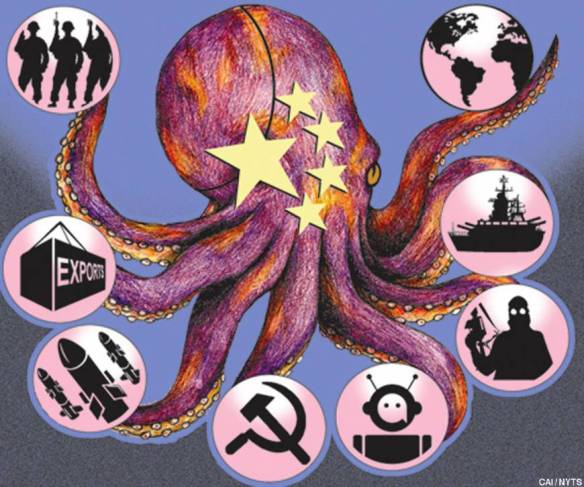
By wielding its financial clout in this manner, China seeks to kill two birds with one stone. First, it wants to address overcapacity at home by boosting exports. And, second, it hopes to advance its strategic interests, including expanding its diplomatic influence, securing natural resources, promoting the international use of its currency, and gaining a relative advantage over other powers.
China’s predatory approach – and its gloating over securing Hambantota – is ironic, to say the least. In its relationships with smaller countries like Sri Lanka, China is replicating the practices used against it in the European-colonial period, which began with the 1839-1860 Opium Wars and ended with the 1949 communist takeover – a period that China bitterly refers to as its “century of humiliation.”
China portrayed the 1997 restoration of its sovereignty over Hong Kong, following more than a century of British administration, as righting a historic injustice. Yet, as Hambantota shows, China is now establishing its own Hong Kong-style neocolonial arrangements. Apparently Xi’s promise of the “great rejuvenation of the Chinese nation” is inextricable from the erosion of smaller states’ sovereignty.4
Just as European imperial powers employed gunboat diplomacy to open new markets and colonial outposts, China uses sovereign debt to bend other states to its will, without having to fire a single shot. Like the opium the British exported to China, the easy loans China offers are addictive. And, because China chooses its projects according to their long-term strategic value, they may yield short-term returns that are insufficient for countries to repay their debts. This gives China added leverage, which it can use, say, to force borrowers to swap debt for equity, thereby expanding China’s global footprint by trapping a growing number of countries in debt servitude.
Even the terms of the 99-year Hambantota port lease echo those used to force China to lease its own ports to Western colonial powers. Britain leased the New Territories from China for 99 years in 1898, causing Hong Kong’s landmass to expand by 90%. Yet the 99-year term was fixed merely to help China’s ethnic-Manchu Qing Dynasty save face; the reality was that all acquisitions were believed to be permanent.
Now, China is applying the imperial 99-year lease concept in distant lands. China’s lease agreement over Hambantota, concluded this summer, included a promise that China would shave $1.1 billion off Sri Lanka’s debt. In 2015, a Chinese firm took out a 99-year lease on Australia’s deep-water port of Darwin – home to more than 1,000 US Marines – for $388 million.
Similarly, after lending billions of dollars to heavily indebted Djibouti, China established its first overseas military base this year in that tiny but strategic state, just a few miles from a US naval base – the only permanent American military facility in Africa. Trapped in a debt crisis, Djibouti had no choice but to lease land to China for $20 million per year. China has also used its leverage over Turkmenistan to secure natural gas by pipeline largely on Chinese terms.
Several other countries, from Argentina to Namibia to Laos, have been ensnared in a Chinese debt trap, forcing them to confront agonizing choices in order to stave off default. Kenya’s crushing debt to China now threatens to turn its busy port of Mombasa – the gateway to East Africa – into another Hambantota.
These experiences should serve as a warning that the BRI is essentially an imperial project that aims to bring to fruition the mythical Middle Kingdom. States caught in debt bondage to China risk losing both their most valuable natural assets and their very sovereignty. The new imperial giant’s velvet glove cloaks an iron fist – one with the strength to squeeze the vitality out of smaller countries.