China badly misread Japan. It sought to intimidate Tokyo into silence on Taiwan. Instead, it has achieved the opposite by hardening Japanese resolve.
By trying to bludgeon a major power like Japan into accepting its “red lines” — above all on Taiwan — China laid bare the raw coercive logic of compellence now driving its foreign policy toward Asian states. From the Taiwan Strait and the East and South China Seas to the Himalayan frontier, Beijing has increasingly relied on economic warfare, diplomatic intimidation and military pressure to bend neighbors to its will.
Confident in its growing power, China appeared to believe that even Japan — the world’s third-largest economy and a US treaty ally — could be cowed into compliance.
In unleashing an unusually ferocious campaign of diplomatic, economic and military pressure against Tokyo, Beijing pointedly targeted Japanese Prime Minister Sanae Takaichi. Chinese President Xi Jinping (習近平) telephoned US President Donald Trump to vent his fury at Takaichi. And, by seeking to inflict pain on Japan through undeclared economic warfare, Xi’s regime sought to marshal Japanese business lobbies against the country’s first female prime minister, who heads a narrow conservative coalition.
The catalyst was Takaichi’s warning in parliament that a Chinese attack on Taiwan could constitute a “survival-threatening situation” for Japan, triggering Tokyo’s right to collective self-defense under its 2015 security legislation. That language was not rhetorical; it carried real legal and strategic consequences. That legislation allows Tokyo to exercise the right of collective self-defense if an ally is attacked in circumstances that endanger Japan’s own survival.
In clarifying what geography has long dictated, Takaichi made explicit what Beijing hoped to keep ambiguous: Japan cannot remain a bystander in a Taiwan contingency.
Taiwan, once ruled by Imperial Japan, is not a distant flashpoint for Tokyo. It lies along the same island chain as Japan — a geographic extension of the Japanese archipelago that underpins Japan’s own security.
This reality has been highlighted by China’s live-fire drills around Taiwan that effectively rehearsed an air and sea blockade. During the drills, Chinese missiles sent over Taiwan landed inside Japan’s exclusive economic zone, a stark reminder that a Taiwan crisis would not remain confined to the Taiwan Strait.
It is against this background that China’s fierce, full-spectrum campaign against Japan must be seen. Chinese officials issued furious denunciations. Military pressure intensified around Japan’s southwestern islands. Economic coercion followed, including restrictions on Japanese exports and Chinese tourism to Japan, as well as threats against supply chains. The message was unmistakable: cross China’s Taiwan red lines and pay a hefty price.
It is now apparent that China made a fundamental miscalculation. Rather than intimidating Takaichi into retracting her statement, China’s bullying is pushing Japan toward greater strategic clarity — and closer operational alignment with the US, as well as more explicit contingency planning involving Taiwan.
The Japanese statement on Taiwan matters because it raises the potential costs of aggression for Beijing.
In recent years, China has used ambiguity — about US resolve, allied involvement and escalation thresholds — to preserve freedom of action in the Taiwan Strait and step up coercive pressure on Taiwan. Now, Tokyo’s linkage between Japan’s survival and Taiwan’s security narrows that ambiguity.
Any Chinese use of force would clearly risk drawing in not just Washington but also a militarily advanced Japan positioned astride China’s maritime access routes.
Japan hosts more American troops than any other US ally in the world. American forces based in Okinawa would be indispensable in any Taiwan contingency, making Japan an unavoidable participant regardless of political preferences.
In this light, China’s coercive pressure only reinforces the logic of deeper contingency planning and interoperability among the US, Japan and Taiwan. Beijing’s campaign is accelerating the very security integration it seeks to prevent.
The irony is stark. China claims its pressure is meant to deter “external interference” in what it claims is an “internal matter.” In practice, Beijing is internationalizing the Taiwan issue further — and transforming Japan from a cautious stakeholder into a more determined deterrent actor in the Taiwan Strait.
Far from reinforcing Beijing’s red lines, the Chinese campaign against Tokyo has narrowed strategic ambiguity, deepened regional alignment and raised the potential costs of any use of force against Taiwan.
Beijing has also exposed a broader pattern in its Asian strategy. By targeting Japan — a historic great power — China is signaling how it intends to deal with others in Asia: through intimidation, economic punishment and calibrated nationalist wrath. This is likely to stiffen resistance among those with the capacity to push back.
Indeed, China’s coercion is already accelerating Japan’s military modernization. Tokyo has pledged to double defense spending, acquire long-range strike capabilities, and harden supply chains against economic blackmail. Collectively, these steps enhance deterrence around Taiwan, even if Taiwan is not named explicitly.
At the same time, tensions are rising in adjacent theaters. Increased Chinese military activity near the Japanese-administered Senkaku Islands — known to Taiwan and China as the Diaoyutais (釣魚台) — heightens the risk of accidents and miscalculation. By widening the geographic scope of confrontation, China is multiplying escalation pathways. This is a dangerous strategy for a power that claims to value stability.
For Taiwan, the implications, paradoxically, appear reassuring. China’s effort to isolate the self-governing democracy diplomatically is instead clarifying the stakes for regional actors. Japan’s shift from studied ambiguity toward conditional clarity strengthens deterrence by signaling that a Taiwan conflict would not remain confined. That signal, more than any single weapons system, raises the threshold for war.
Simply put, China’s coercion of Japan is strategically counterproductive for Beijing and, ironically, stabilizing for Taiwan.
To be sure, all this does not guarantee stability. A more crowded and militarized environment carries its own risks. But if China’s objective is to keep Japan neutral and Taiwan isolated, its bullying campaign is a strategic own goal.
By trying to tame Japan, Beijing is compelling Tokyo to prepare more seriously. And far from weakening the emerging deterrent architecture around Taiwan, China is helping to build it.
Brahma Chellaney, professor of strategic studies at the independent Center for Policy Research in New Delhi, is the author of nine books, including the award-winning Water: Asia’s New Battleground (Georgetown University Press).
The Quad — the U.S., Japan, India and Australia — was conceived as a strategic coalition to uphold a “free and open Indo-Pacific,” a concept articulated by the late Japanese Prime Minister Shinzo Abe in 2016 and later elevated to a centerpiece of U.S. strategy. At stake was nothing less than preserving a rules-based order in the world’s most consequential region, which will shape the next global order.
Yet today, at the very moment when China’s coercive power is expanding, the Quad is sliding toward strategic irrelevance — undermined less by external pressure than by Washington’s own drift.
The irony is striking. It was President Trump who, in his first term, revived the Quad after a decade of dormancy and embedded it firmly in U.S. strategy. He replaced the Obama administration’s largely symbolic “pivot to Asia” with a hard-edged “free and open Indo-Pacific” framework, while decisively overturning four decades of U.S. policy toward Beijing by reclassifying China from partner to strategic rival. The Quad emerged as a central pillar of that shift.
Successive administrations have acknowledged the reality that the Indo-Pacific is now the world’s economic and geopolitical center of gravity, and China — not Russia — poses the defining long-term challenge to U.S. power.
Barack Obama announced a pivot to Asia in 2011 but failed to resource it adequately. Trump’s first term supplied strategic clarity. Joe Biden preserved the Trump-era framework, keeping the Quad intact and openly identifying China as America’s principal challenger. Yet Biden’s deep entanglement in the Ukraine and Middle East conflicts consumed attention, resources and political capital, leaving little room for a genuine Indo-Pacific pivot.
Trump returned to office pledging to resolve these conflicts and free up American bandwidth for the Indo-Pacific. But now the gap between rhetoric and policy has become glaring. His attempt to end the Ukraine war has stalled amid resistance from both Kyiv and Moscow, delaying any meaningful reallocation of U.S. military resources.
More damaging still, Trump has subordinated long-term strategy to short-term economic extraction, wielding tariffs and trade coercion as blunt instruments — even against allies critical to Indo-Pacific power equilibrium.
This approach is actively hollowing out the Quad. India today faces higher U.S. tariffs than China — an extraordinary outcome for a country Washington routinely describes as a key counterweight to the communist behemoth.
Japan, meanwhile, has been pressured into committing $550 billion in U.S. investments under terms that allow Washington to dictate how the funds are deployed and to claim the lion’s share of profits from the Japanese-financed projects. As Commerce Secretary Howard Lutnick conceded, Tokyo may have to strain its own balance sheet simply to comply.
Treating allies as revenue sources may generate short-term gains, but it corrodes trust and undermines collective strategy.
That self-inflicted damage is especially puzzling because stronger ties with India and Japan are not optional but indispensable. Strategically located on China’s opposite flanks, Japan and India represent Beijing’s most consequential regional counterweights.
Trump understood this in his first term, according India pride of place in U.S. Indo-Pacific strategy as the only Asian power with the demographic weight, geographic position, military capability and geopolitical heft to help balance China over the long run. That imperative has only grown with the consolidation of the China-Russia partnership.
Yet Trump’s second-term policies have instead alienated New Delhi. India was slated to host the Quad leaders’ summit in 2025. That prospect collapsed under the weight of Washington’s punitive trade measures. The result is a Quad that is adrift and increasingly marginal to U.S. strategy.
The warning signs are unmistakable. The Quad merits just a single, passing mention in the newly released U.S. National Security Strategy — buried in a brief reference to India. For a grouping once advertised as a cornerstone of the Indo-Pacific strategy, this near-expurgation is telling.
The Quad was never meant to be a talk shop or a disposable bargaining chip in U.S.-China relations. Its core purpose has always been to serve as a strategic bulwark against Chinese expansionism and to uphold a stable Indo-Pacific balance of power.
Allowing it to wither through neglect and allies’ alienation risks vindicating Beijing’s long-standing contempt. When the Quad was first established, China’s foreign minister dismissed it as a fleeting, “headline-grabbing idea” that would dissipate like sea foam. Washington’s current trajectory threatens to prove him right.
It is not too late to avert that outcome. But doing so will require Washington to align economic policy with geopolitical priorities, treat allies as partners rather than profit centers, and restore the Quad to the center of its Indo-Pacific vision. Without such a course correction, the Quad’s existential crisis will deepen, eroding America’s own capacity to sustain a favorable balance of power in the defining region of the 21st century.
Since its creation in 1947, Pakistan has rarely escaped the grip of its powerful army. Even when not ruling outright, generals have wielded authority from the shadows, making and breaking governments, shaping foreign and security policy, and ensuring that no civilian leader ever becomes truly independent.
Now, for the first time, the military has reasserted direct control in a novel way. Instead of staging a coup d’état, it has engineered something more durable and more insidious: a constitutional coup.
Army chief Asim Munir — extolled by President Trump as “my favorite field marshal,” “a great, great guy” and “an inspiring personality” — has effectively become Pakistan’s ruler behind a civilian façade.
This has been made possible by Pakistan’s 27th constitutional amendment, which formally enshrines the military’s supremacy over all state institutions. By codifying the army’s preeminence, the recent amendment legitimizes its status as the ultimate arbiter of foreign policy, national security and even economic strategy. Civilian leaders have been reduced to little more than figureheads, their authority hollowed out by constitutional design.
In effect, Munir has achieved what Pakistan’s past military dictators never quite managed: absolute power with legal cover.
He now exercises power without responsibility, enjoying the insulation of a civilian front government while maintaining control over all the levers of state power. Meanwhile, the country’s most popular politician — Imran Khan, who was removed as prime minister in 2022 after falling out with the generals — languishes in prison, even though his supporters won the most parliamentary seats in last year’s elections.
The U.S. has watched all this with striking silence. While Trump has chanted “I love Pakistan,” Pakistan’s already frail democracy is being strangled. Rather than push back against an action widely condemned by international human rights and legal bodies, Washington has effectively acquiesced.
The International Commission of Jurists has called the amendment a “full-frontal assault on the rule of law,” while UN High Commissioner for Human Rights Volker Türk warned that it gravely undermines judicial independence and raises serious concerns about the military’s accountability. Yet Trump is openly courting Pakistan’s generals.
This marks a remarkable reversal. During his first term, Trump cut off security assistance to Pakistan for failing to sever ties with terrorist groups. He charged that the country gave the U.S. “nothing but lies and deceit” in return for billions in aid, citing how Pakistan secretly shelteredOsama bin Laden for nearly a decade until U.S. Navy SEALs killed him in 2011.
What explains Trump’s pivot from punitive isolation to warm embrace?
Pakistan invested heavily this year in a targeted Washington lobbying campaign, hiring two of Trump’s closest confidants — George Sorial of the Trump Organization and former Oval Office director Keith Schiller. Pakistan also employed effusive flattery, claims of rare-earth reserves and a lucrative cryptocurrency partnership with the Trump family-controlled firm World Liberty Financial.
In June, Trump hosted Munir for a private White House luncheon — the first time a U.S. president had welcomed a Pakistani army chief who was not the country’s official leader. The symbolism was unmistakable: Washington was prepared to work directly with Pakistan’s real power center.
Emboldened, Munir moved to secure his dominance. Using a pliable government that he helped install, he maneuvered himself into the rank of field marshal — the first such promotion in almost six decades. Then came the constitutional amendment that elevated him to Pakistan’s first-ever “chief of defense forces,” giving him command over the nuclear arsenal, army, air force and navy. The amendment also hands him lifelong immunity from prosecution and an additional five years in office.
Perhaps most extraordinarily, it specifies that any general elevated to field marshal is a “national hero” who “shall retain his rank, privileges, and remain in uniform for life.” This is constitutionalized militarism — the formalization of a praetorian state.
Pakistan, a nation of 250 million, has often been compared to a one-party system akin to its longtime patron, China. But the analogy is imperfect. China’s People’s Liberation Army is an arm of the ruling Communist Party; Pakistan’s army is itself the ruling institution. It controls the state, not the other way around.
With the amendment, Pakistan has taken a decisive step: The military no longer needs to manipulate politics from the shadows. It can now dictate the direction of the government, economy and society openly, with constitutional legitimacy.
Former Prime Minister Nawaz Sharif warned in 2020 that the army was evolving from a “state within a state” into a “state above the state.” That prophecy has now come true. And as Sharif observed, this dominance is the “root cause” of Pakistan’s dysfunction — sustaining a violence-prone state that nurtures terrorist groups while suppressing democratic forces.
What has changed is not Pakistan’s military but Washington’s willingness to look away. By offering tacit approval, the U.S. risks being complicit in cementing a constitutional dictatorship in an unstable, nuclear-armed nation. The cost of that complicity will not be borne by Pakistan alone.
Russian President Vladimir Putin’s visit to New Delhi should be a wake-up call for the United States: attempting to coerce India into actions that compromise its national interest is a recipe for estrangement. Given that India remains crucial to balance China’s aggressive rise, such an outcome would carry high costs for the US.
At a time when US policy toward India has become distinctly punitive, Indian Prime Minister Narendra Modi’s warm reception of Russian President Vladimir Putin in New Delhi last week could not have been more pointed. Modi’s message was clear: India is a sovereign power that will not be dragooned into choosing sides in a widening rift between “the West and the rest.” Instead, it will continue to chart its own course in international affairs.
No major power is more vital to America’s long-term strategic interests than India. It is, after all, the only country with the population size, geographical position, and military might (including nuclear weapons) necessary to challenge China’s efforts to dominate Asia and ultimately supplant the United States as a global hegemon.
Ever since George W. Bush’s presidency, senior US officials have recognized the partnership with India as crucial to maintaining a stable balance of power in the Indo-Pacific. This has never been mere rhetoric: over the last decade, US-India security ties have deepened rapidly, particularly in terms of military interoperability, intelligence cooperation, and technology exchanges.
Part of this progress occurred during US President Donald Trump’s first administration. As he ramped up pressure on China and cut security aid to Pakistan, Trump expanded cooperation with India, which stood at the center of his administration’s Indo-Pacific strategy. The result is evident today: India now conducts more military exercises with the US than with any other country, and the US has emerged as India’s largest trading partner.
But even as this process unfolded, the US gave India plenty of reason to be wary. Its chaotic withdrawal from Afghanistan – which took place under President Joe Biden, but resulted from a deal cut earlier by Trump – raised serious doubts about the judgment and reliability of America’s leaders, as it effectively handed that country back to Taliban terrorists.
Concerns heightened in 2022, when the Biden administration helped Pakistan secure an International Monetary Fund bailout and then approved a $450 million deal to modernize the country’s US-supplied F-16 fleet, reviving in India bitter memories of America’s arming of Pakistan during the Cold War. Trump has intensified this embrace of Pakistan, not least in the interest of personal enrichment – highlighted by a lucrative cryptocurrency deal signed in April.
Although the US often disregarded India’s own interests, it nonetheless expected total loyalty when it came to enforcing sanctions on Russia over its full-scale invasion of Ukraine. But India – like other US allies such as Israel and Turkey – refused to comply, instead increasing purchases of discounted Russian oil. India saw no reason to sacrifice its national interests for a distant conflict, especially when the chief beneficiary of Western pressure on Russia was China.
India has seen this dynamic unfold before. When Trump reimposed harsh sanctions on Iran in 2019, India was deprived of one of its cheapest and most reliable energy sources, while China seized the opportunity to import Iranian crude at steep discounts and expand its security footprint there.
A similar pattern emerged after Russia’s invasion of Ukraine. By isolating Russia from Western markets, sanctions effectively turned China into Russia’s economic lifeline, giving it leverage to strengthen its overland energy-supply routes from Russia. China now knows that, even if it moves against Taiwan, it will not lose access to Russian energy. While this trend undoubtedly undermines India’s strategic interests, at least this time India also took advantage of discounts on Russian oil.
The Trump administration, however, was not having it. It imposed an extra 25% tariff on US imports from India – raising total duties to 50% – and threatened secondary sanctions, claiming that India was undermining US efforts to counter “Russia’s harmful activities.” Yet Trump spared other major importers of Russian energy and even granted a sanctions exemption to Hungary, whose autocratic prime minister, Viktor Orbán, is a close Trump ally. US tariffs on Indian goods now exceed those applied to Chinese exports. This is nothing short of a US economic war on India.
The US calls India indispensable, but treats its interests as peripheral. It wants India to serve as a pillar of America’s Indo-Pacific strategy, but adopts policies that directly undercut India’s economic strength, regional security, and strategic autonomy. Trump’s foreign policy may be particularly erratic but the underlying pattern has spanned multiple administrations. The result is an increasingly embittered and mistrustful India that sees no choice but to hedge its bets by accelerating self-reliance and strengthening ties with alternative partners, beginning with Russia.
Putin’s visit to New Delhi should serve as a wake-up call for the US: coercion and inconsistency are a sure path to estrangement. A flexible, interest-driven “soft alliance” with India remains one of America’s few credible means of balancing China’s aggressive rise. In this sense, the US needs India more than India needs the US. Instead of trying to force India to “fall in line,” the US must rebuild the relationship by treating India as an equal partner. This means engaging with India as it is, not as American policymakers want it to be.
Brahma Chellaney, Professor of Strategic Studies at the New Delhi-based Center for Policy Research and Fellow at the Robert Bosch Academy in Berlin, is the author of nine books, including Water: Asia’s New Battleground (Georgetown University Press, 2011), for which he won the 2012 Asia Society Bernard Schwartz Book Award.
U.S. President Donald Trump’s administration has mounted a renewed push to end the war in Ukraine — this time with greater preparation, clearer resolve and a heightened sense of urgency. By exploiting the winter lull in major ground offensives, it aims to force negotiated compromises and lock in a deal before the conflict enters its fifth year in February.
Part of the push reflects Trump’s vanity project as a self-styled global peacemaker. Addressing the United Nations in September, he boasted, “Everyone says that I should get a Nobel Peace Prize.”
But the deeper driver is strategic: a calculation that America’s long-term interests are better served by closing out a proxy war with Russia that no longer sits at the center of U.S. priorities. Trump’s Alaska summit with Russian President Vladimir Putin was the first sign of an emerging strategic recalibration in U.S. policy.
With U.S. policymakers increasingly focused on countering an ascendant China, the administration sees Russia as a declining economic power whose war in Ukraine has become a costly distraction for Washington, siphoning American attention and resources away from the far more consequential contest with Beijing. Ending the war on terms that stabilize Europe and strengthen America’s economic position is therefore a central objective.
This objective has led to dual-track pressure — compelling Kyiv to negotiate while forcing Moscow to bankroll both U.S.-led reconstruction of Ukraine and broader joint ventures. The result is a peace framework designed not only to stop a grinding war, but to make the postwar landscape financially rewarding for Washington.
Presently, America’s preoccupation with Ukraine hands China a strategic dividend: it dilutes U.S. deterrence in Asia, complicates alliance coordination and stretches a finite U.S. military-industrial capacity. Washington is already struggling to refill its own weapons stockpiles even as it arms both Ukraine and Israel.
Meanwhile, the brutal arithmetic of the battlefield is becoming impossible to gloss over. Ukraine’s manpower crunch in the military is deepening, its air defenses are fraying, it is still losing ground, and Western production lines cannot match Russia’s surging output. As a senior U.S. official has warned, Russia is now producing missiles faster than it can fire them — creating a rapidly expanding arsenal of long-range weapons that could, at some point, deliver a knockout blow to Ukraine.
For the U.S., whose defense resources are already overstretched, continuing to underwrite Ukraine’s war effort risks compromising its ability to counter China — a far larger, more capable and more ideologically driven challenger than Russia. A protracted war in Ukraine will erode America’s capacity to surge forces and sustain a high-intensity fight in the western Pacific, or even credibly signal to Beijing that it is fully prepared to defend Taiwan.
The implication is clear: a settlement needs to be reached soon, before the war’s trajectory tilts decisively against an already-bleeding Ukraine.
Critics of Trump’s peace push should heed the warning from Ukrainian President Volodymyr Zelensky’s former spokesperson, Iuliia Mendel: “Every subsequent deal for Ukraine will only be worse — because we are losing.” It bears recalling that Ukraine and Russia nearly reached a settlement in Istanbul in April 2022 — a deal far more favorable to Kyiv than anything remotely attainable today. Yet, as U.S. Vice President JD Vance has noted, “There is a fantasy that if we just give more money, more weapons, or more sanctions, victory is at hand.”
America has seen this movie before. It spent 20 years waging war against the Taliban — and lost — because it refused to make difficult compromises when it still had leverage. The eventual withdrawal from Afghanistan was not only belated but humiliating.
Those now deriding efforts to end the Ukraine war should answer a simple question: What realistic alternative do they propose that Moscow could conceivably accept? If they cannot articulate one, then their objections amount to little more than wishful thinking dressed up as resolve.
The Trump administration’s peace plan is a hard-nosed attempt to realign Western strategy with long-term geopolitical realities — above all, the need to shift focus to the Indo-Pacific region, the world’s strategic center of gravity. The proposed course may be unsettling, but it reflects a basic truth: The era of limitless American bandwidth is over. And Washington’s underlying calculation is unmistakable — China, not Russia, is the defining challenge of the 21st century.
Whether the plan succeeds, however, depends on factors far beyond Kyiv’s control. Its viability hinges on Moscow’s willingness to accept a settlement at a moment when it holds the battlefield advantage. Putin may well decide that time favors Russia: that pressing the military offensive and intensifying the pressure on Ukraine could extract even larger concessions down the road.
Whatever its eventual fate, the peace plan sends a clear signal to allies and adversaries alike: American strategy is entering a new phase. For Europe, this may feel like an unwelcome jolt of reality. For China, it is a warning that Washington intends to reclaim the initiative in the Indo-Pacific. And for Ukraine, it is a sobering reminder that even the most committed patron ultimately reshapes its commitments to serve its own core interests.
Brahma Chellaney, a professor of strategic studies at the independent New Delhi-based Centre for Policy Research and fellow at the Robert Bosch Academy in Berlin, is the author of nine books, including “Water: Asia’s New Battleground,” which won the Bernard Schwartz Book Award.
A Yars intercontinental ballistic being test-fired in 2022 as part of Russia’s nuclear drills. (AP)
One of the least-discussed but most consequential outcomes of the resurgence of major-power rivalries is the return of nuclear weapons to the center of international politics.
The global salience of nuclear weapons — once expected to diminish after the Cold War — is instead rising sharply. This revival is testing U.S. power at a moment when Washington faces a more complex and fragmented strategic landscape than at any time since the dawn of the nuclear age.
The problem is not just that nuclear arsenals are expanding. It is also that the geopolitical environment that once helped manage nuclear risks has eroded.
Advances in non-nuclear strategic technologies — including precision-guided conventional strike systems, cyberwarfare, anti-satellite weapons and layered missile defenses — are driving nuclear-armed states to harden, diversify and enlarge their arsenals to ensure survivable second-strike capabilities. At the same time, regional flashpoints — from Ukraine to the Taiwan Strait to the Korean Peninsula — heighten the risk of escalation through miscalculation or coercion.
No shift is more momentous than China’s sweeping peacetime military expansion — the most ambitious in modern history. Its naval output alone now surpasses the combined production of U.S. and Soviet shipyards at the height of the Cold War. Even more troubling is its frenzied nuclear buildup: China has more than doubled its nuclear-weapons stockpile in just five years and is on track to field as many deployed warheads as the U.S. by the mid-2030s.
Determined to supplant the U.S. as the world’s leading power, China is not only expanding but diversifying its nuclear arsenal. The aim is to give Beijing an expanded set of coercive tools and create new escalation pathways. In effect, China has already diluted its own longstanding “no first use” nuclear pledge. Few now view that declaratory policy as credible.
Although China’s nuclear surge is framed domestically as defensive, its purpose extends beyond deterrence. Beijing’s growing arsenal enables it to pursue coercive territorial and strategic objectives — from the South and East China Seas to the Himalayas. The implications for U.S. extended deterrence, especially in the Indo-Pacific, are profound.
Russia, meanwhile, has turned to nuclear weapons as the principal currency of its great-power status amid economic stagnation.
Its modernization program includes novel, destabilizing systems such as the nuclear-powered Burevestnik cruise missile and Poseidon underwater drone. These exotic weapons are explicitly designed to circumvent U.S. missile defenses. The Ukraine war has visibly increased the importance — and the coercive utility — of nuclear weapons in Russian strategy.
The combined nuclear expansions of China and Russia pose a challenge the U.S. has never confronted before: deterring two peer or near-peer nuclear adversaries simultaneously. During the Cold War, Washington could focus its strategic posture on a single rival, the Soviet Union. Today, the geometry is tripolar, and far more complex.
To make matters worse, the arms-control framework that provided essential guardrails for decades has nearly collapsed. Russia and the U.S. have withdrawn from key agreements, with Moscow recently suspending its participation in the New START Treaty and also withdrawing its ratification of the Comprehensive Test Ban Treaty. China, for its part, refuses to enter any arms-control negotiation that might cap its rapidly rising arsenal.
The result is a world sliding toward an unconstrained arms race, with fewer safety valves and greater risks of miscalculation.
This shifting balance reverberates through America’s alliance system. Allies who depend on the U.S. nuclear umbrella — particularly Japan, South Korea, Australia and NATO’s eastern members — are increasingly anxious about whether Washington would risk a nuclear exchange with China or Russia to defend them. Their concern is not theoretical: The simultaneous growth of Chinese and Russian nuclear prowess creates the very scenario U.S. strategists long feared — deterrence stress in multiple theaters.
As credibility questions grow, so does the risk of allied nuclear proliferation. If countries with advanced nuclear fuel cycles come to doubt long-term U.S. protection, they may seek independent deterrents. The Nuclear Non-Proliferation Treaty is already strained by the modernization programs of nuclear-weapon states. Moreover, the U.S. bombing of Iranian nuclear sites earlier this year — while successful tactically — may deepen incentives for clandestine nuclear development elsewhere.
The U.S. now faces a stark reality: It must modernize its nuclear forces, reassure anxious allies, deter two nuclear peers and revive some form of strategic dialogue — all while preventing a ruinous arms race.
America’s challenge is to maintain credible deterrence across two theaters without overextending U.S. conventional forces. That pressure may tempt Washington to rely more heavily on nuclear weapons to compensate for shrinking force-projection margins vis-à-vis China in the Indo-Pacific and Russia in Europe. Such a shift would mirror the very trends that have made nuclear weapons so prominent in Russian and Chinese strategies.
In this volatile environment, risk-reduction mechanisms are essential. The world needs updated norms for emerging technologies — particularly artificial intelligence, hypersonic delivery systems and dual-use cyber capabilities — that could compress decision time or introduce new uncertainties in nuclear command and control.
Ensuring that nuclear-use authority remains fully under human control is no longer simply a normative concern; it is becoming a strategic imperative in the age of AI.
President Donald Trump’s Ukraine peace plan has triggered sharp reactions in Kyiv and across Europe – and the backlash is revealing.
At its core, the plan represents a direct effort to push Ukrainian President Volodymyr Zelensky to the negotiating table and toward concessions he has consistently resisted. But the proposal now taking shape also places significant demands on Moscow – concessions designed to make any peace deal financially lucrative for a commercially minded Trump administration. Beyond enshrining in law a Russian policy of non-aggression toward Europe and Ukraine, the version of the plan put forward by Mr. Trump last week proposed that Russia would allow US$100-billion of its Western-frozen central bank reserves to be funnelled into a U.S.-led reconstruction of Ukraine. Washington would pocket 50 per cent of the profits from that venture. The remaining frozen Russian assets, totalling over US$200-billion, would be shifted into a separate U.S.-Russia investment vehicle tasked with executing joint projects.
More fundamentally, America’s urgency to end the conflict reflects a strategic recalibration: the proxy war with Russia no longer advances core U.S., Canadian or even European interests.
In fact, the grinding war in Europe distracts the U.S. from a far more consequential challenge: an increasingly assertive China determined to displace America as the world’s pre-eminent power. If Russia’s invasion of Ukraine has strained the international order, a Chinese assault on Taiwan could shatter it altogether. And the longer the West continues to pour resources into Ukraine, the greater the risk becomes that Beijing calculates it has a window to throttle Taiwan via coercion, a blockade or a rapid fait accompli.
An America tied down in Europe clearly serves Chinese President Xi Jinping’s globally expansionist ambitions.
Yet Mr. Trump’s predecessor, Joe Biden, shut the door on diplomacy with Moscow and embraced an open-ended pledge to support Kyiv “for as long as it takes.” At the 2023 G7 summit, the U.S., Canada and other member states doubled down by issuing maximalist conditions – including the total, unconditional withdrawal of Russian forces from all Ukrainian territory. That outcome was implausible then, and is today even further removed from reality.
The U.S.-led “hybrid war” strategy – weaponizing sanctions and global financial systems – has not weakened Russia enough to change the battlefield. Russia has dug in and annexed the territory it holds, and continues to make battlefield gains. Ukraine, even with major Western weapons supplies, lacks the capability to defeat its stronger enemy on the battlefield.
Meanwhile, Russian aerial attacks are inflicting ever-greater destruction on Ukraine. Worse still for Kyiv, replenishing exhausted and depleted front-line forces is becoming increasingly difficult as a growing number of draft-eligible men flee to European Union countries to avoid being sent to the trenches.
The war has also exposed troubling Western military weaknesses. Western munitions stockpiles are being depleted much faster than they can be replenished. America’s weapons-manufacturing capacity remains too limited for the demands of long-term great-power competition.
A protracted war, meanwhile, accelerates the deepening partnership between Russia and China. Since 2022, Beijing has become Moscow’s indispensable financial and industrial lifeline, buying up discounted Russian oil and gas, supplying key electronics and components, and helping the Kremlin circumvent sanctions. A de facto Eurasian axis is emerging, with China as its central pillar.
This is the strategic backdrop against which Mr. Trump’s peace proposal should be understood. The plan seeks to compel Kyiv to negotiate not because Ukraine’s cause is unworthy, but because the war’s continuation is increasingly antithetical to Western interests.Video 2:29
Critics claim that a settlement with Moscow would only embolden China’s expansionism. But Mr. Xi does not need lessons in opportunism from Russia. China’s own cost-free expansion – from the South China Sea to the Himalayas – already shows that it advances when it sees little pushback. What would truly embolden Beijing is an overstretched U.S., hollowed-out munitions stockpiles, and a distracted Indo-Pacific strategy.
For the U.S., the path forward is clear. A negotiated settlement is the only realistic way to end the war. A conflict continuing indefinitely serves neither Ukraine’s long-term security nor NATO’s. Ending it would free up Western bandwidth, rebuild critical stockpiles, and allow Washington to shift attention to the Indo-Pacific, the world’s emerging economic and geopolitical hub that will likely shape the new global order.
Mr. Trump’s peace plan accepts the reality that it is in America’s own interest to help bring this war to an end sooner rather than later. A diplomatic settlement would also serve Canadians well by reducing economic burdens, lowering the risk of a wider NATO conflict, and enabling Ottawa to focus on the Indo-Pacific, where Canada’s long-term interests increasingly lie.
Brahma Chellaney is a geostrategist and the author of nine books, including the award-winning Water: Asia’s New Battleground.
If China can punish Japan — economically powerful, diplomatically influential and protected by a U.S. defense treaty — then no other country should imagine itself beyond Beijing’s reach.
China’s latest confrontation with Japan is more than a bilateral spat. It is a warning shot to all of Asia — and to the U.S., Japan’s treaty ally.
By trying to bludgeon a major democracy into accepting its “red lines,” above all on Taiwan, China is exposing the raw coercive logic now powering its foreign policy. Its willingness to target Japan — a historic great power and today the world’s third-largest economy — telegraphs how Beijing intends to deal with the rest of Asia: through intimidation, economic punishment and calibrated use of nationalist fury.
Prime Minister Sanae Takaichi’s warning that a Chinese assault on Taiwan could constitute a “survival-threatening situation” for Japan — enabling the country to exercise its right to collective self-defense — provoked not a routine diplomatic protest but a ferocious, full-spectrum backlash. Beijing answered with a sweeping coercive campaign that showcases its new playbook — and its growing willingness, as it earlier demonstrated against India, to impose costs even on countries far too large and powerful to be cowed easily.
Beijing’s reprisals against Japan have been broad, theatrical and unmistakably punitive. Officials have issued warnings to Chinese tourists and students to avoid Japan, dispatched naval vessels to the waters of the Japanese-administered Senkaku Islands, suspended diplomatic engagements and threatened further freezes in economic and cultural exchanges.
The now-deleted threat by the Chinese consul general in Osaka to “chop off” Takaichi’s “filthy head” was extraordinary not only for its crudity. It showed how emboldened China’s “wolf warrior” apparatus has become, with state media amplifying the incitement rather than disavowing it.
The escalation is deliberate. Beijing is not merely signaling displeasure; it is trying to shock Japanese society, especially business and political elites, into pressuring Takaichi to back off her Taiwan stance. Intimidation is the strategy by seeking to weaponize Japan’s economic dependence on China and making an example of a country others consider too powerful to be pushed around.
China is waging an economic war on Japan in all but name — slapping de facto bans on seafood imports, freezing group tours, stalling Japanese film releases and even scrapping trilateral summits. Airline cancellations have gutted winter travel bookings. For the Japanese economy, these are not pinpricks but calculated moves to hurt and to coerce.
This is not new behavior. Beijing has repeatedly used trade as a weapon against countries that defy its wishes — from Australia and South Korea to Norway, Lithuania, Mongolia, the Philippines and India. But until now it has typically calibrated such punishment to avoid meaningful blowback to its own business interests. Going after Japan marks a bolder escalation: an effort to show that crossing Beijing carries a price even for a major power, and that no state — however large — is beyond China’s coercive reach.
By inflicting economic pain, China is seeking to marshal political challengers and business lobbies in Japan against Takaichi, who heads a narrow conservative coalition. Beijing’s objective is to try and reshape Japan’s political landscape from the outside. This is a tactic it has used to strong-arm smaller neighbors, but now it is brazenly attempting it against a Group of Seven power.
China has intensified the pressure by also reviving its familiar historical narrative of Japan as an aggressive, unrepentant militarist state. By invoking World War II “victory,” questioning Okinawa’s sovereignty and accusing Japan of “remilitarization,” Beijing is recasting Takaichi’s remarks as dangerous provocations rather than straightforward defensive clarifications. The messaging is aimed at two audiences: to stir renewed nationalism at home by portraying Xi Jinping’s regime as standing firm against Japanese “aggression,” and to make it harder for other nations to align openly with Japan’s concerns over Taiwan.
Weaponizing history in this way is classic wolf-warrior diplomacy — a tactic meant to force the target onto the defensive and to reframe Chinese coercion as justified self-protection.
The most ominous element of Beijing’s campaign is its geopolitical message. If China can punish Japan — economically powerful, diplomatically influential and protected by a U.S. defense treaty — then no other country should imagine itself beyond reach. The lesson Beijing wants others to absorb is clear: Stay silent on Taiwan, on Chinese expansionism from the South and East China Seas to the Himalayas and on human rights abuses in China — or pay a steep price. This is coercive diplomacy elevated into a foreign-policy doctrine.
Tokyo, however, has not buckled. Takaichi has held her ground, clarifying but not retracting her statement, and polls show broad public unease over China’s behavior.
If Japan withstands the pressure until Beijing is forced to scale back, it will send an unmistakable signal that China’s coercion can be resisted. Indeed, Beijing may be accelerating the very alignments it fears — including tighter U.S.-Japan strategic coordination, deeper informal links among Tokyo, Taipei, Canberra and New Delhi, and a greater appetite in Asia for pushback against Chinese coercion.
What was meant as a warning to Asia may instead become a rallying cry. Japan is teaching the region that standing up to coercion is not only necessary — it is possible. And reinforcing the perception that China’s aggressive rise poses an expanding threat to Asian and global security.
Brahma Chellaney, a longtime contributor to The Japan Times, is the author of nine books, including “Water: Asia’s New Battleground.”
Was President Trump’s recent directive to resume U.S. nuclear testing — after a hiatus of 33 years — an actual policy decision? Or was it a political stunt to project toughness?
His surprise announcement stirred Cold War echoes and revived the old fears of Armageddon and “mutually assured destruction” that once defined nuclear deterrence.
The U.S. last conducted a full-scale nuclear explosion in 1992. Russia stopped doing them in 1990, China in 1996. Those moratoria paved the way for the 1996 Comprehensive Test Ban Treaty to prohibit all nuclear testing.
Although the treaty never formally entered into force, it has established a powerful international norm. Nations have gained confidence that any nuclear detonation would be quickly detected. Since the treaty opened for signature, no country other than North Korea has carried out a nuclear explosion — and even Pyongyang has maintained a self-declared moratorium since 2018.
Yet Trump told reporters aboard Air Force One, while returning from South Korea, that he had decided to restart testing.
“We’ve halted it many years ago,” he said. “But with others doing testing, I think it is appropriate that we do also.” On Truth Social, he posted: “Because of other countries’ testing programs, I have instructed the Department of War to start testing our nuclear weapons on an equal basis. That process will begin immediately.”
The announcement raised immediate alarms — and eyebrows. For one thing, nuclear testing is not the Pentagon’s responsibility, but that of the Department of Energy’s semi-autonomous National Nuclear Security Administration, which oversees the design, production and stewardship of America’s nuclear arsenal. Trump’s reference to the War Department thus hinted at his unfamiliarity with the institutional framework governing nuclear weapons.
His vaguely worded vow to test “on an equal basis” with geopolitical rivals baffled security officials. And his boast that the U.S. has “more nuclear weapons than any other country” was flatly wrong — Russia has several hundred more.
Then came more mixed messages. In a “60 Minutes” interview, Trump spoke of denuclearization while simultaneously accusing Russia, China, North Korea and even Pakistan — whose only tests were conducted in 1998 — of “testing nuclear weapons.” Having confirmed his intention to resume tests, he immediately contradicted himself: “I believe we need to do something about denuclearization, and I have indeed discussed it with both [Russian President Vladimir] Putin and President Xi [Jinping of China].”
The confusion rattled allies and arms control experts alike. Energy Secretary Chris Wright soon intervened to clarify that any U.S. testing would involve not nuclear explosions but “what we call non-critical explosions” — non-explosive subcritical tests that use nuclear materials but stop short of a self-sustaining nuclear fission chain reaction.
In reality, the U.S. has been conducting subcritical tests for decades to ensure the safety and reliability of its weapons stockpile. As Brandon Williams told the Senate during his confirmation hearing as head of the National Nuclear Security Administration, “I would not advise testing, and I think we should rely on the scientific information.”
Beyond politics, there are hard technical obstacles to restarting full-scale explosive tests. Facilities at the Nevada National Security Site have degraded, and the specialized know-how to conduct live detonations has largely vanished after decades of reliance on supercomputer modeling and subcritical tests. Launching a live test would take months, if not years — making Trump’s call for “immediate” testing technically impossible.
Trump’s announcement appeared to stem partly from anxiety over recent Russian and Chinese developments. Moscow recently claimed to have tested two exotic nuclear-powered and nuclear-capable delivery systems — the Burevestnik cruise missile and the Poseidon underwater drone — designed for nearly unlimited range and stealth. Beijing, meanwhile, is racing ahead with a massive nuclear buildup, more than doubling its warhead inventory since 2020 and expanding its missile silos, submarines and bomber fleets. This surge aligns with China’s goal to achieve global primacy by 2049, the centenary of Communist rule.
Against this backdrop, Trump’s abrupt testing directive sent tremors through arms control circles. Even hinting at a return to nuclear testing risks unraveling the global test moratorium. If the U.S. — the principal architect of the test ban treaty — were to abandon restraint, others would likely follow, triggering a destabilizing cascade of nuclear test resumption.
Fortunately, Wright’s clarification defused the immediate crisis, reducing Trump’s order to bluster rather than policy. Still, the episode underscored how impulsive presidential words can reverberate globally, unsettling allies and emboldening adversaries.
Trump’s brand of nuclear showmanship may play well to a domestic audience seeking toughness, but it highlights the perils of improvisation in nuclear policy. In the nuclear age, restraint is not a sign of weakness but a strategic necessity.
History shows that nuclear deterrence rests not only on weapons but on credibility and clarity. When those erode, the risks of miscalculation rise sharply. Trump’s confused directive serves as a reminder that, when it comes to nuclear weapons, even words can be destabilizing — and confusion itself can become a form of danger.
For U.S. President Donald Trump, trade diplomacy has become less about markets and more about American might. By weaponizing tariffs, sanctions and investment rules, he has turned trade policy into a tool of coercive statecraft — one that seeks to realign global power relationships in favor of America’s short-term geopolitical goals.
Trump’s approach treats trade as subservient to geopolitical strategy. Tariffs and threats of economic punishment are deployed as geopolitical levers not only against adversaries such as China and Russia but also against allies like Canada, India, Japan and Mexico. His administration even invoked a national emergency to justify using tariffs as a coercive instrument, underscoring how far the traditional lines between economics and security have blurred under Trump.
During his Tokyo visit late last month, Trump praised Japan’s pledge to buy “a very large amount of U.S. military equipment,” adding that “we very much appreciate the trade.” The remark revealed a profound transformation in international economic relations. Under Trump, bilateral trade agreements no longer revolve around tariffs or market access. They have become political contracts to secure vast foreign investments and military purchases, binding allies into Washington’s orbit and curtailing their policy autonomy.
The scale is striking. Japan has committed $550 billion, South Korea $350 billion and Malaysia $70 billion in U.S. investments, while Southeast Asian partners have agreed to buy American aircraft, weapons and energy products worth tens of billions. The Japan deal even allows Trump to decide how Tokyo’s money is invested and grants Washington 90% of profits once Japan recoups its outlay. As U.S. Commerce Secretary Howard Lutnick conceded, Japan would have to “blow up their balance sheet” and borrow money to meet the obligations.
Such arrangements amount to economic vassalage disguised as partnership. Japan bears the debt burden and financial risk while the U.S. captures the profits and dictates deployment of capital according to its strategic priorities, rather than commercial logic. Trade diplomacy under Trump has effectively become an instrument for extracting tribute in the guise of cooperation.
Trade has also turned into a selective punishment tool. India has been singled out for secondary U.S. sanctions over its Russian oil imports, even as the European Union, Japan and Turkey continue major Russian energy purchases. The EU has been given a comfortable transition period until January 2028 to phase out Russian energy — a timeline unlikely to hold if the Ukraine war ends earlier. The inconsistency exposes Trump’s trade coercion as driven by geopolitics, not principle.
Sanctions and tariff threats now serve as levers of intimidation to extract concessions through fear of economic harm. This form of “negotiation” allows Washington to tilt deals decisively in its favor, securing asymmetric outcomes that entrench dependence. The approach underscores a revival and global extension of the 19th-century Monroe Doctrine.
The line between economic diplomacy and interference in other nations’ domestic affairs has also blurred. Trump has linked his 50% tariffs against Brazil since July to the legal proceedings against former far-right President Jair Bolsonaro. And in Argentina, Trump conditioned a $20 billion American aid lifeline — one of the largest to any country since World War II — on the success of President Javier Milei’s party in the recent legislative elections. Trump’s success there can only embolden similar tactics elsewhere.
Recent U.S. trade deals with Cambodia, Malaysia, Thailand and Vietnam signed during Trump’s recent Kuala Lumpur visit illustrate the fusion of commercial and security goals. In exchange for Washington lifting tariff threats, these nations accepted economic and strategic concessions aligned with U.S. interests. The Cambodia deal even included lifting a long-standing arms embargo and resuming joint military drills, marking a full integration of defense and trade policy.
Each of Trump’s trade deals shares the same blueprint: partner nations make concrete economic and strategic commitments, while the U.S. retains both significant tariff barriers and the power to adjust or revoke terms unilaterally. The accords extend well beyond traditional trade matters to encompass investment quotas, defense-procurement obligations, critical-minerals cooperation and compliance with American sanctions and export-control policies. Defense procurement commitments, for example, will deepen technological dependence on U.S. weapons systems, making it ever harder for partners to pursue independent security policies.
For countries heavily reliant on U.S. markets, the choice is stark: accept constrained sovereignty in return for economic access, or resist and face punishment. Worse still, the new agreements lack the legal grounding and bipartisan consensus that once lent durability to American trade pacts. They are politically fragile and inherently imbalanced.
By treating allies less as partners than as instruments of leverage, Trump is corroding the foundations of alliance solidarity. Overtly coercive and transactional trade relationships breed resentment and erode the trust that sustains long-term cooperation. Allies begin to see engagement with Washington not as an expression of shared interests but as participation in a protection racket: pay the tribute or face economic retribution.
The inevitable consequence is blowback. Nations are already hedging against overdependence on the U.S. by diversifying trade and defense ties with other powers. The perception of America as an unreliable and self-serving partner is accelerating the global shift toward multipolarity. Ironically, Trump’s efforts to consolidate U.S. dominance are hastening its erosion.
In many ways, Trump’s model of weaponized trade diplomacy resembles China’s Belt and Road Initiative — only more unabashedly coercive. While Beijing used loans and infrastructure projects to bind partners, Washington now employs tariffs, sanctions and investment dictates. Yet just as China’s debt-trap diplomacy provoked geopolitical backlash, Trump’s heavy-handed economic unilateralism is likely to face mounting resistance.
By overplaying America’s economic might, Trump risks undermining its global leadership. Coercion can yield short-term compliance but it destroys the mutual confidence and reciprocity that sustain long-term influence. The paradox is unmistakable: the more the U.S. weaponizes its economic power, the faster the world will adapt to limit its reach. In the end, America’s own overreach could prove the greatest driver of the multipolar world order Trump seeks to resist.
Brahma Chellaney, a professor of strategic studies at the independent New Delhi-based Centre for Policy Research and fellow at the Robert Bosch Academy in Berlin, is the author of nine books, including “Water: Asia’s New Battleground,” which won the Bernard Schwartz Book Award.
With a combination of flattery, symbolic gestures, and promises of personal enrichment, Pakistan seems to have cracked the code for dealing with US President Donald Trump. Meanwhile, the United States has turned its back on India – and on a strategic partnership that is crucial for countering China.
Donald Trump’s first social-media post of 2018, during his initial presidential term, highlighted his mounting frustration with Pakistan. Over the preceding 15 years, he lamented, the United States had “foolishly” handed the country more than $33 billion in aid, and gotten “nothing but lies and deceit” in return. He subsequently suspended security assistance to Pakistan over its support for terrorists, including its concealment of Osama bin Laden for almost a decade after the September 11, 2001, terrorist attacks.
Today, Pakistan continues to provide safe haven, as well as military and intelligence aid, to terrorist groups. It also remains a close ally of China – which, despite reaching a trade truce with the Trump administration earlier this month, remains America’s leading rival. Yet, far from admonishing Pakistan, the US is now eagerly pursuing closer ties with it.
Trump administration officials have justified this reversal by casting Pakistan as a valuable partner in efforts to contain Iran and rein in terrorist groups that could threaten US interests in the region. But Pakistan has proved time and again that it is not a reliable security partner, and there is no reason to think this has changed. The real explanation for Trump’s embrace of Pakistan probably lies in the convergence of his personal financial interests and his transactional approach to foreign policy.
Consider the controversial investment deal Pakistan signed in April with World Liberty Financial, a cryptocurrency firm majority-owned by the Trump family. The firm’s CEO, Zach Witkoff – son of Steve Witkoff, Trump’s special envoy to the Middle East – leads a company in which both the Trumps and the Witkoff family are the principal beneficiaries. The deal has alarmed ethics watchdogs and former US officials, who warn that Trump’s business entanglements are bleeding into US foreign policy (Trump insists that conflict-of-interest rules do not apply to him). It has also reinforced a regional perception that personal enrichment is Trump’s top foreign-policy priority, further undermining US credibility.
The romance continued in July, when the US and Pakistan announced that they had reached a trade agreement. While the details have not been fully disclosed, Pakistan has celebrated the reduction in US tariffs and the prospect of increased US investment. Pakistani officials declared that the deal “marks the beginning of a new era of economic collaboration especially in energy, mines and minerals, IT, cryptocurrency, and other sectors.”
Since then, Pakistan has sought to build an image as a potential supplier of critical minerals that could help the US reduce its dependence on China’s near-monopoly over rare earths. In September, its military-linked Frontier Works Organization signed a $500 million agreement with the private firm US Strategic Metals (USSM) to develop critical-mineral deposits in Pakistan.
For Pakistan, this was not so much a business deal as a diplomatic coup. When Prime Minister Shehbaz Sharif and Pakistan’s powerful military leader, Field Marshal Asim Munir, subsequently met with Trump in the Oval Office, they presented him with a polished wooden box containing mineral samples. Soon after, Pakistan dispatched a token shipment of enriched rare earths and other critical minerals to the US – a largely symbolic gesture meant to seal the new alignment.
But it is far from clear that Pakistan will be able to deliver meaningful quantities of rare earths to the US. The country’s oft-repeated assertion that it possesses $6-8 trillion in mineral wealth is based on unverified estimates, and most of the claimed reserves lie in Balochistan and Khyber Pakhtunkhwa provinces, where active insurgencies make large-scale extraction highly risky. As one analyst quipped, “Pakistan has long promised gold and delivered gravel.”
Trump is particularly susceptible to such grand promises, especially when they are accompanied by personal flattery. It is no accident that Pakistan’s leaders have lavished Trump with over-the-top praise, even nominating him for the Nobel Peace Prize he so covets. For a president whose diplomacy often hinges on personal rapport, such gestures can have an outsize impact. It seems that Pakistan has cracked the Trump code. Emboldened, Pakistan’s leaders have pushed through a constitutional amendment that elevates the army chief – whom Trump extols as his “favorite field marshal” – to the position of de facto ruler, reducing the elected government to little more than a civilian façade.
For India, the Trump administration’s embrace of Pakistan feels like betrayal. The country has spent over two decades cultivating a strategic partnership with the US, grounded in shared democratic values and a mutual desire to counter China. Now, the US is actively working against India’s diplomatic and security interests.
The problem extends beyond Trump’s deal-making with Pakistan. Last May, after a three-day military clash between India and Pakistan ended in a ceasefire, Trump publicly took credit for stopping the fighting. India flatly denied the claim, with Prime Minister Narendra Modi stating that he had never even spoken to Trump during the conflict. But Trump stuck to his story, crediting his own trade threats, rather than India’s targeted airstrikes, for the truce.
This undermined Modi’s standing at home and reinforced the view in India that the US cannot be trusted. Modi’s refusal to endorse Trump’s bid for a Nobel Peace Prize deepened the rift. Soon, the spat spiraled into a trade war, with Trump imposing a 25% tariff – later raised to 50% – on imports from India, supposedly over India’s own trade barriers and continued purchases of Russian oil.
In India’s view, the tariffs amounted to political retribution – an extension of the diplomatic feud over Pakistan. After all, the European Union, Japan, and Turkey have not faced secondary US sanctions over their large Russian energy purchases, and pro-Trump Hungary, which gets some 90% of its energy from Russia, received an explicit sanctions exemption from his administration.
For India, these are more than diplomatic setbacks. They threaten to unravel a hard-won strategic partnership, which successive US administrations have recognized as critical to Indo-Pacific security. By letting Pakistan win him over with flattery, symbolic gestures, and the promise of personal enrichment, Trump is putting the entire region at risk, much like America’s Cold War leaders did with their cynical policies toward South Asia.
Brahma Chellaney, Professor of Strategic Studies at the New Delhi-based Center for Policy Research and Fellow at the Robert Bosch Academy in Berlin, is the author of nine books, including Water: Asia’s New Battleground (Georgetown University Press, 2011), for which he won the 2012 Asia Society Bernard Schwartz Book Award.
Donald Trump’s return to the White House has offered Taiwan a paradoxical mix of reassurance and risk. Trump’s visceral hostility toward China could reinforce deterrence in the Taiwan Strait. Yet his disdain for alliances and penchant for transactional bargaining threaten to erode what Taiwan needs most: a reliable US commitment.
Taiwan’s security depends less on US power than on US reliability, but Trump is undermining the latter. Deterrence without credibility is a hollow shield.
Trump’s China policy in his second term has oscillated wildly between confrontation and conciliation. One day, he threatens Beijing with “massive” tariffs and calls China America’s “greatest geopolitical threat”; the next day, he boasts of his “beautiful friendship” with strongman Xi Jinping (習近平) and dangles the prospect of a “big, beautiful trade deal.”
This policy whiplash now defines Taiwan’s strategic dilemma. For Xi, inconsistency in Washington is not confusion — it is a potential opportunity for Beijing.
The most immediate concern for Taiwan is security. Trump’s national security team may be hawkish on China, but the president’s own words send mixed signals. His claim that Taiwan has “stolen” the US semiconductor industry, and his suggestion that the island must “pay” America for its defense, reveal a mindset that treats a democratic partner as a negotiable asset.
Consider his deliberate ambiguity on whether the United States would defend Taiwan. Trump prizes flexibility and wields unpredictability as leverage. But in the Taiwan context, such volatility invites miscalculation. It emboldens Beijing to probe US resolve while forcing Taipei to prepare for both extremes — an American president who might sell arms one day and trade them away the next.
America’s commitment to Taiwan is not an act of charity but a crucial test of Washington’s strategy for ensuring a free and open Indo-Pacific region. If Washington were to treat Taiwan’s defense as a matter for negotiation, every US ally in Asia would take note. A president who views security commitments as liabilities rather than force multipliers risks unraveling US-led alliances.
Economically, Trump’s aggressive trade stance toward China also cuts both ways for Taiwan. The Washington-Beijing trade war has accelerated the relocation of supply chains away from China, benefiting Taiwan’s manufacturing and high-tech sectors and making TSMC indispensable to the global economy.
Yet the US unpredictability driving decoupling also threatens Taiwan’s prosperity. Trump’s tariff policies have rarely spared allies. His hints at new duties on foreign-made semiconductors and his relentless “America First” rhetoric make clear that strategic alignment offers no immunity from economic nationalism. Taiwan’s lesson is straightforward: it must continue to diversify export markets and deepen trade ties with other democracies.
Diplomatically, Trump’s instincts make it harder for Taiwan to boost its international profile. Under President Joe Biden, the United States worked closely with allies through the G7 and Quad to underscore that peace and stability in the Taiwan Strait are shared global interests. That coordination gave Taipei indirect backing. Trump, by contrast, prefers bilateral deals that showcase US leverage, not collective purpose. He often sees allies not as partners but as free riders.
If this unilateralist approach takes hold, Taiwan could face a grim scenario: sharper US-China rivalry without the stabilizing framework of coordinated US-led deterrence. Japan and South Korea, wary of being dragged into a US-China clash, might hedge — leaving Taiwan more isolated just when it needs a united front.
Taiwan cannot control the impulses of a mercurial American president. But it can — and must — control how it responds.
To help offset presidential unpredictability, one imperative is to institutionalize ties with the stable pillars of US policymaking — Congress, the Pentagon, and the State Department. Expanding those linkages, especially through defense dialogues, arms co-production, and high-level exchanges, will help Taiwan hedge against sudden policy reversals.
More importantly, Taiwan must double down on self-reliance. Its shift toward asymmetric defense, civil resilience, and whole-of-society preparedness is the right strategy. Trump’s volatility only heightens the need for Taiwan to hold the line alone — at least until US support arrives, if it arrives. A deterrence posture built on self-defense credibility reduces both temptation and opportunity for Chinese adventurism.
Taiwan’s best safeguard against US unpredictability is to make itself indispensable to the democratic world. Stronger partnerships with Japan, India, Australia, and Europe can transform it from a regional flashpoint into a global stake in the balance of power. Once embedded in the world’s economic and security networks, Taiwan becomes not a chip to be bargained but a cornerstone of the free world’s credibility.
More fundamentally, Taiwan’s challenge under Trump 2.0 is to harness the deterrent benefits of a tougher US posture toward China while insulating itself from the risks of a volatile presidency. This requires balancing strategic alignment with strategic autonomy: staying close enough to Washington to strengthen deterrence, yet independent enough to withstand political mood swings there.
Trump’s unpredictability may not be new, but its consequences for Taiwan could be fateful. The island’s security, economy, and diplomacy all hinge on navigating a US policy that can suddenly shift with a social media post. The paradox is that a more assertive America may deter China, but a more erratic one could also embolden it.
For Taiwan, the challenge is not just to weather US unpredictability, but to rise above it — by anchoring its destiny to the shared purpose of the free world.
Brahma Chellaney, professor of strategic studies at the independent Center for Policy Research in New Delhi, is the author of nine books, including the award-winning Water: Asia’s New Battleground (Georgetown University Press).
By reopening its embassy in Kabul on Oct. 21, India has chosen engagement over isolation — a move that could prompt other major democracies, from Japan to the United States, to follow suit.
The decision restores direct communication with the Taliban rulers at a time when Pakistan’s airstrikes last month triggered several days of border conflict with Afghanistan, sharply worsening bilateral relations. India’s move also signals a readiness to deal with those in power — however unpalatable — to safeguard its long-term interests in Afghanistan and beyond.
The reopening followed Taliban Foreign Minister Amir Khan Muttaqi’s recent visit to India, enabled by a special United Nations sanctions exemption. While marking a cautious reset in India-Taliban relations, the visit indicated a shift in Afghanistan’s regional power dynamics as New Delhi and Kabul seek to counterbalance the influence of China and Pakistan.
The Taliban, meanwhile, are resisting U.S. President Donald Trump’s pressure to let America reclaim Bagram Airbase, which served as the nerve center of America’s 20-year war in Afghanistan. On Sept. 20, Trump warned that “bad things” would happen to Afghanistan if it did not return control of Bagram to the United States.
For New Delhi, the decision reflects a hard-nosed recognition of reality: The Taliban are in control and ignoring them would mean ceding ground to geopolitical rivals.
For more than three years, India maintained only a minimal presence in Afghanistan, limiting itself to humanitarian aid and discreet contacts through intermediaries. The cautious stance stemmed from India’s deep discomfort with the Taliban’s ideology and their historic ties to anti-India, Pakistan-backed terrorist groups. Yet as the regional landscape shifts, pragmatism is overtaking principle.
The embassy reopening suggests that the Taliban have provided credible assurances — both on the security of Indian personnel and on ensuring that Afghan territory will not be used by groups hostile to India. These guarantees, if honored, would mark a sharp break from the 1990s when the Taliban regime hosted Pakistani terrorist outfits like Lashkar-e-Taiba and Jaish-e-Mohammed.
Some skepticism is warranted. Critics argue that reopening the embassy lends de facto legitimacy to a regime that continues to suppress women’s rights and exclude minorities from governance. India has carefully avoided formally recognizing the Taliban regime. Yet, in practice, reopening the embassy implies a gradual normalization of relations.
India’s engagement rests less on trust than on calculation: It is safer to have a diplomatic foothold than to operate from the sidelines. For New Delhi, the calculus is strategic rather than moral: Regaining influence in Afghanistan is essential to India’s security and to balancing Pakistani and Chinese leverage.
India has long been among Afghanistan’s leading development partners. It has invested billions of dollars in infrastructure, education and health projects — from the Salma Dam and the Afghan Parliament building to the Indira Gandhi Children’s Hospital in Kabul. These investments won India enduring goodwill among Afghans and embodied its soft-power approach to regional influence.
The Taliban’s return in 2021 froze most projects and raised fears that India’s hard-won gains would erode. The return of Indian diplomats will help safeguard these assets and could revive stalled initiatives, especially in sectors that benefit ordinary Afghans rather than the Taliban leadership.
For India, economic engagement is also a means to reassert its strategic footprint. Trade and connectivity form the backbone of this renewed outreach. New Delhi is keen to expand the use of Iran’s Chabahar Port — a vital alternative to the China-run Gwadar Port in Pakistan — for trade with Afghanistan and Central Asia.
Facing isolation and sanctions, the Taliban have sought Indian participation in mining and infrastructure projects. Afghanistan’s vast untapped reserves of lithium, copper and rare earths could eventually become a new arena for cooperation, though the political risk remains high.
The timing is significant. The sharp deterioration in Afghanistan-Pakistan ties opened a window for India to reengage. The India-Taliban rapprochement represents a major setback for Pakistan, whose Inter-Services Intelligence agency spent over 25 years nurturing the Taliban as a strategic asset.
More broadly, India’s approach reflects a shift toward issue-based realism in its neighborhood policy. Across South Asia, New Delhi has been recalibrating its diplomacy — engaging whoever holds power, including the Islamist-leaning regimes in Bangladesh and the Maldives and Myanmar’s military junta. In Afghanistan, India will have to walk a fine line: supporting the rights and aspirations of the Afghan people while engaging the Taliban to ensure the country does not again become a sanctuary for anti-India terrorism.
That balancing act is complicated by the international community’s divided stance. While some countries — such as China, Russia, Turkey, Iran and Pakistan — have accredited ambassadors to the Taliban regime, others, especially in the West, remain unwilling to go beyond limited humanitarian engagement.
The Trump administration, however, has sent high-level officials to Kabul for meetings with the Taliban, signaling a shift toward more direct engagement on certain issues. U.S. officials like Special Envoy for Hostage Response Adam Boehler discussed possible economic arrangements, security cooperation and even an American presence at Bagram.
Like Washington’s pragmatic engagement with the Taliban, India’s return to Kabul represents a quiet but consequential recalibration. It reflects a recognition that in a volatile region, diplomatic absence is a luxury no major power can afford. Engagement gives India leverage, intelligence and access — tools indispensable for managing the crosscurrents of regional security.
India’s action could now lead other important players to also choose realism over principle, tacitly acknowledging that effective diplomacy often requires engaging regimes as they are, not as one wishes them to be. Strategic absence in Afghanistan is no longer a viable option.
Brahma Chellaney, a longstanding contributor to The Japan Times, is the author of nine books, including “Water: Asia’s New Battleground.”
Opposition leader Maria Corina Machado greets supporters during a protest against Venezuelan President Nicolas Maduro the day before his inauguration for a third term in Caracas, Venezuela, on Jan. 9, 2025. Photo by Associated Press
The Oslo-based Nobel Peace Prize committee may have turned down President Trump’s latest bid for glory. Yet by honoring Venezuelan opposition leader María Corina Machado — at a time when Trump is openly backing efforts to topple the government in Caracas — it has laid bare the extent to which the peace prize has become a political instrument.
Trump’s allies have predictably fumed over his snub, and the White House itself drove the point home by accusing the Nobel jury of putting “politics over peace.”
But Machado, Venezuela’s “iron lady,” has long courted the Trump camp and even dedicated her prize “to the people of Venezuela and to President Trump for his decisive support of our cause.” In an NPR interview, she went further, declaring that if Trump succeeded in overthrowing President Nicolás Maduro, it would “ignite regime change” across the Americas — including in Cuba to Nicaragua.
Over the decades, no Nobel award has courted more controversy than the peace prize, which — unlike the other five Nobel awards chosen by the Stockholm-based Nobel Foundation — is selected and bestowed in Norway. The prizes bear the name of Alfred Nobel, the Swedish arms tycoon who made his fortune selling cannons and explosives.
The irony is enduring: An arms dealer’s legacy, now dispensed by a committee that too often confuses politics for peace. Nobel’s own will was explicit. The prize, he wrote, should go to the person who has done “the most or the best work for fraternity between nations, for the abolition or reduction of standing armies, and for the holding and promotion of peace congresses.”
That mandate has been repeatedly ignored. Geopolitical convenience, not peace, has become the guiding principle. Machado’s award — ostensibly for “promoting democratic rights for the people of Venezuela” — reads less like a tribute to peacebuilding and more like an endorsement of regime change.
Trump, of course, is no peacemaker, despite his victory lap for brokering a Gaza ceasefire. By ordering airstrikes on Iran, he betrayed his own 2025 inaugural pledge that his “proudest legacy will be that of a peacemaker and unifier.”
Yet the Peace Prize has gone before to war-makers and bloodstained militarists. Henry Kissinger,architect of the secret carpet-bombing of Cambodia and Laos, shared the 1973 award. Yitzhak Rabin, who oversaw the “force, might, and beatings” policy during the Palestinians’ First Intifada, was another laureate.
Far from honoring genuine peacemakers, the Nobel committee has often used the award to advance Western foreign policy interests. Machado is simply the latest in a long line of anti-regime figures crowned to signal Western solidarity.
Aung San Suu Kyi, now detained in Myanmar, and China’s Liu Xiaobo, whose 2010 award froze Norway’s ties with Beijing for six years, are prime examples. Oslo eventually pledged not to support actions undermining “China’s core interests.” When the committee blamed Beijing for Liu’s premature death in 2017, it apparently forgot its own geopolitical calculus.
Then there is Muhammad Yunus. Awarded the peace prize in 2006, he was hailed as a bridge between Islam and the West at a time when post-9/11 fears had gripped the West. Today, Yunus presides over rampant rights abuses and extrajudicial killings as head of an Islamist-leaning regime in Bangladesh. Yet the Nobel committee, having served its political purpose, looks the other way.
Such choices erode the moral authority that once gave the peace prize its aura. By turning it into a geopolitical signal, the committee diminishes its power to inspire genuine peacemakers. Instead of being a universal emblem of hope, the prize risks becoming a partisan badge of ideological alignment.
There is another danger: Politicized prizes can deepen the conflicts they claim to ease. When the Nobel committee sides publicly with one faction in a polarized nation, it emboldens that camp while hardening the regime’s resolve — fueling repression under the convenient label of “foreign interference.”
The committee’s habit of rewarding intentions over achievements makes things worse. The peace prize has become a tool to encourage desired political transitions rather than celebrate actual peacemaking.
If the committee continues to align its selections with geopolitical agendas rather than universal peace principles, it risks moral bankruptcy. A prize seen as a tool of soft power cannot credibly honor those who challenge power.
The Nobel committee still has time to restore integrity to the world’s most famous award. It can begin by returning to Alfred Nobel’s mandate: rewarding tangible efforts to reduce armed conflict and foster fraternity between nations. That would mean fewer political signals, fewer premature coronations, and a renewed focus on results, not rhetoric.
The world does not need another politicized trophy. It needs a genuine celebration of peacemaking — one that transcends ideology, resists manipulation and reclaims its moral core. Only then can the Nobel Peace Prize once again stand as what it was meant to be: A beacon of peace in an increasingly divided world.
From surveilling and repressing Chinese citizens to firing and prosecuting potential rivals, Chinese President Xi Jinping seems able to rule only through fear. But fear is not a foundation for long-term stability, and the more Xi seeks to consolidate power, the more vulnerable his position becomes.
During his 13 years in power, Xi Jinping has steadily tightened his grip on all levers of authority in China – the Communist Party of China (CPC), the state apparatus, and the military – while expanding surveillance into virtually every aspect of society. Yet his recent purge of nine top-ranking generals, like those before it, shows that he still sees enemies everywhere.
After taking power in 2012, Xi launched a crackdown on corruption within the CPC and the People’s Liberation Army (PLA). The campaign was initially popular, because China’s one-party system is rife with graft and abuse of power. But it soon became clear that enforcement was highly selective – a tool not for building a more transparent or effective system, but for consolidating power in Xi’s hands. In Xi’s China, advancement depends less on competence or integrity than on earning the leader’s personal trust.
But even after more than a decade of promoting only loyalists, Xi continues to dismiss officials regularly, including top military commanders. According to the US Office of the Director of National Intelligence, nearly five million officials at all levels of government have been indicted for corruption under Xi. And this is to say nothing of those who simply disappear without explanation.
True to form, Xi’s regime claims that the military leaders swept up by his latest purge – including General He Weidong, a member of the Politburo, Vice Chair of the Central Military Commission, and the third-highest-ranking figure in China’s military hierarchy – committed “disciplinary violations” and “duty-related crimes.” But a more plausible explanation is that Xi is playing an interminable game of Whac-a-Rival, desperately trying to preserve his grip on power.
Xi’s fears are not entirely misplaced: each new purge deepens mistrust among China’s elite and risks turning former loyalists into enemies. From Mao Zedong to Joseph Stalin, there is ample evidence that one-man rule breeds paranoia. By now, Xi may well have lost the ability to distinguish allies from foes. At 72, Xi remains so insecure in his position that, unlike even Mao, he has refused to designate a successor, fearing that a visible heir could hasten his own downfall.
None of this bodes well for China. By refusing to lay the groundwork for an eventual leadership transition, Xi sharply increases the risk that the end of his rule – however that comes – will usher in political instability. In the meantime, Xi’s emphasis on personal fealty over ideological conformity is weakening institutional cohesion in a system once grounded in collective leadership. Coupled with his arbitrary firings and prosecutions, Chinese governance is now increasingly defined by sycophancy and anxiety, rather than competence and consistency.
China’s military is paying a particularly steep price for Xi’s insecurity. In recent years, the PLA has undergone sweeping structural reforms aimed at transforming it into a modern fighting force capable of “winning informationized wars.” But Xi’s purges risk undermining this effort by disrupting military planning and leadership. For example, his abrupt removal in 2023 of the leaders of the PLA’s Rocket Force, which oversees China’s arsenal of nuclear and conventional missiles, may have jeopardized China’s strategic deterrent.
Replacing experienced commanders with untested loyalists might ensure Xi’s political survival – and Chinese leaders have often used the military to safeguard their own power – but it does nothing for national security. And when generals are preoccupied primarily with political survival, both morale and operational readiness suffer. Can the PLA fight and win a war against a major adversary like the United States or India while operating under the political constraints Xi has imposed on it?
So far, Xi has advanced his expansionist agenda through stealth and coercion rather than open warfare. But a paranoid leader surrounded by sycophants unwilling or unable to challenge him is always at risk of strategic miscalculation. Recall that Stalin decimated the Red Army’s leadership on the eve of the Nazi invasion – with disastrous results. In Xi’s case, it might be China that does the invading, if he orders an amphibious assault on Taiwan.
For all the pomp surrounding China’s rise, the country is beset by structural problems, including a slowing economy, rising youth unemployment, and an aging and declining population. Popular discontent may well be growing, but it is masked by repression, just as any potential challenge to Xi’s leadership is preempted by purges and prosecutions. Ultimately, Xi seems able to rule only through fear.
But fear is not a foundation for long-term stability. A leader consumed by fear of disloyalty may command obedience but not genuine fidelity. Obedience is not merely a poor substitute for strength; it can become a source of fragility, as it leaves little room for creativity, competency, or collaboration. The great irony of Xi’s approach is that the more he seeks to consolidate power in his own hands, the more vulnerable his rule becomes.
Mao’s purges culminated in chaos and national trauma. Xi’s methods are more sophisticated, but the underlying logic is the same – as could be the results.
Brahma Chellaney, Professor of Strategic Studies at the New Delhi-based Center for Policy Research and Fellow at the Robert Bosch Academy in Berlin, is the author of nine books, including Water: Asia’s New Battleground (Georgetown University Press, 2011), for which he won the 2012 Asia Society Bernard Schwartz Book Award.
The U.S. has carried out scores of covert and overt regime-change operations since the last century. Scholarly consensus is clear: such interventions rarely advance U.S. interests and usually produce unintended consequences that recoil on America itself.
Yet President Trump’s administration is engaged in a barely disguised effort to topple President Nicolás Maduro’s regime in Venezuela.
The dissonance between Trump’s rhetoric and policy could not be starker. He has repeatedly denounced decades of U.S. intervention abroad, especially military-backed attempts at regime change and “nation-building.” After his 2016 victory, he declared: “We will stop racing to topple foreign regimes that we know nothing about, that we shouldn’t be involved with.”
But in contrast to this “America First” non-interventionist pose, Trump’s approach to Venezuela has been one of the most sustained U.S. campaigns for regime overthrow in recent memory. His strategy has included crippling sanctions, narcoterrorism indictments against Maduro and his associates, and naval deployments under the fig leaf of an anti-narcotics operation.
In recent weeks, after ordering strikes on Venezuelan boats that killed at least 21 people, Trump dispatched warships, surveillance planes and even an attack submarine — a show of force calculated to weaken and ultimately topple Maduro.
Such adventurism clashes with Trump’s latest bid to crown himself a global peacemaker. At the United Nations, he claimed he had “ended seven un-endable wars” and boasted “everyone” wanted him to win the Nobel Peace Prize. The problem is that some of the seven “wars” never existed, others remain unresolved, and in one case (the Israel-Iran conflict) Trump joined the fight by ordering U.S. bombing of Iranian nuclear sites. In his telling, this was peace by another name.
In 2023, Trump thundered, “Either the Deep State destroys America or we destroy the Deep State.” Yet since returning to the White House, he has often acted as executor of the very Deep State agenda he rails against. His distinction seems to be that the Deep State should confine itself to foreign entanglements while steering clear of domestic politics.
Trump’s Venezuela gambit ignores the long trail of regime-change debacles, from Guatemala and Chile to Afghanistan and Libya. Libya, since the 2011 overthrow of Muammar Qaddafi, remains a a failed state. The roots of Iran’s 1979 Islamic Revolution can be traced to the 1953 CIA-led Operation Ajax, which ousted a democratically elected prime minister and installed the Shah’s dictatorship.
Similarly, U.S. involvement in the 1973 Chilean coup achieved the goal of removing a socialist president but at the cost of propping up Augusto Pinochet’s brutal dictatorship. The coup stained America’s reputation and left scars that still shape Chilean politics.
Even failed regime-change efforts have produced blowback. Violent jihadism in Syria was fueled by a multiyear CIA program — the second largest in its history after the 1980s Afghan campaign — to topple Bashar al-Assad. Launched in 2012 under Barack Obama, the $1 billion project trained and armed anti-Assad rebels, inadvertently boosting jihadist forces and helping spawn the Islamic State. Trump himself shut it down in 2017, acknowledging that U.S.-supplied weapons had ended up in the hands of al-Qaeda, which had emerged from CIA-trained Afghan “mujahideen.”
The destabilization of Libya, Syria and Iraq fueled a refugee influx into Europe — 1.1 million into Germany alone in 2015. That wave, in turn, stoked radical Islamism across Europe, with terror attacks in Munich, Nice, Brussels and Paris.
Most recently, following Assad’s downfall last December, Trump embraced Syria’s new president — a former jihadist warlord with al-Qaeda roots whose regime has intensified sectarian violence against non-Sunni minorities. When terrorists become American assets, America’s moral authority is collateral damage.
The history of U.S. regime-change operations reveals three recurring outcomes. First, regime replacement usually yields civil war, prolonged insurgency or outright state collapse. Second, interventions more often install authoritarian rule than foster democracy. Third, interference breeds resentment, undermines U.S. credibility as a defender of democracy and galvanizes extremist movements.
Venezuela holds the world’s largest proven oil reserves, which helps explain Trump’s zeal for regime change there. U.S. oil sanctions are designed to choke off Maduro’s main source of revenue and force his ouster. But they have created a severe humanitarian crisis, fueling Latin America’s largest refugee exodus in history and straining Venezuela’s neighbors, especially Colombia and Peru.
Trump has brushed aside both the human suffering and the sobering lessons of past adventures. Oil, not democracy, is the real prize he seeks in Venezuela.
By personalizing foreign policy to the point where major decisions hinge on impulse rather than consultation with national security professionals, Trump has heightened the risk of miscalculation. His Venezuela gambit may yet produce the same blowback that has defined so many regime-change campaigns — leaving the U.S. weaker, not stronger, in Latin America and beyond.
Imagine if Western media had described the mob attack on the U.S. Capitol on Jan. 6, 2021, not as lawlessness and an assault on democracy but as democratic ferment against a corrupt system beholden to money and power. The thought is absurd. Yet in the Global South, politically driven riots — sometimes even violent mob attacks on state institutions — are routinely depicted in Western outlets as righteous uprisings against venal elites.
Western media have perfected a seductive but dangerous narrative: the romanticized tale of youth-led “revolutions” toppling supposedly repressive, graft-ridden governments abroad. In just the past month, coverage of political unrest in Madagascar, Nepal, Indonesia and the Philippines has followed the same script. The ouster of Sheikh Hasina in Bangladesh in 2024 was packaged as a heroic liberation, only for Islamist repression and chaos to follow.
This is not journalism. It is selective storytelling that applies one moral framework at home and abandons it abroad. What would be denounced as sedition in Washington is rebranded as democratic awakening in a fragile state.
Take Nepal. After mobs began torching one state institution after another — parliament, the supreme court, ministries, banks and even armories — the elected government fell. The West’s narrative machine promptly lionized the new interim prime minister, Sushila Karki, as an “anti-corruption crusader” and Gen Z icon. Her lack of constitutional legitimacy and her husband’s record as a 1973 plane hijacker barely merited a footnote. What mattered was a simple, digestible story: angry young people overthrowing a corrupt regime.
Such hero-making privileges narrative satisfaction over factual complexity. The coordinated arson that gutted Nepal’s public institutions was framed not as criminal destruction but as “youthful idealism.” In reality, democracy requires functioning courts, legislatures and bureaucracies — the very institutions that mobs incinerated. To glorify their destruction is not to defend democracy but to undermine it.
The double standards extend beyond violent upheavals. Consider disasters. In principle, journalism demands sensitivity in reporting grief. In practice, Western coverage of tragedies abroad often traffics in voyeurism, cultural stereotyping and sensationalism.
Japan’s 2011 Fukushima disaster is one case: Victims’ suffering was reduced to a backdrop for lurid stories about radiation. Workers at the nuclear plant were stereotyped as “nuclear samurai,” “human sacrifices” or “nuclear ninjas on a suicide mission.” Never mind that preventive evacuations ensured no radiation deaths occurred. Grossly misleading comparisons to Chernobyl fed hysteria rather than clarity.
The COVID-19 pandemic revealed the same skew. According to the World Health Organization, more people officially died in the West than in the non-Western world. The United States led in both cases and deaths. Yet the images Western audiences saw were overwhelmingly from India, Brazil or Africa. When India was ravaged by a two-month wave in the pandemic’s Delta phase, Western media beamed out haunting images of burning pyres and gasping patients in hospitals where foreign crews intruded even into emergency wards. But when mass graves were dug in New York or refrigerated trucks lined Western streets to store bodies, the imagery was sanitized.
Africa has long borne the brunt of such stereotypes. Coverage of the 2014 to 2016 Ebola epidemic, which killed 11,325 people, was drenched in images of body bags, burial rituals and despair. The Pulitzer Prize went to a photographer who shadowed body collectors. The fact that the epidemic was confined to three countries barely registered. To global audiences, Ebola became an “African” disease, cementing a continent-wide stigma.
This pattern extends to war. Western media rarely show images of dead American or European soldiers. Yet they freely publish photographs of slain Afghans, Iraqis, Libyans or Syrians. Grief is privatized at home but paraded abroad.
To be sure, Western outlets are not monolithic, nor are they incapable of occasionally sensationalizing domestic tragedy. But the larger pattern is unmistakable: When violence or disaster occurs outside the West, journalistic norms of restraint, accuracy and dignity are loosened or abandoned.
Why does this matter? Because Western media double as global media. Their frames and images shape international perceptions. When arson and mob violence are repackaged as “revolution” abroad, they gain moral cover that fuels instability rather than reform. When death and disaster are depicted through exoticized lenses, whole societies are reduced to stereotypes.
Consistency is the real test of credibility. If storming Congress is insurrection in Washington, storming parliament cannot be celebrated as democratic ferment in Nepal. If images of mass funerals in New York are shielded from the public eye, burning bodies in New Delhi should not be broadcast as a global spectacle.
The bifurcated lens does not merely distort. It legitimizes abroad what it denounces at home. It excuses destruction when it happens in the Global South while criminalizing it when it happens in the West.
It is time for Western media to abandon these double standards. Thoughtful, responsible journalism requires applying the same rules of coverage everywhere: respect for facts, consistency in moral frameworks and sensitivity toward human suffering. Otherwise, what poses as universal reporting is little more than cultural narcissism disguised as news.
Brahma Chellaney is a geostrategist and the author of nine books, including “Water: Asia’s New Battleground.”
It takes a special kind of genius to end wars that never started. Trump has achieved what no military general in history ever managed: ending wars that never began. No shots fired, no armies on the march — yet Trump claims three historic triumphs
GENEVA – “Everyone says that I should get a Nobel Peace Prize,” US President Donald Trump told the United Nations General Assembly this week, because “I ended seven un-endable wars in seven months.” The boast was classic Trump: extravagantly formulated, unironically delivered, and patently false.
A recent poll indicates that only 22% of US adults believe that Trump deserves the Nobel Prize – a far cry from “everyone” – with 76% of respondents stating that he does not deserve it. Perhaps this reflects the fact that Trump has not ended seven wars. Arguably, he has not even ended one.
Some of Trump’s claims were pure fiction. For example, he took credit for ending a war between Egypt and Ethiopia. But, although bilateral tensions over the Grand Ethiopian Renaissance Dam have simmered for years, they have never boiled over into war. Likewise, Trump claimed to have ended a nonexistent war between Kosovo and Serbia. Despite considerable hostility – and a history of violent clashes – the two countries have not been at war since the 1990s. No war is easier to end than one that has never started.
Perhaps Trump’s most risible invention was the war – “a bad one” – between Armenia and Cambodia, countries located over 4,000 miles (6,500 kilometers) apart that have never had any conflict whatsoever. Armenia did clash with neighboring Azerbaijan this year, and Trump convinced both countries’ leaders to sign a joint declaration aimed at ending their decades-long conflict. But progress on implementing that agreement has stalled, and the accord is in danger of unraveling. That Trump would consider this conflict “ended” reveals the depth of his ignorance about peacemaking.
The same goes for the war between the Democratic Republic of Congo and Rwanda. Trump does have a set piece to point to: a “wonderful” US-mediated deal. But while the war may have ended on paper, deadly clashes continue.
As for Cambodia, it engaged in skirmishes with its neighbor Thailand in July over their contested border. But Trump’s attempts at economic coercion did little to defuse the crisis. What brought the fighting to an end was the Association of Southeast Asian Nations’ diplomacy, with this year’s ASEAN chair, Malaysian Prime Minister Anwar Ibrahim, hosting the Cambodian and Thai leaders for face-to-face talks in Kuala Lumpur. While the underlying border dispute, centered largely on ownership and control of ancient Hindu temples, remains unresolved, the “immediate and unconditional” ceasefire that Anwar brokered halted the violence.
This is not the only example of Trump taking credit for others’ foreign-policy acumen. After Pakistan-backed terrorists massacred Indian tourists in Indian-administered Kashmir in April, India took decisive and carefully calibrated retaliatory action, launching military strikes on Pakistani terror camps. It was this show of force that made Pakistan back down, but Trump would have the world believe that he single-handedly mediated an end to the conflict using his favorite tool: trade threats. So absurd and relentless were his boasts that Indian officials publicly refuted him.
Trump’s most audacious claim, however, was that he ended the war between Israel and Iran. In reality, Trump gave Israel the green light to strike Iranian positions; deployed American military assets to help Israel shoot down Iran’s missiles and drones; and ordered the bombing of Iranian nuclear sites – severely undermining the global nonproliferation regime in the process. If this is Trump’s idea of peacemaking, one dreads to think what his version of warmongering would look like.
Trump’s Nobel Peace Prize campaign has followed a familiar pattern: invent or inflate a problem, claim to have solved it, and then demand a reward. From his photo ops with North Korean leader Kim Jong-un to his Middle East “peace deals” (which merely formalized existing relations between the Gulf states and Israel), Trump engages in theater, not diplomacy – performances staged for headlines and applause. The Norwegian Nobel Committee, one suspects, will not be fooled. The same cannot be said for Trump’s base.
Trump’s absurd claims not only undermine US credibility abroad but also carry real risks. For starters, they trivialize genuine peacemaking. Ending wars is among the most difficult tasks in international politics. It demands quiet diplomacy, painstaking negotiations that address the root causes of conflict, and a commitment to following through on any agreement. Trump has shown little interest in such work. All he cares about is fanfare.
Moreover, false declarations of peace can mask unresolved conflicts and undermine the vigilance needed to prevent new flare-ups, which could ignite with even greater ferocity. Such proclamations can also erode accountability for diplomatic failures – and even for reckless military actions like those Trump sanctioned against Iran.
Trump’s claim to have ended seven “un-endable” wars is best understood as a case study in self-delusion. Branding is not leadership. Real peace depends on leaders who know the difference. But in Trump’s world, peace is not the absence of war, but the presence of applause.
Brahma Chellaney, Professor of Strategic Studies at the New Delhi-based Center for Policy Research and Fellow at the Robert Bosch Academy in Berlin, is the author of nine books, including Water: Asia’s New Battleground (Georgetown University Press, 2011), for which he won the 2012 Asia Society Bernard Schwartz Book Award.
China is about to upend the world’s hydrological balance — with consequences as far-reaching as climate change itself.
Its $168 billion Himalayan super-dam represents not merely the world’s costliest infrastructure project but also one of its riskiest. What Beijing portrays as an engineering marvel is in fact an ecological disaster in the making.
The dam is being constructed on the Yarlung Zangbo River (also known as the Brahmaputra), just before it curves into India. The project’s significance was underscored by the fact that Chinese Premier Li Qiang, flanked by senior officials and leaders of major state-owned enterprises, formally announced the groundbreaking in July, although satellite imagery had indicated activity at the site for some time.
The last time a Chinese leader inaugurated a dam project was 1994, when then-Premier Li Peng presided over the groundbreaking ceremony for the Three Gorges Dam on the Yangtze River. That symbolic parallel underscores the magnitude of the Brahmaputra mega-dam — an undertaking that will surpass the Three Gorges in scale, ambition and peril.
The Three Gorges Dam was initially celebrated as a modern wonder but is now widely recognized as an environmental and social disaster: It displaced more than a million people, triggered recurrent landslides, degraded water quality and disturbed seismic stability. Its mammoth reservoir has even slightly slowed the Earth’s rotation.
China’s new megaproject is in an even more fragile setting: one of the world’s most seismically active zones, straddling a heavily militarized frontier where Beijing claims India’s sprawling Arunachal Pradesh state as “South Tibet.” Constructing the world’s largest dam atop a geological fault line is more than reckless — it is a calculated gamble with catastrophic potential. Any collapse, whether from structural weakness or reservoir-induced seismicity, would devastate India’s northeast and Bangladesh, placing tens of millions at risk.
The dam, designed to generate nearly three times the electricity of the Three Gorges Dam, was approved by the National People’s Congress in March 2021. Yet the project remained cloaked in secrecy until the recent announcement, true to Beijing’s pattern of concealing work on major dams along international rivers until commercially available satellite imagery makes it impossible to hide.
The Brahmaputra, unlike most rivers, is an ecological lifeline, sustaining one of the world’s most biodiverse regions as it descends sharply from Himalayan heights to form the longest and steepest canyon on Earth — twice as deep as America’s Grand Canyon. It is here that China is constructing the behemoth dam to tap the unparalleled concentration of river energy.
Originating in Tibet’s mountain springs, the world’s highest-altitude major river flows through India and Bangladesh, supporting agriculture, fisheries and dense populations. Its annual floods, while destructive, flush toxins, recharge groundwater and deposit nutrient-rich sediment vital for farming. The super-dam will upend this rhythm, trapping silt, shrinking Bangladesh’s delta already imperiled by rising seas and depriving Indian farmers of natural fertilization cycles. Saltwater intrusion and catastrophic floods would become more frequent.
But Beijing sees water not just as a resource; it sees it as power. By placing a mega-dam just before the river leaves Tibet, China would acquire a hydraulic chokehold over hundreds of millions downstream.
Control over oil once defined global power. And, in the 21st century, control over transboundary rivers may prove just as decisive. With the dam, China would hold the ability to weaponize water without firing a shot.
The dam’s enormous price tag reflects not just ambition to generate enormous amounts of electricity but a determination to cement China’s hydro-hegemony through dominance over Asia’s lifelines. This would give Beijing the same strategic leverage over water as OPEC once enjoyed over oil — but with far greater immediacy for the daily survival of populations.
In fact, since annexing Tibet in 1951, China has become the source of cross-border river flows to more countries than any other upstream power. It has built more large dams than the rest of the world combined, with its spree since the 1990s focused on international rivers. Its 11 giant dams on the Mekong have already wreaked havoc downstream, deepening droughts and undercutting livelihoods in Thailand, Laos, Cambodia and Vietnam.
Yet Beijing continues to reject any form of water sharing. It has signed no water-sharing treaty with any neighbor, nor joined the 1997 U.N. Watercourses Convention — the only global treaty governing shared rivers — preferring instead to assert “indisputable sovereignty” over all waters within its borders.
The stakes extend beyond Asia. Tibet is warming twice as fast as the global average, accelerating glacier melt and permafrost thaw. With its towering height rising into the troposphere, the Tibetan Plateau shapes the Asian monsoons, stabilizes climate across Eurasia and influences the Northern Hemisphere’s atmospheric general circulation — the vast system of winds that helps define different climate zones by transporting warm air from the equator toward higher latitudes.
Tampering with the plateau’s hydrology is not just a regional gamble; it is a planetary risk. Altered river flows from Tibet will ripple outward into weather systems, food security and even migration patterns far beyond Asia.
If Beijing succeeds in monopolizing transboundary rivers, other states may be tempted to follow, eroding fragile cooperative frameworks elsewhere — from the Nile Basin to the Tigris-Euphrates. The mega-dam is thus not merely Asia’s problem but the world’s. The precedent it sets could destabilize water security worldwide at a moment when droughts and extreme weather are already straining societies.
This gargantuan dam is a geopolitical and ecological catastrophe in waiting, with its dangers already coming into view. Silence is complicity: The international community must press China to respect international water norms.
Brahma Chellaney, a professor of strategic studies at the independent New Delhi-based Centre for Policy Research and fellow at the Robert Bosch Academy in Berlin, is the author of nine books, including “Water: Asia’s New Battleground,” which won the Bernard Schwartz Book Award.
The tectonic plates of global power are shifting. The American-led postwar order is eroding without a clear successor. In this uncertain interregnum, there is a growing risk of the world fracturing into rival geopolitical and economic blocs, threatening both prosperity and peace.
Two recent events in China encapsulate this transformation. On Aug. 31 to Sept. 1, leaders gathered in Tianjin for the annual summit of the Shanghai Cooperation Organization, a 10-nation grouping that began as a regional security forum but has steadily expanded its scope and ambition. With China in the driver’s seat, the group is made up mostly of autocracies.
Soon after, on Sept. 3, China staged a massive military parade in Beijing to commemorate the end of the Sino-Japanese War and World War II. Yet far from celebrating peace, the event showcased Chinese military might, with a guest list that read like a who’s who of the world’s strongmen. They included Russian President Vladimir Putin, North Korea’s Kim Jong-un, Myanmar junta chief Min Aung Hlaing, and the presidents of Iran, Cuba, Belarus and Vietnam. They make up the so-called “Axis of Upheaval” — a loose coalition of states determined to reshape the Western-led global order.
The juxtaposition was telling. The summit highlighted how Beijing and Moscow are institutionalizing their strategic alignment, while the military parade underlined the solidarity of a growing authoritarian camp. For China and Russia, the Shanghai Cooperation Organization serves as both a symbol and an instrument of their deepening cooperation — from joint military exercises to efforts at shaping the economic and security architecture of Eurasia.
For Washington and its allies, these gatherings sent a clear signal: An alternative power bloc is taking shape.
President Trump is accelerating the reordering of the international system, though not in the way he believes. Trump may think he is bending nations to his will, but history could record something else: the corrosion of America’s alliances and partnerships, the erosion of its credibility and the acceleration toward a truly multipolar world. By elevating disruption into his governing creed, Trump is unwittingly providing the very shock therapy the international system needs to break free from U.S. dominance.
This geopolitical realignment is mirrored in the economic sphere. Globalization, once seen as irreversible, has stalled and may even be going into reverse. Protectionist policies are proliferating.
Washington has turned to tariffs, subsidies and secondary sanctions to advance its geopolitical ends. Beijing is promoting yuan-based settlement mechanisms and alternative supply chains, while procuring gold at a voracious pace to insulate itself from Western financial pressure, including potential sanctions.
What is emerging is not a single global marketplace but a patchwork of rival trading and financial blocs.
The consequences are already visible. The U.S. push to “de-risk” supply chains has triggered costly reshoring and diversification strategies. Technology is splitting into parallel ecosystems. Energy markets, too, are fragmenting, with Russian oil and gas exports largely shifting from Europe to Asia. In finance, competing payment systems are gaining traction, threatening to erode the central role of the U.S. dollar.
At the same time, the spread of armed conflicts shows how economic and geopolitical fractures feed on each other. In recent years, the number of wars and crises has risen, each with ripple effects on energy prices, supply chains and refugee flows.
The turbulence reflects a world in transition: the slow decline of the U.S.-led order without the emergence of a stable successor. It is the dawn of a new era — fractured, fiercely contested and dangerously unpredictable.
This moment echoes the 1930s — not in its specifics, but in its warning. Then, a world system changing between orders witnessed the emergence of competing economic blocs, fueling nationalist rivalries that eventually erupted into global war. The challenge today is not merely to manage competition, but to prevent economic, technological and ideological fragmentation from spiraling into chaos. That requires leadership, restraint and imagination — qualities in short supply.
In this environment, much will depend on how “swing states” position themselves. A recent report by the Center for a New American Security identified six such states as pivotal to the emerging global order: Brazil, India, Indonesia, Saudi Arabia, South Africa and Turkey. Each is multi-aligned, seeking to balance ties with the U.S., China and Russia rather than choosing sides. Collectively, they wield the ability to influence whether the world fragments into hostile blocs or maintains a degree of pluralism and connectivity.
India is perhaps the most critical of these nations. As the only long-established democracy in the Shanghai Cooperation Organization, it is trying to prevent the grouping from acquiring an overtly anti-Western orientation, even as it participates in Western-led forums such as the Quad and, as a special invitee, the Group of 7.
Brazil, like India, is charting an independent course on trade and climate, while Saudi Arabia and Turkey are expanding ties eastward without severing links to the West. These countries demonstrate that the binary framing of “democracies versus autocracies” does not reflect the real complexity of international politics.
The danger, however, is that intensifying U.S.-China rivalry could reduce the room for maneuver for such states. If Washington sharpens its protectionist edge while Beijing doubles down on its authoritarian partnerships, the middle ground will narrow. Economic and security fragmentation could harden into a bipolar structure — two camps with little trust, minimal cooperation and heightened risk of confrontation.
That outcome is not inevitable. But preventing it will require conscious effort. Multilateral frameworks must be strengthened, not abandoned. Global cooperation — on climate change, pandemic preparedness, food security and technology standards — must be preserved despite geopolitical tensions. Above all, great powers must recognize that fragmentation carries grave risks not just for growth but for stability.
The world has been here before. The lesson of the 20th century is that when trade and politics fracture into competing blocs, confrontation follows. Unless today’s drift is reversed, the coming decade may bring not just the end of globalization, but the return of bloc-driven conflict.
Taiwan stands at the epicenter of a seismic shift that will determine the Indo-Pacific’s future security architecture. Whether deterrence prevails or collapses will reverberate far beyond the Taiwan Strait, fundamentally reshaping global power dynamics.
The stakes could not be higher. Today, Taipei confronts an unprecedented convergence of threats from an increasingly muscular China that has intensified its multidimensional pressure campaign. Beijing’s strategy is comprehensive: military intimidation, diplomatic isolation, economic coercion, and sophisticated influence operations designed to fracture Taiwan’s democratic society from within.
This challenge is magnified by Taiwan’s internal political divisions, which extend to fundamental questions about the island’s identity and future relationship with China. As political polarization deepens, Taiwan’s ability to forge consensus on critical security decisions becomes increasingly constrained — precisely when unity is most essential.
For decades, Taiwan’s security rested on an implicit guarantee: that American military superiority and democratic solidarity would shield the island from Chinese aggression. That certainty has crumbled under the weight of changing geopolitical realities.
The Trump administration’s disruptive approach to Indo-Pacific partnerships — including launching what amounts to an economic war against India, America’s key strategic partner — has introduced dangerous unpredictability into Asian security calculations. Meanwhile, growing American domestic political constraints and strategic exhaustion raise uncomfortable questions about Washington’s willingness to risk direct conflict with China over Taiwan.
These doubts emerge at the worst possible moment. China’s military provocations have become routine, with fighter jets and naval vessels regularly crossing the median line of the Taiwan Strait in brazen displays of force. Diplomatically, Beijing has relentlessly chipped away at Taiwan’s international space, including poaching several of its diplomatic allies. Simultaneously, China wages an unprecedented influence campaign, deploying disinformation, economic inducements, and cyber operations to undermine Taiwan’s democratic institutions and social cohesion.
Perhaps most ominously, China has embarked on the most rapid and ambitious peacetime military expansion in human history. Beijing’s defense industrial complex produces warships, missiles, combat aircraft, and drones at a pace that dwarfs Cold War arms races. Its missile arsenal — now comprising thousands of precision-guided ballistic and cruise missiles — can potentially devastate Taiwan’s military infrastructure.
The Chinese navy has become the world’s largest fleet by ship count, while China’s nuclear weapons stockpile expands at speeds unseen since the 1960s. Through such a buildup, Beijing is signaling to Taipei that absorption of Taiwan is inevitable and resistance futile. Beijing may calculate that overwhelming military superiority provides multiple pathways to absorption — either through direct invasion, economic strangulation via blockade, or gradual political capitulation under the weight of unsustainable military pressure.
Against this backdrop, Taiwan’s survival depends on abandoning outdated security assumptions and embracing harsh realities. Deterrence cannot rely solely on external guarantees; it must begin with credible self-defense capabilities that exploit Taiwan’s inherent geographic advantages.
In fact, Taiwan’s geography is its greatest asset. The island’s mountainous terrain, limited beaches suitable for amphibious landings, and rough waters around it for much of the year create natural defensive barriers — but only if Taiwan adopts the right military strategy.
This means prioritizing asymmetric capabilities over conventional big-ticket systems: mobile anti-ship missiles that can sink invasion fleets, naval mines to seal off landing zones, swarms of defensive drones, and distributed coastal defense units that can operate independently under intense missile bombardment.
Equally important is abandoning investments in vulnerable high-value targets. Advanced fighter jets and large surface ships become expensive liabilities when facing China’s missile barrages. Instead, Taiwan should focus on survivable, cost-effective systems that deny China quick victory and impose prohibitive costs on any invasion attempt.
Civilian resilience forms the other pillar of effective deterrence. Ukraine’s experience offers a lesson: resilience is as much about civilian preparedness as about frontline firepower.
Taiwan must expand reserve training programs, conduct regular civil defense drills, and establish distributed stockpiles of critical supplies including fuel, medical equipment, and communications gear. The goal is ensuring that Chinese missiles or a blockade cannot paralyze civilian infrastructure or break social cohesion.
China’s influence operations represent an equally dangerous threat that demands sophisticated countermeasures. Beijing’s strategy targets Taiwan’s democratic vulnerabilities through cyberattacks, disinformation campaigns, and covert political funding designed to polarize society and erode faith in democratic institutions.
Taiwan’s response must be equally comprehensive. Enhanced media literacy programs can inoculate citizens against online manipulation tactics. Electoral laws require strengthening to prevent covert Chinese financing of political candidates and parties. Cybersecurity capabilities must extend beyond government agencies to encompass private operators of critical infrastructure.
Most crucially, Taiwan’s democratic institutions must remain resilient, transparent, and trusted. The stronger its democracy, the less fertile ground exists for China’s influence operations.
While American support remains vital, Taiwan cannot afford complete dependence on Washington’s commitment. Instead, Taipei should cultivate deeper partnerships with other democracies that share interests in preventing Chinese hegemony.
Japan increasingly views Taiwan’s security as inseparable from its own national defense. India, which faces its own border pressures from China, shares an abiding interest in keeping the Indo-Pacific free from Chinese domination. Australia and Europe, too, are recognizing that Taiwan’s fate is an international concern.
Taiwan’s diplomatic strategy should operate on three levels: informal security dialogues and exercises that build cooperation habits with regional democracies; international legal frameworks emphasizing Taiwanese people’s right to chart their own future free from coercion; and expanded economic partnerships that make Taiwan’s isolation or conquest economically prohibitive for the international community.
None of these measures diminishes the importance of American deterrence, which remains the most significant counterweight to Chinese coercion. However, while continuing to deepen security ties with Washington, Taiwan must also hedge against the possibility that US intervention may be delayed, partial, or politically constrained.
The challenge is maximizing partnership while avoiding dependence. If Taiwan shows genuine resolve and capability, it strengthens the case for international support. Conversely, complacency will breed doubts about Taiwan’s commitment, undermining others’ willingness to take risks on its behalf.
China’s goal to absorb Taiwan is undeniable. What remains uncertain is whether Taiwan will take sufficient steps to ensure this ambition never succeeds. A strategy of layered deterrence — combining robust self-defense, democratic resilience, and expanded global partnerships — can make Chinese aggression far costlier and significantly less likely to achieve its objectives.
Brahma Chellaney, professor of strategic studies at the independent Center for Policy Research in New Delhi, is the author of nine books, including the award-winning Water: Asia’s New Battleground (Georgetown University Press).
The world ignored warnings about the Three Gorges Dam until it became an environmental nightmare. It cannot afford to repeat that mistake with China’s super-dam near the Indian border — a project whose ecological fallout will ripple globally.
A man fishes on the banks of the river Brahmaputra, where China is constructing the world’s largest dam. BIJU BORO/AFP/Getty Images
Last month, China officially acknowledged that it is constructing the world’s largest dam, on the Yarlung Zangbo River (better known as the Brahmaputra) in Tibet, just a few kilometres from the Indian border.
Though satellite imagery had suggested activity at the site for some time, Premier Li Qiang‘s July announcement marked Beijing’s first open admission of the megaproject, which will have far-reaching environmental, geopolitical and hydrological consequences across Asia and beyond. For proof, just look at the current largest dam in the world, China’s Three Gorges Dam. It has proved to be an environmental nightmare; its mammoth reservoir has triggered landslides, increased seismic activity and even slightly slowed Earth’s rotation.
One would have expected such a revelation to trigger strong international reactions. Yet, despite the dam’s extraordinary implications, the world has stayed silent.
China’s new super-dam seeks to exploit the immense drop in elevation as the Brahmaputra descends from the Himalayas before curving into India. This geologically unstable, ecologically sensitive zone lies close to the heavily militarized border with India’s Arunachal Pradesh state – a territory almost three times the size of Taiwan that China claims as its own.
Thanks to its 1951 annexation of the resource-rich Tibetan Plateau – the source of 10 major Asian rivers – China is the origin of cross-border flows to more countries than any other nation. Since the 1990s, its frenzy of dam-building has shifted from internal rivers to international ones, without consultation or transparency.
China already boasts more large dams than the rest of the world combined, and it has emerged as the main obstacle to institutionalized co-operation on shared water resources in Asia. It has no water-sharing treaty with any downstream neighbour because it asserts “indisputable sovereignty” over waters within its borders, including claiming the right to divert as much as it wishes. In this way, water is not merely a resource for China, but a strategic instrument.
The havoc caused downstream by China’s 11 giant dams on the Mekong – which sustains Thailand, Laos, Cambodia and Vietnam – has not deterred it from building more on that river. Against this backdrop, China’s colossal Brahmaputra project threatens to accelerate environmental degradation on the Tibetan Plateau, which is warming at twice the global average rate. That degradation could, in turn, disrupt Asian monsoons, weather and climate patterns.
With its towering height rising into the troposphere, the Tibetan Plateau profoundly shapes these patterns, influencing even the Northern Hemisphere’s atmospheric general circulation – the vast system of winds that transports warm air from the equator toward higher latitudes, helping to define different climate zones.
Tibet’s environmental fragility already has planetary implications, including accelerating biodiversity loss. Faster glacial retreat and permafrost thaw threaten to undermine the plateau’s role as Asia’s “water tower.”
Besides destabilizing a delicate Himalayan ecosystem, China’s super-dam – located on a geologic fault line – stands out as the world’s riskiest megaproject. It represents a potential water bomb for millions downstream. The Brahmaputra is a lifeline for northeastern India and for Bangladesh, the world’s most densely populated major country, and the super-dam will disrupt natural river flows, threatening food and water security for millions downstream.
In an era of increasing water stress and climate volatility, China can now deploy water as an instrument of coercion. The new dam will hand Beijing a potent new lever against India, its strategic rival. Should bilateral tensions with India rise, China could regulate or disrupt flows – whether by withholding water during the dry season, releasing excess water in flood season, or altering ecosystems. Even without hostile intent, unilateral control of river flow introduces long-term uncertainties for downstream communities, infrastructure planning and disaster management.
Yet India, in the absence of credible diplomatic options, has responded to China’s acknowledgment with restraint, voicing “concern” while stressing the “need for utmost transparency.” Other powers, meanwhile, have remained conspicuously silent, wary of offending Beijing. Such silence may appear low-risk today, but as the world’s largest dam rises in the fragile Himalayas, inaction carries long-term costs – not just for Asia’s water security, but also for the planet’s ecological balance.
The international community ignored warnings about the Three Gorges Dam until its consequences became undeniable. It should not repeat that mistake. By averting its gaze now, the world risks not only destabilizing South Asia’s water and food security but also undermining the environmental stability of an entire continent – with ripple effects that will be felt worldwide.
Brahma Chellaney is a geostrategist and the author of nine books, including the award-winning Water: Asia’s New Battleground.
Appeasement has never tamed revisionist powers, and it has often emboldened them. Indian Prime Minister Narendra Modi learned this the hard way during his first years in power, when China took advantage of his goodwill to alter the Himalayan status quo in its favor, but now he is at risk of falling into the same trap.
In 2020, China’s stealth encroachments into India’s Himalayan borderlands triggered deadly clashes and a prolonged military standoff that nearly erupted into war. Five years on, the border crisis remains largely unresolved, yet Indian Prime Minister Narendra Modi is headed to China in an apparent effort to ease friction – just when India is facing punishing tariffs imposed by Donald Trump. But recent history offers a stark warning: trusting China is a dangerous path.
One can certainly understand Modi’s motivations for seeking a diplomatic thaw with China. The US-India relationship, once touted as a bedrock of America’s strategy for ensuring a “free and open Indo-Pacific,” has plunged to its lowest point this century. The decline began during the final years of Joe Biden’s presidency, but accelerated rapidly under Trump, who has now raised tariffs on US imports from India to 50%.
Trump’s actions are as ironic as they are absurd. The US long courted India as a vital counterweight to China across the vast Indo-Pacific region, yet it is India that is now being subjected to sky-high tariffs, while China is enjoying a reprieve. Moreover, Trump claims he is punishing India for buying Russian oil, but India purchases less energy from Russia than China or Europe. Trump’s real objective, it seems, is to strong-arm India into a lopsided trade deal.
Meanwhile, Trump is attempting to woo Russian President Vladimir Putin – to whom he has shown far more respect than Ukrainian President Volodymyr Zelensky – so that Putin not only ends the Ukraine war, but also takes a step back from China. But while Trump recognizes that punishing and isolating Russia drove the country closer to China, creating considerable risks for the US, he is repeating this mistake with India.
Modi, however, should beware of letting Trump push him into China’s arms. In journeying to China at this moment, given the pressure he is under, India’s prime minister will come across less like a confident leader shaping events than a wounded statesman courting his country’s chief security threat. Past experience indicates that China is far more likely to exploit any hint of Indian weaknesses than act as a reliable partner.
Ever since China annexed Tibet in 1951, turning what had previously served as a buffer with India into a Chinese military stronghold, Sino-Indian relations have been marked by rivalry and mistrust. When Modi became prime minister in 2014, he made it his mission to change that. His initial hope of improving the relationship may not have been misguided; but his refusal to change course, even when China relentlessly exploited his goodwill to make quiet territorial advances on the ground, certainly was.
China took few pains to hide its intentions: its troops encroached on an Indian borderland as Modi welcomed Chinese President Xi Jinping to India for the first time. While that initial 2014 summit was portrayed as a success, Chinese forces remained on Indian territory until India dismantled its defensive fortifications there.
The following year, Modi delisted China as a “country of concern,” in order to attract Chinese investment. What India got instead was a flood of cheap Chinese imports. China’s trade surplus with India has grown so large that it now exceeds India’s entire defense budget – the world’s fifth largest. In effect, India is helping to finance China’s military buildup and thus its territorial revisionism.
In 2015-2019 – as China steadily tightened its strategic axis with Pakistan, erected militarized “border villages” along India’s frontier, and expanded its high-altitude military infrastructure – Modi met with Xi 18 times. So committed was Modi to rapprochement that he continued to engage in “appeasement diplomacy,” even after China’s 2017 seizure of the strategic Himalayan plateau of Doklam. It was only after Chinese soldiers quietly surged across multiple frontier points in April 2020 – inexplicably catching India off guard – that Modi suspended his overtures to China.
Five years later, Modi is at risk of falling into the same trap. Modi is traveling to China mainly to attend the Shanghai Cooperation Organization (SCO) summit in Tianjin. But the SCO is largely a Chinese initiative, and India – the only established democracy among its ranks – has not treated it as a priority. Last year, Modi skipped its summit in Astana, Kazakhstan’s capital; and in 2023, when India held the rotating chair, he downgraded the summit to a virtual format. Modi’s decision to show up this year was probably more about signaling conciliation toward China than about the SCO.
China has given India no reason to think this time will be different. On the contrary, when India conducted targeted strikes on Pakistani terrorist camps in May – a response to a brutal attack on tourists in the Indian-administered part of Kashmir – China lent Pakistan critical support, including real-time radar and satellite data. Furthermore, China recently confirmed plans to build the world’s largest dam adjacent to India’s border – an undertaking that will have grave ecological and national-security implications for India.
Appeasement has never tamed revisionist powers; more often, it has emboldened them. By allowing China to profit from Indian markets even as it chips away at India’s sovereignty and security, Modi has conveyed that India, despite its tremendous economic and strategic clout, is willing to be treated as a doormat. Only with a hardnosed strategy that meets Chinese coercion with Indian resolve can Modi safeguard India’s interests and territorial integrity.
Brahma Chellaney, Professor of Strategic Studies at the New Delhi-based Center for Policy Research and Fellow at the Robert Bosch Academy in Berlin, is the author of nine books, including Water: Asia’s New Battleground (Georgetown University Press, 2011), for which he won the 2012 Asia Society Bernard Schwartz Book Award.
The Alaska summit between President Trump and his Russian counterpart, Vladimir Putin, was more than a high-stakes encounter over the Ukraine war. It signaled America’s recognition that its own missteps have helped drive Russia closer to China, fueling a de facto alliance that poses the gravest threat to U.S. global preeminence since the Cold War.
In a world where the U.S., China and Russia are the three leading powers, the Alaska summit underscored Trump’s bid to redraw the great-power triangle before it hardens against America.
The president’s Alaska reset seeks to undo a policy that turned two natural rivals into close strategic collaborators, by prioritizing improved U.S.-Russia ties.
Trump’s signaling was unmistakable. In a Fox News interview immediately after the summit, he blasted his predecessor. “He [Biden] did something that was unthinkable,” Trump said. “He drove China and Russia together. That’s not good. If you are just a minor student of history, it’s the one thing you didn’t want to do.”
The remark captured the essence of America’s dilemma. Two powers that are historic rivals — one vast in land and resources, the other populous and expansionist — have been pushed into each other’s arms by Washington’s own punitive strategies.
For decades, the bedrock of U.S. grand strategy was to keep Moscow and Beijing apart. President Richard Nixon’s 1972 opening to Beijing was not about cozying up to Mao Zedong’s brutal regime, but about exploiting the Sino-Soviet split by coopting China in an informal alliance geared toward containing and rolling back Soviet influence and power.
That strategy helped the West win the Cold War, not militarily but geopolitically.
Since 2022, however, Washington has inverted that logic. In response to Putin’s invasion of Ukraine, the U.S. unleashed unprecedented sanctions designed to cripple Russia economically. Instead, the sanctions drove the Kremlin toward Beijing while tightening Putin’s grip on power. What had been an uneasy partnership has become strategic collaboration against a common adversary — the U.S.
Rather than playing one against the other, America finds itself confronting a two-against-one dynamic, with China as the primary gainer. Western sanctions have effectively handed resource-rich Russia to resource-hungry China. Beijing has also chipped away at Russian influence in Central Asia, bringing former Soviet republics into its orbit.
Meanwhile, despite the grinding war in Ukraine, Russia remains a formidable power. Its global reach, military capacity and resilience under sanctions have belied Western hopes that it could be isolated into irrelevance.
On the battlefield, Russia holds the strategic initiative, strengthening Putin’s bargaining hand and reducing his incentive to accept any ceasefire not largely on his own terms. The uncomfortable truth for Washington is that it risks losing a proxy war into which it has poured vast resources.
The legacy-conscious Trump recognizes this. His push for a negotiated end to the war is not a retreat but an attempt to cut losses and refocus U.S. strategy on the larger contest with China that will shape the emerging new global order.
Among the great powers, only China has both the ambition and material base to supplant the U.S. Its economy, military spending and technological capabilities dwarf that of Russia. Yet Beijing remains the main beneficiary of America’s hard line against Moscow.
In fact, sanctions and Western weaponization of international finance have turned China into Russia’s financial lifeline. Russia’s export earnings are now largely parked in Chinese banks, in effect giving Beijing a share of the returns. China has also locked in discounted, long-term energy supplies from Russia. These secure overland flows, which cannot be interdicted by hostile forces, bolster China’s energy security in ways maritime trade never could — a crucial hedge as it eyes Taiwan. Far from weakening Beijing, U.S. policy has made it stronger.
A formal China-Russia alliance would unite Eurasia’s vast resources and power — America’s ultimate nightmare, as it would accelerate its relative decline. The Ukraine war has drained U.S. focus even as China expands influence in the Indo-Pacific, the true theater of 21st-century geopolitics.
This is why the Alaska summit mattered. Trump and Putin seemed to recognize that improved ties could reshape the global balance of power. For Trump, the goal is clear: Reverse America’s blunder, separate Moscow from Beijing and refocus power on the systemic challenge posed by China.
Critics call this appeasement, but it echoes Nixon’s outreach to Mao: exploiting geopolitical rivalries to keep the U.S. globally preeminent.
Washington needs similar clarity today, not doubling down on a failing proxy war, but easing tensions with Russia while strengthening deterrence in the Indo-Pacific, where the stakes are truly global.
Trump’s tariff-first approach, evident in his punitive approach toward India, has already hurt important partnerships. Yet his instinct on the U.S.-China-Russia triangle could be transformative. If he can begin to pry Moscow away from Beijing — or even sow just enough mistrust to prevent a durable Sino-Russian alliance — he will have altered the trajectory of world politics.
America need not befriend Russia — it need only prevent Russia from becoming China’s junior partner in an anti-U.S. coalition. That requires ending the Ukraine war and creating space for a geopolitical reset.
The Alaska summit was only a first step. But it acknowledged what U.S. policymakers resist admitting: continuing the current course will further strengthen China and entrench America’s disadvantages. A shift in strategy is not weakness. It is the essence of grand strategy — recognizing when old approaches have outlived their usefulness.
If Trump can reengineer the strategic geometry of the great-power triangle, he will have preserved America’s place at the apex of the global order.
US President Donald Trump shakes hands with Indian Prime Minister Narendra Modi during a bilateral meeting on the sideline of the 2017 Association of Southeast Asian Nations (ASEAN) Summit in Manila.
President Trump’s decision to slap secondary sanctions on India over its imports of Russian oil, while also unleashing a tariff barrage on Indian exports, is more than a trade dispute. It is a self-inflicted wound to America’s most vital strategic partnership in Asia at a time when China is flexing its military muscle throughout the region.
Washington has long courted India as a bulwark against an expansionist China and as a critical pillar of its “free and open Indo-Pacific” strategy. Yet Trump’s punitive steps against India are eroding the very trust on which strategic alignment rests — to Beijing’s delight.
The mutual trust painstakingly built over years underpins bilateral cooperation. Once lost, it will be hard to rebuild. Even if the administration eventually reaches a trade deal with India, it may not be able to repair the damage.
Targeting India over Russian oil purchases smacks of selective enforcement. The European Union’s large imports of Russian energy products, especially liquefied natural gas, have been left untouched. Such European imports not only contribute more to Russia’s coffers than India’s purchases, but Europe spends more on Russian energy than on assisting Ukraine.
Trump has also spared the world’s largest buyer of Russian oil and gas: China. But India, the very country Washington has spent years courting as an Asian counterweight, has become the first victim of his secondary sanctions. This suggests Trump’s tactics are less about punishing Moscow than about pressuring New Delhi.
Russian oil is a pretext to strong-arm India into accepting a Trump-dictated trade agreement, much as he foisted a largely one-sided deal on the European Union. That his tariffs on India have little to do with Russian oil is evident from one telling fact: Indian exports to the U.S. of refined fuels such as gasoline, diesel and jet fuel — increasingly made from Russian crude — remain exempt from his tariffs.
Such is the Trumpian logic. He has hit Indian non-energy exports with steep tariffs, but spared booming exports of refined fuels made largely from Russian crude. Trump seems to have no problem with Russian oil — as long as it is refined in India and then pumped into American planes, trucks and cars.
Furthermore, given continued U.S. imports of Russian enriched uranium, fertilizers and chemicals, Trump does not seem troubled that his own administration is helping fund Russia’s war in Ukraine while still locked in a proxy war with Moscow.
In truth, Trump is using New Delhi’s Russian oil purchases as a crude bargaining tactic to secure a bilateral trade deal on his terms. India illustrates how the Trump administration has weaponized tariffs not merely to extract trade concessions but also to bind other countries more closely to American strategic and security interests. In seeking to bend India to its will, it has targeted that country’s traditionally independent approach to global affairs, including neutrality on conflicts.
Indian exports to the U.S. now face a steep 50 percent tariff, signaling the end of Trump’s bromance with Prime Minister Narendra Modi. His moves against strategic-partner India are harsher than against China. This marks a dramatic U-turn from his first term, when bilateral relations thrived to the extent that Trump declared at a huge February 2020 rally in Modi’s home state of Gujarat, “America loves India, America respects India, and America will always be faithful and loyal friends to the Indian people.”
In Trump’s second term, Modi was among the first world leaders to visit the White House, agreeing to fast-track trade negotiations. In July, the Indians believed they had reached an interim deal, awaiting only Trump’s approval. But in characteristic fashion, Trump abruptly rejected the accord and embarked on punishing India.
New Delhi has publicly criticized the Trump administration’s double standards. But it is more concerned about a deeper question: If Washington can so easily turn its coercive tools on a supposed ally, what is to stop it from doing so again?
U.S.-India relations have probably plunged to their lowest point in the 21st century, thanks to Trump’s economic war and his singling out of India for secondary sanctions.
The fallout will extend beyond lost trade. India could respond by doubling down on strategic autonomy — hedging between the U.S., Russia and others — and diversifying its economic and security partnerships. Trump’s gamble may wring out trade concessions in the short term, but it risks undermining the security architecture in the Indo-Pacific, where unity among key democracies is the only real check on China’s expansionism. America is effectively handing China an opening to court a disillusioned India.
New Delhi is already signaling that it has other geopolitical options. Russian President Vladimir Putin is expected to visit India in the coming weeks. In less than three weeks, Modi is scheduled to meet Chinese President Xi Jinping on the sidelines of the Shanghai Cooperation Organization summit, which Putin will also attend. Moscow is pushing for a revived Russia-India-China grouping.
A stable Indo-Pacific order demands more than joint military exercises and communiqués; it requires political will to accommodate each other’s core interests. Punishing India in ways that ignore its legitimate security and energy needs sends the opposite message.
Ironically, Trump’s sanctions-and-tariffs blitz may have done India a favor by exposing the strategic reality of America’s unreliability. By presenting the U.S. as a fickle, transactional power, Trump has signaled that Washington cannot be counted on to separate short-term commercial considerations from long-term strategic imperatives.
Trump’s economic coercion risks alienating a vast, still-growing market that U.S. firms see as central to their future growth. India remains the world’s fastest-growing major economy, and as many other economies stagnate and populations shrink, it stands out as a rising giant.
Sacrificing a linchpin of Indo-Pacific stability for a fleeting win in a tariff war is not tough bargaining. It is strategic recklessness — and a gift to China.
Many hoped that the overthrow of long-time leader Sheikh Hasina last year would open the way for Bangladesh to transition to democracy after an authoritarian lurch under the country’s “iron lady.” Instead, the country has faced proliferating human-rights abuses, intensifying repression, and widespread Islamist violence.
In the year since the violent, military-backed overthrow of Prime Minister Sheikh Hasina’s government, Bangladesh has descended into chaos. The economy is reeling, radical Islamist forces are gaining ground, young people are becoming increasingly radicalized, lawlessness is taking hold, and religious and ethnic minorities are under siege. The country’s future has never looked bleaker.
Many had hoped that Hasina’s ouster would open the way for Bangladesh to transition to democracy following an authoritarian lurch under the “iron lady.” After all, they reasoned, it was a student-led uprising that toppled her regime. But this narrative downplayed the decisive role of the powerful military, which had long chafed under Hasina’s attempts to curb its influence and ultimately forced her into exile in India. Similarly, Islamist forces – who provided much of the muscle behind the student protests – viewed her overthrow as an opportunity to end the marginalization they faced under her secular rule.
The illusory promise of Hasina’s overthrow was further enhanced by the installation of Muhammad Yunus – the 2006 Nobel Peace Prize laureate celebrated as a savior of the poor for pioneering microcredit through his Grameen Bank – as the nominal head of the interim government. But, again, the headline misrepresents reality.
In fact, the Nobel Committee’s choice was less about the Grameen Bank’s actual impact than it was about geopolitical signaling. In presenting the award, the Committee chair invoked Yunus as a symbolic bridge between Islam and the West, expressing hope that his selection would counter the “widespread tendency to demonize Islam” that had taken hold in the West after the US terrorist attacks of September 11, 2001. It is no coincidence that former US President Bill Clinton had lobbied for Yunus.
As the leader of Bangladesh’s interim government, Yunus has promised sweeping reforms and democratic elections. But elections have been repeatedly postponed. Meanwhile, despite lacking constitutional legitimacy, the interim government has launched sweeping purges of independent institutions, ousting the chief justice and the next five most-senior Supreme Court justices, and outlawing Hasina’s Awami League, the country’s oldest and largest political party, which led Bangladesh to independence.
The government has also presided over proliferating human-rights abuses and intensifying repression. Those identified as Hasina’s supporters – including lawyers, academics, journalists, artists, and opposition figures – are being jailed in droves, with thousands reportedly detained since February. International media watchdogs have sounded the alarm over escalating attacks on journalists, many of whom are charged with bogus crimes, from murder to abduction. Reports of extrajudicial killings and torture in custody have become commonplace.
But perhaps the most alarming development is the rehabilitation of Islamist extremists. The military-mullah regime that Yunus nominally leads has reversed bans on jihadist groups previously linked to terrorism, and has freed notorious Islamist leaders. Several extremists now occupy ministerial or other government posts, and mobs affiliated with them openly terrorize perceived opponents.
Buddhists, Christians, Hindus, tribal communities, and members of Islamic sects that Islamists consider heretical are being attacked with impunity. Women dressed “immodestly” face public shaming and assault. A culture of Taliban-style moral policing is rapidly taking root. The situation has gotten so bad that even the pro-regime Bangladesh Nationalist Party, long the Awami League’s arch-rival, has decried the erosion of basic freedoms, the “madness that erupted in the name of religion,” and the “terrifying violence” on the streets.
A collapsing economy will only exacerbate these problems. GDP growth has tumbled, foreign debt has ballooned, and inflation has soared to a 12-year high. With investor confidence plummeting, the stock market has fallen to its lowest level in almost five years. Job losses and declining living standards create fertile ground for continued radicalization and social unrest.
Bangladesh once embodied the promise of secular democracy in a Muslim-majority country. Until the COVID-19 pandemic, it was making impressive progress on economic development and social stability. But now it risks slipping into the kind of military-sanctioned dysfunction that has long plagued Pakistan, the country it fought so hard to break away from.
The consequences will reverberate across the region. India, which borders Bangladesh on three sides and is home to millions of undocumented Bangladeshi migrants, will be hit particularly hard. Under Hasina, Bangladesh was one of India’s closest partners, especially on counterterrorism and regional connectivity. Her departure thus dealt a blow to India’s strategic interests. India’s government is now scrambling to manage the fallout, such as by stepping up border security to prevent infiltration by extremists.
Whereas India immediately recognized the risks posed by Hasina’s overthrow, the United States endorsed the regime change. But if Bangladesh continues on its current trajectory, it will significantly complicate US-led efforts to ensure a free, open, prosperous, and stable Indo-Pacific. Some have warned that Bangladesh could become another global flashpoint that draws in even faraway countries.
If the international community is serious about defending democratic values, religious freedom, and regional stability, it can no longer turn a blind eye to Bangladesh’s downward spiral.
Brahma Chellaney, Professor of Strategic Studies at the New Delhi-based Center for Policy Research and Fellow at the Robert Bosch Academy in Berlin, is the author of nine books, including Water: Asia’s New Battleground (Georgetown University Press, 2011), for which he won the 2012 Asia Society Bernard Schwartz Book Award.
China has built more dams than any other country and more large dams than the rest of the world combined. This month, it officially acknowledged construction of the biggest dam ever conceived in human history — although satellite imagery suggests the groundwork began much earlier, following the megaproject’s approval by China’s rubber-stamp parliament in 2021.
Located on the Brahmaputra River just before it curves into India, this super-dam is being developed with little transparency in a seismically active and ecologically fragile region near the heavily militarized Tibetan-Indian frontier. Once completed, the massive structure will dwarf the Three Gorges Dam on the Yangtze, and is expected to generate nearly three times as much hydropower by harnessing the Brahmaputra’s sharp descent from Himalayan peaks into the world’s deepest canyon.
Yet far beyond electricity production, the project portends a looming geopolitical and environmental crisis. It stands to disrupt the hydrological balance for millions of people downstream, destabilize a delicate Himalayan ecosystem and provide Beijing with a potent new lever over India, its strategic rival.
China appears to have learned nothing from its own cautionary tale: the Three Gorges Dam, currently the world’s largest. Once hailed as an engineering marvel, the dam has become an environmental nightmare — eroding riverbanks and deltas, degrading water quality, triggering frequent landslides and causing lasting ecological damage.
The new super-dam’s site is on a geologic fault line — a recipe for catastrophe. Scientists warn that large dam reservoirs can trigger seismic activity, a phenomenon known as reservoir-triggered seismicity. In this quake-prone region, the tectonic stresses induced by such a megastructure could lead to devastating earthquakes.
The Brahmaputra — the world’s highest-altitude major river — draws its perennial flow from Himalayan springs, glacial melt, upland wetlands and tributaries. The vast majority of these sources lie within Chinese-occupied Tibet, where the river is known as the Yarlung Zangbo. In contrast, India contributes modestly to the river’s year-round volume, though it plays a greater role in its monsoonal surge. After flowing through India’s Arunachal Pradesh and Assam states, the river enters Bangladesh before draining into the Bay of Bengal.
But a river’s flow is not just about water — it also carries nutrient-rich sediment, serving as the ecological lifeblood of entire regions.
By building a gigantic dam just before the river exits Chinese-controlled territory, Beijing gains the power to manipulate cross-border flows, including during the critical dry season. It can withhold or release water at will, trap sediment and potentially weaponize water in future disputes.
By capturing silt-laden waters before they reach India and Bangladesh, the dam will starve downstream floodplains of nourishing sediment that replenishes farmland and sustains fisheries. Bangladesh’s delta, already threatened by rising seas, will shrink further and become more prone to saltwater intrusion and catastrophic flooding.
Equally alarming is the likely disruption of the Brahmaputra’s natural flooding cycle. Seasonal floods during the summer monsoon serve vital ecological functions. Disrupting this rhythm could spell disaster for northeast India’s agrarian economy and for millions in Bangladesh who depend on the river’s pulse.
Moreover, by trapping sediment and altering flows, the $168 billion dam could erode riverbeds, degrade habitats and accelerate coastal loss. China would gain not only hydropower but also hydraulic power — the ability to influence political and ecological outcomes in neighboring nations.
China’s dam-building frenzy on rivers originating on the Tibetan Plateau has long alarmed downstream nations, from Vietnam and Thailand to Nepal. What makes this project uniquely concerning is its sheer scale, high-risk location and the strategic signal it sends.
For India, the dam represents more than just a hydrological threat. It is a potential geopolitical stranglehold. If tensions escalate again — as they did following China’s stealth incursions into Indian territory in 2020 — Beijing could exploit its upstream control to exert pressure. This is especially ominous given China’s claim to India’s sprawling Arunachal Pradesh state, which it labels “South Tibet.”
Hydropower generation is only one aspect of the dam’s utility. Its greater value lies in strategic dominance.
Despite the grave implications, international response has been muted. India has voiced concern, but its political response has been measured. The stark reality is that India possesses few diplomatic or legal tools to counter China’s upstream assertiveness. Nevertheless, India could take the lead in advocating international recognition of Tibet’s status as Asia’s “water tower” and push for binding norms on transboundary river development.
China’s unilateralism deepens distrust and reinforces strategic asymmetry in the region. Beijing is not party to any binding water-sharing treaty with its neighbors. Nor has it conducted credible environmental or seismic assessments for a project of this magnitude — despite its location in one of Earth’s most geologically unstable regions.
The Brahmaputra super-dam thus raises profound questions about regional stability. It epitomizes China’s strategy of “hydro-hegemony” — using upstream control of water to exercise geopolitical influence.
This is not just another dam. In an era when control over water is becoming as consequential as control over oil was in the 20th century, China is methodically locking in future geopolitical leverage.
The world has become less predictable, less rules-based, and more shaped by the impulses of strongmen and short-term dealmaking. Against this backdrop, the fate of democratic Taiwan hinges on how global powers deal with an increasingly assertive China.
The world has become less predictable, less rules-based, and more shaped by the impulses of strongmen and short-term dealmaking.
Nowhere is this more consequential than in East Asia, where the fate of democratic Taiwan hinges on how global powers manage — or mismanage — tensions with an increasingly assertive China.
The return of Donald Trump to the White House has deepened the global uncertainty, with his erratic, highly personalized foreign-policy approach unsettling allies and adversaries alike. Trump appears to treat foreign policy like a reality show.
Yet, paradoxically, the global unpredictability may offer Taiwan unexpected deterrence. For China, the risk of provoking the United States may now outweigh the temptation of taking Taiwan by force.
Trump’s foreign policy is less about strategy than instinct. Unlike past American presidents who embedded US commitments in alliances and treaties, Trump approaches diplomacy as a real estate mogul might: transactional, impulsive, and often devoid of historical context. For Taiwan, this raises uncomfortable questions. Can it continue to rely on a US security umbrella under a president who has questioned the value of NATO, threatened to pull US troops from South Korea, and hinted in the past at making deals with China at Taiwan’s expense?
Under a president whose loyalty to democratic norms is ambiguous and whose geopolitical thinking centers on short-term leverage, Taiwan could easily become a pawn in a larger bargain — or worse, left to fend for itself. Trump has previously oscillated between fiery rhetoric on China and overtures of camaraderie with Chinese President Xi Jinping (習近平). His unpredictability breeds confusion in Taipei, and, perhaps more dangerously, could encourage miscalculation in Beijing.
However, unpredictability is not always a strategic liability. In the context of Taiwan’s security, it can act as a form of deterrence — especially when facing an increasingly authoritarian and repressive regime like China’s that prizes control and risk management.
Trump’s military strike on Iran last month, executed with little consultation or warning, sent a jolt through global capitals. For Beijing, it was a sharp reminder that a Trump-led America could respond to Chinese aggression not with diplomatic caution, but with military intervention.
This lesson is not lost on China’s leadership, especially at a time when intra-party power struggles in Beijing are raising questions about Xi’s one-man dictatorship.
Despite its military build-up and increasingly bellicose rhetoric on Taiwan, China remains fundamentally cautious about entering a war it cannot control. The US military still possesses unmatched power projection capabilities in the Indo-Pacific. And now, with Trump in office again, the risks of a US military response to a Taiwan invasion — while not guaranteed — appear less abstract than they might under a more cautious administration in Washington.
Indeed, the combination of Trump’s volatility and America’s military reach could force China to recalibrate its timetable on Taiwan.
Xi may still view “reunification” as a historic mission, but he must weigh that ambition against a backdrop of rising internal vulnerabilities — including economic stagnation, demographic decline, eroding international goodwill and sharpening power rivalries within the Chinese Communist Party. Trump’s return to power, with its promise of intensified economic confrontation and strategic pressure, only accentuates those challenges.
At the same time, the broader geopolitical environment is shifting in ways that offer Taiwan both risks and opportunities. On one hand, Trump’s disdain for traditional alliances weakens the cohesion of the democratic front that has helped shield Taiwan diplomatically and militarily. On the other hand, growing concerns about Chinese assertiveness — from Japan and South Korea to the Philippines and India — have created a more favorable regional climate for closer defense cooperation with Taiwan, even if done quietly and informally.
Europe, too, is awakening to the Taiwan question. While Trump’s disdain for the EU may hinder transatlantic coordination, the European Parliament and several key EU member states have become more vocal in opposing any change to the status quo across the Taiwan Strait. These diplomatic gains, while modest, offer Taiwan a broader base of international sympathy in the event of a crisis.
Ultimately, Taiwan is navigating a world in flux — one where neither deterrence nor diplomacy can be taken for granted. Trump’s second term has added a layer of strategic fog to an already unstable international order.
But this fog is not entirely to Taiwan’s disadvantage. The fear that Trump might launch a military response to a Chinese invasion — not out of alliance loyalty, but out of rage or opportunism — may be precisely the uncertainty that keeps Beijing at bay.
Still, deterrence rooted in unpredictability is fragile and cannot substitute for a coherent long-term strategy.
Taiwan must be vigilant as it continues to strengthen its asymmetric defense capabilities, deepen its informal security partnerships and build public resilience. It must also avoid putting all its eggs in Washington’s basket, especially when that basket is being carried by a man who has repeatedly broken with tradition, institutions, and norms.
In an age where geopolitics is shaped as much by personality as by policy, Taiwan’s fate will hinge not just on its own resolve, but on its ability to read and adapt to a rapidly shifting international landscape.
In this precarious balancing act, Taiwan remains both a frontline of democracy and a test case for how smaller powers can survive — and even thrive — amid great-power struggles and global uncertainty.
Brahma Chellaney, professor of strategic studies at the independent Center for Policy Research in New Delhi, is the author of nine books, including the award-winning Water: Asia’s New Battleground (Georgetown University Press).
President Trump campaigned on a promise to end the Ukraine war within 24 hours of returning to the White House. Now back in the White House, he finds himself hemmed in by the realities of great-power politics.
Trump’s self-confidence has collided with the entrenched dynamics of a grinding conflict. Frustrated, he has turned to familiar tools of coercion: threats, pressure tactics and a new flow of advanced weapons to Kyiv.
Trump’s latest initiative gives Moscow a 50-day deadline to end its war in Ukraine. He has threatened secondary sanctions on Russia’s key trading partners and opened a fresh weapons pipeline to Kyiv, hoping this twin-pronged approach will force Russian President Vladimir Putin’s hand. But like Trump’s earlier attempts to employ brute pressure as a substitute for diplomacy, this initiative reflects impatience more than strategic clarity.
Trump once believed that his personal rapport with Putin, coupled with a dealmaker’s instinct, could bring about a ceasefire. But six months into his new term, his peace push lies in tatters. Russia continues to press its territorial ambitions, while Ukraine, bolstered by Western military support, shows little interest in making major concessions. Instead of a breakthrough, Trump faces a deepening quagmire.
The irony is unmistakable — the president who pledged to end America’s entanglements in “forever wars” is now escalating U.S. involvement in one that is deflecting American attention away from more-pressing strategic challenges, including from China, which is seeking to supplant the U.S. as the world’s foremost power.
Trump’s new Ukraine strategy bears an eerie resemblance to his Iran policy, when he tried to bomb Tehran into submission, only to end up entrenching animosities further and weakening U.S. leverage.
There is no doubt that ending the war in Ukraine is in America’s strategic interest. The conflict has absorbed vast U.S. resources, diverted diplomatic bandwidth and strained transatlantic cohesion.
More importantly, the war has delayed Washington’s ability to focus on the key Indo-Pacific region — the world’s emerging economic and geopolitical nerve center.
The pivot to the Indo-Pacific is not merely aspirational. A leaked memorandum titled “Interim National Defense Strategic Guidance,” signed by Secretary of Defense Pete Hegseth, identifies China as the Pentagon’s “sole pacing threat.” The Trump administration is seeking to reorient the U.S. military posture to prepare for a potential showdown in Asia over Chinese aggression against democratic Taiwan.
The war in Ukraine, by draining American attention, resources and capabilities, undermines this rebalancing.
Seen from this angle, Trump is right to seek an end to the conflict. But his approach — escalating arms transfers while threatening punitive sanctions on countries that do business with Russia — is unlikely to yield peace. If anything, it risks prolonging the war by reinforcing the belief in Kyiv that Washington remains committed to a military solution.
In fact, Trump’s threat to impose harsh penalties on Russia’s trading partners lacks credibility. Such sanctions would trigger a U.S. showdown with China, which trades nearly $250 billion annually with Russia, including major oil and gas imports. Sanctioning India could upend America’s Indo-Pacific strategy aimed at maintaining a stable balance of power.
History offers little support for the notion that coercion alone can deliver durable peace. Military pressure may bring parties to the table, but diplomacy is what cements outcomes. The Dayton Accords, which ended the Bosnian war, and the Camp David Accords, which brought peace between Egypt and Israel, were both products of tough negotiations rather than deadlines and threats.
Trump’s maximalist tactics risk backfiring on multiple fronts. Sanctioning Russia’s trading partners could alienate crucial “swing” nations in the global contest with China. These states are already wary of U.S. unilateralism, and some of them could be pushed into Beijing’s orbit. Moreover, punitive economic measures often fail to change state behavior, especially when national security interests are at stake, as is the case for Russia in Ukraine.
Meanwhile, a flood of advanced new U.S. weapons to Ukraine may boost short-term battlefield performance but will do little to bridge the wider diplomatic impasse. Putin, faced with increased Western backing for Kyiv, is unlikely to scale back his goals. Instead, he may double down, calculating that time and attrition are on his side.
The real path to peace in Ukraine lies not in deadlines or ultimatums, but in a forward-looking diplomatic initiative that recognizes the legitimate interests of all parties while seeking to uphold Ukraine’s sovereignty. The Biden administration made limited overtures in this direction, but Trump, who claims to be a great dealmaker, has an opportunity to go further.
Instead of trying to impose peace through pressure alone, he must find ways to bring both sides to the table — with credible inducements and face-saving compromises.
This will require working with international partners — not just NATO allies, but also influential neutral states like India and the United Arab Emirates that can serve as mediators. It will also require a nuanced understanding of Russia’s domestic political constraints and Ukraine’s security concerns. None of this is easy, but it is more likely to succeed than a strategy built on coercion and deadlines.
Despite promising to end the war quickly, Trump now finds himself caught in the same bind as his predecessor. His failure to secure a ceasefire has deepened America’s involvement in the war — the very entanglement he vowed to end.
Unless he pivots toward a more diplomatic course, his 50-day ultimatum to Moscow will go the way of his 24-hour pledge: unmet and quietly shelved.
In his second term, President Trump’s excessive personalization of foreign policy has been on full display. But far from being the deft strategist he portrays, Trump has turned American diplomacy into an impulsive, self-serving spectacle.
The most recent example is telling: Trump’s announcement of a ceasefire between Israel and Iran blindsided even his own top officials. That a decision of such geopolitical magnitude was made without the knowledge of his senior advisors speaks volumes about his go-it-alone governing style.
From suspending foreign aid to saying the U.S. should “take over and redevelop Gaza,” Trump’s uncoordinated, impulsive approach stands in sharp contrast to traditional U.S. diplomacy, which relies on strategic planning, inter-agency consensus and durable alliances. Trump’s method instead favors drama, unpredictability and personal branding — often at the expense of the national interest.
Trump has long treated foreign policy as theatrical performance, designed more to generate headlines than to achieve lasting outcomes. His habit of bypassing expert advice and established channels consistently undermines U.S. credibility — not just at home, but also among allies and adversaries.
His approach has sown confusion within his administration and distrust abroad. Allies are left wondering whether Trump’s statements reflect official policy or personal whim, and even his own Cabinet is often in the dark. Trump’s foreign policy is less a coherent strategy than a string of dramatic set-pieces crafted for maximum personal visibility.
Take the paradox of his recent Middle East gambit. Trump greenlit Israel’s preemptive war on Iran, then ordered U.S. airstrikes on Iranian nuclear sites — facilities that are subject to International Atomic Energy Agency safeguards and are monitored under Iran’s Nuclear Non-Proliferation Treaty commitments. After declaring victory, he touted a U.S.-brokered ceasefire as vindication of his strategy. Yet he conspicuously failed to acknowledge the crucial mediating role played by Qatar’s emir, Sheikh Tamim bin Hamad Al Thani.
It was, in fact, the Qatari ruler who negotiated the truce that ended what Trump dubbed the “12-Day War.” But for Trump, who never misses a chance to claim center stage, downplaying others’ key roles is par for the course.
Trump claimed that he arranged the ceasefire between India and Pakistan following their military hostilities in early May. The confrontation was triggered by an cross-border terrorist attack in Indian Kashmir on April 22 in which Islamist gunmen targeted non-Muslims, killing 26 people.
India maintains that the ceasefire came about through direct bilateral talks after Pakistan requested a truce via the military hotline. But that hasn’t stopped Trump from repeatedly claiming credit and lobbying for a Nobel Peace Prize. “They should give me the Nobel Prize for Rwanda, or the Congo, or Serbia, Kosovo … The big one is India and Pakistan,” he recently declared.
Ironically, Trump may believe that bombing Iran helps his case for the Nobel — a prize that, over the years, has gone to a surprising roster of militarists. Theodore Roosevelt (the champion of “Big Stick” diplomacy), Henry Kissinger (the mastermind of the carpet-bombing of Laos and Cambodia) and Barack Obama (the serial interventionist who helped turn Libya into a failed state) all won it.
Yet Trump’s personalization of diplomacy brings risks that go beyond ego-driven showmanship. Major decisions made on impulse, for optics or without consulting national security professionals erode the foundations of U.S. foreign policy. They also increase the danger of strategic miscalculation.
Foreign governments cannot know whether Trump’s declarations reflect actual American policy or are merely the mood of the moment. By sidelining intelligence assessments and undercutting his own officials — as he did by floating regime change in Iran after his team publicly denied such intentions — Trump breeds internal disarray and external uncertainty.
This policy chaos is amplified by Trump’s compulsive communication style. No world leader talks more or posts more on social media. American officials are often left scrambling to explain statements they didn’t anticipate, while global actors are forced to decipher whether the next move will be announced from the Situation Room or on Truth Social.
The blurring of lines between national interest and personal gain further complicates matters. Increasingly, foreign policy appears to double as a mechanism for advancing private interests. In the past six months, Trump’s personal wealth surged thanks to a string of cryptocurrency ventures and deals, and there is mounting evidence that the Trump family’s crypto empire is influencing presidential decision-making.
Consider Trump’s handling of Pakistan in the wake of the Kashmir terror attack. Between the massacre and India’s retaliation, Pakistan hurriedly signed a major investment deal with World Liberty Financial, a crypto firm founded by Trump and his sons before last November’s election. Days later, Trump helped shield Pakistan from further Indian reprisals. Now he declares, “I love Pakistan” — a country that harbored Osama bin Laden for years and still shelters global terrorists.
In the end, Trump has reduced U.S. statecraft to spectacle. American foreign policy today looks less like the work of a global superpower and more like a one-man reality show — replete with cliffhangers, reversals, business deals and applause lines.
Such theatrics may serve Trump’s political ambitions, but they leave America’s strategic credibility — and the international order it helped build — increasingly vulnerable.
Two of the 14 Dalai Lamas so far came from outside Tibet, with one born in Mongolia and the other in India’s Tawang. None came from China. The next Dalai Lama could potentially come from the Himalayan belt in India, home to the world’s largest Tibetan diaspora. The present Dalai Lama has explicitly declared that “the new Dalai Lama will be born in the free world.”
With the Dalai Lama turning 90 on July 6, anxiety over his succession has reached a critical point. For Tibetans, the stakes are existential. But for China, the potential vacancy offers a strategic opening to tighten its grip on Tibetan Buddhism.
The looming battle over who gets to name the next Dalai Lama is not just about religious tradition. It is about cultural survival and geopolitical power.
Had Tibet remained independent like Taiwan, it would today be the 10th largest country by area. Instead, since China’s annexation of Tibet in 1951, the region has endured decades of repression. As major powers grow increasingly hesitant in confronting Beijing, many Tibetans fear that their stateless nation’s cultural and religious identity may not survive the coming succession crisis.
While Tibetans around the world hope the present Dalai Lama has many years ahead of him, Beijing is already preparing for the day after his passing. Its aim is to install a compliant, state-appointed Dalai Lama and thereby complete its control over Tibetan Buddhism.
Tibetans view the Dalai Lama as the living embodiment of the Buddha. Since the 14th century, the title has passed through a line of reincarnations, with senior monks identifying the new Dalai Lama as a young child based on spiritual signs. The current Dalai Lama, recognized at age two, had to assume leadership prematurely after China invaded Tibet when he was just 15.
Beijing exploited that earlier leadership vacuum. Now, it intends to manipulate the next one. Chinese authorities insist that only the Communist Party — not the Tibetan religious hierarchy — has the right to select the next Dalai Lama. Should Beijing move ahead with this plan, it would amount to something akin to the Italian government appointing the next pope. It is an act of religious usurpation and cultural colonization.
This is not a theoretical threat. In 1995, Beijing kidnapped a six-year-old boy who had been recognized by the Dalai Lama as the Panchen Lama — the second-most important figure in Tibetan Buddhism — and replaced him with a state-approved substitute. The real Panchen Lama remains disappeared three decades later as one of the world’s longest-held political prisoners.
China also sought to control the Karmapa — the third-highest spiritual leader in the Tibetan hierarchy — by installing its own candidate. But in 1999, the Chinese-appointed Karmapa fled to India. The ease with which he escaped stirred suspicions in India, leading New Delhi in 2018 to withdraw recognition of his legitimacy. Recently, he and his rival Karmapa issued a joint statement pledging to resolve their sectarian split, bypassing Beijing entirely.
China’s interference in Tibetan religious institutions is part of a broader effort to erase Tibet’s unique culture and identity. Under President Xi Jinping, these efforts have intensified, with mass relocation programs, forced Chinese-language education, and restrictions on religious practice aimed at Sinicizing Tibet. As Xi pursues what he calls “stability through assimilation,” Beijing sees control of the Dalai Lama institution as the final prize in subjugating Tibet.
For Beijing, the Dalai Lama remains the “white whale” — a symbol of resistance it has long sought to crush. Since fleeing to India in 1959, the Dalai Lama has been the global face of nonviolent resistance to Chinese occupation. He was awarded the Nobel Peace Prize in 1989 for his unyielding advocacy of Tibetan autonomy through peaceful means.
Historically, the Dalai Lama has been both the spiritual and political leader of Tibet — a fusion akin to a pope-president. But in 2011, the 14th Dalai Lama voluntarily devolved political power to an elected government-in-exile, chosen by the Tibetan diaspora. This move ensured institutional continuity but made his spiritual succession even more pivotal.
The Dalai Lama has previously said that around his 90th birthday, he would outline the rules for selecting his successor — rules meant to prevent Beijing from hijacking the process. In his recently published book, “Voice for the Voiceless,” he declares that “the new Dalai Lama will be born in the free world,” explicitly ruling out Chinese-occupied Tibet. This would not break with tradition. Two past Dalai Lamas came from outside Tibet, with one born in Mongolia and the other in Tawang, now part of India’s Arunachal Pradesh state.
To further thwart China’s designs, the Dalai Lama has indicated that his successor could be an adult and need not be male. Such flexibility may be key to ensuring that the next Dalai Lama cannot be claimed — or cloned — by Beijing. But clarity is essential. Unless he spells out, unequivocally and soon, how his successor should be identified, China will exploit ambiguity to anoint its own pretender.
Health concerns add urgency. Though mentally sharp, the Dalai Lama has grown physically frail. He underwent prostate cancer treatment in 2016 and had knee replacement surgery in the United States about a year ago. His travel has slowed — not just due to health, but also because most governments, under Chinese pressure, now refuse to host him. The notable exceptions are India, which has sheltered him for 65 years, and the U.S., which hosted him for knee treatment.
Indeed, India has been indispensable to the Tibetan struggle. It houses the vast majority of Tibetan exiles and has helped preserve their culture by supporting Tibetan-language schools and monastic institutions. The Dalai Lama has called himself a “son of India,” and New Delhi officially recognizes him as its “most esteemed and honored guest.”
By contrast, China has ramped up its exploitation of Tibet’s natural resources, especially water and mineral ores. Rivers originating on the Tibetan Plateau, the “Water Tower of Asia,” sustain over one-fifth of humanity. China’s dam-building spree and extractive development in this ecologically fragile region threaten the environmental security of much of Asia.
Tibet’s cultural and ecological fates are thus intertwined — and both hinge on what happens after the 14th Dalai Lama.
The international community must act preemptively. A coalition of democratic powers — led by India, the U.S., Japan and the European Union — should coordinate a response that raises the costs for Beijing if it installs a sham Dalai Lama. The U.S. took the lead by enacting the 2020 Tibetan Policy and Support Act, which authorizes sanctions against Chinese officials who interfere in the succession. Yet, in his second term, President Donald Trump has halted all aid to the Tibetan government-in-exile. Rhetoric without resources is not enough.
If the free world fails to act, we may witness the surreal scenario of two rival Dalai Lamas — one revered by Tibetans, and another rubber-stamped by Beijing. The spiritual heart of Tibet could then become a stage for geopolitical theater. The time to prevent this farce is now.
Brahma Chellaney, a professor of strategic studies at the independent New Delhi-based Centre for Policy Research and fellow at the Robert Bosch Academy in Berlin, is the author of nine books, including “Water: Asia’s New Battleground,” which won the Bernard Schwartz Book Award.
Military strikes might slow down a nuclear program, but they cannot impose long-term restraint – especially when they are carried out by powers that flout the very rules they claim to be enforcing. The US and Israel are likely to learn this the hard way, as Iran abandons all doubts about pursuing nuclear breakout.
Israel and the United States have dealt punishing blows to Iran’s nuclear infrastructure. “Operation Rising Lion” and “Operation Midnight Hammer” have been portrayed as precision strikes that will stop the Islamic Republic’s nuclear program in its tracks. But whatever the bombings might have achieved tactically, they risk forfeiting strategically, as Iran is now more convinced than ever that nuclear weapons are the only way to deter future aggression and ensure the regime’s survival.
Iran was once brought to the negotiating table through a carefully calibrated mix of pressure and incentives. Despite its imperfections, that approach worked. In 2015, the Joint Comprehensive Plan of Action was agreed, with Iran agreeing to limit its nuclear program in exchange for sanctions relief and other concessions. But – at Israel’s urging and despite Iran’s apparent compliance – Donald Trump abandoned the JCPOA during his first term as president, destroying whatever mutual trust had been built over the course of 20 months of painstaking diplomacy.
Now, despite pursuing new nuclear negotiations with Iran, the US has joined Israel in abandoning strategic patience in favor of spasmodic force. Some argue that Iran invited the attacks by deceiving the international community, stoking regional conflicts, and enriching uranium to levels well beyond those needed for any civilian application. These are legitimate complaints.
Even the International Atomic Energy Agency (IAEA), in a report released just before Israel’s campaign began, raised concerns about Iran’s compliance with its international obligations. Indeed, an analysis of this report by the Institute for Science and International Security argued that “Iran can convert its current stock of 60 percent enriched uranium into 233 kg of [weapon-grade uranium] in three weeks at the Fordow Fuel Enrichment Plant (FFEP), enough for 9 nuclear weapons.” That conclusion may well have lit a fire under the Trump administration.
But the IAEA also concluded that it had “no credible indications of an ongoing, undeclared structured nuclear program” in Iran, while underscoring the urgency of reaching a nuclear deal. “Iran,” the agency warned, “is the only non-nuclear-weapon state in the world that is producing and accumulating uranium enriched to 60%” – just a short technical step away from the 90% purity needed for weapons-grade material.
Even so, US and Israeli decision-makers green-lit attacks on Iranian nuclear sites at Fordow, Natanz, and Isfahan – facilities that are subject to IAEA safeguards and monitored under Iran’s Non-Proliferation Treaty (NPT) commitments. With that, they unraveled the legal and verification framework that exists precisely to prevent weaponization.
Beyond undermining the authority of the IAEA and its inspection regime, the attacks violated the NPT’s principle of peaceful nuclear use (Article IV) and breachedinternational law, including the United Nations Charter. The US, a nuclear superpower with a record of catastrophic wars aimed at regime change, and Israel, a clandestine nuclear-armed state that refuses to sign the NPT, have thus sent an unmistakable message: only the weak follow rules, and only the strong are safe. In fact, as long as you have nuclear weapons, you can violate international law at will.
This is true not only for major powers, but also for smaller states. Pakistan, for example, nurtures cross-border terrorism and exports proxy war with impunity, threatening nuclear retaliation for anyone who crosses it. This poses a more acute threat to regional peace than Iran’s hypothetical bomb, but the US remains silent.
This hypocrisy is deeply rooted. It was the US, after all, that aided and abettedPakistan’s covert pursuit of the bomb. Throughout the 1980s and 1990s, successive US administrations ignored mounting evidence that Pakistan was secretly enriching uranium and building nuclear weapons – and continued funneling billions of dollars in aid to the country. The result is a fragile state armed with an “Islamic bomb.”
Today, with diplomacy derailed, inspections discredited, coercion normalized, and double standards embraced, what tools remain to convince Iran that remaining non-nuclear is wise and strategically viable? After years of debate over the value of a nuclear deterrent – with Supreme Leader Ayatollah Ali Khamenei even issuing religious edicts against nuclear weapons – Iranian decision-makers are almost certain to decide that there is no other way to keep the country safe from attack.
Iran now has every incentive to exit – or at least limit – the IAEA framework and race toward nuclear breakout. Just as Saddam Hussein took his nuclear program underground following Israel’s 1981 bombing of Iraq’s IAEA-monitored Osirak reactor, Iran is likely to reject transparency and oversight in favor of secrecy and ambiguity. That would not be some dramatic act of defiance, but rather a rational response to a serious – even existential – threat.
And it is not just Iran. If powerful states can bomb safeguarded nuclear facilities with impunity, why should any country put its faith in the global nonproliferation regime? Any government that wants to avoid the fateof Saddam’s Iraq or Muammar el-Qaddafi’s Libya (or, for that matter, democratic Ukraine), will seek to acquire the bomb – or at least come close enough to keep adversaries guessing.
The only viable path to nonproliferation is and always will be diplomacy, not destruction. Military strikes might slow down a nuclear program, but they cannot impose long-term restraint – especially when they are carried out by powers that flout the very rules they claim to be enforcing. In the end, Operation Rising Lion and Operation Midnight Hammer may be remembered not as preemptive strikes against Iran’s nuclear breakout, but as catalysts for it.
Brahma Chellaney, Professor of Strategic Studies at the New Delhi-based Center for Policy Research and Fellow at the Robert Bosch Academy in Berlin, is the author of nine books, including Water: Asia’s New Battleground (Georgetown University Press, 2011), for which he won the 2012 Asia Society Bernard Schwartz Book Award.
China continues to militarize and repress Tibet while intensifying efforts to erase Tibetan culture, language and identity. Tibet’s imperiled future is a challenge to the global order, to religious freedom, and to Asia’s environmental security. And the time to act is now.
(AP Photo/Ashwini Bhatia) Tibetan spiritual leader the Dalai Lama prays at the Tsuglakhang temple in Dharamshala, India, Wednesday, May 7, 2025.
Three decades ago, China abducted the Panchen Lama — then a six-year-old boy — shortly after his recognition by the Dalai Lama, and installed a regime-picked imposter in his place. That abduction, one of the most audacious acts of spiritual and cultural repression in modern history, still haunts the Tibetan people.
Yet Chinese President Xi Jinping’s meeting with the false Panchen Lama this month has served only to remind the world of the genuine Panchen Lama’s continued disappearance. That makes the Panchen Lama — the second-highest spiritual leader in Tibetan Buddhism — arguably the longest-held political prisoner anywhere.
Now, Xi is preparing to repeat that sinister act on a much grander scale. He is waiting for the Dalai Lama, who turns 90 on July 6, to pass away so that Beijing can impose its own puppet as the next spiritual leader of Tibetan Buddhism. This would be akin to the Italian government installing a state-appointed pope to lead the Catholic Church, a brazen affront to religious freedom and cultural sovereignty.
China’s ambitions go far beyond symbolism. With Xi’s regime intensifying efforts to erase Tibetan culture, language and identity, the looming succession of the Dalai Lama marks a pivotal and dangerous turning point. Although the Dalai Lama has yet to clarify the exact process for selecting his successor, Beijing is zealously laying the groundwork to seize control of Tibetan Buddhism from within.
The paradox is stark: The atheistic Chinese Communist Party is preparing to hand-pick the next Dalai Lama, even while escalating its crackdown on Tibetan religion and culture. Xi has called on Communist Party cadres to become “unyielding Marxist atheists,” effectively elevating communism to the level of a state religion. The goal is clear: to fashion a successor who pledges loyalty not to Tibetan Buddhism, but to the Chinese Communist Party.
But Tibet’s plight is not just spiritual or cultural — it is also ecological and geopolitical. The Tibetan Plateau, often dubbed the “Third Pole,” is Asia’s primary freshwater source and a cradle of biodiversity. It is the starting point of the continent’s major river systems, which sustain over 2 billion people downstream. China’s aggressive exploitation of Tibet’s natural resources, particularly water and minerals, has created long-term environmental risks for all of Asia.
Beijing is building mega-dams and water diversion projects that threaten to destabilize ecosystems and disrupt hydrological flows far beyond its borders. Tibet’s high altitude also plays a critical role in shaping monsoonal patterns and global atmospheric circulation. A 2023 scientific study even found an atmospheric connection between the Tibetan Plateau and the Amazon rainforest — proof that the world’s environmental fate is tied to Tibet’s future.
Despite its annexation in 1951, Tibet maintains a vibrant spirit of resistance. The Dalai Lama, viewed by Tibetans as the living embodiment of compassion and wisdom, remains their moral and spiritual leader. His renunciation of political power in 2011 in favor of a democratically elected government-in-exile only reinforced his legacy as a global symbol of nonviolent resistance.
That legacy remains untainted by any link to terrorism, even as China continues to militarize and repress Tibet. Under Xi, repression has intensified, with mass surveillance, religious restrictions and the forced assimilation of Tibetan children into Mandarin-language boarding schools — more than a million children are now separated from their families and culture. The unmistakable goal is to breed loyalty to the Communist Party by obliterating the Tibetan identity.
Meanwhile, the Dalai Lama’s health has declined. Following radiation therapy for prostate cancer in 2016 and knee replacement surgery in the U.S. last year, his international travel has drastically reduced.
Adding to the challenge is Beijing’s success in pressuring many countries — including Western democracies and Buddhist-majority states in Asia — to deny him entry. Only Japan has held firm. India, to its credit, remains the Tibetan leader’s sanctuary and moral ally, with New Delhi referring to him as “our most esteemed guest.” The Dalai Lama himself calls India his spiritual and cultural home.
Against this backdrop, China’s strategy to engineer the next Dalai Lama must be met with firm resistance. The stakes could not be higher — the continuity of Tibetan Buddhism as a living spiritual tradition hangs in the balance. To counter Beijing’s plan, a coordinated international response is urgently needed to affirm the right of Tibetan Buddhists to determine their own spiritual leadership without interference.
Fortunately, the U.S. has taken some meaningful steps. Its 2020 Tibetan Policy and Support Act affirms that the selection of the next Dalai Lama is solely a Tibetan religious matter. It explicitly warns of sanctions against Chinese officials who meddle in the process. In July 2024, President Joe Biden signed into law the bipartisan Resolve Tibet Act, which strengthens American policy in support of Tibetan self-determination and seeks to counter Chinese disinformation campaigns on Tibet.
But more must be done. The U.S. and India should forge a united front and rally other democracies to support the Dalai Lama’s vision and the Tibetan people’s rights. The Dalai Lama’s succession should be protected through a multilateral framework that involves Buddhist leaders, legal protections and diplomatic safeguards.
China’s effort to manipulate the centuries-old institution of the Dalai Lama is not merely a religious affront. It is a geopolitical gambit designed to consolidate control and extend influence across Asia. If Tibet’s voice is silenced and its future dictated by authoritarian fiat, the global costs — in spiritual, ecological and political terms — will be immense.
Tibet’s imperiled future is not just a Tibetan problem. It is a challenge to the international order, to religious freedom and to the environmental security of an entire continent. And the time to act is now.
(AP Photo/Abdolrahman Rafati/Tasnim News Agency): Mourners carry the flag-draped coffins of men who were reportedly killed in Israeli strikes in the city of Asadabad, Iran, on Monday, June 16, 2025.
Israel has long pursued a strategy to remain the Middle East’s sole nuclear-armed state, using military force to preempt or prevent other regional powers from acquiring nuclear-weapons capabilities. But Israel’s strikes on Iran risk backfiring, with a wounded foe more determined than ever to acquire the nuclear bomb.
Israel’s strategic posture, institutionalized as the “Begin Doctrine” after former Prime Minister Menachem Begin, holds that it will not allow any neighboring state to even approach nuclear-weapons capability. In practice, Israel has expanded this doctrine to block even peaceful nuclear programs under international safeguards.
The Begin Doctrine was first operationalized in 1981 with the bombing of Iraq’s Osirak nuclear reactor, which was built by France for peaceful research and subject to International Atomic Energy Agency inspections. Though Iraq was a party to the Nuclear Non-Proliferation Treaty and had agreed to stringent safeguards extending beyond international inspections to prevent reactor misuse, Israel claimed Baghdad harbored military ambitions and struck preemptively.
The attack, which destroyed the $275 million reactor just before it was to become operational, was carried out with U.S.-supplied F-16 and F-15 aircraft. One French engineer and 10 Iraqi soldiers were killed. The operation triggered minimal diplomatic fallout for Israel, but pushed Saddam Hussein’s nuclear program underground — an outcome that would later lead to the 2003 U.S. invasion and occupation of Iraq under the false pretext of dismantling weapons of mass destruction.
In 2007, Israel again invoked the Begin Doctrine to destroy a suspected nuclear reactor under construction in Syria. The al-Kibar facility was flattened in an airstrike dubbed Operation Orchard. Israeli intelligence claimed the project, allegedly aided by North Korea, had covert military dimensions. The IAEA concluded three years later that the destroyed facility was “very likely” a nuclear reactor under development.
These precedents pale in comparison to Israel’s current military campaign against Iran, dubbed Operation Rising Lion, which aims to wipe out Iran’s nuclear program. The stakes are exponentially higher: Iran is a larger, more capable adversary located beyond Israel’s immediate neighborhood. And unlike Iraq or Syria in decades past, Iran has already accumulated significant nuclear know-how and material.
Prime Minister Benjamin Netanyahu,invoking the Begin Doctrine, claimed that Iran was on the verge of developing nuclear weapons and vowed that Israeli strikes would continue “as long as necessary” to neutralize the threat. But this assertion lacks backing from key intelligence assessments.
On March 25, U.S. Director of National Intelligence Tulsi Gabbard testified that the American intelligence community had assessed that “Iran is not building a nuclear weapon.” However, Gabbard — and the IAEA separately in a recent report — expressed concern over Iran’s stockpile of uranium enriched to 60 percent purity, which, if enriched further to 90 percent, would become weapons-grade material. The IAEA, like Gabbard, concluded there was no evidence of a structured nuclear-weapons program underway.
Yet Israel pressed ahead with its military strikes. Netanyahu’s government, in coordination with the Trump administration, seems to believe that such force will buy leverage at the diplomatic table.
In reality, the attacks are likely to achieve the opposite. Far from forcing concessions, the Israeli strikes have derailed nuclear diplomacy. Tehran has suspended talks indefinitely, accusing Washington of coordinating and authorizing the Israeli operation. This mirrors a pattern from Trump’s first term, when his “maximum pressure” campaign on Iran backfired, hardening Iranian resolve rather than moderating it.
Indeed, if Israel’s goal is to eliminate the Iranian nuclear threat, this strategy may prove deeply counterproductive.
Two key factors make this preemptive war particularly perilous. First, Israel cannot destroy Iran’s nuclear program by military means alone. Tzachi Hanegbi, Netanyahu’s own national security adviser, acknowledged on Israeli television on June 13 that Iran’s program “cannot be destroyed through kinetic means.” A negotiated settlement, he suggested, was the only sustainable option.
But with the collapse of diplomacy and deepening Iranian hostility, Israel may be forcing Iran toward the very nuclear path it wants to prevent. Tehran could emulate North Korea’s playbook: withdraw from the NPT, eject IAEA inspectors and weaponize its nuclear assets at speed. North Korea withdrew from the NPT in 2003 and tested a nuclear bomb just three years later, becoming a de facto nuclear-weapons state.
Iran, heavily sanctioned and increasingly isolated, may now conclude that it has little to lose from following suit. If Iran raises enrichment from 60 percent to 90 percent purity — a short technical leap — it could rapidly convert its uranium stockpile into bomb-grade material. That would mark a historic failure of U.S. and Israeli nonproliferation strategy and hand Tehran the strategic deterrent it long claimed not to seek.
Second, the underlying logic of the Israeli campaign may no longer be about nuclear rollback but rather regime change. Netanyahu has openly called for the fall of the Iranian regime, and Israeli strikes have expanded beyond nuclear and military sites to include economic infrastructure, energy facilities and civilian aviation hubs.
This broadening of war aims could lock Israel into a prolonged military confrontation with Iran — a campaign that could exact heavy human and economic costs. Even before the Iran operation, Israeli society was showing signs of war fatigue, with growing numbers of reservists declining to report for duty.
Meanwhile, U.S. forces are increasingly entangled in the conflict. In defending Israel from retaliatory missile and drone attacks, American troops are already operating in air, land and naval roles. A broader U.S. intervention remains a distinct risk.
Israel has long justified its aggressive posture on existential grounds. Its small size and hostile environment, it argues, require proactive and sometimes disproportionate defense measures. But the line between deterrence and provocation is perilously thin — and it may now have been crossed.
History shows that Israel’s pursuit of short-term tactical victories often undermines its long-term strategic interests. The Osirak attack contributed to decades of conflict in Iraq. The al-Kibar strike delayed but did not eliminate Syria’s nuclear ambitions. And now, Operation Rising Lion could go down as the moment when Israel’s policy of preemption made an Iranian bomb inevitable.
Israel remains the Middle East’s preeminent military power, possessing not only superior conventional forces but also undeclared nuclear weapons. That should afford it the confidence to pursue measured strategies.
Instead, by trying to preserve its nuclear monopoly through force, Israel risks fueling the very proliferation spiral it has long sought to prevent.
It is impossible to know the full extent of China’s destruction of the Tibetan Plateau, not least because the area is off limits to international observers. But there is no doubt that the region’s ecosystem is becoming increasingly fragile, with far-reaching social, environmental, and geopolitical consequences.
The Tibetan Plateau is home to vast glacial reserves, which amount to the largest store of fresh water outside the Arctic and the Antarctic. It is also the source of ten major Asian river systems – including the Yellow and Yangtze rivers of mainland China, the Mekong, Salween, and Irrawaddy rivers of Southeast Asia, and the Indus and Brahmaputra of South Asia – which supply water to nearly 20% of the global population. And, now, it is the site of a slow-burning environmental calamity that is threatening the water security, ecological balance, and geopolitical stability of the entire Asian continent.
For over two decades, China has been engaged in an aggressive and opaque dam-building spree, centered on – though not limited to – the Tibetan Plateau. Yet China’s government has refused to negotiate a water-sharing treaty with any of the downriver countries, which must suffer the consequences of their upstream neighbor’s whims.
Already, Chinese-built mega-dams near the Plateau’s border have brought water levels in the Mekong River to unprecedentedly low levels, with devastating effects on fisheries and livelihoods across Cambodia, Laos, Thailand, and Vietnam. As the Mekong Delta in southern Vietnam retreats – driven partly by Chinese dams – rice farmers are being forced to abandon their traditional livelihoods, instead farming shrimp or growing reeds.
Yet China’s dam ambitions continue to grow. The Three Gorges Dam, which runs along the Yangtze River, is the largest in the world. But it will be dwarfed by the dam China is now building on the Yarlung Zangbo river, also known as the Brahmaputra, in a seismically active region of the Tibetan Plateau. If completed, this project would drastically alter water flows into India and Bangladesh, threaten the region’s food security and ecological balance, and increase China’s geopolitical leverage over downstream countries.
The specter of water weaponization looms large. In fact, water is fast becoming the new oil – a strategic resource with the potential to trigger conflicts. Already, water disputes within and between countries are intensifying.
But China’s assault on the Tibetan Plateau extends beyond water. Its avaricious mining of Tibet’s mineral-rich lands – which boast critical resources like lithium, gold, and copper – is contributing to deforestation and producing toxic-waste discharge, while providing cover for China’s militarization of the Plateau.
It is impossible to know the full extent of China’s destruction. The area is off limits to international observers, and efforts by members of indigenous Tibetan communities – whose cultural reverence for nature has underpinned a long history of sound environmental stewardship – to sound the alarm are quickly quelled, often through imprisonment or exile.
But there is no doubt that the Tibetan Plateau’s ecosystem is becoming increasingly fragile, especially given its heightened vulnerability to climate change. The Plateau is warming at twice the global average rate, and its ice is melting faster than at the poles – trends that are reducing its water-storage capacity and reshaping river flows.
The implications are far-reaching. The Tibetan Plateau, which towers over the rest of Asia (rising into the troposphere), profoundly influences Asian climatic, weather, and monsoonal patterns, and even affects atmospheric general circulation – the system of winds that transports warm air from the equator toward higher latitudes – in the Northern Hemisphere. Its degradation will exacerbate droughts and floods, accelerate biodiversity loss, contribute to agricultural collapse, and fuel mass migration across Asia and beyond.
Despite these risks, the international community, from global climate forums to multilateral institutions like the United Nations and World Bank, has been deafeningly silent about Tibet. The reason is not ignorance, but fear: China has used its clout to suppress meaningful criticism of its actions on the “roof of the world.”
Given the stakes, the international community cannot afford to let itself be cowed by China. Countries must relentlessly press for transparency about China’s activities on the Tibetan Plateau. Specifically, China must share real-time hydrological data and submit its projects for international environmental assessment. Independent environmental researchers and monitors must be granted unfettered access to the Plateau to gather vital data and conduct unbiased analyses.
China must also be held accountable for its violations of the rights of indigenous communities – including the nearly one million Tibetans who have been forcibly relocated from their ancestral lands since 2000. Western governments and multilateral institutions have leverage here. By tying environmental transparency, respect for indigenous rights, and equitable management of shared river systems to trade agreements and climate cooperation, they can compel China to change its behavior. Direct support for indigenous Tibetan voices and civil-society networks would also help boost transparency.
Ignoring the unfolding crisis on the Tibetan Plateau might seem expedient; after all, China has plenty of economic and geopolitical clout – and it is not afraid to use it. But the costs of inaction would be staggering. Tibet is Asia’s ecological lifeline. China must not be allowed to use it in ways that threaten to upend the lives of people throughout the continent and beyond.
Brahma Chellaney, Professor of Strategic Studies at the New Delhi-based Center for Policy Research and Fellow at the Robert Bosch Academy in Berlin, is the author of nine books, including Water: Asia’s New Battleground (Georgetown University Press, 2011), for which he won the 2012 Asia Society Bernard Schwartz Book Award.
Long before President Trump reclaimed the White House, the post-World War II global order was fraying. Multilateral institutions were losing relevance, globalization was under siege and great-power politics — including “might makes right” — had reemerged with a vengeance. From AI arms races to trade wars, the world appeared sliding into disorder.
Trump’s second term has turned disruption into a virtual doctrine, including undermining America’s longstanding strategic partnerships with countries such as India and South Africa. But, at the global level, his disruption might be precisely the jolt the international system needs.
His critics decry the president as a bull in a geopolitical china shop. They point to Trump’s withdrawal from multilateral pacts, his scorched-earth tariff policies and his disdain for NATO allies. Yet amid the upheaval, one question demands serious thought: Could the “Trump Shock,” which has upended global norms and set in motion the revision of trade and security architecture, actually lay the foundation for a new, more balanced international system?
The so-called “rules-based international order” has long been a myth. Western powers have invoked a rules-based order as gospel while only selectively adhering to it. From military interventions to extraterritorial sanctions and weaponized finance, the West has bent or broken its own rules when convenient.
Trump has simply been more honest about it. In that honesty, there may be a kind of reform — exposing the myth to force a long-overdue reckoning.
Take trade. Trump’s tariff-first strategy has rattled markets, but it also has exposed long-festering trade imbalances. By prioritizing U.S. manufacturing and bilateral deals, his administration has reignited global debates on fair trade, intellectual property theft and overreliance on China. Nations like India and Australia seem poised to benefit from the shifting trade currents Trump has unleashed.
Trump is not so much dismantling globalization as retooling it — from “free trade at any cost” to “strategic, reciprocal trade.” The conversation has changed. That’s not nothing.
Or consider NATO and Trump’s resolve to end European free-riding. His tough talk on NATO — once mocked — is now manifesting in budget shifts across the continent. Allies long dependent on the U.S. for their security are finally raising their defense budgets, realizing that a world without the American umbrella may be approaching. Several NATO members have now edged closer to the 2 percent GDP target for defense.
It is extraordinary that, for decades, Europe chose not to look after its own security and instead rely on America. As Polish Prime Minister Donald Tusk recently pointed out, Europe does not lack economic power or demographic strength — there are “500 million Europeans begging 300 million Americans to defend them against 140 million Russians.”
But today, thanks to Trump, Europe is being nudged toward military self-reliance, thereby strengthening European Union-led defense initiatives. A more militarily self-reliant Europe, cooperating with but not dependent on the U.S., would yield a stronger transatlantic alliance, while allowing Washington to reorient toward the Indo-Pacific region.
Perhaps the clearest example of disruptive reform is Trump’s full-throttle decoupling from China. From technology-transfer restrictions to trade war escalation, the U.S. is reversing decades of policy that effectively enabled China’s authoritarian rise. By blocking exports of advanced chips to China, the Trump administration is also seeking to thwart China’s AI expansion.
The ruling Chinese Communist Party today oversees an “Orwellian techno-totalitarian surveillance state,” in the words of former Rep. Mike Gallagher (R-Wisc.). China’s objective is to first become the regional hegemon in Asia and then to challenge the U.S. for global primacy.
In this light, the Trump administration is seeking to reorient the U.S. military architecture toward the Indo-Pacific to prepare for and win a potential war with China, including deterring a Chinese attack on Taiwan, according to the leaked “Interim National Defense Strategic Guidance” signed by Secretary of Defense Pete Hegseth. “China is the Department’s sole pacing threat,” the guidance says.
While Trump’s rhetoric is fiery, the effect is pragmatic — diversifying supply chains, reinforcing domestic production and galvanizing allies to define their own red lines with Beijing.
Washington’s latest push to bind trade deals to “market economy” status — a jab at China’s state-subsidized model — might reshape the rules of 21st-century commerce. To isolate Beijing, the U.S. is seeking to restrict allies’ ability to sign trade agreements with any “non-market economy” like China without full consultations with Washington. This move aims to align allied trade policies with American interests, particularly regarding China’s economic practices.
Trump’s “drill, baby, drill” mantra is controversial, but the call for increased energy production has helped soften global prices and offered relief to major energy importing nations like Japan and India. At the same time, it is set to make the U.S. less dependent on unstable energy exporters, giving Washington new leverage in global markets.
There is no denying Trump’s style is combative and often norm-defying. But the substance beneath the noise — reshaping of global trade, challenging Chinese hegemony and pushing for alliance rebalancing — deserves a more nuanced evaluation. In a world where the old order is obsolete but the new one has not yet emerged, today’s disruptor, Trump, might eventually come to be seen as an accidental reformer.
His presidency is asking hard questions: Should democracies depend on autocracies for critical goods? Why isn’t Europe capable of defending itself? Is globalization serving middle-class workers or only multinational companies? These are issues policymakers content with the status quo never dared challenge.
Trump is forcing the conversation. And while sowing some chaos, he is shaking the international order toward a long-overdue realignment. Whether history sees him as a reckless disruptor or a reluctant reformer will depend on whether his shock therapy leads to a sturdier global architecture — or merely a deeper rupture.
China’s exported arsenal faced a real-world test in South Asia and may have fallen short
A Chinese J-10B fighter jet is put on display at the China International Aviation & Aerospace Exhibition in Zhuhai, China, in October 2016. The short May conflict between India and Pakistan became a live trial for Chinese arms, exposing vulnerabilities in its fighter aircraft and air defense systems. | BLOOMBERG
The brief military conflict between India and Pakistan from May 7 to May 10 marked a turning point in South Asian security dynamics.
This was not a conventional border conflict, but a high-tech showdown featuring drones, cruise and ballistic missiles and long-range air defenses. While India and Pakistan were the primary belligerents, a third power — China — played a pivotal, if indirect, role.
Beijing’s involvement via the supply of advanced weapon systems and real-time satellite reconnaissance data to Pakistan turned the engagement into a revealing trial run for Chinese arms in a live combat setting.
This conflict offered the first real-world glimpse into how China’s premier military technologies perform under fire. The implications extend far beyond South Asia — to Taiwan, the East and South China Seas and global arms markets. The operational lessons drawn from this brief war matter not just for India and Pakistan, but for military planners from Tokyo to Washington.
Scrutinizing Chinese systems
Pakistan relied heavily on Chinese military hardware. Most notably, it deployed the J-10C “Vigorous Dragon” fighter jets armed with PL-15E air-to-air missiles and HQ-9 long-range surface-to-air missile systems with a 200-kilometer engagement envelope. These platforms were tested in actual combat for the first time. Chinese satellite reconnaissance reportedly supported Pakistani targeting, with Beijing even re-tasking satellites to enhance coverage over Indian military zones.
Yet despite the apparent sophistication of Pakistan’s imported arsenal, the results were far from decisive. The J-10Cs launched multiple PL-15E missiles at Indian targets, but there is no independent verification of successful hits. India’s integrated air defenses withstood the onslaught, gaining air superiority.
Indeed, by the conflict’s end, Indian airstrikes had crippled major Pakistani air bases — including Nur Khan and Bholari — without suffering any confirmed retaliatory damage. Nur Khan, near Pakistan’s nuclear command and army headquarters, was particularly symbolic. Its targeting by Indian cruise missiles signaled a calibrated message: Even high-value, well-defended assets are not beyond reach.
Disproportionate impact
While both sides employed drones and missiles, the quality of strikes proved more decisive than the quantity. Pakistan reportedly launched 300 to 400 drones in a single night, yet satellite imagery showed little damage on Indian soil. India, by contrast, relied on precision standoff weapons — especially the supersonic BrahMos cruise missile, codeveloped with Russia — which successfully hit high-value targets in Pakistan with minimal risk to Indian military personnel.
The BrahMos missile, already exported by India, emerged as the standout performer of the conflict. It demonstrated both survivability and pinpoint accuracy in a contested airspace, validating India’s investment in standoff precision platforms. These are designed to destroy critical infrastructure without needing to cross the enemy’s border.
India’s shift toward such systems reflects a broader strategic change: moving from reactive defense to a more assertive doctrine that punishes Pakistan’s transborder terrorism with calibrated strikes. This could have far-reaching implications for deterrence on the Indian subcontinent.
Global strategic significance
There are three major reasons why this short conflict merits serious international attention.
First, it offers a preview of what a future Chinese military operation might look like. Beijing has made no secret of its ambitions toward Taiwan and any effort to seize or blockade the self-governing island would likely rely on systems similar to those used by Pakistan. That makes the observed performance of the J-10C, PL-15E and HQ-9 systems particularly relevant to U.S. and allied military planners.
Second, in the South China Sea, China has grown increasingly aggressive, harassing Philippine and Vietnamese vessels with ramming, water cannons and even bladed weapons. If China were to escalate in this region, the same air and missile systems could come into play. The India-Pakistan conflict thus provides critical insight into their combat performance and vulnerabilities.
Third, in the Himalayas, India and China remain locked in a military standoff that was triggered in 2020 by Chinese encroachments on Indian borderlands. Despite diplomatic moves to ease tensions, both countries continue to mass troops and weaponry along their disputed frontier. The combat data generated from the conflict with Pakistan offers India an invaluable edge in anticipating Chinese capabilities and countermeasures.
Propaganda vs. reality
Predictably, the information war ran parallel to the actual conflict. Pakistan claimed to have shot down at least five Indian fighter jets on the first day. However, no wreckage has been presented and satellite imagery has not corroborated the claim. The Indian military dismissed the allegation, stating that all its pilots returned safely.
On the Indian side, Lt. Gen. Rajiv Ghai stated that some Pakistani aircraft were downed over Pakistan’s own territory. This claim, while more plausible given the precision of India’s strikes, similarly lacks independent verification.
What is evident, however, is the absence of traditional dogfights between rival warplanes. All air combat appears to have occurred beyond visual range, with neither side’s fighter jets crossing international borders. This reflects the international evolution in the nature of air warfare, emphasizing sensors, missiles and electronic warfare over maneuverability and pilot skill.
Electronic warfare and drones
Both sides deployed drones extensively, but with varying degrees of effectiveness. India primarily used small drones for ISR (intelligence, surveillance and reconnaissance), whereas Pakistan fielded swarms of drones for both reconnaissance and attack. However, Pakistan’s boast of neutralizing 85% of Indian drones seems overstated. Conversely, India’s robust electronic warfare systems, along with its multilayered air defenses, effectively intercepted or deflected most Pakistani projectiles, including a ballistic missile aimed at New Delhi.
Interestingly, China’s CM-401 missile — a hypersonic anti-ship missile launched in this conflict from upgraded JF-17 jets — was reportedly used by Pakistan against land targets. Yet there was no visible or confirmed impact, raising questions about the missile’s versatility outside its intended maritime role.
The geopolitical signaling
The tide of battle turned decisively after the explosions from the May 10 Indian strike on Nur Khan airbase triggered American alarm, especially given that Pakistani nuclear assets are located near this airbase. U.S. Secretary of State Marco Rubio intervened, urging Pakistan’s military leadership to de-escalate. Within hours, Pakistan’s director-general of military operations contacted his Indian counterpart to propose an immediate ceasefire, which India accepted.
This sequence underscores two points. First, Indian strikes achieved their objective of imposing costs without triggering an all-out war. Second, India effectively pierced the perceived immunity conferred by Pakistan’s nuclear deterrent — an umbrella under which Pakistan has long sponsored cross-border terrorism with relative impunity.
Final takeaways
For China, the conflict served as a valuable though sobering test of its exported weaponry. While some systems functioned adequately, others like the HQ-9 air defense system showed critical vulnerabilities when deployed without integrated support. Beijing will likely revise and upgrade these platforms based on the feedback from its client-state.
For India, the conflict validated its investment in precision strike capabilities and highlighted the importance of indigenous platforms like the BrahMos. It also signaled a new doctrinal posture — proactive, punitive and technologically assertive.
For the world, this short conflict provided a rare, real-world laboratory to observe how modern missile and drone warfare unfolds between technologically matched rivals. In an era of strategic ambiguity and hybrid threats, those lessons are not just instructive; they are indispensable.
Brahma Chellaney is a geostrategist and the author of nine books, including “Water: Asia’s New Battleground.”
Trump may have done India a favor by opening its eyes to strategic realities. India’s foreign policy should be defined by interests, not illusions. New Delhi must now pivot to strategic self-reliance.
U.S. President Donald Trump appears to be treating America’s allies more harshly than its rivals — a pattern underscored by his rollback of punitive tariffs on China while continuing to employ trade leverage against allies like Japan and India.
Even as Japan’s auto sector is reeling from the U.S. tariffs that the White House refuses to lift, Trump has boasted about using trade threats to compel India to halt its military reprisals against Pakistan following a transborder terrorist attack that killed 26 civilians in the Indian-administered part of divided Kashmir.
In a matter of days, Trump has undermined the U.S.-India strategic partnership — a relationship carefully cultivated by successive American administrations since Bill Clinton. His self-congratulatory remarks about coercing India during a military crisis not only belittle New Delhi’s security concerns but also damage the credibility of U.S. commitments in the Indo-Pacific region, a fast-emerging economic and geopolitical hub.
Trump’s assertion that he used trade as a lever to stop India’s brief military campaign raises troubling implications. If Washington can threaten bilateral trade to halt India’s calibrated response to terrorism, it could just as easily disrupt the supply of weapons, spare parts and critical technologies during a full-scale conflict.
This realization risks chilling India’s fast-growing defense trade with the United States, potentially costing American firms billions in future sales.
Speaking at a White House news conference, Trump crowed, “If you don’t stop, we are not going to do any trade.” Later, while in Saudi Arabia, he repeated, “I used trade to a large extent to do it.” If taken at face value, this was not diplomacy — it was strategic coercion, aiding Pakistan and undermining India’s fight against terrorism.
India’s three-day military operation from May 7 to 10 — one of the shortest campaigns in modern times — was a limited and measured response to Pakistani terrorism. It was U.S. special forces who in 2011 exposed Pakistan’s nexus with international terrorism by killing al-Qaida chief Osama bin Laden in his hideout located in the shadow of the top Pakistani military academy.
Yet, through his interventionist role this month, Trump gave Pakistan a reprieve. Compounding the damage, the International Monetary Fund, backed by the U.S., approved a $2.4 billion bailout for Pakistan on May 9, two days into India’s military campaign.
This sent a dangerous message: As long as you are a “major non-NATO ally” of the U.S., terrorism may carry no real cost. Pakistan has remained America’s “major non-NATO ally” since George W. Bush’s presidency.
Like Japan, India refrained from retaliating after Trump’s tariffs, choosing instead to negotiate a trade deal and commit to buying more American goods. But Trump has repaid this conciliatory posture with hostility.
During his recent Middle East tour, he derided India as a “tariff king” and wrongly claimed the U.S. isn’t among the top 30 countries exporting to India. (The U.S. is the fourth largest exporter to India.) Trump also mischaracterized the Indian position in the ongoing negotiations for a bilateral trade deal, claiming that India is going from high tariffs to offering “zero tariffs” to America — a claim New Delhi denied.
This wasn’t mere rhetoric. On May 15, just one day after India signed a major manufacturing deal with Foxconn to ramp up production of iPhones domestically, Trump publicly rebuked Apple CEO Tim Cook, saying, “I don’t want you building in India.”
This stunning intervention contradicts the stated goals of “the Quad,” which seeks to build resilient and diversified supply chains by shifting production away from China. If Trump opposes American firms investing in India, what does that say about U.S. strategic intent? Or how do Trump’s actions square with Washington’s assertion that U.S.-India ties are the defining relationship of the 21st century?
Meanwhile, Trump has shown little concern for the cross-border terrorism that prompted India’s military action. While remaining conspicuously silent on the transborder terrorism challenge that India confronts, he has turned his gaze to Kashmir, offering to mediate that dispute and pushing a narrative that downplays the core issue of Pakistani terrorism. New Delhi has firmly rejected his offer.
Trump calls Indian Prime Minister Narendra Modi a “great friend of mine” with whom, according to him, he shares “a wonderful relationship.” Trump’s actions, however, have sparked domestic criticism of Modi’s handling of the crisis. Trump’s claim to have “brokered a historic ceasefire” feeds that perception, portraying Modi as yielding to external pressure.
Successive U.S. administrations have viewed India as a vital counterweight to China. Helping India deter Pakistan’s use of terrorists in proxy warfare would have strengthened that role. Instead, Trump’s interventions have emboldened Pakistan — a setback for the shared Indo-Pacific objectives of both Washington and New Delhi.
Ironically, Trump may have done India a favor. His actions have exposed an uncomfortable truth: Under his leadership, the U.S. is not a dependable partner in matters of security and counterterrorism. Recognizing this reality is a strategic imperative for India.
New Delhi must now pivot to strategic self-reliance. Warm rhetoric cannot substitute for real trust. India’s foreign policy should be defined by interests, not illusions.
Brahma Chellaney is a geostrategist and the author of nine books, including “Water: Asia’s New Battleground.”
Taiwan represents the crucible in which the Indo-Pacific region’s future security order will be forged. If deterrence holds, a stable balance of power will emerge. But if deterrence fails, the consequences will reverberate across the world, upending the global balance of power.
As strategic tensions escalate across the vast Indo-Pacific region, Taiwan has emerged as more than a potential flashpoint. It is the fulcrum upon which the credibility of the evolving American-led strategy of integrated deterrence now rests.
How the US and regional powers like Japan respond to Taiwan’s defense, and how credible the deterrent against Chinese aggression proves to be, will profoundly shape the Indo-Pacific security architecture for years to come.
A successful defense of Taiwan through strengthened deterrence in the Indo-Pacific would enhance the credibility of the US-led alliance system and underpin America’s global preeminence, while a failure of integrated deterrence would not only embolden China but also pave the way for a Sino-centric regional order.
Integrated deterrence seeks to prevent conflict through a multidimensional approach that blends military strength, economic leverage, cyber capabilities, and diplomatic alignment. Such fusion is aimed at creating a web of interlocking deterrents, making any potential aggression too costly and complex to undertake.
But coherence remains the Achilles’ heel of integrated deterrence. Potential contradictions can arise between military signaling and economic interdependence, or between cyber operations and diplomatic outreach. This is apparent from US President Donald Trump’s recent claim of “a total reset” in trade relations with China following tariff talks in Geneva.
A Taiwan contingency would stress-test the architecture of integrated deterrence, where sanctions must align with naval deployments, and cyber defense must mesh with public diplomacy. The complexity of orchestrating a coordinated, multipronged response in real time may be daunting.
Nowhere is this challenge more acute than in the Taiwan Strait. Beijing’s increasingly aggressive posture — including incursions into Taiwan’s ADIZ, disinformation campaigns, and cyberattacks — is designed to undermine deterrence, sow doubt in regional security guarantees, and engineer a fait accompli. Responding to this gray-zone aggression demands far more than rhetorical solidarity; it requires calibrated, credible, and seamless deterrent action.
The strategic centrality of Taiwan is now indisputable. The US continues to fortify the island’s defenses through arms transfers, joint training, and intelligence sharing.
More consequentially, US allies such as Japan and the Philippines are recalibrating their strategic priorities. Japan’s 2022 National Security Strategy explicitly linked Taiwan’s security to its own, leading to a surge in Japanese defense spending and a new readiness by Tokyo to adopt a proactive regional posture. America’s Enhanced Defense Cooperation Agreement (EDCA) with the Philippines, meanwhile, enables the prepositioning of US assets near Taiwan, thereby significantly improving crisis responsiveness.
Trilateral coordination frameworks — like those involving the US, Japan, and the Philippines or South Korea — are strengthening intelligence sharing and joint operational planning.
Outside the formal US-led alliance system, pivotal regional powers remain cautious. India has quietly expanded ties with Taiwan but maintains strategic ambiguity. While it is a key member of the Quad grouping, India is wary of overt involvement in a Taiwan crisis so as to avoid further provoking China, with which it has been locked in military tensions since 2020.
India, however, is indirectly helping Taiwan’s defense by tying down a complete Chinese theater force, which could otherwise be employed against the island. While India is unlikely to get directly involved in defending Taiwan, it could potentially play a useful role in activating another front against China in the event of a Taiwan Strait crisis, but only in close collaboration with the US.
Russia’s war in Ukraine, meanwhile, offers sobering lessons. The West’s initial reactive posture gave Russia critical advantages.
Taiwan faces similar vulnerabilities: geographic isolation, dependence on external support, and an increasingly belligerent neighbor that has made clear its intent to absorb Taiwan. Integrated deterrence cannot afford to be reactive. Its credibility will be measured not by declarations, but by real-time readiness, logistical agility, and cross-domain coordination.
Adding to the uncertainty is Trump’s unpredictability, including a preference for transactional diplomacy focused on cutting business deals. Strategic vacillation will affect more than morale — it may even encourage the adversary to take risks.
The economic stakes are staggering. Taiwan is the linchpin of the global semiconductor supply chain. Any disruption would cripple critical industries worldwide, from electronics to automotive manufacturing. This alone underscores why preserving Taiwan’s autonomous status is so important internationally.
China’s internal pressures — economic stagnation, increasing repression, rising nationalism, and political centralization — further complicate the strategic calculus. These dynamics could restrain Beijing, but they might just as easily drive it toward military adventurism.
Nor is the Chinese threat confined to conventional military action. China’s information warfare — from cyberattacks to psychological operations — is already reshaping regional perceptions and weakening democratic resilience. Integrated deterrence must confront these non-kinetic threats head-on through enhanced cyber defense, strategic communications, and coordinated exposure of disinformation.
Taiwan is not just a territory that China seeks to annex. It is the proving ground for whether a collective defense posture — spanning democracies, economic partners, and strategic stakeholders — can hold the line against authoritarian revisionism.
In fact, Taiwan represents the crucible in which the Indo-Pacific’s future security order will be forged. If deterrence holds, it could promote a stable balance of power in the Indo-Pacific. If it fails, the consequences will reverberate across the world, imperiling the global balance of power.
In this light, integrated deterrence is no longer an abstract debate about military theory. Integrated deterrence needs to tangibly deliver — in deployments, in cyber and information resilience, in alliance solidarity, and in unambiguous political resolve. The moment to credibly operationalize integrated deterrence is now.
Brahma Chellaney, professor of strategic studies at the independent Center for Policy Research in New Delhi, is the author of nine books, including the award-winning Water: Asia’s New Battleground (Georgetown University Press).
On May 7, India launched a calibrated military campaign against Pakistan in response to a brutal terrorist attack that killed 26 civilians in Indian-administered Kashmir. Islamist gunmen had deliberately targeted Hindu tourists, exemplifying the persistent cross-border terrorism that India has long endured.
Yet few anticipated that the decisive external actor to intervene, President Trump, would seek not to de-escalate tensions impartially, but to tilt the scales in favor of the state sponsor of terror.
Pakistan’s military has enabled terrorist groups to operate from its soil for decades. Its terrorist proxies have carried out attacks in India with the support — tacit or overt — of the Pakistani army, which has ruled the country directly or indirectly since its founding in 1947.
But this time, when India hit back with precision and restraint, it wasn’t Pakistan that reversed the tide of battle. It was Washington.
The Trump administration stepped in at a pivotal moment, using coercive leverage to compel India to cease its operation prematurely. In doing so, Trump not only spared Pakistan the consequences of its actions but also damaged the foundation of U.S.-India strategic trust.
Trump has publicly boasted about his role. From Riyadh to Doha during his Middle East tour, he declared he had “brokered a historic ceasefire” between India and Pakistan. But behind that triumphant spin lies a less savory truth: the U.S. intervention was not about peace — it was about shielding a longtime “major non-NATO ally” from the fallout of its proxy warfare.
The Indian campaign lasted just three days, one of the shortest modern military operations, yet it achieved notable success. Indian forces degraded Pakistan’s air defenses and struck key air bases. In a display of technological prowess, both nations relied heavily on drones and precision missiles. But while Pakistan launched more projectiles, it failed to inflict meaningful damage on any Indian military installation.
India’s turning point came on the morning of May 10, when its military hit major Pakistani air bases, including Nur Khan — located near the army headquarters, the prime minister’s office and Pakistan’s nuclear command. At this point, India had seized the battlefield initiative.
Yet, just hours later, a ceasefire was accepted — under direct U.S. pressure, with Trump announcing it even before India or Pakistan. The ceasefire took effect at 17:00 Indian Standard Time that same day.
Trump later revealed that he had threatened trade sanctions to halt India’s advance. “If you don’t stop, we are not going to do any trade,” he said during a White House press conference. He reiterated in Saudi Arabia, “I used trade to a large extent to do it.”
If true, the U.S. leveraged economic blackmail — not diplomacy — to protect a state that exports terrorism. That raises a chilling question: If Washington can use trade threats to dictate India’s conduct in a military crisis, what’s to stop it from weaponizing defense supply chains during the next one?
India has steadily increased purchases of U.S. military hardware. But this episode confirmed India’s greatest fear: in a real conflict, these systems could become liabilities if Washington turns off the tap. No country’s national security should hinge on platforms dependent on another power’s political whims.
Two days into India’s military campaign, the International Monetary Fund — under strong American influence — approved a $2.4 billion bailout for Pakistan, offering a financial lifeline to a country teetering on the brink of default. The timing of the bailout was telling, rewarding the most persistent terror sponsor in South Asia even as its proxies triggered a military crisis.
The bailout signaled to the world that you can export jihadist terror and still enjoy Western protection — if you’re geopolitically useful enough.
In fact, Trump has shown an unsettling willingness to engage with actors whom most nations deem beyond the pale. On May 14, he met with Syria’s self-declared president Ahmad al Sharaa — better known as Abu Mohammad al Jolani, a U.S.- and U.N.-designated terrorist and a former leader of Syria’s al Qaeda affiliate.
Meanwhile, Trump has turned his sights toward Kashmir as a geopolitical bargaining chip. While remaining conspicuously silent on Pakistan’s role in exporting terrorism, he has proposed to mediate the Kashmir dispute, saying that both India and Pakistan are “great nations” that need help resolving it.
Such false equivalence — between the target of terror and its perpetrator — has justifiably infuriated both the Indian government and public. New Delhi has firmly rejected Trump’s mediation offers, underscoring that there can be no talks under the shadow of terror.
Kashmir is one of the world’s most complex territorial disputes. India controls 45 percent of the former princely state, Pakistan 35 percent and China the remaining 20 percent. Yet Trump, despite failing to resolve conflicts in Ukraine or Gaza, believes he can now “work to see if a solution can be arrived at concerning Kashmir.”
In reality, Trump is playing into the hands of Pakistan, which has long weaponized the Kashmir issue to justify its “war of a thousand cuts” through terrorist proxies against India.
Even after bailing out Pakistan, Trump doubled down. On May 15, he rebuked Apple CEO Tim Cook for manufacturing iPhones in India, telling him, “I don’t want you building in India.” According to Trump, a chastened Cook promised to increase production in the U.S.
This pattern of behavior highlights the jarring truth that Trump’s America is not a reliable strategic partner for India. Paradoxically, India should be thankful for this wake-up call.
The U.S. likes to portray itself as India’s natural partner in the Indo-Pacific, a region that will determine the next world order. But trust in any partnership is forged during a crisis.
Trump may have forced India to pause its military campaign — but, in doing so, he accelerated the unraveling of trust between the world’s two largest democracies. That rupture, unless healed quickly, will not be easy to mend.
The Indus Waters Treaty (IWT) between India and Pakistan has long been hailed as a rare success in transboundary water sharing. It has stood as a beacon of cooperation between two hostile neighbors.
Under the treaty, upstream India reserved for Pakistan more than 80% of the Indus Basin waters — a remarkable act of generosity, driven by the hope of promoting subcontinental peace. Sixty-five years on, the IWT remains the world’s most munificent water-sharing arrangement.
Yet over the decades, the geopolitical reality has changed. Pakistan’s powerful military establishment — including its Inter-Services Intelligence (ISI) agency — has continued to nurture jihadist groups for use in low-intensity asymmetric warfare against India and other neighbors.
Another grim reminder came on April 22, when Pakistan-backed Islamist terrorists singled out and killed 26 civilians at a Kashmir resort — the deadliest attack on Indians since the 2008 Mumbai carnage. The outrage triggered by the massacre led Prime Minister Narendra Modi to announce India would place the IWT “in abeyance” until Pakistan credibly and irreversibly ends its support for cross-border terrorism.
The message is clear: India’s water generosity has been repaid not with gratitude but with blood.
The killings followed a provocative Islamist speech by Pakistan’s army chief, Gen. Asim Munir, who declared that Muslims are “different from Hindus in every possible way.” His rhetoric outraged India’s secular polity, which includes a 200-million-strong Muslim population.
Pakistan’s nuclear weapons have emboldened its reliance on terrorism, shielding its military and its proxies from full retaliation. But when Pakistan harbors and facilitates terrorists striking across its borders, it flagrantly violates the principle of peaceful coexistence — the very basis on which the IWT was built.
Treaties are created not on paper alone but on trust. And trust is precisely what Pakistan has shattered, time and again, through its unwavering commitment to transborder terrorism.
International law is unequivocal: When a treaty’s fundamental conditions collapse, or one party persistently violates it, the other party has the right to suspend or withdraw. The Vienna Convention on the Law of Treaties, which codifies customary international law, permits suspension or withdrawal in cases of material breach or fundamental change of circumstances. Pakistan’s conduct meets both tests.
Yet India has not formally suspended or withdrawn from the IWT. By placing it “in abeyance” — a term neither defined in international law nor spelled out by India — New Delhi is signaling frustration without yet burning diplomatic bridges. It amounts to a strategic warning: Change your behavior or risk the treaty’s collapse.
India’s patience has been extraordinary. Despite enduring repeated Pakistan-backed terror attacks — including on Modi’s watch — India continued to honor the treaty. Modi, once an advocate of peace, even made an unannounced 2015 visit to Pakistan to court reconciliation. That overture was met with cross-border terrorist strikes orchestrated by Pakistan’s military.
After a major terrorist attack in 2016, Modi warned Pakistan that “blood and water cannot flow together.” Since then, India has signaled its growing exasperation by, among other steps, suspending some meetings of the Permanent Indus Commission and formally seeking negotiations to amend the IWT.
In Asia, India stands virtually alone in its commitment to water-sharing treaties. China, despite controlling the water-rich Tibetan Plateau — the source of most of Asia’s major rivers — refuses to negotiate a water-sharing treaty with any downstream neighbor. By contrast, India has water-sharing treaties with both its downriver neighbors, Pakistan and Bangladesh.
Despite Bangladesh’s descent into jihadist violence after last year’s regime change, India recently agreed to negotiate a renewal of the 1996 Ganges water-sharing treaty, which guarantees Bangladesh quantified dry-season flows — a first in international water law. But, in contrast to the 30-year Ganges treaty, the IWT is of indefinite duration.
Clearly, the open-ended framework of the IWT — based on unconditional trust — has failed. What was once a symbol of cooperation has been weaponized for hostility, with India left to bear the burdens of the treaty, without getting any tangible benefits in return.
Importantly, India’s latest legal move does not threaten disruption of river flows to Pakistan. India lacks the hydrological infrastructure to curb downstream flows. Its storage capacity on the Indus system’s three largest rivers, reserved for Pakistan, is a mere 0.3 million acre-feet (0.37 megaliters) — negligible compared to Pakistan’s annual receipt of 168 million acre-feet of water.
Unlike Pakistan, which has used terrorism as a weapon against Indian civilians, India has committed to ensuring that any actions it takes will be responsible and measured, with full consideration of the downstream impact on water availability for Pakistan’s population.
Looking ahead, India should push for a new, conditional water-sharing framework — one that links cooperation to peace and verifiable good behavior. Any future treaty must respect the sovereignty, security and well-being of both sides.
This will be a necessary recalibration — a recognition that the old framework is no longer tenable. Peace cannot flow from terrorism and hate.
As the Indus-system rivers flow from the Himalayas into the plains, so too must diplomacy flow from the reality on the ground. The reality is that there can be no cooperation without credibility, and no treaty without trust.
Brahma Chellaney, a professor of strategic studies at the independent New Delhi-based Centre for Policy Research and fellow at the Robert Bosch Academy in Berlin, is the author of nine books, including “Water: Asia’s New Battleground” (Georgetown University Press), which won the Bernard Schwartz Book Award.
U.S. President Donald Trump’s most consequential legacy may be his strategic pivot to confront China. For decades, successive American administrations pursued a policy of integrating China into the global economy, believing that economic liberalization would gradually lead to political reform. That gamble failed. Trump, during his first term, was the first U.S. president to openly acknowledge this failure and recalibrate policy accordingly.
Now, in his second term, Trump has launched a full-spectrum pushback against China’s expansionism and global ambitions. From curbing tech transfers to pressuring allies to reduce their reliance on Chinese supply chains, his administration has made confronting the communist behemoth the cornerstone of its foreign and economic policy.
By contrast, Trump’s predecessor, Joe Biden, maintained a more cautious or conciliatory approach, often prioritizing competition over confrontation with the People’s Republic of China. His Indo-Pacific strategy was to “manage competition with the PRC responsibly.” And in his last State of the Unionaddress, while likening Russia’s actions to Hitler’s, Bidendeclared, “I want competition with China, not conflict.”
Trump has shifted decisively from managing China to countering it — economically, militarily and ideologically.
A hallmark of this new posture is Trump’s effort to redefine the global trading system. His push to link trade agreements to “market-economy” status directly targets China’s state-capitalist model.
Washington now insists that allies consult with it before signing trade deals with “nonmarket economies” like China. This move aims to align allied trade policies with U.S. interests and isolate Beijing by spotlighting its economic practices that rely on heavy state subsidies, forced technology transfers and market manipulation.
This push to bind trade deals to market-economy status could reshape the rules of international commerce.
Trump has also signed a sweeping memorandum targeting Chinese investments in U.S. companies. Citing national security concerns, the policy identifies China as a foreign adversary attempting to access America’s “crown jewels,” from cutting-edge technologies and critical minerals to farmland and port infrastructure. It proposes stringent curbs on Chinese investment in strategic sectors and restricts U.S. capital from flowing into Chinese industries that support Beijing’s military-civil fusion strategy.
The administration, meanwhile, has further tightened export controls, especially in advanced sectors such as semiconductors and artificial intelligence. By blocking exports of cutting-edge chips to Beijing, Washington aims to slow China’s AI advances and blunt its military modernization.
Such weaponization of trade is designed not only to protect U.S. innovation but also to catalyze a broader global shift toward resilient and diversified supply chains.
Trump’s policies have spurred democracies worldwide to reassess their dependence on China, particularly in pharmaceuticals, critical minerals and electronics. If the world moves toward more robust and secure supply networks, it will be due in large part to Washington’s leadership.
Trump’s second-term strategy builds upon his first term’s actions, which included reversing a four-decade U.S. policy of aiding China’s economic rise that helped create the greatest strategic adversary America has ever faced.
His first-term actions extended to imposing tariffs on over $360 billion in Chinese goods, banning business with Chinese tech giants like Huawei and ZTE, and ramping up scrutiny of Chinese investments in the U.S. His administration also sanctioned several Chinese research institutions and tech companies involved in espionage or military-linked activities.
Strategically, Trump in 2017 unveiled the U.S. strategy for a “free and open Indo-Pacific” and resurrected the long-dormant Quad. And, signaling a break from decades of U.S. caution over the Taiwan question, he dramatically increased arms sales to Taiwan and elevated diplomatic engagement with Taipei through high-level visits.
Now, his administration is reorienting U.S. military architecture toward the Indo-Pacific to prepare for and, if necessary, prevail in a conflict with China.
A leaked “Interim National Defense Strategic Guidance” memorandum signed by Defense Secretary Pete Hegseth identifies China as the Department of Defense’s “sole pacing threat.” The Pentagon is not only boosting deterrence in the Taiwan Strait but also reinforcing its forward military presence and alliance cooperation across the Indo-Pacific.
Washington’s pressure is also nudging Europe to take greater responsibility for its own defense by boosting military spending. A more self-reliant Europe, one that cooperates with the U.S. but is not dependent on it for its security, would enable Washington to redirect its focus to the Indo-Pacific. A stronger transatlantic alliance, anchored in mutual responsibility, not one-sided reliance of Europe on America, would better serve Western interests.
In challenging China’s ambitions to displace the U.S. as the preeminent global power, Trump is employing a comprehensive, multipronged strategy. It includes deploying tariffs as a political tool to extract economic concessions, the possible revocation of China’s most-favored nation trade status, expanded export restrictions and an ideological offensive that portrays the Chinese Communist Party as predatory, authoritarian and illegitimate.
But Trump views himself as a dealmaker, and he is open to cutting deals with Beijing that help reduce China’s huge trade surplus with America. This explains the U.S. agreement with China in Geneva to suspend most tariffs on each other’s goods pending further negotiations.
Importantly, Trump is reinforcing strategic partnerships with key Indo-Pacific powers, especially Japan and India, to counterbalance China’s regional clout. His administration’s actions have helped solidify a de facto coalition of democracies determined to maintain a free and open Indo-Pacific.
By reversing decades of accommodationist U.S. policy, Trump has reset the terms of engagement with China. His second-term agenda makes clear that the era of hoping for China’s peaceful rise is over. Instead, his administration sees Beijing as the central challenge to global order and is determined to confront it with strength, coherence and resolve.
Containing China’s aggressive rise is no longer a peripheral issue in U.S. policy; it is the central axis around which Trump’s trade, technology, military and diplomatic strategies revolve. If this effort proves enduring, it may well define not just Trump’s legacy, but the trajectory of global geopolitics for decades to come.
Brahma Chellaney, a professor of strategic studies at the independent New Delhi-based Centre for Policy Research and fellow at the Robert Bosch Academy in Berlin, is the author of nine books, including “Water: Asia’s New Battleground” (Georgetown University Press), which won the Bernard Schwartz Book Award.
Despite the risks of tit-for-tat retaliation, India, as the stronger side, could escalate or de-escalate the conflict to its advantage. However, the threat India faces is not coming from Pakistan alone. China provides strategic and diplomatic cover for Pakistan’s export of terrorism.
NEW DELHI – Last month, Islamist gunmen – two of whom have been identified as Pakistani nationals – slaughtered 26 civilians in the Indian-administered part of divided Kashmir. It was a brutal attack, in which Hindu tourists, including one from Nepal, were singled out for slaughter. And yet, it was not surprising: terrorist groups have long operated freely from Pakistani soil, with the tacit or explicit support of Pakistan’s powerful military.
What might be different this time is that India may have finally found a way to push back, including through military strikes on Pakistani terror camps – strikes that Indian officials claimed were “measured, responsible, and designed to be non-escalatory in nature.” Despite the risks of tit-for-tat retaliation, India, as the stronger side, could escalate or de-escalate the conflict to its advantage.
The threat India faces, however, is not coming from Pakistan alone. China has consistently provided diplomatic and strategic cover for India’s terrorism-sponsoring neighbor. For example, China’s government has repeatedly blocked United Nations sanctions against top Pakistani terrorists. After the latest attack, it praised Pakistan’s counterterrorism efforts, calling the country an “all-weather” strategic partner. The enemy of China’s enemy is its “ironclad friend.”
That leaves India wedged between two closely aligned nuclear powers, both of which claim sizable swaths of Indian territory. Recent crises – from brutal Pakistani terror attacks to brazen Chinese land grabs in the Doklam and Ladakh regions – have highlighted just how acute a threat the Sino-Pakistani strategic axis poses to India.
During his 11 years in power, however, Indian Prime Minister Narendra Modi largely maintained a reactive security posture toward both China and Pakistan, with little strategic deterrence to be seen. The Sino-Indian military standoff that was triggered in 2020 by Chinese encroachments on India’s Ladakh borderlands still has not been fully resolved.
But this time, Modi has offered a calibrated and impactful response, pausing the Indus Waters Treaty (IWT), the world’s most-generous water-sharing pact, which grants downstream Pakistan access to over 80% of the Indus Basin waters. Brokered in 1960 by the World Bank, the IWT has long been hailed as a model of cross-border cooperation – one that China has not emulated. (Though its 1951 annexation of the water-rich Tibetan Plateau gave it control over the headwaters of Asia’s major rivers, China has refused to enter into a water-sharing treaty with any of its 18 downstream neighbors.)
But treaties are built on mutual trust and good faith – or, as the IWT’s preamble puts it, “a spirit of goodwill and friendship.” And while India has steadfastly adhered to the treaty for 65 years – even when it meant compromising development in its water-stressed regions – Pakistan has consistently acted in bad faith. For example, it has used the treaty’s dispute-resolution mechanisms to drag India repeatedly into international arbitration over minor engineering differences and obstruct India’s ability to use its rightful share of water. Last year, when India formally sought to update the IWT – to account for unanticipated factors like climate change, groundwater depletion, and population growth – Pakistan refused to negotiate.
Meanwhile, Pakistan has waged what is effectively a proxy war by terrorism against India. The 2008 Mumbai massacre, in particular, is still etched in India’s national memory. In fact, the latest killings occurred shortly after the United States extradited a key Mumbai plotter to India. Pakistan’s army chief, General Asim Munir, recently fanned the flames of conflict by urging Pakistanis to teach their children that Muslims are “different from Hindus in every possible way.”
International law is clear: when a treaty’s fundamental conditions collapse, or one party persistently violates them, the other party has the right to suspend or withdraw from the agreement. For now, India has stopped short of blowing up the IWT, instead placing the treaty “in abeyance,” a term undefined in international law. Modi has thus retained strategic ambiguity, while sending a resolute message: resource-sharing comes with conditions. This is a warning, not a rupture.
To be sure, Pakistan claims that suspending the IWT amounts to an “act of war,” and has retaliated by suspending all bilateral agreements, including the 1972 Simla treaty, which governs peaceful dispute resolution. But this response not only ignores the reasons for India’s decision; it also misrepresents the impact.
India is halting data sharing, design approvals, and inspections under the IWT, while opening the way for actions that Pakistani objections have obstructed, such as reservoir flushing and the desilting of riverbeds. But it is not disrupting current water flows. In fact, India does not have the infrastructure to divert the major rivers flowing to Pakistan, and its storage capacity on those rivers is negligible. So, while India is imposing costs on Pakistan, in an attempt to hold its leaders accountable for state-sponsored terrorism, it is not punishing the Pakistani people.
The six rivers of the Indus Basin have sustained local civilizations for millennia, and they can continue to do so. But no country can be expected to uphold a peacetime treaty while suffering the consequences of an undeclared war. If Pakistan does not want India to turn off its taps by building new hydrological infrastructure, it must demonstrate a verifiable commitment to peace, arrest terrorist leaders, shut down terrorist-training camps, and end its support for cross-border violence.
Brahma Chellaney, Professor of Strategic Studies at the New Delhi-based Center for Policy Research and Fellow at the Robert Bosch Academy in Berlin, is the author of nine books, including Water: Asia’s New Battleground (Georgetown University Press, 2011), for which he won the 2012 Asia Society Bernard Schwartz Book Award.
When the Indus Waters Treaty (IWT) was signed in 1960, it was an act of extraordinary generosity on India’s part. Despite being the upper riparian state, India reserved for Pakistan over 80% of the Indus Basin waters. Almost 65 years later, IWT remains the world’s most generous water-sharing treaty.
The treaty was a bet on peace — on the hope that India’s water largesse would help usher in subcontinental stability and collaboration. Pakistan, however, has repaid India’s generosity not with gratitude, but with grenades and guns.
From the 2001 attack on Parliament to the 2008 horrific Mumbai massacre, and from the 2016 Uri raid to the 2019 Pulwama bombing — the pattern of Pakistan-scripted terrorism has been unmistakable. The pattern underscores a strategic doctrine of asymmetric warfare, relying on terrorist proxies. And yet, even as Pakistan kept on repaying water munificence with blood, India continued to honour the treaty.
But now the national anger over the latest terrorist massacre in Pahalgam, where Hindu tourists were singled out and slaughtered, has compelled Prime Minister Narendra Modi to take a legal step — putting the IWT “in abeyance”. This is not about water alone. It is about principle, sovereignty and the right to protect one’s people. International law is clear: when a treaty’s foundational conditions collapse — or when one party persistently breaches it — the other party has the right to suspend or withdraw.
A country that repeatedly enables attacks on innocent civilians should forfeit the benefits of a legal arrangement designed for peaceful cooperation. The IWT is not a river-sharing agreement in isolation; it is a mechanism of trust, and trust has been systemically dismantled.
Moreover, the world is not unfamiliar with treaty withdrawals. The US unilaterally exited the Anti-Ballistic Missile (ABM) treaty in 2002 and the Intermediate-Range Nuclear Forces (INF) treaty in 2019 — citing national security threats both times. Sovereign states are entitled to defend themselves when cooperation becomes a cover for aggression. Why should India be any different?
Even within the bounds of the IWT, Pakistan has not acted in good faith. In fact, it has weaponized the IWT itself, abusing the treaty’s mechanisms to delay or sabotage Indian infrastructure projects and prevent India from utilising its legitimate share of the waters by repeatedly escalating minor engineering issues to international arbitration or adjudication. And still, India waited.
Now, India is signalling that endless patience should not be mistaken for weakness. Article 60 of the Vienna Convention on the Law of Treaties (VCLT) permits a state to suspend or withdraw from a treaty in the event of a material breach by the other party. International law also provides for a fundamental change in circumstances as a valid reason for treaty withdrawal, as laid out in Article 62 of the VCLT. India is not a party but the VCLT is reflective of customary international law.
However, India, despite citing both a fundamental change of circumstances and Pakistan’s material breach, has chosen neither to suspend nor withdraw from the IWT, deciding instead to place the treaty “in abeyance”, a term not formally defined in international law. The tentative step may suggest that the govt is seeking to deliver a strategic warning to compel behaviour change without burning diplomatic bridges just yet.
India has neither the intent nor the hydro-infrastructure to disrupt downstream flows. Its adversary is the Pakistani deep state, not the Pakistani people. India has thus made clear it will act responsibly, ensuring no humanitarian crisis is triggered.
Contrast India’s restraint and caution with China’s aggressive unilateralism. China has refused to negotiate a water-sharing treaty with any of its downstream neighbours. On the Brahmaputra, it is building a super-dam, the largest ever conceived, near the seismically active border with India, potentially creating a ticking water bomb.
Although India dwarfs Pakistan in terms of economic output, military spending and other material measures, successive Indian governments have allowed Pakistan to gore India with impunity by not pursuing a consistent Pakistan policy. Even today, after the Pakistani army chief’s recent call for civilizational war with India implied mortal combat, some policy-makers believe that India can compel a neighbour consumed by hatred to change behaviour. It is thus no wonder that — the latest horrific massacre notwithstanding — India appears loath to exit a treaty that hangs like the proverbial albatross from its neck.
India should offer an alternative water-sharing framework that is conditional on peace and verifiable conduct. The IWT model, based on unconditional trust, with India left to bear the burdens without any benefits, has failed.
More fundamentally, without India mustering the political will to impose sustained and multifaceted costs, Pakistan will remain Ground Zero for the international terrorist threat. India’s restraint has been historic. Now, history demands resolve.
U.S. Vice President JD Vance talks with Indian Prime Minister Narendra Modi during a meeting in New Delhi, India, Monday, April 21, 2025. (AP)
President Trump’s return to the White House is reshaping America’s foreign policy with a nationalist, protectionist edge. While this shift has frayed relationships with some traditional allies — especially in Europe, whose importance for U.S. policy appears to be eroding — the dynamics in Asia tell a different story.
American ties with key Asian partners like Japan and South Korea remain steady. And Washington is rebuilding a once-strained relationship with India, the world’s largest democracy and an increasingly pivotal power in the Indo-Pacific.
President Joe Biden failed to grasp the long-term strategic significance of the U.S.-India partnership. His administration prioritized outreach to China, resumed indulgence of Pakistan, welcomed the overthrow of an India-friendly government in Bangladesh and stayed largely silent on Chinese encroachments on Indian borderlands, which triggered a tense Sino-Indian military standoff that has still not been fully resolved. These moves, coupled with ideological posturing, brought bilateral ties to a low point.
The change in administration, however, has opened the door for a course correction. Both nations are now working to reestablish mutual respect and trust. Vice President JD Vance’s visit to India this week — accompanied by Second Lady Usha Vance, their children and senior administration officials — signals a new chapter in the relationship.
In a sign of renewed counterterrorism cooperation, the FBI last week arrested a Sikh militant accused of involvement in multiple terrorist attacks in India. Meanwhile, India, one of the world’s fastest-growing economies, has committed to liberalizing trade with the U.S., following Prime Minister Narendra Modi’s White House visit in February. Modi, notably, was among the first world leaders to meet Trump after his return to office.
India’s appeal to American businesses is rising, especially as China’s economy falters and its demographic decline deepens. Long before the U.S. rekindled its trade war with Beijing, India’s massive consumer market was emerging as a vital alternative.
During Modi’s visit, he and Trump set an ambitious goal: more than doubling bilateral trade to $500 billion. The first phase of a U.S.-India trade agreement, expected to be finalized before Trump’s visit to India in the fall for the Quad grouping summit, is likely to see India slash tariffs on a wide range of American imports.
The Biden-era drift is clearly being reversed. Washington has cast Vance’s India trip as a key diplomatic mission aimed at strengthening strategic and economic ties with a nation that, like the U.S., views China as its principal adversary.
A robust India is key to maintaining a stable balance of power in the Indo-Pacific, where China seeks regional hegemony. The first Trump administration recognized India’s central role by giving the country pride of place in its “free and open Indo-Pacific” strategy.
Indeed, U.S.-India relations flourished in Trump’s first term. In 2019, Trump joined Modi at a massive rally in Houston attended by 50,000 Indian Americans and numerous U.S. lawmakers. The following year, Trump addressed more than 100,000 people at a rally in Ahmedabad, India — still the largest audience for any American president, at home or abroad. “America loves India, America respects India and America will always be faithful and loyal friends to the Indian people,” Trump declared.
The personal rapport between Trump and Modi — both unapologetic nationalists — has proven durable. That relationship is now instrumental not only in restoring bilateral ties but also in nudging India to reduce its relatively high tariffs. Although India cut some tariffs ahead of Modi’s February visit, Trump responded with a 27 percent tariff hike on Indian goods earlier this month as part of his global tariff campaign, before announcing a 90-day pause on all “reciprocal tariffs” to allow negotiations to proceed.
Trade remains a flashpoint. Trump’s “America First” agenda often collides with Modi’s “Make in India” initiative. At their joint White House news conference, Modi even borrowed from Trump’s own slogan, vowing to “Make India Great Again.”
Still, tensions that flared under Biden are beginning to ease. The arrest of the Sikh militant followed a Trump-Modi joint statement pledging “decisive action” against elements that “threaten public and diplomatic safety and security, and the sovereignty and territorial integrity of both nations.”
For the U.S. and India to coordinate effectively to keep the Indo-Pacific “free and open,” they must reconcile their policies toward India’s neighborhood. The divergence was stark under Biden, whose administration aided military-backed regimes in Pakistan and Bangladesh while trying to oust Myanmar’s junta — moves that undercut regional stability. The Trump administration is now reviewing these policies with an eye toward coherence and consistency.
Vance’s visit, following a similar trip by Director of National Intelligence Tulsi Gabbard, underscores that the U.S.-India relationship is already bouncing back. Vance’s discussions with Modi are expected to deepen cooperation in areas ranging from strategic technology to defense interoperability, with both sides welcoming the “significant progress” toward a trade deal.
There is also a personal dimension to Vance’s diplomacy. Usha Vance, the first Hindu second lady in American history, is the daughter of Indian immigrants. The Indian American community — one of the fastest-growing and most prosperous immigrant groups in the U.S. — commands outsized influence, boasting the highest median household income among all ethnic groups.
Looking ahead, a potential Trump-brokered end to the Ukraine war would allow the U.S. to shift focus toward the Indo-Pacific, further energizing its partnership with India. This pivot would accelerate U.S.-India collaboration on critical and emerging technologies and enhance interoperability between the two countries’ armed forces, especially in naval and air operations.
Trump’s return to power is not merely restoring the U.S.-India relationship — it is revitalizing it with fresh urgency, grounded in mutual interests and shared concerns. As the Indo-Pacific becomes the epicenter of global power competition, the world’s oldest and largest democracies are once again aligning their strategies and rediscovering their common cause.
A succession of U.S. presidents pursued global expansion, resulting in about 750 American military bases today in at least 80 countries. Even Biden reportedly sought to acquire a Bangladeshi island in the Bay of Bengal. But Trump is unique in articulating his expansionist goals openly.
Painting by Clyde De Land of the birth of the Monroe Doctrine
President Trump’s second term is proving even more disruptive than his first, especially for the world order.
In under 100 days, he has upended international norms, challenged key alliances and reasserted American power with blunt confidence. The emerging pattern reveals something deeper: a revival and global extension of the 19th-century Monroe Doctrine.
First declared in 1823 by President James Monroe, the Monroe Doctrine sought to prevent European powers from meddling in the Americas. Its premise was simple: The Western Hemisphere was a U.S. sphere of influence.
Under Trump, this idea is being reinterpreted, expanded and aggressively enforced — not just in the Americas but across the broader Western world.
Trump first cited the Monroe Doctrine in a 2018 speech at the United Nations, calling it “the formal policy of our country.” Now in his second term, he has moved from rhetoric to implementation. His administration has not only reasserted U.S. dominance in Latin America but is also reshaping relations with Europe, Africa, Asia, Australia, Canada and Arctic territories in ways that suggest a new, hemispherically-unbound version of American primacy.
Nowhere is this shift more evident than in Trump’s trade policy. He has weaponized tariffs — not just as bargaining tools, but as permanent instruments of economic nationalism. The Trump administration views protectionism not as a temporary phase but as a structural pillar of American renewal. Tariffs, in this framework, are both revenue generators and geopolitical levers, including against allies.
Trump’s ambitions extend well beyond trade. He has flirted openly with territorial expansion, expressing interest in acquiring Greenland, taking over the Panama Canal and even calling the U.S.-Canada border “an artificial line of separation.” He has also floated the idea of permanently resettling the entire population of Gaza, some 2 million people, in nearby Muslim countries so that the U.S. could take over the Strip and develop it into “the Riviera of the Middle East.”
Such proposals echo the Manifest Destiny ethos of the 19th century — a belief in America’s God-given right to expand its control and reach across land and sea.
In his inaugural address, Trump explicitly evoked Manifest Destiny, framing American expansion as a natural and noble pursuit. “The U.S. will once again consider itself a growing nation — one that increases our wealth, expands our territory, builds our cities, raises our expectations, and carries our flag into new and beautiful horizons,” Trump declared. He cited President William McKinley, who annexed the Philippines and Puerto Rico, as a model for coupling tariffs with U.S. expansion.
The message is clear: Trump sees America not just as a global power, but as an entitled hegemon.
To be sure, Trump is not the first post-World War II U.S. president pursuing American expansion. It was because of his predecessors’ global expansion that there are about 750 U.S. military bases today in at least 80 countries. Even the Biden administration reportedly sought to acquire from Bangladesh a strategic island in the Bay of Bengal — an effort that then-Prime Minister Sheikh Hasina claimed contributed to her overthrow last August.
But Trump is unique in his openness. He articulates his expansionist goals without diplomatic euphemism, often with provocative bluntness that shocks allies and adversaries alike.
One of the starkest expressions of this worldview is Trump’s treatment of America’s traditional alliances. He sees allies free-riding on American security and exploiting U.S. generosity, regarding them as leeches on the American economy. He views NATO not as a mutual defense pact but as a burdensome arrangement whereby the U.S. foots the bill for ungrateful allies.
Nowhere is the transatlantic divergence more visible than in the Ukraine war. While Europe remains fixated on the Russian threat, Trump wants to end what he calls the “savage conflict” and reset relations with Moscow. China is significantly stronger than Russia in economic output, military spending and other strategic metrics, and the Trump administration’s leaked defense guidance calls China “the sole pacing threat.”
Trump’s pivot from Europe to the Indo-Pacific region will represent a major reallocation of American attention and resources. The goal is to free up bandwidth for countering China’s aggressive rise — even if that means leaving Europe to manage Russia largely on its own. This marks the first time since 1945 that the U.S. has considered pulling back from its European security commitments to focus elsewhere.
But perhaps most revealing is how Trump’s foreign policy now resembles an updated Monroe Doctrine extended to the entire Western world. His bid to buy Greenland, a NATO territory under Danish control, symbolizes this shift. Greenland is far from the Americas, but its Arctic position makes it a strategic asset — and a candidate, in Trump’s eyes, for U.S. acquisition.
In this reimagined doctrine, the West is no longer a community of shared values, but a zone of expected compliance under American leadership.
This ideological shift reframes the Monroe Doctrine from a hemispheric defense policy to a global framework of dominance. Trump is not merely reviving an old doctrine — he is globalizing it. Under “Monroe 2.0,” the Western world is to be managed, not merely defended, by Washington. This is set to transform all of America’s long-standing alliances.
As the “Trump Revolution” unfolds, allies and rivals alike are being forced to recalibrate. If this new doctrine persists, the world could face not just a reassertion of American power but a redefinition of the West itself, with the U.S. as both guardian and gatekeeper.
Since the Myanmar military’s overthrow of a civilian government in 2021, the US has taken a punitive approach to the country, emphasizing broad-based sanctions and aid to rebel groups. But far from promoting a democratic transition, this approach has perpetuated violence and suffering, while strengthening China’s strategic foothold.
Myanmar needs help. After more than four years of brutal civil war, the country has been hit by a 7.7-magnitude earthquake, the strongest it has suffered since 1946. The resulting humanitarian crisis is dire, and continues to escalate, but despite an extraordinary appeal for international aid from Myanmar’s military ruler, Senior General Min Aung Hlaing, the United States has largely failed to deliver.
To be sure, President Donald Trump has said that the US is “going to be helping” with the crisis response. But while China, India, and Russiamoved swiftly to provide emergency relief, including deploying rescuers and medical teams, the US has fallen far short. The Trump administration’s gutting of foreign-assistance programs – including mass firings and contract terminations at the US Agency for International Development (USAID) – is one reason why. A more important reason is that stringent US sanctions against Myanmar remain in place.
Even before the recent USAID cuts, the US was poorly positioned to deliver emergency aid to Myanmar. Since the military’s overthrow of a civilian government in February 2021, the US has taken a punitive approach to Myanmar. Trump’s predecessor, Joe Biden, implemented increasingly harsh sanctions, while providing “non-lethal” military aid to rebels seeking to overthrow the junta – policies that the Trump administration has so far upheld. Now several Democratic senators have urged sanctions waivers to allow quake relief to go to Myanmar.
In recent years, USAID assistance essentially has been channeled to rebel-controlled areas, where it has been used largely to establish local governance structures and provide emergency relief for internally displaced civilians. But the regions hardest hit by the earthquake remain under government control. America’s refusal to engage constructively with the junta has thus directly hampered efforts to deliver assistance where it is needed most.
More broadly, US policy toward Myanmar has done nothing to promote stability, let alone a democratic transition. On the contrary, while sanctions have done little damage to the military rulers, they have contributed to rampant lawlessness, enabling warlords, human traffickers, drug syndicates, arms dealers, and poachers to thrive. Myanmar has now surpassed Afghanistan as the world’s leading opium producer, and according to the Global Organized Crime Index, it has emerged as the “biggest nexus of organized crime,” with destabilizing spillover effects on neighboring Bangladesh, India, and Thailand.
US support for Myanmar’s fragmented resistance has compounded the human-rights catastrophe. Tellingly, the latest wave of Rohingya refugees are fleeing not from the military, which has historically committed all manner of atrocities against the minority, but from an anti-junta rebel group, the Arakan Army. So brutal are the rebels’ attacks that Rohingya militias now work with their former oppressors, the county’s armed forces.
Meanwhile, China’s strategic foothold in Myanmar is becoming stronger. Strangled by broad-based US-led economic sanctions, Myanmar’s leadership has had little choice but to allow China to exploit its vast natural resources, from natural gas and mineral ores to precious stones and gems like rubies and jade.
The US has made this mistake before. During Myanmar’s previous military dictatorship, the US pursued a punitive, isolating, sanctions-based policy for more than 20 years – and nothing changed (other than China gaining influence). It was only when then-President Barack Obama embraced strategic engagement, encouraging democratic reform with the easing of sanctions, that the tide began to turn. In 2015, three years after Obama became the first US president to visit the country, Myanmar elected its first civilian-led government in more than 50 years.
The US applied this lesson in Thailand, where, as in Myanmar, the military has traditionally been the dominant political force, having seized power 12 times in the past 90 years. When Thailand’s army chief staged a coup in 2014, the US pursued diplomatic engagement with the regime – an approach that ultimately helped facilitate a return to civilian rule in 2023.
The Trump administration should embrace a similar approach toward Myanmar today. This means, for starters, leveraging the earthquake as an opportunity to initiate limited engagement with the regime. Such engagement could allow for greater humanitarian access, improved de-escalation efforts, and enhanced security, particularly along Myanmar’s eastern border, where Chinese criminal networks operate cyber-scam centers that have stolen billions of dollars from overseas retirees and others (including in the US).
Moreover, the US should replace broad-based economic restrictions with targeted sanctions against individuals and entities directly responsible for human-rights violations. It should also roll back its military support for insurgents, which perpetuates violence, and increase direct humanitarian aid to foster stability. And it should work with ASEAN and other key regional actors, such as India and Japan, to advance a diplomatic conclusion of the civil war, guided by the recognition that a sustainable peace can be achieved only through engagement with all relevant parties – starting with Myanmar’s military.
Treating regime change in Myanmar as a moral crusade can end only one way: with the country spiraling further into chaos, to the benefit of transnational crime syndicates, narcotics traffickers, and America’s geopolitical adversaries. With a more pragmatic policy approach, however, the Trump administration can mitigate Myanmar’s humanitarian crisis, facilitate dialogue between the junta and opposition forces, and counter China’s growing influence in a strategically important country. The choice could not be clearer.
Brahma Chellaney, Professor of Strategic Studies at the New Delhi-based Center for Policy Research and Fellow at the Robert Bosch Academy in Berlin, is the author of nine books, including Water: Asia’s New Battleground (Georgetown University Press, 2011), for which he won the 2012 Asia Society Bernard Schwartz Book Award.
The US president has forced America’s friends and foes alike to reassess their strategic and economic options
US President Donald Trump holds up the executive order he signed imposing tariffs on imported goods at the Rose Garden of the White House, April 2, 2025
Since his return to the White House, US President Donald Trump has unleashed a blitz of policy actions that has shocked the Washington establishment and roiled international relations, including sending stock markets swinging sharply worldwide. Trump is playing tariff roulette and threatening to take control of the Panama Canal, Greenland, Gaza and even Canada, whose border with the US, he says, constitutes an “artificial line of separation.”
At home, the ‘deep state’ hobbled Trump’s first presidency and then concealed the cognitive impairment of his successor Joe Biden until it burst into public view with a ruinous debate performance. Trump’s second-term barrage of domestic policy actions has targeted ‘deep state’ institutions, including the Federal Bureau of Investigation (FBI), Central Intelligence Agency (CIA), Department of Justice, USAID, and the National Intelligence Program.
More fundamentally, Trump is seeking a seismic shift in American governance, including by downsizing the federal bureaucracy to cut waste and fraud. And by introducing significant shifts in US trade policies and foreign relations, he has sought to revitalise America’s economic and military security and arrest its relative decline. As part of that effort, he is seeking to end American entanglement in the armed conflicts in Ukraine and the Middle East.
The speed and scale of the changes introduced by Trump—from freezing foreign aid to imposing tariffs on US allies after calling them leeches on the US economy—is unprecedented in American modern history.
In less than 100 days in office, Trump has upended international rules and the post-World War II, US-led global system, as he seeks to remake patterns of international trade and cooperation, as well as rejigger the world order. He has left the world reeling from his actions, often referred to as the “Trump Revolution”.
Trump’s approach to the world is vividly different from the one he pursued in the first term. His new administration is more nationalistic, more protectionist and more clear-headed about what it seeks to achieve in its second term.
For example, tariffs are front and centre on Trump’s agenda as he seeks to revamp the global trading regime in an effort to secure American advantage.
To be sure, Trump is not the first American president to deploy tariffs as a weapon against trading partners. His predecessors, including Biden, also employed tariffs as a handy tool. Indeed, in the 19th century and the first decades of the 20th century, high tariffs were an American norm with trading partners.
Trump is seeking a seismic shift in American governance, including by downsizing the federal bureaucracy to cut waste and fraud. And by introducing shifts in US trade policies and foreign relations, he has sought to revitalise America’s economic and military security and arrest its relative decline
Through tariffs, Trump is seeking to reverse US deindustrialisation, which resulted from outsourcing manufacturing to China and other countries, devastating America’s industrial heartland. Today, China continues to rapidly accumulate economic and military power as an industrial powerhouse.
Trump’s tariffs seek to beat back the flood of imports and force American companies to invest in domestic production capacity and bring supply chains back to the US. Also, he is deploying tariffs as a negotiating instrument to extract concessions from trading partners. And some of the trading partners have already wilted under his pressure or threats.
Trump’s tariff-related actions are in keeping with what he promised in his inaugural speech. “I will immediately begin the overhaul of our trade system… we will tariff and tax foreign countries to enrich our citizens. For this purpose, we are establishing the External Revenue Service to collect all tariffs, duties and revenues,” he declared, adding that “nothing will stand in our way.”
While some of his tariffs are designed to be a negotiating tool, other tariffs are expected to stay in place as a regular source of revenue for the US—to help cut the trade deficit and balance the budget.
REMAKING THE WORLD
With its profound international impacts, Trump’s second term is reshaping global dynamics. A new world is being ushered in, with little prospect of a return to the world we had before. The policy shifts in Washington are compelling other countries to make necessary adjustments.
A key component of Trump’s agenda is to reshape global trade patterns by punitively employing the tariff instrument. The aim is to reduce reliance on foreign goods and bring manufacturing back to the US. While his administration asserts that the tariffs and other economic measures will encourage domestic investment, American households face potential price increases and income reductions.
While some countries, from India to Britain, have sought to cut trade deals with Washington, other affected nations are responding with retaliatory measures. All this indicates that global economic uncertainty will likely linger.
The fact is that the Trump administration’s focus on what it calls “fair trade” and “reciprocity” has resulted in several developments. One is increased trade tensions and potential tariff wars, threatening to disrupt global supply chains. There is also some movement away from free trade agreements (FTAs) by embracing more protectionist policies. As part of readjustment, some countries are seeking alternative trade partnerships or to strengthen regional trade blocs.
Canadian Prime Minister Mark Carney (Photo: AFP)
Tensions between the US and Canada following Trump’s threats to annex Canada have altered the Canadian political landscape, including reviving the fortunes of the Liberal Party and helping Mark Carney to succeed Justin Trudeau as Prime Minister
Britain and the European Union (EU), for example, have stepped up efforts to clinch FTAs with India, one of the world’s largest markets and fast-growing economies. The outreach to India explains how Europe is attempting to establish stronger trade ties with the non-Western regions of the world.
The significant impacts from Trump’s policies are forcing Europe to make economic and defence readjustments.
US Vice President JD Vance shocked European leaders by questioning European values and then warning that Europe was at risk of “civilizational suicide”. Europe also received a jarring wake-up call in February from US Defense Secretary Pete Hegseth, who warned that “the US will no longer tolerate an imbalanced relationship which encourages dependency” and that Europe must take “responsibility for its own security” by leading “from the front” so that America prioritises “deterring war with China” in the Indo-Pacific region.
Alluding to the paradox that Europe today confronts, Polish Prime Minister Donald Tusk said recently, “500 million Europeans [are] begging 300 million Americans to defend them against 140 million Russians,” adding that Europe today lacks not economic power but the conviction to be truly a global force.
However, the blunt warning from Washington to cut reliance on the US for European security is forcing Europe’s hand. The EU is encouraging member states to increase their military budgets and issue debt for defence purposes. This shift towards stepped-up militarisation is likely to stimulate European economies, with European defence stocks already surging. For example, two German armament companies, Rheinmetall AG and Thyssenkrupp AG, have seen their share prices double in the first quarter of this year.
Meanwhile, tensions between the US and Canada following Trump’s veiled threats to annex Canada as America’s “51st state” have altered the Canadian political landscape, including reviving the sagging fortunes of the Liberal Party and helping Mark Carney to succeed Justin Trudeau as prime minister. The economic woes from Trump’s protectionist policies, including the new tariffs, have pushed Canada towards political and economic recalibration, underscoring the broader impacts of the “Trump Revolution”.
Trump has also upended US energy policies and international environmental agreements.
Just hours after he was inaugurated, Trump signed an executive order—titled ‘Putting America First in International Environmental Agreements’—that directed immediate US withdrawal from the Paris Agreement and other international climate commitments. And Trump’s new mantra of “drill, baby, drill” demands that more oil and gas be extracted in the US, thus keeping the world hooked on planet-warming fossil fuels. The US withdrawal from combating climate change has heightened concerns about the future among low-lying developing countries that are vulnerable to climate-related disasters.
Defense Secretary Pete Hegseth and Vice President JD Vance after Hegseth took his oath of office, January 25, 2025 (Photo: AP)
US Vice President JD Vance said Europe was at risk of ‘civilizational suicide’. Europe received a wake-up call in February from us Defense Secretary Pete Hegseth, who warned that ‘the US will no longer tolerate an imbalanced relationship which encourages dependency’
Meanwhile, the Trump administration’s scepticism towards multilateralism, by impinging on the ability of nations to work together on global issues, could affect efforts to address transnational challenges, provide humanitarian aid and enforce international norms.
Trump’s unilateralism also risks weakening American soft power and diminishing the attractiveness of the US as a global leader. The perception of the US as a reliable partner and defender of international norms has already eroded.
It is apparent that Trump and his team are reviving the interventionist Monroe Doctrine in US relations with the Western Hemisphere. The 19th-century Monroe Doctrine, unveiled by then-President James Monroe, declared the Western Hemisphere a US sphere of influence to the exclusion of other powers. In a first-term speech at the United Nations in 2018, Trump had called the Monroe Doctrine “the formal policy of our country”.
Trump’s ‘Monroe Doctrine 2.0’ today may explain his expansionist itch, including taking back the Panama Canal and buying Greenland from Denmark or just seizing that resource-rich, semi-autonomous territory, located strategically near Arctic waters used by Russia and China.
Asked days before his inauguration whether he would rule out employing coercion to achieve his expansionist goals in Greenland or Canada, Trump had said, “I’m not going to commit to that,” adding, “You might have to do something.” Trudeau, before leaving office, said that Trump was seeking “a total collapse of the Canadian economy because that will make it easier to annex us.”
In his inaugural speech, Trump invoked the notion of “Manifest Destiny” which drove America’s 19th‑century territorial expansion as a God-given right. “The US will once again consider itself a growing nation—one that increases our wealth, expands our territory, builds our cities, raises our expectations, and carries our flag into new and beautiful horizons,” Trump declared in the speech. Trump also praised William McKinley, the president who grabbed the Philippines in the Spanish-American War, saying “McKinley made our country very rich through tariffs and through talent.”
To be sure, Trump is not the first post-World War II US president to pursue American expansion. Almost a quarter million American troops are presently stationed in at least 172 countries and territories because of the global expansion undertaken by his predecessors since the second half of the 1940s. The Biden administration, seeking a military base in the Bay of Bengal, reportedly sought to acquire St Martin’s Island from Bangladesh, a factor that Sheikh Hasina claims contributed to her ouster from power.
CDU leader and Germany’s incoming chancellor Friedrich Merz at the Bundestag, Berlin, March 18, 2025 (Photo: AFP)
The erosion of trust between the US and its allies has been dramatic. For example, Carney, Canada’s new Prime Minister, has declared that ‘the old relationship we had with the United States’ is now ‘over’, while Friedrich Merz, the incoming German Chancellor, has said that his government would seek ‘independence from the USA’
The difference is that, unlike his predecessors, Trump has publicly outlined his expansionist agenda. Trump isn’t scripted, as his freewheeling speeches and news conferences underscore, with his complex personality blending refreshing candour with deliberate combativeness and braggadocio.
Today, the Trump administration is clearly reviving the “spheres of influence” concept, at least in relation to America’s dominance in the Western Hemisphere.
More fundamentally, Trump’s preoccupation with the problem of allies free-riding on American security and exploiting US generosity is having wide-ranging impacts. It is transforming the Transatlantic, Trans-Pacific and US-Canadian Alliances, which have been built on trade interdependencies and close security ties, including American nuclear umbrella protection.
The erosion of trust between the US and its allies has been dramatic. For example, Carney, Canada’s new prime minister, has declared that “the old relationship we had with the United States” is now “over”, while Friedrich Merz, the incoming German chancellor, has said that his government would seek “independence from the USA.” French President Emmanuel Macron, meanwhile, has signalled that France could extend its small nuclear umbrella over Europe because the US may no longer be relied upon. Trump, for his part, has said that the EU was formed “to screw” the US.
The split in the Western camp has been reinforced by fundamental differences between the Trump administration and many European states over the Ukraine war, especially Washington’s efforts to normalise relations with Russia in an effort to end the US-Russian proxy war in Ukraine.
The present divergence in the official US and European perspectives on the war is rooted partly in the fact that, for America, China is the main threat while much of Europe views adjacent Russia, not distant China, as its primary threat. Seen through the European lens, the Chinese threat is somewhat alleviated by Russia’s location between Europe and China. (The majority of Russians actually live in the European part of Russia that makes up almost one-quarter of the country’s total area.)
Biden, while deepening US involvement in the Ukraine war, acknowledged in his national security strategy that China, with its resolve and capability to surpass the US as the foremost world power, is America’s primary challenger. Trump, meanwhile, has portrayed his effort to end “the savage conflict in Ukraine” in altruistic terms—for the good of the world—but, in reality, he is seeking to cut America’s losses and prioritise the China challenge.
CHINA IS THE MAIN TARGET
Trump’s administration is seeking to shift US strategic focus from Europe to the Indo-Pacific, the world’s economic and geopolitical hub where America’s global pre-eminence is at stake. Ending the Ukraine war would free US military resources for the Indo-Pacific, particularly from Europe, where over 100,000 American troops remain stationed. The war, far from advancing the US objective to degrade Russia’s military power and derail its economy through unprecedented sanctions and military aid to Ukraine, is distracting Washington from more pressing challenges and promoting an unholy Sino-Russian alliance against America.
America’s status as the world’s preeminent power is under increasing challenge not from Russia, whose revanchist ambitions are largely confined to what it calls its “near abroad” (or the former Soviet space), but from a globally ascendant China. In this light, extricating the US from the Ukraine war and prioritising deterrence against Beijing makes strategic sense.
Today, the Trump administration is working to reorient the US military architecture towards the Indo-Pacific to prepare for and win a potential war with China, including deterring a Chinese attack on Taiwan, according to the leaked ‘Interim National Defense Strategic Guidance’ signed by Hegseth.
“China is the [Defense] Department’s sole pacing threat, and denial of a Chinese <fait accompli> seizure of Taiwan—while simultaneously defending the U.S. homeland is the Department’s sole pacing scenario,” Hegseth wrote in the guidance. In planning contingencies for a major power war, the US, according to the guidance, will consider conflict only with China, while leaving the Russia threat largely to European allies to address.
Russian President Vladimir Putin and Chinese President Xi Jinping, Beijing, May 16, 2024 (Photo: Reuters)
America’s status as the world’s preeminent power is under increasing challenge not from Russia, whose revanchist ambitions are largely confined to what it calls its ‘near abroad’, but from a globally ascendant China. In this light, extricating the US from the Ukraine war and prioritising deterrence against Beijing makes strategic sense
Trump, in his first term, reversed the 45-year US rapprochement with Beijing by identifying China in his national security strategy as an adversary and initiating a trade war with it by imposing tariffs on Chinese goods. This marked a significant shift towards a more confrontational approach.
Now, in his second term, Trump’s policies are increasingly focused on countering China. The new rounds of tariffs imposed since February reflect this shift, as does his emphasis on ending the Ukraine war in order for the US to pivot to the Indo-Pacific.
A recent Trump-signed memorandum on America’s investment policy was more about the China threat than about anything else. Singling out the People’s Republic of China (PRC) as a foreign adversary directing investments in American companies to obtain cutting-edge technologies, it said that “PRC-affiliated investors are targeting the crown jewels of US technology, food supplies, farmland, minerals, natural resources, ports and shipping terminals.” The memorandum has proposed imposing several economic restrictions—from stopping US companies and investors from investing in industries that advance Beijing’s military-civil fusion strategy to preventing “PRC-affiliated persons from buying up critical American businesses and assets.”
Trump has repeatedly described himself as a dealmaker, and he appears open to cutting deals with Beijing that would help reduce China’s huge trade surplus with America. His approach to China will be very different from Biden’s Cold War-style Russia policy. Trump is likely to seek to limit the influence and power of China without resorting to open hostility.
Instead of broad sanctions, Trump will likely deploy targeted economic restrictions, thus permitting continued engagement with Beijing in less sensitive areas while still applying pressure where needed.
Leveraging tariffs and trade policies to disrupt China’s export-driven economy could compel Beijing to negotiate on fairer terms or risk shrinking market access. Trump could also incentivise American companies to reshore manufacturing through tax breaks or subsidies, further weakening China’s role as the world’s factory.
The Trump administration has begun tightening controls on technology and capital flows to China. Such curbs could hinder Beijing’s ability to innovate in key industries. Washington has also proposed greater scrutiny of Chinese investments in US technology sectors to limit China’s access to American intellectual property.
The American military posture in the Indo-Pacific, for its part, is likely to be defined by deterrence, not provocation. Strengthening US alliances in the Indo-Pacific, especially with India, Japan and Australia, would create a formidable counterbalance to Chinese expansion through geopolitical encirclement.
In conclusion, the consequences of the ‘Trump Revolution’ are still unfolding, but many countries are beginning to reassess their strategic and economic positions.
Trump’s dramatic reorientation of US foreign policy, with its maelstrom of actions and responses, including recriminations and alienation, is having significant international impacts. This is apparent from the emerging shifts in global trade, geopolitical alignments, defence strategies, and environmental commitments. The impacts are being accentuated by Trump’s rejection of both the logic of multilateralism and any self-restraints on the exercise of American power.
Nations worldwide today are navigating the developments unleashed by the ‘Trump Revolution’, seeking to readjust their policies and strategies in response to the changing geopolitical and geo-economic landscape.
Brahma Chellaney is a geostrategist and the author of two award-winning books.
Chinese President Xi Jinping, bottom left, stands to applause as he attends the closing ceremony of the Chinese People’s Political Consultative Conference held at the Great Hall of the People in Beijing, Monday, March 10, 2025. (AP Photo/Ng Han Guan)
A succession of American presidents since Richard Nixon aided China’s rise, inadvertently spawning the greatest strategic adversary the U.S. has ever faced.
It was President Trump who, in his first term, reversed the 45-year U.S. rapprochement with Beijing by identifying China in his national security strategy as an adversary and initiating a trade war with it by imposing tariffs on Chinese goods. This marked a significant shift towards a more confrontational approach.
But does Trump now risk playing into China’s hands by freezing much of U.S. foreign aid and upending decades-old alliances?
Trump’s critics argue that his assertive unilateralism on trade and foreign policy erodes American influence while potentially opening the door for Beijing to strengthen ties with nations traditionally in Washington’s orbit. The White House’s tariff plans against key trading partners, possibly raising duties to levels unseen in decades, could also weaken crucial alliances. Additionally, Trump’s freeze on foreign aid creates a vacuum for China to expand its international footprint, particularly in Africa.
At the same time, Trump’s policies are increasingly focused on countering China. The new rounds of tariffs imposed since February reflect this shift, as does the president’s emphasis on ending the Ukraine war to shift U.S. strategic focus from Europe to the Indo-Pacific.
Over the years, various U.S. policies that aided China’s rise were initially driven by strategic interests but ultimately produced unintended consequences. By coopting China in an informal anti-Soviet alliance during the latter half of the Cold War, Washington created a two-against-one competition that contributed to Soviet imperial overstretch and ultimately to the USSR’s collapse.
But in breaking China’s isolation and granting it access to Western markets and technology, often by outsourcing manufacturing, Washington also facilitated China’s rise as an economic and military powerhouse.
Instead of spurring political liberalization, as many American policymakers had hoped, China’s integration into the global economy spawned a more repressive state system. The Chinese Communist Party used economic growth to tighten political control and expand its military capabilities, turning economic strength into strategic leverage.
Since the 1990s, U.S. sanctions against other countries have frequently played into China’s hands, as Beijing has adeptly exploited opportunities arising from the isolation of sanctioned states. American-led sanctions, for instance, have pushed resource-rich Myanmar and Iran into China’s arms. China has become the almost exclusive buyer of Iranian oil at steep discounts, while also emerging as Iran’s top investor and security partner, and U.S. sanctions are compelling Myanmar to deepen ties with Beijing.
The Biden presidency illustrated how overuse of sanctions can accelerate China’s global expansion. Unprecedented American-led Western sanctions against Moscow after the invasion of Ukraine, including the weaponization of international finance, have turned Beijing into Russia’s de facto banker. China has capitalized on this shift by expanding the international use of the yuan, with Russia generating much of its export earnings in Chinese currency and keeping the proceeds largely within China.
By forcing Russia to pivot to China, Biden’s sanctions inadvertently helped solidify a strategic Sino-Russian alliance against America. Trade between China and Russia surged from $108 billion in 2020 to $245 billion last year. In return for giving Russia an economic lifeline, Beijing has gained access to some of Moscow’s most advanced military technologies, previously sold only to India.
American policymakers now face the urgent task of driving a wedge between China and Russia, whose historically complex relationship has oscillated between cooperation and conflict.
More broadly, the global order is undergoing a profound transition, shifting away from the post-World War II, U.S.-led system toward an uncertain new reality. Japanese Foreign Minister Takeshi Iwaya recently described the current period as a “turning point in history” while hosting trilateral discussions with his Chinese and South Korean counterparts. The very fact that two close U.S. allies — Japan and South Korea — are engaging in strategic dialogues with China underscores how nations are adopting hedging strategies amid geopolitical uncertainty.
Against this backdrop, the unintended consequences of the Trump administration’s policies — particularly its war on multilateralism — risk strengthening China’s hand. China’s ability to act as the world’s largest and most unforgiving government lender, combined with its aggressive “carrots and sticks” diplomacy, continues to expand its global influence.
To counter China’s accumulation of power, the Trump administration must adopt a multifaceted approach that blends economic, diplomatic, military and technological strategies.
Leveraging tariffs and trade policies to disrupt China’s export-driven economy could compel Beijing to negotiate on fairer terms or risk shrinking market access. The administration could also incentivize American companies to reshore manufacturing through tax breaks or subsidies, further weakening China’s role as the world’s factory.
Tightening controls on technology and capital flows to China could hinder Beijing’s ability to innovate in key industries. Increased scrutiny of Chinese investments in U.S. technology sectors would limit its access to American intellectual property.
Strengthening alliances in the Indo-Pacific — particularly through closer ties with democracies such as Japan, India and Australia (key players in “the Quad”) — would create a formidable counterbalance to Chinese expansion through geopolitical encirclement.
Furthermore, expanded deployment of U.S. troops and advanced weaponry in the Indo-Pacific would strengthen deterrence against China. The recent American deployment of the 1,200-mile, land-based Typhon missile system in the northern Philippines exemplifies this approach by putting key Chinese military and commercial centers within striking range.
The administration must ensure that short-term dealmaking does not undermine long-term American objectives. A coherent, sustained strategy — rather than erratic policy shifts — is critical to slowing China’s rise without triggering a major conflict. Trump must resist transactional diplomacy and instead prioritize long-term strategic goals so that the U.S. can more effectively counterbalance China’s growing influence while reinforcing its own global preeminence.
Early signs suggest that US President Donald Trump’s policy on Taiwan is set to move in a more resolute direction, as his administration begins to take a tougher approach toward America’s main challenger at the global level, China. Despite its deepening economic woes, China continues to flex its muscles, including conducting provocative military drills off Taiwan, Australia and Vietnam recently.
A recent Trump-signed memorandum on America’s investment policy was more about the China threat than about anything else. Singling out the People’s Republic of China as a foreign adversary directing investments in American companies to obtain cutting-edge technologies, it said that “PRC-affiliated investors are targeting the crown jewels of US technology, food supplies, farmland, minerals, natural resources, ports and shipping terminals.”
The memorandum has proposed imposing several economic restrictions — from stopping US companies and investors from investing in industries that advance Beijing’s military-civil fusion strategy to preventing “PRC-affiliated persons from buying up critical American businesses and assets.”
More broadly, in seeking to end the Ukraine war, Trump has made clear his administration’s intent to shift the US strategic focus from Europe to the Indo-Pacific, a pivotal region that is likely to shape the new world order. As US Defense Secretary Pete Hegseth put it, Europe must take “responsibility for its own security” so that the US prioritizes “deterring war with China in the Pacific.”
The White House’s blunt message is that Europe, reliant on the US for its security, must shape up before many of the more than 100,000 American troops stationed there begin to be shipped out for likely deployment in the Indo-Pacific. Referring to China, Secretary of State Marco Rubio has said, “In the Indo-Pacific, they are trying to drive us out.”
Meanwhile, a recent subtle but potentially significant change in the state department fact-sheet on Taiwan has attracted much attention, with Taiwanese Foreign Minister Lin Chia-lung welcoming the “support and positive stance on US-Taiwan relations demonstrated in the relevant” document.
The state department dropped a highly symbolic phrase from its updated Taiwan fact-sheet. The fact-sheet from the previous administration of President Joe Biden had stated, “We do not support Taiwan independence.” This sentence was removed. And in another tweak to the previous US position, the new administration, while cautioning against “any unilateral changes to the status quo from either side,” stated that it advocates a resolution of the Sino-Taiwan issue by “peaceful means, free from coercion.”
Rubio later said in a TV interview that, “We are against any forced, compelled, coercive change in the status of Taiwan.” Asked how the US under Trump would respond to a Chinese attack on Taiwan, Rubio stated, “America has existing commitments that it has made to prevent that from happening and to react to it, and that would be executed on.”
Against this backdrop, the US under Trump is less likely to stand idly by if China were to invade Taiwan. Unlike his predecessor Biden, who projected weakness partly because of his frail health, Trump claims to be a strong leader. Indeed, he has repeatedly asserted that, had he been the president in 2022, Russia would not have invaded Ukraine.
Effective deterrence, however, requires a credible US threat, backed up by requisite military deployments, of imposing significant costs on China if it attacks Taiwan.
A comprehensive strategy involving military, diplomatic, economic and information-warfare measures is necessary to deter Chinese aggression and maintain peace and stability in the Taiwan Strait. If deterrence were to fail, forcing the US to respond to a Chinese attack on Taiwan, the resulting war between the US and a near-peer adversary, as Rubio admitted, “would be a terrible thing for the world, and it would be a bad thing for China too.”
A multifaceted US-led strategy to deter a Chinese attack should include stepped-up arms sales to Taipei, building greater military interoperability with Taiwanese forces, strengthening Taiwan’s cybersecurity defenses and helping Taiwan to develop asymmetric warfare capabilities against China, while America increases the frequency and visibility of its military patrols in the Taiwan Strait and the wider region.
Strategic clarity to put China on notice should include clear and unambiguous statements that the US will defend Taiwan in the event of an attack, as well as high-level diplomatic visits to Taipei to demonstrate American support and commitment. The US must also help counter Chinese disinformation campaigns aimed at undermining Taiwan’s democracy and eroding support for Taipei in the international community.
According to a recent Chinese foreign ministry statement, “Gaza belongs to the Palestinians and is an integral part of the Palestinian territory.” But likewise Taiwan belongs to the Taiwanese and is integral to their territorial rights, distinct identity and democratic freedoms.
Biden’s troubled legacy left the Trump administration a mess in Ukraine and difficult policy choices on China’s aggressive expansionism. The only real winner from the Ukraine war has been China, which dwarfs Russia in terms of economic output, military spending and other material measures.
The last thing Trump would want is his legacy to be defined by failure to deter an overt Chinese aggression against Taiwan. A Chinese invasion of Taiwan would not only shatter Trump’s image as a strong leader but also undermine his “Make America Great Again” movement. In this light, extricating the US from the Ukraine war and prioritizing deterrence against China make strategic sense.
Brahma Chellaney, professor of strategic studies at the independent Center for Policy Research in New Delhi, is the author of nine books, including the award-winning Water: Asia’s New Battleground (Georgetown University Press).



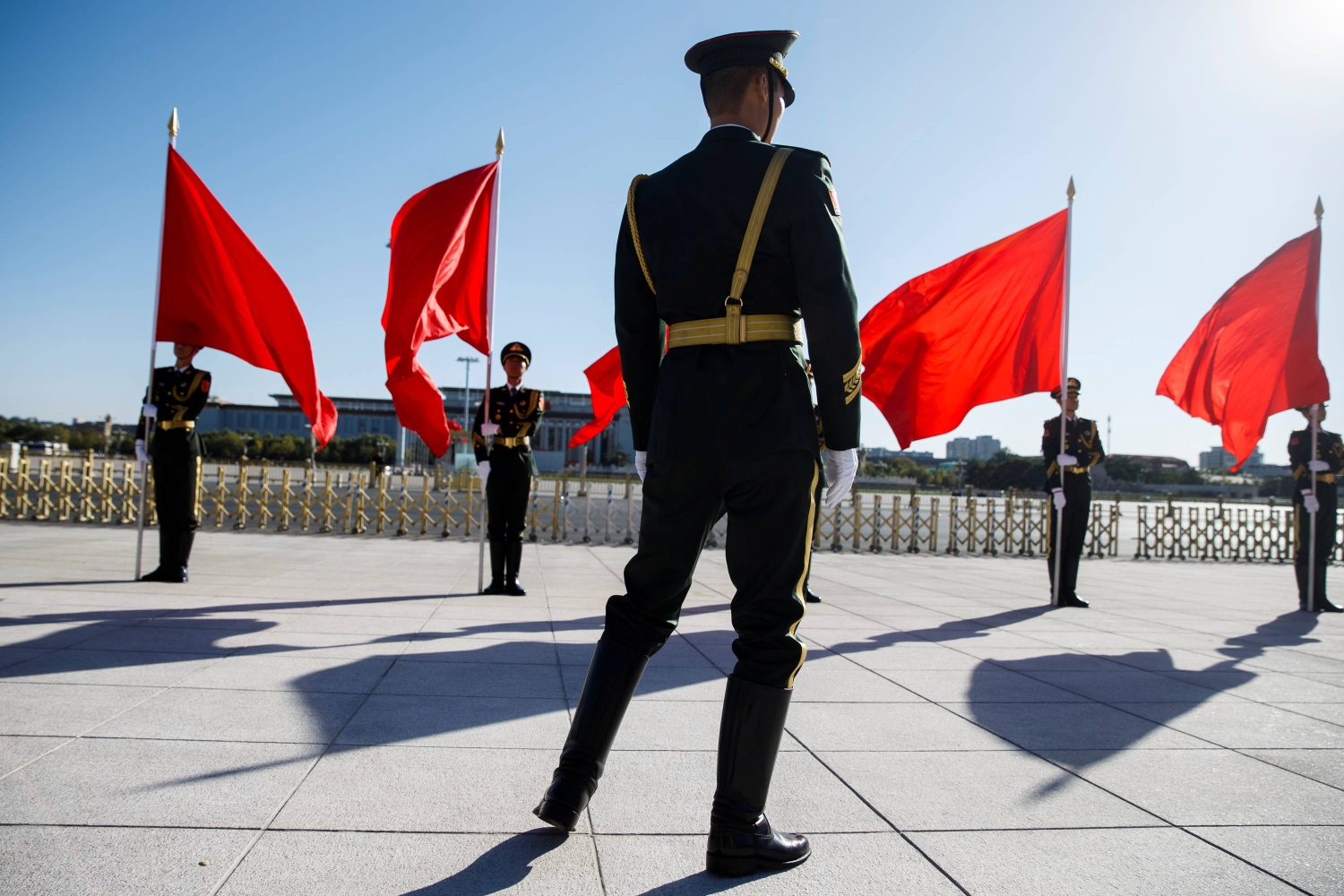


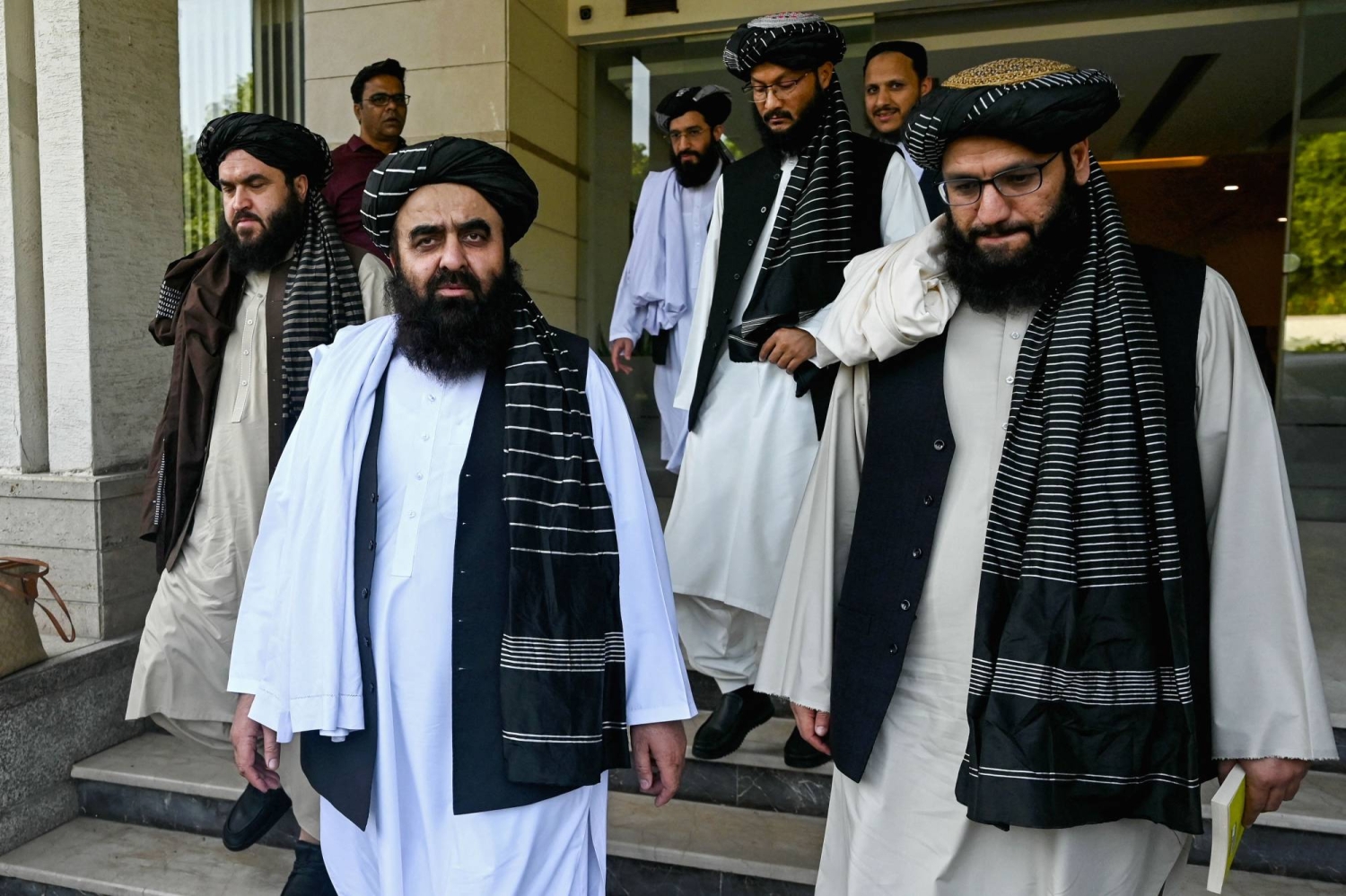

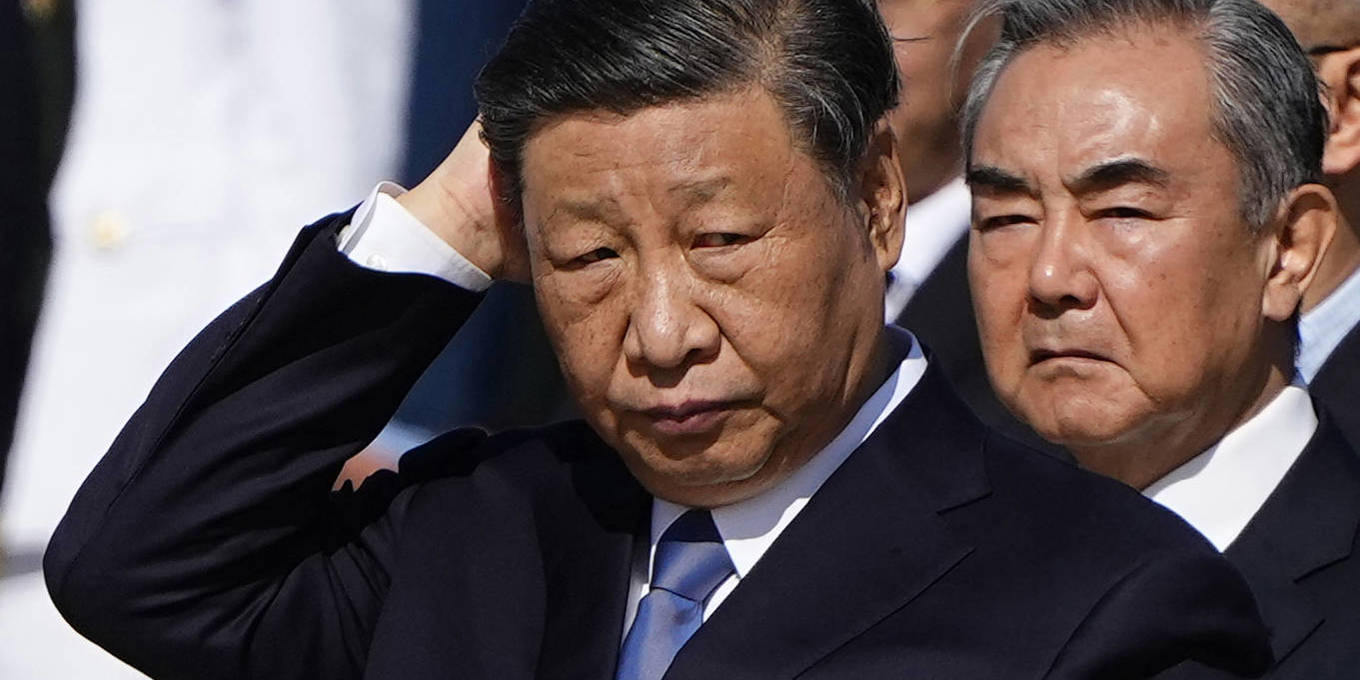


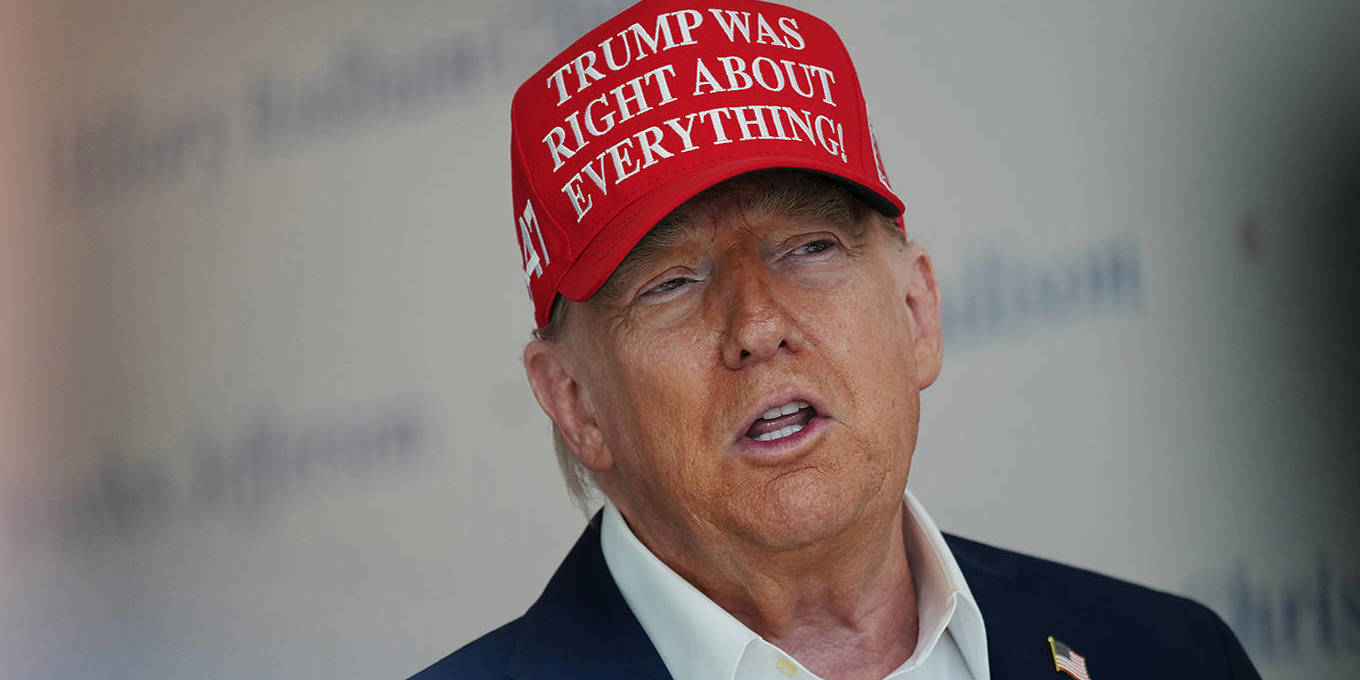


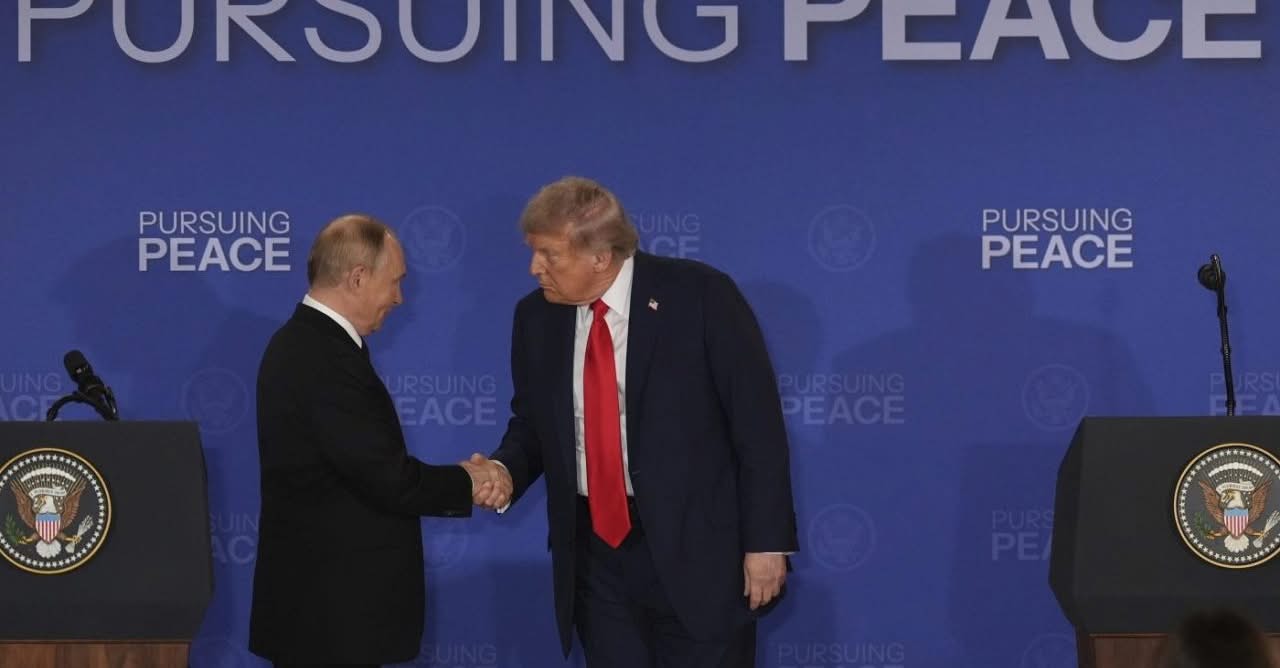
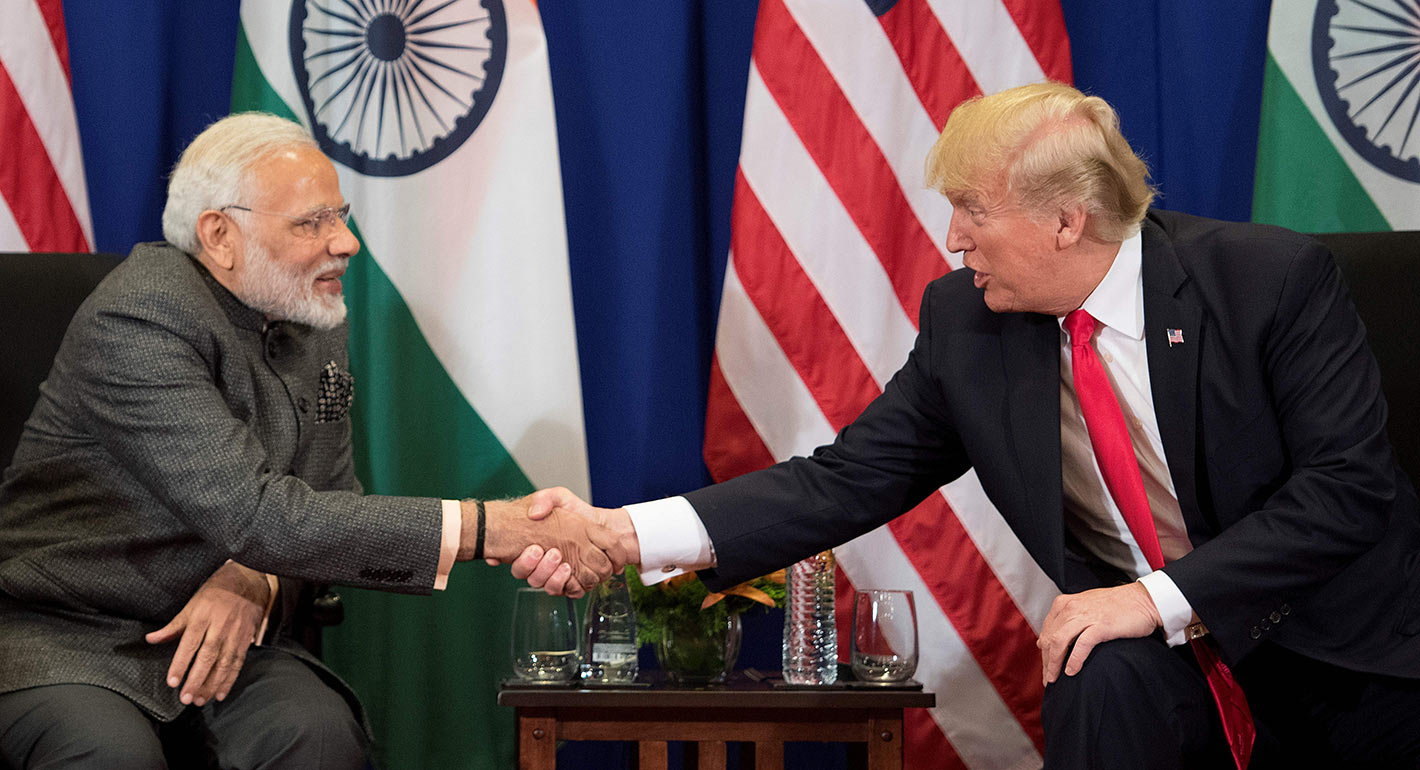
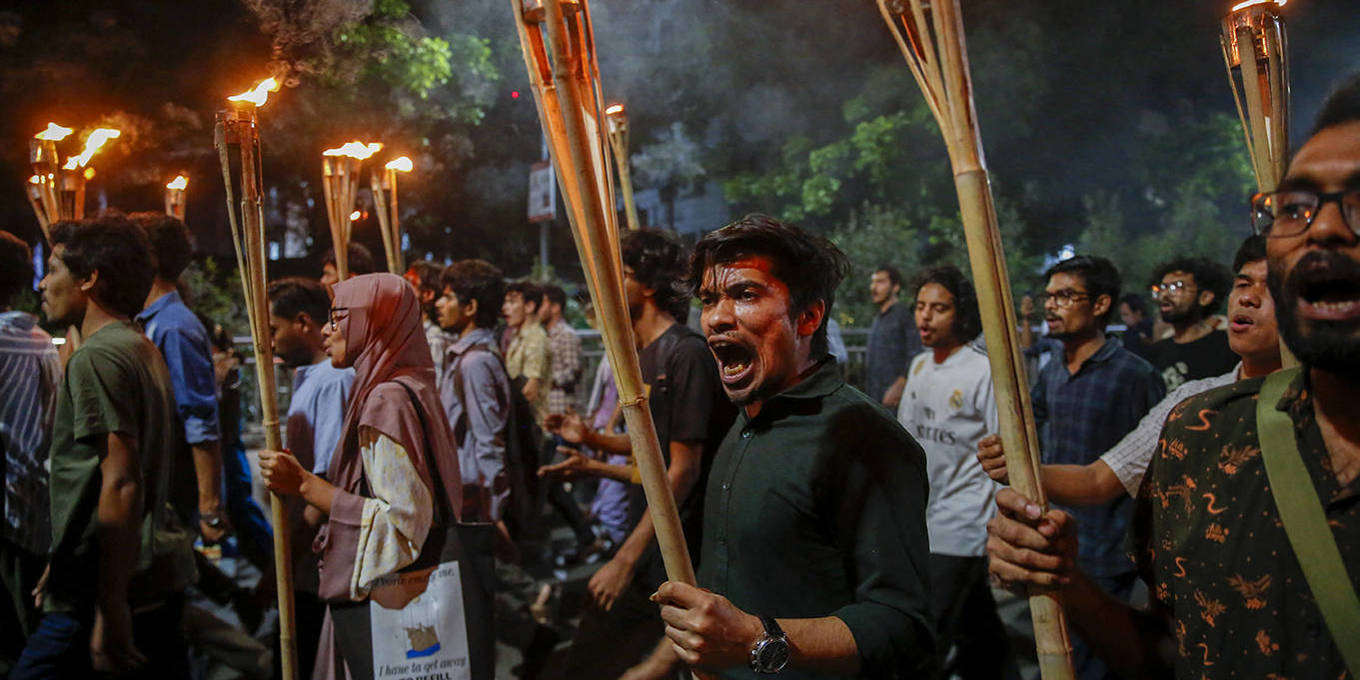


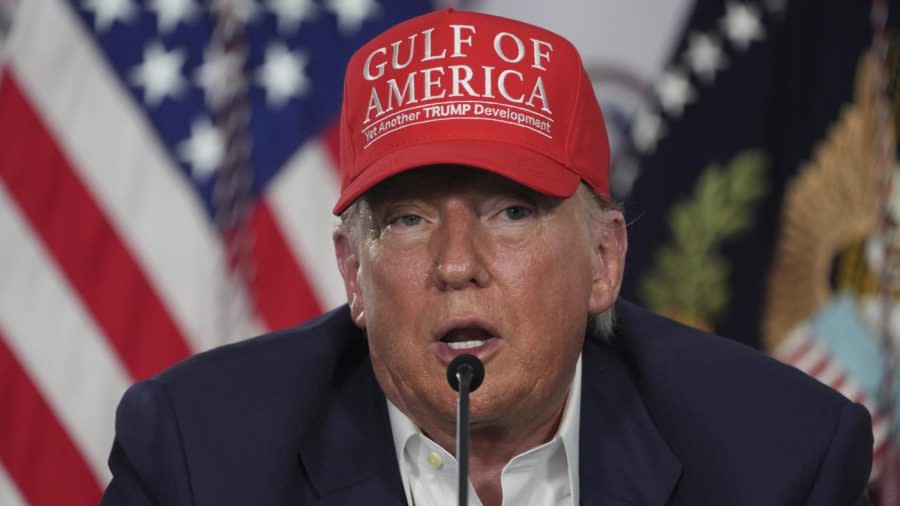


 Tibetan men and women participate in Lhakar Gorshey, a Tibetan circle dance performed on Wednesdays, which are considered a special day of cultural significance, in the northern hill town of Dharamshala, India, on July 2. © Reuters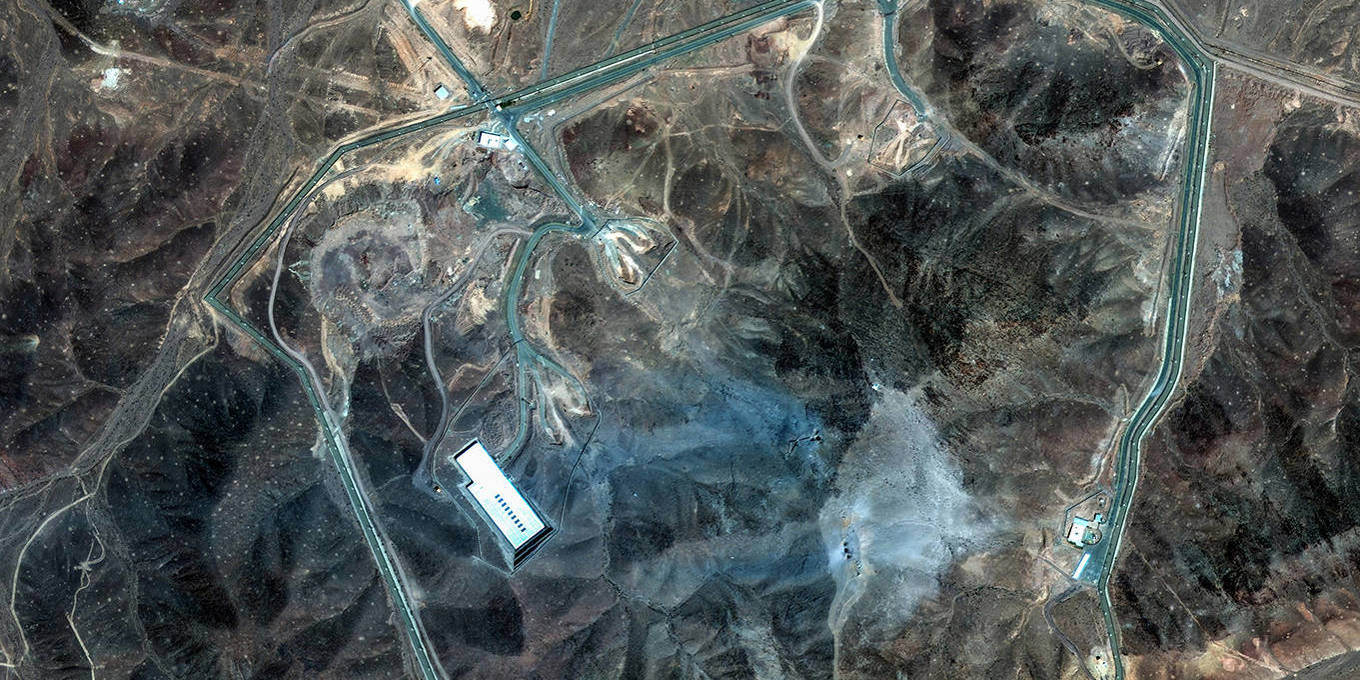


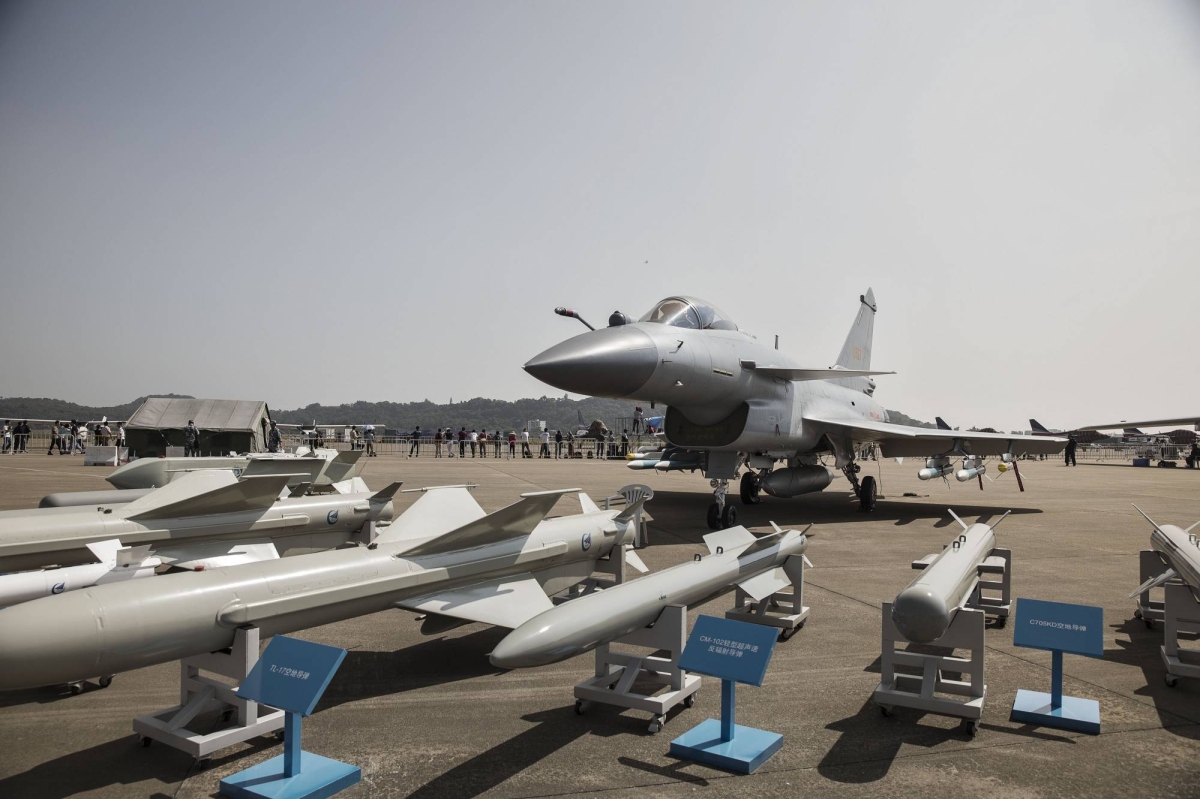
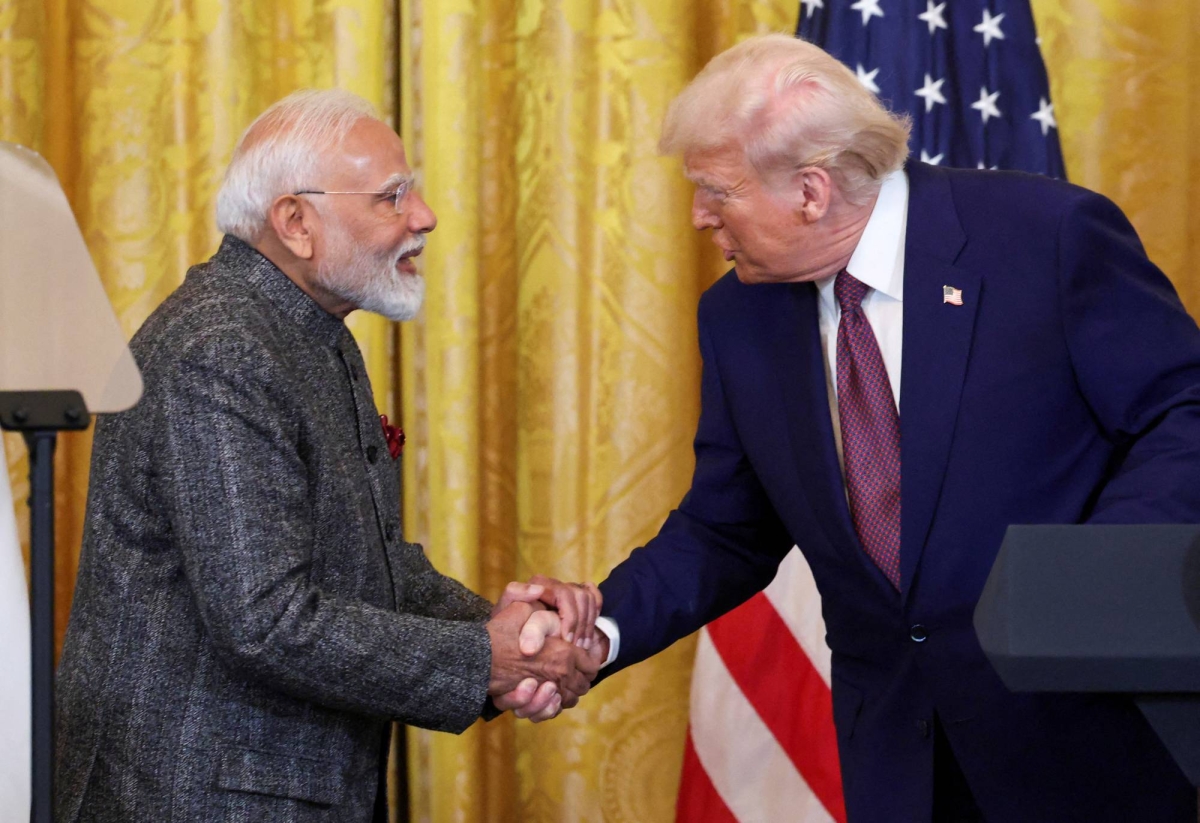

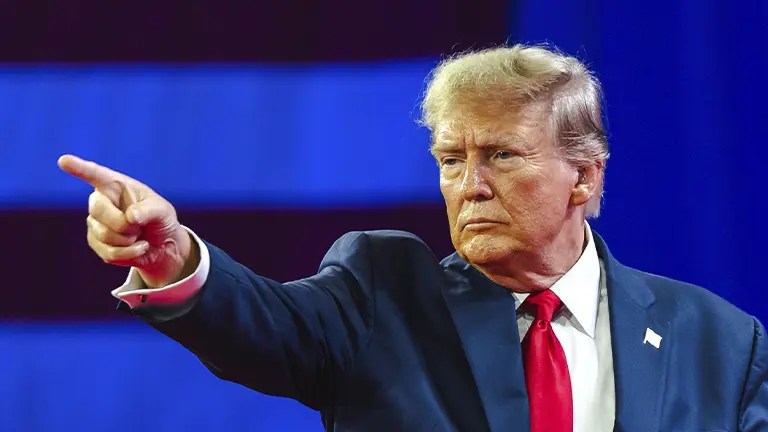
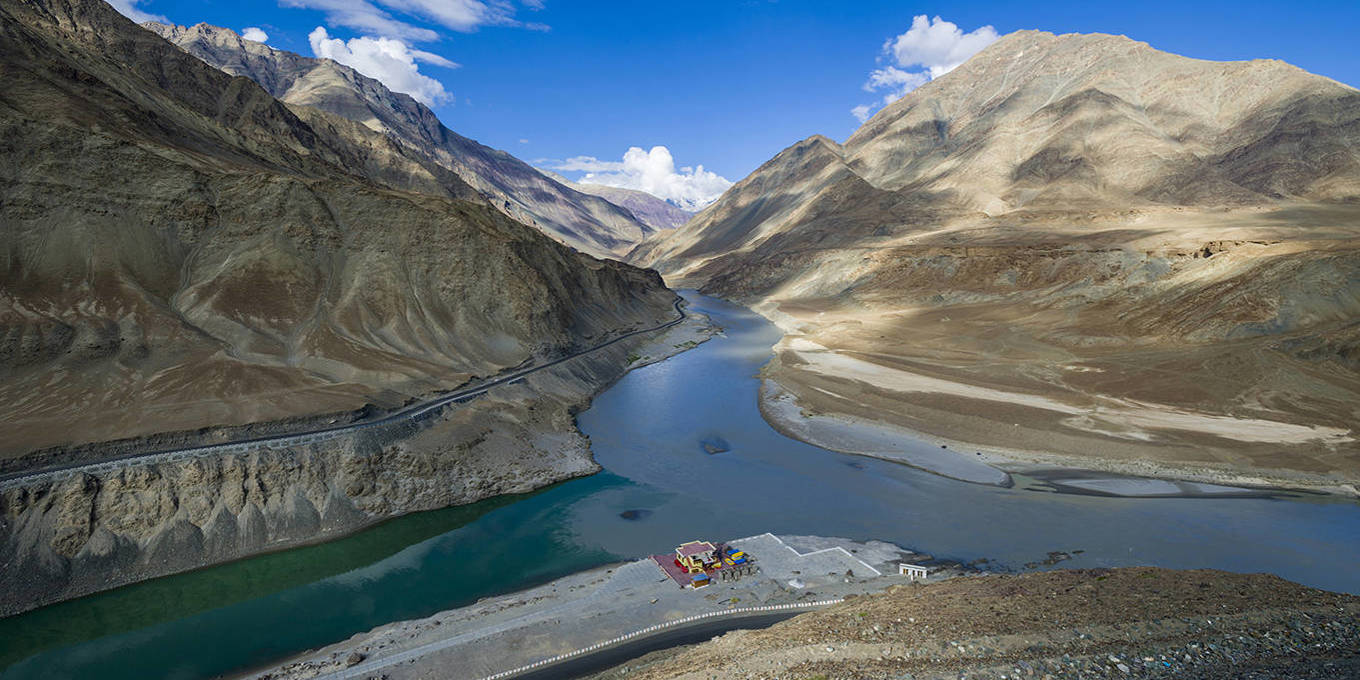
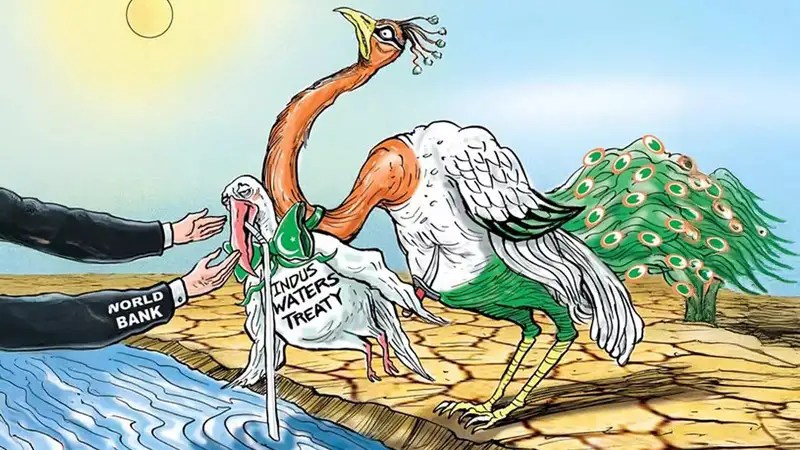


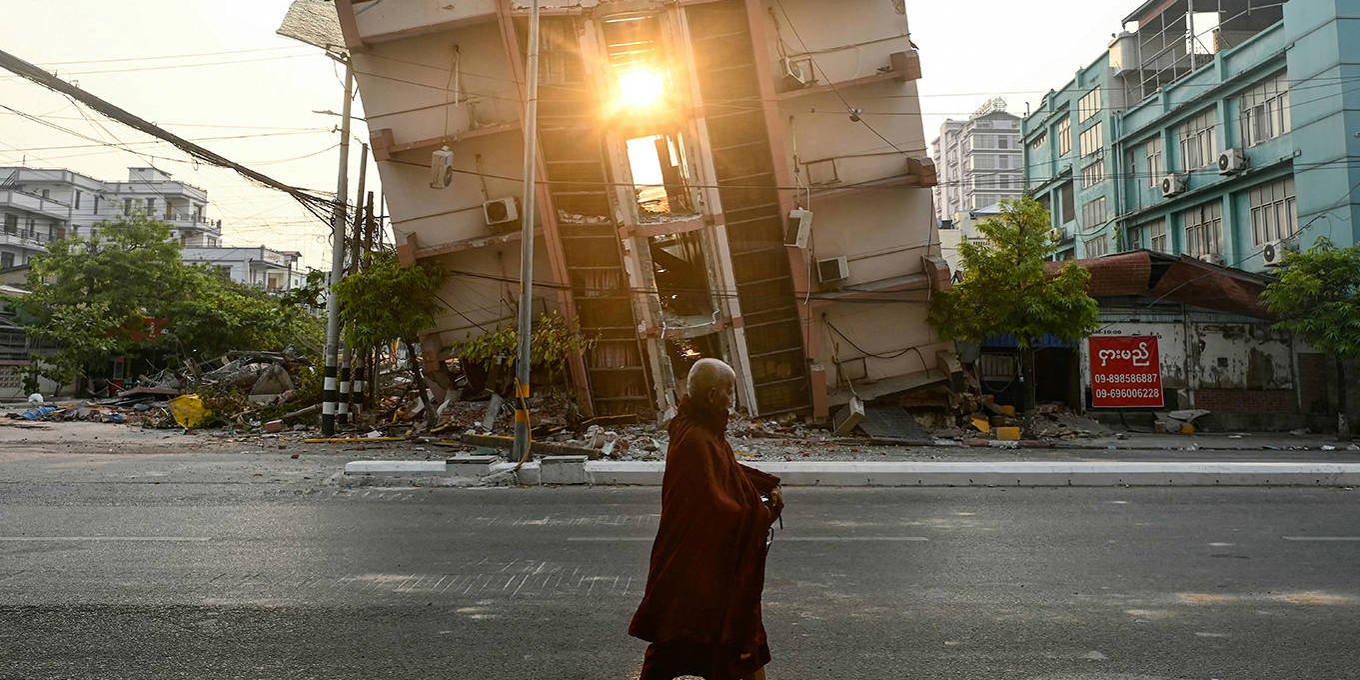
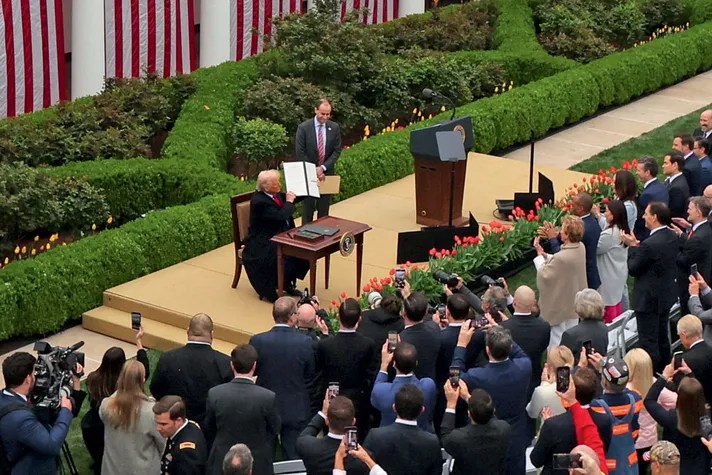
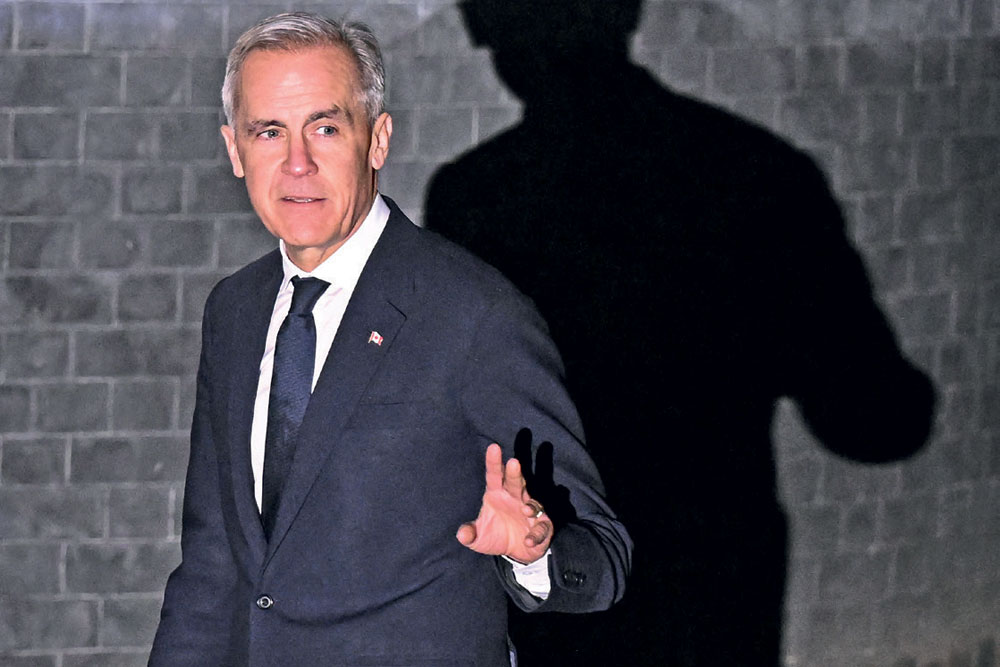
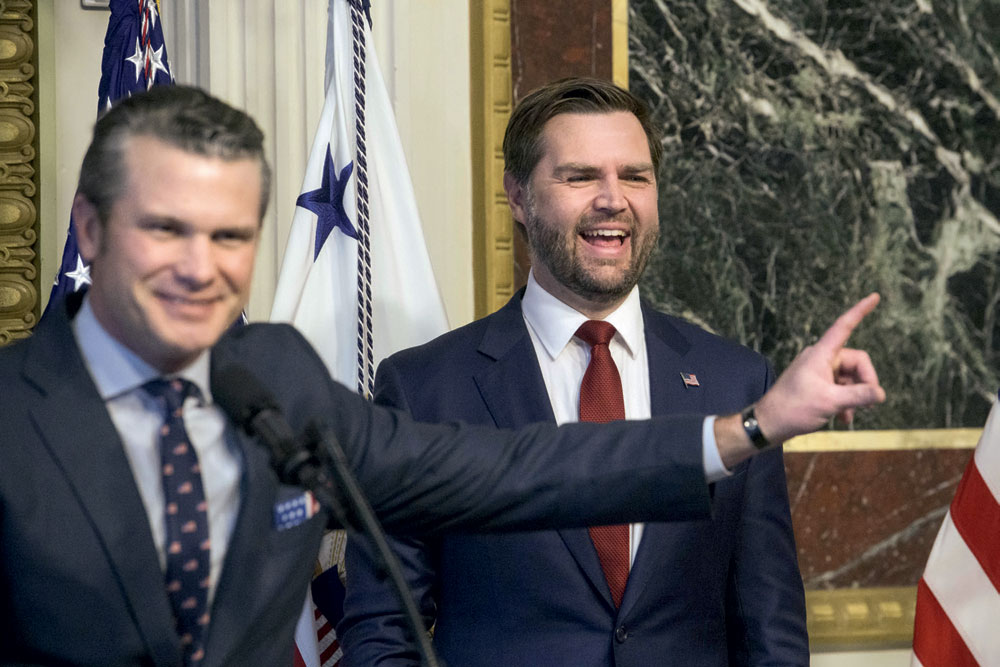
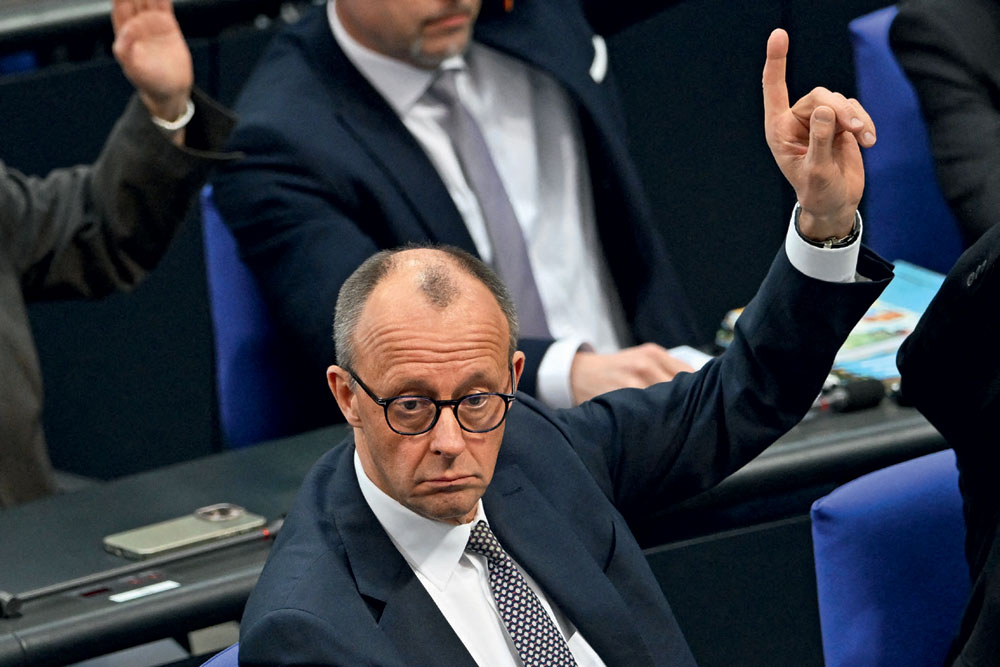
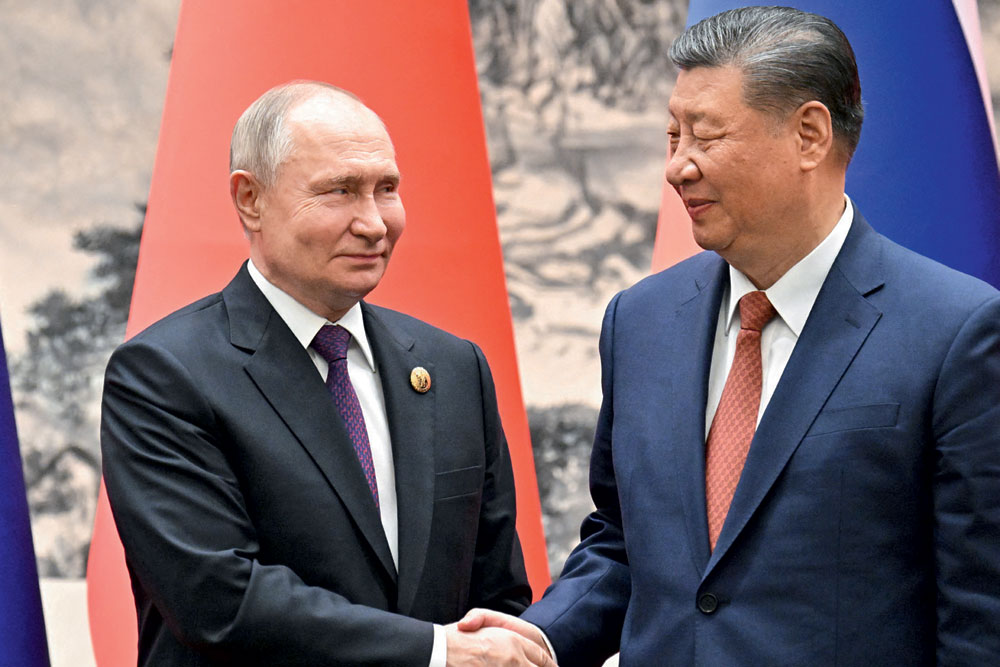


 Stagecraft and Statecraft
You must be logged in to post a comment.