The Emperor’s New Goal

BY BRAHMA CHELLANEY

Photo of Brahma ChellaneyBrahma Chellaney, Professor of Strategic Studies at the New Delhi-based Center for Policy Research, is the author of Asian Juggernaut; Water: Asia’s New Battleground; and Water, Peace, and War: Confronting the Global Water Crisis.

A Project Syndicate column internationally syndicated

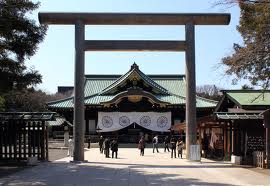
Japanese Emperor Akihito and Empress Michiko, in a rare overseas trip, are scheduled to begin a tour of the Indian cities of New Delhi and Chennai on November 30. The imperial couple’s weeklong visit is likely to mark a defining moment in Indo-Japanese relations, fostering closer economic and security ties between Asia’s two leading democracies as they seek a pluralistic, stable Asian order.

Traditionally, a visit from the Japanese emperor – except for a coronation or royal anniversary celebration – signified a turning point in a bilateral relationship. While the emperor is merely the “symbol of the state” under Japan’s US-imposed postwar constitution, he retains significant influence, owing to Japanese veneration of the imperial dynasty – the world’s oldest continuous hereditary monarchy, the origins of which can be traced to 660 BC. Indeed, the emperor’s overseas visits remain deeply political, setting the tone – if not the agenda – for Japan’s foreign policy.

Consider Akihito’s 1992 visit to China – the first such visit by any Japanese emperor. Chinese leader Deng Xiaoping’s government – grateful for Japan’s reluctance to maintain punitive sanctions over the 1989 Tiananmen Square massacre and eager for international recognition, not to mention Japanese capital and commercial technologies – had extended seven invitations over two years.
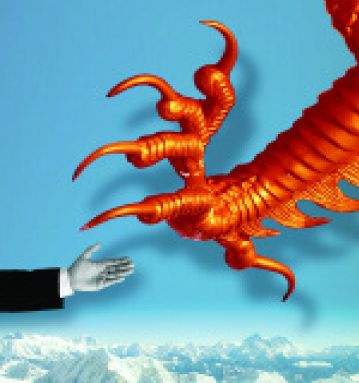
Akihito’s trip, which came at the height of Japan’s pro-China foreign policy, was followed by increased Japanese aid, investment, and technology transfer, thereby cementing Japan’s role in China’s economic rise. The improved diplomatic relationship lasted until the recent flare-up of territorial and other bilateral disputes.

Although no Japanese emperor has visited India before, the bilateral relationship runs deep. In traditional Japanese culture, India is Tenjiku (the country of heaven). Today, Japan is India’s largest source of aid and has secured a key role in supporting infrastructure development, financing projects like the Western Dedicated Freight Corridor, the Delhi-Mumbai Industrial Corridor, and the Bangalore Metro Rail Project.

With these natural allies seeking to add strategic bulk to their rapidly multiplying ties, Akihito’s tour is the most significant visit to India by any foreign leader in recent years. Indeed, it is expected to be one of the last foreign trips for the 79-year-old emperor, who has undergone several major surgeries in the past decade.

Akihito’s travel schedule contrasts sharply with that of Indian Prime Minister Manmohan Singh. Despite having had open-heart surgery during his first term, India’s 81-year-old leader has sought to offset his low domestic political stock by flying more than one million kilometers on overseas trips – including visits to Japan, China, Indonesia, Russia, Thailand, and the United States in the last six months alone.

The paradox of Akihito’s tour – for which Singh has appointed a special envoy with ministerial rank to oversee preparations – is that Japan is investing substantial political capital to build a strong, long-term partnership with India’s government at a time when India is gripped by policy paralysis. Japan’s leaders are perhaps counting on the continuity of India’s strategic policies, which would require the Indian government that emerges from next year’s general election to sustain the momentum of cooperation.

But, more important, Japan is adjusting to meet the challenges of a rapidly changing regional environment, characterized by rising geopolitical competition with China. In a historical reversal, Japan has found itself on the defensive against the increasingly muscular foreign policy of its former colony and old rival.

This situation is forcing the Japanese government to reconsider its postwar pacifism, revise its defense strategy, and increase its military spending. In this context, Japan knows that a deeper strategic collaboration with India – which is also seeking to blunt increasing military pressure from China – is its best move.

In modern history, Japan has had the distinction of consistently staying ahead of the rest of Asia. During the Meiji era, in the second half of the nineteenth century, it became the first Asian country to modernize. It was also the first Asian country to emerge as a world power, defeating Manchu-ruled China and Czarist Russia in separate wars. And after its defeat in World War II, Japan rose from the ashes to become Asia’s first global economic powerhouse.

With per capita GDP of more than $37,000, Japan still ranks among the world’s richest countries, specializing in the highest-value links of global supply chains. And income inequality in Japan ranks among the lowest in Asia.

Nonetheless, almost two decades of economic stagnation have eroded Japan’s regional clout. This raises the question of whether Japan’s current problems –sluggish growth, high public debt, and rapid population aging – presage a similar trend across East Asia. Similar problems are already appearing in South Korea, while China has been driven to loosen its one-child policy and unveil plans for economic reforms aimed at reviving growth.

For India, Japan is indispensable as both an economic and a security partner. It is central to India’s “Look East” policy, which has evolved into more of an “Act East” policy, whereby the original strategy’s economic logic has been amplified by the larger geopolitical objective of ensuring Asian stability and a regional balance of power. It is in this light that Akihito’s historic visit should be viewed.

Hug first, repent at leisure

Singh returned from Beijing with a sham river-waters accord and a China-dictated border pact that crimps Indian military response to any incursion by the PLA

Brahma Chellaney, India Today, November 25, 2013, Upfront Column, Page 12

Diplomacy, to be effective, must be backed by leverage and cross-linkages to minimize the weaker side’s disadvantages and help maintain a degree of equilibrium in a bilateral relationship. The Indian leadership, however, has ignored that imperative, embracing diplomatic showmanship. Its engagement with China is bereft of even the first principle of diplomacy—reciprocity—thus allowing Beijing to reap a soaring trade surplus even as it undermines Indian interests. Showcasing the “success” of a bilateral summit takes precedence over safeguarding national interest—a “hug first, repent at leisure” approach.

Clipboard01Nothing can illustrate this better than the recent Beijing visit of Manmohan Singh, India’s most-travelled prime minister ever. He returned with a completely hollow river-waters accord that effectively hands China a propaganda tool to blunt any Indian criticism of its dam-building spree in Tibet. Rarely before have two major countries signed an accord so steeped in empty rhetoric as this memorandum of understanding unveiled during Singh’s visit. The accord, incorporating not a single Chinese commitment or anything tangible, seeks to pull the wool over the Indian public’s eyes.

It is just a public-relations text with only platitudes—that the “two sides recognized that trans-border rivers and related natural resources and the environment are assets of immense value”; that they “agreed that cooperation on trans-border rivers will further enhance mutual strategic trust and communication”; and that they also “agreed to further strengthen cooperation on trans-border rivers” and “exchange views on other issues of mutual interest”. As if to add insult to injury, the accord extracts India’s “appreciation to China” for selling “flood-season hydrological data”, although India provides such data free to downstream Pakistan and Bangladesh year-round.

Another much-trumpeted accord signed during the visit—the Chinese-dictated Border Defence Cooperation Agreement (BDCA)—contains nothing to halt the increasingly frequent Chinese border incursions or prevent a Depsang-style deep encroachment again. Defence Minister A.K. Anthony has admitted this, saying the accord “does not mean nothing will happen” on the frontier. Beijing wanted a new accord to wipe the slate clean over its breaches of the border-peace agreements signed in 1993, 1996 and 2005. But why did India accede to the violator’s demand for new border rules?

BDCA’s provisions are so vaguely worded as to allow China—a master at reinterpreting texts—to cast the burden of compliance mainly on India. For example, Article II, without elaboration, calls for exchange of “information about military exercises, aircrafts, demolition operations and unmarked mines”. Does this mean that India must inform China about its military-cargo flights to forward landing strips such as Daulat Beg Oldi and its demolition work to build Himalayan road tunnels?

Or take Article VI, which says minimally: “The two sides agree that they shall not follow or tail patrols of the other side in areas where there is no common understanding of the line of actual control (LAC)”. The Home Ministry-administered Assam Rifles and Indo-Tibetan Border Police (not regular army troops) that India timorously deploys to fend off the aggressive People’s Liberation Army (PLA) have a defensive mindset and are in no position to tail the Chinese. But if PLA troops intrude and pitch tents, claiming they are on Chinese land, Beijing is likely to interpret this provision as barring Indian patrols from encircling them or setting up their own Depsang-style camp to keep an eye on the raiders. The provision indeed will constrain Indian border guards from attempting to drive back any intruding Chinese patrol.

Given China’s claims on Indian territories and its refusal to even clarify the LAC, Article VI, in effect, ties only India’s hands. No less suspect is Article VII, which gives either side the right to seek “clarification” from the other if “any activity” occurs in “areas where there is no common understanding” of the LAC. If India were to seek clarification over a Chinese penetration, it would likely get the stock reply that the “Chinese troops are on Chinese soil”. Contrary to the pre-visit claim, BDCA contains no commitment to set up a hotline between the Indian and Chinese military headquarters; it only says the two sides “may consider” doing that.

Any Chinese leader combines an India stopover with a visit to his country’s “all-weather ally”, Pakistan, but a meek Singh declined to club his China visit with a trip to Japan or Vietnam. Singh, in fact, was in Beijing at the same time as the Russian and Mongolian premiers, with Russian Prime Minister Dmitry Medvedev beginning his Beijing trip while Singh was cooling his heels in Moscow on an official visit.

Yet, with the help of the planeload of journalists he takes with him on any overseas visit, Singh marketed his China trip as a major success. In truth, as the two accords attest, he wilfully played into China’s hands.

Brahma Chellaney is a geostrategist and author.

(c) India Today, 2013.

Supping with the devil

Brahma Chellaney, The Japan Times, November 19, 2013

The cover of the 2010 book by Mullah Abdul Salam Zaeef

The image of then Indian Foreign Minister Jaswant Singh — after having just chaperoned three jailed terrorists to freedom — walking hand-in-hand with the Afghan Taliban regime’s foreign minister, Mullah Wakil Ahmed Mutawakil, on the runway at Kandahar Airport in late 1999 still haunts. Mutawakil was later imprisoned by the U.S. military at the Bagram airbase in Afghanistan.

Now Indian Finance Minister Palaniappan Chidambaram has greeted Afghan Taliban leader Mullah Abdul Salam Zaeef in Goa, best known for its beaches. Zaeef, the Taliban’s ambassador to Pakistan until the U.S.-led military intervention in Afghanistan, spent four years in America’s notorious detention center at Guantanamo Bay.

Spanish-born U.S. philosopher George Santayana’s warning is particularly true for India: “Those who cannot remember the past are condemned to repeat it.”

In 1999, no sooner had a hijacked Indian Airlines flight landed in Kandahar than a hallucinating Jaswant Singh began briefing newspaper editors about the great opportunity it presented to drive a wedge between the Afghan Taliban and its sponsor, Pakistan. In truth, he was preparing ground for what became an ignominious cave-in unparalleled in modern world history — a foreign minister flying to known terrorist territory in a special aircraft to hand-deliver three terrorists so as to secure the release of a planeload of hostages.

Now fast-forward 14 years: Prime Minister Manmohan Singh and his advisers are feeding the Indian public their hallucination that engagement with the Taliban can help drive a wedge between that thuggish militia and Pakistan and thereby aid India’s interests in Afghanistan.

Zaeef’s Goa visit, in reality, was part of a broader U.S.-initiated effort to make an American deal with the Afghan Taliban internationally acceptable. Washington is seeking a deal with the Taliban as a face-saving way to end its war in Afghanistan next year as planned and also to safeguard the military bases it intends to keep in that rugged, landlocked country after 2014.

To bolster that effort, the United States has kissed and made up with Pakistan, resuming generous aid to that country and working closely with the Army and Inter-Services Intelligence (ISI) chiefs there.

The restored $1.6 billion aid had been blocked because Pakistan never came clean about who helped Osama bin Laden hide for years in a military garrison town near its capital, Islamabad.

U.S.-Pakistan relations also came under strain because the Pakistani military establishment both shelters the top leadership of the Afghan Taliban, who kill American soldiers, and aids jihadists who carry out cross-border attacks in India and Afghanistan.

Yet with his 2014 deadline to end combat operations in Afghanistan approaching, President Barack Obama has reached out to Pakistan. After talks with Pakistani Prime Minister Nawaz Sharif at the White House last month, Obama “commended the resolve” of Pakistan “to defeat terrorists.” He also praised Pakistan — “an essential partner” — for its helpful role in the Afghan peace process.

In recent years, the U.S. has carried out from Afghanistan a series of air and drone strikes in Pakistan’s tribal Waziristan region against the Pakistani Taliban, the nemesis of the Pakistani military. U.S. drone strikes have killed two successive chiefs of the Pakistani Taliban — Baitullah Mehsud in 2009, and Hakimullah Mehsud at the beginning of this month.

But, tellingly, the U.S. has not carried out a single air, drone or ground attack against the Afghan Taliban leadership, ensconced in Pakistan’s sprawling Baluchistan province, located to the south of Waziristan.

To justify the planned Faustian bargain with the Afghan Taliban — despite the major regional implications it holds — the Obama team is drawing a specious distinction between al-Qaida and the Taliban and differentiating between “moderate” Taliban amenable to a deal (the good terrorists) and those that rebuff deal-making (the bad terrorists). Zaeef is a “good” terrorist and has been rewarded (like the Taliban’s rehabilitated ex-foreign minister Mutawakil) with a plush house in Kabul.

The U.S., moreover, has facilitated both the Afghan Taliban’s opening of a de facto diplomatic mission in Doha, Qatar, and the overseas visits of some “good terrorists” to places ranging from Berlin to Tokyo. It has now roped in India to lend legitimacy to its effort.

In seeking to co-opt its main battlefield opponent — the Afghan Taliban — the U.S. seems unconcerned that it is bestowing legitimacy on a terrorist militia that enforces medieval practices in the areas under its control. This is in keeping with a long-standing U.S. policy weakness: The pursuit of narrow geopolitical objectives without much regard for the long-term consequences or the interests of friends in the region.

The Afghan Taliban, al-Qaida and groups like the ISI-sponsored Lashkar-e-Taiba are a difficult to separate mix of soul-mates who together constitute the global jihad syndicate and who still enjoy state sanctuaries or support. The scourge of transnational terrorism cannot be stemmed if deceptive distinctions are drawn between such groups. If any state were to cut a deal with a constituent of the global terror syndicate, it would likely encourage more international terrorism.

In this light, India’s hosting of a Taliban leader is not statecraft. It is not even stagecraft. In reflecting a desire to cozy up to the Taliban, it reeks of diplomatic witchcraft.

By playing host to Zaeef, India has only exposed the lack of consistency and direction in its foreign policy. No sooner had Prime Minister Singh decided to boycott the Commonwealth summit in Sri Lanka owing to human rights concerns there than his corruption-tainted government welcomed the Taliban mafiaso.

Lost in the U.S. and Indian diplomatic maneuvers is the age-old wisdom: He who sups with the devil should have a long spoon.

Brahma Chellaney is a geostrategist and author.

Dancing in the dragon’s jaws

Why India’s new border pact with China won’t work

Brahma Chellaney, Mint, October 22, 2013

Seeking to compensate for his low political stock at home, Manmohan Singh has undertaken more overseas trips as prime minister than any predecessor, visiting China multiple times. Yet, India punches far below its weight internationally, while its regional security has come under siege, with Singh’s tenure witnessing a sharp deterioration in ties with China.

The highlight of the latest China visit of India’s most-travelled prime minister will not be progress on any of the core issues dividing the two countries but a Chinese-ordained border accord designed to supplant existing frontier-peace and confidence-building agreements that the People’s Liberation Army (PLA) has undermined through repeated cross-frontier raids and other incursions. No Indian official has explained the rationale for entering into a new agreement demanded by the party that has breached existing border-peace accords with impunity.

New Delhi’s willingness to let China dictate the so-called Border Defence Cooperation Agreement (BDCA) mirrors its broader strategic timidity in permitting Beijing to lay down the terms of the bilateral relationship. China has fashioned an asymmetrical commercial relationship, reaping a swelling trade surplus, even as it stymies any progress on issues of core concern to India, including the territorial and water disputes, recurrent cross-border military raids, China’s continuing nuclear and missile collaboration with Pakistan, and the growing Chinese strategic footprint in Pakistani-held Kashmir.

China’s most-insidious warfare against India is in the economic realm, yet India has done little to stop Beijing from turning it into a raw-material supplier to the Chinese economy and from subverting Indian manufacturing through dumping of goods. Official statistics show that India’s trade deficit with China in the past decade has soared at about four times the pace of aggregate bilateral commerce. The widening trade imbalance with China, in fact, has become a major contributor to India’s worsening current account deficit.

Perpetuating such a lopsided economic relationship gives Beijing little incentive to bridge the political divide. If anything, it aids China’s strategy to prevent India’s rise as a peer competitor.

Even as Beijing disturbs the territorial and water-flow status quo, New Delhi won’t leverage China’s growing India-market access to influence Chinese conduct. China, however, does not shy away from mixing politics and business. It has a record of quietly using trade to punish countries it quarrels with. For example, Japanese exports to China, which sank 13.2% in the first seven months of this year, began falling after Beijing unsheathed its trade sword in September 2012 over the Senkaku Islands dispute.

Singh’s visit will likely yield the usual platitudes about friendship and cooperation while leaving India’s concerns unaddressed. With an unresolved border arming China with leverage to keep India under military pressure, Beijing has been reluctant to even clarify what the two sides farcically call “the line of actual control” (LAC). And even as it turns Tibet into the new hub of its dam-building spree, China has brazenly sought to turn the tables on India, accusing it through a state mouthpiece last week of “attempting to reinforce its actual control and occupation of” Arunachal Pradesh through water projects there.

Singh, acquiescing to China’s sidelining of the core issues, told reporters before leaving that, “The two governments are addressing them with sincerity and maturity without letting them affect the overall atmosphere of friendship and cooperation”. Even by his pusillanimous standards, making a Chinese-dictated accord the highlight of his official visit marks a new low in Indian diplomacy.

Consider the humiliating circumstances that spawned this agreement: the PLA intruded deep into Ladakh’s Depsang Plateau by stealth before Beijing embarked on coercive diplomacy, forcing India’s hand on BDCA, whose draft it had sent earlier. In return for China withdrawing its encamped troops from Indian land, India demolished a line of defensive fortifications in Chumar—much to the south of Depsang—and ended forward patrols in the area, besides agreeing to wrap up negotiations on BDCA, which until then it had baulked at.

The Depsang encroachment inflicted permanent damage to the existing border-peace accords, including the 2005 mutual commitment to “strictly respect and observe” the LAC. Yet, paradoxically, China demanded a new agreement to take precedence over the more equitable 1993, 1996 and 2005 border-peace accords.

Indeed, such was the bloodless victory China scored by deploying a single platoon of no more than 50 soldiers in Depsang that India, in the manner of a vanquished nation, merely offered its comments and suggestions on the Chinese-imposed draft and sent its national security adviser and defence minister in rapid succession to Beijing to commit itself to BDCA’s “early conclusion.”

Now, by personally paying obeisance in Beijing, Singh culminates this mortifying process, lending his imprimatur to an agreement that can only embolden China to up the ante. In fact, since India’s virtual capitulation to Chinese demands more than five months ago, China’s military provocations have included multiple daring raids and other forays across the Himalayan frontier, the world’s longest disputed border.

Via the planeload of journalists he takes, Singh trumpets almost every overseas visit as a diplomatic success. His spinmeisters are also marketing BDCA as positive for India, highlighting features that in reality are dubious.

Why would a new military hotline with China make a difference when a similar hotline with Pakistan hasn’t worked? Given that India timorously deploys border police (such as the Home Ministry-administered Assam Rifles and Indo-Tibetan Border Police) to fend off incursions by the aggressive PLA, the clause on “no tailing” of each other’s patrols is really applicable to China. But any accord for China is just a political tool to advance its interests, including by lulling the other party into complacency and creating exploitable opportunities.

Any Chinese leader combines an India visit with a visit to his country’s “all-weather ally,” Pakistan, but Singh declined to club his China visit with a pending trip to Japan. Singh, in fact, will be in Beijing at the same time as the Russian and Mongolian prime ministers, with Russian Prime Minister Dmitry Medvedev beginning his Beijing trip while Singh was still in Moscow on an official visit.

Singh’s China policy, by leaving India more vulnerable to Chinese belligerence, represents a case study in how meekness attracts bullying. BDCA is a symbol of that.

Brahma Chellaney is professor of strategic studies at the Centre for Policy Research in New Delhi.

(c) Mint, 2013.

Wages of Mishandling Pakistan

  Brahma Chellaney, The Economic Times, October 9, 2013

Prime Minister Manmohan Singh’s recent state visit to Washington generated a lot of media coverage, not in the U.S. (where the media literally took no note of it) but in India, thanks to the planeload of journalists that Singh took with him. Rarely before had an Indian prime minister’s state visit to U.S. been so invisible to Americans.

If the American media did notice Singh, it was only at the fag end of his trip when he met with his Pakistani counterpart in New York. That put the spotlight, however briefly, on the India-Pakistan equation rather than on the Indo-U.S. relationship. New Delhi doesn’t like the India-Pakistan hyphenation, yet its own actions can be counterproductive. Singh defiantly met Nawaz Sharif, disregarding both public opinion at home and the Pakistani military’s increased hostility.

But before meeting Sharif, Singh complained to US President Barack Obama about Pakistan’s continuing export of terrorism — a complaint that prompted Sharif to purportedly compare Singh with a whining “dehati aurat.” By grumbling to Obama, Singh implicitly expressed his government’s helplessness in countering Pakistani terrorism, besides signalling that his meeting with Sharif was at the U.S. request. In fact, the state department welcomed his discussion with Sharif, saying “dialogue is a positive step forward and we’ll continue to encourage that.”

If Singh believed that holding political dialogue with Pakistan’s new civilian government was important, a New York meeting at the foreign minister level would have sufficed at this stage, especially since no one expected a meeting between the two PMs to break new ground.

Yet the extent to which Singh went to save his September 29 meeting with Sharif can be gauged from one troubling fact: news about the September 24 Pakistani cross-border raid into the Keran sector — which triggered a two-week gunbattle between Indian army troops and the intruders — was not released by the government until after the Singh-Sharif meeting. It is unfortunate the government allowed the political exigencies of a meeting in New York to take precedence over the imperative to inform the nation about a major intrusion involving Pakistani special forces.

It is crystal clear that India’s Pakistan policy has lost all sense of direction. Indeed, it is so adrift that it has emboldened the Pakistan army to carry out multiple acts of aggression across the line of control this year without fear of Indian retribution — from the decapitation of two Indian soldiers and the separate killing of five troops to the Samba raid and the Keran incursion. Sadly, the government has also sowed factionalism in the army’s senior hierarchy by playing favourites and targeting the ex-chief, Gen. V.K. Singh, through media plants.

Worse still, the government has restrained the army both from responding appropriately and effectively to cross-border aggression and from giving out any information to the media on Pakistani (or Chinese) border violations. The restraint order has crimped the army’s traditional leeway to act preemptively against an impending aggression and to inflict a just retribution for any cross-border attack.

Can any force be turned into a veritable sitting duck struggling to fend off repeated aggression? By allowing the army’s operational imperatives to be trumped by the government’s meandering and clueless foreign policy, army chief Gen. Bikram Singh faces an unflattering reality on his record: His stint as chief has coincided with a pattern of rising cross-border aggression by Pakistan (and China).

Let’s be clear: Battling repeated cross-border encroachments on terms dictated by the enemy — a tradition India set in 1999 when it fought the entire Kargil War on Indian territory on Pakistan’s terms — is anything but sound strategy. Indeed, it is an invitation to bringing the country’s border security under siege.

More fundamentally, why has it become a virtual custom since the late 1990s for an Indian prime minister’s meeting with Pakistan’s leader to invariably spell trouble for India? Atal Bihari Vajpayee publicly bemoaned that his peace bus to Lahore in February 1999 was “hijacked and taken to Kargil.” Still, he went to Pakistan in early 2004 for a second time as PM — a trip that sowed the seeds of Pakistan’s stepped-up export of terrorism in the subsequent years.

With his blow-hot-blow-cold approach, the sphinx-like Vajpayee executed several U-turns in his Pakistan policy, which traversed through Lahore, Kargil, Kandahar, Agra, and Parliament House, before culminating in Islamabad on his second trip to Pakistan.

The scandal-tainted Singh has brought a nasty “gift” for his nation from each meeting with a Pakistani counterpart.

Apart from the latest Keran surprise, Singh came back from Sharm el-Sheikh after arming Pakistan with the Baluchistan card against India, while he returned from Havana earlier after declaring that the exporter of terrorism is actually a “victim of terrorism” like India.

In the absence of a long-term strategic blueprint, coupled with the marginalization of the ministry of external affairs and other professional bodies, Indian foreign policy increasingly is being driven by ad hoc, personal interventions of the prime minister — with serious costs to national interest.

Brahma Chellaney is a strategic affairs expert.

(c) The Economic Times, 2013.

Obama’s Great Asian Dawdle

BY BRAHMA CHELLANEY, Washington Times, September 2, 2013

The U.S. is shying away from China’s stealth aggression.

The more assertive Beijing has become, the more reluctant U.S. President Barack Obama has been to take sides in Asian territorial disputes, although they center on a combative China’s efforts to change the territorial status quo with America’s strategic allies or partners. Washington’s feckless Asia policy has helped deepen the security dilemma of several Asian states on how to protect their territorial and economic rights against China’s power grab.

Washington has made it amply clear that despite its “pivot” toward Asia, it will not put American lives at risk to defend its allies’ territorial claims against Beijing or act in ways detrimental to its close engagement with China. Defense Secretary Chuck Hagel even said in an August 28 BBC interview that the U.S. does not look at China’s military buildup as a threat.

Indeed, there has been a course correction in the Obama administration’s “pivot” policy. After initially raising Asian expectations about a robust U.S. response to China’s assertiveness, Washington has tamped down the military aspects of its “pivot,” lest it puts it on the path of taking on Beijing. Instead it has started laying emphasis on the economic aspects.

Obama’s Asia policy has treaded a course of neutrality on territorial disputes between China and its neighbors, while seeking to reap the economic and strategic benefits of closer engagement with Asian states.

Washington, for example, is chary of getting drawn into Sino-Japanese territorial disputes, although Tokyo is its close ally and U.S. forward military deployments in Japan are a linchpin of America’s strategy to retain primacy in Asia. In fact, the Japanese-controlled Senkaku Islands to which China has laid claim are close to Okinawa, home to the largest U.S. military presence in Asia.

Similarly, even as China purposely badgers India along the Himalayan frontier, Washington has shied away from cautioning Beijing against any attempt to change the territorial status quo by force. In fact, on a host of Asian disputes, including China’s claim since 2006 to India’s Austria-size Arunachal Pradesh state, Washington has chosen not to antagonize Beijing and stayed neutral.

Even in a case when China has forcibly changed the status quo — by taking effective control since last year of the Scarborough Shoal, located in the South China Sea within the Philippines’ exclusive economic zone — the Obama team has done little more than counsel restraint and talks. With Chinese vessels this year present near the Second Thomas Shoal, the lesson the Philippines is learning that might remains right in international relations and that its security dependence on Washington is no check on the intruding colossus.

The paradox is that China’s rising assertiveness has helped the U.S. to return to Asia’s center-stage, yet Obama is wary of taking sides in the territorial disputes. The only issue on which Washington has spoken up is freedom of navigation in the South China Sea.

The China factor, which has allowed the U.S. to strengthen its existing military relationships and build new strategic partnerships in Asia, can remain useful for America only if it is seen by its allies and partners as a credible guarantor of stability and security in Asia. That is a function not of its military strength but of its political will.

To be sure, Washington has an interest in preventing the emergence of a Sino-centric Asia. But it has no interest in getting entangled in Asia’s territorial feuds. If it can, it would like to find a way to support its allies and partners in their disputes with China, but without alienating Beijing — a tough balancing act.

For example, the Obama administration has said the U.S. security treaty with Japan covers the Senkaku Islands because they “are under Japanese jurisdiction,” yet “we also stress that we don’t take a position on the sovereignty of the Senkaku Islands.” How reassured can Japan be with such doublespeak?

Washington indeed has advised Tokyo and Beijing repeatedly to sort out their dispute peacefully. Some U.S. analysts who have served in the government have urged Washington not to issue a “blank check” to an uncompromising Japan that refuses to negotiate with Beijing on the dispute.

If China were to employ military force in the dispute, would the U.S. take all necessary actions, including the use of its military capability, to repulse a Chinese action that was confined to the 7-square-kilometer disputed real estate in the East China Sea? The Obama administration has simply said that despite China’s increasing intrusions into the Senkaku waters, “we do not envision that this current tension will rise to that level in any foreseeable scenario.”

Tokyo, skeptical that the U.S. will go to war with China to back Japan’s territorial rights, wants a clear U.S. defense guarantee. The Obama administration, however, has balked at Tokyo’s November 2012 proposal that the U.S.-Japan alliance’s defense guidelines be updated to specifically include the Senkakus.

America’s larger chariness has seemingly encouraged China to up the ante against several neighbors. For example, after gradually increasing the frequency of its incursions into Senkaku waters since September 2012, China is now focusing on increasing their duration. Similarly, China’s land incursions into India’s Ladakh region, after going up in frequency, are this year being staged intermittently for longer duration.

This pattern appears designed to pressure an opponent to cut a deal on Chinese terms, in keeping with Beijing’s stratagem on territorial disputes — what is ours is ours and what is yours is negotiable.

China, despite its bluster, is unlikely to wage open war against a determined, well-armed opponent for fear it may get a bloody nose, as happened in 1979 when it invaded Vietnam. Yet the possibility of an overt war resulting from mistake or miscalculation cannot be ruled out.

Even if no open war flares, Japan and several other Asian states already face China’s war by stealth. Through a clever strategy of furtive, incremental encroachments, China is actually undercutting the value of its opponents’ security relationships with Washington. Compounding this situation is Washington’s signal to its allies and partners that it is their own responsibility to safeguard territories that China covets.

Given Washington’s hands-off approach to Beijing’s creeping, covert warfare — designed to change facts on the ground slowly without having to fire a single shot — the relevance of U.S. security assurances to China’s neighbors risks becoming largely symbolic. In fact, the U.S. has sent out a contradictory message: It wants its allies to do more for their own security, yet it has scowled at Japan’s interest in acquiring offensive capability to deter aggression, asking Tokyo to consider the plan’s potential negative fallout in East Asia.

China’s aggressive stance thus poses difficult challenges for America’s allies and partners. For these states, the logical response to their security predicament would be to bolster defenses; build partnerships with each other to create a web of interlocking strategic relationships; and deepen their strategic engagement with Washington but without expecting the U.S. to come to their aid in a military contingency in which American interests are not at stake directly.

Brahma Chellaney is a geostrategist and the author, most recently, of “Water, Peace, and War” (Rowman & Littlefield, 2013).

 (c) Washington Times, 2013.

Cheek-turners as leaders

Image

Brahma Chellaney, INDIA TODAY, September 2, 2013, Upfront column, page 10

George Washington famously said, “If we desire to avoid insult, we must be able to repel it; if we desire to secure peace—one of the most powerful instruments of our rising prosperity—it must be known that we are at all times ready for war.” India, however, has stomached not just insults but also acts of cross-border aggression by Pakistan while continuing to sing peace to its tormentor, a smaller state by every yardstick. No amount of terror has convinced India to change course—not even the Pakistani-scripted attacks on symbols of Indian power, including Parliament, Red Fort, stock exchange, national capital, business capital and IT capital.

Each act of aggression has been greeted with inaction and stoic tolerance. For a succession of prime ministers, every new attack has effectively been more water under the bridge. Manmohan Singh—the weakest and most clueless of them—has put even the internationally unprecedented Mumbai terrorist siege behind him by delinking dialogue from terrorism and resuming cricketing ties.

If anyone questions this approach of turning the other cheek to every Pakistani (or Chinese) attack, government propagandists retort, “Do you want war?” This mirrors the classic argument of appeasers that the only alternative to appeasement is all-out war. As the proverbial extremists, appeasers are able to see only the extreme ends of the policy spectrum: Propitiation and open warfare.

UpfrontThe appeasers thus have presented India with a false choice: Either persevere with pusillanimity or risk a full-fledged war. This false choice, in which the only alternative to appeasement is military conflict, is an immoral and immoderate line of argument designed to snuff out any legitimate debate on rational options. There are a hundred different options between these two extremities that India must explore and pursue. Indeed, only a policy approach that avoids the extremes of abject appeasement and thoughtless provocation can have merit.

The appeasers also argue that neighbours cannot be changed. So, as Singh has said blithely, “a stable, peaceful, and prosperous Pakistan” is in India’s “own interest.” But political maps are never carved in stone, as the breaking away of South Sudan, East Timor and Eritrea has shown. Didn’t Indira Gandhi change political geography in 1971? In fact, the most-profound global events in recent history have been the disintegration of several states, including the Soviet Union and Yugoslavia. Even if India cannot change its neighbours, it must seek to change their behaviour so that it conforms to international norms.

Yet India has shied away from employing even non-coercive options to discipline a wayward Pakistan, which is waging low-intensity unconventional warfare. Rather than squeeze Pakistan economically and diplomatically, India is doing just the opposite. Similarly, India has stepped up its propitiation of China, in spite of facing a Sino-Pak pincer offensive centred on Jammu and Kashmir: Chinese incursions into Ladakh have increased in parallel with Pakistani ceasefire violations. Still, Singh is determined to meet his Pakistan counterpart in New York and later pay obeisance to an increasingly combative China on yet another trip to Beijing.

By going with an outstretched hand to adversaries still engaged in hostile actions, India repeatedly has got the short end of the stick. Nothing better illustrates India’s clap-when-given-a-slap approach than the way it portrayed the 19-km Chinese encroachment in April-May as a mere “acne” and tried to cover up the Pakistan Army’s role in the recent Indian soldiers’ killing. A hawk is defined in the U.S. as someone who seeks the use of force pre-emptively against another country. But in India—reflecting the ascendancy of cheek-turners and the country’s consequent descent as an exceptionally soft state—a hawk has come to signify someone who merely advises against turning the other cheek to a recalcitrant or renegade neighbour.

An easy way for Indian diplomacy to make the transition from timidity to prudence is to start spotlighting plain facts on cross-border aggression. Yet the Indian political class is so busy feathering its own nests that it is willing to even twist facts about how soldiers were martyred and suppress figures showing a rising pattern of Chinese incursions.

How does one explain that leaders, while shrewd and calculating in political life, have pursued a fundamentally naïve foreign policy that has shrunk India’s regional strategic space and brought its security under siege? The answer lies in one word: Corruption. Untrammelled corruption has spawned a political class too compromised to safeguard national interests. Appeasement thus thrives, with the ministry of external affairs effectively being turned into the ministry of external appeasement. India’s reputation as weak-kneed indeed has become the single most important factor inviting aggression, spurring a vicious circle.

Brahma Chellaney is a geostrategist and author.

(c) India Today, 2013.

An insecurity trap of India’s own making

Brahma Chellaney, Mint, August 15, 2013

India can no longer evade the question as to why its regional adversaries are able to carry out cross-border acts of aggression with impunity.

Have you thought of why India faces unending cross-border acts of aggression while persisting with a process of dialogue and peace building? Is it merely because India has scofflaw neighbours? Or can at least part of the blame be pinned on India’s pursuit of a foreign policy driven by neither pragmatism nor statecraft?

Take the challenge from Pakistan, a country 1/13th India’s size economically: After suffering each attack since the late 1990s, India has had the same debate, largely centred on the merit of staying put in the process of talks with Islamabad. Few ask the real questions: How many more attacks is India willing to bear? Is there no limit to India’s patience? What has outraged the country over the two recent back-to-back Pakistani acts of aggression — the suicide raid on the Indian consulate in Jalalabad and the ambush-killing of five soldiers along the line of control (LoC) — is more the government’s meek response and prevarications than the attacks themselves.

A key plank of Pakistan’s jihad strategy against India is deniability. Carry out an attack, deny involvement, keep India engaged in talks to serve as a continuing cover, and execute the next attack. This strategy can fool no one. But India’s political class is so corrupt and compromised that it has little time to look beyond self-interest.

Indian leaders are very protective of their own interests. Indeed they have an overinflated view of themselves. Their hard-headedness in serving personal interests contrasts with their faint-heartedness in shielding national interests. If they had spent just a quarter of their time on their primary duty — protection of national interest — the country wouldn’t be in the mess it is today, with the economy sinking, national security under siege, and pessimism reigning.

The foundation of India’s present weak-kneed foreign policy was actually laid between 1999 and 2004 by Atal Bihari Vajpayee, who executed more policy U-turns than probably any other prime minister since independence. Vajpayee’s roller-coaster policy on Pakistan exacted a major toll on institutionalized policy-making, exposing India’s glaring inadequacy to set and unwaveringly pursue clear goals.

Under Vajpayee — who also surrendered India’s Tibet card in a 2003 Beijing visit — personal rather than professional characteristics defined India’s foreign policy. His shifting Pakistan stance traversed through Lahore, Kargil, Kandahar, Agra, and Parliament, before culminating in Islamabad on his second trip to Pakistan as prime minister. It was Vajpayee’s 2001 Agra invitation that helped Pervez Musharraf to come out of the international doghouse for staging a military coup.

In an operation with no parallel in modern world history, the Indian military was kept in war-ready position against Pakistan for 10 months, ostensibly to force Pakistan to dismantle its terrorist infrastructure. Yet, without accomplishing any objective, Vajpayee called off the costly, self-debilitating operation, which the then Navy chief later labelled the “most punishing mistake.” Worse still, Vajpayee during his 2004 Islamabad visit hailed as a big gain Pakistan’s commitment on paper to not let its territory to be used for cross-border terrorism — the very assurance Musharraf had given before Operation Parakram began.

Vajpayee’s swinging policy pendulum emboldened his successor, Manmohan Singh — a foreign-policy greenhorn — to pursue a blinkered approach that blended naiveté with appeasement, thereby inviting greater acts of aggression against India. Mistaking tactics for strategy, Singh has treated the process of engagement with Pakistan (and China) as an end in itself, losing sight of the purpose — putting an end to acts of aggression.

Singh’s fixation on quasi-failed Pakistan has paralleled Vajpayee’s quest to make peace with that implacable enemy. The Vajpayee and Singh eras will also be remembered for the corruption in public life, with scandals at times sought to be deflected through peace building with Pakistan. A famous son-in-law in each of the two eras came to symbolize unbridled corruption.

In this light, is it any surprise that personal and not professional characteristics have shaped India’s foreign policy for almost 15 years now? This trend marks goodbye to institutionalized policymaking.

Singh, of course, has taken appeasement to unmatched levels. In 2006 at Havana, he equated the exporter of terrorism with the victim of its terrorism, setting up the infamous and now-defunct joint anti-terror mechanism. Three years later at Sharm el-Sheikh, Singh included Baluchistan in the agenda — grist for the Pakistani propaganda mill that India was fomenting the insurrection there. This blunder allowed Pakistan to externalize the Baluch problem by turning its terrorism target, India, into the principal accused.

Even the savagery last January when Pakistani troops chopped two Indian soldiers and took away one severed head as a “trophy” failed to stop Singh from returning to business as usual with Pakistan, in spite of his own promise to the nation that it won’t be business as usual. The result is that Singh’s constant engagement of Pakistan has yielded uninterrupted Pakistani acts of military brutality and terror. In fact, the worst acts of cross-border aggression have occurred during Singh’s stint as prime minister.

Instead of dictating terms to Pakistan, India allows Pakistan to retain initiative. Each time India is caught by surprise, it does little more than react passively. Whereas Pakistan’s India policy has remained consistent for long, India’s ad hoc Pakistan policy continues to inflict self-injury.

Make no mistake: India has fashioned its own insecurity trap. To break out of it, it must pursue a clearheaded, goal-oriented foreign policy focused on an assertive promotion of national interests. That process can begin only if India stops looking at inter-country relations through rose-coloured glasses and establishes professional policymaking.

Brahma Chellaney is a professor at the Centre for Policy Research in New Delhi.

(c) Mint, 2013

China’s game plan is to keep India on the back foot

Brahma Chellaney, Mint, July 31, 2013

An increasingly assertive China has indisputably emerged as India’s immediate strategic challenge. While erring on the side of caution is prudent, strategic diffidence and tentativeness are likely to exact increasing costs. The more feckless and fearful a policy, the more pressures it is bound to invite.

India’s current China policy indeed exemplifies how meekness attracts bullying. The more timorous India has been, the more belligerent China has become.

A key defining event has been the three-week Chinese military incursion into Ladakh’s Depsang plateau, which ended on May 7 only after India virtually capitulated by demolishing a line of new defensive fortifications in the Chumar region, 400 kilometres to the south, and agreeing to consider a Chinese-drafted “Border Defence Cooperation Agreement”. Since then, an emboldened China has escalated its military pressure on India.

Its provocations have included several military forays into Chumar — a lightening raid on June 17 to smash up surveillance equipment was followed by more incursions on July 16-17, 18 and 20. Depsang was the scene of a 28-kilometre-deep Chinese intrusion on July 12. Border transgressions also occurred this month in Arunchal’s Dichu and Uttarakhand’s Barahoti areas.

Yet this spate of incursions has received little attention as the Indian state, mired in petty politics, remains woefully adrift. Indeed, the government kept the June 17 Chinese raid under wraps for three weeks for fear that news about it would provoke public pressure to cancel the impending separate visits to Beijing of the national security adviser and defence minister. Similarly, to safeguard the Chinese premier’s visit earlier, New Delhi — as if reading from the aggressor’s script in Chinglish — tried to pass off the watershed event at Depsang as a “small little spot” of “acne” treatable with “an ointment”.

China’s newest provocations, in fact, draw encouragement from its bloodless victory when it sneaked troops into Depsang and then, employing the threat of escalation, extracted Indian concessions. One of the concessions — suspension of forward patrolling in Chumar — has created the opening for stepped-up Chinese intrusions, designed to assert claims to that highly strategic area overlooking the Tibet-Xinjiang highway.

By making India remove fortifications and halt forward patrolling in Chumar, China accomplished two objectives — securing India’s acquiescence to Chinese-defined constraints on deployment and surveillance and an Indian acknowledgment, even if tacit, that the area is disputed. Pursuit of the next objective will likely witness Beijing’s call for “mutual accommodation” and “mutual respect” to achieve a dispute resolution on the basis of a now-familiar Chinese dictum — “what is ours is ours to keep, but what is yours must be on the negotiating table to be settled through give-and-take”.

To cover up its entrenched strategic timidity, however, New Delhi has flaunted its go-ahead for establishing a new mountain strike corps — a clearance that should have come several years earlier and without media hype. Yawning gaps in India’s Himalayan defences remain unplugged owing to sluggish decision-making. Even as China develops and deploys capabilities quietly, New Delhi advertises any deterrence move, however nascent.

It will take India probably up to seven years to establish and fully deploy the new strike corps. But the government has already betrayed its trademark meekness by deciding to deploy the new strike corps, or any of its formations, not where most needed — Arunachal Pradesh — but in West Bengal and elsewhere so as not to raise the hackles of Beijing, which calls Arunachal “disputed territory”. This is just one example of how New Delhi allows Beijing to dictate terms to it.

Consider another, more mortifying example: China’s draft Border Defence Cooperation Agreement is receiving India’s fullest consideration. The draft was handed to India in circumstances that amounted to holding a gun to its head and demanding that it enter into discussions on concluding the agreement. It was given on May 4 before Beijing agreed to dismantle its Depsang encampment.

China’s intent is to keep India at a strategic disadvantage and thus vulnerable to Chinese military pre-emption through an agreed freeze on build-up of border defences and troop levels. The aim clearly is to stymie India’s belated and still-bumbling efforts to enhance its defences and military logistics support.

China has a knack of defining important principles in an accord so as to bind the other party to them by fostering a belief that their mere enunciation represents progress, even as Beijing pays lip service to those principles. In the face of belligerent Chinese actions, however, it has become difficult to keep up the pretence of progress. The Depsang encampment represented a shot through the heart of the border-peace concept central to the existing accords concluded in 1993, 1996 and 2005. China thus wants these accords replaced with a new lopsided agreement to aid its containment-behind-engagement strategy.

But why is New Delhi furthering China’s game plan? Can a draft thrust by China at gunpoint be the basis for negotiating an agreement? As if content to play second fiddle to China, India is offering its comments and suggestions on the Chinese draft. In a July 6 joint statement with his Chinese counterpart, General Chang Wanquan, Defence Minister A.K. Anthony even “agreed to the early conclusion of negotiations” on the proposed agreement. Is India a vanquished nation that had little choice but to embrace an imposed draft as the basis for negotiations?

With India’s lame-duck prime minister scheduled to visit Beijing in November, symbolism will again trump substance. Yet, without a fundamental course correction, India seriously risks courting another 1962-style Himalayan debacle.

Brahma Chellaney is a professor at the Centre for Policy Research in New Delhi.

(c) Mint, 2013.

The iron fist in a trade glove

Brahma Chellaney

The Japan Times, May 28, 2013

Trade as a weapon: China promotes economic dependencies and then manipulates them to advance its geostrategic objectives.

Japan and India are natural allies whose fast-growing relationship is remarkably free of any strategic dissonance. So, Indian Prime Minister Manmohan Singh’s Tokyo visit this week stands in sharp contrast to Chinese Premier Li Keqiang’s recently concluded India tour, which, behind the hype, helped to underscore the deep Sino-Indian divide.

India, China and Japan, constituting Asia’s pivotal triangle, are transforming relations between themselves in a way that portends growing strategic collaboration between New Delhi and Tokyo but sharper geopolitical competition between China and the other two Asian powers. The Sino-Indian relationship was recently disturbed by a stealthy incursion across the disputed Himalayan border by the People’s Liberation Army, which pulled back its troops just in time to allow Li to go ahead with a scheduled visit to India.

Li’s visit helped shine a spotlight on a negative aspect extending beyond the Himalayan tensions — India’s ballooning trade deficit with Beijing, compounded by China’s import of mainly primary commodities while exporting finished products. A flood of cheap Chinese-made goods has undercut Indian manufacturing.

The lopsided economic engagement gives China little incentive to bridge a widening political divide with India. If anything, it encourages China to continue with a strategy to keep India under strategic pressure so as to regionally contain that country.

With China exporting more than two-and-half times as much as it imports, its already large trade surplus with India will only swell if the two countries meet their target of raising bilateral trade from the current level of nearly $70 billion to $100 billion by 2015. Its recent border incursion notwithstanding, China has focused on raking in more profits from the Indian market. Li himself underscored the difficulty of correcting the fundamental imbalance in trade by taking mainly exporters in his large business team to India.

Economic problems in the West, by contributing to a slowdown in China, have only increased the importance of the Indian market for Beijing. This is what prompted Li to choose India as his first overseas destination for an official visit. This factor has also encouraged China’s cash-rich, state-supported banks to offer debt financing to heavily indebted Indian companies that commit to buy Chinese equipment or supply raw materials.

While swamping the Indian market with its products, China has made it difficult for Indian exporters to gain much of a foothold in its own market, including in sectors where India is strong, such as pharmaceuticals and information technology. As a result, India’s exports to China largely consist of low-margin, unprocessed commodities.

China’s increasing access to the Indian market, however, has done little to promote a less-adversarial Chinese foreign policy. Indeed, the more profits China has reaped from its trade relationship with India, the more assertive it has become.

As China’s trade surplus with India has soared from just $1 billion in 2002 to $40 billion in 2013, China has openly challenged Indian sovereignty in the large western and eastern sectors of the Himalayas. In this period, China has continued to enlarge its strategic footprint in Pakistani-held Kashmir — a disputed territory — even as sustained Chinese pressure forced India’s state-owned ONGC Videsh Limited (OVL) to pull out of a contract to explore for oil in two blocks off the Vietnamese coast in the South China Sea. Beijing had warned India against “any unilateral exploration activities” in the South China Sea.

The Indian assumption that greater trade would make Beijing more amenable to solving the border dispute and more sensitive to India’s other concerns has been belied. While refusing to accept the territorial status quo with India, China is also working to disturb the status quo on international-river flows to its southern neighbor through an aggressive dam-building program.

India is particularly vulnerable to China’s reengineering of transboundary flows because it alone receives nearly half of all river waters that leave Chinese territory. Beijing, however, has repeatedly spurned India’s proposal to conclude a pact or establish an intergovernmental institution to define rights and responsibilities on shared rivers. China wants only to sell flood-related hydrological data.

That China does not allow booming bilateral trade from coming in the way of its territorial assertiveness is also manifest from the way it has ratcheted up disputes in the East and South China Seas. In fact, as underscored by its actions against Japan and the Philippines since last year, it employs trade as a political weapon. With China serving as Japan’s largest overseas market, Beijing has sought to punish Tokyo through an informal boycott of Japanese products since last September.

For China, trade is not only about economics but also about geostrategic interests. Beijing values the lopsided trade with India as a strategic weapon that undercuts its rival’s manufacturing base, yet yields handsome dividends for it.

In fact, China encourages economic dependencies so that it can manipulate them to advance its strategic objectives. In its recent territorial feuds with other neighbors, China has bared the cards it is likely to wield when faced with a diplomatic or military crisis next — from employing its trade muscle to inflict commercial pain to exploiting its monopoly on the global production of the vital rare-earth minerals.

So what can India do to prevent China from using its trade prowess for political ends

First, it must avoid any commercial dependency that cannot be easily be substituted with imports from elsewhere.

Second, it must aggressively contain the flood of Chinese-made subsidized goods through anti-dumping measures and countervailing duties, or else it will become harder for it to develop a more mature manufacturing base.

And third — in the way China unofficially but assertively links economic issues with political matters — India must not shy away from linking market access to concrete progress on border and water issues.

Brahma Chellaney is professor of strategic studies at the independent Centre for Policy Research in New Delhi and the author, most recently, of “Water, Peace, and War” (Rowman & Littlefield, 2013).

(c) The Japan Times, 2013.