
Brahma Chellaney, The Hindustan Times
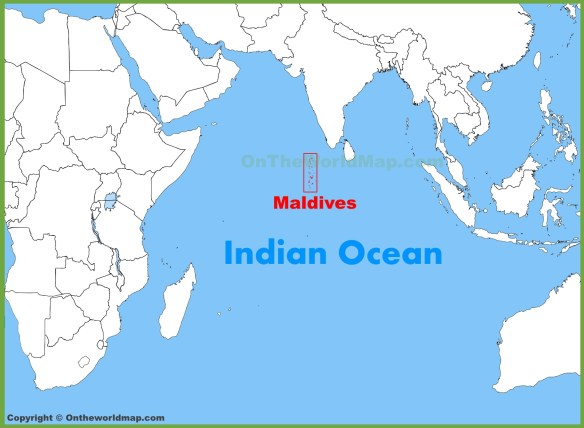
China, the sole defender of the Maldives’ embattled autocrat, Abdulla Yameen, has issued an open threat through a state mouthpiece: If India militarily intervenes in the Maldives, Beijing won’t “sit idly by” but will “take action to stop” it. This essentially is an empty threat because China has no credible capability to sustain a military operation far from its shores. Despite China’s rising naval power, taking on India in its own maritime backyard will be a fool’s errand.
India could call China’s bluff through quick military action that deposes Yameen and installs the jailed Supreme Court chief justice as the interim president to oversee fair elections under UN supervision. In truth, an Indian intervention is not on the cards, in part because such action would trample on the principles India has long championed.
India has carefully weighed all the factors and resolved not to intervene at present in the vicious politics of the increasingly radicalized Maldives. If the crisis there were to escalate to civil war-like conditions, with street clashes erupting in the capital Malé, where two-fifths of the nation’s total population lives, India could, of course, intervene in the name of “responsibility to protect”, the moral principle NATO invoked to counterproductively overthrow Libya’s Muammar Gaddafi.
India had a narrow window of opportunity to intervene immediately after Yameen declared a state of emergency and jailed many, including his elderly half-brother, Maumoon Abdul Gayoom, whose dictatorship lasted three decades largely because Indian paratroopers in 1988 salvaged his presidency from coup plotters who seized control of much of Malé. Before Yameen fell out with Gayoom, he actually ran a family dictatorship, with Gayoom’s daughter his foreign minister.
Beijing’s threat at this stage is not only Doklam-style psychological warfare against India but, more importantly, also an effort to curry favour with the internationally isolated Yameen. By claiming to shield him from India’s potential action, China wants to expand its strategic footprint in the Maldives, where it has already acquired several of the country’s 1,190 atolls for projects. The Maldives’ first and only democratically elected president, Mohamed Nasheed, who was ousted at gunpoint by Gayoom’s pro-Islamist cronies, claims China’s “land grab” has netted 17 islets.
While India has wisely refrained from any precipitous action in response to Yameen’s unbridled lurch toward authoritarianism, it faces a pressing foreign-policy challenge extending beyond the Maldivian crisis. Make no mistake: India’s rapidly eroding influence in its strategic backyard holds far-reaching implications for its security, underscoring the imperative for a more dynamic, forward-looking strategy. India’s inaction and missteps have aided China’s aggressive diplomacy, with Chinese clout increasingly on display even in countries symbiotically tied to India, such as Nepal, Sri Lanka and the Maldives. With Beijing seeking to establish a Djibouti-type naval base in the Maldives, China is opening an oceanic threat against India in the same quiet way that it opened the trans-Himalayan threat under Mao Zedong.
On the Maldives, India’s moment of truth came not with the latest emergency proclamation but in February 2012 when Nasheed made desperate phone calls to Prime Minister Manmohan Singh pleading for an Indian intervention against the Islamists besieging his office. Nasheed, however, had roiled New Delhi with his overtures to Beijing, including personally inaugurating the newly established Chinese Embassy on the day Singh arrived in Malé for a SAARC summit. India’s refusal to take a long-term strategic view and prevent Nasheed’s overthrow has had important consequences, including empowering the Islamists and ceding more space to China. Just months after Nasheed’s ouster, the Maldives expropriated its main international airport from India’s GMR Infrastructure.
In recent years, an emboldened Maldives has increasingly acted against India’s strategic interests with impunity. Six months ago, it sent New Delhi a chilling message by welcoming three Chinese frigates, which docked in Malé and Girifushi Island and imparted special training to Maldivian troops. Yameen amended the Constitution in 2015 to legalize foreign ownership of land in a way tailored for China, requiring a minimal $1-billion construction project that reclaims at least 70% of the desired land from the ocean. New Delhi’s carrots-only approach also encouraged Yameen more recently to sign a free-trade agreement with China that seems designed to use the Maldives as a conduit for the flow of Chinese goods to the Indian market.
India must now start wielding the stick. With other democratic powers, it should impose punishing sanctions. However, the right powers to militarily intervene in the Maldives are the U.S. and Britain because, unlike India, they have little to lose and democracy promotion is a legitimate foreign-policy plank for them. China’s growing presence in the Indian Ocean threatens not just India’s security but also the Diego Garcia-centred Anglo-American naval pre-eminence in the region.
Brahma Chellaney is a geostrategist and author.
© The Hindustan Times, 2018.
 US President Donald Trump’s recent decision to freeze some $2 billion in security assistance to Pakistan as punishment for the country’s refusal to crack down on transnational terrorist groups is a step in the right direction. But more steps are needed.





 Stagecraft and Statecraft
Moreover, as Sri Lanka’s experience starkly illustrates, Chinese financing can shackle its “partner” countries. Rather than offering grants or concessionary loans, China provides huge project-related loans at market-based rates, without transparency, much less environmental- or social-impact assessments. As US Secretary of State Rex Tillerson put it recently, with the BRI, China is aiming to define “its own rules and norms.”
To strengthen its position further, China has encouraged its companies to bid for outright purchase of strategic ports, where possible. The Mediterranean port of Piraeus, which a Chinese firm acquired for $436 million from cash-strapped Greece last year, will serve as the BRI’s “dragon head” in Europe.
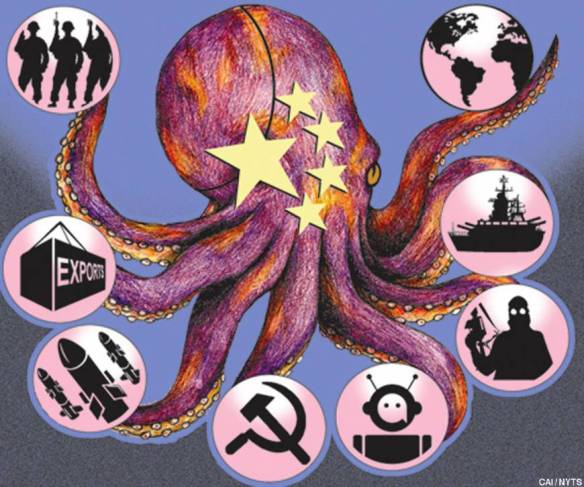
By wielding its financial clout in this manner, China seeks to kill two birds with one stone. First, it wants to address overcapacity at home by boosting exports. And, second, it hopes to advance its strategic interests, including expanding its diplomatic influence, securing natural resources, promoting the international use of its currency, and gaining a relative advantage over other powers.
China’s predatory approach – and its gloating over securing Hambantota – is ironic, to say the least. In its relationships with smaller countries like Sri Lanka, China is replicating the practices used against it in the European-colonial period, which began with the 1839-1860 Opium Wars and ended with the 1949 communist takeover – a period that China bitterly refers to as its “century of humiliation.”
China portrayed the 1997 restoration of its sovereignty over Hong Kong, following more than a century of British administration, as righting a historic injustice. Yet, as Hambantota shows, China is now establishing its own Hong Kong-style neocolonial arrangements. Apparently Xi’s promise of the “great rejuvenation of the Chinese nation” is inextricable from the erosion of smaller states’ sovereignty.4
Just as European imperial powers employed gunboat diplomacy to open new markets and colonial outposts, China uses sovereign debt to bend other states to its will, without having to fire a single shot. Like the opium the British exported to China, the easy loans China offers are addictive. And, because China chooses its projects according to their long-term strategic value, they may yield short-term returns that are insufficient for countries to repay their debts. This gives China added leverage, which it can use, say, to force borrowers to swap debt for equity, thereby expanding China’s global footprint by trapping a growing number of countries in debt servitude.
Even the terms of the 99-year Hambantota port lease echo those used to force China to lease its own ports to Western colonial powers. Britain leased the New Territories from China for 99 years in 1898, causing Hong Kong’s landmass to expand by 90%. Yet the 99-year term was fixed merely to help China’s ethnic-Manchu Qing Dynasty save face; the reality was that all acquisitions were believed to be permanent.
Now, China is applying the imperial 99-year lease concept in distant lands. China’s lease agreement over Hambantota, concluded this summer, included a promise that China would shave $1.1 billion off Sri Lanka’s debt. In 2015, a Chinese firm took out a 99-year lease on Australia’s deep-water port of Darwin – home to more than 1,000 US Marines – for $388 million.
Similarly, after lending billions of dollars to heavily indebted Djibouti, China established its first overseas military base this year in that tiny but strategic state, just a few miles from a US naval base – the only permanent American military facility in Africa. Trapped in a debt crisis, Djibouti had no choice but to lease land to China for $20 million per year. China has also used its leverage over Turkmenistan to secure natural gas by pipeline largely on Chinese terms.
Several other countries, from Argentina to Namibia to Laos, have been ensnared in a Chinese debt trap, forcing them to confront agonizing choices in order to stave off default. Kenya’s crushing debt to China now threatens to turn its busy port of Mombasa – the gateway to East Africa – into another Hambantota.
These experiences should serve as a warning that the BRI is essentially an imperial project that aims to bring to fruition the mythical Middle Kingdom. States caught in debt bondage to China risk losing both their most valuable natural assets and their very sovereignty. The new imperial giant’s velvet glove cloaks an iron fist – one with the strength to squeeze the vitality out of smaller countries.