China’s Debt-Trap Diplomacy

A column internationally syndicated by Project Syndicate

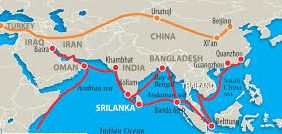
If there is one thing at which China’s leaders truly excel, it is the use of economic tools to advance their country’s geostrategic interests. Through its $1 trillion “one belt, one road” initiative, China is supporting infrastructure projects in strategically located developing countries, often by extending huge loans to their governments. As a result, countries are becoming ensnared in a debt trap that leaves them vulnerable to China’s influence.

Of course, extending loans for infrastructure projects is not inherently bad. But the projects that China is supporting are often intended not to support the local economy, but to facilitate Chinese access to natural resources, or to open the market for low-cost and shoddy Chinese goods. In many cases, China even sends its own construction workers, minimizing the number of local jobs that are created.

Several of the projects that have been completed are now bleeding money. For example, Sri Lanka’s Mattala Rajapaksa International Airport, which opened in 2013 near Hambantota, has been dubbed the world’s emptiest. Likewise, Hambantota’s Magampura Mahinda Rajapaksa Port remains largely idle, as does the multibillion-dollar Gwadar port in Pakistan. For China, however, these projects are operating exactly as needed: Chinese attack submarines have twice docked at Sri Lankan ports, and two Chinese warships were recently pressed into service for Gwadar port security.

In a sense, it is even better for China that the projects don’t do well. After all, the heavier the debt burden on smaller countries, the greater China’s own leverage becomes. Already, China has used its clout to push Cambodia, Laos, Myanmar, and Thailand to block a united ASEAN stand against China’s aggressive pursuit of its territorial claims in the South China Sea.

Moreover, some countries, overwhelmed by their debts to China, are being forced to sell to it stakes in Chinese-financed projects or hand over their management to Chinese state-owned firms. In financially risky countries, China now demands majority ownership up front. For example, China clinched a deal with Nepal this month to build another largely Chinese-owned dam there, with its state-run China Three Gorges Corporation taking a 75% stake.

As if that were not enough, China is taking steps to ensure that countries will not be able to escape their debts. In exchange for rescheduling repayment, China is requiring countries to award it contracts for additional projects, thereby making their debt crises interminable. Last October, China canceled $90 million of Cambodia’s debt, only to secure major new contracts.

Some developing economies are regretting their decision to accept Chinese loans. Protests have erupted over widespread joblessness, purportedly caused by Chinese dumping of goods, which is killing off local manufacturing, and exacerbated by China’s import of workers for its own projects.

New governments in several countries, from Nigeria to Sri Lanka, have ordered investigations into alleged Chinese bribery of the previous leadership. Last month, China’s acting ambassador to Pakistan, Zhao Lijian, was involved in a Twitter spat with Pakistani journalists over accusations of project-related corruption and the use of Chinese convicts as laborers in Pakistan (not a new practice for China). Zhao described the accusations as “nonsense.”

In retrospect, China’s designs might seem obvious. But the decision by many developing countries to accept Chinese loans was, in many ways, understandable. Neglected by institutional investors, they had major unmet infrastructure needs. So when China showed up, promising benevolent investment and easy credit, they were all in. It became clear only later that China’s real objectives were commercial penetration and strategic leverage; by then, it was too late, and countries were trapped in a vicious cycle.

clipboard01Sri Lanka is Exhibit A. Though small, the country is strategically located between China’s eastern ports and the Mediterranean. Chinese President Xi Jinping has called it vital to the completion of the maritime Silk Road.

China began investing heavily in Sri Lanka during the quasi-autocratic nine-year rule of President Mahinda Rajapaksa, and China shielded Rajapaksa at the United Nations from allegations of war crimes. China quickly became Sri Lanka’s leading investor and lender, and its second-largest trading partner, giving it substantial diplomatic leverage.

It was smooth sailing for China, until Rajapaksa was unexpectedly defeated in the early 2015 election by Maithripala Sirisena, who had campaigned on the promise to extricate Sri Lanka from the Chinese debt trap. True to his word, he suspended work on major Chinese projects.

But it was too late: Sri Lanka’s government was already on the brink of default. So, as a Chinese state mouthpiece crowed, Sri Lanka had no choice but “to turn around and embrace China again.” Sirisena, in need of more time to repay old loans, as well as fresh credit, acquiesced to a series of Chinese demands, restarting suspended initiatives, like the $1.4 billion Colombo Port City, and awarding China new projects.

Sirisena also recently agreed to sell an 80% stake in the Hambantota port to China for about $1.1 billion. According to China’s ambassador to Sri Lanka, Yi Xianliang, the sale of stakes in other projects is also under discussion, in order to help Sri Lanka “solve its finance problems.” Now, Rajapaksa is accusing Sirisena of granting China undue concessions.

By integrating its foreign, economic, and security policies, China is advancing its goal of fashioning a hegemonic sphere of trade, communication, transportation, and security links. If states are saddled with onerous levels of debt as a result, their financial woes only aid China’s neocolonial designs. Countries that are not yet ensnared in China’s debt trap should take note – and take whatever steps they can to avoid it.

Obama’s legacy: More war than peace

p9-chellaney-a-20170119-870x635
Obama’s regime-change policy, like Bush’s, showed that the United States has the “reverse Midas Touch” — whatever it touches turns to chaos.


BY , The Japan Times


What is the foreign policy legacy of Barack Obama, who won a Nobel Peace Prize not for his accomplishments as U.S. president but for the expectations that his presidency aroused? Obama is receiving glowing tributes from many Democrats and establishment commentators for his record in clinching deals like the Paris climate change agreement, the nuclear accord with Iran and the Trans-Pacific Partnership. But these deals are already under threat from his successor, Donald Trump.

More significant is the fact that even many of his supporters believe, as Nobel committee secretary Geir Lundestad has written in his memoir, that the Nobel prize to him was “a mistake.” The Nobel committee awarded Obama the prize less than nine months after he assumed office in the hope that he would be fundamentally different from President George W. Bush, whose invasion and occupation of Iraq created a failed state.

The paradox is that Obama, the supposed peacemaker, turned out to be a mirror image of Bush on foreign policy.

To set himself apart from Bush’s aggressive “hard power” approach, Obama campaigned to become president on a foreign policy platform of “smart power.” Yet in office, Obama relied heavily on raw power, waging serial military campaigns from Somalia and Yemen to Iraq and Syria and initiating “targeted killing” of even U.S. citizens with suspected ties to terrorism.

Obama championed “a nuclear-free world” only to quietly pursue an extensive expansion of the U.S. nuclear arsenal, already the world’s costliest and most sophisticated.

Indeed, if one disregards his softer tone in comparison with Bush’s strident rhetoric, Obama’s record shows him to be even more interventionist than Bush. Last year, for example, the United States, according to an analysis of military data, dropped more than 26,000 bombs in seven countries. This happened under a president who, while deploring the ethos of “might makes right,” told the United Nations that “right makes might.”

In truth, Obama, like Bush, paid little heed to international law — or even American law — when it came in the way of his overseas military operations.

For example, Obama did not seek U.N. or U.S. congressional authorization before launching an air war in Syria. In fact, he speciously justified his bombing campaign in Syria by relying on the unrelated congressional authority that Bush secured to go after those who “planned, authorized, committed or aided” the 9/11 terrorist attacks.

The 2011 U.S.-led operation against Libya’s Moammar Gadhafi began as a supposed humanitarian mission, only to quickly turn into a regime-change exercise, whose success quickly bred chaos and mayhem in Libya. Although goaded into the Libyan operation by his hawkish secretary of state, Hillary Clinton, Obama will be remembered in history for demolishing Libya in the same way that Bush unraveled Iraq. The collapse of the Libyan state has created a jihadist citadel at Europe’s southern doorstep.

Obama’s CIA-led regime-change operation in Syria, although unsuccessful, contributed to plunging another secular Muslim autocracy into jihadist upheaval.

Obama indeed presided over the birth of the most potent terrorist organization in modern history — Islamic State — which still controls large tracts of territory in Syria and Iraq even 29 months after Obama began an air war against it. As U.S. Secretary of State John Kerry has admitted, the Obama team viewed the rise of IS as a possibly useful development to overthrow Syrian President Bashar Assad, only to see it grow into a monster.

Flush with his success in overthrowing Gadhafi — an operation that involved orchestrating an Islamist insurgency in Benghazi city and then launching a NATO aerial-bombardment campaign in the name of “responsibility to protect” — Obama turned his attention to toppling Assad. The main IS force was born in Syria out of the CIA-trained, petrodollar-funded “moderate” rebels who crossed over with their weapons to the hydra-headed group.

The rise of IS represented just the latest example of how successive U.S. presidents since the 1980s have been fighting the consequences of their own shortsighted policies. The U.S. has first trained and armed nonstate combatants in breach of international law, calling them “freedom fighters” or “the opposition.” Then it has branded the same militants as “extremists” and “terrorists” and waged war on them. This was the story of al-Qaida, made up largely of CIA-trained “freedom fighters” who, led by Osama bin Laden, turned on the U.S.

U.S. presidents, however, rarely learn from history, one of whose lessons is that the U.S. possesses, as one U.S. analyst has said, “the reverse Midas Touch” — whatever it touches “turns to mayhem.” Obama’s own creation of “moderate” rebel forces to topple Gadhafi has badly backfired, destabilizing not just Libya but also some other states in the Maghreb and the Sahel. Obama’s legacy also includes millions of uprooted Syrian, Libyan and Iraqi refugees, many of whom have flocked to Europe.

Stuck in the old paradigm, Obama did not seek to alter the geopolitical framework governing U.S. foreign policy. For example, to save America’s long-standing alliance with the Persian Gulf’s jihad-bankrolling Islamist monarchs, the Obama administration helped the oil monarchies, even the most tyrannical, to ride out the Arab Spring.

Obama did not change even the Bush-era Afghanistan strategy to use inducements — from billions of dollars in aid to the supply of lethal weapons — to prod the Pakistani military to go after the Haqqani network and get the Afghan Taliban to agree to a peace deal. With Washington clinging to a failed Pakistan policy, the longest war in U.S. history still rages in Afghanistan.

Obama’s legacy will clearly be defined as more war than peace. Obama embraced drone attacks with such alacrity — authorizing 506 known strikes, compared with the 50 strikes under Bush — that he was dubbed “the drone president.” By dramatically boosting U.S. weapon exports, Obama also distinguished himself as the greatest arms exporter since World War II.

From torture and drone strikes to regime change, Obama’s troubling legal legacy, however, is no different than Bush’s. In fact, both Obama and Bush dramatically expanded the executive branch’s power and authority in the realm of national security, including waging war.

During Obama’s tenure, as during Bush’s, the world not only became less peaceful but also America’s relative decline appeared to intensify. For example, in handling China — America’s principal long-term geopolitical rival — Obama’s policy unmistakably advertised U.S. weakness, including allowing Chinese aggression in the South China Sea to go scot-free.

Unlike Russia, which despite its continued decline has remained the top concern of the Washington elites, China sees itself as superior to the rest of the world and seeks to regain its fabled “Middle Kingdom” status.

Ominously, Obama has handed down to Trump more theaters of war than he inherited from Bush. Add to the picture the deep political polarization in America over Trump’s election and the threat the establishment perceives from Trump’s out-of-the-box thinking on several sensitive subjects — from Russia and NATO to trade and the “one-China” policy.

Rarely before has a president assumed office in a major democracy with the deep state and mainstream media so unwelcoming to him. If critics succeed in crimping Trump’s presidency, Obama’s legacy will look better than the actual record.

Brahma Chellaney is a geostrategist.

© The Japan Times, 2017.

The World According to the Donald

COVER STORY/Open Magazine/20 January 2017

c2m-2a9viaak-teBy Brahma Chellaney

New US President Donald Trump’s geopolitical focus on China and Islamic radicalism meshes well with Indian strategic priorities. But will his administration add real strategic content to a vaunted ‘strategic partnership’ with New Delhi whose most-prominent feature is the emergence of India as a leading client of the American armament industry?

Trump’s predecessor, Barack Obama, undoubtedly advanced the relationship with India. But it is also true that Obama compounded India’s regional security challenges, both by emboldening China through his meekness toward Beijing and by bolstering China’s ‘contain India through Pakistan’ strategy. While refusing to take sides in the China-India territorial disputes, the Obama administration actually strengthened China’s strategy to box in India by extending munificent US aid to Pakistan, thus encouraging that country to continue to sponsor cross-border terrorism with impunity.

Whether the Trump administration will contribute positively or negatively to India’s regional interests hinges fundamentally on the geopolitical framework that will guide its foreign policy.

Trump ran an election campaign that challenged American diplomacy’s longstanding principles and shibboleths, turning his party’s own establishment against him. This might suggest that his foreign-policy approach would represent a break from the past.

The fact, however, is that the institutional policymaking structure in the US is much stronger than, say, in India. Therefore, it is not easy for a president to break with well-established policies that have been pursued by presidents belonging to both parties. Moreover, the approach and direction of an American president’s foreign policy becomes apparent only after his first year in office.

For example, Obama’s coming to power created high anticipation globally of significant changes in the American foreign-policy approach, with the expectations being strengthened when he surprisingly was awarded the Nobel peace prize less than nine months after assuming office. Yet Obama proved to be as interventionist as any president before him. The chaos in Libya that he sowed through regime change will be remembered—like President George W. Bush’s unravelling of Iraq—as one of his imprints on history.

India needs to play a more active role in influencing policy in Washington. New Delhi has not tried to persuade the US to end its policy of mollycoddling Pakistan by leveraging India’s defence imports from America or by utilising the services of the large and increasingly influential American Indian community.

Obama came to office vowing to end the Bush-era wars in Afghanistan and Iraq. The war in Afghanistan (the longest war in American history) still rages. Obama ended the war in Iraq, only to start a new one there and in Syria. He presided over the birth of a terrorist organisation more potent that Al Qaeda—the Islamic State of Iraq and the Levant, known as ISIS, ISIL or Islamic State. In 2016, Obama’s last year in office, the US dropped more than 26,000 bombs in seven countries, according to one assessment.

By getting the US embroiled in more conflicts, Obama has bequeathed to Trump a Middle East more violent and less stable than the one Obama inherited from Bush in 2009.

Faced with major international challenges, Trump has signalled his intent to revamp American foreign policy so that he can concentrate on his main priority—comprehensive domestic renewal, the central pillar of his promised strategy to “make America great again”. He has also indicated his desire to reverse the interventionist, regime-change policy that successive American presidents have followed since the early 1950s, when the CIA successfully plotted the overthrow of Iranian Prime Minister Mohammad Mossadegh.

Trump’s determination to boost US job growth by eliminating critical roadblocks, including unfair competition from Chinese manufacturers, has set the stage for a tougher American policy on trade. This is also apparent from those he has named to key positions, especially Robert Lighthizer, his nominee for trade representative, Wilbur Ross, his choice to become commerce secretary, and Peter Navarro, the head of the new White House office overseeing trade and industrial policy.

Trump’s trade-related nationalism is linked to the perception that trade liberalisation has contributed to America’s relative decline. For Trump, trade is one area where he must deliver on his campaign promises or risk losing his credibility with the blue-collar constituency that helped him defeat Hillary Clinton.

No country faces a bigger challenge from Trump’s ascension to power than China, which has been flexing its military and economic muscles more strongly than ever. After the Obama administration’s obsequious stance, Beijing must brace up and face an assertive new national security and economic team in Washington that is unlikely to put up with its covert territorial expansion and trade manipulation.

China will likely bear the brunt of Trump’s trade-related nationalism at a time when its economy is slowing despite the state heavily providing fiscal and monetary stimulus. By contrast, the impact on India will be marginal because the fallout will largely be limited to the H-1B visa issue. Trump’s tougher stance on trade with China is unlikely to be deterred by the spectre of a trade war for the simple reason that Beijing is already waging an economic war against major economies.

While subsidising its exporters, China has quietly but systematically been blocking imports. The Obama administration’s announcement last April that China had agreed to scrap export subsidies on some products, mainly agricultural items and textiles, drew scepticism in the international markets because the deal did not cover major exports, including steel. It also left intact other forms of state support to the Chinese industry.

Trump seems willing to call a spade a spade and adopt a tougher and less predictable line toward Beijing, with his choice to become secretary of state, Rex Tillerson, going to the extent of saying that China should be denied access to the artificial islands that it has created in the South China Sea.

China exports $4 worth of goods to the US for each $1 of imports. Its trade with India is even more skewed: It exports nearly $6 worth of goods for each $1 of imports. This mismatch, largely due to the systematic dumping of goods, has allowed China to rapidly double its trade surplus with India to $60 billion just on Prime Minister Narendra Modi’s watch. China’s bilateral trade surplus with the US, of course, is bigger and is equal to about 3 per cent of its entire economy.

The Trump team has clarified that the president is not against free trade but against unfair trade. If China can slap Mongolia with punitive tariffs for merely allowing the Dalai Lama to undertake a purely religious tour, will it be unreasonable for the Trump administration to penalise China likewise for unashamedly distorting free trade?

Of course, the implications for China extend beyond trade. After all, Trump has signalled an imperative to recalibrate America’s foreign policy by shifting its geopolitical focus from Russia—a declining power with a sharply contracting economy—to the increasingly muscular and openly revisionist China. Unlike Russia’s 2014 annexation of Crimea, China’s territorial revisionism, as illustrated in the South China Sea and the Himalayas, is creeping and incremental yet relentless. Also unlike Russia, China sees itself as superior to the rest of the world and seeks to regain its fabled ‘Middle Kingdom’ status.

Abandoning the longstanding US fixation on Moscow and concentrating instead on the more potent, long-term challenge from China makes eminent sense for the Trump administration. In the global geopolitical competition between the US and China, Washington should seek to ensure that Russia stays neutral, if not on America’s side. However, the Obama administration did the opposite—forcing Moscow to pivot to China.

In the Obama era, China’s defiant unilateralism remained cost-free. Indeed, in the dying days of the Obama administration, China rushed more missiles to its man-made islands in the South China Sea, where, on Obama’s watch, it built seven islands and militarised them in an attempt to annex a strategically crucial corridor through which half of the world’s annual merchant fleet tonnage passes.

But now Trump seems willing to call a spade a spade and adopt a tougher and less predictable line toward Beijing, with his choice to become secretary of state, Rex Tillerson, going to the extent of saying that China should be denied access to the artificial islands that it has created in the South China Sea. While Obama remained virtually mum on China’s creeping aggression in the South China Sea, Tillerson has called it “akin to Russia’s taking Crimea” and favoured a strategic payback.

Will Trump try ‘madman diplomacy’ to tame a renegade Pakistan? The plain fact is that only coercive US diplomacy can help break the Pakistan military establishment’s cosy ties with terrorist groups, some of which are among the most dangerous.

China prefers quiet diplomacy, a setting that allows it to play its cards shrewdly. But Trump’s approach is completely different, as is apparent from his statement that, “Everything is under negotiation including One China.” That America’s ‘one-China’ policy since the 1970s is no holy cow for Trump was also apparent earlier from his conversation with Taiwan’s president by telephone. Trump has also turned his Twitter feed into a twenty-first-century version of the bully pulpit, repeatedly castigating Beijing for refusing to play by the rules. President Xi Jinping and his coterie in Beijing are at a loss on how to handle Trump.

Those analysts concerned about Trump’s deal-making approach tend to forget that US foreign policy, essentially, has always been transactional in character. Trump wants to clinch good deals for the US, just as the leader of any nation ought to do.

Another Trump priority is waging war against radical Islamic militancy before it turns into a global jihadist movement. Trump, however, cannot deliver credible or enduring counterterrorism results without disciplining Saudi Arabia, Qatar and the other oil sheikhdoms that continue to export Islamic radicalism. US foreign policy has had a longstanding alliance with Arab monarchs that has continued even as these cloistered royals bankroll Islamic militant groups and in other countries. Trump will also need to abandon the failed US policy on Pakistan that his immediate two predecessors pursued since the September 11, 2001 terrorist attacks in the US.

Had Hilary Clinton won the presidency, we would likely have seen the continuation of America’s failed Pakistan policy, which has involved doling out billions of dollars in US military and civilian assistance to that quasi-failed country without seeking substantive results on the terrorism front. However, the only language Pakistan’s powerful generals understand is of the kind the US delivered right after 9/11 to bend Pakistan to its will. As former Pakistani military dictator Pervez Musharraf has acknowledged in his memoir, he and his fellow generals genuinely believed that unless they met the Bush administration’s demands, they would be ‘bombed back to the stone ages’.

Against this background, as one American analyst has asked, will Trump try ‘madman diplomacy’ to tame a renegade Pakistan? The plain fact is that only coercive US diplomacy can help break the Pakistan military establishment’s cosy ties with terrorist groups, some of which are among the most dangerous in the world.

Yet in his written submissions to the Senate Armed Services Committee during his confirmation hearing process, Defence Secretary-designate James (‘Mad Dog’) Mattis pledged to build ‘trust’ with Pakistan ‘for an effective partnership’. This might suggest that America’s failed Pakistan policy would persist, even though this policy is the main reason why the US military is still stuck in the war in Afghanistan. Trump’s national security adviser, Gen. Michael Flynn, while serving as the US intelligence chief in Afghanistan, and Gen. Mattis, as CentCom chief, established close relations with the Pakistani military establishment. However, the direction of the Pakistan policy will likely be set by Trump himself, with the policy details left to the Cabinet members.

India needs to play a more active role in influencing policy in Washington. For example, it did little in response to Obama’s move nearly a year ago to reward Pakistan with eight more subsidised F-16s and hundreds of millions of dollars in additional aid under the Overseas Contingency Operations fund, which has been dubbed the ‘slush fund’. It was congressional opposition that stymied the planned transfer of additional F-16s. The blunt truth is that New Delhi has not tried to persuade the U.S. to end its policy of mollycoddling Pakistan by leveraging India’s defence imports from America or by utilising the services of the large and increasingly influential American Indian community.

As for Trump, he is already facing resistance to recalibrating US foreign policy from the deep state, which extends to a nexus between the intelligence agencies and major media organisations. To prevent any détente with Russia, powerful interests in Washington have gone to extraordinary lengths to undercut Trump, including by seeking to irreparably dent his image. This underscores the formidable challenge Trump faces to revamp foreign policy.

No president in living memory has taken office with America so politically polarised and divided and the deep state so unwelcoming as Trump, with the outgoing CIA chief actually blasting him on the eve of his inauguration. If Trump succeeds in recalibrating US foreign policy, including relating to China and Pakistan, he will set the stage for a true, robust and enduring partnership with India.

Brahma Chellaney is professor of strategic studies at the Centre for Policy Research in New Delhi and Richard von Weizsäcker Fellow of the Robert Bosch Academy in Berlin. © Open Magazine, 2016.
MOUNTAINS OF TROUBLE

A bolder India could rein in China’s dangerous antics in Tibet

Brahma Chellaney, Nikkei Asian Review, January 23-29, 2017, pages 56-57

download-1While it has become fashionable to pair China and India as if they were joined at the hip, it is often forgotten that the two have little in common politically, economically or culturally.

Comparatively speaking, the countries are new neighbors. The vast Tibetan plateau, encompassing an area greater than Western Europe, separated the two civilizations throughout history, limiting interaction to sporadic cultural and religious contacts.

It was only after China’s annexation of Tibet in 1951 that Chinese army units appeared for the first time on India’s Himalayan frontiers. This was followed 11 years later by a war in which China’s battlefield triumph sowed the seeds of greater rivalry.

Today, Tibet remains at the center of the China-India divide, fueling territorial disputes, diplomatic tensions and feuds over river-water flows. For example, Beijing was harshly critical of New Delhi in December for allowing the exiled Dalai Lama — who has lived in India since fleeing Tibet in 1959 — to visit the presidential palace for a public event and meet President Pranab Mukherjee, India’s head of state.

Further diplomatic protests from Beijing are expected in coming weeks when the Dalai Lama begins a religious tour of Arunachal Pradesh, a sprawling Indian state famous for its virgin forests and soaring mountain ranges. China claims the territory, which it has called “South Tibet” since 2006.

Tibet is an issue of relevance far beyond China and India. With its lofty terrain, featuring the world’s tallest mountain peaks and largest concentration of glaciers and riverheads, the Tibetan plateau influences atmospheric circulation — and therefore climate and weather patterns — across the northern hemisphere.

China has turned this resource-rich but ecologically fragile plateau into the center of its mining and dam-building activities. With the plateau warming at a rate nearly twice as fast as the rest of the world, glacial recession in the eastern Himalayas and the thawing of permafrost (permanently frozen ground) in Tibet are increasingly apparent.

Wedge issue

The environmental crisis haunting the plateau threatens the ecological well-being of multiple nations, including those dependent on the 10 major Asian river systems that originate on the Tibetan massif. But the environmental problems are dwarfed by political strains in the region.

China lays claim to vast tracts of Indian Himalayan land on the basis of purported Tibetan ecclesial or tutelary links. Tibet’s long shadow over China-India relations is also apparent from the Dalai Lama’s lengthy abode in the Indian hill resort of Dharamsala, the seat of the Tibetan government-in-exile.

The fall of Tibet represented the most far-reaching geopolitical development in modern India’s history. It gave China borders with India, Bhutan and Nepal for the first time, and facilitated a Sino-Pakistan strategic axis by opening a common land corridor.

The impact has been exacerbated by Indian blunders that have compounded the country’s “China problem” and undercut its leverage. New Delhi was one of the first capitals to embrace the Mao Zedong-led regime in Beijing after the Chinese Communist Party seized power in 1949. But just months later, Mao began annexing the historical buffer of Tibet, eliminating India’s outer line of defense by 1951.

Led by Jawaharlal Nehru, a romantic who viewed China sympathetically as a fellow postcolonial state, India went on to surrender extraterritorial rights in Tibet inherited from the U.K., its former colonial master. It also acknowledged the “Tibet region of China,” without getting Beijing to recognize the existing Indo-Tibetan border. Ironically, the pact that recognized China’s rights in Tibet was named after the Tibetan Buddhist doctrine of Panchsheela, the five principles of peaceful coexistence.

Almost half a century later, India went further still, using the legal term “recognize” in a document signed by the heads of government of the two countries in 2003 that formally accepted Tibet as “part of the territory of the People’s Republic of China.”

Dictating terms

20170106_dalai_lama_article_main_image

Tibetan spiritual leader, the Dalai Lama, is helped by attending monks as he arrives at the inauguration of a four-day seminar in New Delhi, India on Dec. 9, 2016. © AP

Meanwhile, China has sought to crimp the Dalai Lama’s freedom within a democratic India. Initially, Beijing objected to official discussions between the Dalai Lama and foreign heads of state or government. But China has progressed over the years to protesting his presence at any state-linked event, and even his visits to other countries, such as a purely religious trip to Mongolia in November.

The New Delhi event that riled Beijing in December was organized for children’s welfare by Nobel laureates, a group that includes the Dalai Lama. Demanding that India respect China’s “core interests” and refrain from causing “any disturbance” to bilateral ties, China couched its protest in imperious terms. Instead of censuring Beijing for seeking to dictate terms to India, New Delhi responded almost apologetically that the meeting was a “non-political event.”

The more accommodative that India has become of China’s claims and concerns over Tibet, the more assertive Beijing has been in upping the ante. For example, in ratcheting up the Arunachal Pradesh issue in recent years, Beijing has contended that the region — almost three times larger than Taiwan — must be “reunified” with the Chinese state to respect Tibetan sentiment. The flimsy basis of its historical claim has been exposed by the Dalai Lama, who has publicly declared that Arunachal was never part of Tibet.

By bringing its Tibet position into alignment with China’s claim, India has not won Chinese gratitude; rather it has boosted Beijing’s clout and encouraged Chinese re-engineering of transboundary river flows, on which India is critically dependent.

According to Aquastat, a database maintained by the Food and Agriculture Organization of the United Nations, 718 billion cubic meters of surface water a year flows out of the Tibetan plateau and the Chinese regions of Xinjiang and Inner Mongolia to neighboring countries. Of that amount, 48.33% runs directly into India. In addition, Nepal’s Tibet-originating rivers drain into India’s Gangetic basin. So no country is more vulnerable than India to China’s current focus on building cascades of large dams on international rivers.

India can reclaim its Tibet leverage by emphasizing that its acceptance of China’s claim over Tibet hinged on a grant of genuine autonomy to the region. Instead of autonomy, Tibet has experienced tightening political control and increasing repression, triggering grassroots desperation and a wave of self-immolations.

A braver Indian approach would include showing Tibet in its official maps in a different color from the rest of China and using expressions such as “the Indo-Tibet border,” instead of “the India-China border.” Using measures such as this, India can subtly reopen Tibet as an outstanding issue without having to renounce formally any of its previously stated positions.

Whatever it does, India must not shy away from urging China to begin a process of reconciliation and healing in Tibet. Having ceased to be a political buffer between China and India, Tibet can still become a political bridge between the world’s demographic titans if Beijing initiates a process of genuine reconciliation there to ease Tibetans’ feelings of estrangement. Otherwise, Tibet will remain at the core of the China-India divide.

India has played an important role in aiding the survival of Tibetan culture by funding Tibetan schools for the large number of Tibetan exiles it hosts. By recalibrating its Tibet policy, India could elevate Tibet as a strategic and environmental issue that impinges on international security and climatic and hydrological stability.

Brahma Chellaney is a geostrategist and the author of nine books, including “Water: Asia’s New Battleground,” the winner of the Bernard Schwartz Award.

© Nikkei Asian Review, 2017.

Halting China’s free ride

Trump won’t abide Obama’s fawning approach to trade.

By Brahma Chellaney, Washington Times

1_3_2017_b1-chel-trump-radar8201_c0-371-1780-1408_s885x516

President-elect Donald Trump ran an election campaign that challenged American diplomacy’s long-standing principles and shibboleths. Since his election triumph, Mr. Trump is already rewriting the rules of the presidency and signaling that his foreign policy approach will be unconventional.

Even before assuming office, Mr. Trump has moved away from President Obama’s foreign policy approach by staking out starkly different positions on several sensitive subjects, including China, Taiwan, Israel, terrorism and nuclear weapons. A Trump presidency may not bring seismic shifts in American policy but it is likely to lead to significant change in U.S. priorities, geopolitical focus and goals as well as in the tools Washington would be willing to employ to help achieve its desired objectives.

No country faces a bigger challenge from Mr. Trump’s ascension to power than China, which has been flexing its military and economic muscles more strongly than ever. After the Obama administration’s obsequious stance, Beijing must brace up and face an assertive new national security and economic team in Washington that is unlikely to put up with its covert territorial expansion and trade manipulation.

Mr. Trump has signaled a need to recalibrate foreign policy by shifting its geopolitical focus from Russia, a declining power with a contracting economy, to the increasingly muscular and openly revisionist China. Unlike Russia’s 2014 annexation of Crimea, China’s territorial revisionism, as illustrated in the South China Sea and the Himalayas, is creeping and incremental yet relentless.

Mr. Trump’s focus on China and Islamic radicalism indicates that, far from retreating from Asia and the Middle East, America is likely to play a sharper, more concentrated role. For example, the U.S. military could carry out more significant reconnaissance and freedom-of-navigation operations in the South China Sea to help deter Chinese aggression.

To countries bearing the brunt of China’s recidivist policies, the Obama administration’s reluctance to challenge Beijing forced several of them to tread with excessive caution around Chinese concerns and interests. A wake-up call came with Mr. Obama’s silence about the 2012 Chinese capture of the Scarborough Shoal, located within the Philippines’ exclusive economic zone. Washington did nothing in response to the capture, despite its mutual-defense treaty with the Philippines.

That inaction helped spur China’s frenzied creation of artificial islands in the South China Sea. In late 2013, when China unilaterally declared an air defense identification zone covering territories it claims but does not control in the East China Sea, Mr. Obama again hesitated, effectively condoning the action. And recently, his meek response to what Mr. Trump called “an unprecedented act” — China’s daring seizure of a U.S. underwater drone — advertised American weakness.

In the dying days of the Obama administration, an emboldened China is rushing more missiles to its man-made islands in the South China Sea, where, on Mr. Obama’s watch, it has built seven islands and militarized them in an attempt to annex a strategically crucial corridor through which half of the world’s annual merchant fleet tonnage passes.

China has demonstrated that defiant unilateralism is cost-free — but it knows that its free ride is about to end, with Mr. Trump willing to adopt a tougher and less predictable line toward it. This is apparent from Mr. Trump’s suggestion, after taking a phone call from Taiwan’s president, Tsai Ing-wen, that a “one-China” policy is no sacred cow for him. Mr. Trump’s economic nationalism also holds greater implications for China than probably for any other country.

By subsidizing exports and impeding imports, China has long waged an economic war against other major economies. The Obama administration’s announcement last April of a deal under which China would scrap export subsidies on some products, largely agricultural items and textiles, drew skepticism in the markets because it did not cover major exports, including steel. It also left intact other forms of state support to the Chinese industry.

Mr. Trump is unlikely to give China a free pass on its trade manipulation. Trade is one area where Mr. Trump must deliver on his campaign promises or risk losing his credibility with the blue-collar constituency that helped propel him to victory. He is threatening to slap punitive tariffs on China for what he described during the campaign as “the greatest theft in the history of the world”.

Mr. Trump is unlikely to be deterred by the specter of a trade war with China for the simple reason that Beijing is already waging an economic war. In fact, Mr. Trump’s likely argument for a tough China stance will be that Beijing’s one-sided economic war must be halted. Such a policy approach is also apparent from some of his appointments, including economist Peter Navarro, the author of “Death By China,” “The Coming China Wars,” and “Crouching Tiger: What China’s Militarism Means for the Rest of the World.”

U.S.-China ties could be in for a rough patch for another reason: Mr. Trump could pivot to Asia in a way Mr. Obama did not. Mr. Obama’s failure to provide strategic heft left his Asia pivot unhinged.

To be sure, Mr. Trump is likely to face resistance to recalibrating U.S. foreign policy from two powerful lobbies in Washington — a large tribe of “panda huggers” and the old establishment figures who spent their formative years during the Cold War obsessing with the Soviet threat and now see Russian President Vladimir Putin as the epitome of evil.

Mr. Trump’s task is made more onerous by a mainstream media that remains hostile to him despite its epic failure to anticipate or predict the election outcome.

Still, a determined Donald Trump is likely to reorient U.S. foreign policy in potentially momentous ways.

• Brahma Chellaney is a geostrategist and author.

Copyright © 2017 The Washington Times, LLC.

Reclaiming India’s leverage on Tibet

Brahma Chellaney, Mint, January 4, 2017

lama-k80h-621x414livemint

Central governments come and go in New Delhi but India’s instinctive chariness and reserve on the issue of Tibet still persist, despite an increasingly muscular China upping the ante against it. Tibet’s annexation has affected Indian security like no other development, giving China, for the first time under Han rule, a contiguous border with India, Bhutan and Nepal and facilitating a Sino-Pakistan strategic axis through a common land corridor.

Even as the then-independent Tibet’s forcible absorption began just months after the 1949 communist victory in China, India — despite its British-inherited extraterritorial rights in Tibet — watched silently, even opposing a discussion in the UN General Assembly on the aggression. Since then, India has stayed mum on increasing Chinese repression in Tibet. But now it is allowing itself to come under Chinese pressure on the Dalai Lama’s activities and movements within India.

Consider the recent development when the Dalai Lama attended a public event at the Rashtrapati Bhawan and met with President Pranab Mukherjee: The government did the right thing by permitting the Dalai Lama to participate in the event, especially since it was organized for children’s welfare by Nobel laureates, a group that includes the Dalai Lama himself.

But after China protested the Dalai Lama’s presence at the Rashtrapati Bhawan, India gratuitously responded rather than disregarding Beijing’s silly gripe, which was couched in imperious terms.

Demanding that India respect China’s “core interests” to avoid “any disturbance” to the bilateral ties, the Chinese foreign ministry stated, “China has urged India to clearly recognize the Dalai Lama’s anti-Chinese and separatist nature, to respect China’s core interests and concerns, to take effective measures to eliminate the negative influences of the incident, and to avoid disturbing China-India ties,” adding: “Recently in disregard of China’s solemn representation and strong opposition, the Indian side insisted on arranging for the 14th Dalai Lama’s visit to the Indian presidential palace, where he took part in an event and met President Mukherjee.”

The ministry of external affairs responded not to censure China for seeking to interfere in India’s internal affairs or for dictating terms to it; rather, it responded to explain the matter to Beijing, saying: “India has a consistent position. His Holiness, the Dalai Lama, is a respected and revered spiritual leader. It was a non-political event organized by Nobel laureates dedicated to the welfare of children.”

Where was the need for India to explain apologetically that it was “a non-political event” — that too to a country that has no compunction in blocking UN sanctions on Pakistan-based terrorists or in frustrating India’s admission to the Nuclear Suppliers Group? The way to deal with China on such an issue is to ignore its protests and keep doing more frequently what it finds objectionable so as to blunt its objections. This approach is necessary in order to send a clear message that China cannot arrogantly lay down terms for India to follow.

Just as China has perfected the art of creeping, covert warfare through which it seeks to take one “slice” of territory at a time, by force, its objections regarding the Dalai Lama have similarly advanced in a crawling form. From objecting to official discussions between the Dalai Lama and a foreign head of state or government, China’s opposition has progressed to protesting his presence at any state-linked event or even his purely spiritual visit to another country, as to Mongolia recently. It has also sought to crimp his freedom within a free India.

Take Mongolia, which has had close links with Tibet ever since the great Mongol king, Altan Khan, converted to Tibetan Buddhism. Indeed, the fourth Dalai Lama was born in Mongolia. But when Mongolia in November stood up to China by permitting the Dalai Lama to undertake a four-day religious tour involving no official meeting, Beijing responded as a typical bully by freezing ties and seeking to throttle its economy — dependent on commodity exports to China — by slapping punitive tariffs and shutting a key border crossing point. And it kept up the coercive pressure until Mongolia, battling a recession, agreed not to allow the Dalai Lama in again even for a religious tour.

Far from being vulnerable to Chinese economic blackmail, India is in a position to employ trade as a political instrument against China, given the lopsided nature of the bilateral commerce. Fattened by a rapidly growing trade surplus with India that now totals almost $60 billion yearly, China has been busy undermining Indian security, either directly or through its surrogate Pakistan. China’s surplus has actually doubled just since Narendra Modi assumed office.

India not only needs to fix the increasingly asymmetrical trade relationship with China but must also reclaim its leverage on the Tibet issue. Tibet is a major instrument of leverage that India has against China. Yet India remains very reluctant to exercise that leverage. Had China been in India’s place, it is unthinkable that it would have shied away from employing the Tibet card or the trade card.

Tibet is to India against China what Pakistan is to China against India. But China has had no hesitation to play the Pakistan card against India, including by building Pakistan as a military balancer on the subcontinent through continuing transfers of nuclear-weapon, missile and conventional-weapon technologies.

Way back in 1965, then education minister and soon to be external affairs minister M.C. Chagla declared, “The conditions under which we recognized China’s suzerainty no longer exist.” Yet today India recognizes Tibet as part of China even as Beijing openly challenges India’s unity and territorial integrity, including by occupying the Aksai Chin plateau and claiming an entire Indian state.

Without India asserting itself by reopening the Tibet issue, China will continue to breathe down its neck and seek to dictate terms. For example, when the Dalai Lama tours Arunachal Pradesh shortly, Beijing will again unleash its diplomatic fury by hectoring India.

© Mint, 2016.

From Russia With Unrequited Love

A column internationally syndicated by Project Syndicate

6773ae17d16b34e4c5c584fa8376943e-landscapelarge

Japanese Prime Minister Shinzo Abe has assiduously courted Russian President Vladimir Putin, meeting with him more than a dozen times in four years. This month he hosted Putin in Tokyo and in his hometown of Nagato (famed for its onsen, or natural hot springs). But Abe’s courtship has so far yielded little for Japan, and much for Russia.

Abe’s diplomatic overtures to Putin are integral to his broader strategy to position Japan as a counterweight to China, and to rebalance power in Asia, where Japan, Russia, China, and India form a strategic quadrangle. Abe has already built a close relationship with India, and he sees improved relations with Russia – with which Japan never formally made peace after World War II – as the missing ingredient for a regional power equilibrium.

But Abe’s trust-building efforts with Russia are not aimed only at checking Chinese aggression. He also wants Russia to return its southernmost Kuril Islands – a resource-rich area known as the Northern Territories in Japan – which the Soviet Union seized just after the United States dropped nuclear bombs on Hiroshima and Nagasaki in August 1945. In exchange, Abe has offered economic aid, investments in Russia’s neglected Far East, and major energy deals.

Abe has, however, encountered several obstacles. For starters, Japan is a participant in the US-led sanctions that were imposed on Russia after it annexed Crimea in March 2014. These sanctions have pushed Russia closer to its traditional rival, China; and Putin has publicly identified the sanctions as a hindrance to concluding a peace treaty with Japan.

In response to Abe’s overtures, Putin has doggedly tried to drive a hard bargain. Russia has bolstered its defenses on the four disputed islands, and, just prior to this month’s summit, he told the Japanese media that the current territorial arrangement suits Russian interests. “We think that we have no territorial problems,” he said. “It’s Japan that thinks that it has a territorial problem with Russia.”

The US-led sanctions regime and low oil prices have battered the Russian economy, which is expected to contract by 0.8% in 2016. Thus, Putin is more reluctant than ever to offer territorial concessions, lest it tarnish his domestic image as a staunch defender of Russian national interests.

Against this backdrop, it is not surprising that Abe left the recent “onsen summit” with dashed hopes of resolving the territorial dispute, while Putin returned home with 68 new commercial accords. Many of the new agreements are symbolic, but some are substantive, including deals worth $2.5 billion and an agreement to set up a $1 billion bilateral-investment fund.

Under the latter agreement, Japan and Russia are supposed create a “special framework” for joint economic activities on the disputed islands. But the plan has already run into trouble. Peter Shelakhaev, a senior Russian official who leads the government’s Far East Investment and Export Agency, has indicated that there are legal hurdles to establishing such a framework, and that Japanese firms doing business on the Kurils would have to pay taxes to Russia. If Japan did that, however, it would effectively be recognizing Russia’s jurisdiction over the islands.

Abe has thus been denied the legacy that he sought, while Putin has succeeded in easing Russia’s international isolation. Abe was the first G7 leader to hold a summit with Putin after Russia annexed Crimea, and now Russia has won Japan’s economic cooperation, too.

Japan is the only G7 country that has a territorial dispute with Russia, and it is clearly more eager to reach a deal than the Kremlin is. But this has only strengthened Russia’s hand. While Japan has softened its position, and signaled that it may accept only a partial return of the islands, Russia has grown only more intransigent. After the recent summit, Abe revealed that Putin now seems to be reneging on a 1956 agreement between Japan and the Soviet Union, which stipulates that the smaller two of the four islands will be returned to Japan after a peace treaty is signed.

As it happens, this year marks the 60th anniversary of that joint declaration, which was widely viewed as a breakthrough at the time. The Kremlin is now suggesting that its commitment to fulfilling the declaration was conditional on Japan not joining any security alliance against Russia. And Putin has expressed concerns that the 1960 Japan-US Security Treaty would extend to the disputed islands if they were returned, thus allowing the US to establish a military presence there.

Japan is in no position to address Russia’s concerns. It cannot opt out of the US-led sanctions regime; and it cannot exempt the disputed Kurils from its security treaty with the US, especially now that it has been urging the US to provide an explicit commitment to defend the Japanese-controlled Senkaku Islands, over which China claims sovereignty.

Putin, for his part, appears smugly content with his negotiating position. Not only did he arrive almost three hours late to the onsen summit, in keeping with his habit of leaving foreign leaders waiting; he also declined a Japanese government gift – a male companion for his native Japanese Akita dog, which Japan gave him in 2012.

There is little hope now that Abe will see tangible returns on the political capital he has invested in cultivating Putin. And Japan’s dilemma will only deepen. US President-elect Donald Trump’s desire to improve relations with Russia may give Abe leeway to continue wooing Putin; but if Russia gets the US in its corner, it won’t need Japan anymore.

BRICS falls under China’s sway

There’s a real risk that BRICS could unravel under the weight of the BRICS wall of China that Beijing is busy erecting
brics
BY , The Japan Times

Adding concrete content to a catchy acronym has become a pressing challenge for BRICS, which brings Brazil, Russia, India, China and South Africa together. BRICS presents itself meretriciously as a powerful grouping. After all, its member-states together represent more than a quarter of the Earth’s landmass, 42 percent of the global population, almost 25 percent of the world’s gross domestic product, and nearly half of the global foreign exchange and gold reserves.

However, as the October BRICS summit in Goa highlighted, there is little in common among its member-states. Although these five emerging economies pride themselves on forming the first important non-Western global initiative, the grouping is still searching to define a common identity and build institutionalized cooperation.

Six years after it expanded from a four-member BRIC to the five-nation BRICS by adding South Africa, it has yet to unveil a common action plan to help bring about fundamental changes in the architecture of global finance and governance or to accelerate the decline of the era of Atlantic dominance.

BRICS lacks the shared political and economic values that bind together the Group of Seven members, who are also tied by security arrangements with the United States. In BRICS, differences outweigh commonalities. As the Goa summit highlighted, China, which is milking BRICS for tangible benefits, represents the biggest challenge to the grouping’s future. Just as China dominates the other new institutions of which it is a founding member — from the Shanghai Cooperation Organization to the Asian Infrastructure Investment Bank (AIIB) — it is using BRICS to assertively push its own interests.

China also dominates the first tangible challenge to the Bretton Woods system, as symbolized by the BRICS-created New Development Bank (NDB) and China’s own initiative, the AIIB.

BRICS has fashioned two instruments — the New Development Bank, which has been given $50 billion in initial capital, and the $100-billion Contingent Reserve Arrangement, or CRA, meant to provide additional liquidity protection to member countries during balance-of-payments problems. Both these instruments have come under China’s sway.

For example, China outmaneuvered India to host the NDB at Shanghai, offering New Delhi a consolation prize — an Indian as the bank’s first president. The CRA — unlike the pool of initial capital to the BRICS bank, with each of the five signatories contributing $10 billion — is being funded 41 percent by China, 18 percent from Brazil, India, and Russia, and 5 percent from South Africa.

Today, China is in the happy situation of overseeing the NDB and the AIIB, not to mention the CRA. Leading two new multilateral banks fits well with Beijing’s strategy to create an “economic hub-and-spoke system” via energy pipelines, strategic highways and ports, and railroad networks. In this scheme, China, as the hub, seeks to draw in raw materials and other natural resources from the spokes, while exporting industrial and consumer goods to them.

China’s “economic hub-and-spoke system” is to parallel America’s military hub-and-spoke system. But it is an “economic hub-and-spoke system” with a strategic mission. China’s infrastructure development in other states is driven, as during the European colonial era, by a specific interest — to advance its own interests while saddling local communities and governments with heavy debt and human and environmental costs.

Against this background, it is not a surprise that China is a revisionist power with respect to the global financial architecture, but a status quo power in regard to the United Nations system. In other words, China supports international institutional reforms that give it a greater say but blocks measures that will dilute its existing status.

So it is an obstacle to restructuring and democratizing the Security Council. It wants to remain Asia’s sole permanent member of the Security Council. And as underscored by its 2016 presidency of the Group of 20, China values the G-20 as a vehicle to enlarge its role in global economic governance while seeking to retain those elements of the present trade and financial architecture that have facilitated its dramatic economic rise.

Meanwhile, it is using BRICS to expand the international role of its currency as part of its quest to build the yuan as a global currency that could one day rival the dollar or euro. So it is lending and trading in yuan with the other BRICS members.

China’s hidden export subsidies, for their part, are steadily undermining manufacturing in the other BRICS states, even as its adept use of tariff and non-tariff barriers shuts out, from its own market, goods and services in which they have a comparative advantage. For example, China’s trade surplus with India has doubled since 2014 alone to nearly $60 billion, threatening India’s domestic manufacturing base. An article last month in China’s state-run Global Times mockingly said: “Let the Indian authorities bark about the growing trade deficit with China. The fact of the matter is they cannot do anything about it.”

At the Goa summit, Chinese President Xi Jinping flexed his muscles to keep the South China Sea issue out of the Goa Declaration and to shield Pakistan from its sponsorship of terrorism, with the declaration citing U.N.-designated terrorist groups in the Middle East but not the ones based in Pakistan.

China’s “core leader” in Goa called for “political solutions” to “regional hotspots” even as his government adds fuel to regional fires through a relentless territorial creep in the South China Sea and by embarking on a $46 billion corridor to the Indian Ocean through Pakistan-held Jammu and Kashmir, a U.N.-recognized disputed region. How can BRICS create rules-based cooperation among its members if international norms of conduct are flouted in such a manner?

The Goa summit indeed was a reminder of China’s lengthening shadow over BRICS. As China uses the grouping to push its own agenda, BRICS has been left carrying the can. The risk is real that the grouping could collapse under the weight of the BRICS wall of China that is being erected.

Brahma Chellaney is a geostrategist and author and a long-standing contributor to The Japan Times.

© The Japan Times, 2016.

Trump could ‘pivot’ to Asia like Obama never did

Trump may well launch his own ‘Asian pivot’ in the vacuum of Obama’s lackluster effort.

Brahma Chellaney, Nikkei Asian Review, November 21, 2016

20161120_southchinasea_article_main_image

U.S. President Barack Obama’s strategic “pivot” toward Asia, unveiled in 2012, attracted much international attention but did little to tame China’s muscular approach to territorial, maritime and trade disputes. Indeed, with the United States focused on the Islamic world, Obama’s much-touted Asian pivot seemed to lose its way somewhere in the arc between Iraq and Libya. Will President-elect Donald Trump’s approach to Asia be different?

In his first meeting with a foreign leader since his surprise Nov. 8 election triumph, Trump delivered a reassuring message to Japanese Prime Minister Shinzo Abe who, in turn, described him as a “trustworthy leader.” In a smart diplomatic move, Abe made a special stop in New York on Nov. 17, en route to the Asia-Pacific Economic Cooperation summit in Peru, to meet face-to-face with Trump, who shares his conservative, nationalistic outlook.

Today, Asia faces the specter of power disequilibrium. Concern that Trump could undo Obama’s pivot to Asia by exhibiting an isolationist streak ignores the fact that the pivot has remained more rhetorical than real. Even as Obama prepares to leave office, the pivot — rebranded as “rebalancing” — has not acquired any concrete strategic content.

If anything, the coining of a catchy term, “pivot,” has helped obscure the key challenge confronting the U.S.: To remain the principal security anchor in Asia in the face of a relentless push by a revisionist China to expand its frontiers and sphere of influence.

Trump indeed could face an early test of will from a China determined to pursue its “salami slicing” approach to gaining regional dominance. In contrast to Russia’s preference for full-fledged invasion, China has perfected the art of creeping, covert warfare through which it seeks to take one “slice” of territory at a time, by force.

With Obama having increasingly ceded ground to China in Asia during his tenure, Beijing feels emboldened, as evident in its incremental expansionism in the South China Sea and its dual Silk Road projects under the “One Belt, One Road” initiative. The Maritime Silk Road is just a new name for Beijing’s “string of pearls” strategy, aimed at increasing its influence in the Indian Ocean. Meanwhile, without incurring any international costs, China aggressively continues to push its borders far out into international waters in a way that no other power has done.

Indeed, boosting naval prowess and projecting power far from its shores are at the center of China’s ambition to fashion a strongly Sino-centric Asia. Boasting one of the world’s fastest-growing undersea fleets, China announced earlier in November that its first aircraft carrier, the Liaoning, is ready for combat. Such revanchist moves will inevitably test the new U.S. administration’s limits.

Tougher approach

In this light, it is difficult to see how Trump can afford to cut back on U.S. military deployments and assets in the Asia-Pacific region. What seems more likely is that Trump will live up to his election campaign promise to invest greater resources in the military. By relaxing some of the Obama-era constraints, Trump, in keeping with his “tough guy” image, could permit the U.S. navy and air force to initiate more aggressive reconnaissance and freedom-of-navigation operations in the South China Sea. He could also invite China’s wrath by getting Japan to join U.S. air and sea patrols in the disputed waters.

Trump is also expected to be more assertive diplomatically than Obama, who refused to speak up even when China occupied the Scarborough Shoal, located well within the Philippines’ exclusive economic zone. The 2012 takeover occurred despite a U.S.-brokered deal under which both Beijing and Manila agreed to withdraw their vessels from the area. Yet the U.S. did nothing in response to China’s move, despite its mutual-defense treaty with the Philippines. That inaction helped spur China’s frenzied creation of artificial islands in the South China Sea.

In late 2013, when China unilaterally declared an air defense identification zone covering territories it claims but does not control in the East China Sea, Obama again hesitated. Indeed, Washington, far from postponing Vice President Joe Biden’s trip to Beijing to express disapproval of the Chinese action, advised U.S. commercial airlines to respect the ADIZ — an action that ran counter to Japan’s advice to its carriers to ignore China’s demand for advance notice of flight plans through the zone. In effect, the U.S. condoned China’s move to establish the ADIZ.

Philippine President Rodrigo Duterte’s much-criticized action to cut his own deal with China, involving billions of dollars in Chinese investment pledges, should be seen in this context. The deal, however, is likely to hold only until the next major Chinese incursion.

The paradox here is that Beijing’s rising assertiveness helped the U.S. return to Asia’s center-stage — yet, even as China became more aggressive with its neighbors, the Obama administration dithered over how to rein in such expansionism or reassure America’s jittery Asian allies. In fact, the more assertive China has become in pressing its territorial and maritime claims, from the East China Sea to the Himalayas, the more reluctant the Obama administration has been to take sides in Asia’s territorial disputes — although they center on Beijing’s efforts to change the status quo with America’s strategic allies or partners.

No less significant is Obama’s failure to provide strategic heft to his Asia pivot. By studiously avoiding disputes with China while working to balance America’s relationships with key Asian states, his administration shied away from tough strategic choices. Indeed, no sooner had the pivot policy been unveiled than a course correction was effected, with the administration tamping down the pivot’s military aspects and laying emphasis instead on greater U.S. economic engagement with Asia. Even the modest measure to permanently rotate up to 2,500 U.S. marines through Darwin, Australia, is yet to be fully implemented.

To countries bearing the brunt of China’s recidivist policies, this lack of clarity has not only raised doubts about the U.S. commitment, but also left them effectively at the mercy of a regional predator. That, in turn, has forced several of them to tread with excessive caution around Chinese concerns and interests.

Shoring up alliances

Far from retreating from Asia, the U.S. under Trump is likely to bolster alliances and partnerships with states around China’s periphery. His administration may even support constitutional and national security reforms in Japan, on the assumption that a Japan that does more for its own defense will help to forestall the emergence of a destabilizing power imbalance in East Asia. Such support will also fit well with Trump’s top priority to halt the erosion of America’s relative power through comprehensive domestic renewal, including reining in the mounting U.S. budget deficit.

Trump’s election, however, has dimmed prospects for full implementation of the 12-nation, Trans-Pacific Partnership trade agreement. The TPP, which excludes not only China but also America’s close friends like India and South Korea, has been presented by Obama as the most important component of his unhinged pivot to Asia. In truth, the TPP is hardly a transformative initiative: With half its members already boasting bilateral free trade agreements with Washington, the TPP’s main effect would have been to create a free trade agreement between Japan and the U.S., which together account for about 80% of the gross domestic product of TPP signatories.

Trade is one area where Trump must deliver on his campaign promises or risk losing his credibility with the blue-collar constituency that helped propel him to victory. His administration not only will seek to renegotiate parts of the TPP — to the discomfit of Abe, who has made the trade deal a pillar of his economic reforms — but also is unlikely to give China a free pass on its trade manipulation. For this and many other reasons, U.S.-China ties could be in for a rough patch.

At a time when the very future of the Asian order looks uncertain, Trump could pivot to Asia in a way Obama did not. But today, no single power, not even the U.S., can shape developments on its own in Asia, including ensuring a rules-based order. His administration will have to work closely with likeminded states — from Japan and Australia to India and Vietnam — to build a stable balance of power in Asia.

Brahma Chellaney is a geostrategist and the author of nine books, including “Water, Peace, and War” (Rowman & Littlefield).

© Nikkei Asian Review, 2016.

BRICS reduced to a “talk shop”?

The real winner from the two BRICS-initiated financial ventures is China, with BRICS left carrying the can.

Brahma Chellaney, Nikkei Asian Review

20161017_brics_leaders_article_main_image

On paper, the five BRICS countries — Brazil, China, India, Russia and South Africa — look like a powerful grouping: the member states combined represent more than a quarter of the earth’s landmass, over 42% of the global population, almost 25% of the world’s gross domestic product, and nearly half of the global foreign exchange and gold reserves. In reality, though, BRICS is still struggling to define a common identity and build institutionalized cooperation among its members. Their just-concluded summit, held in the Indian beach resort of Goa on Oct. 14-15, underscored inherent challenges.

As the first important non-Western global initiative of the post-Cold War world, BRICS reflects ongoing global power shifts, including the slow retreat of Atlantic dominance.

If BRICS can get its act together, it will be able to exercise significant geoeconomic and geopolitical clout and evolve into a major instrument to bring about fundamental changes in the architecture of global finance and governance. By serving as the building blocks of overhauled financial and governance systems, the BRICS economies would be a catalyst in the qualitative reordering of power and in reshaping the entire international order.

After all, in a spectacular reversal of fortunes, the developing economies, with their large foreign reserves, now finance the mounting deficits of the wealthy economies. More importantly, the BRICS economies are likely to remain the world’s most important source for future growth.

However, given that BRICS is just an extension of the BRIC concept conceived by Goldman Sachs economist Jim O’Neill in 2001, it is surprising that the grouping has stuck to an alien acronym. BRIC (Brazil, Russia, India and China) became BRICS with the addition of South Africa in late 2010. Had the grouping pursued a more forward-looking approach, it could have simply called itself the “R-5” after the names of its members’ currencies — the real, rand, ruble, renminbi and rupee — and presented itself, in contrast to the obsolescent Group of Seven (G-7), as the face of the future.

The plain fact is that the challenges BRICS faces today are fundamental, making its future uncertain. These disparate countries have starkly varying political systems, economies, and national goals, and are located in different corners of the globe. There is little in common among the BRICS states.

For example, what is common between the world’s largest democracy, India, and the largest autocracy, China? The biggest real estate claimed by a revanchist China is an Indian state almost three times larger than Taiwan — Arunachal Pradesh, an ecological paradise of virgin forests, orchids and soaring mountain ranges. How can BRICS create rules-based cooperation among its members if international norms of behavior are flouted, as by China’s territorial creep in the South China Sea and its shielding of Pakistani terrorism at the United Nations Security Council and by Russia’s annexation of Crimea?

To compound BRICS’ challenges, the Brazilian, Russian and South African economies have nose-dived in recent years, even as China’s faltering growth and downside deflationary risks have unsettled global markets. Only India has defied the BRICS’ slump, priding itself as the world’s fastest-growing major economy.

Almost six years after it expanded from four to five member-states, BRICS has yet to evolve into a coherent grouping with defined goals and an institutional structure. Of course, it has created the Shanghai-based New Development Bank and set up, as a shield against global liquidity pressures, the $100-billion, China-dominated Contingent Reserve Arrangement. The real winner from both these initiatives is China, with BRICS left carrying the can.

Despite its utility as a non-Western grouping, BRICS cannot remain just a “talk shop.” The Goa summit was a reminder that it has yet to devise a common action plan to go forward.

To be sure, the annual BRICS summit provides a useful platform for bilateral discussions on the sidelines, as between the Chinese president and Indian prime minister on a host of issues that bedevil their countries’ bilateral relationship. Some member states, by piggybacking on the BRICS summit, hold their own bilateral summits before or after the event. For example, the annual India-Russia summit was held in Goa just before the start of the BRICS summit.

Still, BRICS faces nagging questions about whether its members, with their different priorities and interests, can unite on key international issues. If BRICS is to build collective clout, its members must frame common objectives and approaches to tackling the pressing international issues. Take the scourge of terrorism: The Goa Declaration omitted any reference to cross-border terrorism or state sponsorship of terror or even to any Pakistan-based terrorist group at the instance of China, which sought to protect its close ally Pakistan from charges that its intelligence service was behind recent grisly attacks in Afghanistan, Bangladesh and India.

The G-7 began as a discussion platform like BRICS but, by defining its members’ common interests, it advanced within years to joint coordination on key international issues. BRICS, lacking the shared political and economic values that bind the G-7 members together, cannot stay relevant if it does little more than bring together its leaders and various stakeholders for discussions. Indeed, the most important bilateral relationship for each BRICS country is not with another BRICS member but with the United States.

Worse still, an overly ambitious China, seeking to dominate the grouping and emerge as America’s peer rival, has cast a lengthening shadow over BRICS. For example, as part of its quest to build the yuan, or renminbi, as a global currency that could eventually rival the dollar or euro, a cash-rich China is using BRICS as an important vehicle to expand the renminbi’s international role, including by offering renminbi loans to other BRICS members. Lending and trading in renminbi helps China to boost its exports and international clout.

China’s hidden export subsidies, however, have been systematically undermining manufacturing in the other BRICS states. Chinese dumping is blighting Indian and Brazilian manufacturing in particular. Consequently, China’s rapidly growing trade surplus, for example, with India has doubled since Narendra Modi became prime minister two-and-a-half years ago. This has armed Beijing with greater leverage over New Delhi.

For Brazil, India, Russia and South Africa, BRICS offers largely symbolic benefits, including underscoring their growing international role and their desire to pluralize the global order. By contrast, China, which needs no recognition of its rise as a world power, is milking BRICS for tangible benefits, including to advance its economic and political benefits.

Even on international institutional reforms, China is hardly on the same page as the other BRICS members. The present international order emerged in the post-1945 period as a U.S.-led hierarchical order involving a group of likeminded countries, largely in the West. Since then, the global institutional structure has remained largely static, even as the world has changed dramatically. As a result, the global financial and governance systems, ranging from the International Monetary Fund and the World Bank to the United Nations Security Council, no longer look truly global in terms of representation. This has made fundamental reforms to international institutions and rules imperative.

China is a revisionist power with respect to the global financial architecture, seeking an overhaul of the Bretton Woods system that emerged in the mid-1940s. It also seeks to dominate the first tangible challenge to the Bretton Woods institutions, as symbolized by the BRICS’ New Development Bank and the China-created Asian Infrastructure Investment Bank, headquartered in Beijing.

China, however, is a status quo power in regard to the U.N. system and wishes to remain Asia’s sole country with a permanent seat in the Security Council, which means keeping fellow BRICS member India (and Japan) out. China’s strategy, by extension, also seeks to shut out India from other political institutions, including the Nuclear Suppliers Group, where it has almost singlehandedly blocked a U.S.-led push for India’s entry.

Against this backdrop, if BRICS remains just a “talk shop,” it will not only fail to fulfill its true potential but will also wither away under the weight of its contradictions. The Goa summit did little to belie the contention of cynics that BRICS is just an acronym with little substance.

Brahma Chellaney, a geostrategist and author, is Richard von Weizsäcker Fellow at the Robert Bosch Academy in Berlin and professor of strategic studies at the Center for Policy Research in New Delhi.

© Nikkei Asian Review, 2016.