
Brahma Chellaney, The Hindustan Times
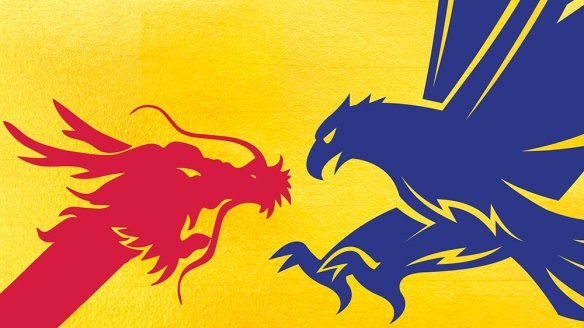
From Richard Nixon to Barack Obama, successive US presidents, as a matter of policy, aided China’s rise in the naïve hope that a more prosperous China would liberalize economically and politically. But now a fundamental shift in America’s China policy is under way, opening the path to greater Indo-US collaboration. The evolving paradigm shift, with its broad bipartisan support, is set to outlast Donald Trump’s presidency.
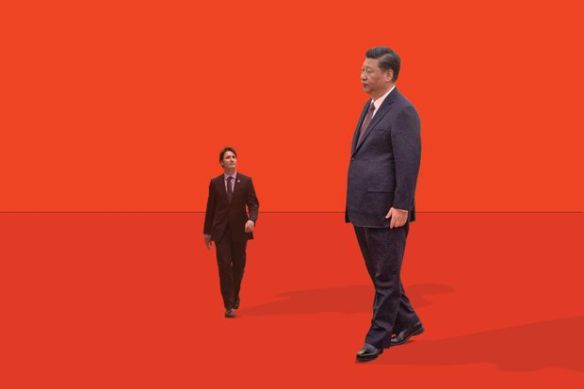
China, a trade cheat that has also employed non-tariff tools to punish countries as diverse as South Korea, Mongolia, Japan and the Philippines, is getting a taste of its own medicine. By scripting the Canadian arrest of the Huawei founder’s daughter, the US has shown it has more powerful non-tariff weapons. The action has rattled China’s elites: They are angry but also fearful that any one of them could meet a similar fate while travelling to the West.
The arrest was significant for another reason. As former US Defence Secretary Ash Carter says in a recent essay published by Harvard University, Beijing has a history of staging provocations that coincide with high-level diplomacy. For example, the start of President Xi Jinping’s 2014 state visit to India coincided with a deep Chinese military incursion into Ladakh. The fact that the Huawei arrest coincided with the Dec. 1 Trump-Xi dinner meeting in Buenos Aires signalled to Beijing that others can pay it back in the same coin.
America’s ongoing policy shift, however, should not obscure how its “China fantasy”, as a book title describes it, facilitated the assertive rise of its main challenger. Such was the fantasy that President Bill Clinton got China into the WTO by citing Woodrow Wilson’s vision of “free markets, free elections, and free peoples” and claiming the admission would herald “a future of greater openness and freedom for the people of China”. Instead, China has become more autocratic and repressive, building an Orwellian surveillance state.
The end of the 45-year-old US conciliatory approach to China does not necessarily signify the advent of an overtly confrontational policy or even a new cold war. China, for example, still gets a free pass on human-rights abuses. The US has slapped no sanctions on China for detaining more than a million of its Muslims in internment camps. Imagine the US response had Russia set up such camps.
The policy shift appears more about finding economic levers to blunt China’s strategy of global expansion and ascendancy. In Asia, for example, China is aiming to displace the US as the leading power and contain its peer rivals, Japan and India, by seeking to enforce a 21st-century version of the Monroe Doctrine, including through geo-economic tools and territorial and maritime revisionism. It has gained de facto control of much of the South China Sea.
A key question is whether the US policy shift is occurring too late to stop China’s global rise or even compel it to respect international norms and rules. Having become strong through assorted trade barriers, quotas, currency manipulation, forced technology transfer, intellectual property theft, and industrial and export subsidies, China is unlikely to fundamentally change its behaviour in response to the new American pressure. Xi, China’s new self-crowned emperor, would undermine his position — and his strategy to build a Sino-centric Asia — by yielding to American demands.
Xi’s regime will seek to bear the US pressure — at some cost to China’s economic growth — but without materially altering its policies or global ambitions. The 90-day “truce” in the trade war that Xi negotiated with Trump in Buenos Aires meshes with Beijing’s “two steps forward, one step back” strategy to progressively advance its ambitions.
Nevertheless, the US, by embracing a more realistic and clear-eyed approach, is signalling that China’s economic and strategic aggression will no longer go unchallenged. Even if the US fails to compel Beijing to respect international rules, its policy change signifies that the free ride that China has long enjoyed is ending — a free ride that has brought the security of its neighbours, including India, under pressure.
Indeed, Trump has shown how active pressure on China, as opposed to Indian-style imploration, can yield concessions. Whereas deference to China usually invites bullying, standing up to it generates respect and compromise.
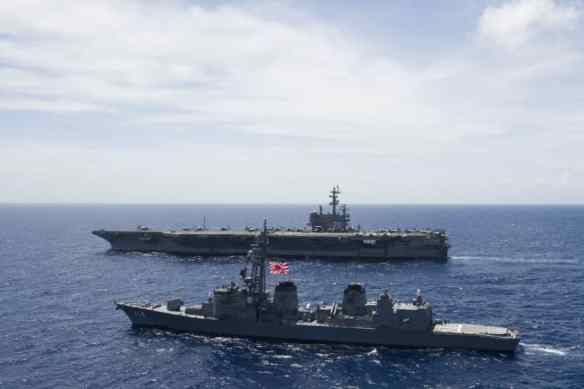
In Buenos Aires, while the spotlight was on the Trump-Xi talks, the US president’s joint meeting with prime ministers Shinzo Abe and Narendra Modi — the first ever such trilateral — underscored the centrality of Japan and India to the American goal to build a stable balance of power in Asia. Indeed, the entente between Asia’s richest democracy and its biggest is a principal pillar of Washington’s newly unveiled “free and open Indo-Pacific” strategy.
Brahma Chellaney is a geostrategist.




 Stagecraft and Statecraft
You must be logged in to post a comment.