Modi in China

A column internationally syndicated by Project Syndicate.

China and India have a fraught relationship, characterized by festering disputes, deep mistrust, and a shared ambivalence about political cooperation. Booming bilateral trade, far from helping to turn the page on old rifts, has been accompanied by increasing border incidents, military tensions, and geopolitical rivalry, as well as disagreements on riparian and maritime issues.

Since taking office last year, Indian Prime Minister Narendra Modi has sought to transform his country’s relationship with China, arguing that Asia’s prospects hinge “in large measure” on what the two countries – which together account for one-third of the world’s population – “achieve individually” and “do together.” But, as Modi’s just-concluded tour of China highlighted, the issues that divide the demographic titans remain formidable.
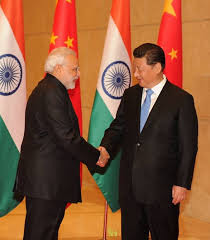
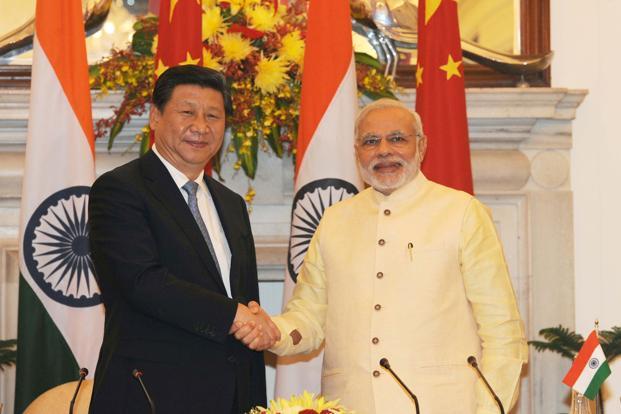
Modi XiTo be sure, China’s leaders fêted Modi in style. When Modi arrived in Xian – one of China’s four ancient capitals and President Xi Jinping’s hometown – Xi took him on a personal tour of the Big Wild Goose Pagoda. (Modi subsequently boasted of his close “plus one” friendship with Xi.) In Beijing, Premier Li Keqiang posed for a selfie with Modi outside the Temple of Heaven.

What China’s leaders did not do was yield on any substantive issue – and not for lack of effort on Modi’s part. Despite Modi’s pragmatic and conciliatory tack, his request that China “reconsider its approach” on some of the issues that are preventing the partnership from realizing its “full potential” went unheeded.

Consider discussions relating to the ongoing dispute over the two countries’ long Himalayan frontier. Alluding to a series of Chinese military incursions since 2006, Modi declared that “a shadow of uncertainty” hangs over the border region, because the “line of actual control” that China unilaterally drew after defeating India in a 1962 war that it had initiated was never mutually clarified. Modi proposed resuming the LAC clarification process, but to no avail.

In fact, the reason for the continued ambiguity is that, in 2002, after more than two decades of negotiations, China reneged on a promise to exchange maps with India covering the two main disputed sectors – the Austria-size Arunachal Pradesh and the Switzerland-size Aksai Chin, along with its adjacent areas – located at either end of the Himalayas. Four years later, China revived its long-dormant claim to Arunachal Pradesh, and has since breached its border several times. It fulminated against Modi’s visit to Arunachal Pradesh in February.

Nonetheless, in his zeal to build the bilateral relationship, Modi announced that Chinese tourists are now eligible to receive electronic visas on arrival in India – blindsiding his foreign secretary, who had just told the media that no such decision had been made. China’s foreign minister hailed the measure as a “gift” – an accurate description, given that China has yielded nothing in return. On the contrary, China has aimed to undermine India’s sovereignty, by issuing stapled visas to residents of Arunachal Pradesh.

Moreover, China – which, by annexing water-rich Tibet, has become the region’s hydro-hegemon – also declined to conclude an agreement to sell India hydrological data on transboundary rivers year-round, rather than just during the monsoon season. So China is not only refusing to create a water-sharing pact with any of its neighbors; it will not even share comprehensive data on upstream river flows.

Making matters worse, there is an unmistakable air of condescension in the pronouncements, contained in the joint statement issued at the end of Modi’s visit, that China “took note of India’s aspirations” to join the Nuclear Suppliers Group, and “understands and supports India’s aspiration to play a greater role in the United Nations, including in the Security Council.” China is the only major power that has not backed India’s bid to become a permanent member of the Security Council.

Economic outcomes were similarly unequal. Many of the deals Modi made with business leaders in Shanghai – supposedly worth $22 billion – entail Chinese state-owned banks financing Indian firms to purchase Chinese equipment. This will worsen India’s already massive trade deficit with China, while doing little to boost China’s meager investment in India, which totals just 1% of China’s annual bilateral trade surplus – a surplus that has swelled by one-third since Modi took office and is now approaching $50 billion.

Indeed, China and India have one of the world’s most lopsided trade relationships. Chinese exports to India are worth five times more than its imports from India. Moreover, China mainly purchases raw materials from India, while selling it mostly value-added goods. With India making little effort to stem the avalanche of cheap Chinese goods flooding its market – despite Modi’s much-touted “Make in India” campaign – China’s status as the country’s largest source of imports appears secure.

China is well practiced in using trade and commercial penetration to bolster its influence in other countries. In India’s case, it is leveraging its clout as a major supplier of power and telecommunications equipment and active pharmaceutical ingredients, not to mention as a lender to financially troubled Indian firms, to limit the country’s options. By allowing the trade distortions from which China profits to persist – and, indeed, to grow – India is effectively funding this strategy.

As hard as Modi tries to put a positive spin on his recent visit to China, highlighting the 24 mostly symbolic agreements that were concluded, he cannot obscure the harsh strategic realities affecting the bilateral relationship. Without a new approach, the Sino-Indian relationship seems doomed to remain highly uneven and contentious.

© 1995-2015 Project Syndicate.
China and Pakistan: Little in common yet the closest of allies

Brahma Chellaney, The Japan Times

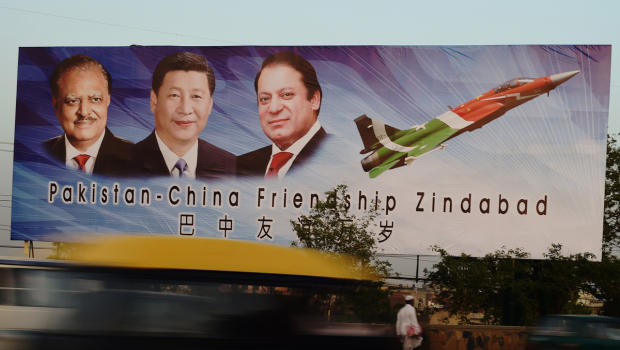
pakistan470080792President Xi Jinping’s recent Islamabad visit, by unveiling agreements valued at $28 billion, shows that China has made Pakistan the central link between its dual Silk Road initiatives. While the maritime Silk Road is the meretriciously benign name for China’s “string of pearls” strategy, the overland Silk Road project has been designed to advance Chinese interests in Central Asia, the Caspian Sea basin and beyond.

These initiatives are part of China’s larger strategy to break out of the East Asia mold and become a more global power.

Xi has now embarked on connecting China’s restive Xinjiang region with the Arabian Sea through a 3,000-kilometer overland transportation corridor to Pakistan’s Chinese-built Gwadar port. Known as the China-Pakistan Economic Corridor, this $46 billion project through Pakistan-held Kashmir will hook up China’s maritime and overland Silk Roads and increase Pakistan’s pivotal importance for Beijing.

When an Indian prime minister visits the Myanmar-bordering Arunachal Pradesh (a large Himalayan territory whose control by India only China questions), or India and Vietnam jointly explore for offshore oil in the South China Sea, China protests loudly, claiming it is “disputed territory.” But the Xi-pushed corridor will traverse an internationally recognized disputed region — Pakistan-held Kashmir — where China has been enlarging its military footprint.

An influx of People’s Liberation Army (PLA) troops into the Pakistani Kashmir’s Shiite-majority Gilgit-Baltistan region in recent years, to supposedly guard Chinese strategic projects there, has resulted in Chinese military presence close to Pakistan’s line of control with India in Kashmir.

The scenario presents India with a two-front theater in Kashmir in the event of a war with either country. This threat is also being highlighted by PLA officers conducting field exercises close to Pakistan’s line of control with India to train Pakistani army troops in the use of Chinese-supplied weapons.

More fundamentally, India is contained geopolitically by the longstanding axis between China and Pakistan, involving, among other things, covert nuclear, missile and intelligence cooperation. With serious strains emerging in Beijing’s relationship with North Korea, Pakistan is now clearly China’s only real ally.

China’s nexus with Pakistan has long been likened to the closeness between lips and teeth, with Beijing recently calling Pakistan its “irreplaceable all-weather friend.” The two often boast of being “iron brothers.” Of late, though, their description of their relationship has become more flowery — “taller than the mountains, deeper than the oceans, stronger than steel, and sweeter than honey.”

Paradoxically, China and Pakistan have little in common, yet boast one of the closest relationships in international diplomacy. Their axis has been built on a shared objective to tie India down, as former state department official Daniel Markey says in his 2013 book, No Exit From Pakistan. Weapon transfers, loans and infrastructure projects allow China to use Pakistan as a cost-effective counterweight to India.

Pakistan, for example, developed its nuclear-weapons capability with Chinese aid and U.S. indulgence, highlighting the fact that no other state has received Chinese and American support in parallel on a sustained basis extending for decades. Indeed, the more Pakistan has become a jihadist snake pit, the greater has been China’s leeway to increase its strategic penetration of that country.

For India, the implications of the growing nexus are particularly stark because both China and Pakistan stake claims to substantial swaths of Indian land and continue to collaborate on weapons of mass destruction.

Significantly, as China’s involvement in strategic projects in Pakistan-held Kashmir has grown, it has openly started needling India on Kashmir, one-fifth of which is under Chinese occupation. It has employed innovative ways to question India’s sovereignty over Kashmir and stepped up military incursions into Indian Kashmir’s Buddhist Ladakh region.

China is clearly signaling that Kashmir is where the Sino-Pakistan nexus can squeeze India. Its military pressure on Arunachal Pradesh, located at the other end of the Himalayas, seems more intended to distract from its Kashmir designs.

Xi’s visit indeed was a reminder that Pakistan-held Kashmir serves as the artery of the Sino-Pakistan nexus.

Xi, who has articulated a more expansive role for China in the world than any modern Chinese leader other than Mao Zedong, showed how high-visibility infrastructure projects drive China’s promotion of commercial and strategic interests. Much of the Chinese funding unveiled during Xi’s visit will be for power projects, including the $1.4-billion Karot Dam, located on the Pakistan-held Kashmir’s border with the Punjab province. This dam is the first project to be financed by China’s new $40-billion Silk Road Fund.

As if to highlight that China treats Pakistan as its newest colony, Xi’s package of power projects will be Chinese-owned, including the Karot Dam station, with the Pakistani government committed to buying power at a preset rate. The power projects, in essence, are to use Pakistan’s resources for Chinese state-run companies to generate profits for repatriation.

In another example of the puppet-puppeteer equation and the risk of Pakistan turning into a Chinistan, Islamabad has given Beijing 40-year exclusive rights to run the port at Gwadar, which is likely to double up as a key outpost for the Chinese navy and serve as China’s first overseas naval station.

The Xi-launched corridor — a network of roads, railway and pipelines — will give China access to the Indian Ocean, thus challenging India in its maritime backyard and opening a new threat for it. The corridor’s transportation links will also allow China to rapidly come to Pakistan’s aid in the event of a war with India.

Moreover, by transforming Pakistan into a client state of the Chinese economy, the corridor will tighten China’s grip over that country, thus preventing it from emulating the example of Myanmar or Sri Lanka to escape Beijing’s clutches. In return for the contracts and other concessions, China will offer Pakistan protection, including diplomatic cover at the United Nations.

However, Pakistan’s insurrection-torn sprawling province of Baluchistan — home to Gwadar — stands out as the Achilles heel of China’s corridor initiative, despite the Pakistani decision during Xi’s visit to create a special security force to protect Chinese projects.

China thinks in the long term. Pakistan — set to get delivery of eight Chinese attack submarines — is now China’s launch pad for playing a bigger role in the Indian Ocean and Middle East, besides serving as a linchpin of its India-containment strategy. China’s land corridor to the Arabian Sea will extend India’s encirclement by the PLA from the Kashmir land borders to the Indian Ocean sea lanes.

No country in the world other than India confronts a strengthening nexus between two revisionist nuclear-armed neighbors with a proven track record of covert actions in breach of international norms. The corridor constitutes China’s new pincer strategy. India — like the proverbial frog in a gradually heating pot of water not realizing the danger until it is too late — can stay silent and passive at its own peril.

Brahma Chellaney, a long-standing contributor to The Japan Times, is a geostrategist and the author of nine books, including “Water: Asia’s New Battleground,” winner of the 2012 Bernard Schwartz Award. His latest book is “Water, Peace, and War: Confronting the Global Water Crisis.”

© The Japan Times, 2015.

Why the U.S. must support constitutional reform in Japan

U.S. security interests will be better served by a more confident, secure Japan free from its constitutional fetters.

Brahma Chellaney

us_news_obama_3_aba_1135298_34228639In keeping with Japan’s interest to play a more robust international role, Prime Minister Shinzo Abe’s U.S. visit has yielded new guidelines for bilateral defense cooperation — the first such revision since 1997. But it is also in U.S. interest to help Japan free itself of its constitutional millstone so that global military cooperation becomes truly feasible. Japan’s antiwar Constitution must be amended to allow its “Self-Defense Forces” to become a full-fledged military.That will allow Japanese forces to play an expanded role, as envisioned by the revised guidelines.

Let’s face it: No other country in the world is bound by the kind of constitutional restrictions that were imposed on vanquished Japan by occupying American forces in 1947.

U.S. policy toward Japan must change with the changing geopolitical circumstances in East Asia. While China will prefer a Japan that remains dependent on America for its security than a Japan that can play a more independent role, the post-1945 security system erected by the United States is more suited to keep Japan as an American protectorate than to allow Tokyo to effectively aid the central U.S.-policy objective in the Asia-Pacific — a stable balance of power. An American policy approach that subtly encourages Tokyo to cut its overdependence on America and do more for its own defense can assist Japan in shaping a new strategic future for itself that contributes to Asian power equilibrium, thus aiding U.S. interests.

Japan’s current Constitution prohibits it from acquiring the means of war and bars its Self-Defense Forces from staging rescue missions or other overseas operations, even to free Japanese hostages. To set up wholly defensive armed forces in the 1950s, Japan had to loosely interpret the Constitution’s Article Nine, which says “land, sea and air forces, as well as other war potential, will never be maintained.”

Japan has clung to this Constitution for 68 years without so much as carrying out a single amendment or changing even one word. Many other democracies regard their constitutions not as cast in stone but as open to change so that they stay abreast with new social, technological and economic developments. For example, India — whose Constitution is almost as old as Japan’s — is set to enact its 100th amendment. Even Germany — also defeated in World War II — has thus far made 59 amendments to its Basic Law, or Constitution, which it adopted when it was under Allied occupation.

If Japan were to break free from its constitutional fetters, it will aid its “normalization” as a nation at a time when the ascent of an increasingly muscular China has exacerbated the Asian security environment. In East Asia, Japan is the only democracy that can balance the power of rising China.

The United Nations charter recognizes individual and collective self-defense as an “inherent right” of nations. Yet Japan did not have this right, until the Abe government last year reinterpreted the Constitution on “collective self-defense” — a step that would allow Japan to come to the aid of its allies. The U.S. wisely supported this reinterpretation.

Abe’s larger constitutional-reform push, however, faces major obstacles at home. For one, the Constitution places a high bar to the enactment of any amendment, making it among the hardest in the world to revise. Any amendment must win support of two-thirds majorities in both chambers of Diet and be ratified by more than half of voters in a public referendum. For another, the majority of citizens, including most of the young, remain comfortable with the present Constitution. After all, pacifism remains deeply ingrained in Japanese society, in part because of the painful legacy of Japan’s prewar militarism.

In fact, many Japanese regard the Constitution as sacrosanct and unchangeable. Such constitutional-sanctity zeal is virtually akin to the religious fundamentalism sweeping elsewhere in the world. To regard every word or provision in the Constitution as sacred is like defending the literal truth of a religious scripture.

Such are the current obstacles to constitutional revision that what Abe can hope for in his term is effecting, at best, a relaxation of amendment procedures, leaving the modification of the force-renouncing Article Nine to a successor government. Yet accomplishing even that limited goal remains uncertain. It is an open question whether any proposed amendment of Article 96 to lower the revision bar — even if it were to clear both houses of the Diet with two-thirds majority — would win public support in a referendum.

If there is one factor that can make a meaningful difference, it is American support. If President Barack Obama’s administration were to lend support to Abe’s constitutional-reform agenda, it will not only blunt Chinese criticism but also assuage many Japanese that amending the Constitution will not mean repudiating the postwar order that America established in Japan or abandoning pacifism.

U.S. security interests would be better served by a more confident and secure Japan that assumes greater responsibility for its own defense and for regional security. In the way America backed Abe’s reinterpretation of the collective self-defense right, it ought to support constitutional reform in Asia’s oldest liberal democracy, which has an enviable record: Japan has not fired a single shot against an outside party since World War II and has been a major donor of economic and humanitarian aid and promoter of global peace. Today, Japan is the only power that can block China from gaining ascendancy in the region.

Brahma Chellaney is a professor at the independent Center for Policy Research in New Delhi and the author, among others, of “Water: Asia’s New Battleground,” winner of the Bernard Schwartz Award.

© China-US Focus, 2015.

Why is Narendra Modi going to China?  

Brahma Chellaney, Mint, April 30, 2015

oped--621x414Barely eight months after Chinese President Xi Jinping’s India trip, Prime Minister Narendra Modi will shortly make a return visit to China. China’s intrusion into Chumar—one of its biggest incursions ever—coincided with Xi’s arrival, representing his birthday gift for Modi, who turned 64 on that day. Given that Beijing has only hardened its border stance and taken other unfriendly actions since, why is Modi paying a return visit so soon after Xi’s trip?

Normally, a return visit to any country should be undertaken only after preparatory work indicates the trip could tangibly advance the bilateral relationship. Modi’s trip, however, holds little prospect for achieving a more balanced and stable relationship or making progress on resolving land and water disputes and correcting an increasingly lopsided trade relationship. Given the limited time, no real groundwork has been done to ensure that the visit yields enduring results.

Beijing has only been queering the pitch for Modi’s visit. Its reaction to Modi’s Arunachal Pradesh tour in February to open two development projects was unparalleled. Over two days, China fulminated against India, with the Indian ambassador being summarily summoned, the Chinese vice foreign minister speaking scathingly, and the Chinese foreign ministry posting a condemnatory press release on its website.

Worse still, Beijing, in a little-noticed action, used this occasion to escalate its stance on Arunachal. The Chinese vice foreign minister brusquely told the Indian ambassador that the Modi visit undermined “China’s territorial sovereignty, right and interests” and that it “violates the consensus to appropriately handle the border issue.” In other words, Beijing claimed that Arunachal was no longer just a “disputed territory” but China’s sovereign territory, and it contrived a “consensus” against an Indian leader visiting that northeastern state.

Actually, China’s creep began in 2006 when, for the first time, it claimed Arunachal as “South Tibet.” It has since cooked up Tibetan names for invented subdivisions of Arunachal to draw attention to the state’s purported Tibetan identity, even though the Dalai Lama has publicly said that Arunachal historically was not part of Tibet. In its February 20 admonition to India, Beijing alleged the “so-called Arunachal Pradesh” was established largely in the “three areas of China’s Tibet—Monyul, Loyul and Lower Tsayul” and claimed these “had always been Chinese territory.”

What was India’s reaction to Beijing’s serially grating statements on Arunachal, including accusing Modi of breaching an ostensible “consensus”? Conspicuous silence. Modi’s government, however, went ahead and scheduled its maiden round of border talks with China in New Delhi in March, instead of postponing it. Emboldened, Beijing mounted pressure on two fronts — just before and after the border talks, intruding Chinese forces had face-offs with Indian troops in Ladakh’s Depsang plateau; and, without cause, China raked up the Arunachal issue again.

In April, Beijing claimed it is an “undeniable fact” that there is a “huge dispute” over Arunachal. The undeniable fact is actually the converse: that the “huge dispute” is really about Tibet since all Chinese claims flow from that. Sprawling Tibet, the world’s largest and highest plateau, remains at the core of the India-China divide.

Consider yet another hostile action: Chinese intelligence, playing an active role, got nine insurgent groups from India’s northeast recently to meet in Myanmar and form a united front. And just before hosting Modi, Xi has travelled to Pakistan where he signed agreements valued at $28 billion and unveiled the development of a Kashgar-Gwadar land corridor to the Indian Ocean that will challenge India in its own maritime backyard.

Yet, mum’s the word for India. It would seem that safeguarding Modi’s visit has trumped the strategic imperative to respond diplomatically to China’s antagonistic actions. These actions cannot but embarrass Modi, who is still courting Beijing.

For example, how is India planning to respond to China’s stapled-visa policy towards Arunachal residents? Not in kind, such as by introducing stapled visas for the Tibetan plateau’s Han settlers, but by bestowing a reward: e-visa on arrival for Chinese nationals. Such an overture, even if continuing the Indian tradition since 1949 of going overboard to befriend China, signals that India remains hobbled by low self-esteem and a subaltern mindset.

A resurgent India would shine a spotlight on the core dispute by slowly reopening the Tibet issue and reclaiming its lost leverage. After all, China has trampled on its pledge to respect Tibet’s autonomy. Yet, without inviting any reprisal, China continues to squeeze a defensive India. The fact that India does not take its claim to Aksai Chin or Pakistan-held Kashmir seriously encourages China to enlarge its strategic footprint in the Pakistani part of Kashmir and to step up incursions into Ladakh from the Chinese-occupied portion of Kashmir.

In the absence of goal-oriented statecraft, Indian diplomacy has long been shaped by personalities at the helm. Their propensity to act in haste and repent at leisure has been legendary, as India has ignored the sound advice of Talleyrand, Napoleon’s famous foreign minister: “By no means show too much zeal.” Zeal, especially in the form of diplomatic surprises and unilateral gestures, is a trademark of the Modi foreign policy. Indeed, Modi is going to China because he gratuitously told Xi he would pay a return visit before completing his first year in office. With such a schmaltzy approach, can India stand up for its interests and make China walk its talk?

Brahma Chellaney is a professor of strategic studies at the Centre for Policy Research.

© Mint, 2015 

Why India needs to reformulate its China policy

Brahma Chellaney, The Hindustan Times, April 14, 2015

Xi Jinping in AhmedabadThe hype over Prime Minister Narendra Modi’s China visit next month is likely to obscure the underlying strategic dissonance and tensions between the world’s two most populous countries on issues extending from land and water to geopolitical aims.

Two issues stand out: An increasingly asymmetrical trade relationship and a gradually rising pattern of Chinese border incursions in several regions since 2006, when China for the first time claimed Arunachal Pradesh as ‘South Tibet’.

India-China commerce constitutes one of the world’s most lopsided trade relationships: China’s exports are 3½ times greater in value than its imports, and it buys mainly primary commodities from India but exports value-added goods to it. For example, China’s steel producers find India an easy dumping prey, with Chinese dumping of steel items rising almost fourfold under Modi’s watch in 2014. New Delhi, by tamely allowing China to rake in growing profits through such trade, in effect funds the Chinese strategy to encircle India.

Despite rising border provocations, Indian policymakers have still to get their act together. To Modi’s credit, he has stressed that border peace and tranquillity is a prerequisite to the continued growth of India-China relations. But with his government, like his predecessor’s, preoccupied with fire-fighting on several fronts, policymakers are missing the significance of what China is up to.

There is a clear pattern, backed by an identifiable strategy, to the Chinese incursions. With the aid of progressively increasing or recurrent incursions in each coveted area, the strategy aims to create a dispute where no dispute has existed so that China can subsequently demand that it be settled ‘peacefully’ on give-and-take terms. This pattern and strategy are apparent, for example, from repeated Chinese intrusions in Ladakh’s two strategic regions — Depsang and Chumar — where the geography favours Indian forces, lending a distinct military advantage.

Neither Chumar nor Depsang was in dispute earlier. Yet Chinese President Xi Jinping’s India arrival last September coincided with a Chinese intrusion into Chumar — one of the biggest incursions ever, representing Xi’s birthday gift for Modi, who turned 64 on that day. And Premier Li Keqiang’s 2013 visit followed a Chinese encroachment into Depsang, with the intruding troops setting up camp in an area that extended beyond the ‘line of actual control’ (LAC) that China itself unilaterally drew when it defeated India in the 1962 Chinese-initiated war.

The tense, intrusion-triggered military standoffs notwithstanding, incursions remain business as usual for China. For example, on the eve of the recent border talks, and then soon thereafter, intruding Chinese forces had face-offs with Indian troops in two separate areas of the Depsang plateau. In both the cases on March 20 and March 28, the Chinese attempt to reach India’s Old Patrol Point base was foiled. In response to an incursion, Indian forces hold a banner drill to get the intruding troops out — a task that might also necessitate one or more flag meetings. But no sooner has one face-off ended than another incursion occurs. After all, Chinese border ‘transgressions’, as government figures reveal, now exceed more than one per day.

One novel method the People’s Liberation Army (PLA) has employed is to bring ethnic Han pastoralists to the valleys along the LAC and give them cover to range across it, thus driving Indian herdsmen from their traditional pasturelands. In the absence of a strategy to thwart such PLA-assisted ‘civilian’ encroachments (one of which occurred during Xi’s visit), India has been incrementally losing land, especially in Arunachal and Ladakh.

Why blame China for employing means — fair or foul — to alter the LAC bit by bit when Indians remain confused as ever on how to respond? To thwart encroachment by regular PLA troops, India’s first line of defence remains a thinly stretched police force. The home ministry-administered Indo-Tibetan Border Police is no match for the PLA guile and capability. Beefing up its strength alone won’t suffice; it must be placed under the army’s operational command.

The focus on high-level visits and the border talks proceeding for 34 years — a world record — distracts attention from India’s strategic imperatives while emboldening China to furtively nibble at Indian territories.

The Modi government’s recently concluded maiden border talks with China dashed hopes of these negotiations being reoriented to produce results. The two countries in September recommitted to ‘an early settlement of the boundary question’, with Modi urging Xi to “resume the stalled process of clarifying the LAC” — a process derailed by China’s breaking of a 2001 promise to exchange maps with India. The recent discussions, however, represented no earnest effort to restructure the talks, under way since 1981.

India’s choice is not between persisting with a weak-kneed policy and risking a war. India has a hundred different options between these extremities, as China’s own actions attest. Yet national security adviser Ajit Doval said after the latest round that holding border negotiations was itself valuable, even if the talks yielded no progress, because their absence would mean “conflict is the only means of resolution”. Such logic that the sole choice for India is between staying stuck in futile talks and entering into conflict only encourages a revanchist China to take India round and round the mulberry bush.

India must stop seeing options only at the extreme ends and build a credible counter-strategy. China indeed is trying to limit India’s options by leveraging its economic clout, including as a major supplier of power and telecom equipment and active pharmaceutical ingredients and as a lender to financially troubled Indian firms. China is already India’s largest source of imports.

With creative gradualism his forte, Modi must evolve a China policy that errs on the side of caution, not meekness. Caution averts problems but timidity, as the past decade has shown, invites more problems. Prudence demands denying China the leeway to continue distorting commerce and boosting its trade surplus year after year, even as it keeps India under mounting strategic pressure without incurring political costs.

Brahma Chellaney is a geostrategist and author.

(c) The Hindustan Times, 2015.

History holds Asia hostage

BRAHMA CHELLANEY, Nikkie Asian Review, April 6-12, 2015

A failure to come to terms with history weighs on all the important bilateral relationships in Asia. As the 70th anniversary of the end of World War II approaches, some nations in the region are resurrecting the ghosts of history.
China, for example, is planning a grand military parade in Beijing on Sept. 3 to commemorate what it calls Victory over Japan Day. In announcing the parade, the Chinese Communist Party’s mouthpiece, the People’s Daily, said it will display China’s military prowess and “make Japan tremble.” An increasingly muscular China, however, is rattling not only Japan but also its other neighbors.

How diplomatic relationships are held hostage to history is best exemplified by the strained ties between America’s closest regional allies — South Korea and Japan. Following Japanese Prime Minister Shinzo Abe’s re-election, these two countries were presented with a stark choice: find ways to stem the recrudescence of bitter disputes over history or stay frozen in a political relationship that plays into China’s hands.

Playing the history card, China has made ultranationalism the legitimating credo of Communist rule. In recent years, China has sought to draw attention to the atrocities committed by the Japanese during World War II by expanding and renovating war museums memorializing the 1931-1945 invasion, as well as through other government projects and subsidies. As though to stir its people into a frenzy of patriotism, China has also declared two new national days to remember Japanese aggression.

But what if the victims of China’s aggression followed its example and commemorated Chinese attacks on them? China, while seeking to obscure its own aggressions and occupations since the communist “revolution,” including the 1951 annexation of the sprawling Tibetan plateau and invasions of India and Vietnam in 1962 and 1979, respectively, has long called on Japan to take history as a mirror and demonstrate greater remorse for its past aggressions.

When nationalisms collide

History is rarely an objective chronicle, in keeping with the dictum that it is written by the winners. Yet history greatly shapes national narratives. In Asia, the “history problem” has spurred a resurgence of competing and mutually reinforcing nationalisms. Squabbles over history and remembrance remain the principal obstacle to political reconciliation in Asia, reinforcing negative stereotypes of rival nations and helping to rationalize claims to territories long held by other nations. A country’s commemoration is usually linked with its national identity.

Honoring one country’s heroes and history can be done without seeking to alienate, provoke or rub salt in the wounds of another nation. In an economically integrated but politically divided Asia, however, relations between nations remain trapped in a mutually reinforcing loop: Poor political relations help magnify and accentuate the history problem, thus chaining diplomatic ties to history.

Breaking out of this vicious cycle demands forward-looking leadership and the will to pursue political reconciliation. At present, though, the trend is in the opposite direction. For example, attempts in East Asia to rewrite or sugarcoat history, including by revising textbooks or erecting memorials to newfound heroes, are inciting greater regional rancor and recrimination. A potent mix of domestic politics, growing geopolitical competition and military tensions has turned history into a driver of corrosive nationalism.

Disputes between South Korea and Japan and between China and Japan over territories, war memorials, textbooks and natural resources are the result of an entangled history. The Sino-Indian relationship is also a prisoner of the past. This is especially evident in the context of China’s elimination of the historical buffer — Tibet — and its subsequent war with India. Even the Chinese-South Korean relationship carries the baggage of history, burdened  by China’s more recent revisionist claim to the kingdom of Koguryo, one of the three kingdoms in ancient Korea.

Missed opportunity

The recent commitment of U.S. President Barack Obama and Indian Prime Minister Narendra Modi to work with like-minded states to establish a power equilibrium and a rule-based order in Asia can make little headway if history continues to hinder relations even between democracies. Take Japan and South Korea: As export-oriented powerhouses with traditionally close cultural ties, the two share many values. But resurgent history issues between them have dimmed hopes of a concert of democracies to rein in China’s assertiveness.

The century-old case of Korean activist Ahn Jung-geun illustrates history’s divisive hold. Considered a terrorist in  Japan, where he was hanged, but a hero in South Korea, Ahn assassinated four-time Japanese Prime Minister and the first Resident-General of Korea Hirobumi Ito in 1909 at the Harbin railway station in China.

The case resurfaced after China opened a memorial hall in Harbin in January 2014 commemorating Ahn, prompting Japan to denounce China for glorifying a terrorist. The hall was built at the suggestion of South Korean President Park Geun-hye during a meeting with the Chinese President Xi Jinping in the summer of 2013.

South Korea, a hyper-nationalistic state, has sought to eliminate all signs of Japanese colonial rule. But not all Asian states seek to obliterate their colonial past. India continues to transact much of its key government business from British-era edifices, and some  of its major criminal and civil laws date from the colonial period. Taiwan — a former Japanese colony — also has a tolerant view of its period of subjugation.

Many nations, however, blend historical fact with myth. For example, China, as the fairy-tale Middle Kingdom, claims to be the mother of all civilizations, weaving legend with history to foster a chauvinistic Han culture centered on regaining lost glory. The Communist Party projects great-power status as China’s historical entitlement. Indeed, by embellishing China’s past, it wants to make real the legend that drives Chinese revisionist history — China’s centrality in the world. This is reflected in President Xi’s goal to build what he calls the “Chinese dream.”

Stirring up the past

Harmful historical legacies create serious impediments to rational policy choices. Park, for example, has sought closer ties with China even though South Korea’s natural regional partner is Japan. Japan — Asia’s oldest liberal democracy, which has not fired a single shot against an outside party since World War II — has been a major donor of economic and humanitarian aid.

Since coming to power more than two years ago, Park — the daughter of the military general who served as South Korea’s dictator for 18 years until 1979 — has not held a single one-on-one meeting with Abe, insisting that Japan first address lingering issues over its annexation of Korea more than 100 years ago. Japan declared Korea a protectorate in 1905, and officially annexed it in 1910.

Abe’s re-election places him on strong political ground to reach out to Park and find ways to put history behind them through negotiation. But this will be a challenging task for two reasons. First, South Korea clings to the past while Japan, which has acknowledged and apologized several times for its war crimes, wishes to forget the past. In the last century, Japan was a victor and a loser, as well as an oppressor and a victim, making its historical narrative complex and difficult, especially in relation to China and South Korea.

Second, Park has persisted in raking up the past even at the expense of the bilateral relationship. She has sought to pander to nationalist sentiment at home by being tough on Japan, clearly in part to play down her father’s collaboration with the Japanese Imperial Army. For example, Park recently again called on Japan to acknowledge the historical truth by resolving the “comfort women” issue, a reference to the sexual slavery of Korean and other women by the Japanese Imperial Army.

A grand bargain between the two East Asian neighbors would require Japan to more clearly and fully express regret and remorse over its militaristic past and South Korea to agree not to keep dredging up historical grievances.

If South Korea and Japan take the lead to put their shared past behind them, they could set an example for other relationships in Asia that are burdened by historical differences and distortions.

Asian states cannot change the past, but they can strive to shape a more cooperative future. As a Russian proverb puts it pithily, “Forget the past and lose an eye; dwell on the past and lose both eyes.”

Brahma Chellaney is a geostrategist and the author of the award-winning book Water: Asia’s New Battleground, Georgetown University Press.

India’s Pakistan policy adrift

Brahma Chellaney, Mint, March 26, 2015

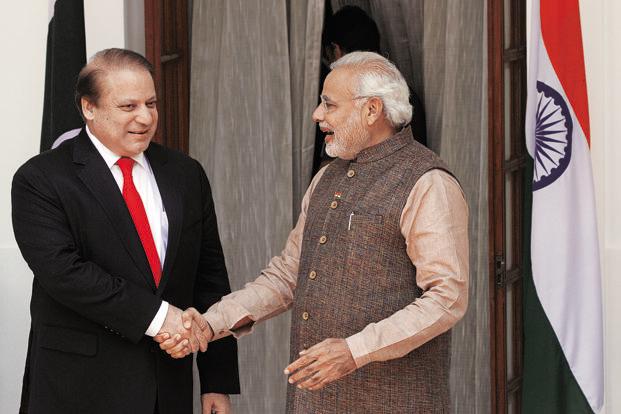
sharifmodi--621x414In his first eight months in office, Prime Minister Narendra Modi impressed many with his foreign-policy skills. For example, he signalled that India’s response to Pakistan’s strategy to inflict death by a thousand cuts will no longer be survival by a thousand bandages; rather the response will be punitive so as to have a deterrent effect and help reform Pakistan’s conduct. Pakistan’s stepped-up ceasefire violations were met with a punishing mortar-for-bullet response.

Yet today, Modi’s Pakistan policy looks barely different from his predecessor’s. Since U.S. President Barack Obama’s New Delhi visit, there has been a major transformation in India’s Pakistan policy. Obama pitched strongly for India’s re-engagement with Pakistan, dwelling on that theme at great length during his famous chai per charcha with Modi. His line of reasoning manifestly left a deep impression on Modi.

This is apparent from India’s policy somersaults on two critical issues. The first U-turn — resumption of bilateral dialogue — raises troubling questions about the logic behind it. Such re-engagement even as Pakistan exports terror encourages it to persist with its roguish conduct. Few thus should be surprised by the return of terror attacks to Jammu and Kashmir. Since the Obama visit, Modi’s conciliatory gestures have included a telephone call to his Pakistani counterpart, Nawaz Sharif, and then a letter to him — hand-delivered by the Indian foreign secretary — in which the Indian leader said he looks forward to visiting Islamabad early next year for the SAARC summit.

The second U-turn is no less puzzling: India conveyed to Pakistan last month that its high commissioner in New Delhi can meet Hurriyat separatists on any occasion other than when official talks are about to begin. In other words, Modi has yielded ground even on the issue that led him to cancel talks with Pakistan last August. The Pakistani high commissioner, in keeping with the Indian advisory, met first with Hurriyat’s Syed Ali Shah Geelani immediately after the foreign secretary-level talks in Islamabad and then this week with a seven-member Hurriyat delegation led by Mirwaiz Umer Farooq.

Now consider another issue — the government’s dispatch of a reluctant minister, General V.K. Singh, to the Pakistan Day event. General Singh is not just any minister of state. As a former Army chief, he deserves due respect. In the Indian system, even civil servants at times try to ride roughshod over service chiefs. In this case, it was the government itself that did not accord due respect to a former Army chief by sending him as its representative to an event bristling with the presence of Pakistan’s Hurriyat surrogates. Look at the paradox: Just months after Modi broke off talks with Pakistan over its high commissioner’s meeting with Hurriyat leaders, he sends Gen. Singh to the Hurriyat-infested Pakistan Day event.

Modi swept to power in India’s biggest election victory in a generation because voters expected him to usher in qualitative change. The hope was that he would be a transformative leader. Today, ironically, the lack of self-respect that permeated Manmohan Singh’s Pakistan policy risks seeping into the Modi government’s actions.

With Modi’s policy adrift, Pakistan feels emboldened not just by his U-turns, but also by other political developments in India, including the Bharatiya Janata Party sacrificing principles at the altar of political expediency by entering into an alliance with the People’s Democratic Party in Jammu and Kashmir and the Modi government putting up with the J&K government’s release of the pro-Pakistan militant Masarat Alam. The opportunistic political alliance in J&K is between the architect of the cave-in in the December 1989 Rubiya Sayed kidnapping — a case in which the release of five jailed Kashmiri extremists triggered overt militancy, fuelling terrorism — and the party whose government at the centre hand-delivered top terrorists to hijackers in Kandahar in final hours of 1999, resulting in India entering the new century with ignominy.

Other than the tool of dialogue, India has little direct leverage over Pakistan. The tool of dialogue thus must be employed judiciously to help change Pakistan’s conduct. If talks are held even when Pakistan’s belligerence remains intense, it will blunt the instrument of dialogue.

Yet India has long had difficulty staying its course. For example, just months after the unparalleled Mumbai attacks by 10 Pakistani gunmen, Manmohan Singh not only reengaged Pakistan at the highest level but signed a joint statement at Sharm-el-Sheikh in which a reference to Baluchistan was included as if to implicate India in fomenting the insurrection there. Modi’s own suspension of talks lasted barely seven months. India’s unconditional resumption of dialogue each time only reinforces Pakistan’s conviction that its provocations carry no costs because even if the dialogue process were suspended again, India will reopen talks for two reasons — U.S. pressure, and Indian foreign policy’s blow-hot-blow-cold traditions.

Today, Islamabad has reason to gloat over how its unbending intransigence has again brought India to the negotiating table and gained Pakistan a licence for interacting with Kashmiri separatists. Pakistan’s Hurriyat stooges are there to take diktats from their Pakistani handlers, not to ensure peace and stability in the Kashmir Valley.

After 10 months in office, Modi needs to fix the broken Pakistan policy he inherited from Manmohan Singh, rather than concoct a mirror image of the same policy. It is high time for India to abandon the notion that it has no option but to stay stuck in the old failed policy of holding dialogue even as Pakistan remains intransigent. And it must stop facilitating Pakistan’s interactions with Hurriyat separatists. Will Pakistan allow any Indian official to meet Baloch secessionists or the protest leaders in Shia-majority Gilgit-Baltistan? If an Indian diplomat defiantly met any Pakistan-based separatist, that secessionist would either disappear for good or be quickly tried before a military court and executed.

Brahma Chellaney is a professor of strategic studies at the Centre for Policy Research.

© Mint, 2015.

Modi’s risky Pakistan gambit  

Brahma Chellaney, Hindustan Times, February 18, 2015

05e72e3c-1844-451c-a1b4-d7787ddfa22fwallpaper1After nuclear concessions to America on accident liability and parallel safeguards, Prime Minister Narendra Modi is now opening talks with Pakistan, as sought by U.S. President Barack Obama. The charade of sending the foreign secretary on a SAARC tour so as to create a cover for discussions in Islamabad cannot obscure the fact that Modi has reversed course and agreed to reopen talks with Pakistan unconditionally. His move, oddly, came right after hostile statements on India by Pakistani Prime Minister Nawaz Sharif and his foreign policy adviser, Sartaj Aziz.

The sequence leading to the resumption of talks undergirds the Obama effect: Separately in January, US Secretary of State John Kerry at the Vibrant Gujarat Summit and Obama in New Delhi exhort Modi to reopen talks with Pakistan. Then this month, Modi sends his petroleum minister to Pakistan for discussions on the planned U.S.-backed gas pipeline from Turkmenistan. Soon thereafter, Obama telephones Sharif, who rails against India. Just hours later, Modi calls Sharif and sings peace, conveying his decision to send his foreign secretary to Islamabad.

At the chai per charcha with Modi, Obama focused largely on one issue: Pakistan. A defensive Modi, instead of questioning the U.S. policy of propping up Pakistan with munificent aid and arms and thereby emboldening its hostility toward India, explained to Obama that he wanted to open talks with Pakistan after the Peshawar killings but was compelled to put off the decision due to continued Pakistani ceasefire violations and the attempt to free U.N.-designated terrorist Zaki-ur-Rehman Lakhvi. Modi even pointed out that, as a friendly signal, he telephoned Sharif after the Peshawar attack and made Indian schools honour the victims with a two-minute silence.

Among Obama’s first actions after returning home from India were to unveil more than $1 billion in fresh aid to Pakistan in his budget proposals and to invite Chinese President Xi Jinping on a state visit, while his ambassador in India made clear that the U.S. will work with India and Pakistan to promote “constructive dialogue” between them. Pakistan remains a top recipient of US aid. Unable to certify to Congress that Pakistan is preventing its territory from being used for terror attacks, Obama has used a national-security waiver to keep aid flowing to the world’s Terorristan. Such aid has encouraged Pakistan’s generals to nurture terrorist surrogates, rapidly expand their nuclear arsenal, and call the shots in domestic policy.

Consider this jarring paradox: Obama twice lectured a secular and diverse India in recent weeks on religious tolerance, only to get Modi to open talks with the Islamic republic where non-Sunni minorities are methodically being decimated. But what prompted Modi — who has projected a nimble, non-doctrinaire foreign policy with pragmatism as its trademark — to yield to pressure that he could have resisted?

Modi is opening talks at a time when the Sharif government is very weak. Pakistan’s power balance has titled decisively in favour of the other Sharif who is the Army chief, with the military savouring its triumphs in a series of bruising clashes with the government. The military is firmly back in the driver’s seat without staging an overt coup. The politically impotent Sharif is in no position to pursue rapprochement with India.

Yet Modi has yielded ground even on the issue that led to the cancellation of the last round of talks, with his government conveying to Pakistan that its high commissioner in New Delhi can meet Hurriyat separatists on any occasion other than when official talks are about to begin. Modi’s zigzag suggests that, despite his proactive diplomacy, he has yet to fully fix the broken Pakistan policy that he inherited from Manmohan Singh, whose 10-year tenure was marked by escalating cross-border terrorism even as Singh sought peace with Islamabad at any price.

The Pakistani military, as its intense ceasefire violations since last summer have shown, is intent on shining an international spotlight on the Kashmir issue, not on altering the India-Pakistan dynamic through improved bilateral relations. Talks with India under a tottering civilian government that is in no position to compromise on any issue suit the generals’ agenda. By reviving pairing with India, bilateral talks allow the country that risks failing to regain strategic relevance, including by highlighting the issue closely tied to its generals’ extraordinary power and privilege — Kashmir.

In this light, the renewed “peace process” can produce more process but no peace. Fresh talks are unlikely to alter the calculus of the Pakistani establishment, which is determined to checkmate India’s rise by whatever means — fair or foul — it deems advantageous. Terrorism is one favoured instrument.

In statecraft, talks are a means to an end, not an end in themselves. However, the Modi government is focusing just on the means — the process of talks — knowing well that India can secure no end in a situation where Pakistan’s generals are wielding increasing power and the Pakistani foreign ministry is a weak actor. Opening talks without any prospect for meaningful progress is not sound diplomacy. It risks sending the wrong message and inviting greater aggression. Modi’s Pakistan gambit could embolden the sponsors of terror to step up cross-border attacks, as happened under the cover of previous “peace” talks. Army chief Dalbir Singh recently cautioned, “The terror infrastructure in Pakistan is still intact,” with new terror attacks in Jammu and Kashmir showing “Pakistan’s desperation.”

Modi’s dynamism and motivation in diplomacy in the past months has spurred hope of Indian foreign policy finally gaining a distinct geostrategic imprint and direction. His recent actions, however, highlight what has long blighted foreign policy — ad hoc and personality-driven actions that confound tactics with strategy. To advance long-term national interests, Modi must embrace institutionalized, integrated policymaking.

Brahma Chellaney is a geostrategist, author and professor.

© The Hindustan Times, 2015.

India’s diplomatic overinvestment in the civil nuclear deal with America: Why it makes little sense

BY BRAHMA CHELLANEY
The Japan Times

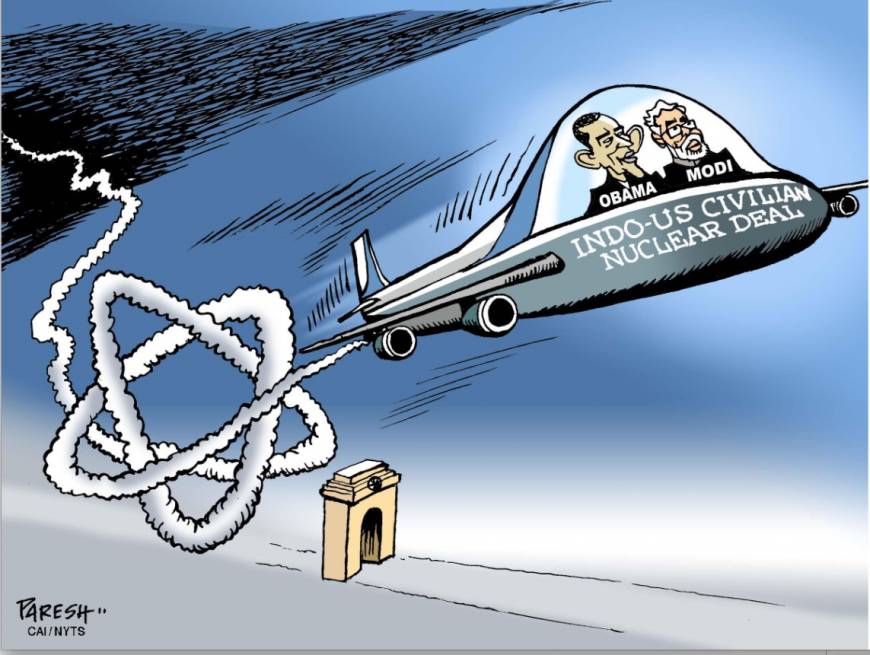
p6-Chellaney-a-20150212-870x655During U.S. President Barack Obama’s recent India visit, a stalled, decade-old civil nuclear deal took center-stage, with the two sides announcing a breakthrough on the contentious issues blocking its implementation — a development that promised to potentially open the path for a Japan-India nuclear deal. It now appears that the breakthrough was more hype than reality and that there is little prospect of the U.S.-India deal’s early commercialization.

With Indian Prime Minister Narendra Modi by his side, Obama announced that “we achieved a breakthrough understanding on two issues that were holding up our ability to advance our civil nuclear cooperation.” The two issues identified were nuclear accident liability and the administrative arrangements to govern the bilateral nuclear cooperation agreement — the successor to an accord the United States unilaterally terminated after India detonated a nuclear device in 1974.

U.S. officials said India agreed to address American concerns over its liability legislation by setting up a $245 million nuclear insurance pool and issuing a “memorandum of law” — essentially an executive action. The Indian foreign ministry, for its part, said “the deal is done,” with the two sides having “reached an understanding on civil nuclear liability and finalized the text of the administrative arrangements.”

But it has now become apparent that the U.S. and India are still locked in negotiations to tie up loose ends and that the much-trumpeted breakthrough was little more than an effort to project a substantive advance during a presidential visit rich in pageantry and symbolism. Obama was the chief guest at India’s Jan. 26 Republic Day parade, a year after Prime Minister Shinzo Abe had that honor.

While claiming a breakthrough, neither side released any details, including on how another sticking point had been resolved: a U.S. demand that New Delhi accept nuclear-material tracking and accounting arrangements that go beyond the safeguards system that the International Atomic Energy Agency (IAEA) has approved and applied to nuclear-armed India’s civilian nuclear program. The U.S. demand entails establishing, on top of the IAEA inspections system, a bilateral safeguards system — an elaborate and expensive arrangement in which India would separately track and account for nuclear materials “by flag” (that is, by each national origin).

The same stumbling block over parallel safeguards in perpetuity has held up India’s conclusion of nuclear deals with Japan and Australia but not with Canada, which dropped that demand. Shortly after Modi took office last May, the Indian foreign ministry conveyed to Tokyo that concluding a nuclear deal must take centerstage during a Modi visit to Japan. Even though Modi postponed his Japan visit by several weeks for unrelated reasons, negotiations failed to yield a deal.

Australia has no nuclear power program, despite holding the world’s largest uranium reserves, and can only offer to export yellowcake, which India is already sourcing amply from other suppliers. Japan’s importance, by contrast, is underscored by two facts: It is the world’s leading supplier of heavy nuclear forgings, with just one Japanese company — Japan Steel Works — controlling 80 percent of the global market for large forged components for light-water reactors (LWRs); and the U.S.-based Westinghouse is owned by Japan’s Toshiba, while another reactor vendor, GE-Hitachi, also headquartered in the U.S., is jointly owned by America’s GE and Hitachi of Japan.

India, pointing out that IAEA safeguards guarantee that all its imported materials are accounted for and devoted to peaceful purposes, has resisted the demand for establishing additional safeguards with America (and Japan) bilaterally, saying this would amount to assuming onerous obligations not envisaged even in the original U.S.-India nuclear deal of 2005.

While the “flagging” arrangements sought by the U.S. and Japan are strictly a government-to-government issue, nuclear liability has become a bone of contention between the Indian government and the firms seeking to export commercial reactors to it — the two U.S.-Japanese private companies, France’s state-controlled Areva and Russia’s Rosatom. The U.S. government, however, has also weighed in against the Indian liability law, calling it an obstacle to the deal’s commercialization.

To be sure, India and the U.S. have made considerable progress in recent months on resolving the sticking points, although a final deal has yet to be clinched. Progress has come mainly due to Indian concessions. But as U.S. Assistant Secretary for State Nisha Biswal admitted last week, the two sides are still “trading paper” and working to stitch up the deal.

The Modi government has yielded ground, even at the risk of facing criticism at home. For example, it has agreed to reinterpret domestic law so as to effectively transfer reactor vendors’ nuclear accident liability risks to Indian taxpayers. Indian law allows suppliers to be held liable in case of an accident. The government is also reinterpreting another provision of the law to bar victims of a nuclear accident in India from suing for damages in the U.S.

These actions are likely to prove controversial, given India’s bitter experience over the 1984 gas leak from an American-owned Bhopal city plant that killed about as many people as the Fukushima disaster. Indeed, Japan’s dual liability laws, which indemnify suppliers and make plant operators exclusively liable, should serve as a sobering lesson for India: GE built or designed all the three Fukushima reactors that suffered core meltdowns in 2011, yet the U.S. firm went scot-free, despite a fundamental design deficiency in the reactors.

To deflect supplier liability, New Delhi — besides creating a nuclear insurance pool to cover suppliers — is issuing a “memorandum of law” incorporating its legal reinterpretations and authoritative clarifications as well as the understandings it has reached with America. But this raises a basic legal question: How can a “memorandum of law,” with no legislative imprimatur and backed merely by the Indian attorney general’s opinion, reinterpret a statute in a way to effectively gut it? Given that such reinterpretation could be challenged in Indian courts, U.S. officials are advising Westinghouse and GE-Hitachi to make their own risk assessment to decide whether to enter the Indian nuclear market.

On the issue of parallel safeguards, New Delhi has agreed to go more than half-way to meet America’s demand, which springs from its Henry J. Hyde Act, enacted in 2006 to govern the nuclear deal unveiled the year before. The Hyde Act calls for a “detailed system of reporting and accounting” of exports to and retransfers within India, including an annual independent audit about the form, amounts and location of exported items.

India will establish a data-sharing and material-accounting mechanism with America. Its “flagging” of materials by nationality will also involve tracking items sourced from third countries but used in U.S.-origin reactors. Yet U.S. House Foreign Affairs Committee Chairman Edward R. Royce has criticized this arrangement as not adequate.

With complex legal, pricing and other issues still pending, the deal’s commercialization is anything but imminent. In fact, the two sides are yet to sign the administrative arrangements, which they announced had been “finalized.”

It is an open question whether the deal will ever yield substantive energy benefits for India, given the exorbitant price of foreign-origin reactors, the concomitant need for India to heavily subsidize the electricity from such plants, and grassroots safety concerns over the Fukushima-type multi-plant nuclear parks earmarked by India for Westinghouse, GE-Hitachi and Areva, each of which is to sell prototype LWR models presently not in operation anywhere in the world. The accident-stricken Fukushima reactors were also the first of their kind.

Adding to India’s risks is its plan to induct a multiplicity of different LWR technologies from the U.S., France and Russia. This will also exacerbate its maintenance challenges.

Consider another issue: Years after the U.S. pledged to bring India into four American-led technology-control cartels — the Nuclear Suppliers Group, Missile Technology Control Regime, Australia Group, and Wassenaar Arrangement — India is still pleading for its admission, with Obama merely reiterating America’s support for India’s “phased entry” into these groups. India now intends to file a formal application for admission to each cartel, in the hope that the U.S. would be more forthcoming in its support than it has been so far.

The Obama visit was a testament to how hyping the nuclear deal obscures more important issues. For example, despite the vaunted U.S.-India Defense Technology and Trade Initiative (DTTI), the U.S. side refused to accept any of the six joint high technology projects proposed by India, insisting that New Delhi first sign “foundational agreements” on military logistics and communication interoperability that America has designed for its allies in a patron-client framework. India, which seeks a level-playing field, is America’s strategic partner, not its ally. The four joint projects announced during the visit are for relatively modest defense products.

photo from TNuclear power faces an uncertain future, with few new reactors under construction in the West. Yet India has continued to place the nuclear deal at the hub of its relationship with America. Washington has obligingly pandered to this Indian weakness, entering into protracted implementation-related negotiations. The original deal had already spawned multiple subsidiary deals before Obama announced a “breakthrough” on two more auxiliary deals. Each deal has been hailed by New Delhi as a diplomatic success, regardless of the concessions it had to make or the new obligations thrust upon it.

It is past time for India to reduce the salience of the nuclear deal in its relations with America and prioritize other issues concerning its core interests. Why a deal to import reactors to generate an increasingly uneconomical source of energy is critical to Indian interests has never been elaborated by the deal pushers in India other than through beguiling slogans, such as “End of nuclear apartheid against India” and “A place for India at the international high table.” Such imports will create thousands of jobs for American workers but will be out of sync with Modi’s “Make in India” initiative to expand domestic manufacturing base.

India’s diplomatic overinvestment in the nuclear deal has only made it harder for it to address more fundamental issues in its ties with the U.S., including an increasingly one-sided defense relationship. Rarely before has America acquired a major arms client of the size of India so rapidly. It will take concerted efforts, without being weighed down by the nuclear deal millstone, to forge a true, enduring U.S.-India partnership.

Brahma Chellaney, a longtime contributor to The Japan Times, is a geostrategist and the author of the award-winning “Water: Asia’s New Battleground.”

© The Japan Times, 2015.

Don’t believe the hype on U.S.-India civil nuclear deal

Brahma Chellaney, Nikkie Asian Review

43675476.siA “breakthrough understanding” on the stalled civil nuclear deal between India and the U.S. took center-stage in a recent summit between U.S. President Barack Obama and Indian Prime Minister Narendra Modi in New Delhi. It stands out as the only substantive advance in a presidential visit heavy on pageantry and symbolism. But the publicity surrounding the supposed breakthrough was overblown, and the celebrations can only be described as premature.

The deal was portrayed internationally as opening the path for U.S. companies to bag multibillion-dollar reactor contracts, and for Japan and Australia to sign similar deals with India, which plans to ramp up its capacity to generate nuclear power by importing two dozen commercial reactors within the next decade. Currently, nuclear power represents barely 2% of India’s total installed power capacity.

Since it was unveiled in 2005, the U.S.-India nuclear deal — with its many twists and turns — has hogged the limelight at virtually every bilateral summit between leaders of the two countries. In its arduous journey toward implementation, the deal has spawned multiple subsidiary agreements, each of which has been hailed as an important breakthrough.

The latest understanding centers on two issues — nuclear accident liability, and administrative arrangements to govern the bilateral nuclear cooperation agreement required under Section 123 of the U.S. Atomic Energy Act. Obama announced that “we achieved a breakthrough understanding on [the] two issues that were holding up our ability to advance our civil nuclear cooperation.” However, there is still little prospect of early commercialization of the deal.

The newest “breakthrough” is short on specifics and raises troubling questions. It contrives a model that shifts the liability risks for nuclear accidents to Indian taxpayers, thus undermining India’s domestic law, the 2011 Civil Liability for Nuclear Damage Act, which holds suppliers, designers and builders liable in case of an accident. The breakthrough compromise has been designed to circumvent the central principle enshrined in that law — the right to bring civil legal action for damages against suppliers in the event of a nuclear accident caused by defective equipment, components or designs.

Remembering Fukushima

Consider Japan’s 2011 Fukushima disaster. General Electric of the U.S. built or designed the three Fukushima reactors that suffered core meltdowns, yet GE escaped penalties or legal action after the disaster, despite a fundamental design deficiency in the reactors, because Japan’s law indemnifies suppliers, making plant operators exclusively and fully liable. It was to avert such a situation that India’s law armed the Nuclear Power Corporation of India, the state-run plant operator, with the right of recourse to suppliers. India’s sensitivity on this point reflects its bitter experience over a 1984 gas leak from a chemical plant in Bhopal that killed as many as 3,000 people shortly after the accident. The plant was owned by Union Carbide of the U.S.

Supplier liability is a well-established legal concept, applied in many business sectors around the world to deter suppliers from taking undue risks. But the 2011 Act makes India an outlier in terms of current international standards on civil nuclear liability. The global nuclear power industry is controlled by a powerful group of a few state-controlled or state-supported companies that push an opposite norm — that plant operators assume absolute liability so that suppliers face no downside risks.

Too many conventions

Globally, the liability issue has been muddied by a multiplicity of international conventions, protocols, and supplementary conventions introduced since 1960. A majority of the 34 states with civil nuclear power generation capacity have signed one or both of two main conventions, or revised versions of the two. Some of the states that did not sign these conventions, including heavyweights such as the U.S., Canada and Japan, have signed the 1997 Convention on Supplementary Compensation for Nuclear Damage, seen by some as a step toward a unified global liability treaty.

This network of overlapping international arrangements makes liability a complex issue. Some important nuclear power states have not signed any international agreements, including China, South Korea, Taiwan, Pakistan and Iran. India has signed but not ratified the CSC. But the conventions have some key points in common, including assigning exclusive liability to plant operators, mandatory insurance coverage of the operators’ liability, and exclusive jurisdiction of the courts in the country where the accident occurs. India’s domestic law follows this template, but also gives the operator the right to recover damages from suppliers.

     The paradox is that U.S. domestic law allows suppliers, designers and builders of nuclear plants to be held legally liable in the event of accidents, although the 1957 Price-Anderson Act restricts economic liability to operators. Yet the U.S. has sought to shield its exporting firms from claims made by foreign customers by insisting that India and other importing countries accept operators’ strict liability and limit all claims to the jurisdiction of their own courts.

Under the compromise worked out by Obama and Modi, U.S. concerns about India’s legal approach are to be addressed through a legal contrivance called a “memorandum of law” — essentially an executive order — and a $245 million “India Nuclear Insurance Pool,” which is to be set up jointly by India’s state-run insurance companies and its federal government. A number of countries have nuclear insurance pools, but most do not have a legal framework that makes suppliers potentially liable for accidents, as India’s 2011 Act does. For this reason, the memorandum calls for an insurance pool that would address both operator and supplier liability, preventing damages claims against foreign supplier companies.

This arrangement, although claimed by New Delhi to be “squarely within our [Indian] law,” constitutes “a risk-transfer mechanism,” as the Indian foreign ministry has admitted. Under the arrangement, the Indian government is effectively scrapping the right of recourse to foreign suppliers provided by Indian domestic law and transferring the liability risk to Indian taxpayers, offset partly by the modest insurance pool. U.S. officials say the two governments are in agreement over India’s memorandum plan, which they view as a creative solution. But how can a “memorandum of law,” with no legislative imprimatur, reinterpret a statute in a way that effectively guts it?

First, the contrivance being fashioned as part of the understanding between the two leaders threatens to open a legal can of worms. U.S. officials are advising American companies to do their own risk assessments, even though Obama’s deputy national security adviser, Ben Rhodes, affirmed in New Delhi that “in our judgment, the Indians have moved sufficiently on these issues to give us an assurance that the issues are resolved and that there is a path open to implementation and investment here.” No details have been announced by either government on the resolution of another sticking point: a U.S. demand that India accept nuclear-materials tracking and accounting arrangements that go beyond the safeguards system approved by the International Atomic Energy Agency. The same obstacle has held up conclusion of a Japan-India nuclear deal. It is now up to U.S. companies to decide whether to do nuclear business in India.

Second, at a time of skyrocketing reactor construction costs, the crash of oil and gas prices has made nuclear power’s economics more unfavorable. Nuclear power is already the world’s most subsidy-fattened energy industry. Since the 1980s, average international costs for nuclear power have jumped from $1,000 per installed kilowatt to nearly $8,000. Few new reactors are under construction in the West, and the International Energy Agency has warned that “uncertainties continue to cloud the future for nuclear.”

Modi has emphasized that reactor imports will be governed by “technical and commercial viability.” The deal’s commercialization, however, will be dictated not by the market but by the extent to which the Indian government is willing to fork out subsidies to support high-priced electricity generated from imported reactors.

India is in negotiations with four foreign supplier companies — Areva of France, Russia’s Atomstroyexport, Westinghouse, owned by Toshiba of Japan, and GE-Hitachi, jointly owned by GE and Hitachi of Japan. The latter two are both based in the U.S. Under the plans, the companies will each be confined to a single site, on which they will build multiple reactors that will be operated by the state-owned nuclear power company, thus freeing the foreign vendors from the problem of producing electricity at marketable rates. Currently, negotiations are stuck over the price of power. India has offered Areva, with which negotiations are most advanced, a price of 11 U.S. cents per kilowatt hour — more than twice the average price of electricity from indigenously built reactors. The state-controlled French company is holding out for a much higher price.

Not in our backyards

20150104_india_nuclear.jpg_middle_320

The U.S.-built Tarapur atomic power station, located near Mumbai, is India’s oldest nuclear power plant.

Finally, grassroots opposition is growing to new nuclear power plants in India, especially against the Fukushima-type multi-reactor parks earmarked for foreign vendors. Building six to eight giant reactors in a single complex raises additional safety issues, as highlighted by the triple Fukushima meltdown. Local communities want nuclear power plants to be located in someone else’s backyard.

Worse still, India plans to import — as Japan did at Fukushima — prototype reactors that are not in operation anywhere in the world, including GE-Hitachi’s Economic Simplified Boiling Water Reactor, which only recently received U.S. regulatory approval, Westinghouse’s AP1000, criticized in the U.S. for supposed design failings, and Areva’s Evolutionary Pressurized Reactor, which is under construction in France and Finland but has suffered major cost overruns and delays. Prototypes usually face major teething troubles and carry greater long-term risks.

     If a serious accident were to occur, India would be saddled with staggering long-term costs. Japan’s Fukushima disaster bill has been conservatively estimated by an Osaka City University study at $105 billion, or 429 times higher than the Indian insurance pool’s capital. Japan is now establishing a state-backed compensation institution to be funded with government bonds totaling 5 trillion yen ($42 billion) and by utilities. This fund surpasses the $13.6 billion cover currently provided by the U.S. Price-Anderson Act, with another $10 billion pledged by the U.S. Department of Energy.

The Price-Anderson Act, which provides subsidies to the U.S. nuclear power industry by underwriting insurance costs, has been mocked by independent U.S. groups as “Half-Price Anderson.” India’s contrivance can be labeled “Free-Ride Anderson.” Yet it is unlikely to resolve all the tricky issues bedeviling the nuclear deal’s commercialization.

BrahmaChellaney-icon_small_150Brahma Chellaney is a professor of strategic studies at the independent Center for Policy Research in New Delhi and author of “Water: Asia’s New Battleground,” winner of the 2012 Bernard Schwartz Award.

(c) Nikkie Asian Review, 2015.