

Brahma Chellaney, The Hindustan Times, September 19, 2016
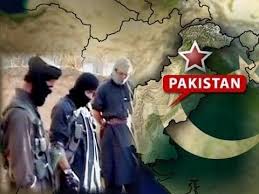 From Atal Bihari Vajpayee’s Lahore Declaration to Manmohan Singh’s peace-at-any-price doctrine and Narendra Modi’s Lahore visit statement, India’s readiness to trust Pakistan’s anti-terrorism assurances draws attention to the adage: “Fool me once, shame on you. Fool me twice, shame on me”. India has been fooled repeatedly.
The bloody attack by Pakistan-backed terrorists on yet another military camp in Jammu and Kashmir, however, represents double shame for India: Coming after the dramatic terrorist storming of the Pathankot air base at the beginning of this year, the attack on the army headquarters at Uri near the line of control with Pakistan highlights defence-related incompetence. If Modi wishes to send a clear message, he must begin at home by firing his bumbling defence minister and fixing the drift in his Pakistan policy.
For more than a quarter-century, India has been gripped by a vacillating leadership and a paralytic sense of indecision and despair over cross-border terrorism. India’s own passivity and indecision have played no small part in fuelling Pakistan’s proxy war by terror. The rogue Inter-Services Intelligence’s “S” branch — tasked specifically with exporting terrorism to India and Afghanistan — operates through terrorist surrogates.
This year’s series of terrorist attacks on Indian targets — from Jalalabad and Mazar-i-Sharif to Pampore and Uri — signals that the ISI terror masterminds, learning from the international outrage over their November 2008 strikes on civilians in Mumbai, are now concentrating their spectacular hits on symbols of the Indian state, including security forces. For example, as New Year’s gift to India, the four-day terrorist siege of the Pathankot base coincided with a 25-hour gun and bomb attack on the Indian consulate in Mazar-i-Sharif.
The Uri attack is similarly intended to make India feel vulnerable and weak while seeking to minimize the risk of Indian retaliation. This attack, however, is likely to represent a turning point for India, especially given the number of soldiers killed. Indeed, the lesson for India from its restraint despite Pathankot is that all talk and no action invites more deadly terrorism, besides encouraging Pakistan to fuel unrest in the Kashmir Valley and “internationalize” the J&K issue.
For Modi in particular, the Uri attack constitutes a defining moment. He has completed half of his five-year term with his Pakistan policy in a mess.
Indeed, despite terrorists testing India’s resolve from Herat to Gurdaspur and Udhampur after his election victory, Modi’s response to the Pathankot siege underscored continuing strategic naïveté. Even before the siege ended, New Delhi supplied Islamabad communication intercepts and other evidence linking the attackers with their handlers in Pakistan. This was done in the hope that the terror masters will go after their terror proxies, despite India’s bitter experience in the Mumbai case where it presented dossiers of evidence to Pakistan.
India later granted Pakistani investigators access to the Pathankot base. It was like treating arsonists as firefighters. Pakistan set up its investigation team not to bring the Pathankot masterminds to justice but to probe the operational deficiencies of the Pathankot strike and to ensure that the next proxy attack left no similar telltale signs of Pakistani involvement.
Today, India has little choice but to overhaul its strategy as both diplomacy and restraint have failed to stem Pakistan’s relentless efforts to export terrorism and intermittently engage in border provocations. India must shed is focus on the last terror attack: For example, after Pathankot, India, forgetting Mumbai, asked Pakistan to act in that case. And after Uri, Pathankot could fade into the background. Consequently, Pakistan has still to deliver even in the 1993 ‘Bombay bombings’ case.
India needs a comprehensive, proactive approach. The choice is not between persisting with a weak-kneed approach and risking an all-out war. This is a false, immoral choice that undermines the credibility of India’s nuclear and conventional deterrence and encourages the enemy to sustain aggression. It is also a false argument that India has no choice but to keep battling Pakistan’s unconventional war on its own territory. Seeking to combat cross-border terrorism as an internal law-and-order issue is self-injurious and self-defeating.
Make no mistake: India’s response to the Pakistani strategy to inflict death by a thousand cuts should no longer be survival by a thousand bandages. Rather, India must impose calibrated costs to bolster deterrence and stem aggression. Why should India allow itself to be continually gored by a country that is much smaller than it demographically, economically and militarily and on the brink of becoming dysfunctional? Just because India shied away from imposing costs on the terror masters in Pakistan for their past attacks on Indian targets, from Mumbai to Kabul, is no reason for it to stay stuck in a hole.
To deter Pakistan’s unconventional warfare, India’s response must be spread across a spectrum of unconventional options that no nation will discuss in public. Nuclear weapons have no deterrence value in an unconventional war. If the Pakistani security establishment is to get the message that the benefits of peace outweigh hostilities, it should be made to bear most of the costs that India seeks to impose. India should employ asymmetric instruments to strike hard where the opponent doesn’t expect to be hit. New Delhi should also be ready to downgrade diplomatic relations with Pakistan and mount pressure on its three benefactors, China, America and Saudi Arabia.
India’s goal is narrow: to halt cross-border terrorist attacks. In keeping with the United Nations Charter, which recognizes self-defence as an “inherent right” of every nation, India must impose measured and pointed costs on the terror exporters without displaying overt belligerence or brinkmanship.
The writer is a geostrategist and author.
 The violence-marred water feud between Karnataka and Tamil Nadu illustrates how water stress is fuelling bitter discord between Indian states over sharing the most vital of all natural resources. India’s Supreme Court intervened this year too in the Punjab-Haryana dispute in the Indus Basin over the Sutlej-Yamuna Link Canal.
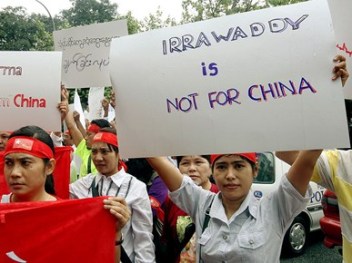 China is a big fan of dams. Indeed, over the last 50 years, the country has constructed more dams than all other countries combined. But there is one dam that China never managed to get built: the Myitsone Dam in Myanmar. And Chinese leaders can’t seem to let it go.
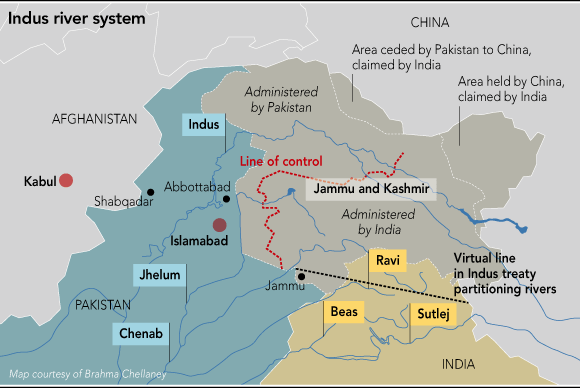

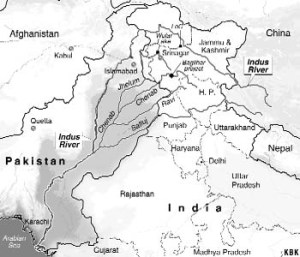 Water sharing, transparency and collaboration are the pillars on which the unique Indus Waters Treaty was erected in 1960. Islamabad’s recently unveiled intent to haul India again before an international arbitral tribunal is a testament to how water remains a source of discord for Pakistan despite a treaty that is a colossus among existing water-sharing pacts in the world.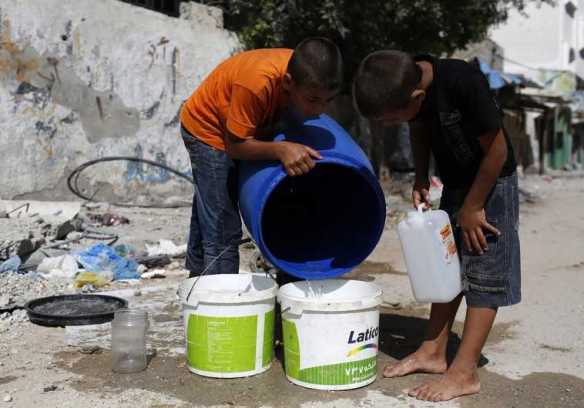
 Is the world governed by international law? The attitudes of the world’s two demographic titans, China and India, on international law are a study in contrast, underscoring that compliance with or defiance of rules is often driven by power dynamics and state character.
 Stagecraft and Statecraft
You must be logged in to post a comment.