Unknown's avatar

About Chellaney

Professor, strategic thinker, author and commentator

Attacking the ideology behind terror

The West must hold Arab monarchs to account for spawning Wahhabi extremism

WT terror
By Brahma Chellaney, Washington Times June 15, 2016

In the wake of the worst mass shooting in U.S. history, it is pointless to debate whether the Orlando killings constitute just an act of Islamist terror or also an act of hate directed at the LGBT community. Every act of terror springs from hatred of its target, be it a nation or government or community.

The real issue centers on the ideology that is inspiring a spate of Islamist terrorist attacks in the world. The scourge of Islamist terror is tied to Wahhabism, an insidious ideology.

Make no mistake: Wahhabi fanaticism is terrorism’s ideological mother, whose offspring include groups such as al Qaeda, the Taliban, Laskar-e-Taiba, Boko Haram, al-Shabab and Islamic State, all of which blend hostility toward non-Sunnis and anti-modern romanticism into nihilistic rage.

The only way to defeat an enemy driven by ideology is to emasculate its ideology. The West won the Cold War not so much by military means as by spreading the ideas of political freedom and market capitalism that helped suck the lifeblood out of communism’s international appeal, making it incapable of meeting the widespread yearning for a better, more open life.

Today, stemming the spread of the ideology that has fostered “jihad factories” holds the key to containing terrorism. The export of Wahhabism by Saudi Arabia, Qatar and some other oil sheikhdoms is the source of modern Islamist terror.

Yet the rest of the world — in thrall to Arab money and reliant on Arab oil and gas — has largely turned a blind eye to the jihadi agenda of some Arab monarchs. In fact, with Western support, tyrannical oil monarchies in Riyadh, Doha and elsewhere were able to ride out the Arab Spring, emerging virtually unscathed.

Saudi Arabia has faced little international pressure, even on human rights. How the Saudi kingdom buys up world leaders is apparent from the Malaysian attorney general’s claim that Prime Minister Najib Razak received a $681 million “personal donation” from the Saudi royals. Saudi Arabia has given as much as $25 million to the Clinton Foundation.

There are signs, however, that the Western attitude toward Saudi Arabia might be beginning to change. German Vice Chancellor Sigmar Gabriel said recently, “We must make it clear to the Saudis that the time of looking the other way is over.” After a married couple of Pakistani origin staged a mass shooting in San Bernardino, President Obama alluded to Wahhabism as a “perverted interpretation of Islam.”

No country has contributed more than Saudi Arabia to the international spread of Wahhabism, which is gradually snuffing out more liberal Islamic traditions in many countries. Jihadism and sectarianism indeed are institutionalized in Saudi Arabia, the only country in the world named after its founder, commonly known as Ibn Saud.

Saud, who ruled for 20 years until his death, brought the central part of the Arabian Peninsula under his control with British assistance in 1932, establishing a desert kingdom tethered to Wahhabism, a messianic radicalism that was considered a fringe form of Islam until oil wealth transformed the once-barren Saudi Arabia, the world’s largest country without a river.

Since the oil-price boom of the 1970s, Saudi Arabia has spent more than $200 billion on its global jihad project, including funding Wahhabi madrassas, mosques, clerics and books. Western powers actually encouraged the kingdom — as an antidote to communism and the 1979 anti-U.S. Iranian revolution — to export Wahhabism.

But the wave of new attacks serve as a reminder that Wahhabi fanaticism is the root from which Islamist terrorists draw their ideological sustenance. As Vice President Joe Biden said in a 2014 Harvard speech, Saudi and other “allies’ policies wound up helping to arm and build allies of al Qaeda and eventually the terrorist Islamic State.”

Today, with its own future more uncertain than ever, the House of Saud is increasingly playing the sectarian card in order to shore up support among the Sunni majority at home and to rally other Islamist rulers in the region to its side. Having militarily crushed the Arab Spring uprising in Sunni-led but Shia-majority Bahrain, Saudi Arabia early this year executed its own Arab Spring leader — Sheikh Nimr al-Nimr — who had led anti-regime Shia protests in 2011.

Before the execution, the kingdom formed an alliance of Sunni states purportedly to fight terrorism. The coalition included all the main sponsors of international terror, like Qatar and Pakistan. It was like arsonists pretending to be fire wardens.

According to a U.N. panel of experts, Saudi Arabia is currently engaged in war crimes in Yemen.

The Saudi royals seem to mistakenly believe that widening the sectarian fault lines in the Islamic world will keep them in power. By drawing legitimacy from jihadism and by being beholden to sectarianism, the royals could be digging their own graves. After all, fueling jihadism and sectarianism threatens to empower extremists at home and devour the royalty.

More broadly, the global war on terror cannot be won without closing the wellspring that feeds terrorism — Wahhabi fanaticism. Wahhabism is the ultimate source of the hatred that triggered September 11, 2001, and the recent string of attacks, from Paris and Brussels to San Bernardino and Orlando. Shutting that wellspring demands that the West hold Arab monarchs to account for spawning the kinds of dangerous extremists that are imperiling regional and international security.

The late Singaporean leader Lee Kuan Yew rightly said in 2003 that success of the war on terror hinges more on controlling the “queen bees” — the “preachers” of the “deviant form of Islam” — than on just killing the “worker bees” (terrorists). As long as Arab petro-dollars keep “jihad factories” in business, there will be suicide killers.

Brahma Chellaney is a geostrategist and the author, most recently, of “Water, Peace, and War” (Rowman & Littlefield, 2015).

Copyright © 2016 The Washington Times, LLC. Click here for reprint permission.
Why was Nagasaki nuked?

Clipboard01

Brahma Chellaney, The Japan Times

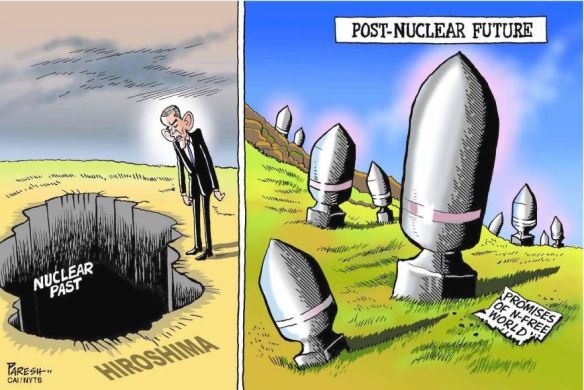
Just as Hiroshima has become the symbol of the horrors of nuclear war and the essentialness of peace, the visit of the first sitting U.S. president to that city was laden with symbolism, including about the ironies of human action. As Barack Obama put it, when the United States carried out history’s first nuclear attack by dropping a bomb, “a flash of light and a wall of fire destroyed a city and demonstrated that mankind possessed the means to destroy itself.”

Two questions, however, remain unanswered to this day: Why did the U.S. carry out the twin atomic attacks when Japan appeared to be on the verge of unconditionally surrendering? And why was the second bomb dropped just three days after the first, before Japan had time to fully grasp the strategic implications of the first nuclear attack?

Months before the nuclear bombings (and certainly by the time President Franklin D. Roosevelt’s death made Harry S. Truman the U.S. president in April 1945), the defeat of Japan was a foregone conclusion. Japan’s navy and air force had been destroyed and its economy devastated by a U.S. naval blockade and relentless American firebombing raids on Japanese cities.

During his Hiroshima visit, Obama called for “a future in which Hiroshima and Nagasaki are known not as the dawn of atomic warfare but as the start of our own moral awakening.” But can there be a moral awakening when almost every nuclear-armed country today is expanding or upgrading its nuclear arsenal, thus increasing the risk of nuclear use, either by accident or design?

Obama has himself highlighted the yawning gap between rhetoric and reality.

In Hiroshima, reprising his famous words of 2009 in Prague, Obama said that “among those nations like my own that hold nuclear stockpiles, we must have the courage to escape the logic of fear and pursue a world without them.” But at home, he has quietly pursued an extensive expansion of the U.S. nuclear arsenal, already the world’s most-expensive and most-sophisticated nuclear deterrent. Under him, the U.S. is spending about $355 billion as part of a 10-year plan to upgrade its nuclear armory.

Almost 71 years after the nuclear incineration of Hiroshima and Nagasaki and more than a generation after the end of the Cold War, nuclear weapons still underpin the security policies of the world’s most powerful states. Indeed, the composition of the United Nations Security Council’s permanent membership suggests that international political power is coterminous with intercontinental-range nuclear-weapons power.

There can be no moral awakening without jettisoning the political-military thinking that sanctioned the nuclear attacks on Hiroshima and Nagasaki, leaving as many as 220,000 people, mostly civilians, dead.

As Hiroshima and Nagasaki lay in smoldering ruins, Truman sent a team of military engineers, fire experts and photographers to the scene to analyze the death and destruction wrought by the twin attacks. The team reported an “an unprecedented casualty rate” in Hiroshima, with 30 percent of the population killed and another 30 percent seriously injured.

The nuclear attack three days later on Nagasaki generated a higher blast yield but produced a smaller area of complete devastation and lower casualties because, unlike Hiroshima’s flat terrain and circular shape, Nagasaki is a city with large hills and twin valleys. The second attack killed about 74,000 people, about half as many as those who died in the Hiroshima bombing. A city’s terrain and layout, the U.S. team’s report stated, must be considered “in evaluating the effectiveness” of nuclear bombing.

Even if one accepts Truman’s claim that the Hiroshima bombing was necessary to force Japan’s surrender and end the war without a full-scale U.S. invasion, what was the rationale for his action in nuking Nagasaki just three days later on August 9, 1945, before Japan had time to surrender?

As the U.S. team’s report stated, Nagasaki was totally unprepared for the nuclear bombing, although “vague references to the Hiroshima disaster had appeared in the newspaper of 8 August.”

Decades later, there is no still no debate in the U.S. on the moral or military calculus for bombing Nagasaki. No plausible explanation has been proffered for the attack.

After Hiroshima was nuked on August 6, Russia took advantage of the situation by attacking Japan on August 8, although its official declaration of war came a day later. Hours after news of Russia’s invasion of Sakhalin Island reached Tokyo, the Supreme War Guidance Council met to discuss Japan’s unconditional surrender. The nuclear bomb on Nagasaki was dropped as Soviet forces were overwhelming Japanese positions in Manchuria and Japan appeared set to surrender to the Allied powers.

Indeed, according to the U.S. team’s report, the “decision to seek ways and means to terminate the war — influenced in part by knowledge of the low state of popular morale — had been taken in May 1945 by the Supreme War Guidance Council.” This would suggest that even the nuclear bombing of Hiroshima was needless.

In the days before the Hiroshima and Nagasaki bombings, the only question facing Japan was when to unconditionally surrender under the terms of the July 26 Postdam Declaration. The signals the Japanese were sending that they were prepared to surrender were missed or ignored by the U.S. The surrender was eventually announced by Emperor Hirohito on August 15 after U.S. assurances on the Emperor’s continued role. These assurances, as American scholar Gar Alperovitz has pointed out, were not provided earlier, although they possibly could have ended the war without any nuclear bomb being dropped.

In truth, Nagasaki’s nuclear incineration had no military imperative. If there was any rationale, it was technical or strategic in nature — to demonstrate the power of the world’s first plutonium bomb.

The bomb that reduced Hiroshima to ashes was an untested uranium bomb, codenamed “Little Boy,” with Truman applauding the bomb’s success as “the greatest achievement of organized science in history.” By contrast, the bomb used in the Nagasaki attack was an implosion-type plutonium bomb. Codenamed “Fat Boy,” it had been secretly tested in the New Mexico desert on July 16, a development that paved the way for the Postdam ultimatum to Japan.

Indeed, Truman intentionally delayed his Potsdam meeting with Soviet strongman Joseph Stalin until after the testing of the new weapon. Truman wanted the power of the new weapon to end the war in the Pacific, rather than the Soviet Union invading Japan and inflicting a decisive blow to force its surrender. Anxious not to let to let the Soviet Union gain a major foothold in the Asia-Pacific, he sought to persuade Stalin at Postdam to delay the invasion.

Days later when Hiroshima was destroyed, Truman broke the news to his shipmates aboard USS Augusta, saying, “The experiment has been an overwhelming success.” The Nagasaki bombing was his second nuclear “experiment.”

The geopolitical logic of the nuclear bombings was to establish U.S. primacy in the postwar order.

The late American author Kurt Vonnegut, best known for his World War II satirical novel Slaughterhouse-Five, called the Nagasaki bombing the “most racist, nastiest act” of the U.S. after the enslavement of blacks brought from Africa. And the chief prosecutor at the Nuremberg trials, Telford Taylor, once described the Nagasaki bombing as a war crime, saying: “The rights and wrongs of Hiroshima are debatable, but I have never heard a plausible justification of Nagasaki.”

Actually, the U.S. plan was to drop the plutonium bomb on Kokura city (present-day Kitakyushu). But Kokura was under a heavy cloud blanket on August 9, so the B-29 bomber was diverted from Kokura to a larger city, Nagasaki, Japan’s gateway to the world. Nagasaki, Japan’s oldest and densest stronghold of Roman Catholicism, was paradoxically destroyed by a predominantly Christian America.

Dropping the more-powerful plutonium bomb on a large civilian population center appeared to matter more to those in charge of the “experiment” than which particular city they targeted. Indeed, brushing aside the suggestion of Army Chief of Staff Gen. George C. Marshall for non-urban target selection, the atomic “hit” list comprised important cities.

Japan, with its ostensibly “alien” character, became something of a guinea pig as the U.S. sought to demonstrate to the world, particularly to the Soviet Union, that it had awesome destructive power at its disposal. After Adolf Hitler, who symbolized the most-potent military threat to the Allied powers, committed suicide in April 1945 just days after Truman took office, Japan became the test site for demonstration of America’s newborn nuclear might.

The use of a technological discovery to incinerate Hiroshima and Nagasaki was made possible by a widely prevalent political-military culture at that time that regarded civilian massacres as a legitimate tool of warfare. All sides engaged in mass killings in World War II, in which nearly 60 million people died.

Against this background, no warning was given to the residents of Hiroshima or Nagasaki before unleashing a nuclear holocaust. Nor did Truman give Japan a firm deadline to surrender before rushing into a second nuclear attack.

History is written by the victors, and the vanquishers are rarely burdened by the guilt of their actions. Still, Hiroshima and Nagasaki will remain a burden on American conscience — Hiroshima because it was the world’s first atomic bombing, setting a precedent, and Nagasaki because it was a blatantly wanton act.

Obama’s visit to the Hiroshima memorial should be seen in this light. He made no apology, yet he stated expressively: “We come to ponder a terrible force.”

Nuclear weapons remain the toxic fruit of a technology that destroyed Hiroshima and Nagasaki. World War II reached its savage end in Hiroshima and Nagasaki only to spawn the dawn of a dangerous nuclear age. And the last strike of the world war, Nagasaki, became the opening shot of a new Cold War.

Nuclear-deterrence strategies still rely on targeting civilian and industrial centers. In fact, a wary U.S., a rising China and a declining Russia are currently developing a new generation of smaller, more effective nukes that threaten to increase nuclear-use risks.

Ominously, the world today has a treaty (although not in force as yet) that bans all nuclear testing but no treaty to outlaw the use of nuclear weapons. In other words, those that are party to the Comprehensive Test Ban Treaty are prohibited from testing a nuclear weapon at home but remain legally unfettered to test the weapon by dropping it over some other state. The option of “doing a Hiroshima” on an adversary with an untested weapon must be foreclosed.

Brahma Chellaney, a geostrategist and author, is a long-standing contributor to The Japan Times.

© The Japan Times, 2016.

When will the U.S. accommodate India’s strategic interests?

Brahma Chellaney, India Abroad, June 10, 2016

INDIA-US-DIPLOMACY

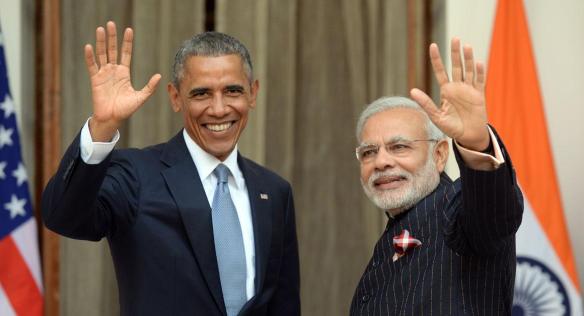
Indian Prime Minister Narendra Modi has built a personal rapport with U.S. President Barack Obama, and his fourth visit to the U.S. in less than two years highlights warming Indo-American relations. Few doubt that U.S.-India ties are better and closer than ever before. From being estranged democracies in the second half of the 20th century, the U.S. and India have become closely engaged democracies.

Besides a shared love of democracy, three elements drive the U.S.-India strategic partnership: money, military hardware, and Asian geopolitics. Their partnership promises to be a force for stability and security in the Indo-Pacific relations.

The blossoming of ties with the U.S. has become an important diplomatic asset for India. The new warmth in relations, however, has failed to ease Indian concerns over America’s regional policies, including on Pakistan, Afghanistan and terrorism, or address complaints of Indian information technology and pharmaceutical industries about U.S. practices, especially non-tariff barriers.

For the U.S., displacing Russia as India’s largest arms supplier has been a diplomatic coup. The success paralleled what happened in the early 1970s when Egypt switched sides during the Cold War by transforming itself from a Soviet arms client to a buyer of mainly American arms. But in contrast to the perpetually aid-dependent Egypt, India buys U.S. weapons with its own money.

Today, Washington is seeking to further open the Indian market for its businesses. And to suit U.S. corporate interests, it is pressing New Delhi to introduce regulatory and other legal changes, strengthen intellectual-property rights provisions, and initiate broader economic reforms.

Not content with the growth in arms sales — which have risen in one decade from $100 million to billions of dollars yearly — America is aiming to capture a bigger share of the Indian defense market. This objective has prompted its Congress recently to propose that India be treated on par with NATO members for defense sales. The U.S. is also seeking to revive its domestic nuclear power industry by selling commercial reactors to India.

India’s size, location and capabilities position it as a counterweight to China and to the forces of Islamist extremism to its west. Yet, as Obama nears the end of his second term, his India policy bears no distinct strategic imprint. Indeed, critics argue that he has no real Indian policy and that his administration has betrayed a transactional attitude toward engagement with India.

Although Obama’s 2015 New Delhi visit set a firm basis for moving the bilateral relationship forward, it was striking that, on his trip’s last public engagement, he lectured the world’s largest democracy on human rights. This was a subject on which he stayed mum at his next stop — tyrannical Saudi Arabia, which probably has the world’s most odious political system.

The complexity of the U.S.-India partnership is underlined by the fact that the U.S. has little experience in forging close strategic collaboration with a country that is not its treaty-based ally. All of America’s close military partners are its treaty-linked allies. India is a strategic partner, not an ally, of America.

The structural difficulties in India-US relations are not easy to overcome. From the Indian perspective, America’s reluctance to accommodate Indian interests on major regional issues, coupled with the fundamental challenge of managing an asymmetrical relationship, constantly test the resilience of the partnership.

For example, close counter-terrorism and intelligence cooperation between the U.S. and India remains hobbled by America’s continued mollycoddling of the Pakistani military and its rogue Inter-Services Intelligence agency. There are doubts whether the U.S. would fully share actionable intelligence on terrorist threats emanating from Pakistani soil against India because that would prompt India to pursue one of two options that Washington wouldn’t like — either India counteracted the identified threat on its own or urged the U.S. to do it.

Meanwhile, strategic weapon transfers, loans and political support allow China to use Pakistan as a relatively inexpensive counterweight to India. Yet, oddly, America also extends unstinted financial and political support to a Pakistan that has mastered the art of pretending to be a U.S. ally while hosting those that kill U.S. soldiers in Afghanistan, including the Taliban and the Haqqani network. Under Obama, the U.S. has made a financially struggling Pakistan one of the largest recipients of its aid.

Take India’s other adversary, China, which also poses a geopolitical challenge for America. Both the U.S. and India are keen to work together to control the potentially disruptive effects of the rise of an increasingly assertive China.

The U.S., however, seeks to use the China factor to draw India further into the American-led camp while remaining neutral on China-India disputes, including shying away from holding joint military exercises in Arunachal Pradesh. Washington has not criticized China’s $46-billion infrastructure-building plan to use Pakistan as its land corridor to the Arabian Sea and the Indian Ocean. It also ignores China’s egregious human-rights violations.

The U.S. seeks to counter China only where it directly challenges American power, as in the Pacific. In southern Asia, by contrast, U.S. policy regards China as a virtual partner, including on Pakistan and Afghanistan.

In Afghanistan, Washington treats terror-exporting Pakistan as part of the solution when, to Kabul and New Delhi, it is at the core of the problem.

On the other hand, the U.S. views Iran as part of the problem in the Af-Pak belt when the imperative is to co-opt Iran as part of the solution to help build stability in the volatile, terrorist-infested region.

Despite the U.S. recently assassinating Afghan Taliban chief Mullah Akhtar Mansour through a drone strike in Pakistan’s Balochistan province, Washington does not consider the Pakistan-backed Taliban as a terrorist organization. It is willing, as part of a peace deal, to accommodate the Afghan Taliban in a power-sharing arrangement in Afghanistan. It assassinated Mansour because he defiantly and doggedly refused, despite U.S. and Pakistani pressures, to enter into peace negotiations.

The assassination, ironically, exposes both Pakistan and America. The fact that the Taliban chief was killed inside Pakistan has contradicted years of denials by Pakistani officials that they were harboring Taliban leaders. Pakistan found its sovereignty violated again, after the raid that killed Osama bin Laden in 2011, by the power that still showers it with billions of dollars in aid.

As for the U.S., it has yet to offer an explanation as to why it took almost 15 years to carry out its first drone strike in Pakistan’s Balochistan province, even though the Afghan Taliban leadership set up its command-and-control structure there after being driven from power in Kabul by the 2001 U.S. military intervention in Afghanistan.

Against this background, no realistic assessment can focus merely on areas where the U.S.-India relationship has thrived — such as U.S. arms sales to India and booming bilateral trade — while ignoring U.S. policies that compound India’s regional security challenges.

In fact, India’s one-sided defense relationship with the U.S., locking it as a leading American arms client, suggests that New Delhi has drawn no appropriate lessons from its protracted reliance on Russian weapon supplies earlier.  Significantly, while U.S. arms to India fall mainly in the category of defensive weapons — which simply cannot tilt the regional military balance in India’s favor — Russia has over the years armed India with offensive weapon systems, including strategic bombers, an aircraft carrier, and a nuclear-powered submarine.

The paradox is that while India has emerged as the largest buyer of American arms, Pakistan is one of the biggest recipients of American alms. This suggests that U.S. profits from arms exports to India help to lubricate America’s aid-to-Pakistan machine. Such U.S. aid also bolsters China’s strategy to box in India while encouraging Pakistan to diabolically sponsor cross-border terrorism.

It is the task of Indian diplomacy to build a robust bilateral relationship while ensuring that it advances, not weakens, the country’s security interests in the region and beyond.

Indian diplomacy has failed to employ leverage from arms-import deals, greater market access to U.S. businesses, and broader geopolitical cooperation to persuade the U.S. to refine policies in southern Asia so that they do not adversely affect Indian security and to dismantle non-tariff barriers against Indian IT and pharmaceutical firms.

Indeed, New Delhi has not even tried to utilize the services of the large and increasingly influential Indian American community. The mistake Indian diplomacy has made is to put the emphasis on bilateral summit meetings and lofty pronouncements to showcase progress. The American side has been happy to pander to this Indian weakness.

In fact, one reason the U.S. is hosting Modi in the twilight of the Obama presidency is to help smooth ruffled feathers. After all, Obama earlier this year unveiled $860 million in new aid to Pakistan under the Overseas Contingency Operations fund, dubbed the “slush fund” because it is not subject to the same oversight as the regular Pentagon and state department budgets. Additionally, he decided to reward Pakistan with eight more subsidized F-16s, a subsidy burden the U.S. Congress hasn’t taken kindly.

Moreover, ever since the 2005 nuclear deal, Washington has been promising to help facilitate India’s admission to the Nuclear Suppliers Group, the Missile Technology Control Regime, and other U.S.-led export-control regimes — a promise reiterated when Obama last visited India. However, the U.S. has invested little political capital thus far to promote India’s inclusion in these cartels. An emboldened China has now emerged as the principal opponent to India’s membership, especially in the NSG.

And thanks to MTCR-related criteria in U.S. export-control regulations, Indo-U.S. space cooperation remains very limited.

In this light, the nice gesture of setting up Modi’s address to the U.S. Congress can be seen as an American attempt to pander to India’s collective ego. India must capitalize on the symbolism of the warming ties with the U.S. to expand the areas of bilateral understanding and cooperation while nudging America to be more accommodative of its vital strategic interests.

The promise of a strong, mutually beneficial partnership cannot be realized without concrete action.

Brahma Chellaney — Professor of Strategic Studies at the New Delhi think-tank Center for Policy Research in New Delhi and a Richard von Weizsäcker Fellow of the Robert Bosch Academy in Berlin — is one of India’s leading strategic thinkers.

© India Abroad, 2016. 

China’s Pakistani Outpost

A column internationally syndicated by Project Syndicate

Pak-China-1024x591

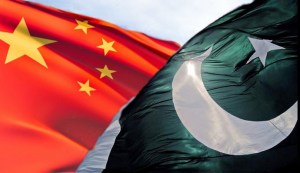
Like a typical school bully, China is big and strong, but it doesn’t have a lot of friends. Indeed, now that the country has joined with the United States to approve new international sanctions on its former vassal state North Korea, it has just one real ally left: Pakistan. But, given how much China is currently sucking out of its smaller neighbor – not to mention how much it extracts from others in its neighborhood – Chinese leaders seem plenty satisfied.

Chinese Foreign Minister Wang Yi has declared that China and Pakistan are “as close as lips and teeth,” owing to their geographical links. China’s government has also calledPakistan its “irreplaceable all-weather friend.” The two countries often boast of their “iron brotherhood.” In 2010, Pakistan’s then-prime minister, Syed Yousuf Raza Gilani,waxed poetic about the relationship, describing it as “taller than the mountains, deeper than the oceans, stronger than steel, and sweeter than honey.”

In fact, wealthy China has little in common with aid-dependent Pakistan, beyond the fact that both are revisionist states not content with their existing frontiers. They do, however, share an interest in containing India. The prospect of a two-front war, should India enter into conflict with either country, certainly advances that interest.

For China, the appeal of working with Pakistan is heightened by its ability to treat the country as a client, rather than an actual partner. In fact, China treats Pakistan as something of a guinea pig, selling the country weapons systems not deployed by the Chinese military and outdated or untested nuclear reactors. Pakistan is currently building two AC-1000 reactors – based on a model that China has adapted from French designs, but has yet to build at home – near the southern port city of Karachi.

China does not even need its supposed “brother” to be strong and stable. On the contrary, Pakistan’s descent into jihadist extremism has benefited China, as it has provided an ideal pretext to advance its strategic interests within its neighbor’s borders. Already, China has deployed thousands of troops in Pakistani-administered Kashmir, with the goal of turning Pakistan into its land corridor to the Arabian Sea and the Indian Ocean. And, as a newly released US Defense Department report shows, Pakistan – “China’s primary customer for conventional weapons” – is likely to host a Chinese naval hub intended to project power in the Indian Ocean region.

That is not all. President Xi Jinping’s first visit to Pakistan last year produced an agreement to construct a $46 billion “economic corridor” stretching from China’s restive Xinjiang region to Pakistan’s Chinese-built (and Chinese-run) Gwadar port. That corridor, comprising a series of infrastructure projects, will serve as the link between the maritime and overland “Silk Roads” that China is creating. It will shorten China’s route to the Middle East by 12,000 kilometers (7,456 miles) and give China access to the Indian Ocean, where it would be able to challenge India from India’s own maritime backyard.

Xi also signed deals for new power projects, including the $1.4 billion Karot Dam, the first project to be financed by China’s $40 billion Silk Road Fund. All of the power projects will be Chinese-owned, with the Pakistani government committed to buying electricity from China at a pre-determined rate. Pakistan’s status as China’s economic and security client will thus be cemented, precluding it from eventually following the example of Myanmar or Sri Lanka and forging a non-Chinese path.

To be sure, the relationship also brings major benefits for Pakistan. China provided critical assistance in building Pakistan’s arsenal of nuclear weapons, including by reducing the likelihood of US sanctions or Indian retaliation. China still offers covert nuclear and missile assistance, reflected in the recent transfer of the launcher for the Shaheen-3, Pakistan’s nuclear-capable ballistic missile, which has a range of 2,750 kilometers.

Overtly, China offers Pakistan security assurances and political protection, especially diplomatic cover at the United Nations. For example, China recently vetoed UN action against Masood Azhar, the Pakistan-based chief of the extremist group Jaish-e-Mohammed, which, backed by Pakistani intelligence services, has carried out several terrorist attacks on Indian targets, including the Pathankot air base early this year. And last month, Sartaj Aziz, the Pakistani prime minister’s foreign-policy adviser, said that China has helped Pakistan to block India’s US-supported bid to gain membership of the Nuclear Suppliers Group, an export-control association.

A grateful Pakistan has given China exclusive rights to run Gwadar port for the next 40 years. It has also established a new 13,000-troop army division to protect the emerging economic corridor. And it has deployed police forces to shield Chinese nationals and construction sites from tribal insurgents and Islamist gunmen.

This is not to say that China is content to depend on Pakistani security forces. China’sstationing of its own troops in the Pakistani part of Kashmir for years, ostensibly to protect its ongoing strategic projects there, betrays its lack of confidence in Pakistani security arrangements – and suggests that China will continue to enlarge its military footprint in Pakistan.

But Pakistan’s behavior indicates that it is, for now, satisfied with its arrangement with China – a sentiment that is probably reinforced, if unconsciously, by the billions of dollars in aid the country receives each year from the US. As China continues to elbow its way into Pakistan’s politics and economy, increasingly turning the country into a colonial outpost, that sense of satisfaction will probably fade. But, by the time it does, it will probably be too late to change course.

© 1995-2016 Project Syndicate.

The Big Squeeze

As climate change and rapid development take their toll, new ways must be found to manage Asia’s water resources

Brahma Chellaney, Nikkei Asian Review

abad2345a892ac5d33fb2fd95c2d6d0f_2

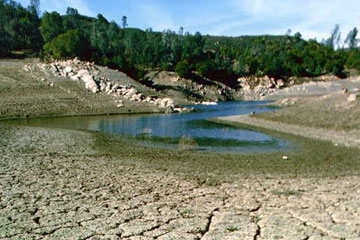
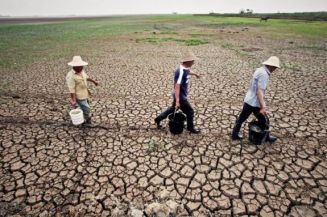
The record drought ravaging large parts of Asia will end when the annual summer monsoon rains come in June. This will bring much-needed relief to the suffering people in the parched lands — from the millions of residents in Vietnam’s Mekong Delta to more than a quarter of India’s 1.25 billion people. The searing drought has already claimed several hundred lives and destroyed vast swaths of rice paddies and other farms.

But make no mistake: The latest in a string of droughts to hit Asia this century offers a telling preview of the hotter, drier future that awaits much of the continent. This likelihood largely arises from the costs that rapid development, breakneck urbanization, large-scale irrigated farming and lifestyle changes are imposing on natural resources, the environment and climate in the world’s largest and most-populous continent.

Recurrent drought promises to exacerbate Asia’s already-serious water challenges and thus potentially affect economic growth, social peace, and relations between countries or provinces that share rivers or aquifers. In a drought-laden future, thirsty communities, provinces or nations will increase risks of water-related conflict.

Yet little policy attention has been paid to combating droughts because of their episodic character, with scientists still unable to reliably predict the arrival, extent or duration of any drought. Unlike other natural and human-made disasters, from earthquakes and hurricanes to flooding and industrial accidents, a drought is a silently creeping calamity. However, without resource conservation, ecological restoration and more sustainable development, droughts in Asia are likely to become more frequent and severe.

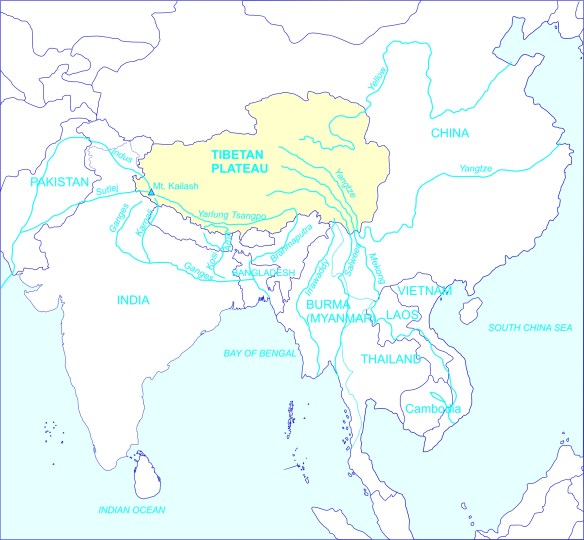
Asia is the world’s most resource-poor continent. Rapid economic growth has brought its limited natural-capital base under increasing pressure. Overexploitation of natural resources, for its part, has created an environmental crisis that is contributing to regional climate change. For example, the Tibetan Plateau, the world’s largest repository of freshwater other than the two poles, is warming at a rate that is more than twice the global average — with potentially serious consequences for Asia’s climate, monsoons and freshwater reserves.

A little-known fact is that Asia, not Africa, is the world’s most water-stressed continent. Water stress is internationally defined as the per capita availability of less than 1,700 cubic meters per year. Asia already has less freshwater per person than any other continent, and some of the world’s worst water pollution.

Water is not just the most undervalued and underappreciated resource; in the coming years, it is likely to be the most contested resource in Asia. This has largely to do with the growing paucity of this life-sustaining resource and Asia’s distinctive water map.

Most important rivers in Asia traverse national boundaries and are thus international systems. Indeed, most Asian nations with land frontiers — with the prominent exception of China, which controls Asia’s riverheads by controlling the Tibetan Plateau — are highly dependent on cross-border water inflows. Such dependency is the greatest in countries like Bangladesh and Vietnam that are located farthest downstream on international rivers.

Against this background, inter-country and intra-country water disputes have become common. Indeed, Asia illustrates that transboundary water resources, instead of linking countries or provinces in a system of hydrological interdependence, are fostering sharpening competition for relative gain. The competition extends to appropriating resources of shared rivers by building dams, reservoirs and other diversions, thus roiling inter-riparian relations. Averting water wars demands rules-based cooperation, water-sharing accords, uninterrupted flow of hydrological data, and dispute-settlement mechanisms.

Asia is already the world’s most dam-dotted continent: It has more dams than the rest of the world combined. But this statistic doesn’t tell the real story: Most of Asia’s dams are in China, which alone has slightly more than half of the world’s approximately 50,000 large dams. With its massive infrastructure of dams and other storage facilities, China has built an impressive capacity to stockpile water for the dry season.

But China’s over-damming of rivers has contributed to river fragmentation (the interruption of natural flows) and depletion, leading to downstream basins drying up or rivers discharging only small amounts of water and nutrient-rich silt into the oceans. China’s dying Yellow River exemplifies this problem. And its cascade of six giant dams on the Mekong, just before it leaves Chinese territory, is being blamed for accentuating the current Southeast Asian drought, with river depletion extending to the delta region, which is a rice bowl of Asia.

Asia’s vulnerability to droughts and other effects of environmental and climate change is being increased by other factors as well, including groundwater depletion and deforestation, especially in the upstream catchment areas. Deforestation is most notable in the Himalayan-Tibetan region, where the great rivers of Asia originate. But it also extends to other regions, including rainforest areas.

Through its environmentally destabilizing impacts, deforestation amplifies the frequency and severity of extreme events such as droughts and floods. The depletion of many Asian swamps — which serve as nature’s water storage and absorption cover — also contributes to a cycle of chronic flooding and drought, besides allowing deserts to advance and swallow up grasslands.

For its part, the extraction of groundwater at rates surpassing nature’s recharge capacity has resulted in a rapidly falling water table across much of Asia. Because groundwater is often a source of supply for streams, springs, lakes and wetlands, the over-exploitation of this strategic resource, which traditionally has served as a sort of drought insurance, creates parched conditions and thus fosters recurrent droughts.

Meanwhile, intensive irrigation in semi-arid regions, including northern China, Central Asia and Pakistan, has helped to create a boom in agricultural exports but exacted heavy transboundary environmental costs. It has caused soil salinity and waterlogging and fostered atmospheric humidity, with climate stability becoming a casualty and dry areas becoming drier.

The entire Asian belt stretching from the Korean Peninsula to the Iran-Afghanistan-Pakistan region is becoming increasingly prone to the ravages of drought. But even before the current drought hit South and Southeast Asia, scientific studies on global drought risk hotspots showed that drought risks were the highest in these two regions, at least in terms of the number of people exposed.

It is past time for Asian policymakers to start addressing drought risks, the core of which is the nexus between water, energy and food. For example, the current drought is roiling world food markets through its destructive impacts on crops. And by reducing cooling-water availability, it is decreasing generation by some power plants, just when electricity demand has peaked.

The drought risks can be reduced by ensuring the protection and ecological restoration of watercourses, securing water-efficiency gains through agricultural-productivity measures, developing drought-resistant crop varieties, improving water quality to offset decrease in water quantity, and utilizing alternative cooling technologies for power generation. Increasing water storage by channeling excess water during the monsoons to artificially recharge aquifers, especially in Asia’s densely populated, economically booming coastal regions, holds promise for coping with droughts.

Policymakers must appreciate that drought risks cannot be lowered without tackling the serious problem of groundwater depletion. Groundwater in Asia is being pumped and consumed by human activities at such a rate that, for example, NASA scientists in the United States observed several years ago that the subterranean reserves in northwest India were vanishing.

Groundwater resources are recklessly exploited because there are few controls in Asia on their extraction. Also contributing to this practice is the fact that, unlike surface water, degradation of groundwater is not visible to the human eye. Surface water and groundwater, however, are linked hydrologically and should be managed as a single resource. A one-water approach is also essential to cut the overreliance of many communities on groundwater supplies.

The specter of permanent water losses is just one reason why Asia’s drought-related challenges demand an integrated, holistic approach. Water, food and energy, for example, must be managed by policymakers not separately but jointly so as to promote synergistic approaches. Also, ecological restoration programs, by aiding the recovery of damaged ecosystems, can help bring wider benefits in slowing soil and water degradation, stemming coastal erosion, augmenting freshwater storage and supply, and controlling droughts.

Without such efforts, the linkages between water stress, sharing disputes, falling water quality and environmental degradation could trap Asia in a vicious cycle. Nature is indivisible: Communities and states cannot thrive for long by bending nature and undercutting environmental sustainability.

Brahma Chellaney is a geostrategist and the author, among others, of the award-winning “Water: Asia’s New Battleground.”

© Nikkei Asian Review, 2016.

Asia’s next major conflict will be over freshwater

&NCS_modified=20160510153859&MaxW=640&imageVersion=default&AR-160519890

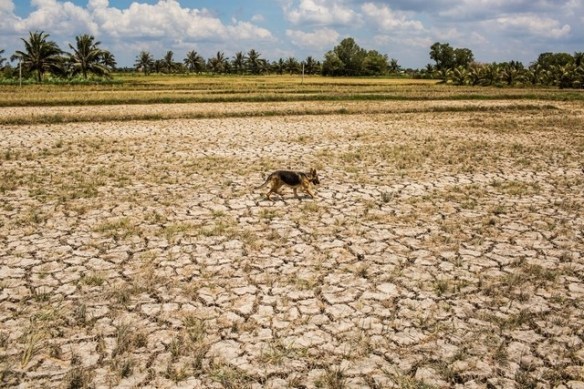
A dog walks over a drought hit plot of land in Ben Tre Province, Vietnam. Christian Berg / Getty Images

Brahma Chellaney, The NationalMay 10, 2016

Nothing illustrates the emergence of freshwater as a key determinant of Asia’s future better than the drought that has parched lands from South East Asia to the Indian subcontinent. It has withered vast parcels of rice paddies and affected economic activity, including electricity generation at a time when power demand has peaked.

Droughts are deceptive disasters because they don’t knock down buildings but they do carry high socioeconomic costs. Tens of millions of people in Vietnam, Cambodia, Thailand, Myanmar and India are now reeling from the searing drought, precipitated by El Niño, the extra-heat-yielding climate pattern.

For China, the drought has created a public-relations challenge. Denying allegations that it is stealing from shared water sources or that its existing dams on the Mekong River are contributing to river depletion and recurrent drought downstream, China has released unspecified quantities of what it called “emergency water flows” to downriver states from one of its six giant dams, located just before the river flows out of Chinese territory.

For the downriver countries, however, the water release was a jarring reminder of not just China’s newfound power to control the flow of a critical resource, but also of their own reliance on Beijing’s goodwill and charity. With a further 14 dams being built or planned by China on the Mekong, this dependence on Chinese goodwill is set to deepen – at some cost to their strategic independence and environmental security.

Asia’s water challenges are underscored by the fact that it has less freshwater per person than any other continent and has some of the world’s worst water pollution.

A recent study by the Massachusetts Institute of Technology warned that Asia’s water crisis could worsen by 2050. And an earlier global study commissioned by the United Nations Office for the Coordination of Humanitarian Affairs found that drought risks are the highest in Asia in terms of the number of people exposed.

The monsoon-centred hydrologic calendar means that annual rain is mainly concentrated in a three- to four-month period, with the rest of the year largely dry. A weak monsoon can compound the long dry period and trigger drought.

The water crisis highlights the urgent need for better management of the life-sustaining resource. Rapid development, breakneck urbanisation, large-scale irrigated farming, lifestyle changes and other human impacts have resulted in degraded watersheds, watercourses and other ecosystems, as well as shrinking forests and swamps and over-dammed rivers. The diversion of sand from riverbeds for the construction boom has damaged rivers and slowed the natural recharge of underground aquifers.

The current drought illustrates some of the key water-related challenges Asian nations must confront. One challenge is for Asia to grow more food with less water, less land and less energy. Increases in crop yields have slowed or flattened and the overall food production in Asia is now lagging demand growth for the first time, after the impressive strides Asia made between the 1970s and 1990s when in one generation it went from being a food-scarce continent dependent on imports to becoming a major food exporter.

With its vast irrigation systems, Asia boasts the bulk of the world’s land under irrigation – 72 per cent of the global irrigated acreage. With so much water diverted for agriculture, water is literally food in Asia. Excessive water withdrawals for agriculture have actually compounded vulnerability to drought.

With resources in rivers and reservoirs not adequate to meet demand, users have turned to pumping water from underground wells. Because groundwater is often a source of supply for rivers, springs, lakes and wetlands, the overexploitation of this strategic resource has helped to spread parched conditions.

With competition for scarce water increasingly a source of political dispute and instability, intra-state water disputes have become more common than inter-country wrangles. The potential for inter-country conflict, however, is being underlined by sharpening geopolitics over shared water resources.

In the coming years, water scarcity threatens to act as a conflict risk multiplier. Yet most Asian countries are not making serious, sustained efforts to build a water-secure future.

Asian countries need to place freshwater at the centre of their strategic planning, or else the linkages between water stress, sharing disputes, falling water quality and environmental degradation could trap Asia in an interminable vicious cycle.

Countries must restore vegetation, reverse the degradation of freshwater and coastal ecosystems, improve water quality to offset decrease in water quantity, incentivise water-use efficiency and use alternative cooling technologies for power generation.

Improved planning for water resource allocation demands an integrated, holistic approach. Water, food and energy, for example, must be jointly managed by policymakers to promote synergistic approaches.

American diplomatic efforts can promote better hydropolitics in Asia, given that the state department has classified freshwater as a central foreign-policy concern for American interests.

If Asia is to avert a parched future, it must think and act long term.

Brahma Chellaney is the author of nine books, including, most recently, Water, Peace, and War.

© The National, 2016.

India’s China appeasement itch

op-kdIG--621x414@LiveMint

Brahma Chellaney, Mint

Winston Churchill famously said: “An appeaser is one who feeds a crocodile hoping it will eat him last”. India has been feeding the giant crocodile across the Himalayas for decades — and stoically bearing the consequences.

After China came under communist rule in 1949, India was one of the first countries to recognize the new People’s Republic of China. Jawaharlal Nehru, driven by post-colonial solidarity considerations, continued to court the PRC even when the Chinese military began eliminating India’s outer line of defence by invading the then independent Tibet. As Tibet pleaded for help against the aggression, India opposed even a UN General Assembly discussion.

By 1954, through the infamous Panchsheel Agreement, Nehru surrendered India’s British-inherited extraterritorial rights in Tibet and recognized the “Tibet region of China” without any quid pro quo. Such was Nehru’s PRC courtship that he even rejected U.S. and Soviet suggestions in the 1950s that India take China’s place in the UN Security Council. Nehru’s officially published selected works quote him as stating that he spurned those suggestions because it would be “unfair” to take China’s vacant seat — as if morality governs international relations. Ironically, impiety and ruthlessness have been hallmarks of China’s policies.

In sum, Nehru’s sustained appeasement resulted in China gobbling up Tibet, covertly encroaching on Indian territories and, eventually, invading India itself.

Yet, just one generation later, India forgot the lessons of Nehruvian appeasement. Since the late 1980s, successive Indian governments have propitiated China. Bharatiya Janata Party-led governments, oddly, have grovelled at times.

Atal Bihari Vajpayee’s 2003 Beijing visit will be remembered in history for his formal surrender of India’s Tibet card. In a joint communiqué, Vajpayee used the legal term “recognize” to accept what China deceptively calls the Tibet Autonomous Region as “part of the territory of the PRC”. Vajpayee’s blunder opened the way for China to claim Arunachal Pradesh as “South Tibet”, a term it coined only in 2006.

Still, unilateral concessions have become the leitmotif of Narendra Modi’s China policy, now adrift, like his Pakistan policy. His concessions have ranged from removing China from India’s list of “countries of concern” to granting Chinese tourists e-visas on arrival. Modi, via the back door, has also brought back in joint statements Vajpayee’s errant formulation that the Tibet Autonomous Region is part of the PRC — a description India had dropped in 2010 to nuance its Tibet stance.

Removing China as a “country of concern”, despite its inimical approach toward India, was integral to introducing a liberalized regime for Chinese investments. However, while Chinese FDI has been slow to come, Indian policy has enabled Beijing to significantly ramp up its already large trade surplus with India. Racking up a whopping $60-billion annual surplus, China has heavily skewed the trade relationship against India, treating it as a raw-material appendage of its economy and a dumping ground for manufactured goods. In 2015-16, Chinese exports to India were almost seven times greater in value than imports.

How can Modi’s “Make in India” initiative succeed when China blithely undercuts Indian manufacturing to reap a fast-growing trade surplus?

After Modi came to power, he made closer ties with China a priority. He even postponed his Japan visit by several weeks so that his first major bilateral meeting was with Chinese President Xi Jinping, at the BRICS summit in Brazil. His overtures, including inviting China to be a major partner in India’s infrastructure expansion, were intended to encourage Beijing to be more cooperative.

Modi’s gamble, however, has not paid off. If anything, China has become more hardline on security issues, including the border. Moreover, it has not only shielded Pakistan-based terrorists like Masood Azhar from UN action, but also stepped up covert strategic assistance to Islamabad, including providing the launcher for Pakistan’s India-specific Shaheen-3 ballistic missile.

Having its cake and eating it too, China savours a lopsided trade relationship with India while being free to contain India. Indian appeasement has also allowed China to narrow the focus of border disputes to what its claims. The spotlight thus is on China’s Tibet-linked claims to Indian territories, not on Tibet’s status. China will not settle the border issue (unless its economy or autocracy crashes) because an unsettled frontier allows it to keep India under intense pressure.

Yet, a short-sighted New Delhi continues to stumble. Take the latest ignominy: India lost face in China’s eye when it issued a visa to the Germany-based World Uighur Congress chief Dolkun Isa and then cancelled it, after Beijing strongly protested the action. The public explanation for cancelling the visa rings hollow. Isa has freely travelled in Europe and to the U.S. despite the China-initiated Interpol “Red Notice” against him — a notice Indian authorities were aware of while issuing the visa. In any event, there were no Red Notices against the other two dissidents from China who were stopped from travelling to India for the same conference.

These actions illustrate the extent to which New Delhi is willing to go to propitiate China — even at the cost to India’s self-respect and international standing. Untrammelled propitiation underscores Karl Marx’s statement: “History repeats itself first as tragedy, then as farce”.

Let’s be clear: India’s choice on China is not between persisting with a weak-kneed policy and risking a war. India can, and must, tackle an increasingly assertive and wily China without appeasement or confrontation. But without leveraging the bilateral relationship, including levelling the playing field for trade, India cannot hope to tame Chinese intransigence and belligerence.

Brahma Chellaney is a professor at the Centre for Policy Research.

© Mint, 2016.

China’s water hegemony in Asia

Brahma Chellaney, The Japan Times, May 3, 2016.

China's grip

A severe drought currently ravaging Southeast and South Asia has helped spotlight China’s emergence as the upstream water controller in Asia through a globally unparalleled hydro-engineering infrastructure centered on damming rivers. Indeed, Beijing itself has highlighted its water hegemony over downstream countries by releasing some dammed water for drought-hit nations in the lower Mekong River basin.

In releasing what it called “emergency water flows” to downstream states over several weeks from one of its six giant dams — located just before the Mekong flows out of Chinese territory — China brashly touted the utility of its upstream structures in fighting droughts and floods.

But for the downriver countries, the water release was a jarring reminder of not just China’s newfound power to control the flow of a life-sustaining resource, but also of their own reliance on Beijing’s goodwill and charity. With a further 14 dams being built or planned by China on the Mekong, this dependence on Chinese goodwill is set to deepen — at some cost to their strategic leeway and environmental security.

Armed with increasing leverage, Beijing appears to be pushing its Lancang-Mekong Cooperation (LMC) initiative as an alternative to the lower-basin states’ Mekong River Commission, which China has spurned over the years. Indeed, having its cake and eating it too, China is a dialogue partner but not a member of the commission, underscoring its intent to stay clued in on the discussions, without having to take on any legal obligations.

The LMC — a broad-based political initiative emphasizing Chinese “cooperation” and subsuming China’s pet projects, such as “One Belt, One Road” — is intended to help marginalize the commission, an institution with legally binding rules and regulations. China’s refusal to join the 1995 Mekong treaty, which created the commission, has stunted the development of an inclusive, rules-based basin community to deal with water- and environmental-related challenges.

It was not a coincidence that Beijing’s water release started shortly before the March 23 inaugural LMC summit of the leaders of the six Mekong basin countries in Sanya, in the Chinese province of Hainan.

The LMC project is also designed to overshadow the U.S.-sponsored Lower Mekong Initiative, which seeks to sideline Chinese opposition to the Mekong treaty by promoting integrated cooperation among the quintet of lower-Mekong basin states (also known as the “Mekong Five”) — Cambodia, Laos, Myanmar, Thailand and Vietnam. The Mekong treaty was concluded as China completed its first large dam on the river.

The Mekong, Southeast Asia’s lifeline that is running at a record low since late last year, is just one of the international rivers China has dammed. It has also targeted the Yarlung Tsangpo (Brahmaputra), the Arun, the Indus, the Sutlej, the Irtysh, the Illy, the Amur and the Salween. These rivers flow into India, Nepal, Kazakhstan, Russia or Myanmar.

Asia’s water map changed fundamentally after the communists took power in China in 1949. It wasn’t geography but guns that established China’s chokehold on almost every major transnational river system in Asia, the world’s largest and most-populous continent.

By forcibly absorbing the Tibetan Plateau (the giant incubator of Asia’s main river systems) and Xinjiang (the starting point of the Irtysh and the Illy), China became the source of transboundary river flows to the largest number of countries in the world, extending from the Indochina Peninsula and South Asia to Kazakhstan and Russia. Beijing’s claim over these sprawling territories, which make up more than half of China’s landmass today, drew from the fact that they were imperial spoils of the earlier foreign rule in China under the Manchu Qing dynasty (1644 to 1911) and the Mongol Yuan dynasty (1271 to 1368).

Before the communists seized power, China had only 22 dams of any significant size. But now, it boasts more large dams on its territory than the rest of the world combined.  If dams of all sizes and types are counted, their number in China surpasses 85,000. Strongman Mao Zedong initiated an ambitious dam-building program, but the majority of the existing dams were built in the period after him.

China’s dam frenzy, however, shows no sign of slowing. The country’s dam builders, in fact, are shifting their focus from the dam-saturated internal rivers (some of which, like the Yellow, are dying) to the international rivers, especially those that originate on the water-rich Tibetan Plateau.  This raises fears that the degradation haunting China’s internal rivers could be replicated in the international rivers.

China, ominously, has graduated to erecting mega-dams. Take its latest dams on the Mekong: the 4,200-megawatt Xiaowan (taller than the Eiffel Tower in Paris) and the 5,850-megawatt Nuozhadu, with a 190-square-kilometer reservoir. Either of them is larger than the current combined hydropower-generating capacity in the lower Mekong states.

Despite its centrality in Asia’s water map, China has rebuffed the idea of a water-sharing treaty with any neighbor.

Against this background, concern is growing among is downstream neighbors that China is seeking to turn water into a potential political weapon. After all, by controlling the spigot for much of Asia’s water, China is acquiring major leverage over its neighbors’ behavior in a continent already reeling under very low freshwater availability.

Asia’s annual water availability is barely one-tenth of that in South America, Australia, and New Zealand; not even one-fifth of North America’s; nearly one-third of Europe’s; and a quarter less than Africa’s. Yet the world’s most rapidly growing demand for water for industry, food production and municipal supply is in Asia.

In the Mekong basin, China has denied that it is stealing shared waters or that its existing dams have contributed to river depletion and recurrent drought in the downstream region. Yet, by ramping up construction of additional giant dams, China has virtually ensured long-term adverse impacts on the critical river system. Indeed, with Chinese assistance, landlocked Laos also plans to build more Mekong dams in order to make hydropower exports, especially to China, the mainstay of its economy.

China is clearly not content with being the world’s most dammed country, and the only thing that could temper its dam frenzy is a prolonged economic slowdown at home. Flattening demand for electricity due to China’s already-slowing economic growth, for example, offers a sliver of hope that the Salween River — which flows into Myanmar and along the Thai border before emptying into the Andaman Sea — could be saved, even if provisionally, from the cascade of hydroelectric mega-dams that Beijing has planned to build on it.

More fundamentally, China’s unilateralist approach underscores the imperative for institutionalized water cooperation in Asia, based on a balance between rights and obligations. Renewed efforts are needed to try and co-opt China in rules-based cooperation.

Brahma Chellaney is the author of “Water: Asia’s New Battleground.”

© The Japan Times, 2016.

Asia’s Troubled Water

A column internationally syndicated by Project Syndicate

Wuhan-drought-via-ET

Asia’s water woes are worsening. Already the world’s driest continent in per capita terms, Asia now faces a severe drought that has parched a vast region extending from southern Vietnam to central India. This has exacerbated political tensions, because it has highlighted the impact of China’s dam-building policy on the environment and on water flows to the dozen countries located downstream.

Today’s drought in parts of Southeast and South Asia is the worst in decades. Among the hardest-hit areas are Vietnam’s Mekong Delta (a rice bowl of Asia) and central highlands; 27 of Thailand’s 76 provinces; parts of Cambodia; Myanmar’s largest cities, Yangon and Mandalay; and areas of India that are home to over a quarter of the country’s massive population.

Droughts may not knock down buildings, but they carry high social and economic costs. Millions of Asians now confront severe water shortages, and some have been forced to relocate. Myanmar, Thailand, and Cambodia have had to scale back traditional water festivals marking their New Year. The High Court of Bombay moved the world’s biggest and wealthiest cricket tournament, the Indian Premier League, out of the state of Maharashtra. In one Maharashtra county, the local authorities, fearing violence, temporarily banned gatherings of more than five people around water storage and supply facilities.

Meanwhile, the mounting drought-related losses in some of the world’s top rice-producing countries – Thailand, Vietnam, and India – threaten to roil the world’s already tight rice market. Barely 7% of global rice output is traded internationally, because much of it is consumed where it is produced – in Asia.

Rice losses have been particularly significant in Thailand and Vietnam, which account for half of all rice exports and almost three-quarters of this decade’s projected export growth. Some 230,000 hectares of paddy rice cultivation has been destroyed just in Vietnam’s Mekong Delta, where depleted river flows have led to saltwater intrusion from the South China Sea, rendering nearly 10% of the rice farms potentially infertile.

This drought may be unprecedented, but it is not an anomaly. On the contrary, environmental challenges in Asia, such as ecosystem degradation, groundwater depletion, the contamination of water resources, the El Niño tropical weather pattern, and the effects of global warming are causing droughts to become increasingly frequent – and increasingly severe.

Even without droughts, Asia would be facing formidable water constraints. The annual amount of available fresh water per capita in the region (2,816 cubic meters) already is less than half the global average (6,079 cubic meters). As the region pursues rapid economic development, characterized by massive increases in resource consumption and serious environmental damage, its water constraints are tightening further. The challenge is compounded by Asians’ changing dietary preferences, particularly higher consumption of meat, the production of which is notoriously water-intensive.

While Asia’s resource-hungry economies can secure fossil fuels and mineral ores from distant lands, they cannot import water, which is prohibitively expensive to transport. So they have been overexploiting local resources instead – a practice that has spurred an environmental crisis, advancing regional climate change and intensifying natural disasters like droughts.

As a result, Asia, which accounts for 72% of the world’s total irrigated acreage, now faces a dilemma: It must grow enough food to meet rising demand, while reducing the amount of water that goes toward irrigation. Unless Asia resolves it, economic development will be imperiled, with major consequences for the entire global economy.

Yet the continent’s water crisis is only worsening. According to a recent MIT study, there is a “high risk” that Asia’s water stress could worsen to water scarcity by 2050. Water-sharing disputes between countries or provinces already are increasingly frequent, owing to the proliferation of dam projects that can adversely affect downstream flows – an approach that represents a continuing preference for supply-side approaches over smart water management.

The main culprit in this regard is China, which has heavily dammed the Mekong, Southeast Asia’s lifeline. In the current lean season, which will last until the monsoon rains arrive in June, the lower Mekong is, according to a recent United Nations report, running at “its lowest level since records began nearly 100 years ago.”

China is now trying to play savior, by releasing an unspecified quantity of water from one of its six upstream mega-dams to “accommodate the concerns” of drought-stricken countries. China’s rulers have touted the move as underscoring the effectiveness of upstream “water facilities” in addressing droughts and containing floods.

Of course, in reality, all of this simply highlights the newfound reliance of downriver countries on Chinese goodwill – a dependence that is set to deepen as China builds 14 more dams on the Mekong. The environmental impact of these projects is sure to exacerbate further the ecological challenges, including drought, already facing Asia.

This competitive approach is putting Asia on a dangerous path, which can lead only to more environmental degradation, slower economic development, and even water wars. It is time to change course and embark on the path of rules-based cooperation, based on water-sharing accords, the free flow of hydrological data, and dispute-settlement mechanisms.

Asian countries must work together to ensure greater efficiency in water consumption, increase the use of recycled and desalinated water, and promote innovative solutions that advance conservation and adaptation efforts. To this end, governments must phase out state subsidies that have encouraged profligate water use, such as in agriculture, and focus on building new market mechanisms and effective public-private partnerships.

None of this will be possible without China’s cooperation. Indeed, if China does not abandon its current approach – from its “water grab” in the Mekong and other international rivers to its “territorial grab” in the South China Sea – the prospects for a rules-based order in Asia could perish forever.

© 1995-2016 Project Syndicate.

How to shut down the ‘jihad factories’

Brahma Chellaney

BRAHMA CHELLANEY, Special to The Globe and Mail

Brahma Chellaney is a geostrategist and author, most recently of Water, Peace, and War .


The Brussels bombings, as with the Paris terrorist attacks last year, show that jihadi-minded citizens of European Union states can turn into killers by imbibing the insidious ideology of Wahhabism.

This is the mother of fanatical Islamist groups – al-Qaeda, the Taliban, Lashkar-e-Taiba, Boko Haram, al-Shabaab and Islamic State – all of which blend hostility toward non-Sunni Muslims and anti-modern romanticism into nihilistic rage.

The key to battling Islamist terrorism is to stem the spread of the ideology that has fostered “jihad factories.” The export of Wahhabism by Saudi Arabia, Qatar and some other oil sheikdoms is the source of modern Islamist terror. From Africa to Asia and now Europe, Arabian petrodollars have played a key role in fomenting militant Islamic fundamentalism that targets the West, Israel and India as its enemies.

No country has contributed more than Saudi Arabia to the international spread of Wahhabism, which is gradually snuffing out more liberal Islamic traditions in many countries. If Saudi Arabia is to be stopped from continuing to export radical Islamist extremism, the United States and Europe will have to adjust their policies to stop the cloistered Saudi royals from continuing to fund Muslim extremist groups and madrassas in other countries.

With Western support, tyrannical oil monarchies in Riyadh, Doha and elsewhere were able to ride out the Arab Spring, emerging virtually unscathed. Saudi Arabia has faced little international pressure, even on human rights.

How the Saudi kingdom buys up world leaders is apparent from the Malaysian attorney-general’s recent disclosure that $681-million (U.S.) deposited in Prime Minister Najib Razak’s personal bank account was a “personal donation” from the Saudi royals and that $620-million of it was returned. Saudi Arabia has also given between $10-million and $25-million to the Clinton Foundation.

For too long, the rest of the world – in thrall to Saudi money and reliant on Saudi oil – has largely turned a blind eye to the kingdom’s jihadi agenda. That is slowly beginning to change. As German Vice-Chancellor Sigmar Gabriel put it: “We must make it clear to the Saudis that the time of looking the other way is over.” After last December’s mass shooting in San Bernardino, Calif., U.S. President Barack Obama alluded to Wahhabism as a “perverted interpretation of Islam.”

Jihadism and sectarianism are institutionalized in Saudi Arabia, which is named after its founder, commonly known as Ibn Saud. Saud, who ruled for 20 years until his death, brought the central part of the Arabian Peninsula under his control with British assistance in 1932, establishing a desert kingdom hewing to Wahhabism, a messianic radicalism that was considered a fringe form of Islam until oil wealth helped transform the once-barren Saudi Arabia, the world’s largest country without a river.

Since the oil-price boom of the 1970s, Saudi Arabia has spent more than $200-billion on its global jihad project, including funding Wahhabi madrassas, mosques, clerics and books. Wahhabism legitimizes violent jihadwith its call for a war on “infidels.”

Europe’s new terror is a reminder that Wahhabi fanaticism is the root from which Islamist terrorists draw their ideological sustenance. As U.S. Vice-President Joe Biden said in a 2014 speech at Harvard University, Saudi and other “allies’ policies wound up helping to arm and build allies of al-Qaeda and eventually the terrorist [Islamic State].”

Today, with its future more uncertain than ever, the House of Saud is increasingly playing the sectarian card to shore up support among the Sunni majority at home and to rally other Islamist rulers in the region to its side. Having helped to militarily crush the Arab Spring uprising in Bahrain, Saudi Arabia in January executed its own Arab Spring leader, Sheik Nimr al-Nimr, who had led anti-regime Shia protests in 2011.

Before the execution, the kingdom formed an alliance of Sunni states purportedly to fight terrorism. The coalition included all the main sponsors of international terror, such as Qatar and Pakistan. It was like arsonists pretending to be fire wardens. According to a United Nations panel of experts, Saudi Arabia is “violating international humanitarian law” in Yemen, where it is waging an air campaign against Iranian-backed Houthi rebels.

The Saudi royals seem to mistakenly believe that widening the sectarian fault lines in the Islamic world will keep them in power. By drawing legitimacy from jihadism and by being beholden to sectarianism, the royals, however, could be digging their own graves. After all, fuelling jihadism and sectarianism threatens to empower extremists at home and ultimately devour the royalty.

More broadly, the global war on terror cannot be won without closing the wellspring that feeds terrorism: Wahhabi fanaticism. Wahhabism is the ultimate source of the hatred that triggered the Sept. 11, 2001, terrorist attacks in the United States, the 2008 attacks in Mumbai, and the recent Paris and Brussels terrorism.

Shutting that wellspring demands that the West hold Saudia Arabia, the world’s chief ideological sponsor of jihadism, to account for spawning the dangerous extremists who are imperilling regional and international security.

The late Singaporean leader Lee Kuan Yew correctly said in 2003 that winning the war on terror hinges more on controlling the “queen bees” – the “preachers” of the “deviant form of Islam” – than on simply killing the “worker bees” (terrorists).

As long as Wahhabism keeps jihad factories in business, there will be suicide killers. Dismantling the Saudi, Qatari and other Wahhabi religious-industrial complexes exporting jihadism is more imperative than ever.

© The Globe and Mail, 2016.