
A Healthy, Climate-Friendly Diet

A column internationally syndicated by Project Syndicate.
livestock-production-1351694005

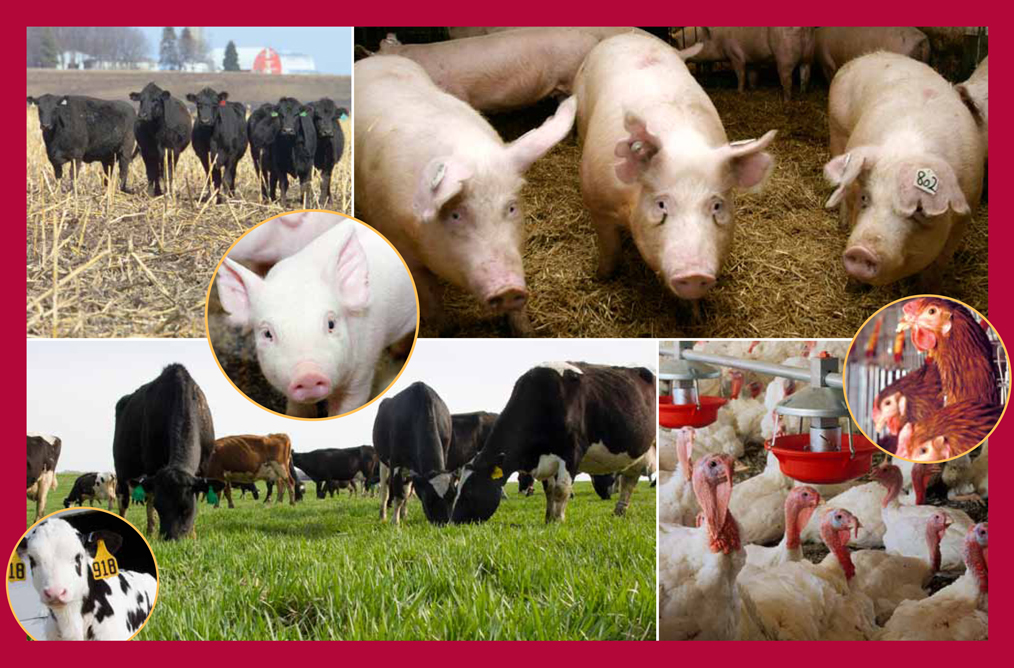
How we are slowly killing the planet with our love of meat.

This December, world leaders will meet in Paris for the United Nations Climate Change Conference, where they will hammer out a comprehensive agreement to reduce carbon emissions and stem global warming. In the run-up to that meeting, governments worldwide should note one critical, but often overlooked, fact: the single biggest driver of environmental degradation and resource stress today is our changing diet – a diet that is not particularly conducive to a healthy life, either.

In recent decades, rising incomes have catalyzed a major shift in people’s eating habits, with meat, in particular, becoming an increasingly important feature of people’s diets. Given that livestock require much more food, land, water, and energy to raise and transport than plants, increased demand for meat depletes natural resources, places pressure on food-production systems, damages ecosystems, and fuels climate change.

Meat production is about ten times more water-intensive than plant-based calories and proteins, with one kilogram of beef, for example, requiring 15,415 liters of water. It is also an inefficient way of generating food; up to 30 crop calories are needed to produce one meat calorie.

At any given time, the global livestock population amounts to more than 150 billion, compared to just 7.2 billion humans – meaning that livestock have a larger direct ecological footprint than we do. Livestock production causes almost 14.5% of global greenhouse-gas emissions and contributes significantly to water pollution.

Moreover, livestock production consumes one-third of the total water resources used in agriculture (which accounts for 71% of the world’s water consumption), as well as more than 40% of the global output of wheat, rye, oats, and corn. And livestock production uses 30% of the earth’s land surface that once was home to wildlife, thereby playing a critical role in biodiversity loss and species extinction.

It took more than a century for the European diet to reach the point at which meat is consumed at every meal, including breakfast. But, in large parts of Asia, a similar shift has occurred in just one generation. Meaty diets have created a global obesity problem, including, of all places, in China, whose expanding international clout is accompanied by expanding waistlines at home.

Americans consume the most meat per capita, after Luxembourgers. Given the size of the US population, this is already a problem. If the rest of the world caught up to the United States – where meat consumption averages 125.4 kilograms per person annually, compared with a measly 3.2 kilograms in India – the environmental consequences would be catastrophic.

Already, the signs are worrying. The demand for meat is projected to increase by 50% from 2013 to 2025, with overall consumption still rising in the West and soaring in the developing world, especially Asia.

In order to meet this demand, meat producers have had to adopt an extremely problematic approach to raising livestock. In order to ensure that their animals gain weight rapidly, meat producers feed them grain, rather than the grass that they would naturally consume – an approach that is a major source of pressure on grain production, natural resources, and the environment.

Making matters worse, the livestock are injected with large amounts of hormones and antibiotics. In the US, 80% of all antibiotics sold are administered prophylactically to livestock. Yet this has been inadequate to stem the spread of disease; in fact, with many of the new and emerging infectious diseases affecting humans originating in animals, veterinarians, microbiologists, and epidemiologists have been trying to understand the “ecology of disease” (how nature, and humanity’s impact on it, spreads disease).

Though the environmental and health costs of our changing diets have been widely documented, the message has gone largely unheard. With the world facing a serious water crisis, rapidly increasing global temperatures, staggering population growth, and growing health problems like coronary disease, this must change – and fast.

For starters, to ease some of the resource pressure, livestock producers should switch to water-saving technologies, including drip irrigation. At the same time, governments and civil-society groups should promote healthier diets that rely more on plant-based proteins and calories.

According to recent research, if the world stopped producing crops for animal feed or diverting them to biofuels, it could not only end global hunger, but also feed four billion extra people – more than the number of projected arrivals before the global population stabilizes. Meat consumption actually leads to more greenhouse-gas emissions annually than the use of cars does.

This is not to say that everyone must become vegetarian. But even a partial shift in meat-consumption habits – with consumers choosing options like chicken and seafood, instead of beef – could have a far-reaching impact. Indeed, beef production requires, on average, 28 times more land and 11 times more water than the other livestock categories, while producing five times more greenhouse-gas emissions and six times more reactive nitrogen.

Adopting a balanced, largely plant-based diet, with minimal consumption of red and processed meat, would help conserve natural resources, contribute to the fight against human-induced global warming, and reduce people’s risk of diet-related chronic diseases and even cancer mortality. Just as governments have used laws, regulations, and other tools with great success to discourage smoking, so must they encourage citizens to eat a balanced diet – for the sake of their health and that of our planet.

© 1995-2015 Project Syndicate.
Understanding China’s Indian Ocean strategy

BY BRAHMA CHELLANEY, The Japan Times

downloadWhat are Chinese attack submarines doing in the Indian Ocean, far from China’s maritime backyard, in what is the furthest deployment of the Chinese Navy in 600 years?

Two Chinese subs docked last fall at the new Chinese-built and -owned container terminal in Colombo, Sri Lanka. And recently a Chinese Yuan-class sub showed up at the Pakistani port city of Karachi.

The assertive way China has gone about staking its territorial claims in the South and East China seas has obscured its growing interest in the Indian Ocean. This ocean has become the new global center of trade and energy flows, accounting for half the world’s container traffic and 70 percent of its petroleum shipments.

China’s newly released defense white paper, while outlining regional hegemony aspirations, has emphasized a greater focus on the seas, including an expanded naval role beyond its maritime backyard. The white paper says that, as part of China’s effort to establish itself as a major maritime power, its navy will shift focus from “offshore waters defense” to “open seas protection” — a move that helps explain its new focus on the Indian Ocean, with the Maritime Silk Road initiative at the vanguard of the Chinese grand strategy. To create a blue water force and expand its naval role, China is investing heavily in submarines and warships, and working on a second aircraft carrier.

President Xi Jinping’s pet project is about expanding and securing maritime routes to the Middle East and beyond through the Indian Ocean, which is the bridge between Asia and Europe. Xi’s dual Silk Road initiatives — officially labeled the “One Belt, One Road” — constitute a westward strategic push to expand China’s power reach. Indeed, Xi’s Indian Ocean plans draw strength from his more assertive push for Chinese dominance in the South and East China seas.

The Chinese maneuvering in the Indian Ocean — part of China’s larger plan to project power in the Middle East, Africa and Europe — aims to challenge America’s sway and chip away at India’s natural-geographic advantage. Xi has sought to carve out an important role for China in the Indian Ocean through his Maritime Silk Road initiative, while his overland Silk Road is designed to connect China with Central Asia, the Caspian Sea basin and Europe.

The common link between the two mega Silk Road projects is Pakistan, which stands out for simultaneously being a client state of China, Saudi Arabia and the United States — a unique status.

During a visit to Pakistan in April, Xi officially launched the project to connect China’s restive Xinjiang region with the warm waters of the Arabian Sea through a 3,000 km overland transportation corridor extending to the Chinese-built Pakistani port of Gwadar. This project makes Pakistan the central link between the maritime and overland Silk Roads. The Xi-launched corridor to Gwadar through Pakistan-held Kashmir — running in parallel to India’s Japanese-financed New Delhi-Mumbai Industrial Corridor — will hook up the two Silk Roads.

Indeed, a stable Pakistan has become so critical to the ever-increasing Chinese strategic investments in that country that Beijing has started brokering peace talks between the Pakistan-backed Afghan Taliban and Kabul. This effort has been undertaken with the backing not just of Pakistan but also of the U.S., thus underscoring the growing convergence of Chinese and American interests in the Afghanistan-Pakistan belt.

More broadly, with China’s officially disclosed defense budget soaring from $35 billion in 2006 to $141 billion in 2015, Xi has not only emphasized “active defense” but also articulated a more expansive role for his country than any modern Chinese leader other than Mao Zedong. His maritime goal is to redraw the larger geopolitical map by bringing within China’s orbit regional countries, especially those in the Indian Ocean Rim, which extends from Australia to the Middle East and Southern Africa. This region has the dubious distinction of having the world’s largest concentration of fragile or failing states.

The Maritime Silk Road initiative, with its emphasis on high-visibility infrastructure projects, targets key littoral states located along the great trade arteries. At a time of slowing economic growth in China, infrastructure exports are also designed to address the problem of overproduction at home.

By presenting commercial penetration as benevolent investment and credit as aid, Beijing is winning lucrative overseas contracts for its state-run companies, with the aim of turning economic weight into strategic clout. Through its Maritime Silk Road — a catchy new name for its “string of pearls” strategy — China is already challenging the existing balance of power in the Indian Ocean.

Beijing, while seeking to co-opt strategically located states in an economic and security alliance led by it, is working specifically to acquire naval-access outposts through agreements for refueling, replenishment, crew rest and maintenance. Its efforts also involve gaining port projects along vital sea lanes of communication, securing new supplies of natural resources, and building energy and transportation corridors to China through Myanmar and Pakistan.

One example of how China has sought to win influence in the Indian Ocean Rim is Sri Lanka. It signed major contracts with Sri Lanka’s now-ousted president, Mahinda Rajapaksa, to turn that country — located along major shipping lanes — into a major stop on the Chinese nautical “road.” The country’s new president, Maithripala Sirisena, said on the election-campaign trail earlier this year that the Chinese projects were ensnaring Sri Lanka in a debt tap, with the risk that “our country would become a colony and we would become slaves.”

Another example is China’s current effort to set up a naval base in Djibouti, which overlooks the narrow Bab al-Mandeb straits. This channel, separating Africa from the Arabian Peninsula and constituting one of the busiest shipping lanes in the world, leads into the Red Sea and north to the Mediterranean.

In February 2014, Beijing signed a military accord with Djibouti allowing the Chinese Navy to use facilities there, a move that angered the U.S., which already has a military base in that tiny Horn of Africa nation. Now, according to the county’s president, Ismail Omar Guelleh, China wants to establish its own naval base at Obock, Djibouti’s northern port city.

Beijing is also interested in leasing one of the 1,200 islands of the politically torn Maldives. Xi has toured several of the key countries in the Indian Ocean Rim that China is seeking to court, including the Maldives, Tanzania and Sri Lanka.

From China’s artificially created islands in the South China Sea to its ongoing negotiations for a naval base in Djibouti, the maritime domain has become central to Xi’s great-power ambitions. Yet it is far from certain that he will be able to realize his strategic aims in the Indian Ocean Rim, given the lurking suspicions about China’s motives and the precarious security situation in some regional states.

One thing is clear though: China wants to be the leader, with its own alliances and multilateral institutions, not a “responsible stakeholder” in the U.S.-created architecture of global governance. It is building naval power to assert sovereignty over disputed areas and to project power in distant lands. Determined to take the sea route to secure global power status and challenge the U.S.-led order, China is likely to step up its strategic role in the Indian Ocean — the world’s new center of geopolitical gravity.

Brahma Chellaney is a geostrategist, author and long-standing contributor to The Japan Times.

© The Japan Times, 2015.

Beijing’s bendable principles

China claims neighbors’ territories by inventing the ingenious principle “what is ours is ours and what is yours is negotiable.”

Brahma Chellaney, The Hindustan Times, June 13, 2015

c307762e-1da4-453b-85aa-8be9c65c59e4wallpaper1Narendra Modi became the first Indian prime minister to publicly identify China on Chinese soil as an obstacle to closer bilateral ties by asking Beijing to “reconsider its approach” on some key issues. In a similar vein, his national security advisor, Ajit Doval, has classified China’s border stance as a “complete contravention of accepted principles,” pointing out that the Chinese agreed to the McMahon Line in “settling the border with Myanmar” but say “the same line is not acceptable in the case of India, particularly in Tawang.”

Don’t be surprised by this illogicality: In none of its disputes with neighboring countries has China staked a territorial claim on the basis of international law or norms. Rather, its claims flow from its revanchist view of the past — a shifting standpoint that reinterprets history to legitimize claims to territories long held by other countries. Because China does not apply the rule of law at home, it does not recognize its value in international relations.

For China, principles have always been bendable. And when it cannot bend a principle, it creates a new one.

Take its territorial disputes with India: Content with its Switzerland-size land grab (Aksai Chin) in India’s western sector, China pursues expansive claims in the eastern sector that highlight its ingenious principle to covet neighbors’ territories — “what is ours is ours and what is yours is negotiable.”

Having just articulated regional-hegemony aspirations in its defense white paper, China — an outside power — wants to carve out a major role for itself in the Indian Ocean. It has invited India to collaborate with it on deep seabed mining there and join its Maritime Silk Road. Yet it opposes any Indian involvement in the South China Sea. “My sea is my sea but your ocean is our ocean” seems to be a new Chinese saying.

Since 2006, Beijing has claimed the Austria-size Arunachal Pradesh, in northeastern India, as “South Tibet.” To draw attention to the state’s purported Tibetan identity, it has cooked up Tibetan names for subdivisions of Arunachal Pradesh (which includes the Tawang Valley, the gateway to the Dalai Lama’s 1959 escape from his homeland). In border negotiations in recent years, it has pressed India to cede at least Tawang.

China originally fashioned its claim to resource-rich Arunachal Pradesh — a territory almost three times larger than Taiwan — as a bargaining chip to compel India to recognize its occupation of the Aksai Chin plateau. For this reason, China withdrew from the Arunachal areas it had invaded in the 1962 war but retained its territorial gains in Aksai Chin, which provides the only passageway between its rebellious regions — Tibet and Xinjiang. But now, by ratcheting up the Arunachal issue with India, China is signaling that Arunachal (or at least Tawang) is the new Taiwan that must be “reunified” with the Chinese state.

The Dalai Lama, however, has said publicly that Arunachal Pradesh, including Tawang, was traditionally not part of Tibet. Tawang indeed is a Monpa tribal area, and was separated from Tibet by a well-recognized customary line. The Monpas, like several other Himalayan communities, practice Tibetan Buddhism. They belong to the Gelukpa (“Yellow Hats”) sect.

Significantly, China made its specific claim to Tawang not before it waged war against India in 1962 but decades later as part of a maximalist boundary-related stance extending to several other neighbors. For example, China has not only escalated its challenge to Japan’s century-old control of the Senkaku Islands, but is also facing off against the Philippines since sneakily seizing the Scarborough Shoal in 2012.

The India-China border negotiations have dragged on for 34 years — a world record. With no headway on reaching a frontier settlement, Modi in Beijing rightly emphasized the imperative to resume the process — derailed by China 13 years ago — to clarify the line of actual control (LAC). If the LAC remains ill-defined, can confidence-building measures be effective? To facilitate its cross-border military forays, China, however, still opposes clarification, even though the clarification can be done, as Modi pointed out, “without prejudice” to either side’s “position on the boundary question.” In 2002, after more than two decades of negotiations, China reneged on a promise to exchange maps with India covering the two main disputed sectors — Aksai Chin, along with its adjacent areas, and Arunachal Pradesh — located at either end of the Himalayas.

Doval has done well to highlight China’s hypocrisy in accepting the watershed principle — and thus the McMahon Line — with Myanmar but not with India.

Watershed (also called “river basin,” “drainage basin,” and “catchment”) is the total land area that drains surface water into a watercourse like a river, lake, pond, or aquifer. A watershed, easily identifiable on topographic maps, is delineated by a ridge or drainage divide marking the runoff boundary. Below a ridge line, all water will naturally flow downhill. A watershed boundary is identified on a topographic map by first locating the lowest point, or watershed outlet, and then establishing the highest runoff point.

The colonial-era McMahon Line was drawn on the watershed principle — a well-established international norm for boundary demarcation. Many countries have settled their boundaries on the watershed principle.

In its October 1, 1960, boundary pact with Myanmar, China settled by acquiescing in the McMahon Line, which delineated the customary border on the basis of the watershed principle. Any deviation from the McMahon Line in the accord was minor and largely necessitated by the task of producing maps of the entire 2,200-km border at 1:50,000 scale, in contrast to the thickly-marked McMahon Line.

Make no mistake: While China settled with Myanmar with a few relatively minor rectifications, it is not seeking slight adjustments with India in the eastern sector. Rather, it covets major chunks of real estate — its largest territorial claims against any nation. Myanmar, of course, poses no threat to China. But the 1960 settlement was also driven by Chinese foreign-policy compulsions, underscored by an insurrection in Tibet since 1959 and border tensions and skirmishes with India.

In deference to Beijing, the pact did not mention the McMahon Line but referred to it euphemistically as the “traditional customary line.” According to the Australian academic Brendan Whyte, “While the McMahon Line was followed here, it was used not because it was the McMahon Line, but because it happened to be a sensible boundary.” More importantly, if China openly acknowledged a line agreed to by the Tibet and British Indian governments, it would be admitting that Tibet was independent then — a historical reality Beijing remains loath to accept.

In fact, just six months after Chinese Premier Zhou Enlai told Prime Minister Jawaharlal Nehru that China would never accept the McMahon Line, Beijing bestowed implicit respectability on that line by signing the Myanmar pact. The accord came in record time — in just nine months after a joint committee was set up to define the border and frame a treaty. The pact settled the boundary in alignment with the watershed between the Irrawaddy and Salween rivers and the “traditional customary line” (the McMahon Line).

For China, the boundary question with India is not just a territorial issue but, more fundamentally, a means to keep its peer rival under pressure and on the defensive constantly. Modi’s visit, unlike President Xi Jinping’s India trip, passed without any reported frontier intrusion, yet the danger remains — given China’s risk-taking muscularity — that a border faceoff could plunge the relationship into renewed antagonisms.

India should do what it can to prevent the frontier disputes and tensions from escalating, while factoring in the likelihood that China will not settle the border with it unless the Chinese communist system or economy crashes. But just as China plays all its cards against India and rears even new ones, India must shed its reticence and do likewise. Without building countervailing leverage, India cannot hope to tame Chinese intransigence and belligerence.

Brahma Chellaney is a geostrategist and author.

© The Hindustan Times, 2015.