India gains importance for Seoul as South Korea’s ‘miracle economy’ starts to face major new challenges
Brahma Chellaney, The Times of India
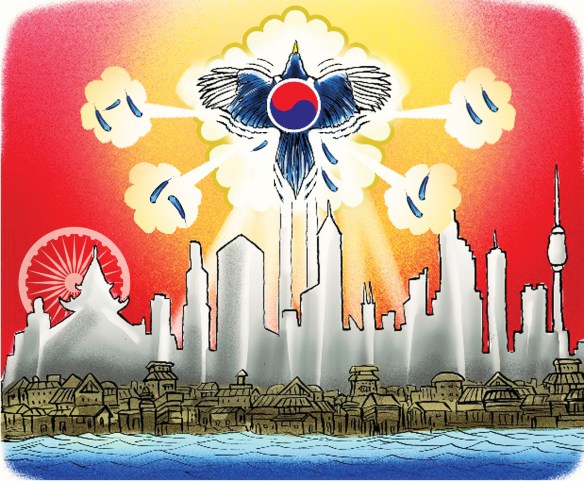
South Korean President Moon Jae-in’s visits to India and Singapore this week underscore his “New Southern Policy” (NSP), which gives priority to deepening bilateral relations with the ASEAN economies and India. NSP was unveiled on the heels of Moon’s “New Northern Policy”, whose primary but unstated objective is to jointly develop Russia’s Far East with Moscow. Simply put, the dual policies aim to invest greater resources in countries that previously were not on South Korea’s priority list.
Moon is seeking to diversify South Korea’s external portfolio so as to build a more “balanced diplomacy”. But while India’s Act East policy is driven by both geostrategic and geo-economic factors, Moon’s NSP is rooted mainly in economic logic.
There isn’t much room to expand Seoul’s already well-developed relations with China, Japan and the US. In fact, with new issues cropping up in ties with China and America, export-driven South Korea must find new markets to cut reliance on its top two trade partners. Moreover, despite increasing exports of semiconductors and electronics, South Korea’s economic growth has slowed, presenting it with important challenges.
Moon is targeting economies with the greatest growth potential: Several ASEAN economies and India are projected to grow at annual rates more than double that of South Korea in the coming years. Seoul, however, is not alone in courting Southeast Asia and India.
Japan under Prime Minister Shinzo Abe has pursued a “southward advance” economic strategy. Taiwan’s new “Southbound Policy” is driven by the same economic rationale, and seeks similar strategic objectives, as Moon’s NSP. China too has a southern policy, which goes by the official name of “One Belt, One Road”. Then there is Australia, which is looking at Southeast Asia and India, in part to mitigate its China-related risks.
Similar risks are also driving Moon’s NSP. China’s heavy-handed economic sanctioning of South Korea, in response to the US deployment of the THAAD anti-missile system, has served as a wake-up call for South Korea, making it conscious of its vulnerabilities and forcing a rethink. Although the informal Chinese sanctions began before Moon was elected president, the shock therapy administered by China’s use of economic coercion as a tool of statecraft led to his NSP.
South Korea is too heavily dependent on one market — China’s market — a factor that arms Beijing with considerable leverage over Seoul. Diversification is essential to a hedging strategy. And hedging is at the heart of Moon’s NSP.
Today, rebooting inter-Korean economic relations is emerging as an option — an option that can yield rich dividends if progress were made toward denuclearizing North Korea. Failure to build enduring inter-Korean peace, however, could rebound on the South Korean economy. Whatever scenario unfolds, the NSP imperative will likely remain intact. NSP, despite its economic focus, promises to yield broader diplomatic and strategic benefits for Seoul.
However, NSP is not an answer to the South Korean economy’s structural challenges. South Korea needs to make its economy less vulnerable to external shocks by undertaking structural reforms. In fact, Moon took office with a strong mandate to “democratize” economic growth and cultivate innovation by switching priorities from the giant family-owned conglomerates known as chaebol to smaller enterprises and start-ups and by encouraging bottom-up jobs growth. The country’s chaebol-centred crony capitalism spawned an influence-peddling scandal that cost Moon’s predecessor her job.
South Korea’s challenges largely arise from its extraordinary success in transforming itself from an economic minnow to the world’s fifth-largest exporter. South Korea was one of the world’s poorest countries in the early 1960s before it embarked on rapid economic expansion, becoming the world’s fastest-growing economy between 1963 and 1979. In 1996, South Korea joined the OECD, the club of the world’s wealthiest nations.
South Korea escaped the “middle income trap” in large part because of its democratic transition. China, however, risks falling into that trap. The fact is that South Korea went from poverty to wealth in almost one generation. There are few examples in modern history of such rapid economic success. But success can breed problems.
An unintended consequence of South Korea’s remarkable success has been its high exposure to global market volatility. South Korea has a high trade-to-GDP ratio, which is a good indicator of how vulnerable any country is to the dips and dives of the global economy. Ongoing changes in global market conditions, including US protectionism and the US-China trade war, will likely hit the South Korean economy harder than less export-dependent economies. For example, a deepening slowdown in China brought about by US tariffs would undermine South Korean exports to China, thereby further depressing South Korean growth.
Moon’s India visit was part of his effort to tide over such challenges. From enlarging South Korea’s footprint in the world’s third-biggest consumer market by purchasing power to peddling wares to the world’s largest arms importer, Moon sees India as central to NSP’s success. However, at a time when many chaebol are navigating generational transitions and Moon has committed to “democratize” economic growth, structural reform at home is the price South Korea must pay to sustain a “miracle economy”.
The writer is a geostrategist.

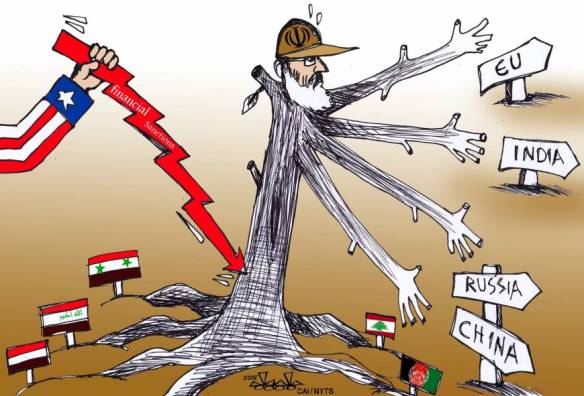

 India is directly in the crosshairs of the new US extraterritorial sanctions targeting Russia and Iran. India is already suffering the unintended consequences of President Donald Trump’s unilateral withdrawal from the Iran nuclear deal — a pullout that has spurred higher oil-import bills, the rupee’s weakening against the US dollar, and increased foreign-exchange outflows. This is just the latest financial hit India has suffered since 2005 when New Delhi, under US persuasion, voted against Iran in the International Atomic Energy Agency’s governing board, prompting Tehran to cancel a long-term LNG deal favourable to India.
 Stagecraft and Statecraft
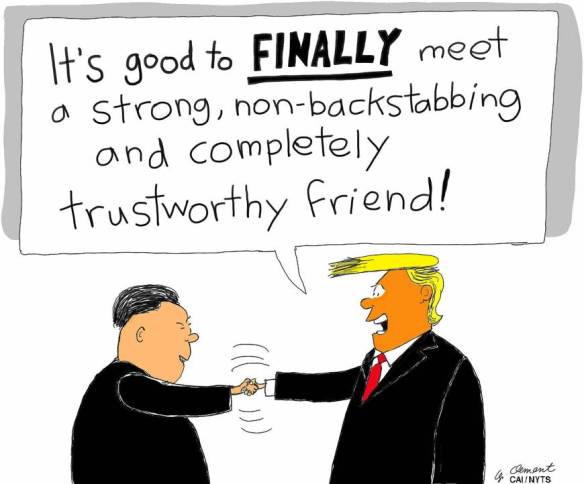
The world’s leading democracy, the United States, is looking increasingly like the world’s biggest and oldest surviving autocracy, China. By pursuing aggressively unilateral policies that flout broad global consensus, President Donald Trump effectively justifies his Chinese counterpart Xi Jinping’s longtime defiance of international law, exacerbating already serious risks to the rules-based world order.
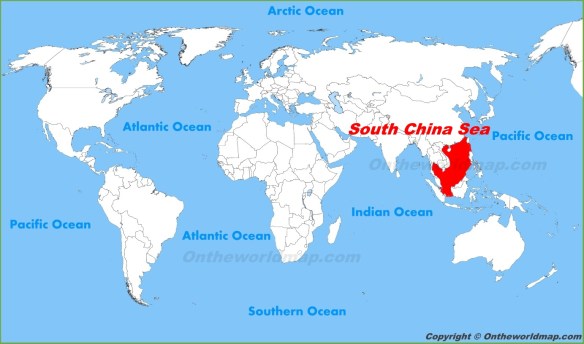
China is aggressively pursuing its territorial claims in the South China Sea – including by militarizing disputed areas and pushing its borders far out into international waters – despite an international arbitral ruling invalidating them. Moreover, the country has weaponized transborder river flows and used trade as an instrument of geo-economic coercion against countries that refuse to toe its line.
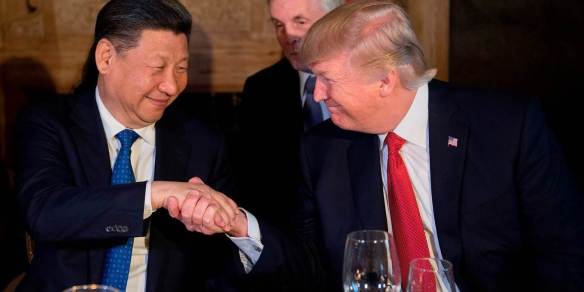
The US has often condemned these actions. But, under Trump, those condemnations have lost credibility, and not just because they are interspersed with praise for Xi, whom Trump has called “terrific” and “a great gentleman.” In fact, Trump’s behavior has heightened the sense of US hypocrisy, emboldening China further in its territorial and maritime revisionism in the Indo-Pacific region.
To be sure, the US has long pursued a unilateralist foreign policy, exemplified by George W. Bush’s 2003 invasion of Iraq and Barack Obama’s 2011 overthrow of Muammar el-Qaddafi’s regime in Libya. Although Trump has not (yet) toppled a regime, he has taken the approach of assertive unilateralism several steps further, waging a multi-pronged assault on the international order.
Almost immediately upon entering the White House, Trump withdrew the US from the Trans-Pacific Partnership (TPP), an ambitious 12-country trade and investment agreement brokered by Obama. Soon after, Trump rejected the Paris climate agreement, with its aim to keep global temperatures “well below” 2°C above pre-industrial levels, making the US the only country not participating in that endeavor.
More recently, Trump moved the US embassy in Israel from Tel Aviv to Jerusalem, despite a broad international consensus to determine the contested city’s status within the context of broader negotiations on a settlement of the Israeli-Palestinian conflict. As the embassy was opened, Palestinian residents of Gaza escalated their protests demanding that Palestinian refugees be allowed to return to what is now Israel, prompting Israeli soldiers to kill at least 62 demonstrators and wound more than 1,500 others at the Gaza boundary fence.
Trump shoulders no small share of the blame for these casualties, not to mention the destruction of America’s traditional role as a mediator of the Israeli-Palestinian conflict. The same will go for whatever conflict and instability arises from Trump’s withdrawal from the 2015 Iran nuclear deal despite Iran’s full compliance with its terms.
Trump’s assault on the rules-based order extends also – and ominously – to trade. While Trump has blinked on China by putting on hold his promised sweeping tariffs on Chinese imports to the US, he has attempted to coerce and shame US allies like Japan, India, and South Korea, even though their combined trade surplus with the US – $95.6 billion in 2017 – amounts to about a quarter of China’s.
Trump has forced South Korea to accept a new trade deal, and has sought to squeeze India’s important information technology industry – which generates output worth $150 billion per year – by imposing a restrictive visa policy. As for Japan, last month Trump forced a reluctant Japanese Prime Minister Shinzo Abe to accept a new trade framework that the US views as a precursor to negotiations on a bilateral free-trade agreement.
Japan would prefer the US to rejoin the now-Japan-led TPP, which would ensure greater overall trade liberalization and a more level playing field than a bilateral deal, which the US would try to tilt in its own favor. But Trump – who has also refused to exclude permanently Japan, the European Union, and Canada from his administration’s steel and aluminum tariffs – pays no mind to his allies’ preferences.
Abe, for one, has “endured repeated surprises and slaps” from Trump. And he is not alone. As European Council President Donald Tusk recently put it, “with friends like [Trump], who needs enemies.”
Trump’s trade tactics, aimed at stemming America’s relative economic decline, reflect the same muscular mercantilism that China has used to become rich and powerful. Both countries are now not only actively undermining the rules-based trading system; they seem to be proving that, as long as a country is powerful enough, it can flout shared rules and norms with impunity. In today’s world, it seems, strength respects only strength.
This dynamic can be seen in the way Trump and Xi respond to each other’s unilateralism. When the US deployed its Terminal High Altitude Area Defense system in South Korea, China used its economic leverage to retaliate against South Korea, but not against America.
Likewise, after Trump signed the Taiwan Travel Act, which encourages official visits between the US and the island, China staged war games against Taiwan and bribed the Dominican Republic to break diplomatic ties with the Taiwanese government. The US, however, faced no consequences from China.
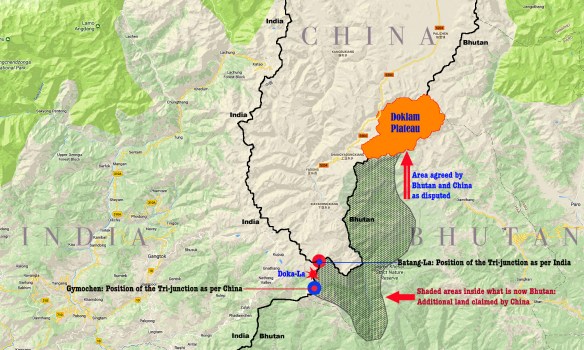
As for Trump, while he has pressed China to change its trade policies, he has given Xi a pass on the South China Sea, taking only symbolic steps – such as freedom of navigation operations – against Chinese expansionism. He also stayed silent in March, when Chinese military threats forced Vietnam to halt oil drilling within its own exclusive economic zone. And he chose to remain neutral last summer, when China’s road-building on the disputed Doklam plateau triggered a military standoff with India.
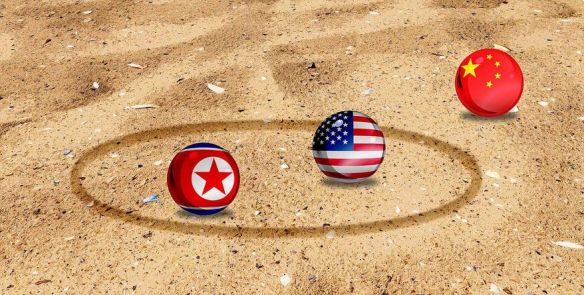
Trump’s “America First” strategy and Xi’s “Chinese dream” are founded on a common premise: that the world’s two biggest powers have complete latitude to act in their own interest. The G2 world order that they are creating is thus hardly an order at all. It is a trap, in which countries are forced to choose between an unpredictable and transactional Trump-led US and an ambitious and predatory China.