
Brahma Chellaney, The Hindustan Times
The US war in Afghanistan has already lasted more than twice as long as World War II, exacting a staggering cost in blood and treasure. With the longest war in American history completing 17 years this month, US patience appears to be wearing thin. Recent American moves — from renewing efforts for a peace deal with the Afghan Taliban to changing the combat strategy — indicate that President Donald Trump’s administration is desperate to end the war.
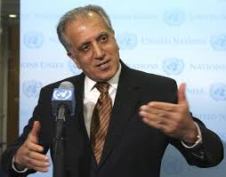 The newly appointed US Special Representative for Afghanistan Reconciliation Zalmay Khalilzad blindsided the Afghan government by holding unannounced face-to-face talks recently with the Taliban in Qatar. Khalilzad’s negotiations — just ahead of Afghanistan’s Oct. 20 parliamentary elections that the Taliban sought to disrupt — constituted the second round of US-Taliban direct talks in about three months.
The revived “Great Game”, however, is clouding the renewed US peace effort. US foreign policy, through punitive sanctions and tariffs, is driving Russia, China and Iran to support the Taliban in a bid to tie down American forces in Afghanistan. And Pakistan, which provides cross-border safe havens to the Taliban, continues running with the hare and hunting with the hounds — pretending to be a US ally while harbouring the Taliban’s network structure.
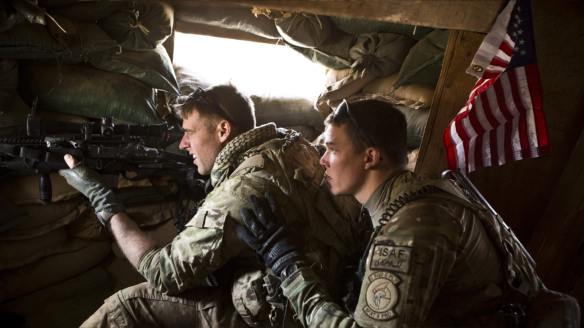
To make matters worse, an ascendant Taliban is expanding its territorial control and killing government forces in such record numbers that authorities in Kabul no longer disclose fatality tolls. Afghan military casualties have been rising since 2014, after US forces transferred responsibility for most security to the Afghans. Still, almost 15,000 American troops remain, while some 26,000 US military contractors in Afghanistan continue doing many jobs that soldiers would normally do.
Pakistan holds the key to a US peace deal with the Taliban. Then US President Barack Obama unsuccessfully tried to co-opt Pakistan by extending multibillion-dollar aid packages to that country. Now, under Trump, the US has renewed efforts to win the support of Pakistan’s powerful military generals, including by assassinating the chief of the Pakistani Taliban in May. In fact, three successive Pakistani Taliban chiefs have been killed by US military strikes, with each assassination intended to win Pakistan’s cooperation in the Afghan war.
For its part, the US, seeking to preserve the option of reaching a Faustian bargain with the Afghan Taliban, has not included that militia in its list of foreign terrorist organizations. And the only time the US has assassinated a major Afghan Taliban leader inside the militia leadership’s sanctuary, Pakistan, was in 2016 when a drone strike killed the new chief after he adamantly opposed any peace talks.
US Defence Secretary Jim Mattis, while making an unannounced visit to Kabul last month on his way back from New Delhi, claimed that reconciliation efforts with the Taliban had gained “traction”. But the Taliban, while valuing direct talks with the US as a means to undercut the Afghan government’s legitimacy, have little incentive to make peace with America. Through battlefield victories, the Taliban have already gained the momentum against government forces, which are spread thin and on the defensive.
An emboldened Taliban, in the recent talks in Qatar, demanded a timeframe for an “end to the US occupation” and removal of all Taliban leaders from US sanctions lists. Meanwhile, in response to the increasing Taliban attacks in Afghanistan, Washington has advised Afghan troops to pull back from sparsely populated areas and focus instead on safeguarding cities. Consequently, not only have vast swaths of Afghanistan become no-go zones, but also the priority accorded to force protection is signalling a government in retreat.
Further emboldening the Taliban are the new avenues of support from Russia, Iran and China. But while Moscow and Tehran long viewed the Taliban as a major terrorist threat before establishing contact with the militia, China has always had a dubious approach toward the Taliban. When 9/11 happened, a Chinese delegation was in Kandahar signing an accord with the isolated Taliban regime. Now, seeking a bigger role in Afghanistan, China is again courting the Taliban.
India, a top aid donor to Afghanistan, is the only power to pursue a consistently anti-Taliban policy. India is concerned that the US-Taliban direct talks, besides marginalizing the Afghan government, lend respectability to a terrorist organization that enforces medieval practices. But the US appears willing, as part of a peace deal, to accommodate the Taliban in an Afghan power-sharing arrangement.
However, an enduring peace deal appears unlikely as long as Pakistan continues playing a double game and the US refuses to go after the Taliban’s cross-border safe havens. The Trump team knows this and yet is seeking to repeat Obama-era failed efforts, including wooing the Taliban.
Brahma Chellaney is a geostrategist and author.

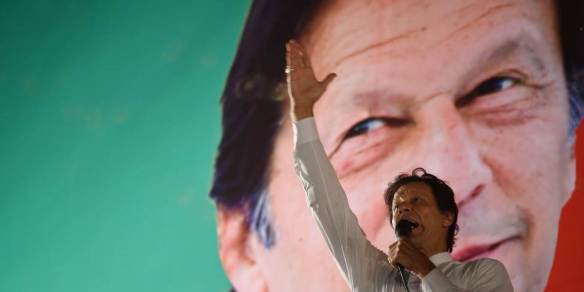
 Pakistan has turned into the Mecca of international terrorism even as its new prime minister, Imran “Taliban” Khan, has promised to make his country a Medina-like welfare state. Pakistan, however, is battling a deepening financial crisis, largely exacerbated by its “all-weather” ally, China. Beijing has imposed unfair deals on, and stepped up capital-goods exports to, Pakistan under its so-called Belt and Road Initiative.
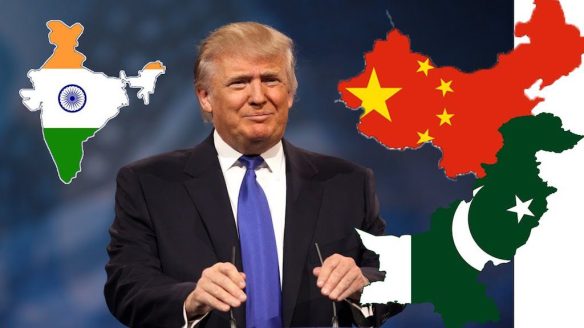
 US President Donald Trump’s recent decision to freeze some $2 billion in security assistance to Pakistan as punishment for the country’s refusal to crack down on transnational terrorist groups is a step in the right direction. But more steps are needed.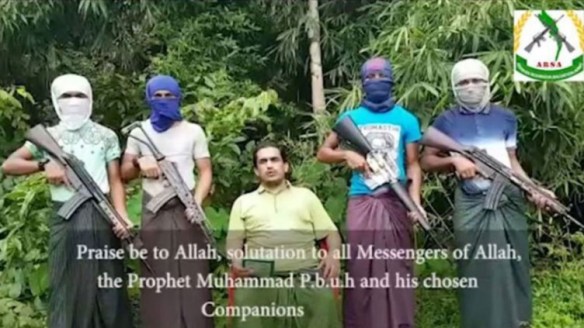

 Recently, India branded Pakistan a “Terroristan”. And its external affairs minister told the United Nations that Pakistan, as the world’s “pre-eminent terror export factory”, has just one national accomplishment to boast of. Yet New Delhi is loath to back its words with even modest action, such as downsizing Pakistan’s bloated, Inter-Services Intelligence (ISI)-infested high commission in New Delhi, withdrawing the unilaterally granted “most favoured nation” status, leveraging the Indus Waters Treaty (IWT), or halting the barter trade across the line of control (LoC) that the National Investigation Agency has identified as financing terrorism.
 Stagecraft and Statecraft
You must be logged in to post a comment.