Rivers of conflict between India and Pakistan

Brahma Chellaney, Nikkei Asian Review

20160825Kashmir_article_main_image

Just as the Philippines hauled China before an international arbitral tribunal in The Hague over Beijing’s expansive claims in the South China Sea, Pakistan recently announced its intent to drag India before a similar, specially constituted tribunal in the Dutch city. Pakistan is citing a dispute over the sharing of the waters of the six-river Indus system with India. This is not the first time Pakistan is seeking to initiate such proceedings against its neighbor; nor is it likely to be the last. But it is among the more contentious moves in a long and fraught relationship over water resources. Indeed, seeking international intercession is part of Pakistan’s “water war” strategy against India.

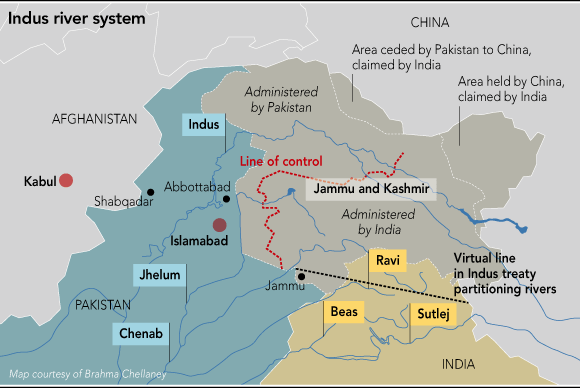
When Pakistan was carved out of India in 1947 as the first Islamic republic of the postcolonial era, the partition left the Indus headwaters on the Indian side of the border but the river basin’s larger segment in the newly-created country. This division armed India with formidable water leverage over Pakistan. Yet, after protracted negotiations, India agreed to what still ranks as the world’s most generous water-sharing pact: The 1960 Indus Waters Treaty reserved for Pakistan the largest three rivers that make up more than four-fifths of the total Indus-system waters.

The treaty, which kept for India just 19.48% of the total waters, is the only inter-country water agreement embodying the doctrine of restricted sovereignty, which compels the upstream nation to forego major uses of a river system for the benefit of the downstream state. By contrast, China, which enjoys unparalleled dominance over cross-border river flows because of its control over the water-rich Tibetan Plateau, has publicly asserted absolute territorial sovereignty over upstream river waters, regardless of the downstream impacts. It thus has not signed a water-sharing treaty with any of its 13 downstream neighbors.

A 2011 report prepared for the U.S. Senate Foreign Relations Committee called the Indus pact “the world’s most successful water treaty” for having withstood wars between India and Pakistan in the decades since it was signed. A more important reason why the pact stands out as the titan among existing international treaties is the unmatched scale of the waters it reserves for the downstream state — over 167 billion cu. meters per year. In comparison, the water allocations in the 1994 Israeli-Jordanian peace treaty are a mere 85 million cu. meters yearly, while Mexico’s share under a 1944 water pact with the U.S. is 1.85 billion cu. meters — 90 times less than Pakistan’s Indus share.

Lack of trust

This background raises two key questions: Why did India leave the bulk of the Indus waters for Pakistan? And why is Pakistan still feuding with India over water? The answers to these questions reveal that when there is a lack of mutual political trust, even a comprehensive water treaty is likely to prove inadequate.

In 1960, at a time of escalating border tensions with China, India sought to trade water for peace with Pakistan by signing the treaty. But the treaty, paradoxically, ended up whetting Pakistan’s desire to gain control of the land — the Indian-administered region of Jammu and Kashmir — through which flowed the three rivers reserved for Pakistani use. With water security becoming synonymous with territorial control in its calculus, Pakistan initiated a surprise war in 1965 to capture Indian Jammu and Kashmir but failed in its mission. (Earlier, in 1948, Pakistan occupied one-third of Jammu and Kashmir and, subsequently, China grabbed one-fifth of the area.)

Over the decades, the disputed Jammu and Kashmir has remained the hub of Pakistan-India tensions. Moreover, the gifting of the river waters of the Indian part of the region to Pakistan by treaty has hampered development there and fostered popular grievance — a situation compounded by a Pakistan-abetted Islamist insurrection. There have been repeated calls in the elected legislature of Indian Jammu and Kashmir for revision or abrogation of the Indus treaty.

India’s belated moves to address the problem of electricity shortages and underdevelopment in its restive part of Jammu and Kashmir by building modestly sized, run-of-river hydropower plants (which use a river’s natural flow energy and elevation drop to produce electricity, without the need for a dam reservoir) have whipped up water nationalism in Pakistan. The treaty, while forbidding India from materially altering transboundary flows, actually permits such projects in India on the Pakistan-earmarked rivers.

In keeping with a principle of customary international water law, the treaty requires India to provide Pakistan with prior notification, including design information, of any new project. Although prior notification does not imply that a project needs the other party’s prior consent, Pakistan has construed the condition as arming it with a veto power over Indian works. It has objected to virtually every Indian project. Its obstruction has delayed Indian projects for years, driving up their costs substantially. Critics see this as part of Pakistan’s strategy to keep unrest in Indian Jammu and Kashmir simmering.

Significantly, the total installed hydropower-generating capacity in operation or under construction in Indian Jammu and Kashmir does not equal the size of a single mega-dam that Pakistan is currently pursuing, such as the 7,000-megawatt Bunji Dam or the 4,500-megawatt Bhasha Dam. Indeed, while railing against India’s run-of-river projects, Pakistan has invited China to build mega-dams in the Pakistani part of Jammu and Kashmir, itself troubled by discontent, including against the growing Chinese footprint there.

History of disputes

Pakistan’s latest decision to seek international arbitration over two Indian projects has followed two other cases in the past decade where it triggered international intervention by invoking the treaty’s conflict-resolution provisions and yet failed to block the Indian works. Treaty provisions permit the establishment of a seven-member arbitral tribunal to resolve a dispute, or the appointment of a neutral expert to settle a disagreement over a hydro-engineering issue. When Pakistan’s minister for defense, water and power, Khawaja Asif, announced on Twitter recently that his country has decided to seek a “full court of arbitration,” most of whose members would be appointed by the World Bank, India contended the move was premature as the treaty-sanctioned bilateral mechanisms had not been utilized first.

Make no mistake: Pakistan, by repeatedly invoking the conflict-resolution provisions to mount political pressure on India, risks undermining a unique treaty. Waging water war by such means carries the danger of a boomerang effect.

Any water treaty’s comparative benefits and burdens should be such that the advantages for each party outweigh the duties and responsibilities, or else the state that sees itself as the loser may fail to comply with its obligations or withdraw from the pact. If India begins to see itself as the loser, viewing the treaty as an albatross around its neck, nothing can save the pact. No international arbitration can address this risk.

When China trashed the recent tribunal ruling that knocked the bottom out of its expansive claims in the South China Sea, it highlighted a much-ignored fact: Major powers rarely accept international arbitration or comply with tribunal rulings. Indeed, arbitration awards often go in favor of smaller states, as India’s own experience shows. For example, an arbitral tribunal in 2014 awarded Bangladesh more than three-quarters of the 25,602 sq. km disputed territory in the Bay of Bengal, even as it left a sizable “gray zone” while delimiting its maritime boundaries with India. Still, India readily accepted the ruling. However, nothing can stop India in the future from emulating the example of, say, China.

To be sure, Pakistan and India face difficult choices on water that demand greater bilateral water cooperation. The Indus treaty was signed in an era when water scarcity was relatively unknown in much of the Indian subcontinent. But today water stress is increasingly haunting the region. In the years ahead, climate change could exacerbate the regional water situation, although currently the glaciers in the western Himalayas — the source of the Indus rivers — are stable and could indeed be growing, in contrast to the accelerated glacial thaw in the eastern Himalayas.

A balance between rights and obligations is at the heart of how to achieve harmonious, rules-based cooperation between co-riparian states. In the Indus basin, however, there is little harmony or collaboration: Pakistan wages a constant propaganda campaign against India’s water hegemony and seeks to “internationalize” every dispute. Yet, in New Delhi’s view, Pakistan wants rights without responsibilities by expecting eternal Indian water munificence, even as its military generals export terrorists to India.

This rancor holds a broader lesson: Festering territorial and other political disputes make meaningful inter-country cooperation on a shared river system difficult, even when a robust treaty is in place.

Brahma Chellaney is the author of “Water, Peace, and War: Confronting the Global Water Crisis” and “Water: Asia’s New Battleground,” which won the Bernard Schwartz Award.

© Nikkei Asian Review, 2016.

Securing the Indus treaty

Brahma Chellaney, The Hindu, August 5, 2016

edit1Water sharing, transparency and collaboration are the pillars on which the unique Indus Waters Treaty was erected in 1960. Islamabad’s recently unveiled intent to haul India again before an international arbitral tribunal is a testament to how water remains a source of discord for Pakistan despite a treaty that is a colossus among existing water-sharing pacts in the world.
In Asia, the vast majority of the 57 transnational river basins have no water-sharing arrangement or any other cooperative mechanism. India, however, has water-sharing treaties with both the countries located downstream to it, Pakistan and Bangladesh. These treaties govern the subcontinent’s two largest rivers, Indus and Ganges. By contrast, China, despite its unrivalled international status as the source of river flows to more than a dozen countries, stands out for not having a single water-sharing arrangement with any co-riparian state.

Significantly, India’s treaties with Pakistan and Bangladesh are the only pacts in Asia with specific water-sharing formulas on cross-border flows. They also set a new principle in international water law. The 1996 Ganges treaty set a new standard by guaranteeing delivery of specific water quantities in the critical dry season.

India’s Indus largesse

The Indus treaty stands out as the world’s most generous water-sharing arrangement by far, in terms of both the sharing ratio (80.52 per cent of the aggregate water flows in the Indus system reserved for Pakistan) and the total volume of basin waters for the downstream state (Pakistan gets 90 times greater volume of water than Mexico’s share under a 1944 pact with the U.S.). It is the first and only treaty that goes beyond water sharing to partitioning rivers. It drew a virtual line on the map of India to split the Indus Basin into upper and lower parts, limiting India’s full sovereignty rights to the lower section and reserving for Pakistan the upper rivers of Jammu and Kashmir — the so-called “western rivers.”

Today, it remains the only inter-country water agreement in the world embodying the doctrine of restricted sovereignty, which seeks to compel an upriver state to defer to the interests of a downstream state. Treaty curbs, for example, obviate any Indian control over the timing or quantum of the Pakistan-earmarked rivers’ trans-boundary flows.

Given that water is J&K’s main natural resource and essential for economic development, the gifting of its river waters to Pakistan by treaty has fostered popular grievance there. The J&K government in 2011 hired an international consultant to assess the State’s cumulative economic losses, estimated to be hundreds of millions of dollars annually, from the treaty-imposed fetters on water utilisation. Demands in the J&K legislature for revision or abrogation of the Indus treaty are growing since a resolution seeking a treaty review was passed in 2003. The backlash from underdevelopment, made worse by a Pakistan-abetted insurrection, has prompted New Delhi to embark on several modestly sized, run-of-the-river hydropower projects in J&K to address chronic electricity shortages.

Pakistan’s obstructionist tactics

Run-of-the-river projects are permitted by the Indus treaty within defined limits. But Pakistan wants no Indian works on the three “western rivers” and seeks international intercession by invoking the treaty’s dispute-settlement provisions, which permit a neutral-expert assessment or the constitution of a seven-member arbitral tribunal. By aiming to deny J&K the limited benefits permissible under the treaty, Pakistan wishes to further its strategy to foment discontent and violence there.

This Pakistani strategy was exemplified in 2010 when it instituted international arbitration proceedings over India’s 330-megawatt hydropower project on a small Indus tributary, the Kishenganga (known as Neelum in Pakistan). It persuaded the arbitral tribunal in 2011 to order India to suspend work on the project. With Indian work suspended, Pakistan ramped up construction of its own three-times-larger, Chinese-aided hydropower plant on the same river so as to stake a priority right on river-water use.

The tribunal’s final ruling in late 2013 represented a setback for India. It allowed India to resume work on the Kishenganga project but with a stiff condition that India ensure a minimum flow of 9 cumecs of water for Pakistan. Prescribing such a minimum flow went beyond the treaty’s terms and the laws of nature.

More importantly, the arbitrators separately delivered a general prohibition against drawdown flushing in all new Indian hydropower projects. In a 2007 decision on the earlier Baglihar case instituted by Pakistan, an international neutral expert held that gated spillways to help flush out silt were consistent with the treaty’s provisions. Yet the arbitrators, disregarding the Baglihar decision and the common international practice of constructing spillway outlets to control silt build-up, issued a prohibition that potentially affects the commercial viability of all future run-of-the-river projects in J&K.

Pakistan’s move to institute new arbitration proceedings over the Kishenganga and Ratle projects is a fresh reminder as to how India’s unparalleled water generosity has engendered unending trouble for it. In 1960, India thought it was trading water for peace by signing the treaty. Within five years of the treaty’s entry into force, Pakistan launched a war to grab the Indian part of J&K in 1965.

Today, Pakistan’s water relationship with India is becoming murkier due to China’s construction of dams in Pakistan-held Kashmir. While railing against India’s small-sized projects, Pakistan is pursuing mega-dams, such as the 7,000-megawatt Bunji Dam and the 4,500-megawatt Bhasha Dam. By way of comparison, the biggest dam India has built since Independence is the 2,000-megawatt Tehri project in Uttarakhand.

Onus on Islamabad

What China did recently — publicly trash an arbitral tribunal ruling that found it has no legal or historical basis to claim most of the South China Sea — was not an isolated case: major powers rarely go for international arbitration or accept arbitral tribunal awards.

Pakistan, by waging a constant propaganda battle against India on the waters issue, risks undermining the Indus treaty. And by repeatedly invoking the treaty’s conflict-resolution provisions to bring on international intercession, it risks sending the wrong message to India — that compliance with treaty obligations and arbitration decisions is counterproductive. In the absence of an enforcement mechanism in international law, nothing can stop India from emulating the example of the major powers.

Pakistan insists on rights without responsibilities. In fact, its use of state-reared terrorist groups can be invoked by India, under Article 62 of the Vienna Convention on the Law of Treaties, as constituting reasonable grounds for withdrawal from the Indus treaty. The International Court of Justice has upheld the principle that a treaty may be dissolved by reason of a fundamental change of circumstances.

If Pakistan wishes to preserve the Indus treaty, despite its diminishing returns for India, it will have to strike a balance between its right to keep utilising the bulk of the river system’s waters and a corresponding obligation (enshrined in international law) not to cause “palpable harm” to its co-riparian state by exporting terror.

Brahma Chellaney, the author of Water, Peace, and War: Confronting the Global Water Crisis and Water: Asia’s New Battleground, is with the Centre for Policy Research.

The Arab World’s Water Insecurity

By , a column internationally syndicated by Project Syndicate

ShowImage

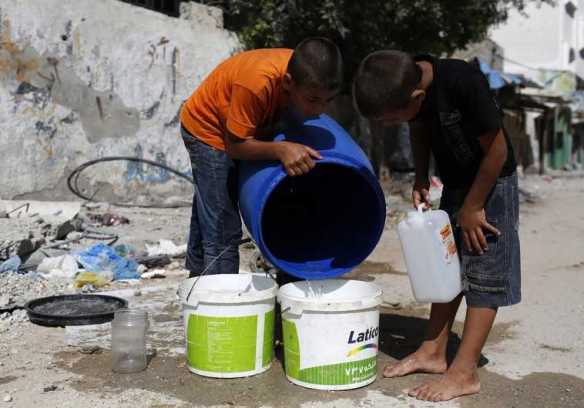
(Palestinian children in Gaza fetch water from a container. Photo credit: Reuters)

Nowhere is freshwater scarcer than in the Arab world. The region is home to most of the world’s poorest states or territories in terms of water resources, including Bahrain, Djibouti, Gaza, Jordan, Kuwait, Libya, Qatar, Saudi Arabia, and the United Arab Emirates. This shortage – exacerbated by exploding populations, depletion and degradation of natural ecosystems, and popular discontent – is casting a shadow over these countries’ future.

There is no shortage of challenges facing the Arab world. Given that many Arab states are modern constructs invented by departing colonial powers, and therefore lack cohesive historical identities, their state structures often lack strong foundations. Add to that external and internal pressures – including from surging Islamism, civil wars, and mass migration from conflict zones – and the future of several Arab countries appears uncertain.

What few seem to recognize is how water scarcity contributes to this cycle of violence. One key trigger of the Arab Spring uprisings – rising food prices – was directly connected to the region’s worsening water crisis. Water also fuels tensions between countries. Saudi Arabia and Jordan, for example, are engaged in a silent race to pump the al-Disi aquifer, which they share.

Water can even be wielded as a weapon. In Syria, the Islamic State has seized control of the upstream basins of the two main rivers, the Tigris and the Euphrates. The fact that nearly half of all Arabs depend on freshwater inflows from non-Arab countries, including Turkey and the upstream states on the Nile River, may serve to exacerbate water insecurity further.

Sky-high fertility rates are another source of stress. According to a United Nationsreport, average annual water availability in the Arab world could fall to 460 cubic metersper capita – less than half the water-poverty threshold of 1,000 cubic meters. In this scenario, water extraction will become even more unsustainable than it already is, with already-limited stores depleted faster than ever – a situation that could fuel further turmoil.

Finally, many countries offer subsidies on water, not to mention gasoline and food, in an effort to “buy” social peace. But such subsidies encourage profligate practices, accelerating water-resource depletion and environmental degradation.

In short, the Arab world is increasingly trapped in a vicious cycle. Environmental, demographic, and economic pressures aggravate water scarcity, and the resulting unemployment and insecurity fuels social unrest, political turmoil, and extremism. Governments respond with increased subsidies on water and other resources, deepening the environmental challenges that exacerbate scarcity and lead to unrest.

Urgent action is needed to break the cycle. For starters, countries should phase out the production of water-intensive crops. Grains, oilseeds, and beef should be imported from water-rich countries, where they can be produced more efficiently and sustainably.

For the crops that Arab countries continue to produce, the introduction of more advanced technologies and best practices from around the world could help to reduce water use. Membrane and distillation technologies can be used to purify degraded or contaminated water, reclaim wastewater, and desalinate brackish or ocean water. Highly efficient drip irrigation can boost the region’s fruit and vegetable production, without excessive water use.

Another important step would be to expand and strengthen water infrastructure to address seasonal imbalances in water availability, make distribution more efficient, and harvest rainwater, thereby opening up an additional source of supply. Jordan, with Israeli collaboration and European Union aid, is creating a Red Sea-Dead Sea pipeline, a conduit that would desalinate Red Sea water, in order to provide potable water to Jordan, Israel, and the Palestinian territories, and then funnel the brine to the dying Dead Sea.

Improved water management is also crucial. One way to achieve this is to price water more appropriately, which would create an incentive to prevent wastage and conserve supplies. While subsidies need not be eliminated completely, they should be targeted at smaller-scale farmers or other high-need workers and redesigned so that they, too, provide incentives for water conservation and efficiency.

Of course, wealthier, more stable countries like Saudi Arabia, Qatar, Kuwait, and the UAE are better placed than conflict-torn countries like Yemen, Libya, and Iraq to address the rapidly intensifying water crisis they face. But, in order to break the cycle of violence and insecurity, all countries will ultimately have to step up to improve water management and protect ecosystems. Otherwise, their water woes – along with internal unrest – will only worsen.

© Project Syndicate, 2016.

The Big Squeeze

As climate change and rapid development take their toll, new ways must be found to manage Asia’s water resources

Brahma Chellaney, Nikkei Asian Review

abad2345a892ac5d33fb2fd95c2d6d0f_2

The record drought ravaging large parts of Asia will end when the annual summer monsoon rains come in June. This will bring much-needed relief to the suffering people in the parched lands — from the millions of residents in Vietnam’s Mekong Delta to more than a quarter of India’s 1.25 billion people. The searing drought has already claimed several hundred lives and destroyed vast swaths of rice paddies and other farms.

But make no mistake: The latest in a string of droughts to hit Asia this century offers a telling preview of the hotter, drier future that awaits much of the continent. This likelihood largely arises from the costs that rapid development, breakneck urbanization, large-scale irrigated farming and lifestyle changes are imposing on natural resources, the environment and climate in the world’s largest and most-populous continent.

Recurrent drought promises to exacerbate Asia’s already-serious water challenges and thus potentially affect economic growth, social peace, and relations between countries or provinces that share rivers or aquifers. In a drought-laden future, thirsty communities, provinces or nations will increase risks of water-related conflict.

Yet little policy attention has been paid to combating droughts because of their episodic character, with scientists still unable to reliably predict the arrival, extent or duration of any drought. Unlike other natural and human-made disasters, from earthquakes and hurricanes to flooding and industrial accidents, a drought is a silently creeping calamity. However, without resource conservation, ecological restoration and more sustainable development, droughts in Asia are likely to become more frequent and severe.

Asia is the world’s most resource-poor continent. Rapid economic growth has brought its limited natural-capital base under increasing pressure. Overexploitation of natural resources, for its part, has created an environmental crisis that is contributing to regional climate change. For example, the Tibetan Plateau, the world’s largest repository of freshwater other than the two poles, is warming at a rate that is more than twice the global average — with potentially serious consequences for Asia’s climate, monsoons and freshwater reserves.

A little-known fact is that Asia, not Africa, is the world’s most water-stressed continent. Water stress is internationally defined as the per capita availability of less than 1,700 cubic meters per year. Asia already has less freshwater per person than any other continent, and some of the world’s worst water pollution.

Water is not just the most undervalued and underappreciated resource; in the coming years, it is likely to be the most contested resource in Asia. This has largely to do with the growing paucity of this life-sustaining resource and Asia’s distinctive water map.

Most important rivers in Asia traverse national boundaries and are thus international systems. Indeed, most Asian nations with land frontiers — with the prominent exception of China, which controls Asia’s riverheads by controlling the Tibetan Plateau — are highly dependent on cross-border water inflows. Such dependency is the greatest in countries like Bangladesh and Vietnam that are located farthest downstream on international rivers.

Against this background, inter-country and intra-country water disputes have become common. Indeed, Asia illustrates that transboundary water resources, instead of linking countries or provinces in a system of hydrological interdependence, are fostering sharpening competition for relative gain. The competition extends to appropriating resources of shared rivers by building dams, reservoirs and other diversions, thus roiling inter-riparian relations. Averting water wars demands rules-based cooperation, water-sharing accords, uninterrupted flow of hydrological data, and dispute-settlement mechanisms.

Asia is already the world’s most dam-dotted continent: It has more dams than the rest of the world combined. But this statistic doesn’t tell the real story: Most of Asia’s dams are in China, which alone has slightly more than half of the world’s approximately 50,000 large dams. With its massive infrastructure of dams and other storage facilities, China has built an impressive capacity to stockpile water for the dry season.

But China’s over-damming of rivers has contributed to river fragmentation (the interruption of natural flows) and depletion, leading to downstream basins drying up or rivers discharging only small amounts of water and nutrient-rich silt into the oceans. China’s dying Yellow River exemplifies this problem. And its cascade of six giant dams on the Mekong, just before it leaves Chinese territory, is being blamed for accentuating the current Southeast Asian drought, with river depletion extending to the delta region, which is a rice bowl of Asia.

Asia’s vulnerability to droughts and other effects of environmental and climate change is being increased by other factors as well, including groundwater depletion and deforestation, especially in the upstream catchment areas. Deforestation is most notable in the Himalayan-Tibetan region, where the great rivers of Asia originate. But it also extends to other regions, including rainforest areas.

Through its environmentally destabilizing impacts, deforestation amplifies the frequency and severity of extreme events such as droughts and floods. The depletion of many Asian swamps — which serve as nature’s water storage and absorption cover — also contributes to a cycle of chronic flooding and drought, besides allowing deserts to advance and swallow up grasslands.

For its part, the extraction of groundwater at rates surpassing nature’s recharge capacity has resulted in a rapidly falling water table across much of Asia. Because groundwater is often a source of supply for streams, springs, lakes and wetlands, the over-exploitation of this strategic resource, which traditionally has served as a sort of drought insurance, creates parched conditions and thus fosters recurrent droughts.

Meanwhile, intensive irrigation in semi-arid regions, including northern China, Central Asia and Pakistan, has helped to create a boom in agricultural exports but exacted heavy transboundary environmental costs. It has caused soil salinity and waterlogging and fostered atmospheric humidity, with climate stability becoming a casualty and dry areas becoming drier.

The entire Asian belt stretching from the Korean Peninsula to the Iran-Afghanistan-Pakistan region is becoming increasingly prone to the ravages of drought. But even before the current drought hit South and Southeast Asia, scientific studies on global drought risk hotspots showed that drought risks were the highest in these two regions, at least in terms of the number of people exposed.

It is past time for Asian policymakers to start addressing drought risks, the core of which is the nexus between water, energy and food. For example, the current drought is roiling world food markets through its destructive impacts on crops. And by reducing cooling-water availability, it is decreasing generation by some power plants, just when electricity demand has peaked.

The drought risks can be reduced by ensuring the protection and ecological restoration of watercourses, securing water-efficiency gains through agricultural-productivity measures, developing drought-resistant crop varieties, improving water quality to offset decrease in water quantity, and utilizing alternative cooling technologies for power generation. Increasing water storage by channeling excess water during the monsoons to artificially recharge aquifers, especially in Asia’s densely populated, economically booming coastal regions, holds promise for coping with droughts.

Policymakers must appreciate that drought risks cannot be lowered without tackling the serious problem of groundwater depletion. Groundwater in Asia is being pumped and consumed by human activities at such a rate that, for example, NASA scientists in the United States observed several years ago that the subterranean reserves in northwest India were vanishing.

Groundwater resources are recklessly exploited because there are few controls in Asia on their extraction. Also contributing to this practice is the fact that, unlike surface water, degradation of groundwater is not visible to the human eye. Surface water and groundwater, however, are linked hydrologically and should be managed as a single resource. A one-water approach is also essential to cut the overreliance of many communities on groundwater supplies.

The specter of permanent water losses is just one reason why Asia’s drought-related challenges demand an integrated, holistic approach. Water, food and energy, for example, must be managed by policymakers not separately but jointly so as to promote synergistic approaches. Also, ecological restoration programs, by aiding the recovery of damaged ecosystems, can help bring wider benefits in slowing soil and water degradation, stemming coastal erosion, augmenting freshwater storage and supply, and controlling droughts.

Without such efforts, the linkages between water stress, sharing disputes, falling water quality and environmental degradation could trap Asia in a vicious cycle. Nature is indivisible: Communities and states cannot thrive for long by bending nature and undercutting environmental sustainability.

Brahma Chellaney is a geostrategist and the author, among others, of the award-winning “Water: Asia’s New Battleground.”

© Nikkei Asian Review, 2016.

Asia’s next major conflict will be over freshwater

&NCS_modified=20160510153859&MaxW=640&imageVersion=default&AR-160519890

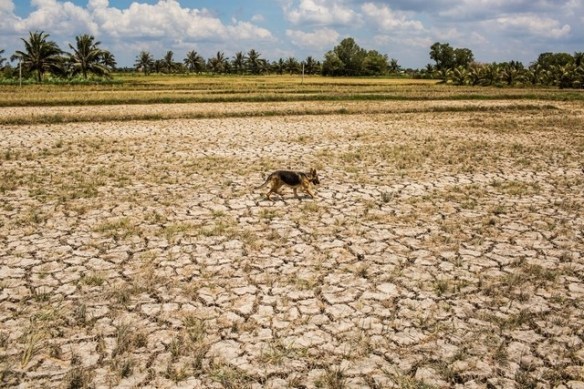
A dog walks over a drought hit plot of land in Ben Tre Province, Vietnam. Christian Berg / Getty Images

Brahma Chellaney, The NationalMay 10, 2016

Nothing illustrates the emergence of freshwater as a key determinant of Asia’s future better than the drought that has parched lands from South East Asia to the Indian subcontinent. It has withered vast parcels of rice paddies and affected economic activity, including electricity generation at a time when power demand has peaked.

Droughts are deceptive disasters because they don’t knock down buildings but they do carry high socioeconomic costs. Tens of millions of people in Vietnam, Cambodia, Thailand, Myanmar and India are now reeling from the searing drought, precipitated by El Niño, the extra-heat-yielding climate pattern.

For China, the drought has created a public-relations challenge. Denying allegations that it is stealing from shared water sources or that its existing dams on the Mekong River are contributing to river depletion and recurrent drought downstream, China has released unspecified quantities of what it called “emergency water flows” to downriver states from one of its six giant dams, located just before the river flows out of Chinese territory.

For the downriver countries, however, the water release was a jarring reminder of not just China’s newfound power to control the flow of a critical resource, but also of their own reliance on Beijing’s goodwill and charity. With a further 14 dams being built or planned by China on the Mekong, this dependence on Chinese goodwill is set to deepen – at some cost to their strategic independence and environmental security.

Asia’s water challenges are underscored by the fact that it has less freshwater per person than any other continent and has some of the world’s worst water pollution.

A recent study by the Massachusetts Institute of Technology warned that Asia’s water crisis could worsen by 2050. And an earlier global study commissioned by the United Nations Office for the Coordination of Humanitarian Affairs found that drought risks are the highest in Asia in terms of the number of people exposed.

The monsoon-centred hydrologic calendar means that annual rain is mainly concentrated in a three- to four-month period, with the rest of the year largely dry. A weak monsoon can compound the long dry period and trigger drought.

The water crisis highlights the urgent need for better management of the life-sustaining resource. Rapid development, breakneck urbanisation, large-scale irrigated farming, lifestyle changes and other human impacts have resulted in degraded watersheds, watercourses and other ecosystems, as well as shrinking forests and swamps and over-dammed rivers. The diversion of sand from riverbeds for the construction boom has damaged rivers and slowed the natural recharge of underground aquifers.

The current drought illustrates some of the key water-related challenges Asian nations must confront. One challenge is for Asia to grow more food with less water, less land and less energy. Increases in crop yields have slowed or flattened and the overall food production in Asia is now lagging demand growth for the first time, after the impressive strides Asia made between the 1970s and 1990s when in one generation it went from being a food-scarce continent dependent on imports to becoming a major food exporter.

With its vast irrigation systems, Asia boasts the bulk of the world’s land under irrigation – 72 per cent of the global irrigated acreage. With so much water diverted for agriculture, water is literally food in Asia. Excessive water withdrawals for agriculture have actually compounded vulnerability to drought.

With resources in rivers and reservoirs not adequate to meet demand, users have turned to pumping water from underground wells. Because groundwater is often a source of supply for rivers, springs, lakes and wetlands, the overexploitation of this strategic resource has helped to spread parched conditions.

With competition for scarce water increasingly a source of political dispute and instability, intra-state water disputes have become more common than inter-country wrangles. The potential for inter-country conflict, however, is being underlined by sharpening geopolitics over shared water resources.

In the coming years, water scarcity threatens to act as a conflict risk multiplier. Yet most Asian countries are not making serious, sustained efforts to build a water-secure future.

Asian countries need to place freshwater at the centre of their strategic planning, or else the linkages between water stress, sharing disputes, falling water quality and environmental degradation could trap Asia in an interminable vicious cycle.

Countries must restore vegetation, reverse the degradation of freshwater and coastal ecosystems, improve water quality to offset decrease in water quantity, incentivise water-use efficiency and use alternative cooling technologies for power generation.

Improved planning for water resource allocation demands an integrated, holistic approach. Water, food and energy, for example, must be jointly managed by policymakers to promote synergistic approaches.

American diplomatic efforts can promote better hydropolitics in Asia, given that the state department has classified freshwater as a central foreign-policy concern for American interests.

If Asia is to avert a parched future, it must think and act long term.

Brahma Chellaney is the author of nine books, including, most recently, Water, Peace, and War.

© The National, 2016.

China’s water hegemony in Asia

Brahma Chellaney, The Japan Times, May 3, 2016.

China's grip

A severe drought currently ravaging Southeast and South Asia has helped spotlight China’s emergence as the upstream water controller in Asia through a globally unparalleled hydro-engineering infrastructure centered on damming rivers. Indeed, Beijing itself has highlighted its water hegemony over downstream countries by releasing some dammed water for drought-hit nations in the lower Mekong River basin.

In releasing what it called “emergency water flows” to downstream states over several weeks from one of its six giant dams — located just before the Mekong flows out of Chinese territory — China brashly touted the utility of its upstream structures in fighting droughts and floods.

But for the downriver countries, the water release was a jarring reminder of not just China’s newfound power to control the flow of a life-sustaining resource, but also of their own reliance on Beijing’s goodwill and charity. With a further 14 dams being built or planned by China on the Mekong, this dependence on Chinese goodwill is set to deepen — at some cost to their strategic leeway and environmental security.

Armed with increasing leverage, Beijing appears to be pushing its Lancang-Mekong Cooperation (LMC) initiative as an alternative to the lower-basin states’ Mekong River Commission, which China has spurned over the years. Indeed, having its cake and eating it too, China is a dialogue partner but not a member of the commission, underscoring its intent to stay clued in on the discussions, without having to take on any legal obligations.

The LMC — a broad-based political initiative emphasizing Chinese “cooperation” and subsuming China’s pet projects, such as “One Belt, One Road” — is intended to help marginalize the commission, an institution with legally binding rules and regulations. China’s refusal to join the 1995 Mekong treaty, which created the commission, has stunted the development of an inclusive, rules-based basin community to deal with water- and environmental-related challenges.

It was not a coincidence that Beijing’s water release started shortly before the March 23 inaugural LMC summit of the leaders of the six Mekong basin countries in Sanya, in the Chinese province of Hainan.

The LMC project is also designed to overshadow the U.S.-sponsored Lower Mekong Initiative, which seeks to sideline Chinese opposition to the Mekong treaty by promoting integrated cooperation among the quintet of lower-Mekong basin states (also known as the “Mekong Five”) — Cambodia, Laos, Myanmar, Thailand and Vietnam. The Mekong treaty was concluded as China completed its first large dam on the river.

The Mekong, Southeast Asia’s lifeline that is running at a record low since late last year, is just one of the international rivers China has dammed. It has also targeted the Yarlung Tsangpo (Brahmaputra), the Arun, the Indus, the Sutlej, the Irtysh, the Illy, the Amur and the Salween. These rivers flow into India, Nepal, Kazakhstan, Russia or Myanmar.

Asia’s water map changed fundamentally after the communists took power in China in 1949. It wasn’t geography but guns that established China’s chokehold on almost every major transnational river system in Asia, the world’s largest and most-populous continent.

By forcibly absorbing the Tibetan Plateau (the giant incubator of Asia’s main river systems) and Xinjiang (the starting point of the Irtysh and the Illy), China became the source of transboundary river flows to the largest number of countries in the world, extending from the Indochina Peninsula and South Asia to Kazakhstan and Russia. Beijing’s claim over these sprawling territories, which make up more than half of China’s landmass today, drew from the fact that they were imperial spoils of the earlier foreign rule in China under the Manchu Qing dynasty (1644 to 1911) and the Mongol Yuan dynasty (1271 to 1368).

Before the communists seized power, China had only 22 dams of any significant size. But now, it boasts more large dams on its territory than the rest of the world combined.  If dams of all sizes and types are counted, their number in China surpasses 85,000. Strongman Mao Zedong initiated an ambitious dam-building program, but the majority of the existing dams were built in the period after him.

China’s dam frenzy, however, shows no sign of slowing. The country’s dam builders, in fact, are shifting their focus from the dam-saturated internal rivers (some of which, like the Yellow, are dying) to the international rivers, especially those that originate on the water-rich Tibetan Plateau.  This raises fears that the degradation haunting China’s internal rivers could be replicated in the international rivers.

China, ominously, has graduated to erecting mega-dams. Take its latest dams on the Mekong: the 4,200-megawatt Xiaowan (taller than the Eiffel Tower in Paris) and the 5,850-megawatt Nuozhadu, with a 190-square-kilometer reservoir. Either of them is larger than the current combined hydropower-generating capacity in the lower Mekong states.

Despite its centrality in Asia’s water map, China has rebuffed the idea of a water-sharing treaty with any neighbor.

Against this background, concern is growing among is downstream neighbors that China is seeking to turn water into a potential political weapon. After all, by controlling the spigot for much of Asia’s water, China is acquiring major leverage over its neighbors’ behavior in a continent already reeling under very low freshwater availability.

Asia’s annual water availability is barely one-tenth of that in South America, Australia, and New Zealand; not even one-fifth of North America’s; nearly one-third of Europe’s; and a quarter less than Africa’s. Yet the world’s most rapidly growing demand for water for industry, food production and municipal supply is in Asia.

In the Mekong basin, China has denied that it is stealing shared waters or that its existing dams have contributed to river depletion and recurrent drought in the downstream region. Yet, by ramping up construction of additional giant dams, China has virtually ensured long-term adverse impacts on the critical river system. Indeed, with Chinese assistance, landlocked Laos also plans to build more Mekong dams in order to make hydropower exports, especially to China, the mainstay of its economy.

China is clearly not content with being the world’s most dammed country, and the only thing that could temper its dam frenzy is a prolonged economic slowdown at home. Flattening demand for electricity due to China’s already-slowing economic growth, for example, offers a sliver of hope that the Salween River — which flows into Myanmar and along the Thai border before emptying into the Andaman Sea — could be saved, even if provisionally, from the cascade of hydroelectric mega-dams that Beijing has planned to build on it.

More fundamentally, China’s unilateralist approach underscores the imperative for institutionalized water cooperation in Asia, based on a balance between rights and obligations. Renewed efforts are needed to try and co-opt China in rules-based cooperation.

Brahma Chellaney is the author of “Water: Asia’s New Battleground.”

© The Japan Times, 2016.

Asia’s Troubled Water

A column internationally syndicated by Project Syndicate

Wuhan-drought-via-ET

Asia’s water woes are worsening. Already the world’s driest continent in per capita terms, Asia now faces a severe drought that has parched a vast region extending from southern Vietnam to central India. This has exacerbated political tensions, because it has highlighted the impact of China’s dam-building policy on the environment and on water flows to the dozen countries located downstream.

Today’s drought in parts of Southeast and South Asia is the worst in decades. Among the hardest-hit areas are Vietnam’s Mekong Delta (a rice bowl of Asia) and central highlands; 27 of Thailand’s 76 provinces; parts of Cambodia; Myanmar’s largest cities, Yangon and Mandalay; and areas of India that are home to over a quarter of the country’s massive population.

Droughts may not knock down buildings, but they carry high social and economic costs. Millions of Asians now confront severe water shortages, and some have been forced to relocate. Myanmar, Thailand, and Cambodia have had to scale back traditional water festivals marking their New Year. The High Court of Bombay moved the world’s biggest and wealthiest cricket tournament, the Indian Premier League, out of the state of Maharashtra. In one Maharashtra county, the local authorities, fearing violence, temporarily banned gatherings of more than five people around water storage and supply facilities.

Meanwhile, the mounting drought-related losses in some of the world’s top rice-producing countries – Thailand, Vietnam, and India – threaten to roil the world’s already tight rice market. Barely 7% of global rice output is traded internationally, because much of it is consumed where it is produced – in Asia.

Rice losses have been particularly significant in Thailand and Vietnam, which account for half of all rice exports and almost three-quarters of this decade’s projected export growth. Some 230,000 hectares of paddy rice cultivation has been destroyed just in Vietnam’s Mekong Delta, where depleted river flows have led to saltwater intrusion from the South China Sea, rendering nearly 10% of the rice farms potentially infertile.

This drought may be unprecedented, but it is not an anomaly. On the contrary, environmental challenges in Asia, such as ecosystem degradation, groundwater depletion, the contamination of water resources, the El Niño tropical weather pattern, and the effects of global warming are causing droughts to become increasingly frequent – and increasingly severe.

Even without droughts, Asia would be facing formidable water constraints. The annual amount of available fresh water per capita in the region (2,816 cubic meters) already is less than half the global average (6,079 cubic meters). As the region pursues rapid economic development, characterized by massive increases in resource consumption and serious environmental damage, its water constraints are tightening further. The challenge is compounded by Asians’ changing dietary preferences, particularly higher consumption of meat, the production of which is notoriously water-intensive.

While Asia’s resource-hungry economies can secure fossil fuels and mineral ores from distant lands, they cannot import water, which is prohibitively expensive to transport. So they have been overexploiting local resources instead – a practice that has spurred an environmental crisis, advancing regional climate change and intensifying natural disasters like droughts.

As a result, Asia, which accounts for 72% of the world’s total irrigated acreage, now faces a dilemma: It must grow enough food to meet rising demand, while reducing the amount of water that goes toward irrigation. Unless Asia resolves it, economic development will be imperiled, with major consequences for the entire global economy.

Yet the continent’s water crisis is only worsening. According to a recent MIT study, there is a “high risk” that Asia’s water stress could worsen to water scarcity by 2050. Water-sharing disputes between countries or provinces already are increasingly frequent, owing to the proliferation of dam projects that can adversely affect downstream flows – an approach that represents a continuing preference for supply-side approaches over smart water management.

The main culprit in this regard is China, which has heavily dammed the Mekong, Southeast Asia’s lifeline. In the current lean season, which will last until the monsoon rains arrive in June, the lower Mekong is, according to a recent United Nations report, running at “its lowest level since records began nearly 100 years ago.”

China is now trying to play savior, by releasing an unspecified quantity of water from one of its six upstream mega-dams to “accommodate the concerns” of drought-stricken countries. China’s rulers have touted the move as underscoring the effectiveness of upstream “water facilities” in addressing droughts and containing floods.

Of course, in reality, all of this simply highlights the newfound reliance of downriver countries on Chinese goodwill – a dependence that is set to deepen as China builds 14 more dams on the Mekong. The environmental impact of these projects is sure to exacerbate further the ecological challenges, including drought, already facing Asia.

This competitive approach is putting Asia on a dangerous path, which can lead only to more environmental degradation, slower economic development, and even water wars. It is time to change course and embark on the path of rules-based cooperation, based on water-sharing accords, the free flow of hydrological data, and dispute-settlement mechanisms.

Asian countries must work together to ensure greater efficiency in water consumption, increase the use of recycled and desalinated water, and promote innovative solutions that advance conservation and adaptation efforts. To this end, governments must phase out state subsidies that have encouraged profligate water use, such as in agriculture, and focus on building new market mechanisms and effective public-private partnerships.

None of this will be possible without China’s cooperation. Indeed, if China does not abandon its current approach – from its “water grab” in the Mekong and other international rivers to its “territorial grab” in the South China Sea – the prospects for a rules-based order in Asia could perish forever.

© 1995-2016 Project Syndicate.

China’s dam boom stokes concerns in Asia

Brahma Chellaney, Nikkei Asian Review

At a time when geopolitical competition in resource-poor Asia is sharpening over freshwater, mineral ores and fossil fuels, China’s expansionary activities in the hydrocarbon-rich South China Sea have drawn considerable international attention, especially because of their implications for the global maritime order. By contrast, China’s frenzy of dam-building to appropriate internationally shared water resources has not attracted a similar level of attention, despite the specter of potential water wars.

China is almost unparalleled as a source of fresh water. Most of the major river systems of Asia originate from the Tibetan plateau, which was annexed by the People’s Republic of China soon after its establishment in 1949. Xinjiang, another sprawling region it occupied forcibly, is the source of the Irtysh and Ili rivers, which flow to Kazakhstan and Russia. However, Beijing does not have a single water-sharing pact with the dozen countries located downstream of its rivers because it rejects the concept.

Most of Asia’s dams are in China, which boasts slightly more than half of the world’s approximately 50,000 large dams. Yet its great dam boom shows no sign of slowing. Indeed, its dam-building program is now largely concentrated in the borderlands on international rivers.

By quietly and opaquely building large dams on transnational rivers, Beijing is presenting a fait accompli to its downstream neighbors. Its latent capability to control cross-border river flows arms it with significant leverage over neighbors — a leverage it could employ to influence the behavior of those states, including deterring them from challenging its broader regional interests.

Indeed, by seeking to control the spigot for much of Asia’s water, China is acquiring such clout that smaller downriver countries in Southeast and Central Asia now use only coded language  to express their concerns over Chinese dam building. For example, calling for transparency has become a way of referring obliquely to China, which smaller states are wary of mentioning by name.

20160315Dams_middle_320On the Mekong river system — Southeast Asia’s lifeblood — China is building or planning a further 14 dams after completing six. It is also constructing a separate cascade of dams on the last two of its free-flowing rivers — the Salween (which flows into Myanmar and along the Thai border before entering into the Andaman Sea) and the Yarlung Tsangpo, also known as the Brahmaputra, which is the lifeline of northeastern India and much of Bangladesh.

Add to the picture China’s damming of other smaller rivers flowing to neighboring countries, as well as tributaries of major rivers, and it is clear that these dams are set to affect the quality and quantity of downstream flows.

Shift in focus

China recently completed ahead of schedule the world’s highest-elevation dam at Zangmu, Tibet, at a cost of $1.6 billion. It is now racing to complete a series of additional dams on the Yarlung Tsangpo, the world’s highest-altitude river. China is also turning an important Yarlung Tsangpo tributary, the Lhasa (or Kyichu), into a series of artificial lakes by building six dams in close proximity along a 20km stretch of the river.

Several factors are behind China’s drive to tap the resources of international rivers, including an officially drawn link between water and national security, the growing political clout of the state-run hydropower industry, and the rise of water nationalism at a time of increasing water stress in the northern Chinese plains. With dam-building reaching virtual saturation levels in the ethnic Han heartland, the focus has shifted to China’s ethnic minority homelands, where major rivers originate.

China’s centralized, megaprojects-driven approach to water resources is the antithesis of the situation in another demographic titan, India, where the constitution makes water an issue for state governments and where anti-dam nongovernmental organizations are powerful. Thanks to organized protests, the much-publicized Sardar Sarovar Dam on the Narmada river in western India remains incomplete decades after work began. The largest dam India has built since independence — the 2,000-megawatt Tehri Dam on the river Bhagirathi — pales in comparison to gigantic Chinese projects. These include the 22,500-megawatt Three Gorges Dam and Mekong dams such as Xiaowan, which dwarfs the Eiffel Tower in height, and Nuozhadu, which boasts a 190 sq. km reservoir.

Yet the water situation in India is far worse than in China, including in terms of per capita availability. China’s population is marginally larger than India’s but its internally renewable water resources (2,813 billion cubic meters per year) are almost twice as large as India’s. In aggregate water availability, including external inflows (which are sizable in India’s case but negligible for the People’s Republic), China boasts almost 50% more resources than India.

As China’s dam-builders increasingly target transnational rivers, concern is growing among downstream neighbors that Beijing is seeking to turn water into a potential political weapon. China pays little heed to the interests even of friendly countries, from Kazakhstan to Thailand and Cambodia.

To be sure, dams bring important socioeconomic benefits and help to deal with drought or seasonal imbalances in water availability through their water-storage capacity. A river can be dammed in an environmentally considerate manner. But what China is doing is over-damming rivers.

One manifestation of this aggressive approach is the construction of series of dams in close proximity to each other on international rivers such as the Mekong or the Salween just before they flow out of Chinese territory. These cascades of dams, looking like strings of beads on a map, aim to capture large quantities of water.

Keeping the silt

Major dams tend to change water quality and the rate at which it flows, and reduce the amount of nutrient-rich silt that is carried downstream. As the major Asian rivers flow down from forbidding Himalayan heights through the soft, sedimentary rock on the Tibetan plateau, they bring with them high-quality silt — a lifeline for agriculture, fisheries and marine life. Silt helps to re-fertilize overworked soils in downstream plains, sustains freshwater species and strengthens the aquatic food chain supporting marine life after rivers empty into seas or oceans.

China’s upstream damming of rivers originating on the Tibetan plateau is not just obstructing the silt flow to downstream plains; it is also causing the retreat of major deltas. Several scientific studies have underscored the link between extensive silt retention behind upstream dams and the retreat and subsidence of Asia’s big deltas, which are home to megacities like Tianjin, Shanghai, Guangzhou, Bangkok, Kolkata and Dhaka. In addition, the fall in freshwater disgorged by rivers into the seas is disturbing the delicate balance of salinity needed in estuaries and beyond to support critical species.

China’s reluctance to bind itself to international rules or norms is rooted in the belief that as the source of these rivers it is in a position to reap the benefits of harnessing their water resources, with the costs borne by those downstream. After all, the river-flow hierarchy reflects the geopolitical one, with the most powerful country controlling the headwaters of Asia’s major rivers.

In reality, though, China is inflicting environmental costs not just on the states lower down these rivers but on itself. One example is the impact of its upstream water diversions on its own mega-deltas, which are economic centers, making up a substantial proportion of the country’s total gross domestic product. Thanks to the diminished amount of silt discharged into the seas, there is less sediment to add to the delta land formed and fortified through sustained release or to prevent underground seepage of saltwater into sweet-water aquifers along the coasts.

More broadly, the Asian delta regions have become “much more vulnerable” to the effects of climate change and sea-level rise, according to the United Nations-sponsored Intergovernmental Panel on Climate Change, the gold standard in climate science.

In this light, the discussion of China’s damming activities on the Tibetan plateau should extend beyond the potential diminution of cross-border flows to the likely effects on the quality of river waters, including through silt-movement blockage. Such effects are already evident within China: the loss of nature’s gift of highly fertile silt due to the Three Gorges Dam and other upriver dams has forced farmers in the lower Yangtze basin to use more chemical fertilizers, accelerating soil and water degradation.

Renewed efforts are needed in Asia to co-opt China into institutionalized cooperation. Without China on board, it will not be possible to build water cooperation and protect critical ecosystems.

Brahma Chellaney is a geostrategist and the author, most recently, of “Water, Peace, and War.”

© Nikkei Asian Review, 2016.

China’s Thirst Threat

China, with its frenzied damming of rivers and unbridled exploitation of mineral wealth on the resource-rich Tibetan Plateau, is compounding the damage to Himalayan ecosystems by encouraging its bottled-water companies to tap the already-stressed glaciers.

BRAHMA CHELLANEY

Project Syndicate

HONG KONG – When identifying threats to Himalayan ecosystems, China stands out. For years, the People’s Republic has been engaged in frenzied damming of rivers and unbridled exploitation of mineral wealth on the resource-rich Tibetan Plateau. Now it is ramping up efforts to spur its bottled-water industry – the world’s largest and fastest-growing – to siphon off glacier water in the region.

12Nearly three-quarters of the 18,000 high-altitude glaciers in the Great Himalayas are in Tibet, with the rest in India and its immediate neighborhood. The Tibetan glaciers, along with numerous mountain springs and lakes, supply water to Asia’s great rivers, from the Mekong and the Yangtze to the Indus and the Yellow. In fact, the Tibetan Plateau is the starting point of almost all of Asia’s major river systems.

By annexing Tibet, China thus changed Asia’s water map. And it is aiming to change it further, as it builds dams that redirect trans-boundary riparian flows, thereby acquiring significant leverage over downriver countries.

But China is not motivated purely by strategic considerations. With much of the water in its rivers, lakes, and aquifers unfit for human consumption, pristine water has become the new oil for China – a precious and vital resource, the overexploitation of which risks wrecking the natural environment. By encouraging its companies to tap Himalayan glaciers for premium drinking water that can satisfy a public skeptical about the safety of tap water, China is raising the environmental stakes throughout Asia.

Though much of the bottled water currently sold in China comes from other sources – chemically treated tap water or mineral water from other provinces – China seems to think that the bottling of Himalayan glacier water can serve as a new engine of growth, powered by government subsidies. As part of the official “Share Tibet’s Good Water with the World” campaign, China is offering bottlers incentives like tax breaks, low-interest loans, and a tiny extraction fee of just CN¥3 ($0.45) per cubic meter (or 1,000 liters). According to a ten-year plan unveiled by Chinese authorities in Tibet last fall, extraction of glacier water will increase more than 50-fold in just the next four years, including for export.

Some 30 companies have already been awarded licenses to bottle water from Tibet’s ice-capped peaks. Two popular brands in China are Qomolangma Glacier, sourced from a supposedly protected reserve linked to Mount Everest, on the border with Nepal, and 9000 Years, named after the assumed age of its glacial source. A third, Tibet 5100, is so named because it is bottled at a 5,100-meter-high glacial spring in the Nyenchen Tanglha range that feeds the Yarlung Tsangpo (or Brahmaputra River) – the lifeblood of northeastern India and Bangladesh.

Ominously, the Chinese bottled-water industry is sourcing its glacier water mainly from the eastern Himalayas, where accelerated melting of snow and ice fields is already raising concerns in the international scientific community. Glaciers in the western Himalayas, by contrast, are more stable and could be growing. Even the Chinese Academy of Sciences has documented a sharp decrease in the area and mass of eastern Himalayan glaciers.

Himalayan_2074484bOne of the world’s most bio-diverse but ecologically fragile regions, the Tibetan Plateau is now warming at more than twice the average global rate. Beyond undermining the pivotal role Tibet plays in Asian hydrology and climate, this trend endangers the Tibetan Plateau’s unique bird, mammal, amphibian, reptile, fish, and medicinal-plant species.

Nonetheless, China is not reconsidering its unbridled extraction of Tibet’s resources. On the contrary, since building railways to Tibet – the first was completed in 2006, with an extension opened in 2014 – China’s efforts have gone into overdrive.

Beyond water, Tibet is the world’s top lithium producer; home to China’s largest reserves of several metals, including copper and chromite (used in steel production); and an important source of diamonds, gold, and uranium. In recent years, Chinese-controlled companies have launched a mining frenzy on the plateau that not only damages landscapes sacred to Tibetans, but also is eroding Tibet’s ecology further – including by polluting its precious water.

These are precisely the kinds of actions that caused China’s water crisis in the first place. Instead of learning the lessons of its past mistakes, China is compounding them, forcing a growing number of people and ecosystems to pay the price for its imprudent approach to economic growth.

Indeed, China has implemented no effective safeguards against adverse impacts from intensive water mining. Bottled water is being sourced even from protected reserves where glaciers are already in retreat. Meanwhile, the glacier-siphoning boom is attracting highly polluting ancillary industries, including manufacturers of plastic water bottles.

Make no mistake: Glacier-water mining has major environmental costs in terms of biodiversity loss, impairment of some ecosystem services due to insufficient runoff water, and potential depletion or degradation of glacial springs. Moreover, the process of sourcing, processing, bottling, and transporting glacial water from the Himalayas to Chinese cities thousands of miles away has a very large carbon footprint.

Bottling glacier water is not the right way to quench China’s thirst. A better alternative, both environmentally and economically, would be to boost investment in treatment facilities to make tap water safe in cities. Unfortunately, China seems determined to remain on its current course – an approach that could do irreparable and severe damage to Asia’s environment, economy, and political stability.

© Project Syndicate, 2016.

Nepal’s democracy on the brink

The crisis of democracy in communist-led Nepal raises a fundamental question: Can a democratic transition succeed where communists dominate?

Brahma Chellaney, Nikkei Asian Review

download2

Nepalese Prime Minister Oli, dubbed “Oily Oli” by his critics

Landlocked Nepal has lurched from one crisis to the next for a quarter-century. Now the country is on the edge of toppling into dysfunction. The turmoil also carries major implications for India, with which Kathmandu has traditionally maintained an open border. 

Nepal has been in a state of severe political flux since 1990, when it embarked on a democratic transition. But recent developments in the country — which lies between India and the Chinese region of Tibet — are a reminder that democracy means more than just holding elections. In Nepal, an absence of sound institutions has been compounded by constitution-making without political consensus or proper attention to the interests of minority groups.

This constitutional mess is at the root of violent protests and political upheaval that are accelerating spiraling prices for essential items in the impoverished Himalayan country. In the latest crisis ethnic groups have been polarized by a new constitution and a blockade of the border with India is preventing imports of essential goods, including fuel and medicines. The political and economic turmoil comes on top of last April’s devastating 7.9 magnitude earthquake and its aftershocks — the country’s worst natural disaster in more than eight decades.

Nepal adopted a new constitution in September, a whole generation after its democratic transition began with the introduction of a multiparty democracy within the framework of a constitutional monarchy in 1990. That experiment opened the door to a bloody Maoist insurrection that ended only when a peace accord in 2006 paved the way for the insurgent leaders to come to power.

The current constitution emerged from a tortuous eight-year constitutional drafting process that involved two elected constituent assemblies. The first abolished the monarchy in 2008, but became gridlocked by political infighting and missed a mid-2012 deadline set by the country’s Supreme Court. The second assembly, elected in 2013, drafted the constitution and, when it came into effect, was transformed into a legislative parliament.

A constitution must represent all the country’s citizens — the U.S. constitution, for example, begins with the words “We the people.” But multiethnic Nepal’s latest constitution reflects the will of the hill elites that have long dominated its power structures, discriminating against the people who inhabit the country’s southern plains along the 1,872km border with India — an area known as the Terai. Further complicating the issue, the Madhesi ethnic group that dominates the plains has historical, cultural and family links with India.

The constitution creates a federal republic divided into seven new states, merging parts of the ancestral homelands of the Madhesis with those of the hill states. The gerrymandered boundaries leave the plains people politically weaker, while giving the hill people greater political representation than their population size merits.

Disaffected minorities

Minority groups contend that the constitution also undercuts federalism by granting little provincial and local autonomy, and diluting affirmative action. No democracy can be stable and safe if it does not protect minorities. In Nepal, the disaffected minorities are large, making up nearly a third of the population.

For any country, the implementation of a new constitution signifies a promising new beginning. But Nepal’s constitution has provoked a virtually open revolt by the plains people. Since the constitution’s adoption, two damaging divides have emerged: one between Kathmandu and the Terai, and another between Kathmandu and New Delhi, which has called for a more inclusive constitution.

To end its prolonged political instability and arrest its deteriorating internal security, Nepal needed a unifying figure. Alas, what it got in a political upheaval in October was the appointment as prime minister of Khadga Prasad Oli, leader of the Communist Party of Nepal (Unified Marxist-Leninist) — a divisive figure who spent years in jail in the 1970s and 1980s for waging war against the state.

Oli’s maneuvers have deepened Nepal’s ethnic and political fault lines. Dubbed “Oily Oli” by his critics, he has publicly mocked protesters and their demands, fueling civil strife. He has also stoked tensions with India, feeding deep-seated suspicions about India’s intentions that often surface when internal problems intensify. Mistrust of India flows in part from the tensions generated by the disparity in the power and size of the two countries, and in part from overlapping ethnic and linguistic identities.

Oli’s communist-dominated government has blamed India for Nepal’s crippling fuel shortages and political crisis. Seeking to deflect attention from its own role in triggering the crisis, it has accused India of imposing an “unofficial blockade” on the cross-border movement of oil and other supplies to Nepal. In reality, the disruption in supplies has been caused by mass protests against the constitution by the Madhesi and other minority groups.

Police have shot and killed dozens of protesters blockading highways or staging other confrontations. But they have failed to evict protesters from the key border junction at Birgunj that accounts for 70% of the volume of trade with India. The protesting groups say they will not lift the blockade unless the constitution is amended to safeguard their interests.

download1

Nepalese foreign minister meets his Chinese counterpart on Christmas

Meanwhile, the Oli government has tried to play the China card against India, trumpeting a commercial agreement with Beijing and a Chinese gift of 1,000 tons of fuel. The gift was enough to meet barely two days’ requirements. More importantly, it demonstrated that Nepal’s dependence on India for essential supplies is a matter of geography. China could replace India as Nepal’s main supplier only if the Himalayas were shifted.

Passport free

India is increasingly concerned that Nepal’s turmoil could spill over into its northern plains. Moreover, some 6 million Nepalese work and live in India. Before Nepal’s latest crisis flared, New Delhi repeatedly told Kathmandu that China and Pakistan were taking advantage of the open Indo-Nepalese border — which remains a passport-free crossing, despite the blockade — to engage in activities detrimental to India’s security. Nepal has also become a transit point for the flow of counterfeit currency and narcotics into India.

India has stepped up diplomatic efforts to broker a political settlement in Nepal, despite past experience of being blamed for interference in the internal affairs of its smaller neighbor. India recently hosted Nepalese Foreign Minister Kamal Thapa, who brought a proposal to introduce two constitutional amendments. Talks were then held in New Delhi with the Terai protest leaders, who said the two suggested amendments did not go far enough to address their main concerns. India is urging both sides to show “maturity and flexibility to find a satisfactory solution to the constitutional issues.”

Britain recently joined India in calling for “a lasting and inclusive constitutional settlement in Nepal,” reflecting fears that the current crisis could provide an opening for China to extend its influence in Nepal, while the Terai movement could become radicalized and secessionist. India and other outside powers want to see a stable, united Nepal focusing on economic growth.

Water-rich Nepal has the potential to become a prosperous state. The country boasts one of Asia’s highest levels of water resources per inhabitant, with up to 83,000 megawatts of potential hydropower reserves. If it harnessed the natural bounty of the Himalayas to produce renewable electricity for export, Nepal could turn water into “clear gold,” generating hydro dollars to fuel development.

Today, Nepal produces less than 800MW of electricity from all energy sources for its 30 million citizens. Extended power outages are common, even in Kathmandu, and Nepal imports electricity from India even though it controls the upper waters of several rivers suitable for hydroelectric power generation that flow south across the border.

Such has been the rapidity of political change in Nepal that democracy has yet to take root. The democratic transition, far from being the curative that the Nepalese had hoped for, has engendered unending disorder, puncturing Nepal’s reputation as a Shangri-La. The crisis of democracy in a country where the two main communist parties and smaller Marxist groups can between them secure the largest share of the popular vote raises a fundamental question: Can a democratic transition succeed where communists dominate?

If Nepal remains battered by political upheaval, it clearly risks becoming a failed state — a development that will have major trans-Himalayan implications. Before it is too late, a tottering Nepal must accommodate its minorities so that its constitution produces peace, not violence that derails democracy.

Brahma Chellaney is a geostrategist and author. He is currently professor of strategic studies at the Center for Policy Research in New Delhi; a fellow of the Robert Bosch Academy in Berlin; and an affiliate with the International Centre for the Study of Radicalization at King’s College London. 

© Nikkei Asian Review, 2015.