India’s security interests at risk from U.S. readiness to capitulate to Taliban

Clipboard02

Brahma Chellaney, The Hindustan Times

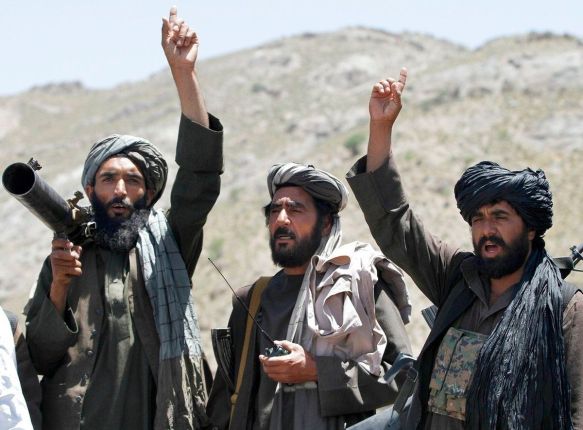
This year is Afghanistan’s 40th year in a row as an active war zone. Betrayal, violence and surrender have defined Afghanistan’s history for long, especially as the playground for outside powers. The US-Taliban “agreement in principle” fits with that narrative. By promising a terrorist militia a total American military pullout within 18 months and a pathway to power in Kabul, the US, in essence, is negotiating the terms of its surrender.

It is worth remembering how the US got into a military quagmire. The US invasion in October 2001 ousted the Taliban from power in Kabul for harbouring the Al Qaeda planners of the 9/11 terrorist attacks. However, the key Al Qaeda leaders, including Osama bin Laden, Khalid Sheik Mohammed, Abu Zubaida and Ramzi Binalshibh, were later found holed up inside Pakistan. Yet, paradoxically, the US, while raining bombs in Afghanistan, rewarded Pakistan, as President Donald Trump said last year, with more than $33 billion in aid since 2002.

The quagmire resulted from the US reluctance to take the war to the other side of the Durand Line by targeting the Taliban’s command-and-control bases in Pakistan. In modern world history, no counterterrorism campaign has ever succeeded when the militants have enjoyed cross-border state sponsorship and safe havens. This also explains why terrorists remain active in the Kashmir Valley.

Rather than take out the Taliban’s cross-border sanctuaries, the US actively sought “reconciliation” for years, allowing the militia to gain strength and terrorize Afghans. The protracted search for a Faustian bargain with the Taliban also explains why that ruthless militia was never added to the US list of Foreign Terrorist Organizations. This approach counterproductively led to an ascendant Taliban expanding its territorial control and killing government forces in growing numbers.

Now, desperate to exit, Trump has sought to accomplish what his predecessor, Barack Obama, set out to do but failed — to cut a deal with the Taliban. It was with the aim of facilitating direct talks with the Taliban that Obama allowed the militia to establish a de facto diplomatic mission in Doha, Qatar, in 2013. Then, to meet a Taliban precondition, five hardened Taliban militants (two of them accused of carrying out massacres of Tajiks and Hazaras) were freed from Guantánamo Bay. The five were described by the late US senator, John McCain, as the “hardest of hard core”.

Instead of the promised Afghan-led and Afghan-owned peace process, the Trump administration clinched the tentative deal with the Taliban without prior consultations with Kabul and then sought to sell it to a sceptical Afghan President Ashraf Ghani. In doing so, it has unwittingly aided the Taliban effort to delegitimize an elected government. Given that Ghani was blindsided by the “framework” accord, it is no surprise that Washington did not care to take India, its “major defence partner”, into confidence either.

Let’s be clear: The Taliban do not represent most Pashtuns, let alone a majority of Afghans. Many in their ranks are Pakistanis recruited and trained by Pakistan’s rogue Inter-Services Intelligence, just as ISI teams up with Lashkar-e-Taiba and Jaish-e-Mohammed against India. The US-Taliban deal nullifies then US Defence Secretary Jim Mattis’ promise that “we’re not going to surrender civilization to people who cannot win at the ballot box”.

Indeed, the deal represents not only a shot in the arm for the resurgent Taliban but also a major diplomatic win for its sponsor, Pakistan, which facilitated the accord. Contrary to speculation that US reliance on Pakistan is on the decline, the interim deal, and the imperative to finalize and implement it, underscore the US dependence on the Pakistani army and ISI. In effect, Pakistan is being rewarded for sponsoring cross-border terrorism.

All this holds important implications for India, which, as Mattis said in October, “has been generous over many years with Afghanistan”, earning “a degree of affection from the Afghan people”. Once US troops return home, America will have little ability — especially if it does not leave behind a residual counterterrorism force — to influence events in the Afghanistan-Pakistan belt. If the Taliban were to again capture power in Kabul with Pakistan’s assistance, the benefits for Afghans from the more than $3 billion in assistance that India has given since 2002 would melt away.

Despite growing US strategic cooperation with India, Washington, by its unilateralist actions, is paradoxically increasing the salience of Iran and Russia in India’s Afghanistan policy. India will have to do whatever is necessary to shield its vital interests in Afghanistan, or else developments there would adversely impinge on Indian security, including in the Kashmir Valley.

Brahma Chellaney is a geostrategist and author.

© The Hindustan Times, 2019.

India’s Pakistan policy adrift

Brahma Chellaney, DailyO

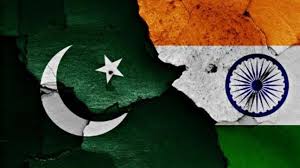
incpakConsider two developments in recent days that speak volumes about India’s Pakistan policy: Just as the United States moved to unilaterally withdraw from a major arms-control pact (the Intermediate-Range Forces, or INF, Treaty), “incredible India” — as it calls itself in international tourism-promotion ads — welcomed an inspection team from a terrorist state to scrutinize Indian hydropower projects that are being built under the terms of the Indus Waters Treaty (IWT).
And, as if to mock the Indian foreign secretary’s formal protest over his call to separatist Umar Farooq four days earlier, Pakistani Foreign Minister Shah Mohammad Qureshi on Saturday telephoned another secessionist leader in Kashmir Valley, Ali Shah Geelani. Qureshi and Pakistan’s all-powerful military generals think they can get away by provoking India.

In the absence of a clearheaded Pakistan policy backed by political resolve, India continues to send confusing and contradictory signals, encouraging Pakistan’s continuing roguish conduct.

India’s welcoming of the three-member Pakistani inspection team, led by that country’s Indus commissioner, illustrated how its incoherent approach to Pakistan has spawned even appeasement.

In 1960, in the naïve hope that water largesse would yield peace, India entered into the IWT by giving away the Indus system’s largest rivers as gifts to Pakistan. Since then, the congenitally hostile Pakistan, while drawing the full benefits from the treaty, has waged overt or covert aggression almost continuously — and is now using the IWT itself as a stick to beat India with, including by contriving water disputes and internationalizing them.

Whereas the U.S. has ditched the INF Treaty over an alleged Russian violation of its terms, India clings to the IWT’s finer details, even though Pakistan is waging proxy war by terror against it. Like the IWT, the INF Treaty is of indefinite duration.

Pakistan’s use of state-reared terrorist groups to inflict upon India death by a thousand cuts can be invoked by New Delhi as constituting reasonable grounds for Indian withdrawal from the IWT. The International Court of Justice has upheld the principle that a treaty, including one of indefinite duration, may be dissolved by reason of a fundamental change of circumstances

Still, India not only adheres to the IWT’s finer details, it even goes beyond. For example, under IWT’s Article VIII, the Permanent Indus Commission (PIC) is to meet once a year. Its next meeting was due in March 2019. But, thanks to India’s zealousness, the PIC met much earlier in August 2018, just five months after its previous meeting.

It was at that meeting that India agreed to advance Pakistan’s inspection tour to October 2018. The last such tour occurred in 2014 and the next one, in keeping with the IWT provision for a tour “once every five years”, was due by the end of 2019. The local bodies’ elections in Jammu and Kashmir forced the October tour to be deferred to January-end.

Before returning home on February 1, the Pakistani team examined three Indian hydropower projects currently under construction — the Pakal Dul, which will generate up to 1,000 megawatts of electricity, Ratle (850 megawatts), and Lower Kalnai (48 megawatts). The team also visited the already operational 900-megawatt Baglihar, a project that Pakistan tried earlier to stop by invoking the IWT’s dispute-settlement provisions. But the international neutral expert that was appointed to resolve the dispute ultimately ruled in India’s favour.

Pakistan, however, could seek international intercession again by using the information its inspection team collected last week to mount technical objections to the Indian projects under construction. Indeed, even before the team visited India, Pakistani officials publicly raised objections to the spillway or freeboard of these projects.

Pakistan’s interest lies in sustaining a unique treaty that incorporates water generosity to the lower riparian on a scale unmatched by any other pact in the world. That interest arms India with significant leverage to link the IWT’s future to Pakistan’s observance of basic international norms.

Yet, India is letting go the opportunity to reframe the terms of the Indus engagement.

India’s pusillanimity is apparent from yet another development last week. After the Indian foreign secretary summoned the Pakistani high commissioner to lodge a protest over Qureshi’s call to Umar Farooq, the Pakistani foreign office the next day summoned the Indian high commissioner in Islamabad in reprisal. This raises the question as to why India does not downgrade its diplomatic relations with Pakistan. Why maintain full diplomatic ties with a country that New Delhi branded “Terroristan” in 2017?

There is no reason for India to keep diplomatic relations with a terrorist state at the high commissioner level. Downsizing diplomatic missions and doing away with high commissioners should be part of an Indian strategy to employ peaceful tools, including diplomatic, economic and riparian pressures, to reform Pakistan’s behaviour.

Sadly, India is all talk when it comes to imposing costs on the next-door terrorist state. Indian policymakers do not seem to realize that words not backed by action carry major costs. They not only affect India’s credibility but also undermine its deterrent posture by emboldening the enemy.

Isn’t it telling that Pakistan continues to gore India although it is much smaller in economic, military and demographic terms? Such aggression is the bitter fruit of India’s present approach, which essentially has remained the same under successive governments. However, it is still not late to reverse course.

India ought to talk less and act more. To tame a rogue neighbour, India must emphasize deeds, not words. For starters, it must discard the fiction that it can have normal diplomatic relations with a sponsor of terrorism.

Brahma Chellaney is professor of strategic studies at the Centre for Policy Research.

China’s India trade funds its containment strategy

Brahma Chellaney, The Hindustan Times, January 5, 2018

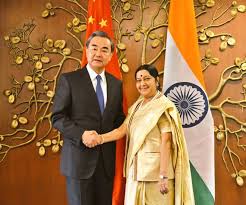
wang yi-swarajChina is emphasizing public diplomacy to help soften Indian public opinion and mute Indian concerns over an increasingly asymmetrical trade relationship. Foreign Minister Wang Yi said in New Delhi the new people-to-people mechanism will “help consolidate the public-opinion foundation” for bilateral ties. China’s public diplomacy aims to underpin its “win-win” policy toward India — engagement with containment.
New Delhi, however inadvertently, is lending a helping hand to Beijing’s strategy of engagement as a façade for containment. India has done little more than implore China to rein in its spiralling trade surplus. The lopsided trade relationship makes India essentially a colonial-style raw-material appendage of the state-led Chinese economy, which increasingly dumps manufactured goods there.

Worse still, New Delhi effectively is funding China’s India containment strategy. India’s defence budget for the current financial year, at Rs. 2,95,512 crore ($42.2 billion), is just 65% of China’s estimated trade surplus of $65.1 billion in the calendar year 2018. This means India practically is underwriting Beijing’s hostile actions against it — from its military build-up in Tibet and growing Indian Ocean encroachments to the China-Pakistan Economic Corridor (CPEC).

Pakistan recently revealed to the International Monetary Fund that China’s CPEC investments will total $26.5 billion — less than half of the earlier claims. From just one year’s trade surplus with India, Beijing can fully fund two CPEC-type multi-year projects and still have billions of dollars for other activities to contain India.

In the list of countries with which China has the highest trade surpluses, India now ranks No. 2 behind the US. China’s surplus with the US, of course, is massive. But as a percentage of total bilateral trade, India’s trade deficit with China is greater than America’s. And in terms of what it exports to and imports from China, India is little different than any African economy.

Consider another troubling fact: Total Chinese foreign direct investment in India remains insignificant. Cumulatively aggregating to $1.9 billion, it is just a fraction of China’s yearly trade surplus. India’s 2015 removal of China as a “country of concern”, instead of encouraging major Chinese FDI flow, has only spurred greater dumping.

Consequently, China’s trade surplus has spiralled from less than $2.5 billion a month when Narendra Modi took office to over $5 billion a month since more than a year. China’s trade malfeasance is undermining Indian manufacturing and competitiveness, with the result that Modi’s “Make in India” initiative has yet to seriously take off. Many firms in India have turned from manufacturers to traders by marketing low-end products from China — from tube lights to fans — under their brand names. Is it thus any surprise that manufacturing’s share of India’s GDP has actually contracted? Instead of “Make in India”, “Made in China” has gained a stronger foothold in India.

India’s China problem will only exacerbate when the planned 16-nation Regional Comprehensive Economic Partnership (RCEP) accord takes effect, thereby creating a free-trade zone between the world’s two most-populous countries. Unlike the other states negotiating RCEP, India is not an export-driven economy; rather it is an import-dependent economy whose growth is largely driven by domestic consumption.

RCEP’s main impact on India will come from China, which Harvard’s Graham Allison has called “the most protectionist, mercantilist and predatory major economy in the world”. China, while exploiting India’s rule of law for dumping, keeps whole sectors of its economy off-limits to Indian businesses. It has dragged its feet on dismantling regulatory barriers to the import of Indian agricultural and pharmaceutical products and IT services.

External Affairs Minister Sushma Swaraj rightly reminded Wang that “a solution to the continuously increasing trade deficit” is a must. Seeking to rebalance trade is not a dollar-for-dollar matter. Rather it is about ensuring fair trade and fair competition. China rose through fair access to world markets that it now denies India. Indeed, Beijing is abusing trade rules to pursue unfair trade and undercut India’s manufacturing base.

What stops India from taking a leaf out of US President Donald Trump’s playbook and giving China a taste of its own bad medicine? World Trade Organization (WTO) rules permit punitive tariffs on foreign subsidized goods that harm domestic industries. India can also emulate Beijing’s non-tariff barriers and other market restrictions.

India focuses on Pakistan’s unconventional war by terror but forgets that China is also waging an unconventional war, though by economic means. Indeed, China’s economic war is inflicting greater damage, including by killing Indian manufacturing and fostering rising joblessness among the Indian youth.

Just as the British — as American historian Will Durant noted — financed their colonization of India with Indian wealth, the Chinese are financing their encirclement of India with the profits from their predatory trade with it.

Brahma Chellaney is a geostrategist.

© The Hindustan Times, 2018.

U.S. sheds its blinkers on China

A1MAIN-tradewar-052518

Brahma Chellaney, The Hindustan Times

From Richard Nixon to Barack Obama, successive US presidents, as a matter of policy, aided China’s rise in the naïve hope that a more prosperous China would liberalize economically and politically. But now a fundamental shift in America’s China policy is under way, opening the path to greater Indo-US collaboration. The evolving paradigm shift, with its broad bipartisan support, is set to outlast Donald Trump’s presidency.

China, a trade cheat that has also employed non-tariff tools to punish countries as diverse as South Korea, Mongolia, Japan and the Philippines, is getting a taste of its own medicine. By scripting the Canadian arrest of the Huawei founder’s daughter, the US has shown it has more powerful non-tariff weapons. The action has rattled China’s elites: They are angry but also fearful that any one of them could meet a similar fate while travelling to the West.

The arrest was significant for another reason. As former US Defence Secretary Ash Carter says in a recent essay published by Harvard University, Beijing has a history of staging provocations that coincide with high-level diplomacy. For example, the start of President Xi Jinping’s 2014 state visit to India coincided with a deep Chinese military incursion into Ladakh. The fact that the Huawei arrest coincided with the Dec. 1 Trump-Xi dinner meeting in Buenos Aires signalled to Beijing that others can pay it back in the same coin.

America’s ongoing policy shift, however, should not obscure how its “China fantasy”, as a book title describes it, facilitated the assertive rise of its main challenger. Such was the fantasy that President Bill Clinton got China into the WTO by citing Woodrow Wilson’s vision of “free markets, free elections, and free peoples” and claiming the admission would herald “a future of greater openness and freedom for the people of China”. Instead, China has become more autocratic and repressive, building an Orwellian surveillance state.

The end of the 45-year-old US conciliatory approach to China does not necessarily signify the advent of an overtly confrontational policy or even a new cold war. China, for example, still gets a free pass on human-rights abuses. The US has slapped no sanctions on China for detaining more than a million of its Muslims in internment camps. Imagine the US response had Russia set up such camps.

The policy shift appears more about finding economic levers to blunt China’s strategy of global expansion and ascendancy. In Asia, for example, China is aiming to displace the US as the leading power and contain its peer rivals, Japan and India, by seeking to enforce a 21st-century version of the Monroe Doctrine, including through geo-economic tools and territorial and maritime revisionism. It has gained de facto control of much of the South China Sea.

A key question is whether the US policy shift is occurring too late to stop China’s global rise or even compel it to respect international norms and rules. Having become strong through assorted trade barriers, quotas, currency manipulation, forced technology transfer, intellectual property theft, and industrial and export subsidies, China is unlikely to fundamentally change its behaviour in response to the new American pressure. Xi, China’s new self-crowned emperor, would undermine his position — and his strategy to build a Sino-centric Asia — by yielding to American demands.

Xi’s regime will seek to bear the US pressure — at some cost to China’s economic growth — but without materially altering its policies or global ambitions. The 90-day “truce” in the trade war that Xi negotiated with Trump in Buenos Aires meshes with Beijing’s “two steps forward, one step back” strategy to progressively advance its ambitions.

Nevertheless, the US, by embracing a more realistic and clear-eyed approach, is signalling that China’s economic and strategic aggression will no longer go unchallenged. Even if the US fails to compel Beijing to respect international rules, its policy change signifies that the free ride that China has long enjoyed is ending — a free ride that has brought the security of its neighbours, including India, under pressure.

Indeed, Trump has shown how active pressure on China, as opposed to Indian-style imploration, can yield concessions. Whereas deference to China usually invites bullying, standing up to it generates respect and compromise.

In Buenos Aires, while the spotlight was on the Trump-Xi talks, the US president’s joint meeting with prime ministers Shinzo Abe and Narendra Modi — the first ever such trilateral — underscored the centrality of Japan and India to the American goal to build a stable balance of power in Asia. Indeed, the entente between Asia’s richest democracy and its biggest is a principal pillar of Washington’s newly unveiled “free and open Indo-Pacific” strategy.

Brahma Chellaney is a geostrategist.

© The Hindustan Times, 2017.

Canada must stand up to China the bully

JQFM7K6NTVCLJEC5JJUAIZCPO4

In clear reprisal for Canada’s U.S.-sought arrest of the daughter of Huawei’s founder, China has detained two Canadians on charges of undermining its national security but has shied away from taking any action against the United States. This is in keeping with Beijing’s record of acting only against the weaker side, even if it happens to be a U.S. ally.

For example, when the United States installed its Terminal High Altitude Area Defense (THAAD) anti-missile system in South Korea, China used its economic leverage to retaliate against South Korea, not against the U.S. The heavy-handed economic sanctions imposed on South Korea in 2017, partly extending into this year, illustrated Beijing’s use of trade as a political weapon.

Similarly, after U.S. President Donald Trump signed the Taiwan Travel Act in March, which encourages official visits between the United States and the island, China staged war games against Taiwan and bribed the Dominican Republic and Burkina Faso to break diplomatic ties with Taipei. The United States, however, faced no consequences.

Now, while intensifying a punitive campaign against Canada, China has adopted a tempered approach toward the United States, even though Canadian authorities arrested Meng Wanzhou at the behest of U.S. prosecutors for alleged bank fraud related to violations of sanctions against Iran. In fact, Chinese Foreign Minister Wang Yi has bent over backward to emphasize that while confrontation hurts the U.S.-China relationship, co-operation benefits both countries.

Such is the Chinese effort to mollify the power behind Ms. Meng’s arrest that, in recent days, Beijing has made trade-related concessions to help defuse tensions with Washington. Contrast this with the way China has followed up on its threats of retaliation against Canada by arresting a former Canadian diplomat, Michael Kovrig, and then detaining Michael Spavor, a Canadian writer and entrepreneur living in the Chinese province of Liaoning. Ms. Meng’s release on bail has apparently not allayed Beijing’s anger against Ottawa.

Such behaviour fits the classic definition of a bully, whether in school or on the international stage – one that engages in unwanted, aggressive behaviour by taking advantage of an imbalance of power.

In fact, with its foreign policy favouring strong-arm methods over mutual understanding, China’s neighbours increasingly view it as a bully. U.S. Defence Secretary Jim Mattis correctly said at a Senate Appropriations Committee hearing that China pursues a “tribute nation” approach to other countries and aspires for “veto power” over their sovereign decisions.

This approach helps explain why Chinese President Xi Jinping’s Belt and Road Initiative (BRI) has started to run into resistance in a number of countries. Essentially an imperial project aimed at making real the mythical Middle Kingdom, BRI has sought to lure countries desperate for infrastructure investments into China’s strategic orbit. Countries neglected by multilateral lending institutions initially flocked to BRI, but now, partner countries worry about Beijing ensnaring them in sovereignty-eroding debt traps.

China’s penchant for bullying also explains why it essentially remains a friendless power. It lacks any real strategic allies. Indeed, the more power China has accumulated, the greater has been its difficulty in gaining genuine allies, underscoring that leadership demands more than brute might. Contrast this with the strong network of allies and partners that the United States maintains globally.

China’s increasing authoritarianism at home under Mr. Xi has fostered an overtly muscular foreign policy that has counterproductively contributed to China’s lonely rise. A senior U.S. official warned in 2016 that Beijing risks erecting “a Great Wall of self-isolation.”

China, a trade cheat that has also employed non-tariff tools to punish countries as diverse as Japan, Mongolia and the Philippines, is now getting a taste of its own medicine. With Ms. Meng’s arrest, the U.S. showed that it has more powerful non-tariff weapons. China’s elites are rattled – angry but also fearful that any one of them could meet a similar fate while traveling to the West.

Ms. Meng’s arrest was significant for another reason. As former U.S. defence secretary Ash Carter says in a recent Harvard University essay, Beijing has a history of staging provocations that coincide with high-level diplomacy. For example, the start of Mr. Xi’s 2014 state visit to India coincided with a deep Chinese military incursion into the Indian Himalayan region of Ladakh.

The fact that Ms. Meng’s arrest coincided with the Trump-Xi dinner meeting on Dec. 1 in Buenos Aires signalled to Beijing, however unintentionally, that others can pay it back in the same coin.

More importantly, Mr. Trump has shown how active U.S. pressure on China, as opposed to imploration or admonition, can yield concessions. Without the United States withdrawing its 10-per-cent tariffs on US$250-billion worth of Chinese goods, Beijing has begun lifting, following the Buenos Aires talks, its restrictions on imports of U.S. food, energy and cars. Those restrictions had been placed in retaliation for the 10-per-cent tariffs. The United States’ threat to increase them to 25 per cent and possibly extend them to all imports from China forced Beijing’s hand.

When a country pursues an accommodating approach toward Beijing, an emboldened China only ups the ante. Deference to China usually invites bullying, while standing up to it draws respect and a readiness to negotiate and shore-up cooperation.

Ottawa would do well to remember this fact as it grapples with the escalation of the diplomatic feud by a country that seeks to play the aggrieved victim while acting as the bully.

Brahma Chellaney is a geostrategist and the author of nine books, including the award-winning Water, Peace, and War.

© The Globe and Mail, 2018.

Fair Observer talks to Brahma Chellaney

In this edition of The Interview, Fair Observer talks to Brahma Chellaney, a prominent Indian intellectual and author.

Bordered by the Indian Ocean, the Arabian Sea and the Bay of Bengal, India is the second most populous country and, arguably, the biggest democracy in the world. The World Bank and the International Monetary Fund recognize India as the sixth largest economy on the planet.

Despite significant economic growth in recent decades, India faces its own set of challenges. Poverty in India is still a serious concern, even though the country is no longer home to the largest number of poor people in the world; that country is Nigeria. However, figures show two-thirds of people in India live in poverty.

India’s dynamic foreign policy and the willingness of countries to forge a close partnership with New Delhi as a nascent global power pose a serious challenge to a world order in which the US, Russia, China and the EU are competing for dominance. India’s huge energy demands also mean that oil and gas producers have a difficult job vying with each other and satisfying the needs of the third biggest energy-consuming country in the world.

The efforts of Jawaharlal Nehru, the first prime minister of India who is referred to as the architect of Indian foreign policy, paved the way for the foundation of the Non-Aligned Movement (NAM) in 1961. India is a major member of the NAM and was its president from 1983 until 1986. Today, India maintains the same neutrality in international affairs, but tries to play an active role on the global stage through diversifying its economic partners, engaging in UN peacekeeping missions and keeping an eye on a possible permanent seat in the UN Security Council.

In this edition of The Interview, Fair Observer talks to Brahma Chellaney, a prominent Indian intellectual and author, about India’s foreign policy, its economy and its relations with neighboring countries in South Asia.

The transcript has been edited for clarity.

Kourosh Ziabari: The International Monetary Fund’s World Economic Outlook predicts that India will experience a 7.4% growth in its gross domestic product by 2019 and that the figure would be 7.7% for 2020. How has India achieved such remarkable economic growth that even surpasses the United States and China?

Brahma Chellaney: Ever since India embarked on economic reforms in the early 1990s, its GDP growth has accelerated. Under the government led by Prime Minister Narendra Modi’s predecessor, Manmohan Singh, GDP growth surpassed 8% annually. Critics blame the Modi government’s missteps, including demonetization of high-value currency notes and a hastily introduced goods and services tax, for slowing the economic growth. However, the government’s tax and regulatory reforms, despite inflicting short-term pain, will likely help accelerate GDP growth in the medium to long-term.

India, however, needs to invest greater resources in education, human resources development and achieving autonomous technological capabilities in order to sustain economic growth in the years ahead.

Ziabari: International reports show that the number of ceasefire violations along the India-Pakistan border have increased significantly in 2017 and 2018. Do you think tensions will be alleviated between the two countries in the New Year, especially since the new Pakistani PM Imran Khan seems to be determined to make peace with India?

Chellaney: Pakistan has turned into the mecca of terrorism, even as its new leader promises a medina-like welfare state. In Pakistan, no prime minister has been allowed to complete a full five-year term. When a prime minister falls foul of the deep state, a bendable judiciary, opposition and bureaucracy are used to smear the leader’s reputation and oust him or her. Every prime minister has been thrown out on charges of corruption and incompetence.

The latest military-engineered election has changed little in Pakistan, a country still struggling to be at peace with itself. The Pakistani military will remain the puppet master calling the shots from behind the scenes, with Imran Khan as its newest puppet. Khan is a supporter of the military-backed jihadists and Islamists and a religious zealot himself.

Today, caught in mounting debt to China, Pakistan is in desperate need for an international bailout package. Against this background, Pakistan will remain a principal source of regional instability and the fountainhead of transnational terrorism. Its neighbors, including India and Afghanistan, can expect little change in Pakistan’s behavior.

Ziabari: How do you think the US and European Union’s sanctions on Russia will impact India’s economy? Do you think there will be a problem in Russia’s delivery of the S-400 air defense system to India as a result of US sanctions that make the payments difficult?

Chellaney: A generation after the Cold War ended, the Washington power elites remain obsessively fixated on Russia, although Russia’s economy today is just one-tenth the size of China’s and its military spending one-fifth of China.

Pressure from the power elites has led the Trump administration to impose at least four rounds of sanctions on Russia this year, even though better relations with Moscow can help to put discreet checks on China’s overweening ambitions. With its vast economic and military potential, China clearly represents the main threat to US interests. But the current US sanctions-centered approach to Russia has only compelled Moscow to pivot to China.

The US sanctions policy toward Russia also has gratuitously introduced a major irritant in relations with India. A new Russia-centered sanctions law took effect earlier this year. Known as Countering America’s Adversaries Through Sanctions Act, or CAATSA, the law uses the sanctions threat to wean countries off their craving for Russian weapons, so as to boost America’s own arms sales.

The US has already overtaken Russia as the top arms seller to India. Yet it is seeking to pressure India to reduce its imports of Russian arms. India cannot snap its defense ties with Moscow. With India going ahead with a deal to buy the interceptor-based S-400 Triumf air and anti-missile defense system from Russia, the US Congress has passed a waiver legislation that grants India conditional waiver from the CAATSA sanctions.

Ziabari: Iran is the second largest supplier of India’s oil. Will the new US sanctions against Iran affect the oil trade between Tehran and New Delhi? Is India legally bound to follow the US lead in sanctioning Iran and cutting off crude imports from that country?

Chellaney: India, the second-largest importer of Iranian oil after China, is a major victim of the new US sanctions against Iran and Russia. By implicitly mounting two-pronged pressure on New Delhi on energy and defense fronts, Washington has implicitly underscored the risks for India of pursuing a foreign policy too closely aligned with America. By slapping a nation with punitive sanctions, the US seeks to block trade and financial activities with that country even by other states.

Such extraterritorial sanctions — which it euphemistically labels “secondary” sanctions — run counter to international law. Yet the US uses its unmatched power to turn national actions into global measures. As the world’s reserve currency that greases the wheels of the global financial system, the US dollar arms America with tremendous leverage, making US sanctions the most powerful in the world. Most international transactions, from banking to oil, are conducted in US dollars. Through its Iran-related sanctions, the US wants to influence the energy-import policy of India, which currently imports more than three-fourths of its crude oil requirements.

Washington is seeking to sell more oil and gas to India and also encouraging it to switch imports from Iran to Saudi Arabia and other US allies. Iran, however, has long been a major oil supplier to India. It will remain important for India’s energy-import diversification strategy. The US has granted India a six-month waiver from its Iran-related oil sanctions. In addition, the US has granted a waiver for India’s Pakistan-bypassing transportation corridor to Afghanistan via Iran. India is investing in modernizing the Chabahar Port.

Ziabari: In one of your articles, you praised President Donald Trump for trying to contain China and hold back its economic and political growth. However, many observers say that Trump is not a reliable politician and does not take advice from the right people. Do you think his lack of political experience will be a threat to India as well?

Chellaney: Any US administration’s policies are made not just by the president, but by the whole team the president has assembled. Washington is more polarized and divided than ever before. Yet it is highly significant that, in this environment, a bipartisan consensus has emerged that the decades-old US policy of “constructive engagement” with China has failed and must be replaced with active and concrete counteraction. The China policy change that is underway, therefore, will likely outlast the Trump presidency because it will be difficult for a successor to reverse it and go back to trustful cooperation.

The policy change does not seek to hold back China’s economic and political growth. Rather the aim is to make China comply with international rules and norms. For example, China has long been cheating on World Trade Organization rules. It is important to note that, despite the policy change that is underway, China still gets a free pass on human-rights abuses — from holding a million or more Muslims from Xinjiang province in internment camps to carrying out the forced disappearance of the Interpol chief. Had Russia set up such internment camps, the US response would likely have been swift and resolute.

Ziabari: You once wrote that the President Trump has tried to “sweet-talk autocratic leaders,” such as North Korea’s Kim Jong-un and Russia’s Vladimir Putin, to encourage them to make concessions. Why didn’t he try this option with Iran? Has his flattering of the North Korean and Russian leaders paid off?

Chellaney: Trump lavishes praise on autocratic foreign leaders that he is seeking to extract concessions from. Even more than Kim and Putin, Trump has lavished praise on China’s Xi Jinping, calling him “terrific” and “great.” In fact, Trump has flattered no foreign leader like Xi. Yet Trump has managed so far to wrest no major concessions from Xi. This explains why the Trump administration has targeted China with tariffs on $250 billion worth of imports into the US from there. As for Kim, Trump has succeeded in getting North Korea to declare a moratorium on nuclear and missile testing. But Kim is unlikely to give up his nuclear weapons entirely. That is the only card he has.

Trump’s Iran policy is short-sighted and counterproductive to US interests. His Iran policy has been greatly influenced by neoconservatives, election campaign donors and other interests tied to Israel. This explains why Trump has pursued a hardline approach toward Iran.

Ziabari: There are indications that India is forfeiting its democratic values. India’s top court recently ruled that movie theaters should be required to play India’s national anthem before screening movies. The country ranks 140th out of 179 in Reporters Without Borders’ Press Freedom Index. It is 136th out of 163 countries in the Global Peace Index 2018. Restrictions on Muslim Indians continue to remain in place. Do you think India is still a serious democracy?

Chellaney: You must be kidding that there are “restrictions” on Muslims in India. Muslims have the same rights as Hindus, Buddhists, Christians and others in India. Discrimination on the basis of religion is unlawful under the Indian Constitution.

India’s democracy certainly faces challenges. But it is widely recognized that India remains a robust and proud democracy. In fact, it is the world’s largest democracy. The Indian media is one of the freest in the world. And Indian courts regularly overturn government decisions. If anything, India has an activist judiciary that often appears to encroach on the executive branch’s powers.

In fact, democracy remains India’s greatest asset. While the concepts of democratic freedoms and the rule of law are normally associated with the West, India can claim ancient traditions bestowing respect to such values. Basic freedoms for all formed the linchpin of the rule in third century BC of Emperor Ashoka who, as Nobel laureate Amartya Sen has pointed out, “did not exclude women and slaves as Aristotle did.”

Ziabari: What are the foreign policy priorities of India as of today? What is India doing to in order to consolidate its international standing and fulfill its economic aspirations?

Chellaney: India has long cherished “strategic autonomy” and sought to stay clear of formal alliances. That won’t change. However, in an important shift, India is moving from nonalignment to multi-alignment. This means India is going from its long-held nonalignment to a contemporary, globalized practicality.

There is an important difference between nonalignment and multi-alignment. Nonalignment implies a passive stance as a bystander. Multi-alignment, by contrast, permits an active and participatory role, including building close strategic partnerships with likeminded powers.

India cannot, and will not, be a lackey of any power. Because of its geographical location, India is the natural bridge between the West and the East, and between Europe and Asia. Through forward thinking and a dynamic foreign policy, India is seeking to truly play the role of a bridge between the East and the West, including serving as a link between the competing demands of the developed and developing worlds. At a time of heightened geopolitical tensions, the world needs such a bridge-builder.

Ziabari: Prime Minister Narendra Modi visited Rwanda and Uganda earlier this year before traveling to South Africa for the BRICS summit. Historically, there have been large Indian communities across Africa that contributed to the economic prosperity of the continent. What is India looking for in rejuvenating its relations with African nations?

Chellaney: India has had close historical ties with Africa. Today, India is seeking to revive those ties. Take the Indian Ocean region, which extends from Australia to eastern and southern Africa. The Indian Ocean region has emerged as the world’s major energy and trade seaway, as well as the center of the challenges of the 21st-century world — from terrorism and extremism to piracy and safety of sea-lanes of communication.

India is attempting to build a web of strategic partnerships with key littoral states in the Indian Ocean rim. The partnerships incorporate trade accords, defense and energy cooperation, and strategic dialogue. India’s focus includes countries adjacent to chokepoints such as the Strait of Hormuz, Iran; the Strait of Malacca, namely Singapore, Indonesia and Malaysia; the Bab el-Mandab, which are Djibouti and Eritrea; and the Cape of Good Hope and the Mozambique Channel, namely South Africa and Mozambique.

Not only does BRICS include South Africa, but also South Africa’s president will be the chief guest at India’s Republic Day parade on January 26, 2019. India and Japan have launched the Asia-Africa Growth Corridor in partnership with a number of African countries. In addition, India has offered a $1 billion line of credit to African countries.

The views expressed in this article are the author’s own and do not necessarily reflect Fair Observer’s editorial policy.

A Concert of Indo-Pacific Democracies

8f1f3fb6-dda2-11e8-bb7b-3484094c71b9_1320x770_223539

The deepening relationship between Japan and India serves the goal of forestalling the emergence of a China-centric Asia. If they can leverage their relationship to generate progress toward broader cooperation among the region’s democracies, the vision of a free and open Indo-Pacific may be achievable.

BRAHMA CHELLANEY, a column internationally syndicated by Project Syndicate

On his week-long tour of Asia, US Vice President Mike Pence has been promoting a vision of a “free and open” Indo-Pacific region, characterized by unimpeded trade flows, freedom of navigation, and respect for the rule of law, national sovereignty, and existing frontiers. The question is whether this vision of an Indo-Pacific free of “authoritarianism and aggression” is achievable.

One country that seems willing to contribute to realizing this vision is Japan. In fact, Japanese Prime Minister Shinzo Abe is the originator of the “free and open Indo-Pacific” concept that lies at the heart of President Donald Trump’s new strategy, the successor to Barack Obama’s  “pivot” to Asia.

Having historically punched above its weight internationally, Japan is responding to China’s muscular rise by strengthening its own position in the region. Taking advantage of its considerable assets – the world’s third-largest economy, substantial high-tech skills, and a military that has recently been freed of some legal and constitutional constraints – Japan is boosting its geopolitical clout.

Japan’s world-class navy has already begun operating far beyond the country’s waters in order to establish its position in the region. For example, in order to challenge China’s claims in the South China Sea, a Japanese submarine and three destroyers carried out naval drills there in September. “Japan’s willingness to participate in Asian security,” former US Defense Secretary Ash Carter recently said, “makes it an increasingly important player in the region.”

But creating a free and open Indo-Pacific is not the job of one country alone. Establishing the stable balance of power needed to realize Pence’s vision will require all of the region’s major democracies – from Japan and India to Indonesia and Australia – to come together.

The good news is that Abe seems to recognize the importance of cooperation among Asia’s democratic powers. For example, in discussing the natural alliance between the region’s richest democracy and its largest one, he declared: “A strong India benefits Japan, and a strong Japan benefits India.”

With that in mind, Abe and his Indian counterpart, Narendra Modi, recently held a summit that opened the way for a military logistics pact that would give each country’s armed forces access to the other’s bases. Beyond instituting a joint “two plus two” dialogue among the countries’ foreign and defense ministers, Abe and Modi agreed to deepen naval and maritime-security cooperation and collaborate on projects in third countries, including Myanmar, Bangladesh, and Sri Lanka, to enhance strategic connectivity in the Indo-Pacific.

At the summit, Japan and India devised a new motto for the bilateral relationship: “Shared security, shared prosperity, and shared destiny.” The comfort and camaraderie shown by Abe and Modi during their meeting, held at Abe’s private vacation home near Mount Fuji, stood in stark contrast to the stony expressions and somber handshakes on display when, just two days earlier, Abe had met Chinese President Xi Jinping in Beijing.

Cooperation between India and Japan builds on, among other things, the trilateral India-Japan-US “Malabar” naval exercises. Malabar has become an important component of the effort to defend freedom of navigation and overflight in the Indo-Pacific region, through which two-thirds of global trade travels. If India signed a military logistics agreement with Japan, as it has with the US, the Indian navy would be better able to expand its footprint to the western Pacific, while enabling Japan to project its naval power in the Indian Ocean.

Fortunately, relations among the Indo-Pacific’s four key maritime democracies – Australia, India, Japan, and the US – are stronger than ever, characterized by high-level linkages and intelligence-sharing. These countries should institutionalize their “quad” initiative, with the India-Japan dyad forming the cornerstone of efforts to pursue wider collaboration in the region.

But such collaboration will face considerable obstacles. For starters, the relationship between Japan and America’s other closest East Asian ally, South Korea, continues to be  by history.

The issue of “comfort women,” Korean women who were coerced into providing sexual services to Japanese troops during World War II, has long been particularly contentious. A 2015 agreement, endorsed by Abe and former South Korean President Park Geun-hye, claimed to resolve the issue “irreversibly”: Japan offered its apology and one billion yen ($8.8 million) for a fund created to help the victims.

But, earlier this year, Park’s successor, Moon Jae-in, rejected the deal, arguing that it did not adequately serve the victims or the public. More recently, South Korea’s Supreme Court ordered a major Japanese steelmaker to compensate the “victims of forced labor” during Japan’s colonial rule of Korea, even though a 1965 bilateral agreement was supposed to have settled “completely and finally” all such claims.

The rancorous relationship between Japan and South Korea plays directly into China’s hands. While South Korea obviously should not disregard its history, it should find a way to move past its colonial subjugation and form new, mutually beneficial relationships with Japan, much as India, Taiwan, the Philippines, and Indonesia have done with their former colonizers.

Another potential impediment to a concert of Indo-Pacific democracies is domestic instability in key countries. In strategically located Sri Lanka, for example, President Maithripala Sirisena has ousted Prime Minister Ranil Wickremesinghe (despite the latter’s parliamentary majority) and called a snap election, even though the constitution does not give him the power to do either. A weakening of the country’s democracy could have strategic ramifications for an economically integrated but politically divided Indo-Pacific.

Nonetheless, the deepening relationship between Japan and India serves the goal of forestalling the emergence of a China-centric Asia. If Japan and India – after China, the region’s most influential countries – can leverage their relationship to generate progress toward a broader concert of democracies in the region, the vision of a free and open Indo-Pacific may be achievable after all.

© Project Syndicate, 2018.

Belt and Roadblocks

India’s stance vindicated as China’s grandiose BRI plans run into resistance

Brahma Chellaney, The Times of India

345a

Sierra Leone has become the latest country to scrap a Belt and Road (BRI) project, cancelling a $318-million airport deal with China. After smooth sailing, the BRI is now encountering strong headwinds, as partner-nations worry about sovereignty-eroding debt traps. In multiple countries, BRI projects are being scrapped or scaled back.

India was the first country to come out against the opaque BRI, Chinese President Xi Jinping’s marquee initiative. India boycotted Xi’s much-hyped BRI summit, held to drum up global support for his initiative. The May 2017 summit in Beijing attracted 29 heads of state or government, including Russia’s Vladimir Putin and Turkey’s Recep Tayyip Erdoğan. But, while the US sent a joint secretary-equivalent official to the summit, India sent no one.

Indeed, India publicly portrayed BRI as a non-transparent, neocolonial enterprise aimed at ensnaring smaller, cash-strapped states in a debt trap to help advance China’s geopolitical agenda. An official Indian statement before the BRI summit declared that “connectivity initiatives must be based on universally recognized international norms, good governance, the rule of law, openness, transparency and equality” and that they must also “follow principles of financial responsibility to avoid projects that would create unsustainable debt burden”.

Some commentators in India were quick to claim that, through its summit boycott, India had isolated itself. They also predicted that India would come out a loser by turning its back on what they saw as a promising infrastructure-building initiative that New Delhi too should have tapped.

But at the BRI summit itself, India received implicit support. The European Union openly echoed India’s concerns by saying the BRI did not include commitments to transparency and social and environmental sustainability. The EU’s refusal to back Xi’s BRI-related trade statement marred the summit.

Before long, the US began depicting the BRI as the dawn of a new colonial era. Then US Secretary of State Rex Tillerson called China a “new imperialist power” whose practices are “reminiscent of European colonialism”.

The word “predatory” is now being used internationally about China’s practices. The International Monetary Fund has warned that Chinese loans are promoting unsustainable debt burdens. The price such burdens exact can extend to national sovereignty and self-respect. The handover of Hambantota port on a 99-year lease to China was seen in Sri Lanka as the equivalent of a heavily indebted farmer giving away his daughter to the cruel money lender.

Beijing has leveraged big credits to gain even military presence, as its first overseas naval base at Djibouti illustrates. Trapped in a debt crisis after borrowing billions of dollars, Djibouti was left with no choice but to lease land for the base to China for $20 million in annual rent. China is similarly seeking to employ its leverage over cash-strapped Pakistan to build a naval base next to Gwadar port.

In the Maldives, China has acquired several islets in that heavily indebted Indian Ocean archipelago. While the terms of the various lease agreements have not been disclosed, the acquisitions have come cheap; for example, China paid just $4 million for Feydhoo Finolhu, an island that previously served as a police training centre.

However, China’s grandiose BRI plans are running into broader resistance. Malaysian Prime Minister Mahathir Mohamad, with Chinese Premier Li Keqiang by his side in Beijing’s Great Hall of the People, recently criticized China’s use of infrastructure projects to spread its influence. By warning China against “a new version of colonialism”, Mahathir highlighted international concerns over Beijing’s use of geo-economic tools to achieve geopolitical objectives.

Sri Lanka’s experience has been a wake-up call for other countries with outsize debts to China. A number of BRI partner-states have begun trying to renegotiate their deals with Beijing. Some have decided to cancel or scale back projects. Mahathir, during his Beijing visit, announced the cancellation of Chinese projects worth nearly $23 billion. And China’s close ally, Pakistan, has downsized its main BRI railroad project by $2 billion.

The BRI seeks to export China’s model of top-down, debt-driven development through government-to-government deals clinched without competitive bidding. But, increasingly, the BRI is being seen internationally as an attempt to remake global commerce on China’s terms and project Chinese power far and wide.

Vulnerable countries are awakening to the risks of accepting loans that are too good to be true and then slipping into debt entrapment. China is even replicating some of the practices that were used against it during the European-colonial period, such as the concept of a 99-year lease. The BRI, by creating a mountain of debt, risks undermining China’s international standing, including engendering hidden hostility. A broader pushback against China’s mercantilist practices is already emerging.

Against this background, India’s brave, principled stand against the BRI stands fully vindicated. India can pride itself as the intellectual leader that helped shine a spotlight on the BRI’s financial and security risks and thereby moulded the international debate. The larger international pushback against China’s predatory practices is likely to intensify in the coming years, putting greater pressure on the BRI.

The writer is a geostrategist.

© The Times of India, 2018.

The End of America’s China Fantasy

Over the last couple of years, the China-policy debate in the US has begun to reflect more realism, with a growing number of voices recognizing China’s ambition to supplant its American benefactor as the leading global superpower. But is it too late to rein in America’s main geopolitical rival?

283f0c5841fac1940b45021cadf003d1.2-1-super.1

BRAHMA CHELLANEY, a column internationally syndicated by Project Syndicate

A long-overdue shift in America’s China policy is underway. After decades of “constructive engagement” – an approach that has facilitated China’s rise, even as the country has violated international rules and norms – the United States is now seeking active and concrete counter-measures. But is it too late to rein in a country that has emerged, with US help, as America’s main geopolitical rival?

From Richard Nixon to Barack Obama, successive US presidents regarded aiding China’s economic rise as a matter of national interest; indeed, Jimmy Carter once issued a presidential memo declaring as much. Even as China defied world trade rules, forced companies to share their intellectual property, and flexed its military muscles, the US held onto the naive hope that, as China became increasingly prosperous, it would naturally pursue economic and even political liberalization.

America’s “China fantasy,” as James Mann calls it, was exemplified by Bill Clinton’s argument in favor of allowing China’s admission to the World Trade Organization. Citing Woodrow Wilson’s vision of “free markets, free elections, and free peoples,” Clinton declared that China’s WTO entry would herald “a future of greater openness and freedom for the people of China.”

That is not what happened. Instead, China established itself at the center of global manufacturing value chains, as countless companies moved their production to the country – including from the US – while keeping its markets, politics, and people under tight control. In fact, China’s dictatorship has become even more entrenched in recent years, as the Communist Party of China has used digital technologies to build a surveillance state. Meanwhile, the US has run up trillions of dollars in bilateral trade deficits.

Nonetheless, America’s China fantasy endured, leading Obama to look on as the country created and militarized artificial islands in the South China Sea. At the height of the Chinese government’s island-building, Obama argued that “we have more to fear from a weakened, threatened China than a successful, rising China.” As a result, China seized de facto control of a highly strategic sea corridor through which one-third of global maritime trade passes – all without incurring any international costs.

Over the last couple of years, however, the China-policy debate in the US has begun to reflect more realism, with a growing number of voices recognizing China’s ambition to supplant its American benefactor as the leading global superpower. The US finally called China what it is: a “revisionist power” and “strategic competitor.” And, just this month, Vice President Mike Pence bluntly accused China of “using political, economic, and military tools, as well as propaganda, to advance its influence and benefit its interests” in the US.

This rhetorical shift is being translated into action. President Donald Trump’s trade war, in particular, has grabbed headlines, though many observers have failed to discern the strategy behind the tariffs.

Whereas Trump has used tariffs against allies as leverage to secure concessions and clinch new trade deals, US tariffs targeting China – which could endure for years – are intended to bring about more fundamental and far-reaching change. Even the revised deals with US allies are intended partly to isolate China, thereby forcing it to abandon its mercantilist trade practices, such as forced technology transfer.

But what the Trump administration has initiated goes beyond tariffs; it amounts to a structural change in America’s China policy that promises to reshape global geopolitics and trade. Because this change aligns with an incipient US bipartisan consensus in favor of more assertive action to constrain China, it is likely to outlast Trump’s presidency.

To be sure, this does not mean that the US is going to adopt an overtly confrontational China policy. Nor does it necessarily mean that, as many , a new cold war is in the offing. For example, China still gets a free pass on human-rights abuses, from holding up to a million Muslims from Xinjiang province in internment camps to effectively kidnapping Interpol President Meng Hongwei. And, despite his assertions that the Obama administration’s response to China’s activities in the South China Sea was “impotent,” Trump has done little to counter Chinese expansionism.

Instead, the US seems to hope that it can use primarily economic levers to weaken China – a kind of death from a thousand cuts. But will it be enough? Or is the US effectively shutting the stable door after the horse has bolted?

China is already challenging the US for technological and geopolitical primacy, and flaunting its authoritarian capitalism as an alternative to democracy. Communism couldn’t pose a credible challenge to liberal democracy, but authoritarian capitalism might. In that sense, China’s model represents the first major challenge to liberal democracy since the rise of Nazism.

Thanks to its great strides in strengthening its technological prowess and geopolitical clout, China is in a strong position to withstand US pressure to change its ways. It will have to sacrifice some economic growth. But for President Xi Jinping, such a sacrifice would be worth it, if it meant protecting not only his own position, but also his “Chinese dream” of global preeminence. Even if US pressure escalates significantly, China will likely adopt a “two steps forward, one step back” strategy to keep progressing toward its ambitious goals.

This is not to say that US efforts are for naught. On the contrary, its policy shift amounts to its last chance to stop China before it secures the critical technologies it needs to gain the upper hand geopolitically in Asia and beyond. Even if it is too late to force China to respect international rules and human rights, it is never too soon to end China’s damaging free ride.

© Project Syndicate, 2018.

Why Mike Pence is playing bad cop against China

As the trade war escalates, Donald Trump is seeking to preserve space for a possible deal and leaving his deputy to tackle the tough questions.

SPACE-FORCE

Brahma Chellaney, The National

After a landmark speech this month at the Hudson Institute, which signalled a fundamental shift in America’s China policy, Vice President Mike Pence will lead a US delegation to three important multilateral summits in November. While President Donald Trump has lavished praise on China’s President Xi Jinping despite their escalating trade war, Pence is leading the administration’s charge against China.

Mr Trump and Mr Pence might, in fact, be playing a deliberate game of good cop, bad cop.

Mr Trump’s handling of China reflects his reluctance to antagonize Mr Xi or impose sanctions on China even in response to egregious human-rights abuses, including its internment of up to one million Muslims from Xinjiang. Had Russia set up such camps, the US response would likely have been swift and resolute.

The US president is a great believer in the idea that a good rapport between heads of government can significantly shape the relationship between the countries they lead. He also prides himself on being a great negotiator and deal-maker.

While letting his vice president forthrightly articulate America’s concerns over China, Mr Trump is seeking to preserve space to cut a possible deal with Mr Xi on trade. Mr Trump and Mr Xi, in their first face-to-face interaction in nearly a year, are likely to meet on November 29 in Buenos Aires, a day before the G20 summit opens there.

In his recent speech, Mr Pence highlighted how China is blending economic aggression, territorial and maritime revisionism, military adventurism, influence operations and Orwellian repression at home to advance its ambitions.

More importantly, Mr Pence declared that “the US has adopted a new approach to China”, saying that “previous administrations all but ignored China’s actions. And in many cases, they abetted them. But those days are over.”

The speech laid out why the Trump administration is making a course correction in the China policy that successive American presidents have pursued since the early 1970s, when the US managed the diplomatic coup of splitting its two main enemies – the Soviet Union and China. With the US winning over China to its side, it became two against one. This proved a critical factor in the eventual US victory in the Cold War and the Soviet Union’s collapse.

In return, the US actively aided China’s rise. After Deng Xiaoping emerged as China’s paramount leader in 1978, following a fierce power struggle, and embarked on economic modernisation, the US lent full support to his mission.

The US policy of assisting China’s economic ascent did not change even in response to the 1989 Tiananmen Square massacre. There, Chinese authorities used tanks to ruthlessly crush student-led protests in the heart of Beijing – an action that left hundreds, possibly thousands, dead.

But now the Trump administration has unveiled a new strategy to shift the US relationship with China from co-operation to competition, including confronting Chinese mercantilism and Beijing’s campaign of influence operations on American soil.

As Mr Pence put it, the US miscalculated that after the fall of the Soviet Union, “a free China was inevitable”. Today, according to him, an increasingly authoritarian and aggressive China has “mobilised covert actors, front groups, and propaganda outlets to shift Americans’ perception of Chinese policy … what the Russians are doing pales in comparison to what China is doing across this country”.

Against this backdrop, it might seem appropriate that Mr Trump is sending the blunt-speaking Mr Pence in his place to the forthcoming multilateral summits in the Indo-Pacific region − the East Asia Summit (EAS) and the US-Asean summit, both to be held in Singapore in mid-November, followed by the Asia Pacific Economic Cooperation (APEC) group summit at Port Moresby, Papua New Guinea, on November 17-18.

APEC summits, instituted in 1993, have become largely symbolic, and Mr Trump’s absence at Port Moresby will not be unusual. Bill Clinton missed two summits and Barack Obama skipped one. As APEC’s membership has expanded, the grouping’s cohesiveness and mission have weakened.

The promise of the 18-nation EAS has also faded. Like the 21-nation APEC, the EAS includes America’s main geopolitical rivals, China and Russia.

In this light, to counter the rise of an increasingly muscular China that refuses to play by international rules, substance matters more for US policy than group photographs at multilateral summits.

It is significant that, in an otherwise polarised and divided Washington, a bipartisan consensus is emerging that the failed US policy of “constructive engagement” with China must be replaced with concrete counteraction.

For example, in a Harvard University essay this month, Obama’s defence secretary, Ashton Carter, writes: “Washington since the end of the Cold War has often backed down in the face of Chinese bullying. From aggressive territorial claims to human-rights abuses and brazen theft on a trillion-dollar scale, China has violated core international norms time and again with little repercussions beyond scolding American speeches”.

Mr Carter recommends that, “when China behaves inappropriately on the international stage, the US must firmly push back and stand up for the principles of international order”. Mr Pence has signalled that this is precisely what the Trump administration intends to do.

Brahma Chellaney is a geostrategist and the author, most recently, of the award-winning Water, Peace, and War.