When India, currently fighting a devastating second COVID wave, was similarly distracted a year ago with enforcing the world’s strictest coronavirus lockdown, China took advantage to stealthily infiltrate key border areas in India’s high-altitude Ladakh region.
As thawing ice reopened access routes after the brutal Himalayan winter, a shocked India discovered that the People’s Liberation Army had occupied hundreds of sq. kilometers of the borderlands, fortified by heavily armed bases. The discovery triggered the first deadly clashes in the region since 1975.
The intruding PLA forces remain well dug in, with Beijing in no mood to roll back its encroachments or accept further buffer zones of the kind established in two other confrontation areas to avert further armed clashes.
With tens of thousands of Chinese and Indian troops facing each other in multiple areas, the standoffs constitute the longest period of military confrontation since China imposed itself as India’s neighbor in the early 1950s by occupying then-autonomous Tibet. Even China’s 1962 military attack on India — the only foreign war that communist-ruled China has won — only lasted 32 days.
Now, with India battling a sudden COVID explosion, there are fears China will spring further military surprises. This thought recently prompted India’s army chief to visit the front lines in Ladakh to review operational preparedness.
Meanwhile, China’s aggression has cast an unflattering light on Indian Prime Minister Narendra Modi, who failed to foresee the aggression coming largely because he was focused on befriending China. Meeting President Xi Jinping 18 times over the previous five years, Modi was blinded to the various warning signs, including China’s combat exercises and new military installations along the Himalayan frontier.
Since China’s land grabs, the otherwise voluble Modi has been quiet, neither mentioning China by name in any of his public remarks nor acknowledging the loss of territories. Worse still, no army commander has been held accountable for the costly security lapses that resulted in India being caught napping. Nor did the defense minister accept moral responsibility and resign.
India’s efforts to obfuscate the truth in order to save face, including its euphemism for seeking China’s withdrawal from the borderlands — “full restoration of peace and tranquility in the border areas” — have become grist for the Chinese propaganda mill. Indian media coverage is rife with officially coined euphemisms, with areas seized by the PLA routinely reported as “friction points.”
All of which is emboldening China’s intransigence. In seeking to advance its “10 miles forward, five miles back” strategy, Beijing recently suggested the two countries should meet each other “halfway.” Meeting halfway would be a “win-win” for China; it would literally win twice.
Not only would China retain its core land grabs, it would force India to legitimize their Chinese capture. This approach illustrates Beijing’s definition of “give and take” — the other side gives and China takes.
To Modi’s credit, India has refused to buckle. India has more than matched China’s Himalayan military deployments, and has made clear that bilateral ties cannot return to normal as long as there is, to quote Foreign Minister S. Jaishankar, “friction, coercion, intimidation and bloodshed on the border.”
This month India excluded Chinese manufacturers from its fifth-generation, or 5G, wireless network trials. And, unlike the 15 tons of medical supplies it rushed to Wuhan at the height of the pandemic there, India has declined to reciprocally take any such Chinese official assistance during its current COVID surge.
The long-term implications, however, are ominous. Consider, for example, China’s frenzied construction of new military infrastructure along the inhospitable border. This big buildup either signals that Beijing sees war as likely, or that it intends to ramp up sustained pressure on India over the long-term.
More fundamentally, China’s actions, including the forward deployment of artillery, missiles and bombers, threaten to turn what was once a lightly patrolled frontier into a perennially hot border. The Tibetan Plateau has become a vast military base for China, which also enjoys the advantage of a relatively flat terrain against India.
For India, a hot border means the diversion of even greater resources for frontier defense, including raising additional mountain-warfare forces. Such a scenario will not only make it more difficult for India to focus on its broader strategic competition with China, but will also further strengthen China’s Pakistan alliance.
Tying India down along the long Himalayan frontier could even help China secure a greater foothold in the Indian Ocean. Opening a maritime front against India would mean that country’s strategic encirclement.
It is possible, however, that — like with the 1962 war — China’s actions could prove singularly counterproductive. That war shattered Indian illusions about China and set in motion India’s shift away from pacifism. In 1967, while still recovering from the 1962 war and another war with Pakistan in 1965, India gave China a bloody nose in military clashes along the Tibet-Sikkim border.
In terms of territory gained, China’s Ladakh aggression may have been a success. But politically, it has proved self-damaging, driving India closer to Washington and making a major Indian military buildup inevitable. Relations between Beijing and New Delhi are at a nadir.
This seems a replay of 1962, when China set out, in the words of then-Premier Zhou Enlai, to “teach India a lesson.” China won the war but lost the peace. The difference now is China is making a permanent enemy of its largest neighbor.
Brahma Chellaney is a geostrategist and author of nine books, including “Asian Juggernaut: The Rise of China, India and Japan.”
American statesman John Adams, who served as U.S. president from 1797 to 1801, famously said, “There are two ways to conquer and enslave a country: One is by the sword; the other is by debt.” China, choosing the second path, has embraced colonial-era practices and rapidly emerged as the world’s biggest official creditor.
With its international loans surpassing more than 5% of the global GDP, China has now eclipsed traditional lenders, including the World Bank, the International Monetary Fund, and all the creditor nations of the Organization for Economic Cooperation and Development (OECD) put together. By extending huge loans with strings attached to financially vulnerable states, it has not only boosted its leverage over them but also ensnared some in sovereignty-eroding debt traps.
The latest to fall prey to China’s debt-trap diplomacy is small Laos, which recently signed a 25-year concession agreement allowing a majority Chinese-owned company to control its national power grid, including electricity exports to neighboring countries. This shows that, even as the China-originating COVID-19 pandemic exacts a heavy toll across the world, Beijing continues to weaponize debt as part of its strategy to expand its economic, political and military presence abroad.
Instead of first evaluating a borrower country’s creditworthiness, including whether new loans could saddle it with an onerous debt crisis, China is happy to lend. The heavier the debt burden on the borrower, the greater China’s own leverage becomes.
A new international study has shed light on China’s muscular and exploitative lending practices by examining 100 of its loan contracts with 24 countries, many of which participate in its Belt and Road Initiative (BRI), an imperial project that seeks to make real the mythical Middle Kingdom. The study found that these agreements arm China with considerable leverage by incorporating provisions that go beyond standard international lending contracts.
In fact, such is the lopsided nature of the Chinese-dictated contracts that, while curtailing the options of the borrowing nations, they give China’s state-owned banks untrammeled discretion over any borrower, including the power to scrap loans or even demand full repayment ahead of schedule, according to the study by researchers at AidData at William & Mary, the Center for Global Development, the Kiel Institute for the World Economy, and the Peterson Institute for International Economics.
“Such terms give lenders an opening to project policy influence over the sovereign borrower, and effectively limit the borrower’s policy space to cancel a Chinese loan or to issue new environmental regulations. Some of the debt contracts in our sample could pose a challenge for multilateral cooperation in debt or financial crises, since so many of their terms run directly counter to recent multilateral commitments, long-established practices, and institutional policies,” the study noted.
China leverages its state-sponsored loans to aggressively advance its trade and geopolitical interests, with the study reporting pervasive links between Chinese financial, trade and construction contracts with developing countries. Many Chinese loans, in fact, have not been publicly disclosed, thus spawning a “hidden debt” problem.
Every contract since 2014 has incorporated a sweeping confidentiality clause that compels the borrowing country to keep confidential its terms or even the loan’s existence. Such China-enforced opacity, as the study points out, breaches the principle that public debt should be public and not hidden from taxpayers so that governments can be held accountable.
Forcing the other side to keep contractual provisions under wraps is also necessitated by the fact that China’s loan accords equip it with “broad latitude to cancel loans or accelerate repayment if it disagrees with a borrower’s policies,” whether domestic or foreign policy, according to the study.
No less significant is another unique clause: The contracts, the study found, obligate the borrower to exclude the Chinese debt from any multilateral restructuring process, such as the Paris Club of official bilateral creditors, and from any “comparable debt treatment.” This is aimed at ensuring that the borrowing country remains dependent on Beijing, including for any debt relief in the event of financial distress, like in the current pandemic.
The study confirms that little of what China provides is aid or low-interest lending. Rather, its infrastructure financing comes mainly in the form of market-rate loans like those from private capital markets. The more dire the borrower’s financial situation, the higher the interest rate China is likely to charge for lending money.
In stark contrast, interest rates for Japan’s infrastructure loans to developing countries, for example, mostly run below half a percent.
Worse still, many of China’s loan agreements incorporate collateral arrangements, such as lender-controlled revenue accounts. Its collateralization practices seek to secure debt repayments by revenues flowing from, for example, commodity exports. Through various contract clauses, a commercially aggressive China, according to the study, limits the borrowing state’s crisis management options while leveraging its own role.
The study did not examine how borrowing states, when unable to repay Chinese loans, are compelled, including by contract provisions allowing debt-for-equity swaps, to cede strategic assets to China. Water-rich Laos handed China majority control of its national electric grid after its state-owned electricity company’s debt spiraled to 26% of national GDP. The transfer also holds implications for national water resources as hydropower makes up more than four-fifths of Laos’s total electricity generation.
One of the earliest successes of China’s debt-trap diplomacy was in securing 1,158 square kilometers of strategic Pamir Mountains territory from the Central Asian nation of Tajikistan in 2011 in exchange for debt forgiveness. Tajikistan’s unending debt crisis has also forced it to grant Chinese companies rights to mine gold, silver and other mineral ores. As the Chinese military base in the Badakhshan region underscores, China has expanded its foothold in Tajikistan, thanks to a corrupt power elite there.
A more famous example is the Sri Lankan transfer of the Hambantota Port, along with more than 6,000 hectares of land around it, to Beijing on a 99-year lease. The concept of a 99-year lease, ironically, emerged from the flurry of European colonial expansion in China in the 19th century. In Sri Lanka, the transfer of the Indian Ocean region’s most strategically located port in late 2017 was seen as the equivalent of a heavily indebted farmer giving away his daughter to the cruel money lender.
China’s debt-trap diplomacy has not spared Pakistan, which ranks as its sole strategic ally following the withering of Beijing’s special relationship with North Korea, once its vassal. Saddled with huge Chinese debt, Pakistan has given China exclusive rights, coupled with a tax holiday, to run Gwadar Port for the next four decades. China will pocket 91% of the port’s revenues. It also plans to build near the port a Djibouti-style outpost for its navy.
In small island nations, China has converted big loans into acquisition of entire islets through exclusive development rights. China took over a couple of islets in the Indian Ocean archipelago of the Maldives and one island in the South Pacific nation of the Solomon Islands. The European Union, meanwhile, has refused to bail out the tiny Balkan republic of Montenegro for mortgaging itself to China.
BRI, Chinese President Xi Jinping’s signature initiative, has been plagued by allegations of corruption and malpractice, and many of its completed projects have proved not financially viable. But, as an unclassified U.S. intelligence report released on April 13 said, Xi’s regime will continue to promote BRI, while fine-tuning it in response to regional and international criticism.
After all, BRI is central to its debt-trap diplomacy. China often begins as an economic partner of a small, financial weak country and then gradually enlarges its footprint in that state to become its economic master.
Brahma Chellaney is a geostrategist and author of nine books, including “Water: Asia’s New Battleground” (Georgetown University Press), which won the Bernard Schwartz Award.
USS John Paul Jones, pictured in January 2020: the guided-missile destroyer sailing in India’s EEZ sparked outrage in India. (Handout photo from the U.S. Navy)
Despite being the world’s most powerful democracy, the U.S. still shares some key traits with its main competitor, China, the world’s largest and longest surviving autocracy.
“Both have extreme superiority complexes. Each sees itself as without peers,” noted Harvard professor Graham Allison, with each country hewing to a defiant unilateralism that sees both intrude into the waters of other states.
Take America’s so-called freedom of navigation operations, known as FONOPs. Such operations are best known in the South China Sea, where an expansionist China has redrawn the geopolitical map without firing a shot or incurring any international costs. U.S. FONOPs against partner countries, however, have drawn little attention.
At a time when China’s actions against the Philippines highlight its muscular revisionism in the South China Sea, the U.S. recently triggered a diplomatic incident with friendly India by conducting a FONOP in India’s exclusive economic zone. Under the United Nations Convention on the Law of the Sea (UNCLOS), any country’s EEZ extends to 200 nautical miles (370 km).
Ordinarily, an American guided-missile destroyer transiting India’s EEZ under Indian naval watch would not have generated headlines, let alone triggered an Indian objection. But in this case, it was accompanied by a provocative U.S. statement on Apr. 7 challenging India’s “excessive maritime claims.”
While noting that New Delhi required prior consent for military exercises or maneuvers within its EEZ, the statement swaggeringly said that the operation was staged “without requesting India’s prior consent.” The action, with its blunt assertion of unilateralism, sparked outrage in India, with New Delhi lodging a diplomatic protest.
India, unlike China, has not sought to push its borders far out into international waters, or build artificial islands, or militarize the seas around it, or restrict freedom of navigation. Rather, India’s “excessive maritime claims,” as alleged by Washington, center on long-standing differences between Western maritime powers and many coastal countries over foreign military activities in their respective EEZs.
The U.S. claimed its action in India’s EEZ was “consistent with international law.” Its general reference to international law, rather than to the specific law of the sea, was deliberate — to help obscure the fact that it has not acceded to UNCLOS, the global “constitution for the oceans” that entered into force almost 27 years ago. The irony is that the U.S. seeks to assert a claimed right under an international treaty that it has refused to ratify.
In fact, the FONOP against India is just the latest in a series of such U.S. actions targeting friends and foes. For example, in the 11-month period up to September 2020, the U.S. said its unilateral naval actions challenged the “excessive maritime claims” of 19 claimant states.
Even more revealing is the fact that almost all of Asia’s littoral countries have been favorite targets of such FONOPs. They include U.S. treaty allies such as Japan and the Philippines, regional rivals South and North Korea, India and Pakistan, the tiny Maldives, as well as Thailand, Vietnam, Indonesia and Taiwan, among others. Washington accuses all of them of maintaining “excessive maritime claims” of various types.
The use of naval prowess to assert American maritime claims against a wide array of countries shows that, although the U.S. is no longer the world’s only superpower, old habits persist. The jarring paradox is that while UNCLOS has 168 state parties, the outlier U.S. has arrogated to itself the right to oversee and enforce its provisions by unilaterally interpreting them. Who said American exceptionalism is dead?
The South China Sea illustrates the dubious efficacy of U.S. FONOPs as a policy tool. America’s growing reliance on FONOPs has had zero impact on China’s continued expansion in what is the main strategic corridor between the Indian and Pacific oceans, through which one-third of global maritime trade passes.
America’s ever-expanding FONOPs, while failing to deter Chinese expansionism, nevertheless risk alienating its allies and partners. India holds the key to the future of the maritime-oriented Quad because the grouping’s other members, the U.S., Japan and Australia, are already tied by bilateral and trilateral security alliances among themselves. What prompted the U.S. Navy to rake up an old issue and slight India with a public statement?
UNCLOS is ambiguous when it comes to foreign military activities in EEZs, and many countries that were colonized by European naval powers have never accepted the legitimacy of such activities. To add to their misgivings, the U.S. has conducted FONOPs against them but not against the “excessive” claims of predominantly white nations like Canada and Australia.
It is past time for the U.S. to debate the utility of military FONOPs against littoral states in Asia and elsewhere. Far from compelling them to toe the U.S. line, such use of unilateral military operations only reinforces their security concerns.
Instead of flexing its naval muscles in ways that draw unflattering, even if inaccurate, comparisons with China’s growing maritime forays, the U.S. would do well to employ diplomacy and a compromise-centered approach to bridge differences with its friends so as to advance a rules-based maritime order that helps check Chinese expansionism.
Brahma Chellaney is a geostrategist and author of nine books, including “Asian Juggernaut: The Rise of China, India and Japan.”
The U.S. today risks accelerating its relative decline through strategic overreach. A first step to addressing that risk is to abandon its sanctions overreach and recalibrate its sanctions so that they stop advancing China’s commercial and strategic interests.
U.S. foreign policy has long relied on sanctions, despite their uncertain effectiveness and unintended consequences. No sooner had President Joe Biden assumed office than he slapped new sanctions on Russia and Myanmar.
Sanctions are a favorite and grossly overused tool of American diplomacy when dealing with countries that cannot impose significant costs in reprisal. Indeed, Washington has fallen into a self-injurious trap by viewing sanctions as the easy answer to any problem.
Sanctions may have been a defensible policy in the second half of the 20th century, when American economic and military power was overwhelming. But with relative U.S. wealth and power in decline, so is the efficacy of its sanctions. Far from exacting a serious penalty, U.S. sanctions often advance the commercial and strategic interests of its main competitor, China.
Nothing better illustrates this fact than China’s latest 25-year economic and security agreement with Iran, where ever-tightening U.S. sanctions have made China that country’s most important commercial partner over the past decade.
Now, under the new accord, China will boost its investment in major Iranian sectors even further, step up defense cooperation and establish a joint bank that will allow Tehran to borrow and trade in yuan, whose international use Beijing is actively promoting. Iran also shows how U.S. sanctions can penalize America’s own friends such as India and Japan.
While India’s compliance with America’s Iran-oil embargo has added billions of dollars to its fuel import costs, China has defiantly stepped up its purchases of Iranian oil at discounted prices. When the U.S. reimposed a new list of penalties on Iran in November 2018, it forced many Japanese companies to suspend their contracts with Iranian energy suppliers.
U.S. policymakers should be most worried by how their punitive actions have forced Russia to pivot to China, helping two natural competitors become close strategic partners. A forward-looking U.S. administration would avoid confronting Russia and China simultaneously, and instead seek to play one off against the other.
But Biden, claiming that a declining Russia poses “just as real” a threat as the powerful, rising, technologically sophisticated China, hit Moscow with new sanctions in early March for detaining dissident Alexei Navalny. And, subsequently vowing that Russian President Vladimir Putin will “pay a price” for his alleged meddling in U.S. presidential elections and calling him a “killer,” Biden has threatened to impose more severe boycotts.
The multiple rounds of U.S. sanctions since Russia’s 2014 takeover of Crimea have already resulted in the worst relationship Washington has had with Moscow since the fall of the Berlin Wall. And as former Defense Secretary Robert Gates recently noted, sanctions “are not going to do much good.”
In fact, Russia’s increasingly close strategic alignment with China represents a profound U.S. foreign policy failure, underscoring the counterproductive nature of American sanctions. The U.S. could seek to rebalance its relationship with Russia by easing its heavy-handed approach, but old habits die hard. More sanctions on Moscow will only strengthen China’s hand in challenging America’s global preeminence.
Paradoxically, the U.S. treats China with respect. Biden, for example, has not called Chinese President Xi Jinping a “killer” or pledged to make him pay a price, despite China’s concentration camps in Xinjiang that hold more than a million Muslim Uighurs. U.S. sanctions over the muzzling of Hong Kong’s autonomy in violation of a United Nations-registered treaty have spared those in Xi’s inner circle.
When it comes to the small kids on the block, however, U.S. sanctions often substitute for forward-thinking policy. For example, the U.S. slapped sanctions on Myanmar’s top generals in late 2019 over the ethnic cleansing of the Rohingya instead of addressing what American officials recognized as the main weakness in policy — Washington’s failure to establish close ties with Myanmar’s military.
The sanctions effectively removed all incentives for the commander in chief of Myanmar’s armed forces, Senior Gen. Min Aung Hlaing, to support continued democratization. Worse still, after helping turn National League for Democracy leader Aung San Suu Kyi into a virtual saint, the U.S. began slamming her over treatment of the Rohingya exodus and her ties to the military, emboldening the generals to stage a coup.
Now the U.S. risks repeating history. Just as crippling sanctions from the late 1980s pushed a reluctant Myanmar into China’s arms, the new series of sanctions on Myanmar since February — including the latest suspension of trade relations — is welcome news for Xi’s regime.
More fundamentally, Washington’s reliance on sanctions has highlighted the inherent weakness in its policy: The failure to develop objective criteria on the circumstances that would justify sanctions has allowed narrow geopolitical considerations to drive the imposition of sanctions seemingly at random.
Why, for example, does the U.S. readily do business with Thailand, even as the leader of the 2014 coup remains ensconced in power, but insists on “immediate restoration of democracy” in neighboring Myanmar? The Biden administration has initiated an internal review of U.S. sanctions programs to understand their utility and consequences. Yet, without waiting for the outcome of the review, Biden has taken to sanctions like a duck to water.
The U.S. today risks accelerating its relative decline through strategic overreach. A first step to addressing that risk is to abandon its sanctions overreach and recalibrate sanctions so that they do not aid Xi’s hegemony-seeking “Chinese dream.”
Brahma Chellaney is a geostrategist and author of nine books, including “Asian Juggernaut: The Rise of China, India and Japan.”
Barely six months ago, China dismissed the idea that an international coalition against it will emerge, saying “that day will never, ever come.” But, thanks to China’s aggressive expansionism and renegade actions, that day is coming, with the Quad likely to be at the core of a broader international coalition. China has fuelled the Quad’s development, with its military aggression in Ladakh helping to move India closer into this strategic grouping.
It is precisely this border aggression that has lent new momentum to the Quad’s evolution toward a concrete formal security arrangement. India holds the key to the Quad’s direction and future because the US, Australia and Japan already are tied by bilateral and trilateral security alliances among themselves.
Shocked by China’s furtive territorial encroachments in Ladakh, India shed its reticence and undertook several steps, including concluding mutual logistics support accords with Australia and Japan, signing the last of four “foundational” agreements that the US maintains with all its close defence partners, and playing host to the first-ever Quad military drills by letting Australia re-join the Malabar exercise. Boosting broader military interoperability, India is now participating in Quad-plus naval exercises, such as “Sea Dragon” that involved Canada and the upcoming “La Pérouse” with France.
With India’s closer integration, the Quad is beginning to blossom. However, there is no plan to turn the Quad into a military alliance, let alone an Indo-Pacific version of NATO. In fact, the Quad members’ security interests are not entirely congruent. The security threat China poses is much more acute and immediate for India and, to some extent, Japan than for the distant US and Australia.
The Quad — like the US Indo-Pacific policy — is focused on the maritime domain. But the ongoing Himalayan military standoffs at multiple points highlight China’s land-based threat against India. The only Quad member to share a land border with China is India, a position that allows Beijing to quickly ratchet up aggressive actions against India. In fact, India is the sole Quad state to have faced war with China in the post-World War II period.
With Australia, Japan and the US all focused on the seas, India is the only Quad member that maintains a land-based defence posture. Indeed, the US has never considered a land war against China. America’s main objective is non-military — to counter China’s geopolitical, ideological and economic challenges to its global pre-eminence.
Against this background, public discourse in India shouldn’t get ahead of the operational and functional instruments of strategic collaboration. It is important to understand both the Quad’s utility and its limitations. The Quad certainly cannot mitigate India’s security challenges. Unlike Japan and Australia, India is not under the US security (and nuclear) umbrella. The US, in any case, has a record of disregarding even its treaty-based obligations toward its allies. It was the US silence over China’s mid-2012 capture of the disputed Scarborough Shoal from American ally, the Philippines, that emboldened China to embark on an island-building programme and redraw the South China Sea’s geopolitical map.
India must deal with Chinese belligerence essentially on its own. To be sure, the China-India power asymmetry is widening. But aggregate military and economic capabilities alone do not determine any war’s outcome. History is replete with examples of the weaker side vanquishing the stronger opponent. India, with the world’s most-experienced army in hybrid mountain warfare, focuses on defence, which is easier than offense. Recognizing India’s battle-hardened air and ground forces, China has sought to achieve its territorial and other objectives by stealth. India’s main weakness, which puts it perennially at the receiving end, is a risk-averse political and military leadership.
Still, it is imperative that the Quad gain strategic heft so as to bring an expansionist China under pressure. By cooperating in military, economic and technological realms and coordinating their responses to China’s aggressive actions, the Quad members can put discreet checks on the unbridled exercise of Chinese power. India, by working closely with the other Quad members on matters of mutual interest, will be able to punch above its economic and military weight.
Brahma Chellaney is a Professor of Strategic Studies at the Centre for Policy Research in New Delhi.
The “Quad,” as its recent virtual summit underscored, has come a long way in cementing a strategic coalition of the leading democracies of the Indo-Pacific region. Comprising Australia, India, Japan and the United States, it has gradually sharpened its edges since 2019 in response to China’s aggressive expansionism.
Yet, when Joe Biden was elected, there was uncertainty over the Quad’s future, including whether the new U.S. president would carry forward his predecessor’s “free and open Indo-Pacific” strategy based on the concept authored by then-Prime Minister Shinzo Abe in 2016. Even the term “Indo-Pacific” was conspicuously absent in Biden’s presidential campaign statements and the 2020 Democratic Party Platform.
Only after being sworn in as president, Biden began speaking about a “free and open Indo-Pacific.” He then took the initiative for the first-ever Quad summit. This is a testament to the fact that the Biden administration inherited a coherent and realistic strategy on the Indo-Pacific.
The surprise from the March 12 summit was that — unlike the past Quad foreign ministers’ meetings — it yielded a joint statement, which articulated a clear-eyed vision. “We strive for a region that is free, open, inclusive, healthy, anchored by democratic values, and unconstrained by coercion,” the statement declared.
But make no mistake: Without real action and sustained resolve, dialogues and joint statements will not be enough to make a difference in the Indo-Pacific. An emboldened China, after tasting consecutive successes in the South China Sea and Hong Kong, could make Taiwan its next direct target. It has stepped up its expansionist activities in the Himalayan borderlands and the East China Sea.
Despite China’s lengthening shadow, the summit, however, offered little in terms of concrete strategic counteraction. If anything, its vaccine initiative illustrated how, with the media’s help, a public relations gimmick can be spun into a major summit success.
The summit’s “breakthrough” deal centered on helping India’s Biological E firm to produce 1 billion COVID-19 vaccine doses by the end of 2022, including the Johnson & Johnson vaccine. But the firm has confirmed that it already can produce more than 1 billion vaccine doses a year. It signed a preliminary co-production agreement with Johnson & Johnson last August.
The Quad vaccine initiative has done little more than obscure America’s refusal to do something now, including releasing the vaccines it has been hoarding and permitting a temporary intellectual-property waiver so as to give poorer nations access to generic versions of COVID-19 vaccines and treatments. India and South Africa are leading the international push for such a temporary waiver.
Given its relative decline, the U.S. needs its allies more than ever so that, in seeking to address the China challenge and other global problems, its power is augmented by that of its allies and strategic partners.
Yet, under Biden, it is sadly sending a wrong message with its vaccine hoarding, which denies its European allies much-needed supplies to combat COVID-19. This is likely to raise an important question among all allies, from Japan to Poland and Canada: If the U.S. will not share its vaccine stockpile with its closest allies during a horrendous pandemic, how can its leadership be trusted in a security contingency?
In fact, by invoking the 1950 U.S. Defense Production Act, the Biden administration is also hoarding vaccine components. America’s export restriction is creating a global supply chain problem: With not enough critical raw materials to go around, vaccine production is coming under pressure in other manufacturing centers, including India, which boasts the world’s largest vaccine-making capacity. Does Biden want other nations to learn hard lessons during the current pandemic about both China-reliant and U.S.-dependent supply chains?
Instead of persisting with a self-centered vaccine policy, the U.S. would do well to grasp the urgency of developing an actionable and durable American-led approach to China, which is becoming increasingly assertive, expansionist and authoritarian. In fact, the Quad’s unifying theme is opposing China’s aggressive expansionism.
Biden, however, has still to firm up his China policy. In fact, after his calls to Quad leaders, Biden telephoned China’s leader Xi Jinping on Feb. 10 and held a two-hour-long tete-a-tete. Then this month, the Quad summit and America’s “2 plus 2” dialogues in Tokyo and Seoul were followed by the high-level U.S.-China discussions in Anchorage, Alaska.
The parallel U.S. effort to reset ties with Beijing may explain why the two recent online Quad meetings — first between the foreign ministers and then the summit — focused less on the China challenge to a rules-based order and more on global issues like the pandemic and climate change. Vaccine diplomacy — as by India, which has donated more than eight million free COVID-19 vaccines — may aid projection of soft power. But the Quad, as a security coalition, has no need to project soft power.
If the Quad persists with prioritizing global issues over Indo-Pacific security challenges, it would blur its focus and encourage China to step up its coercive diplomacy through heavy-handed use of military and economic power.
The White House’s Interim National Security Strategic Guidance released this month says “we welcome the Chinese government’s cooperation on issues such as climate change, global health security, arms control and nonproliferation where our national fates are intertwined.” However, Biden’s effort to reset ties with China appears doomed, largely because Xi sees the change of the U.S. administration as offering him greater space to pursue his hegemony-seeking “Chinese dream.”
To be sure, Xi’s aggressive policies will ensure that the Quad continues to solidify and actively work toward establishing a new multilateral Indo-Pacific security structure. Even distant powers like France, Germany and Canada now view a rules-based Indo-Pacific as central to international security.
They are strengthening maritime collaboration with the Quad states. Last November’s “Malabar” naval war games — the first-ever Quad military drills — have been followed by “Sea Dragon,” an anti-submarine warfare exercise in January that involved Quad members and Canada, and the scheduling of another Quad-plus naval exercise, the “La Perouse” drills with France, from April 4.
As Biden develops strategic clarity on China, the Quad is likely to become the central dynamic of his Indo-Pacific policy. Xi’s renegade expansionism could even help build a grand international coalition, with the Quad at its core.
Brahma Chellaney, a longtime contributor to The Japan Times, is a geostrategist and the author of nine books, including, most recently, “Water, Peace, and War.”
Chinese President Xi Jinping (R) meets with U.S. Vice President Joe Biden in Davos, Switzerland, Jan. 17, 2017. (Xinhua/Lan Hongguang via Getty Images)
Donald Trump’s tough China policy is his most consequential – and constructive – foreign-policy legacy. Unless President Joe Biden pursues a similar approach, the erosion of US global leadership will become inexorable.
In his inaugural address, US President Joe Biden declared that Americans “will be judged” for how they “resolve the cascading crises of our era.” He expressed confidence that the country would “rise to the occasion,” and pledged that the United States would lead “not merely by the example of our power but by the power of our example.”
The contrast with President Donald Trump’s divisive, isolationist rhetoric could not be sharper. But adopting a different tone is easier than reversing America’s relative decline. To do that, Biden will need to provide wise, forward-looking leadership. And that does not necessarily mean breaking with everything that Trump did.
America’s debilitating political polarization has undermined its international standing. Partisan considerations have hampered – even precluded – the pursuit of long-term foreign-policy objectives. US policy toward a declining Russia, for example, has become hostage to US domestic politics.
Biden’s calls for unity reflect his awareness of this. But the truth is that healing the deep rupture in US society may be beyond any president’s ability, not least because so many Republican voters seem to have abandoned all faith in evidence and expertise. So, rather than becoming consumed by domestic political divisions, Biden must rise above them.
And yet, there is one area where there is broad bipartisan consensus: the need to stand up to China. Trump understood this. Indeed, his tough China policy is his most consequential – and constructive – foreign-policy legacy. Unless Biden pursues a similar approach, the erosion of US global leadership will become inexorable.
The Indo-Pacific region – a global economic hub and geopolitical hotspot – is central to an effective China strategy. Recognizing the region’s immense importance to the world order, China has been steadily reshaping it to serve Chinese interests, using heavy-handed economic coercion, political repression, and aggressive expansionism to have its way from the Himalayas and Hong Kong to the South and East China Seas.
The only way to preserve a stable regional balance of power is with a rules-based, democracy-led order – or, as the Trump administration put it, a “free and open Indo-Pacific.” Over the last year, this vision has spurred the region’s democracies to deepen their strategic bonds and inspired even the faraway democracies of Europe to implement supportive policies. Under the Biden administration’s leadership, countries must now build on this progress, creating a true concert of democracies capable of providing stability and balance in the Indo-Pacific.
Biden seems to understand this. He has made clear his intention to build a united democratic front to counter China. But he is also at risk of undermining his own vision.
For starters, Biden did not embrace the term “Indo-Pacific” until after his electoral victory, and when he did, he replaced “free and open” with “secure and prosperous.” But, whereas “free and open” automatically implies a rules-based, democracy-led order, “secure and prosperous” leaves room for the inclusion of – and even leadership by – autocratic regimes. This ignores the crux of the Indo-Pacific challenge: a revisionist China is actively seeking to supplant the US as the region’s dominant power.
Making matters worse, Biden has signaled a possible reset of ties with China. This would play right into China’s hands.
Trump’s China policy was not just about trade or human rights. It sent the (right) message that China is a predatory communist state without political legitimacy or the rule of law. This helped to tip the scales in America’s favor. Over the last year, unfavorable perceptions of China reached historic highs in many countries. While this was largely because of the made-in-China COVID-19 pandemic, Trump’s ideological onslaught and China’s own aggression – such as on its Himalayan border with India – also played a role.
If the Biden administration abandons economic decoupling and treats China as a major competitor, rather than an implacable adversary, it will tip the scales in the opposite direction, relieving pressure on Chinese President Xi Jinping’s regime and undermining faith in US leadership. This could embolden China to destabilize the Indo-Pacific further, with Taiwan possibly its next direct target.
Moreover, US conciliation would give India second thoughts about aligning itself too closely with the US, and would likely lead to Japan’s militarization – a potential game changer in the Indo-Pacific. It would also facilitate China’s efforts to leverage its vast market to draw in America’s democratic allies – a risk underscored by its recent investment deal with the European Union. All of this would undermine efforts to forge the united democratic front Biden envisions, compounding the threat of China’s aggressive authoritarianism.
The worst choice Biden can make is to seek shared leadership with China in the Indo-Pacific, as some are advocating. Worryingly, Biden’s team does not seem clear on this. In a 2019 essay, Jake Sullivan (Biden’s national security adviser) and Kurt Campbell (Biden’s “Indo-Pacific czar” at the National Security Council) championed “coexistence with China,” describing the country as “an essential US partner.”
To be sure, Sullivan and Campbell did not call for Sino-American joint hegemony, in the Indo-Pacific or beyond. But they also did not take the clear and necessary position that the US must forge a concert of democracies to bring sustained multilateral pressure to bear on China.
After four years of Trump, Biden is right to tout the importance of domestic unity. But a tough line on China is one of the few policy areas behind which Americans can unite. More important, it is the only way to ensure a stable Indo-Pacific and world order.
A medic shows a vial of AstraZeneca’s COVISHIELD coronavirus vaccine in Yangon, Myanmar, on Wednesday after the country received 1.5 million doses of the drug manufactured by the Serum Institute of India. | REUTERS
Large parts of the world are still reeling from the rampaging spread of the coronavirus, with renewed lockdowns in effect in many places. With every stricken country focused on tackling its COVID-19 crisis, there is little international generosity in donating large quantities of medicines or vaccines when demand for them is sky-high.
So, when India in recent days delivered millions of COVID-19 vaccines as gifts to countries in the Indian Ocean region, it attracted international attention.
More than five million Indian-made vaccines were airlifted last week to countries extending from Myanmar and Bangladesh to Mauritius and the Seychelles. And millions of more free vaccines are on their way this week.
The scale of India’s vaccine gifts is unrivaled. No other country has delivered millions of free vaccines to other nations — not even China, which has pursued its own vaccine diplomacy in a bid to repair the damage to its global image from the spread of the deadly coronavirus from Chinese soil. The gifts help to highlight India’s enormous vaccine-manufacturing capacity.
What stands out the most about India’s humanitarian gesture is that it was launched just four days after the country began vaccinating its own citizens, starting with health-care workers. On receiving the first shipment of Indian vaccines, the prime minister of the Himalayan kingdom of Bhutan called it “altruism” that “precious commodities are shared even before meeting your own needs.” The overseas vaccine shipments extend from India’s ambitious plan to inoculate its huge 1.3 billion population in one of the world’s biggest COVID-19 vaccination drives.
India’s free-vaccine diplomacy, however, has been driven by more than altruism. There are geopolitical considerations at play, including building goodwill and influence and countering China’s growing strategic footprint in the Indian Ocean region. Supplying free vaccines to combat a raging pandemic also seems a better choice for New Delhi than providing direct aid in another form.
One of India’s strengths is that it supplies more than 60% of the world’s vaccines against various diseases. Now it is leveraging that manufacturing heft by embarking on what has been billed as humanitarian diplomacy — the supply of free vaccines to countries in its extended neighborhood.
Its extensive vaccine-manufacturing infrastructure also explains why India, as research by Fitch Solutions suggests, will be able to inoculate most of its vulnerable citizens such as health-care workers and the elderly by mid-2021 — ahead of the much-smaller South Korea, for example.
India already has agreed to supply more than one billion coronavirus vaccines to various countries and to the World Health Organization-backed Covax initiative aimed at poorer countries. India is currently manufacturing two vaccines — the AstraZeneca-Oxford vaccine, known in India as Covishield, and Covaxin, developed by the Indian pharmaceutical firm Bharat Biotech. Three other Indian companies are close to wrapping up development of their own vaccines.
Before India granted emergency approval to Covishield and Covaxin in early January, the privately-owned Serum Institute of India (SII) — the world’s largest maker of vaccines by volume and the leading production partner of AstraZeneca-Oxford — had already manufactured and stocked between 70 to 80 million Covishield doses. This large stockpile has meant that India has enough vaccines to share with other countries.
Furthermore, India’s rapidly falling coronavirus infections have given Prime Minister Narendra Modi’s government greater room to advance vaccine diplomacy. Daily new cases in India — a distant second to the United States in aggregate infections — have dramatically declined since last fall.
The international spotlight on the competitive vaccine offerings of the United States, Britain, Russia and China has helped obscure India’s role. Since the pandemic began, India has quietly donated or commercially exported crucial items that have encountered massive demand surges, such as COVID-19 test kits, personal protection equipment and medicines for coronavirus symptoms. India, the world’s leading supplier of generic drugs, shipped 50 million tablets of hydroxychloroquine to the U.S. last spring at then-American President Donald Trump’s request.
China, while exploiting its pharmaceutical clout for commercial ends throughout the pandemic, has thus far announced only modest vaccine donations. Its aggressive push to sell vaccines to developing nations, however, has suffered a setback after its leading inoculation candidate turned out to just 50% effective in late-stage trials in Brazil. Indeed, Brazil has turned to India, importing two million vaccines in recent days.
Against this background, will India’s vaccine diplomacy tangibly aid its foreign-policy interests? As more than 100,000 war-ready Indian and Chinese troops remain locked in a months-long Himalayan military standoff, India feels increasingly hemmed in by the expanding Chinese influence in its neighborhood.
India is hoping that, in contrast to the coronavirus’s indelible association with China as the country of origin, it will be remembered for helping many of its neighbors to immunize the vulnerable segments of their populations against the disease.
Still, with China spreading its influence deep into India’s backyard, New Delhi can scarcely reverse its eroding regional clout with just the goodwill generated from its large vaccine donations. India needs to do a lot more on a sustained basis. This demands it shed its intrinsic diffidence in favor of proactive diplomacy.
In fact, there is the question of whether India will bear the financial burden of supplying more free coronavirus vaccines to neighboring countries beyond the initial shipments. The issue whether such vaccines will be free for all of India’s own citizens has yet to be settled.
India’s large overseas shipments, however, belie the current Western narrative that wealthy nations are monopolizing the supply of COVID-19 vaccines and fueling a widening gap in access around the world. As with the shots against many other diseases, from polio and pneumonia to meningitis and measles, India is likely to be the largest and most-affordable source of COVID-19 vaccines, especially as new inoculation candidates enter into Indian production after approval.
In fact, the paradox is that many wealthy countries, especially in the European Union, have been slow to roll out COVID-19 vaccines, making India’s robust vaccine industry stand out as a model.
The Indian industry’s role will be central to ending the pandemic because only India has the vast infrastructure at present to meet the global vaccine demand. However, the extensive damage and five deaths from last week’s major fire at a new building at the SII campus were a reminder that, at a time when many low- and middle-income countries are depending on Indian production, unforeseen events could potentially disrupt supply of essential vaccines.
Brahma Chellaney, a longtime Japan Times contributor, is a geostrategist and the author of nine books, including “Water: Asia’s New Battleground,” which won the Bernard Schwartz Award.
President Joe Biden faces a slew of important foreign policy challenges. But with India, he has a historic opportunity to forge a strategic alliance to help build a stable balance of power in Asia and the wider Indo-Pacific region.
India has been a bright spot in U.S. foreign policy over the past two decades. Continuing a process set in motion by President Bill Clinton during the 1990s and accelerated by every succeeding administration, U.S.-India relations thrived during Donald Trump’s presidency. Not surprisingly, there is strong bipartisan support in both Washington and New Delhi for a closer partnership under Biden.
The Trump administration’s now-declassified “U.S. Strategic Framework for the Indo-Pacific” gives India pride of place in American strategy. “A strong India, in cooperation with like-minded countries, would act as a counterbalance to China,” it states. The framework underlines the U.S. objective to “accelerate India’s rise and capacity to serve as a net provider of security” in the Indo-Pacific and as America’s major defense partner.
Trump’s standalone trip to India last year underscored how the expanding strategic partnership has become an important diplomatic asset for both countries. The visit is remembered by many Indians for Trump’s famous words at a huge rally in Prime Minister Narendra Modi’s home city of Ahmedabad: “America loves India, America respects India, and America will always be faithful and loyal friends to the Indian people.”
Today, the United States is close to accomplishing what it has long struggled to achieve: co-opting India in a “soft alliance” built not on formal security obligations but on common interests. U.S. officials recognize that such an arrangement will bear little resemblance to the patron-client framework that was established in Asia during the Cold War, with Washington as the “hub” and treaty allies like Japan, South Korea and Australia as the “spokes.” No such arrangement would work with India today, for the simple reason that a country so large, especially one that values its strategic autonomy, cannot become another Japan or South Korea to the U.S. As then-Deputy Secretary of State Stephen Biegun stressed during a visit to New Delhi in October, the U.S. is seeking “not an alliance on the postwar model but a fundamental alignment along shared security and geopolitical goals, shared interests, and shared values.”
China’s aggressive expansionism has helped drive India’s shift toward closer strategic collaboration with the U.S. A major turning point was China’s decision last spring to stealthily occupy mountaintops and other strategic vantage points in the borderlands of the northernmost Indian region of Ladakh. That move triggered the deadliest clash along the two countries’ disputed border in decades, and 100,000 war-ready Indian and Chinese troops are still locked in a military standoff.
The depth of strategic collaboration between the world’s most powerful and most populous democracies will ultimately be shaped by Biden’s China policy.
India’s alarm over Chinese aggression is widely shared in Washington, now more than ever, as the Trump administration began explicitly labeling China as a “revisionist power,” “strategic competitor” and principal adversary. Before this paradigm shift, successive U.S. presidents since the 1970s aided the rise of their country’s most formidable competitor, believing—falsely, it turned out—that an increasingly prosperous China would become a “responsible stakeholder.” That blunder will continue to haunt not only the U.S. but also its allies and partners.
Against this background, U.S.-India ties will remain close. However, the depth of strategic collaboration between the world’s most powerful and most populous democracies will ultimately be shaped by Biden’s China policy. Biden has yet to clearly enunciate his approach toward Beijing or his overall Asia policy. If anything, Biden has fueled uncertainty over whether his administration will continue with Trump’s strategy, including by refraining from using the term, “Free and Open Indo-Pacific,” coining a new phrase instead: a “Secure and Prosperous Indo-Pacific.” He has made no mention thus far of the Quad, which holds the promise of becoming a formal security arrangement. Biden, however, has done well to name the veteran Asia hand Kurt Campbell to the newly created position of Indo-Pacific coordinator on the National Security Council.
Will Biden spurn the Trump administration’s approach and seek to reset U.S. policy toward China and the Indo-Pacific? A softer U.S. approach toward Beijing is unlikely to help build the long-sought soft alliance with India. Given the bipartisan U.S. consensus and some of his own national security appointments, it is doubtful that Biden could return to the more-indulgent approach to China of the Obama administration, when Beijing engaged in mostly cost-free expansionism, including redrawing the South China Sea’s geopolitical map.
To be sure, there are also other issues, including Pakistan and human rights, that could impede progress toward India’s full involvement in the U.S.-led security architecture. A decision to restore U.S. security aid to Pakistan, for example, would set off alarm bells in New Delhi, as it would relieve pressure on Pakistan to curb its well-documented support for terrorist groups like Lashkar-e-Taiba and the Haqqani Network, and unwittingly contribute to the growing China-Pakistan axis against India.
India’s domestic politics mirrors that of the U.S. in terms of hardened polarization, with a widening divide between liberals and conservatives. Trump refrained from commenting on contentious developments in India so as not to be seen as wading into the country’s domestic politics. But Biden has pledged a renewed U.S. focus on promotion of liberal values and human rights. In his presidential campaign, Biden criticized the Modi government’s suppression of dissent in the Muslim-majority territory of Jammu and Kashmir, as well as a new Indian law to grant citizenship to non-Muslim refugees that fled religious persecution in the three neighboring Muslim-majority countries of Pakistan, Afghanistan and Bangladesh. Critics have branded that law anti-Muslim. If the Biden administration were to be openly critical of such issues, it might embolden Modi’s critics while turning Indian public opinion against a closer partnership with Washington.
However, Biden and Vice President Kamala Harris, whose mother was Indian, are likely to pursue a pragmatic approach that prioritizes deeper engagement with India. This will include clinching a much-sought-after trade deal with India, whose huge market is an increasingly powerful magnet for U.S. businesses; forging a partnership with New Delhi on climate change; and expanding defense ties. Such a balanced approach is appropriate, for no relationship between any two democracies is as important in today’s changing world than the one between the U.S. and India.
Brahma Chellaney is a geo-strategist and the author of nine books, including, most recently, “Water, Peace, and War” (Rowman & Littlefield).
At 78, Joe Biden is the oldest president in US history to assume office. The unprecedented security at his inauguration, which included neutralising any possible insider threat from National Guardsmen and police officers at the ceremony, underscored the new president’s challenges. Biden has come to power with about one-third of the American voters believing he stole the election, with the US Congress almost evenly divided between the two parties, and with America reeling from the rampaging spread of the coronavirus.
Biden’s biggest foreign-policy challenge relates to the world’s economic and geopolitical hub— the Indo-Pacific region, which unites the Indian and Pacific oceans. An expansionist China is injecting greater instability and tensions in the Indo-Pacific through its territorial and maritime revisionism and heavy-handed use of economic and military power.
The increasingly polarised and virulent US politics, however, will likely weigh down Biden’s agenda. Before the election, according to one survey, nearly 90 per cent of supporters of Biden and his rival Donald Trump believed that the opponent’s victory would bring lasting harm to America.
Indeed, Trump left office refusing to concede the election. He repeatedly alleged that the election was marred by fraud and irregularities and thus illegitimate. To be sure, Trump’s 2016 election victory was never accepted by many prominent Democrats, who sought to delegitimise his presidency by spinning a tale of his “collusion” with Russia. A partisan national media served as an echo chamber for the Russia-collusion story. Today, the base of the Republican Party reveres Trump even in defeat.
Biden has talked about unifying a divided America. But he has taken little concrete action thus far in that direction.
It will not be easy to heal the wounds after the recent developments, including the Trump-supporting mob’s storming of the US Capitol, the rushed second impeachment of Trump in the House of Representatives after just a four-hour debate, and Big Tech’s open display of its political leanings by targeting Trump and his supporters and by shutting down Twitter’s rapidly growing rival, Parler. After being kicked off US servers, Parler has been forced to turn to a Russian firm that routes internet traffic.
As William Barr, who served as the US attorney general until December 2020, has warned, “I think that when you start suppressing free speech, when people lose confidence in the media, and also when they lose faith in the integrity of elections, you’re going to have some people resort to violence.” Anger has deepened among conservatives, especially among many of the 74 million who voted for Trump and whose belief in a stolen election is now etched in their psyches.
The US is being torn apart by hyper-partisan politics. Tolerance for opposing views is increasingly in short supply. In this environment, fake news, conspiracy theories, fear-mongering and alternative narratives thrive. What keeps the US strong, though, is institutional resilience. Hardened polarisation hasn’t really dented national institutions, which remain by and large effective in helping to insulate the country’s economy and security from the effects of partisan politics.
Yet, there is a high risk that, like his predecessor, Biden in office could become an increasingly polarising figure, with Americans either loving or loathing him. Trump’s supporters already hate Biden. In fact, just as Democrats spent four years seeking to tar Trump with a Russia-collusion story, hardcore conservatives are already calling Biden the “Manchurian candidate” who, to quote the prominent right-wing commentator Mark Levin, was “bought and paid for by China.”
Prime Minister Narendra Modi with then US Vice President Joe Biden and Secretary of State John Kerry in Washington, September 30, 2014 (Photo: AP)
To compound matters, the new president’s decades-long political career shows that he has no firm convictions. Indeed, during the presidential election campaign, Biden made a habit of reversing his positions on major policy issues. Flip-flops are to Biden what egomania was to Trump as president.
FOREIGN POLICY UNDER BIDEN
Biden says he intends to reshape US foreign policy, including by shoring up alliances and by rejoining the Paris climate accord and the World Health Organization. But the “one America, two nations” problem at home could impinge on Biden’s foreign-policy agenda, as it did on Trump’s. Trump pursued a strange mix of avowed isolationism, impulsive interventionism and unexpected resort to force, as in early 2020 when the US assassinated General Qasem Soleimani, the head of Iran’s commando Quds Force. Trump’s critics rejoiced over Soleimani’s killing because they had been slamming his foreign-policy approach of relying largely on economic levers by rebuffing the preference of the US “deep state” for periodically employing military force to assert American power.
Trump, who railed against “endless wars,” was the first US president since Jimmy Carter not to start a new war. Trump ended the CIA’s large covert operation in Syria and worked to bring back home US troops from various theatres of conflict. But his itch to withdraw US forces from Afghanistan led him to cut a deal with the terrorist Taliban, handing Pakistan a major victory. Consequently, the old US-Pakistan-Taliban alliance is back in play in Afghanistan, with Washington’s Faustian bargain with the Taliban spawning an escalating wave of targeted killings.
Against this background, how will Biden’s foreign policy be different? Biden has promised to pursue a more predictable and multilateral approach and to help unite allies in concerted action on issues ranging from climate change to Russia and China.
But few seem to clearly know Biden’s thinking on major geostrategic issues.
In the presidential campaign, Biden’s theme essentially was that he wasn’t Trump. Biden made the election a referendum on the incumbent rather than a choice. Yet, without having a political base or articulating a clear vision, Biden won. In victory, the Democrats are trying to figure out what they stand for as a party. But the division between progressives and establishment forces runs deep in the party.
One thing seems certain: Despite Biden’s multilateralism rhetoric, he is likely to be more interventionist than Trump. In fact, most members of Biden’s national security team are considered “liberal interventionists,” or hawks on the left. It was the liberal interventionists who, under President Barack Obama, engineered the disastrous interventions in Libya and Syria and who, during the Bill Clinton presidency, spearheaded the NATO air war against Yugoslavia.
Biden’s protégé and now Secretary of State, Antony Blinken, supported the 2003 US invasion of Iraq and the 2011 intervention in Libya, both of which turned the once-stable countries into failed states. Blinken hailed America’s occupation of Iraq as a success, claiming it had brought down violence and won grassroots support. As his critics point out, there isn’t a war that Blinken hasn’t loved.
Jake Sullivan, Biden’s National Security Advisor, supported supplying anti-tank missiles to Ukraine, which President Obama opposed and President Trump finally delivered.
On China, however, the otherwise hawkish Sullivan has been an advocate of a conciliatory approach. For example, during a 2017 lecture he delivered on behalf of the Sydney-based Lowy Institute, Sullivan said foreign policy expert Owen Harries was “right” to warn that “containment” is a self-defeating policy, much like acquiescence. “We need to strike a middle course—one that encourages China’s rise in a manner consistent with an open, fair, rules-based, regional order,” Sullivan declared. He said the China policy needs to be about more than just bilateral ties, “it needs to be about our ties to the region that create an environment more conducive to a peaceful and positive sum Chinese rise.”
More recently, Sullivan co-authored an essay in the journal Foreign Affairs (September/October 2019) with Kurt Campbell, Biden’s “Indo-Pacific coordinator”—a new position inside the National Security Council. The essay argued for managed coexistence with China, saying China is a “formidable competitor” but also “an essential US partner.” So, containment is not tenable, it contended.
The essay pushed for managed coexistence in these words; “Advocates of neo-containment tend to see any call for managed coexistence as an argument for a version of the grand bargain; advocates of a grand bargain tend to see any suggestion of sustained competition as a case for a version of containment. That divide obscures a course between these extremes—one that is not premised on Chinese capitulation or on U.S.-Chinese condominium.” According to it, “The need for cooperation between Washington and Beijing is far more acute, given the nature of contemporary challenges.” But the key, it said, is for Washington to get “the balance between cooperation and competition right.”
In essence, the essay implicitly sought a G2-style condominium defined by competitive-cum-cooperative elements, with the rest of the world having to adjust to it. By suggesting China’s challenge and threat could no longer be addressed by the US alone, the essay, in addition to advocating the strengthening of US alliances, said that a US partnership with Beijing was indispensable.
The essay actually stood out for failing to look ahead. It listed four hot spots in the Indo-Pacific region but not the Himalayas, now the most dangerous flashpoint. In fact, it made no mention of India or the Quad or America’s “free and open Indo-Pacific” strategy or economic decoupling. If anything, the essay reflected the Kissingerian thinking still prevailing in some US policy circles.
A former Chinese vice foreign minister’s call in a November 2020 New York Times op-ed for “cooperative competition” between the US and China sounded a lot like the “managed coexistence” idea proposed by Campbell and Sullivan in their essay, with both concepts implying a G2-style condominium. The ex-vice foreign minister, Fu Ying, wrote in her op-ed: “It is possible for the two countries to develop a relationship of ‘coopetition’ (cooperation + competition) by addressing each other’s concerns.”
The Trump administration defined the relationship with Beijing as pitting the US in deeply ideological, even existential, conflict with the Chinese Communist Party (CCP). If Biden pursued US cooperation with China, it would help strengthen the CCP internally and externally.
Managed coexistence would allow China to manage the bilateral relationship largely on its terms, including protecting the CCP’s primacy. When Fu called for “addressing each other’s concerns” to build cooperative competition, she meant, as she herself put it, that the “United States should be respectful of China’s sense of national unity and avoid challenging China on the issue of Taiwan or by meddling in the territorial disputes of the South China Sea.” Addressing each other’s concerns also implies that the US must respect the fact, as Fu said, that China has a “different political system.” China cannot, and will not, change because, without ultra-nationalism as the CCP’s legitimating credo and without the Xi Jinping regime’s aggressive expansionism, the country’s political system would unravel.
Biden is unlike the four most recent US presidents: He has deep ties to the Washington establishment, including the lobbying industry, from his 44 years in the Senate and as vice president. No sooner had the media declared him the election winner than he named at least 40 current and former registered lobbyists to his transition team.
Biden, backed by Big Money, Big Tech and Big Media, was Wall Street’s favoured candidate in the election. But, thanks to US corporate greed, Wall Street also remains China’s powerful ally.
Furthermore, the national security team Biden has chosen isn’t free of the Cold War thinking that sees Russia as the main foe. Such thinking plays into China’s hands. Russia and China, as geographically proximate nations, have always been suspicious of each other’s intentions as they compete for geopolitical influence. But US policy, including sanctions against Russia, have brought two natural strategic competitors into ever-closer alignment.
More fundamentally, an interventionist foreign policy under Biden on issues other than China will raise concerns over the renewed influence of the so-called US deep state, which is centred in security and intelligence agencies. Many Republicans believed the deep state worked hard to topple Trump from power. Former Attorney General Barr publicly identified one such rogue actor—the Federal Bureau of Investigation (FBI). A “wilful if small” group at the FBI used the Russia-collusion claim to try and “topple an administration,” Barr said in an interview in December.
A NEW INDO-PACIFIC POLICY
The imperative in the Indo-Pacific is to build a new strategic equilibrium pivoted on a stable balance of power. A constellation of likeminded countries linked by interlocking strategic cooperation has become critical to help build such equilibrium. The concept of a “free and open Indo-Pacific” was authored by the then Japanese Prime Minister Shinzo Abe in 2016 and subsequently became the basis of America’s Indo-Pacific strategy after Trump was elected president.
Biden has yet to clearly spell out his administration’s approach to the Indo-Pacific. There are signs, though, that Biden may replace the “free and open Indo-Pacific” strategy with a new policy. The Indo-Pacific strategy and China policy he adopts will be among his most-consequential foreign policy decisions. Biden’s China and Indo-Pacific policies will have an important bearing on Indian (and Asian) security.
Joe Biden and Chinese President Xi Jinping at the White House, February 14, 2012 (Photo: Getty Images)
On China, Biden has shown a striking lack of strategic clarity thus far. After he launched his presidential campaign in 2019, Biden stunned many with his apparent strategic naïveté by declaring, “China is going to eat our lunch? Come on, man. I mean, you know, they’re not bad folks, folks. But guess what? They’re not competition for us.” The strong blowback compelled Biden to backtrack and admit China was a threat.
In stark contrast, Trump repeatedly pledged during his successful presidential campaign in 2016 to fundamentally change the relationship with China. After assuming office, Trump quickly abandoned the approach of his predecessors, from Richard Nixon to Obama, that aided the rise of China, including as a trade leviathan. Jettisoning his predecessors’ policy of “constructive engagement” with Beijing, Trump classified China as a “revisionist power,” “strategic competitor” and principal adversary.
Trump’s standing up to China explains why, unlike in Europe or the US, he has been popular in large parts of the Indo-Pacific, including in places as diverse as Japan, Australia, Taiwan, India, Hong Kong, Vietnam, Indonesia, Myanmar and South Korea. According to one analyst, many Asians “saw Trump as a coarse but powerful leader of the free world against [Chinese] communist tyranny.” Even within China, Trump was admired by those concerned about President Xi Jinping’s increasingly arbitrary and despotic rule.
However, by the time Trump came to office and engineered a paradigm shift in America’s China policy, China had already emerged as his country’s most formidable competitor and as a potent threat to its Asian neighbours.
Assisting China’s rise was the “greatest” mistake of US foreign policy since the 1930s, according to Robert O’Brien, the last National Security Advisor under Trump. How did this blunder occur? “We closed our ears and our eyes. We believed what we wanted to believe,” O’Brien candidly said last year.
That blunder “created a monster,” as Trump admitted in 2019—a monster that will continue to haunt not only the US but also its allies and partners. Indeed, Asian countries, from Japan to India, are bearing the brunt of China’s rise as an expansionist power that openly flouts international norms.
When Biden assumed office, the US was locked in a trade war, a technology war and a geopolitical war with China, with the strategic and ideological confrontation between the world’s two largest economies beginning to reshape global geopolitics. In fact, by defining the CCP as the main threat to international peace and security and to the Chinese people’s well-being, the Trump administration signalled its support for regime change in Beijing.
Of all the actions of the Trump administration, the one that stung Beijing the most was the unremitting US offensive against China as a predatory state controlled by the CCP without any political legitimacy or rule of law. This ideological onslaught implied that regime change was essential for China to abide by international norms and rules. The paradox is that Xi himself, as the New York Times reported, “sees China and the United States as locked in ideological rivalry. Since coming to power in 2012, he has called for Chinese schools, textbooks and websites to inoculate youth against Western values that could erode party rule and the country’s ‘cultural self-confidence.’”
Meanwhile, US sanctions in the past year against CCP officials involved in the Hong Kong, Xinjiang and other crackdowns or in the South China Sea aggression have complicated Xi’s task of holding his flock together. US sanctions and visa restrictions against CCP cadres and their family members threaten to create internal disarray in the party by jeopardising important members’ interests, including their ability to keep money overseas and send their children to study in the West.
However, just when the Trump administration was on the cusp of forging an international democratic coalition against China, threatening the survival of Xi’s regime, Trump lost the election. The election loss set in motion tumultuous and riotous developments in Washington that could undermine Trump’s legacy.
UNCERTAIN DIRECTION UNDER BIDEN
Will Biden radically shift the Trump administration policy and treat China as a major competitor but not an implacable enemy, while also abandoning economic decoupling? Such a climbdown would mean a significant dilution of the US strategy to contain China, including reining in the relentless expansionism it pursues without regard to the diplomatic or geopolitical fallout.
Some close to the new US administration have fallaciously argued that China’s significant geopolitical and economic clout cannot be rolled back and that the country is far too integrated in the global economy for economic decoupling to be successful. In fact, some key members of Biden’s team believe that, instead of the US treating China as its primary adversary, Washington and Beijing should aim for shared leadership in the Indo-Pacific.
Antony Blinken (Photo: Getty Images)
How will seeking shared leadership justify the united democratic front on China that Biden wishes to build? Can the US build a democratic coalition with the aim, not to contain China, but to employ major democracies’ aggregate geopolitical and economic heft to establish a modus vivendi with Beijing?
It is critical issues like these that have injected a layer of uncertainty in the Indo-Pacific landscape following the leadership change in the White House. The big unknown is whether America’s Indo-Pacific strategy and China policy will undergo structural shifts.
It is significant that, since Biden’s victory in the US presidential election in November, China has displayed a distinctly cocky tone in its official statements. It has also put its propaganda machinery in overdrive. What explains this? The Chinese communist publication Global Times has offered an answer: “Biden is likely to abandon or at least adjust” Trump’s “so-called Indo-Pacific strategy” and “fix ties with China.”
Xi’s regime, which presides over the world’s largest, strongest and longest-surviving autocracy, clearly saw Biden’s election win as a silver lining for China. Chinese Foreign Minister Wang Yi, reposing China’s hope in Biden, said early this year that “a new window of hope is opening” and that the bilateral relationship with the US could now get back on the right track following a period of “unprecedented difficulty.”
The pressure that the Trump administration ramped up on China has exacted a heavy toll on Beijing, denting its international image. Negative views of China reached historic highs in 2020.
Until Biden’s election victory became clear, Beijing had sought to absorb the Trump administration’s unceasing attacks by essentially ducking them. It sought the moral high ground by decrying Washington’s return to the “zero-sum thinking of the Cold War era” and by claiming that it did not want to play into America’s hands by responding in kind (as if it could). In essence, China’s then posture implicitly conveyed that it could do little to deter the Trump administration’s attacks and thus was putting up with them without seeking to provoke greater US punitive actions.
But once a Biden win became apparent, Beijing began aggressively lambasting the Trump administration’s actions as extreme and crazy. More significantly, it started saying that, once the Biden administration took office, the US and China must come to terms with each other by opening dialogue. Seeking such a modus vivendi was also embedded in Xi’s belated congratulatory letter to Biden.
The Trump administration’s approach towards China, meanwhile, continues to be mischaracterised by many in the West as a “got-it-alone” approach. The truth is that the Trump administration ramped up pressure on China by resurrecting the Quad and giving it concrete shape. Trump may have weakened the trans-Atlantic alliance but, in the Indo-Pacific, his administration built the Quad into a promising coalition and upgraded security ties with key partners, including Taiwan, Japan, South Korea, India, Australia and Thailand. It also established new US defence cooperation with Vietnam and the Maldives.
Biden wants to build a coalition of democracies to exert pressure on China. But this is exactly what the Trump administration sought to do. The Quad is an alliance of leading democracies of the Indo-Pacific. The Trump administration committed to establishing a concert of democracies, with India serving as the western anchor and Japan and Australia the eastern and southern anchors of an Indo-Pacific balance of power. This led even distant powers like France, Germany and Britain to view a pluralistic, rules-based Indo-Pacific as central to international security and to unveil their own Indo-Pacific policies.
Important democracies today are looking to Biden to provide strategic clarity on his approach to the Indo-Pacific. Holding a large Summit for Democracy, as he plans to do to help “renew the spirit and shared purpose of the nations of the free world,” can scarcely offer such clarity. The summit would represent a values-based, globalised approach standing in sharp contrast to the Trump administration strategy of regionally leveraging cooperation with democracies for geopolitical ends.
Biden has claimed the US doesn’t have leverage against China as yet. In reality, the Trump administration has bequeathed important leverage to the Biden team to capitalise on and deal with Beijing from a position of strength. However, if the Biden administration seeks to paint the Trump team’s China legacy in unflattering light, it will undermine that leverage and embolden Beijing to demand the repudiation and rollback of Trump’s actions. In fact, Xi’s regime is hoping that Biden will return to the accommodationist approach of the Obama period, when China created artificial islands and militarised the South China Sea without inviting US sanctions or any other international costs.
In this light, how the Indo-Pacific and China policies develop under Biden will help shape regional security and the Quad’s future. If Biden weakens America’s Indo-Pacific and China policies, it will raise serious concerns across Asia. It will also lead to questions about the inherent unpredictability surrounding US strategy and the wisdom of investing in closer strategic bonds with Washington in the first place.
Jake Sullivan
Biden has already signalled the likely replacement of the “free and open Indo-Pacific” strategy. Absent in the 2020 Democratic Party Platform and Biden’s campaign statements was any reference even to the widely used term “Indo-Pacific,” as if the Democrats wished to return to the old name that China prefers: “Asia-Pacific”. After his election, Biden started referring to the “Indo-Pacific” in calls with foreign leaders but not to a “free and open Indo-Pacific.”
Instead, Biden coined a new phrase—“secure and prosperous Indo-Pacific.” Also, in apparent deference to Beijing, the Biden office readout left out the assurance Japanese Prime Minister Yoshihide Suga said he received from Biden during a congratulatory call that US security guarantees apply to Japan’s administration of the disputed Senkaku Islands.
Just before demitting office as the US vice president, Mike Pence asked the incoming president to “stay the course” and “stand up to Chinese aggression and trade abuses.” Pence called the “free and open Indo-Pacific” strategy “essential to our prosperity, our security and the vitality of freedom in the world.”
However, Biden thus far has given no indication how his “secure and prosperous Indo-Pacific” policy will be different from the “free and open Indo-Pacific” strategy. A “secure and prosperous Indo-Pacific,” which by definition doesn’t exclude autocracies like China, would imply the abandonment of the “free and open Indo-Pacific” strategy’s goal of a rules-based and democracy-led order.
Furthermore, it is uncertain whether the Trump administration-initiated ideological offensive against the CCP as a threat to the Indo-Pacific and the wider world will survive under Biden. If it doesn’t, the CCP’s vicelike grip on China will endure, with its external aggression accelerating.
WILL BIDEN CO-OPT INDIA?
Biden’s Indo-Pacific policy approach will have an important bearing on Indian security and the direction of US-India strategic collaboration. China’s aggressive expansionism has already driven a tectonic shift in India’s security calculus, leading to closer defence and intelligence-sharing collaboration with the US and the signing of military logistics agreements last year with Japan and Australia.
The Trump administration helped midwife this tectonic shift by placing India at the centre of its Indo-Pacific strategy and seeking to forge a “soft alliance” with New Delhi. After establishing an Indo-Pacific strategy and resurrecting the Quad, which had been lying dormant for nine years, the Trump administration—in a symbolic nod towards India—renamed the US military’s Pacific Command as the Indo-Pacific Command.
Will Biden be able to build on that momentum in bilateral relations and formalise a soft alliance with New Delhi? The Chinese territorial aggression in the Himalayas has created a significant opening for Washington to bring India along.
China’s aggression has compounded India’s security challenges by turning the once-lightly-patrolled Himalayan frontier into a “hot” border. Beijing has also hung the threat of further military surprises, even as it deepens its strategic nexus with Pakistan to contain India. India henceforth will have to patrol the Himalayan frontier in a manpower-intensive way and raise additional mountain-warfare forces to help counter the growing Chinese threat.
Bolstering deterrence holds the key, as Indian forces cannot guard every nook and cranny of what is one of the world’s most inhospitable and treacherous borders. India remains committed to strengthening strategic partnerships with key powers in the Indo-Pacific.
The Biden administration’s co-option of India will be pivotal to building a constellation of democracies in the Indo-Pacific. After all, the other Quad members—the US, Japan and Australia—are already tied by bilateral and trilateral security alliances among themselves.
India’s co-option, in fact, will ensure that the Quad becomes a de facto strategic alliance and starts playing a central role in a new multilateral security arrangement for the Indo-Pacific. That development, in turn, will serve as further evidence that the Xi regime’s aggressive policies are starting to backfire.
The momentum towards deeper US-India strategic collaboration, however, could perceptively slow if Biden’s foreign policy downgrades India’s importance in the Indo-Pacific strategy and returns to the Obama-era accommodationist approach towards China. If that happens, it would convince Indian policymakers to step up military modernisation so that India not only effectively counters Chinese threats and aggression but also starts imposing significant deterrent costs on Beijing. In any event, security across the Indo-Pacific, including US strategic interests, would benefit if India reinvented itself as a more secure and competitive nation.
Brahma Chellaney is a geostrategist and the author of nine books, including the award-winning Water, Peace, and War: Confronting the Global Water Crisis.


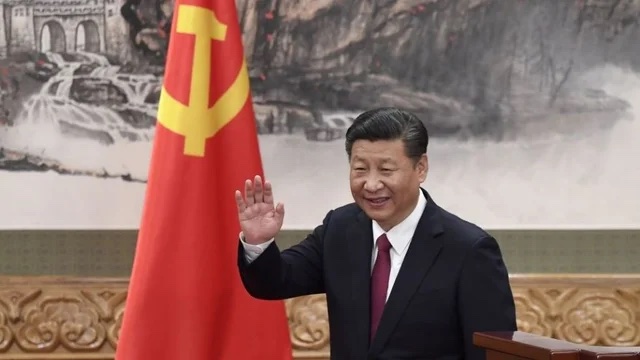


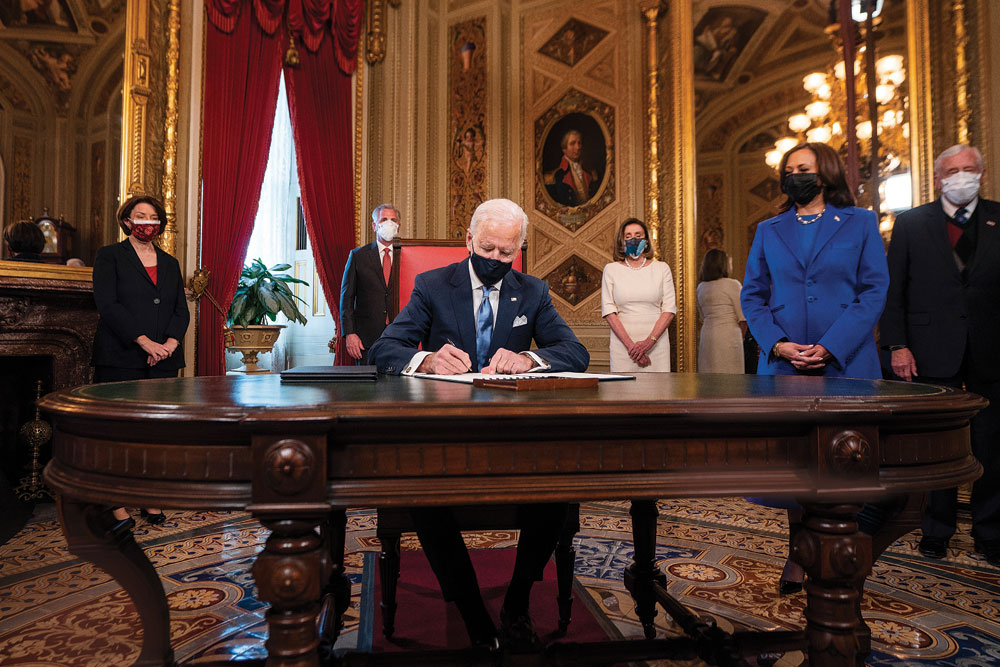
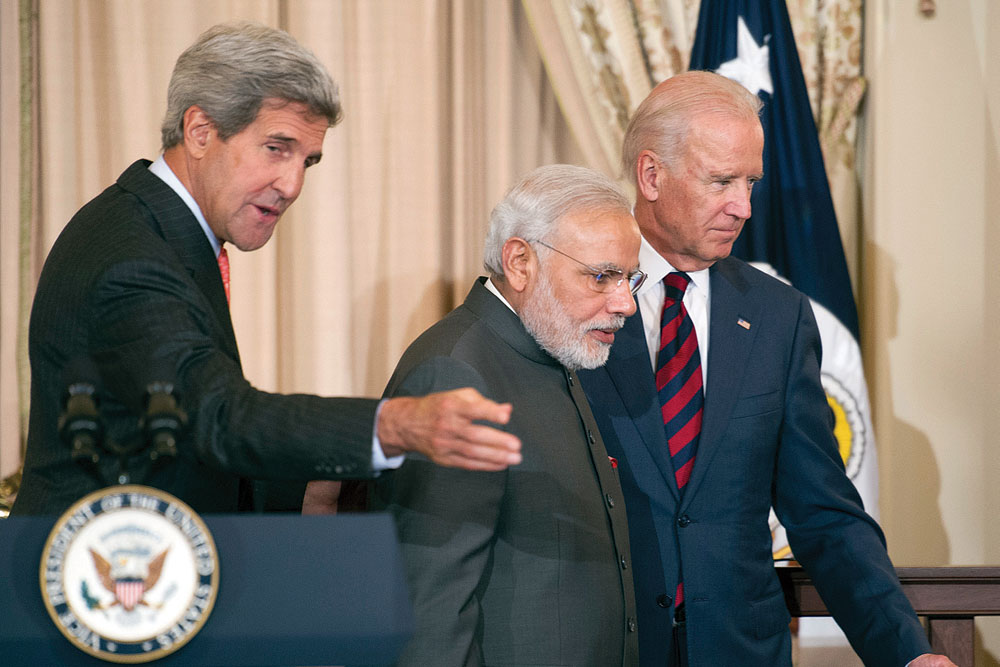
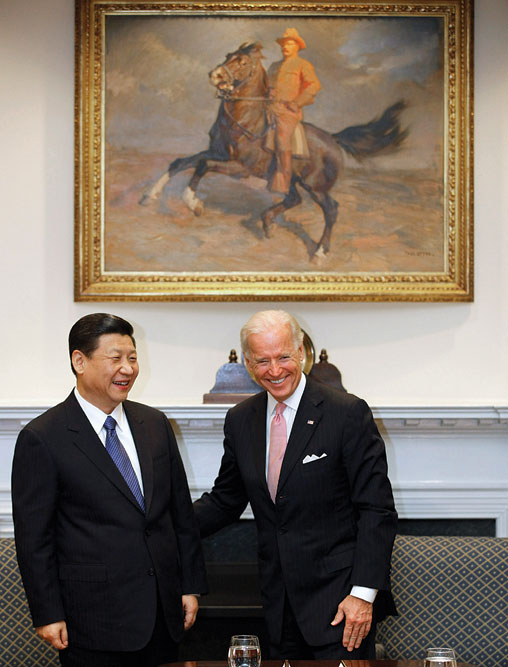
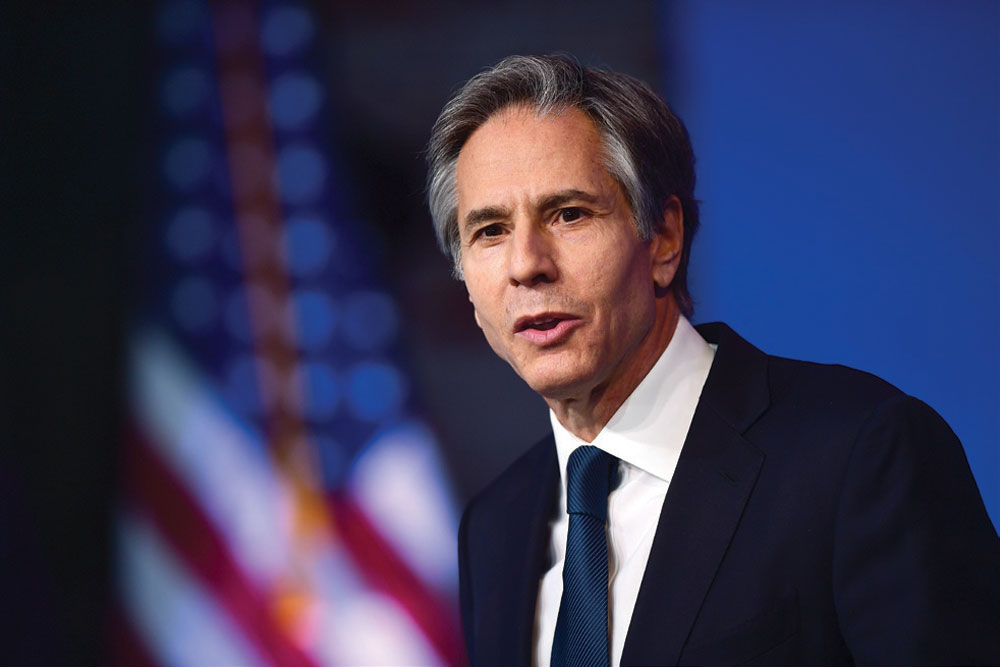
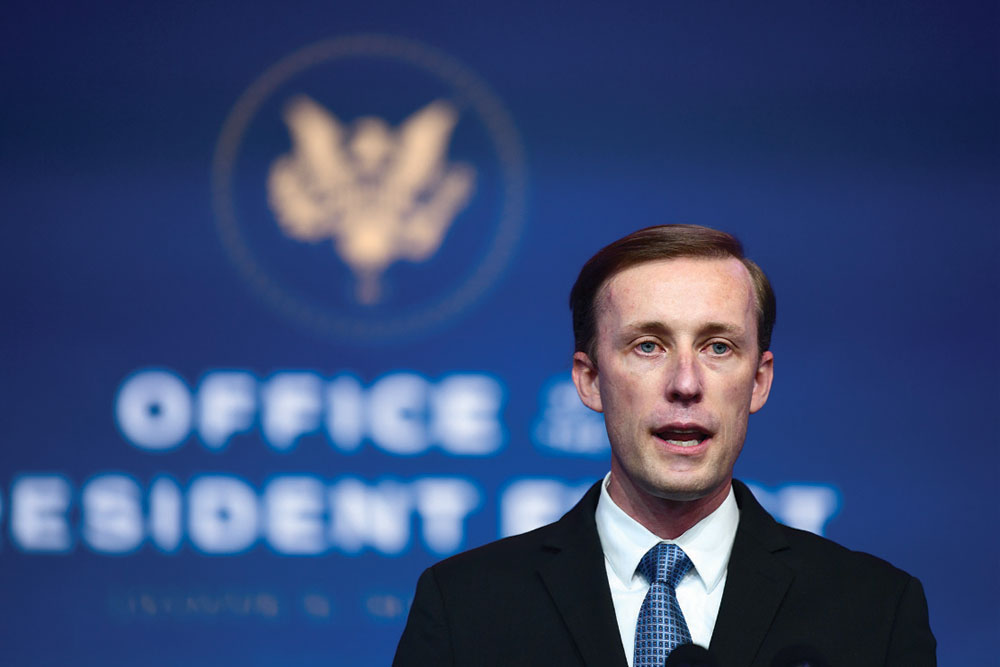


You must be logged in to post a comment.