Japan and India: A Transformative Entente

BRAHMA CHELLANEY, Nikkie Asian Review, January 23, 2014

download

Asia’s future rests on the strategic triangle of China, India, and Japan — countries that have never before been strong at the same time. In the coming years, Asian geopolitics will be greatly influenced by an inexorable tightening of the bonds between Japan and India, which hope to fend off China’s growing assertiveness and territorial creep.

On the heels of the landmark Indian tour of Japan’s Emperor Akihito and Empress Michiko last month, Prime Minister Shinzo Abe will be the guest of honor at India’s Republic Day parade Jan. 26. This underscores the fast-developing partnership between Asia’s second- and third-largest economies. The two countries are also ramping up defense cooperation, as agreed during a recent visit by Japanese Defense Minister Itsunori Onodera.

Asia’s balance of power will be determined principally by events in East Asia and the Indian Ocean. By linking these two regions, the emerging Indo-Japanese entente holds virtually the same potential to shape the future as China’s ascent or America’s “pivot to Asia.”

Japan and India, natural allies strategically located on opposite flanks of the continent, have a pivotal role to play in ensuring a regional power equilibrium and safeguarding vital sea lanes in the wider Indo-Pacific region — an essential hub for global trade and energy supply.

Complementary partners

The visit of Japan’s Imperial couple in early December was a watershed moment in Japan-India relations. In the more than 2,600-year history of the Japanese monarchy — the world’s oldest continuous hereditary royalty — no emperor had previously been to India, although India has traditionally been respected in Japan as Tenjiku, or the heavenly country of Buddhism.

New Delhi invited the emperor and empress a decade ago. But it was Abe, an admirer of India, who keenly supported their visit as a way to signal his government’s commitment to forging closer ties with New Delhi. Now, Abe’s chief-guest role at India’s national day celebration adds meaning to his talk of a new “arc of freedom and prosperity” connecting Asia’s two main democracies. If there is any potential pitfall to the partnership, it is their messy domestic politics, including a dysfunctional party system that weighs them down.

The fact is that Japan has gone from aiding China’s economic rise through technology transfers and generous official development assistance to trying to balance China’s emergence as a military power. India overtook China a decade ago as the largest recipient of Japanese ODA, which includes loans, grants and technical assistance. Through its ODA, Japan is helping India improve its poor infrastructure, among other programs.

China’s rising labor costs and political muscle-flexing are seen as risks for foreign investors. Meanwhile, India — with its vast domestic market and large, young and cheap labor force — is seeking to position itself as Japan’s investment partner of choice. Japanese companies are themselves aiming for a more regionally balanced approach after years of focusing on China, which has absorbed much of Japan’s emerging-market investments.

The resulting shift in foreign direct investment has turned Japan into India’s largest source of FDI among major industrialized nations. A weakening yen is set to spur only greater Japanese capital outflows, allowing India to attract more Japanese investment to help fund its large current-account deficit.

The contrast between disciplined Japan and tumultuous India is striking. India has the world’s largest youthful population, while Japan is aging more rapidly than any other developed country. Whereas India has always valued strategic autonomy, Japan remains a model U.S. ally that hosts not only a large U.S. troop presence but also pays generously for the upkeep of American forces on its soil. Japan’s contribution surpasses the combined host-nation support of America’s 26 other allies.

Yet the dissimilarities between Japan and India have much to do with the prospects for close collaboration. Japan’s heavy-manufacturing base and India’s services-led growth — as well as their contrasting age structures — make their economies complementary. India’s human capital and Japan’s financial and technological strength can be a good match to propel India’s infrastructure development and great-power aspirations, as well as catalyze Japan’s revival as a world power. There is clear potential for strong synergies.

The logic for strategic collaboration is no less compelling. If China, India and Japan constitute Asia’s scalene triangle — with China representing the longest Side A, India Side B, and Japan Side C — the sum of B and C will always be greater than A. It is thus little surprise that Japan and India are seeking to add strategic bulk to their quickly deepening relationship.

Indeed, the world’s most stable economic partnerships, such as the Atlantic community and the Japan-U.S. partnership, have been built on the bedrock of security collaboration. Economic ties lacking that strategic underpinning tend to be less stable and even volatile, as is apparent from China’s economic relations with Japan, India, and the U.S.

The transformative India-Japan entente promises to positively shape Asia’s power dynamics.

Brahma Chellaney, a geostrategist and author, is a professor at the Center for Policy Research, New Delhi.
© Nikkie Asian Review, 2014.

How do Japan’s leaders reconcile with being on the wrong side of history?

Brahma Chellaney, The National, January 15, 2014

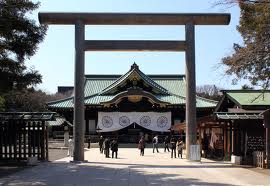
yasukuniHow did Yasukuni, a stately shrine in the heart of Tokyo, become the centre of an international controversy? For an answer, look not so much at the past as at the present, particularly as to how rival states in East Asia are using history as a political instrument.

Unassuaged historical grievances have sharpened rival territorial and maritime claims and constricted diplomatic space for building political reconciliation among China, Japan and South Korea.

In an atmosphere of nationalist grandstanding over conflicting narratives and territorial claims, the risks of a naval or air conflict by accident or miscalculation are increasing in the region, especially between China and Japan.

China and South Korea, which suffered under Japanese occupation, reacted angrily when Shinzo Abe last month became the first Japanese prime minister to pray at Yasukuni since Junichiro Koizumi, who defiantly went each year to the shrine during his 2001-2006 tenure.

Mr Abe, significantly, did not visit the shrine during a previous stint as prime minister. He may well have maintained his restraint had China not provocatively established an air defence identification zone (ADIZ) that sets a perilous precedent in international relations by covering islands that Beijing claims but does not control.

Yasukuni, built by the pre-war Japanese government, enshrines the spirits – not the bones or ashes – of Japan’s 2.5 million war dead, including 14 individuals who were convicted and executed as Class A war criminals by a military tribunal.

In keeping with the dictum that history is written by the winners, the tribunal delivered “victors’ justice”, with its proceedings tainted by extreme arbitrariness. Within a few years, Japan’s US occupation authorities freed a number of important Japanese who had been jailed, further undercutting the credibility of the original proceedings.

To China and South Korea, Yasukuni remains a symbol of Japan’s pre-war militarism, with its adjoining museum promoting the view that Japan waged aggression in Asia to liberate it from European colonial rule. Many foreigners contend that the museum presents a revisionist interpretation of the 20th century to portray Japan as the victim in order to rationalise its militaristic past.

All this, however, cannot obscure a key question: even if Japan must still atone for its past colonial rampage, doesn’t it have the same right today as other nations to honour its citizens killed in the Second World War?

All nations, after all, honour their war dead, even if they were the aggressors, plundering distant lands, as European colonial powers did.

Japanese culture, with its martial traditions, places a high premium on honouring the war dead, with the spirits of the fallen soldiers deified by the Japanese. In the absence of any other commemorative monument, Yasukuni serves as Japan’s war memorial.

Japanese politicians, especially those on the right, like to compare Yasukuni with the Arlington National Cemetery outside Washington DC, which also honours and memorialises the war dead.

Given that a prime ministerial visit to Yasukuni ignites nationalistic passions in China and South Korea, would these countries accept an alternative war memorial in Japan? What if Tokyo proposed building a national war memorial where Japan’s leaders could pay respects to the collective memory of the fallen heroes without igniting international controversy?

Such a proposal would most likely come under immediate attack from China and South Korea as a new Japanese project to honour past militarism. In other words, no war memorial, given Japan’s imperialist history, would be free of controversy.

But the history problem extends beyond Japan. Take the case of China, which justifies its increasingly muscular foreign policy by harping on the 110 years of national humiliation it suffered up to 1949. True, Western colonial powers heaped indignities, forcing China, for example, to import opium in return for Chinese goods, while occupying Japanese forces committed atrocities between 1937 and 1945.

China’s selective historical memory, however, is evident from its school textbooks, which blackout the Chinese invasion of Tibet (1950) and its aggression against India (1962) and Vietnam (1979). A Pentagon report has cited several examples of how China repeatedly has carried out military pre-emption since 1949 in the name of strategic defence.

South Korea has eliminated the last vestiges of Japanese colonial rule, with its president, Park Geun-hye, ruling out holding a summit with Mr Abe until his government addressed lingering issues over Japan’s occupation of Korea. By contrast, Taiwan – a Japanese colony from 1895 to 1945 – has preserved and declared as national treasures its imperial-era structures, including the Presidential Office Building.

The fact is that history is still being used by some states to instil among their citizens an abiding sense of grievance and victimisation. China and Japan use Nanjing and Hiroshima-Nagasaki, respectively, as national symbols of crimes by outsiders against them.

To understand the risks to peace and stability from the widening gulf between economics and politics in East Asia, one must recall the situation that prevailed in Europe a century ago. Europe then was even more integrated by trade and investment than East Asia is today, with its royal families interrelated by marriage. Yet, Europe’s disparate economic and political paths led to the Second World War.

Lack of any security framework and weak regional consultation mechanisms in East Asia underscore its imperative to contain the increasing risks to peace by dispensing with historical baggage that weighs down interstate relationships. If the past is not to imperil the present or the future, regional states have little choice but to mend their political relations.

Brahma Chellaney is a geostrategist and the author of Water, Peace, and War

(c) The National, 2014.

Japan’s Obama Problem

BRAHMA CHELLANEY

A Project Syndicate column internationally syndicated.

TOKYO — When Japanese Prime Minister Shinzo Abe visited Tokyo’s controversial Yasukuni Shrine last month, Chinese leaders, predictably, condemned his decision to honor those behind “the war of aggression against China.” But Abe was also sending a message to Japan’s main ally and defender, the United States. Faced with US President Barack Obama’s reluctance to challenge China’s muscle-flexing and territorial ambition in Asia — reflected in Japan’s recent split with the US over China’s new Air Defense Identification Zone (ADIZ) — an increasingly desperate Abe was compelled to let both countries know that restraint cannot be one-sided.

For China and South Korea, the Yasukuni Shrine’s inclusion of 14 Class A war criminals who were executed after World War II has made it a potent symbol of Japan’s prewar militarism, and Abe long refrained from visiting it — including during his previous stint as prime minister. He may well have maintained that stance had China not established the ADIZ, which set an ominous new precedent by usurping international airspace over the East China Sea, including areas that China does not control. (Abe does not appear to have considered the possibility that his pilgrimage to Yasukuni might end up helping China by deepening South Korea’s antagonism toward Japan.)

The Obama administration had been pressing Abe not to aggravate regional tensions by visiting Yasukuni — an entreaty reiterated by Vice President Joe Biden during a recent stopover in Tokyo on his way to Beijing. In fact, Biden’s tour deepened Japan’s security concerns, because it highlighted America’s focus on balancing its relationships in East Asia, even if that means tolerating an expansionist China as the strategic equivalent of an allied Japan.

Instead of postponing Biden’s trip to Beijing to demonstrate disapproval of China’s new ADIZ, the US advised its commercial airlines to respect it, whereas Japan asked its carriers to ignore China’s demand that they file their flight plans through the zone in advance. By calling for Japanese restraint, the US stoked Japan’s anxiety, without winning any concession from China.

Now, the widening rift between the US and Japan has become starkly apparent. Abe feels let down by Obama’s decision not to take a firm stand on the ADIZ — the latest in a series of aggressive moves by China to upend the status quo in the East China Sea. For its part, the US government openly — and uncharacteristically — criticized Abe’s Yasukuni visit, releasing a statement saying that it was “disappointed that Japan’s leadership has taken an action that will exacerbate tensions with Japan’s neighbors.”

Such recriminations do not mean that the US-Japan alliance — the bedrock of America’s forward military deployment in Asia — is in immediate jeopardy. Japan remains a model ally that hosts a large US troop presence, even paying for the upkeep of American forces on its soil — a generous contribution that surpasses the combined host-nation support of America’s 26 other allies, according to a Pentagon report. Indeed, Abe’s visit to Yasukuni came only a day after he completed a long-elusive, US-backed bilateral deal to relocate America’s air base in Okinawa to a less populous area of the island. And he supports Japan’s entry into the US-led Trans-Pacific Partnership, an emerging regional trading bloc that will exclude China.

Nonetheless, a psychological schism between the Abe and Obama administrations has gradually developed. While the US frets about Abe’s nationalistic stance vis-à-vis China and South Korea, Japanese officials have stopped trying to conceal their uneasiness over Obama’s effort to balance alliance commitments with closer Sino-American ties. Biden spent more than twice as much time in discussions with Chinese President Xi Jinping as he did with Abe.

The paradox is that while anxiety over China’s growing assertiveness has returned the US to the center of Asian geopolitics and enabled it to strengthen its security arrangements in the region, this has not led to action aimed at quelling China’s expansionary policies. As a result, Japan is becoming skeptical about America’s willingness to support it militarily in the event of a Chinese attack on the Japanese-controlled Senkaku Islands (Diaoyu Islands in China). The Obama administration’s contradictory rhetoric — affirming that the US-Japan security treaty covers the Senkakus, while refusing to take a position on the islands’ sovereignty — has not helped.

wake-up call for Japan was Obama’s inaction in 2012, when China captured the Scarborough Shoal, part of the Philippines’ exclusive economic zone. In an effort to end a tense standoff, the US brokered a deal in which both countries agreed to withdraw their maritime vessels from the area. But, after the Philippines withdrew, China occupied the shoal — and, despite a mutual-defense treaty between the US and the Philippines, the US did little in response. This emboldened China effectively to seize a second Philippine-claimed shoal, part of the disputed Spratly Islands.

Factors like geographical distance and economic interdependence have made the US wary of entanglement in Asia’s territorial feuds. And, unlike Asian countries, America would not really suffer from a Chinese “Monroe Doctrine” declaring that China would not accept any outside intervention in Asia. But America’s neutrality on sovereignty disputes threatens to undermine its bilateral security alliances (which, by preventing countries like Japan from turning toward militarism, actually serve Chinese interests).

The Obama administration’s Asian balancing act obfuscates the broader test of power that China’s recent actions represent. What is at stake are not merely islands in the East and South China Seas, but a rules-based regional order, freedom of navigation of the seas and skies, access to maritime resources, and balanced power dynamics in Asia.

By fueling Japanese insecurity, US policy risks bringing about the very outcome — a return to militarism — that it aims to prevent.

Brahma Chellaney, Professor of Strategic Studies at the New Delhi-based Center for Policy Research, is the author of Asian JuggernautWater: Asia’s New Battleground, andWater, Peace, and War: Confronting the Global Water CrisisREAD MORE

(c) Project Syndicate, 2014.

China’s game of chicken

BY BRAHMA CHELLANEYThe Japan Times

China’s Nov. 23 declaration of an air defense identification zone (ADIZ) extending to territories it does not control is just the latest example of its jurisdictional creep that reflects a larger strategy to supplant the United States as the preeminent power in Asia. Yet U.S. President Barack Obama’s administration has responded to China’s aggression with words of cautious criticism but no castigatory step, not even delaying Vice President Joe Biden’s Beijing visit. China gave no ground to Biden during his Dec. 4-5 visit.

Washington has not explicitly called on China to roll back the ADIZ. Indeed, with its advisory to U.S. airlines to respect China’s new ADIZ, it has opened a rift with ally Japan at a time when the imperative is for presenting a united front against an escalatory action that even Biden admits is “a unilateral attempt to change the status quo in the East China Sea,” causing “significant apprehension in the region.”

Japan has asked its carriers to ignore China’s demand for advance notification of flights even if they are merely transiting the new zone and not heading toward Chinese airspace. This demand, unusual by international ADIZ standards, impinges on the principle of freedom of navigation of the skies.

Washington is signaling that if Beijing backed away from this unusual demand and set up a military hotline with Tokyo to forestall an accidental military flare-up, it may be willing to live with the Chinese ADIZ — a position certain to displease Japan.

Let’s be clear: At stake in the East China Sea are not just some flyspeck islands but regional power balance, a rules-based order, freedom of navigation of the skies and seas, and access to maritime resources, including seabed minerals. If China gets its way, the path to a Sino-centric Asia would open.

As China accumulates economic and military power, it has increasingly taken to flexing its muscles, ratcheting up territorial disputes with multiple neighbors and seeking to alter the status quo in Asia through surprise actions. This is alienating it from its neighbors and further calling into question its “peaceful rise” claim.

The ADIZ establishment was cleverly timed to coincide with the unveiling of the interim Iran nuclear deal in Geneva so as to take advantage of the U.S. and international distraction. Shrewdly timing an action and achieving a major tactical surprise against an opponent are key elements in China’s strategic doctrine.

China’s latest action is a reminder that Obama must turn his attention from the preoccupations of the Middle East to the potentially combustible situation in East Asia. To make the promise of his Asian “pivot” real, he must be willing to assert U.S. leadership in order to help tame China’s belligerence and reassure allies.

Sending two unarmed B-52 bombers on “routine” runs through the Chinese ADIZ was tokenism that cannot obscure the need for crafting a credible response. Unfortunately, Obama seems more interesting in balancing America’s relationships in Asia than in checkmating an aggressive China.

Obama’s Asia policy seeks to reap the benefits of building closer engagement with Asian states — including China, now central to U.S. economic and strategic interests — while charting a course of neutrality on sovereignty disputes. This delicate balancing act, however, implies strategic and moral equivalence, even though the coercion and aggression is largely by China against states that are America’s allies or strategic partners.

For example, in the current geopolitical crisis, Washington is urging restraint also on Japan’s part, lest any escalation force the U.S. to take sides, undermining its policy to manage China’s rise without trying to contain it. Washington is seeking to manage Sino-Japanese tensions, too, by urging both sides to tamp down their nationalistic rhetoric and reduce the risk of escalation or miscalculation through crisis-management and confidence-building measures. This is the message Biden took to Tokyo and Beijing.

Yet the focus on the dual management of China’s rise and Sino-Japanese tensions obfuscates the broader test of power in the Asia-Pacific that Chinese actions represent. It also obscures the then U.S. Defense Secretary Robert Gates’ January 2011 warning that China’s long-term goal is to push the United States and its military assets farther out in the Pacific.

In this light, the Obama administration’s stance not to challenge China directly only aids its creeping aggression in Asia.

China is nibbling at territories held by several neighbors, as highlighted by growing Chinese incursions across the long, disputed Himalayan border with India, its success in outwitting the Philippines to gain effective control of the Scarborough Shoal and the Second Thomas Shoal, and its aggressive moves against Vietnam over their unsettled maritime boundary.

Its self-declared ADIZ in the East China Sea even covers the sky over the South Korean-held Leodo Isle (“Suyan Rock” to Beijing), prompting Seoul to expand its own air-defense zone.

China’s ADIZ, while aimed at solidifying its claims to territories held by Japan and South Korea, increases regional tensions and the risks of Sino-Japanese conflict.

Compelling aircraft transiting the zone to accept the new Chinese rules won’t be easy for Beijing, given China’s limited early warning radar and in-flight refueling capabilities and the refusal of some neighboring states, especially Japan, to fall in line. As part of its step-by-step strategy, however, Beijing has no intention to enforce the zone immediately.

Efforts at enforcement will come later when circumstances are more favorable. Right now, the priority of China’s leaders is to prevail in the dangerous game of chicken that they have started.

If China is able to ride out international criticism while holding its ground, it will be emboldened to set up — as Japanese Defense Minister Itsunori Onodera has warned — a similarly expansive air-defense zone in the South China Sea, more than 80 percent of which it now formally claims. A Chinese government spokesman said Nov. 27, according to Xinhua, that “China will set up other ADIZs in due time after completing relevant preparations.”

That is why it is important for the U.S. to draw the line now over China’s territorial creep. Otherwise, China — in the absence of any geopolitical blowback — will continue to subvert the status quo in the East and South China Seas, along its border with India, and even on the cross-border flows of Asia’s major rivers, which originate in the Chinese-annexed Tibetan plateau.

Without a concerted U.S.-led effort to push back against China’s aggression in the East China Sea, it won’t be long before another Chinese encroachment occurs.

Brahma Chellaney, a geostrategist, is the author, most recently, of “Water, Peace, and War” (Rowman & Littlefield, 2013).

(c) The Japan Times, 2013.

Water Woes in Asia

By Brahma Chellaney, World Policy, Winter 2013/2014

Asia faces a dilemma. The continent has the lowest global per capita freshwater resources, less than half the global annual average of 222,480 cubic feet per head. At the same time, Asia has the fastest growing demand for water in the world. Asia can in no sense remain the engine of global economic growth without addressing its water crisis.

In an increasingly water-stressed Asia, the struggle for water is escalating political tensions and intensifying the impact on eco-systems. The water situation will worsen in the fastest growing Asian economies as well as in less developed countries where fertility rates remain high. In many Asian countries, decisions about where to place new manufacturing or energy plants are increasingly constrained by inadequate local water availability. The World Bank has estimated the economic cost of China’s water shortages at 2.3 percent of its GDP. China, however, is not yet under “water stress”—a term defined as the availability of less than 60,000 cubic feet of water per person per year. But already water-stressed economies, from South Korea to India, are paying a higher price.

It is against this background that water wars are being waged between competing states in several regions. Tactics include building dams on international rivers or, if the country is located downstream, resorting to coercive diplomacy to prevent such construction. In the case of Sino-Indian relations, water is becoming a key security issue and a potential source of serious discord. China, having established hydro-supremacy by annexing the starting places of multiple major international rivers, is now pursuing an increasingly ambitious dam-building program on the Tibetan plateau, which threatens to diminish international river flows into India and other states that share these same upland water sources.

Averting water wars demands rules-based cooperation, water sharing, and dispute settlement mechanisms. China, however, is working to get its hand on Asia’s water tap by constructing an extensive upstream hydro-infrastructure. China does not have a single water-sharing treaty with any of its neighbors.

India, by contrast, has water-sharing treaties with its two downstream neighbors—Pakistan and Bangladesh, covering the Indus and Ganges Rivers and setting new precedents in international water law. In the 1996 Ganges Pact, India guaranteed Bangladesh an equal share of the downstream flows during the difficult dry season. The 1960 Indus Treaty remains the world’s most generous water-sharing arrangement. India agreed to set aside 80 percent of the waters of the six-river Indus system for Pakistan indefinitely, in the hope that it could trade water for peace.

A central issue facing Asia is the need to persuade China’s leaders to institutionalize cooperation with neighboring states on shared resources. Given China’s centrality in Asia’s water map, its rush to build more giant dams promises to upset relations across Asia, imperiling prospects for establishing any rules-based Asian water regime.

Brahma Chellaney is the author of Water, Peace, and War: Confronting the Global Water Crisis (Rowman & Littlefield, 2013) and the earlier book, Water: Asia’s New Battleground, which won the 2012 Bernard Schwartz Award.

(c) World Policy, 2013.

Draw the line now on China’s encroachment

BRAHMA CHELLANEY, Special to The Globe and Mail, December 05, 2013

China’s declaration of a so-called air defence identification zone (ADIZ) in the East China Sea, extending to territories it does not control, is just the latest example of a jurisdictional creep that reflects a larger Chinese strategy to supplant the United States as the pre-eminent power in Asia. Yet U.S. President Barack Obama’s administration has responded with words of cautious criticism but no castigatory step, not even delaying Vice-President Joe Biden’s visit to Beijing.

Worse still, with its advisory to U.S. airlines to respect the zone, Washington has opened a rift with ally Japan at a time when the imperative is for presenting a united front against an escalatory act that even Mr. Biden admits is “a unilateral attempt to change the status quo in the East China Sea.” Japan has asked its carriers to ignore China’s demand for advance notification of flights even when they are transiting the new zone and not heading toward Chinese airspace. This demand, unusual by international ADIZ standards, impinges on the principle of freedom of navigation of the skies.

Let’s be clear: At stake are not just some flyspeck islands but regional power balance, a rules-based order, freedom of navigation, and access to maritime resources, including seabed minerals. If China gets its way, it will unlock the path to a Sino-centric Asia.

As China accumulates economic and military power, it has increasingly taken to ratcheting up territorial disputes with multiple neighbours. It’s seeking to alter the territorial and maritime status quo.

The ADIZ establishment was cleverly timed to coincide with the unveiling of the interim Iran nuclear deal in Geneva. Shrewdly timing an action and achieving major tactical surprise against an adversary are key elements in China’s strategic doctrine.

It is a reminder that Mr. Obama must turn his attention from the Middle East to the potentially combustible situation in East Asia. To make the promise of his Asian “pivot” real, the President must be willing to assert U.S. leadership in order to help tame China’s belligerence and reassure allies.

Sending two unarmed B-52 bombers on routine runs through the Chinese ADIZ was tokenism that cannot obscure the need for crafting a credible U.S. response. Unfortunately, Mr. Obama seems more interesting in balancing America’s relationships in Asia than in checkmating an aggressive China.

Mr. Obama’s Asia policy seeks to reap the benefits of building closer engagement with Asian states – including China, now central to U.S. economic and strategic interests – while charting a course of neutrality on sovereignty disputes. This delicate balancing act, however, implies strategic and moral equivalence, even though the coercion and aggression is largely by China against states that are U.S. allies or strategic partners.

For example, in the ADIZ crisis, Washington is also urging restraint on Japan’s part, lest any escalation force the U.S. to take sides. Washington is seeking to manage Sino-Japanese tensions by urging both sides to tamp down their nationalistic rhetoric and reduce the risk of escalation or miscalculation through crisis-management and confidence-building measures. This is the message Mr. Biden took to Tokyo and Beijing.

Yet the focus on the dual management of China’s rise and Sino-Japanese tensions obfuscates the broader test of power the Chinese actions represent. It also obscures then U.S. defence secretary Robert Gates’s 2011 warning that China’s long-term goal is to push the United States and its military assets farther out in the Pacific.

In this light, the U.S. position of not challenging China directly only emboldens creeping aggression.

China is nibbling at territories held by several neighbours, as highlighted by its growing incursions across the disputed Himalayan border with India, its success in outwitting the Philippines to gain effective control of the Scarborough Shoal and the Second Thomas Shoal, and its aggressive moves against Vietnam over their unsettled maritime boundary. Its self-declared ADIZ even covers the sky over the South Korean-held Leodo Isle, which Beijing calls the Suyan Rock.

China’s zone, while aimed at solidifying its claims to territories held by Japan and South Korea, increases the risks of Sino-Japanese conflict arising from miscalculation or accident. Compelling aircraft to accept the new Chinese rules won’t be easy for Beijing, given China’s limited early-warning radar and in-flight refuelling capabilities and the refusal of some neighbouring states, especially Japan, to fall in line.

As part of its step-by-step strategy, however, Beijing has no intention of enforcing the zone immediately. Enforcement will come later, when circumstances are more favourable. Right now, the priority of China’s leaders is to prevail in their game of chicken.

If China is able to ride out international criticism while holding its ground, it will be emboldened to set up a similar zone in the South China Sea, more than 80 per cent of which it now formally claims. According to Xinhua, a government spokesman “said China will set up other ADIZs in due time after completing relevant preparations.”

That is why it is important for the United States to draw the line now. Without a concerted effort to push back against aggression, it won’t be long before another encroachment.

Brahma Chellaney, a geostrategist, is the author, most recently, of Water, Peace, and War.

(c) Globe & Mail, 2013.

Creeping China

By Brahma Chellaney

Project Syndicate column internationally syndicated

Brahma Chellaney picks apart China’s self-described “cabbage” strategy, designed to secure hegemony in Asia.

DSCF5649China’s growing geopolitical heft is emboldening its territorial creep in Asia. After laying claim formally to more than 80% of the South China Sea, it has just established a so-called air defense identification zone in the East China Sea, raising the odds of armed conflict with Japan and threatening the principle of freedom of navigation of the seas and skies. Meanwhile, the People’s Republic continues to nibble furtively at territory across the long, disputed Himalayan border with India.

Few seem to fathom the logic behind China’s readiness to take on several neighbors simultaneously. China is seeking to alter the status quo gradually as part of a high-stakes effort to extend its control to strategic areas and resources. President Xi Jinping’s promise of national greatness — embodied in the catchphrase “China dream” — is tied as much to achieving regional hegemony as to internal progress.

China’s approach reflects what the Chinese general Zhang Zhaozhong this year called a “cabbage” strategy: assert a territorial claim and gradually surround the area with multiple layers of security, thus denying access to a rival. The strategy relies on a steady progression of steps to outwit opponents and create new facts on the ground.

This approach severely limits rival states’ options by confounding their deterrence plans and making it difficult for them to devise proportionate or effective counter-measures. This is partly because the strategy — while bearing all the hallmarks of modern Chinese brinkmanship, including reliance on stealth, surprise, and a disregard for the risks of military escalation — seeks to ensure that the initiative remains with China.

The pattern has become familiar: construct a dispute, initiate a jurisdictional claim through periodic incursions, and then increase the frequency and duration of such intrusions, thereby establishing a military presence or pressuring a rival to cut a deal on China’s terms. What is ours is ours, the Chinese invariably claim, and what is yours is negotiable. For example, China says “no foundation for dialogue” with Japan exists unless the Japanese accept the existence of a territorial dispute over the uninhabited Senkaku Islands.

Here, as elsewhere, China has painted its rival as the obstructionist party. As Chinese Foreign Minister Wang Yi put it, “Japan needs to recognize that there is such a dispute. The whole world knows that there is a dispute.” But there is a dispute only because China has succeeded in shaking the status quo in recent years by popularizing the islands’ Chinese name (“Diaoyu”) and staging incursions into their territorial waters and airspace.

After steadily increasing the frequency of those incursions since September 2012, China has recently begun increasing their duration. The establishment of a new air defense identification zone extending over the islands is its latest cabbage-style security “layer” — a unilateral power grab that US Defense Secretary Chuck Hagel quickly branded “a destabilizing attempt to alter the status quo in the region.” The zone even covers the sky over the Leodo (Suyan) Reef, a submerged rock that both South Korea and China claim. As China escalates its campaign of attrition against a resolute Japan, it increases the risk of armed conflict, whether by accident or miscalculation.

China’s strategy has had more success — without provoking serious risks — against the weaker Philippines. This is apparent from China’s effective seizure last year of Scarborough Shoal, located well within the Philippines’ exclusive economic zone, and the controlling presence of Chinese vessels this year around the Second Thomas Shoal, part of the disputed Spratly Islands. China has not yet tried to evict the eight Filipino marines still living on the Second Thomas Shoal, but Zhang has included this shoal in the country’s “series of achievements” in the South China Sea.

China is not aiming for control of just a few shoals or other tiny outcroppings; it seeks to dominate the South and East China Seas strategically and corner maritime resources, including seabed minerals. The combined land area of the Senkaku and Spratly Islands amounts to barely 11 square kilometers; but the islands are surrounded by rich hydrocarbon reserves. While seeking to enlarge incrementally its military footprint in the more than 80% of the South China Sea that it claims, China’s aim in the East China Sea is to break out of the so-called “first island chain,” a string of archipelagos along the East Asian coast that includes the Senkaku Islands and Taiwan.

By contrast, vast tracts of disputed land are at stake in the resource-rich Himalayan region. Here, too, China’s incursions, after increasing in frequency, are now being staged intermittently for longer periods.

Make no mistake: China’s territorial creep is contributing to Asian insecurity, fueling political tension, and turning the world’s economically most vibrant continent into a potentially global hot spot.

To be sure, China is careful to avoid any dramatic action that could become a casus belli by itself. Indeed, it has repeatedly shown a knack for disaggregating its strategy into multiple parts and then pursuing each element separately in such a manner as to allow the different pieces to fall into place with minimal resistance.

This shrewdness not only keeps opponents off balance; it also undercuts the relevance of US security assurances to allies and the value of building countervailing strategic partnerships in Asia. In fact, by camouflaging offense as defense, China casts the burden of starting a war on an opponent, while it seeks to lay the foundation — brick by brick  — of a hegemonic Middle Kingdom. Chinese leaders’ stated desire to resolve territorial disputes peacefully simply means achieving a position strong enough to get their way without having to fire a shot.

Brahma Chellaney, Professor of Strategic Studies at the New Delhi-based Center for Policy Research, is the author of Asian Juggernaut; Water: Asia’s New Battleground; and Water, Peace, and War: Confronting the Global Water Crisis.

(c) Project Syndicate, 2013.

Irredentist China Ups The Ante

Brahma ChellaneyForbes

China’s territorial creep is now on open display: After laying a formal claim to more than 80 percent of the South China Sea, it has established in the East China Sea a so-called air defense identification zone that encompasses Japanese-controlled islands. China has also ratcheted up territorial tensions with the Philippines, Vietnam, and India. For example, it persists with efforts to disturb the status quo along the long, disputed Himalayan border by repeatedly sending military patrols into Indian territory.

China’s behavior in the South and East China Seas reflects its conduct along the land borders it disputes — a strategy to assert its claims by incrementally changing facts on the ground, with little regard for international norms and rules.

Its incremental encroachments into neighbors’ borderlands can be described as a “salami-slice” strategy — or what Maj. Gen. Zhang Zhaozhong of the People’s Liberation Army (PLA) last May called a “cabbage” strategy. This involves asserting a claim, launching furtive incursions into the coveted territory, and erecting — one at a time — cabbage-style multiple layers of security around a contested area so as deny access to a rival. The establishment of an expansive air-defense zone in the East China Sea is its latest cabbage-style security layer move.

By moving quietly and gradually to achieve a strategic transformation in its favor, China undercuts both the relevance of U.S. security assurances to allies like Japan and the Philippines and the value of building countervailing strategic partnerships between and among Asian states and the United States.

The pace at which China’s bit-by-bit strategy proceeds depends on the extent to which the opponents marshal political will and capability to resist it. The strategy, for example, has run into stiffer obstacles vis-à-vis a resolute Japan than with a weak Philippines.

Let’s be clear: Changing the territorial status quo has been the unfinished business of the People’s Republic of China since its founding in 1949, when it set out to forcibly absorb the sprawling Xinjiang and Tibetan plateau — actions that increased the landmass of China by 44 percent.

An emboldened China then went on to seize the Switzerland-size Aksai Chin plateau of the original princely state of Jammu and Kashmir in the 1950s, the Paracel Islands in 1974, the Johnson South Reef in 1988, the Mischief Reef in 1995 and, most recently, the Scarborough Shoal (2012) and the Second Thomas Shoal (2013). Propelled by its growing military might, China is still working to redraw political boundaries.

Along land frontiers, rodent-style surreptitious attacks usually precede its salami slicing. The aim is to start eating into enemy land like giant rodents and thereby facilitate the slicing. The use of this strategy is becoming increasingly apparent along the Himalayan border with India, the world’s longest disputed frontier.

Here one form of attacks has involved the Chinese military bringing ethnic Han pastoralists to the valleys along the Himalayan line of control and giving them cover to range across it, in the process driving Indian herdsmen from their traditional pasturelands and opening the path to land grab. This strategy, which can also begin with the Chinese army directly nibbling at an unprotected border area, has been especially employed in the two highly strategic Buddhist regions located on opposite ends of the Himalayan frontier — Ladakh and Arunachal Pradesh.

While the Chinese army flexes its muscles in the mountainous borderlands with India, China’s navy and new coast guard assert territorial and maritime claims in the South and East China Seas.

In the East China Sea, China has employed paramilitary agencies, such as the Maritime Safety Administration, the Fisheries Law Enforcement Command, and the State Oceanic Administration, in a campaign of attrition against Japan over the Senkaku Islands — a campaign that has already succeeded in shaking the status quo by making the rest of the world accept that a dispute exists.

This has emboldened Beijing to step up the frequency and duration of its incursions into the uninhabited islands’ territorial waters and to violate the airspace over them. The November 23 establishment of an air-defense zone extending to the Senkakus (which it calls the Diaoyu Islands) is just the latest example of its jurisdictional creep and increasingly muscular approach.

Taking on Japan, its former occupier and historical rival, is part of Beijing’s larger search for new seabed resources and for strategic ascendancy in the western Pacific by breaking out of what it perceives to be “first island chain” — a string of islands and atolls extending along China’s eastern periphery that includes the Senkakus, Taiwan, and the Paracel and Spratly Islands in the South China Sea. Its longer-term objective is to push U.S. military assets to the “second island chain,” farther out to the Pacific.

In the South China Sea, China aims to gradually legitimize its presence in the more than 80 percent of the sea it now claims formally. Through repeated and growing acts, China is etching a lasting presence in the claimed areas.

Among the ways Beijing has sought to establish new facts on the ground in the South China Sea is to lease hydrocarbon and fishing blocks inside other disputant states’ 200-nautical-mile exclusive economic zones (EEZs), as defined by the United Nations Convention on the Law of the Sea (UNCLOS). Such leases are designed to limit the UNCLOS-granted economic rights of the other claimant states while expanding China’s control of the region’s resource wealth, including hydrocarbon reserves.

China has even established “Sansha City” on Woody Island in the Paracels as its administrative base for the South China Sea, setting up a local civilian government and a military garrison there to oversee the entire region. And in its latest effort to present a fait accompli over its occupation of the Paracels, it has started tourist cruises to those disputed islands.

To be sure, Beijing, as a skillful salami slicer, is usually careful to slice very thinly so as to avoid any dramatic action that could become a casus belli by itself. China proceeds in ways not only to undercut its opponents’ deterrence strategy but also to cast the burden of starting a war on them.

Any targeted state is presented with a strategic Hobson’s choice: either put up with China’s territorial creep or face a dangerous and costly war. This is the choice, for example, Manila has faced over China’s 2012 seizure of the Scarborough Shoal, located well within the Philippines’ EEZ, and the controlling presence of Chinese vessels this year near Second Thomas Shoal, part of the Spratly Islands.

China’s strategic aim is not to merely gain control of some shoals (essentially rocks) but to dominate the South China Sea, a critical waterway linking East Asia with the Indian Ocean region and beyond to the Persian Gulf and Europe. In the East China Sea, too, the issue at stake is who will exercise influence over the vast region.

Against this background, China’s tactics and strategy pose an increasing challenge to several of its neighbors, who face a deepening dilemma over how to thwart its expansionism. China’s strategy of constant outward pressure on its borders also threatens to destabilize the economically vibrant but politically volatile Asia.

China’s neighbors must overcome their differences and collaborate strategically.  Separately, they are outclassed by China but, collectively, they have the potential means to rein in China and defend their territorial and economic rights against its expansionism.

(c) Forbes.com, 2013.

Border-talks charade

Why India risks repeating its Himalayan territorial blunder vis-à-vis China

Brahma Chellaney, Mail Today, November 29, 2013

An Indian soldier stands guard at the ancient Nathu La border crossing between India and Chinese-ruled Tibet.

India has held regular border-settlement negotiations with China since 1981 in what is the longest such continuous process between any two nations in post-World War II history.  The negotiations, which began as “senior-level talks”, were rechristened first in 1988 as “joint working group” talks and then in 2003 as talks between “special representatives”. Yet, after 32 years of border-related talks, India has failed to persuade China to agree to the bare minimum — a mutually defined line of control — even as the two sides continue to farcically call their disputed frontline the “Line of Actual Control”, or LAC.

In fact, China has strengthened its leverage against India by upping the ante, both by hardening its stance in the negotiations and by stepping up military pressure, including nibbling at Indian territory through stealthy incursions. The pattern to disturb the status quo little by little and mount increased pressure is in keeping with China’s preferred approach to territorial disputes: What is ours is ours and what is yours is negotiable.

Having annexed the Switzerland-size Aksai Chin plateau in the western Himalayas, China has focused its attention on the Austria-size Arunachal Pradesh in the east, aggressively laying its claim since 2006 to that rugged Indian state, which borders Bhutan and Myanmar and is almost three times larger than Taiwan. In a clever ploy to turn Arunachal into an internationally recognized dispute, China has started calling it “South Tibet”, a term that was unknown before it invented it in 2006. Yet a timid India has retreated to an increasingly defensive position in the border talks.

The spotlight now is on China’s Tibet-linked claim to Arunachal rather than on Tibet’s status itself. China’s revival of its claim to Arunachal, in fact, drew encouragement from the then Prime Minister Atal Bihari Vajpayee’s 2003 recognition of Tibet as part of the People’s Republic. Beijing’s success in securing that recognition has helped narrow the dispute to what it claims. As a result, a politically adrift India has been left to fend off China’s increasingly assertive territorial demands.

What does India gain by persisting with the border-talks charade? By staying put in a barren and counterproductive process, India only aids China’s containment-behind-engagement strategy. As long as India remains directionless, China will continue to press its claims by whatever means — fair or foul — it deems advantageous. And as India gets sucked into a 1950s-style trap, history is in danger of repeating itself.

The issue then was Aksai Chin; the issue now is Arunachal. As a result, whenever an Indian president or prime minister visits Arunachal — which is once in several years — Beijing rakes up its territorial demand by publicly condemning the trip. China feels emboldened to up the ante because of Indian pusillanimity. For example, when President Pranab Mukherjee visited Arunachal in November 2013 — the first visit by an Indian president to the state in more than five years — he avoided going to Arunachal’s Tibetan Buddhism pilgrimage valley of Tawang, just like Prime Minister Manmohan Singh did during his visits to that state in 2008 and 2009. Singh’s predecessor, the self-styled nationalist Atal Bihari Vajpayee, didn’t even set foot in Arunachal.

The Dalai Lama has repudiated the Chinese claim that Arunachal, or even just the Tawang Valley, was historically part of Tibet. China, however, insists on securing at least the Tawang Valley — the gateway to the Dalai Lama’s 1959 escape from his homeland — so as to complete its assimilation of traditional Tibetan-inhabited lands and obliterate the remaining evidence of Tibet’s historical status as an independent entity. The strategic Tawang Valley is a critical corridor between Lhasa, Tibet’s capital, and the Assam plains because it can militarily open the way for China to throttle India’s hold on its entire northeastern region.

Brahma Chellaney is a geostrategist and author.

(c) Mail Today, 2013.

Asia’s new strategic allies

For a politically rising Japan that is beginning to shed its pacifist blinkers, India is central to both its economic-revival and security-building strategies.

Brahma Chellaney, The Hindu newsaper, November 27, 2013

Asia’s balance of power will be determined principally by events in East Asia and the Indian Ocean. In this light, the emerging Indo-Japanese entente is likely to help shape Asia’s strategic future as much as China’s ascent or America’s Asian “pivot.” Japan and India, as Asia’s natural-born allies, have a pivotal role to play in preserving stability and helping to safeguard vital sea-lanes in the wider Indo-Pacific region — a region defined not only by the confluence of the Indian and Pacific Oceans, but also by its significance as the global trade and energy-supply hub.

LANDMARK EVENT

The India visit of Japan’s Emperor Akihito and Empress Michiko from November 30 promises to be a landmark event in the already fast-developing partnership between Asia’s two leading democracies, which are strategically located on opposite flanks of the continent. In the more than 2,600-year history of the Japanese monarchy — the world’s oldest continuous hereditary royalty — no emperor has been to India, although India has traditionally been referred to in Japan as Tenjiku, or the heavenly country.

Customarily, the Japanese Emperor’s visit to any country is highly significant because it symbolises a watershed in relations with that nation. It was in recognition of the momentous nature of the royal trip that Prime Minister Manmohan Singh appointed Ashwini Kumar as his special envoy with Cabinet rank in August to “prepare for the upcoming visit” of the imperial couple, and for Japanese Prime Minister Shinzo Abe’s visit early next year. Indeed, the India tour could be the last overseas visit of Emperor Akihito, who has undergone coronary and prostate-cancer surgeries in the past decade and will turn 80 a couple of weeks after he returns home from Chennai.

India has been specially chosen for an imperial visit to signal Japan’s commitment to forge closer ties. Japan is already doing more for India than any other economic partner of this country: it is the largest source of aid, and is playing a key role in helping India to improve its poor infrastructure, as illustrated by the Japanese-financed Western Freight Corridor, the Delhi-Mumbai Industrial Corridor, and the Bangalore Metro Rail Project. Tokyo is also keen to add concrete strategic content to the bilateral ties.

The relationship, remarkably free of any strategic dissonance or bilateral dispute, traces its roots to the introduction of Buddhism in Japan in the 6th century CE. The Todaiji Temple in the ancient capital city of Nara is home to Japan’s most famous and biggest statue — a great gilt bronze image of Lord Buddha. The statue’s allegorical eyes-opening ceremony in 752 CE was conducted by a priest from India in the presence of Emperor Shômu, who declared himself a servant of the “Three Treasures” — the Buddha, the Buddhist law, and the monastic order. Japan’s cultural heritage from India via China extends to Sanskrit influence on the Japanese language.

Japanese still bless a newly married couple by reciting an ancient proverb that they are the best bride and bridegroom across the three kingdoms of Kara (China), Tenjiku (India) and Hinomoto (Japan). Akihito is not unfamiliar with India: A year and a half after marrying Michiko — the daughter of a wealthy businessman — he came to India in 1960 as the crown prince, along with his wife. During that visit, he laid the cornerstone of New Delhi’s India International Centre and planted a sapling at the Japanese Embassy that has grown into a huge tree.

Today, the contrast between the disciplined Japanese society and tumultuous India could not be more striking. India has the world’s largest youthful population, while Japan is ageing more rapidly than any other developed country. And whereas India has always valued strategic autonomy, Japan remains a model U.S. ally that hosts not only a large U.S. troop presence but also pays generously for the upkeep of the American forces on its soil.

Yet, the dissimilarities between the two countries increase the potential for close collaboration. Japan’s heavy-manufacturing base and India’s services-led growth — as well as their contrasting age structures — make their economies complementary, opening the path to generating strong synergies. India’s human capital and Japan’s financial and technological power can be a good match to help drive India’s infrastructure development and great-power aspirations, and catalyse Japan’s revival as a world power.

‘NATURAL AND INDISPENSABLE’

For India, Japan is a critical source of capital and commercial technology. Indeed, there cannot be a better partner for India’s development than the country that was the first non-western society to modernise and emerge as a world power, spearheading Asia’s industrial and technological advances since the 19th century. Dr. Singh has underscored the importance of also building security collaboration with it, saying Indians “see Japan as a natural and indispensable partner in our quest for stability and peace in the vast” Indo-Pacific region.

For a politically rising Japan that is beginning to shed its pacifist blinkers, India is central to both its economic-revival and security-building strategies. After prolonged economic stagnation, Japan faces difficult challenges, including a shrinking population, a spiralling public debt, a fundamentally deflationary environment, and a security dilemma compounded by constraints arising from the U.S.-imposed, post-war Constitution. However, Mr. Abe’s dynamic leadership and control of both houses of parliament is aiding his moves to place Japan on the right track.

Japan and India, as energy-poor countries heavily reliant on oil imports from the unstable Persian Gulf region, are seriously concerned over mercantilist efforts to assert control over energy supplies and the transport routes for them. So the maintenance of a peaceful and lawful maritime domain, including unimpeded freedom of navigation, is critical to their security and economic well-being. That is why they have moved from emphasising shared values to seeking to protect shared interests, including by holding joint naval exercises.

These facts explain why India and Japan boast the fastest-growing bilateral relationship in Asia today. Since they unveiled a “strategic and global partnership” in 2006, their political and economic engagement has deepened at a remarkable pace. Their free-trade pact, formally known as the Comprehensive Economic Partnership Agreement (CEPA), came into force in 2011. They have even established an alliance to jointly develop rare-earth minerals so as to reduce their dependence on China.

The level and frequency of India-Japan official engagement have become extraordinary. In addition to holding an annual Prime Minister-level summit, the two also conduct several yearly ministerial dialogues: A strategic dialogue between their Foreign Ministers; a security dialogue between their Defence Ministers; a policy dialogue between India’s Commerce Minister and Japan’s Minister of Economy, Trade and Industry; and separate ministerial-level energy and economic dialogues. And, to top it off, they also hold a trilateral strategic dialogue with the United States.

According to Dr. Singh, “India and Japan have a shared vision of a rising Asia.” Translating that vision into practice demands strengthening their still-fledgling strategic cooperation and working together to ensure a pluralistic, stable Asian order.

Japan, in keeping with its pacifist Constitution, does not possess offensive systems, such as nuclear submarines, large aircraft carriers, and long-range missiles. But with the world’s sixth largest defence budget, it has a formidable defensive capability, an impressive armament-production base, and Asia’s largest naval fleet, including top-of-the-line conventional subs, large helicopter-carrying destroyers, and Aegis-equipped cruisers capable of shooting down ballistic missiles.

India — the world’s largest arms importer that desperately needs to develop an indigenous arms-production capability — must forge closer defence ties with Japan, including co-developing weapon systems and working together on missile defence. The most stable economic partnerships in the world, such as the Atlantic community and the Japan-U.S. partnership, have been built on the bedrock of security collaboration. Economic ties that lack the underpinning of strategic partnerships tend to be less stable and even volatile, as is apparent from China’s economic relationships with India, Japan and the U.S. Through close strategic collaboration, Japan and India must lead the effort to build freedom, prosperity and stability in the Indo-Pacific region.

Against this background, the Emperor’s visit promises to live up to Mr. Abe’s hope of being a “historic event.” It is likely to herald an enduring Indo-Japanese strategic partnership.

(Brahma Chellaney, a geostrategist, is the author, most recently, of Water, Peace, and War)

(c) The Hindu, 2013.