The Big Squeeze

As climate change and rapid development take their toll, new ways must be found to manage Asia’s water resources

Brahma Chellaney, Nikkei Asian Review
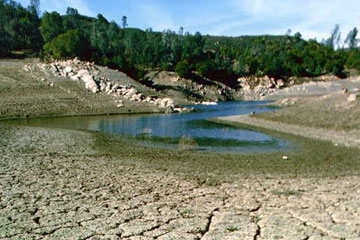
abad2345a892ac5d33fb2fd95c2d6d0f_2

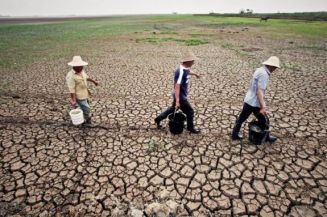
The record drought ravaging large parts of Asia will end when the annual summer monsoon rains come in June. This will bring much-needed relief to the suffering people in the parched lands — from the millions of residents in Vietnam’s Mekong Delta to more than a quarter of India’s 1.25 billion people. The searing drought has already claimed several hundred lives and destroyed vast swaths of rice paddies and other farms.

But make no mistake: The latest in a string of droughts to hit Asia this century offers a telling preview of the hotter, drier future that awaits much of the continent. This likelihood largely arises from the costs that rapid development, breakneck urbanization, large-scale irrigated farming and lifestyle changes are imposing on natural resources, the environment and climate in the world’s largest and most-populous continent.

Recurrent drought promises to exacerbate Asia’s already-serious water challenges and thus potentially affect economic growth, social peace, and relations between countries or provinces that share rivers or aquifers. In a drought-laden future, thirsty communities, provinces or nations will increase risks of water-related conflict.

Yet little policy attention has been paid to combating droughts because of their episodic character, with scientists still unable to reliably predict the arrival, extent or duration of any drought. Unlike other natural and human-made disasters, from earthquakes and hurricanes to flooding and industrial accidents, a drought is a silently creeping calamity. However, without resource conservation, ecological restoration and more sustainable development, droughts in Asia are likely to become more frequent and severe.

Asia is the world’s most resource-poor continent. Rapid economic growth has brought its limited natural-capital base under increasing pressure. Overexploitation of natural resources, for its part, has created an environmental crisis that is contributing to regional climate change. For example, the Tibetan Plateau, the world’s largest repository of freshwater other than the two poles, is warming at a rate that is more than twice the global average — with potentially serious consequences for Asia’s climate, monsoons and freshwater reserves.

A little-known fact is that Asia, not Africa, is the world’s most water-stressed continent. Water stress is internationally defined as the per capita availability of less than 1,700 cubic meters per year. Asia already has less freshwater per person than any other continent, and some of the world’s worst water pollution.

Water is not just the most undervalued and underappreciated resource; in the coming years, it is likely to be the most contested resource in Asia. This has largely to do with the growing paucity of this life-sustaining resource and Asia’s distinctive water map.

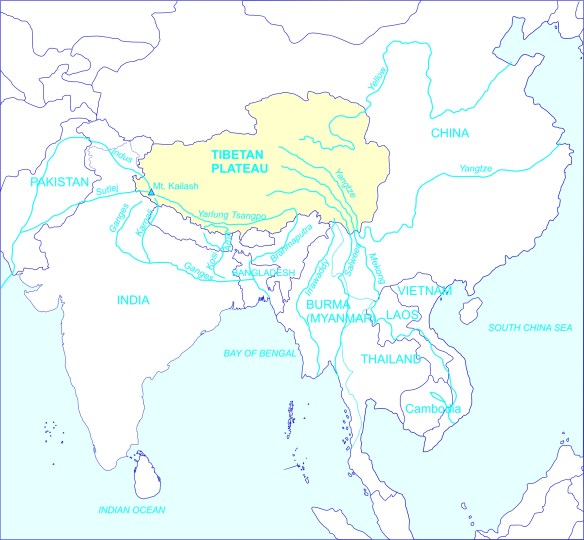
Most important rivers in Asia traverse national boundaries and are thus international systems. Indeed, most Asian nations with land frontiers — with the prominent exception of China, which controls Asia’s riverheads by controlling the Tibetan Plateau — are highly dependent on cross-border water inflows. Such dependency is the greatest in countries like Bangladesh and Vietnam that are located farthest downstream on international rivers.

Against this background, inter-country and intra-country water disputes have become common. Indeed, Asia illustrates that transboundary water resources, instead of linking countries or provinces in a system of hydrological interdependence, are fostering sharpening competition for relative gain. The competition extends to appropriating resources of shared rivers by building dams, reservoirs and other diversions, thus roiling inter-riparian relations. Averting water wars demands rules-based cooperation, water-sharing accords, uninterrupted flow of hydrological data, and dispute-settlement mechanisms.

Asia is already the world’s most dam-dotted continent: It has more dams than the rest of the world combined. But this statistic doesn’t tell the real story: Most of Asia’s dams are in China, which alone has slightly more than half of the world’s approximately 50,000 large dams. With its massive infrastructure of dams and other storage facilities, China has built an impressive capacity to stockpile water for the dry season.

But China’s over-damming of rivers has contributed to river fragmentation (the interruption of natural flows) and depletion, leading to downstream basins drying up or rivers discharging only small amounts of water and nutrient-rich silt into the oceans. China’s dying Yellow River exemplifies this problem. And its cascade of six giant dams on the Mekong, just before it leaves Chinese territory, is being blamed for accentuating the current Southeast Asian drought, with river depletion extending to the delta region, which is a rice bowl of Asia.

Asia’s vulnerability to droughts and other effects of environmental and climate change is being increased by other factors as well, including groundwater depletion and deforestation, especially in the upstream catchment areas. Deforestation is most notable in the Himalayan-Tibetan region, where the great rivers of Asia originate. But it also extends to other regions, including rainforest areas.

Through its environmentally destabilizing impacts, deforestation amplifies the frequency and severity of extreme events such as droughts and floods. The depletion of many Asian swamps — which serve as nature’s water storage and absorption cover — also contributes to a cycle of chronic flooding and drought, besides allowing deserts to advance and swallow up grasslands.

For its part, the extraction of groundwater at rates surpassing nature’s recharge capacity has resulted in a rapidly falling water table across much of Asia. Because groundwater is often a source of supply for streams, springs, lakes and wetlands, the over-exploitation of this strategic resource, which traditionally has served as a sort of drought insurance, creates parched conditions and thus fosters recurrent droughts.

Meanwhile, intensive irrigation in semi-arid regions, including northern China, Central Asia and Pakistan, has helped to create a boom in agricultural exports but exacted heavy transboundary environmental costs. It has caused soil salinity and waterlogging and fostered atmospheric humidity, with climate stability becoming a casualty and dry areas becoming drier.

The entire Asian belt stretching from the Korean Peninsula to the Iran-Afghanistan-Pakistan region is becoming increasingly prone to the ravages of drought. But even before the current drought hit South and Southeast Asia, scientific studies on global drought risk hotspots showed that drought risks were the highest in these two regions, at least in terms of the number of people exposed.

It is past time for Asian policymakers to start addressing drought risks, the core of which is the nexus between water, energy and food. For example, the current drought is roiling world food markets through its destructive impacts on crops. And by reducing cooling-water availability, it is decreasing generation by some power plants, just when electricity demand has peaked.

The drought risks can be reduced by ensuring the protection and ecological restoration of watercourses, securing water-efficiency gains through agricultural-productivity measures, developing drought-resistant crop varieties, improving water quality to offset decrease in water quantity, and utilizing alternative cooling technologies for power generation. Increasing water storage by channeling excess water during the monsoons to artificially recharge aquifers, especially in Asia’s densely populated, economically booming coastal regions, holds promise for coping with droughts.

Policymakers must appreciate that drought risks cannot be lowered without tackling the serious problem of groundwater depletion. Groundwater in Asia is being pumped and consumed by human activities at such a rate that, for example, NASA scientists in the United States observed several years ago that the subterranean reserves in northwest India were vanishing.

Groundwater resources are recklessly exploited because there are few controls in Asia on their extraction. Also contributing to this practice is the fact that, unlike surface water, degradation of groundwater is not visible to the human eye. Surface water and groundwater, however, are linked hydrologically and should be managed as a single resource. A one-water approach is also essential to cut the overreliance of many communities on groundwater supplies.

The specter of permanent water losses is just one reason why Asia’s drought-related challenges demand an integrated, holistic approach. Water, food and energy, for example, must be managed by policymakers not separately but jointly so as to promote synergistic approaches. Also, ecological restoration programs, by aiding the recovery of damaged ecosystems, can help bring wider benefits in slowing soil and water degradation, stemming coastal erosion, augmenting freshwater storage and supply, and controlling droughts.

Without such efforts, the linkages between water stress, sharing disputes, falling water quality and environmental degradation could trap Asia in a vicious cycle. Nature is indivisible: Communities and states cannot thrive for long by bending nature and undercutting environmental sustainability.

Brahma Chellaney is a geostrategist and the author, among others, of the award-winning “Water: Asia’s New Battleground.”
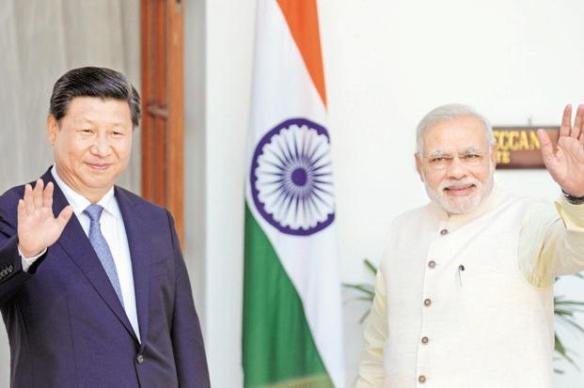
© Nikkei Asian Review, 2016.

India’s China appeasement itch

op-kdIG--621x414@LiveMint

Brahma Chellaney, Mint

Winston Churchill famously said: “An appeaser is one who feeds a crocodile hoping it will eat him last”. India has been feeding the giant crocodile across the Himalayas for decades — and stoically bearing the consequences.

After China came under communist rule in 1949, India was one of the first countries to recognize the new People’s Republic of China. Jawaharlal Nehru, driven by post-colonial solidarity considerations, continued to court the PRC even when the Chinese military began eliminating India’s outer line of defence by invading the then independent Tibet. As Tibet pleaded for help against the aggression, India opposed even a UN General Assembly discussion.

By 1954, through the infamous Panchsheel Agreement, Nehru surrendered India’s British-inherited extraterritorial rights in Tibet and recognized the “Tibet region of China” without any quid pro quo. Such was Nehru’s PRC courtship that he even rejected U.S. and Soviet suggestions in the 1950s that India take China’s place in the UN Security Council. Nehru’s officially published selected works quote him as stating that he spurned those suggestions because it would be “unfair” to take China’s vacant seat — as if morality governs international relations. Ironically, impiety and ruthlessness have been hallmarks of China’s policies.

In sum, Nehru’s sustained appeasement resulted in China gobbling up Tibet, covertly encroaching on Indian territories and, eventually, invading India itself.

Yet, just one generation later, India forgot the lessons of Nehruvian appeasement. Since the late 1980s, successive Indian governments have propitiated China. Bharatiya Janata Party-led governments, oddly, have grovelled at times.

Atal Bihari Vajpayee’s 2003 Beijing visit will be remembered in history for his formal surrender of India’s Tibet card. In a joint communiqué, Vajpayee used the legal term “recognize” to accept what China deceptively calls the Tibet Autonomous Region as “part of the territory of the PRC”. Vajpayee’s blunder opened the way for China to claim Arunachal Pradesh as “South Tibet”, a term it coined only in 2006.

Still, unilateral concessions have become the leitmotif of Narendra Modi’s China policy, now adrift, like his Pakistan policy. His concessions have ranged from removing China from India’s list of “countries of concern” to granting Chinese tourists e-visas on arrival. Modi, via the back door, has also brought back in joint statements Vajpayee’s errant formulation that the Tibet Autonomous Region is part of the PRC — a description India had dropped in 2010 to nuance its Tibet stance.

Removing China as a “country of concern”, despite its inimical approach toward India, was integral to introducing a liberalized regime for Chinese investments. However, while Chinese FDI has been slow to come, Indian policy has enabled Beijing to significantly ramp up its already large trade surplus with India. Racking up a whopping $60-billion annual surplus, China has heavily skewed the trade relationship against India, treating it as a raw-material appendage of its economy and a dumping ground for manufactured goods. In 2015-16, Chinese exports to India were almost seven times greater in value than imports.

How can Modi’s “Make in India” initiative succeed when China blithely undercuts Indian manufacturing to reap a fast-growing trade surplus?

After Modi came to power, he made closer ties with China a priority. He even postponed his Japan visit by several weeks so that his first major bilateral meeting was with Chinese President Xi Jinping, at the BRICS summit in Brazil. His overtures, including inviting China to be a major partner in India’s infrastructure expansion, were intended to encourage Beijing to be more cooperative.

Modi’s gamble, however, has not paid off. If anything, China has become more hardline on security issues, including the border. Moreover, it has not only shielded Pakistan-based terrorists like Masood Azhar from UN action, but also stepped up covert strategic assistance to Islamabad, including providing the launcher for Pakistan’s India-specific Shaheen-3 ballistic missile.

Having its cake and eating it too, China savours a lopsided trade relationship with India while being free to contain India. Indian appeasement has also allowed China to narrow the focus of border disputes to what its claims. The spotlight thus is on China’s Tibet-linked claims to Indian territories, not on Tibet’s status. China will not settle the border issue (unless its economy or autocracy crashes) because an unsettled frontier allows it to keep India under intense pressure.

Yet, a short-sighted New Delhi continues to stumble. Take the latest ignominy: India lost face in China’s eye when it issued a visa to the Germany-based World Uighur Congress chief Dolkun Isa and then cancelled it, after Beijing strongly protested the action. The public explanation for cancelling the visa rings hollow. Isa has freely travelled in Europe and to the U.S. despite the China-initiated Interpol “Red Notice” against him — a notice Indian authorities were aware of while issuing the visa. In any event, there were no Red Notices against the other two dissidents from China who were stopped from travelling to India for the same conference.

These actions illustrate the extent to which New Delhi is willing to go to propitiate China — even at the cost to India’s self-respect and international standing. Untrammelled propitiation underscores Karl Marx’s statement: “History repeats itself first as tragedy, then as farce”.

Let’s be clear: India’s choice on China is not between persisting with a weak-kneed policy and risking a war. India can, and must, tackle an increasingly assertive and wily China without appeasement or confrontation. But without leveraging the bilateral relationship, including levelling the playing field for trade, India cannot hope to tame Chinese intransigence and belligerence.

Brahma Chellaney is a professor at the Centre for Policy Research.

© Mint, 2016.

China’s water hegemony in Asia

Brahma Chellaney, The Japan Times, May 3, 2016.

China's grip

A severe drought currently ravaging Southeast and South Asia has helped spotlight China’s emergence as the upstream water controller in Asia through a globally unparalleled hydro-engineering infrastructure centered on damming rivers. Indeed, Beijing itself has highlighted its water hegemony over downstream countries by releasing some dammed water for drought-hit nations in the lower Mekong River basin.

In releasing what it called “emergency water flows” to downstream states over several weeks from one of its six giant dams — located just before the Mekong flows out of Chinese territory — China brashly touted the utility of its upstream structures in fighting droughts and floods.

But for the downriver countries, the water release was a jarring reminder of not just China’s newfound power to control the flow of a life-sustaining resource, but also of their own reliance on Beijing’s goodwill and charity. With a further 14 dams being built or planned by China on the Mekong, this dependence on Chinese goodwill is set to deepen — at some cost to their strategic leeway and environmental security.

Armed with increasing leverage, Beijing appears to be pushing its Lancang-Mekong Cooperation (LMC) initiative as an alternative to the lower-basin states’ Mekong River Commission, which China has spurned over the years. Indeed, having its cake and eating it too, China is a dialogue partner but not a member of the commission, underscoring its intent to stay clued in on the discussions, without having to take on any legal obligations.

The LMC — a broad-based political initiative emphasizing Chinese “cooperation” and subsuming China’s pet projects, such as “One Belt, One Road” — is intended to help marginalize the commission, an institution with legally binding rules and regulations. China’s refusal to join the 1995 Mekong treaty, which created the commission, has stunted the development of an inclusive, rules-based basin community to deal with water- and environmental-related challenges.

It was not a coincidence that Beijing’s water release started shortly before the March 23 inaugural LMC summit of the leaders of the six Mekong basin countries in Sanya, in the Chinese province of Hainan.

The LMC project is also designed to overshadow the U.S.-sponsored Lower Mekong Initiative, which seeks to sideline Chinese opposition to the Mekong treaty by promoting integrated cooperation among the quintet of lower-Mekong basin states (also known as the “Mekong Five”) — Cambodia, Laos, Myanmar, Thailand and Vietnam. The Mekong treaty was concluded as China completed its first large dam on the river.

The Mekong, Southeast Asia’s lifeline that is running at a record low since late last year, is just one of the international rivers China has dammed. It has also targeted the Yarlung Tsangpo (Brahmaputra), the Arun, the Indus, the Sutlej, the Irtysh, the Illy, the Amur and the Salween. These rivers flow into India, Nepal, Kazakhstan, Russia or Myanmar.

Asia’s water map changed fundamentally after the communists took power in China in 1949. It wasn’t geography but guns that established China’s chokehold on almost every major transnational river system in Asia, the world’s largest and most-populous continent.

By forcibly absorbing the Tibetan Plateau (the giant incubator of Asia’s main river systems) and Xinjiang (the starting point of the Irtysh and the Illy), China became the source of transboundary river flows to the largest number of countries in the world, extending from the Indochina Peninsula and South Asia to Kazakhstan and Russia. Beijing’s claim over these sprawling territories, which make up more than half of China’s landmass today, drew from the fact that they were imperial spoils of the earlier foreign rule in China under the Manchu Qing dynasty (1644 to 1911) and the Mongol Yuan dynasty (1271 to 1368).

Before the communists seized power, China had only 22 dams of any significant size. But now, it boasts more large dams on its territory than the rest of the world combined.  If dams of all sizes and types are counted, their number in China surpasses 85,000. Strongman Mao Zedong initiated an ambitious dam-building program, but the majority of the existing dams were built in the period after him.

China’s dam frenzy, however, shows no sign of slowing. The country’s dam builders, in fact, are shifting their focus from the dam-saturated internal rivers (some of which, like the Yellow, are dying) to the international rivers, especially those that originate on the water-rich Tibetan Plateau.  This raises fears that the degradation haunting China’s internal rivers could be replicated in the international rivers.

China, ominously, has graduated to erecting mega-dams. Take its latest dams on the Mekong: the 4,200-megawatt Xiaowan (taller than the Eiffel Tower in Paris) and the 5,850-megawatt Nuozhadu, with a 190-square-kilometer reservoir. Either of them is larger than the current combined hydropower-generating capacity in the lower Mekong states.

Despite its centrality in Asia’s water map, China has rebuffed the idea of a water-sharing treaty with any neighbor.

Against this background, concern is growing among is downstream neighbors that China is seeking to turn water into a potential political weapon. After all, by controlling the spigot for much of Asia’s water, China is acquiring major leverage over its neighbors’ behavior in a continent already reeling under very low freshwater availability.

Asia’s annual water availability is barely one-tenth of that in South America, Australia, and New Zealand; not even one-fifth of North America’s; nearly one-third of Europe’s; and a quarter less than Africa’s. Yet the world’s most rapidly growing demand for water for industry, food production and municipal supply is in Asia.

In the Mekong basin, China has denied that it is stealing shared waters or that its existing dams have contributed to river depletion and recurrent drought in the downstream region. Yet, by ramping up construction of additional giant dams, China has virtually ensured long-term adverse impacts on the critical river system. Indeed, with Chinese assistance, landlocked Laos also plans to build more Mekong dams in order to make hydropower exports, especially to China, the mainstay of its economy.

China is clearly not content with being the world’s most dammed country, and the only thing that could temper its dam frenzy is a prolonged economic slowdown at home. Flattening demand for electricity due to China’s already-slowing economic growth, for example, offers a sliver of hope that the Salween River — which flows into Myanmar and along the Thai border before emptying into the Andaman Sea — could be saved, even if provisionally, from the cascade of hydroelectric mega-dams that Beijing has planned to build on it.

More fundamentally, China’s unilateralist approach underscores the imperative for institutionalized water cooperation in Asia, based on a balance between rights and obligations. Renewed efforts are needed to try and co-opt China in rules-based cooperation.

Brahma Chellaney is the author of “Water: Asia’s New Battleground.”

© The Japan Times, 2016.

Asia’s Troubled Water

A column internationally syndicated by Project Syndicate

Wuhan-drought-via-ET

Asia’s water woes are worsening. Already the world’s driest continent in per capita terms, Asia now faces a severe drought that has parched a vast region extending from southern Vietnam to central India. This has exacerbated political tensions, because it has highlighted the impact of China’s dam-building policy on the environment and on water flows to the dozen countries located downstream.

Today’s drought in parts of Southeast and South Asia is the worst in decades. Among the hardest-hit areas are Vietnam’s Mekong Delta (a rice bowl of Asia) and central highlands; 27 of Thailand’s 76 provinces; parts of Cambodia; Myanmar’s largest cities, Yangon and Mandalay; and areas of India that are home to over a quarter of the country’s massive population.

Droughts may not knock down buildings, but they carry high social and economic costs. Millions of Asians now confront severe water shortages, and some have been forced to relocate. Myanmar, Thailand, and Cambodia have had to scale back traditional water festivals marking their New Year. The High Court of Bombay moved the world’s biggest and wealthiest cricket tournament, the Indian Premier League, out of the state of Maharashtra. In one Maharashtra county, the local authorities, fearing violence, temporarily banned gatherings of more than five people around water storage and supply facilities.

Meanwhile, the mounting drought-related losses in some of the world’s top rice-producing countries – Thailand, Vietnam, and India – threaten to roil the world’s already tight rice market. Barely 7% of global rice output is traded internationally, because much of it is consumed where it is produced – in Asia.

Rice losses have been particularly significant in Thailand and Vietnam, which account for half of all rice exports and almost three-quarters of this decade’s projected export growth. Some 230,000 hectares of paddy rice cultivation has been destroyed just in Vietnam’s Mekong Delta, where depleted river flows have led to saltwater intrusion from the South China Sea, rendering nearly 10% of the rice farms potentially infertile.

This drought may be unprecedented, but it is not an anomaly. On the contrary, environmental challenges in Asia, such as ecosystem degradation, groundwater depletion, the contamination of water resources, the El Niño tropical weather pattern, and the effects of global warming are causing droughts to become increasingly frequent – and increasingly severe.

Even without droughts, Asia would be facing formidable water constraints. The annual amount of available fresh water per capita in the region (2,816 cubic meters) already is less than half the global average (6,079 cubic meters). As the region pursues rapid economic development, characterized by massive increases in resource consumption and serious environmental damage, its water constraints are tightening further. The challenge is compounded by Asians’ changing dietary preferences, particularly higher consumption of meat, the production of which is notoriously water-intensive.

While Asia’s resource-hungry economies can secure fossil fuels and mineral ores from distant lands, they cannot import water, which is prohibitively expensive to transport. So they have been overexploiting local resources instead – a practice that has spurred an environmental crisis, advancing regional climate change and intensifying natural disasters like droughts.

As a result, Asia, which accounts for 72% of the world’s total irrigated acreage, now faces a dilemma: It must grow enough food to meet rising demand, while reducing the amount of water that goes toward irrigation. Unless Asia resolves it, economic development will be imperiled, with major consequences for the entire global economy.

Yet the continent’s water crisis is only worsening. According to a recent MIT study, there is a “high risk” that Asia’s water stress could worsen to water scarcity by 2050. Water-sharing disputes between countries or provinces already are increasingly frequent, owing to the proliferation of dam projects that can adversely affect downstream flows – an approach that represents a continuing preference for supply-side approaches over smart water management.

The main culprit in this regard is China, which has heavily dammed the Mekong, Southeast Asia’s lifeline. In the current lean season, which will last until the monsoon rains arrive in June, the lower Mekong is, according to a recent United Nations report, running at “its lowest level since records began nearly 100 years ago.”

China is now trying to play savior, by releasing an unspecified quantity of water from one of its six upstream mega-dams to “accommodate the concerns” of drought-stricken countries. China’s rulers have touted the move as underscoring the effectiveness of upstream “water facilities” in addressing droughts and containing floods.

Of course, in reality, all of this simply highlights the newfound reliance of downriver countries on Chinese goodwill – a dependence that is set to deepen as China builds 14 more dams on the Mekong. The environmental impact of these projects is sure to exacerbate further the ecological challenges, including drought, already facing Asia.

This competitive approach is putting Asia on a dangerous path, which can lead only to more environmental degradation, slower economic development, and even water wars. It is time to change course and embark on the path of rules-based cooperation, based on water-sharing accords, the free flow of hydrological data, and dispute-settlement mechanisms.

Asian countries must work together to ensure greater efficiency in water consumption, increase the use of recycled and desalinated water, and promote innovative solutions that advance conservation and adaptation efforts. To this end, governments must phase out state subsidies that have encouraged profligate water use, such as in agriculture, and focus on building new market mechanisms and effective public-private partnerships.

None of this will be possible without China’s cooperation. Indeed, if China does not abandon its current approach – from its “water grab” in the Mekong and other international rivers to its “territorial grab” in the South China Sea – the prospects for a rules-based order in Asia could perish forever.

© 1995-2016 Project Syndicate.

China’s dam boom stokes concerns in Asia

Brahma Chellaney, Nikkei Asian Review

At a time when geopolitical competition in resource-poor Asia is sharpening over freshwater, mineral ores and fossil fuels, China’s expansionary activities in the hydrocarbon-rich South China Sea have drawn considerable international attention, especially because of their implications for the global maritime order. By contrast, China’s frenzy of dam-building to appropriate internationally shared water resources has not attracted a similar level of attention, despite the specter of potential water wars.

China is almost unparalleled as a source of fresh water. Most of the major river systems of Asia originate from the Tibetan plateau, which was annexed by the People’s Republic of China soon after its establishment in 1949. Xinjiang, another sprawling region it occupied forcibly, is the source of the Irtysh and Ili rivers, which flow to Kazakhstan and Russia. However, Beijing does not have a single water-sharing pact with the dozen countries located downstream of its rivers because it rejects the concept.

Most of Asia’s dams are in China, which boasts slightly more than half of the world’s approximately 50,000 large dams. Yet its great dam boom shows no sign of slowing. Indeed, its dam-building program is now largely concentrated in the borderlands on international rivers.

By quietly and opaquely building large dams on transnational rivers, Beijing is presenting a fait accompli to its downstream neighbors. Its latent capability to control cross-border river flows arms it with significant leverage over neighbors — a leverage it could employ to influence the behavior of those states, including deterring them from challenging its broader regional interests.

Indeed, by seeking to control the spigot for much of Asia’s water, China is acquiring such clout that smaller downriver countries in Southeast and Central Asia now use only coded language  to express their concerns over Chinese dam building. For example, calling for transparency has become a way of referring obliquely to China, which smaller states are wary of mentioning by name.

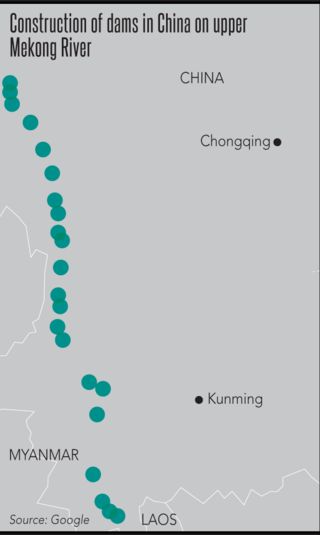
20160315Dams_middle_320On the Mekong river system — Southeast Asia’s lifeblood — China is building or planning a further 14 dams after completing six. It is also constructing a separate cascade of dams on the last two of its free-flowing rivers — the Salween (which flows into Myanmar and along the Thai border before entering into the Andaman Sea) and the Yarlung Tsangpo, also known as the Brahmaputra, which is the lifeline of northeastern India and much of Bangladesh.

Add to the picture China’s damming of other smaller rivers flowing to neighboring countries, as well as tributaries of major rivers, and it is clear that these dams are set to affect the quality and quantity of downstream flows.

Shift in focus

China recently completed ahead of schedule the world’s highest-elevation dam at Zangmu, Tibet, at a cost of $1.6 billion. It is now racing to complete a series of additional dams on the Yarlung Tsangpo, the world’s highest-altitude river. China is also turning an important Yarlung Tsangpo tributary, the Lhasa (or Kyichu), into a series of artificial lakes by building six dams in close proximity along a 20km stretch of the river.

Several factors are behind China’s drive to tap the resources of international rivers, including an officially drawn link between water and national security, the growing political clout of the state-run hydropower industry, and the rise of water nationalism at a time of increasing water stress in the northern Chinese plains. With dam-building reaching virtual saturation levels in the ethnic Han heartland, the focus has shifted to China’s ethnic minority homelands, where major rivers originate.

China’s centralized, megaprojects-driven approach to water resources is the antithesis of the situation in another demographic titan, India, where the constitution makes water an issue for state governments and where anti-dam nongovernmental organizations are powerful. Thanks to organized protests, the much-publicized Sardar Sarovar Dam on the Narmada river in western India remains incomplete decades after work began. The largest dam India has built since independence — the 2,000-megawatt Tehri Dam on the river Bhagirathi — pales in comparison to gigantic Chinese projects. These include the 22,500-megawatt Three Gorges Dam and Mekong dams such as Xiaowan, which dwarfs the Eiffel Tower in height, and Nuozhadu, which boasts a 190 sq. km reservoir.

Yet the water situation in India is far worse than in China, including in terms of per capita availability. China’s population is marginally larger than India’s but its internally renewable water resources (2,813 billion cubic meters per year) are almost twice as large as India’s. In aggregate water availability, including external inflows (which are sizable in India’s case but negligible for the People’s Republic), China boasts almost 50% more resources than India.

As China’s dam-builders increasingly target transnational rivers, concern is growing among downstream neighbors that Beijing is seeking to turn water into a potential political weapon. China pays little heed to the interests even of friendly countries, from Kazakhstan to Thailand and Cambodia.

To be sure, dams bring important socioeconomic benefits and help to deal with drought or seasonal imbalances in water availability through their water-storage capacity. A river can be dammed in an environmentally considerate manner. But what China is doing is over-damming rivers.

One manifestation of this aggressive approach is the construction of series of dams in close proximity to each other on international rivers such as the Mekong or the Salween just before they flow out of Chinese territory. These cascades of dams, looking like strings of beads on a map, aim to capture large quantities of water.

Keeping the silt

Major dams tend to change water quality and the rate at which it flows, and reduce the amount of nutrient-rich silt that is carried downstream. As the major Asian rivers flow down from forbidding Himalayan heights through the soft, sedimentary rock on the Tibetan plateau, they bring with them high-quality silt — a lifeline for agriculture, fisheries and marine life. Silt helps to re-fertilize overworked soils in downstream plains, sustains freshwater species and strengthens the aquatic food chain supporting marine life after rivers empty into seas or oceans.

China’s upstream damming of rivers originating on the Tibetan plateau is not just obstructing the silt flow to downstream plains; it is also causing the retreat of major deltas. Several scientific studies have underscored the link between extensive silt retention behind upstream dams and the retreat and subsidence of Asia’s big deltas, which are home to megacities like Tianjin, Shanghai, Guangzhou, Bangkok, Kolkata and Dhaka. In addition, the fall in freshwater disgorged by rivers into the seas is disturbing the delicate balance of salinity needed in estuaries and beyond to support critical species.

China’s reluctance to bind itself to international rules or norms is rooted in the belief that as the source of these rivers it is in a position to reap the benefits of harnessing their water resources, with the costs borne by those downstream. After all, the river-flow hierarchy reflects the geopolitical one, with the most powerful country controlling the headwaters of Asia’s major rivers.

In reality, though, China is inflicting environmental costs not just on the states lower down these rivers but on itself. One example is the impact of its upstream water diversions on its own mega-deltas, which are economic centers, making up a substantial proportion of the country’s total gross domestic product. Thanks to the diminished amount of silt discharged into the seas, there is less sediment to add to the delta land formed and fortified through sustained release or to prevent underground seepage of saltwater into sweet-water aquifers along the coasts.

More broadly, the Asian delta regions have become “much more vulnerable” to the effects of climate change and sea-level rise, according to the United Nations-sponsored Intergovernmental Panel on Climate Change, the gold standard in climate science.

In this light, the discussion of China’s damming activities on the Tibetan plateau should extend beyond the potential diminution of cross-border flows to the likely effects on the quality of river waters, including through silt-movement blockage. Such effects are already evident within China: the loss of nature’s gift of highly fertile silt due to the Three Gorges Dam and other upriver dams has forced farmers in the lower Yangtze basin to use more chemical fertilizers, accelerating soil and water degradation.

Renewed efforts are needed in Asia to co-opt China into institutionalized cooperation. Without China on board, it will not be possible to build water cooperation and protect critical ecosystems.

Brahma Chellaney is a geostrategist and the author, most recently, of “Water, Peace, and War.”

© Nikkei Asian Review, 2016.

China’s Thirst Threat

China, with its frenzied damming of rivers and unbridled exploitation of mineral wealth on the resource-rich Tibetan Plateau, is compounding the damage to Himalayan ecosystems by encouraging its bottled-water companies to tap the already-stressed glaciers.

BRAHMA CHELLANEY

Project Syndicate

HONG KONG – When identifying threats to Himalayan ecosystems, China stands out. For years, the People’s Republic has been engaged in frenzied damming of rivers and unbridled exploitation of mineral wealth on the resource-rich Tibetan Plateau. Now it is ramping up efforts to spur its bottled-water industry – the world’s largest and fastest-growing – to siphon off glacier water in the region.

12Nearly three-quarters of the 18,000 high-altitude glaciers in the Great Himalayas are in Tibet, with the rest in India and its immediate neighborhood. The Tibetan glaciers, along with numerous mountain springs and lakes, supply water to Asia’s great rivers, from the Mekong and the Yangtze to the Indus and the Yellow. In fact, the Tibetan Plateau is the starting point of almost all of Asia’s major river systems.

By annexing Tibet, China thus changed Asia’s water map. And it is aiming to change it further, as it builds dams that redirect trans-boundary riparian flows, thereby acquiring significant leverage over downriver countries.

But China is not motivated purely by strategic considerations. With much of the water in its rivers, lakes, and aquifers unfit for human consumption, pristine water has become the new oil for China – a precious and vital resource, the overexploitation of which risks wrecking the natural environment. By encouraging its companies to tap Himalayan glaciers for premium drinking water that can satisfy a public skeptical about the safety of tap water, China is raising the environmental stakes throughout Asia.

Though much of the bottled water currently sold in China comes from other sources – chemically treated tap water or mineral water from other provinces – China seems to think that the bottling of Himalayan glacier water can serve as a new engine of growth, powered by government subsidies. As part of the official “Share Tibet’s Good Water with the World” campaign, China is offering bottlers incentives like tax breaks, low-interest loans, and a tiny extraction fee of just CN¥3 ($0.45) per cubic meter (or 1,000 liters). According to a ten-year plan unveiled by Chinese authorities in Tibet last fall, extraction of glacier water will increase more than 50-fold in just the next four years, including for export.

Some 30 companies have already been awarded licenses to bottle water from Tibet’s ice-capped peaks. Two popular brands in China are Qomolangma Glacier, sourced from a supposedly protected reserve linked to Mount Everest, on the border with Nepal, and 9000 Years, named after the assumed age of its glacial source. A third, Tibet 5100, is so named because it is bottled at a 5,100-meter-high glacial spring in the Nyenchen Tanglha range that feeds the Yarlung Tsangpo (or Brahmaputra River) – the lifeblood of northeastern India and Bangladesh.

Ominously, the Chinese bottled-water industry is sourcing its glacier water mainly from the eastern Himalayas, where accelerated melting of snow and ice fields is already raising concerns in the international scientific community. Glaciers in the western Himalayas, by contrast, are more stable and could be growing. Even the Chinese Academy of Sciences has documented a sharp decrease in the area and mass of eastern Himalayan glaciers.

Himalayan_2074484bOne of the world’s most bio-diverse but ecologically fragile regions, the Tibetan Plateau is now warming at more than twice the average global rate. Beyond undermining the pivotal role Tibet plays in Asian hydrology and climate, this trend endangers the Tibetan Plateau’s unique bird, mammal, amphibian, reptile, fish, and medicinal-plant species.

Nonetheless, China is not reconsidering its unbridled extraction of Tibet’s resources. On the contrary, since building railways to Tibet – the first was completed in 2006, with an extension opened in 2014 – China’s efforts have gone into overdrive.

Beyond water, Tibet is the world’s top lithium producer; home to China’s largest reserves of several metals, including copper and chromite (used in steel production); and an important source of diamonds, gold, and uranium. In recent years, Chinese-controlled companies have launched a mining frenzy on the plateau that not only damages landscapes sacred to Tibetans, but also is eroding Tibet’s ecology further – including by polluting its precious water.

These are precisely the kinds of actions that caused China’s water crisis in the first place. Instead of learning the lessons of its past mistakes, China is compounding them, forcing a growing number of people and ecosystems to pay the price for its imprudent approach to economic growth.

Indeed, China has implemented no effective safeguards against adverse impacts from intensive water mining. Bottled water is being sourced even from protected reserves where glaciers are already in retreat. Meanwhile, the glacier-siphoning boom is attracting highly polluting ancillary industries, including manufacturers of plastic water bottles.

Make no mistake: Glacier-water mining has major environmental costs in terms of biodiversity loss, impairment of some ecosystem services due to insufficient runoff water, and potential depletion or degradation of glacial springs. Moreover, the process of sourcing, processing, bottling, and transporting glacial water from the Himalayas to Chinese cities thousands of miles away has a very large carbon footprint.

Bottling glacier water is not the right way to quench China’s thirst. A better alternative, both environmentally and economically, would be to boost investment in treatment facilities to make tap water safe in cities. Unfortunately, China seems determined to remain on its current course – an approach that could do irreparable and severe damage to Asia’s environment, economy, and political stability.

© Project Syndicate, 2016.

China Flexes Its Naval Muscles to Project Power Far Beyond Its Shores

Since 1949, China has been redrawing its frontiers. This still remains an unfinished task for its rulers.

Brahma Chellaney, China-US Focus

china-economy

Boosting naval prowess and projecting power as far away as the Middle East are at the center of China’s ambition to fashion a strongly Sino-centric Asia. This will be at the back of U.S. President Barack Obama’s mind when he hosts ASEAN leaders at a February 15-16 summit in Sunnylands, California, with his secretary of state John Kerry already urging Southeast Asia to show unity in response to Beijing’s territorial encroachments in the South China Sea.

Several developments underscore China’s determination to take the sea route to achieve regional dominance — from its frenzied creation of artificial islands in the South China Sea and its rapidly expanding submarine fleet, to its recent admission that it is establishing its first overseas military base in the Indian Ocean rim nation of Djibouti, located on the Horn of Africa. The Middle East base at Djibouti represents a transformative moment in its quest for supremacy at sea, a goal highlighted by its official white paper “China’s Military Strategy,” which last summer outlined a plan for the navy to shift focus from “offshore waters defense” to “open seas protection.”

After China’s inroads into strategically located Indian Ocean nations like Sri Lanka and the Maldives, President Xi Jinping’s latest trip to Iran, Saudi Arabia and Egypt point to the broader Chinese ambitions in the Middle East, a region where political turmoil and Russia’s military intervention in Syria are already altering the delicate balance of power. China has thrown down the gauntlet to the U.S. by deciding to set up its base in Djibouti, which serves as the Pentagon’s main intelligence-gathering post for the Arab world and the critical shipping lanes through the Gulf of Aden and the Red Sea.

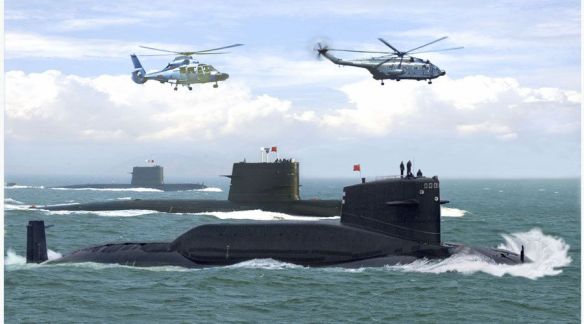
China boasts one of the fastest-growing undersea fleets in the world. It has already surpassed the U.S. submarine fleet in quantity but not quality. But as it works to further expand its force of diesel and nuclear attack submarines, its territorial and maritime assertiveness and muscular actions are prompting neighboring countries, from Japan to India, to strengthen their anti-submarine capabilities.

Beijing’s increasing submarine forays into the Indian Ocean — the bridge between Asia and Europe — draw strength from its more assertive push for dominance in the adjacent South China Sea, where it continues to push its borders far out into international waters in a way that no power has done before elsewhere.

Possession is nine-tenths of the law, and Beijing understands that very well, especially because its claim of historic right over virtually all the resource-endowed South China Sea is weak and legally untenable. China thus has set out to achieve effective control, a key principle in international law for determining legitimate ownership of a territory.

This is exactly the same strategy the People’s Republic employed in the past to advance its territorial claims elsewhere, such as the Himalayas. In fact, no sooner had the communists seized power in Beijing than China began gobbling up the then-independent Tibet — a conquest that enlarged its landmass by more than one-third and changed Asia’s water map. Decades later, the redrawing of national frontiers remains an unfinished task for the rulers in Beijing.

The artificial islands in the South China Sea — a global trade and maritime hub — not only arm China with a great bargaining chip but allow it to forward deploy military forces hundreds of miles from its shores. In the process, China is positioning itself at the mouth of the Indian Ocean.

Indeed, Beijing appears to be using the South China Sea as a testing ground for changing the Asian geopolitical map. To advance its larger geostrategic interests, China is assertively using geoeconomic tools, such as the Maritime Silk Road and the Asian Infrastructure Investment Bank, which was launched January 16 by Chinese President Xi Jinping at a ceremony in Beijing. The Maritime Silk Road — designed to link China’s eastern coast with the Indian Ocean region and the Middle East — presents itself as a benign-sounding new banner for the country’s “string of pearls” strategy.

Make no mistake: China’s expanding submarine fleet is suited not for Southeast Asia’s shallow sea basin but for the Indian Ocean’s deep, warm waters. This explains why China is setting up a naval hub in Djibouti, building a naval base at Gwadar, Pakistan, and wanting access to port facilities around India, like it has already secured in Sri Lanka.

China’s territorial expansions in the South China Sea, without incurring any international costs, are whetting its growing interest in the Indian Ocean and the western Pacific. This shows that the South China Sea is critical to the contest for influence from the Middle East to the Pacific.

Yet, the Obama administration has focused its concern on safeguarding freedom of navigation through the South China Sea, not on finding ways to stop China from altering the status quo in its favor. ASEAN disunity has also aided China’s strategy.

Emboldened by international inaction and a series of crises that have helped divert global attention, Beijing has been feverishly turning low-tide elevations in the South China Sea into small islands by dredging seabed material and then dumping it using pipelines and barges. In the process, it has been creating new “facts on the ground,” including military facilities, for enforcing an air defense identification zone without having to declare one.

China’s militarization of the South China Sea not only threatens freedom of navigation in the South China Sea but is also encouraging aggressive Chinese coastguard patrolling. Hanoi, for example, has accused Chinese patrols of frequently intercepting Vietnamese fishing boats, ramming them, damaging equipment, and beating up crews.

Against this background, the South China Sea has emerged as the symbolic center of the international maritime challenges of the 21st century. The region is important even for countries in the Middle East and Europe because what happens there will impinge on larger maritime security. Indeed, developments in the South China Sea — the world’s newest maritime hot spot — carry the potential of upending even the current liberal world order by permitting brute power to trump rules.

The sea’s centrality to the international maritime order should induce likeminded states to work closely together to positively shape developments, including by ensuring that continued unilateralism is not cost-free. Only sustained pressure can persuade Beijing that its future lies in cooperation and not confrontation.

Brahma Chellaney is a geostrategist and the author of nine books, including, most recently, “Water, Peace, and War.” He is also Professor of Strategic Studies at the New Delhi-based Center for Policy Research.

Why a Stable Balance of Power in Asia Calls for a Resurgent Japan

The international spotlight on Japan’s prolonged economic woes has helped obscure one of Asia’s farthest-reaching but least-noticed developments – the political rise of the world’s third-largest economy. By initiating national-security reforms and seeking a more active role in shaping the evolving balance of power in Asia, Japan wants to stop punching below its weight and take its rightful place in the world.

Japan’s quiet political resurgence is reflected in various ways – from the government strengthening security arrangements with the United States and building close strategic partnerships with other major democracies in the Asia-Pacific region, to a grassroots movement at home pressing for changes in the country’s U.S.-imposed pacifist constitution.

Tokyo’s recent landmark deal with South Korea to settle a bitter history dispute over wartime “comfort women” promises to open up greater diplomatic space for it in East Asia.

Already, Japan’s passive chequebook diplomacy is giving way to a proactive approach focused on the Asian mainland and the oceans, including the western Pacific and Indian Ocean. Japan is shoring up ties with other major Asia-Pacific democracies, from Canada and Australia to India and Indonesia.

The single biggest factor driving Japan’s political rise is the ascent of a muscular China.

Japan is the world’s first constitutionally pacifist nation. The constitution’s Article 9 says, “land, sea and air forces, as well as other war potential, will never be maintained.” No other national constitution in the world goes so far as to bar acquisition of the means of war or to renounce “the threat or use of force as a means of settling international disputes.”

The American postwar success in disarming Japan by disbanding its military, imposing a 1946-drafted constitution and overhauling its education system, however, engendered its own challenges. It did not take long for the United States to realize that it had gone too far in creating a demilitarized Japan.

In 1953, then-U.S. vice-president Richard Nixon called the constitution “a mistake.” That reflected a changing U.S. approach toward Japan, owing to America’s Cold War with the Soviet Union, the Communist takeover in China and the protracted Korean War. Through a major reinterpretation of the very constitution it had imposed, the United States encouraged Japan to reconstitute its military as “Self-Defence Forces” in order to make the country the linchpin of America’s Asian strategy.

Japan’s recent constitutional reinterpretation to assert its right to collective self-defence is small in comparison. Tokyo has also relaxed its long-standing, self-imposed ban on export of arms, thus opening the path to building closer security co-operation with other Asia-Pacific democracies.

With Japan’s nationalist impulse to play a bigger international role now rising, its domestic debate on national-security and constitutional reform is set to intensify. However, further national-security reform beyond what Prime Minister Shinzo Abe has carried out is linked – from a legal standpoint – to constitutional reform.

The Japanese constitution is unique in that it defines no head of state. It stripped the emperor of all but symbolic power. This was by design: The United States wanted to have the emperor as merely the symbol of Japan so that it could use him during the 1945-52 occupation years without the monarch being able to rally his people.

Likewise, the force-renouncing Article 9 was designed to keep Japan as America’s client state so that it would never pose a threat to the United States again.

But today, U.S. security interests would be better served by a more confident and secure Japan that assumes greater responsibility for its own defence and for regional security.

The Japanese constitution, however, is among the hardest in the world to revise. It is doubtful that any proposed constitutional change – even after winning approval with the mandated two-thirds vote in both chambers of parliament – can secure majority support in a national referendum in order to take effect.

The large protests against Mr. Abe’s 2015 security legislation permitting the Self-Defence Forces to engage in “collective defence” were a reminder that the U.S.-instilled pacifism remains deeply rooted in Japanese society. A 2014 survey revealed that just 15 per cent of Japanese (compared with almost 75 per cent of Chinese) were willing to defend their country – the lowest figure in the world.

Make no mistake: Enduring peace in Asia demands a proactive Japan. If Japan fails to carry out further reforms of its postwar institutions and policies to meet the new regional challenges, it could erode its security.

Having spawned the problem that Japan now confronts – how to cast off the constitutional albatross – the United States must be part of the solution. Its own geostrategic interests demand that Tokyo play a proactive role in regional affairs and do more for its own defence, within the framework of the U.S.-Japan security treaty. If the United States were to openly support constitutional revision in Japan, it would help blunt criticism from the country’s powerful pacifist constituency and from China.

Constitutional and national-security reform in Japan will help underpin the central goal of America’s Asia-Pacific strategy – a stable balance of power. Although rising powers tend to be revisionist powers, a politically resurgent Japan, strikingly, is seeking to uphold the present Asian political and maritime order.

Washington thus ought to aid the continued political rise of this status quoist country, which is determined to reinvent itself as a more competitive and secure state.

Brahma Chellaney is a professor of strategic studies at the New Delhi-based Centre for Policy Research and author, most recently, of Water, Peace and War.

© The Globe and Mail, 2016.

Upholding the Asian Order

Brahma Chellaney

A column internationally syndicated by Project Syndicate

China's President Xi Jinping meets with the guests at the Asian Infrastructure Investment Bank launch ceremony at the Great Hall of the People in Beijing

China’s ambition to reshape the Asian order is no secret. From the “one belt, one road” scheme to the Beijing-based Asian Infrastructure Investment Bank, major Chinese initiatives are gradually but steadily advancing China’s strategic objective of fashioning a Sino-centric Asia. As China’s neighbors well know, the country’s quest for regional dominance could be damaging – and even dangerous. Yet other regional powers have done little to develop a coordinated strategy to thwart China’s hegemonic plans.

To be sure, other powers have laid out important policies. Notably, the United States initiated its much-touted strategic “pivot” toward Asia in 2012, when India also unveiled its “Act East” policy. Similarly, Australia has shifted its focus toward the Indian Ocean, and Japan has adopted a western-facing foreign-policy approach.

But coordinated action – or even agreement on broadly shared policy objectives – has remained elusive. In fact, a key element of America’s Asian pivot, the 12-country Trans-Pacific Partnership trade deal, does not just exclude China; it also leaves out close US allies like India and South Korea.

That is not the only problem with the TPP. Once the lengthy process of ratifying the deal in national legislatures is complete and implementation begins, the impact will be gradual and modest. After all, six members already boast bilateral free-trade agreements with the US, meaning that the TPP’s main effect will be to create a free trade area (FTA) between Japan and the US, which together account for about 80% of the TPP countries’ combined GDP. The conclusion of the ASEAN-initiated Regional Comprehensive Economic Partnership – which includes China, India, South Korea, Japan, Australia, and New Zealand, but not the US – is likely to weaken the TPP’s impact further.

Compare this to the “one belt, one road” initiative, which aims to boost China’s financial leverage over other countries through trade and investment, while revising the maritime status quo, by establishing a Chinese presence in areas like the Indian Ocean. If President Xi Jinping achieves even half of what he has set out to do with this initiative, Asian geopolitics will be profoundly affected.

In this context, Asia’s future is highly uncertain. To ensure geopolitical stability, the interests of the region’s major players must be balanced. But with China eager to flex the political, financial, and military muscles that it has developed over the last few decades, negotiating such a balance will be no easy feat.

As it stands, no single power – not even the US – can offset China’s power and influence on its own. To secure a stable balance of power, likeminded countries must stand together in backing a rules-based regional order, thereby compelling China to embrace international norms, including dispute settlement through peaceful negotiation, rather than military intimidation or outright force. Without such cooperation, China’s ambitions would be constrained only by domestic factors, such as a faltering economy, rising social discontent, a worsening environmental crisis, or vicious politics.

Which countries should take the lead in constraining China’s revisionist ambitions? With the US distracted by other strategic challenges – not to mention its domestic presidential campaign – Asia’s other powers – in particular, an economically surging India and a more politically assertive Japan – are the best candidates for the job.

Both India and Japan are longstanding stakeholders in the US-led global order, emphasizing in their own international relations the values that America espouses, such as the need to maintain a stable balance of power, respect the territorial and maritime status quo, and preserve freedom of navigation. Moreover, they have demonstrated their shared desire to uphold the existing Asian order.

In 2014, while visiting Japanese Prime Minister Shinzo Abe in Tokyo, his Indian counterpart, Narendra Modi, took a veiled swipe at Chinese expansionism, criticizing the “eighteenth-century expansionist mindset” that was becoming apparent “everywhere around us.” Citing encroachment on other countries’ lands, intrusion into their waters, and even the capture of territory, Modi left little doubt about the target of his complaint.

Last month, Abe and Modi took a small step in the direction of cooperation. By jointly appealing to all countries to “avoid unilateral actions” in the South China Sea, they implicitly criticized China’s construction of artificial islands there, which they rightly regard as a blatant attempt to secure leverage in territorial disputes – and gain control over sea lanes of “critical importance” for the Indo-Pacific region.

Clearly, both Japan and India are well aware that China’s ambitions, if realized, would result in a regional order inimical to their interests. Yet, while they are committed to maintaining the status quo, they have failed to coordinate their policies and investments in Myanmar and Sri Lanka, both strategically located countries vulnerable to Chinese pressure. This must change.

Asia’s main powers – beginning with Japan and India, but also including the US – must work together to secure a broadly beneficial and stable regional balance of power. To this end, naval maneuvers, such as the annual US-India-Japan “Exercise Malabar,” are useful, as they strengthen military cooperation and reinforce maritime stability.

But no strategy will be complete without a major economic component. Asia’s powers should move beyond FTAs to initiate joint geo-economic projects that serve the core interests of smaller countries, which would then not have to rely on Chinese investments and initiatives to boost growth. As a result, more countries would be able to contribute to the effort to secure an inclusive, stable, rules-based order in which all countries, including China, can thrive.

© Project Syndicate, 2016.

An oceanic threat rises against India

The rapid rise of a Chinese threat from the Indian Ocean risks completing India’s strategic encirclement by China

Brahma Chellaney, The Hindustan Times, January 20, 2016

ubmarine-nuclear-reactorsubmarine-nuclear-reactors

China’s rapidly growing submarine fleet is suited not for Southeast Asia’s shallow sea basin but for the Indian Ocean’s deep, warm waters.

China’s recent acknowledgement that it is establishing its first overseas military base in the Indian Ocean rim nation of Djibouti, located on the Horn of Africa, represents a transformative moment in its quest for supremacy at sea. With Chinese submarines now making regular forays into India’s maritime backyard right under the nose of its Andaman & Nicobar Command, New Delhi must now face up to a new threat from the south.

China’s growing interest in the Indian Ocean — the bridge between Asia and Europe — draws strength from its aggressive push for dominance in the adjacent South China Sea. Without incurring any international costs, it belligerently continues to push its borders far out into international waters in a way that no power has done before. Its modus operandi to extend its frontiers in the South China Sea involves creating artificial islands and claiming sovereignty over them and their surrounding waters. In just a little over two years, it has built seven islands in its attempt to annex a strategically crucial corridor through which half of the world’s annual merchant fleet tonnage passes.

For India, still grappling to deal with the trans-Himalayan threat following China’s gobbling up of buffer Tibet, the rise of a Chinese oceanic threat signifies a transformative change in its security calculus. By building military facilities on disputed Spratly and Paracel islands, China is positioning itself at the mouth of the Indian Ocean. A Beijing-based defence website, Sina Military Network, last year claimed, even if implausibly, that 10 Chinese attack submarines could blockade India’s eastern and western coastlines.

Make no mistake: China’s rapidly growing submarine fleet is suited not for Southeast Asia’s shallow sea basin but for the Indian Ocean’s deep, warm waters. This explains why China is setting up a naval hub in Djibouti, building a naval base at Gwadar, and wanting access to port facilities around India, like it has secured in Sri Lanka. China’s consolidation of power in the South China Sea will have a direct bearing on India’s interests in its own maritime backyard.

With New Delhi slow to add teeth to its Andaman & Nicobar Command, Beijing is assiduously chipping away at India’s natural-geographic advantage. The longer term strategic risk for India is that China, in partnership with its close ally Pakistan, could encircle it on land and at sea. After covertly transferring nuclear-weapon, missile and, most recently, drone technologies to Pakistan, China has publicized a deal to more than double the size of that country’s submarine force by selling eight subs to it.

More broadly, the South China Sea has become critical to the contest for influence in the Indian Ocean and the larger Indo-Pacific region. Beijing views the South China Sea as a testing ground for changing the Asian maritime map.

The world has been astounded by the speed and scale of China’s creation of islands and military infrastructure in the South China Sea. Yet the international response to China’s expansions hasn’t gone beyond rhetoric. For example, the US, even at the risk of handing Beijing a fait accompli, has done little to challenge China’s expanding frontiers, focussing its concern just on safeguarding freedom of navigation through the South China Sea. As in the Himalayas and the East China Sea, the US has refused to take sides in the South China Sea in the territorial disputes between China and its neighbours. ASEAN disunity has also aided Beijing’s aggression.

Let us be clear: The South China Sea has emerged as the symbolic centre of the international maritime challenges of the 21st century. The region is important for India and even distant countries because what happens there will impinge on Asian power equilibrium and international maritime security. Indian Ocean security is linked to the South China Sea, which, Chinese Vice Admiral Yuan Yubai claimed in September, “belongs to China”. In fact, developments in the South China Sea carry the potential of upending even the current international liberal order by permitting brute power to trump rules.

The South China Sea’s centrality to the international maritime order should induce like-minded states to work closely together to positively shape developments there, including by ensuring that continued unilateralism is not cost-free. In fact, the “US-India Joint Strategic Vision for the Asia-Pacific and Indian Ocean Region”, signed a year ago, and the Pentagon’s subsequent “Asia-Pacific Maritime Strategy” emphasize greater maritime cooperation among democratic powers.

China’s neighbours, however, bear the main responsibility. India, for its part, is working to revitalize relationships with Indian Ocean Rim states. It has also stepped up its military diplomacy and is doling out billions of dollars in credit to key littoral states, including in East Africa. But with accidents and project delays blunting its naval power, India needs to speed up its naval modernization. Trade through the Indian Ocean accounts for half of India’s GDP and the bulk of its energy supplies, underscoring the imperative for India to strengthen its naval capabilities on a priority basis.

If ASEAN states and regional powers like Japan and India do not evolve a common strategy to deal with the South China Sea dispute within an Asian framework, the issue will be left to China and the US to address through a great-power modus vivendi, sidelining the interests of the smaller disputants. A unified strategy must give meaning to the recent appeal to all countries by Narendra Modi and Shinzo Abe, the Indian and Japanese prime ministers, to “avoid unilateral actions”, given the “critical importance of the sea lanes in the South China Sea” for the Indo-Pacific region.

Failure to evolve a common strategy could create a systemic risk to Asian strategic stability, besides opening the path for China to gain a firm strategic foothold in the Indian Ocean and encircle India.

Brahma Chellaney is professor of strategic studies at the New Delhi-based Centre for Policy Research. 

© The Hindustan Times, 2016.