Fashioning water as a weapon

By BRAHMA CHELLANEYMail Today

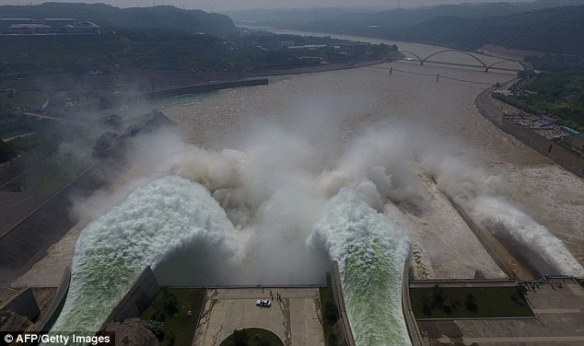
39510d2200000578-3833294-image-a-1_1476223932637China’s cutting off the flow of a Brahmaputra tributary is just the latest example of its emergence as the upstream water controller through a globally unparalleled hydro-engineering infrastructure centred on dams.
Earlier this year, Beijing itself highlighted its water hegemony over downstream countries by releasing some of its dammed water for drought-hit nations in the lower Mekong basin.

Blocking the flow of the Xiabu river, a Brahmaputra tributary, through a dam project is a significant development, a forewarning that China intends to do a lot more to re-engineer flows in the Brahmaputra system by riding roughshod over the interests of the lower riparians, India and Bangladesh.

Just as it has heavily dammed the Mekong, China is now working to complete a cascade of dams in the Brahmaputra basin.

Dependence

On the Mekong, China has erected six giant dams, with the smallest of them bigger than the largest dam India has built since Independence.

For the downriver countries in that basin, the release of water from the Chinese dams to combat drought was a jarring reminder of not just China’s new-found power to control the flow of a life-sustaining resource, but also of their own reliance on Beijing’s goodwill and charity.

With a further 14 dams being built or planned by China, their dependence on Chinese goodwill is likely to deepen – at some cost to their strategic leeway and environmental security.

Armed with such leverage, Beijing is pushing its Lancang-Mekong Cooperation (LMC) initiative as an alternative to the lower-basin states’ Mekong River Commission, which China has spurned over the years.

Indeed, having its cake and eating it, China is a dialogue partner but not a member of the Mekong River Commission, underscoring its intent to stay clued in on the discussions, without having to take on any legal obligations.

The Mekong, Southeast Asia’s lifeline, is just one of the international rivers China has dammed.

It has also targeted the Arun, the Indus, the Sutlej, the Irtysh, the Illy, the Amur and the Salween, besides the Brahmaputra.

These rivers flow into India, Nepal, Kazakhstan, Russia or Myanmar.

Asia’s water map changed fundamentally after the communists took power in China in 1949.

It wasn’t geography but guns that established China’s chokehold on almost every major transnational river system in Asia, the world’s largest and most-populous continent.

Absorption

By forcibly absorbing the Tibetan Plateau (the giant incubator of Asia’s main river systems) and Xinjiang (the starting point of the Irtysh and the Illy), China became the source of trans-boundary river flows to the largest number of countries in the world, extending from the Indochina Peninsula and South Asia to Kazakhstan and Russia.

Beijing’s claim over these sprawling territories, which make up more than half of China’s landmass today, drew from the fact that they were imperial spoils of the earlier foreign rule in China.

Before the communists seized power, China had only 22 dams of any significant size. But now, China boasts more large dams on its territory than the rest of the world combined.

If dams of all sizes and types are counted, their number in China surpasses 85,000. Strongman Mao Zedong initiated an ambitious dam-building programme, but the majority of the existing dams were built in the period after him.

China’s dam frenzy, however, shows no sign of slowing. The country’s dam builders, in fact, are shifting their focus from the dam-saturated internal rivers (some of which, like the Yellow, are dying) to the international rivers, especially those that originate on the waterrich Tibetan Plateau.

This raises fears that the degradation haunting China’s internal rivers could be replicated in the international rivers.

Leverage

China, after all, has graduated to erecting mega-dams.

Take its latest dams on the Mekong: the 4,200- megawatt Xiaowan (taller than the Eiffel Tower in Paris) and the 5,850- megawatt Nuozhadu, with a 190-square-kilometre reservoir.

Either of them is larger than the current hydropower-generating capacity of the lower Mekong states combined.

Despite its centrality in Asia’s water map, China has rebuffed the idea of a water-sharing treaty with any neighbour. The concern is thus growing among is downstream neighbours that China is seeking to turn water into a potential political weapon.

After all, by controlling the spigot for much of Asia’s water, China is acquiring major leverage over its neighbours’ behaviour in a continent already reeling under low freshwater availability.

China is clearly not content with being the world’s most dammed country, and the only thing that could temper its dam frenzy is a prolonged economic slowdown at home.

Flattening demand for electricity due to China’s already-slowing economic growth, for example, offers a sliver of hope that the Salween river could be saved from the cascade of hydroelectric mega-dams that Beijing has planned to build on it.

Even so, China’s riparian might will remain unmatched.

© Mail Today, 2016.

Years of Indian indecision and inaction ends

Brahma Chellaney, The Hindustan Times

downloadIndia has finally broken out of years of paralytic indecision and inaction on Pakistan’s proxy war by staging a swift, surgical military strike across the Line of Control — a line it did not cross even during the 1999 Kargil War.  Although a limited but unprecedented action, in which Indian paratroopers destroyed multiple terrorist launchpads, it will help to dispel the sense of despair that had gripped India over its prolonged failure to respond to serial Pakistan-backed terrorist attacks.
At the same time, the action represents a loss of face for Pakistan’s all-powerful military, which was quick to deny any such strike. The denial, however, will carry little credibility even within Pakistan, given the military’s long record of refusing to own up to its own actions — from sending raiders into Jammu and Kashmir in 1947 and staging Operation Gibraltar in 1965 to sending light infantry soldiers into Kargil in 1999. When the Pakistani military even denies training and arming terrorists for cross-border missions, how can it admit that Indian paratroopers targeted terrorist launchpads it maintains?

Still, a one-off surgical attack can do little to help reform the Pakistani military’s conduct or deter its rogue Inter-Services Intelligence agency from staging more terrorist strikes on Indian targets. The critical question to ask is whether India, having shaken off its diffidence, will be willing to stage more raids by its special forces across the LoC — not immediately, but in the months to come, so as to forestall terrorist attacks by keeping the Pakistani military off balance.

However, the proxy war by terror is unlikely to end without India imposing significant costs directly on the Pakistani military and the Pakistani state. Militarily, that is a challenging task.

In general, the purpose of any major military action ought to be twofold: to inflict unbearable costs on the enemy; and, if the action escalates to a full-fledged war, to decisively defeat the foe on the battlefield in order to impose peace on it on one’s own terms.

The current military situation is such that India cannot have full confidence in achieving these objectives. For example, any major military action needs the surprise element to take the enemy unawares and gain a significant early advance. With Pakistan in a state of full combat readiness after scripting the Uri attack, there is no surprise element that can be exploited by India to launch a major offensive.

In these circumstances, applying sustained, multipronged pressure on the enemy’s vulnerable points to inflict pain and punishment through economic, diplomatic, riparian and political instruments and special forces is a better option than waging an open war that might not produce a decisive result.

That India managed to stage a daring cross-border raid despite Pakistan’s full military alertness is a reminder that smart application of military force yields better results than a heavy-handed, knee-jerk military response.

Make no mistake: India’s fight to tame a scofflaw Pakistan will be long and hard. The tendency to seek quick results must be eschewed. Indeed, the biggest enemy of India’s goals has been the failure to maintain a consistent Pakistan policy. Rhetoric is no substitute for clear-eyed policy and deterrent action.

Today, from reviewing the lopsided Indus Waters Treaty to staging the raid across the LoC, India is signalling that enough is enough and that it will do whatever it takes to beat back Pakistan’s terrorism onslaught. India must use every lever of leverage and coercion in a relentless, all-out silent war to bring Pakistan to heel.

Brahma Chellaney is a geostrategist and author.

© The Hindustan Times, 2016.

Rivers of conflict between India and Pakistan

Brahma Chellaney, Nikkei Asian Review

20160825Kashmir_article_main_image

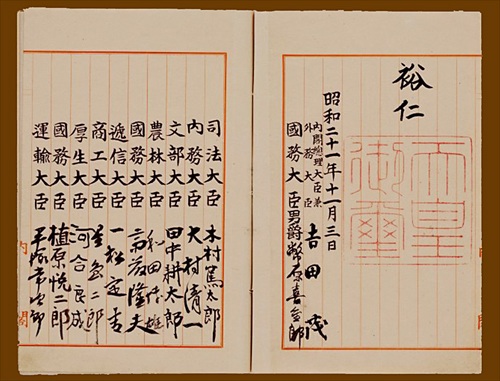
Just as the Philippines hauled China before an international arbitral tribunal in The Hague over Beijing’s expansive claims in the South China Sea, Pakistan recently announced its intent to drag India before a similar, specially constituted tribunal in the Dutch city. Pakistan is citing a dispute over the sharing of the waters of the six-river Indus system with India. This is not the first time Pakistan is seeking to initiate such proceedings against its neighbor; nor is it likely to be the last. But it is among the more contentious moves in a long and fraught relationship over water resources. Indeed, seeking international intercession is part of Pakistan’s “water war” strategy against India.

When Pakistan was carved out of India in 1947 as the first Islamic republic of the postcolonial era, the partition left the Indus headwaters on the Indian side of the border but the river basin’s larger segment in the newly-created country. This division armed India with formidable water leverage over Pakistan. Yet, after protracted negotiations, India agreed to what still ranks as the world’s most generous water-sharing pact: The 1960 Indus Waters Treaty reserved for Pakistan the largest three rivers that make up more than four-fifths of the total Indus-system waters.

The treaty, which kept for India just 19.48% of the total waters, is the only inter-country water agreement embodying the doctrine of restricted sovereignty, which compels the upstream nation to forego major uses of a river system for the benefit of the downstream state. By contrast, China, which enjoys unparalleled dominance over cross-border river flows because of its control over the water-rich Tibetan Plateau, has publicly asserted absolute territorial sovereignty over upstream river waters, regardless of the downstream impacts. It thus has not signed a water-sharing treaty with any of its 13 downstream neighbors.

A 2011 report prepared for the U.S. Senate Foreign Relations Committee called the Indus pact “the world’s most successful water treaty” for having withstood wars between India and Pakistan in the decades since it was signed. A more important reason why the pact stands out as the titan among existing international treaties is the unmatched scale of the waters it reserves for the downstream state — over 167 billion cu. meters per year. In comparison, the water allocations in the 1994 Israeli-Jordanian peace treaty are a mere 85 million cu. meters yearly, while Mexico’s share under a 1944 water pact with the U.S. is 1.85 billion cu. meters — 90 times less than Pakistan’s Indus share.

Lack of trust

This background raises two key questions: Why did India leave the bulk of the Indus waters for Pakistan? And why is Pakistan still feuding with India over water? The answers to these questions reveal that when there is a lack of mutual political trust, even a comprehensive water treaty is likely to prove inadequate.

In 1960, at a time of escalating border tensions with China, India sought to trade water for peace with Pakistan by signing the treaty. But the treaty, paradoxically, ended up whetting Pakistan’s desire to gain control of the land — the Indian-administered region of Jammu and Kashmir — through which flowed the three rivers reserved for Pakistani use. With water security becoming synonymous with territorial control in its calculus, Pakistan initiated a surprise war in 1965 to capture Indian Jammu and Kashmir but failed in its mission. (Earlier, in 1948, Pakistan occupied one-third of Jammu and Kashmir and, subsequently, China grabbed one-fifth of the area.)

Over the decades, the disputed Jammu and Kashmir has remained the hub of Pakistan-India tensions. Moreover, the gifting of the river waters of the Indian part of the region to Pakistan by treaty has hampered development there and fostered popular grievance — a situation compounded by a Pakistan-abetted Islamist insurrection. There have been repeated calls in the elected legislature of Indian Jammu and Kashmir for revision or abrogation of the Indus treaty.

India’s belated moves to address the problem of electricity shortages and underdevelopment in its restive part of Jammu and Kashmir by building modestly sized, run-of-river hydropower plants (which use a river’s natural flow energy and elevation drop to produce electricity, without the need for a dam reservoir) have whipped up water nationalism in Pakistan. The treaty, while forbidding India from materially altering transboundary flows, actually permits such projects in India on the Pakistan-earmarked rivers.

In keeping with a principle of customary international water law, the treaty requires India to provide Pakistan with prior notification, including design information, of any new project. Although prior notification does not imply that a project needs the other party’s prior consent, Pakistan has construed the condition as arming it with a veto power over Indian works. It has objected to virtually every Indian project. Its obstruction has delayed Indian projects for years, driving up their costs substantially. Critics see this as part of Pakistan’s strategy to keep unrest in Indian Jammu and Kashmir simmering.

Significantly, the total installed hydropower-generating capacity in operation or under construction in Indian Jammu and Kashmir does not equal the size of a single mega-dam that Pakistan is currently pursuing, such as the 7,000-megawatt Bunji Dam or the 4,500-megawatt Bhasha Dam. Indeed, while railing against India’s run-of-river projects, Pakistan has invited China to build mega-dams in the Pakistani part of Jammu and Kashmir, itself troubled by discontent, including against the growing Chinese footprint there.

History of disputes

Pakistan’s latest decision to seek international arbitration over two Indian projects has followed two other cases in the past decade where it triggered international intervention by invoking the treaty’s conflict-resolution provisions and yet failed to block the Indian works. Treaty provisions permit the establishment of a seven-member arbitral tribunal to resolve a dispute, or the appointment of a neutral expert to settle a disagreement over a hydro-engineering issue. When Pakistan’s minister for defense, water and power, Khawaja Asif, announced on Twitter recently that his country has decided to seek a “full court of arbitration,” most of whose members would be appointed by the World Bank, India contended the move was premature as the treaty-sanctioned bilateral mechanisms had not been utilized first.

Make no mistake: Pakistan, by repeatedly invoking the conflict-resolution provisions to mount political pressure on India, risks undermining a unique treaty. Waging water war by such means carries the danger of a boomerang effect.

Any water treaty’s comparative benefits and burdens should be such that the advantages for each party outweigh the duties and responsibilities, or else the state that sees itself as the loser may fail to comply with its obligations or withdraw from the pact. If India begins to see itself as the loser, viewing the treaty as an albatross around its neck, nothing can save the pact. No international arbitration can address this risk.

When China trashed the recent tribunal ruling that knocked the bottom out of its expansive claims in the South China Sea, it highlighted a much-ignored fact: Major powers rarely accept international arbitration or comply with tribunal rulings. Indeed, arbitration awards often go in favor of smaller states, as India’s own experience shows. For example, an arbitral tribunal in 2014 awarded Bangladesh more than three-quarters of the 25,602 sq. km disputed territory in the Bay of Bengal, even as it left a sizable “gray zone” while delimiting its maritime boundaries with India. Still, India readily accepted the ruling. However, nothing can stop India in the future from emulating the example of, say, China.

To be sure, Pakistan and India face difficult choices on water that demand greater bilateral water cooperation. The Indus treaty was signed in an era when water scarcity was relatively unknown in much of the Indian subcontinent. But today water stress is increasingly haunting the region. In the years ahead, climate change could exacerbate the regional water situation, although currently the glaciers in the western Himalayas — the source of the Indus rivers — are stable and could indeed be growing, in contrast to the accelerated glacial thaw in the eastern Himalayas.

A balance between rights and obligations is at the heart of how to achieve harmonious, rules-based cooperation between co-riparian states. In the Indus basin, however, there is little harmony or collaboration: Pakistan wages a constant propaganda campaign against India’s water hegemony and seeks to “internationalize” every dispute. Yet, in New Delhi’s view, Pakistan wants rights without responsibilities by expecting eternal Indian water munificence, even as its military generals export terrorists to India.

This rancor holds a broader lesson: Festering territorial and other political disputes make meaningful inter-country cooperation on a shared river system difficult, even when a robust treaty is in place.

Brahma Chellaney is the author of “Water, Peace, and War: Confronting the Global Water Crisis” and “Water: Asia’s New Battleground,” which won the Bernard Schwartz Award.

© Nikkei Asian Review, 2016.

Japan’s constitutional reform to propel Asian stability

Japanese Constitution signing page

Imperial signature and seal on Japan’s U.S.-imposed Constitution

Brahma Chellaney

Peace in Asia demands a proactive Japan. The issue Japan faces today is not whether it should remain pacifist but whether it can afford to stay passive in regional and international affairs. A Japan that is better able to defend itself and to partner with friendly Indo-Pacific countries to forestall a destabilizing power imbalance in Asia would truly become a “proactive contributor to peace.”

Challenge from China
US security interests would be better served by a more confident and secure Japan that assumes greater responsibility for its own defense and for regional security. Further national security reform in Japan, from a legal standpoint, is tied to constitutional reform. These twin reforms will help underpin the central goal of America’s Asia-Pacific strategy — a stable balance of power.
Today, the US faces major new challenges in Asia, given the rise of an increasingly assertive China — best symbolized by Beijing’s rebuff of the international-tribunal ruling that knocked the bottom out of its expansive sovereignty claims in the South China Sea. Indeed, China’s creeping aggression in Asia reflects a “might makes right” strategy designed to extend Chinese control to strategic areas and resources — from the East China Sea to the Himalayas.
The “proactive contribution to peace” is a concept popularized by Prime Minister Shinzo Abe. Despite a big win at the recent upper house election that enables his ruling coalition to propose constitutional revision in the Diet, Prime Minister Abe is treading cautiously due to the strong criticism he faces from the powerful pacifist constituency at home and from China. By drafting and imposing a pacifist Constitution after World War II, the US created the problem that Japan now confronts — a problem that even constrains the overseas activities of the Self-Defense Forces (SDF). America must now seek to be part of the solution so that Japan, in keeping with US interests, plays a proactive role in Asian affairs and does more for its own defense.

Long-Awaited US Expression of Support
The Japanese Constitution suffers from inherent flaws. For example, it defines no head of state, having stripped the Emperor of all but symbolic power. There are also other voices that call for a new Constitution that is anchored in Japan’s own cultural values, political tradition, and national character. The present Constitution, far from reflecting such values, includes phrases and ideas from the 1776 US Independence Declaration and Abraham Lincoln’s 1863 Gettysburg speech, such as life, liberty and human rights.
Take India, another old civilization and deeply rooted democracy like Japan: India’s Constitution is almost as old as Japan’s. But while India has incorporated 100 amendments in its Constitution, Japan has not changed one word in its charter, thanks to its constitutional fundamentalists.
There are strong concerns in Japan over national defense and external security. But only open American support for constitutional reform can make a meaningful difference and help to allay such concerns in Japan. If Japan fails to carry out further reforms of its postwar institutions and policies to meet the new challenges in Asia, it could not only erode its own security but also weaken the role of the US-Japan strategic alliance.

Brahma Chellaney is a professor of strategic studies at Center for Policy Research, New Delhi.

@JINF, 2016.

Ensuring defiant unilateralism is not cost-free

BY The Japan Times
p7-chellaney-a-20160715-870x596

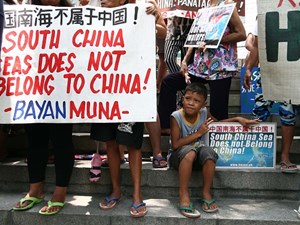
China has been expanding its frontiers ever since it came under communist rule in 1949. Yet no country dared to haul it before an international tribunal till the Philippines in 2013 invoked the dispute-settlement mechanism of the United Nations Convention on the Law of the Sea (UNCLOS), thereby setting in motion the arbitration proceedings that this week resulted in the stinging rebuke of China’s expansive claims in the South China Sea.

The trigger for Manila approaching the International Tribunal for the Law of the Sea (ITLOS) was China’s capture in 2012 of Scarborough Shoal, located close to the Philippines but hundreds of miles from China’s coast. ITLOS then set up a five-member tribunal under The Hague-based Permanent Court of Arbitration (PCA) to hear the case.

Despite strenuous Chinese efforts to dismiss and discredit the proceedings from the start, Beijing tried unsuccessfully to persuade the tribunal that it had no jurisdiction to hear the case. Last October, the tribunal said that it was “properly constituted” under UNCLOS, that the Philippines was within its rights in filing the case, and that China’s non-participation in the proceedings was immaterial.

Now in its final verdict delivered unanimously, the tribunal has dismissed Beijing’s claim that it has historic rights to much of the South China Sea and ruled that China was in violation of international law on multiple counts, including damaging the marine environment through its island-building spree and interfering with the rights of others.

The panel effectively declared as illegitimate China’s South China Sea boundary (the so-called nine-dash line).

It also held that China’s strategy of creating artificial islands and claiming sovereignty over them and their surrounding waters had no legal basis. In less than three years, China has built seven islands and militarized several of them in an attempt to annex a strategically crucial corridor through which half of the world’s annual merchant fleet tonnage passes.

In the absence of a mechanism to enforce the ruling, Beijing, however, was quick to pour scorn on the verdict and brazenly declare that it would ignore a legally binding ruling.

Contrast China’s contempt for the landmark verdict with neighboring India’s ready acceptance of adverse rulings in recent years by similar PCA tribunals in two separate cases involving South Asian rows — India’s maritime-boundary dispute with Bangladesh and its Indus River-related dispute with Pakistan over a small dam project at Kishenganga. India deferentially accepted the verdicts and complied with them, although the Kishenganga ruling will affect all future Indian projects on the Indus and the other ruling has left a large “grey area” while delimiting the Bangladesh-India sea borders.

China’s disdain for the ruling shows that international law matters to it only when it can serve its own interests. Otherwise, international rules are bendable and expendable.

To be sure, China has never pretended that it believes in a rules-order order. This was apparent from its aggressive steps to enforce its sovereignty claims in the South China Sea — actions that the tribunal has now ruled violate international law.

Indeed, Beijing has sought to rely on a multinational proclamation that it has flagrantly breached — the Declaration on the Conduct of Parties in the South China Sea, which it signed with the 10ASEAN states in 2002. While violating the declaration’s central commitment — to resolve “disputes by peaceful means, without resorting to the threat or use of force” — Beijing has cited the declaration’s reference to the use of “friendly consultations and negotiations by sovereign states directly concerned” to insist that any dispute can only be addressed bilaterally and not through international arbitration or adjudication.

Dispute settlement by peaceful means is essential to building harmonious interstate relations. However, Beijing’s dismissal of the tribunal’s ruling is in keeping with its broader opposition to settling disputes with its neighbors — from Japan and South Korea to India and tiny Bhutan — by means of international mediation, arbitration or adjudication.

Instead, China’s creeping aggression in Asia reflects a “might is right” strategy that aims to extend Chinese control to strategic areas and resources by altering the status quo. The strategy focuses on a steady progression of steps to create new facts on the ground by confounding and outwitting neighbors while avoiding a confrontation with the United States, which sees itself as a geographically non-resident power in Asia.

Through its furious reaction to the tribunal’s ruling, China is saying that it should be the judge in its own cause. More ominously, it is signaling its determination to stay on the course of unilateralism by settling matters militarily in the resource-rich South China Sea, which is larger than the Mediterranean and carries $5 trillion in annual trade.

The example Beijing is setting will not only be damaging to the law of the sea but is also likely to stoke serious tensions and insecurities in Asia, the world’s economic locomotive.

The South China Sea — a global trade and maritime hub — is critical to the contest for influence in the larger Indo-Pacific region extending from the Arabian Sea to Australia and Canada. As Beijing consolidates its power in the South China Sea by completing ports and airstrips and building up its military assets on man-made islands, the impact of its actions will extend beyond reducing ASEAN states to a tributary status and bringing resources under its tight control: Such consolidation will have a significant bearing on the wider geopolitics, balance of power, and maritime order.

Like-minded states thus must work closely together to defend the law of the sea by ensuring that defiant unilateralism is not cost-free. Unless China is made to realize that its future lies in cooperation and not confrontation, a systemic risk to Asian stability and prosperity is bound to arise, with far-reaching implications for the world.

Brahma Chellaney is a geostrategist and the author, most recently, of “Water, Peace, and War” (Rowman & Littlefield, 2014).

 © The Japan Times, 2016.

The U.S. needs to support Japanese constitutional reform

Brahma Chellaney, Nikkei Asian Review, July 18, 2016

downloadJapan’s Prime Minister Shinzo Abe has secured a rare opportunity for constitutional reform following the July 10 election for the upper house of the Diet, or parliament. His ruling coalition now has a supermajority in both houses. Yet he is right to tread cautiously on constitutional change. Since many Japanese remain wary of amending a constitution that is widely seen as having brought a long period of peace, the government would be hard pressed to win a national referendum on constitutional change — even if any proposed amendment passed both houses of the Diet with the required two-thirds majority.
If there is one factor that could help ease grassroots concerns and facilitate constitutional reform, it is American support for the process. This would help blunt criticism from Japan’s powerful pacifist constituency as well as from China, which equates any potential constitutional change with Japan’s remilitarization — even as Beijing frenetically builds up its own military might.

U.S. security interests would be better served by a more confident and secure Japan that assumes greater responsibility for its own defense and regional security. National security reforms in Japan are tied to constitutional reforms. Together, they would help strengthen the central goal of the U.S strategy for the Asia-Pacific — a stable balance of power.

Japan has been a model U.S. ally, hosting a large U.S. troop presence and contributing billions of dollars to support the costs of stationing those forces on its soil. The U.S. has said this assistance is “by far the most generous host-nation support” provided by any of the 27 allies with which Washington has defense treaties. Japan’s financial support is so significant that it is approximately equivalent to the U.S. annual budget for maintaining domestic military bases — a fact that Republican presidential nominee Donald Trump seemed unaware of when he said Tokyo should pay more.

Because of Japanese generosity, it is cheaper for the U.S. to have its troops stationed in Japan than back home. In fact, Tokyo recently agreed to marginally increase its host-nation support after initially seeking to cut its contribution to help reduce Japan’s massive public debt.

More important, the alliance with Japan remains central to the U.S. role in Asia, including maintaining a forward military presence. However, the U.S. faces major new challenges in the region due to the rise of an increasingly assertive China – best symbolized by Beijing’s rejection of the July 12 international tribunal ruling that knocked the bottom out of its expansive sovereignty claims in the South China Sea. China’s creeping aggression in Asia reflects a “might makes right” strategy designed to extend Chinese control to strategic areas and resources — from the East China Sea to the Himalayas.

In this light, peace in Asia demands a proactive Japan. The issue Japan faces is not whether it should remain pacifist, since it is unlikely to discard pacifism, but whether it can afford to stay passive in regional and international affairs. A Japan that is better able to defend itself and to cooperate with friendly Indo-Pacific countries to forestall a destabilizing power disequilibrium in Asia would truly become a “proactive contributor to peace” — a concept popularized by the Abe government.

A weaker defense alliance

If Tokyo, however, fails to carry out further reforms of its postwar institutions and policies to meet the new challenges in Asia, it could not only weaken its own security but also the role of the U.S.-Japan strategic alliance.

By drafting and imposing a constitution after World War II, the U.S. created the problem that Japan now confronts — how to cast off the constitutional albatross. The U.S. must seek to be part of the solution so that Japan, in keeping with American interests, plays a proactive role in Asian affairs and does more for its own defense. Japan can play this role within the framework of its longstanding security treaty with Washington.

It has been largely forgotten that Supreme Allied Commander Douglas MacArthur made his occupation staff hastily write the Japanese constitution in just one week so that it would be ready to coincide with the U.S. national holiday celebrating Abraham Lincoln’s birthday on Feb. 12, 1946. However, it did not come into force until May 1947. No national constitution in the world goes so far as Japan’s in barring the acquisition of the means of war or to renounce “the threat or use of force as a means of settling international disputes.” A defeated Germany escaped Japan-like constitutional fetters because by the time its constitution, or Basic Law, was drafted in 1949, the Cold War was in full swing.

It did not take long for the U.S. to realize that it went too far in defanging Japan when it disbanded its military and imposed the world’s first pacifist constitution. After the Korean War, through a major legal reinterpretation of the constitution it had imposed, the U.S. encouraged Japan to reconstitute its military as “Self-Defense Forces” to make the country the lynchpin of its Asian strategy.

The Japanese constitution suffers from inherent flaws. For example, it defines no head of state, having stripped the emperor, then Hirohito, of all but symbolic power. Article 1 defines the emperor’s position as “the symbol of the state and of the unity of the people,” while Article 3 declares he “shall have no governmental powers, nor shall he assume nor be granted such powers.”

This was deliberate. The U.S. wanted to have the emperor merely serve as the symbol of Japan so that Washington could use him to win public support for the U.S. occupation between 1945 and 1952, while denying him powers to oppose it. Likewise, the force-renouncing Article 9 was designed to keep Japan as an U.S. client state, while depriving it of the ability to ever mount another Pearl Harbor-style attack against the U.S. But today, U.S. security interests would be better served by a militarily stronger Japan.

Another anomaly is the absence of constitutional protection for the Japan Self-Defense Forces, 62 years after they were established, despite popular support for the military. By renouncing “war as a sovereign right of the nation and the threat or use of force as a means of settling international disputes,” the constitution has imposed an impractical fetter from which Japan will have to break free to defend itself from any aggression, as Abe has said.

Contradictions

In truth, Japanese pacifism has been made possible not so much by the constitution as by the fact that Japan is under U.S. security protection. Pacifism, however, has coexisted with contradictory trends. For example, Japan has denounced nuclear weapons and consistently called for a world without them, yet welcomed the nuclear umbrella provided to it by the U.S. Japan has kept its military forces out of combat but has endorsed U.S. military interventions around the world, including the 2003 invasion of Iraq and the 2011 regime change in Libya.

But Japan’s constitutional fundamentalists regard the constitution as sacrosanct, as if it were religious scripture, and oppose any change, even though the U.S. has ratified six amendments to its own constitution since it drafted the Japanese charter. At the other end of the spectrum are Japanese who seek a new constitution. They want Asia’s oldest liberal democracy and one that has not fired a single shot since World War II to frame a new constitution anchored in its own values and traditions.

By placing a high bar to the enactment of any amendment, the Japanese constitution is among the hardest in the world to revise. Just 35% of Japanese support constitutional revision, according to a poll conducted by the Yomiuri Shimbun.

Against this background, only open U.S. support for constitutional reform can make a meaningful difference. It will allay public concerns among the Japanese, with only 23% wanting their country to play a more active role in regional affairs, according to a 2015 survey by the Pew Research Center. Another survey in 2014 revealed that just 15% of Japanese, compared with almost 75% of Chinese, were willing to defend their country — the lowest figure in the world.

Unlike China, Japan is not a revisionist power. Rather, its strategic priorities converge with U.S. regional goals, including maintaining the present Asian political and maritime order to ensure a regional power equilibrium and freedom of navigation in the South China Sea. The U.S., in its own interest, should back constitutional reform in Japan, which has not sent a single soldier into combat since 1945 — a record of pacifism surpassing even that of Germany.

Brahma Chellaney is a geostrategist and author of nine books, including “Water, Peace, and War” (Rowman & Littlefield); he is currently a professor of strategic studies at the Center for Policy Research in New Delhi and a Richard von Weizsacker Fellow at the Robert Bosch Academy in Berlin.

© Nikkei Asian Review, 2016.

China’s Challenge to the Law of the Sea

A column internationally syndicated by Project Syndicate

imae SCS

China has been trying to bully its way to dominance in Asia for years. And it seems that not even an international tribunal in The Hague is going to stand in its way.

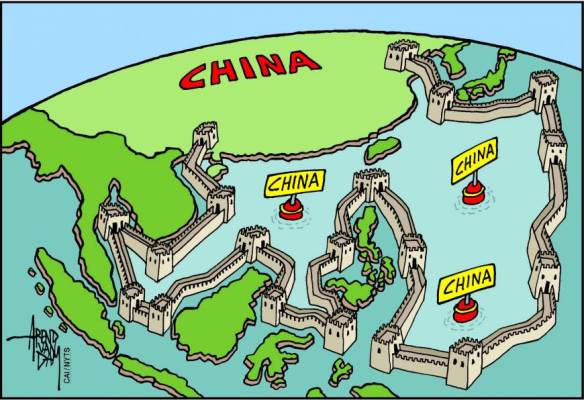
China has rebuffed the landmark ruling by the Permanent Court of Arbitration, which knocked the bottom out of expansive Chinese territorial claims in the South China Sea and held that some of the country’s practices were in violation of international law. Recognizing that there is no mechanism to enforce the PCA’s ruling, China does not intend to give even an inch on its claims to everything that falls within its unilaterally drawn “nine-dash line.”

Clearly, China values the territorial gains – which provide everything from major oil and gas reserves to fisheries (accounting for 12% of the global catch) to strategic depth – more than its international reputation. Unfortunately, this could mean more trouble for the region than for China itself.

China is not just aiming for uncontested control in the South China Sea; it is also working relentlessly to challenge the territorial status quo in the East China Sea and the Himalayas, and to reengineer the cross-border flows of international rivers that originate on the Tibetan Plateau. In its leaders’ view, success means reducing Southeast Asian countries to tributary status – and there seems to be little anyone can do to stop them from pursuing that outcome.

Indeed, China’s obvious disdain for international mediation, arbitration, or adjudication essentially takes peaceful dispute resolution off the table. And, because none of its regional neighbors wants to face off with the mighty China, all are vulnerable to Chinese hegemony.

To be sure, China does not seek to dominate Asia overnight. Instead, it is pursuing an incremental approach to shaping the region according to its interests. Rather than launch an old-fashioned invasion – an approach that could trigger a direct confrontation with the United States – China is creating new facts on the ground by confounding, bullying, and bribing adversaries.

To scuttle efforts to build an international consensus against its unilateralism, China initiates and maintains generous aid and investment arrangements with countries in need. In the run-up to the arbitration ruling, China used its clout to force the Association of Southeast Asian Nations to retract a joint statement critical of its role in the South China Sea.

Of course, the potential of China’s bribery and manipulation has its limits. The country has few friends in Asia, a point made by US Defense Secretary Ashton Carter’s warning that China is erecting a “Great Wall of Self-Isolation.” The Chinese foreign ministry responded by citing support for its positions from distant countries such as Sierra Leone and Kenya.

But in a world where domination is often conflated with leadership and where money talks, China may not have all that much to worry about. Consider how rapidly normal diplomatic relations with China were restored in the aftermath of the Tiananmen Square massacre in 1989.

Already, criticism of China’s territorial grabs focuses on dissuading its leaders from further expansionary activities, rather than on forcing it to vacate the seven reefs and outcroppings it has already turned into nascent military outposts in the South China Sea. The international community may not like what China has done, but it seems willing to accept it.

That reality has not been lost on China, which was emboldened by the absence of any meaningful international pushback against two particularly audacious moves: its 2012 seizure of Scarborough Shoal, just 120 nautical miles from the Philippines, and its establishment in 2013 of an air-defense identification zone (ADIZ) over areas of the East China Sea that it does not control. Since then, China’s leaders have ramped up their island-building spree in the South China Sea considerably.

Though the Philippines did fight back, invoking the dispute-settlement provision of the United Nations Convention on the Law of the Sea (UNCLOS), its efforts seem unlikely to yield much. On the contrary, China could now double down on its defiance, by establishing an ADIZ in the South China Sea – a move that would effectively prohibit flights through the region without Chinese permission. Given that China has already militarized the area, including by building radar facilities on new islets and deploying the 100-kilometer-range HQ-9 surface-to-air missiles on Woody Island, it is well positioned to enforce such an ADIZ.

China’s defiance of the PCA’s ruling will deal a crushing blow to international law. As French Defense Minister Jean-Yves Le Drian said recently, if UNCLOS is openly flouted in the South China Sea, “it will be in jeopardy in the Arctic, the Mediterranean, and elsewhere tomorrow.” Given that international law is crucial to protect smaller states by keeping major powers in check, the immediate question is what happens when simmering tensions with China’s Asian neighbors – and with the US – finally boil over.

Mao Zedong famously asserted that, “political power grows out of the barrel of a gun.” We might like to think that we’re better than that, or that the world has progressed beyond naked coercion by great powers. But, as China’s actions suggest, the essence of geopolitics has not changed. The bullies still run the schoolyard.

© 1995-2016 Project Syndicate.


China’s Pakistani Outpost

A column internationally syndicated by Project Syndicate

Pak-China-1024x591

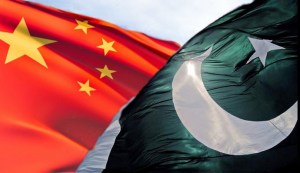
Like a typical school bully, China is big and strong, but it doesn’t have a lot of friends. Indeed, now that the country has joined with the United States to approve new international sanctions on its former vassal state North Korea, it has just one real ally left: Pakistan. But, given how much China is currently sucking out of its smaller neighbor – not to mention how much it extracts from others in its neighborhood – Chinese leaders seem plenty satisfied.

Chinese Foreign Minister Wang Yi has declared that China and Pakistan are “as close as lips and teeth,” owing to their geographical links. China’s government has also calledPakistan its “irreplaceable all-weather friend.” The two countries often boast of their “iron brotherhood.” In 2010, Pakistan’s then-prime minister, Syed Yousuf Raza Gilani,waxed poetic about the relationship, describing it as “taller than the mountains, deeper than the oceans, stronger than steel, and sweeter than honey.”

In fact, wealthy China has little in common with aid-dependent Pakistan, beyond the fact that both are revisionist states not content with their existing frontiers. They do, however, share an interest in containing India. The prospect of a two-front war, should India enter into conflict with either country, certainly advances that interest.

For China, the appeal of working with Pakistan is heightened by its ability to treat the country as a client, rather than an actual partner. In fact, China treats Pakistan as something of a guinea pig, selling the country weapons systems not deployed by the Chinese military and outdated or untested nuclear reactors. Pakistan is currently building two AC-1000 reactors – based on a model that China has adapted from French designs, but has yet to build at home – near the southern port city of Karachi.

China does not even need its supposed “brother” to be strong and stable. On the contrary, Pakistan’s descent into jihadist extremism has benefited China, as it has provided an ideal pretext to advance its strategic interests within its neighbor’s borders. Already, China has deployed thousands of troops in Pakistani-administered Kashmir, with the goal of turning Pakistan into its land corridor to the Arabian Sea and the Indian Ocean. And, as a newly released US Defense Department report shows, Pakistan – “China’s primary customer for conventional weapons” – is likely to host a Chinese naval hub intended to project power in the Indian Ocean region.

That is not all. President Xi Jinping’s first visit to Pakistan last year produced an agreement to construct a $46 billion “economic corridor” stretching from China’s restive Xinjiang region to Pakistan’s Chinese-built (and Chinese-run) Gwadar port. That corridor, comprising a series of infrastructure projects, will serve as the link between the maritime and overland “Silk Roads” that China is creating. It will shorten China’s route to the Middle East by 12,000 kilometers (7,456 miles) and give China access to the Indian Ocean, where it would be able to challenge India from India’s own maritime backyard.

Xi also signed deals for new power projects, including the $1.4 billion Karot Dam, the first project to be financed by China’s $40 billion Silk Road Fund. All of the power projects will be Chinese-owned, with the Pakistani government committed to buying electricity from China at a pre-determined rate. Pakistan’s status as China’s economic and security client will thus be cemented, precluding it from eventually following the example of Myanmar or Sri Lanka and forging a non-Chinese path.

To be sure, the relationship also brings major benefits for Pakistan. China provided critical assistance in building Pakistan’s arsenal of nuclear weapons, including by reducing the likelihood of US sanctions or Indian retaliation. China still offers covert nuclear and missile assistance, reflected in the recent transfer of the launcher for the Shaheen-3, Pakistan’s nuclear-capable ballistic missile, which has a range of 2,750 kilometers.

Overtly, China offers Pakistan security assurances and political protection, especially diplomatic cover at the United Nations. For example, China recently vetoed UN action against Masood Azhar, the Pakistan-based chief of the extremist group Jaish-e-Mohammed, which, backed by Pakistani intelligence services, has carried out several terrorist attacks on Indian targets, including the Pathankot air base early this year. And last month, Sartaj Aziz, the Pakistani prime minister’s foreign-policy adviser, said that China has helped Pakistan to block India’s US-supported bid to gain membership of the Nuclear Suppliers Group, an export-control association.

A grateful Pakistan has given China exclusive rights to run Gwadar port for the next 40 years. It has also established a new 13,000-troop army division to protect the emerging economic corridor. And it has deployed police forces to shield Chinese nationals and construction sites from tribal insurgents and Islamist gunmen.

This is not to say that China is content to depend on Pakistani security forces. China’sstationing of its own troops in the Pakistani part of Kashmir for years, ostensibly to protect its ongoing strategic projects there, betrays its lack of confidence in Pakistani security arrangements – and suggests that China will continue to enlarge its military footprint in Pakistan.

But Pakistan’s behavior indicates that it is, for now, satisfied with its arrangement with China – a sentiment that is probably reinforced, if unconsciously, by the billions of dollars in aid the country receives each year from the US. As China continues to elbow its way into Pakistan’s politics and economy, increasingly turning the country into a colonial outpost, that sense of satisfaction will probably fade. But, by the time it does, it will probably be too late to change course.

© 1995-2016 Project Syndicate.

The Big Squeeze

As climate change and rapid development take their toll, new ways must be found to manage Asia’s water resources

Brahma Chellaney, Nikkei Asian Review

abad2345a892ac5d33fb2fd95c2d6d0f_2

The record drought ravaging large parts of Asia will end when the annual summer monsoon rains come in June. This will bring much-needed relief to the suffering people in the parched lands — from the millions of residents in Vietnam’s Mekong Delta to more than a quarter of India’s 1.25 billion people. The searing drought has already claimed several hundred lives and destroyed vast swaths of rice paddies and other farms.

But make no mistake: The latest in a string of droughts to hit Asia this century offers a telling preview of the hotter, drier future that awaits much of the continent. This likelihood largely arises from the costs that rapid development, breakneck urbanization, large-scale irrigated farming and lifestyle changes are imposing on natural resources, the environment and climate in the world’s largest and most-populous continent.

Recurrent drought promises to exacerbate Asia’s already-serious water challenges and thus potentially affect economic growth, social peace, and relations between countries or provinces that share rivers or aquifers. In a drought-laden future, thirsty communities, provinces or nations will increase risks of water-related conflict.

Yet little policy attention has been paid to combating droughts because of their episodic character, with scientists still unable to reliably predict the arrival, extent or duration of any drought. Unlike other natural and human-made disasters, from earthquakes and hurricanes to flooding and industrial accidents, a drought is a silently creeping calamity. However, without resource conservation, ecological restoration and more sustainable development, droughts in Asia are likely to become more frequent and severe.

Asia is the world’s most resource-poor continent. Rapid economic growth has brought its limited natural-capital base under increasing pressure. Overexploitation of natural resources, for its part, has created an environmental crisis that is contributing to regional climate change. For example, the Tibetan Plateau, the world’s largest repository of freshwater other than the two poles, is warming at a rate that is more than twice the global average — with potentially serious consequences for Asia’s climate, monsoons and freshwater reserves.

A little-known fact is that Asia, not Africa, is the world’s most water-stressed continent. Water stress is internationally defined as the per capita availability of less than 1,700 cubic meters per year. Asia already has less freshwater per person than any other continent, and some of the world’s worst water pollution.

Water is not just the most undervalued and underappreciated resource; in the coming years, it is likely to be the most contested resource in Asia. This has largely to do with the growing paucity of this life-sustaining resource and Asia’s distinctive water map.

Most important rivers in Asia traverse national boundaries and are thus international systems. Indeed, most Asian nations with land frontiers — with the prominent exception of China, which controls Asia’s riverheads by controlling the Tibetan Plateau — are highly dependent on cross-border water inflows. Such dependency is the greatest in countries like Bangladesh and Vietnam that are located farthest downstream on international rivers.

Against this background, inter-country and intra-country water disputes have become common. Indeed, Asia illustrates that transboundary water resources, instead of linking countries or provinces in a system of hydrological interdependence, are fostering sharpening competition for relative gain. The competition extends to appropriating resources of shared rivers by building dams, reservoirs and other diversions, thus roiling inter-riparian relations. Averting water wars demands rules-based cooperation, water-sharing accords, uninterrupted flow of hydrological data, and dispute-settlement mechanisms.

Asia is already the world’s most dam-dotted continent: It has more dams than the rest of the world combined. But this statistic doesn’t tell the real story: Most of Asia’s dams are in China, which alone has slightly more than half of the world’s approximately 50,000 large dams. With its massive infrastructure of dams and other storage facilities, China has built an impressive capacity to stockpile water for the dry season.

But China’s over-damming of rivers has contributed to river fragmentation (the interruption of natural flows) and depletion, leading to downstream basins drying up or rivers discharging only small amounts of water and nutrient-rich silt into the oceans. China’s dying Yellow River exemplifies this problem. And its cascade of six giant dams on the Mekong, just before it leaves Chinese territory, is being blamed for accentuating the current Southeast Asian drought, with river depletion extending to the delta region, which is a rice bowl of Asia.

Asia’s vulnerability to droughts and other effects of environmental and climate change is being increased by other factors as well, including groundwater depletion and deforestation, especially in the upstream catchment areas. Deforestation is most notable in the Himalayan-Tibetan region, where the great rivers of Asia originate. But it also extends to other regions, including rainforest areas.

Through its environmentally destabilizing impacts, deforestation amplifies the frequency and severity of extreme events such as droughts and floods. The depletion of many Asian swamps — which serve as nature’s water storage and absorption cover — also contributes to a cycle of chronic flooding and drought, besides allowing deserts to advance and swallow up grasslands.

For its part, the extraction of groundwater at rates surpassing nature’s recharge capacity has resulted in a rapidly falling water table across much of Asia. Because groundwater is often a source of supply for streams, springs, lakes and wetlands, the over-exploitation of this strategic resource, which traditionally has served as a sort of drought insurance, creates parched conditions and thus fosters recurrent droughts.

Meanwhile, intensive irrigation in semi-arid regions, including northern China, Central Asia and Pakistan, has helped to create a boom in agricultural exports but exacted heavy transboundary environmental costs. It has caused soil salinity and waterlogging and fostered atmospheric humidity, with climate stability becoming a casualty and dry areas becoming drier.

The entire Asian belt stretching from the Korean Peninsula to the Iran-Afghanistan-Pakistan region is becoming increasingly prone to the ravages of drought. But even before the current drought hit South and Southeast Asia, scientific studies on global drought risk hotspots showed that drought risks were the highest in these two regions, at least in terms of the number of people exposed.

It is past time for Asian policymakers to start addressing drought risks, the core of which is the nexus between water, energy and food. For example, the current drought is roiling world food markets through its destructive impacts on crops. And by reducing cooling-water availability, it is decreasing generation by some power plants, just when electricity demand has peaked.

The drought risks can be reduced by ensuring the protection and ecological restoration of watercourses, securing water-efficiency gains through agricultural-productivity measures, developing drought-resistant crop varieties, improving water quality to offset decrease in water quantity, and utilizing alternative cooling technologies for power generation. Increasing water storage by channeling excess water during the monsoons to artificially recharge aquifers, especially in Asia’s densely populated, economically booming coastal regions, holds promise for coping with droughts.

Policymakers must appreciate that drought risks cannot be lowered without tackling the serious problem of groundwater depletion. Groundwater in Asia is being pumped and consumed by human activities at such a rate that, for example, NASA scientists in the United States observed several years ago that the subterranean reserves in northwest India were vanishing.

Groundwater resources are recklessly exploited because there are few controls in Asia on their extraction. Also contributing to this practice is the fact that, unlike surface water, degradation of groundwater is not visible to the human eye. Surface water and groundwater, however, are linked hydrologically and should be managed as a single resource. A one-water approach is also essential to cut the overreliance of many communities on groundwater supplies.

The specter of permanent water losses is just one reason why Asia’s drought-related challenges demand an integrated, holistic approach. Water, food and energy, for example, must be managed by policymakers not separately but jointly so as to promote synergistic approaches. Also, ecological restoration programs, by aiding the recovery of damaged ecosystems, can help bring wider benefits in slowing soil and water degradation, stemming coastal erosion, augmenting freshwater storage and supply, and controlling droughts.

Without such efforts, the linkages between water stress, sharing disputes, falling water quality and environmental degradation could trap Asia in a vicious cycle. Nature is indivisible: Communities and states cannot thrive for long by bending nature and undercutting environmental sustainability.

Brahma Chellaney is a geostrategist and the author, among others, of the award-winning “Water: Asia’s New Battleground.”

© Nikkei Asian Review, 2016.

India’s China appeasement itch

op-kdIG--621x414@LiveMint

Brahma Chellaney, Mint

Winston Churchill famously said: “An appeaser is one who feeds a crocodile hoping it will eat him last”. India has been feeding the giant crocodile across the Himalayas for decades — and stoically bearing the consequences.

After China came under communist rule in 1949, India was one of the first countries to recognize the new People’s Republic of China. Jawaharlal Nehru, driven by post-colonial solidarity considerations, continued to court the PRC even when the Chinese military began eliminating India’s outer line of defence by invading the then independent Tibet. As Tibet pleaded for help against the aggression, India opposed even a UN General Assembly discussion.

By 1954, through the infamous Panchsheel Agreement, Nehru surrendered India’s British-inherited extraterritorial rights in Tibet and recognized the “Tibet region of China” without any quid pro quo. Such was Nehru’s PRC courtship that he even rejected U.S. and Soviet suggestions in the 1950s that India take China’s place in the UN Security Council. Nehru’s officially published selected works quote him as stating that he spurned those suggestions because it would be “unfair” to take China’s vacant seat — as if morality governs international relations. Ironically, impiety and ruthlessness have been hallmarks of China’s policies.

In sum, Nehru’s sustained appeasement resulted in China gobbling up Tibet, covertly encroaching on Indian territories and, eventually, invading India itself.

Yet, just one generation later, India forgot the lessons of Nehruvian appeasement. Since the late 1980s, successive Indian governments have propitiated China. Bharatiya Janata Party-led governments, oddly, have grovelled at times.

Atal Bihari Vajpayee’s 2003 Beijing visit will be remembered in history for his formal surrender of India’s Tibet card. In a joint communiqué, Vajpayee used the legal term “recognize” to accept what China deceptively calls the Tibet Autonomous Region as “part of the territory of the PRC”. Vajpayee’s blunder opened the way for China to claim Arunachal Pradesh as “South Tibet”, a term it coined only in 2006.

Still, unilateral concessions have become the leitmotif of Narendra Modi’s China policy, now adrift, like his Pakistan policy. His concessions have ranged from removing China from India’s list of “countries of concern” to granting Chinese tourists e-visas on arrival. Modi, via the back door, has also brought back in joint statements Vajpayee’s errant formulation that the Tibet Autonomous Region is part of the PRC — a description India had dropped in 2010 to nuance its Tibet stance.

Removing China as a “country of concern”, despite its inimical approach toward India, was integral to introducing a liberalized regime for Chinese investments. However, while Chinese FDI has been slow to come, Indian policy has enabled Beijing to significantly ramp up its already large trade surplus with India. Racking up a whopping $60-billion annual surplus, China has heavily skewed the trade relationship against India, treating it as a raw-material appendage of its economy and a dumping ground for manufactured goods. In 2015-16, Chinese exports to India were almost seven times greater in value than imports.

How can Modi’s “Make in India” initiative succeed when China blithely undercuts Indian manufacturing to reap a fast-growing trade surplus?

After Modi came to power, he made closer ties with China a priority. He even postponed his Japan visit by several weeks so that his first major bilateral meeting was with Chinese President Xi Jinping, at the BRICS summit in Brazil. His overtures, including inviting China to be a major partner in India’s infrastructure expansion, were intended to encourage Beijing to be more cooperative.

Modi’s gamble, however, has not paid off. If anything, China has become more hardline on security issues, including the border. Moreover, it has not only shielded Pakistan-based terrorists like Masood Azhar from UN action, but also stepped up covert strategic assistance to Islamabad, including providing the launcher for Pakistan’s India-specific Shaheen-3 ballistic missile.

Having its cake and eating it too, China savours a lopsided trade relationship with India while being free to contain India. Indian appeasement has also allowed China to narrow the focus of border disputes to what its claims. The spotlight thus is on China’s Tibet-linked claims to Indian territories, not on Tibet’s status. China will not settle the border issue (unless its economy or autocracy crashes) because an unsettled frontier allows it to keep India under intense pressure.

Yet, a short-sighted New Delhi continues to stumble. Take the latest ignominy: India lost face in China’s eye when it issued a visa to the Germany-based World Uighur Congress chief Dolkun Isa and then cancelled it, after Beijing strongly protested the action. The public explanation for cancelling the visa rings hollow. Isa has freely travelled in Europe and to the U.S. despite the China-initiated Interpol “Red Notice” against him — a notice Indian authorities were aware of while issuing the visa. In any event, there were no Red Notices against the other two dissidents from China who were stopped from travelling to India for the same conference.

These actions illustrate the extent to which New Delhi is willing to go to propitiate China — even at the cost to India’s self-respect and international standing. Untrammelled propitiation underscores Karl Marx’s statement: “History repeats itself first as tragedy, then as farce”.

Let’s be clear: India’s choice on China is not between persisting with a weak-kneed policy and risking a war. India can, and must, tackle an increasingly assertive and wily China without appeasement or confrontation. But without leveraging the bilateral relationship, including levelling the playing field for trade, India cannot hope to tame Chinese intransigence and belligerence.

Brahma Chellaney is a professor at the Centre for Policy Research.

© Mint, 2016.