
Brahma Chellaney, The Japan Times, April 1, 2017
U.S. President Donald Trump came to office vowing to end what he saw as China’s free ride on trade and security issues that has allowed it to flex its muscles more strongly than ever. But as he prepares to host Chinese President Xi Jinping at Mar-a-Lago, there is little sign that Trump’s China approach thus far is different to that of his predecessor, Barack Obama, on whose watch Beijing initiated coercive actions with impunity in the South and East China seas.
Besieged by allegations of collusion between his campaign associates and Russia, Trump — to Beijing’s relief — has found little space to revamp his predecessor’s policy and take on China.
In contrast to his tough talk during his presidential campaign, when he famously said he would not “allow China to rape our country, and that’s what they’re doing,” Trump is seeking a cooperative relationship with China but grounded in flinty reciprocity. He has abandoned campaign promises to impose a punitive 45% tariff on Chinese goods and brand China a currency manipulator.
EQUAL OPPORTUNITY IN ASIA
In fact, underscoring how the U.S. still seeks to balance its bilateral relationships with important powers in Asia, Trump invited Xi to Mar-a-Lago — his private estate in Palm Beach, Florida, that he calls the “Southern White House” — because he wants to offer the leader of the world’s largest autocracy the same hospitality that he extended to the prime minister of China’s archrival, Japan, Asia’s oldest democracy. In February, Trump brought Prime Minister Shinzo Abe to Mar-a-Lago on Air Force One for a weekend of working lunches and golf.
Balancing U.S. ties with Japan and China was integral to the Obama foreign policy. Even while extending U.S. security assurances to Japan over the disputed Senkaku Islands in 2014, Obama emphasized that his administration was committed to encouraging China’s “peaceful rise” and urged Japan to shun “provocative actions.” Trump, in keeping with the softer line he has taken toward China after his February 9 discussion with Xi by telephone, has sought to forge a personal connection with Abe while also extending a hand of friendship to China’s “core” leader.
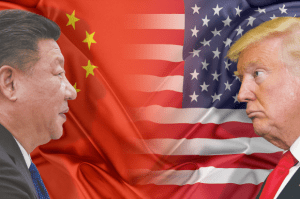 The wily Xi, during his impending two-day visit to Mar-a-Lago, will seek to capitalize on Trump’s penchant to cut deals. Indeed, Trump, the author of The Art of the Deal, appears eager to strike deals with Xi on trade and security issues — back-door deals that could potentially leave America’s allies in Asia out in the cold.
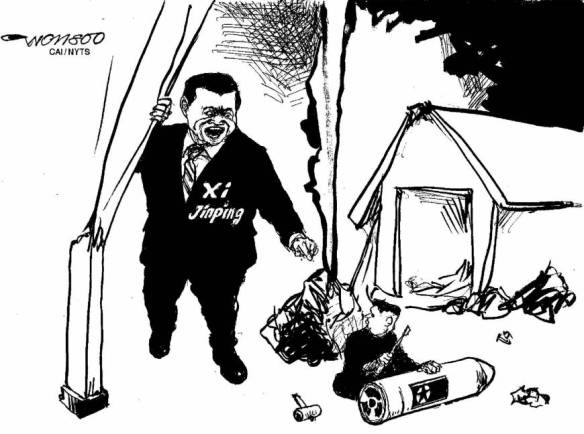
For example, to tackle the little bully, North Korea, Trump (like Obama) is seeking the help of the big bully, China, which has sought to please Washington by banning further imports this year of North Korean coal.
As the White House stated on March 20, it wants China to “step in and play a larger role” in relation to North Korea, which a Trump administration official has exaggeratingly portrayed as the “greatest immediate threat.” But the previous two U.S. administrations also relied on sanctions and Beijing to tame North Korea, only to see that reclusive nation significantly advance its nuclear and missile capabilities.
A greater U.S. reliance on China is unlikely to salvage Washington’s failed North Korea policy, but it will almost certainly result in Beijing exacting a stiff price from the Trump administration, including with respect to the South China Sea.
Beijing, in the initial test of wills, has already savored success in scuttling Trump’s effort to modify America’s longstanding “one China” policy.
Music to Beijing’s ears
Secretary of State Rex Tillerson’s recent visit to Beijing, in fact, suggested that the U.S. is willing to bend over backward to curry favor with China. Instead of delivering a clear message in Beijing, Tillerson transformed into a Chinese parrot, mouthing China’s favorite catchphrases like “mutual respect,” “non-confrontation” and “win-win” cooperation that are code for the U.S. accommodating China’s core interests and accepting a new model of bilateral ties that places the two powers essentially on an equal footing to decide Asia’s future, thus relegating U.S. allies and partners such as Japan and India to a secondary status.
It was music to Chinese ears as Tillerson echoed several Chinese bromides about the U.S.-China relationship, including “win-win” cooperation — a phrase Chinese analysts impishly refer to as entailing a double win for China.
For Beijing, the tag “mutual respect” holds great strategic importance: It is taken to mean that the U.S. and China would band together (in a sort of Group of Two) to manage international problems by respecting each other’s “core interests.” This, in turn, implies that the U.S. would avoid challenging China on the Taiwan and Tibet issues and in Beijing’s new “core-interest” area — the South China Sea.
Tillerson, in effect, compounded the Obama administration’s mistake in embracing Xi’s idea of a “new model of great power relations” between Washington and Beijing in 2013, over four years after Secretary of State Hillary Clinton helped foster the narrative of the U.S. propitiating China by famously declaring that Washington would not let human rights interfere with other issues it had with Beijing.
Worse still, Tillerson articulated the catchphrases by parroting Chinese President Xi Jinping’s words. For example, Xi said in November 2014 during a joint news conference with Obama in Beijing that, “China is ready to work with the United States to make efforts in a number of priority areas and putting into effect such principles as non-confrontation, non-conflict, mutual respect, and win-win cooperation.” Tillerson repeated the exact four principles twice in Beijing.
In his opening remarks at a March 18 news conference with Chinese Foreign Minister Wang Yi, Tillerson said: “Since the historic opening of relations between our two countries more than 40 years ago, the U.S.-China relationship has been guided by an understanding of non-conflict, non-confrontation, mutual respect, and win-win cooperation.” Later that day, at the start of talks with Wang, Tillerson again parroted the same catchphrases: “U.S.-China relationship … has been a very positive relationship built on non-confrontation, no conflict, mutual respect, and always searching for win-win solutions.”
Tillerson’s words were gleefully splashed all over the official Chinese media. For example, the Global Times gloated: “Xi highlighted the significance of the Sino-U.S. relationship and Tillerson expressed the U.S.’s commitment to the principle of non-conflict, non-confrontation, mutual respect and win-win cooperation in terms of developing its ties with China, which is exactly the core content of the China-raised major power relationship between Beijing and Washington.” It pointed out the Obama administration did not use those phrases.
To be sure, U.S. Defense Secretary Jim Mattis struck a different tone subsequently, telling a Senate Appropriations Committee hearing that China pursues a “tribute nation” approach to other states and aspires for “veto power” over their sovereign decisions. Still, the direction of Trump’s China policy appears more uncertain than ever.
Soft South China Sea Stance
This could make a clearer American stance against China’s territorial revisionism in Asia doubtful. Washington elites believe that friendly relations with China are indispensable to American interests. Indeed, there is talk in Washington that the Trump administration has little choice but to accept China’s territorial gains in the South China Sea.
Such acceptance, however tacit, is likely to hold security implications for America’s allies and security partners in Asia, because it will embolden Chinese revisionism in other regions — from the East China Sea to the Himalayas — while allowing China to consolidate its penetration and influence in the South China Sea. After deploying antiaircraft and other short-range weapon systems on all seven of its manmade islands in the South China Sea, Beijing is now building structures on three of them to place longer range surface-to-air missiles.
Under Obama, the U.S. made the most of Asian concerns over China’s increasingly muscular approach by strengthening military ties with U.S. allies in Asia and forging security relationships with new friends like India. However, there was little credible American pushback against China’s violation of international law in changing the status quo or against its strategy to create a Sinosphere of client nations through the geopolitically far-reaching “one belt, one road” initiative.
Tillerson, during his confirmation process, implicitly criticized Obama’s pussyfooting on China by describing Chinese expansion in the South China Sea as “akin to Russia’s taking Crimea” from Ukraine. He said the U.S. should “send China a clear signal” by blocking its access to the artificial islands it has built. But later he retreated, saying the U.S. ought to be “capable” of restricting such access in the event of a contingency.
Trump’s ascension to power was bad news for Beijing, especially because his “Make America Great Again” vision collides with Xi’s “Chinese dream” to make this the “Chinese century.” Yet China thus far has not only escaped any punitive American counteraction on trade and security matters, but also the expected Trump-Xi bonhomie at Mar-a-Lago could advertise that the more things change, the more they stay the same in U.S. foreign policy.
Brahma Chellaney, a longtime contributor to The Japan Times, is a geostrategist and the author of nine books, including “Water, Peace, and War.”


 While it has become fashionable to pair China and India as if they were joined at the hip, it is often forgotten that the two have little in common politically, economically or culturally.

 The inter-ministerial task force set up by Prime Minister Narendra Modi for correcting India’s under-utilization of its allocated share of waters under the Indus Waters Treaty (IWT) has just held its first meeting. The water-related issue facing India, however, is much larger: The continuing absence of institutionalized, integrated policymaking in India, which has prevented proper management of the country’s increasingly scarce water resources. Indeed, India stands out for its lack of a national action plan to build water security.
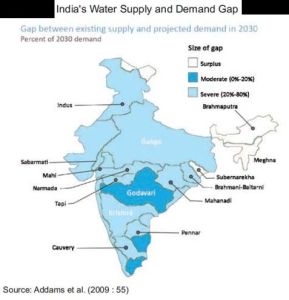 Today, the national water situation in India is far worse than in China. China’s population is not even 10 per cent larger than India’s but its internally renewable water resources (2,813 BCM) are almost twice as large as India’s. In aggregate water availability, including external inflows (which are sizeable in India’s case), China boasts virtually 50 per cent larger resources than India.
 BRAHMA CHELLANEY

 When China joined hands with the United States earlier this year at the United Nations Security Council to approve the toughest new international sanctions in two decades against North Korea, it implicitly highlighted that Beijing now is left with just one real ally in Asia — Pakistan. Indeed, China has forged with Pakistan one of the closest and most-enduring relationships in international diplomacy.
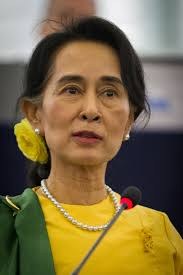 In keeping with the untrammeled power she enjoys in her ruling National League for Democracy party, Myanmar’s de facto leader Aung San Suu Kyi is rapidly putting her imprint on her country’s international relations. She has shaken up Myanmar’s diffident foreign policy establishment by proactively seeking to build partnerships with multiple powers. But rather than pronouncing a “Suu Kyi doctrine” in foreign policy, she is allowing her actions to define her approach.
 Stagecraft and Statecraft
You must be logged in to post a comment.