COVER STORY/Open Magazine/20 January 2017
 By Brahma Chellaney
New US President Donald Trump’s geopolitical focus on China and Islamic radicalism meshes well with Indian strategic priorities. But will his administration add real strategic content to a vaunted ‘strategic partnership’ with New Delhi whose most-prominent feature is the emergence of India as a leading client of the American armament industry?
Trump’s predecessor, Barack Obama, undoubtedly advanced the relationship with India. But it is also true that Obama compounded India’s regional security challenges, both by emboldening China through his meekness toward Beijing and by bolstering China’s ‘contain India through Pakistan’ strategy. While refusing to take sides in the China-India territorial disputes, the Obama administration actually strengthened China’s strategy to box in India by extending munificent US aid to Pakistan, thus encouraging that country to continue to sponsor cross-border terrorism with impunity.
Whether the Trump administration will contribute positively or negatively to India’s regional interests hinges fundamentally on the geopolitical framework that will guide its foreign policy.
Trump ran an election campaign that challenged American diplomacy’s longstanding principles and shibboleths, turning his party’s own establishment against him. This might suggest that his foreign-policy approach would represent a break from the past.
The fact, however, is that the institutional policymaking structure in the US is much stronger than, say, in India. Therefore, it is not easy for a president to break with well-established policies that have been pursued by presidents belonging to both parties. Moreover, the approach and direction of an American president’s foreign policy becomes apparent only after his first year in office.
For example, Obama’s coming to power created high anticipation globally of significant changes in the American foreign-policy approach, with the expectations being strengthened when he surprisingly was awarded the Nobel peace prize less than nine months after assuming office. Yet Obama proved to be as interventionist as any president before him. The chaos in Libya that he sowed through regime change will be remembered—like President George W. Bush’s unravelling of Iraq—as one of his imprints on history.
India needs to play a more active role in influencing policy in Washington. New Delhi has not tried to persuade the US to end its policy of mollycoddling Pakistan by leveraging India’s defence imports from America or by utilising the services of the large and increasingly influential American Indian community.
Obama came to office vowing to end the Bush-era wars in Afghanistan and Iraq. The war in Afghanistan (the longest war in American history) still rages. Obama ended the war in Iraq, only to start a new one there and in Syria. He presided over the birth of a terrorist organisation more potent that Al Qaeda—the Islamic State of Iraq and the Levant, known as ISIS, ISIL or Islamic State. In 2016, Obama’s last year in office, the US dropped more than 26,000 bombs in seven countries, according to one assessment.
By getting the US embroiled in more conflicts, Obama has bequeathed to Trump a Middle East more violent and less stable than the one Obama inherited from Bush in 2009.
Faced with major international challenges, Trump has signalled his intent to revamp American foreign policy so that he can concentrate on his main priority—comprehensive domestic renewal, the central pillar of his promised strategy to “make America great again”. He has also indicated his desire to reverse the interventionist, regime-change policy that successive American presidents have followed since the early 1950s, when the CIA successfully plotted the overthrow of Iranian Prime Minister Mohammad Mossadegh.
Trump’s determination to boost US job growth by eliminating critical roadblocks, including unfair competition from Chinese manufacturers, has set the stage for a tougher American policy on trade. This is also apparent from those he has named to key positions, especially Robert Lighthizer, his nominee for trade representative, Wilbur Ross, his choice to become commerce secretary, and Peter Navarro, the head of the new White House office overseeing trade and industrial policy.
Trump’s trade-related nationalism is linked to the perception that trade liberalisation has contributed to America’s relative decline. For Trump, trade is one area where he must deliver on his campaign promises or risk losing his credibility with the blue-collar constituency that helped him defeat Hillary Clinton.
No country faces a bigger challenge from Trump’s ascension to power than China, which has been flexing its military and economic muscles more strongly than ever. After the Obama administration’s obsequious stance, Beijing must brace up and face an assertive new national security and economic team in Washington that is unlikely to put up with its covert territorial expansion and trade manipulation.
China will likely bear the brunt of Trump’s trade-related nationalism at a time when its economy is slowing despite the state heavily providing fiscal and monetary stimulus. By contrast, the impact on India will be marginal because the fallout will largely be limited to the H-1B visa issue. Trump’s tougher stance on trade with China is unlikely to be deterred by the spectre of a trade war for the simple reason that Beijing is already waging an economic war against major economies.
While subsidising its exporters, China has quietly but systematically been blocking imports. The Obama administration’s announcement last April that China had agreed to scrap export subsidies on some products, mainly agricultural items and textiles, drew scepticism in the international markets because the deal did not cover major exports, including steel. It also left intact other forms of state support to the Chinese industry.
Trump seems willing to call a spade a spade and adopt a tougher and less predictable line toward Beijing, with his choice to become secretary of state, Rex Tillerson, going to the extent of saying that China should be denied access to the artificial islands that it has created in the South China Sea.
China exports $4 worth of goods to the US for each $1 of imports. Its trade with India is even more skewed: It exports nearly $6 worth of goods for each $1 of imports. This mismatch, largely due to the systematic dumping of goods, has allowed China to rapidly double its trade surplus with India to $60 billion just on Prime Minister Narendra Modi’s watch. China’s bilateral trade surplus with the US, of course, is bigger and is equal to about 3 per cent of its entire economy.
The Trump team has clarified that the president is not against free trade but against unfair trade. If China can slap Mongolia with punitive tariffs for merely allowing the Dalai Lama to undertake a purely religious tour, will it be unreasonable for the Trump administration to penalise China likewise for unashamedly distorting free trade?
Of course, the implications for China extend beyond trade. After all, Trump has signalled an imperative to recalibrate America’s foreign policy by shifting its geopolitical focus from Russia—a declining power with a sharply contracting economy—to the increasingly muscular and openly revisionist China. Unlike Russia’s 2014 annexation of Crimea, China’s territorial revisionism, as illustrated in the South China Sea and the Himalayas, is creeping and incremental yet relentless. Also unlike Russia, China sees itself as superior to the rest of the world and seeks to regain its fabled ‘Middle Kingdom’ status.
Abandoning the longstanding US fixation on Moscow and concentrating instead on the more potent, long-term challenge from China makes eminent sense for the Trump administration. In the global geopolitical competition between the US and China, Washington should seek to ensure that Russia stays neutral, if not on America’s side. However, the Obama administration did the opposite—forcing Moscow to pivot to China.
In the Obama era, China’s defiant unilateralism remained cost-free. Indeed, in the dying days of the Obama administration, China rushed more missiles to its man-made islands in the South China Sea, where, on Obama’s watch, it built seven islands and militarised them in an attempt to annex a strategically crucial corridor through which half of the world’s annual merchant fleet tonnage passes.
But now Trump seems willing to call a spade a spade and adopt a tougher and less predictable line toward Beijing, with his choice to become secretary of state, Rex Tillerson, going to the extent of saying that China should be denied access to the artificial islands that it has created in the South China Sea. While Obama remained virtually mum on China’s creeping aggression in the South China Sea, Tillerson has called it “akin to Russia’s taking Crimea” and favoured a strategic payback.
Will Trump try ‘madman diplomacy’ to tame a renegade Pakistan? The plain fact is that only coercive US diplomacy can help break the Pakistan military establishment’s cosy ties with terrorist groups, some of which are among the most dangerous.
China prefers quiet diplomacy, a setting that allows it to play its cards shrewdly. But Trump’s approach is completely different, as is apparent from his statement that, “Everything is under negotiation including One China.” That America’s ‘one-China’ policy since the 1970s is no holy cow for Trump was also apparent earlier from his conversation with Taiwan’s president by telephone. Trump has also turned his Twitter feed into a twenty-first-century version of the bully pulpit, repeatedly castigating Beijing for refusing to play by the rules. President Xi Jinping and his coterie in Beijing are at a loss on how to handle Trump.
Those analysts concerned about Trump’s deal-making approach tend to forget that US foreign policy, essentially, has always been transactional in character. Trump wants to clinch good deals for the US, just as the leader of any nation ought to do.
Another Trump priority is waging war against radical Islamic militancy before it turns into a global jihadist movement. Trump, however, cannot deliver credible or enduring counterterrorism results without disciplining Saudi Arabia, Qatar and the other oil sheikhdoms that continue to export Islamic radicalism. US foreign policy has had a longstanding alliance with Arab monarchs that has continued even as these cloistered royals bankroll Islamic militant groups and in other countries. Trump will also need to abandon the failed US policy on Pakistan that his immediate two predecessors pursued since the September 11, 2001 terrorist attacks in the US.
Had Hilary Clinton won the presidency, we would likely have seen the continuation of America’s failed Pakistan policy, which has involved doling out billions of dollars in US military and civilian assistance to that quasi-failed country without seeking substantive results on the terrorism front. However, the only language Pakistan’s powerful generals understand is of the kind the US delivered right after 9/11 to bend Pakistan to its will. As former Pakistani military dictator Pervez Musharraf has acknowledged in his memoir, he and his fellow generals genuinely believed that unless they met the Bush administration’s demands, they would be ‘bombed back to the stone ages’.
Against this background, as one American analyst has asked, will Trump try ‘madman diplomacy’ to tame a renegade Pakistan? The plain fact is that only coercive US diplomacy can help break the Pakistan military establishment’s cosy ties with terrorist groups, some of which are among the most dangerous in the world.
Yet in his written submissions to the Senate Armed Services Committee during his confirmation hearing process, Defence Secretary-designate James (‘Mad Dog’) Mattis pledged to build ‘trust’ with Pakistan ‘for an effective partnership’. This might suggest that America’s failed Pakistan policy would persist, even though this policy is the main reason why the US military is still stuck in the war in Afghanistan. Trump’s national security adviser, Gen. Michael Flynn, while serving as the US intelligence chief in Afghanistan, and Gen. Mattis, as CentCom chief, established close relations with the Pakistani military establishment. However, the direction of the Pakistan policy will likely be set by Trump himself, with the policy details left to the Cabinet members.
India needs to play a more active role in influencing policy in Washington. For example, it did little in response to Obama’s move nearly a year ago to reward Pakistan with eight more subsidised F-16s and hundreds of millions of dollars in additional aid under the Overseas Contingency Operations fund, which has been dubbed the ‘slush fund’. It was congressional opposition that stymied the planned transfer of additional F-16s. The blunt truth is that New Delhi has not tried to persuade the U.S. to end its policy of mollycoddling Pakistan by leveraging India’s defence imports from America or by utilising the services of the large and increasingly influential American Indian community.
As for Trump, he is already facing resistance to recalibrating US foreign policy from the deep state, which extends to a nexus between the intelligence agencies and major media organisations. To prevent any détente with Russia, powerful interests in Washington have gone to extraordinary lengths to undercut Trump, including by seeking to irreparably dent his image. This underscores the formidable challenge Trump faces to revamp foreign policy.
No president in living memory has taken office with America so politically polarised and divided and the deep state so unwelcoming as Trump, with the outgoing CIA chief actually blasting him on the eve of his inauguration. If Trump succeeds in recalibrating US foreign policy, including relating to China and Pakistan, he will set the stage for a true, robust and enduring partnership with India.
Brahma Chellaney is professor of strategic studies at the Centre for Policy Research in New Delhi and Richard von Weizsäcker Fellow of the Robert Bosch Academy in Berlin. ©
Open Magazine, 2016.


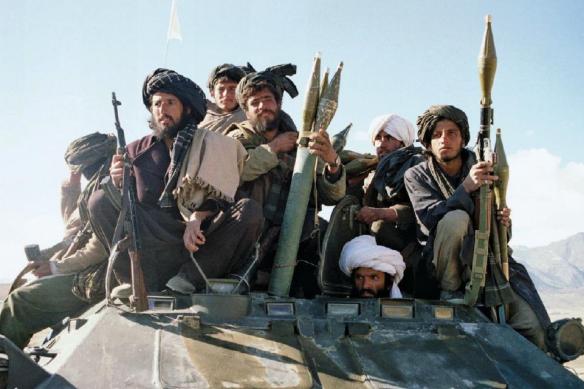

 BRAHMA CHELLANEY
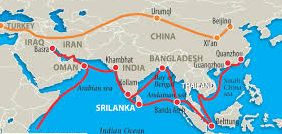 Sri Lanka is Exhibit A. Though small, the country is strategically located between China’s eastern ports and the Mediterranean. Chinese President Xi Jinping has called it vital to the completion of the maritime Silk Road.


 While it has become fashionable to pair China and India as if they were joined at the hip, it is often forgotten that the two have little in common politically, economically or culturally.


 The inter-ministerial task force set up by Prime Minister Narendra Modi for correcting India’s under-utilization of its allocated share of waters under the Indus Waters Treaty (IWT) has just held its first meeting. The water-related issue facing India, however, is much larger: The continuing absence of institutionalized, integrated policymaking in India, which has prevented proper management of the country’s increasingly scarce water resources. Indeed, India stands out for its lack of a national action plan to build water security.
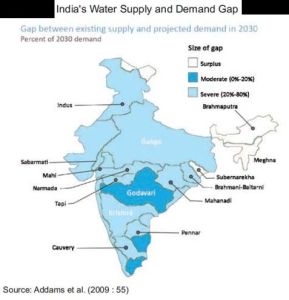 Today, the national water situation in India is far worse than in China. China’s population is not even 10 per cent larger than India’s but its internally renewable water resources (2,813 BCM) are almost twice as large as India’s. In aggregate water availability, including external inflows (which are sizeable in India’s case), China boasts virtually 50 per cent larger resources than India.
 Stagecraft and Statecraft
You must be logged in to post a comment.