China’s expansionist drive, from the East and South China seas to the Himalayas and the southern Pacific, is making the Indo-Pacific region more volatile and unstable. Along with the spread of the Wuhan-originating coronavirus, this has also given rise to growing anti-China sentiment.
China’s border aggression against India since April dovetails with a broader strategy of territorial aggrandizement that it has pursued in the period since its disastrous 1979 invasion of Vietnam. That strategy, centered on winning without fighting, has driven its bullet-less aggressions, from seizing Johnson Reef in 1988 and Mischief Reef in 1995, to occupying the Scarborough Shoal in 2012. And since launching major land reclamation in 2013, China has changed the South China Sea’s geopolitical map without firing a shot.
However, China’s aggression in the northern Indian region of Ladakh – a high-altitude territory where the People’s Liberation Army (PLA) has occupied several vantage points – differs from its previous territorial grabs since the 1980s in one key aspect. China went beyond its usual practice of occupying vacant border spaces by snatching territories from right under another country’s nose.
China’s territorial expansion in the South China Sea, for example, has centered on capturing disputed but unoccupied shoals and reefs and then using construction activities to turn them into militarized artificial islands.
In 2017, the PLA similarly captured the unoccupied and desolate Himalayan plateau of Doklam, which one of the world’s smallest countries, Bhutan, claims as its territory. The occupation came soon after China ended a more than 10-week-long troop standoff on the plateau with India, Bhutan’s de facto security guarantor.
China’s aggression has also extended to persistent nibbling at its neighbors’ border territories. Bite by bite, China has been eating away at its neighbors’ borderlands. In Nepal, ruled by a pro-Beijing communist government, a recently leaked internal report warned that the country was losing border territories to China’s construction projects, which it said were also changing the course of rivers.
In the East China Sea, China has stepped up incursions into the Japanese-administered Senkaku Islands’ territorial waters and airspace, with the aim of weakening Japan’s control and strengthening its own sovereignty claims. By bringing Japan’s security increasingly under pressure, China is indicating that the U.S. alliance system is not an answer to its muscular revisionism.
But even by the PLA’s longstanding practice of “salami slicing,” its recent aggression against India signals that China’s territorial expansionism has entered a dangerous new phase. In an operation backed by tens of thousands of troops in the rear, the PLA brazenly seized border areas that were under another country’s military control or patrolling jurisdiction.
Deception and surprise are integral to the Chinese strategy even in peacetime. The aggression in Indian Ladakh came just six months after Chinese President Xi Jinpingdeclared on Indian soil that “China-India relations have entered a new phase of sound and stable development,” thus allowing both sides to “focus on friendship and cooperation.”
Xi caught India off-guard by striking when that country was wrestling with the outbreak of the coronavirus by enforcing the world’s strictest lockdown. China intruded into areas located even beyond its own artificially drawn claim lines that it has published in the past.
This helps to highlight China’s increasing territorial predation under Xi. Beijing has repeatedly shown that it can make a new territorial claim or disturb the status quo anywhere at any time.
For example, Beijing has asserted a new claim since July to Bhutan’s eastern region, which shares a border only with India. Through the new claim, China has sought to simultaneously advance its designs against India and Bhutan, which popularized the concept of “Gross National Happiness” as a measure of development.
Recently, Chinese state media suddenly discovered that Tajikistan’s Pamir Mountains historically “belong to China.” Earlier in May, the state-run media claimed that Mount Everest, the world’s tallest peak on the Nepal-Tibet border that symbolizes Nepalese sovereignty, was wholly in China.
Last month, a Chinese government ship conducted marine research activity in the exclusive economic zone of Okinotori Island, Japan’s southernmost point. When Tokyo protested, Beijing asserted that “Japan’s unilateral claim [to an EEZ] has no legal basis” as Okinotori was not an island but just rocks.
The Chinese Communist Party’s old practice is to stealthily occupy another nation’s territory and then claim the area was part of China since ancient times. Having recently caught India napping by encroaching, among others, on the Tibet-bordering Galwan Valley in Ladakh, China now claims that the entire valley’s sovereignty “has always belonged to China.”
China, however, became India’s neighbor only in 1951 after the CCP under Mao Zedong gobbled up the traditional buffer Tibet. The fall of Tibet increased China’s landmass by more than one-third. It also gave China common borders with India, Nepal, Bhutan and northernmost Myanmar.
Xi has sought to take off from where Mao left. Simply put, Xi is working on Mao’s unfinished agenda of territorial expansionism.
This explains the multiple fronts Xi has opened in the pursuit of his “Chinese dream” of making China the world’s foremost power by the 2049 centenary of communist rule. The fronts he has opened extend from Hong Kong and Taiwan to the South and East China seas and the Himalayas.
As long as Xi perceives the strategic benefits as outweighing the international costs, he will persist with his campaign of expansionism. But he is already sowing the seeds of an international backlash. Such a pushback will likely constrict China’s choices, making his “Chinese dream” more difficult to realize.
Brahma Chellaney is professor of strategic studies at the New Delhi-based Center for Policy Research, an independent think tank, and the author of nine books, including the award-winning “Water: Asia’s New Battleground” (Georgetown University Press).
By occupying key vantage points in eastern Ladakh in an operation backed by tens of thousands of troops in the rear, China has entered a dangerous new phase in its territorial expansionism. It has brazenly seized areas that were under India’s military control or patrolling jurisdiction.
In fact, China intruded into areas located beyond any claim line it has ever published, including its 1956, 1959 and 1960 claim lines in Ladakh. Demonstrating ever-expanding claims, its forces intruded into the Hot Springs-Gogra-Kongka La region and the Depsang Y-Junction and also right up to Galwan River’s mouth and up to Pangong Lake’s Finger 4.
India, facing up to what its defence ministry calls “unilateral aggression,” has made it amply clear to China that it will settle for nothing less than a full return to status quo ante. India’s message to Beijing is that refusing to roll back its encroachments will cast a growing shadow over the bilateral relationship. Publicly, too, India has cautioned that China’s border hostilities will damage bilateral ties.
There has been no national debate, however, on India’s options to restore status quo ante. China seems determined to hold on to its territorial gains, which explains its statement that disengagement is mostly over. Indeed, it has used military and diplomatic talks to demand Indian acquiescence in the new status quo. The protracted talks have also helped it to consolidate its hold on the land grabs, including by building fortifications and installing fibre optic cables.
China has achieved its territorial gains in the same way it made territorial grabs elsewhere in Asia since the 1980s — below the threshold of armed conflict, without firing a shot. Today, it is trying to dictate a Hobson’s choice to India, like it did when it captured Doklam: Go along with the changed status quo or risk an open war. Believing time is on its side, China is seeking to wear India out in order to present a fait accompli.
Against this background, India’s options are clearly narrowing. The longer India has waited, the harder it has become to militarily push back the intruding Chinese forces and restore status quo ante. Imagine if India had dealt with China’s incursions as soon as it discovered them in early May, instead of restraining its forces and entering into unproductive talks. Indian efforts to obscure the intrusions and troop clashes only led to newer Chinese encroachments. As an August 4 defence ministry note points out, China made fresh intrusions into Kugrang, Gogra and Pangong on May 17-18.
India has the world’s most-experienced army in hybrid mountain warfare. Contrary to conventional wisdom that China holds a significant military advantage, several recent international assessments underscore that India’s air and ground forces have a qualitative edge over the People’s Liberation Army. India’s weakness is a reactive and risk-averse strategic culture.
India’s failure to employ its counterattack capability undermined its negotiating position. Instead of a “seize, hold and talk” strategy to clinch an equitable deal, India brought little to the negotiating table, thus allowing China to reinforce its bargaining power. This is apparent from China’s absurd new demands that India further retreat from Pangong and vacate the Kugrang heights.
India now faces crunch time. If it is not going to end up validating China’s forcible realignment of the Line of Actual Control, India must inflict substantive costs on the aggressor. Imposing significant economic and diplomatic costs, coupled with the application of coercive military pressure, holds the key. India must speak from a position of strength. Its professional, battle-hardened armed forces, coupled with its trade and diplomatic leverage, give it that strength.
The only way China will roll back its aggression is if India begins exacting mounting costs that make its territorial gains unbeneficial to hold. The costs India has sought to impose thus far have proved woefully inadequate to make Beijing end its aggression.
A calibrated imposition of progressively escalating costs has become imperative. Economically, India’s main steps thus far — banning Chinese mobile apps and restricting Chinese companies’ access to Indian government contracts — need to be supplemented with informal trade sanctions.Chinese exports to India are still running at more than $5 billion a month, with July witnessing a surge. Now is the time for India to leverage its buying power to correct its massive trade deficit with China.
At a time when the international environment is turning hostile to China’s ambitions, India must launch a diplomatic offensive to spotlight the Chinese aggression. India’s reticence to name and shame China seems unfathomable. Even amid its aggression, China has had no hesitation in raking up the Jammu and Kashmir issue at the United Nations Security Council.
As a warning shot across Beijing’s bow, India should rescind its 2006 decision allowing China to reopen its consulate in Kolkata, given China’s designs on the Siliguri Corridor. That decision was made despite Beijing’s refusal to let India reopen its Lhasa consulate. The Kolkata and Lhasa consulates were shut following Mao Zedong’s 1962 war against India.
Meanwhile, the highest-level visit by a US cabinet official to Taiwan since 1979 has served as an example for India to loosen its own one-China policy by living up to then Foreign Minister Sushma Swaraj’s promise in 2014 — that the one-China policy would henceforth be predicated on China’s adoption of a one-India policy. For starters, the prime minister may like to meet the Dalai Lama and say he sought the Tibetan leader’s counsel regarding China.
India, subscribing to hard-nosed realpolitik, has no choice but to impose costs that cumulatively outweigh Beijing’s aggression gains. Without such a course, China could not only escape scot-free but also reap rewards of aggression and become a bigger threat.
Beijing’s stealth aggression against India along the Himalayan border represents a geostrategic sea change. Given China’s stepped-up incursions in or near Japanese waters, this has serious implications for Japan as well.
As part of President Xi Jinping’s aggressive expansionism, China is pursuing a strategy of attrition, friction and containment against Japan and India — its two potential peer rivals in Asia — in order to harass, encumber and weigh them down. This includes China’s efforts to police the waters off the Japanese-administered Senkaku Islands in recent months in order to weaken Japan’s control and strengthen its own sovereignty claims.
More broadly, Xi’s regime is pushing expansive claims on the basis of an ingenious principle — “what is ours is ours and what is yours is negotiable.” This has been underscored by China’s newly minted claim to tiny Bhutan’s eastern region, which shares a border only with India. Perhaps the only time since the end of World War II that one state has laid claim to territory that can only be accessed via another country, China has sought to simultaneously advance its designs against Bhutan and India.
And when Tokyo lodged a protest last month after a Chinese government ship conducted marine research activity in the exclusive economic zone off Japan’s southernmost point, Beijing responded that “Japan’s unilateral claim [to an EEZ there] has no legal basis.” Some in China are even questioning Japanese sovereignty over Okinawa.
China’s various territorial claims, from the East China Sea to the Himalayas, are based not on international law but on alleged history. The Chinese Communist Party’s practice is to furtively occupy another nation’s territory and then claim that the captured area was part of China since ancient times.
Japan could learn from the CCP’s practices and from India’s mistakes that made it the target of China’s latest aggression. After all, China’s strategy against Japan is fairly similar to the one it is pursuing against India.
Incremental advances by stealth below the threshold of war are integral to China’s strategy. Admiral Philip Davidson warned in 2018 before taking over as the U.S. Indo-Pacific commander that China was likely to continue “to coerce Japan without sparking a crisis or conflict.”
The first lesson for Japan is that China’s aggressive actions bear no relation to the state of bilateral ties with the country it targets, as shown by the fact that the Chinese aggression in Ladakh came just six months after Xi declared during an India visit that “China-India relations have entered a new phase of sound and stable development.”
Another sign that the CCP’s revanchism is unaffected by ostensible improvements in bilateral relations was the 2019 increase in Chinese incursions into the Senkaku territorial waters and airspace compared to the previous year.
Attempts to placate Beijing also tend to backfire. After Narendra Modi became Indian prime minister in 2014, he bent over backward to befriend China, including delisting it as a “country of concern” and halting official contact with the Dalai Lama. For nearly six years, Modi ignored all warning signs, including a rising tide of Chinese incursions, especially into Ladakh, and China’s capture of the Bhutan-claimed Doklam Plateau following a 73-day standoff with Indian troops there.
There is a cautionary tale for Japan here. Tokyo, since Prime Minister Shinzo Abe’s 2018 visit to Beijing, has emphasized improving ties with Beijing and responded with conspicuous restraint to the longest series of Chinese incursions into Japanese waters in years.
After its disastrous 1979 invasion of Vietnam, China developed a strategy of winning without fighting. Deception, concealment and surprise have driven its bulletless aggressions, from seizing Johnson Reef in 1988 and Mischief Reef in 1995, to occupying the Scarborough Shoal in 2012.
And now China occupies several vantage points in Indian Ladakh, perhaps following ancient Chinese military strategist Sun Tzu’s advice to “plan for what is difficult while it is easy” by striking when a distracted India was busy wrestling with the coronavirus outbreak.
All of which suggests that a Chinese strike against the Senkaku Islands could come when Japan least expects it.
India’s deeply rooted reactive culture has allowed China to keep the initiative, including when and how to needle India or infringe its sovereignty. Japan, too, has spent years being on the defensive and must come out of its reactive and pacifist mode to safeguard its long-term security. A more secure Japan will also help underpin peace in the Indo-Pacific region.
Today, Japan needs to deal with a more immediate challenge. Once the China-set suspension of fishing around the Senkaku Islands ends on August 16, Chinese provocations could escalate, with the possible entry of many Chinese fishing boats and Coast Guard ships. After all, China’s aim is to progressively alter the status quo in its favor.
It is past time for Tokyo to turn the tables on China’s machinations by responding assertively, including disabling Chinese state ships and detaining their crews when they engage in provocative activities, such as chasing Japanese fishing vessels. Otherwise, Japan will increasingly find itself at the receiving end of China’s muscular revisionism.
Brahma Chellaney is a geostrategist and author of nine books, including “Asian Juggernaut: The Rise of China, India and Japan.”
As long as the Chinese Communist Party remains in power, it will persist with territorial expansionism and none of China’s neighbors will be safe. The Chinese communists, to use a quote from the Bible, are like “greedy dogs which can never have enough.”
As the world struggles to cope with the COVID-19 pandemic, which first emerged in China, Chinese President Xi Jinping is pursuing his quest for regional dominance more aggressively than ever. From the Himalayas to Hong Kong and Tibet to the South and East China Seas, Xi seems to be picking up where Mao Zedong left off, with little fear of international retribution.
The parallels between Xi and the despots of the past are obvious. He has overseen a brutal crackdown on dissent, engineered the effective demise of the “one country, two systems” arrangement with Hong Kong, filled concentration camps and detention centers with Uighurs and other Muslims in Xinjiang province, and laid the groundwork to remain president for life.
According to US National Security Adviser Robert O’Brien, “Xi sees himself as Joseph Stalin’s successor.” Many others have compared Xi to Adolf Hitler, even coining the nickname “Xitler.” But it is Mao – the People’s Republic’s founding father, and the twentieth century’s most prolific butcher – to whom Xi bears the closest resemblance.
For starters, Xi has cultivated a Mao-style personality cult. In 2017, the Communist Party of China enshrined in its constitution a new political doctrine: “Xi Jinping Thought on Socialism with Chinese Characteristics for a New Era.” The ideology is inspired by Lenin, Stalin, and Mao, but its inclusion in the CPC’s constitution makes Xi the third Chinese leader – after Mao and the architect of China’s modernization, Deng Xiaoping – to be mentioned in the document. Last December, the CPC also conferred upon Xi a new title: renmin lingxiu, or “people’s leader” – a label associated with Mao.
Now, Xi is working to complete Mao’s expansionist vision. Mao’s China annexed Xinjiang and Tibet, more than doubling the country’s territory and making it the world’s fourth largest by area. Its annexation of resource-rich Tibet, in particular, represented one of the most far-reaching geopolitical developments in post-World War II history, not least because it gave China common borders with India, Nepal, Bhutan, and northernmost Myanmar.
In fact, Mao considered Tibet to be China’s right-hand palm, with five fingers – Nepal, Bhutan, and the three Indian territories of Ladakh, Sikkim, and Arunachal Pradesh – that China was also meant to “liberate.” Mao’s 1962 war against India helped China gain more territory in Ladakh, after it earlier grabbed a Switzerland-sized chunk, the Aksai Chin region.
This past April and May, Xi had the People’s Liberation Army carry out a series of well-coordinated incursions into Ladakh, with the intruding forces setting up heavily fortified encampments. He then deployed tens of thousands of troops along the disputed Line of Actual Control (LAC) with Ladakh, Sikkim, and Arunachal Pradesh.
This “incredibly aggressive action,” as US Secretary of State Mike Pompeo called it, led to bloody clashes in Ladakh on June 15, leaving 20 Indian soldiers, and an unknown number of Chinese troops, dead. (US intelligence agencies believe China suffered more casualties than India, but whereas India has honored its fallen as martyrs, China has refused to divulge its losses.) Despite continuing bilateral efforts to disengage rival forces, the specter of further clashes or a war continues to loom.
The CPC has not forgotten about the other two fingers, Bhutan and Nepal. Just as China and India began withdrawing troops from the site of the June 15 clashes, Beijing opened another front in its bid for territorial expansion, asserting a new claim in Bhutan.
In 2017, China occupied the Doklam Plateau – at the intersection of Tibet, Sikkim, and Bhutan, and claimed by the latter – following a 73-day military standoff with India, the de facto guarantor of Bhutanese security. Now, China is laying claim to another 11% of the tiny kingdom’s territory, in an area that can be accessed only through Arunachal Pradesh (which Chinese maps already show as part of China). The move thus advances Xi’s efforts against two of the five fingers simultaneously.
The fifth “finger,” Nepal, has been drifting away from India and toward China since it came under communist rule two and a half years ago. Indeed, China aided the Nepalese communists’ victory, including by unifying rival factions and funding their election campaign. Since then, China has openly meddled in the country’s fractious politics, in order to keep the ruling party intact, with its ambassador acting as if she were Nepal’s matriarch.
But being in China’s strategic orbit has done nothing to protect Nepal from the CPC’s territorial predation. Last month, a leaked Nepalese agricultural department report warned that China’s massive road-development projects have expanded China’s boundary into northern territories of Nepal and changed the course of rivers.
Of course, altering Asia’s water map is nothing new for China. Tibet is the starting point of Asia’s ten major river systems. This has facilitated China’s rise as a hydro-hegemon with no modern historical parallel. Today, Chinese-built mega-dams near the borders of the Tibetan Plateau give the country leverage over downstream countries.
As the hand metaphor indicates, Tibet is the key to China’s territorial claims in the Himalayan region – and not only because of geography. China cannot claim the five fingers on the basis of any Han-Chinese connection. Instead, it points to alleged Tibetan ecclesial or tutelary links, even though Tibet was part of China only when China itself had been conquered by outsiders like the Mongols and the Manchus. Chinese current claims are nothing more than a power (and resource) grab.
In other words, the five-fingers strategy, coupled with Chinese expansionism elsewhere, is all about upholding the world’s longest-running autocracy. As long as the CPC – and especially the revisionist Xi – holds a monopoly on power, none of China’s neighbors will be safe.
China’s territorial revisionism has been unrelenting. Under Mao Zedong, China more than doubled its size by annexing Tibet and Xinjiang, making it the world’s fourth largest country in area. Under Xi Jinping, China’s expansionism increasingly threatens its neighbours, big and small. Xi’s regime has just opened a new territorial front against one of the world’s smallest countries, Bhutan, by disputing its eastern borders.
In this light, the outcome of China’s aggression against India will have an important bearing on Asian security. If the current India-China military disengagement ends up like the 2017 Doklam disengagement in making China the clear winner, an emboldened Xi regime will likely become a greater threat to neighbours.
China’s strategy after its disastrous 1979 invasion of Vietnam has been to win without fighting. Deception, concealment and surprise have driven China’s repeated use of force — from seizing the Johnson Reef in 1988 and the Mischief Reef in 1995 to occupying the Scarborough Shoal in 2012 and now vantage locations in Ladakh. It has changed the South China Sea’s geopolitical map without firing a shot or incurring any international costs.
China has displayed its art of deception even in its disengagement process with India. The first accord of June 6 to disengage collapsed after the People’s Liberation Army (PLA) erected structures on Indian territory and then ambushed and killed Indian Army men on verification patrol. The disengagement process restarted after Prime Minister Narendra Modi seemed to let China off the hook with his June 19 speech at the all-party meeting. But the fresh process became a ruse for PLA to encroach on two new Indian areas — the Depsang Y-Junction; and the Galwan Valley site of the ambush killings.
India and China are now in their third disengagement series. But while the previous two abortive rounds followed military-level talks, the latest cycle is being driven politically. We now know that Modi’s July 3 Ladakh visit, and his tough words there, were essentially designed to create domestic political space for his government to seek de-escalation with China. Barely 48 hours after his visit, India and China hammered out a disengagement deal.
Will the latest deal stick? Having encroached on key areas that overlook India’s defences, PLA is sitting pretty. A full return to status quo ante as sought by India seems remote, thanks to India’s own mixed signals. Moreover, by encroaching on additional areas behind the previous disengagement facade, China has armed itself with greater leverage to impose a revised status quo, including by applying the precept that “possession is nine-tenths of the law”.
Disengagement (pullback of rival forces from close proximity), if not de-escalation (ending hostilities through demobilisation of forces), meshes well with China’s interest in presenting India a fait accompli. Removing the threat of an Indian counteroffensive or Indian tit-for-tat land grab will help China win without fighting.
This explains why China has accepted disengagement — but on its terms. This is illustrated in the Galwan Valley, where India has pulled back from its own territory and created a “buffer zone” on its side of the Line of Actual Control (LAC). These steps, though temporary, create a new, China-advantageous status quo that PLA could seek to enforce because it keeps India out of China’s newly-claimed zone — the Galwan Valley.
The risk that, like at Doklam, the current disengagement may not end well for India is high. Instead of demonstrating strength and resolve, India has displayed zeal to end the stand-off, despite its armed forces being mobilised for possible war.
At a time when the international environment is beginning to turn against China, India could have prolonged the stand-off until winter to compel restoration of status quo ante. But instead, it has kicked status quo ante down the road and settled merely for disengagement. This allows China to hold on to its core territorial gains and trade the marginal occupied territories for Indian concessions, as part of its well-known “advance 10 miles and retreat six miles” strategy.
Far from imposing military costs, India has shied away even from trade actions against the aggressor, as if to preserve the option of another Modi-Xi summit. India’s steps so far (banning Chinese mobile apps and announcing an intent to restrict Chinese investment in some areas) have been designed to assuage public anger at home, but without imposing substantive costs on Beijing or damaging bilateral relations.
In 1967, a weak India, while recovering from the 1962 and 1965 wars, gave China a bloody nose. But in 2017 and again now, after its soldiers displayed extraordinary bravery in tackling China’s aggression, a nuclear-armed India hastily sought disengagement. Its decision-makers remain loath to fundamentally change the China policy even when faced with aggression.
Bite by bite, China has been nibbling away at India’s borderlands, even as successive Indian prime ministers have sought to appease it. When political calculations trump military factors and a nation lives by empty rhetoric, it can win neither war nor peace.
The present path risks locking India in a “no war, no peace” situation with China and imposing mounting security costs. This path aids China’s time-tested strategy of attrition, friction and containment to harass, encumber, encircle, deceive and weigh India down.
If India wants Himalayan peace, it must make China pay for its aggression to help create a deterrent effect. The present aggression — the most serious since the 1960s — resulted from India letting China off the hook too easily in 2017, allowing it to capture Doklam. And if China emerges the winner from the current crisis, its next aggression could be worse. Only a chastened China saddled with high costs and loss of face will rein in its aggressive expansionism.
While the international attention remains on China’s recidivist activities in the disputed waters of the South China Sea, where it continues to incrementally expand its strategic footprint, Beijing is also quietly focusing its attention on the waters of rivers that originate in the resource-rich, Chinese-controlled territory of Tibet.
China has long pursued a broader strategy to corner natural resources. This has driven its expanding presence in faraway places, including Africa and Latin America. China’s newer obsession is freshwater, a life-creating and life-supporting resource whose growing shortages are casting a cloud over Asia’s economic future.
Peace and security in Asia both hinge on China’s willingness to embrace rules-based cooperation, which includes ceasing activities that threaten to turn internationally shared river-water resources into a Chinese political weapon. These activities range from building cascades of large dams on international rivers before they leave Chinese-controlled territory to the denial of or delayed transfer of hydrological data to downstream neighboring countries.
Most of Asia’s great rivers originate on the Tibetan Plateau. From there, they flow to a dozen countries, including mainland China. With its lofty terrain, featuring the world’s tallest mountain peaks and largest concentration of glaciers and riverheads, the Tibetan Plateau influences atmospheric circulation — and therefore climate and weather patterns — across the Northern Hemisphere.
Today, China has turned this ecologically -fragile plateau, which it invaded and occupied from 1950 to 1951, into the center of its mining and dam-building activities. With the plateau warming more than three times faster than the global average according to Chinese data, glacial recession, especially in the eastern Himalayas, and the thawing of Tibet’s permafrost (or permanently frozen ground) have accelerated.
More consequential for downstream countries is the fact that China, by building giant dams and other diversion structures on international rivers that start in Tibet, is becoming Asia’s upstream water controller. This action is arming Beijing with increasing leverage over the countries critically dependent on river flows from the Tibetan Plateau.
Take the Mekong River, continental Southeast Asia’s lifeline. A new study in the United States confirms what many in the region know — that China is damming the Mekong to environmental hell. According to the study, China’s cascade of upstream mega-dams, by limiting downstream flows, is causing recurrent droughts in Thailand, Laos, Cambodia and Vietnam by limiting downstream flows. Using a natural-flow data model, the study found that the 11 eleven Chinese mega-dams currently in operation on the Mekong are causing severe drought and devastation downstream. Yet an undeterred China is building more giant dams on the Mekong just before the river crosses into Southeast Asia. This study by the Eyes on Earth research and consulting company was conducted with funding from the State Department’s Lower Mekong Initiative.
It is not just the Mekong: China is constructing dams on multiple international rivers just before they leave its territory. China’s efforts to reengineer cross-border natural flows are roiling its relations with downstream neighbors. Its occupation of the sprawling Tibetan Plateau enlarged its landmass by more than one-third and fundamentally altered Asia’s geostrategic realities. It made China the neighbor of India, Nepal, and Bhutan. Furthermore, China gained a throttlehold on the headwaters of Asia’s major river systems.
Tibet — the world’s highest and largest plateau — is also a treasure-trove of mineral resources, holding China’s biggest reserves of 10 ten different metals and serving as the world’s largest lithium producer. Today, Tibet is the focal point of China’s mining and damming activities, which threaten the plateau’s fragile ecosystems and endemic species. Tibet also remains at the center of the China-India divide, fueling territorial disputes, diplomatic tensions, and feuds over river-water flows. Among the rivers China’s dam builders are targeting is the Brahmaputra, the lifeblood for Bangladesh and northeastern India. A series of dams are coming up on the Brahmaputra, known as Yarlung Tsangpo in Tibet.
Beijing’s unilateralist actions extend beyond dam building. In 2017, China refused to supply hydrological data to India in violation of the terms of two bilateral agreements, underscoring its readiness to weaponize the sharing of water data on upstream river flows. The data denial was said to be intended to punish India for boycotting China’s inaugural Belt and Road summit and for a military standoff between the two countries that year on the small, but strategically important, Himalayan plateau of Doklam. The withholding of data crimped India’s flood early-warning systems. That, in turn, resulted in preventable deaths as the monsoon-swollen Brahmaputra overran its banks, leaving a major trail of destruction, especially in India’s Assam state.
The Siang, the main artery of the Brahmaputra river system, represents another example of China’s unilateralist actions on internationally shared waters. In 2017, the Siang’s water turned dirty and gray as the stream entered India from Tibet. This raised concern that China’s upstream activities could be threatening the Siang in the same way Beijing has polluted its own domestic rivers, including the Yellow, the cradle of the Chinese civilization. Nearly three years later, the water in the once-pristine Siang has still not fully cleared.
According to Aquastat, a database of the Food and Agriculture Organization of the United Nations, 718 billion cubic meters of surface water a year flows out of the Tibetan Plateau and the Chinese-administered regions of Xinjiang and Inner Mongolia to neighboring countries. Of that amount, 48.33 percent% runs directly into India. In addition, Nepal’s Tibet-originating rivers drain into India’s Gangetic basin. This might suggest that no country is more vulnerable than India to China’s current focus on building cascades of large dams on international rivers. In reality, as China’s frenzied damming of the Mekong illustrates, its small, economically vulnerable neighbors are the most susceptible to its upstream hydroengineering activities. The greatest impact of the Brahmaputra’s damming, for example, will be borne not by India but by Bangladesh, which is located furthest downstream.
For years, China has been the global leader in dam building. It already boasts slightly more than half of the globe’s approximately 58,000 large dams. Yet its “dam rush” persists. The more dams it builds on international rivers, the greater becomes its capacity to use transboundary waters as a tool of coercive diplomacy against its neighbors. Every new dam, by augmenting China’s capacity to regulate transboundary flows, increases the potential use of shared waters as a political weapon by augmenting China’s capacity to regulate transboundary flows. This concern is underscored by China’s refusal to enter into a water-sharing treaty with any neighboring country. Even India and Pakistan have a water-sharing treaty.
China’s present path will likely lead to greater environmental degradation on the Tibetan Plateau, exacerbating Asia’s water challenges. Asia is the world’s largest and most-populous continent, with three-fifths of the global population, yet it has the lowest per capita freshwater availability — less than half the global average of 5,829 cubic meters.
At a time of increasing water stress in Asia, the growth of water nationalism as a driver of China’s policy highlights the linkage between water and peace. Cooperative institutional mechanisms and sustainable resource utilization constitute the building blocks of water peace.
If China does not abandon its current approach in favor of institutionalized cooperation with co-basin states, the prospects for a rules-based order in Asia could perish forever, while the likelihood of downstream countries facing a drier future would increase. Asia will be able to shape water for peace only if China comes on board by embracing transparency and collaboration, centered on water sharing, uninterrupted hydrological-data flow, and dispute-settlement mechanisms.
. . .
Brahma Chellaney is professor of strategic studies at the New Delhi-based Center for Policy Research, an independent think tank, and the author of nine books, including Water: Asia’s New Battleground (Georgetown University Press), the winner of the Bernard Schwartz Award.
FIGHTING TWO BATTLES simultaneously — one against Chinese aggression in Ladakh and another against the China-originating coronavirus — India finds itself at a critical juncture in its post-Independence history. How India emerges from the dual crises will not only decide Prime Minister Narendra Modi’s political future but, more importantly, have an important bearing on the country’s future trajectory and international standing.
The bare fact is that China’s stealth aggression in the second half of April caught India napping, with the armed forces discovering the intrusions in early May. In a swift operation that must have been planned months ahead, China’s People’s Liberation Army (PLA) forcibly changed the status quo by encroaching into disputed and undisputed border areas of Ladakh. This came at a time when a distracted India was wrestling with the coronavirus outbreak by enforcing the world’s strictest lockdown.
Since the 1980s, China has been eating away — bite by bite — at India’s Himalayan borderlands, even as successive Indian prime ministers have pursued a policy of appeasement toward Beijing. India is now reaping the bitter fruits of such appeasement.
In comparison to China’s intrusions in the past years, its latest aggression is unprecedented. The well-coordinated encroachments were strategically geared to creating new facts on the ground by grabbing vantage locations, with the intent to secure militarily commanding positions and render Indian defences vulnerable. This was underscored by the PLA’s occupation of the key strategic heights around Lake Pangong, in the area stretching from Fingers 4 to 8, and by its encampments atop Galwan Valley’s ridges that overlook India’s newly built Darbuk-Shyok-DBO highway. That highway is a key supply route to India’s most-forward military base located near the Karakoram Pass.
Although China provoked bloody clashes at the Sikkim-Tibet border in 1967 and triggered border skirmishes in 1986-87 by crossing the Line of Actual Control (LAC) in Samdurong Chu, this year has marked the first time that it has opened military pressure points against India in peacetime all along the Himalayan frontier. To mount pressure on India, China not only has amassed forces along the Himalayan frontier but also provoked a series of clashes with Indian troops, even along Sikkim’s 206-kilometer border with Tibet.
China sees conflict as inevitable
Although China has risen from a backward, poor state to a global economic powerhouse, the key elements in its statecraft and strategic doctrine have not changed. Since the Mao Zedong era, China has adhered to the ancient military strategist Sun Tzu’s advice, “The ability to subdue the enemy without any battle is the ultimate reflection of the most supreme strategy.” This has meant exploiting the opponent’s weaknesses and camouflaging offense as defence. “All warfare,” Sun Tzu also famously said, “is based on deception.”
Communist China has repeatedly used force since 1950. This happened even under Deng Xiaoping, who sought to “teach a lesson” to Vietnam in 1979, in the style of Mao’s 1962 war on India. Whenever China has used force, it has been in the form of military pre-emption, executed through deception, concealment and surprise. Its latest aggression against India had all these elements.
The Chinese system sees conflict as inherent in China’s efforts to resolutely achieve its rightful place in the world and to assert its territorial claims and broader strategic interests. Beijing is thus ever willing to create or manage conflict. From employing its trade muscle to inflict commercial pain on countries that challenge it to exploiting its monopoly on the global production of a vital resource like rare-earth minerals, China has staked out a muscular, conflict-making role. As a Global Timeseditorial on June 22 said in relation to India, “The border dispute has made it clear that China is not afraid of conflicts when it comes to territorial issues.”
Against this background, a China-India agreement to de-escalate tensions will offer Beijing an opportunity to escalate its game of deception, with the aim of buying time and consolidating its hold on the newly encroached areas. China usually takes one step at a time in its relentless push to expand its land and sea frontiers. In the coming years, it could seek to replicate its Pangong territorial grab in other strategic Ladakh areas, such as Depsang, Demchok and Chumar.
In fact,India’s perennially reactive mode has long allowed the PLA to keep the initiative in the Himalayas. The PLA began honing its “salami tactics” in the Himalayas in the 1950s, when it sliced off the Switzerland-size Aksai Chin plateau from Ladakh. Later China inflicted a humiliating defeat on India in the 1962 war, securing peace, as a state mouthpiece crowed in 2012, on its own terms.
Today, China pursues a “cabbage” approach to borders, cutting off access to an adversary’s previously controlled territory and gradually surrounding it with multiple security layers. China has been gradually subverting the status quo in the South and East China Seas, its border with India, and even the flows of international rivers — all without firing a single shot.
Operating in the threshold between peace and war, China has pursued increasingly persistent efforts to intrude into India’s desolate borderlands. Yet India has silently faced China’s bulletless war for territory without a concrete counter-strategy to impose costs for such revisionism. As China’s coercive power grows, it is likely to increasingly employ its capabilities not to wage full-scale military conflict with another country but to alter the territorial status quo in its favour short of overt war and to narrow the other side’s options.
China’s stealth wars have already become a leading cause of geopolitical instability in Asia. India is a principal target of such stealth wars. China has been posing new challenges to India, ratcheting up strategic pressure on multiple flanks, including by reviving old territorial claims and constantly expanding its claim lines in the Himalayas. Given that the two countries share the world’s longest disputed land border, India is particularly vulnerable to direct military pressure from China. Indeed, the largest territory that China seeks, Arunachal Pradesh, is almost three times as large as Taiwan.
The Himalayan frontier is vast, inhospitable and difficult to patrol, giving an advantage to a determined aggressor. Kiren Rijiju, India’s then Minister of State for Home Affairs, told Parliament in 2014 that, on average, China was launching at least one stealth border transgression into Indian territory every day. According to Rijiju, PLA troops were intruding into vacant border spaces with the objective of occupying them.
China’s high-altitude territorial incursions gained momentum after then Indian Prime Minister Atal Bihari Vajpayee in 2003 surrendered India’s Tibet card by formally recognizing Tibet as part of China. Beijing exploited Vajpayee’s yearning for a successful China visit by extracting concessions that presented India as seemingly willing to accept a Sino-centric Asia. For the first time, India used the legal term “recognize” — in a joint document signed by the heads of the two countries — to accept what China calls the Tibet Autonomous Region (TAR) as “part of the territory of the People’s Republic of China.”
Vajpayee’s gratuitous concession on Tibet — a large historical buffer between the Indian and Chinese civilizations that the Chinese communists annexed in 1950-51 — acted as a spur to China’s creeping aggression. It was in the period after India’s Tibet cave-in that the Chinese coined the term “South Tibet” for the Austria-size Arunachal Pradesh. The cave-in also set in motion stepped-up Chinese incursions and other border transgressions, with such scofflaw actions steadily increasing in the period from 2005 to 2020, as India’s own figures underscore.
In the Himalayas, like in the South China Sea, China has in some instances employed civilian resources as the tip of its intrusion strategy. While China’s naval forces in the South China Sea have followed Chinese fishermen to carve out space for occupying reefs, in the Himalayan region, the PLA has used specially recruited Han Chinese herders and grazers to encroach on some Indian frontier areas. Once such civilians settle on the infiltrated land, PLA troops gain control of the area, thus paving the way for the establishment of more permanent encampments or observation posts. To be sure, PLA troops have also directly infiltrated and occupied unguarded areas.
Thanks to such PLA tactics, India has over the years lost considerable land in Ladakh and Arunachal Pradesh. In Ladakh, for example, PLA’s nibbling at Indian territories has resulted in its capture of Chumar’s Tia Pangnak and Chabji Valley and an ancient trading centre, Doom Cheley. China has been able to advance its territorial aggrandizement along the Himalayan frontier (and in the South China Sea) without the need for missiles or bullets.
Yet, without realizing it, successive Indian prime ministers have aided or condoned China’s terrestrial aggression. In fact, their naïve statements have encouraged greater Chinese incursions. Take Modi, who prioritized resetting ties with China after becoming prime minister in 2014 without any prior national experience.
In 2017, Modi said that, although China and India are at odds over their borders, it was remarkable that “in the last 40 years, not a single bullet has been fired because of [it].” The Chinese foreign ministry responded by praising Modi’s “positive remarks.” Modi’s predecessor, Manmohan Singh, for his part, used to claim that, in their 5,000-year history, India and China fought only one war, in 1962. What this rose-tinted history failed to acknowledge was that China and India became neighbours only after China completed its capture of Tibet in 1951.
India’s accommodating rhetoric has helped China’s designs to such an extent that the phrase Modi coined, “inch toward miles,” as the motto of India-China cooperation actually reflects the PLA strategy of incremental encroachments. While India-China cooperation has yet to inch toward miles, the PLA has been busy translating Modi’s slogan into practice.
Slippery slope of appeasement
When China caught India’s undermanned and ill-equipped army napping by launching a surprise, multi-pronged military attack across the Himalayas on October 20, 1962, the humiliation that ensued marked a tectonic moment in India’s post-independence history. Taking an enemy by surprise confers a significant tactical advantage in war, and the Chinese invasion inflicted an immense psychological and political shock on India that greatly magnified the initial military advances that China achieved.
Chinese Premier Zhou Enlai publicly said that the war was intended “to teach India a lesson.” China’s blitzkrieg created gloom and a defeatist mindset in India, and forced its army to retreat to defensive positions. India even shied away from employing its air power for fear of unknown consequences, although the Chinese military lacked effective air cover for its advancing forces. India’s then prime minister, Jawaharlal Nehru, publicly bemoaned that China had “returned evil for good.” It was Nehru’s persistent appeasement toward China that set in motion the events leading to the 1962 Chinese invasion.
India’s defeat led to profound developments. It hastened the death of Nehru and set in motion fundamental changes in the country’s policy and approach, including the launch of military modernization. Yet, by the late 1980s, appeasement returned as the leitmotif of India’s China policy. Today, nearly 58 years after 1962, Indian appeasement toward China has again resulted in developments inimical to India’s security. War clouds have suddenly appeared. India has largely forgotten the lessons of 1962, including the costs of reposing faith in China’s words.
Appeasement is a slippery, treacherous slope. Once a nation embarks on appeasement, it slips into a self-perpetuating trap. Every prime minister after Indira Gandhi has kowtowed to China. Indian appeasement resumed with Rajiv Gandhi’s 1988 Beijing visit and deepened with Vajpayee’s 2003 surrender of India’s Tibet card. Modi, for his part, has taken appeasement to a new level.
The paradox is that, in the post-Indira Gandhi period, every time India has stood up to China, it has been followed by New Delhi’s kowtow to Beijing. The Sumdorong Chu confrontation was followed by Rajiv Gandhi’s paying of obeisance to Beijing. In 2017, Indian forces resolutely halted PLA’s effort to build a road to the Indian border through the uninhabited Doklam plateau that India’s ally, Bhutan, regards as its own territory. This action was followed by Modi’s kowtow to China.
It was Modi, as Chinese President Xi Jinping later revealed, that proposed an annual “informal” bilateral summit — a proposal that led to the so-called Wuhan process. Xi gladly accepted Modi’s proposal of early 2018 because high-level meetings aid China’s “engagement with containment” strategy toward India.
Worse still, Modi initiated this process despite China’s seizure of Doklam. After the 73-day troop standoff at the southwestern edge of Doklam ended with an agreement to disengage, China launched frenzied construction of military fortifications and seized control of almost the entire plateau, other than the corner where the faceoff had occurred. By the time Modi decided to travel to Wuhan, the Doklam plateau, which previously had no permanent military structures or permanent force deployments, was teeming with Chinese barracks, helipads, ammunition dumps and other facilities, as satellite images underscored.
The myth of Doklam victory that Modi sold Indians to bolster his image proved costly for India, as China’s 2020 aggression has highlighted. Despite being Bhutan’s de facto security guarantor, India failed to defend that tiny nation’s territorial sovereignty. China’s Doklam capture has shattered Bhutanese faith in India’s security assurances, making Thimphu more eager to establish diplomatic relations with Beijing.
Meanwhile, with his leverage weakened, Modi’s effort at rapprochement with Beijing quickly slid into overt appeasement. In early 2018, his government halted any official contact with the Dalai Lama and the Tibetan government-in-exile. This compounded Vajpayee’s Tibet cave-in. Officials were directed to stay away even from the March 2018 events marking the 60th anniversary of the Dalai Lama’s flight to India.
The following month, the Wuhan summit produced little more than Indian government-sponsored media hype. In fact, no sooner had the summit ended than significant differences emerged on how India and China interpret even the key understandings reached at Wuhan. For example, India said the two leaders “issued strategic guidance” to their respective militaries to avoid further border friction. But China’s statement made no mention of that. India, which has chafed against the increasingly lopsided trade with China, said agreement was reached at Wuhan to strengthen trade and investment in a “balanced and sustainable manner.” But that crucial phrase was missing from Beijing’s version.
Such differences were no surprise. Like all previous India-China summits since 1988, the Wuhan summit was long on political theatre, such as shows of amity, but short on concrete results to fundamentally change the bilateral dynamics. As if to pander to India’s proverbial weakness — confounding symbolism with substance — Xi focused more on diplomatic stagecraft, including receiving Modi with a very long red carpet, taking the Indian leader on a lakeside walk and a boat ride, and engaging in long handshakes while voicing hope the summit would “open a new chapter in bilateral ties.”
Wuhan was followed in October 2019 by an equally unremarkable Modi-Xi summit in Mamallapuram, near Chennai. Yet Modi hailed both summits as harbingers of a new strategic convergence with China. If anything, his “Wuhan spirit” and “Chennai connect” lullabies — like Nehru’s Hindi-Chini bhai bhai lullaby — lulled India into a dangerous complacency.
Against this background, is it any surprise that military tensions between India and China are rising again amid an intense geopolitical rivalry? There is still no clearly defined Line of Actual Control (LAC) in the Himalayas separating the rival armies. Such a situation has persisted despite regular Chinese-Indian talks since 1981. In fact, these talks constitute the longest and most futile negotiating process between any two countries in modern world history.
China has taken India round and round the mulberry bush for 39 years in the negotiations on resolving the larger boundary question. The negotiations began as “senior-level talks” in 1981 before being relabelled as “joint working group” talks in 1988 and then as “talks between special representatives” in 2003. With new each label, India has sought to wipe the slate clean, underscoring its unwillingness to learn from its unpalatable past experiences. For example, India today cites 22 rounds of talks thus far between the special representatives, but without mentioning the earlier border negotiations, as if they didn’t happen.
More significantly, China has made it clear that it has little interest in resolving the boundary question. An unsettled border aids China’s “salami slicing” strategy and also helps it to exert direct military pressure on India whenever it wants. During a 2010 visit to New Delhi, then Chinese Premier Wen Jiabao stated bluntly that sorting out the border disputes “will take a fairly long period of time.” In fact, after Vajpayee’s 2003 Tibet cave-in, China stopped talking about clarification of the LAC.
Since 2008, thanks to Beijing, references to clarification of the LAC finds no mention in official bilateral documents. Yet successive Indian governments have played into China’s hands by carrying on with the useless negotiations.
The same is the story with India’s investment of considerable political capital in establishing a border-management framework with China over the past 27 years. Five border-management agreements were signed between 1993 and 2013. Each was signed with great fanfare at a summit, and each was hailed in India (but not in China) as a major or historic “breakthrough.” This shows how successive Indian prime ministers have got a free pass from the country’s pliant media and feckless analysts, thus exacerbating India’s China challenge.
The last accord, the 2013 Border Defence Cooperation Agreement (BDCA), was a textbook example of appeasing an aggressor and whetting the belligerent’s appetite for swallowing territory. Beijing wanted a new accord to wipe the slate clean over its breaches of the border-peace agreements signed earlier. With the then Prime Minister Manmohan Singh yearning to showcase the “success” of the summit, India acceded to the habitual violator’s call for new border rules. And Singh, with the help of the planeload of journalists he usually took on any overseas visit, marketed his China trip as a major success.
BDCA’s provisions were vaguely worded, allowing China — a master at reinterpreting texts — to cast the burden of compliance mainly on India. In fact, whereas China has flouted the letter and spirit of every bilateral accord, India has been strictly adhering to the various agreements’ provisions to such an extent that it has even gone beyond their literal meaning, resulting in the preventable deaths of 20 Indian soldiers at the hands of the PLA on June 15.
The 1996 accord’s provision not to use firearms within two kilometres of the LAC (Article VI) relates to peacetime border-policing situations, including cases where rival border patrols run into each other. It does not relate to aggression by one side against the other. What India has faced since April in eastern Ladakh is China’s pre-emptive military strike. Had Article VI been correctly read earlier as applicable only to border policing, India would not have lost 20 soldiers. The 20 were brutally murdered by PLA troops armed with improvised weapons, before Indian soldiers avenged the killings by inflicting heavy PLA casualties.
Today, thanks to China’s brazen aggression, the vaunted border-management framework lies in tatters. The aggression has highlighted the worthlessness of the Indian investment in such agreements. Yet, after telling his Chinese counterpart that China’s aggression broke “all our agreements,” Indian External Affairs S. Jaishankar, in the same telephonic conversation, oddly reposed faith in those very “bilateral agreements and protocols” for de-escalation! This raises a fundamental question: Will India ever learn?
Since 1988, the more India has sought to appease China, the greater has been the perceptible hardening of China’s stance toward it. This hardening is reflected in developments beyond the bilateral domain, including Chinese strategic projects in other countries that neighbour India and the PLA’s troop presence in the Pakistani-held Jammu and Kashmir (J&K). With its troops present near the Pakistan-occupied J&K’s frontier with Ladakh, China is seeking to ramp up pressure on both Indian flanks in Ladakh.
More fundamentally, the strategic rivalry between the world’s largest autocracy and its biggest democracy has also sharpened, despite their fast-rising trade. Trade is the only area in which bilateral relations have thrived, with China managing to more than double its trade surplus with India on Modi’s watch to over $60 billion per year. China’s booming trade surplus, however, has failed to moderate or restrain its behaviour.
Modi’s alternate reality
Since the time Modi served as Gujarat’s chief minister, he has tended to view China not as it is but as he would like it to be. After he became prime minister, he went out of his way to befriend China. He postponed a Japan visit by several weeks so that his first meeting with an important world leader was with Xi. By delisting China as a “country of concern,” Modi further opened up the Indian economy to Beijing but ended up facilitating greater Chinese dumping.
Even by his penchant for springing surprises, Modi’s recent televised speech at the end of the June 19 all-party meeting was a stunner. As if underline a surreal alternate reality, Modi declared: “Nobody has intruded into our territory, nor is any intruder present, and nor is any post of ours under someone else’s occupation.” His speech became an instant propaganda coup for China, with its state media saying his words signalled to Beijing that Modi doesn’t want “further conflict with China” because, as the Global Times warned, “India will be more humiliated than” in 1962.
Modi effectively scored a self-goal damaging to India’s diplomatic and strategic interests. If India is unwilling to call China out on its aggression and intrusions, how does it expect any other major power to come to its support by criticizing China’s aggression? More importantly, by obscuring the truth on China’s encroachments, India is playing right into Beijing’s hands. China, the master of propaganda, will use Modi’s own words to tell the world that there was no aggression from its side, while continuing to consolidate its new territorial gains in Ladakh.
The supposed “clarification” issued by Modi’s office on his speech raised more questions than it answered, worsening the confusion. Without denying Modi’s key words, it said: “What is Indian territory is clear from the map of India.” The official Indian map extends to areas where PLA forces are currently arrayed against India. The Chinese cannot be faulted if they interpret Modi’s words as signalling that India, in reality, no longer considers the Chinese-occupied areas, including Aksai Chin, as its own.
Modi’s speech, in fact, illustrated how India relives history. Nehru kept obscuring China’s encroachments in the 1950s until he was caught in a trap that led to the 1962 humiliation. Now, despite the availability of satellite imagery in the digital era, Modi has likewise sought to cloak Chinese intrusions. Instead of drawing lessons from the Nehru era, including from how China stealthily occupied Aksai Chin, Modi delivered a speech that implicitly absolved China of its intrusions. His words can only embolden the aggressor.
Modi has cast himself as India’s “chowdikar” (protector) safeguarding the country’s frontiers from encroachers and terrorists. The fact that India was caught off-guard by the Chinese aggression is embarrassing for him. Modi wants to protect his image as a strong leader. This, unfortunately, has led him to downplay China’s aggression from the time the Indian Army discovered it. Until the PLA’s savage killing of 20 Indian soldiers lifted the lid on the Chinese aggression, Indian authorities sought to minimize the significance of China’s actions and to hide details. How can saving face at home become a bigger priority for the country’s leader than safeguarding long-term national interests?
Had Modi rallied the nation behind him as soon as the Chinese encroachments were discovered and had he ordered the armed forces to take counteraction, the PLA would not have gained time to consolidate its hold on the newly encroached areas. In the Lake Pangong region, for example, the PLA has transformed the landscape by building dozens of observation posts, bunkers and other concrete fortifications since the first clashes flared between rival troops there on May 5-6.
India has lost valuable time by doing nothing. It has been hoping against hope that China would see reason and withdraw.
Unfortunately, the Indian government even obscured the nature and significance of the clashes that occurred in the first 10 days of May, including near the Naku-la Pass, on the Sikkim-Tibet frontier. It also hid the extent of Indian casualties. In fact, the clashes were sought to be passed off as minor until revelations emerged weeks later that both sides had briefly captured each other’s soldiers and that some troops had been so seriously wounded that they required airlifting to hospitals, including in New Delhi.
Worse still, the Indian Army chief, General Manoj Naravane, personally downplayed China’s aggression. He issued a bizarre statement on May 14 that gratuitously blamed “aggressive behaviour by both sides” for the clashes, which he euphemistically called “incidents.” An Army chief blaming his own troops for “aggressive behaviour” while they confront an invading foe is unheard of.
General Naravane’s statement — apparently issued at the government’s behest — actually went to great lengths to cover up China’s aggression, including the ensuing clashes that erupted at several border points. The statement blamed the Ladakh and Sikkim border “incidents” on “differing perceptions” of the LAC’s alignment. In effect, he offered China a justification for its encroachments.
To be sure, the “differing perceptions” argument has long been proffered by successive Indian governments to obscure loss of territory or to rationalize Chinese incursions. This argument has given China, with its ever-shifting claim lines in the Himalayas, carte blanche to keep encroaching on more and more Indian areas by quoting India’s own admission that the LAC is indistinct and hazy.
General Naravane not only expounded the “differing perceptions” theory while the country was faced with its most serious China-frontier crisis in decades, but also his statement claimed that the Ladakh and Sikkim border “incidents” were “neither co-related nor do they have any connection with other global or local activities.” Why should the Indian Army chief take it upon himself to explain Chinese actions so as to paint them in better light? The fact is that the Ladakh and Sikkim border developments were indeed co-related, and were part of Xi’s larger aggressive quest for Chinese dominance.
On June 13th, a month after his first statement, General Naravane made another statement that “the entire situation along our borders with China is under control,” even as the intruding PLA troops were consolidating their hold on the areas they had infiltrated. Just two days later, the façade of “all is well” on the Himalayan borders collapsed, after the PLA’s ambush-killings triggered bloody clashes. The killing of 20 Indian soldiers, with scores more hospitalized, shocked the nation and brought the government’s handling of the situation under public scrutiny.
India’s options
China’s stealth intrusions into eastern Ladakh have been followed with frenzied construction activity to consolidate its hold on the newly encroached areas and fortify its defences. Amid a Chinese military buildup along the Himalayas, Xi appointed a favourite general in early June to lead PLA forces arrayed against India. Xu Qiling, a rising PLA star and ground force commander of the Eastern Theatre Command, swapped positions with He Weidong, the ground force commander of the Western Theatre Command. Xu has the experience to lead joint ground and air operations. As if to signal that it could be readying to wage war on India, China evacuated its citizens from India in special flights from late May.
Many analysts in India and abroad have cited the Sino-Indian power asymmetry to argue that India cannot take on China. After all, China’s economic and military power is much greater than India’s. Some analysts have argued that Modi’s “no intrusion” statement reflected this reality.
War is not decided by military and economic capabilities alone. If capabilities alone determined the outcome of wars, then the stronger side would always win. But history is replete with examples of the weaker side triumphing over the more powerful opponent.
What is critical to any war’s outcome is leadership, political will, resoluteness, strategy, tactics and troop morale. History is shaped by farsighted and visionary leaders, who can change the destiny of a nation. Great leaders in history turned small island nations into global powers, while short-sighted leaders unravelled empires.
Defence generally has the advantage over offense, because it is easier to protect and hold than to advance, destroy and seize. Defensive operations in the mountains or on high-altitude plateaus, as in Ladakh, are aimed at resisting and foiling an enemy strike in order to prepare ground for a counter-attack.
India has one of the world’s largest and most-experienced mountain warfare armies. The fearlessness and bravery of its soldiers was highlighted recently by the swift costs they imposed on PLA troops in the Galwan Valley after an Indian patrol was ambushed. They demonstrated the true mark of valour when, in the face of death, they inflicted heavy Chinese casualties in hand-to-hand combat, including killing the PLA unit’s commanding officer. Intercepts of Chinese communications by US intelligence have confirmed that China lost more than twice as many soldiers as India.
The deaths represent China’s first combat troops killed in action, other than in UN peacekeeping operations, since the end of its war with Vietnam in 1979. The combat fatalities are a humiliation for China, which explains why it has hidden information on its casualties. Some on Chinese social media have criticized Xi’s regime by contrasting India’s honouring of its martyrs, including holding large public funerals, with China’s refusal to even recognize its fallen.
The Indian Army today is capable of repulsing a PLA attack and inflicting heavy losses. But there is a bigger question: Does India have the political will to impose costs on China? Despite Modi’s strongman image, India remains essentially a soft state, as his own China speech highlighted.
Shrewdly timing a pre-emptive strike that takes the opponent completely by surprise has been central to Communist China’s repeated use of force. By contrast, India — with its defensive mindset and risk-averseness under successive prime ministers — cannot even think of undertaking a pre-emptive assault. This gives China a major tactical advantage over India. As the Global Times said on June 21, China knows that India will not fire the first shot.
It will be China’s initiative to start a war against India and to end it — just like in 1962. And to achieve its objectives, China will do anything, from breaking binding agreements to employing a range of elaborate deceptions.
India needs to make a fresh start by abandoning its accommodating approach toward China that has made it look like a meek enabler. After spending so many years on the defensive, India must discard the platitudes and retake the narrative. To blunt Xi’s expansionism and to halt further Chinese encroachments, India must bare its own teeth and implement a containment strategy, including by joining hands with likeminded powers.
India must remember that when it has stood up to China, as in 1967, the bully has backed off, thus ensuring peace along the Himalayan frontier. But when India has sought to placate or appease China, the emboldened bully has stepped up its incursions and territorial aggrandizement.
In 1967, while still recovering from the major wars of 1962 and 1965, India gave China a bloody nose in the military clashes along the Sikkim-Tibet border. Those clashes were triggered by a Chinese attack much less grave than the Chinese aggression India now confronts. In 2020, can India pretend to be weaker than it was in 1967, despite building a nuclear arsenal and despite its longstanding status as one of the world’s largest importers of weapons?
President Xi Jinping, seeking to press China’s advantage while its neighbors are distracted by the coronavirus pandemic, has lately opened multiple fronts in his campaign to make China the world’s foremost power — from Hong Kong and Taiwan to the South and East China Seas to the Himalayan frontier.
The globally paralyzing pandemic has reinforced Xi’s efforts to realize his “Chinese dream” by the 2049 centenary of communist rule. Xi said in a speech at Xi’an Jiaotong University in April that “great steps in history have always emerged from the crucible of major disasters.”
This may explain why China has sought to make the most of the pandemic. From breaking Beijing’s binding commitment to Hong Kong’s autonomy and attempting to police the waters off the Japanese-controlled Senkaku Islands to picking a nasty border fight with India by encroaching on its territory, Xi has pushed the boundaries.
His actions are helping to shift attention from China’s culpability in the global spread of COVID-19 to the threat his authoritarian regime poses to international security. But his expansive vision has also increased the risks of China succumbing to what the historian Paul Kennedy called “imperial overstretch,” or overextending itself abroad, leading to its decline and fall, like how the Soviet empire imploded.
Xi’s expansionism has sought to remake globalization on China’s terms. The overreach is best illustrated by his marquee project, the Belt and Road Initiative, which aims to refashion the global economic and political order by plowing hundreds of billions of dollars into overseas projects when China has still to fully overcome poverty and underdevelopment at home.
It is an imperial project seeking to lure nations desperate for infrastructure investments into China’s strategic orbit. But instead of the “common prosperity” Xi promised, the BRI has been ensnaring vulnerable countries in sovereignty-eroding debt traps. The pandemic’s mounting economic toll makes it harder for partner countries to repay their loans.
Beijing’s refusal to grant debt relief to partner states facing bankruptcy is only highlighting its predatory lending practices. By engendering anger or resentment, the hard-line approach risks undermining China’s international image and inviting a pushback against its neocolonial policies.
More ominously, Xi’s aggressive quest for Chinese dominance has led him to open multiple political or military fronts at the same time. This has raised concern at home about China overextending itself and international alarm over the country’s trajectory. According to U.S. Secretary of State Mike Pompeo, the world is seeing “continually more aggressive action” by China.
Under Xi, China’s relationship with the superpower that aided its economic rise, the U.S., has given way to hostility, with a cold war on the horizon. With India, Xi seems itching to start the world’s next big conflict. The link between China and India, which make up more than a third of humanity and over a fifth of the global economy, is critical to international relations.
Meanwhile, Xi’s regime has stepped up efforts to turn internationally shared river-water resources into a political weapon by building cascades of large dams in China’s borderlands. China’s frenzied upstream damming of the Mekong River, however, is causing recurrent droughts in Thailand, Laos, Cambodia and Vietnam.
While Mao Zedong destroyed the old order and Deng Xiaoping laid the foundations of a modern Chinese economy, Xi is determined to make China the central player in international relations. Xi’s ambition, coupled with the cult of personality around him, may be blinding him to the dangers of an approach that has stretched China’s resources when its economy is slowing and working-age population declining.
Today, China remains a friendless power lacking any true seafaring strategic allies or reliable security partners. Indeed, the more powerful China has become, the more difficult it has become for it to gain genuine allies.
Can Xi make China, without any allies, the world’s leading power by relying on an open disregard of international rules and on bullying? Leadership demands more than brute might.
The assumption behind Xi’s muscular approach — that there would not be a significant geopolitical price to pay — had thus far proved right, with other powers issuing words but shying away from actions. But with the pandemic and the move to strip Hong Kong of its autonomy, Tibet-style, Xi is courting an international backlash, underlined by a spate of actions from the U.S., EU, U.K., India and Australia.
Like the 1986 Chernobyl nuclear tragedy — a prelude to the Soviet Union’s fall — the pandemic has shown how a communist regime worsens a disaster by seeking to cover up the truth about it. The pandemic, by highlighting the global costs of Xi’s increasing authoritarianism, has made it more likely that the backlash will act as a spoiler to Xi’s neo-imperial ambitions.
Countries are already reassessing their economic reliance on Beijing and seeking supply chain diversification away from China. One example is Japan’s $2.2 billion fund to help reshore manufacturing. U.S. President Donald Trump, meanwhile, has opened the path to American sanctions against Chinese officials and companies.
With other powers still wrestling with the pandemic and a protest-scarred U.S. looking weak, Xi may take more aggressive actions to flex China’s muscle. But unless he reverses course, his overreach is likely to saddle China with overwhelming costs while creating an international environment hostile to the realization of his dream.
Brahma Chellaney is a geostrategist and author of nine books, including “Asian Juggernaut: The Rise of China, India and Japan.”
India extended the hand of friendship to China but was repaid with stealth aggression in Ladakh. The Chinese incursions into strategic areas presented India with a Kargil-like challenge. The aggression is not just a wake-up call for India; it could prove to be the deciding factor in fundamentally altering the country’s approach to China.
Shrewdly timing a surprise assault has been central to China’s repeated use of force, as several studies underscore. In 1962, China invaded India just as the Cuban missile crisis was bringing the world to the brink of nuclear Armageddon. And in April-May, as a distracted India was wrestling with the coronavirus that originated in Wuhan, China encroached on Ladakh’s Galwan Valley and Hot Springs (both previously undisputed areas) and simultaneously occupied Lake Pangong’s disputed long stretch between Fingers 4 and 8.
Military strategist Sun Tzu’s advice to “plan for what is difficult while it is easy” led China to strike when India was vulnerable. India’s draconian lockdown — the world’s strictest — flattened not its coronavirus curve but its Gross Domestic Product (GDP) curve, as one industrialist has noted. India now has the worst of both worlds — spiralling infection rates and a seriously-damaged economy, crimping its military options. China, which signalled a bellicose intent by conducting Himalayan military drills since the beginning of this year, seized the opening from the Indian Army’s lockdown-driven deferment of its annual Ladakh exercise, which creates acclimatised troop reserves before late spring unfreezes ingress routes.
Caught off-guard, India faces difficult options while battling the pandemic. India, however, is unlikely to put up with China’s encroachments, which explains its counterforce build-up in eastern Ladakh, despite the viral risks to troops. This week’s mutual pullback of troops at three of the four confrontation sites reduces the threat of war but doesn’t diminish China’s act of belligerence. The 2017 Doklam disengagement is a reminder that China doesn’t deviate from what it has set out to achieve: No sooner had the standoff ended than China began frenzied construction of permanent military structures and occupied almost the entire Doklam.
Let’s be clear. China’s latest aggression is very different from its Ladakh intrusions in the Depsang Plains (2013) and Chumar (2014) that had narrow tactical objectives. For example, it withdrew from Chumar after making India demolish local defensive fortifications.
The latest well-planned encroachments seem strategically geared to altering the frontier by grabbing vantage locations, whose control will place the People’s Liberation Army (PLA) in a commanding position. By building bunkers and other concrete structures, such as between Pangong’s Fingers 4 and 8, PLA has signalled its intent to retain key land grabs.
With PLA forces already present in Pakistan-occupied Kashmir near its frontier with Ladakh, China is seeking to ramp up pressure on both Indian flanks in Ladakh. The encroachments raise the spectre of PLA in a war cutting through northern Ladakh and physically linking up with Pakistan to put India under siege.
China’s aggression potentially signifies a geostrategic sea change. China is seeking to buy enough time through negotiations with India to consolidate its hold on key encroached areas. In this light, Beijing is seeking to string India along. If China vacates occupied land after extracting a price, it won’t be vantage points overlooking enemy positions but marginal territory.
As Mao Zedong admitted, China undertakes negotiations to “buttress its position” and “wear down the opponent”. China has taken India round and round the mulberry bush for 39 years in the negotiations on resolving the larger boundary question. The negotiations began as “senior-level talks” in 1981 before deceptively being relabelled as “joint working group” talks in 1988 and then as “talks between special representatives” in 2003.
India also invested considerable political capital in establishing a border-management framework with China through five different agreements, each signed with great fanfare at summits between 1993 and 2013. However, by brazenly flouting the accords’ basic principles through its encroachments, China has gravely fractured the framework.
In the way it has profoundly changed the status quo in the South China Sea without firing a shot, China is seeking to complete its thus far bullet-less aggression against India by forestalling through negotiations an Indian counter-offensive or an Indian tit-for-tat grab of Chinese-claimed territory elsewhere. So, it is saying the two sides must ensure “differences do not escalate into disputes”. In plain language, China is asking India to stomach its aggression or else the situation will cease to be, in its words, “stable and controllable”.
With its aggression, however, China has brought its relations with India to a tipping point. By opening several international fronts, including one against India, Chinese President Xi Jinping may be biting off more than he can chew. He will discover India is no pushover. By awakening India to China’s threat, Xi’s aggression eventually will prove costly for China, which is already staring at a cold war with the United States.
Far from submitting to China’s aggression, India will make necessary readjustments in its foreign and defence policies with the aim of imposing costs and thwarting Beijing’s larger hegemonic objectives. After all, how India emerges from its military stand-off with China will have an important bearing on its international standing and on Asian security.
According to a Chinese proverb, “To feed the ambition in your heart is like carrying a tiger under your arm.” By starting a conflict with India to advance his larger neo-imperial ambitions, Xi has increased the odds that the tiger under his arm will bite him.
Last month’s swift and well-coordinated incursions by People’s Liberation Army troops into the icy borderlands of India’s Ladakh region were likely the product of months of preparation. The aggression – and the fact that Indian Prime Minister Narendra Modi didn’t see it coming – shows just how miserably his China policy has failed.
Indian Prime Minister Narendra Modi is “not in a good mood,” US President Donald Trump recently declared, as he offered to mediate India’s resurgent border conflict with China. After years of bending over backward to appease China, Modi has received yet another Chinese encroachment on Indian territory. Will this be enough to persuade him to change his approach?
While India was preoccupied with the COVID-19 crisis, China was apparently planning its next attempt to change the region’s territorial status quo by force. Last month’s swift and well-coordinated incursions by People’s Liberation Army troops into the icy borderlands of India’s Ladakh region were likely the product of months of preparation. The PLA has now established heavily fortified camps in the areas it infiltrated, in addition to deploying weapons on its side of the Line of Actual Control (LAC), within striking distance of Indian deployments.
China’s “unexpected” maneuver should not have been unexpected at all. Last August, China’s government vigorously condemned India’s establishment of Ladakh – including the Chinese-held Aksai Chin Plateau – as a new federal territory. (China seized Aksai Chin in the 1950s, after gobbling up Tibet, which had previously served as a buffer with India.) And the PLA had been conducting regular combat exercises near the Indian border this year.
Deception, concealment, and surprise often accompany China’s use of force, with Chinese leaders repeatedly claiming that military preemption was a defensive measure. Its latest assault on India – which China claims is the actual aggressor – was taken straight from this playbook.
Yet Modi did not see the Chinese incursions coming. His vision seems to have been clouded by the naive hope that, by appeasing China, he could reset the bilateral relationship and weaken China’s ties with Pakistan, another revisionist state that lays claims to sizable swaths of Indian territory.
The China-Pakistan axis has long generated high security costs for India and raised the specter of a two-front war. That is why some Indian leaders have pursued a “defensive wedge strategy,” in which the status quo power seeks to drive a wedge between two allied revisionist states, so that it can focus its capabilities on the more threatening challenger.
In 1999, the first prime minister from Modi’s Bharatiya Janata Party, Atal Bihari Vajpayee, sought to win over Pakistan by visiting the country on the inaugural trip of a new bus service from Delhi to Lahore. Vajpayee was rewarded for his “bus diplomacy” with a stealth invasion by Pakistan’s powerful military of the Indian border zone of Kargil. This triggered a localized war, in which both sides lost several hundred soldiers before the status quo ante was restored.
Unlike Vajpayee, Modi has focused his attention on China – with similarly disastrous results. In fact, soon after becoming prime minister in 2014 – and just hours before hosting Chinese President Xi Jinping for a summit meeting – he learned that PLA troops had elbowed their way into southern Ladakh’s Chumar area, which lies along the LAC, and built a temporary road there.
The summit was portrayed as a success, even though the Chinese did not withdraw until weeks later, after India agreed to demolish local defensive fortifications. This was the beginning of a policy not of reconciliation, but of appeasement, the costs of which continue to mount.
On a trip to Beijing the next year, Modi surprised his own administration by announcing a decision to issue electronic tourist visas to Chinese nationals upon their arrival in India. He also delisted China as a “country of concern,” in an effort to court Chinese investment. Instead, the move opened India up to even more dumping by Chinese firms. On Modi’s watch, China has more than doubled its trade surplus with India to $60 billion per year – nearly equal to India’s annual defense spending.
Meanwhile, the PLA has continued to encroach on disputed territories. In mid-2017, Indian troops were pushed into another standoff with the PLA – this time, at Doklam, a small and desolate Himalayan plateau where Chinese-ruled Tibet meets the northeastern Indian state of Sikkim and the Kingdom of Bhutan. Indian troops stood up to the Chinese, as the PLA attempted to build a road to the India border through the uninhabited plateau that Bhutan, an Indian ally, regards as its own territory. The standoff lasted 73 days, before China and India agreed to disengage.
India declared the Doklam disengagement a tactical victory. But over the next several months, China steadily expanded its troop deployments by building permanent military structures, thereby gaining control of much of Doklam. Despite being the de facto guarantor of Bhutan’s security, India failed to defend the tiny country’s territorial sovereignty.
Yet Modi maintained India’s appeasement policy. In 2018, his government backed away from official contact with the Dalai Lama and Tibet’s India-based government-in-exile. At the same time, as Xi later revealed, Modi proposed an annual “informal” bilateral summit – a proposal Xi gladly accepted, because high-level meetings aid China’s “engagement with containment” strategy toward India. Two such summits have now been held, as well as 14 other meetings between the two leaders.
And what has Modi gotten for his troubles? China has stepped up its territorial revisionism, while raking in growing profits from the bilateral economic relationship (though, to be sure, India did recently tighten its policy on foreign direct investment, so that any flows from China must be pre-approved).
Modi has himself to blame for this state of affairs. With his excessive personalization of policy and stubborn strategic naiveté, he has shown himself not as the diplomatically deft strongman he purports to be, but as a kind of Indian Neville Chamberlain. Unless he learns from his mistakes and changes his policy toward China, India’s people – and territorial sovereignty – will pay the price.
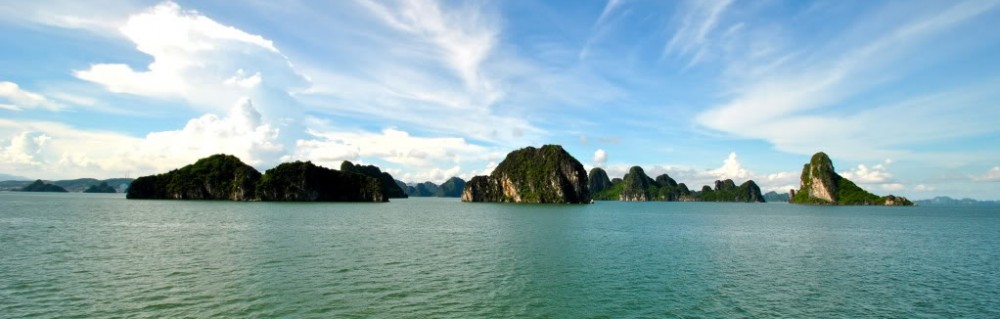


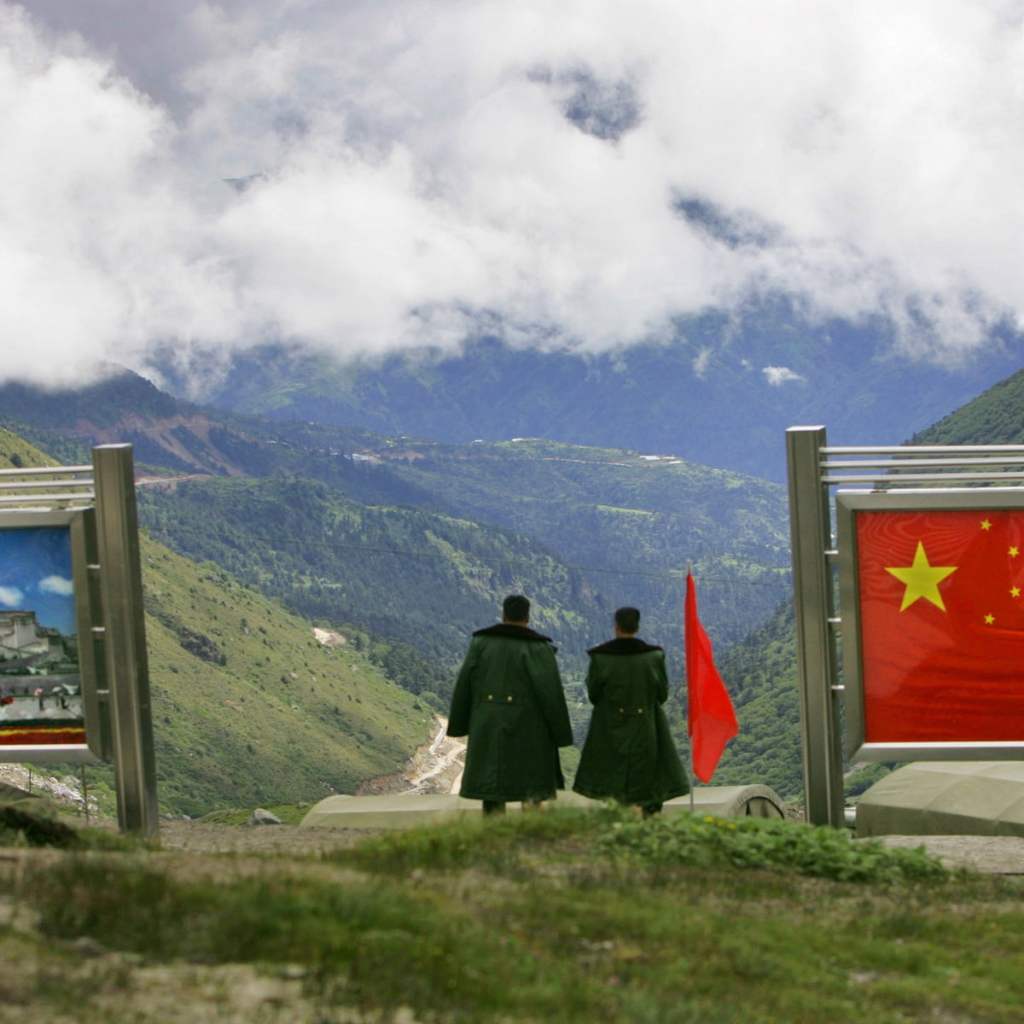
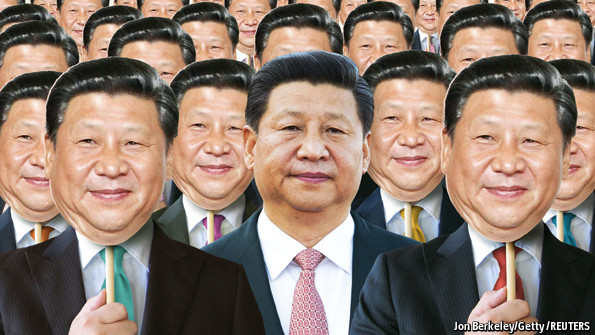

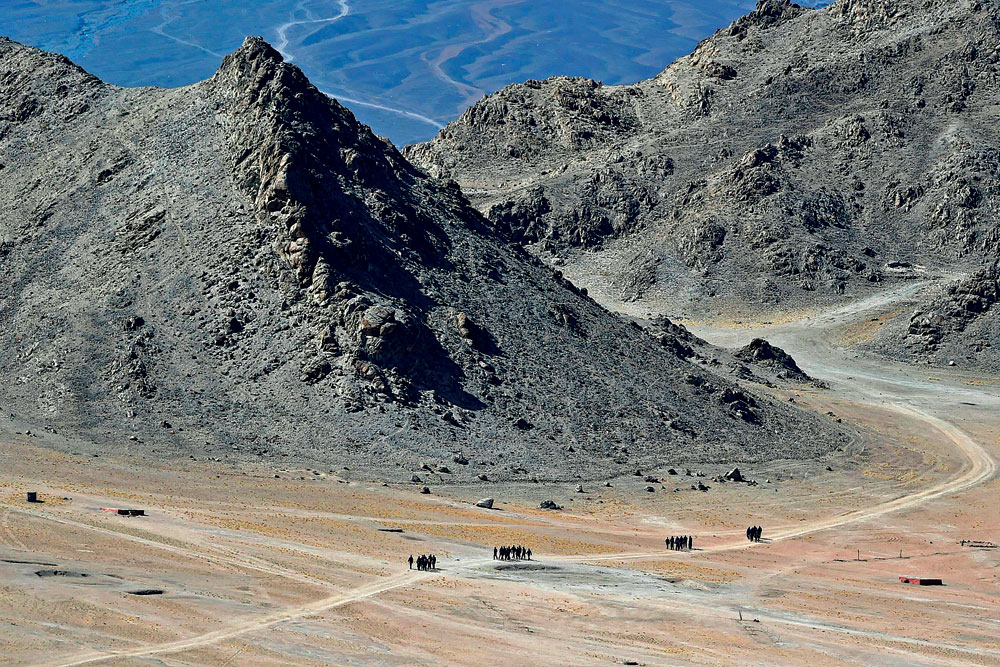
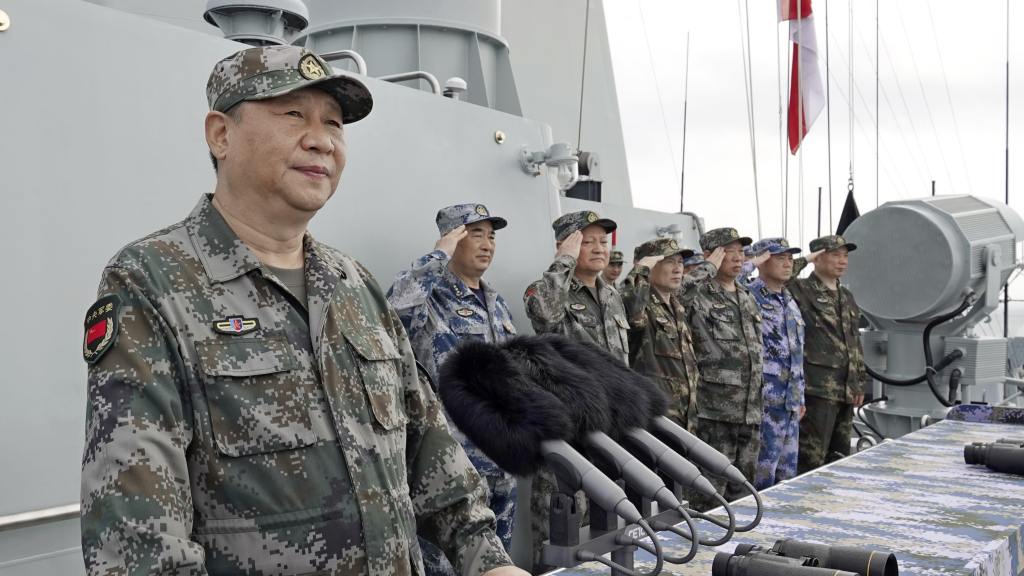
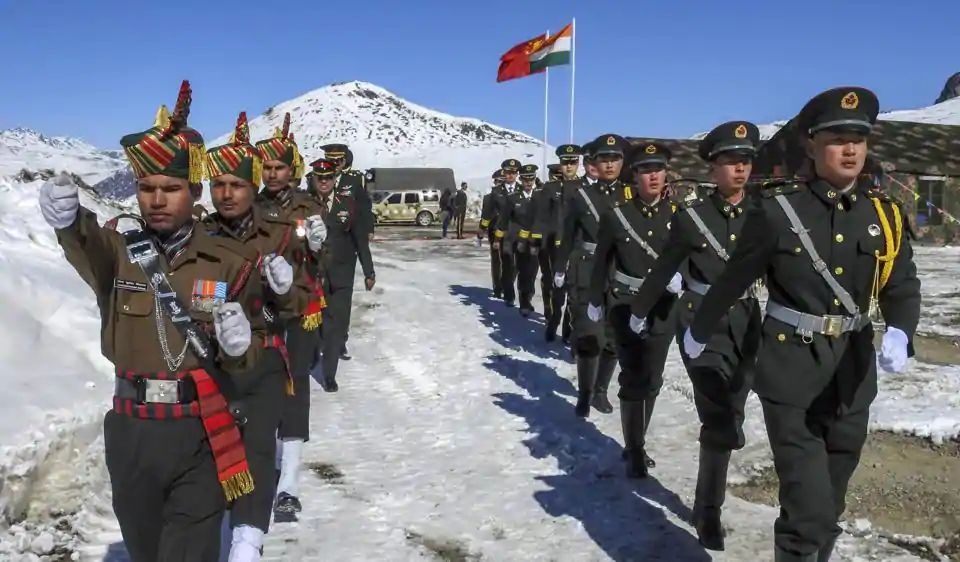


 Stagecraft and Statecraft
You must be logged in to post a comment.