The Iran and Ukraine wars are rewriting modern military strategy. These conflicts are demonstrating that a less conventionally powerful state, by leveraging asymmetric capabilities, can impose major costs on an aggressor and fundamentally reshape the outcome of conflict. Taiwan is not only drawing lessons from those conflicts, but also translating them into practice.
Far from seeking to match China ship for ship, missile for missile or aircraft for aircraft, Taiwan needs to make Chinese aggression so costly, problematic and uncertain that Beijing is deterred from launching an attack. Taiwan cannot become a bigger wolf than China, but it can ensure that no predator seeks to swallow it without getting badly wounded.
That is the logic driving Taiwan’s long-overdue pivot toward asymmetric capabilities — aerial drones, autonomous attack boats, land-based anti-ship missiles, mobile air defenses and other relatively inexpensive, distributed weapons.
The shift has been accelerated by developments in two very different wars: Ukraine’s growing capability to target energy and other strategic sites deep inside Russia and Iran’s refusal to bend to American coercion, leaving US President Donald Trump struggling for a face-saving way to exit the war he initiated. Both conflicts have shown that, despite sophisticated and expensive weapons remaining important, large numbers of cheap, mobile and expendable systems can impose disproportionate costs on a stronger opponent.
Ukraine has been the more important model for Taipei, given how Kyiv has stalled Russia’s advances on the battlefield by taking the war to the enemy’s heartland. Ukraine has shown that drones can transform the battlefield by providing surveillance, targeting and strike capabilities at a fraction of the cost of conventional aircraft. Taiwan’s defense planners are also studying Iran’s use of drones and missiles to impose regional costs on the US by striking American bases and facilities in the Middle East.
Nothing matters more for Taipei than deterring Chinese aggression.
For Beijing, invading Taiwan would be an exceptionally difficult amphibious operation for several reasons: the Taiwan Strait is about 130 kilometers wide at the narrowest point; weather is favorable for a major crossing only during a few windows each year; Taiwan has relatively few beaches suitable for large-scale amphibious landings; and many of those beach approaches lead into mountainous or urban terrain. Above all, China would have to move enormous quantities of troops, equipment, ammunition and supplies across the Strait while under attack.
That is exactly where Taiwan’s asymmetric strategy can impose significant costs on its foe. To turn the Strait and the approaches to Taiwan’s coastline into a killing zone, land-based anti-ship missiles can attack Chinese vessels while autonomous attack boats can swarm larger naval ships and landing craft. Drones, for their part, can provide constant surveillance and strike targets without putting Taiwanese pilots at risk. Mobile air defenses can frustrate China’s effort to establish air superiority.
In such a scenario, the objective will not be to win a traditional naval battle, but to prevent Beijing from achieving the quick victory on which its invasion strategy would depend.
Taiwan, learning the right lessons from conflicts elsewhere, is already making substantial progress. It is on track to produce more than 1,000 Hsiung Feng II and III anti-ship missiles by this year-end. Its heavy investment in layered air defenses combines expensive Patriot interceptors with much cheaper and more widely distributable Stinger missiles.
What stands out, however, is the scale of Taiwan’s drone-manufacturing goal, which is aimed at creating deterrence against China while also building export leverage abroad. It plans to produce 100,000 drones a month within four and a half years, with roughly half intended for export, while its military is likely to acquire more than 210,000 aerial and sea-based drones.
To plug a potential vulnerability, Taiwan has formed a new “Littoral Combat Command” to help integrate drones, mobile missiles and artillery so that these separate systems become components of a unified coastal-defense architecture. This is a wise step.
Reducing its traditional reliance on imported big-ticket platforms in favor of relatively cheap, distributed asymmetric systems is making Taiwan a harder target for China.
Taiwan, of course, still needs fighter aircraft, submarines, sophisticated air defenses and other high-end capabilities. But big-ticket systems should form the upper layer of a broader defense architecture rather than constitute its foundation. The foundation should be survivability, dispersion and punitive response.
That is especially important because China may choose to begin a war not with an amphibious invasion, but by seeking to isolate and slowly strangle Taiwan.
A blockade or quarantine could be used to disrupt shipping, intimidate commercial traffic, restrict energy supplies and even sever Taiwan’s communications with the outside world. Taiwan’s dependence on subsea cables makes this a particularly acute vulnerability. Without a single Chinese soldier setting foot on Taiwan, a communications blackout could create confusion and panic, disrupting financial markets, government operations, emergency services, logistics, military command-and-control, and the flow of information to the outside world.
Seen in this light, Taiwan’s recent exercise simulating an internet disruption was more than just a civil-defense drill. By deliberately throttling mobile data across parts of the island, Taiwan tested how citizens, businesses and institutions would function if communications were degraded during a crisis.
Such preparations are pivotal to an asymmetric strategy. Overwhelming an invading force with asymmetric capabilities depends on resilient networks so that drones and unmanned attack boats can detect targets, sensors can transmit information, missile batteries can receive targeting data, military commanders can communicate with dispersed units, and civilian authorities can coordinate emergency responses. If China were to sever Taiwan’s communications before the Taiwanese military could respond to an invasion, even an impressive arsenal of drones, missiles, artillery and autonomous attack boats would not be able to repulse aggression.
If resilience is to define national defense, Taiwan needs to invest not only in redundant communications and alternative satellite links, but also in hardened command networks, distributed data centers, backup power, and communications systems that can function when conventional internet access is cut. Taiwanese society should be able to operate under degraded communications conditions for weeks. And even when portions of the communications network are destroyed or jammed, Taiwan’s drones, missiles, sensors and command centers must remain operational.
Taiwan is rightly seeking to leverage its extraordinary technological and manufacturing base to build a defense-industrial ecosystem capable of mass-producing drones, autonomous systems, sensors, communications equipment and other expendable technologies. In fact, Taiwan has already begun to emerge as a significant drone exporter.
The ultimate purpose of the pivot from prestige weapons to asymmetric capabilities is not to prepare Taiwan to fight a war indefinitely. Rather, it is to make Beijing realize that starting a war would be a disastrous gamble.
Making Taiwan too hard to blind, too hard to blockade, too hard to invade and ultimately too painful to conquer would establish enduring deterrence.
Brahma Chellaney, professor emeritus of strategic studies at the independent Center for Policy Research in New Delhi, is the author of nine books, including the award-winning Water: Asia’s New Battleground (Georgetown University Press).
The devastating flash floods that tore through Nepal’s Trishuli and Koshi river valleys should not be seen as simply another Himalayan tragedy.
What began as an act of nature — a massive ice-and-rock avalanche that sheared away part of a glacier at an altitude of 5,200 meters near Tibet’s border with Nepal — became a cascading catastrophe after colliding with an increasingly engineered mountain landscape upstream.
The lesson is clear: In the fragile Himalayas, human alterations to rivers and mountain landscapes can dramatically amplify the impact of natural disasters.
The catastrophe unfolded with astonishing speed. The immense mass of ice and rock plunged into the upper Lhende Khola catchment, pulverizing into a dense slurry that temporarily dammed the narrow gorge before the improvised barrier collapsed. Within minutes, a wall of water, mud and boulders surged downstream, raising river levels. The collapse generated seismic waves so unusual that automated monitoring systems initially mistook the event for a magnitude-5.2 earthquake.
As the deluge thundered through Nepal’s steep valleys, it swept away villages, bridges and roads with devastating force. Several downstream hydroelectric facilities were wrecked by debris, triggering widespread power and communications failures. The floods also ravaged the Tibetan side of the border. In Nepal, however, they left a vast trail of death and destruction, while immense deposits of mud and rubble severely hampered search-and-rescue operations.
But the natural trigger of the disaster discloses only half the story.
The key question is why the floods became so destructive downstream. The answer lies in the cumulative effect of Chinese upstream infrastructure, altered river channels and the absence of meaningful transboundary cooperation. None of these caused the glacier failure, though together they may have amplified its consequences.
One important human factor was the transformation of the river corridor itself near the Tibet-Nepal border.
Over the past decade, China’s expansion of embankments, border facilities, highways and other civil works has narrowed sections of the upper valley by concentrating construction activity along the riverbanks. In ordinary conditions, such projects facilitate trade and transport. During an extreme flood, however, they become sources of vulnerability.
The torrent swept up loose spoil, concrete rubble, heavy machinery and structural debris, turning an already violent debris flow into what hydrologists aptly compare to liquid concrete — a battering ram capable of crushing almost any structure in its path. The deluge caused significant damage to infrastructure downstream.
The second human contribution was reengineered hydrology.
Diversion weirs, intake structures, embankments and other upstream river or stream modifications created localized bottlenecks in the narrow Himalayan gorges. As the avalanche-driven surge struck these chokepoints, temporary ponding and overtopping likely generated secondary flood pulses, accelerating the rapid downstream rise in river levels. The cascading impacts meant that some downstream communities faced not one but multiple destructive waves in quick succession.
Perhaps the most preventable failure was informational rather than physical.
China operates hydrological monitoring stations across the Tibetan headwaters, collecting real-time data on river levels and upstream conditions. Yet, despite its deepening relationship with Kathmandu, Beijing has not established comprehensive, year-round, real-time hydrological data-sharing and emergency notification mechanisms with Nepal (or with any other downstream country).
Even without a fully integrated 24/7 telemetry link feeding upstream water-level data directly into Nepal’s Department of Hydrology and Meteorology, an immediate Chinese emergency notification of sudden water-level spikes, debris-dam formation or other upstream anomalies could have bought precious time to evacuate settlements, trekking routes and vulnerable infrastructure, potentially reducing the death toll.
The absence of institutionalized hydrological transparency thus transformed a natural hazard into a governance failure.
For Nepal, rebuilding shattered hydropower stations, roads, bridges and other infrastructure will require years of investment. Another key task is institutional rather than physical: Nepal should seek from China mandatory real-time hydrological data sharing, cross-border emergency notification protocols, and independent assessments — should Beijing permit them — of how upstream engineering influences flood propagation in shared river basins. Transboundary rivers demand transboundary responsibility.
The Nepal tragedy exposes a more fundamental reality about the Himalayas, the world’s most seismically active major mountain range. The range remains under immense tectonic pressure as the Indian and the Eurasian continental plates collide, leaving its terrain exceptionally unstable.
Climate change is increasingly unsettling glaciers, but climate alone does not determine disaster outcomes. In the world’s youngest and most geologically fragile mountain range, engineering choices, river modifications and the absence of cross-border hydrological cooperation increasingly determine whether a natural hazard remains localized or cascades into a broader catastrophe.
Against this backdrop, the Nepal catastrophe may revive international scrutiny of a far larger gamble unfolding in a different section of the Himalayas: China’s super-dam on the Yarlung Tsangpo at the Great Bend, where the river makes a sharp U-turn around a towering mountain peak before gushing south into India. Constructing a mammoth dam with almost three times the power-generating capacity of the Three Gorges Dam beside a major geological fault carries extraordinary risks, especially for millions living downstream in India and Bangladesh.
China’s damming of rivers in Tibet is already wreaking environmental havoc. Scientists have long warned that the gravest threat to Himalayan dams may not be earthquakes alone, but massive rock-and-ice avalanches plunging into reservoirs and generating tsunami-like impulse waves capable of overtopping engineered structures.
The Nepal disaster is more than a national calamity. It is a warning that the boundary between natural disaster and human-made catastrophe is blurring in the Himalayas. As infrastructure expands across one of Earth’s most volatile mountain systems and glaciers weaken, the question is whether governments upstream and downstream will act before the next cascading catastrophe strikes.
Brahma Chellaney, a professor of strategic studies at the independent New Delhi-based Centre for Policy Research and fellow at the Robert Bosch Academy in Berlin, is the author of nine books, including “Water: Asia’s New Battleground,” which won the Bernard Schwartz Book Award.
From left, Turkish President Recep Tayyip Erdogan, Saudi Crown Prince Mohammed bin Salman and Pakistani Prime Minister Shehbaz Sharif pose after signing a trilateral defense agreement in Mecca this month. Photo: Saudi Press Agency via AP
America’s traditional allies in the Islamic world are not walking away from it, but they are no longer betting everything on Washington. After decades of relying on U.S. security arrangements, they are quietly building alternative partnerships to insulate themselves from Washington’s whims.
They may still need America’s technology, intelligence and military heft, but a number of Muslim allies are determined to reduce their vulnerability to American strategic decisions over which they have no say.
The Mecca Joint Defense Agreement, signed on August 7 by Saudi Arabia, Turkey and Pakistan, is the clearest signal yet of this shift. By committing to mutual defense (“an attack on one is an attack on all”) and establishing mechanisms for military coordination, intelligence sharing and defense-industrial cooperation, the trio is creating a strategic safety net beyond U.S. oversight.
All three members of this Sunni alliance are longstanding U.S. allies or partners. Turkey’s participation is especially momentous: As a NATO member, its decision to join a separate collective-defense alliance highlights how the desire for strategic autonomy has spread within the U.S.-led alliance system.
Another U.S. ally, Egypt, which for over 50 years has ranked as the second-largest recipient of U.S. aid after Israel, actively participated in the mutual-defense discussions with Ankara, Riyadh and Islamabad, but at the eleventh hour chose to stay out of the pact. Joining an autonomous defense axis that bypassed U.S. regional leadership could have exposed Egypt to financial and diplomatic risks amid severe economic distress. It could also have been interpreted as a breach of its 1979 peace treaty with Israel, which enshrines the primacy of treaty commitments over conflicting regional defense obligations.
The trilateral pact’s explicit reference to “Islamic solidarity,” together with the choice of the Muslim holy city of Mecca as the signing venue, has lent the accord a distinctly pan-Islamic character. It appears designed, at least in part, to provide strategic insurance against an increasingly unpredictable West. It also represents an implicit rejection of the regional architecture President Trump has sought to construct around Israel and the 2020 Abraham Accords.
The Mecca axis is not the only warning to America. As U.S. credibility erodes under Trump’s second presidency, U.S. allies in the Middle East and beyond are questioning American commitments and leaning toward hedging. There is already a larger rethink among America’s longstanding Gulf allies about relying on Washington.
Trump launched the Iran war without consulting the Gulf allies, then used vast U.S. military resources to shield Israel from Iranian retaliation while leaving the six Gulf sheikhdoms to bear the consequences for enabling American strikes from the U.S. bases that they host. On May 27, Trump even threatened to “blow up” Oman, a peaceful, longtime U.S. ally, if it entered a toll-sharing deal with Iran over the Strait of Hormuz.
Against this backdrop, the Gulf monarchies — long the immovable pillars of American power in the Middle East — are fundamentally altering their geopolitical calculations. They face dual risks of depending on the U.S. as a security guarantor while bearing the consequences of helping America wage war.
Iranian reprisals threatened precisely the infrastructure on which Gulf economies critically depend, including energy facilities, desalination plants and urban centers.
In a notable shift, the Gulf Arab states are no longer prepared to automatically align themselves with the U.S. agenda. In fact, seeking to insulate their ambitious economic and national-security projects from regional conflict, these states have shifted from strict containment of Iran to actively exploring détente with Tehran, including through economic incentives.
The Mecca alliance had been in the making for some time. Turkey has longstanding military and strategic ties with both Saudi Arabia and Pakistan, which signed a bilateral mutual-defense agreement in September 2025. Trump’s war on Iran helped transform that accord into a trilateral alliance. The fact that sophisticated American defenses were deployed primarily to protect U.S. and Israeli assets while leaving America’s Gulf allies exposed to Iranian reprisals appears to have influenced strategic thinking in Ankara as well.
When a country embedded in the Western security system joins an Islamic alliance it sends a particularly pointed signal about its intent to hedge. Turkey’s decision suggests that it does not believe NATO membership is sufficient for its security. Its foreign minister has approvingly likened the Mecca pact’s mutual-defense provision to NATO’s Article Five.
The Mecca alliance’s architecture is striking because each member brings something the others lack. Oil-rich Saudi Arabia contributes financial power. Manufacturing powerhouse Turkey brings a robust defense industry, combat experience and NATO-trained military capabilities. Pakistan, despite being trapped in a chronic debt crisis, brings a large standing military, a nuclear arsenal and experience in asymmetric warfare, including the use of state-backed militant proxies.
Critics may dismiss the alliance as a paper tiger because its three militaries are not integrated into a single, NATO-style command structure. The pact’s aim, however, is not to create a unified expeditionary force but to make each member less vulnerable by combining Saudi money, Turkish military technology and Pakistani manpower and nuclear-weapons capabilities.
Washington has long complained that its Middle Eastern allies free-ride on American security. The Mecca alliance offers a caustic response: We will take greater responsibility for our own defense — but on our own terms.
The pact underscores a paradox: It is both a sign of declining American primacy and an opportunity to craft a more prudent and sustainable U.S. strategy. The U.S. cannot demand that its partners become more capable while it simultaneously insists they remain dependent on Washington.
America must face up to an unpalatable reality: The age of exclusive U.S. security provision in much of the Islamic world may be ending, with the Iran war serving as a catalyst. The wise response is not to fight this transition, but to shape it.
Then‑Prime Minister Fumio Kishida, then-U.S. President Joe Biden and other Group of Seven leaders and officials visit Itsukushima Shrine during their summit in Hatsukaichi, Hiroshima Prefecture, in May 2023. | Japan’s Foreign Ministry / via REUTERS
Nearly half a century after Edward Said published his landmark book “Orientalism,” his central insight remains strikingly relevant.
Said argued that the “Orient” was often presented by Western media, academia, literature and institutions not as a collection of complex societies but as the West’s contrasting mirror image — irrational rather than rational, emotional rather than pragmatic, culturally driven rather than strategically motivated, backward rather than modern.
Japan, despite being one of the world’s most technologically advanced democracies that hosts more American troops than any other U.S. ally, has never entirely escaped the Orientalist framework. In news reporting, that framework operates through subtle narrative framing and language choices.
When The New York Timesrecently profiled Prime Minister Sanae Takaichi, it described her as pursuing a “nationalist agenda” while presenting her premiership as part of Japan’s rightward political shift.
Similar Western reporting has claimed rising “xenophobic nationalism” in Japan, particularly in coverage of the Sanseito Party and debates over immigration and national identity that led this month to stricter permanent residency requirements.
Whether one agrees or disagrees with such characterization is beside the point. The more revealing question is why the lens of xenophobia and exclusionary nationalism is so rarely applied to Western politics or policies.
President Donald Trump’s “Make America Great Again” movement is among the most stridently nationalist political projects in modern American history. Yet the American mainstream press discusses it principally as populism, conservatism or a battle over the country’s future rather than as evidence of a dangerous nationalist turn. Nationalism, it seems, is something practiced by others.
George Orwell recognized this distinction long before today’s debates. In his 1945 essay Notes on Nationalism, he observed that patriotism is usually portrayed as defensive and virtuous, while nationalism is associated with aggression and the pursuit of power. Contemporary Western reporting frequently reproduces this divide across national borders. At home there are patriots. Abroad there are nationalists.
This may also explain why Japan’s immigration policy is portrayed as “ethno-nationalism,” while Trump’s tough immigration agenda featuring a national border emergency declaration, massive expansions of ICE detention capacity and deportation flights is described as “border security” and “enforcing the rule of law.”
Likewise, Japan’s “economic security” frameworks, India’s self-reliance strategy and Southeast Asia’s subsidizing of local manufacturing are depicted as “rising economic nationalism” and “protectionist agendas.” But America’s domestic manufacturing subsidies (via legislation like the CHIPS and Science Act), aggressive industrial policy and broad tariffs to counter foreign competition are presented as “protecting American jobs” and defending “America First.”
The asymmetry in political vocabulary extends to military modernization. When pursued by Western governments, the language is generally reassuring, such as safeguarding “national security interests.” But when carried out by a major non-Western country, it becomes “resurgent nationalism.”
The difference is more than semantic. It reflects an implicit assumption that Western states naturally act from rational strategic calculation, whereas other nations are driven by historical passions, cultural instincts or identity politics.
The pattern becomes even clearer during moments of crisis.
Following the natural disaster-triggered accident at the Fukushima No. 1 nuclear power plant in 2011, much Western reporting quickly abandoned the language of emergency management in favor of familiar cultural imagery. Engineers and technicians working under extraordinarily dangerous conditions were transformed into “nuclear samurai,” “nuclear ninjas” or “kamikaze volunteers.” The disaster itself was frequently presented through apocalyptic imagery that evoked exotic catastrophe more readily than scientific assessment.
This framing was revealing. Few Western reporters would have described American engineers responding to the 2010 Deepwater Horizon disaster as “modern cowboys” or British emergency personnel as “knights.” Yet Japan’s response was repeatedly interpreted through centuries-old cultural archetypes, as though contemporary Japanese society could only be understood by invoking historical imagery. Worse still, victims’ suffering was reduced to a backdrop for lurid stories about radiation.
The consequences extended beyond colorful headlines. Sensational reporting fueled public anxiety far beyond what available evidence justified. Preventive evacuations ensured no deaths occurred from acute radiation exposure, yet many foreign audiences were left with the impression that Fukushima represented another Chernobyl.
Within Japan itself, alarmist overseas coverage circulated rapidly through television and the internet, sometimes undermining confidence in official communications and complicating crisis management. The country’s international image also suffered, affecting tourism, exports and investor confidence long after the immediate emergency had passed.
These examples point to a broader structural problem: Western journalism often treats its own political culture as the universal baseline against which others are measured. Foreign politics, especially in Asia, remain vulnerable to cultural essentialism.
Japan occupies an unusual position in this narrative. It is simultaneously viewed as technologically sophisticated and culturally exotic, economically advanced yet somehow perpetually “other.” That combination makes it especially susceptible to reporting that oscillates between admiration and caricature.
During ordinary times, Japan is celebrated for efficiency, discipline and innovation. During moments of political debate or national crisis, however, centuries-old stereotypes often re-emerge with surprising speed.
Western media, especially Anglo-American outlets, double as the international media. How these organizations present the news helps shape markets, investment decisions, diplomacy, tourism flows and public trust. When reporting substitutes cultural stereotypes for careful analysis, it distorts not only public perception but also international decision-making.
Edward Said warned that representation is never simply about description; it is also about power. That observation remains pertinent today. Orientalist framing does more than mischaracterize Asian societies. It encourages the world to evaluate them by standards different from those applied to the West itself.
Brahma Chellaney, a longstanding contributor to The Japan Times, is the author of nine books, including “Water: Asia’s New Battlefield,” which won the Bernard Schwartz Award.
China shapes global knowledge not just by blocking information at home, but by exporting censorship through economic coercion and diplomatic pressure. It is increasingly influencing what the rest of the world knows about its internal repression, territorial revisionism and even China itself.
Its strategy rests on three pillars. The first is corporate compliance. Beijing leverages access to its vast domestic market to make Western companies — from Hollywood studios to the National Basketball Association — self-censor topics such as Tibet, Taiwan, Xinjiang and Hong Kong in order to protect their commercial interests.
The second is platform control. Chinese-owned apps such as WeChat enforce domestic censorship rules on overseas users. TikTok has faced sustained international scrutiny over its algorithms that tend to deprioritize or shadowban content critical of the Chinese government.
The third is the suppression of independent scholarship. Beijing employs economic leverage while threatening to withhold visas from Western researchers, suspend funding for overseas Confucius Institutes or curtail tuition revenue from Chinese international students. Foreign universities, think tanks, nonprofits and academic publishers have all faced targeted pressure intended to shape research on modern Chinese history and politics, including Beijing’s claims over Taiwan, Tibet, Xinjiang and the South China Sea.
Few cases better illustrate China’s campaign against academic freedom abroad than the world’s premier conference on Tibetan studies, which had been scheduled to open on August 23 in Kathmandu, Nepal’s capital. Under pressure from Beijing, Nepal’s government suddenly scrapped the conference before the first panel could even begin.
The Chinese pressure led Nepal’s government on August 5 to cancel the International Association for Tibetan Studies (IATS) conference altogether. Before the cancellation, the Tibetan Policy Institute — the think tank of the Tibetan government-in-exile — had already been compelled to withdraw in an effort to accommodate Chinese concerns. Yet even that concession, along with organizers’ repeated assurances that the meeting would be purely academic, failed to prevent the conference from being scrapped. About 100 officials and supposed scholars from Chinese state institutions, including the China Tibetology Research Center, had registered to participate.
The cancellation illustrates a stark reality: Beijing’s influence now extends beyond shaping participation in scholarly debate to preventing that debate from taking place at all.
It also underscores China’s growing leverage over Nepal, wedged between Chinese-ruled Tibet and India. Beijing routinely uses economic inducements to pressure Nepal into policing Tibetan exile activities, suppressing protests and imposing strict restrictions on Tibetan exiles.
The IATS meeting, held every three to four years, is widely recognized as the leading academic conference on Tibetan history, language, culture, philosophy and religion, drawing Western Tibetologists.
The Nepal episode is a window into a broader transformation in China’s exercise of power. No longer content merely to censor discussion within its own borders, Beijing is increasingly using diplomatic leverage, economic influence and political pressure to shape who gets to speak — and who is denied a voice — on the international stage. This represents a new form of geopolitical competition: the struggle not simply for territory or markets but for authority over knowledge itself.
China is increasingly seeking to convert economic and diplomatic leverage into epistemic power — the ability to influence what others think, know or believe and which narratives acquire institutional authority. This entails controlling knowledge norms and information access.
Chinese diplomats warned Nepali officials that the conference could become a platform for “anti-China rhetoric.” The diplomatic intervention ultimately outweighed the assessments of Nepal’s own security agencies, which reportedly concluded that the gathering posed no security threat, as well as the organizers’ extensive efforts to accommodate the concerns of a country that is increasingly dependent on Chinese investment and attentive to Beijing’s political priorities.
Academic freedom depends not only on individuals’ ability to speak but also on the existence of forums where competing institutional voices can engage one another. When geopolitical pressure is used to prevent such exchanges from taking place, the marketplace of ideas itself becomes distorted.
This is why the Nepal episode should matter to Americans. The U.S. has spent years addressing Chinese influence by phasing out Confucius Institutes, increasing scrutiny on federal grant recipients for foreign ties, and tightening controls on sensitive research. Now, another dimension deserves equal attention: Beijing’s growing ability to shape the production of knowledge itself.
Knowledge is power. Whoever shapes accepted historical narratives — and determines whose voices are treated as legitimate while others are quietly erased — acquires lasting influence.
None of this is an argument for excluding researchers from Chinese state-run institutions. Robust scholarship requires intellectual exchange across political systems. The problem arises when geopolitical pressure determines whether scholarly debate can take place before it even begins.
Academic conferences should be arenas where evidence competes with evidence — not places where geopolitical power determines whether scholars are allowed to meet at all.
What Beijing increasingly seeks is to shape the global institutions that determine which arguments are heard, which voices are considered legitimate, and which histories become accepted as authoritative. Its more-fundamental objective is to encourage preemptive self-censorship, effectively narrowing what the world can say, see and study.
The larger struggle over who defines the world’s understanding of Tibet, Taiwan, Xinjiang, Hong Kong, the South China Sea — and China itself — is gathering pace, with universities and scholarly institutions emerging as a critical battleground in the geopolitical competition.
The US and Israel won the opening battles of the war they launched against Iran. They may yet lose the larger strategic contest. More significantly, the conflict continues to hold the global economy hostage. It has turned into an asymmetric war of attrition with mounting strategic, economic and geopolitical costs, with India one of the worst affected countries.
The war, now in its sixth month, has become a textbook example of how overwhelming military superiority does not necessarily translate into political success. Early strikes inflicted devastating damage on Iran’s military infrastructure and decapitated much of its senior leadership. Yet the Islamic Republic did not collapse. Instead, it adapted. Its leadership was rapidly reconstituted, its security apparatus remained intact, and it shifted to an asymmetric strategy that has imposed growing costs on the US and its regional allies.
Despite sustained strikes against Iranian assets, US President Donald Trump’s administration has failed to achieve one of its principal objectives: restoring secure commercial navigation through the Strait of Hormuz. Iran continues to wield its ability to disrupt one of the world’s most important energy chokepoints, keeping global energy markets under constant pressure and prolonging a worldwide economic shock. The war has destabilized the entire Persian Gulf region.
More fundamentally, the war has exposed a central flaw in the way Trump approached the conflict. No military campaign should begin without a clearly defined political end state, a realistic strategy for achieving it, an assessment of how the adversary is likely to respond, and measurable criteria for success. Absent these, tactical victories can accumulate without producing strategic gains. That increasingly appears to describe America’s campaign against Iran—“a bombing campaign in search of a strategy,” as Joe Kent, a former top US counterterrorism official, put it.
The conflict has also expanded well beyond a bilateral confrontation. Hezbollah, Iraqi militias, the Houthis and US-aligned Gulf states have all been drawn into the fighting at various stages. Repeated ceasefires have merely paused, rather than resolved, the violence, even as the financial, military and human costs continue to mount.
Trump’s war has revealed the limits of US power. Iran remains defiant, the Strait of Hormuz remains contested, and Washington’s objectives have become increasingly difficult to define. The longer the conflict continues without a coherent US political strategy, the greater the risk that Trump’s brazen military attack will be remembered not for its spectacular opening, but as a strategic liability that defined his second presidency.
Understanding how the world’s most powerful military arrived at this point—and what it means for American strategy, the Middle East, India and the global balance of power—is essential to understanding the conflict itself.
The war exposed India’s vulnerabilities
While the US risks turning military success into strategic failure, India risks becoming one of the Iran war’s biggest collateral casualties.
For more than two decades, India has carefully cultivated a policy of multi-alignment in the Middle East, maintaining close ties simultaneously with the US, Israel, the United Arab Emirates, Saudi Arabia and Iran. That balancing act has served India remarkably well, securing energy supplies, protecting its large diaspora, expanding trade and opening new strategic partnerships.
A prolonged US-Iran conflict, however, threatens to unravel this equilibrium.
India’s greatest vulnerability is energy. More than 80 per cent of its crude oil is imported, with roughly half originating in or transiting the Persian Gulf. Even more critically, most of India’s imported Liquefied Natural Gas (LNG) and Liquefied Petroleum Gas (LPG) also pass through the Strait of Hormuz.
As long as Iran retains the ability to threaten this maritime chokepoint, India remains exposed to higher energy prices, imported inflation, a widening current account deficit and greater fiscal pressure. Every sustained increase in oil prices ripples through the Indian economy—from transport costs and manufacturing to household cooking fuel and fertilizer production.
The costs do not end there. Higher war-risk insurance premiums and disruptions across the Gulf and Red Sea have sharply increased freight costs, eroding the competitiveness of Indian exports to Europe and North America.
At the same time, the conflict threatens the livelihoods of about nine million Indians living and working in the Gulf. Any large-scale escalation could force New Delhi to undertake a massive evacuation while further reducing remittances that sustain millions of households across states such as Kerala, Tamil Nadu and Bihar.
The strategic consequences may prove even more enduring. The war strikes at the heart of India’s long-term connectivity ambitions.
Iran’s Chabahar Port—in which India invested heavily to obtain direct access to Afghanistan and Central Asia while bypassing Pakistan and offering a counterweight to China’s Gwadar Port—has been crippled by renewed American sanctions, US airstrikes and the reluctance of private shipping, insurance and logistics firms to operate there. Chabahar is a crucial feeder port for the broader International North-South Transport Corridor (INSTC) connecting Mumbai to Moscow. The Iran war has effectively frozen development on missing rail links and dry-run corridors.
Consequently, Afghanistan and the landlocked Central Asian states have been pushed back toward reliance on Pakistani routes or Chinese Belt and Road Initiative (BRI) infrastructure, undermining India’s regional influence.
Simultaneously, the India-Middle East-Europe Economic Corridor (IMEC), unveiled with great fanfare at the G20 summit in 2023 in New Delhi as a flagship alternative to China’s BRI, has effectively been frozen. Aimed at connecting India to Europe via a sea-and-rail network passing through the UAE, Saudi Arabia, Jordan and Israel, IMEC’s viability depends upon a stable Middle East and continued Arab-Israeli normalization—two assumptions that the war has shattered.
The result is more than the temporary suspension of three infrastructure projects. Together, Chabahar, INSTC and IMEC formed the key pillars of India’s westward strategic outreach, intended to integrate the country more deeply with Central Asia, the Persian Gulf and Europe while reducing dependence on vulnerable maritime routes. Their suspension narrows India’s geopolitical options just as China is expanding its economic and diplomatic footprint across West Asia.
Trump’s Iran war, illustrating how he has turned America’s unrivalled power into an instrument of unilateral coercion, is imposing mounting costs on India. The conflict threatens India’s energy security, strains its economic resilience, endangers millions of overseas citizens and undermines years of painstaking geopolitical investment. Indeed, the conflict has imposed a broad inflationary tax on the Indian economy.
In a war fought far from its borders, India may emerge as one of its principal strategic losers.
India’s new energy realism
The Iran war is forcing India to rethink not merely where it buys its energy, but the very foundations of its energy security strategy.
For decades, India’s overriding concern was ensuring that sufficient energy supplies reached its shores at affordable prices. That objective has become considerably more complicated.
The prolonged disruption of Persian Gulf supplies has demonstrated that energy security can no longer be measured simply in barrels purchased or contracts signed. It now encompasses the resilience of maritime supply routes, the political reliability of suppliers, the financial infrastructure through which payments are made, and the strategic leverage that accompanies dependence on any single power.
New Delhi’s response has therefore evolved into a multi-layered strategy designed to reduce vulnerability without sacrificing strategic autonomy.
The first line of defence is physical resilience. India has significantly strengthened its Strategic Petroleum Reserve (SPR), maintained by Indian Strategic Petroleum Reserves Limited. Underground caverns at Visakhapatnam, Mangaluru and Padur provide an emergency buffer against sudden oil-supply disruptions, while commercial inventories maintained by public-sector refiners substantially extend national cover. The government is also expanding storage capacity at Chandikhol and Padur under Phase II of the SPR program.
These reserves cannot insulate India indefinitely from a prolonged conflict, but they buy policymakers precious time during the opening stages of a supply shock, reducing the likelihood of panic buying or abrupt economic disruption.
Natural gas presents a much greater challenge. Unlike crude oil, liquefied natural gas cannot easily be stockpiled for extended periods. India’s LNG storage infrastructure was designed for operational efficiency rather than strategic resilience, leaving the country with only a limited emergency cushion.
Because a majority of India’s imported LNG originates in the Gulf and transits the Strait of Hormuz, any prolonged disruption immediately exposes the country to shortages. The government has consequently begun encouraging additional cryogenic storage capacity while developing protocols for emergency allocation of scarce supplies. In a severe crisis, household cooking gas, city gas distribution and fertilizer production receive priority, while industrial users, power stations and energy-intensive manufacturers are required to curtail consumption or switch to alternative fuels.
The second pillar of India’s strategy is diversification. Russia’s invasion of Ukraine transformed India’s crude procurement strategy, as refiners took advantage of discounted Russian oil. Although Washington subsequently pressured New Delhi to reduce those purchases, the outbreak of the Iran war demonstrated the strategic value of maintaining multiple suppliers. Russian crude has provided an important economic hedge against volatility in Middle Eastern markets.
At the same time, India expanded purchases from Brazil, Guyana, Nigeria, Angola, Venezuela and the US, reducing the danger that instability in any single producing region could paralyze its economy.
Diversification, however, is not simply about geography. Different crude grades possess different refining characteristics. Indian refineries have spent decades optimizing operations around heavier Middle Eastern and Russian grades. Maintaining a balanced crude basket, therefore, improves both energy security and refinery efficiency, reducing dependence on any one supplier while preserving operational flexibility.
Diversifying suppliers does not eliminate another critical vulnerability: geography. Oil purchased from widely separated producers still converges upon a limited number of maritime chokepoints. The Strait of Hormuz, Bab el-Mandeb and the Red Sea remain indispensable arteries for global commerce. Even when cargoes are rerouted around the Cape of Good Hope to avoid conflict zones, transit times lengthen, freight costs increase and insurance premiums soar.
Recognizing this reality, India has quietly expanded the role of its navy. Through Operation Sankalp, Indian warships now provide escorts for merchant vessels, conduct maritime surveillance across the Arabian Sea and Gulf of Aden, and protect sea lines of communication vital to India’s economy. Importantly, New Delhi has deliberately maintained these operations under independent national command rather than integrating them into U.S.-led naval coalitions.
That distinction is more than symbolic. American-led maritime coalitions pursue broader geopolitical objectives, including deterrence and, when necessary, offensive strikes against hostile launch sites. India’s mission is fundamentally different. Operation Sankalp is narrowly focused on protecting Indian shipping, preserving freedom of navigation for India’s own commerce and avoiding entanglement in regional conflicts. By remaining outside formal coalition structures, New Delhi retains complete freedom to determine when, where and how its forces operate while continuing to exchange maritime information with international partners.
This approach preserves India’s longstanding policy of strategic autonomy while minimizing the risk that it will be perceived by Arab states or Iran as an active participant in the conflict.
Yet the most consequential debate in New Delhi concerns not naval deployments or strategic reserves, but the changing composition of India’s energy imports.
As American sanctions on Russia intensified and Washington pressed India to diversify away from both Russian and Iranian supplies, the US has emerged since May as India’s largest supplier of LNG and LPG. Furthermore, India, nudged by Washington, has become the largest export destination for Venezuelan oil, payments for which flow to the US Treasury rather than Caracas. The arrangement increasingly resembles a colonial relationship, with Washington controlling Venezuela’s principal source of national income.
The US-origin or US-controlled energy supplies to India undoubtedly enhance diversification, but they also introduce major vulnerabilities. More importantly, replacing one dependency with another carries its own strategic risks.
Europe offers a cautionary example. Following Russia’s invasion of Ukraine, European governments rapidly reduced their dependence on cheap Russian pipeline gas by dramatically increasing imports of American LNG. While this strengthened energy security in one respect, it also exposed Europe to higher transportation and liquefaction costs, volatile US pricing and growing political dependence upon decisions made in Washington. Energy relationships that appear commercially attractive during one geopolitical crisis can become strategic liabilities during the next.
Indian policymakers are keenly aware of this lesson. Dependence upon US-origin or US-controlled energy sources exposes India to risks extending well beyond ordinary market fluctuations. American energy exports remain subject to executive authority and domestic political priorities. Export licenses can be modified, delayed or conditioned in response to changing geopolitical circumstances. Even more significant is Washington’s demonstrated willingness to employ sanctions, financial regulations and the dollar-based international payments system as instruments of statecraft.
India experienced this first-hand as Washington repeatedly targeted Russian energy exports with sanctions. Although China remained Russia’s largest energy customer and Europe continued purchasing significant quantities, Washington focused its pressure largely on India to curtail imports and shift toward alternative suppliers, especially the US. The broader message was unmistakable: access to energy could become contingent upon alignment with American foreign policy objectives.
Such dependence sits uneasily alongside India’s longstanding commitment to strategic autonomy. For decades, successive Indian governments have sought to avoid excessive dependence upon any single great power. That principle applies as much to energy as it does to defence or diplomacy. Heavy reliance upon US-origin or US-controlled energy supplies could gradually reduce New Delhi’s diplomatic flexibility toward Russia, Iran and other non-Western partners, complicating its ability to pursue an independent foreign policy.
There are also commercial considerations. American LNG generally carries higher transportation and liquefaction costs than supplies from the Gulf, while US crude differs significantly from the heavier grades for which many Indian refineries were designed. Processing large quantities of lighter American crude requires operational adjustments that can reduce the production of diesel and other middle distillates essential to India’s transport economy.
Such import dependence introduces another layer of vulnerability. American energy transactions are denominated in US dollars, reinforcing dependence upon American financial infrastructure precisely when India has sought to diversify payment mechanisms. New Delhi’s growing interest in local-currency settlement reflects not ideological opposition to the dollar but a desire for redundancy.
The successful Rupee-Dirham framework with the UAE demonstrates how local-currency arrangements can reduce exposure to external financial shocks while facilitating bilateral trade. By contrast, the Rupee-Rouble mechanism revealed the practical difficulties created by large trade imbalances and India’s partially convertible currency. The rupee is fully convertible on the current account (for trade, services and remittances), but it has partial and restricted convertibility on the capital account to prevent sudden massive capital flight during global financial crises and to protect the currency from extreme speculative attacks by foreign entities.
The lesson is not that de-dollarization is imminent, but that financial diversification is becoming an essential component of energy security.
Ultimately, India is attempting to avoid exchanging one structural dependency for another.
Electrification of transport, accelerated adoption of electric vehicles, nationwide railway electrification, expanded ethanol blending, compressed biogas, green hydrogen for fertilizer and steel production, large-scale renewable energy deployment, grid-scale storage and expanded nuclear generation all serve a common strategic objective: reducing India’s exposure to external energy coercion.
The same logic underpins India’s search for overseas equity oil, investments in critical minerals, and efforts to develop domestic manufacturing across emerging clean-energy supply chains.
Energy security in the twenty-first century is no longer measured solely by oil wells and tanker routes. It increasingly depends upon batteries, transmission networks, hydrogen technologies, nuclear reactors and secure access to lithium, cobalt, nickel and rare earth elements.
The Iran war has accelerated this transformation. It has demonstrated that energy dependence is not simply an economic vulnerability but a geopolitical one.
For India, the lesson is clear: strategic autonomy ultimately requires energy autonomy. Complete self-sufficiency may remain unattainable for a rapidly growing major economy, but reducing dependence on any single supplier, transport corridor or financial system has become a national security imperative. The conflict has therefore reinforced a doctrine likely to shape Indian strategy for decades to come—one that seeks resilience through diversification today while pursuing genuine energy independence tomorrow.
India’s strategic awakening
The Iran war is set to leave a lasting imprint on India’s strategic thinking long after the guns fall silent.
It represents a critical defining moment, just like the 1991 Indian financial crisis, which was driven by a rapid depletion of foreign exchange reserves and external shocks like the US-led Gulf War and which compelled India to pledge gold to the International Monetary Fund (IMF) and abandon the “license raj” for market liberalization.
Wars often force changes to help plug vulnerabilities. The current conflict in the Persian Gulf has done precisely that for India. It has exposed vulnerabilities that many Indian policymakers understood in theory but had never experienced on such a scale: the fragility of maritime energy lifelines, the limits of multi-alignment during great-power confrontation, the vulnerability of ambitious connectivity projects to geopolitical shocks, and the revolutionary impact of low-cost autonomous weapons on modern warfare.
The most important lesson concerns energy itself. For decades, Indian policymakers viewed energy security largely through the lens of supplier diversification. The assumption was straightforward: purchasing oil from a wider range of countries would reduce strategic vulnerability.
The Iran war has exposed the limitations of that approach. Diversifying suppliers does little if much of the country’s oil and gas imports must still pass through vulnerable maritime chokepoints. A tanker carrying American, Russian or Gulf crude offers little comfort if it cannot safely transit the Strait of Hormuz.
The lesson is that energy security is no longer simply about suppliers. It is about resilience. That requires larger strategic reserves—not only for crude oil but also for natural gas—greater redundancy in shipping routes, stronger naval protection for sea lines of communication, and a faster transition toward domestically produced energy.
India’s long-term energy strategy is, therefore, becoming inseparable from its national security strategy.
The conflict has also exposed the hard limits of multi-alignment. India has spent the past two decades cultivating close relationships simultaneously with Washington, Riyadh, Abu Dhabi, Tel Aviv and Tehran. That strategy worked because those relationships could largely be compartmentalized. The Iran war demonstrates what happens when those compartments collapse.
The US and Israel expect partners to tighten sanctions and isolate Tehran. Iran expects countries benefiting from access to Chabahar and the Strait of Hormuz to remain politically neutral. Gulf monarchies are simultaneously deepening ties with Asia while hedging between Washington and Beijing. In such an environment, maintaining cordial relations with all sides becomes progressively more difficult.
This does not mean India’s policy of strategic autonomy has failed. On the contrary, it makes strategic autonomy even more valuable. But autonomy will increasingly require active diplomacy rather than passive balancing. India can no longer assume that staying equidistant from competing blocs will automatically protect its interests. It will have to become more proactive in crisis diplomacy, regional mediation and coalition-building while preserving freedom of action.
The war also delivers a sobering verdict on infrastructure strategy.
The suspension of the IMEC and INSTC corridors illustrate how quickly geopolitical assumptions can collapse. Multinational corridors crossing politically unstable regions may appear commercially attractive during peacetime but can become financially and strategically untenable almost overnight.
Future connectivity strategies will thus likely place greater emphasis on redundancy rather than efficiency alone. Direct maritime access, diversified shipping routes, protected port investments and multiple transport corridors are likely to receive greater priority than ambitious but politically fragile mega-projects.
Perhaps nowhere are the lessons more striking than on the battlefield. Like the war in Ukraine, the Iran conflict demonstrates that the economics of warfare are changing. Militaries can no longer afford to intercept $20,000 drones with multi-million-dollar missiles. Drone swarms, loitering munitions, precision missiles and electronic warfare increasingly allow relatively inexpensive systems to impose disproportionate costs on technologically superior adversaries.
For India, this is not an argument against acquiring sophisticated aircraft such as the French Rafale. High-end fighters remain indispensable for establishing air superiority, conducting deep precision strikes and deterring peer competitors such as China. But the conflict demonstrates that quality alone is insufficient.
The future lies in integrating crewed aircraft with large numbers of inexpensive autonomous systems capable of saturating enemy air defences, conducting reconnaissance and absorbing attrition before high-value platforms enter contested airspace.
India’s emerging Combat Air Teaming System (CATS), indigenous stealth drones and loyal-wingman concepts point in precisely this direction. Equally important will be mass-producing low-cost interceptors, directed-energy weapons and electronic warfare systems capable of defeating drone swarms without exhausting expensive missile inventories.
The central challenge is no longer simply technological sophistication. It is achieving technological sophistication at industrial scale.
The conflict also exposes another dimension of national resilience that has often received insufficient attention: India’s overseas citizens.
About nine million Indians live and work across the Gulf. Previous crises allowed New Delhi to organize limited evacuation operations. A prolonged regional war would present an entirely different challenge. Airspace closures, damaged infrastructure and maritime disruptions could make evacuating millions of people impossible. Protecting the diaspora therefore requires a shift from emergency evacuation toward pre-crisis planning, civil-defence cooperation with Gulf sheikhdoms, resilient communications networks and stronger domestic mechanisms for absorbing returning workers without severe economic and social disruption.
Taken together, these lessons point toward a broader transformation.
The Iran war demonstrates that twenty-first-century national security can no longer be compartmentalized into separate military, economic, technological and diplomatic domains. Energy policy affects foreign policy. Financial infrastructure influences strategic autonomy. Maritime security shapes economic resilience. Industrial capacity determines military effectiveness. Critical technologies increasingly matter as much as traditional weapons systems.
For India, strategic autonomy is thus acquiring a new meaning. It is no longer simply the freedom to avoid choosing sides in great-power competition. Increasingly, it is the ability to withstand external coercion regardless of where it originates—whether through disrupted energy supplies, sanctions, financial pressure, supply-chain shocks or military intimidation.
The broader significance of the Iran war lies precisely here. The conflict, by exposing India’s vulnerabilities, has helped clarify its strategic priorities. Building larger energy reserves, diversifying supply chains, strengthening maritime power, accelerating indigenous defence production, investing in new military technologies and reducing structural dependence on imported hydrocarbons are no longer separate policy initiatives. They are becoming components of a single national strategy.
The war may ultimately be remembered not only for reshaping the Middle East but also for accelerating India’s evolution from a country managing external crises to one systematically preparing for an era in which geopolitical disruption is no longer the exception but the norm.
The Iran war marks more than a turning point for India or any other important state. It marks the emergence of a new strategic era in which resilience has become the defining currency of national strength. Countries that can secure their energy, protect their supply chains, manufacture critical technologies and withstand economic coercion will enjoy far greater strategic freedom than those that remain dependent on vulnerable external systems.
India has begun to absorb that lesson. Whether it can translate it into policy may prove one of the defining strategic questions of the coming decade.
The G2 concept that Donald Trump has lately been touting is a highly unstable proposition, which could make the emergence of a unipolar Asia more likely. Fortunately, Japan remains committed to advancing the far more effective “free and open Indo-Pacific” framework, with India as an indispensable partner.
Grand foreign-policy strategies rarely disappear overnight. More often, they are dismantled gradually through subtle rhetorical shifts, bureaucratic adjustments, and changing diplomatic priorities. America’s Indo-Pacific strategy is no exception.
A decade ago, then-Japanese Prime Minister Abe Shinzō unveiled the concept of a “free and open” Indo-Pacific. Based on the idea that the Indian and Pacific Oceans form a single strategic theater, he sought to build a coalition of democracies committed to preventing any one power from dominating the region.
The United States subsequently embraced this vision, reviving the Quad coalition and establishing its members—Australia, India, Japan, and the US—as the principal anchors of the regional balance of power. The underlying strategic logic was compelling. Like the alliance system more broadly, the Indo-Pacific coalition would amplify US influence by encouraging middle powers to shoulder greater responsibility for regional stability. Moreover, its multiple centers of power and shared objective would make it inherently resilient.
More recently, however, US President Donald Trump has advanced the idea of a “G2” comprising just the US and China. Unlike the free and open Indo-Pacific vision, which seeks to maintain stability by cultivating a broad network of like-minded partners, the G2 concept assumes that the world’s two leading powers should shape the regional and global order through direct negotiations.
The approach elevates bilateral deal-making at the expense of multilateral diplomacy, thereby diminishing the strategic weight of middle powers—and, by extension, US influence. Its durability largely rests on the personal chemistry and shifting calculations of leaders in Washington and Beijing. While Trump seems to be warming up to Chinese President Xi Jinping today, there is no telling what tomorrow will bring. Simply put, the G2 is a highly unstable proposition.
One might be tempted to dismiss this as just another example of Trump’s unconventional diplomacy, which often emphasizes bilateral bargaining over coalition-building. But his administration has also systematicallydeprioritized the Quad, with its latest National Security Strategy making just a single passing mention of the grouping. The US Department of Defense, for its part, has reverted to referring to its principal theater as the “Pacific,” instead of the “Indo-Pacific.”
Together, these developments suggest that this is no temporary bluff or brief diplomatic glitch. Under Trump, the free and open Indo-Pacific strategy is unraveling.
This carries grave risks for Japan. Over the past decade, Abe’s Indo-Pacific vision has anchored Japan’s national security strategy, with the goal of ensuring that China does not concentrate its military pressure in East Asia. If the US focuses exclusively on the Western Pacific, Japan would lose its strategic depth and risk finding itself face-to-face with China’s maritime might.
None of this is lost on Japanese Prime Minister Sanae Takaichi, who has redoubled her commitment to the vision of a free and open Indo-Pacific. In May, she unveiled an updated Indo-Pacific framework emphasizing regional economic resilience and enhanced security cooperation. Her government has been reinforcing the partnerships that give the strategy practical effect by deepening strategic ties with India and Australia and expanding “minilateral” arrangements, including the Japan-US-Philippines and Japan-US-South Korea trilateral groupings.
In Japan’s strategy for preserving Asia’s balance of power, India occupies a central position. This was apparent during Takaichi’s visit to New Delhi last month, when she and Indian Prime Minister Narendra Modi reaffirmed their commitment to the Indo-Pacific framework and agreed to expand cooperation in areas ranging from AI and critical minerals to defense technology. For Japan, India is not just another strategic partner. With its vast size, formidable military, dynamic economy, and commanding position astride the Indian Ocean, it is the indispensable western pillar of the Indo-Pacific architecture.
India presents China with a two-front dilemma, forcing Chinese military planners to split their attention and resources between the continental and maritime theaters. If China did not have to monitor its long, tense Himalayan frontier with India—where dozens of soldiers died after Chinese land grabs triggered clashes in 2020—and protect critical Indian Ocean trade routes, it would be able to concentrate overwhelming force in the Western Pacific.
By removing the “Indo” from “Indo-Pacific,” the Trump administration has exposed its lack of understanding of this critical dynamic. Together with its G2 vision, the shift amounts to an important symbolic and geopolitical victory for China. After all, Chinese leaders have long argued that the Indo-Pacific strategy’s real aim was to “contain China” and “make Asia-Pacific countries ‘pawns’ of US hegemony.” They would vastly prefer a Pacific-centric framework in which the US and China negotiate directly, and other regional powers do as they are told.
Whatever the Pentagon names its strategic theater, the geography will not change. China’s most important energy and trade lifelines still pass through the Indian Ocean, and the Himalayan frontier still constrains Chinese military planning. Preventing the emergence of a unipolar Asia, therefore, still depends on maintaining a free and open Indo-Pacific, underpinned by a broad coalition of democracies committed to that objective.
Whether the US returns to this framework remains to be seen. Japan, however, has already made its choice.
Brahma Chellaney, Professor of Strategic Studies at the New Delhi-based Center for Policy Research and Fellow at the Robert Bosch Academy in Berlin, is the author of nine books, including Water: Asia’s New Battleground (Georgetown University Press, 2011), for which he won the 2012 Asia Society Bernard Schwartz Book Award.
Why can’t Indian immigrants influence policy in America?As U.S.-India ties fray, America’s most successful immigrants still lack a voice in Washington.
Indian Prime Minister Narendra Modi greets supporters during his trip to New York City in June 2023. | REUTERS
As America’s congressional midterm campaigns gather momentum, politicians from both parties will once again court Indian-American voters, donors and volunteers. They have good reason to do so.
Indian Americans have become one of the greatest immigrant success stories in American history. They are among the country’s wealthiest and most highly-educated communities. They lead Silicon Valley, dominate large segments of the medical profession, head some of America’s iconic corporations like Google and Microsoft, and are emerging as an increasingly visible force in electoral politics, with growing influence in several battleground states that could determine control of Congress.
Yet, despite this remarkable ascent, Indian Americans have failed where it arguably matters most for a diaspora: influencing Washington’s policy toward their country of origin — or even preventing a succession of U.S. actions since last year that have disproportionately hurt Indians.
Over the past four years, the U.S.-India relationship has steadily deteriorated under two successive American administrations. The Biden administration allowed bilateral frictions to accentuate and strain ties. President Donald Trump’s second administration has accelerated the decline through trade and energy coercion, tighter restrictions on student and work visas, and a more openly transactional approach that is effectively demoting India in American grand strategy.
Taken together, these measures represent the most sustained period of policy setbacks affecting India and Indians in decades. Yet they have encountered little organized resistance from the increasingly influential Indian-American community.
This paradox deserves attention because it exposes a central reality of Washington: economic success and political visibility do not automatically translate into foreign-policy influence.
Measured by conventional indicators, Indian Americans should possess considerable leverage. Numbering just over five million, they have the highest median household income of any major ethnic group in America. They have impressive voter participation and growing electoral significance in battleground states such as Georgia, Pennsylvania, North Carolina, Arizona and Michigan. Members of Congress, governors, mayors and nationally known political figures now come from the Indian-American community across both parties.
Indian Americans have mastered nearly every arena of American life except the one that matters most in foreign policy — organized political power. Consequently, there is no effective India lobby.
Unlike the American Israel Public Affairs Committee (AIPAC) or the influential Cuban-American organizations, Indian Americans have never built a durable, bipartisan, single-issue lobbying infrastructure capable of changing political incentives in Congress or the White House.
Instead, the community is represented by an assortment of business councils, cultural associations, advocacy groups and political action committees pursuing multiple, sometimes competing, objectives. They excel at networking, philanthropy and promoting commercial ties, but they have never developed the institutional cohesion needed to influence high-stakes decisions on trade, immigration or strategic policy.
Washington rewards focus. The most successful foreign-policy lobbies do not merely contribute campaign money. They create political consequences. They identify a small number of priorities, cultivate relationships with lawmakers of both parties, and reward — or punish — politicians according to how they vote. Most importantly, they persuade American policymakers that supporting their objectives advances U.S. national interests, not simply the interests of another country. Indian-American advocacy has rarely operated that way.
The community also suffers from an internal divergence of interests. Naturalized citizens and second-generation Indian Americans understandably vote like other Americans. Their priorities are inflation, taxes, crime, healthcare, schools and local governance — not bilateral diplomacy or immigration policy. The Indians most directly affected by recent policy changes — professionals on H-1B visas, students (the largest from any country) and green-card applicants — cannot vote.
This creates an unusual political asymmetry. The people with electoral influence are often insulated from the policies affecting Indians most severely. Those bearing the greatest burden possess virtually no electoral leverage.
Trump’s second presidency has made this structural weakness increasingly evident. His administration no longer treats India primarily as a strategic counterweight to China. Instead, it increasingly views India through a transactional commercial lens — as a fast-growing market for American exports and an economic competitor whose technological rise should be carefully managed through tariffs and tech-transfer controls. U.S. restrictions affecting skilled immigration, tighter student visa rules, pressure over energy imports, and disputes over technology transfers all reflect that recalibration.
Nor can Democrats claim a better record. The once-blossoming bilateral relationship began losing momentum before Trump returned to office.
The comforting assumption that the Indo-U.S. strategic partnership would inevitably deepen has proved misplaced. For all the talk of an “indispensable partnership” with India, Washington has shown that diaspora goodwill carries little weight when it conflicts with electoral or strategic priorities.
If Indian Americans wish to acquire greater influence over Washington’s India policy, they may need to rethink their approach fundamentally.
That does not mean replicating another community’s political model. Every diaspora has its own history and priorities. But successful lobbying in Washington invariably requires certain ingredients: bipartisan engagement, institutional continuity, disciplined messaging, coordinated fundraising and, above all, a willingness to frame policy objectives as advancing America’s own strategic interests.
Indian Americans already possess the financial resources, professional networks and intellectual capital needed to build political infrastructure. What they lack is sustained collective action.
That distinction helps explain why a community that has become indispensable to America’s innovation economy remains largely dispensable when Washington makes decisions affecting India.
Until that changes, Indian Americans are likely to remain a political paradox: one of America’s most accomplished immigrant communities, yet unable to translate that success into meaningful influence over one of the world’s most important bilateral relationships.
Brahma Chellaney, a longstanding contributor to The Japan Times, is the author of nine books, including “Water: Asia’s New Battlefield,” which won the Bernard Schwartz Award.
Once admired more than feared, the U.S. is now viewed as more interventionist and less trustworthy than its main rival, China, across much of the world, according to the latest Pew Research Center survey. The findings point to one of the most consequential shifts in global public opinion since Pew began tracking international attitudes more than two decades ago. For the first time, China is viewed more favorably than the U.S. in most of the countries surveyed. The result is less a triumph for Beijing than a sobering verdict on Washington.
At first glance, the result appears counterintuitive. China continues to intimidate its neighbors, encroach on their lands and waters, use economic coercion abroad, incarcerate around one million Muslims in Xinjiang and pursue a systematic campaign to erase Tibetan identity.
Yet China’s expansionism is typically advanced by stealth — and incrementally. For example, China has turned its contrived historical claims to the South China Sea into reality by incrementally redrawing the maritime borders and quietly militarizing this critical corridor, through which one-third of global maritime trade passes. Its stealthy land grabs in the Himalayas in 2020 triggered deadly clashes and a prolonged military standoff with India that has not yet been fully resolved. Beijing seldom advertises its coercion; it prefers to conceal or blur it.
From military interventions in Iran and Venezuela and trade wars to open talk of acquiring Greenland and reclaiming the Panama Canal, President Trump has embraced a language of power politics that previous administrations generally sought to cloak in the rhetoric of international order.
The undisguised, in-your-face coercion has inflicted a heavier reputational cost on the U.S. than China’s stealthy, more gradual expansionism has imposed on Beijing. According to the Pew survey, a median of 75 percent of global respondents view the U.S. as highly interventionist, compared to 45 percent for China. Nothing better illustrates a collapse of America’s international brand than the finding that citizens even in Washington’s closest allies like Canada, Britain, France, Germany, Italy and Australia now view China more favorably than the U.S.
America’s greatest asset was never simply its unmatched hard power. It was its soft power, the ability to attract rather than compel. It created a reservoir of international goodwill that multiplied American power. But that strategic advantage is now being depleted, as Trump pursues aggressive unilateralism marked by the takeover of Venezuela (turning it into what some see as a U.S. colony), the war on another energy-rich country, Iran, escalating trade coercion, and rhetoric that openly celebrates territorial expansion and the virtues of empire.
George W. Bush’s invasion of Iraq remains one of the most controversial decisions in modern American foreign policy. Yet even Bush spent months seeking UN Security Council authorization and assembling what became known as the “coalition of the willing.” He built his case around Iraq’s alleged weapons of mass destruction, claims that were later discredited.
Bush manufactured legitimacy for a reason: he understood that legitimacy mattered very much because American leadership depended not only on naked power but also on persuading others that its use of power was justified.
Trump, in contrast, increasingly treats legitimacy as unnecessary, as if legitimacy were an abstract moral luxury.
In reality, legitimacy is a vital strategic resource that lowers the cost of diplomacy, strengthens alliances, attracts investment, encourages cooperation and gives other countries reasons to align voluntarily with American leadership. Once lost, it cannot be restored quickly through military deployments or larger defense budgets.
Yet today, America faces its greatest strategic loss — the erosion of the legitimacy that transformed U.S. power into global leadership.
Whether in Iran, Venezuela, Cuba, Greenland, the Strait of Hormuz or the Panama Canal, the Trump administration increasingly treats American power itself as sufficient justification for unilateral action. International law, allied opinion and multilateral institutions are no longer presented as sources of legitimacy but as constraints to be brushed aside.
That marks a profound departure from the postwar U.S. tradition, in which successive administrations, even when acting controversially, generally sought to cloak the use of force in the language of international law, collective security or self-defense.
Trump’s nostalgic praise for the age of empire and use of military force in seven countries since his return clearly underscore a worldview in which U.S. power itself confers legitimacy. Secretary of State Marco Rubio’s praise for the imperial expansion of earlier Western powers has further reinforced the administration’s conception of international politics rooted less in post-1945 rules than in 19th-century great-power competition.
The cumulative impression abroad is that under Trump, Washington appears increasingly willing to substitute raw power for internationally accepted rules. This may help explain why America’s global standing has deteriorated.
The latest Pew survey is an early warning that the world’s confidence in American leadership is eroding. Military superiority and economic strength remain formidable pillars of U.S. power. But America’s most enduring competitive advantage has always been something less tangible: the ability to persuade others that its leadership served purposes larger than itself.
If that advantage continues to erode, no arsenal, however vast, will compensate for what has been lost. America can rebuild its credibility, but only by once again binding its extraordinary power to principles that others recognize as legitimate.
Unless it reverses course, the world will increasingly regard American power as a problem to be managed rather than a leadership to be embraced. That would constitute a strategic defeat that no military victory in Iran, and no tactical success against a globally ascendant China, could ever reverse.
Grand strategies often evolve through quiet policy adjustments long before they are openly articulated. That is what is now happening to America’s India policy, which is quietly but fundamentally being rewritten.
For over two decades, a rising, democratic India was viewed by Washington as an inherent good—an economic and military counterweight to an expansionist China. Successive US administrations forged closer ties, making the relationship a rare pillar of Washington bipartisanship.
The strategic romanticism that characterized the Indo-US partnership has given way, with Washington rewriting its India playbook. The shift is marked by coercive diplomacy, a revived US “tilt” toward Pakistan and a structural accommodation of Beijing. India’s role is beginning to shrink in American strategy.
Under successive governments this century, New Delhi invested heavily in the strategic partnership with Washington, betting that closer ties would aid India’s economic and strategic rise and translate into greater American sensitivity toward India’s concerns in its own neighbourhood.
India still sees the relationship as vital to its long-term interests. It shares important geopolitical interests with the US—from combating terrorism to managing China’s rise to preserving stability in the Indo-Pacific, a region that already generates about half the world’s GDP in purchasing-power terms and over a third in nominal terms.
Washington, in turn, has long recognized India’s importance: its size, geography astride vital sea and energy lanes, military reach, and space and science achievements make it central to any stable balance of power in Asia. At a time when other important economies are slowing, India remains the world’s fastest-growing major market—a magnet for American exporters.
Starting with Bill Clinton, successive US presidents deepened ties with India, creating one of the few reliably bipartisan threads in American foreign policy. Relations peaked during Donald Trump’s first term, helped by his rapport with Prime Minister Narendra Modi, whom he visited in February 2020 for the largest rally any American president has addressed anywhere.
More consequential than the personal chemistry was the substance: Trump’s first administration gave India pride of place in its Indo-Pacific strategy, reversed 45 years of American policy by naming China a strategic adversary, and cut security aid to Pakistan over its terrorist ties.
Trump’s return to the White House in January 2025 was expected to build on that legacy. Instead, ties have sharply deteriorated, as even sympathetic observers acknowledge.
A US Congressional Research Service brief notes that “President Trump since May [2025] has taken actions that observers say put the partnership at risk.” Jarringly, this shift has coincided with a more accommodating Trump approach toward China and an embrace of Pakistan—a striking reversal of his first-term posture.
Warning Signs New Delhi Overlooked
Much has been said about how Trump’s public insults and tariff weaponization have strained ties with India. But the relationship was already under pressure before his return to the White House.
The first cracks appeared under President Joe Biden. Biden’s abrupt decision to withdraw US forces from Afghanistan and thereby cede the country to the Pakistan-backed Taliban, followed by a US-led proxy war against Russia over its invasion of Ukraine, created strains in the relationship between the world’s most powerful and most populous democracies.
India, like US partners such as Israel and Turkey, stayed neutral on the Ukraine war — as it had during the earlier US-led invasions of Iraq and Libya. Washington nonetheless tried to bully New Delhi: Biden’s top economic adviser Brian Deese warned that “the costs and consequences” for India’s neutrality would be “significant and long-term.”
India’s neutrality in the Ukraine conflict marked just the beginning of a series of disputes that roiled the bilateral relationship. Despite greater US weapons sales to India, like the $3.8 billion drone contract in 2024, it became apparent that the once-blossoming strategic partnership between Washington and New Delhi was fraying.
The bilateral tensions burst into the open when India’s governing BJP publicly accused the “US deep state” of using “false narratives” to destabilize India and its business conglomerates. Some US statements during India’s months-long 2024 national election process, by echoing Indian opposition parties’ positions, were viewed by the BJP as an unacceptable attempt to interfere in the world’s largest democratic exercise.
Biden may have praised Modi’s role in strengthening ties, but he and other prominent Democrats barely disguised their antipathy toward what they saw as his Hindu-nationalist brand of politics.
After Modi’s re-election in mid-2024, the Biden administration’s final months brought further strain, including its support for the violent overthrow of Bangladesh Prime Minister Sheikh Hasina’s India-friendly government—seen by many in India as a US-sponsored “colour revolution.” Bangladesh’s descent into Islamist violence since then has threatened India’s security, given that it already hosts millions of undocumented Bangladeshi migrants.
Other US moves also cut against India’s regional interests. While propping up Pakistan’s military-backed government after the ouster of elected Prime Minister Imran Khan, Washington sought to topple Myanmar’s junta through sanctions and “non-lethal” military aid to rebels, whose cross-border arms smuggling has fuelled ethnic conflict in India’s Manipur state.
Two US indictments deepened the mistrust. In October 2024, the US filed an indictment against a former Indian intelligence officer over an alleged foiled plot to kill Gurpatwant Singh Pannun, a New York-based Khalistan militant wanted in India on terrorism charges. Weeks later, Pannun openly warned Air India passengers that their lives were at risk while threatening not to let the flag carrier operate anywhere in the world.
The Pannun case came after a year after Canadian Prime Minister Justin Trudeau’s bombshell accusation, made on the basis of US-shared raw intelligence, of a “potential link” between Indian officials and the 2023 killing of Hardeep Singh Nijjar, another Khalistan militant India had designated a terrorist.
Washington’s clumsiness peaked in September 2024, when the White House hosted and briefed US-based Khalistan separatists hours before Modi arrived for the Quad summit in Biden’s hometown of Wilmington, damaging strategic trust.
Weeks after the Pannun indictment, Washington charged Asia’s second-richest man, Gautam Adani, chairman of the Adani Group, with fraud centred on alleged bribery in India—a move widely read in New Delhi as an indirect strike at Modi, given the tycoon’s role in showcasing India’s global rise through major infrastructure projects at home and abroad and personal ties with the prime minister.
Together, the Adani and Pannun cases hardened a view in India that the US legal system had increasingly become an instrument of Biden-era foreign policy.
These strains in ties with Washington reinforced New Delhi’s imperative for strategic hedging. They also helped spur an agreement with Beijing in October 2024 to ease the prolonged Himalayan standoff triggered by China’s stealth territorial encroachments in eastern Ladakh in April-May 2020.
Any expectations that Trump’s return would revive the halcyon days of his first term were quickly shattered. Instead, Trump has directly overseen a rapid deterioration in bilateral ties.
The defining turning point occurred in May 2025 during Operation Sindoor—a calibrated Indian military response to a brutal Pakistan-sponsored terrorist attack. Rather than supporting a partner fighting cross-border terrorism, Trump boasted that he deployed coercive leverage to force India to halt its counter-offensive in just three and a half days.
This heavy-handed intervention shielded America’s longstanding major non-NATO ally from the consequences of its cross-border terrorism and severely undermined the foundation of Indo-US strategic trust.
Pakistan, a hub for UN- and US-designated terrorist groups, remains an epicentre of international terrorism. The US softening toward Pakistan was visible within weeks of Trump’s return. Indian euphoria over Modi’s February 2025 White House visit, however, obscured the signs.
Trump’s global aid freeze that same month carved out a conspicuous exception of $397 million in security assistance for Pakistan. His March 2025 address to Congress pointedly praised Pakistan for helping arrest a wanted terrorist. Then came an investment deal in April 2025 between Pakistan and World Liberty Financial, a crypto firm largely owned by Trump’s family. And when Trump unveiled his travel curbs targeting 39 countries, Pakistan was oddly exempted.
The classic balance-of-power playbook is being resurrected. By propping up Pakistan financially through IMF bailouts and modernizing its F-16 fleet (which also serves as Islamabad’s nuclear delivery vehicle), Washington is consciously reviving Pakistan as a subcontinental counterweight to block India’s regional pre-eminence.
Operation Sindoor thus only confirmed the return of the Cold War-era US “tilt” toward Pakistan—one dating to 1971, when President Richard Nixon’s administration was complicit in Pakistani military genocide during the Bangladesh war of liberation.
From Linchpin to Local Power
The most profound indicator of India’s strategic demotion in America’s Asia strategy is conceptual. The Pentagon’s recent removal of the prefix “Indo” from “Indo-Pacific” marks a shift from a decade of values-based coalition-building toward a narrower and more overtly transactional framework.
The colder, transactional approach to India is also underscored by Trump’s second-term National Security Strategy, which—unlike its 2017 predecessor—barely mentions India or the Quad, framing the relationship with New Delhi in narrow terms of “improving commercial relations.”
Nothing illustrates the shift better than US Deputy Secretary of State Christopher Landau’s blunt admission in New Delhi in March that Washington will not repeat its China mistake by letting India freely develop and outcompete the US economically. According to the State Department transcript of his remarks, Landau declared: “India should understand that we are not going to make the same mistakes with India that we made with China 20 years ago in terms of saying, ‘we are going to let you develop all these markets,’ and then, the next thing we know, you are beating us in a lot of commercial things.”
For two decades the dominant Washington narrative held that a rising, democratic India was inherently good for the free world—a counterweight to an increasingly autocratic China. Landau’s remark shattered that romanticism. Washington now views China’s US-aided rise as a strategic blunder that hollowed out America’s industrial base, and it does not intend to repeat that mistake with India.
Put simply, India is no longer viewed in Washington primarily as a strategic partner to be promoted, but as a potential economic rival whose rise is to be quietly constrained, lest it threaten long-term US interests. This harder line is apparent well beyond economic and trade. Across India’s immediate neighbourhood, US policy now no longer hesitates to work against India’s regional interests.
In effect, Washington is declaring that “America First” applies to friends as much as foes.
Rather than treat India’s rise as good for Asia’s balance of power, the US now aims to manage that rise so India does not become another China. India is to be cultivated as a captive market for American weapons, energy, electronics, consumer goods and farm products, but restrained through tariffs, tech-transfer limits, regional balancing and direct geopolitical pressure from becoming an independent power that undercuts American manufacturing and strategic interests.
The “shared values” framing (the world’s oldest democracy meeting its largest) was useful for building consensus during the partnership’s build-up phase, but the current US administration has no appetite for values-based diplomacy.
The era when India could assume that deepening its partnership with Washington would guarantee advanced technology is over. This reliability crisis is vividly evident in the defence-industrial sector. The failure of General Electric (GE) Aerospace to deliver contracted jet engines has severely crippled India’s indigenous fighter programmes (Tejas Mk1A, Tejas Mk2, and Advanced Medium Combat Aircraft, or AMCA).
Hindustan Aeronautics Limited (HAL) has physically built and flight-tested about 30 brand-new Tejas Mk1A airframes that are sitting on the tarmac completely finished, yet lacking engines. With fewer jets on the flight line, the Indian Air Force has been compelled to employ heavier and far more expensive twin-engine fighters like the Su-30MKI to fly routine Combat Air Patrols (CAP) over contested borders like the Line of Actual Control (LAC) with China. This burns through their airframe life prematurely and stretches India’s regional aerial deterrence dangerously thin at a time when neighbouring air forces are rapidly inducting modern 4.5 and 5th-generation platforms.
The irony is bitter: while India’s deterrence is undermined by broken US commitments, Washington has actively modernized Pakistan’s F-16s, making them more lethal against India.
To a transactional Washington, India’s insistence on strategic autonomy, particularly its refusal to cut historical ties with Russia, no longer reads as a defensible diplomatic tradition. It is viewed as fully justifying Washington treating India as a giant market to be deeply penetrated, not a partner whose rise deserves encouragement. The deeper shift, then, is fundamental, not simply a loss of romanticism.
By dropping “Indo” and treating New Delhi with transactional bluntness, Washington signals that its goal is also to use India just enough to keep China occupied—without letting India rise too far.
It is thus scarcely a surprise that Washington has systematically deprioritized the Quad. It now favours newer plurilateral groupings with a clear military orientation, like the “Squad”. Unlike India in the Quad, the “Squad” members—the US, Japan, Australia and the Philippines—are all formal treaty allies explicitly aligned on hard defence.
The Quad was conceived as a strategic bulwark against Chinese expansionism. But with Trump pursuing a bilateral accommodation with Xi Jinping—symbolized by his May 2025 Beijing visit—America’s broader Indo-Pacific strategy has been quietly sacrificed.
The bluntest reality is India’s demotion in US strategy from “linchpin” of the Indo-Pacific order to “localized actor” in South Asia and the Indian Ocean.
Under the “free and open Indo-Pacific” framework championed by the late Japanese Prime Minister Shinzo Abe and embraced by Trump’s first administration, India was elevated to a global player and treated as a necessary counterweight to China across the commons. Dropping the prefix “Indo” from “Indo-Pacific” lowers that expectation.
As Defence Secretary Pete Hegseth noted at the Shangri-La Dialogue, Washington now sees India as a strong country “acting in its own self-interest” to maintain a local balance of power in South Asia and the Indian Ocean. In other words, India is no longer a central pillar of a grand Asia-Pacific strategy, but a player confined to the subcontinent and the Indian Ocean.
For nearly a decade, New Delhi used the “free and open Indo-Pacific” strategy to press Washington to respect its regional red lines, including sidelining Pakistan until it cut ties with terrorist proxies. By quietly dismantling its Indo-Pacific strategy, Washington has freed itself of the obligation to show such sensitivity. And for more than two years it has pursued policies in India’s neighbourhood that cut against core Indian interests.
Washington has gone further still, re-embracing Pakistan as a “pivot state” and signalling support for a US-China “G2” that would jointly manage the global order. Since last autumn, Trump has repeatedly referenced a “G2” framework.
The deterioration is now unmistakable—from Trump’s 2025 launch of an economic war on India by imposing 50% tariffs to the US Navy’s recent killing of three Indian sailors in international waters. Ironically, the US Navy enjoys peacetime logistical support at Indian ports under the 2016 Logistics Exchange Memorandum of Agreement (LEMOA).
Washington is meanwhile pressing New Delhi to finalize a bilateral trade agreement that would open India further to American exports even as US policy weakens India’s economic strength, regional security and strategic autonomy. This leaves India little choice but to hedge by accelerating self-reliance and courting alternative partners.
Washington’s Shadow in India’s Backyard
The US assistant secretary of state for South and Central Asia, S. Paul Kapur, has repeatedly said Washington’s primary regional objective is to prevent any single power from dominating the subcontinent—an objective many in India see as mirroring China’s own strategy of keeping India boxed in. That objective also closely fits the textbook definition of offshore balancing: a great power relying on regional proxies and strategies to check the rise of a potentially dominant regional power.
Across India’s own neighbourhood, US and Indian interests are diverging sharply—in Nepal, Bangladesh, Myanmar, Sri Lanka, the Maldives, Pakistan and Afghanistan alike. The paradox is stark: the two countries remain global partners, yet their interests clash in India’s own strategic backyard, raising an uncomfortable question: how can the US be a true global partner if it works against India’s core regional interests?
In India’s own backyard, Washington is positioning itself as a counterweight not only to Beijing but increasingly to New Delhi as well. One telling example is Nepal, a country linked to India by a nearly 1,800-kilometer open border, deep cultural and economic ties, and millions of resident migrants. Nepal has long been central to India’s security calculus.
Yet Washington is increasingly treating Nepal as a standalone priority rather than an adjunct to India policy, with senior US official visits to Kathmandu growing more frequent and often bypassing the customary diplomatic stop in New Delhi.
Washington’s policies in India’s immediate periphery are increasingly at odds with New Delhi. India’s regional influence has already been eroded by China’s expanding footprint across the subcontinent, and now it faces America’s lengthening shadow as well.
Washington views a more pluralistic subcontinental order as more conducive to its interests, aligning with its broader preference for balancing rising powers. It is thus staking out its own space and leverage in countries that India has traditionally seen as within its exclusive sphere of influence.
That logic helps explain why Washington endorsed Bangladesh’s 2024 regime change, even as New Delhi recognized the risks it posed to India’s eastern flank, given the porous border. Bangladesh’s slide into Islamist violence, including attacks on religious and ethnic minorities, has deepened those concerns. The February 2026 election—held after the Awami League, the party that led Bangladesh to independence in 1971, was banned outright—lacked any semblance of democratic legitimacy, yet Washington stayed conspicuously silent.
Compounding these concerns is Washington’s re-embrace of Pakistan, despite the country’s longstanding nexus with terrorist groups. As the Trump family’s crypto venture secured lucrative deals with Islamabad, Pakistani army chief Asim Munir staged what amounted to a constitutional coup. Closer US-Pakistan ties are reviving strategic dynamics that India had hoped were permanently receding into the past.
It appears that Washington is dusting off its Cold War-era balance-of-power playbook, rediscovering Pakistan’s value as a subcontinental counterweight to India, which also explained the Biden administration’s modernization of the Pakistani F-16 fleet. No wonder the F-16 modernization evoked Cold War memories of the US arming Pakistan against India and supporting the initial development of the Pakistani nuclear weapons programme.
Washington’s leverage over the IMF has repeatedly rescued cash-strapped Pakistan from default—25 IMF bailouts since 1958, including a $7 billion programme in 2024, more than any other country. With American and Chinese support, Pakistan also exited the “grey list” of the Paris-based Financial Action Task Force (FATF), the inter-governmental agency combating terrorist financing and money laundering.
Unsurprisingly, Pakistan’s salience in US policy has been rising, which also facilitated Islamabad’s recent role as a US backchannel to Tehran. Meanwhile, Western actors have begun rehyphenating India and Pakistan, including under the guise of promoting India-Pakistan dialogue through sponsored Track II initiatives.
Compounding the uncertainty is Trump’s more conciliatory China policy since mid-2025. Trump has largely moved away from the US strategy of countering the challenge from an expansionist China with support from allies and strategic partners. Indeed, Trump’s talk of a US-China “G2” may have led directly to the Pentagon’s name change from Indo-Pacific to Pacific, a term long preferred by Beijing, making the US decision look like a major concession to China’s worldview.
Lopping off the “Indo” and narrowing the horizon back to the Pacific conceptually pushes India out of the primary equation, moving the US closer to the bilateral, transactional theatre that both Trump and Xi Jinping are more comfortable navigating. Washington today may no longer see its role as the anchor of a vast democratic coalition, signaling instead an acceptance of a more concentrated bilateral competition and cooperation directly with Beijing.
Charting a Path Beyond Washington
The era when India could assume that closer ties with Washington would advance its economic and strategic rise and boost its regional influence across Asia and the Pacific is clearly ending.
The US, instead of continuing to view India’s rise as advantageous for a stable balance of power in Asia, is veering toward an approach intended to manage India’s rise so that it does not emerge as another big-power competitor. Washington, in short, is shedding its benign view of a rising India.
For New Delhi, adapting to the new realities, including a diminished standing in US strategy, will require a significant change in thinking and approach. US policies perceived in New Delhi as systematically undermining India’s position in its own neighborhood risk feeding tensions in a relationship still central to Asia’s future balance of power.
To advance its interests, New Delhi must urgently diversify its geopolitical portfolio and accelerate self-reliance. India’s influence in its neighborhood will increasingly hinge on sustained economic engagement, political sensitivity toward adjacent states, and the ability to deliver tangible public goods that subcontinental countries find attractive. Such an approach offers the most credible way to push back against the expanding US and Chinese strategic shadows in its backyard.
Horizontal coalitions across the Indo-Pacific are also vital for New Delhi to enlarge its influence. India’s proactive engagement with important states across the Indo-Pacific will help it to play a bigger strategic role in this vast region, which is emerging as the world’s economic and geopolitical hub.
As governments across Asia and the Pacific seek to diversify rather than choose between Washington and Beijing, India’s independent posture makes it an exceptionally attractive partner. Modi’s recent trip to Indonesia Australia and New Zealand—securing missile exports and critical mineral pacts—exemplified the demand for a powerful, independent partner that refuses to force nations into a binary choice between Washington and Beijing.
Even without the US, India can help anchor a stable Asian balance of power by deepening hard strategic partnerships with other regional powers like Japan and Australia, who similarly fear a US-China “G2” framework. Japan remains indispensable to East Asian security; Australia is a vital strategic anchor in the southern Pacific; and India alone is capable of constraining China from the latter’s southwest. No US-China “G2” can substitute for that wider strategic geometry.
Washington’s India playbook has changed, and the romanticism is effectively dead. A realist India must now treat the US not as an assumed ally, but as a powerful, transactional actor to be managed alongside the other shifting variables of a multipolar Asia.


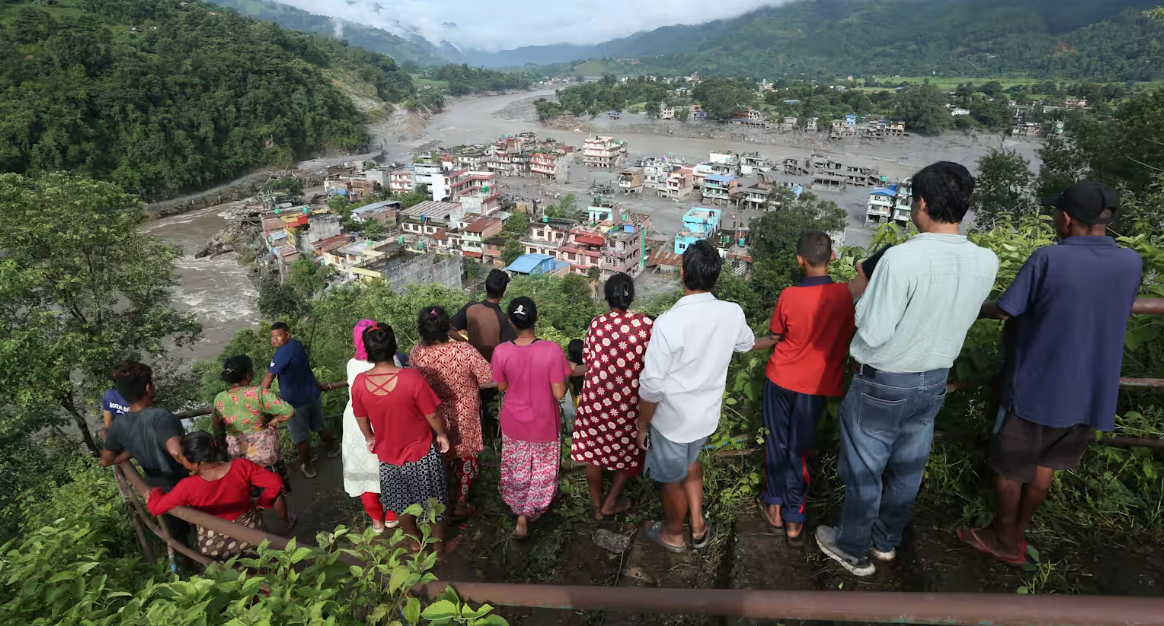


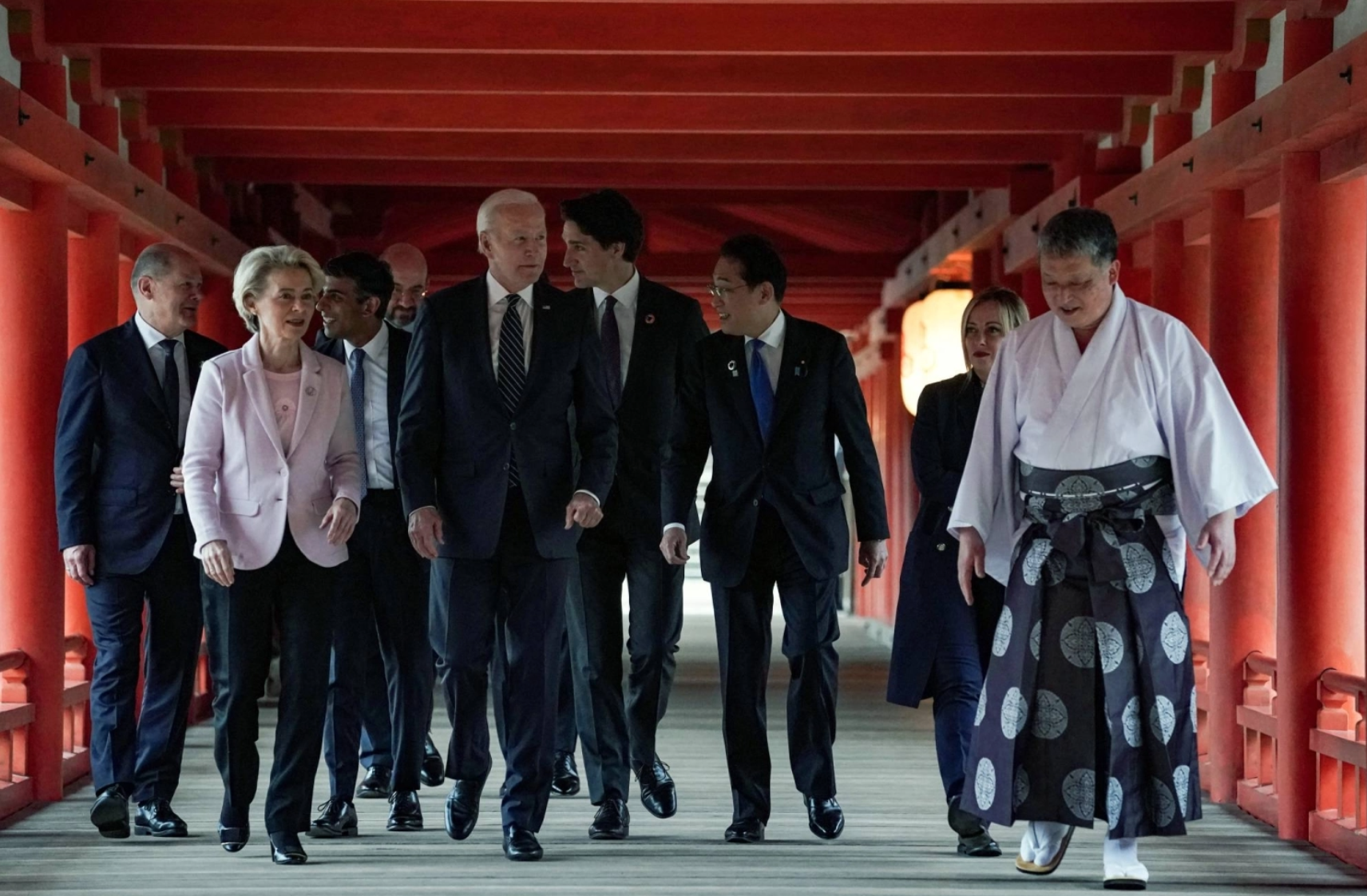

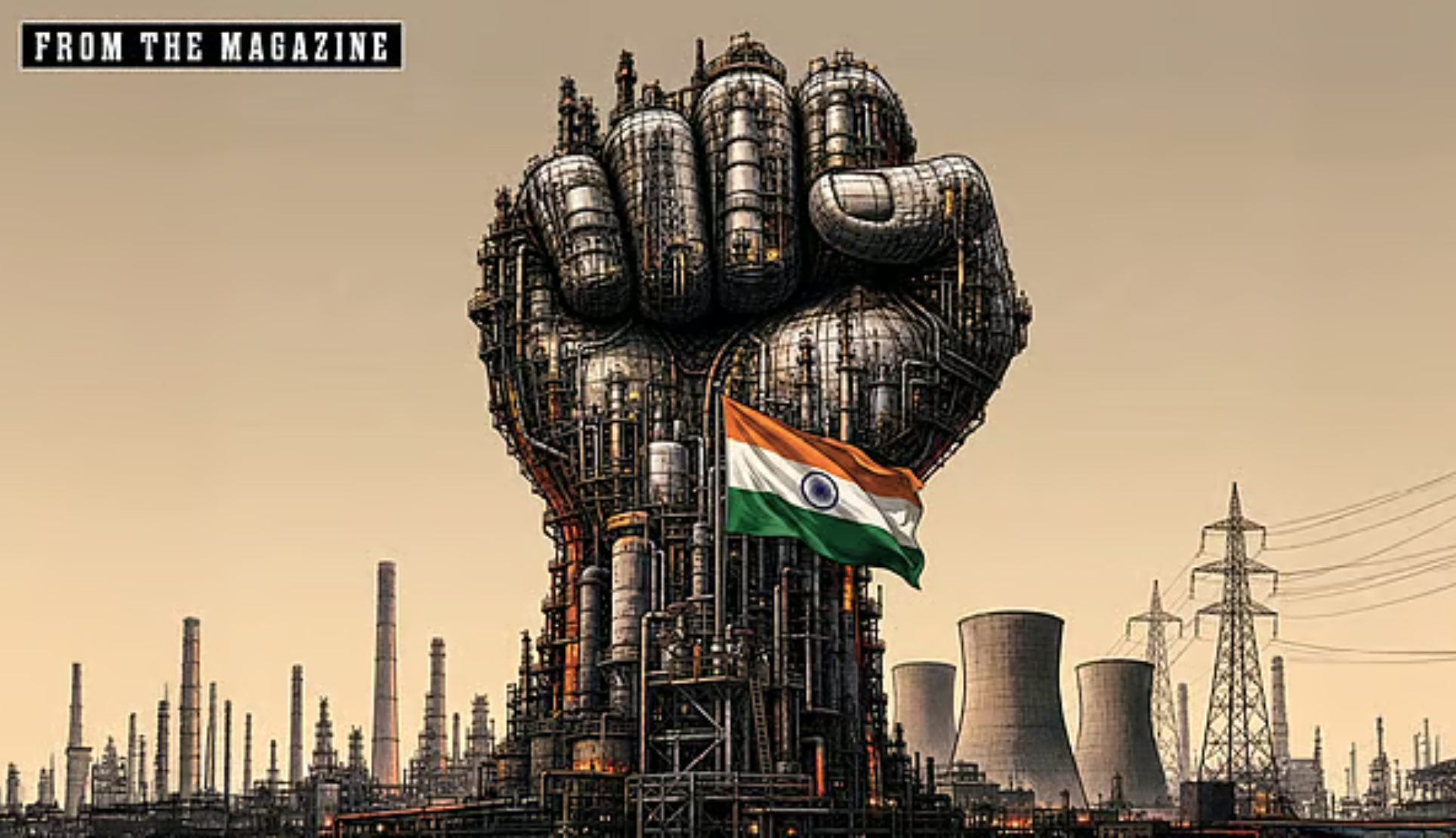
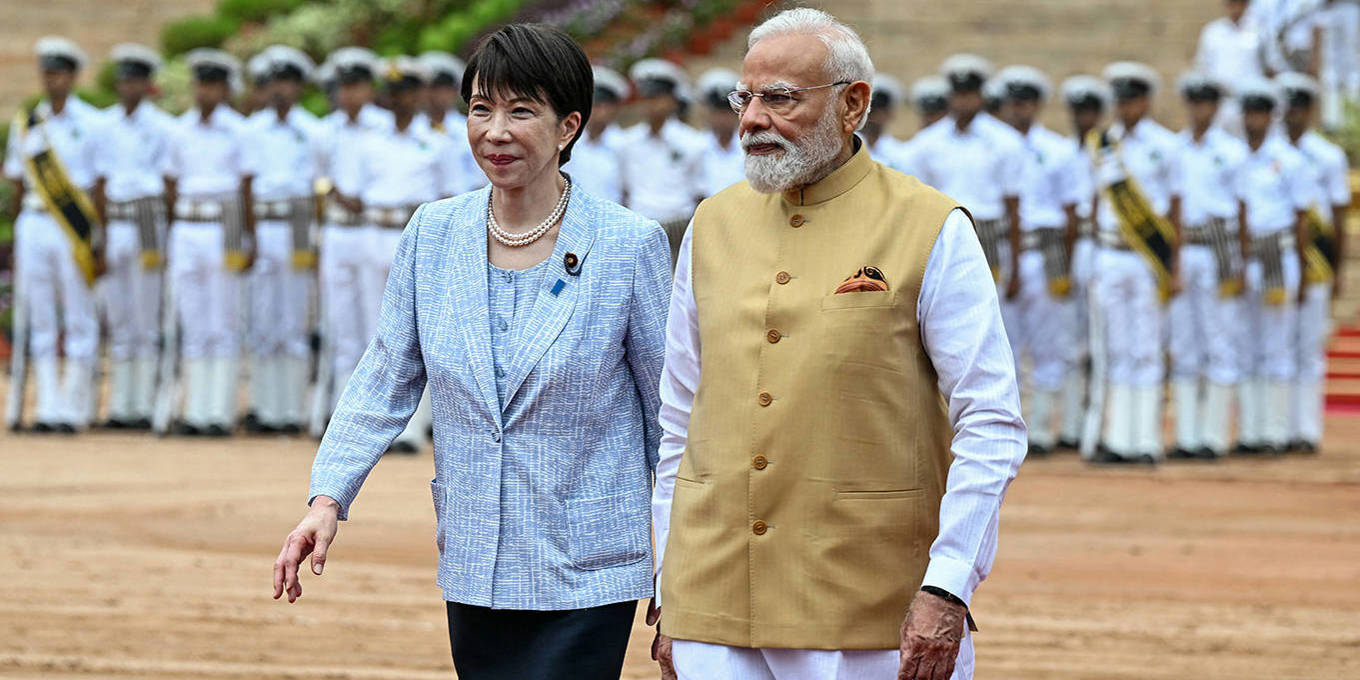

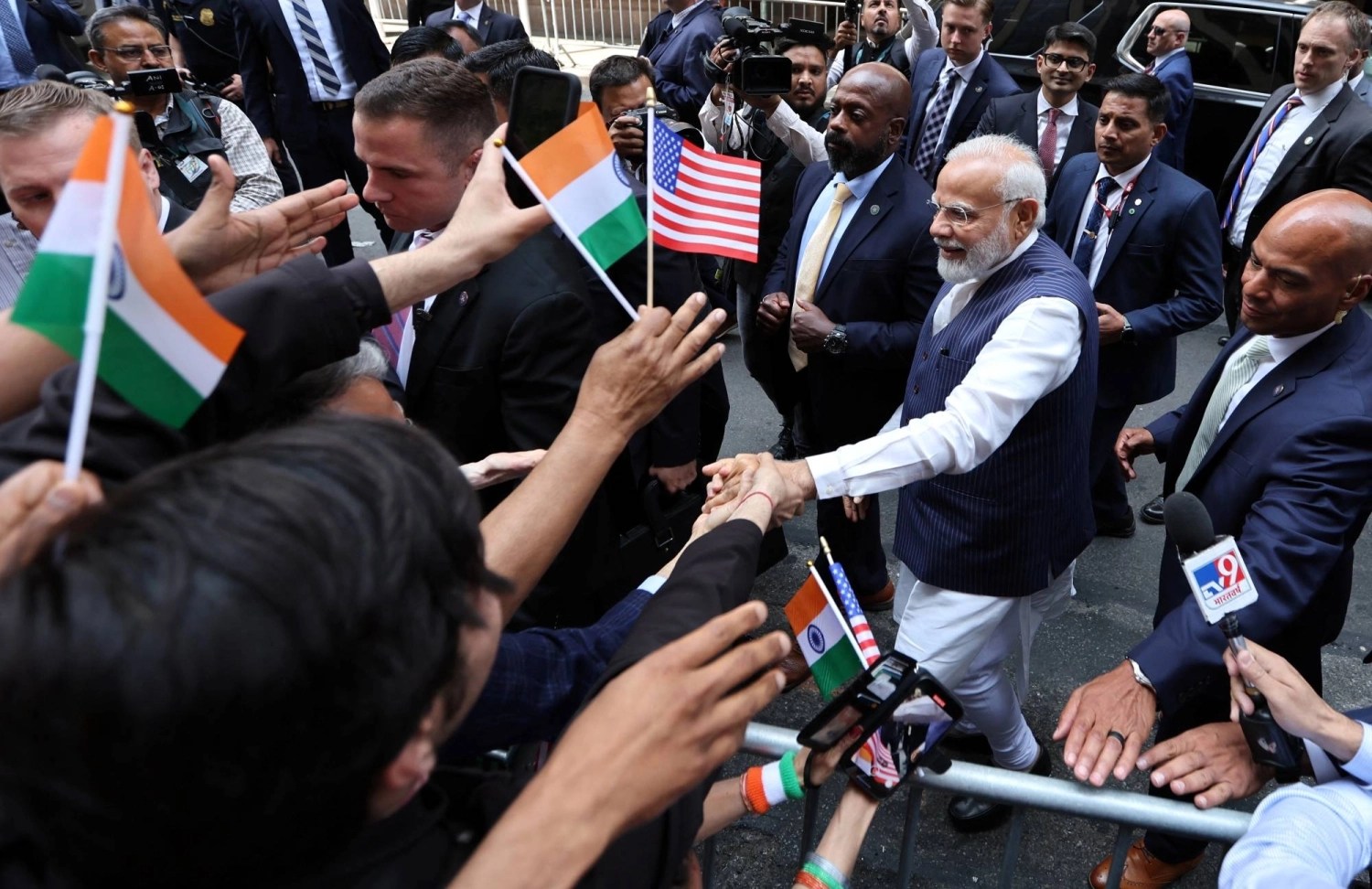

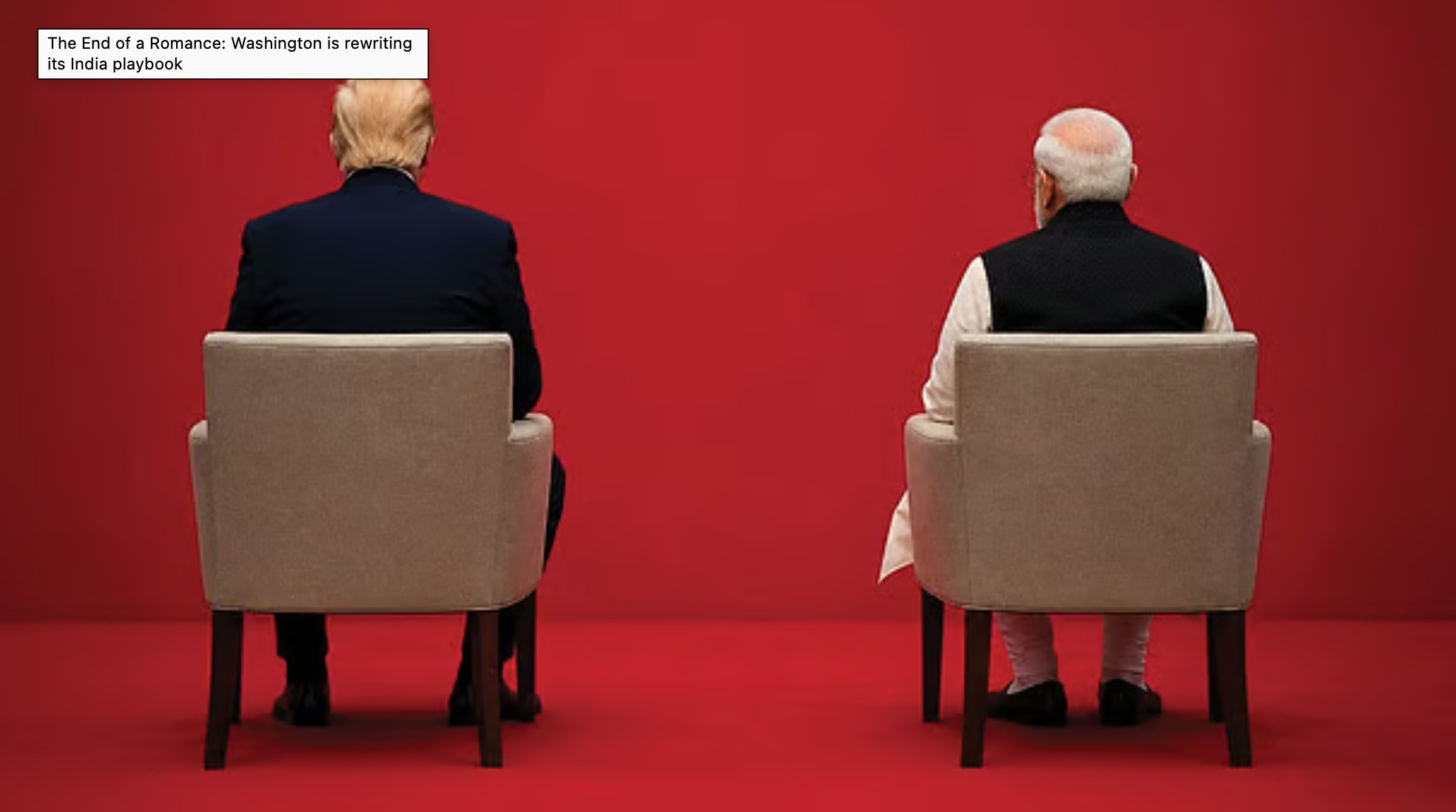


You must be logged in to post a comment.