When President Trump launched his war on Iran, attention fixed on missiles, drones and the risks of escalation. The real story lay elsewhere: a grandiose and ultimately reckless vision of American “energy dominance” that helped propel Washington into war.
This was not simply a security decision, but an economic and ideological gamble rooted in Trump’s long-held belief that U.S. control over international energy flows would translate into global geopolitical supremacy and arrest America’s relative decline.
In his second term, that belief hardened into doctrine. But in Iran, it collided with reality.
For years, Trump has openly flirted with the idea that the U.S. should “take” or otherwise control the oil resources of states too weak to impose retaliatory costs. That impulse, once dismissed as rhetorical excess, became operational policy under the banner of “energy dominance” — maximize U.S. and allied fossil-fuel output and then wield global supply and pricing as a strategic weapon against adversaries and even friendly states.
By last year, the U.S. had indeed become the world’s largest oil and gas producer, flooding global markets with shale output and liquefied natural gas. This surge created a dangerous illusion in Washington — that America had insulated itself from the geopolitical risks of energy disruption. If the U.S. no longer depended on Middle Eastern oil, the thinking went, it could act militarily in the Persian Gulf without suffering serious economic consequences at home.
That misperception proved decisive. Trump’s advisers argued that any Iranian retaliation — whether through attacks on Gulf infrastructure or disruption of shipping in the Strait of Hormuz — could be offset by U.S. and allied production. Last June’s limited U.S. strikes on Iran had triggered only temporary price spikes, reinforcing the belief that markets could be managed.
Energy dominance, in this reading, was not just an economic strategy; it was a license for geopolitical coercion.
It removed a constraint that had shaped decades of U.S. policy. Where previous presidents hesitated — fearing that war with Iran would send oil prices soaring and damage the global economy — Trump saw an opportunity. If supply could be controlled, then conflict could be contained.
But this logic rested on a profound miscalculation that energy systems are linear, predictable and ultimately subordinate to American power. They are not.
Once the conflict escalated and the Strait of Hormuz was effectively compromised, the consequences rippled far beyond what Washington had anticipated. Prices surged, volatility spiked and the shock spread through every layer of the global economy.
Energy is not just another commodity. It is the foundation of modern economic life. When energy prices rise sharply, food prices follow. Natural gas is essential for fertilizer production, while oil powers agricultural machinery, irrigation and transport. The result is a cascading effect: an energy shock becomes a food shock and, for many societies, a political shock, hitting the most vulnerable countries hardest.
This is the real legacy of Trump’s war: not battlefield outcomes, but systemic disruption.
The energy logic that helped drive the conflict was never confined to Iran. Just eight weeks earlier, the Trump administration had demonstrated its willingness to operationalize resource control in Venezuela, where U.S. military intervention resulted in the capture of President Nicolas Maduro and the installation of a more pliable regime. Vice President JD Vance was explicit about the rationale: control over one of the world’s largest oil reserves.
Iran represented the same logic, scaled up.
Together, Iran and Venezuela account for almost one-third of global proven oil reserves.
The prospect of bringing both into Washington’s strategic orbit would amount to an unprecedented lever over global energy markets, allowing the U.S. not just to influence prices, but to shape the economic trajectories of rivals and partners alike. It is difficult to overstate how radical this vision was.
It marked a return to a resource-centric foreign policy reminiscent of earlier eras, when access to oil routinely drove foreign intervention, regime change and covert operations — from the 1953 CIA-assisted coup in Iran to Cold War-era resource conflicts. The difference today is the scale of ambition: not merely securing supply, but globally dominating it.
Dominance, however, has proven illusory. Far from demonstrating control, the Iran war has exposed the fragility of the global energy system — and the limits of American power within it. With markets interconnected, geopolitical shocks cannot be neatly contained. And even a country as energy-rich as the U.S. remains deeply vulnerable to global systemic shocks.
The irony is stark. A strategy designed to give Washington greater freedom of action has instead produced global constraint — slowing growth, fueling inflation and amplifying financial instability across continents.
If anything, the Iran war underscored the opposite of what its architects intended: that energy interdependence remains a structural reality, not a vulnerability that can be engineered away.
In the end, Trump’s pursuit of energy dominance did not merely enable the war on Iran; it made it conceivable for the first time. By convincing itself that the economic risks of conflict could be managed, the administration crossed a threshold earlier leaders had resisted. What followed was not the calibrated use of American power, but an unleashing of forces far beyond Washington’s control.
The costs mounted swiftly, at home and abroad. The bill was global — paid for one man’s delusion.
A demonstrator holding Nepal’s flag celebrates at the Singha Durbar office complex, which houses the prime minister’s office and other ministries, after storming it during protests that toppled Nepal’s prime minister, in Kathmandu, Nepal, September 9, 2025. Photo: REUTERS
Last September’s mob rampages in Nepal did more than torch buildings; they incinerated public trust in the state itself. Parliament, the Supreme Court, ministries, police stations and thousands of government and privately owned buildings were reduced to charred shells. What followed was not merely a political crisis but a systemic shock that exposed the fragility of Nepal’s democratic experiment.
Yet this violence was curiously described in much of the Western media as a “Gen Z revolution.” That label was not just misleading; it was dangerous. It blurred the line between democratic dissent and nihilistic destruction, recasting the burning of institutions as a form of political awakening.
The recently held election has delivered a dramatic political response. In a stunning upset, a three-year-old party led by rapper-turned-politician Balendra Shah — or “Balen,” as he is popularly known — has swept to power, ending the dominance of Nepal’s established parties, especially the two main communist parties. At 35, Balen embodies a public demand for rupture with the past.
The scale of his party’s victory, however, raises a more fundamental question: Can an electoral earthquake translate into institutional stability?
For nearly two decades since abolishing its 239-year-old monarchy, Nepal has struggled to consolidate its republican order. It cycled through 15 governments in 17 years until last September’s violence forced the last communist-run government to resign, leading to the installation of an interim regime headed by a former chief justice.
Coalition fragility and institutional weakness have prevented durable governance in Nepal, widening the gap between democracy on paper and democracy in practice.
The September 2025 violence brought that gap into stark relief. The so-called “revolution” was, in practice, a collapse of order. The coordinated arson attacks suggested not just anger, but a deeper erosion of respect for state authority. Core administrative infrastructure was gutted, police personnel were lynched and prisons were overrun, allowing more than 13,500 inmates to escape, most of them still at large.
Democracy cannot survive without institutions. Courts, legislatures and bureaucracies are not symbols; they are the machinery through which democratic will is expressed and enforced. To destroy them in the name of political change is to hollow out democracy itself.
Yet the violence also revealed something else: a profound and widespread disillusionment, particularly among Nepal’s youth. With unemployment hovering above 20% and economic opportunity increasingly tied to migration abroad, many young Nepalis feel locked out of their country’s future. The unrest was as much about dignity as it was about governance.
Balen’s rise must be understood against this combustible backdrop. His party’s victory is less a conventional mandate than a rejection of the old order. Voters have placed a high-risk bet on a political outsider to break a cycle of economic stagnation and revolving-door politics.
That bet will be tested immediately, as the electoral mandate does not automatically translate into institutional renewal.
The new government will have to deal with three interlocking challenges.
The first challenge is restoring state authority without deepening mistrust. Nepal’s security apparatus emerged from the September violence both discredited and weakened. It was accused of excessive force, even as it became a target of mob fury.
Rebuilding credibility will require a delicate balance: Prosecuting those responsible for arson and looting while also holding security forces accountable for abuses. Failure on either front risks deepening the polarization, either by emboldening lawlessness or alienating the very institutions needed to enforce order.
Second is the economic crisis driving public anger. The country’s dependence on remittances from overseas Nepalis has created what some call a “dignity deficit,” where millions must leave home to earn a living. Reversing this will require credible domestic job creation.
The stakes are high. If economic frustration persists, today’s political reset could prove short-lived.
Reconstruction adds another layer of strain. Billions of dollars will be needed to rebuild infrastructure destroyed last September — funds that would otherwise support development. This creates an austerity dilemma: How to finance recovery without triggering fresh unrest. Transparency in reconstruction spending will be critical to maintaining public trust.
Third is the challenge of governance in the digital age. The violence was triggered by a Chinese-style social media ban, underscoring the centrality of digital platforms to both political mobilization and economic opportunity. The new government must regulate online spaces — where misinformation and even incitement can spread — while preserving digital freedoms that many young citizens see as non-negotiable. Resorting to heavy-handed controls could reignite tensions.
Beyond its borders, Nepal’s crisis has also reshaped its geopolitical environment. The electoral collapse of the country’s established communist parties complicates China’s longstanding strategy of cultivating a friendly government in Kathmandu. At the same time, it presents India with an opportunity to recalibrate its relationship with Nepal — if it avoids past missteps.
Ultimately, however, Nepal’s future will be determined less by geopolitics than by whether it can forge a new social contract.
The era of elite-driven governance appears to be over. What must replace it is a more participatory model that channels dissent into dialogue rather than destruction — through decentralization, credible accountability and sustained engagement with a disillusioned youth population.
But institutions cannot be rebuilt overnight, nor trust restored by electoral mandate alone.
Nepal’s election has delivered clarity. Whether it delivers stability will depend on what comes next.
Brahma Chellaney, a longtime contributor to The Japan Times, is the author of nine books, including “Water: Asia’s New Battleground.”
Trump’s neo-imperial impulse is hardening into an expansionist doctrine, one that echoes the playbook of colonial empires rather than the norms of the post-1945 international order.
There is no precedent in modern history for what the world is witnessing today. A single leader—at the helm of the very superpower that designed and sustained the post-World War II international order—is now dismantling it with startling speed while mocking international law.
Since returning to the White House, Donald Trump has cast aside longstanding norms of international law, authorized military strikes across multiple sovereign states and weaponized economic interdependence against both allies and adversaries. His administration’s actions—from the slow strangulation of Cuba through blockade-induced deprivation to a war on Iran that triggered worldwide turmoil—have pushed the international system into uncharted territory.
Like his military intervention in Venezuela eight weeks earlier, Trump launched his war of aggression against Iran in the language of American power and strategic dominance. But the consequences of that war unfolded globally in the language of scarcity—of fuel, of food and even of survival.
What started on February 28 as a joint US-Israeli military assault on Iran swiftly metastasized into the most consequential energy shock in modern history. Unlike the oil crises of 1973 and 1979, which were driven largely by political embargoes, the 2026 upheaval arose from the physical destruction of energy infrastructure and the breakdown of critical supply routes.
Because energy is the foundation of the modern global economy, the shock could not be contained within oil and gas markets. It cascaded outward, destabilizing food systems, straining financial structures and hitting vulnerable populations the hardest.
What began as a regional conflict with global implications turned into a world-spanning crisis driven by a regional war. This is the enduring lesson of the Iran war.
More fundamentally, Trump has barely disguised his neo-imperial yearning, which may explain his growing expansionist itch.
From renewed pressure for US control over Greenland and the Panama Canal to open-ended military intervention in Venezuela and talk of redrawing borders or relocating populations, he has revived a logic more familiar to the age of empires than to the post-1945 international order.
Since his return to the White House, Trump’s actions have suggested a reversion to 19th-century imperial precedents. The old Monroe Doctrine has been globalized into a claim that American power itself is legal authority.
Today, from high fuel and food prices in Africa to fiscal stress in Asia and Latin America, the burden of Trump’s ambitions is being borne far from the corridors of power where they were conceived.
Arsonist of the World Order
The question is no longer whether Trump is disrupting the global order. It is whether there is any historical parallel for such systematic disruption. There isn’t—at least not in the post-1945 world
The US was the principal architect of the current international system. The rules governing trade, sovereignty and collective security were largely American designs, forged in the aftermath of World War II to prevent precisely the kind of instability and volatility that has now unfolded.
What makes the present moment unique is not simply that these rules are being broken, but that they are being dismantled by an American president.
History offers multiple examples of wayward or ruthless leaders—including Mao Zedong in China, Pol Pot in Cambodia, Idi Amin in Uganda and Muammar Gaddafi in Libya. But these figures operated either on the margins of the international system or in opposition to it.
Trump, by contrast, is tearing down the house from within.
Nowhere is this more evident than in his weaponization of global interdependence. Trade, once treated as a stabilizing force largely insulated from geopolitical rivalry, has been recast as an instrument of coercion. Tariffs are no longer economic tools; they are strategic weapons.
By linking military protection to trade concessions and tribute payment, Trump has effectively transformed alliances into transactional arrangements—security for sale. The post-World War II idea of collective defence has been replaced with something closer to protection racketeering.
This shift signals a profound reordering of international relationships, where commitments are perpetually open to revised terms.
Equally consequential is the erosion of sovereignty. US military strikes have extended across the Middle East, Africa and even into the Caribbean, targeting states without clear legal justification under the UN Charter.
Earlier eras did see US expansionist doctrines—from Theodore Roosevelt’s “Big Stick” diplomacy to William McKinley’s imperial ventures. But those belonged to a pre-1945 world, before the present international legal framework was established. Today’s expansionist actions carry a different weight because they explicitly defy the legal and normative structure the US itself helped create.
Launching war on Iran marked a particularly dangerous escalation. By targeting the energy infrastructure of a major oil-producing state and inviting Iranian retaliatory strikes on US-aligned Gulf Arab states, Washington triggered what the International Energy Agency called “the largest supply disruption in history,” surpassing even the shocks of the 1970s. But there is a critical difference: those earlier crises were driven by producer decisions, including Saudi King Faisal’s use of oil as a weapon. Trump is the first leader to trigger a global energy crisis through direct, unprovoked military action initiated by him.
At the same time, Trump’s expansionism is hollowing out multilateralism—the connective tissue of the current international order. Just weeks before launching war on Iran, the US withdrew from 66 international organizations in one stroke, including the World Health Organization, while imposing sanctions on International Criminal Court (ICC) officials.
Other leaders have defied international institutions and norms, but typically from the outside. Saddam Hussein and Vladimir Putin challenged the international system as adversaries.
Trump’s approach is more destabilizing precisely because it represents an “insider” threat. By walking away from agreements such as the Iran nuclear deal and the Paris climate accord, while openly entertaining territorial ambitions from Greenland to the Panama Canal, his administration has signalled that it no longer considers itself bound by the rules the US once championed.
The cumulative effect is not just disorder, but disorientation. If the international system’s guarantor no longer believes in the system, what remains of it?
To find even a loose historical analogy, one must look back at bygone eras. Napoleon Bonaparte reshaped Europe through force, rewriting borders and legal codes. Otto von Bismarck discarded alliances in pursuit of strategic advantage. Yet even these comparisons fall short: Neither operated within a global order they themselves had constructed and sustained for decades.
What we are witnessing now is something unique: Trump, the arsonist of the US-designed international order, causing worldwide upheaval by pursuing an unabashedly expansionist agenda. Consequently, the “leader of the free world,” as the US long described itself, has voluntarily abdicated that role to become its primary disruptor.
The present turmoil and the fragmentation of alliances point to a world moving beyond the era of Pax Americana. But this is not a managed transition to a new order but a descent into uncertainty.
Put simply, the greatest threat to international peace and security today is not a rising challenger or an external adversary. It is the transformation of the international system’s central pillar—the US—into its main disruptor.
A Structural Rupture
At the centre of the global crisis lies a strategic gamble that went catastrophically wrong.
Any serious assessment of a war against Iran—strategically overlooking the Strait of Hormuz, the world’s most critical energy chokepoint—would have anticipated severe disruptions to global energy flows. About 20% of the world’s oil and more than a fifth of liquefied natural gas (LNG) transit this narrow waterway. It is the single most important artery of the global energy system.
Yet the Trump administration appeared to have assumed that military escalation could be managed without triggering systemic consequences. That assumption was swiftly shattered once Trump launched the attack on Iran.
Tehran’s effective closure of the Strait of Hormuz, combined with tit-for-tat strikes on energy infrastructure in Iran and the Gulf Arab states, choked off supply at its source while simultaneously degrading production capacity. Facilities such as Iran’s South Pars gas field and Qatar’s Ras Laffan LNG complex—pillars of the global energy system—were damaged or rendered partially inoperable.
This resulted in a dramatic surge in international energy prices and, more importantly, a fundamental shift in risk. Oil prices climbed steeply, while global gas markets were thrown into disarray.
Even more significant is the structural repricing of energy risk. The Middle East is no longer seen as a reliable supplier but as a persistent source of volatility.
This was not an unavoidable outcome. It was the predictable consequence of initiating an unprovoked war in the epicentre of the global energy zone.
The world has experienced energy shocks before. But the present turmoil is not limited to oil. The simultaneous disruption of LNG—now central to electricity generation across Europe and Asia—has amplified its impact. In an era where power grids depend heavily on gas, the loss of LNG supply is as destabilizing as any oil embargo.
While the oil shocks of the 1970s resulted from policy-driven embargoes that were reversible, the current turmoil involves the destruction or damage of energy infrastructure, which cannot be quickly repaired. The damage will likely linger long. Qatar has said that it may take up to five years to repair damage to the Ras Laffan site.
The global economy is more interconnected, and growth more fragile, than in previous decades. Supply chains operate on “just-in-time” principles, leaving little buffer against disruption. When a critical node such as the Persian Gulf is destabilized, the effects ripple rapidly across sectors and regions.
For all these reasons, the shock from Trump’s Iran war was not merely another cycle of volatility; it represented a structural rupture.
The most consequential, and least understood, dimension of the energy crisis lies in its transmission to the global food system.
Modern agriculture is fundamentally energy-intensive. Natural gas is the key input for nitrogen fertilizers, which underpin global crop yields. Oil powers tractors, irrigation systems and transport networks. Food, in effect, is energy transformed into calories. When energy systems are disrupted, food systems inevitably follow.
The Persian Gulf region plays a central role in the global fertilizer supply chain, producing large shares of urea, ammonia and sulfur. With exports curtailed by conflict and maritime disruption, fertilizer prices surged dramatically, as demand outstripped supply.
The timing could not have been worse. The war coincided with the spring planting season across the Northern Hemisphere—from Asia to Europe and North America—meaning that reduced fertilizer application is already “locked in” for the 2026 harvest. Farmers across South Asia, Africa and even parts of North America have had to cut usage, switching in some cases to less input‑intensive crops.
The consequences will not be immediate, but they are inevitable.
The first stage of this global crisis was the input shock: rising costs and declining availability of fertilizer and fuel. The second stage is set to be the production shock: lower yields as under-fertilized crops produce less. The third stage will be the consumption shock: rising food prices and declining access, particularly for low-income populations.
By next year, agricultural analysts expect significant increases in the prices of grains, vegetable oils and meat. Corn, the backbone of global feed systems, is particularly vulnerable. As its price rises, the effects cascade into meat and dairy markets, producing what can only be described as a “protein shock.”
Exacerbating this dynamic is a policy-driven feedback loop that further tightens food supply. As oil prices rise, biofuels become more economically attractive. Governments have responded by expanding mandates for ethanol and biodiesel in an effort to stabilize domestic energy costs. But this carries an international cost: crops that could be used for food are instead diverted into fuel production.
In the US, record biofuel mandates are channelling corn and soybean oil into energy markets. Brazil is diverting increasing volumes of sugarcane toward ethanol production. Indonesia is accelerating its palm‑oil biodiesel programme.
This “food versus fuel” trade-off is particularly damaging in the context of Trump’s global expansionism. At a time when agricultural output is already under pressure due to high input costs, the diversion of crops further reduces global food availability.
The result is a self‑reinforcing cycle: higher energy prices drive biofuel production, which tightens food supply, which raises food prices, which in turn exacerbates the humanitarian impact of Trump’s adventurism.
In short, Trump’s reckless war triggered a chain reaction that is undermining the economic and energy security of the world at large, while also delivering a political shock through a flagrant disregard of international law.
To make matters worse, the war unleashed a sharply unequal burden. While the energy and food shocks are global, their impacts are profoundly unequal.
In the West, the turmoil manifested primarily as inflation and industrial strain. Households faced higher energy and food bills, while industries grappled with rising input costs. Central banks were forced into difficult trade-offs, delaying interest rate cuts and prolonging economic uncertainty. Yet these developed economies possess buffers—financial resources, institutional capacity and diversified supply chains—that allow them to absorb the shock.
The Global South, by contrast, is faced with a far more severe situation.
Many developing countries are heavily dependent on imported energy, particularly from the Persian Gulf. The surge in prices and disruption of supply routes pushed them into crisis mode. Governments began implementing fuel rationing, cutting subsidies and scrambling to secure alternative supplies.
At the same time, the fertilizer shock started undermining domestic agriculture. Countries that rely on imported inputs faced shortages that will directly translate into lower production. In some cases, fertilizer became simply unavailable at any price, raising the spectre of “planting voids.”
More broadly, the convergence of pressures produced what can only be described as a “triple crisis” of fuel, food and finance. The financial dimension intensifies each of the others.
In the face of rising global uncertainty, investors have flocked to perceived safe havens, particularly US assets. This strengthens the dollar and drains capital from emerging markets like India. For countries with dollar-denominated debt, repayment is becoming more expensive even as access to new financing tightens.
At the same time, high energy prices have inflated import bills, widening current account deficits and putting pressure on currencies. Depreciation of the Indian rupee, for example, makes imports even more expensive. Given that, unlike Asia’s export‑oriented economies, India’s overall imports are far larger than its exports, this trend will likely fuel inflation at home and erode purchasing power.
Many other Global South states face a similar vicious cycle: higher costs, weaker currencies and mounting fiscal stress. For some vulnerable countries, the risks have become existential, given the spectre of balance‑of‑payments crises and sovereign defaults.
Perhaps the most underappreciated dimension of the global crisis has been the sharp downturn in remittances from overseas. For many countries in the Global South, remittances are not merely supplementary income. They are a critical source of foreign exchange and a key stabilizer of national economies.
Millions of workers from developing countries, from the Philippines and India to Egypt and Lebanon, are employed in Persian Gulf economies. The war disrupted these economies, leading to job losses, delayed payments and a dramatic decline in remittance flows. The implications are profound.
At the household level, families are losing remittances just when food and energy costs are rising. At the national level, governments are losing a crucial source of foreign exchange, weakening their ability to finance imports and stabilize their currencies. This dual shock—rising costs and falling incomes—has intensified the crisis across all dimensions.
The geographic contours of the crisis are already clear.
In South Asia, high fuel costs are limiting irrigation and transport, while fertilizer shortages are becoming severe. Bangladesh, the world’s eighth‑most populous country, has been forced to shut five of its six urea plants due to interruption of LNG supplies from the Gulf, specifically Qatar. In East Africa, import‑dependent economies are facing sharp increases in food prices. In the Middle East and North Africa, supply disruptions are straining already fragile food systems.
These regions are being thrusted toward what might be called “humanitarian red zones.” The UN World Food Programme (WFP) has warned that tens of millions of additional people could be pushed into acute food insecurity as a result of the upheaval.
As history has repeatedly shown, food crises do not remain contained. They destabilize societies, fuel political unrest and redefine international relations.
Against this backdrop, what makes the present moment particularly dangerous is the simultaneous disruption of multiple global systems. Energy supply chains are fractured. Agricultural input systems are under stress. Financial flows are being redirected. Trade routes are costlier and more uncertain.
This convergence of disruptions has created a systemic crisis—one in which shocks in one domain rapidly propagate to others. The era of cheap energy and seamless globalization is giving way to a more fragmented and volatile order.
Ultimately, the defining feature of this Trump‑created turmoil is its asymmetry. The war was initiated by the world’s most powerful country; its consequences are being borne disproportionately by the Global South.
America First, World Last
Trump’s governance style centralizes power, often ignoring traditional checks and balances. The phrase “one-man wrecking machine” has been used by political opponents at home, such as New York Governor Kathy Hochul, to describe his approach. In foreign policy, Trump has been more of a “demolition man” of established global alliances and agreements, as well as longstanding international norms.
Trump may be “erratic, unpredictable, inconsistent, irresponsible, reckless and incompetent,” as one American commentator described him in his first term. Yet there now appears to be a strategic logic driving his aggressive expansionism in the second term.
The common factor behind Trump’s military intervention in Venezuela and his war on Iran is oil. Venezuela and Iran together hold nearly one‑third of the world’s proven oil resources.
By kidnapping Venezuela’s sitting president and forcing regime change in Caracas, the US has gained de facto control over the world’s largest proven oil reserves. Asked in a Fox News interview how taking out President Nicolás Maduro would help the average American, Vice President JD Vance said candidly, “It means we are going to be able to control the incredible natural resources of Venezuela.”
A similar outcome in Iran—by installing a pliable regime—would dramatically expand American sway over global energy flows, especially given that the US is already the world’s largest oil producer, churning out more oil than Saudi Arabia and Russia combined, and the world’s largest LNG exporter.
In seeking to bring Iran within America’s strategic orbit and fundamentally reshape the geopolitical landscape of the Middle East, Trump made two grave errors. He profoundly underestimated Iran’s retaliatory capabilities; and he conceitedly overestimated US capacity to control the war’s trajectory without triggering global economic consequences.
The war revealed that power, when exercised without regard for global interdependence or realities on the ground, can produce outcomes that are not only unintended but deeply destabilizing for the entire world.
Trump’s expansionist agenda is not just breaking international norms; it is also exposing the longstanding hypocrisy of US foreign policy in consistently invoking a “rules‑based international order” when, in reality, the rules were always flexible and adjusted whenever American interests required it. His renewed threats to annex Greenland and his proposal to incorporate Canada as America’s 51st state have further unravelled the US rationale for waging proxy war against Russia—that the Russian invasion of Ukraine violated a core international principle that borders cannot be changed by force.
After returning to the White House, Trump quickly shifted from a non‑interventionist international posture to a highly interventionist one, authorizing serial military operations overseas.
At home, Trump’s bid to wield untrammelled presidential power has been checked by US courts, which have struck down several major actions—from overturning sweeping global tariffs and quashing subpoenas targeting the Fed chair to now halting construction on the president’s White House ballroom plan.
Abroad, however, his use of American power faces few constraints. The United Nations has been sidelined, with the Security Council paralyzed. Other important Western leaders—such as Keir Starmer, Friedrich Merz and Emmanuel Macron—have proved too politically weak to counsel restraint or defend longstanding international norms.
The global silence on Trump’s expansionist actions underscores a vacuum of moral leadership across both the West and the Global South.
Against this backdrop, Trump framed his war on Iran as a demonstration of America’s unrivalled military might. Instead, the war unleashed forces that no single country could control.
In terms of global impact, the Ukraine conflict pales in comparison to the US-Israeli war of aggression, which has dimmed the economic-growth prospects of many countries, including India which was the world’s fastest-growing major economy until Trump decided to attack Iran.
The Iran war’s legacy will be defined not by victory or defeat, but by the scale of the global crisis it set in motion. The irony is stark: the bill from a war intended to assert US supremacy is being footed by the global population.
In the post‑World War II period, few world leaders have caused as much global upheaval as Trump in such a compressed timeframe—about 14 months. In terms of the erosion of international norms, the cascade of globe-spanning consequences unleashed and the volatility of world markets, he is playing the central role in fuelling global instability and undermining international peace and security. And he still has nearly 34 months left in his current term.
Brahma Chellaney is a geostrategist and the author of two award-winning books on water: Water, Peace, and War; and Water: Asia’s New Battleground.
In a rare example of a communist movement being decisively rejected through democratic means, Nepal’s long-dominant communist parties suffered a crushing defeat in this month’s national election.
Balendra Shah’s party has ended communist dominance of Nepal’s politics.
For more than a century, scholars and policymakers have debated whether democracy and communism can coexist.
Capitalism and communism clearly can: Modern China provides the most vivid example of market economics flourishing under communist rule. But whether communism can function comfortably within a democratic system has remained far more uncertain.
The tension lies in the underlying logic. Democracy rests on political pluralism, open competition for power and the protection of individual freedoms. Communist movements, in contrast, have historically sought to monopolize political authority in the name of ideological unity and revolutionary transformation. In practice, this produces closed political systems dominated by a small party elite that muzzles dissent to maintain control.
Today the world has only five officially communist states — China, Cuba, Laos, North Korea and Vietnam. None offers genuine political pluralism.
Even where economic reforms have introduced markets and private enterprise, political liberalization has not followed. China, the most powerful autocracy in modern history, demonstrates that even economic openness under communist rule does not necessarily lead to political pluralism.
Historically, communist parties that seized power did so through revolutions, coups or externally imposed regimes. Once in control, they typically banned opposition parties, making electoral defeat impossible. The Soviet Union and its satellite states followed this pattern until the Cold War’s end.
Yet communist parties have long operated legally in democratic systems. During the Cold War, communist parties in countries such as France and Italy were influential political forces. But they almost always remained opposition movements or junior coalition partners.
Against this backdrop, the Himalayan nation of Nepal has emerged as a fascinating political test case.
With nearly 30 million people wedged between India and Chinese-ruled Tibet, Nepal has spent the last three decades experimenting with democratic politics under heavy communist influence. Since the restoration of multiparty democracy in 1990, communist factions have been among the most powerful actors in the country’s political landscape.
Their influence increased after 2008, when Nepal abolished its 239-year-old monarchy and declared itself a federal democratic republic. From that moment on, communist parties became central to nearly every governing coalition.
As the country cycled through 15 governments in 17 years, communist factions remained constant players in what many Nepalis came to view as a revolving door of political elites.
But now that era of appears to have ended.
In a rare example of a communist movement being decisively rejected through democratic means, Nepal’s long-dominant communist parties suffered a crushing defeat in this month’s national election.
The result represents a political earthquake. Voters swept aside the two main communist parties that had shaped Nepali politics for years, reducing them to minor players in parliament.
The outcome also carries broader geopolitical implications. For years, China quietly encouraged “leftist unity” among Nepal’s communist factions to help cultivate a stable, friendly government there and expand its influence along India’s northern frontier. The electoral collapse of these parties leaves Beijing’s preferred political channels in Nepal marginalized.
The biggest winner from the upheaval is a three-year-old political party led by Balendra Shah, widely known simply as “Balen.” A former rapper turned politician, the 35-year-old first rose to national prominence as the reformist mayor of Kathmandu, the capital. In the recent election, voters handed his party an almost two-thirds majority in Nepal’s 275-member House of Representatives.
Nothing illustrates the scale of the political shift better than Balen’s defeat of veteran communist leader K.P. Sharma Oli in his own parliamentary constituency. Oli, a four-time prime minister and one of Nepal’s most powerful political figures for decades, lost to a candidate nearly four decades his junior.
The upset symbolizes a generational and political turning point.
Nepal’s established parties have struggled to address the country’s economic stagnation, chronic unemployment and persistent political instability. Public frustration reached a boiling point last September when waves of youth-led violence swept across the country.
During the unrest, rampaging mobs burned down major state institutions, including parliament, the Supreme Court and numerous government offices. Thousands of buildings were looted or torched, and even police officers were killed. Despite the scale of the destruction, many supporters — and much of the Western media — portrayed the upheaval as a “Gen Z revolution.”
Whatever its label, the unrest exposed a deep collapse of public trust in Nepal’s political class. The election was the democratic expression of that anger.
Nepal’s experience also highlights a broader political pattern. Communist parties, once in power, often struggle to transition from revolutionaries to effective administrators. When they are associated with patronage networks, corruption and policy stagnation, they become vulnerable to the same democratic accountability as any other ruling party — at least to whatever extent other parties are allowed to exist.
There are few precedents for communists’ electoral downfall. After the collapse of the Soviet Union in 1991, several Eastern European countries saw communist successor parties win and then later lose power within democratic systems. Outside the former Soviet bloc, however, such examples are rare.
Nepal now joins that small historical category. Voters have repudiated a political order that had come to dominate public life.
The result was less a defeat of Karl Marx than a rejection of the status quo — delivered decisively and peacefully at the ballot box.
Great powers study each other closely, observing the strategies used, the resistance met, and the outcomes realized. Donald Trump’s strangulation of Cuba thus could become a template for others, beginning with Xi Jinping, who remains committed to achieving “reunification” with Taiwan.
Since returning to office last year, US President Donald Trump has ordered military strikes from the Caribbean and eastern Pacific to Africa and the Middle East, targeting alleged drug-smuggling boats and suspected terrorist groups. He has attacked Venezuela and kidnapped its leader, Nicolás Maduro. And he has joined Israel in a large-scale assault on Iran that amounts to a major escalation from last year’s strikes, which supposedly “obliterated” the country’s nuclear facilities. Meanwhile, he is tightening a noose around Cuba, in the hopes that the resulting humanitarian crisis will open the way for a “friendly takeover” of the island by the United States.
As Trump acts with open contempt for international law, China is taking notes. The Cuba model, in particular, offers a useful blueprint for Chinese President Xi Jinping to apply in pursuing his “historic mission” of “reunification” with Taiwan. This is a live demonstration of how a superpower can strangle a country into submission.
Modern societies depend on a handful of critical systems such as food, water, transportation, and communications. But one system rules them all: energy. Electricity powers water pumps, refrigeration, health care, digital networks, and industrial and agricultural production. Once the grid begins to fail, so do all other critical systems – and social stability. This makes countries that depend heavily on imported fuel to generate electricity fundamentally vulnerable.
For Cuba, which has long depended primarily on oil purchased from Venezuela and Mexico, Trump has exploited that vulnerability by imposing a complete blockade on fuel deliveries. Millions of people have lost access to electricity. Water-pumping stations have shut down. Tractors and delivery trucks sit idle, leading to food-price spikes, food shortages, and rising hunger. Hospitals struggle to function amid intermittent blackouts.
The suffering is the point: it is the lever Trump is using to apply pressure to the regime, whose fall, Trump glibly maintains, is imminent.
For Xi, such a coercive siege of Taiwan might be more appealing than a full-scale amphibious invasion across the Taiwan Strait, which would be fraught with logistical challenges and likely draw in the US and Japan. Instead of firing missiles at Taipei or storming Taiwan’s beaches, China could declare a maritime quarantine or customs-inspection regime around the island, with Chinese coast-guard vessels stopping energy tankers bound for Taiwanese ports for “safety checks” or “anti-smuggling operations.”
Even modest disruptions could quickly create supply bottlenecks. Given that Taiwan imports nearly all of its fuel (mostly liquefied natural gas), and maintains barely two weeks’ worth of reserves, a line of LNG tankers waiting offshore could trigger cascading shortages within weeks. Like Cuba, Taiwan would face blackouts, which would disrupt its water and health-care systems. Industrial production, including the semiconductor plants that power the global digital economy, would grind to a halt. The goal would not be immediate surrender, but rather gradual exhaustion.
This gradualism is essential. A single dramatic act would jolt the international system, forcing others to respond. But a steady rise in “routine” ship inspections, producing increasingly long delays and escalating economic and social pain, offers no such shocking moment. Each step appears insufficient to justify a major military response. This is no Trumpian innovation: Xi is a master of such tactics, which have enabled him to make major strategic gains, such as in the South China Sea and the Himalayas, without firing a single shot.
In Taiwan’s case, China could simply wait until the economic and humanitarian crisis that it created became severe enough to justify moving in to “stabilize the island” and “rescue its people.” As with Trump’s “friendly takeover,” which makes geopolitical coercion sound like corporate restructuring, the logic is that of a protection racket: create the problem, then step in to “solve” it.
All this could unfold under a shroud of legal ambiguity. While a formal naval blockade would be regarded as an act of war under international law, a quarantine or inspection regime could be presented as law enforcement, rather than military action. China’s government – which insists that Taiwan is a Chinese province, not a sovereign state – would likely portray maritime inspections as an internal matter of administrative enforcement.
Would Japan and the US risk war with a major nuclear power and the world’s second-largest military spender over actions portrayed as customs enforcement? Would they want to take responsibility for a crisis-stricken Taiwan? The answer may well be no, especially at a time when the US is hemorrhaging blood and treasure, owing to Trump’s multiplying military adventures abroad.
Other countries would be even less likely to jump to Taiwan’s defense. Just as the US is using tariff threats to prevent third countries, such as Mexico, from providing oil to Cuba, China could leverage its central role in global trade and its chokehold on rare-earth supplies to deter opposition to a siege of Taiwan.
Great powers study each other closely. What works for one becomes a template for others, now and in the future. In this sense, what is happening to Cuba is not a one-off tragedy; it is a rehearsal and a test. If the world sits silently by as Trump strangles Cuba, with its 11 million people, Xi will see little reason not to apply the same strategy against 23 million Taiwanese.
Brahma Chellaney, Professor of Strategic Studies at the New Delhi-based Center for Policy Research and Fellow at the Robert Bosch Academy in Berlin, is the author of nine books, including Water: Asia’s New Battleground (Georgetown University Press, 2011), for which he won the 2012 Asia Society Bernard Schwartz Book Award.
By any conventional measure of power, the U.S. remains formidable. Its military power is unmatched, and it still possesses the world’s largest national economy. Yet power in the 21st century has never rested on material capabilities alone.
For decades, America’s true strategic advantage lay in something less tangible but more potent: its capacity to attract. Its ideals, openness and professed commitment to universal values conferred a moral authority that made alliances easier, its influence deeper and its leadership more legitimate. That advantage is now being squandered.
The current focus on the U.S.-Israeli war against Iran should not obscure a larger reality: The damage the second Trump presidency is inflicting on U.S. soft power — on the very credibility that made American leadership possible — is profound and likely to outlast the administration itself.
The concept of soft power, a term coined by the late Harvard scholar Joseph Nye, rests on three pillars: an appealing culture, political values that a country actually upholds, and a foreign policy imbued with moral authority. Today, each of those pillars is being eroded.
The most visible fracture is domestic. President Trump’s rhetoric has normalized a form of racialized politics that previous generations of American leaders, from both parties, publicly rejected. His disparaging comments about Somali immigrants, like his circulation of dehumanizing imagery of the Obamas, revives some of the ugliest tropes in the long history of racial oppression. These are not isolated excesses — they signal to the world that the U.S. is retreating from the very values it once claimed as its moral core.
For audiences across Africa, Asia and Latin America — regions whose histories are deeply scarred by European colonialism and extractive rule — such rhetoric is not just offensive. It is revealing. It suggests that the language of equality and human dignity, long invoked by Washington in international forums, may have been less a principled commitment than a convenient instrument of power.
That perception is reinforced by what Trump and his team now say about the world beyond America’s borders.
In his Jan. 21 address in Davos, Trump spoke with disarming candor about territorial acquisition and imperial expansion. Voicing nostalgia for colonialism, he said European empires had simply acquired “great vast wealth, great vast lands all over the world,” adding that “there’s nothing wrong with it.” This was a statement of worldview.
Secretary of State Marco Rubio’s Feb. 14 address at the Munich Security Conference only sharpened the point. He praised Western colonialists for settling “new continents” and building “vast empires extending out across the globe,” lamenting what he called the “terminal decline” of those empires after World War II. The signal was unmistakable: The age of empire was not a moral tragedy but a civilizational achievement.
Different tones, same message: The past they praise rests on racial domination.
No mainstream Western leader has voiced such unvarnished neo-imperial yearning in decades. For European allies who have spent 80 years publicly renouncing colonialism, and for countries across the Global South that fought to escape it, the implications are jarring. When American leaders speak this way, they do more than offend; they delegitimize the very international order the U.S. claims to uphold.
Words are only part of the story. Under Trump, they are increasingly matched by actions that suggest a return to 19th-century imperial precedents. From renewed pressure for U.S. control over Greenland and the Panama Canal to open-ended military intervention in Venezuela and talk of redrawing borders or relocating populations, the administration has revived a logic more familiar to the age of empires than to the post-1945 international system.
The old Monroe Doctrine has been globalized into a claim that American power itself is legal authority. The capture of Venezuela’s president, the tightening of a blockade that has deepened Cuba’s humanitarian crisis, and the assassination of Iran’s supreme leader represent a pattern that erodes major principles of international law.
This worldview may strike its proponents as a restoration of strength. In reality, it is a confession of insecurity. Great powers confident in their legitimacy do not need to glorify conquest or invoke racial hierarchy; they rely instead on the willingness of others to follow their lead. That willingness is precisely what is now eroding.
The consequences are already visible. Allies hedge. Partners question U.S. commitments. Countries across the Global South, long lectured by Washington on democracy and human rights, now hear such rhetoric with growing skepticism. Rivals, from Beijing to Moscow, find it easier to portray the U.S. as hypocritical and self-serving.
None of this means that American decline is inevitable or irreversible. The U.S. has reinvented itself before. Its greatest strength has always been its capacity for self-correction. But renewal begins with recognition.
The tragedy is not merely that America’s image is being tarnished by signals of a retreat into racialized nationalism and nostalgia for empire. It is that the very qualities that once made U.S. leadership attractive are being dismantled by American hands themselves.
Credibility, once lost, is hard to regain. Trust, once broken, is not easily restored.
If the U.S. continues down this path, the Trump presidency will not merely mark a contentious chapter in domestic politics. It will be remembered as the moment when America forfeited the moral authority that sustained its global influence, thereby accelerating a relative decline that no amount of military or economic power can easily arrest.
The Chinese Communist Party (CCP) has long been expansionist and contemptuous of international law. Under Chinese President Xi Jinping (習近平), the CCP regime has become more despotic, coercive and punitive.
As part of its strategy to annex Taiwan, Beijing has sought to erase the island democracy’s international identity by bribing countries to sever diplomatic ties with Taipei. One by one, China has peeled away Taiwan’s remaining diplomatic partners, leaving just 12 countries (mostly small developing states) and the Vatican recognizing Taiwan as a sovereign nation. Taiwan’s formal international space has shrunk dramatically.
Yet even as Beijing has scored diplomatic successes, its overreach is turning it into its own worst enemy. Nowhere is this clearer than in its relationship with Japan, which it has pushed from wary partner to strategic counterweight over the past two decades.
More recently, China’s full-spectrum pressure campaign against Japan — intended to weaken Japanese Prime Minister Sanae Takaichi — has instead helped deliver her a landslide victory in the Feb. 8 election. Japanese voters appear to have grown weary of Beijing’s coercion. The resulting supermajority in the Diet gives Takaichi not only political authority, but also strategic latitude to harden Japan’s statecraft against China.
Japan’s election has thus delivered something Taiwan has not heard in a long time: genuinely good news.
For Taipei, Takaichi’s victory is not just another electoral outcome in a neighboring democracy. It marks a strategic inflection point for Taiwan’s security environment. For the first time in decades, Japan is moving decisively from strategic ambiguity toward strategic clarity — and that shift matters enormously for Taiwan’s future.
The first and most consequential change is political. Takaichi has been more explicit than any previous Japanese leader in stating that a Chinese attack on Taiwan would constitute a “survival-threatening situation” for Japan itself. Under Japan’s 2015 security legislation, that language is not rhetorical; it provides the legal basis for the Self-Defense Forces to exercise collective self-defense if an ally is attacked in circumstances that endanger Japan’s survival.
In practical terms, this signals that Japan is politically and legally prepared to stand alongside the US if Taiwan is attacked.
For Taiwan, this reduces the most dangerous form of uncertainty — not whether China might act, but whether others would respond.
It may also explain Beijing’s sharp reaction. At the recent Munich Security Conference, Chinese Foreign Minister Wang Yi (王毅) denounced Takaichi’s Taiwan position as a “challenge to China’s sovereignty.”
The second shift is military. Japan’s southwestern island chain, stretching from Kyushu to Yonaguni just 110 kilometers from Taiwan, is rapidly becoming a fortified defensive arc. Japanese missile batteries, air defense systems, electronic warfare units and surveillance networks are being deployed along this chain, transforming it from a symbolic “tripwire” into a credible counterstrike barrier. This significantly complicates any Chinese attempt to blockade Taiwan or project force across the Taiwan Strait.
Geography has always made Japan central to Taiwan’s security. Taiwan, in turn, underpins Japan’s own security as a geographic extension of the Japanese archipelago. Under Takaichi, that geographic reality is finally being translated into operational strategy.
Third, Takaichi’s supermajority opens the door to constitutional reform. For decades, Article 9 has constrained Japan’s ability to act as a normal security provider.
With a two-thirds majority in the Lower House, Takaichi now has the leverage to formalize the status of the Self-Defense Forces and expand their operational latitude, even as she accelerates defense spending toward 2 percent of GDP.
A stronger Japan means a more secure Taiwan. Indeed, a Japan that is legally unshackled becomes a far more credible deterrent against Chinese expansionism — one that Beijing must factor into any calculus over Taiwan.
Japan now appears poised to move from reacting to Chinese military pressure to imposing tangible costs. Nowhere is this clearer than along the southwestern island chain, where Tokyo is building the capacity to deny access, complicate Chinese planning, and ensure that no coercive maritime gambit or fait accompli seizure of territory goes unanswered.
Fourth, and just as important, Tokyo has demonstrated that it will not be intimidated by China’s economic coercion, despite the costs.
Beijing attempted to influence Japan’s election by restricting seafood imports and Chinese tourism, tightening export controls on critical materials, and intensifying military pressure around Japan’s southwestern islands. The effort backfired. Japanese voters interpreted the pressure as bullying and responded by strengthening Takaichi’s mandate.
That outcome carries a powerful message for Taiwan: China’s economic leverage is not irresistible, and democratic societies can push back when they choose to do so.
Taken together, these developments amount to something Taiwan has long needed but rarely enjoyed: strategic clarity from its most important neighbor.
The benefits for Taipei are concrete. A Taiwan contingency is now explicitly linked to Japan’s own security. Intelligence-sharing is likely to deepen as Tokyo centralizes its intelligence apparatus. Economic ties may expand through a potential Taiwan-Japan Economic Partnership Agreement, embedding Taiwan more firmly in trusted supply chains. And Japan’s easing of defense-export restrictions opens the door to quiet but meaningful industrial cooperation.
None of this means Taiwan’s challenges are over. Beijing will continue to apply pressure — diplomatic, economic and military. Japan’s constitutional reforms will likely face hurdles in the Upper House and in a national referendum. Ultimately, Taiwan’s own resilience remains the decisive factor in its future.
But geopolitics is rarely about perfect security; it is about relative advantage. Compared with a year ago, Taiwan’s strategic position is stronger. It now has a Japan that is more willing, more capable and more politically authorized to contribute to its defense. And the US has approved a record US$11.1 billion arms package to strengthen Taiwan’s deterrence against Chinese coercion.
In a region where bad news has become routine, that alone marks a meaningful shift.
For Taiwan, Japan’s election result is a reminder that the balance of power in Asia is not static and that democratic solidarity, when backed by political will, can still reshape the strategic landscape.
Brahma Chellaney, professor of strategic studies at the independent Center for Policy Research in New Delhi, is the author of nine books, including the award-winning Water: Asia’s New Battleground (Georgetown University Press).
Trump has already etched his name into the history books—not as a strategic innovator, but as a leader who turned American foreign policy into a vehicle for spectacle and coercion, mistaking shock for strategy. Rather than ‘Make America Great Again’, he is steadily diminishing his country’s power, leaving the US less trusted and less credible than at any point since the end of the Second World War.
Donald Trump’s second presidency marks a decisive shift in US statecraft: foreign policy as personal theatre, multilateralism displaced by a doctrine of calculated disruption, and the institutional order recast through a narrowly transactional ‘America First’ realism.
Moving beyond the improvisation of his first term, Trump’s second term is deliberately revisionist. His administration has upended foundational norms, including withdrawing the US from scores of international organisations and the Paris Climate Agreement. Nowhere is this “disruption as doctrine” approach clearer than in his treatment of sovereignty and territoriality—evident in recurring annexation threats towards Greenland and Canada, and in the articulation of a personalised “Donroe Doctrine”, an idiosyncratic evolution of the Monroe Doctrine.
On the economic front, Trump has weaponised trade as a tool of primary national power, with his tariffs spurring significant international volatility. Even after the US Supreme Court struck down many of those tariffs as illegal, Trump immediately responded by imposing a 15 per cent global import duty under a different national law.
His policies and actions in the security realm have triggered increasing international volatility and instability, including widening divisions within the Western bloc.
By mistaking disruption for strategy and bullying for leadership, Trump has made America appear more erratic and less dependable than at any time since 1945. The US can still project overwhelming force, but its ability to shape stable outcomes, build coalitions and lead by example is steadily eroding.
The Myth
Trump’s self-proclamation as a global peacemaker sits uneasily—indeed irreconcilably—with his record in office. Such is his reliance on militarised statecraft that he ordered more military strikes on countries in just the first year of his second presidency than the entire four-year term of his predecessor, Joe Biden.
In speeches, social-media posts and ceremonial initiatives, Trump has cast himself as the man who ended eight “unendable wars”, deserved the Nobel Peace Prize and restored American strength while avoiding costly “forever wars”. Yet the empirical record of his second presidency reveals something quite different: a sustained dependence on high-intensity military force across multiple theatres, a dramatic expansion of nuclear-weapons capabilities, and a foreign policy increasingly personalised, transactional and erratic.
This disjunction reflects a deeper doctrinal shift: Trump’s redefinition of peace itself. In his formulation, peace is not the product of diplomacy, compromise or durable political settlements; it is the abrupt cessation of violence through overwhelming, unilateral force—what his advisers describe as “peace through shock”.
The result is a foreign policy that claims the mantle of non-interventionism while normalising frequent, destructive military action. The long-term effect is to weaken American strategic credibility, erode international norms, and leave America less secure in a world already defined by sharpening great-power rivalry.
There is a growing gap between Trump’s words and actions. Take his National Security Strategy (NSS) that he released a little over three months ago.
At first glance, the NSS promises a restrained and pragmatic approach to US foreign policy. It criticises previous administrations for defining American interests so broadly that “almost no issue or endeavour is considered outside its scope,” and instead pledges a more focused conception of national interest. The document outlines four core principles: a narrowed definition of national interest, “Peace through Strength,” a “Predisposition to Non-Interventionism”, and “Flexible Realism”.
The language of non-interventionism is especially striking. Rooted rhetorically in the Declaration of Independence, the NSS asserts that all nations possess a “separate and equal station”, implying respect for sovereignty of other states and a high threshold for military action. It disavows ideological crusades and promises “peaceful commercial relations” without imposing social or political systems on others.
This is how that section reads in full: “Predisposition to Non-Interventionism—In the Declaration of Independence, America’s founders laid down a clear preference for non-interventionism in the affairs of other nations and made clear the basis: just as all human beings possess God-given equal natural rights, all nations are entitled by ‘the laws of nature and nature’s God’ to a ‘separate and equal station’ with respect to one another. For a country whose interests are as numerous and diverse as ours, rigid adherence to non-interventionism is not possible. Yet this predisposition should set a high bar for what constitutes a justified intervention.”
On paper, this suggests a break with the interventionist US habits of the post-Cold War era. In practice, however, the NSS embeds a paradox.
While professing a predisposition against intervention, it simultaneously calls for maintaining the world’s most powerful military, accelerating technological dominance and undertaking a sweeping nuclear modernisation programme. The document thus creates conceptual space for a foreign policy that claims restraint while preserving—and expanding—the capacity for aggressive action.
The operational reality of Trump’s second presidency exposes how hollow the claimed predisposition to non-interventionism has become. Rather than reducing the use of force, the administration has shifted towards a “shock and awe” model—favouring short, high-intensity operations instead of long-term operations that usually result in a military quagmire.
In Yemen, Trump’s Operation Rough Rider (March-May 2025) involved hundreds of strikes over a 53-day period, the most intense US bombing campaign in that country’s history.
In Iran, Operation Midnight Hammer deployed more than 100 aircraft and massive bunker-buster bombs against nuclear facilities, with the White House declaring the Iranian nuclear programme “obliterated”. On June 25, 2025, the White House posted on its website: “Iran’s nuclear facilities have been obliterated—and suggestions otherwise are fake news.” Yet, just months later, Trump is threatening to launch war on Iran if it does not abandon its nuclear programme.
In Venezuela, the US conducted a regime-change military operation early this year, abducting President Nicolás Maduro and gaining control of the world’s largest proven oil reserves. This operation, however, was framed not as war, but as a law-enforcement operation.
These headline operations were accompanied by intensified drone and air campaigns in Somalia, Nigeria, Syria, and the Caribbean, alongside the militarisation of the US southern border under a memorandum treating migration as an “invasion”. Data from conflict-monitoring organisations indicate that the US under Trump carried out more than 600 airstrikes in 2025 alone.
In ordering the Christmas Day strikes in Nigeria, Trump portrayed the bombings as necessary to protect Christians from ISIS attacks. Yet Sokoto state, where the US conducted the airstrikes, is largely Muslim, and the local Catholic bishop explicitly denied that Christians there were being systematically targeted. Nor is there any clear evidence that the insurgents operating in Sokoto are linked to ISIS.
The key innovation under Trump is not restraint but reconfiguration. Trump has replaced prolonged US occupations with repeated, high-tempo kinetic actions justified as counter-terrorism, counter-narcotics or protection of religious freedom.
Just the form of intervention has changed. The frequency, geographic reach and normalisation of intervention have only increased.
Manufacturing a Persona
Against the backdrop of expanded military activity, Trump has constructed an elaborate narrative of peace-making. At the United Nations (UN) in September 2025, he claimed to have ended seven “unendable wars”, later revising the number to eight. He practically crowned himself a global peacemaker at the UN, claiming “everyone” says he should win the Nobel Peace Prize. The boast was vintage Trump: detached from reality and delivered with a straight face.
He has created a personalised ‘Board of Peace’, launched at Davos earlier this year, over which he exercises unilateral control. The board is effectively a one-man show—Trump alone can veto decisions, set the agenda, invite or expel members and even anoint his own successor. Trump has even renamed the US Institute of Peace building after himself.
The cases he cites as evidence of his peace-making often collapse under scrutiny. Some of the alleged wars—such as tensions between Egypt and Ethiopia or Kosovo and Serbia—were not wars at all. Others, such as the Cambodia-Thailand dispute or the Armenia-Azerbaijan conflict, were addressed primarily through regional diplomacy or remain unresolved despite ceremonial agreements.
In still others—most notably Israel and Iran—Trump did not end a conflict but actively escalated it, joining hostilities through direct US military strikes on Iranian nuclear facilities.
The pattern is consistent: inflate the scale of a conflict, insert the US—and Trump personally—as the indispensable mediator, deploy coercive force and then declare victory regardless of the underlying political reality. Peace, in this narrative, becomes a branding exercise rather than a substantive outcome.
The human consequences of this doctrine are visible in Yemen and Gaza.
In Yemen, “Operation Rough Rider” achieved its immediate objective of halting Houthi attacks on shipping lanes but at significant humanitarian cost. Independent monitors estimate hundreds of civilian deaths in just 53 days, including strikes on critical infrastructure such as the Ras Isa port, a lifeline for humanitarian aid, and a migrant detention centre in Sa’ada that killed dozens of African migrants.
The Trump administration’s response has been to dismiss or deflect such reports, blaming “human shielding” by adversaries and measuring success solely by restored maritime security. The NSS’ supposed “high bar” for intervention thus becomes, in practice, a high tolerance for civilian harm.
In Gaza, Trump’s approach has been equally stark. His early proposal to “take over” and redevelop the enclave into a “Riviera of the Middle East”, initially tied to the displacement of millions of Palestinians, has evolved into a heavily securitised but still vague reconstruction plan overseen by his Board of Peace. Plans for a permanent US military presence in Gaza underscore the extent to which “peace” is conceived as managed pacification backed by force, rather than a political settlement grounded in rights and sovereignty.
The Nuclear Paradox
Perhaps the clearest illustration of the gap between rhetoric and reality lies in Trump’s nuclear policy. While presenting Iran’s nuclear ambitions as an existential threat justifying military strikes and coercive diplomacy, the US under Trump has allowed the last remaining US-Russia nuclear arms control treaty, New START, to lapse. At the same time, the US is expanding and modernising its own nuclear arsenal.
The Trump administration boldly frames this not as contradiction but as doctrine: “Peace through strength” in its purest form.
American nuclear weapons are portrayed as stabilising instruments wielded by a responsible democracy, while the same weapons in the hands of adversaries are deemed inherently illegitimate. The result is a shift away from the Cold War logic of mutual restraint towards a model of unilateral primacy.
This is reflected in America’s 2026 “nuclear modernization” budget, a cornerstone of the Trump administration’s “peace through strength” doctrine. The budget, which represents a historic financial commitment to the already-formidable US nuclear triad, totals approximately up to $90 billion in authorised spending—a 26 per cent increase over the Biden administration’s final request.
The consequences are predictable. By abandoning treaty constraints and investing tens of billions of dollars in new delivery systems, warhead and missile defences, the US encourages rival powers to expand their own arsenals.
Iran, meanwhile, has responded to last summer’s US strikes on its nuclear facilities by seeking to rebuild its programme in more hardened and secretive configurations, illustrating how tactical victories can generate long-term strategic instability.
Strategic Consequences
Beyond military actions and nuclear policy, Trump’s approach has reshaped the very process of American foreign policy. Diplomacy has become an extension of his personal brand, marked by spectacle, unpredictability and a preference for dramatic gestures over sustained engagement.
Major decisions—from bombing Iranian nuclear sites to proposing regime change—are often announced impulsively, with allies and even cabinet officials learning of them through social media.
Professional diplomats and intelligence officials are sidelined, eroding institutional expertise and continuity. Where foreign governments once relied on their intelligence services to understand American policy, they now simply monitor presidential social-media posts.
Trump’s excessive personalisation of policy breeds confusion and mistrust. Allies cannot be certain whether statements reflect official policy or personal impulse, while adversaries struggle to interpret whether threats are credible or performative.
The blurring of public policy and private gain, including the influence of Trump’s booming business ventures, further undermines the credibility of US decision-making. Trump’s personal wealth has risen on the back of cryptocurrency ventures and other deals, with mounting evidence that his family’s business empire is influencing decision‑making on sanctions, financial regulations, travel restrictions, and even choices of partner states.
The cumulative effect of these patterns is deeply corrosive for US foreign policy and long-term American strategic interests.
First, Trump’s redefinition of peace as “shock and awe without occupation” normalises frequent, highly destructive uses of force while devaluing diplomacy. This weakens international norms governing the use of force and exposes as hollow US claims to uphold international law and civilian protection.
Second, his militarised statecraft accelerates arms races, great-power rivalries and regional instability. The lapse of the last remaining nuclear arms control treaty, combined with expansive US nuclear modernisation and missile defence initiatives, incentivises rivals to expand their own weapons of mass destruction (WMD) capabilities. The cycle of action and reaction increases the risk of miscalculation and escalation.
Third, Trump’s transactional and personalised diplomacy weakens alliances and partnerships as well as the US-led international order, which has traditionally helped amplify American power. Allies and strategic partners confronted with America’s unilateral actions and unpredictable policy shifts are more likely to hedge, pursue strategic autonomy or seek alternative partnerships. This is exactly what India is doing.
Fourth, the fusion of foreign policy with domestic political theatrics erodes the credibility of US commitments. When actions appear driven by personal branding or electoral considerations, both friends and adversaries are likely to discount American assurances and threats.
Finally, by mistaking disruption for strategy and coercion for leadership, Trump has made the US appear less reliable and less trustworthy.
Trump’s peacemaker narrative is not merely a matter of personal exaggeration. It reflects a deeper transformation in how American power is conceived and exercised. By redefining peace as the product of overwhelming force, he has blurred the line between war and diplomacy and normalised the routine use of violence.
The costs are already visible: destabilised regions, renewed arms races, strained alliances, and a global perception of the US as erratic and self-interested. In the long run, these trends threaten to leave America weaker, lonelier and less capable of shaping the new global order in ways that serve its interests.
Trump has already etched his name into the history books—not as a strategic innovator, but as a leader who turned American foreign policy into a vehicle for spectacle and coercion, mistaking shock for strategy. Rather than ‘Make America Great Again’, he is steadily diminishing his country’s power, leaving the US less trusted and less credible than at any point since the end of World War II.
Narendra Modi, India’s prime minister, right, shakes hands with Mark Carney, Canada’s prime minister, during a news conference at Hyderabad House in New Delhi, India, on March 2, 2026. Photo: Bloomberg
Prime Minister Mark Carney’s visit to India is intended to close one of the most acrimonious diplomatic chapters between two major democracies in recent memory and inaugurate a more pragmatic, interest-driven partnership for an age of geopolitical uncertainty.
Rarely have Canada and India found themselves so publicly at odds as they did in 2023-24, when the relationship sank to its lowest point ever. Then-prime minister Justin Trudeau’s allegation of a potential link between the Indian government and the killing of a Sikh-Canadian on Canadian soil triggered a spiral of recriminations, expulsions, visa suspensions and nationalist outrage.
The dispute also exposed a deeper structural fault line: Canada’s permissive approach toward Sikh separatist activism versus India’s zero-tolerance view of Khalistan militancy. For New Delhi, the issue has not been merely diaspora politics but national security, shaped by the memory of the deadly 1985 Air India bombing by Canada-based Sikh terrorists. For Ottawa, the challenge has been to balance civil liberties with public safety in a diverse democracy.
Mr. Carney’s visit signals that both governments have decided the costs of continued estrangement are too high.
The visit’s strategic logic is rooted in a shared reassessment of the global order. Both Canada and India are hedging against the volatility of great-power rivalry. Mr. Carney’s emerging “middle-power” doctrine emphasizes building networks of trusted relationships beyond Washington’s orbit. India, for its part, has long sought diversified partnerships to avoid overdependence on any single pole.
In this sense, the visit is not just a bilateral reset but part of a broader pattern: a quiet consolidation among middle powers seeking resilience in a fragmenting world. Both Canada and India, though, are walking a tightrope. They want to diversify away from an unpredictable U.S. without triggering further retaliation from Washington.
At the heart of the visit lies a concrete economic agenda. The most eye-catching initiative is a 10-year, US$2.8-billion uranium supply agreement, which could be signed during Mr. Carney’s visit. For India, Canadian fuel offers a pathway to reduce reliance on both Russian imports and coal. For Canada, it secures a long-term market at a moment when Western demand is uncertain.
Canada, which sees more than 90per cent of its energy exports go to the U.S., is seeking to become a major oil and liquefied natural gas supplier to India, the world’s fastest-growing major energy consumer, with demand expected to double by 2045. India is already the world’s third-largestenergy consumer.
Alongside energy, the two sides are accelerating negotiations on a Comprehensive Economic Partnership Agreement (CEPA), with a target of doubling bilateral trade to $70-billion in four years. The scope extends well beyond tariffs: services trade, digital commerce, labour mobility, agriculture and critical minerals are all on the table. A CEPA would anchor a supply-chain corridor linking Canada’s resource base with India’s manufacturing and technological capacity.
This economic agenda reflects a shared desire to “derisk” from China-centric supply chains without embracing full decoupling, and to hedge against shifting currents of U.S. policy.
Yet the economic reset cannot stand without a parallel security understanding. Both governments recognize that another crisis over extremism or sovereignty could derail the entire project.
In Canada, Bill C-9, the Combatting Hate Act, would, if passed, criminalize the public display of terrorist symbols. It could signal to New Delhi that Canada is taking more seriously the issue of Sikh militancy.
At the same time, both countries are expected to revive and upgrade their Joint Working Group on Counter-Terrorism, shifting toward real-time intelligence sharing and more streamlined extradition processes. India, for its part, is reaffirming respect for Canadian sovereignty after the controversies of 2023-24.
The aim is to create institutional “guardrails”: mechanisms that allow co-operation to continue even when sensitive issues arise.
Mr. Carney’s challenge, however, is as much domestic as diplomatic. Bill C-9 faces strong resistance from civil-liberties advocates, and parliamentary delays have already stalled its progress. Mr. Carney thus faces a delicate balancing act – demonstrating to India that Ottawa will act against extremist activity, while convincing Canadians he will not dilute constitutional freedoms or bow to external pressure.
More fundamentally, Mr. Carney’s India visit marks a transition from an emotionally charged relationship to a transactional one. The bitterness of the Trudeau era is being set aside in favour of a sober recognition of mutual interests.
If the uranium and hydrocarbon deals advance and CEPA negotiations stay on track, February, 2026, may be remembered as the moment Canada-India ties matured into a modern strategic partnership. For two pluralistic democracies navigating an uncertain century, this may prove to be the most sustainable foundation of all.
Brahma Chellaney is a geostrategist and the author of nine books, including the award-winning Water: Asia’s New Battleground.
The election marks the arrival of a Japan that will be more assertive, more strategically self-confident and less inclined to subordinate its interests to shifting currents of U.S. policy.
Japan’s Feb. 8 election was not merely an electoral landslide. It was a geopolitical turning point.
Prime Minister Sanae Takaichi’s Liberal Democratic Party secured a two-thirds supermajority — an outcome that finally gives Tokyo something it has lacked for decades: a political mandate to redefine its postwar identity and act as a proactive security power.
For Washington, this is both a gift and a challenge. The U.S. can now deepen collaboration with its most important and capable ally in Asia. Japan hosts the largest concentration of U.S. forces anywhere in the world. Its geographic position is uniquely strategic, and its naval and air capabilities are the most sophisticated among U.S. allies in the Indo-Pacific, with interoperability unmatched by any regional partner.
But the election also signals Japan’s strategic reawakening. It marks the arrival of a Japan that will be more assertive, more strategically self-confident and less inclined to subordinate its interests to shifting currents of U.S. policy. Tokyo is no longer content to be a U.S.-protected power. It intends to be a shaping power.
For almost eight decades, Japan operated within self-imposed limits — constitutional pacifism, restrained defense budgets and a preference for economic statecraft over hard power. Takaichi’s mandate alters that trajectory. With a supermajority, she can pursue constitutional revision, formalize the status of the Self-Defense Forces and accelerate defense spending to 2 percent of gross domestic product.
Japan is set to shift from merely reacting to Chinese military pressure to imposing costs for it. Nowhere is this clearer than in the southwestern island chain stretching toward Taiwan. Tokyo is building the capacity to deny access, complicate Chinese planning and ensure that no “fait accompli” seizure of territory or coercive maritime gambit goes unanswered.
For American strategists concerned about U.S. overreach, this is a structural upgrade to the regional balance. A Japan capable of defending its southwestern approaches will reduce the burden on U.S. forces while disrupting Chinese war-planning.
Beijing’s pressure campaign was meant to deter Japan’s rightward drift. Instead, it helped bring about Takaichi’s landslide. Chinese economic restrictions, maritime incursions and thinly veiled threats did not fracture Japanese politics; they consolidated it. Voters concluded that dependence invites coercion and that resilience requires strength.
Japan’s push to rewire supply chains toward India, Southeast Asia and trusted partners is not just industrial policy — it is counter-coercion doctrine.
Takaichi has described a Taiwan contingency as an “existential threat” to Japan. That language would once have been politically radioactive. Now it carries electoral legitimacy and, if sustained, will alter the military geometry of the Taiwan Strait. In a crisis, Japanese bases, surveillance networks and maritime forces would become integral to a U.S. response.
For the U.S., this reinforces a broader trend: Chinese pressure is accelerating, not halting, the formation of balancing coalitions. A stronger Japan becomes the anchor of that process in East Asia.
Takaichi’s strategy also involves alliance diversification. She is building stronger economic and defense links with Australia, South Korea, Vietnam, the Philippines and especially India, alongside the U.S. treaty alliance — insurance against volatility in American politics.
Japanese policymakers have drawn a sober conclusion: that resilience requires options. Fluctuating U.S. trade policy, tariff threats, periodic talk of retrenchment and transactional approaches to alliances have convinced many in Tokyo that Japan must insure itself against strategic volatility in Washington.
For the U.S., this is not a loss of influence but a redistribution of responsibility. A Japan that leads within the Quad, shapes regional trade architecture and invests in defense industrial cooperation strengthens a stable Indo-Pacific order — provided Washington treats Tokyo as a strategic partner rather than a junior ally.
Takaichi’s economic program — “Sanaenomics” — fuses industrial policy with national defense. Supply-chain resilience, semiconductor co-development, critical-mineral stockpiles and shipyard revitalization are designed to reduce Japan’s vulnerability to “weaponized interdependence.”
This aligns with Washington’s emphasis on economic security but also introduces potential friction. A more nationalist “Japan First” posture could collide with U.S. tariff policies or technology controls if not coordinated. The opportunity lies in building a shared defense-industrial ecosystem.
For years, American policymakers urged Japan to do more for its own defense. Takaichi’s victory answers that call.
But greater capability brings greater autonomy. Tokyo will expect a more important voice in alliance strategy — from Taiwan contingencies to regional trade architecture — and will not accept policies that expose it to coercion without consultation.
Alliances endure not because one side dominates, but because both sides see them as vehicles for advancing national strategy. A stronger Japan will strengthen the alliance if Washington treats Tokyo as a co-architect rather than a subordinate.
The most consequential implication of Japan’s election is regional. Across the Indo-Pacific, middle powers increasingly see a stronger Japan as a stabilizing “strategic ballast” amid uncertainty about both China’s trajectory and America’s staying power. Japan is reentering history as a security actor, not merely an economic one.
Washington should recognize what just happened. Japan did not simply elect a new government. It chose strategic normalization — deterrence over hesitation — and signaled that the era of passive alliance management is over.
For Washington, the message is clear: The most important geopolitical shift in Asia is not China’s rise alone, but Japan’s return. The alliance must evolve accordingly.



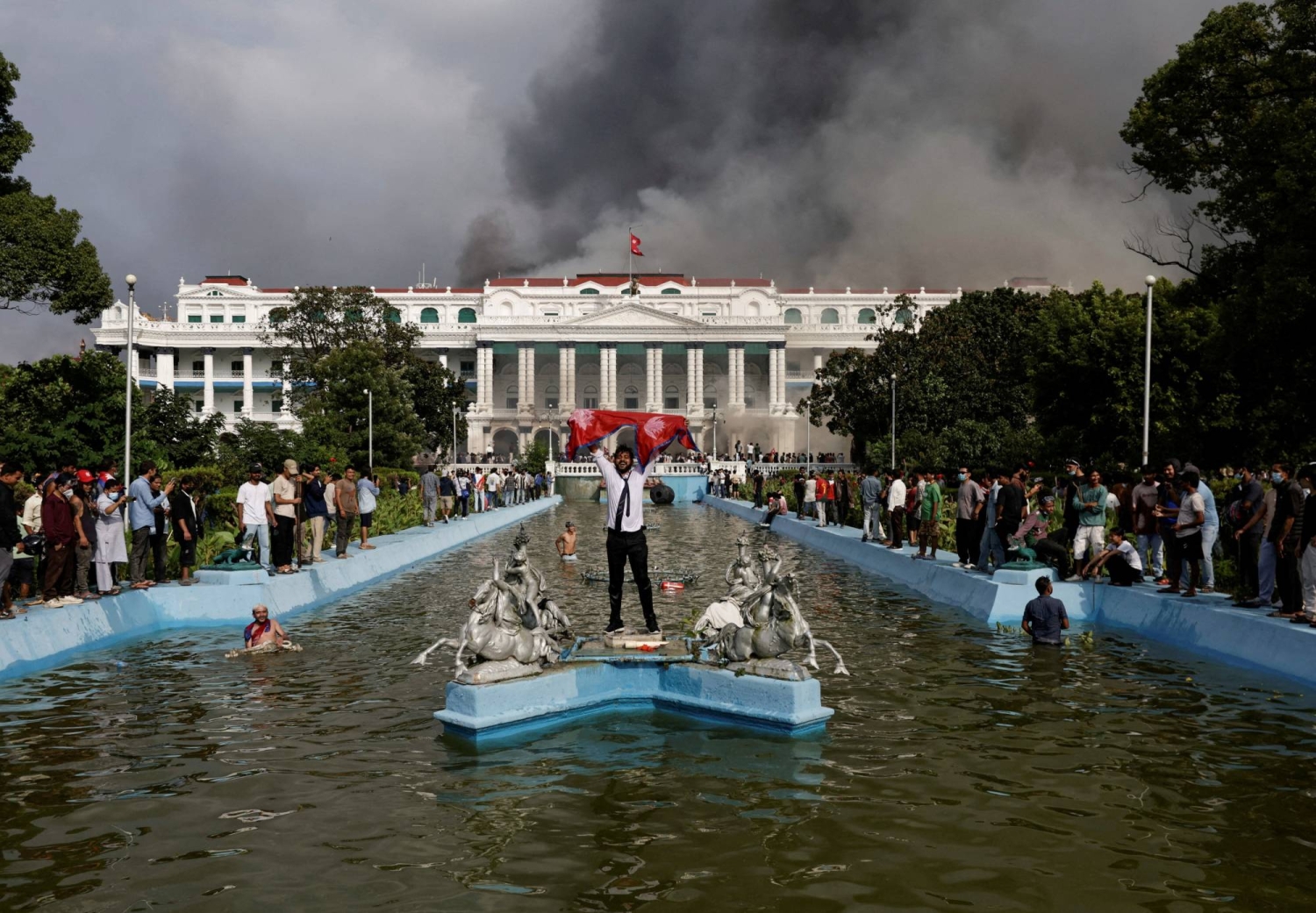
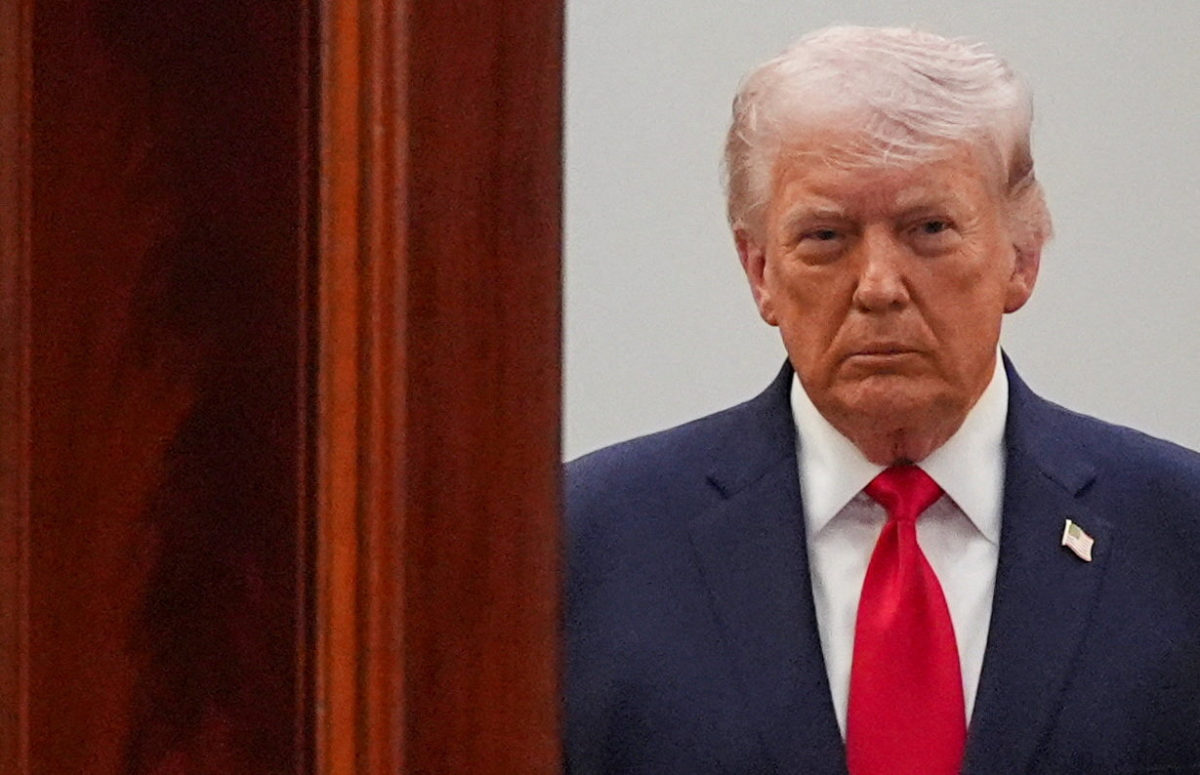

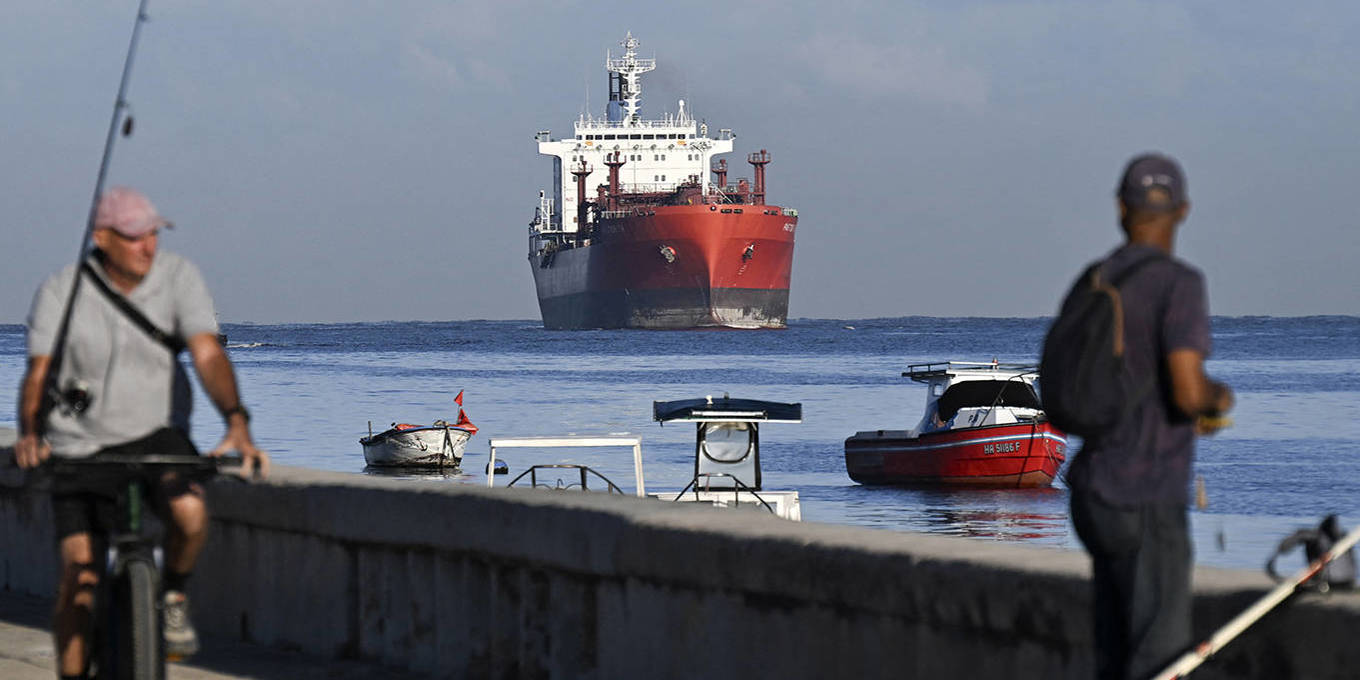


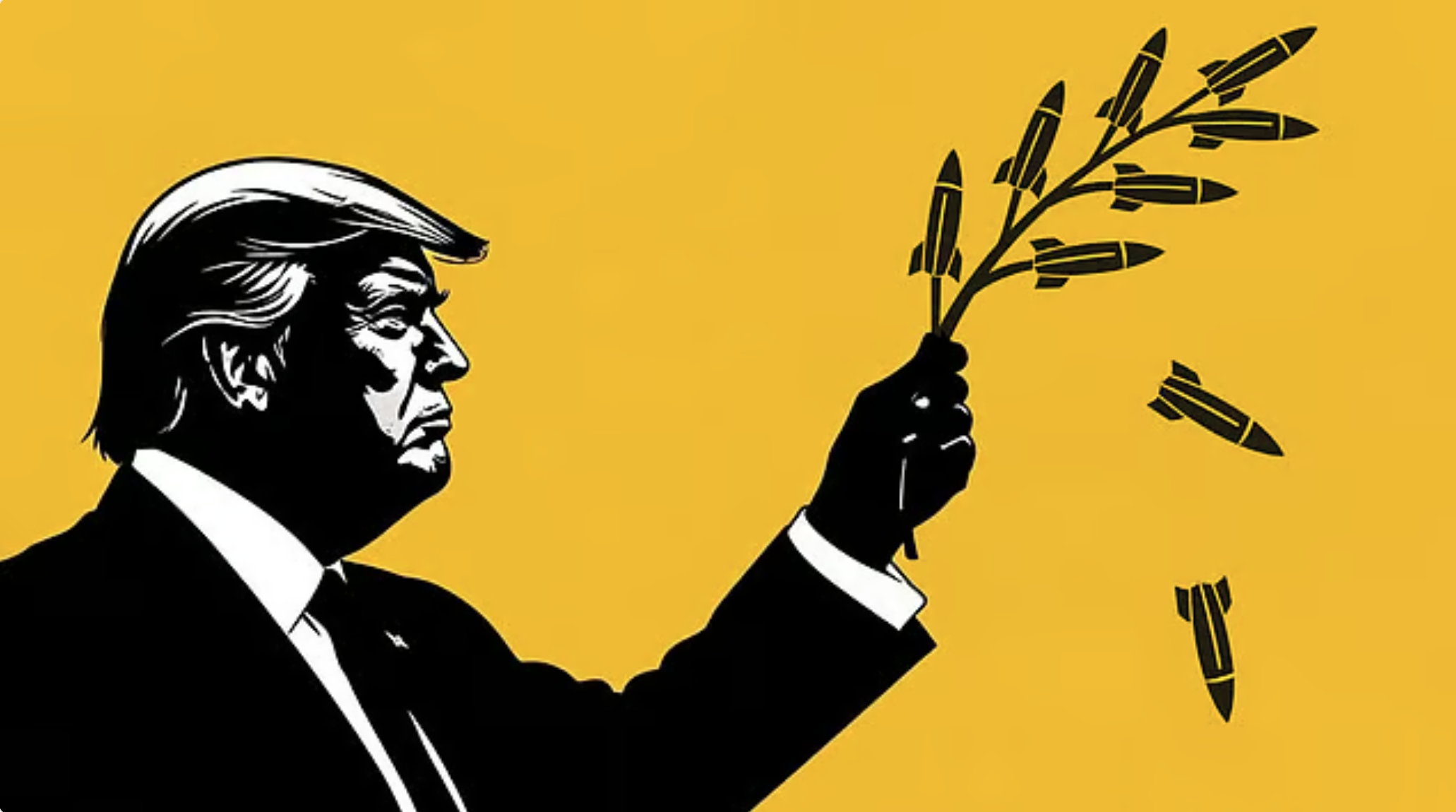
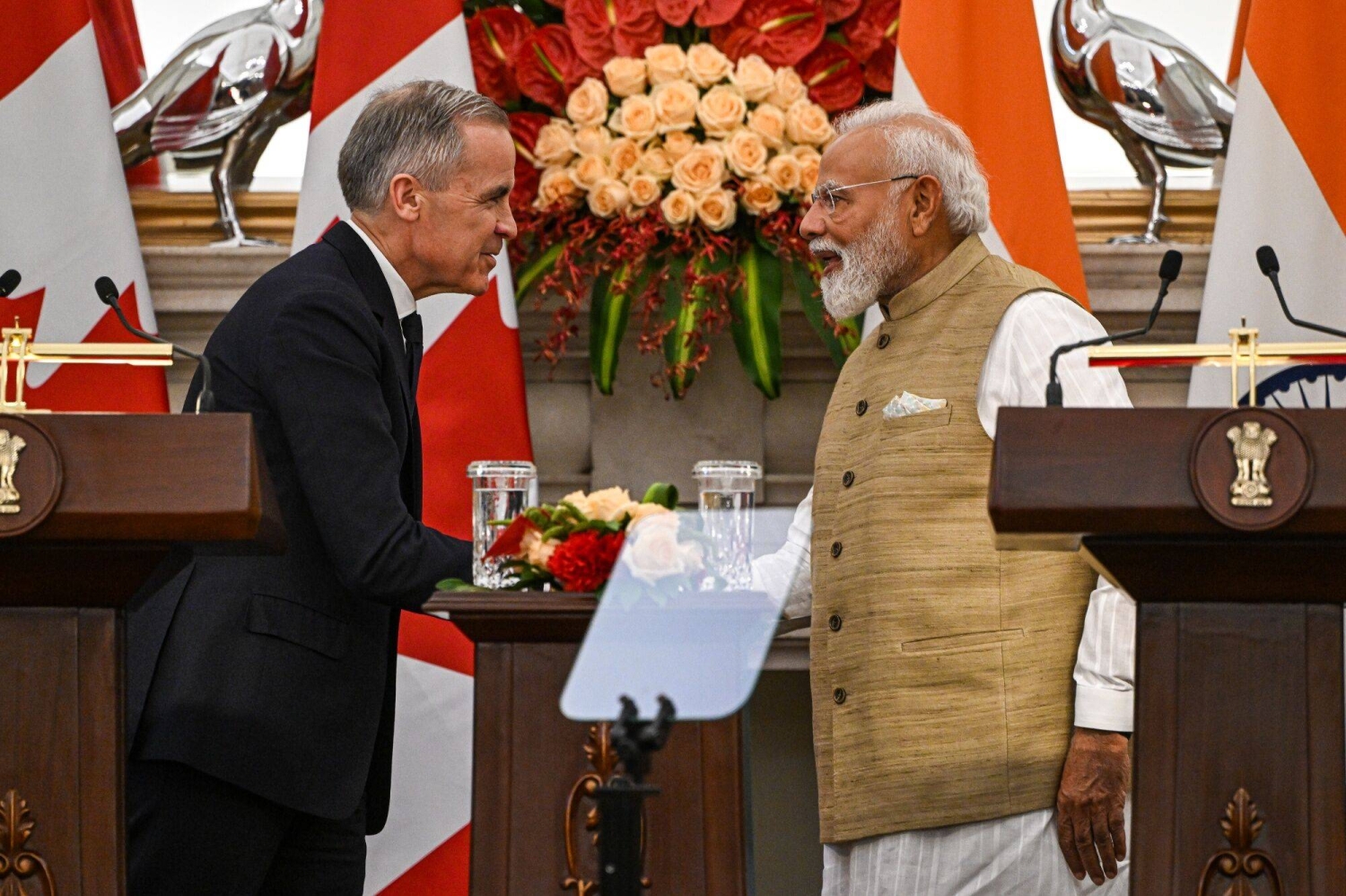

 Stagecraft and Statecraft

You must be logged in to post a comment.