A world in flux offers Taiwan both perils and opportunities

The world has become less predictable, less rules-based, and more shaped by the impulses of strongmen and short-term dealmaking. Against this backdrop, the fate of democratic Taiwan hinges on how global powers deal with an increasingly assertive China.

Brahma Chellaney, Taipei Times

The world has become less predictable, less rules-based, and more shaped by the impulses of strongmen and short-term dealmaking.

Nowhere is this more consequential than in East Asia, where the fate of democratic Taiwan hinges on how global powers manage — or mismanage — tensions with an increasingly assertive China.

The return of Donald Trump to the White House has deepened the global uncertainty, with his erratic, highly personalized foreign-policy approach unsettling allies and adversaries alike. Trump appears to treat foreign policy like a reality show.

Yet, paradoxically, the global unpredictability may offer Taiwan unexpected deterrence. For China, the risk of provoking the United States may now outweigh the temptation of taking Taiwan by force.

Trump’s foreign policy is less about strategy than instinct. Unlike past American presidents who embedded US commitments in alliances and treaties, Trump approaches diplomacy as a real estate mogul might: transactional, impulsive, and often devoid of historical context. For Taiwan, this raises uncomfortable questions. Can it continue to rely on a US security umbrella under a president who has questioned the value of NATO, threatened to pull US troops from South Korea, and hinted in the past at making deals with China at Taiwan’s expense?

Under a president whose loyalty to democratic norms is ambiguous and whose geopolitical thinking centers on short-term leverage, Taiwan could easily become a pawn in a larger bargain — or worse, left to fend for itself. Trump has previously oscillated between fiery rhetoric on China and overtures of camaraderie with Chinese President Xi Jinping (習近平). His unpredictability breeds confusion in Taipei, and, perhaps more dangerously, could encourage miscalculation in Beijing.

However, unpredictability is not always a strategic liability. In the context of Taiwan’s security, it can act as a form of deterrence — especially when facing an increasingly authoritarian and repressive regime like China’s that prizes control and risk management.

Trump’s military strike on Iran last month, executed with little consultation or warning, sent a jolt through global capitals. For Beijing, it was a sharp reminder that a Trump-led America could respond to Chinese aggression not with diplomatic caution, but with military intervention.

This lesson is not lost on China’s leadership, especially at a time when intra-party power struggles in Beijing are raising questions about Xi’s one-man dictatorship.

Despite its military build-up and increasingly bellicose rhetoric on Taiwan, China remains fundamentally cautious about entering a war it cannot control. The US military still possesses unmatched power projection capabilities in the Indo-Pacific. And now, with Trump in office again, the risks of a US military response to a Taiwan invasion — while not guaranteed — appear less abstract than they might under a more cautious administration in Washington.

Indeed, the combination of Trump’s volatility and America’s military reach could force China to recalibrate its timetable on Taiwan.

Xi may still view “reunification” as a historic mission, but he must weigh that ambition against a backdrop of rising internal vulnerabilities — including economic stagnation, demographic decline, eroding international goodwill and sharpening power rivalries within the Chinese Communist Party. Trump’s return to power, with its promise of intensified economic confrontation and strategic pressure, only accentuates those challenges.

At the same time, the broader geopolitical environment is shifting in ways that offer Taiwan both risks and opportunities. On one hand, Trump’s disdain for traditional alliances weakens the cohesion of the democratic front that has helped shield Taiwan diplomatically and militarily. On the other hand, growing concerns about Chinese assertiveness — from Japan and South Korea to the Philippines and India — have created a more favorable regional climate for closer defense cooperation with Taiwan, even if done quietly and informally.

Europe, too, is awakening to the Taiwan question. While Trump’s disdain for the EU may hinder transatlantic coordination, the European Parliament and several key EU member states have become more vocal in opposing any change to the status quo across the Taiwan Strait. These diplomatic gains, while modest, offer Taiwan a broader base of international sympathy in the event of a crisis.

Ultimately, Taiwan is navigating a world in flux — one where neither deterrence nor diplomacy can be taken for granted. Trump’s second term has added a layer of strategic fog to an already unstable international order.

But this fog is not entirely to Taiwan’s disadvantage. The fear that Trump might launch a military response to a Chinese invasion — not out of alliance loyalty, but out of rage or opportunism — may be precisely the uncertainty that keeps Beijing at bay.

Still, deterrence rooted in unpredictability is fragile and cannot substitute for a coherent long-term strategy.

Taiwan must be vigilant as it continues to strengthen its asymmetric defense capabilities, deepen its informal security partnerships and build public resilience. It must also avoid putting all its eggs in Washington’s basket, especially when that basket is being carried by a man who has repeatedly broken with tradition, institutions, and norms.

In an age where geopolitics is shaped as much by personality as by policy, Taiwan’s fate will hinge not just on its own resolve, but on its ability to read and adapt to a rapidly shifting international landscape.

In this precarious balancing act, Taiwan remains both a frontline of democracy and a test case for how smaller powers can survive — and even thrive — amid great-power struggles and global uncertainty.

Brahma Chellaney, professor of strategic studies at the independent Center for Policy Research in New Delhi, is the author of nine books, including the award-winning Water: Asia’s New Battleground (Georgetown University Press).

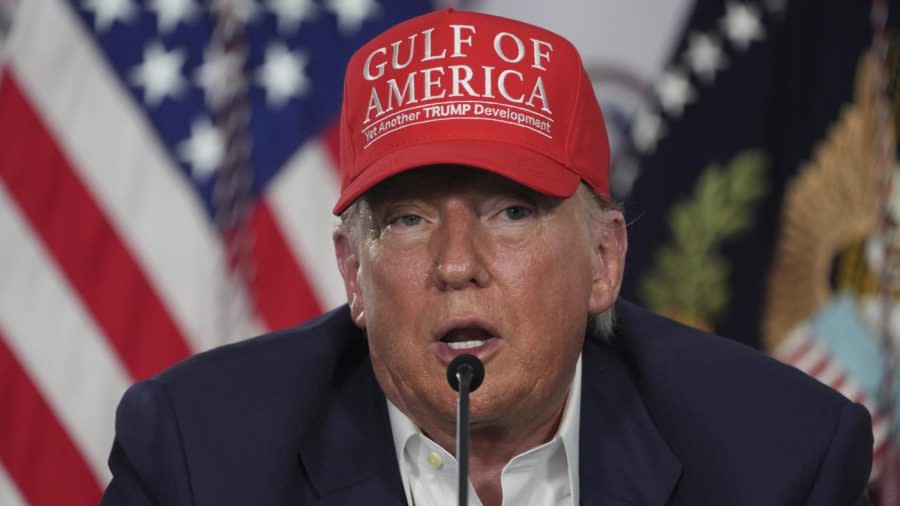
Trump’s 50-day Ukraine ultimatum is doomed to fail

By Brahma Chellaney, The Hill

President Trump campaigned on a promise to end the Ukraine war within 24 hours of returning to the White House. Now back in the White House, he finds himself hemmed in by the realities of great-power politics.

Trump’s self-confidence has collided with the entrenched dynamics of a grinding conflict. Frustrated, he has turned to familiar tools of coercion: threats, pressure tactics and a new flow of advanced weapons to Kyiv.

Trump’s latest initiative gives Moscow a 50-day deadline to end its war in Ukraine. He has threatened secondary sanctions on Russia’s key trading partners and opened a fresh weapons pipeline to Kyiv, hoping this twin-pronged approach will force Russian President Vladimir Putin’s hand. But like Trump’s earlier attempts to employ brute pressure as a substitute for diplomacy, this initiative reflects impatience more than strategic clarity.

Trump once believed that his personal rapport with Putin, coupled with a dealmaker’s instinct, could bring about a ceasefire. But six months into his new term, his peace push lies in tatters. Russia continues to press its territorial ambitions, while Ukraine, bolstered by Western military support, shows little interest in making major concessions. Instead of a breakthrough, Trump faces a deepening quagmire.

The irony is unmistakable — the president who pledged to end America’s entanglements in “forever wars” is now escalating U.S. involvement in one that is deflecting American attention away from more-pressing strategic challenges, including from China, which is seeking to supplant the U.S. as the world’s foremost power.

Trump’s new Ukraine strategy bears an eerie resemblance to his Iran policy, when he tried to bomb Tehran into submission, only to end up entrenching animosities further and weakening U.S. leverage.

There is no doubt that ending the war in Ukraine is in America’s strategic interest. The conflict has absorbed vast U.S. resources, diverted diplomatic bandwidth and strained transatlantic cohesion.

More importantly, the war has delayed Washington’s ability to focus on the key Indo-Pacific region — the world’s emerging economic and geopolitical nerve center.

The pivot to the Indo-Pacific is not merely aspirational. A leaked memorandum titled “Interim National Defense Strategic Guidance,” signed by Secretary of Defense Pete Hegseth, identifies China as the Pentagon’s “sole pacing threat.” The Trump administration is seeking to reorient the U.S. military posture to prepare for a potential showdown in Asia over Chinese aggression against democratic Taiwan.

The war in Ukraine, by draining American attention, resources and capabilities, undermines this rebalancing.

Seen from this angle, Trump is right to seek an end to the conflict. But his approach — escalating arms transfers while threatening punitive sanctions on countries that do business with Russia — is unlikely to yield peace. If anything, it risks prolonging the war by reinforcing the belief in Kyiv that Washington remains committed to a military solution.

In fact, Trump’s threat to impose harsh penalties on Russia’s trading partners lacks credibility. Such sanctions would trigger a U.S. showdown with China, which trades nearly $250 billion annually with Russia, including major oil and gas imports. Sanctioning India could upend America’s Indo-Pacific strategy aimed at maintaining a stable balance of power.

History offers little support for the notion that coercion alone can deliver durable peace. Military pressure may bring parties to the table, but diplomacy is what cements outcomes. The Dayton Accords, which ended the Bosnian war, and the Camp David Accords, which brought peace between Egypt and Israel, were both products of tough negotiations rather than deadlines and threats.

Trump’s maximalist tactics risk backfiring on multiple fronts. Sanctioning Russia’s trading partners could alienate crucial “swing” nations in the global contest with China. These states are already wary of U.S. unilateralism, and some of them could be pushed into Beijing’s orbit. Moreover, punitive economic measures often fail to change state behavior, especially when national security interests are at stake, as is the case for Russia in Ukraine.

Meanwhile, a flood of advanced new U.S. weapons to Ukraine may boost short-term battlefield performance but will do little to bridge the wider diplomatic impasse. Putin, faced with increased Western backing for Kyiv, is unlikely to scale back his goals. Instead, he may double down, calculating that time and attrition are on his side.

The real path to peace in Ukraine lies not in deadlines or ultimatums, but in a forward-looking diplomatic initiative that recognizes the legitimate interests of all parties while seeking to uphold Ukraine’s sovereignty. The Biden administration made limited overtures in this direction, but Trump, who claims to be a great dealmaker, has an opportunity to go further.

Instead of trying to impose peace through pressure alone, he must find ways to bring both sides to the table — with credible inducements and face-saving compromises.

This will require working with international partners — not just NATO allies, but also influential neutral states like India and the United Arab Emirates that can serve as mediators. It will also require a nuanced understanding of Russia’s domestic political constraints and Ukraine’s security concerns. None of this is easy, but it is more likely to succeed than a strategy built on coercion and deadlines.

Despite promising to end the war quickly, Trump now finds himself caught in the same bind as his predecessor. His failure to secure a ceasefire has deepened America’s involvement in the war — the very entanglement he vowed to end.

Unless he pivots toward a more diplomatic course, his 50-day ultimatum to Moscow will go the way of his 24-hour pledge: unmet and quietly shelved.

Deadlines don’t make peace. Diplomacy does.

Brahma Chellaney is a geostrategist and the author of nine books, including the award-winning “Water: Asia’s New Battleground.”

Copyright 2025 Nexstar Media, Inc. All rights reserved. This material may not be published, broadcast, rewritten, or redistributed.

US foreign policy is now a one-man reality show

By Brahma Chellaney, The Hill

In his second term, President Trump’s excessive personalization of foreign policy has been on full display. But far from being the deft strategist he portrays, Trump has turned American diplomacy into an impulsive, self-serving spectacle.

The most recent example is telling: Trump’s announcement of a ceasefire between Israel and Iran blindsided even his own top officials. That a decision of such geopolitical magnitude was made without the knowledge of his senior advisors speaks volumes about his go-it-alone governing style.

From suspending foreign aid to saying the U.S. should “take over and redevelop Gaza,” Trump’s uncoordinated, impulsive approach stands in sharp contrast to traditional U.S. diplomacy, which relies on strategic planning, inter-agency consensus and durable alliances. Trump’s method instead favors drama, unpredictability and personal branding — often at the expense of the national interest.

Trump has long treated foreign policy as theatrical performance, designed more to generate headlines than to achieve lasting outcomes. His habit of bypassing expert advice and established channels consistently undermines U.S. credibility — not just at home, but also among allies and adversaries.

His approach has sown confusion within his administration and distrust abroad. Allies are left wondering whether Trump’s statements reflect official policy or personal whim, and even his own Cabinet is often in the dark. Trump’s foreign policy is less a coherent strategy than a string of dramatic set-pieces crafted for maximum personal visibility.

Take the paradox of his recent Middle East gambit. Trump greenlit Israel’s preemptive war on Iran, then ordered U.S. airstrikes on Iranian nuclear sites — facilities that are subject to International Atomic Energy Agency safeguards and are monitored under Iran’s Nuclear Non-Proliferation Treaty commitments. After declaring victory, he touted a U.S.-brokered ceasefire as vindication of his strategy. Yet he conspicuously failed to acknowledge the crucial mediating role played by Qatar’s emir, Sheikh Tamim bin Hamad Al Thani.

It was, in fact, the Qatari ruler who negotiated the truce that ended what Trump dubbed the “12-Day War.” But for Trump, who never misses a chance to claim center stage, downplaying others’ key roles is par for the course.

Trump claimed that he arranged the ceasefire between India and Pakistan following their military hostilities in early May. The confrontation was triggered by an cross-border terrorist attack in Indian Kashmir on April 22 in which Islamist gunmen targeted non-Muslims, killing 26 people.

India maintains that the ceasefire came about through direct bilateral talks after Pakistan requested a truce via the military hotline. But that hasn’t stopped Trump from repeatedly claiming credit and lobbying for a Nobel Peace Prize. “They should give me the Nobel Prize for Rwanda, or the Congo, or Serbia, Kosovo … The big one is India and Pakistan,” he recently declared.

Ironically, Trump may believe that bombing Iran helps his case for the Nobel — a prize that, over the years, has gone to a surprising roster of militaristsTheodore Roosevelt (the champion of “Big Stick” diplomacy), Henry Kissinger (the mastermind of the carpet-bombing of Laos and Cambodia) and Barack Obama (the serial interventionist who helped turn Libya into a failed state) all won it.

Yet Trump’s personalization of diplomacy brings risks that go beyond ego-driven showmanship. Major decisions made on impulse, for optics or without consulting national security professionals erode the foundations of U.S. foreign policy. They also increase the danger of strategic miscalculation.

Foreign governments cannot know whether Trump’s declarations reflect actual American policy or are merely the mood of the moment. By sidelining intelligence assessments and undercutting his own officials — as he did by floating regime change in Iran after his team publicly denied such intentions — Trump breeds internal disarray and external uncertainty.

This policy chaos is amplified by Trump’s compulsive communication style. No world leader talks more or posts more on social media. American officials are often left scrambling to explain statements they didn’t anticipate, while global actors are forced to decipher whether the next move will be announced from the Situation Room or on Truth Social.

The blurring of lines between national interest and personal gain further complicates matters. Increasingly, foreign policy appears to double as a mechanism for advancing private interests. In the past six months, Trump’s personal wealth surged thanks to a string of cryptocurrency ventures and deals, and there is mounting evidence that the Trump family’s crypto empire is influencing presidential decision-making.

Consider Trump’s handling of Pakistan in the wake of the Kashmir terror attack. Between the massacre and India’s retaliation, Pakistan hurriedly signed a major investment deal with World Liberty Financial, a crypto firm founded by Trump and his sons before last November’s election. Days later, Trump helped shield Pakistan from further Indian reprisals. Now he declares, “I love Pakistan” — a country that harbored Osama bin Laden for years and still shelters global terrorists.

In the end, Trump has reduced U.S. statecraft to spectacle. American foreign policy today looks less like the work of a global superpower and more like a one-man reality show — replete with cliffhangers, reversals, business deals and applause lines.

Such theatrics may serve Trump’s political ambitions, but they leave America’s strategic credibility — and the international order it helped build — increasingly vulnerable.

Brahma Chellaney is a geostrategist and the author of nine books, including the award-winning “Water: Asia’s New Battleground.”

The Dalai Lama’s succession struggle could shake Asia and the world

Two of the 14 Dalai Lamas so far came from outside Tibet, with one born in Mongolia and the other in India’s Tawang. None came from China. The next Dalai Lama could potentially come from the Himalayan belt in India, home to the world’s largest Tibetan diaspora. The present Dalai Lama has explicitly declared that “the new Dalai Lama will be born in the free world.”

Dalai Lama

Tibetan spiritual leader the Dalai Lama delivers an address via video message to the inaugural session at the 15th Tibetan Religious Conference at the Dalai Lama Library and Archive in the northern hill town of Dharamshala, India, on July 2.  © Reuters

Avatar

Brahma Chellaney, Nikkei Asia

With the Dalai Lama turning 90 on July 6, anxiety over his succession has reached a critical point. For Tibetans, the stakes are existential. But for China, the potential vacancy offers a strategic opening to tighten its grip on Tibetan Buddhism.

The looming battle over who gets to name the next Dalai Lama is not just about religious tradition. It is about cultural survival and geopolitical power.

Had Tibet remained independent like Taiwan, it would today be the 10th largest country by area. Instead, since China’s annexation of Tibet in 1951, the region has endured decades of repression. As major powers grow increasingly hesitant in confronting Beijing, many Tibetans fear that their stateless nation’s cultural and religious identity may not survive the coming succession crisis.

While Tibetans around the world hope the present Dalai Lama has many years ahead of him, Beijing is already preparing for the day after his passing. Its aim is to install a compliant, state-appointed Dalai Lama and thereby complete its control over Tibetan Buddhism.

Tibetans view the Dalai Lama as the living embodiment of the Buddha. Since the 14th century, the title has passed through a line of reincarnations, with senior monks identifying the new Dalai Lama as a young child based on spiritual signs. The current Dalai Lama, recognized at age two, had to assume leadership prematurely after China invaded Tibet when he was just 15.

Beijing exploited that earlier leadership vacuum. Now, it intends to manipulate the next one. Chinese authorities insist that only the Communist Party — not the Tibetan religious hierarchy — has the right to select the next Dalai Lama. Should Beijing move ahead with this plan, it would amount to something akin to the Italian government appointing the next pope. It is an act of religious usurpation and cultural colonization.

This is not a theoretical threat. In 1995, Beijing kidnapped a six-year-old boy who had been recognized by the Dalai Lama as the Panchen Lama — the second-most important figure in Tibetan Buddhism — and replaced him with a state-approved substitute. The real Panchen Lama remains disappeared three decades later as one of the world’s longest-held political prisoners.

China also sought to control the Karmapa — the third-highest spiritual leader in the Tibetan hierarchy — by installing its own candidate. But in 1999, the Chinese-appointed Karmapa fled to India. The ease with which he escaped stirred suspicions in India, leading New Delhi in 2018 to withdraw recognition of his legitimacy. Recently, he and his rival Karmapa issued a joint statement pledging to resolve their sectarian split, bypassing Beijing entirely.

China’s interference in Tibetan religious institutions is part of a broader effort to erase Tibet’s unique culture and identity. Under President Xi Jinping, these efforts have intensified, with mass relocation programs, forced Chinese-language education, and restrictions on religious practice aimed at Sinicizing Tibet. As Xi pursues what he calls “stability through assimilation,” Beijing sees control of the Dalai Lama institution as the final prize in subjugating Tibet.

For Beijing, the Dalai Lama remains the “white whale” — a symbol of resistance it has long sought to crush. Since fleeing to India in 1959, the Dalai Lama has been the global face of nonviolent resistance to Chinese occupation. He was awarded the Nobel Peace Prize in 1989 for his unyielding advocacy of Tibetan autonomy through peaceful means.

altTibetan men and women participate in Lhakar Gorshey, a Tibetan circle dance performed on Wednesdays, which are considered a special day of cultural significance, in the northern hill town of Dharamshala, India, on July 2.   © Reuters

Historically, the Dalai Lama has been both the spiritual and political leader of Tibet — a fusion akin to a pope-president. But in 2011, the 14th Dalai Lama voluntarily devolved political power to an elected government-in-exile, chosen by the Tibetan diaspora. This move ensured institutional continuity but made his spiritual succession even more pivotal.

The Dalai Lama has previously said that around his 90th birthday, he would outline the rules for selecting his successor — rules meant to prevent Beijing from hijacking the process. In his recently published book, “Voice for the Voiceless,” he declares that “the new Dalai Lama will be born in the free world,” explicitly ruling out Chinese-occupied Tibet. This would not break with tradition. Two past Dalai Lamas came from outside Tibet, with one born in Mongolia and the other in Tawang, now part of India’s Arunachal Pradesh state.

To further thwart China’s designs, the Dalai Lama has indicated that his successor could be an adult and need not be male. Such flexibility may be key to ensuring that the next Dalai Lama cannot be claimed — or cloned — by Beijing. But clarity is essential. Unless he spells out, unequivocally and soon, how his successor should be identified, China will exploit ambiguity to anoint its own pretender.

Health concerns add urgency. Though mentally sharp, the Dalai Lama has grown physically frail. He underwent prostate cancer treatment in 2016 and had knee replacement surgery in the United States about a year ago. His travel has slowed — not just due to health, but also because most governments, under Chinese pressure, now refuse to host him. The notable exceptions are India, which has sheltered him for 65 years, and the U.S., which hosted him for knee treatment.

Indeed, India has been indispensable to the Tibetan struggle. It houses the vast majority of Tibetan exiles and has helped preserve their culture by supporting Tibetan-language schools and monastic institutions. The Dalai Lama has called himself a “son of India,” and New Delhi officially recognizes him as its “most esteemed and honored guest.”

By contrast, China has ramped up its exploitation of Tibet’s natural resources, especially water and mineral ores. Rivers originating on the Tibetan Plateau, the “Water Tower of Asia,” sustain over one-fifth of humanity. China’s dam-building spree and extractive development in this ecologically fragile region threaten the environmental security of much of Asia.

Tibet’s cultural and ecological fates are thus intertwined — and both hinge on what happens after the 14th Dalai Lama.

The international community must act preemptively. A coalition of democratic powers — led by India, the U.S., Japan and the European Union — should coordinate a response that raises the costs for Beijing if it installs a sham Dalai Lama. The U.S. took the lead by enacting the 2020 Tibetan Policy and Support Act, which authorizes sanctions against Chinese officials who interfere in the succession. Yet, in his second term, President Donald Trump has halted all aid to the Tibetan government-in-exile. Rhetoric without resources is not enough.

If the free world fails to act, we may witness the surreal scenario of two rival Dalai Lamas — one revered by Tibetans, and another rubber-stamped by Beijing. The spiritual heart of Tibet could then become a stage for geopolitical theater. The time to prevent this farce is now.

Brahma Chellaney, a professor of strategic studies at the independent New Delhi-based Centre for Policy Research and fellow at the Robert Bosch Academy in Berlin, is the author of nine books, including “Water: Asia’s New Battleground,” which won the Bernard Schwartz Book Award.