The genesis of a virus
Brahma Chellaney | OPEN magazine
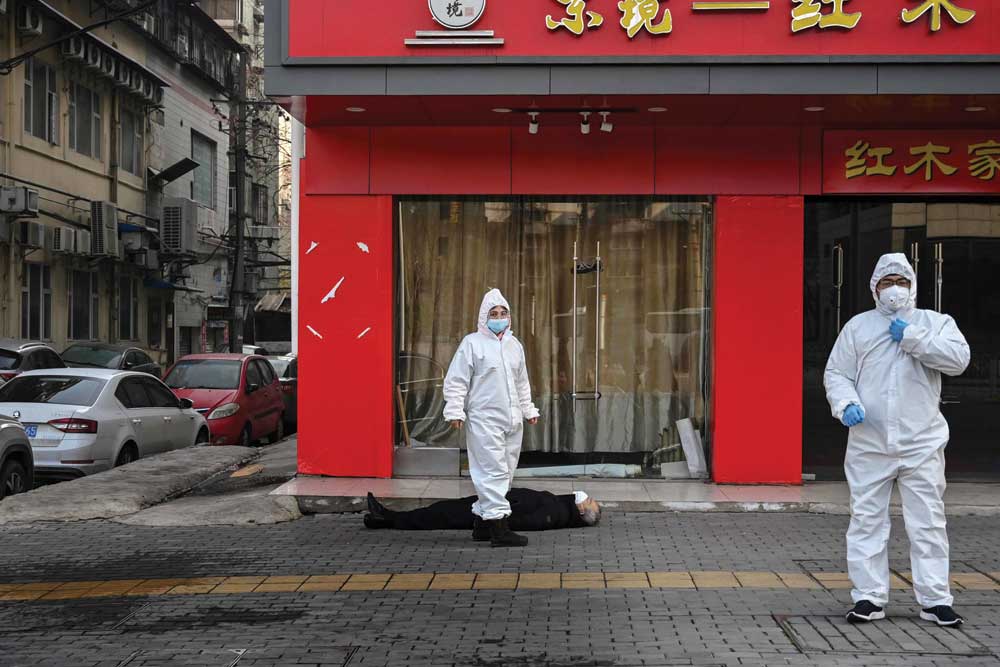
THE COVID-19 PANDEMIC, much like a world war, has become a defining moment for the world. Our lives have profoundly changed since 2020. The pandemic-triggered economic and social disruptions have set in motion, as some early research indicates, higher rates of birth, divorce, obesity, depression, alcoholism, crime, bankruptcy, unemployment, domestic violence and suicide.
If another country, such as India, Japan or Brazil, had let a lethal virus escape from its territory and create a globally disruptive pandemic, it would today be in the international doghouse. But China thus far has escaped scot-free for unleashing the Covid-19 pandemic, which continues to ravage large parts of the world.
After infecting people across the world, the Chinese Communist Party (CCP), through one of its publications, cynically called it “a rare example of a shared situation connecting every human being in the world.” The CCP has even manipulated online discourse to enforce its narrative on the novel coronavirus. As The New York Times reported, it “directed paid trolls to inundate social media with party-line blather and deployed security forces to muzzle unsanctioned voices.”
Not only has China managed to get away with spawning the greatest global health calamity of our time, it also has successfully stymied an independent and thorough investigation into the origins of the Covid-19 virus.
In fact, China has exploited the paralysing pandemic and the suffering wrought by the virus to make major economic gains. Not only has its economy boomed during the pandemic, its exports also have soared to a record high. In other words, the major socioeconomic disruptions in much of the world have worked to China’s advantage.
Paraguay, for example, illustrates China’s cynical attempts to exploit the hardship caused by its most infamous global export, the Covid-19 virus. On March 22nd, Paraguay disclosed that it had been offered Chinese vaccines in exchange for breaking diplomatic ties with Taiwan. Another example of Beijing seeking to weaponise a pandemic that it precipitated is Honduras, a Latin American nation like Paraguay.
Consider another odd fact: The terrible ravages of the pandemic are evident globally other than in the country of its birth. China ranks as the country least affected by the pandemic. It is a mystery as to how China has managed to stay largely unaffected by a virus that originated within its borders, even as neighbouring countries—from Japan and South Korea to Nepal and India—currently grapple with a Covid-19 surge.
ORIGINS OF THE DISEASE
From the start of the pandemic, China has systematically impeded international efforts to understand the true origins of the Covid-19 virus. Instead of coming clean on the virus’ origins and providing answers that the world deserves, Chinese President Xi Jinping sent a letter to Prime Minister Narendra Modi on April 30th, expressing “sincere sympathies” on India’s devastating second wave of Covid-19. It was a case of the victimiser country pretending to sympathise with the victim.
With its international clout, including at the World Health Organization (WHO), China has worked to stifle discussion on the origins of the virus. The international focus is not on the pandemic’s genesis but on the threat posed by the virus’ different variants, which have come to be identified with specific countries.
The Indian media too refer to the “Indian variant,” the “Brazilian variant,” the “UK variant” and the “South African variant,” but not to the original Chinese virus from Wuhan. In fact, it was Indians who nicknamed the B.1.617 strain as the “Indian variant” and as the “double mutant” (a term that scientifically makes no sense because the various variants of concern all contain more than a dozen mutations).
More broadly, the world is paying the price for China’s cover-up and the WHO’s mishandling of the pandemic’s critical early stage. The WHO advised countries during the pandemic’s initial phase against closing borders or mandating the wearing of masks—measures that have since become central to stemming the spread of the disease.
As Covid-19 spread, WHO Director-General Tedros Ghebreyesus dutifully used Chinese talking points and let China, as The New York Times said, “take charge” of the WHO’s inquiry into the origins of the virus. By being too deferential to China throughout the crisis, the WHO provided cover to the actions of the world’s largest autocracy in violating international norms.
For example, international regulations require countries to notify the WHO within 24 hours of the occurrence of a health emergency of potential international concern. After the 2002-2003 SARS epidemic, WHO member states agreed to the establishment of a set of guidelines known as the International Health Regulations.

Article 6 of these agreement obliges every state party, including China, to collect information on any “public-health emergency of international concern within its territory” and notify the WHO “within 24 hours.” Article 6 then states, “Following a notification, a state party shall continue to communicate to the WHO timely, accurate and sufficiently detailed public-health information available to it on the notified event, where possible including case definitions, laboratory results, source and type of the risk, number of cases and deaths, conditions affecting the spread of the disease and the health measures employed; and report, when necessary, the difficulties faced and support needed in responding to the potential public health emergency of international concern.”
Yet China blatantly violated this rule. As an international panel appointed by Tedros acknowledged in its recent report, the WHO first learned of the Covid-19 outbreak in Wuhan from Taiwan, from news articles, a public bulletin, and from an automated alert system that scans the internet for mentions of unexplained pneumonia.
China, instead of notifying the WHO, “suppressed, falsified and obfuscated data and repressed advance warnings,” as highlighted by Errol Patrick Mendes, a well-known, Canada-based international human-rights lawyer. As a result, the Covid-19 virus spread internationally and still remains a global menace. According to Oxford University chancellor Chris Patten, “This is the CPC’s coronavirus, not least because the party silenced brave Chinese doctors when they tried to blow the whistle on what was happening.”
Yet, the Tedros-appointed “independent” panel, in its report released on May 12th, did not mention either China’s flagrant violation of the international rule or how to enforce compliance in a future contingency. The report did not even make a passing reference to China’s initial suppression of information on the Wuhan outbreak or its clampdown on whistleblowers who raised the alarm about the spread of the disease. Nor did it refer to China’s unconscionable delay in releasing the virus’ genetic information—vital to help medical scientists elsewhere develop appropriate diagnostic tests and treatments to save lives.
In fact, the panel’s report tacitly absolved both China and the WHO of responsibility for the pandemic. It even echoed Chinese disinformation: “the virus may already have been in circulation outside China in the last months of 2019,” it said. Former New Zealand Prime Minister Helen Clark and former Liberian President Ellen Johnson Sirleaf (a 2011 Nobel Peace Prize laureate) co-chaired the 13-member panel, which included a retired Indian Administrative Service officer, Preeti Sudan, who served as health secretary until last year.
This panel shied away from unearthing the truth in the same way as the joint WHO-China probe into the origins of the pandemic. Through the Chinese participants, the Chinese government influenced the findings of the joint-probe report, which was released on March 30th. The 124-page report, written by a team of 17 Chinese scientists and 17 international experts, merely said China lacked the research to indicate how or when the virus began spreading.
Such has been Beijing’s stonewalling that the WHO team seeking to study the virus’ origins was allowed into China only in January 2021. Before admitting the WHO team, China systematically destroyed all incriminating evidence, according to a Japanese newsmagazine that accessed internal Chinese documents.
To make matters worse, the WHO team that went to China for the joint study lacked the expertise to investigate the possible lab origins of the virus. Its report was so patchy that even Tedros admitted that it failed to carefully sift evidence about a possible lab leak. Earlier, after coming under attack for his deference to Beijing, Tedros had pledged on November 30th, 2020, that, “We want to know the origin and we will do everything to know the origin.”
US FUNDING OF WUHAN LAB RESEARCH
Another factor has also aided China’s cover-up of Covid-19’s origins—the US role. The Dr Anthony Fauci-led National Institute of Allergy and Infectious Diseases (NIAID) at the National Institutes of Health financed dangerous lab research at the Wuhan Institute of Virology (WIV) since 2014 to reengineer natural coronaviruses and make them more infectious for experiments. This was perhaps the most dangerous lab research ever conducted anywhere.
US President Joe Biden, for his part, frittered away the leverage his predecessor handed him to reform the WHO by rejoining that United Nations organisation on his first day in office. Biden’s action came despite the fact that the WHO had taken no steps to separate itself from the malign influence of China or to cease being complicit in China’s cover-up. America’s rejoining of the WHO, as former Secretary of State Mike Pompeo said in March, “gave the Chinese a complete pass for the Wuhan virus” and advertised American weakness.
After the WHO-rejoining decision, Biden signed a little-noticed presidential memorandum on January 26th that basically termed as racist any reference to the pandemic by the “geographic location of its origin.” The presidential memorandum directed that, “Executive departments and agencies shall take all appropriate steps to ensure that official actions, documents and statements, including those that pertain to the Covid-19 pandemic, do not exhibit or contribute to racism, xenophobia, and intolerance against Asian Americans and Pacific Islanders.”
Consequently, the annual unclassified US intelligence report on threat assessment, released in April, was silent on the pandemic’s Wuhan origin. That report is just one example.
Simply put, Biden’s executive action ordering federal agencies to stop making references to the pandemic by the “geographic location of its origin” has made it an official US policy not to link the China-sourced virus to China. So, while there may be no more official US talk about where the virus came from or about the lab-leak theory, it is, strangely, still widely considered okay to refer to the variants by their geographic origin.
The Western media that objected to the Covid-19 virus being called the Wuhan or Chinese virus have been linking the new strains to the countries where they first arose. In other words, geographically labelling the original virus is racist but not its variants. The emergence of multiple variants of the original virus only underscores the mounting costs of China’s cover-up, including preventing a transparent and thorough investigation of the pandemic’s genesis.
Against this background, it is unlikely that Biden will call China out for its cover-up. China’s coronavirus culpability may now be a proven fact, yet few world leaders have spoken up as clearly as Biden’s predecessor Donald Trump did. Trump, for example, said on July 4th, 2020, “China’s secrecy, deception and cover-up allowed it to spread all over the world—189 countries—and China must be held fully accountable.”
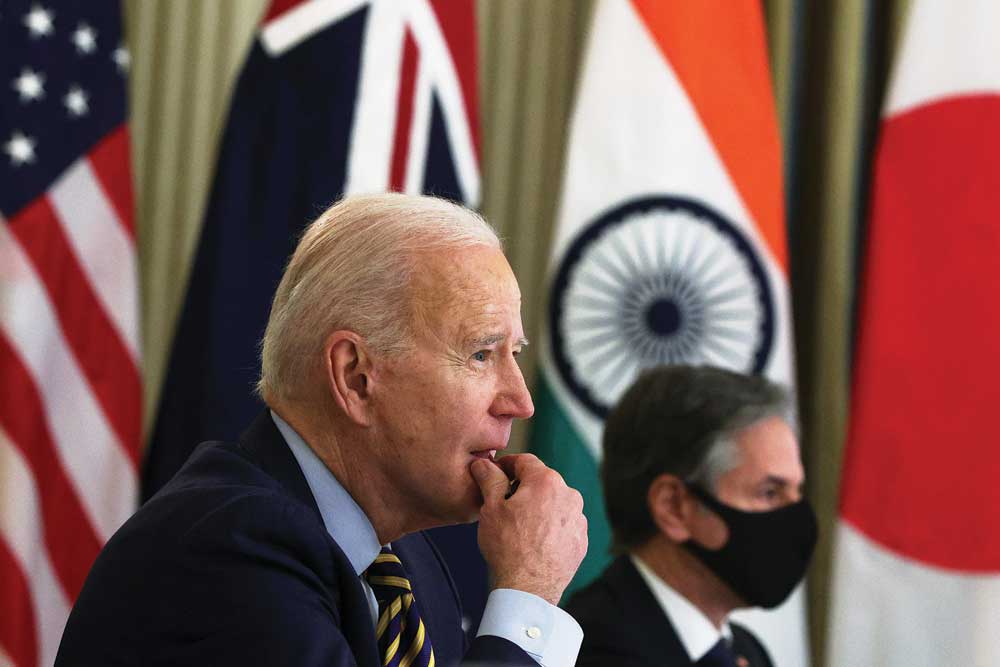
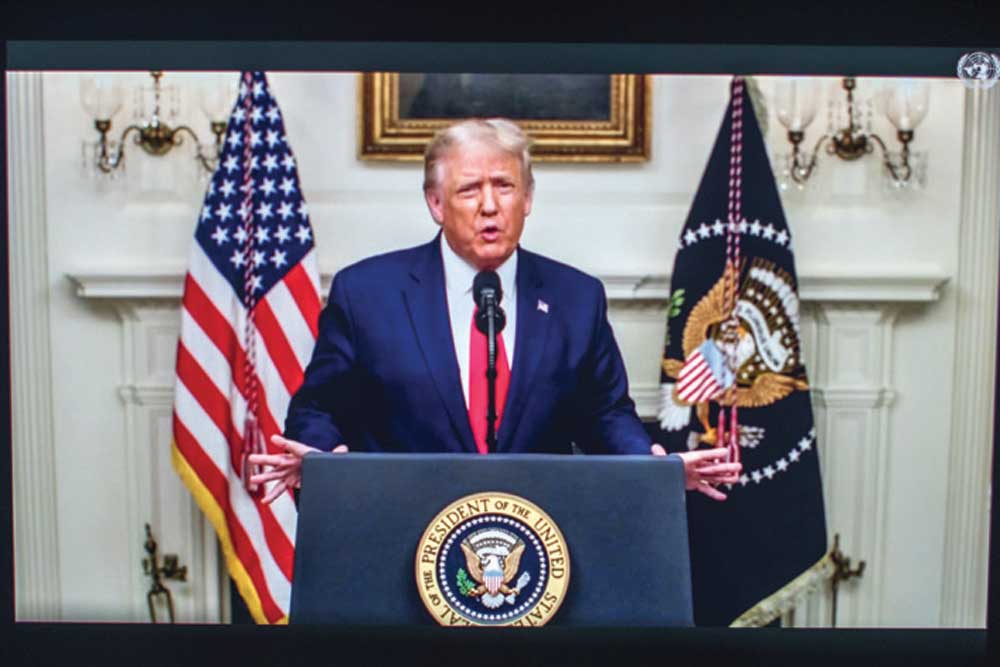
Addressing the UN General Assembly on September 22nd, 2020, Trump declared that “we must hold accountable the nation which unleashed this plague onto the world: China.
“In the earliest days of the virus, China locked down travel domestically while allowing flights to leave China and infect the world. China condemned my travel ban on their country, even as they cancelled domestic flights and locked citizens in their homes. The Chinese government and the World Health Organization—which is virtually controlled by China—falsely declared that there was no evidence of human-to-human transmission. Later, they falsely said people without symptoms would not spread the disease. The United Nations must hold China accountable for their actions.”
WUHAN INSTITUTE’S DANGEROUS RESEARCH
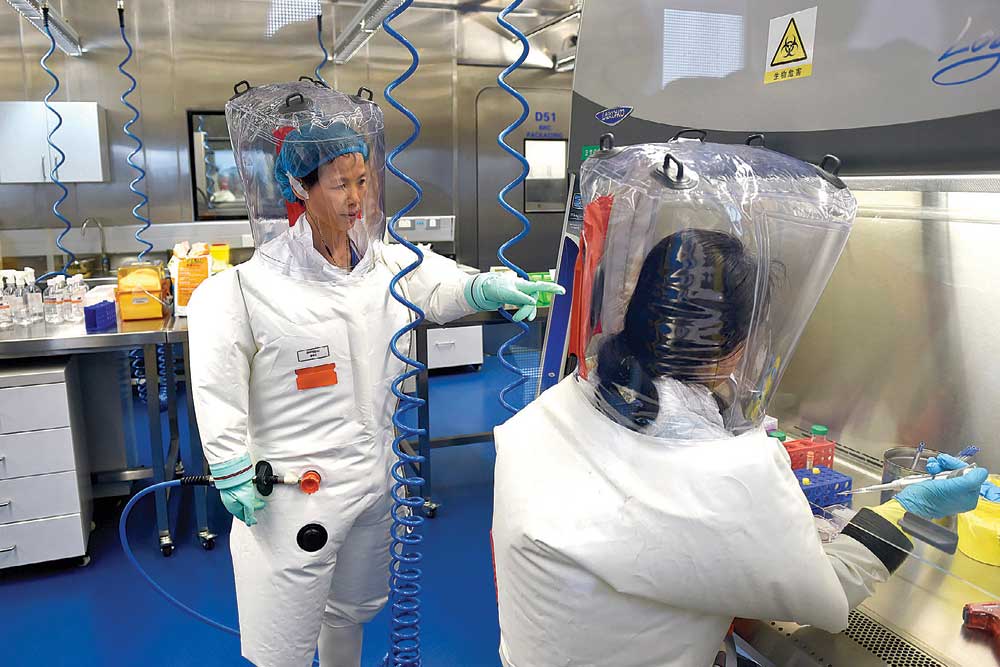
The Wuhan Institute of Virology has acknowledged that its researchers led by Dr Shi Zhengli, who was proud to be called the “bat woman,” were engaged in what is scientifically known as “gain of function” research. The term refers to the deliberate enhancement of the functions of natural viruses to make them more transmissible and more dangerous for experimental purposes.
There are several published papers by Chinese researchers about such “gain of function” research on bat coronaviruses at the Wuhan Institute of Virology. Indeed, this institution became the hub of international coronavirus research before the pandemic erupted. Researchers there experimented with RaTG13, the bat coronavirus that the Wuhan Institute of Virology has identified as its closest sample (96.2 per cent similar) to the Covid-19 virus.
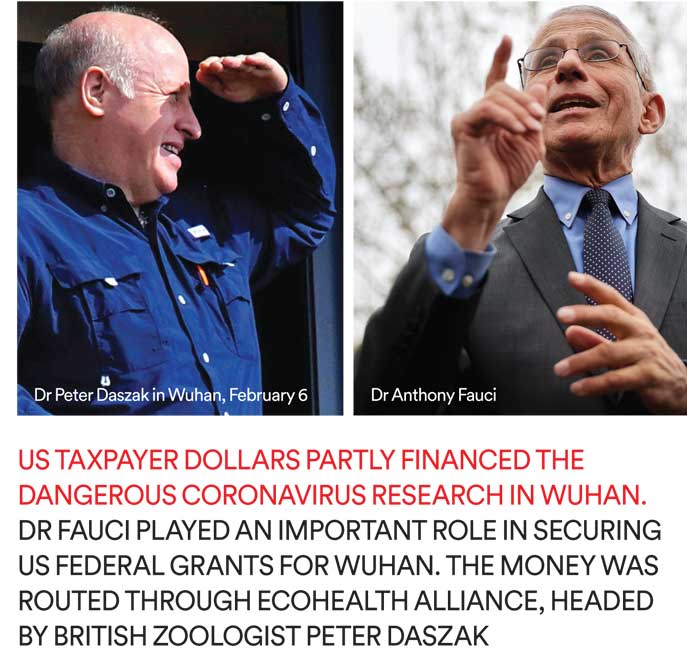
It is also an admitted fact that US taxpayer dollars partly financed the dangerous coronavirus research in Wuhan. As head of the NIAID, Dr Fauci played an important role in securing US federal grants for the coronavirus research in Wuhan. The money to the Wuhan institution was routed through the New York-based EcoHealth Alliance, headed by British zoologist Peter Daszak.
After the pandemic flared, Dr Fauci and Dr Daszak, seeking to deflect attention from their potential culpability, took the lead in throwing cold water on the theory that the novel coronavirus leaked from the Wuhan lab. While repeatedly dismissing that theory, Fauci and Daszak hid their acute conflict of interest.
Why did Dr Fauci funnel millions of dollars to a Chinese institution that the US government says was engaged in secret research for China’s military? In a fact-sheet published on January 15th, the US State Department said that, despite the Wuhan Institute of Virology’s claim to be a civilian institution, “the United States has determined that the WIV has collaborated on publications and secret projects with China’s military. The WIV has engaged in classified research, including laboratory animal experiments, on behalf of the Chinese military since at least 2017. The United States and other donors who funded or collaborated on civilian research at the WIV have a right and obligation to determine whether any of our research funding was diverted to secret Chinese military projects at the WIV.”
The fact-sheet also declared that China has not “demonstrably eliminated” its bioweapon research in apparent breach of “its clear obligations under the Biological Weapons Convention,” which entered into force 46 years ago.
Dr Fauci, for his part, now claims that he has never supported “gain of function” research. This is contrary to his own published work.
Dr Fauci championed such research from the time it emerged in the scientific field. In a co-authored op-ed that first appeared in The Washington Post on December 30th, 2011, Dr Fauci declared that, “much good can come from generating a potentially dangerous virus in the laboratory.” (The newspaper’s website has since changed the phrase “much good can come” to “insights can come,” although reprints of the op-ed elsewhere still show “much good can come…”) The op-ed cautioned that, “Safeguarding against the potential accidental release or deliberate misuse of laboratory pathogens is imperative.” Yet it is exactly this kind of dangerous lab research that the Dr Fauci-led NIAID financed at a lab in communist China since 2014.
The State Department’s fact-sheet, while pointing out that the Wuhan Institute of Virology was researching viruses similar to the Covid-19 virus, said several researchers there became sick in autumn 2019 “with symptoms consistent with both COVID-19 and common seasonal illnesses.”
Investigating the pandemic’s genesis is critical for another reason—this is not the first deadly disease to spread globally from China. China was the origin of earlier influenza epidemics, including, as Chinese scientists have acknowledged, the 1957 “Asian flu,” the 1968 “Hong Kong flu” and the 1977 “Russian flu.” According to new research, the 1918 “Spanish flu” that killed some 50 million people worldwide also originated in China.
Nor is the current pandemic the first case involving Chinese concealment of facts and samples. A Chinese coverup of the 2002-2003 SARS outbreak in China triggered the world’s first 21st-century pandemic. Getting to the bottom of how the Covid-19 pathogen flared and spread is essential for designing international rapid-response efforts to prevent a future local disease outbreak from spiralling into yet another pandemic.
THE LAB-LEAK THEORY
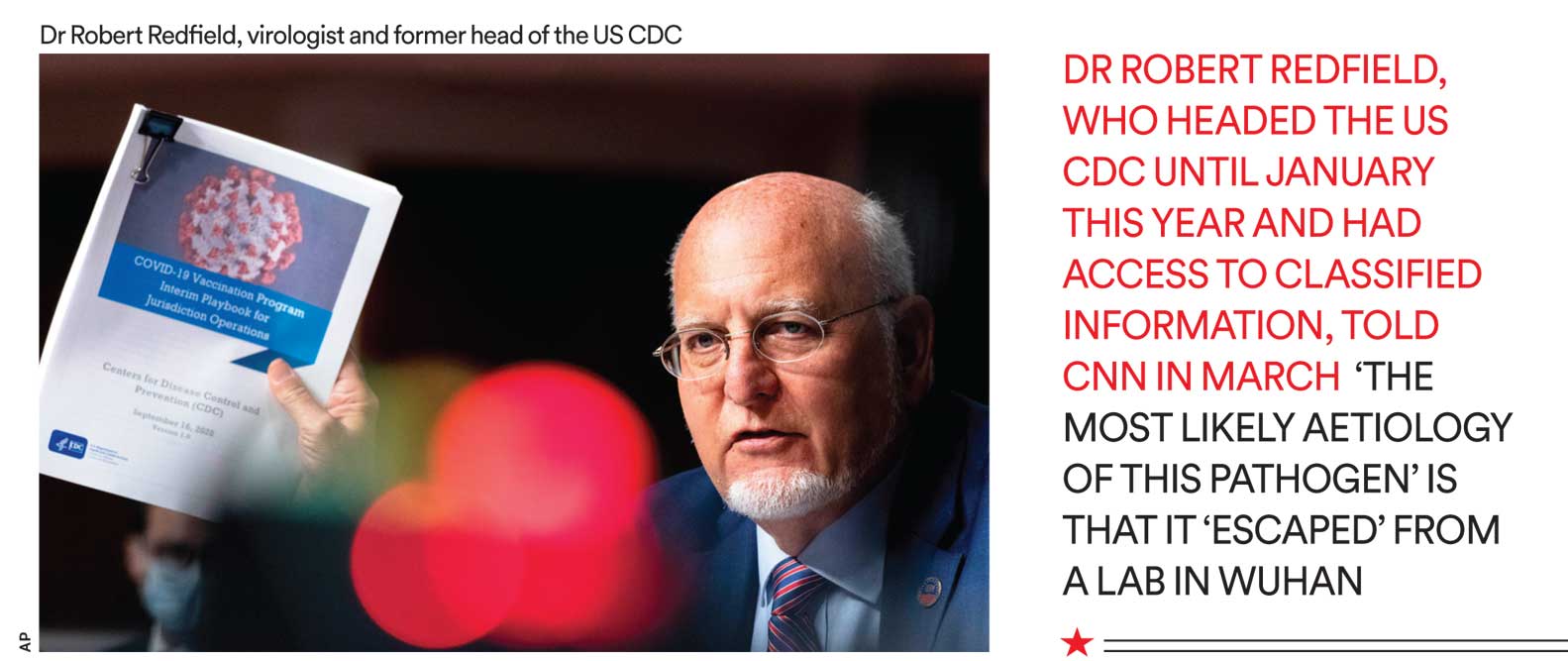
However hard China may try, the theory that the Covid-19 virus escaped from a Wuhan lab refuses to go away. A leading American virologist, Dr Robert Redfield, who headed the US Centers for Disease Control and Prevention, or CDC, until January this year and had access to classified information, told CNN in March that “the most likely aetiology of this pathogen” is that it “escaped” from a lab in Wuhan.
Redfield said that, after escaping from the lab, the virus began transmitting in September-October 2019. One study, published in the journal Science, also found “the period between mid-October and mid-November 2019” to be “the plausible interval when the first case” of Covid-19 emerged in Hubei province, of which Wuhan is the capital.
In May, 18 scientists “with relevant expertise” declared in the journal Science that the lab-leak theory cannot be ruled out. They said, “A proper investigation should be transparent, objective, data-driven, inclusive of broad expertise, subject to independent oversight, and responsibly managed to minimize the impact of conflicts of interest.”
Earlier in March, another group of 26 respected international scientists and experts released an “open letter” describing the joint WHO-China study as fundamentally flawed and calling for a new, unrestricted investigation, including whether the virus leaked from a lab. They said the probe should be “carried out by a truly independent team with no unresolved conflicts of interest and no full or partial control by any specific agenda or country.” The United Nations General Assembly can vote to set up such an inquiry.
Meanwhile, Nicholas Wade’s recent groundbreaking essay in the Bulletin of the Atomic Scientists has helped renew attention on the lab-leak theory. This extract from the essay may explain why the US has shied away from exerting sustained pressure on China to come clean on the origins of a virus that has thus far killed nearly 3.5 million people officially and many more unofficially:
The US government shares a strange common interest with the Chinese authorities: Neither is keen on drawing attention to the fact that Shi’s coronavirus work was funded by the US National Institutes of Health. One can imagine the behind-the-scenes conversation in which the Chinese government says, “If this research was so dangerous, why did you fund it, and on our territory too?” To which the US side might reply, “Looks like it was you who let it escape. But do we really need to have this discussion in public?”
To be sure, no group of scientists has claimed that the Covid-19 virus was intentionally created as a bioweapon. However, a growing body of scientific opinion has come to believe that the virus’ origin in a Wuhan lab, through accidental escape or accidental infection of lab employees or lab animals, is as likely as a naturally occurring spillover from wildlife to humans. According to the State Department’s fact-sheet, “Scientists in China have researched animal-derived coronaviruses under conditions that increased the risk for accidental and potentially unwitting exposure.”
Two aspects of the Covid-19 virus, in fact, strengthen the theory that it originated in a lab. The first is the fact that the virus, from the beginning, was already well adapted to indoor transmission.
As American biologist Bret Weinstein said on the Real Time with Bill Maher show, “This virus attacks so many different tissues in the body, it does not seem natural. The fact that it does not, at least at the beginning did not seem to transmit outdoors nearly at all is very conspicuous. I mean, after all, most animals live outdoors. So, a virus that seems to be adapted to indoor transmission is a bit conspicuous.” Outdoor Covid-19 transmission still remains rare.
The second aspect is the transmission efficiency of the virus. The virus, from the beginning, has been transmitting efficiently across all geographical and climatic zones, regardless of ethnicity, race, gender and age.
Dr Redfield, in the CNN interview, said a naturally occurring virus normally takes a while to figure out how to become “more and more efficient” in transmission. But a lab experimenter, he explained, would seek to make the virus grow better and more efficient in order to learn more about it. “I have spent my life in virology. I do not believe this somehow came from a bat to a human, and at that moment in time, the virus…became one of the most infectious viruses that we know in humanity for human-to-human transmission,” Dr Redfield added.
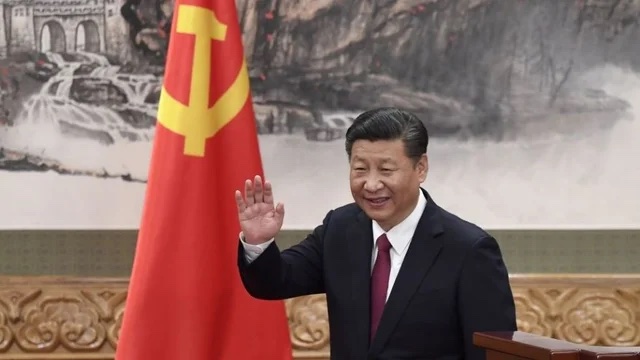
As history attests, authoritarian regimes rarely admit mistakes. A highly repressive regime like the one in Beijing will certainly be loath to admit that a pandemic that has killed millions of people across the world resulted from its negligence and lax safety standards at the Wuhan Institute of Virology.
If the virus did not originate in a lab and China was not guilty of any cover-up, wouldn’t it be facilitating a transparent and independent inquiry by outside experts in order to clear the air with the rest of the world? China, however, has done exactly the opposite. It has even refused to turn over the raw personalized health data from its first Covid-19 cases to the WHO.
Furthermore, instead of giving outside investigators access to granular lab records, data and personnel so as to allow them to confidently evaluate the various hypotheses, Beijing has kept the Wuhan lab samples, records and research dossiers under lock and key. If the Chinese government did nothing wrong, why would it refuse to share raw data and grant complete, transparent access to the research facilities in Wuhan?
Let us be clear: Lab leaks have happened in the past. One example was the Soviet-era 1979 anthrax leak from Sverdlovsk, which Moscow admitted only in 1992 after the Soviet Union’s disintegration. According to the State Department’s fact-sheet, “Accidental infections in labs have caused several previous virus outbreaks in China and elsewhere, including a 2004 SARS outbreak in Beijing that infected nine people, killing one.”
CHINA WILL LEARN KARMA IS A BITCH
Although knowing Covid-19’s origins is critical to the prevention of future pandemics, China—as an Associated Press investigation has revealed—is “strictly controlling all research into its origins, clamping down on some while actively promoting fringe theories that it could have come from outside China.” The clampdown on all information has come from the CCP leadership.
The party’s culture of secrecy and control resulted in the virus spreading worldwide from China. Through its unrivalled surveillance, censorship and propaganda systems, the CCP is able to construct and control a narrative. China’s initial coronavirus cover-up relied on these systems, resulting in a local outbreak in Wuhan morphing into a still-raging global health calamity. The CCP’s focus remains on preventing the truth from coming out.
But as former US Secretary of State Mike Pompeo said recently, “every piece of evidence” suggests that, despite China’s cover-up of the pandemic’s genesis, the Covid-19 virus originated in the Wuhan Institute of Virology lab. He warned that the “risk that something like this happens again from that laboratory or another Chinese laboratory is very real. They [China] are operating and conducting activities that are inconsistent with their capacity to secure those facilities. And the risk of bioweapons and bioterror emanating from this region is very real.”
The pandemic-caused infections, deaths and disruptions have driven negative views of China to new heights internationally, according to a Pew Research Centre survey. China has been trying to repair the damage to its reputation by pursuing “vaccine diplomacy,” just as it pushed “mask diplomacy” in the early stages of the pandemic. The Biden administration, unfortunately, has aided China’s “vaccine diplomacy” by leaving developing nations in the lurch through its vaccine hoarding at home.
Still, China’s persistent refusal to come clean, coupled with the rising international tide of distrust of that country, has helped fuel greater interest in investigating the pandemic’s true genesis. An increasing number of international scientists have started to debate whether the pandemic occurred because of a lab leak in Wuhan. Fact-based scientists are fond of the aphorism, “Absence of evidence is not evidence of absence.”
China may believe that it has got away with creating the Covid-19 pandemic, as it did with spawning the SARS pandemic. The Covid-19 pandemic, however, marks a watershed in history that will continue to dog China. Thanks to Covid-19, many countries have learned hard lessons about China-dependent supply chains, and international attitudes towards Xi’s regime have shifted.
Last year, Beijing aggressively denounced international voices calling for it to pay compensation for the pandemic-inflicted damage. These voices included the Trump administration, which said it was looking at ways of holding China financially responsible for the pandemic and the economic damage it has caused worldwide.
In 2021, no one is suggesting that China be sued for damages, largely because such action seems unrealistic. China’s international power and clout are all too visible. Yet, with the pandemic still battering large parts of the world, China continues to incur immeasurable costs to its reputation and image. Those costs cumulatively would likely surpass any possible reparations claim against it.
In a karma-is-a-bitch way, China will indeed pay for spawning the pandemic.
Brahma Chellaney is a geostrategist and author of nine books, including “Water: Asia’s New Battleground” (Georgetown University Press), which won the Bernard Schwartz Award.



 Stagecraft and Statecraft
You must be logged in to post a comment.