China’s military crossroads

By BRAHMA CHELLANEY

Japan Times, November 30, 2012

https://i0.wp.com/media.washtimes.com/media/image/2010/09/23/b4chinacolor_s640x440.jpg

At a time when China’s economy and society are under considerable strain and the country is embroiled in increasingly tense border disputes with its neighbors, the relatively peaceful once-in-a-decade political transition in Beijing has helped deflect attention from the underlying turbulence in the Chinese system. The fact is that China is at a turning point, and the next decade under the new leadership of Xi Jinping is likely to decisively shape the country’s trajectory.

Power transition rarely has occurred without bloodshed and chaos in Chinese history. From the first Shang dynasty, political change is usually violent, with force also being employed to retain power. Chinese analyst Xiao Han has called this the “ax gang” tradition — the ax has been the symbol of power since ancient times. In modern times, as Mao Zedong once famously said, “political power grows out of the barrel of a gun.”

The People’s Republic of China — born in blood in 1949 — has pursued endless domestic witch hunts and political purges. Mao and Deng Xiaoping between them got rid of at least five anointed successors who were discarded abruptly, or died mysteriously or under detention.

The first leadership transition without turmoil or bloodshed was in 2002, when Jiang Zemin stepped down in favor of Hu Jintao. This year, Mr. Xi’s ascension was preceded by a vicious power struggle that led to the ouster and disappearance of a rising star, Bo Xilai, and the swift conviction of his wife for the murder of a British national in what probably ranks as the mother of all orchestrated trials.

Power in China today may not flow from the barrel of a gun to the extent it did under Mao — who was responsible for the deaths of countless millions — but it is significant that Mr. Xi has risen to the top with close military ties and support. In fact, what sets Mr. Xi apart from China’s other civilian leaders is his strong relationship with the military, which regards him as its own man.

As Mr. Xi rose through the Communist Party ranks, he forged close ties with the military as a reservist, assuming leadership of a provincial garrison and serving as a senior aide to the defense minister. His wife, Peng Liyuan, is also linked to the military, having served as a civilian member of the army’s musicale troupe.

The real winner from the appointment of the conservative-dominated, seven-member Politburo Standing Committee is the military, whose rising clout in policy already has created an increasingly assertive China. The party has ceased to be a rigid monolith obedient to a single leader. Instead, it has become dependent on the military for its political legitimacy and to ensure domestic order. With rural protests increasing officially by more than 10 percent a year, and separatist unrest growing in the sprawling Tibetan plateau, Xinjiang and Inner Mongolia, China is now the only important country whose annual internal security budget surpasses its national defense spending.

The rise of a new dynasty of “princelings,” or sons of revolutionary heroes who have widespread contacts in the military, is another indicator that nationalism and militarism likely will strengthen in China. The princelings such as Mr. Xi, numbering in the hundreds, dominate the new Standing Committee and play a key role in the government and economy, in spite of their internecine power squabbles.

An examination of the new members of the 205-member Central Committee, the 25-member Politburo and the seven-member Politburo Standing Committee shows that political patronage and family connections were critical factors in their selection.

Indeed, the new leadership lineup is pretty much what the foreign media reported beforehand, suggesting that despite a secretive selection process, some party bosses had an interest in leaking out the information in advance of the official announcement.

Another striking feature is the dominance of ethnic Han men in the party’s upper levels in a country that claims to represent 56 nationalities and trumpets gender equality. Although the restive ethnic-minority homelands make up more than 60 percent of China’s landmass, there is not even one token minority representative in the Politburo.

These developments have important internal and external implications. Internally, with several reformers losing out to old conservatives in the power struggle for top positions, prospects for major reforms look bleak.

The factional infighting, recently witnessed for the slots in the party’s upper echelons, is even more intense at the provincial level, making bold policymaking difficult despite greater social instability and slower economic growth. The messy politics is an important driver of the flight of capital and professionals from China.

Since the Deng era, China has dumped the Marxist half of Marxism-Leninism but retained the Leninist part. Dictatorship is one thing that is not open to reform. China’s corrupt, faction-ridden political culture and bloody history, in any event, are conducive not to political reform but to political revolution.

China’s internal politics has an important bearing on its external policy. Stepped-up internal repression and aggressive external moves to change the territorial status quo in China’s favor are two sides of the same coin.

The stronger the military has become at the expense of the civilian leadership (every Chinese leader since Mao has been weaker than his predecessor), the more muscular Beijing’s approach has been toward its neighbors. Recent revelations about how some senior civilian leaders have amassed vast wealth even as their privileged children remain unbound by law or consequences only help to accentuate the party’s legitimacy problem.

China’s future is likely to be determined not by its hugely successful economy, which has turned the country into a global player in just one generation, but by its murky politics and the growing sway of the People’s Liberation Army. The leadership transition, far from cleaning up or stabilizing China’s politics, may actually allow the military to increasingly call the shots. We may see more military generals speak out of turn on strategic issues. The plain fact is that the foreign ministry is the weakest branch of the Chinese government because it is often overruled or simply ignored by the military and security establishments.

In this light, China’s neighbors and the U.S. military would be wise to brace themselves to face a less restrained China championing ever-expanding “core interests.”

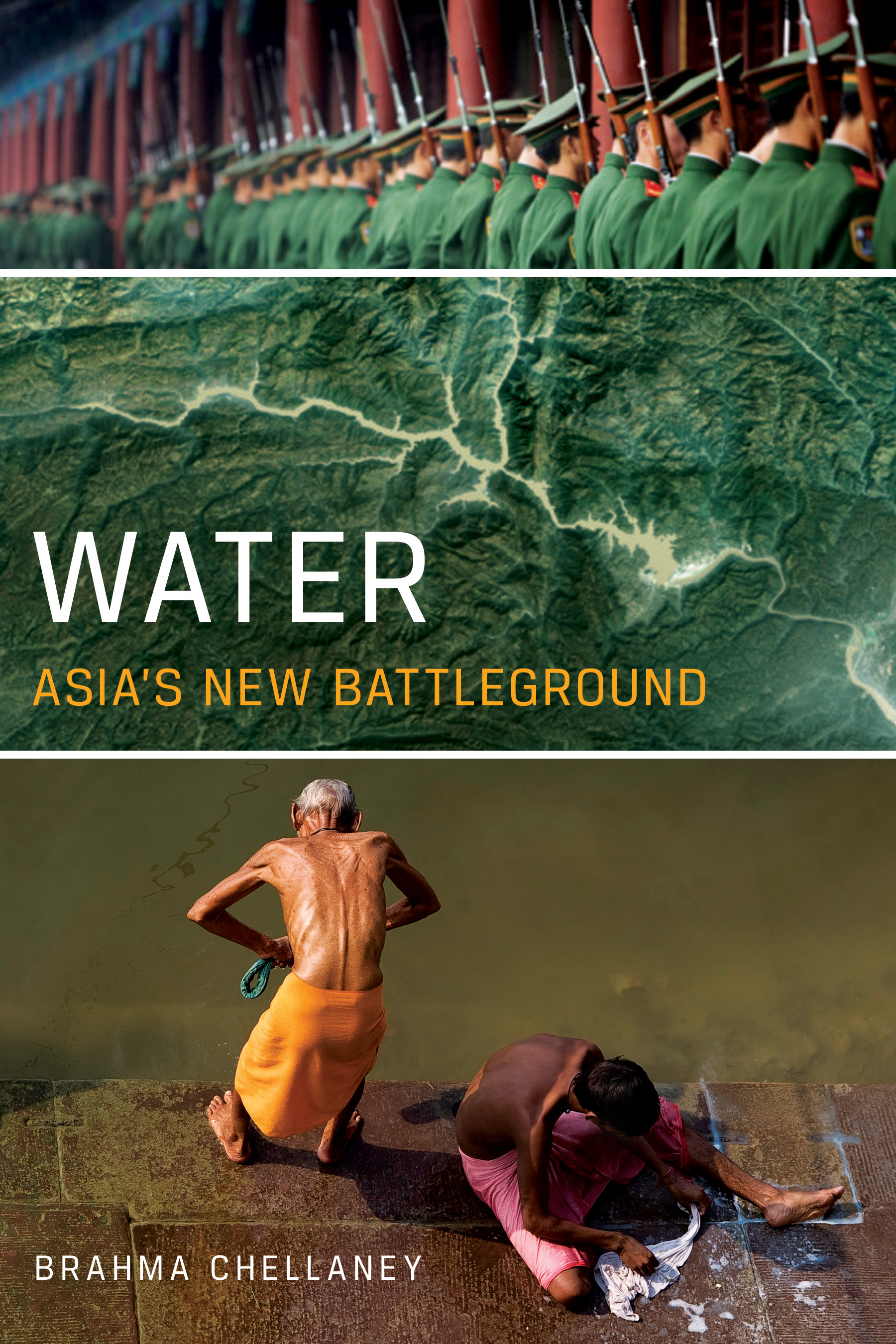
Brahma Chellaney is the author of Asian Juggernaut (Harper, 2010) and Water: Asia’s New Battlefield (Georgetown University Press, 2011), which won the 2012 Bernard Schwartz Award.

(c) Japan Times, 2012.

Asia’s Power Balance

A U.S.-India-Japan cooperation bloc can ensure stability in Asia, especially vis-à-vis a rigid China

Brahma ChellaneyThe Economic Times, November 21, 2012

The ascendancy of a new dynasty of “princelings” in China, the political uncertainty in Japan and India, and U.S. President Barack Obama’s “pivot” toward Asia underscore the challenge of building Asian power equilibrium at a time of resurgent border disputes and growing nationalism. Obama, by undertaking an Asian tour shortly after his re-election, has signalled that Asia will move up in importance in his second-term agenda.

Obama’s historic visit to Myanmar will aid India’s “Look East” policy because it formally ends a 24-year U.S. policy of punitively isolating a country that is the Indian gateway to continental Southeast Asia. The U.S. shift on Myanmar is as much about seizing trade and investment opportunities as it is about the geopolitical objective of weaning that strategically located country away from Chinese influence. Paradoxically, it was the U.S. sanctions policy that penalized Myanmar but condoned China for crushing pro-democracy protests in 1988 and 1989, respectively, that helped push the former into the latter’s strategic lap.

Obama’s “pivot” toward Asia actually chimes with India’s “Look East” policy, which has graduated to an “Act East” policy, with the original economic logic of “Look East” giving way to a geopolitical logic. The thrust of the new “Act East” policy — unveiled with U.S.’s blessings — is to contribute to building a stable balance of power in Asia by reestablishing India’s historically close ties with countries to its east.

India, in fact, has little choice but to look east because when it looks west, it sees only trouble. The entire belt to India’s west from Pakistan to Syria is a contiguous arc of instability, volatility and extremism. An eastern orientation in its policy can allow India to join the economic dynamism that characterizes Southeast and East Asia. It is in the east again that Indian and U.S. interests now converge significantly, in contrast to their bilateral dissonance on Pakistan, Afghanistan, and Iran.

India’s new strategic ties with countries as varied as Japan, Australia, Singapore, Indonesia, South Korea and Vietnam are important moves on the grand Asian chessboard to increase its geopolitical leeway. The U.S., for its part, has strengthened and expanded its security arrangements in Asia in recent years by making the most of the growing regional concerns over China’s increasingly muscular approach on territorial and maritime disputes.

Both the U.S. and India have deepened their strategic ties with Japan, which has Asia’s largest naval fleet and a $5.5 trillion economy. The first serious Indo-Japanese naval exercise, involving a search-and-rescue operation, was held off the Japanese coast just five months ago. India and Japan, despite their messy domestic politics and endemic scandals, actually boast the fastest-growing bilateral relationship in Asia today.

The stage has been set for building closer Indo-Japanese security cooperation in the wider Indo-Pacific region. At a time when India is reflecting on the lessons of its rout by the invading Chinese forces 50 years ago — the only foreign war Communist China has won — Japan has been concerned by a new war of attrition China has launched by sending patrol ships daily to the waters around the Japanese-controlled Senkaku island group. This physical assertiveness, which coincidentally began around the 50th anniversary of the launch of the Chinese military attack on India, followed often violent anti-Japanese protests in China in September and a continuing informal boycott of Japanese goods that has led to a sharp fall in Japan’s exports, raising the risk of renewed Japanese recession.

With Asia troubled by growing security challenges, trilateral U.S.-India-Japan security cooperation is also beginning to take shape. These three democratic powers recently held their third round of security consultations in New Delhi, underlining their shift from emphasizing shared values to seeking to jointly protect shared interests. Their trilateral cooperation could lead to trilateral coordination, with a potentially positive impact on Asian security and stability.

The nascent trilateral security cooperation may signal moves to form an entente among the three leading democracies of the Asia-Pacific, along the lines of the pre-World War I Franco-British-Russian “Triple Entente,” which was designed to meet the challenge posed by the rapid rise of Germany. The present steps, however, are still tentative. Such an entente’s geopolitical utility, however, is likely to transcend its military value. A geopolitical entente, for example, can help strengthen maritime security in the Indo-Pacific region — the world’s leading trade and energy seaway — and contribute to building a stable Asian power equilibrium.

A fast-rising Asia has become the defining fulcrum of global geopolitical change. Asian policies and challenges now help to shape the international security and economic environment. Yet Asia, paradoxically, is bearing the greatest impact of such shifts. A constellation of powers linked by interlocking bilateral, trilateral, and possibly even quadrilateral strategic cooperation has thus become critical to help institute power stability in Asia and to ensure a peaceful maritime domain, including unimpeded freedom of navigation.

AFTERTHOUGHT
“Asia is rich in people, rich in culture, and rich in resources. It is also rich in trouble.”
— Hubert H. Humphrey, former vice-president of the U.S.

(c) The Economic Times, 2012.

America’s Unhinged “Pivot”

A Project Syndicate column internationally distributed

President Barack Obama’s first foreign trip since winning a second term highlights Asia’s new centrality to America’s economy and security. But Obama’s Asian tour also underscores the main question about American policy in the region: Will the United States’ “pivot” to Asia acquire concrete strategic content, or will it remain largely a rhetorical repackaging of old policies?

The United States, quick to capitalize on regional concerns triggered by China’s increasingly muscular self-assertion, has strengthened its military ties with existing Asian allies and forged security relationships with new friends. But the heady glow of America’s return to center-stage in Asia has obscured key challenges in remaining the region’s principal security anchor in the face of China’s strategic ambitions.

One challenge is the need to arrest the erosion of America’s relative power, which in turn requires comprehensive domestic renewal, including fiscal consolidation. But the need for spending cuts also raises the prospect that the US might be unable to finance a military shift toward the Asia-Pacific region — or, worse, that it be forced to retrench there.

The US under Obama has increasingly ceded ground to China, a trend that admittedly began when the Bush administration became preoccupied with the wars in Afghanistan and Iraq. This has spurred doubts about America’s ability to provide strategic heft to its “pivot” by sustaining a higher level of commitment in the Asia-Pacific region, where it already maintains 320,000 troops. The proposed deployment of an additional 2,500 Marines in Australia is largely symbolic.

In fact, after raising Asians’ expectations of a more robust US response to China’s growing assertiveness, the Obama administration has started to tamp down the military aspects of its “pivot,” emphasizing instead greater US economic engagement with Asian countries. That change has come as a relief to those in the region who fear being forced to choose between the US and China. But, for the countries bearing the brunt of China’s recalcitrant approach to territorial and maritime disputes, this emphasis raises new doubts about America’s commitment.

In fact, the economic reorientation of the US “pivot” corrects a policy that had overemphasized the military component and put the US on a path toward conflict with China. It was Secretary of State Hillary Clinton who signaled a more hawkish US stance on China with her tough talk at the 2010 Association of Southeast Asian Nations (ASEAN) Regional Forum in Hanoi; now she is moderating that position by promoting trade and investment during her visits to Asian countries.

Obama, too, is highlighting the economic aspects of the U.S. “pivot,” portraying his Asia tour as an effort to generate more domestic manufacturing jobs through higher exports to “the most rapidly growing and dynamic region in the world.” But his historic visit to Myanmar — the first ever by a U.S. president — is as much about trade as it is about weaning a strategically located, resource-rich country from Chinese influence. Paradoxically, it was the U.S. sanctions policy that penalized Myanmar but condoned China for crushing prodemocracy protests in 1988 and 1989, respectively, that helped push the former into the latter’s strategic lap.

The refocus on trade and economic issues has also prompted Washington to promote the Trans-Pacific Partnership, which aims to create a new Asia-Pacific free-trade group that excludes China. Moreover, the U.S. is emphasizing the importance of the East Asia Summit and ASEAN, whose summit overlaps with the EAS meeting in Phnom Penh that Obama will be attending.

The U.S. course correction is being dictated by another consideration as well: America has nothing to gain from taking sides in China’s disputes with its neighbors – unless, of course, U.S. interests are directly at stake, as in the South China Sea, where Chinese maritime claims pose a threat to freedom of navigation.

Regard for its own national interest explains why America has charted a course of tacit neutrality on the revival of Sino-Indian territorial disputes, including China’s sudden resurrection of a claim to the large Himalayan Indian state of Arunachal Pradesh. Similarly, the U.S. has urged both China and Japan to resolve peacefully their dispute over the Japanese-controlled Senkaku Islands. America’s main goal is to prevent the Sino-Japanese standoff from escalating to the point that it would be forced — against its own interests — to take Japan’s side.

When U.S. Defense Secretary Leon Panetta met Chinese leader Xi Jinping in China in September, he got “an earful” that the U.S. should stay out of the Sino-Japanese dispute. Indeed, amid the orchestrated anti-Japanese protests in China in September, Panetta — instead of advising China to rein in the often-violent demonstrations — publicly reiterated America’s neutrality in the struggle over control of the islands.

The correction in U.S. policy actually extends even to terminology. American diplomats have now abandoned the term “pivot” altogether, owing to its military connotation, in favor of “rebalancing.”

Whatever one calls it, the new policy approach is all about China, with America bolstering alliances and friendships with countries around China’s periphery, including India, Japan, the Philippines, Vietnam, Indonesia, and South Korea. Yet the Obama administration continues to deny that China is at the center of its strategy. In fact, it is reluctant to say or do anything publicly that might raise China’s hackles.

The Asia-Pacific region will loom larger in Obama’s second-term agenda, especially as the ongoing U.S. troop withdrawal ends the Afghanistan war by 2014. But Obama will have to define a clearer U.S. policy, addressing address China’s rapid rise under an authoritarian regime that aggressively pursues border claims and whips up nationalism at home. The U.S. and the rest of Asia must not merely adjust to China; they must seek to shape a China that plays by the rules.

Brahma Chellaney, Professor of Strategic Studies at the New Delhi-based Center for Policy Research, is the author of Asian Juggernaut and Water: Asia’s New Battleground.

(c) Project Syndicate, 2012.

Maintaining a power balance in Asia

By BRAHMA CHELLANEY

The Japan Times, November 14, 2012

At a time when Asia’s power dynamics remain fluid, with new military capabilities and resurgent border disputes challenging regional stability, U.S. President Barack Obama and Indian Prime Minister Manmohan Singh are embarking on separate Asian tours that culminate with their participation in the East Asia Summit meeting in Phnom Penh. Singh’s Tokyo visit seeks to cement a rapidly growing relationship between Japan and India — two natural allies — while Obama’s historic visit to Myanmar promises to aid India’s “Look East” policy by marking a formal end to a 24-year U.S. policy of punitively isolating a country that is the Indian gateway to Southeast Asia.

By undertaking an Asian tour shortly after his re-election, Obama has signaled that Asia will move up in importance in his second-term agenda. His previously announced “pivot” toward Asia actually chimes with India’s “Look East” policy, which has graduated to an “Act East” policy, with the original economic logic of “Look East” giving way to a geopolitical logic.

The thrust of the new “Act East” policy — unveiled with the United States’ blessings — is to contribute to building a stable balance of power in Asia by re-establishing India’s historically close ties with countries to its east. India, in fact, has little choice but to look east because when it looks west, it sees only trouble. The entire belt to India’s west from Pakistan to Syria is a contiguous arc of instability, volatility and extremism. A “Look East” policy allows India to join the economic dynamism that characterizes Southeast and East Asia.

It is in the east again that Indian and U.S. interests now converge significantly. The fundamental shift in the U.S. policy on Myanmar eliminates an important constraint on India’s closer engagement with continental Southeast Asia.

India’s new strategic ties with countries as varied as Japan, Australia, Indonesia, South Korea and Vietnam are important moves on the grand Asian chessboard to increase its geopolitical leeway. The U.S., for its part, has strengthened and expanded its security arrangements in Asia in recent years by making the most of the growing regional concerns over China’s increasingly muscular approach on territorial and maritime disputes.

Both the U.S. and India have deepened their ties with Japan, which has a $5.5 trillion economy, impressive high-technology skills and Asia’s largest naval fleet. The first serious Japan-India naval exercise was held five months ago involving a search-and-rescue operation.

India and Japan, despite their messy domestic politics and endemic scandals, actually boast the fastest-growing bilateral relationship in Asia today. Since they unveiled a “strategic and global partnership” in 2006, their engagement has grown dramatically. A free-trade agreement between the two countries entered into force last year. Their 2008 security declaration was modeled on Japan’s 2007 defense-cooperation accord with Australia — the only other country with which Japan, a U.S. military ally, has a security-cooperation arrangement. The India-Japan security declaration, in turn, spawned a similar India-Australia accord in 2009.

Singh’s Tokyo visit will likely set the stage for building closer bilateral security cooperation in the wider Indo-Pacific region, marked by the confluence of the Indian and Pacific Oceans. At a time when India is reflecting on the lessons of its rout by the invading Chinese forces 50 years ago — the only foreign war communist China has won — Japan has been concerned by a new war of attrition China has launched by sending patrol ships daily to the waters around the Japanese-controlled Senkaku Islands group that Beijing claims.

This physical assertiveness, which coincidentally began around the 50th anniversary of the launch of the Chinese military attack on India, followed often violent anti-Japanese protests in China in September and a continuing informal boycott of Japanese goods that has led to a sharp fall in Japan’s exports.

India and Japan are set to sign a formal agreement for the joint development of rare-earth minerals in India. This will be the latest of several such international agreements since China used its monopoly on rare-earths production to cut off such exports to Japan and restrict sales to Western countries in 2010, prompting the U.S., the European Union and Japan to file a World Trade Organization complaint alleging that Beijing was using that monopoly as a weapon. Thanks to the various new agreements, production of these critical minerals is expanding at plants outside China, undercutting the Chinese monopoly.

At a time when Asia is troubled by growing security challenges, trilateral U.S.-India-Japan security consultations and cooperation are also taking place. These three democratic powers recently held their third round of security consultations in New Delhi, after similar meetings earlier in Washington and Tokyo.

These consultations are just one sign of their shift from emphasizing shared values to seeking to trilaterally protect shared interests. Their trilateral cooperation could lead to trilateral coordination, with a potentially positive impact on Asian security and stability.

The U.S. has conducted more joint defense exercises with India than with any other country. Japan has twice joined the annual U.S.-India Malabar naval exercises, and may do so again next year. U.S. defense sales to India, meanwhile, are booming, with America emerging as the largest arms seller to India. But now Japan could bag its first defense contract with India: In response to the Indian Navy’s global request for information for nine amphibious search-and-rescue aircraft, Japan has offered to sell its ShinMaywa US-2, which can land on and take off from water.

More broadly, the nascent trilateral security cooperation may signal moves to form an entente among the three leading democracies of the Asia-Pacific, along the lines of the pre-World War I Franco-British-Russian “Triple Entente,” which was designed to meet the challenge posed by the rise of an increasingly assertive Germany. The present steps, however, are still tentative, and meaningful trilateral security collaboration can emerge only in response to important shifts in the U.S., Japanese and Indian strategic policies, including a readiness to build trilateral military interoperability.

Such an entente’s geopolitical utility, however, is likely to transcend its military value. A geopolitical entente, for example, can help strengthen maritime security in the Indo-Pacific region — the world’s leading trade and energy seaway — and contribute to building a stable Asian power equilibrium.

A fast-rising Asia has become the defining fulcrum of global geopolitical change. Asian policies and challenges now help to shape the international security and economic environment. Yet Asia, paradoxically, is bearing the greatest impact of such shifts, as underscored by the resurgence of Cold War-era territorial and maritime disputes.

A constellation of powers linked by interlocking bilateral, trilateral, and possibly even quadrilateral strategic cooperation has thus become critical to help institute power stability in Asia and to ensure a peaceful maritime domain, including unimpeded freedom of navigation.

Brahma Chellaney is the author of Water: Asia’s New Battlefield (Georgetown University Press, 2011), which won the 2012 Bernard Schwartz Award.

The Japan Times: Wednesday, Nov. 14, 2012. (C) All rights reserved

Interview: Schwartz Book Award Winner Brahma Chellaney on Asia’s Water Future

Asia Society, November 9, 2012, by Suzanne DiMaggio


Future site of the Xayaburi Dam in Laos. (International Rivers/Flickr)

Brahma Chellaney, a professor at the Centre for Policy Research in New Delhi and one of India’s leading strategic thinkers and analysts, was awarded Asia Society’s 2012 Bernard Schwartz Book Award for Water: Asia’s New Battleground (Georgetown University Press), in which he describes water stress as Asia’s defining crisis of the 21st century. Chellaney will be honored and presented with a $20,000 prize at a special event to be held at Asia Society New York on January 23, 2013.

After being named the 2012 Award winner, Chellaney spoke to Asia Society Vice President of Global Policy Programs Suzanne DiMaggio about Asia’s water security challenges.

As compared to other regions in the world, what makes Asia particularly susceptible to conflict over water resources?

Water has emerged as a critical issue that will determine if Asia is headed toward greater cooperation or greater competition. Asia, with the lowest per capita freshwater availability among all continents, is at the center of global water challenges. In an ever-deeper search for water, millions of pump-operated wells threaten to suck Asia’s groundwater reserves dry, even as the continent confronts river depletion.

Few seem to know that the driest continent in the world is not Africa but Asia, where availability of freshwater is not even half the global average. Asia has less than one-tenth of the water of South America, Australia, and New Zealand, less than one-fourth of the water of North America, almost one-third of the water of Europe, and 25% less water than Africa per inhabitant. Yet it has the world’s fastest-growing demand for water for food and industrial production and municipal supply. To compound matters, Asia already has the world’s largest number of people without basic or adequate access to water, in addition to very high water-distribution losses, a lack of 24/7 supply in many cities, and drinking-water contamination due to unregulated industrial and agricultural practices.

Where in Asia is the potential for interstate water conflict greatest? What priority measures are needed to prevent “water wars?”

Water — the most essential of all natural resources — is vital to produce virtually all the goods in the marketplace, to generate electricity, to mine energy resources, and to refine oil and gas. Most states in Asia, other than China and archipelagos like Japan and Indonesia, have a high national dependency on waters from transnational rivers or aquifers. Often, securing a larger portion of the shared water resources has become a flashpoint in inter-country relationships.

Water indeed is a new arena in the Asian Great Game. Water shortages were relatively unknown in Asia — other than in arid regions — before the era of rapid economic growth began in earnest about three decades ago. Thanks to Asia’s dramatic economic rise, water resources have come under increasing pressure in almost all of the important Asian economies. As a result, the risk of water becoming a trigger for conflict or diplomatic strong-arming is high across large parts of the continent.

Brahma Chellaney

The security risks are underlined by the fact that only four of the 57 transnational river basins in continental Asia have treaties covering water sharing or other institutionalized cooperation. These four are the Mekong, where the non-participation of upper-riparian China has stunted the development of a genuine basin community; the Ganges, where there is a treaty between Bangladesh and India; the Indus, which boasts the world’s greatest water-sharing treaty in terms of the quantum of cross-border flows; and the Jordan, a four-nation basin whose resources are the subject of a peace-treaty-related arrangement between Israel and Jordan. The exact number of transnational groundwater basins in Asia is unknown because there has been no scientific assessment. But a number of the transnational river basins in Asia have emerged as potential flashpoints for serious water conflict — a specter reinforced by the strained inter-riparian relations in several basins and the broader absence of an Asian security architecture. In fact, Asia is the only continent other than Africa where regional integration has yet to take hold, largely because Asian political and cultural diversity has hindered institution building. Managing the water competition in Asia is thus becoming increasingly challenging.

You note that water disputes are also fueling conflict within countries. Where are the potential “hot spots” for instability? What solutions can governments in the region implement in order to reduce internal tensions?

Intra-country water disputes are rife across much of Asia — from Southeast Asia and the Indian subcontinent to Central Asia and China. In fact, intrastate water conflicts tend to be more frequent and violent than interstate conflicts. Yet intrastate conflicts rarely get the kind of international attention that interstate discords do. This is partly because inter-country water disputes carry greater security and economic risks.

As Asia illustrates, water conflict within multi-ethnic nations often assumes ethnic or sectarian dimensions, thereby accentuating internal-security challenges. One frequent source of intrastate water conflict is a government or corporate decision to set up a water-intensive plant in an already water-stressed area, or a national supply-side project. When water availability is already low, new plants or projects tend to spur greater competition over scarce water resources. Yet the lopsided availability of water within some Asian nations (abundant in some areas but deficient in others) has given rise to megaprojects or grand diversion plans. The building of large dams and other diversion structures has run into grassroots opposition in a number of Asian nations, especially those that are democratic, due to displacement and submergence issues.

You make the case that viewing water scarcity issues through an environmental lens is insufficient and call for a more comprehensive approach framed within the context of peace and security. Do you see any evidence that policymakers in Asia or other parts of the globe are moving in this direction?

In Asia, water has gone from being just an environmental issue to becoming a strategic issue. Governments have been slower than public opinion in recognizing this shift. Yet the rise of nontraditional security issues has promoted the quiet “securitization” of water.

What is needed is a holistic, long-term approach so that national policies on water, energy, and food are harmonized to help achieve greater water efficiency. Whereas Asia’s population growth has slowed, its consumption growth has taken off due to rising prosperity. An average Asian is consuming more resources, including water, food, and energy. What were luxuries earlier have become necessities today, bringing the availability of water and other natural resources under strain. To protect Asia’s economic growth and development goals, private-public partnerships are necessary to create synergy in the water, energy, and food sectors, to improve water productivity, and to optimize water availability. A comprehensive framework is also required to help advance internal and external security, including through inter-riparian cooperation.

Another issue that must be addressed is the increasingly apparent environmental impact of the Asian economic-growth story, including on watersheds, riparian ecology, and water quality. Rising prosperity in Asia, by aggravating the environmental impacts of human activities, is deepening the water crisis.

State policies have unwittingly contributed to the environmental degradation. State subsidies, for example, have helped weaken price signals, encouraging farmers to over-pump groundwater. Provision of subsidized electricity and diesel fuel to farmers in several Asian countries has promoted the uncontrolled exploitation of groundwater.

Water abstraction in excess of the natural hydrological cycle’s renewable capacity is affecting ecosystems and degrading water quality in large parts of Asia. The overexploitation of groundwater, for example, results not only in the depletion of a vital resource, but also leads to the drying up of wetlands, lakes, and streams that depend on the same source. The human alteration of ecosystems, in fact, invites accelerated global warming.

In the interstate context, a dam-building race is now on. The countries likely to bear the brunt of such water diversion are those located farthest downstream on rivers like the Brahmaputra, Mekong, and Tigris-Euphrates: Bangladesh, whose very future is threatened by climate and environmental change; Vietnam, a rice bowl of Asia; and Iraq, still internally torn. China’s water appropriations from the Illy River threaten to turn Kazakhstan’s Lake Balkhash into another Aral Sea.

The book recommends a cooperative, rule-based approach to addressing water resource concerns in Asia. How realistic is it to expect regional cooperation on water when countries are so focused on pursuing their own national interests?

This is a good question. There is little incentive to conserve or protect supplies for users beyond national borders, unless, of course, specific water-sharing arrangements are in place. The focus on narrowly defined national interests is the main reason why most transnational basins lack any cooperative regime. Often, commercial contracts, joint research, flood-control projects, and non-binding memorandums of understanding masquerade as water agreements. Yet there are just a handful of water treaties in Asia that actually incorporate a sharing formula on transboundary basin resources or provide for institutionalized cooperation.

Inter-country water institutions facilitate constructive dialogue and structured cooperation and thereby help moderate the risk of disputes flaring into overt confrontation or armed conflict. The way to avert or manage water disputes in Asia is to build basin-level arrangements involving all important riparian neighbors. The arrangements must be centered on transparency, information sharing, equitable distribution of benefits, dispute settlement, pollution control, joint projects, and a mutual commitment to refrain from building projects that would materially diminish transboundary flows. If a dominant riparian refuses to join or the common rules are breached, an institutional arrangement can hardly be effective.

Admittedly, it is not easy to build water institutions because of the complex physical, geopolitical, and economic factors usually at play. Still, to contain the security risks, Asian states have little choice but to invest more in institutionalized cooperation. Only such collaboration can help underpin peace and security, protect continued economic growth, and promote environmental sustainability.

You argue that “the big issue in Asia, apart from climate change, is whether China will exploit its control of the Tibetan Plateau to increasingly siphon off for its own use the waters of the international rivers that are the lifeblood of the countries located in a contiguous arc from Vietnam to Afghanistan.” What is required of China for these policies to change?

Brahma Chellaney

Asia clearly is on the frontlines of climate change. In the nearer term, however, China looms large as a common factor in more than a dozen crucial river basins in Asia that lack any kind of institutionalized cooperation among all key co-riparian states. China does not have a single water-sharing treaty with any co-riparian country, and is currently involved in water disputes with multiple neighbors, including Kazakhstan, Russia, India, Nepal, Myanmar, and Vietnam.

Asia’s water map fundamentally changed after the 1949 Communist victory in China. Most of Asia’s important international rivers originate in territories that were forcibly absorbed by the People’s Republic of China. The Tibetan Plateau is the world’s largest freshwater repository and the source of Asia’s greatest rivers, including those that are the lifeblood for mainland China. Although China is now the source of cross-border water flows to the largest number of countries in the world, it rejects the very notion of water sharing or institutionalized cooperation with downriver countries.

With several nations jockeying to control transnational water resources, the political obstacles in Asia go beyond China. Still, given China’s unique riparian position and its assertion of absolute territorial sovereignty over the upstream waters, it will not be possible to transform the Asian competition into cooperation without China’s participation in water institutions. Persuading China to halt further unilateral appropriation of shared waters has emerged as a central challenge.

How is the United States affected by water resource concerns in Asia? What policies can the U.S. adopt or support to help address these concerns?

U.S. officials have spotlighted Asia’s water challenges, and the State Department announced in 2010 that it was upgrading water scarcity to “a central U.S. foreign policy concern.” A 2012 report reflecting the joint judgment of U.S. intelligence agencies pointed to the water-related security risks in several Asian basins.

Water discord impinges on U.S. interests, including by impeding collaboration between U.S. allies and friends in the region. For example, dam building is creating new inter-country tensions and challenges in Asia and complicating U.S. diplomacy.

The United States, although relatively well-endowed with water resources, is itself facing increasing water stress, especially in the southwest. But it has old, functioning water institutions with Canada and Mexico. The Canada-U.S. International Joint Commission (IJC) has successfully managed the world’s largest water resources governed by a bilateral mechanism. U.S. policy could seek to promote institutionalized water cooperation in Asia that draws on the ICJ’s productive features. At a time when new upstream Chinese dams have helped stir popular passions in Vietnam, Laos, Cambodia, and Thailand, the United States has sought to diplomatically cash in on downstream concerns by launching the Lower Mekong Initiative, or LMI. Seeking to promote integrated cooperation among Cambodia, Laos, Thailand, and Vietnam in the areas of environment, education, health, and infrastructure, LMI emphasizes sustainable hydropower development and natural-resource management, including improving institutional capacity to address connected transnational issues.
How China wages war: Six key principles of its warfighting doctrine

China gave India a “lesson” in 1962. Study it now.

Brahma ChellaneyNewsweek, November 5, 2012, OPINION: pages 12-13

THE REST of the world may have forgotten the anniversary, but a neglected border war that took place 50 years ago is now more pertinent than ever. Before dawn on the morning of October 20, 1962, the People’s Liberation Army launched a surprise attack, driving with overwhelming force through the eastern and western sections of the Himalayas, deep into northeastern India. On the 32nd day of fighting, Beijing announced a unilateral ceasefire, and the war ended as abruptly as it had begun. Ten days later, the Chinese began withdrawing from the areas they had penetrated on India’s eastern flank, between Bhutan and Burma, but they kept their territorial gains in the West—part of the original princely state of Jammu and Kashmir. India had suffered a humiliating rout, and China’s international stature had grown substantially.
Today, half a century after the Sino-Indian War, the geopolitical rivalry between the world’s two main demographic titans is again sharpening, as new disputes deepen old rifts. Booming bilateral trade has failed to subdue their rivalry and military tensions, and China has largely frittered away the political gains of its long-ago victory. But the war’s continuing significance extends far beyond China and India. By baring key elements of Beijing’s strategic doctrine, it offers important lessons, not only to China’s neighbors but also to the U.S. military. Here are just six of the principles the People’s Republic of China relied on in attacking India—and will undoubtedly use again in the future.

SURPRISE China places immense value on blindsiding its adversaries. The idea is to inflict political and psychological shock on the enemy while scoring early battlefield victories. This emphasis on tactical surprise dates back more than 2,000 years, to the classic Chinese strategist Sun Tzu, who argued that all warfare is “based on deception” and offered this advice on how to take on an opponent: “Attack where he is unprepared; sally out when he does not expect you. These are the strategist’s keys to victory.” The Chinese started and ended the 1962 war when India least expected it. They did much the same thing when they invaded Vietnam in 1979.

CONCENTRATE China’s generals believe in hitting as fast and as hard as possible, a style of warfare they demonstrated in their 1962 blitzkrieg against India. The aim is to wage “battles with swift outcome” (su jue zhan). This laser focus has been a hallmark of every military action Communist China has undertaken since 1949.

STRIKE FIRST Beijing doesn’t balk at using military force for political ends. On the contrary, China has repeatedly set out to “teach a lesson” to adversaries so they will dare not challenge Beijing’s interests in the future. Chinese Premier Zhou Enlai explained that the 1962 war was meant to “teach India a lesson.” Paramount leader Deng Xiaoping used the same formulation in 1979 when he became the first Chinese Communist leader to visit Washington and told America’s then-president Jimmy Carter that “Vietnam must be taught a lesson, like India.” China invaded its Southeast Asian neighbor just days later. (India’s foreign minister happened to be in China at the time of the invasion, seeking to revive the bilateral relationship that had been frozen since 1962.) China ended its Vietnam invasion and withdrew from Vietnam after 29 days, declaring that Hanoi had been sufficiently chastised.

WAIT FOR IT Choose the most opportune moment. The 1962 war was a classic case: the attack coincided with the Cuban missile crisis, which brought the world to the brink of nuclear Armageddon and thereby distracted potential sources of international support for India. No sooner had the U.S. signaled an end to the face-off with Moscow than China declared a unilateral ceasefire in its invasion of India. During the war, the international spotlight remained on the U.S.-Soviet showdown, not on China’s bloody invasion of a country that then had good relations with both the U.S. and the Soviet Union.

The pattern has persisted. After America pulled out of South Vietnam, China seized the Paracel Islands. In 1988, when Moscow’s support for Vietnam had faded and Afghanistan had killed the Soviets’ enthusiasm for foreign adventures, China occupied the disputed Johnson Reef in the Spratlys. And in 1995, when the Philippines stood isolated after having forced the U.S. to close its major military bases at Subic Bay and elsewhere on the archipelago, China seized Mischief Reef.

RATIONALIZE Beijing likes to camouflage offense as defense. “The history of modern Chinese warfare provides numerous case studies in which China’s leaders have claimed military preemption as a strategically defensive act,” the Pentagon said in a 2010 report to Congress. The report cited a long list of examples, including the 1962 war, 1969 (when China provoked border clashes with the Soviet Union), the 1979 invasion of Vietnam, and even 1950, when China intervened in the Korean War. Beijing called its 1962 invasion a “defensive counterattack,” a term it subsequently used for the invasion of Vietnam and the seizure of the Paracel Islands, Johnson Reef, and Mischief Reef.

DARE Risk-taking has long been an integral feature of Chinese strategy. Willingness to take military gambles was evident not only under Mao Zedong’s zigzag helmsmanship but even when the rigorously pragmatic Deng invaded Vietnam, disregarding the possibility of Soviet intervention. And the risk-taking paid off each time. The past success may give Beijing confidence to take even more chances in the future, especially now that China has second-strike nuclear capability and unprecedented economic and conventional military strength.

The 1962 war took place at a time when the People’s Republic was poor, internally troubled, and without nuclear weapons. But it showed the world how China’s generals think. And it helps explain why Beijing’s rapidly growing military power is raising serious concern.■

Brahma Chellaney is the author of Asian Juggernaut (Harper, 2010) and Water: Asia’s New Battlefield (Georgetown University Press, 2011), which won the 2012 Bernard Schwartz Award.

(c) Newsweek, 2012.

Brahma Chellaney’s “Water: Asia’s New Battleground” wins the 2012 Bernard Schwartz Award

Announcement by the Asia Society, New York:

Water: Asia’s New Battleground (Georgetown University Press) by Brahma Chellaney has won the 2012 Asia Society Bernard Schwartz Book Award. Dr. Chellaney will be honored and presented with a $20,000 prize at a special event to be held at Asia Society’s headquarters in New York City on January 23, 2013.

The Asia Society Bernard Schwartz Book Award is the only award that recognizes nonfiction books for their outstanding contributions to the understanding of contemporary Asia or U.S.-Asia relations, as well as potential policy impacts relating to the region.Water: Asia’s New Battleground was selected from nearly 90 nominations submitted by U.S. and Asia-based publishers for books published in 2011.

A jury co-chaired by Tommy T. B. Koh, Singapore’s Ambassador-at-Large, and Carol Gluck, George Sansom Professor of History at Columbia University, and composed of leading experts and figures from policy, academia, and journalism from India, Indonesia, Japan, Singapore, Thailand, and the United States selected the winner and honorable mentions.

According to Ambassador Koh, “This timely, comprehensive, and forward-looking book makes the compelling case that water will likely emerge as one of Asia’s biggest security challenges in the 21st century. The equitable and sustainable management of Asia’s great river systems should be a priority on the global agenda.”

Dr. Gluck added, “Conflicts over water are an increasingly pressing problem in many places. In his important book, Brahma Chellaney alerts us to the challenges facing Asia in assuring adequate water supplies across the region.”

Water: Asia’s New Battleground underscores the importance of water as a means of security at multiple levels in Asia,” said Suzanne DiMaggio, Vice President of Asia Society’s Global Policy Programs. “Policymakers need to look at this vital resource in a way that takes into account the complex national security and development issues countries and communities will face as water scarcity in the region intensifies.”

Two honorable mentions were also chosen: Deng Xiaoping and the Transformation of China, by Ezra Vogel (Belknap Press of Harvard University Press) and Cambodia’s Curse: The Modern History of a Troubled Land by Joel Brinkley (PublicAffairs). Each will receive a $2,000 prize.

Previous winners of the Book Award include Richard McGregor for The Party: The Secret World of China’s Communist Rulers (2011), James C. Scott for The Art of Not Being Governed: An Anarchist History of Upland Southeast Asia (2010), and Duncan McCargo forTearing Apart the Land: Islam and Legitimacy in Southern Thailand (2009).

— 2012 Asia Society Bernard Schwartz Book Award Jury Members —

Carol Gluck (Co-Chair), George Sansom Professor of History, Columbia University

Tommy T.B. Koh (Co-Chair), Singapore’s Ambassador-At-Large; Chairman, Centre for International Law; Rector, Tembusu College at the National University of Singapore

Ashok Advani, Chairman, Publisher, and Founder of Business India Group of Publications

James Fallows, National Correspondent, The Atlantic

Susan Glasser, Editor-in-Chief, Foreign Policy

Kazuo Ogoura, Secretary General, Council of Tokyo 2020 Bid Committee

Thitinan Pongsudhirak, Associate Professor, International Relations at Chulalongkorn University, Thailand; Director, Institute of Security and International Studies, Bangkok

Susan Shirk, Director, Institute on Global Conflict and Cooperation, and Ho Miu Lam professor of China and Pacific Relations, University of California, San Diego

Rizal Sukma, Executive Director, Centre for Strategic and International Studies, Jakarta, Indonesia

Asia Society is the leading educational organization dedicated to promoting mutual understanding and strengthening partnerships among peoples, leaders, and institutions of Asia and the United States in a global context. Across the fields of arts, business, culture, education, and policy, the Society provides insight, generates ideas, and promotes collaboration to address present challenges and create a shared future.

Founded in 1956 by John D. Rockefeller 3rd, Asia Society is a nonpartisan, nonprofit institution with headquarters in New York, centers in Hong Kong and Houston, and affiliated offices in Los Angeles, Manila, Mumbai, San Francisco, Seoul, Shanghai, Sydney, and Washington, DC.

The Lessons of the China-India War

Column internationally distributed by Project Syndicate.

This month marks the 50th anniversary of China’s military attack on India, the only foreign war that communist-ruled China has won. Yet that war failed to resolve the disputes between the world’s two most populous countries, and its legacy continues to weigh down the bilateral relationship. While their economic heft is drawing increasing international attention, their underlying strategic rivalry over issues ranging from land and water to geopolitical influence in other regions usually attracts less notice.

The international importance of the China-India relationship reflects the fact that together they account for 37% of humanity. Although they represent markedly different cultures and competing models of development, they share a historical similarity that helps shape both countries’ diplomacy: each freed itself from colonial powers around the same time.

Throughout their histories, the Indian and Chinese civilizations were separated by the vast Tibetan plateau, limiting their interaction to sporadic cultural and religious contacts; political relations were absent. It was only after China’s annexation of Tibet in 1950-1951 that Han Chinese troops appeared for the first time on India’s Himalayan frontiers.

Just over a decade later, China surprised India’s ill-prepared army by launching a multi-pronged attack across the Himalayas on October 20, 1962. Chinese Premier Zhou Enlai publicly said that the war was intended “to teach India a lesson.”

Taking an enemy by surprise confers a significant tactical advantage in war, and the invasion inflicted an immense psychological and political shock on India that greatly magnified the initial military advances that China achieved. China’s blitzkrieg created a defeatist mindset in India, forcing its army to retreat to defensive positions. India, fearing unknown consequences, even shied away from employing its air power, although the Chinese military lacked effective air cover for its advancing forces.

After more than a month of fighting, China declared a unilateral ceasefire from a position of strength, having seized Indian territory. The Chinese simultaneously announced that they would begin withdrawing their forces on December 1, 1962, vacating their territorial gains in the eastern sector (where the borders of India, Myanmar, Tibet, and Bhutan converge) but retaining the areas seized in the western sector (in the original princely state of Jammu and Kashmir). These withdrawal parameters meshed with China’s pre-war aims.

Just as Mao Zedong started his invasion of Tibet while the world was preoccupied with the Korean War, so he chose a perfect time to invade India, as recommended by the ancient strategist Sun Tzu. The attack coincided with a major international crisis that brought the United States and the Soviet Union within a whisker of nuclear war over the stealthy deployment of Soviet missiles in Cuba. China’s unilateral ceasefire coincided with America’s formal termination of its naval blockade of Cuba, marking the end of the missile crisis.

Mao’s shrewd timing ensured India’s isolation from sources of international support. Throughout the invasion, the international spotlight was on the potential US-Soviet nuclear showdown, not on the bloody war raging in the Himalayan foothills.

India’s humiliating rout hastened the death of its prime minister, Jawaharlal Nehru; but it also set in motion the country’s military modernization and political rise.

Fifty years later, tensions between India and China are rising again amid an intense geopolitical rivalry. Their entire 4,057-kilometer border — one of the longest in the world — remains in dispute, without a clearly defined line of control in the Himalayas.

This situation has persisted despite regular Chinese-Indian talks since 1981. In fact, these talks constitute the longest and most futile negotiating process between any two countries in modern history. During a 2010 visit to New Delhi, Chinese Premier Wen Jiabao stated bluntly that sorting out the border disputes “will take a fairly long period of time.” If so, what does China (or India) gain by continuing the negotiations?

As old wounds fester, new issues have begun roiling bilateral relations. For example, since 2006 China has initiated a new territorial dispute by claiming the eastern sector (the Austria-size Arunachal Pradesh state), from which its forces withdrew in 1962, describing it as “Southern Tibet.”

A perceptible hardening of China’s stance toward India since then is also reflected in other developments, including Chinese strategic projects and the country’s military presence in the Pakistani-held portion of Kashmir, a region where the disputed borders of India, China, and Pakistan converge.

Indian defense officials have reported increased military incursions by Chinese troops in recent years. In response, India has been beefing up its military deployments along the border to prevent any Chinese land grab. It has also launched a crash program to improve its logistical capabilities by constructing new roads, airstrips, and advanced landing stations along the Himalayas.

The larger strategic rivalry between the world’s largest autocracy and its biggest democracy has also sharpened, despite their fast-rising trade. In the past decade, bilateral trade has risen more than 20-fold, to $73.9 billion, making it the only area in which bilateral relations have thrived.

Far from helping to turn the page on old disputes, this commerce has been accompanied by greater Sino-Indian geopolitical rivalry and military tension. Booming bilateral trade is no guarantee of moderation between countries.

Although China set out to teach India a “lesson,” the 1962 war failed to achieve any lasting political objectives and only embittered bilateral relations. The same lesson is applicable to the Sino-Vietnamese context: In 1979, China replicated the 1962 model by launching a surprise blitzkrieg against Vietnam that Chinese leader Deng Xiaoping admitted was designed to “teach a lesson.” After 29 days, China ended its invasion, claiming that Vietnam had been sufficiently chastised.  But the lesson that Deng seems to have drawn from the PLA’s poor performance against Vietnam is that China, like India, needed to modernize every aspect of its society.

Brahma Chellaney, Professor of Strategic Studies at the New Delhi-based Center for Policy Research, is the author of Asian Juggernaut and Water: Asia’s New Battleground.

(c) Project Syndicate, 2012.

Asia’s Water Crisis Needs Urgent Fixing

Brahma Chellaney

The Straits Times | September 17, 2012

Asia’s water crisis is at the heart of the world’s water challenges, with  the degradation of surface and subterranean water resources threatening the natural ecosystems. Asia has the world’s lowest per capita access to freshwater. The continent’s ever-deeper search for water is sucking groundwater reserves dry with millions of pump-operated wells even as it confronts river depletion.

Groundwater is recklessly exploited because it is not visible to the human eye. What is out of sight tends to be out of mind, as people drill  deeper into the receding water table.

At least seven factors have contributed to the rising economic and security risks linked with the Asian water crisis.

One is Asia’s dramatic economic rise. With economic activity such as industry and food production consuming 92 percent of the world’s annual water use, Asia’s rapid economic growth has been the key driver of its growing water stress.

Asia already has the world’s largest number of people without basic or adequate access to water. Asian states are experiencing very high water-distribution losses, a lack of 24/7 supply in many cities, and drinking water contamination due to unregulated industrial and agricultural practices.

A second factor is consumption growth from rising prosperity. While Asia’s population growth has slowed, its consumption growth has taken off as Asians consume more resources like water, food and energy. A growing Asian middle class, for example, uses water-guzzling, energy-hogging comforts such as washing machines and dishwashers. What were once luxuries have become necessities today. In China, daily household water use increased two-and-a-half times between 1980 and 2000 alone.

The broader consumption growth is best illustrated by changing Asian diets, especially the greater intake of meat, which is notoriously water-intensive to produce. Asia actually accounts for the world’s fastest growth in meat consumption. China, Vietnam and Thailand almost doubled their production of pigs and poultry during the 1990s alone.

Growing biomass to feed animals takes far more water, energy and land than growing biomass for direct human consumption. Much of the world’s corn and soya bean production and a growing share of wheat now go to feed cattle, pigs and chickens.

Third is the role of irrigation. Irrigation has proven both a boon and a curse in Asia. Once a continent of serious food shortages and recurrent famines, Asia’s dramatic economic rise as a net food exporter came on the back of an unparalleled irrigation expansion. Between 1961 and 2003, Asia doubled its total irrigated acreage.

Extending agriculture to semi-arid and arid areas that stretch from northern China to Uzbekistan and beyond has required intensive irrigation. But this has created serious water-logging and soil salinity problems, and undercut crop-yield growth.

Even in Asia’s fertile valleys drained by major rivers, irrigation is often necessary in the dry season because the rains are usually restricted to the three- or four-month monsoon season. This is in stark contrast to Europe’s rain-fed crops producing most of its food.

With its vast irrigation systems, Asia now boasts much of the world’s land under irrigation. It has 70.2 percent of the world’s 301 million hectares of irrigated acreage.

Asia’s channelling of 82 percent of its water for food production is not the only startling statistic. Consider another astonishing figure: almost 74 per cent of the total global freshwater used for agriculture is in Asia alone. With so much water diverted to agriculture, water literally is food in Asia. Yet in the long term, such water use by Asia’s agricultural sector is simply unsustainable.

A fourth factor is the fast-rising water demand from Asian industry and urban households, as this continent becomes the world’s fastest industrialization and urbanization region.

With the international shift of manufacturing to Asia continuing, this continent’s industrial water usage is merely 9 percent of the total, with another 9 percent used for municipal supply. However, in East Asia — where Asia’s heavy manufacturing is concentrated — industrial water use already accounts for 22 percent of total supply, with municipal supply making up another 14 percent.

Greater water shortages are looming as industrial activities rapidly expand. The fast pace of urbanization has left many cities struggling to meet the household water demands.

A fifth factor behind Asia’s water crisis is the large-scale sequestration of river resources through dams, barrages, reservoirs and other human-made structures. This has been done without factoring in long-term environmental considerations and, in a number of cases, even the interests of countries located downstream.

Projects designed to offer structural solutions in the form of dams, reservoirs, irrigation canals and levees are often at the root of intrastate and interstate water disputes.

Asia is the world’s most dam-dotted continent, yet such over-damming has only compounded its water challenges. China alone boasts slightly more than half of the approximately 50,000 large dams on the planet.

Yet another factor is the environmental impact of Asia’s economic-growth story, including on watersheds, riparian ecology and water quality. Rising prosperity in Asia, by aggravating the environmental impacts of human activities, is deepening the water crisis.

State policies have unwittingly contributed to environmental degradation. State subsidies, for example, have helped weaken price signals, encouraging farmers to over-pump groundwater. Provision of subsidized electricity and diesel fuel to farmers in several Asian countries has promoted the uncontrolled exploitation of groundwater.

Water abstraction in excess of the natural hydrological cycle’s renewable capacity is affecting ecosystems and degrading water quality in large parts of Asia. The over-exploitation of groundwater, for example, results not only in the depletion of a vital resource, but also leads to the drying up of wetlands, lakes and streams that depend on the same source. The human alteration of ecosystems is an invitation to accelerated global warming.

A final factor is the lack of institutionalized cooperation over most of Asia’s transnational river basins. This reality has to be seen in the context of strained relations between states sharing river basins and the broader absence of an Asian security architecture.

Asia is the only continent other than Africa where regional integration has yet to take hold, largely because Asian political and cultural diversity has hindered institution building. As a result, managing the water competition in Asia has become increasingly challenging.

The writer is the author of “Water: Asia’s New Battlegroud.”

(c) The Straits Times, 2012.

China’s Made-in-America Success Story

Column internationally distributed by Project Syndicate. September 2012

America’s strategy in Asia for more than a century has sought a stable balance of power to prevent the rise of any hegemon. Yet the United States, according to its official National Security Strategy, is also committed to accommodating “the emergence of a China that is peaceful and prosperous and that cooperates with us to address common challenges and mutual interests.” So America’s Asia policy has in some ways been at war with itself.

In fact, the US has played a key role in China’s rise. For example, rather than sustain trade sanctions against China after the Tiananmen Square massacre in 1989, the US decided instead to integrate the country into global institutions. But US foreign policy had been notable for a China-friendly approach long before that.

In 1905, President Theodore Roosevelt, who hosted the peace conference in Portsmouth, New Hampshire, after the Russo-Japanese War, argued for the return of Manchuria to Manchu-ruled China and for a balance of power in East Asia. The war ended up making the US an active participant in China’s affairs.

After the Communists seized power in China in 1949, the US openly viewed Chinese Communism as benign, and thus distinct from Soviet Communism. And it was after the Communists crushed the pro-democracy movement in 1989 that the US helped to turn China into an export juggernaut that has accumulated massive trade surpluses and become the principal source of capital flows to the US.

America’s policy toward Communist China has traversed three stages. In the first phase, America courted Mao Zedong’s regime, despite its 1950-1951 annexation of Tibet and domestic witch hunts, such as the Hundred Flowers Campaign, the brief liberalization that many Western observers believe was a ploy designed to flush out opponents. Courtship gave way to estrangement during the second phase, as US policy for much of the 1960’s sought to isolate China.

The third phase began immediately after the 1969 Sino-Soviet military clashes, with the US actively seeking to exploit the rift in the Communist world by aligning China with its anti-Soviet strategy. Although China clearly instigated the bloody border clashes, America sided with Mao’s regime. That helped to lay the groundwork for the China “opening” of 1970-1971, engineered by US National Security Adviser Henry Kissinger, who until then had no knowledge of the country.

Since then, the US has pursued a conscious policy of aiding China’s rise. Indeed, President Jimmy Carter sent a memo to various US government departments instructing them to help in China’s rise — an approach that remains in effect today, even as America seeks to hedge against the risk that Chinese power gives rise to arrogance. Indeed, even China’s firing of missiles into the Taiwan Strait in 1996 did not change US policy. If anything, the US has been gradually loosening its close links with Taiwan, with no US cabinet member visiting the island since those missile maneuvers.

Seen in this light, China’s spectacular economic success — including the world’s largest trade surplus and foreign-currency reserves — owes much to US policy from the 1970’s on. Without the significant expansion in US-Chinese trade and financial relations, China’s growth would have been much slower and more difficult to sustain.

Allies of convenience during the second half of the Cold War, the US and China emerged from it as partners tied by interdependence. America depends on China’s trade surplus and savings to finance its outsize budget deficits, while China relies on its huge exports to the US to sustain its economic growth and finance its military modernization. By plowing more than two-thirds of its mammoth foreign-currency reserves into US dollar-denominated assets, China has gained significant political leverage.

China is thus very different from previous US adversaries. America’s interests are now so closely intertwined with China that a policy to isolate or confront it is not feasible. Even on the issue of democracy, the US prefers to lecture other dictatorships rather than the world’s largest autocracy.

Yet it is also true that the US is uneasy about China’s not-too-hidden aim to dominate Asia — an objective that runs counter to US security and commercial interests and to the larger goal of securing a balance in power in Asia. To avert Chinese dominance, the US has already started to build countervailing influences and partnerships, without making any attempt to contain China.

For the US, China’s growing power actually helps to validate its forward military deployments in Asia, maintain existing allies in the region, and win new strategic partners. Indeed, an increasingly assertive China has proven a diplomatic boon for the US in strengthening and expanding its Asian security relationships.

The lesson is clear: The muscle-flexing rise of a world power can strengthen the strategic relevance and role of a power in relative decline. Barely a decade ago, the US was beginning to feel marginalized in Asia, owing to several developments, including China’s “charm offensive.” But now America has returned firmly to center stage. South Korea has beefed up its military alliance with the US; Japan has backed away from an effort to persuade the US to move its Marine base out of Okinawa; Singapore has allowed the US Navy to station ships; Australia is hosting US Marine and other deployments; and India, Vietnam, Indonesia, and the Philippines, among others, have drawn closer to the US as well.

But no one should have any illusions about US policy. Despite America’s “pivot” to Asia, it intends to stick to its two-pronged approach: seek to maintain a balance of power with the help of strategic allies and partners, while continuing to accommodate a rising China.

Brahma Chellaney, Professor of Strategic Studies at the New Delhi-based Center for Policy Research, is the author of Asian Juggernaut and Water: Asia’s New Battleground.

(c) Project Syndicate, 2012.

Reprinting material without written consent from Project Syndicate is a violation of international copyright law. To secure permission, please contact us.