
Singh returned from Beijing with a sham river-waters accord and a China-dictated border pact that crimps Indian military response to any incursion by the PLA
Brahma Chellaney, India Today, November 25, 2013, Upfront Column, Page 12
Diplomacy, to be effective, must be backed by leverage and cross-linkages to minimize the weaker side’s disadvantages and help maintain a degree of equilibrium in a bilateral relationship. The Indian leadership, however, has ignored that imperative, embracing diplomatic showmanship. Its engagement with China is bereft of even the first principle of diplomacy—reciprocity—thus allowing Beijing to reap a soaring trade surplus even as it undermines Indian interests. Showcasing the “success” of a bilateral summit takes precedence over safeguarding national interest—a “hug first, repent at leisure” approach.
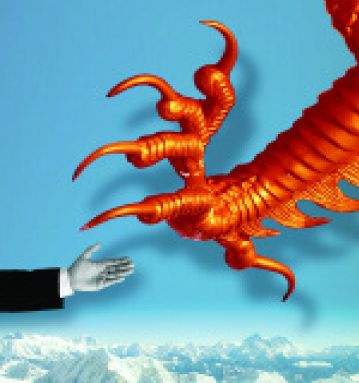 Nothing can illustrate this better than the recent Beijing visit of Manmohan Singh, India’s most-travelled prime minister ever. He returned with a completely hollow river-waters accord that effectively hands China a propaganda tool to blunt any Indian criticism of its dam-building spree in Tibet. Rarely before have two major countries signed an accord so steeped in empty rhetoric as this memorandum of understanding unveiled during Singh’s visit. The accord, incorporating not a single Chinese commitment or anything tangible, seeks to pull the wool over the Indian public’s eyes.
It is just a public-relations text with only platitudes—that the “two sides recognized that trans-border rivers and related natural resources and the environment are assets of immense value”; that they “agreed that cooperation on trans-border rivers will further enhance mutual strategic trust and communication”; and that they also “agreed to further strengthen cooperation on trans-border rivers” and “exchange views on other issues of mutual interest”. As if to add insult to injury, the accord extracts India’s “appreciation to China” for selling “flood-season hydrological data”, although India provides such data free to downstream Pakistan and Bangladesh year-round.
Another much-trumpeted accord signed during the visit—the Chinese-dictated Border Defence Cooperation Agreement (BDCA)—contains nothing to halt the increasingly frequent Chinese border incursions or prevent a Depsang-style deep encroachment again. Defence Minister A.K. Anthony has admitted this, saying the accord “does not mean nothing will happen” on the frontier. Beijing wanted a new accord to wipe the slate clean over its breaches of the border-peace agreements signed in 1993, 1996 and 2005. But why did India accede to the violator’s demand for new border rules?
BDCA’s provisions are so vaguely worded as to allow China—a master at reinterpreting texts—to cast the burden of compliance mainly on India. For example, Article II, without elaboration, calls for exchange of “information about military exercises, aircrafts, demolition operations and unmarked mines”. Does this mean that India must inform China about its military-cargo flights to forward landing strips such as Daulat Beg Oldi and its demolition work to build Himalayan road tunnels?
Or take Article VI, which says minimally: “The two sides agree that they shall not follow or tail patrols of the other side in areas where there is no common understanding of the line of actual control (LAC)”. The Home Ministry-administered Assam Rifles and Indo-Tibetan Border Police (not regular army troops) that India timorously deploys to fend off the aggressive People’s Liberation Army (PLA) have a defensive mindset and are in no position to tail the Chinese. But if PLA troops intrude and pitch tents, claiming they are on Chinese land, Beijing is likely to interpret this provision as barring Indian patrols from encircling them or setting up their own Depsang-style camp to keep an eye on the raiders. The provision indeed will constrain Indian border guards from attempting to drive back any intruding Chinese patrol.
Given China’s claims on Indian territories and its refusal to even clarify the LAC, Article VI, in effect, ties only India’s hands. No less suspect is Article VII, which gives either side the right to seek “clarification” from the other if “any activity” occurs in “areas where there is no common understanding” of the LAC. If India were to seek clarification over a Chinese penetration, it would likely get the stock reply that the “Chinese troops are on Chinese soil”. Contrary to the pre-visit claim, BDCA contains no commitment to set up a hotline between the Indian and Chinese military headquarters; it only says the two sides “may consider” doing that.
Any Chinese leader combines an India stopover with a visit to his country’s “all-weather ally”, Pakistan, but a meek Singh declined to club his China visit with a trip to Japan or Vietnam. Singh, in fact, was in Beijing at the same time as the Russian and Mongolian premiers, with Russian Prime Minister Dmitry Medvedev beginning his Beijing trip while Singh was cooling his heels in Moscow on an official visit.
Yet, with the help of the planeload of journalists he takes with him on any overseas visit, Singh marketed his China trip as a major success. In truth, as the two accords attest, he wilfully played into China’s hands.
Brahma Chellaney is a geostrategist and author.

 The rise in US arms sales to India is being widely cited as evidence of the two countries’ deepening defense relationship. But the long-term sustainability of the relationship, in which India is more a client than a partner, remains a deep concern for Indians. Does the recently issued
  Maritime challenges are being fundamentally transformed by new technological and geopolitical realities, shifting trade and energy patterns, and the rise of unconventional threats. The fact that about 50 per cent of the maritime boundaries in the world are still not demarcated accentuates the challenges.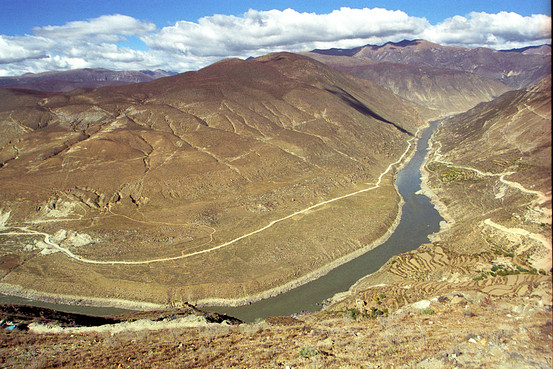


 Brahma Chellaney,
  Prime Minister Manmohan Singh’s recent state visit to Washington generated a lot of media coverage, not in the U.S. (where the media literally took no note of it) but in India, thanks to the planeload of journalists that Singh took with him. Rarely before had an Indian prime minister’s state visit to U.S. been so invisible to Americans.
 Yet the extent to which Singh went to save his September 29 meeting with Sharif can be gauged from one troubling fact: news about the September 24 Pakistani cross-border raid into the Keran sector — which triggered a two-week gunbattle between Indian army troops and the intruders — was not released by the government until after the Singh-Sharif meeting. It is unfortunate the government allowed the political exigencies of a meeting in New York to take precedence over the imperative to inform the nation about a major intrusion involving Pakistani special forces.
 More fundamentally, why has it become a virtual custom since the late 1990s for an Indian prime minister’s meeting with Pakistan’s leader to invariably spell trouble for India? Atal Bihari Vajpayee publicly bemoaned that his peace bus to Lahore in February 1999 was “hijacked and taken to Kargil.” Still, he went to Pakistan in early 2004 for a second time as PM — a trip that sowed the seeds of Pakistan’s stepped-up export of terrorism in the subsequent years.

 Stagecraft and Statecraft
You must be logged in to post a comment.