A number of factors threaten environmental stability and spur climate change
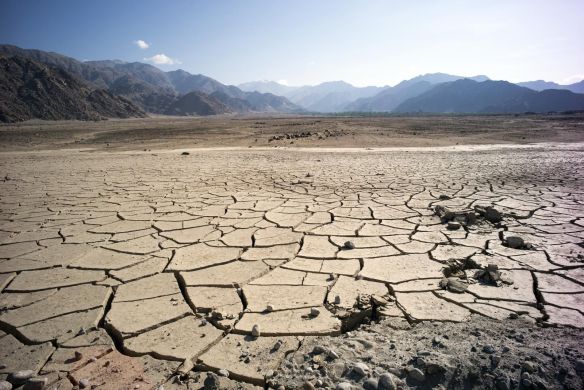
Asia exemplifies that dams and democracy do not go well together. Dam building has run into major grassroots opposition in major Asian democracies. But it continues unhindered in countries where grassroots empowerment is absent.
Brahma Chellaney, Nikkei Asian Review
In recent weeks, one of the most pristine Himalayan rivers has mysteriously turned black when entering India from Tibet, highlighting how China’s upstream tunneling, damming and mining activities might be causing major environmental contamination. The plight of the Siang, the central artery of the Brahmaputra river system — the lifeline of northeastern India and Bangladesh — is a stark reminder that transboundary river water issues in Asia are no less important than the regional maritime issues of the South and East China seas and the Indian Ocean, which have attracted greater global attention.
Freshwater, or water that is not salty, is a life-supporting resource. But it is increasingly in short supply in Asia. Although home to 60% of the world’s population, Asia has less freshwater per capita than any other continent. Its annual freshwater availability of 2,697 cubic meters per person is less than half the global average of 5,829 cubic meters. Yet Asia has experienced the world’s most rapid growth in freshwater withdrawals from rivers, lakes and aquifers since its economic rise.
The region’s freshwater usage rate exceeds its renewable stocks. By digging deeper wells and overexploiting river resources, combined with irrigation subsidies, Asia is accelerating water resource depletion and environmental degradation.
Transboundary problem
Water contamination until now has been mainly a domestic issue as highlighted by the pollution problems affecting the Yellow River in China and the Ganges in India. But the contamination of the Siang signals that this problem is becoming a transboundary problem, which will increase tensions and discord between neighboring countries.
Sino-India tensions have already increased due to freshwater disputes. Beijing has withheld hydrological data from New Delhi on upstream river flows in 2017 in breach of two bilateral accords. This undermined India’s flood early-warning systems during the critical monsoon season. In India’s Assam state, which suffered record flooding despite below-normal monsoon rainfall, many deaths were preventable. The data denial was apparently intended to punish India for boycotting China’s Belt and Road summit and for the border standoff on the remote Himalayan plateau of Doklam.
Asia’s water crisis, meanwhile, has given rise to grand but environmentally problematic projects such as China’s South-to-North Water Diversion Project. China has already completed two of the three legs of the world’s most ambitious water transfer program, which is now diverting billions of cubic meters of river waters yearly to its parched north. Because this program’s highly controversial third leg is to divert waters from rivers flowing to other countries from the Tibetan Plateau, China refuses to divulge any details about it.
More broadly, even as threats to Asia’s sustainable water supply are intensifying, geostrategic factors are raising the specter of water wars. Dam building and other diversions are often at the center of tensions and recriminations between states.
Asia illustrates that once shared water becomes a political and diplomatic battleground between countries, it begins to insidiously exact geopolitical costs in ways not dissimilar to the legacy of an armed conflict. The casualty usually is sub-regional stability and cooperation.
Asia also exemplifies another important trend — that dams and democracy do not go well together. Dam building has run into major grassroots opposition in Asian democracies like Japan, South Korea and India, driving up project costs and acting as a damper on hydropower expansion. In the absence of grassroots empowerment, however, there are few impediments to dam construction in Laos, Myanmar, Pakistan, China and elsewhere.
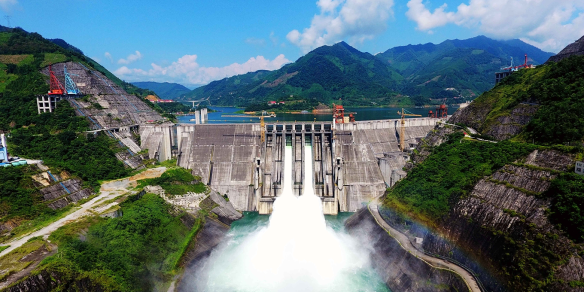
Indeed, China has become the global leader in dam building, boasting more large dams than the rest of the world combined. What is intensifying concern among downstream nations about China’s dam frenzy is the shift in its focus from domestic rivers to ones that cross borders. The Siang River’s contamination triggered a political furor and grassroots protests in India’s northeast, forcing Beijing to break its long silence and claim that a Nov. 18 earthquake in southeastern Tibet “might have led to the turbidity (clouding)” of the river. But the river waters turned dirty and gray before the quake struck.
The plain fact is that the environmental futures of China and its many neighbors are inextricably linked. Environmental degradation on the world’s largest and highest plateau — Tibet (which is warming at a rate three times the global average) — carries pan-Asian implications. With its height and other unique features, the Tibetan Plateau influences climatic and rainfall patterns across Asia.
Several other developments are also undermining Asia’s hydrological and climatic stability and fostering a cycle of chronic flooding and droughts. In many Asian countries, watersheds, watercourses, coastal ecosystems and the broader environment are being degraded, resulting in shrinking wetlands and forests, increased water pollution and other ecological problems.
These developments spur global warming. Natural water flows, evaporation and condensation help to propel the earth’s biogeochemical cycles and regulate its climate. Environmental degradation creates a vicious circle. It affects the hydrological cycle that shapes regional climate. A warming climate, in turn, has a significant impact on water resources.
Demand-side options
Jakarta illustrates how Asia’s mounting threats from climate change are fostered by changes in the hydrological cycle. The Indonesian capital, home to nearly 30 million people, is sinking faster than any other major city in the world because of accelerated groundwater depletion. Tens of thousands of wells across Jakarta pump out groundwater at such a rate that it is causing large-scale subsidence, with as much as 40% of the city now said to be below sea level. Groundwater depletion is also contributing to the rise of the Java Sea, thus exacerbating Jakarta’s troubles. Some of the waters extracted from Jakarta’s underground aquifers ultimately end up in the sea.
A surfeit of water but not enough to drink is a scenario likely to confront many coastal Asian cities. One study estimates that groundwater depletion contributes 0.8 millimeters per year to the rise of ocean levels globally, or about a quarter of the total rise. Groundwater depletion, by inviting seawater intrusion into aquifers, is already compounding freshwater shortages in some Asian cities. Meanwhile, the plethora of upstream dams on rivers is causing a perceptible retreat of Asia’s heavily populated deltas that are home to megacities like Bangkok, Dhaka, Guangzhou, Kolkata, Shanghai and Tianjin.
Given that Asia is likely to face a hotter, drier future, governments there must initiate action to mitigate the impacts. The freshwater crisis that many Asian countries already confront should be tackled in a way that contributes to combating climate change. The imperative is to move from purely supply-side approaches to demand-side options that emphasize water conservation and quality as much as quantity. Even on the supply side, nontraditional measures, from recycling of water to rainwater capture, must be embraced.
If unsustainable practices and mismanagement of water resources are not addressed, freshwater will become a precious commodity whose control will spark conflicts in Asia. The rise of water nationalism at a time of increasing water stress highlights the linkage between water and peace. Cooperative institutional mechanisms and sustainable resource utilization constitute the building blocks of water peace. Water is a key test of whether Asian leaders have the political will and good sense to think and act long term. What Asia confronts today, other continents are likely to face tomorrow.
Brahma Chellaney is a geostrategic and author of nine books, including “Water: Asia’s New Battleground,” which won the Bernard Schwartz Award.
© Nikkei Asian Review, 2017.






 Recently, India branded Pakistan a “Terroristan”. And its external affairs minister told the United Nations that Pakistan, as the world’s “pre-eminent terror export factory”, has just one national accomplishment to boast of. Yet New Delhi is loath to back its words with even modest action, such as downsizing Pakistan’s bloated, Inter-Services Intelligence (ISI)-infested high commission in New Delhi, withdrawing the unilaterally granted “most favoured nation” status, leveraging the Indus Waters Treaty (IWT), or halting the barter trade across the line of control (LoC) that the National Investigation Agency has identified as financing terrorism.
 Stagecraft and Statecraft
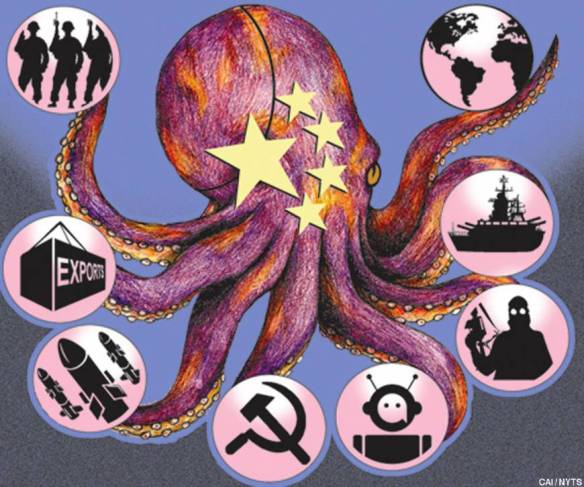
Moreover, as Sri Lanka’s experience starkly illustrates, Chinese financing can shackle its “partner” countries. Rather than offering grants or concessionary loans, China provides huge project-related loans at market-based rates, without transparency, much less environmental- or social-impact assessments. As US Secretary of State Rex Tillerson put it recently, with the BRI, China is aiming to define “its own rules and norms.”
To strengthen its position further, China has encouraged its companies to bid for outright purchase of strategic ports, where possible. The Mediterranean port of Piraeus, which a Chinese firm acquired for $436 million from cash-strapped Greece last year, will serve as the BRI’s “dragon head” in Europe.
By wielding its financial clout in this manner, China seeks to kill two birds with one stone. First, it wants to address overcapacity at home by boosting exports. And, second, it hopes to advance its strategic interests, including expanding its diplomatic influence, securing natural resources, promoting the international use of its currency, and gaining a relative advantage over other powers.
China’s predatory approach – and its gloating over securing Hambantota – is ironic, to say the least. In its relationships with smaller countries like Sri Lanka, China is replicating the practices used against it in the European-colonial period, which began with the 1839-1860 Opium Wars and ended with the 1949 communist takeover – a period that China bitterly refers to as its “century of humiliation.”
China portrayed the 1997 restoration of its sovereignty over Hong Kong, following more than a century of British administration, as righting a historic injustice. Yet, as Hambantota shows, China is now establishing its own Hong Kong-style neocolonial arrangements. Apparently Xi’s promise of the “great rejuvenation of the Chinese nation” is inextricable from the erosion of smaller states’ sovereignty.4
Just as European imperial powers employed gunboat diplomacy to open new markets and colonial outposts, China uses sovereign debt to bend other states to its will, without having to fire a single shot. Like the opium the British exported to China, the easy loans China offers are addictive. And, because China chooses its projects according to their long-term strategic value, they may yield short-term returns that are insufficient for countries to repay their debts. This gives China added leverage, which it can use, say, to force borrowers to swap debt for equity, thereby expanding China’s global footprint by trapping a growing number of countries in debt servitude.
Even the terms of the 99-year Hambantota port lease echo those used to force China to lease its own ports to Western colonial powers. Britain leased the New Territories from China for 99 years in 1898, causing Hong Kong’s landmass to expand by 90%. Yet the 99-year term was fixed merely to help China’s ethnic-Manchu Qing Dynasty save face; the reality was that all acquisitions were believed to be permanent.
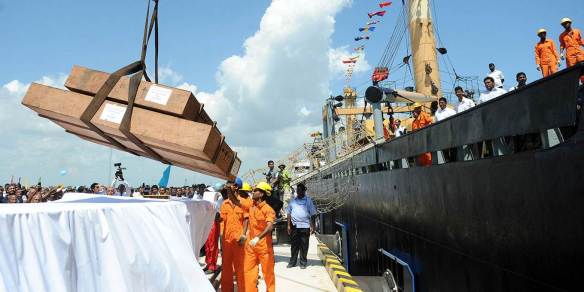
Now, China is applying the imperial 99-year lease concept in distant lands. China’s lease agreement over Hambantota, concluded this summer, included a promise that China would shave $1.1 billion off Sri Lanka’s debt. In 2015, a Chinese firm took out a 99-year lease on Australia’s deep-water port of Darwin – home to more than 1,000 US Marines – for $388 million.
Similarly, after lending billions of dollars to heavily indebted Djibouti, China established its first overseas military base this year in that tiny but strategic state, just a few miles from a US naval base – the only permanent American military facility in Africa. Trapped in a debt crisis, Djibouti had no choice but to lease land to China for $20 million per year. China has also used its leverage over Turkmenistan to secure natural gas by pipeline largely on Chinese terms.
Several other countries, from Argentina to Namibia to Laos, have been ensnared in a Chinese debt trap, forcing them to confront agonizing choices in order to stave off default. Kenya’s crushing debt to China now threatens to turn its busy port of Mombasa – the gateway to East Africa – into another Hambantota.
These experiences should serve as a warning that the BRI is essentially an imperial project that aims to bring to fruition the mythical Middle Kingdom. States caught in debt bondage to China risk losing both their most valuable natural assets and their very sovereignty. The new imperial giant’s velvet glove cloaks an iron fist – one with the strength to squeeze the vitality out of smaller countries.