The Dalai Lama’s succession struggle could shake Asia and the world

Featured

Two of the 14 Dalai Lamas so far came from outside Tibet, with one born in Mongolia and the other in India’s Tawang. None came from China. The next Dalai Lama could potentially come from the Himalayan belt in India, home to the world’s largest Tibetan diaspora. The present Dalai Lama has explicitly declared that “the new Dalai Lama will be born in the free world.”

Dalai Lama

Tibetan spiritual leader the Dalai Lama delivers an address via video message to the inaugural session at the 15th Tibetan Religious Conference at the Dalai Lama Library and Archive in the northern hill town of Dharamshala, India, on July 2.  © Reuters

Avatar

Brahma Chellaney, Nikkei Asia

With the Dalai Lama turning 90 on July 6, anxiety over his succession has reached a critical point. For Tibetans, the stakes are existential. But for China, the potential vacancy offers a strategic opening to tighten its grip on Tibetan Buddhism.

The looming battle over who gets to name the next Dalai Lama is not just about religious tradition. It is about cultural survival and geopolitical power.

Had Tibet remained independent like Taiwan, it would today be the 10th largest country by area. Instead, since China’s annexation of Tibet in 1951, the region has endured decades of repression. As major powers grow increasingly hesitant in confronting Beijing, many Tibetans fear that their stateless nation’s cultural and religious identity may not survive the coming succession crisis.

While Tibetans around the world hope the present Dalai Lama has many years ahead of him, Beijing is already preparing for the day after his passing. Its aim is to install a compliant, state-appointed Dalai Lama and thereby complete its control over Tibetan Buddhism.

Tibetans view the Dalai Lama as the living embodiment of the Buddha. Since the 14th century, the title has passed through a line of reincarnations, with senior monks identifying the new Dalai Lama as a young child based on spiritual signs. The current Dalai Lama, recognized at age two, had to assume leadership prematurely after China invaded Tibet when he was just 15.

Beijing exploited that earlier leadership vacuum. Now, it intends to manipulate the next one. Chinese authorities insist that only the Communist Party — not the Tibetan religious hierarchy — has the right to select the next Dalai Lama. Should Beijing move ahead with this plan, it would amount to something akin to the Italian government appointing the next pope. It is an act of religious usurpation and cultural colonization.

This is not a theoretical threat. In 1995, Beijing kidnapped a six-year-old boy who had been recognized by the Dalai Lama as the Panchen Lama — the second-most important figure in Tibetan Buddhism — and replaced him with a state-approved substitute. The real Panchen Lama remains disappeared three decades later as one of the world’s longest-held political prisoners.

China also sought to control the Karmapa — the third-highest spiritual leader in the Tibetan hierarchy — by installing its own candidate. But in 1999, the Chinese-appointed Karmapa fled to India. The ease with which he escaped stirred suspicions in India, leading New Delhi in 2018 to withdraw recognition of his legitimacy. Recently, he and his rival Karmapa issued a joint statement pledging to resolve their sectarian split, bypassing Beijing entirely.

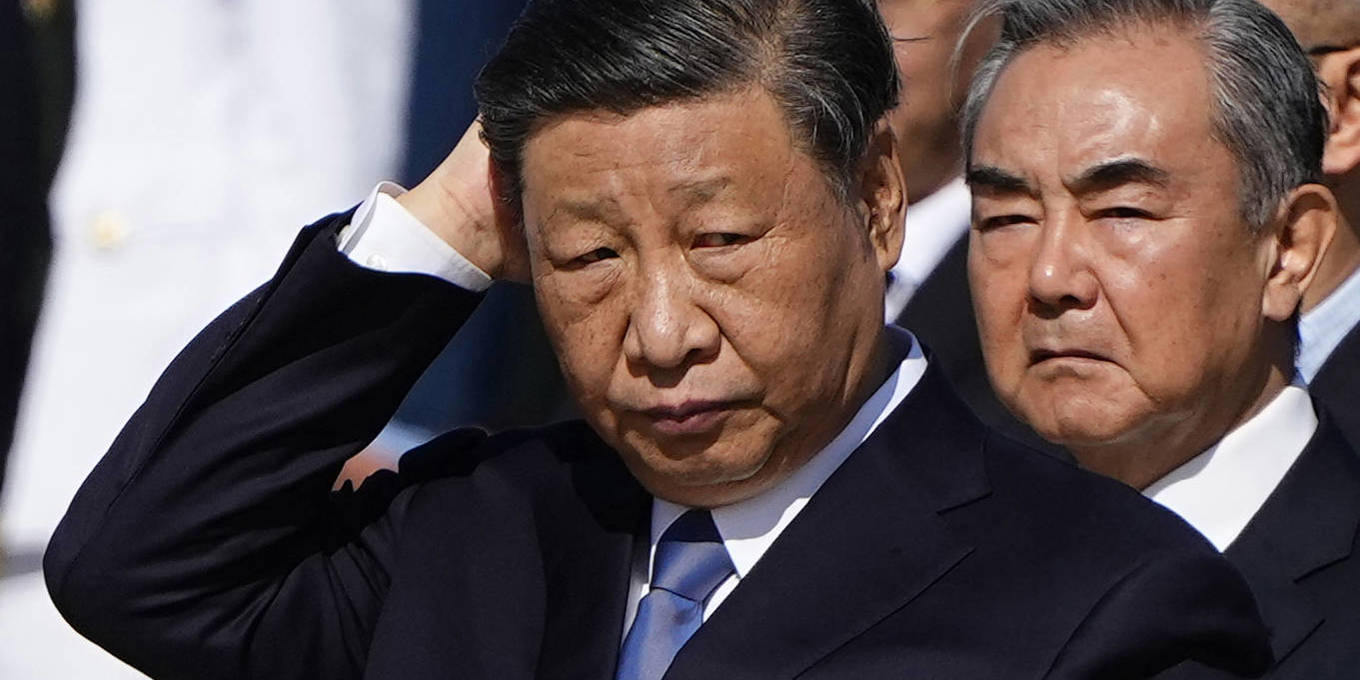
China’s interference in Tibetan religious institutions is part of a broader effort to erase Tibet’s unique culture and identity. Under President Xi Jinping, these efforts have intensified, with mass relocation programs, forced Chinese-language education, and restrictions on religious practice aimed at Sinicizing Tibet. As Xi pursues what he calls “stability through assimilation,” Beijing sees control of the Dalai Lama institution as the final prize in subjugating Tibet.

For Beijing, the Dalai Lama remains the “white whale” — a symbol of resistance it has long sought to crush. Since fleeing to India in 1959, the Dalai Lama has been the global face of nonviolent resistance to Chinese occupation. He was awarded the Nobel Peace Prize in 1989 for his unyielding advocacy of Tibetan autonomy through peaceful means.

altTibetan men and women participate in Lhakar Gorshey, a Tibetan circle dance performed on Wednesdays, which are considered a special day of cultural significance, in the northern hill town of Dharamshala, India, on July 2.   © Reuters

Historically, the Dalai Lama has been both the spiritual and political leader of Tibet — a fusion akin to a pope-president. But in 2011, the 14th Dalai Lama voluntarily devolved political power to an elected government-in-exile, chosen by the Tibetan diaspora. This move ensured institutional continuity but made his spiritual succession even more pivotal.

The Dalai Lama has previously said that around his 90th birthday, he would outline the rules for selecting his successor — rules meant to prevent Beijing from hijacking the process. In his recently published book, “Voice for the Voiceless,” he declares that “the new Dalai Lama will be born in the free world,” explicitly ruling out Chinese-occupied Tibet. This would not break with tradition. Two past Dalai Lamas came from outside Tibet, with one born in Mongolia and the other in Tawang, now part of India’s Arunachal Pradesh state.

To further thwart China’s designs, the Dalai Lama has indicated that his successor could be an adult and need not be male. Such flexibility may be key to ensuring that the next Dalai Lama cannot be claimed — or cloned — by Beijing. But clarity is essential. Unless he spells out, unequivocally and soon, how his successor should be identified, China will exploit ambiguity to anoint its own pretender.

Health concerns add urgency. Though mentally sharp, the Dalai Lama has grown physically frail. He underwent prostate cancer treatment in 2016 and had knee replacement surgery in the United States about a year ago. His travel has slowed — not just due to health, but also because most governments, under Chinese pressure, now refuse to host him. The notable exceptions are India, which has sheltered him for 65 years, and the U.S., which hosted him for knee treatment.

Indeed, India has been indispensable to the Tibetan struggle. It houses the vast majority of Tibetan exiles and has helped preserve their culture by supporting Tibetan-language schools and monastic institutions. The Dalai Lama has called himself a “son of India,” and New Delhi officially recognizes him as its “most esteemed and honored guest.”

By contrast, China has ramped up its exploitation of Tibet’s natural resources, especially water and mineral ores. Rivers originating on the Tibetan Plateau, the “Water Tower of Asia,” sustain over one-fifth of humanity. China’s dam-building spree and extractive development in this ecologically fragile region threaten the environmental security of much of Asia.

Tibet’s cultural and ecological fates are thus intertwined — and both hinge on what happens after the 14th Dalai Lama.

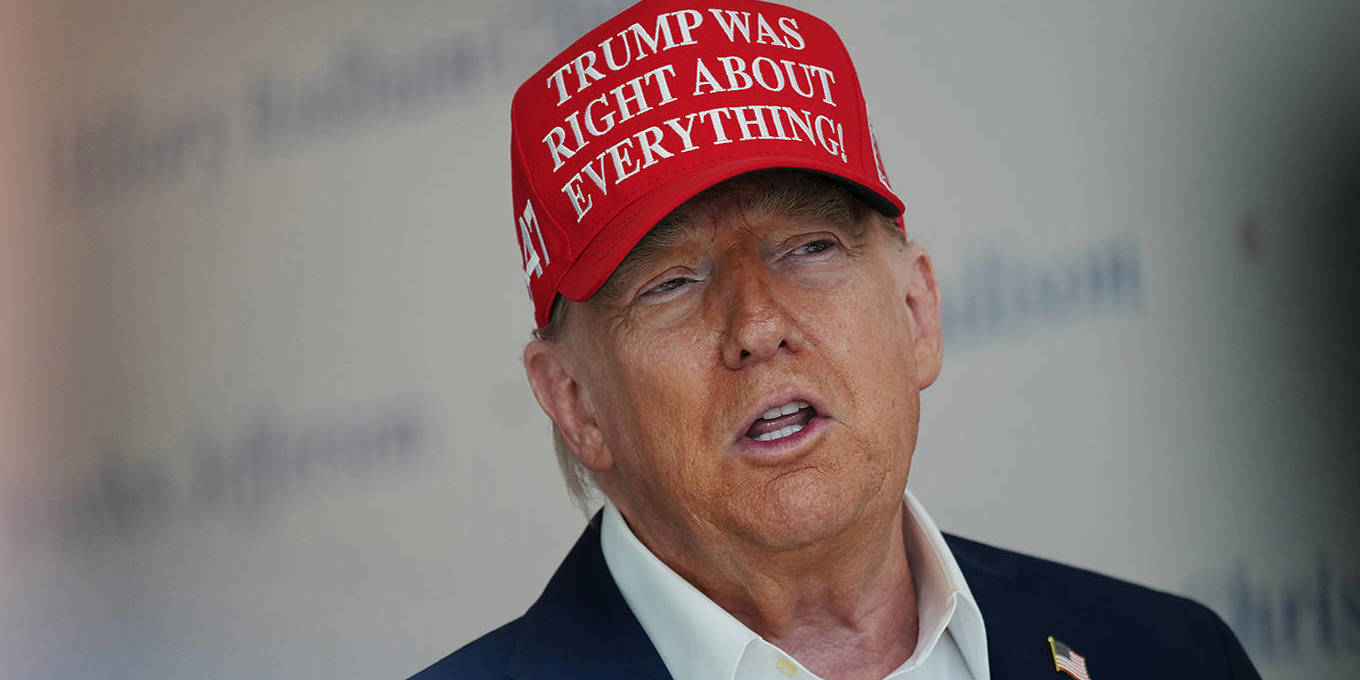
The international community must act preemptively. A coalition of democratic powers — led by India, the U.S., Japan and the European Union — should coordinate a response that raises the costs for Beijing if it installs a sham Dalai Lama. The U.S. took the lead by enacting the 2020 Tibetan Policy and Support Act, which authorizes sanctions against Chinese officials who interfere in the succession. Yet, in his second term, President Donald Trump has halted all aid to the Tibetan government-in-exile. Rhetoric without resources is not enough.

If the free world fails to act, we may witness the surreal scenario of two rival Dalai Lamas — one revered by Tibetans, and another rubber-stamped by Beijing. The spiritual heart of Tibet could then become a stage for geopolitical theater. The time to prevent this farce is now.

Brahma Chellaney, a professor of strategic studies at the independent New Delhi-based Centre for Policy Research and fellow at the Robert Bosch Academy in Berlin, is the author of nine books, including “Water: Asia’s New Battleground,” which won the Bernard Schwartz Book Award.

An Iranian Bomb Just Became More Likely

Featured

Military strikes might slow down a nuclear program, but they cannot impose long-term restraint – especially when they are carried out by powers that flout the very rules they claim to be enforcing. The US and Israel are likely to learn this the hard way, as Iran abandons all doubts about pursuing nuclear breakout.

Brahma ChellaneyProject Syndicate

Israel and the United States have dealt punishing blows to Iran’s nuclear infrastructure. “Operation Rising Lion” and “Operation Midnight Hammer” have been portrayed as precision strikes that will stop the Islamic Republic’s nuclear program in its tracks. But whatever the bombings might have achieved tactically, they risk forfeiting strategically, as Iran is now more convinced than ever that nuclear weapons are the only way to deter future aggression and ensure the regime’s survival.

Iran was once brought to the negotiating table through a carefully calibrated mix of pressure and incentives. Despite its imperfections, that approach worked. In 2015, the Joint Comprehensive Plan of Action was agreed, with Iran agreeing to limit its nuclear program in exchange for sanctions relief and other concessions. But – at Israel’s urging and despite Iran’s apparent compliance – Donald Trump abandoned the JCPOA during his first term as president, destroying whatever mutual trust had been built over the course of 20 months of painstaking diplomacy.

Now, despite pursuing new nuclear negotiations with Iran, the US has joined Israel in abandoning strategic patience in favor of spasmodic force. Some argue that Iran invited the attacks by deceiving the international community, stoking regional conflicts, and enriching uranium to levels well beyond those needed for any civilian application. These are legitimate complaints.

Even the International Atomic Energy Agency (IAEA), in a report released just before Israel’s campaign began, raised concerns about Iran’s compliance with its international obligations. Indeed, an analysis of this report by the Institute for Science and International Security argued that “Iran can convert its current stock of 60 percent enriched uranium into 233 kg of [weapon-grade uranium] in three weeks at the Fordow Fuel Enrichment Plant (FFEP), enough for 9 nuclear weapons.” That conclusion may well have lit a fire under the Trump administration.

But the IAEA also concluded that it had “no credible indications of an ongoing, undeclared structured nuclear program” in Iran, while underscoring the urgency of reaching a nuclear deal. “Iran,” the agency warned, “is the only non-nuclear-weapon state in the world that is producing and accumulating uranium enriched to 60%” – just a short technical step away from the 90% purity needed for weapons-grade material.

Even so, US and Israeli decision-makers green-lit attacks on Iranian nuclear sites at Fordow, Natanz, and Isfahan – facilities that are subject to IAEA safeguards and monitored under Iran’s Non-Proliferation Treaty (NPT) commitments. With that, they unraveled the legal and verification framework that exists precisely to prevent weaponization.

Beyond undermining the authority of the IAEA and its inspection regime, the attacks violated the NPT’s principle of peaceful nuclear use (Article IV) and breachedinternational law, including the United Nations Charter. The US, a nuclear superpower with a record of catastrophic wars aimed at regime change, and Israel, a clandestine nuclear-armed state that refuses to sign the NPT, have thus sent an unmistakable message: only the weak follow rules, and only the strong are safe. In fact, as long as you have nuclear weapons, you can violate international law at will. 

This is true not only for major powers, but also for smaller states. Pakistan, for example, nurtures cross-border terrorism and exports proxy war with impunity, threatening nuclear retaliation for anyone who crosses it. This poses a more acute threat to regional peace than Iran’s hypothetical bomb, but the US remains silent. 

This hypocrisy is deeply rooted. It was the US, after all, that aided and abettedPakistan’s covert pursuit of the bomb. Throughout the 1980s and 1990s, successive US administrations ignored mounting evidence that Pakistan was secretly enriching uranium and building nuclear weapons – and continued funneling billions of dollars in aid to the country. The result is a fragile state armed with an “Islamic bomb.” 

Today, with diplomacy derailed, inspections discredited, coercion normalized, and double standards embraced, what tools remain to convince Iran that remaining non-nuclear is wise and strategically viable? After years of debate over the value of a nuclear deterrent – with Supreme Leader Ayatollah Ali Khamenei even issuing religious edicts against nuclear weapons – Iranian decision-makers are almost certain to decide that there is no other way to keep the country safe from attack. 

Iran now has every incentive to exit – or at least limit – the IAEA framework and race toward nuclear breakout. Just as Saddam Hussein took his nuclear program underground following Israel’s 1981 bombing of Iraq’s IAEA-monitored Osirak reactor, Iran is likely to reject transparency and oversight in favor of secrecy and ambiguity. That would not be some dramatic act of defiance, but rather a rational response to a serious – even existential – threat. 

And it is not just Iran. If powerful states can bomb safeguarded nuclear facilities with impunity, why should any country put its faith in the global nonproliferation regime? Any government that wants to avoid the fateof Saddam’s Iraq or Muammar el-Qaddafi’s Libya (or, for that matter, democratic Ukraine), will seek to acquire the bomb – or at least come close enough to keep adversaries guessing. 

The only viable path to nonproliferation is and always will be diplomacy, not destruction. Military strikes might slow down a nuclear program, but they cannot impose long-term restraint – especially when they are carried out by powers that flout the very rules they claim to be enforcing. In the end, Operation Rising Lion and Operation Midnight Hammer may be remembered not as preemptive strikes against Iran’s nuclear breakout, but as catalysts for it.

Brahma Chellaney, Professor of Strategic Studies at the New Delhi-based Center for Policy Research and Fellow at the Robert Bosch Academy in Berlin, is the author of nine books, including Water: Asia’s New Battleground (Georgetown University Press, 2011), for which he won the 2012 Asia Society Bernard Schwartz Book Award.

© Project Syndicate, 2025.

Posted in WMD

China’s threat to Tibet’s future should be a global concern

Featured

China continues to militarize and repress Tibet while intensifying efforts to erase Tibetan culture, language and identity. Tibet’s imperiled future is a challenge to the global order, to religious freedom, and to Asia’s environmental security. And the time to act is now.

By Brahma Chellaney, The Hill

(AP Photo/Ashwini Bhatia) Tibetan spiritual leader the Dalai Lama prays at the Tsuglakhang temple in Dharamshala, India, Wednesday, May 7, 2025.

Three decades ago, China abducted the Panchen Lama — then a six-year-old boy — shortly after his recognition by the Dalai Lama, and installed a regime-picked imposter in his place. That abduction, one of the most audacious acts of spiritual and cultural repression in modern history, still haunts the Tibetan people.

Yet Chinese President Xi Jinping’s meeting with the false Panchen Lama this month has served only to remind the world of the genuine Panchen Lama’s continued disappearance. That makes the Panchen Lama — the second-highest spiritual leader in Tibetan Buddhism — arguably the longest-held political prisoner anywhere.

Now, Xi is preparing to repeat that sinister act on a much grander scale. He is waiting for the Dalai Lama, who turns 90 on July 6, to pass away so that Beijing can impose its own puppet as the next spiritual leader of Tibetan Buddhism. This would be akin to the Italian government installing a state-appointed pope to lead the Catholic Church, a brazen affront to religious freedom and cultural sovereignty.

China’s ambitions go far beyond symbolism. With Xi’s regime intensifying efforts to erase Tibetan culture, language and identity, the looming succession of the Dalai Lama marks a pivotal and dangerous turning point. Although the Dalai Lama has yet to clarify the exact process for selecting his successor, Beijing is zealously laying the groundwork to seize control of Tibetan Buddhism from within.

The paradox is stark: The atheistic Chinese Communist Party is preparing to hand-pick the next Dalai Lama, even while escalating its crackdown on Tibetan religion and culture. Xi has called on Communist Party cadres to become “unyielding Marxist atheists,” effectively elevating communism to the level of a state religion. The goal is clear: to fashion a successor who pledges loyalty not to Tibetan Buddhism, but to the Chinese Communist Party.

But Tibet’s plight is not just spiritual or cultural — it is also ecological and geopolitical. The Tibetan Plateau, often dubbed the “Third Pole,” is Asia’s primary freshwater source and a cradle of biodiversity. It is the starting point of the continent’s major river systems, which sustain over 2 billion people downstream. China’s aggressive exploitation of Tibet’s natural resources, particularly water and minerals, has created long-term environmental risks for all of Asia.

Beijing is building mega-dams and water diversion projects that threaten to destabilize ecosystems and disrupt hydrological flows far beyond its borders. Tibet’s high altitude also plays a critical role in shaping monsoonal patterns and global atmospheric circulation. A 2023 scientific study even found an atmospheric connection between the Tibetan Plateau and the Amazon rainforest — proof that the world’s environmental fate is tied to Tibet’s future.

Despite its annexation in 1951, Tibet maintains a vibrant spirit of resistance. The Dalai Lama, viewed by Tibetans as the living embodiment of compassion and wisdom, remains their moral and spiritual leader. His renunciation of political power in 2011 in favor of a democratically elected government-in-exile only reinforced his legacy as a global symbol of nonviolent resistance.

That legacy remains untainted by any link to terrorism, even as China continues to militarize and repress Tibet. Under Xi, repression has intensified, with mass surveillance, religious restrictions and the forced assimilation of Tibetan children into Mandarin-language boarding schools — more than a million children are now separated from their families and culture. The unmistakable goal is to breed loyalty to the Communist Party by obliterating the Tibetan identity.

Meanwhile, the Dalai Lama’s health has declined. Following radiation therapy for prostate cancer in 2016 and knee replacement surgery in the U.S. last year, his international travel has drastically reduced.

Adding to the challenge is Beijing’s success in pressuring many countries — including Western democracies and Buddhist-majority states in Asia — to deny him entry. Only Japan has held firm. India, to its credit, remains the Tibetan leader’s sanctuary and moral ally, with New Delhi referring to him as “our most esteemed guest.” The Dalai Lama himself calls India his spiritual and cultural home.

Against this backdrop, China’s strategy to engineer the next Dalai Lama must be met with firm resistance. The stakes could not be higher — the continuity of Tibetan Buddhism as a living spiritual tradition hangs in the balance. To counter Beijing’s plan, a coordinated international response is urgently needed to affirm the right of Tibetan Buddhists to determine their own spiritual leadership without interference.

Fortunately, the U.S. has taken some meaningful steps. Its 2020 Tibetan Policy and Support Act affirms that the selection of the next Dalai Lama is solely a Tibetan religious matter. It explicitly warns of sanctions against Chinese officials who meddle in the process. In July 2024, President Joe Biden signed into law the bipartisan Resolve Tibet Act, which strengthens American policy in support of Tibetan self-determination and seeks to counter Chinese disinformation campaigns on Tibet.

But more must be done. The U.S. and India should forge a united front and rally other democracies to support the Dalai Lama’s vision and the Tibetan people’s rights. The Dalai Lama’s succession should be protected through a multilateral framework that involves Buddhist leaders, legal protections and diplomatic safeguards.

China’s effort to manipulate the centuries-old institution of the Dalai Lama is not merely a religious affront. It is a geopolitical gambit designed to consolidate control and extend influence across Asia. If Tibet’s voice is silenced and its future dictated by authoritarian fiat, the global costs — in spiritual, ecological and political terms — will be immense.

Tibet’s imperiled future is not just a Tibetan problem. It is a challenge to the international order, to religious freedom and to the environmental security of an entire continent. And the time to act is now.

Brahma Chellaney is a geostrategist and the author of nine books, including the award-winning “Water: Asia’s New Battleground.”

Israel’s preemptive war could finally push Iran to go nuclear

Featured

By Brahma Chellaney, The Hill

(AP Photo/Abdolrahman Rafati/Tasnim News Agency): Mourners carry the flag-draped coffins of men who were reportedly killed in Israeli strikes in the city of Asadabad, Iran, on Monday, June 16, 2025.

Israel has long pursued a strategy to remain the Middle East’s sole nuclear-armed state, using military force to preempt or prevent other regional powers from acquiring nuclear-weapons capabilities. But Israel’s strikes on Iran risk backfiring, with a wounded foe more determined than ever to acquire the nuclear bomb. 

Israel’s strategic posture, institutionalized as the “Begin Doctrine” after former Prime Minister Menachem Begin, holds that it will not allow any neighboring state to even approach nuclear-weapons capability. In practice, Israel has expanded this doctrine to block even peaceful nuclear programs under international safeguards.

The Begin Doctrine was first operationalized in 1981 with the bombing of Iraq’s Osirak nuclear reactor, which was built by France for peaceful research and subject to International Atomic Energy Agency inspections. Though Iraq was a party to the Nuclear Non-Proliferation Treaty and had agreed to stringent safeguards extending beyond international inspections to prevent reactor misuse, Israel claimed Baghdad harbored military ambitions and struck preemptively.

The attack, which destroyed the $275 million reactor just before it was to become operational, was carried out with U.S.-supplied F-16 and F-15 aircraft. One French engineer and 10 Iraqi soldiers were killed. The operation triggered minimal diplomatic fallout for Israel, but pushed Saddam Hussein’s nuclear program underground — an outcome that would later lead to the 2003 U.S. invasion and occupation of Iraq under the false pretext of dismantling weapons of mass destruction.

In 2007, Israel again invoked the Begin Doctrine to destroy a suspected nuclear reactor under construction in Syria. The al-Kibar facility was flattened in an airstrike dubbed Operation Orchard. Israeli intelligence claimed the project, allegedly aided by North Korea, had covert military dimensions. The IAEA concluded three years later that the destroyed facility was “very likely” a nuclear reactor under development.

These precedents pale in comparison to Israel’s current military campaign against Iran, dubbed Operation Rising Lion, which aims to wipe out Iran’s nuclear program. The stakes are exponentially higher: Iran is a larger, more capable adversary located beyond Israel’s immediate neighborhood. And unlike Iraq or Syria in decades past, Iran has already accumulated significant nuclear know-how and material.

Prime Minister Benjamin Netanyahu, invoking the Begin Doctrine, claimed that Iran was on the verge of developing nuclear weapons and vowed that Israeli strikes would continue “as long as necessary” to neutralize the threat. But this assertion lacks backing from key intelligence assessments.

On March 25, U.S. Director of National Intelligence Tulsi Gabbard testified that the American intelligence community had assessed that “Iran is not building a nuclear weapon.” However, Gabbard — and the IAEA separately in a recent report — expressed concern over Iran’s stockpile of uranium enriched to 60 percent purity, which, if enriched further to 90 percent, would become weapons-grade material. The IAEA, like Gabbard, concluded there was no evidence of a structured nuclear-weapons program underway.

Yet Israel pressed ahead with its military strikes. Netanyahu’s government, in coordination with the Trump administration, seems to believe that such force will buy leverage at the diplomatic table.

In reality, the attacks are likely to achieve the opposite. Far from forcing concessions, the Israeli strikes have derailed nuclear diplomacy. Tehran has suspended talks indefinitely, accusing Washington of coordinating and authorizing the Israeli operation. This mirrors a pattern from Trump’s first term, when his “maximum pressure” campaign on Iran backfired, hardening Iranian resolve rather than moderating it.

Indeed, if Israel’s goal is to eliminate the Iranian nuclear threat, this strategy may prove deeply counterproductive.

Two key factors make this preemptive war particularly perilous. First, Israel cannot destroy Iran’s nuclear program by military means alone. Tzachi Hanegbi, Netanyahu’s own national security adviser, acknowledged on Israeli television on June 13 that Iran’s program “cannot be destroyed through kinetic means.” A negotiated settlement, he suggested, was the only sustainable option.

But with the collapse of diplomacy and deepening Iranian hostility, Israel may be forcing Iran toward the very nuclear path it wants to prevent. Tehran could emulate North Korea’s playbook: withdraw from the NPT, eject IAEA inspectors and weaponize its nuclear assets at speed. North Korea withdrew from the NPT in 2003 and tested a nuclear bomb just three years later, becoming a de facto nuclear-weapons state.

Iran, heavily sanctioned and increasingly isolated, may now conclude that it has little to lose from following suit. If Iran raises enrichment from 60 percent to 90 percent purity — a short technical leap — it could rapidly convert its uranium stockpile into bomb-grade material. That would mark a historic failure of U.S. and Israeli nonproliferation strategy and hand Tehran the strategic deterrent it long claimed not to seek.

Second, the underlying logic of the Israeli campaign may no longer be about nuclear rollback but rather regime change. Netanyahu has openly called for the fall of the Iranian regime, and Israeli strikes have expanded beyond nuclear and military sites to include economic infrastructure, energy facilities and civilian aviation hubs.

This broadening of war aims could lock Israel into a prolonged military confrontation with Iran — a campaign that could exact heavy human and economic costs. Even before the Iran operation, Israeli society was showing signs of war fatigue, with growing numbers of reservists declining to report for duty.

Meanwhile, U.S. forces are increasingly entangled in the conflict. In defending Israel from retaliatory missile and drone attacks, American troops are already operating in air, land and naval roles. A broader U.S. intervention remains a distinct risk.

Israel has long justified its aggressive posture on existential grounds. Its small size and hostile environment, it argues, require proactive and sometimes disproportionate defense measures. But the line between deterrence and provocation is perilously thin — and it may now have been crossed.

History shows that Israel’s pursuit of short-term tactical victories often undermines its long-term strategic interests. The Osirak attack contributed to decades of conflict in Iraq. The al-Kibar strike delayed but did not eliminate Syria’s nuclear ambitions. And now, Operation Rising Lion could go down as the moment when Israel’s policy of preemption made an Iranian bomb inevitable.

Israel remains the Middle East’s preeminent military power, possessing not only superior conventional forces but also undeclared nuclear weapons. That should afford it the confidence to pursue measured strategies.

Instead, by trying to preserve its nuclear monopoly through force, Israel risks fueling the very proliferation spiral it has long sought to prevent.

Brahma Chellaney is a geostrategist and the author of nine books, including the award-winning “Water: Asia’s New Battleground.”

Posted in WMD

Catastrophe on the Roof of the World

Featured

It is impossible to know the full extent of China’s destruction of the Tibetan Plateau, not least because the area is off limits to international observers. But there is no doubt that the region’s ecosystem is becoming increasingly fragile, with far-reaching social, environmental, and geopolitical consequences.

Brahma ChellaneyProject Syndicate

The Tibetan Plateau is home to vast glacial reserves, which amount to the largest store of fresh water outside the Arctic and the Antarctic. It is also the source of ten major Asian river systems – including the Yellow and Yangtze rivers of mainland China, the Mekong, Salween, and Irrawaddy rivers of Southeast Asia, and the Indus and Brahmaputra of South Asia – which supply water to nearly 20% of the global population. And, now, it is the site of a slow-burning environmental calamity that is threatening the water security, ecological balance, and geopolitical stability of the entire Asian continent.

For over two decades, China has been engaged in an aggressive and opaque dam-building spree, centered on – though not limited to – the Tibetan Plateau. Yet China’s government has refused to negotiate a water-sharing treaty with any of the downriver countries, which must suffer the consequences of their upstream neighbor’s whims.

Already, Chinese-built mega-dams near the Plateau’s border have brought water levels in the Mekong River to unprecedentedly low levels, with devastating effects on fisheries and livelihoods across Cambodia, Laos, Thailand, and Vietnam. As the Mekong Delta in southern Vietnam retreats – driven partly by Chinese dams – rice farmers are being forced to abandon their traditional livelihoods, instead farming shrimp or growing reeds.

Yet China’s dam ambitions continue to grow. The Three Gorges Dam, which runs along the Yangtze River, is the largest in the world. But it will be dwarfed by the dam China is now building on the Yarlung Zangbo river, also known as the Brahmaputra, in a seismically active region of the Tibetan Plateau. If completed, this project would drastically alter water flows into India and Bangladesh, threaten the region’s food security and ecological balance, and increase China’s geopolitical leverage over downstream countries.

The specter of water weaponization looms large. In fact, water is fast becoming the new oil – a strategic resource with the potential to trigger conflicts. Already, water disputes within and between countries are intensifying.

But China’s assault on the Tibetan Plateau extends beyond water. Its avaricious mining of Tibet’s mineral-rich lands – which boast critical resources like lithium, gold, and copper – is contributing to deforestation and producing toxic-waste discharge, while providing cover for China’s militarization of the Plateau.

It is impossible to know the full extent of China’s destruction. The area is off limits to international observers, and efforts by members of indigenous Tibetan communities – whose cultural reverence for nature has underpinned a long history of sound environmental stewardship – to sound the alarm are quickly quelled, often through imprisonment or exile.

But there is no doubt that the Tibetan Plateau’s ecosystem is becoming increasingly fragile, especially given its heightened vulnerability to climate change. The Plateau is warming at twice the global average rate, and its ice is melting faster than at the poles – trends that are reducing its water-storage capacity and reshaping river flows.

The implications are far-reaching. The Tibetan Plateau, which towers over the rest of Asia (rising into the troposphere), profoundly influences Asian climatic, weather, and monsoonal patterns, and even affects atmospheric general circulation – the system of winds that transports warm air from the equator toward higher latitudes – in the Northern Hemisphere. Its degradation will exacerbate droughts and floods, accelerate biodiversity loss, contribute to agricultural collapse, and fuel mass migration across Asia and beyond.

Despite these risks, the international community, from global climate forums to multilateral institutions like the United Nations and World Bank, has been deafeningly silent about Tibet. The reason is not ignorance, but fear: China has used its clout to suppress meaningful criticism of its actions on the “roof of the world.”

Given the stakes, the international community cannot afford to let itself be cowed by China. Countries must relentlessly press for transparency about China’s activities on the Tibetan Plateau. Specifically, China must share real-time hydrological data and submit its projects for international environmental assessment. Independent environmental researchers and monitors must be granted unfettered access to the Plateau to gather vital data and conduct unbiased analyses.

China must also be held accountable for its violations of the rights of indigenous communities – including the nearly one million Tibetans who have been forcibly relocated from their ancestral lands since 2000. Western governments and multilateral institutions have leverage here. By tying environmental transparency, respect for indigenous rights, and equitable management of shared river systems to trade agreements and climate cooperation, they can compel China to change its behavior. Direct support for indigenous Tibetan voices and civil-society networks would also help boost transparency.

Ignoring the unfolding crisis on the Tibetan Plateau might seem expedient; after all, China has plenty of economic and geopolitical clout – and it is not afraid to use it. But the costs of inaction would be staggering. Tibet is Asia’s ecological lifeline. China must not be allowed to use it in ways that threaten to upend the lives of people throughout the continent and beyond.

Brahma Chellaney, Professor of Strategic Studies at the New Delhi-based Center for Policy Research and Fellow at the Robert Bosch Academy in Berlin, is the author of nine books, including Water: Asia’s New Battleground (Georgetown University Press, 2011), for which he won the 2012 Asia Society Bernard Schwartz Book Award.

© Project Syndicate, 2025.

Trump is breaking the global order, but maybe that’s a good thing.

Featured

By Brahma Chellaney, The Hill

Long before President Trump reclaimed the White House, the post-World War II global order was fraying. Multilateral institutions were losing relevance, globalization was under siege and great-power politics — including “might makes right” — had reemerged with a vengeance. From AI arms races to trade wars, the world appeared sliding into disorder.

Trump’s second term has turned disruption into a virtual doctrine, including undermining America’s longstanding strategic partnerships with countries such as India and South Africa. But, at the global level, his disruption might be precisely the jolt the international system needs.

His critics decry the president as a bull in a geopolitical china shop. They point to Trump’s withdrawal from multilateral pacts, his scorched-earth tariff policies and his disdain for NATO allies. Yet amid the upheaval, one question demands serious thought: Could the “Trump Shock,” which has upended global norms and set in motion the revision of trade and security architecture, actually lay the foundation for a new, more balanced international system?

The so-called “rules-based international order” has long been a myth. Western powers have invoked a rules-based order as gospel while only selectively adhering to it. From military interventions to extraterritorial sanctions and weaponized finance, the West has bent or broken its own rules when convenient.

Trump has simply been more honest about it. In that honesty, there may be a kind of reform — exposing the myth to force a long-overdue reckoning.

Take trade. Trump’s tariff-first strategy has rattled markets, but it also has exposed long-festering trade imbalances. By prioritizing U.S. manufacturing and bilateral deals, his administration has reignited global debates on fair trade, intellectual property theft and overreliance on China. Nations like India and Australia seem poised to benefit from the shifting trade currents Trump has unleashed.

Trump is not so much dismantling globalization as retooling it — from “free trade at any cost” to “strategic, reciprocal trade.” The conversation has changed. That’s not nothing.

Or consider NATO and Trump’s resolve to end European free-riding. His tough talk on NATO — once mocked — is now manifesting in budget shifts across the continent. Allies long dependent on the U.S. for their security are finally raising their defense budgets, realizing that a world without the American umbrella may be approaching. Several NATO members have now edged closer to the 2 percent GDP target for defense.

It is extraordinary that, for decades, Europe chose not to look after its own security and instead rely on America. As Polish Prime Minister Donald Tusk recently pointed out, Europe does not lack economic power or demographic strength — there are “500 million Europeans begging 300 million Americans to defend them against 140 million Russians.”

But today, thanks to Trump, Europe is being nudged toward military self-reliance, thereby strengthening European Union-led defense initiatives. A more militarily self-reliant Europe, cooperating with but not dependent on the U.S., would yield a stronger transatlantic alliance, while allowing Washington to reorient toward the Indo-Pacific region.

Perhaps the clearest example of disruptive reform is Trump’s full-throttle decoupling from China. From technology-transfer restrictions to trade war escalation, the U.S. is reversing decades of policy that effectively enabled China’s authoritarian rise. By blocking exports of advanced chips to China, the Trump administration is also seeking to thwart China’s AI expansion.

The ruling Chinese Communist Party today oversees an “Orwellian techno-totalitarian surveillance state,” in the words of former Rep. Mike Gallagher (R-Wisc.). China’s objective is to first become the regional hegemon in Asia and then to challenge the U.S. for global primacy.

In this light, the Trump administration is seeking to reorient the U.S. military architecture toward the Indo-Pacific to prepare for and win a potential war with China, including deterring a Chinese attack on Taiwan, according to the leaked “Interim National Defense Strategic Guidance” signed by Secretary of Defense Pete Hegseth. “China is the Department’s sole pacing threat,” the guidance says.

While Trump’s rhetoric is fiery, the effect is pragmatic — diversifying supply chains, reinforcing domestic production and galvanizing allies to define their own red lines with Beijing.

Washington’s latest push to bind trade deals to “market economy” status — a jab at China’s state-subsidized model — might reshape the rules of 21st-century commerce. To isolate Beijing, the U.S. is seeking to restrict allies’ ability to sign trade agreements with any “non-market economy” like China without full consultations with Washington. This move aims to align allied trade policies with American interests, particularly regarding China’s economic practices.

Trump’s “drill, baby, drill” mantra is controversial, but the call for increased energy production has helped soften global prices and offered relief to major energy importing nations like Japan and India. At the same time, it is set to make the U.S. less dependent on unstable energy exporters, giving Washington new leverage in global markets.

There is no denying Trump’s style is combative and often norm-defying. But the substance beneath the noise — reshaping of global trade, challenging Chinese hegemony and pushing for alliance rebalancing — deserves a more nuanced evaluation. In a world where the old order is obsolete but the new one has not yet emerged, today’s disruptor, Trump, might eventually come to be seen as an accidental reformer.

His presidency is asking hard questions: Should democracies depend on autocracies for critical goods? Why isn’t Europe capable of defending itself? Is globalization serving middle-class workers or only multinational companies? These are issues policymakers content with the status quo never dared challenge.

Trump is forcing the conversation. And while sowing some chaos, he is shaking the international order toward a long-overdue realignment. Whether history sees him as a reckless disruptor or a reluctant reformer will depend on whether his shock therapy leads to a sturdier global architecture — or merely a deeper rupture.

Brahma Chellaney is a geostrategist and the author of nine books, including the award-winning “Water: Asia’s New Battleground.”

Lessons from India-Pakistan war: Were China’s arms overrated?

Featured

China’s exported arsenal faced a real-world test in South Asia and may have fallen short

A Chinese J-10B fighter jet is put on display at the China International Aviation & Aerospace Exhibition in Zhuhai, China, in October 2016. The short May conflict between India and Pakistan became a live trial for Chinese arms, exposing vulnerabilities in its fighter aircraft and air defense systems.
A Chinese J-10B fighter jet is put on display at the China International Aviation & Aerospace Exhibition in Zhuhai, China, in October 2016. The short May conflict between India and Pakistan became a live trial for Chinese arms, exposing vulnerabilities in its fighter aircraft and air defense systems. | BLOOMBERG

By Brahma Chellaney
The Japan Times

The brief military conflict between India and Pakistan from May 7 to May 10 marked a turning point in South Asian security dynamics.

This was not a conventional border conflict, but a high-tech showdown featuring drones, cruise and ballistic missiles and long-range air defenses. While India and Pakistan were the primary belligerents, a third power — China — played a pivotal, if indirect, role.

Beijing’s involvement via the supply of advanced weapon systems and real-time satellite reconnaissance data to Pakistan turned the engagement into a revealing trial run for Chinese arms in a live combat setting.

This conflict offered the first real-world glimpse into how China’s premier military technologies perform under fire. The implications extend far beyond South Asia — to Taiwan, the East and South China Seas and global arms markets. The operational lessons drawn from this brief war matter not just for India and Pakistan, but for military planners from Tokyo to Washington.

Scrutinizing Chinese systems

Pakistan relied heavily on Chinese military hardware. Most notably, it deployed the J-10C “Vigorous Dragon” fighter jets armed with PL-15E air-to-air missiles and HQ-9 long-range surface-to-air missile systems with a 200-kilometer engagement envelope. These platforms were tested in actual combat for the first time. Chinese satellite reconnaissance reportedly supported Pakistani targeting, with Beijing even re-tasking satellites to enhance coverage over Indian military zones.

Yet despite the apparent sophistication of Pakistan’s imported arsenal, the results were far from decisive. The J-10Cs launched multiple PL-15E missiles at Indian targets, but there is no independent verification of successful hits. India’s integrated air defenses withstood the onslaught, gaining air superiority.

Indeed, by the conflict’s end, Indian airstrikes had crippled major Pakistani air bases — including Nur Khan and Bholari — without suffering any confirmed retaliatory damage. Nur Khan, near Pakistan’s nuclear command and army headquarters, was particularly symbolic. Its targeting by Indian cruise missiles signaled a calibrated message: Even high-value, well-defended assets are not beyond reach.

Disproportionate impact

While both sides employed drones and missiles, the quality of strikes proved more decisive than the quantity. Pakistan reportedly launched 300 to 400 drones in a single night, yet satellite imagery showed little damage on Indian soil. India, by contrast, relied on precision standoff weapons — especially the supersonic BrahMos cruise missile, codeveloped with Russia — which successfully hit high-value targets in Pakistan with minimal risk to Indian military personnel.

The BrahMos missile, already exported by India, emerged as the standout performer of the conflict. It demonstrated both survivability and pinpoint accuracy in a contested airspace, validating India’s investment in standoff precision platforms. These are designed to destroy critical infrastructure without needing to cross the enemy’s border.

India’s shift toward such systems reflects a broader strategic change: moving from reactive defense to a more assertive doctrine that punishes Pakistan’s transborder terrorism with calibrated strikes. This could have far-reaching implications for deterrence on the Indian subcontinent.

Global strategic significance

There are three major reasons why this short conflict merits serious international attention.

First, it offers a preview of what a future Chinese military operation might look like. Beijing has made no secret of its ambitions toward Taiwan and any effort to seize or blockade the self-governing island would likely rely on systems similar to those used by Pakistan. That makes the observed performance of the J-10C, PL-15E and HQ-9 systems particularly relevant to U.S. and allied military planners.

Second, in the South China Sea, China has grown increasingly aggressive, harassing Philippine and Vietnamese vessels with ramming, water cannons and even bladed weapons. If China were to escalate in this region, the same air and missile systems could come into play. The India-Pakistan conflict thus provides critical insight into their combat performance and vulnerabilities.

Third, in the Himalayas, India and China remain locked in a military standoff that was triggered in 2020 by Chinese encroachments on Indian borderlands. Despite diplomatic moves to ease tensions, both countries continue to mass troops and weaponry along their disputed frontier. The combat data generated from the conflict with Pakistan offers India an invaluable edge in anticipating Chinese capabilities and countermeasures.

Propaganda vs. reality

Predictably, the information war ran parallel to the actual conflict. Pakistan claimed to have shot down at least five Indian fighter jets on the first day. However, no wreckage has been presented and satellite imagery has not corroborated the claim. The Indian military dismissed the allegation, stating that all its pilots returned safely.

On the Indian side, Lt. Gen. Rajiv Ghai stated that some Pakistani aircraft were downed over Pakistan’s own territory. This claim, while more plausible given the precision of India’s strikes, similarly lacks independent verification.

What is evident, however, is the absence of traditional dogfights between rival warplanes. All air combat appears to have occurred beyond visual range, with neither side’s fighter jets crossing international borders. This reflects the international evolution in the nature of air warfare, emphasizing sensors, missiles and electronic warfare over maneuverability and pilot skill.

Electronic warfare and drones

Both sides deployed drones extensively, but with varying degrees of effectiveness. India primarily used small drones for ISR (intelligence, surveillance and reconnaissance), whereas Pakistan fielded swarms of drones for both reconnaissance and attack. However, Pakistan’s boast of neutralizing 85% of Indian drones seems overstated. Conversely, India’s robust electronic warfare systems, along with its multilayered air defenses, effectively intercepted or deflected most Pakistani projectiles, including a ballistic missile aimed at New Delhi.

Interestingly, China’s CM-401 missile — a hypersonic anti-ship missile launched in this conflict from upgraded JF-17 jets — was reportedly used by Pakistan against land targets. Yet there was no visible or confirmed impact, raising questions about the missile’s versatility outside its intended maritime role.

The geopolitical signaling

The tide of battle turned decisively after the explosions from the May 10 Indian strike on Nur Khan airbase triggered American alarm, especially given that Pakistani nuclear assets are located near this airbase. U.S. Secretary of State Marco Rubio intervened, urging Pakistan’s military leadership to de-escalate. Within hours, Pakistan’s director-general of military operations contacted his Indian counterpart to propose an immediate ceasefire, which India accepted.

This sequence underscores two points. First, Indian strikes achieved their objective of imposing costs without triggering an all-out war. Second, India effectively pierced the perceived immunity conferred by Pakistan’s nuclear deterrent — an umbrella under which Pakistan has long sponsored cross-border terrorism with relative impunity.

Final takeaways

For China, the conflict served as a valuable though sobering test of its exported weaponry. While some systems functioned adequately, others like the HQ-9 air defense system showed critical vulnerabilities when deployed without integrated support. Beijing will likely revise and upgrade these platforms based on the feedback from its client-state.

For India, the conflict validated its investment in precision strike capabilities and highlighted the importance of indigenous platforms like the BrahMos. It also signaled a new doctrinal posture — proactive, punitive and technologically assertive.

For the world, this short conflict provided a rare, real-world laboratory to observe how modern missile and drone warfare unfolds between technologically matched rivals. In an era of strategic ambiguity and hybrid threats, those lessons are not just instructive; they are indispensable.

Brahma Chellaney is a geostrategist and the author of nine books, including “Water: Asia’s New Battleground.”

Trump’s wake-up call for India’s foreign policy

Featured

Trump may have done India a favor by opening its eyes to strategic realities. India’s foreign policy should be defined by interests, not illusions. New Delhi must now pivot to strategic self-reliance.

Indian Prime Minister Narendra Modi meets with U.S. President Donald Trump at the White House on Feb. 13. Trump’s coercive use of trade threats against India during the Pakistan military crisis has undermined trust in the U.S.-India partnership and exposed Washington as an unreliable security ally.

By Brahma Chellaney
Contributing Writer, The Japan Times

U.S. President Donald Trump appears to be treating America’s allies more harshly than its rivals — a pattern underscored by his rollback of punitive tariffs on China while continuing to employ trade leverage against allies like Japan and India.

Even as Japan’s auto sector is reeling from the U.S. tariffs that the White House refuses to lift, Trump has boasted about using trade threats to compel India to halt its military reprisals against Pakistan following a transborder terrorist attack that killed 26 civilians in the Indian-administered part of divided Kashmir.

In a matter of days, Trump has undermined the U.S.-India strategic partnership — a relationship carefully cultivated by successive American administrations since Bill Clinton. His self-congratulatory remarks about coercing India during a military crisis not only belittle New Delhi’s security concerns but also damage the credibility of U.S. commitments in the Indo-Pacific region, a fast-emerging economic and geopolitical hub.

Trump’s assertion that he used trade as a lever to stop India’s brief military campaign raises troubling implications. If Washington can threaten bilateral trade to halt India’s calibrated response to terrorism, it could just as easily disrupt the supply of weapons, spare parts and critical technologies during a full-scale conflict.

This realization risks chilling India’s fast-growing defense trade with the United States, potentially costing American firms billions in future sales.

Speaking at a White House news conference, Trump crowed, “If you don’t stop, we are not going to do any trade.” Later, while in Saudi Arabia, he repeated, “I used trade to a large extent to do it.” If taken at face value, this was not diplomacy — it was strategic coercion, aiding Pakistan and undermining India’s fight against terrorism.

India’s three-day military operation from May 7 to 10 — one of the shortest campaigns in modern times — was a limited and measured response to Pakistani terrorism. It was U.S. special forces who in 2011 exposed Pakistan’s nexus with international terrorism by killing al-Qaida chief Osama bin Laden in his hideout located in the shadow of the top Pakistani military academy.

Yet, through his interventionist role this month, Trump gave Pakistan a reprieve. Compounding the damage, the International Monetary Fund, backed by the U.S., approved a $2.4 billion bailout for Pakistan on May 9, two days into India’s military campaign.

This sent a dangerous message: As long as you are a “major non-NATO ally” of the U.S., terrorism may carry no real cost. Pakistan has remained America’s “major non-NATO ally” since George W. Bush’s presidency.

Like Japan, India refrained from retaliating after Trump’s tariffs, choosing instead to negotiate a trade deal and commit to buying more American goods. But Trump has repaid this conciliatory posture with hostility.

During his recent Middle East tour, he derided India as a “tariff king” and wrongly claimed the U.S. isn’t among the top 30 countries exporting to India. (The U.S. is the fourth largest exporter to India.) Trump also mischaracterized the Indian position in the ongoing negotiations for a bilateral trade deal, claiming that India is going from high tariffs to offering “zero tariffs” to America — a claim New Delhi denied.

This wasn’t mere rhetoric. On May 15, just one day after India signed a major manufacturing deal with Foxconn to ramp up production of iPhones domestically, Trump publicly rebuked Apple CEO Tim Cook, saying, “I don’t want you building in India.”

This stunning intervention contradicts the stated goals of “the Quad,” which seeks to build resilient and diversified supply chains by shifting production away from China. If Trump opposes American firms investing in India, what does that say about U.S. strategic intent? Or how do Trump’s actions square with Washington’s assertion that U.S.-India ties are the defining relationship of the 21st century?

Meanwhile, Trump has shown little concern for the cross-border terrorism that prompted India’s military action. While remaining conspicuously silent on the transborder terrorism challenge that India confronts, he has turned his gaze to Kashmir, offering to mediate that dispute and pushing a narrative that downplays the core issue of Pakistani terrorism. New Delhi has firmly rejected his offer.

Trump calls Indian Prime Minister Narendra Modi a “great friend of mine” with whom, according to him, he shares “a wonderful relationship.” Trump’s actions, however, have sparked domestic criticism of Modi’s handling of the crisis. Trump’s claim to have “brokered a historic ceasefire” feeds that perception, portraying Modi as yielding to external pressure.

Successive U.S. administrations have viewed India as a vital counterweight to China. Helping India deter Pakistan’s use of terrorists in proxy warfare would have strengthened that role. Instead, Trump’s interventions have emboldened Pakistan — a setback for the shared Indo-Pacific objectives of both Washington and New Delhi.

Ironically, Trump may have done India a favor. His actions have exposed an uncomfortable truth: Under his leadership, the U.S. is not a dependable partner in matters of security and counterterrorism. Recognizing this reality is a strategic imperative for India.

New Delhi must now pivot to strategic self-reliance. Warm rhetoric cannot substitute for real trust. India’s foreign policy should be defined by interests, not illusions.

Brahma Chellaney is a geostrategist and the author of nine books, including “Water: Asia’s New Battleground.”

Taiwan is the fulcrum of deterrence in the Indo-Pacific

Featured

Taiwan represents the crucible in which the Indo-Pacific region’s future security order will be forged. If deterrence holds, a stable balance of power will emerge. But if deterrence fails, the consequences will reverberate across the world, upending the global balance of power.

Taipei Times

As strategic tensions escalate across the vast Indo-Pacific region, Taiwan has emerged as more than a potential flashpoint. It is the fulcrum upon which the credibility of the evolving American-led strategy of integrated deterrence now rests.

How the US and regional powers like Japan respond to Taiwan’s defense, and how credible the deterrent against Chinese aggression proves to be, will profoundly shape the Indo-Pacific security architecture for years to come.

A successful defense of Taiwan through strengthened deterrence in the Indo-Pacific would enhance the credibility of the US-led alliance system and underpin America’s global preeminence, while a failure of integrated deterrence would not only embolden China but also pave the way for a Sino-centric regional order.

Integrated deterrence seeks to prevent conflict through a multidimensional approach that blends military strength, economic leverage, cyber capabilities, and diplomatic alignment. Such fusion is aimed at creating a web of interlocking deterrents, making any potential aggression too costly and complex to undertake.

But coherence remains the Achilles’ heel of integrated deterrence. Potential contradictions can arise between military signaling and economic interdependence, or between cyber operations and diplomatic outreach. This is apparent from US President Donald Trump’s recent claim of “a total reset” in trade relations with China following tariff talks in Geneva.

A Taiwan contingency would stress-test the architecture of integrated deterrence, where sanctions must align with naval deployments, and cyber defense must mesh with public diplomacy. The complexity of orchestrating a coordinated, multipronged response in real time may be daunting.

Nowhere is this challenge more acute than in the Taiwan Strait. Beijing’s increasingly aggressive posture — including incursions into Taiwan’s ADIZ, disinformation campaigns, and cyberattacks — is designed to undermine deterrence, sow doubt in regional security guarantees, and engineer a fait accompli. Responding to this gray-zone aggression demands far more than rhetorical solidarity; it requires calibrated, credible, and seamless deterrent action.

The strategic centrality of Taiwan is now indisputable. The US continues to fortify the island’s defenses through arms transfers, joint training, and intelligence sharing.

More consequentially, US allies such as Japan and the Philippines are recalibrating their strategic priorities. Japan’s 2022 National Security Strategy explicitly linked Taiwan’s security to its own, leading to a surge in Japanese defense spending and a new readiness by Tokyo to adopt a proactive regional posture. America’s Enhanced Defense Cooperation Agreement (EDCA) with the Philippines, meanwhile, enables the prepositioning of US assets near Taiwan, thereby significantly improving crisis responsiveness.

Trilateral coordination frameworks — like those involving the US, Japan, and the Philippines or South Korea — are strengthening intelligence sharing and joint operational planning.

Outside the formal US-led alliance system, pivotal regional powers remain cautious. India has quietly expanded ties with Taiwan but maintains strategic ambiguity. While it is a key member of the Quad grouping, India is wary of overt involvement in a Taiwan crisis so as to avoid further provoking China, with which it has been locked in military tensions since 2020.

India, however, is indirectly helping Taiwan’s defense by tying down a complete Chinese theater force, which could otherwise be employed against the island. While India is unlikely to get directly involved in defending Taiwan, it could potentially play a useful role in activating another front against China in the event of a Taiwan Strait crisis, but only in close collaboration with the US.

Russia’s war in Ukraine, meanwhile, offers sobering lessons. The West’s initial reactive posture gave Russia critical advantages.

Taiwan faces similar vulnerabilities: geographic isolation, dependence on external support, and an increasingly belligerent neighbor that has made clear its intent to absorb Taiwan. Integrated deterrence cannot afford to be reactive. Its credibility will be measured not by declarations, but by real-time readiness, logistical agility, and cross-domain coordination.

Adding to the uncertainty is Trump’s unpredictability, including a preference for transactional diplomacy focused on cutting business deals. Strategic vacillation will affect more than morale — it may even encourage the adversary to take risks.

The economic stakes are staggering. Taiwan is the linchpin of the global semiconductor supply chain. Any disruption would cripple critical industries worldwide, from electronics to automotive manufacturing. This alone underscores why preserving Taiwan’s autonomous status is so important internationally.

China’s internal pressures — economic stagnation, increasing repression, rising nationalism, and political centralization — further complicate the strategic calculus. These dynamics could restrain Beijing, but they might just as easily drive it toward military adventurism.

Nor is the Chinese threat confined to conventional military action. China’s information warfare — from cyberattacks to psychological operations — is already reshaping regional perceptions and weakening democratic resilience. Integrated deterrence must confront these non-kinetic threats head-on through enhanced cyber defense, strategic communications, and coordinated exposure of disinformation.

Taiwan is not just a territory that China seeks to annex. It is the proving ground for whether a collective defense posture — spanning democracies, economic partners, and strategic stakeholders — can hold the line against authoritarian revisionism.

In fact, Taiwan represents the crucible in which the Indo-Pacific’s future security order will be forged. If deterrence holds, it could promote a stable balance of power in the Indo-Pacific. If it fails, the consequences will reverberate across the world, imperiling the global balance of power.

In this light, integrated deterrence is no longer an abstract debate about military theory. Integrated deterrence needs to tangibly deliver — in deployments, in cyber and information resilience, in alliance solidarity, and in unambiguous political resolve. The moment to credibly operationalize integrated deterrence is now.

Brahma Chellaney, professor of strategic studies at the independent Center for Policy Research in New Delhi, is the author of nine books, including the award-winning Water: Asia’s New Battleground (Georgetown University Press).

Trump just undermined America’s strategic partnership with India

Featured

By Brahma Chellaney, The Hill

On May 7, India launched a calibrated military campaign against Pakistan in response to a brutal terrorist attack that killed 26 civilians in Indian-administered Kashmir. Islamist gunmen had deliberately targeted Hindu tourists, exemplifying the persistent cross-border terrorism that India has long endured.

Yet few anticipated that the decisive external actor to intervene, President Trump, would seek not to de-escalate tensions impartially, but to tilt the scales in favor of the state sponsor of terror.

Pakistan’s military has enabled terrorist groups to operate from its soil for decades. Its terrorist proxies have carried out attacks in India with the support — tacit or overt — of the Pakistani army, which has ruled the country directly or indirectly since its founding in 1947.

But this time, when India hit back with precision and restraint, it wasn’t Pakistan that reversed the tide of battle. It was Washington.

The Trump administration stepped in at a pivotal moment, using coercive leverage to compel India to cease its operation prematurely. In doing so, Trump not only spared Pakistan the consequences of its actions but also damaged the foundation of U.S.-India strategic trust.

Trump has publicly boasted about his role. From Riyadh to Doha during his Middle East tour, he declared he had “brokered a historic ceasefire” between India and Pakistan. But behind that triumphant spin lies a less savory truth: the U.S. intervention was not about peace — it was about shielding a longtime “major non-NATO ally” from the fallout of its proxy warfare.

The Indian campaign lasted just three days, one of the shortest modern military operations, yet it achieved notable success. Indian forces degraded Pakistan’s air defenses and struck key air bases. In a display of technological prowess, both nations relied heavily on drones and precision missiles. But while Pakistan launched more projectiles, it failed to inflict meaningful damage on any Indian military installation.

India’s turning point came on the morning of May 10, when its military hit major Pakistani air bases, including Nur Khan — located near the army headquarters, the prime minister’s office and Pakistan’s nuclear command. At this point, India had seized the battlefield initiative.

Yet, just hours later, a ceasefire was accepted — under direct U.S. pressure, with Trump announcing it even before India or Pakistan. The ceasefire took effect at 17:00 Indian Standard Time that same day.

Trump later revealed that he had threatened trade sanctions to halt India’s advance. “If you don’t stop, we are not going to do any trade,” he said during a White House press conference. He reiterated in Saudi Arabia, “I used trade to a large extent to do it.”

If true, the U.S. leveraged economic blackmail — not diplomacy — to protect a state that exports terrorism. That raises a chilling question: If Washington can use trade threats to dictate India’s conduct in a military crisis, what’s to stop it from weaponizing defense supply chains during the next one?

India has steadily increased purchases of U.S. military hardware. But this episode confirmed India’s greatest fear: in a real conflict, these systems could become liabilities if Washington turns off the tap. No country’s national security should hinge on platforms dependent on another power’s political whims.

Two days into India’s military campaign, the International Monetary Fund — under strong American influence — approved a $2.4 billion bailout for Pakistan, offering a financial lifeline to a country teetering on the brink of default. The timing of the bailout was telling, rewarding the most persistent terror sponsor in South Asia even as its proxies triggered a military crisis.

The bailout signaled to the world that you can export jihadist terror and still enjoy Western protection — if you’re geopolitically useful enough.

In fact, Trump has shown an unsettling willingness to engage with actors whom most nations deem beyond the pale. On May 14, he met with Syria’s self-declared president Ahmad al Sharaa — better known as Abu Mohammad al Jolani, a U.S.- and U.N.-designated terrorist and a former leader of Syria’s al Qaeda affiliate.

Meanwhile, Trump has turned his sights toward Kashmir as a geopolitical bargaining chip. While remaining conspicuously silent on Pakistan’s role in exporting terrorism, he has proposed to mediate the Kashmir dispute, saying that both India and Pakistan are “great nations” that need help resolving it.

Such false equivalence — between the target of terror and its perpetrator — has justifiably infuriated both the Indian government and public. New Delhi has firmly rejected Trump’s mediation offers, underscoring that there can be no talks under the shadow of terror.

Kashmir is one of the world’s most complex territorial disputes. India controls 45 percent of the former princely state, Pakistan 35 percent and China the remaining 20 percent. Yet Trump, despite failing to resolve conflicts in Ukraine or Gaza, believes he can now “work to see if a solution can be arrived at concerning Kashmir.”

In reality, Trump is playing into the hands of Pakistan, which has long weaponized the Kashmir issue to justify its “war of a thousand cuts” through terrorist proxies against India.

Even after bailing out Pakistan, Trump doubled down. On May 15, he rebuked Apple CEO Tim Cook for manufacturing iPhones in India, telling him, “I don’t want you building in India.” According to Trump, a chastened Cook promised to increase production in the U.S.

This pattern of behavior highlights the jarring truth that Trump’s America is not a reliable strategic partner for India. Paradoxically, India should be thankful for this wake-up call.

The U.S. likes to portray itself as India’s natural partner in the Indo-Pacific, a region that will determine the next world order. But trust in any partnership is forged during a crisis.

Trump may have forced India to pause its military campaign — but, in doing so, he accelerated the unraveling of trust between the world’s two largest democracies. That rupture, unless healed quickly, will not be easy to mend.

Brahma Chellaney is a geostrategist and the author of nine books, including the award-winning “Water: Asia’s New Battleground.”