China’s Pakistani Outpost

A column internationally syndicated by Project Syndicate

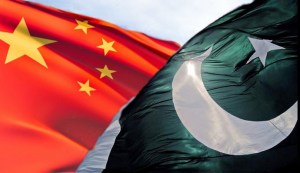
Pak-China-1024x591

Like a typical school bully, China is big and strong, but it doesn’t have a lot of friends. Indeed, now that the country has joined with the United States to approve new international sanctions on its former vassal state North Korea, it has just one real ally left: Pakistan. But, given how much China is currently sucking out of its smaller neighbor – not to mention how much it extracts from others in its neighborhood – Chinese leaders seem plenty satisfied.

Chinese Foreign Minister Wang Yi has declared that China and Pakistan are “as close as lips and teeth,” owing to their geographical links. China’s government has also calledPakistan its “irreplaceable all-weather friend.” The two countries often boast of their “iron brotherhood.” In 2010, Pakistan’s then-prime minister, Syed Yousuf Raza Gilani,waxed poetic about the relationship, describing it as “taller than the mountains, deeper than the oceans, stronger than steel, and sweeter than honey.”

In fact, wealthy China has little in common with aid-dependent Pakistan, beyond the fact that both are revisionist states not content with their existing frontiers. They do, however, share an interest in containing India. The prospect of a two-front war, should India enter into conflict with either country, certainly advances that interest.

For China, the appeal of working with Pakistan is heightened by its ability to treat the country as a client, rather than an actual partner. In fact, China treats Pakistan as something of a guinea pig, selling the country weapons systems not deployed by the Chinese military and outdated or untested nuclear reactors. Pakistan is currently building two AC-1000 reactors – based on a model that China has adapted from French designs, but has yet to build at home – near the southern port city of Karachi.

China does not even need its supposed “brother” to be strong and stable. On the contrary, Pakistan’s descent into jihadist extremism has benefited China, as it has provided an ideal pretext to advance its strategic interests within its neighbor’s borders. Already, China has deployed thousands of troops in Pakistani-administered Kashmir, with the goal of turning Pakistan into its land corridor to the Arabian Sea and the Indian Ocean. And, as a newly released US Defense Department report shows, Pakistan – “China’s primary customer for conventional weapons” – is likely to host a Chinese naval hub intended to project power in the Indian Ocean region.

That is not all. President Xi Jinping’s first visit to Pakistan last year produced an agreement to construct a $46 billion “economic corridor” stretching from China’s restive Xinjiang region to Pakistan’s Chinese-built (and Chinese-run) Gwadar port. That corridor, comprising a series of infrastructure projects, will serve as the link between the maritime and overland “Silk Roads” that China is creating. It will shorten China’s route to the Middle East by 12,000 kilometers (7,456 miles) and give China access to the Indian Ocean, where it would be able to challenge India from India’s own maritime backyard.

Xi also signed deals for new power projects, including the $1.4 billion Karot Dam, the first project to be financed by China’s $40 billion Silk Road Fund. All of the power projects will be Chinese-owned, with the Pakistani government committed to buying electricity from China at a pre-determined rate. Pakistan’s status as China’s economic and security client will thus be cemented, precluding it from eventually following the example of Myanmar or Sri Lanka and forging a non-Chinese path.

To be sure, the relationship also brings major benefits for Pakistan. China provided critical assistance in building Pakistan’s arsenal of nuclear weapons, including by reducing the likelihood of US sanctions or Indian retaliation. China still offers covert nuclear and missile assistance, reflected in the recent transfer of the launcher for the Shaheen-3, Pakistan’s nuclear-capable ballistic missile, which has a range of 2,750 kilometers.

Overtly, China offers Pakistan security assurances and political protection, especially diplomatic cover at the United Nations. For example, China recently vetoed UN action against Masood Azhar, the Pakistan-based chief of the extremist group Jaish-e-Mohammed, which, backed by Pakistani intelligence services, has carried out several terrorist attacks on Indian targets, including the Pathankot air base early this year. And last month, Sartaj Aziz, the Pakistani prime minister’s foreign-policy adviser, said that China has helped Pakistan to block India’s US-supported bid to gain membership of the Nuclear Suppliers Group, an export-control association.

A grateful Pakistan has given China exclusive rights to run Gwadar port for the next 40 years. It has also established a new 13,000-troop army division to protect the emerging economic corridor. And it has deployed police forces to shield Chinese nationals and construction sites from tribal insurgents and Islamist gunmen.

This is not to say that China is content to depend on Pakistani security forces. China’sstationing of its own troops in the Pakistani part of Kashmir for years, ostensibly to protect its ongoing strategic projects there, betrays its lack of confidence in Pakistani security arrangements – and suggests that China will continue to enlarge its military footprint in Pakistan.

But Pakistan’s behavior indicates that it is, for now, satisfied with its arrangement with China – a sentiment that is probably reinforced, if unconsciously, by the billions of dollars in aid the country receives each year from the US. As China continues to elbow its way into Pakistan’s politics and economy, increasingly turning the country into a colonial outpost, that sense of satisfaction will probably fade. But, by the time it does, it will probably be too late to change course.

© 1995-2016 Project Syndicate.

Nuclear power’s dark future  

Brahma Chellaney, The Japan Times, November 26, 2014

Hamaoka Nuclear Power Plant in Japan.

Hamaoka Nuclear Power Plant in Japan.

Nuclear power constitutes the world’s most-subsidy-fattened energy industry, yet it faces an increasingly uncertain future. The global nuclear-power industry has enjoyed growing state subsidies over the years, even as it generates the most dangerous wastes whose safe disposal saddles future generations. Despite the fat subsidies, new developments are highlighting the nuclear-power industry’s growing travails. For example, France — the “poster child” of atomic power — is rethinking its love affair with nuclear energy. Its Parliament voted last month to cut the country’s nuclear-generating capacity by a third by 2025 and focus instead on renewable sources by emulating neighboring countries like Germany and Spain.

As nuclear power becomes increasingly uneconomical at home because of skyrocketing costs, the U.S. and France are aggressively pushing exports, not just to India and China, but also to “nuclear newcomers,” such as the cash-laden petroleum sheikhdoms in the Persian Gulf. Such exports raise new challenges related to freshwater resources, nuclear safety and nuclear-weapons proliferation.

Still, the bulk of the reactors under construction or planned worldwide are in just four countries — China, Russia, South Korea and India.

Six decades after Lewis Strauss, the chairman of the U.S. Atomic Energy Commission, claimed that nuclear energy would become “too cheap to meter,” nuclear power confronts an increasingly uncertain future, largely because of unfavorable economics.

The just-released International Energy Agency’s World Energy Outlook 2014 report states: “Uncertainties continue to cloud the future for nuclear — government policy, public confidence, financing in liberalized markets, competitiveness versus other sources of generation, and the looming retirement of a large fleet of older plants.” The stock of the state-owned French nuclear technology giant Areva recently tumbled after it cited major delays in its reactor projects and a “lackluster” global atomic-energy market to warn of an uncertain outlook for its business.

For example, the Areva-designed plant in Finland, on Olkiluoto Island, in running at least nine years behind schedule, with its cost expected to rise from €3.2 billion to almost €8.5 billion. Even in Areva’s home market, the Flamanville 3 reactor project in northern France is facing serious delays and cost overruns.

In Japan, the last of its 48 commercial reactors went offline in September 2013. Repeated polls have shown that the Japanese public remains opposed to nuclear restarts by a 2-to-1 margin, despite toughened safety regulations after the March 2011 disaster at the Fukushima No. 1 nuclear power plant. Yet the southern city of Satsuma Sendai in Kagoshima Prefecture recently gave its consent to restarting, as soon as early next year, two reactors operated by Kyushu Electric Power Company.

Nuclear power has the energy sector’s highest capital and water intensity and longest plant-construction time frame, making it hardly attractive for private investors. Plant-construction time frame, with licensing approval, still averages about a decade, as underscored by the new reactors commissioned in the past decade. In fact, the World Nuclear Industry Status Report 2014 acknowledges that 49 of the 66 reactors currently under construction are plagued with delays and cost overruns.

Commercial reactors have been in operation for more than half a century, yet the industry still cannot stand on its own feet without major state support. Instead of the cost of nuclear power declining with the technology’s maturation — as is the case with other sources of energy — the costs have escalated multiple times. Just in the past decade, average costs jumped from $1,000 per installed kilowatt to almost $8,000/kW.

In this light, nuclear power has inexorably been on a downward trajectory. The nuclear share of the world’s total electricity production reached its peak of 17% in the late 1980s. Since then, it has been falling, and is currently estimated at about 13%, even as new uranium discoveries have swelled global reserves. With proven reserves having grown by 12.5% since just 2008, there is enough uranium to meet current demand for more than 100 years.

Yet the worldwide aggregate installed capacity of just three renewables — wind power, solar power and biomass — has surpassed installed nuclear-generating capacity. In India and China, wind power output alone exceeds nuclear-generated electricity.

Before the Fukushima disaster, the global nuclear power industry — a powerful cartel of less than a dozen major state-owned or state-guided firms — had been trumpeting a global “nuclear renaissance.” This spiel was largely anchored in hope.

However, the triple meltdown at Fukushima not only reopened old safety concerns but also has set in motion the renaissance of nuclear power in reverse. The dual imperative for costly upgrades post-Fukushima and for making the industry competitive, including by cutting back on the munificent government subsidies it enjoys, underscores nuclear power’s dimming future.

New nuclear plants in most countries are located in coastal regions so that these water-guzzling facilities can largely draw on seawater for their operations and not bring freshwater resources under strain.

But coastal areas are often not only heavily populated but also constitute prime real estate. Moreover, the projected greater frequency of natural disasters like storms, hurricanes, and tsunamis due to climate change, along with the rise of ocean levels, makes seaside reactors particularly vulnerable.

The risks that seaside reactors face from global-warming-induced natural disasters became evident more than six years before Fukushima, when the 2004 Indian Ocean tsunami inundated the Madras Atomic Power Station. But the reactor core could be kept in a safe shutdown mode because the electrical systems had been installed on higher ground than the plant level.

In 1992, Hurricane Andrew caused significant damage at the Turkey Point nuclear power plant in Florida, but fortunately not to any critical system. And in a 2012 incident, an alert was declared at the New Jersey Oyster Creek nuclear power plant — the oldest operating commercial reactor in the U.S. — after water rose in its water intake structure during Hurricane Sandy, potentially affecting the pumps that circulate cooling water through the plant.

All of Britain’s nuclear power plants are located along the coast, and a government assessment has identified as many as 12 of the country’s 19 civil nuclear sites as being at risk due to rising sea levels. Several nuclear plants in Britain, as in a number of other countries, are just a few meters above sea level.

Yet even as Germany steps out of the nuclear power business, Britain is pressing ahead with a costly new nuclear power station at Hinkley Point, underscoring the divisions among European countries over nuclear power. Britain indeed intends to build several more plants to replace its aging nuclear stations. The Hinkley Point project, however, is running years behind schedule, with the costs mounting.

Globally, nuclear power is set to face increasing challenges due to its inability to compete with other energy sources in pricing. Another factor is how to manage the rising volumes of spent nuclear fuel in the absence of permanent disposal facilities.

More fundamentally, without a breakthrough in fusion energy or greater commercial advances in the area that the U.S. has strived to block — breeder (and thorium) reactors — nuclear power is in no position to lead the world out of the fossil-fuel age.

Brahma Chellaney, a regular contributor to The Japan Times, is a geostrategist and the author, most recently, of “Water, Peace, and War” (Rowman & Littlefield).

© The Japan Times, 2014.

The Centrality of Nuclear Weapons

Brahma Chellaney

Paper presented to the Valdai Discussion Group, November 2014

downloadPower shifts are an inexorable phenomenon in history. The global power structure is not static but continually evolves. The international institutional structure, however, has remained largely static since the mid-twentieth century rather than evolving with the changing power realities and challenges. Reforming and restructuring the international system poses the single biggest challenge to preserving global peace, stability, and continued economic growth. A twenty-first world cannot remain indefinitely saddled with twentieth-century institutions and rules.

Although the world has changed fundamentally since the end of the World War II, one factor remains the same — nuclear weapons still represent power and force in international relations. Despite major military innovations and the deployment of an array of new weapon systems, nuclear weapons’ relevance or role has not changed. Indeed, five key points stand out:

1. Nuclear weapons have strategic and political utility. Think of Britain and France without nuclear weapons. They would become irrelevant, if not in international relations, then at least at the United Nations. Britain and France value nuclear weapons for their political utility. Russia must take comfort in the strategic utility of these weapons; without them, the United States would have assembled a “coalition of the willing” to take on Russia in response to the developments in Crimea and Ukraine.

Such is the strategic utility of nuclear weapons that U.S. President Barack Obama was quick to rule out the military option against Russia after the referendum in Crimea. He even distanced the U.S. from the “Budapest Memorandum,” the pact that was signed in 1994 to provide Ukraine security assurances about its territorial integrity in exchange for its relinquishing of the nuclear arsenal. After all, Russia remains a nuclear superpower.

2. Nuclear proliferation and the utility of nuclear weapons are linked. It is the very utility of nuclear weapons that serves as the main proliferation incentive. This means that the proliferation incentive will remain strong as long as nuclear weapons exist.

To be sure, the international nuclear nonproliferation regime has progressively become very stringent since the 1970s. International Atomic Energy Agency (IAEA) safeguards in non-nuclear-weapons states, for example, have gone from being site-specific to becoming “full-scope” (comprehensive) in nature. The IAEA’s Additional Protocol empowers its inspectors to check even a non-nuclear facility in a non-nuclear-weapons state. There isn’t much room to further tighten the nonproliferation regime.

Still, the stringent nonproliferation regime has made proliferation very difficult or driven it underground. There are limits to what underground proliferation can accomplish. But there are also limits to what coercive enforcement of nonproliferation norms can achieve.

The Nuclear Non-Proliferation Treaty (NPT), which came into force in 1970, was originally intended to prevent countries like Japan, West Germany and Italy from acquiring nuclear weapons. Japan, for example, did not ratify the treaty until 1976 — eight years after the NPT was concluded, and six years after the pact took effect. West Germany and Italy deposited their instruments of ratification only in 1975. After France conducted its first nuclear test in 1960 in the Sahara, West Germany was considered the most likely candidate to follow suit. West Germany first tried to block the conclusion of the NPT before seeking to influence the outcome of the negotiations.

The NPT also became the foundation for a number of regional nuclear-weapon-free zone (NWFZ) agreements, which include the Treaty of Tlatelolco (1969), establishing a NWFZ in Latin America’ the Treaty of Rarotonga (1986) in South Pacific; the Treaty of Bangkok (1997) signed by ASEAN members; the Treaty of Pelindaba (2009); and the Central Asian NWFZ (2009), which has all post-Soviet republics in Central Asia as its members. Regional NWFZ agreements were designed to strengthen the nonproliferation regime. Today, the NWFZs cover almost half of the world and include 115 states plus Mongolia, whose status as a one-state nuclear-weapon-free zone is recognized by UN General Assembly Resolution 3261. The effectiveness of the NWFZs depends on the NPT as the core foundation of the nonproliferation regime.

The challenges to the NPT, however, have been coming from outside the list of its original targets. NPT’s first test, in fact, came early — in May 1974 when India carried out a “peaceful nuclear explosion” (PNE). As India was a non-signatory and indeed had vowed to stay out of the NPT when the treaty was concluded, the test involved no breach of legal obligations. However, after the Indian test, PNEs quickly fell out of international favor, although the U.S. and the Soviet Union both had large PNE programs.

Looking back, the NPT has been a remarkably successful treaty, limiting nuclear-weapons states to a small number. Yet the NPT’s long-term challenge comes from the dichotomy it creates — that it is morally and legally reprehensible for most countries to pursue nuclear ambitions but morally and legally alright for a few states to rely on (and modernize their) nuclear weapons for security.

Today, the spotlight is on the nuclear programs in two states — Iran and North Korea and Iran — as well as on the potential nexus between terrorism and WMD.

North Korean strongman Kim Jong-un won’t give up the nuclear option because he understands the utility of nukes. After all, the United States used aerial bombardment to overthrow ruler Muammar el-Qaddafi in 2011, eight years after he surrendered Libya’s nuclear option in 2003. The big question today is whether Iran, as part of a rapprochement with the United States, would agree to at least freeze its nuclear program, if not give up its nuclear option.

3. Nuclear disarmament has fallen by the wayside. It has become little more than a pious slogan. The United Nations’ Conference on Disarmament (CD), for example, has been without real work for 18 years now.

It is significant that nuclear disarmament fell off the global agenda after the NPT was indefinitely extended in 1995. The NPT was originally conceived as a 25-year bargain between nuclear-weapons states and non-nuclear-weapons states. But as a result of the 1995 action, the treaty has become permanent. This action eliminated international pressure on the nuclear-weapons states in regard to their arsenals.

Not only has nuclear disarmament fallen by the wayside since, there is also little international attention on the nuclear-modernization programs currently underway. This means the five NPT nuclear powers and the three non-NPT nuclear-weapons states of India, Israel and Pakistan can pursue nuclear modernization with no real constraints.

Take Obama, who, having championed “a nuclear-free world,” has quietly pursued plans for an extensive expansion of the U.S. nuclear arsenal, already the world’s most-expensive and most-sophisticated nuclear deterrent. As the New York Times reported on September 22, 2014, the United States plans to spend about $355 billion on nuclear weapons over the next 10 years, and up to $1 trillion over 30 years. Spending so much more money on nuclear weapons is simply not justified, given the changing nature of security threats. In fact, in mid-2014, an independent, bipartisan U.S. federal commission co-chaired by former Secretary of Defense William Perry and retired Gen. John Abizaid called the Obama administration’s plans to expand the nuclear arsenal “unaffordable” and a threat to “needed improvements in conventional forces.” By pursuing a slightly less ambitious nuclear-modernization program, the United States can easily save billions of dollars and still keep the “triad” of delivery systems armed with the same number of nuclear warheads planned under the 2010 New START Treaty.

The real “success” of the NPT has been in reinforcing the system of extended deterrence by enabling countries such as those in NATO and others like Australia, Japan and South Korea to continue to rely on the U.S. for nuclear-umbrella protection. Minus the NPT, these countries would have been the most-likely candidates to go nuclear because they also happen to be the most-capable states technologically. So, the effect of the NPT has to strengthen extended deterrence.

Today, a key question that arises is whether any of the countries ensconced under the U.S. nuclear umbrella would be willing to forgo the benefits of extended deterrence in order to help lower the utility of nuclear weapons and give a boost to the cause of nuclear disarmament. After all, the security imperatives that prompted such countries more than half a century ago to seek nuclear-umbrella protection no longer are valid in a post-Cold War world.

To be sure, some of these states, especially Japan, have seen their regional security environment deteriorate and thus can ill-afford to renounce reliance on U.S. nuclear-umbrella protection. However, the majority of states basking under the U.S. nuclear umbrella find themselves today in relatively benign security environment. They extend from Canada and Norway to Portugal and Australia. Such states could take the lead to gradually wean themselves away from relying on extended nuclear deterrence.

4. Nuclear might provides the cover to some powers for engaging in acts that contravene global norms and international law. There are several examples of this.

For example, Israel’s nuclear monopoly in the Middle East, reinforced by its conventional-military superiority, emboldens it to act preemptively at times, or to employ disproportionate force, as was seen recently in Israel’s Gaza war, which was triggered by the Hamas’s firing of crude, home-made rockets with no guidance.

Consider another example: Pakistan’s military generals export terror by playing nuclear poker. They export terrorism from behind the nuclear shield so as to prevent retaliation against their roguish actions.

One can argue that nuclear might also drives America’s interventionist impulse. America’s Nobel Peace Prize laureate president, Barack Obama, has been more at ease waging wars than in waging peace, as underlined by the launch of his presidency’s seventh military campaign in a Muslim country. His new war in Syria — which he initiated by bypassing the United Nations — is just the latest action of the United States that mocks international law. Other such actions in the past 15 years include the bombing of Serbia, the separation of Kosovo from Serbia, the invasions of Afghanistan and Iraq without UN Security Council authority, Gaddafi’s overthrow, the aiding of an insurrection in Syria, CIA renditions of terror suspects, and National Security Agency’s Orwellian surveillance program. Yet, paradoxically, Obama has escalated a sanctions campaign against Russia in the name of upholding international law.

5. In our rapidly changing world, most technologies tend to become obsolescent in a decade or two. But more than seven decades after they were invented, nuclear weapons still remain the preeminent mass-destruction technology.

Nuclear arsenals may have no deterrent effect on the pressing conflicts we face today. Yet, for the foreseeable future, nuclear weapons, with their unparalleled destructive capacity, will remain at the center of international power and force. Nuclear weapons, as the 2002 U.S. Nuclear Posture Review stated, will continue to play a “critical role” because they possess “unique properties.”

However — a century after chemical arms were introduced in World War I and nearly seven decades following the nuclear bombing of Hiroshima and Nagasaki — the world is at the threshold of new lethal and precision weapons, as underlined by the advent of information weapons, anti-satellite weapons, and the extension of arms race to outer space and cyberspace.

The aforementioned points indicate that nuclear weapons will remain at the core of international power for the foreseeable future. Still, there is a widely held international misperception about the number of countries that rely on nuclear weapons for security. Their number is not just nine (the five NPT nuclear powers, the three non-NPT nuclear-weapons states of India, Israel and Pakistan, plus North Korea). A sizable number of additional countries rely on nuclear-umbrella protection — a fact often obscured.

Actually, the states that are currently ensconced under the U.S. nuclear umbrella number 30. Their number has been growing as part of the eastward expansion of the North Atlantic Treaty Organization (NATO) following the disintegration of the Soviet Union. In fact, the taproot of the ongoing U.S.-Russian tensions has been NATO’s aggressive expansion, including to the Baltics and the Balkans. Russia, however, drew a line in the sand when NATO announced in 2008 that Ukraine and Georgia “will become members of NATO.”

The nuclear-umbrella protection provided by the U.S. extends to all members of NATO, a military alliance that has expanded from its original 12 members in 1949 to 28 states now. In1997, three former Warsaw Pact members, Hungary, the Czech Republic, and Poland, were invited to join NATO. Then, in 2004, seven more countries joined, including the Baltic states of Estonia, Latvia and Lithuania. And in 2009, Albania and Croatia became the latest entrants to NATO.

NATO’s nuclear umbrella primarily relies on American nuclear weapons. However, in a contingency, British and French nuclear arsenals are also expected to play a role.

In addition to NATO members, the U.S. provides nuclear-umbrella protection to Japan (as part of the bilateral Treaty of Mutual Cooperation and Security of 1960), to South Korea (a commitment from 1958 that was reaffirmed by America after North Korea tested a nuclear device in 2006), and to Australia under the terms of ANZUS (Australia, New Zealand, United States Security Treaty of 1951).

The U.S. nuclear umbrella, however, no longer covers New Zealand, whose accession to the South Pacific Nuclear Weapons Free Zone (Treaty of Rarotonga, 1985) and subsequent enactment of domestic measures to comply with the imperatives of the zone triggered a bitter diplomatic row with the United States. By contrast, another ANZUS member, Australia, remains under the American nuclear umbrella despite being a party to the Rarotonga Treaty.

The security alliances of the Soviet Union (which broke up into 15 separate countries) and those of today’s Russia also are believed to have incorporated nuclear-umbrella protection, although Moscow has never acknowledged that publicly. However, after the disbanding of the Warsaw Pact and the breakup of the Soviet Union, half of the ex-Soviet allies and breakaway states have been absorbed by NATO as members. Russia currently has a military alliance — known as the Collective Security Treaty Organization (CSTO) — with Armenia, Belarus, Kazakhstan, Kyrgyzstan and Tajikistan. The creation of the Central Asian Nuclear Weapon Free Zone in 2009 has only strengthened the dependence of Kazakhstan, Kyrgyzstan, and Tajikistan (which are CSTO members) as well as of Uzbekistan and Turkmenistan on the Russian nuclear umbrella.

Against this background, the number of states that rely directly or indirectly on nuclear weapons for their security is substantial. From an international-law standpoint, however, extending nuclear deterrence to non-nuclear-weapons states violates the spirit, if not the text, of the Nuclear Non-Proliferation Treaty (NPT). Some, of course, have argued that it actually breaches the text of the NPT. After all, NATO’s nuclear doctrine is pivoted on nuclear sharing, and the United States has deployed nuclear weapons for decades on the territory of non-nuclear NATO members, often without their knowledge during the Cold War years. Now, the U.S. is believed to have approximately 500 tactical nuclear warheads in five NATO states — Belgium, Germany, Italy, the Netherlands, and Turkey. Until 1991, American tactical nukes were deployed in South Korea. The North Korean nuclear threat makes redeployment of U.S. nuclear capabilities in South Korea theoretically conceivable.

Nuclear proliferation in the future will hinge largely on the credibility of U.S. security guarantees as perceived by America’s key, technologically advanced allies. The future of the NPT regime, despite its tremendous success thus far, looks anything but certain. The treaty’s main challenges now come from within, not from its non-parties — India, Israel and Pakistan, which never signed the NPT and have developed nuclear weapons.

Significantly, technological forces are now playing a greater role in shaping international geopolitics and power equations than at any other time in history. The growing tide of new innovations has not only shrunk the shelf-life of most technologies, but also accelerated the weaponization of science. Such are the challenges from the accelerated weaponization of science that instead of disarmament, rearmament today looms large on the horizon, with the arms race being extended to outer space and cyberspace.

Grand speeches about a world without nuclear weapons are crowd-pleasers at the United Nations. But in truth, pursuing disarmament is like chasing butterflies — enjoyable for some retired old men but never-ending. Until nuclear weapons remain the premier mass-destruction technology, disarmament will stay a mirage. The Chemical Weapons Convention became possible only when chemical weapons ceased to be militarily relevant for the major powers and instead threatened to become the poor state’s weapons of mass destruction (WMD). If the rapid pace of technological change creates a new class of surgical-strike WMD that makes nuclear weapons less relevant, nuclear disarmament would likely take center-stage.

Nevertheless, it has become difficult to palm off nonproliferation as disarmament. What many members of the international community want to see are genuine efforts to substantially reduce nuclear arsenals and to erode the utility of WMD in national military strategies. Today, the world has a treaty (although not in force) that bans all nuclear testing — the Comprehensive Test Ban Treaty (CTBT) — but no treaty to outlaw the use of nuclear weapons. In other words, those that are party to the Comprehensive Test Ban Treaty (CTBT) are prohibited from testing a nuclear weapon at home but are legally unencumbered to test the weapon by dropping it over some other state. This anomaly must be rectified.

Brahma Chellaney is a professor of strategic studies at the independent Center for Policy Research in New Delhi; a fellow of the Robert Bosch Stiftung in Berlin; and an affiliate with the International Centre for the Study of Radicalization at King’s College London. He is the author of nine books, including an international bestseller, Asian Juggernaut (Harper, New York, 2010).

False Promise of Nuclear Power

Brahma Chellaney, The Hindu, November 19, 2014

wind-nuclearNew developments highlight the growing travails of the global nuclear-power industry. France — the “poster child” of atomic power — plans to cut its nuclear-generating capacity by a third by 2025 and focus instead on renewable sources, like its neighbours, Germany and Spain. As nuclear power becomes increasingly uneconomical at home because of skyrocketing costs, the U.S. and France are aggressively pushing exports, not just to India and China, but also to “nuclear newcomers,” such as the cash-laden oil sheikhdoms. Still, the bulk of the reactors under construction or planned worldwide are located in just four countries — China, Russia, South Korea and India.

Six decades after Lewis Strauss, chairman of the U.S. Atomic Energy Commission, claimed that nuclear energy would become “too cheap to meter,” nuclear power confronts an increasingly uncertain future, largely because of unfavourable economics. The International Energy Agency’s World Energy Outlook 2014, released last week, states: “Uncertainties continue to cloud the future for nuclear — government policy, public confidence, financing in liberalized markets, competitiveness versus other sources of generation, and the looming retirement of a large fleet of older plants.”

Heavily subsidy reliant

Nuclear power has the energy sector’s highest capital and water intensity and longest plant-construction time frame, making it hardly attractive for private investors. Plant-construction time frame, with licensing approval, still averages almost a decade, as underscored by the new reactors commissioned in the past decade.

The key fact about nuclear power is that it is the world’s most-subsidy-fattened energy industry, even as it generates the most dangerous wastes whose safe disposal saddles future generations. Commercial reactors have been in operation for more than half-a-century, yet the industry still cannot stand on its own feet without major state support. Instead of the cost of nuclear power declining with the technology’s maturation — as is the case with other sources of energy — the costs have escalated multiple times.

In this light, nuclear power has inexorably been on a downward trajectory. The nuclear share of the world’s total electricity production reached its peak of 17 per cent in the late 1980s. Since then, it has been falling, and is currently estimated at about 13 per cent, even as new uranium discoveries have swelled global reserves. With proven reserves having grown by 12.5 per cent since just 2008, there is enough uranium to meet current demand for more than 100 years.

Yet, the worldwide aggregate installed capacity of just three renewables — wind power, solar power and biomass — has surpassed installed nuclear-generating capacity. In India and China, wind power output alone exceeds nuclear-generated electricity.

Fukushima’s impact

Before the 2011 Fukushima disaster, the global nuclear power industry — a powerful cartel of less than a dozen major state-owned or state-guided firms — had been trumpeting a global “nuclear renaissance.” This spiel was largely anchored in hope. However, the triple meltdown at Fukushima has not only reopened old safety concerns but also set in motion the renaissance of nuclear power in reverse. The dual imperative for costly upgrades post-Fukushima and for making the industry competitive, including by cutting back on the munificent government subsidies, underscores nuclear power’s dimming future.

It is against this background that India’s itch to import high-priced reactors must be examined. To be sure, India should ramp up electricity production from all energy sources. There is definitely a place for safe nuclear power in India’s energy mix. Indeed, the country’s domestic nuclear-power industry has done a fairly good job both in delivering electricity at a price that is the envy of Western firms and, as the newest indigenous reactors show, in beating the mean global plant-construction time frame.

No competitive bidding

India should actually be encouraging its industry to export its tested and reliable midsize reactor model, which is better suited for the developing countries, considering their grid limitations. Instead, Prime Minister Manmohan Singh’s government, after making India the world’s largest importer of conventional arms since 2006, set out to make the country the world’s single largest importer of nuclear power reactors — a double whammy for Indian taxpayers, already heavily burdened by the fact that India is the only major economy in Asia that is import-dependent rather than export driven.

To compound matters, the Singh government opted for major reactor imports without a competitive bidding process. It reserved a nuclear park each for four foreign firms (Areva of France, Westinghouse and GE of the U.S., and Atomstroyexport of Russia) to build multiple reactors at a single site. It then set out to acquire land from farmers and other residents, employing coercion in some cases.

Having undercut its leverage by dedicating a park to each foreign vendor, it entered into price negotiations. Because the imported reactors are to be operated by the Indian state, the foreign vendors have been freed from producing electricity at marketable rates. In other words, Indian taxpayers are to subsidise the high-priced electricity generated.

Westinghouse, GE and Areva also wish to shift the primary liability for any accident to the Indian taxpayer so that they have no downside risk but only profits to reap. If a Fukushima-type catastrophe were to strike India, it would seriously damage the Indian economy. A recent Osaka City University study has put Japan’s Fukushima-disaster bill at a whopping $105 billion.

To Dr. Singh’s discomfiture, three factors put a break on his reactor-import plans — the exorbitant price of French- and U.S.-origin reactors, the accident-liability issue, and grassroots opposition to the planned multi-reactor complexes. After Fukushima, the grassroots attitude in India is that nuclear power is okay as long as the plant is located in someone else’s backyard, not one’s own. This attitude took a peculiar form at Kudankulam, in Tamil Nadu, where a protest movement suddenly flared just when the Russian-origin, twin-unit nuclear power plant was virtually complete.

India’s new nuclear plants, like in most other countries, are located in coastal regions so that these water-guzzling facilities can largely draw on seawater for their operations and not bring freshwater resources under strain. But coastal areas are often not only heavily populated but also constitute prime real estate. The risks that seaside reactors face from global-warming-induced natural disasters became evident more than six years before Fukushima, when the 2004 Indian Ocean tsunami inundated parts of the Madras Atomic Power Station. But the reactor core could be kept in a safe shutdown mode because the electrical systems had been installed on higher ground than the plant level.

One-sided

Dr. Singh invested so such political capital in the Indo-U.S. civil nuclear agreement that much of his first term was spent in negotiating and consummating the deal. He never explained why he overruled the nuclear establishment and shut down the CIRUS research reactor — the source of much of India’s cumulative historic production of weapons-grade plutonium since the 1960s. In fact, CIRUS had been refurbished at a cost of millions of dollars and reopened for barely two years when Dr. Singh succumbed to U.S. pressure and agreed to close it down.

Nevertheless, the nuclear accord has turned out to be a dud deal for India on energy but a roaring success for the U.S. in opening the door to major weapon sales — a development that has quietly made America the largest arms supplier to India. For the U.S., the deal from the beginning was more geostrategic in nature (designed to co-opt India as a quasi-ally) than centred on just energy.

Even if no differences had arisen over the accident-liability issue, the deal would still not have delivered a single operational nuclear power plant for a more than a decade for two reasons — the inflated price of Western-origin commercial reactors and grassroots opposition. Areva, Westinghouse and GE signed Memorandums of Understanding with the state-run Nuclear Power Corporation of India Limited (NPCIL) in 2009, but construction has yet to begin at any site.

India has offered Areva, with which negotiations are at an advanced stage, a power price of Rs.6.50 per kilowatt hour — twice the average electricity price from indigenous reactors. But the state-owned French firm is still holding out for a higher price. If Kudankulam is a clue, work at the massive nuclear complexes at Jaitapur in Maharashtra (earmarked for Areva), Mithi Virdi in Gujarat (Westinghouse), and Kovvada in Andhra Pradesh (GE) is likely to run into grassroots resistance. Indeed, if India wishes to boost nuclear-generating capacity without paying through its nose, the better choice — given its new access to the world uranium market — would be an accelerated indigenous programme.

Globally, nuclear power is set to face increasing challenges due to its inability to compete with other energy sources in pricing. Another factor is how to manage the rising volumes of spent nuclear fuel in the absence of permanent disposal facilities. More fundamentally, without a breakthrough in fusion energy or greater commercial advances in the area that the U.S. has strived to block — breeder (and thorium) reactors — nuclear power is in no position to lead the world out of the fossil-fuel age.

(Brahma Chellaney is a geostrategist and author.)

© The Hindu, 2014.

Southern Asia: A unique nuclear triangle

Brahma Chellaney

Politics and Strategy: The Survival Editors’ Blog

In the two decades since I published an essay in Survival on South Asian nuclearization, one of my conclusions has been proven right, but another wrong. The South Asian nuclear genie remains uncontrolled, as I anticipated. But contrary to my doubt then, India and Pakistan have completed the transition from covert to overt capabilities by conducting nuclear-explosive tests, adopting a nuclear doctrine and deploying nuclear weapons. More strangely, Pakistan now boasts the world’s fastest-growing nuclear arsenal. Indeed, according to several international estimates, its arsenal of nuclear warheads is larger than that of India, which, with China to its north, faces two closely aligned nuclear-armed neighbours.

India’s recent test launch of the Agni V ballistic missile, which can reach Beijing, served as a fresh reminder that the Indian nuclear-deterrence programme is primarily focused on China, with Pakistan remaining subordinate in nuclear planning. To be sure, it was the Sino-Pakistani nuclear nexus — cemented by transfers of Chinese nuclear and missile technology to Islamabad — that propelled India to shed its posture of nuclear ambiguity and go overtly nuclear in 1998. Since then, China’s rapidly accumulating military and economic power, and its increasing assertiveness on territorial disputes, have increased the importance of the nuclear deterrent for India. Given its retaliation-only posture, India has focused its attention in the past decade on erecting a triad of land-based, air-deliverable and submarine-based nuclear capabilities that can survive an enemy first strike.

Strikingly, neither India’s economic rise nor its graduated action to put in place a ‘small but credible’ nuclear force is seen internationally as a threat, unlike the deep concerns that China’s ascent continues to generate. A 2008 civilian nuclear deal between the United States and India, in fact, has come to symbolise their new strategic partnership. International proliferation-related concern instead has focused on Pakistan’s rapid expansion of its nuclear arsenal that has put it on a path to overtake Britain as the world’s fifth-largest nuclear-weapons power. Unstable Pakistan is heavily dependent on foreign aid, yet it has ramped up production of bomb-grade materials.

Nuclear weapons have not prevented Pakistan’s slide into a jihadist dungeon. Given its military’s sponsorship of jihad under the nuclear umbrella and the jihadist infiltration of the armed forces, the biggest international concern relates to the safety of Pakistani nuclear warheads and fissile materials. Compounding this concern is the fact that Pakistan’s military, intelligence and nuclear establishments remain outside civilian oversight. Such concern, along with major gaps in American intelligence about Pakistan’s weapons of mass destruction, has made that country a principal target of US ‘black budget’ surveillance, according to recent revelations. Yet the only plausible scenario of Pakistani nukes falling into Islamist hands is an intra-military struggle in which the jihadists within the armed forces gain ascendancy.

Southern Asia remains the only region in the world where three contiguous neighbours, sharing disputed land frontiers, form a nuclear triangle that pits two of them against the third party. The regional intersection of nuclear issues, terrorism, territorial disputes, competition over natural resources and nationalism creates complex and dangerous challenges. This region will continue to serve as a reminder that any progress in an inter-state context on nuclear issues, including nuclear confidence-building measures, cannot happen independently of the broader geopolitics.

Brahma Chellaney is a Professor of Strategic Studies at the New Delhi-based Centre for Policy Research. His article,‘The Challenge of Nuclear Arms Control in South Asia’, appeared in Survival, 35:3 (1993).

Chemical Weapons: Fact and Fiction

Chemical arms, a poor nation’s deterrent, are far less effective than modern conventional weapons

Brahma Chellaney, The Japan Times, September 13, 2013

U.S. President Barack Obama’s plan to bomb Syria for alleged use of poison gas has raised two questions that remain pertinent despite the proposed international monitoring and eventual destruction of that country’s chemical-weapon arsenal: Is gassing people more inhumane or reprehensible than killing with Tomahawk missiles, drones and other conventional weapons? And are chemical weapons inherently prohibited in international law, just like genocide and slavery?

These questions are also important because Obama’s request to Congress for authorization to attack Syria was not about any specific threat to U.S. or international security. Rather, the planned attack was intended for retribution to save the president’s credibility that he believed was on the line.

Let’s be clear: Chemical weapons — including choking agents like chlorine gas, blister agents such as mustard gas, arsenic- or cyanide-based blood agents, and nerve agents like sarin — are far less effective than modern conventional weapons, which kill with greater precision and lethality.

Technological advances, in fact, have made conventional weapons capable of leaving a greater trail of death than any poison gas. They kill, maim and terrorize in ways not much different than chemical weapons. Some conventional explosives and napalm (a petrochemical incendiary whose use against military targets remains lawful despite the notoriety it gained during the Vietnam War) indeed can cause lingering, painful death.

Chemical weapons have a low kill ratio, which makes them scarcely effective on the battlefield. If anything, they are more effective off the battlefield than on the battlefield. Moreover, their employment often demands favorable weather and geographic conditions. If the military intent were to incapacitate enemy army units without killing them, chemical weapons potentially make for more humane warfare than conventional weapons.

But because they are cheap, easy to manufacture, and serve as a poor nation’s deterrent, chemical arms have fallen out of favor with the powerful, who portray them as “immoral weapons.” To protect their advantage in conventional weapons, great powers have promoted a taboo against chemical-weapon use.

To be sure, chemical arms can become weapons of terror in the hands of extremists, as exemplified by the Aum Shinrikyo cult’s 1995 sarin attack in the Tokyo subway that killed 13 commuters.

Chemical arms have been used by combatants since ancient times, with the oldest archeological evidence of chemical warfare being found, ironically, in modern-day Syria. Before the advent of nuclear weapons, chemical weapons came to be regarded as weapons of mass destruction. Their extensive use in World War I, especially in the form of mustard or chlorine gas, created revulsion and fear of future chemical attacks. However, the use made little difference to the military outcome.

A corpse from the napalm attack on Tokyo

In fact, the total fatalities from the chemical-weapon strikes accounted for much less than one percent of the World War I deaths, and were lower than the toll from a single U.S. napalm attack on Tokyo on March 10, 1945. At least 100,000 Japanese died on that day when some 300 B-29 bombers dropped 1,700 tons of incendiary bombs — the deadliest air raid of World War II.

Against this background, why do the hundreds allegedly killed by the regime of President Bashar al-Assad in an August 21 sarin attack count for more than the estimated 100,000 slain in Syria’s grinding civil war, including many killed by insurgents aided by the U.S. and its repressive Islamist allies, such as the rulers of Qatar, Saudi Arabia and Turkey? Why is it any worse to be killed by sarin than to be decapitated by insurgents, a growing number of whom hew to al-Qaeda ideology?

The Obama administration’s visceral, bomb-Syria stand has obscured such questions.

International efforts since the late 19th century to outlaw chemical weapons have been hampered by repeated national breaches of legal obligations. The 1899 Hague Convention prohibited the use of projectiles with the “sole object” of diffusing “asphyxiating or deleterious gases” — a ban that was openly flouted in World War I. The violations spawned the 1925 Geneva Protocol banning the use of poison gas as a weapon — a still-binding prohibition breached with impunity by several parties.

The 1993 Chemical Weapons Convention (CWC) went further and outlawed the production, stockpile, transfer and use of chemical weapons. Some countries have not signed or ratified it, including Syria, Israel, North Korea, Egypt and Myanmar. Some parties strongly suspected of possessing chemical weapons, including China and Pakistan, did not declare any stockpile. By declaring former production facilities, China, however, tacitly admitted that it had built chemical weapons and destroyed them before ratifying the CWC.

Of the seven declared possessor states under the CWC, the largest arsenals are held by the U.S. and Russia, which have both missed the convention’s final extended deadline of 2012 for the destruction of all stockpiles. What impact will this contravention have on the CWC’s integrity?

Only India, South Korea and Albania among the seven declared possessor states verifiably eliminated their stockpiles by the initial deadline of March 2009. The U.S. says its stockpile destruction will not finish before 2023, more than a decade after the extended cut-off date.

When the U.S. sprayed 76 million liters of Agent Orange, a toxic defoliant, during the Vietnam War, it was not a party to the Geneva Protocol, which it embraced soon after that war ended.

But America’s use of white phosphorus as an incendiary weapon and direct tool of warfare during the 2004 siege of Falluja city in occupied Iraq raised a troubling question about its compliance with international obligations. Studies have reported a sharp rise in cancer, leukemia and congenital birth defects in Fallujah in the years since.

White phosphorous, like other chemicals not listed in the CWC schedules, can be legally employed for noncombat purposes (for example, as a flare to illuminate the battlefield or to produce smoke to disguise troop movements) but not “as a method of warfare” relying on its “toxic properties.”

Before Iraqi President Saddam Hussein fell out of favor with Washington, the Reagan administration acquiesced in his regime’s gassing of Iranian troops during the protracted Iraq-Iran war.

Declassified CIA papers and interviews with former officials, as highlighted by the journal Foreign Policy recently, confirm what has long been known — that Washington not only turned a blind eye to Iraq’s repeated use of sarin and mustard gas from 1983 to 1988, but also facilitated the gassing of Iranian troops by providing Saddam Hussein with satellite reconnaissance data on location of Iranian units.

It is against this backdrop that Obama — facing both international isolation and congressional defeat — sought to build a legal case to bomb Syria. His task was made uphill by factors extending beyond the varied and often-shifting justifications proffered by his team and his decision to bypass the United Nations.

First, Syria is not a party to the CWC, whose enforcement, in any event, vests with the Security Council. Syria in 1968 did sign the 1925 Geneva Protocol, yet that protocol provides no basis for use of force because it relates to interstate war, not intrastate conflict. Second, in a world in which national stockpiles of chemical arms still exist, few can argue that such weapons are inherently prohibited in international law, regardless of treaties. The “norm” against their use indeed has repeatedly been violated since 1925.

Allegations and counter-allegations of chemical-weapon use in the Syrian civil war have been rife since last year. Several instances of alleged use were reported in the spring of this year, eventually prompting the United Nations to send a team of investigators to Syria in August.

While the inspectors were probing those cases, another instance of alleged use in suburban Damascus on August 21 made international headlines because of a rebel video. Even as the UN inspectors turned to investigating the newest incident, Obama peremptorily declared his intent to punitively bomb Syria.

Why did Obama zoom in on the August 21 incident and ignore the earlier instances? One plausible explanation is that while some of the earlier incidents appeared to point to chemical-weapon use by insurgents, with Syrian army soldiers among the victims, the August 21 victims were all civilians in a rebel-held neighborhood.

Carla del Ponte, a leading member of the UN Independent International Commission of Inquiry on Syria, told Swiss TV in May that there were “strong, concrete suspicions but not yet incontrovertible proof” that rebels had used sarin. Ms. Del Ponte, a former Swiss attorney-general and prosecutor with the International Criminal Tribunal for the former Yugoslavia, said: “I was a little bit stupefied by the first indications we got… they were about the use of nerve gas by the opposition.” The comments prompted the commission to issue a statement that stressed — without denying Ms. Del Ponte’s remarks — that it had “not reached conclusive findings.”

Contrast that with the August 21 incident claims, which have been ratcheted up progressively. The British reported “at least 350” civilians were killed in that attack; the Americans then released a much higher but incredulously precise fatality toll of 1,429; immediately thereafter, U.S. Secretary of State John Kerry thundered that the world cannot allow Assad to gas “thousands” of his people. The French followed up by claiming the attack involved “massive” use of sarin — an assertion picked up by the White House.

The full truth on the various incidents may never be known. Still, it cannot be discounted that the rebels probably were the first to carry out a chemical-weapon attack in the civil war.

In this light, the Russian proposal to make Syria sign the CWC and have monitors take control of its chemical-weapon armory opens a possible diplomatic solution, including reducing poison-gas-related risks in that country.

It could also bail out an isolated Obama from a predicament of his own making — his insistence that he will break international law to punish Syria for breaching a fanciful international legal tradition.

Brahma Chellaney is a geostrategist and the author, most recently, of “Water, Peace, and War” (Rowman & Littlefield, 2013). 

(c) The Japan Times, 2013.

U.S. export-control liberalization: The reality

Controlling technology flows


The U.S. has only committed to incremental easing of its export-control regime depending on Indian concessions


Brahma Chellaney

Mint, November 16, 2010


The nuclear deal was sold to the Indian public as a means to liberate the country from U.S.-imposed technology controls. In fact, once all the steps in the tortuous process of nuclear dealmaking were complete, Prime Minister Manmohan Singh triumphantly announced on September 6, 2008, that, “It marks the end of … the technology-denial regime.” Yet Dr. Singh came full circle by unilaterally declaring during his joint news conference with visiting President Barack Obama that, “We welcome the decision by the U.S. to lift controls on export of high-technology items and technologies to India.”


Obama, while silent on this issue during the news conference, earlier told business executives in Mumbai that he would make “fundamental reforms” to the U.S. export controls that constrict trade between the two countries. There is, however, a large gap between reforming and lifting export controls. So, did Dr. Singh jump the gun again? The answer, unfortunately, is yes.


The Americans have committed themselves only to a step-by-step easing commensurate with further Indian actions and concessions. The caveats and other riders introduced by the U.S. side — as on the issue of backing India’s candidacy for a UN Security Council permanent seat — have been lost in the euphoria over the Obama-visit announcements.


Hours after the joint news conference, Obama clarified the U.S. position in his address to the Indian Parliament. His key words — “we’ll work to reform our controls on exports” — merely echoed the 2005 assurance in the nuclear deal. In the joint statement released at the end of his visit, the U.S. also said it “intends to support India’s full membership” in four multilateral technology-control cartels “in a phased manner.”


The key point is that the U.S. has offered no commitment, let alone a timetable, to lift technology controls. It has only “committed to a strengthened and expanded dialogue on export-control issues through fora such as the U.S.-India High Technology Cooperation Group (HTCG).” Constituted in 2003, HTCG has sought to loosen U.S. export controls in four specific areas — information technology, including trade in advanced electronics and software, high-performance computers and encryption; biotechnology; nanotechnology, especially its commercial applications in public health, energy and water treatment; and defence and strategic trade.


The Obama administration actually has initiated a broader export-control review with the aim of spurring U.S. economic growth through stepped-up technology exports to all emerging economies, not just to India. The archaic technology-control system is widely considered a serious hindrance to such exports. Washington is particularly keen to use export-control liberalization to help increase U.S. share of the Chinese market and thereby reduce the yawning, $262-billion trade deficit with Beijing. The potential Indian market for U.S. high-tech exports is not only smaller than China’s, but the U.S.-erected barriers also have been higher because of India’s NPT-outlier status.


Given the range and extent of export controls currently in place against India in both civilian and military spheres, a significant lowering of such national and multilateral barriers — not their full dismantlement — can be New Delhi’s best hope. In that context, the Obama-visit announcements represent modest progress toward such lowering of controls.


India’s admission to the four cartels — Nuclear Suppliers Group, Missile Technology Control Regime, Australia Group and Wassenaar Arrangement — is expected to be a lengthy process, dependent on building consensus and the “evolution” of new “membership criteria.” More importantly, these cartels are aimed at controlling technologies, not at sharing technologies. Membership in any cartel will not automatically qualify "outlier" India to the free flow of technologies. India is already a “unilateral adherent” of the NSG and the MTCR, as part of the nuclear deal-related conditions imposed by America’s Hyde Act. In fact, President George W. Bush formally certified to Congress in 2008 that India had become NSG- and MTCR-compliant.


The other announcement during the Obama visit related to the removal of some more Indian enterprises from the U.S. blacklist, the “Entity List.” Inclusion of an entity on that list subjects it to a virtual U.S. export embargo. But removal of an entity does not consequentially make it eligible to import U.S. high technology freely because of the India-specific export licensing requirements that are in place.


The Obama-visit announcements hopefully will accelerate the process of lowering of technology-trade barriers that began with the Next Steps in Strategic Partnership (NSSP). The growth in controlled dual-use trade, even if fairly small, attests to the ongoing export-control liberalization. A lot more liberalization, however, has to happen before India’s technology access begins to match that of America’s close allies.


The Obama visit actually signalled that the U.S. will continue with its incremental approach to export-control liberalization, calibrating its actions to Indian concessions extending beyond non-proliferation. America’s primary interest is to boost its technology exports while simultaneously gaining a foothold in India’s strategic sectors. At the same time, a major U.S. objective still is to curtail nuclear and missile proliferation in South Asia — a goal that runs counter to a more-open flow of technology to India. Thus far, India has kept its nuclear and missile capabilities at the substrategic level. The launch of an ICBM programme, for example, will surely bring it under renewed technology-control pressures.


(c) Mint, 2010.

NPT’s challenges now come from within its regime

Saturday, Aug. 7, 2010  The Japan Times

The NPT’s uncertain future

 
This year marks the 40th anniversary of the Nuclear Nonproliferation Treaty’s coming into force. Despite its central role in shaping the global nuclear order, the NPT’s future looks anything but promising.

The main challenges the NPT now faces come from within its regime, not from the nonparties. The nations outside the NPT fold that wanted to go nuclear have done so. And having acquired nuclear weapons, those states are in no position to join a treaty that essentially is rigidly structured and is thus not amendable.

It has been widely forgotten that the NPT originally was intended to prevent countries like Japan, West Germany and Italy from acquiring nuclear weapons. Japan, did not ratify the treaty until 1976 — eight years after the NPT was concluded, and six years after the pact took effect. Over the years, however, the challenges to the NPT have come from outside the list of its original targets.

It is remarkable that the NPT has survived for so long and that it was extended indefinitely in 1995. As a result of the 1995 action, the treaty — originally conceived as a 25-year bargain between nuclear-weapons states and nonnuclear-weapons states — has become permanent.

For the foreseeable future, nuclear weapons, with their unparalleled destructive capacity, are likely to remain at the center of international power and force capacity. Nuclear weapons, as the 2002 U.S. nuclear posture review stated, will continue to play a "critical role" because they possess "unique properties."

Some 95 percent of all nuclear weapons are in the arsenals of the United States and Russia. The U.S. has announced recently that it has 5,113 nuclear weapons in its arsenal, plus "several thousand" more waiting to be dismantled. Russia is believed to have a fairly similar number of nuclear weapons in deployment.

Although their arsenals have declined, both Russia and the U.S. still maintain "overkill" capabilities — that is, either can destroy the entire world several times over. There can be no justification for maintaining such large arsenals today, and the reductions proposed by the new Strategic Arms Reduction Treaty (START) between the U.S. and Russia will not change the overkill capacities of the two sides.

The latest U.S. Nuclear Posture Review (NPR) incorporates a welcome shift by proclaiming that the U.S. will not use nuclear weapons against a nonnuclear-weapons state or in response to a nonnuclear attack. Yet that assurance is hedged with caveats — the nonnuclear-weapons states have to be fully "in compliance" with their nonproliferation obligations; and given the catastrophic potential of biological weapons, the U.S. reserves the right to respond with nukes against a biological attack.

It would have been better had the posture review made clear — without any qualification — that the sole purpose of nuclear weapons is to deter a nuclear attack. Instead, the NPR declares such a sole purpose as a long-term goal. With the burden of the Nobel Peace Prize weighing heavily on U.S. President Barack Obama’s mind, the caveat-ridden NPR comes across as being more posture than review.

Given the fact that every nuclear- weapons state, by definition, is a proliferator, the varying standards still being applied on proliferation underscore the nonproliferation challenges. Geopolitical interests, rather than objective criteria, usually determine a response to any proliferation problem. Also, who is a legitimate nuclear-weapons state or who is not has remained a subject of controversy. The NPT recognizes as nuclear powers only those countries that tested a nuclear device before 1967. But it is hardly a good advertisement for the NPT regime that some nuclear-weapons states remain outside its fold.

Actually, the real "success" of the NPT has been in reinforcing the system of extended deterrence by giving countries such as those in NATO and others like Japan, Australia and South Korea little choice other than to continue to rely on the U.S. for nuclear-umbrella protection. Minus the NPT, these countries would have been the most-likely candidates to go nuclear because they also happen to be the most-capable states technologically. So, the effect of the NPT has been to either strengthen extended deterrence or to drive nuclear programs underground, as was symbolized by North Korea.

A few technologically capable countries, like Sweden and Switzerland, of course, voluntarily relinquished their nuclear-weapons option even while staying out of any alliance system. Their decision was based on a careful judgment that their security would be better protected without nuclearization.

Today, a key question that arises is whether any of the countries ensconced under the U.S. nuclear umbrella would be willing to forgo the benefits of extended deterrence in order to help lower the utility of nuclear weapons and give a boost to the cause of nuclear disarmament.

Today, the world has a treaty (although not in force) that bans all nuclear testing but no treaty to outlaw the use of nuclear weapons. In other words, those that are party to the Comprehensive Test Ban Treaty are prohibited from testing a nuclear weapon at home but are legally unencumbered to test the weapon by dropping it over some other state. That anomaly must be removed.

Brahma Chellaney is the author of the 2010 international best-seller, "Asian Juggernaut" (HarperCollins).

The Japan Times: Saturday, Aug. 7, 2010
(C) All rights reserved

Chemical Weapons: India’s Forgotten Armaments

Haste Makes Waste

India’s chemical-weapons record holds key lessons


Brahma Chellaney The Times of India December 24, 2009


The Hague: At the annual meeting of state-parties to the Chemical Weapons Convention (CWC), US officials disclosed that their country’s stockpile destruction will not finish before 2021, missing the treaty’s final extended deadline of 2012 by a long shot. In fact, two new US chemical-demilitarization plants will not be ready until nine years from now — an unusually long timeframe for construction. With the US making plain its intention to allow domestic considerations to trump international obligations, Russia has little incentive to meet the final deadline.


More than 12 years after the CWC entered into force, this regime faces several challenges that extend beyond the still-existing stockpiles of chemical weapons (CWs) in the US, Russia, Libya and Iraq. Of the seven declared possessor states, only India, South Korea and Albania have fully eliminated their stockpiles.


Some states strongly suspected of holding CWs, including China and Pakistan, did not declare any arsenal. China was the assumed source of Albania’s stockpile of chemical-warfare agents. It also aided Pakistani and Iranian CW programmes. By declaring former production facilities, China, however, tacitly admitted it built and destroyed CWs before joining the treaty, although the US has accused it of still holding “an inventory of traditional CW agents” and maintaining an “advanced R&D programme”.


One CWC challenge is the lack of universality, with seven key players still not parties to the treaty, including North Korea, Israel, Egypt, Syria and Myanmar. A second challenge is that more than half of the present 188 parties have yet to implement their obligations by enacting enabling legislation and setting up a National Authority. Yet another challenge is that although CWs are the least-important weapons of mass destruction (WMD), they are the most likely to be used by terrorists. Containing that challenge demands effective and full CWC implementation.


CWC has long been seen as a model pact that applies, unlike the Nuclear Non-Proliferation Treaty (NPT), similar standards to all. But today it faces gnawing uncertainties. For example, how will the anticipated failure of its most-powerful parties, America and Russia, to meet the final 2012 deadline affect the regime’s integrity and authority?  The US, for its part, is now emphasizing non-proliferation and intrusive, more-frequent inspections of national chemical industries. But the word “non-proliferation” doesn’t exist in the CWC text.


Against this background, India’s surprise declaration of its CWs, followed by their rushed destruction, stands out. When it signed the CWC in 1993, India stated it had no CWs or production facilities. But three years later, it stunned everyone, including its own military, by declaring it possessed a CW stockpile — one of only three countries (the others being the US and Russia) to make such a disclosure by the CWC’s June 1996 cut-off date for original signatories. India had secretly built CWs, mostly mustard-gas shells, without integrating the small arsenal with its defence strategy and overall military operations.


Rather than first eliminate its puny, militarily insignificant CW stocks before becoming party to the CWC, India’s penchant to take the moral high ground, whatever the price, found expression in its ratifying the treaty ahead of its regional adversaries, and then rushing to meet the pact’s 10-year deadline for stockpile destruction. It incinerated most of its CWs by the 2007 deadline, even as the other possessor states had set protracted timeframes for stockpile destruction. While the US and Russia sought and got five-year deadline extensions in 2007, India asked for only two years’ more time, fully completing its dismantlement in March 2009. Meeting deadlines took precedence over guaranteeing environmentally safe and sound destruction, with secrecy the leitmotif even in dismantlement. The government’s fiat to the DRDO was to meet the deadlines, come what may.


But India hasn’t earned international respect from such faithful, speedy compliance. Indeed, like in the nuclear realm, India has been left to blow its own trumpet about its “impeccable” credentials. Far from gaining any reward, India has little clout in The Hague-based Organization for the Prohibition of Chemical Weapons (OPCW), where no Indian has yet held a top-management position. Worse still, Indian taxpayers have had to pick up the tab for international verification of stockpile destruction, with the obliteration bill surpassing the CW production expenses several fold. Pakistan and China, by contrast, have come out better.


The lack of any public discussion in India over its CW experience is unfortunate, given the lessons it holds for its other WMD capabilities and for Indian policy on the whole. Just as it built CWs of little military utility, India continues to lag far behind its credible minimal nuclear deterrent needs, as underscored by the recent failed nighttime test of Agni-2 and the weaponization of only the diminutive 25-kiloton fission prototype warhead. Open debate is indispensable if India is to learn from its record.


The writer is professor, Centre for Policy Research.

Why India must build a credible nuclear deterrent

India: Nuclear diffidence,
not deterrence

More than a decade after Pokhran II, India lacks even minimal nuclear-deterrent capability against China.

Brahma Chellaney  India Abroad  September 11, 2009

By
certifying that the 1998 thermonuclear (hydrogen) bomb test was a success,
Prime Minister Manmohan Singh can hardly defuse the renewed national
controversy over that issue. After all, Dr. Singh, while in the opposition, had
not hidden his anti-nuclear sentiment. 

In
fact, he had
warned that the 1998 nuclear tests would seriously impair the national
economy. But
India’s
foreign-exchange reserves actually multiplied five times within seven years and
its GDP growth accelerated sharply. Who had looked at
India as a
rising power before 1998?

Even
former President A.P.J. Abdul Kalam’s certificate cannot squelch questions over
the thermonuclear test. From the Indo-U.S. civilian nuclear deal to the
hydrogen bomb, Kalam has been ever ready to defend official claims, but the
missile program he headed still staggers. In the long years he spent in the
missile program, Kalam could not give
India the basic missile capability
for self-defense.  

India‘s nuclear strategic program has always been shielded
from parliamentary scrutiny and CAG audit. So, it is hard to reliably determine
whether
India‘s
sole thermonuclear test fizzled out quickly or was a success, as officially
claimed. But some facts speak for themselves.

One telling fact is that more than 11 years later,
India
has still not weaponized the thermonuclear technology, even though the test in
1998 was supposed to have catapulted the country into the big-power league. The
thermonuclear test, obviously, was not intended merely as a technology
demonstrator. Therefore, it is legitimate to ask: What has been the security
benefit for the country from that test?

Even more glaring is another fact: More than 35
years after Pokhran I,
India
stands out as a reluctant and tentative
 nuclear power,
still lacking even a barely minimal deterrent capability against
China. Given
the growing military asymmetry with
China, a proven and weaponized
Indian thermonuclear capability, backed by long-range missiles, is critical to
deter the assertive and ambitious northern neighbor. But today,
India does not
have a single Beijing-reachable missile in deployment.

Had India
developed and deployed a minimal but credible
 nuclear-weapons
capability,
China
would not have dared to mess with it. But the increasing Chinese bellicosity,
reflected in rising border incursions and the hardening of
Beijing‘s
stance on territorial disputes, suggests
China
is only getting emboldened against a weaker
India.

Consider yet another unpalatable fact: No country
has struggled longer to build a minimal deterrent or paid heavier international
costs for its
 nuclear program than India
The history of
India’s
 nuclear-weapons program is
actually a record of how it helped establish multilateral technology controls. Pokhran
I, for example, impelled the secret formation of the
 Nuclear Suppliers
Group (NSG).
India’s
space program
 helped give birth to the Missile Technology Control
Regime.

Yet, before it has built a credible minimal
deterrent,
India came full
circle when it entered into a civilian
 nuclear deal with the US and secured an exemption from
the NSG last year to import high-priced commercial
 nuclear power
reactors and fuel. In doing so, it had to accept nonproliferation conditions
that aim to stunt its
 nuclear-deterrent development.

Through this deal, India is seeking to replicate in
the energy sector the very mistake it has made on armaments. Now the world’s
largest arms importer,
India
spends more than $6 billion every year on importing conventional weapons, some
of dubious value, while it neglects to build its own armament-production base.

Conventional weapons simply cannot deter a nuclear adversary.
Deterrence against a
 nuclear foe can only be built on nuclear capability,
especially a second-strike capability that can survive the enemy’s first strike
to inflict massive retaliation.

The key point to note is that with a credible nuclear deterrent,
India would be
under less pressure to keep on spending more than $6 billion annually on arms
imports. Put simply, a small but effective nuclear deterrent can help the
country save money.

Another important point to remember is that
conventional weapons are very expensive in comparison to nukes.
India’s annual
bill for arms imports is far higher than its total annual budget for the
nuclear, missile and space programmes put together. 

Any cost-benefit analysis would show that a credible
nuclear deterrent would be both a cost saver and a security guarantor. It will
deter any open cross-border aggression as well as provide the savings to be ploughed
into civilian modernization.

World history attests that rapid economic power can be
accumulated only through secure national borders. Take Communist
China: Before strongman Deng Xiaoping launched
the economic-modernization program,
Beijing
already had developed its first
intercontinental-range
ballistic missile (ICBM) with nuclear-warhead capability. With the security
provided by such capability, it began building economic power, generating in
the process lots of additional resources for acquiring military muscle. But
India, in the
21st century, does not have an ICBM even on the design board.

More
broadly, Indian policymakers have yet to recognize that no nation can be a
major power without three attributes: A high level of autonomous and innovative
technological capability; a capacity to meet basic defense needs indigenously;
and a capability to project power far beyond its borders, especially through
intercontinental-range weaponry.
India is deficient in all the three
areas.

It is not an accident that all the countries armed
with intercontinental-range ballistic missiles (ICBMs) are permanent members of
the UN Security Council. But rather than aim for a technological leap through a
crash ICBM
 program, India
remains interminably stuck in the Intermediate-Range Ballistic Missile (IRBM)
stage. It is still trying to master a missile-strike range of 3,000 kilometers.

In
fact, in
an action that ominously harks back to the 1991-95 period when Manmohan
Singh as finance minister starved the nuclear programme of necessary funds for
expansion, the government’s 2008-09 budget slashed the Department of Atomic
Energy’s funding by $529 million. No explanation was offered to the nation.
Under the nuclear deal, the government has agreed to voluntarily shut down by
next year one of the country’s two bomb-grade plutonium-production reactors,
the Cirus, although current international estimates of India’s weapons-grade
fissile material stockpile put its quantity just marginally higher than
Pakistan’s.

More than a decade after Pokhran II, India doesn’t
have much to celebrate. Nuclear diffidence continues to hold it down. It still
doesn’t have minimal, let alone, credible deterrence. Its military asymmetry
with China has grown to the extent that many in its policymaking community seem
to be losing faith in the country’s ability to defend itself with its own
means.

Against this background, the latest claim that the
1998 thermonuclear test performed well under par can only further damage the
credibility of India’s
 nuclear posture. The controversy over the thermonuclear test,
however, is nothing new. No sooner had the test been conducted than a former
head of the Indian
 nuclear program, P.K. Iyengar, questioned official claims of
success.

In such a setting — with critics within and
outside the country questioning the success of the test — India must be ready
to convincingly re-demonstrate its thermonuclear capability, should a
propitious international opportunity arise from a
 nuclear test
conducted by another power.
 Nuclear deterrence, after all, is like beauty: It lies in the
eyes of the beholder. It is not what India’s
 nuclear establishment
claims but what outsiders, especially regional adversaries, believe that
constitutes deterrence (or the lack of it).

Brahma Chellaney is one of India’s leading nuclear and
strategic affairs experts.

(c) India Abroad, 2009.