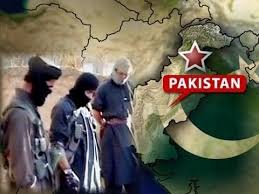
How to shut down the ‘jihad factories’

Brahma Chellaney

BRAHMA CHELLANEY, Special to The Globe and Mail

Brahma Chellaney is a geostrategist and author, most recently of Water, Peace, and War .


The Brussels bombings, as with the Paris terrorist attacks last year, show that jihadi-minded citizens of European Union states can turn into killers by imbibing the insidious ideology of Wahhabism.

This is the mother of fanatical Islamist groups – al-Qaeda, the Taliban, Lashkar-e-Taiba, Boko Haram, al-Shabaab and Islamic State – all of which blend hostility toward non-Sunni Muslims and anti-modern romanticism into nihilistic rage.

The key to battling Islamist terrorism is to stem the spread of the ideology that has fostered “jihad factories.” The export of Wahhabism by Saudi Arabia, Qatar and some other oil sheikdoms is the source of modern Islamist terror. From Africa to Asia and now Europe, Arabian petrodollars have played a key role in fomenting militant Islamic fundamentalism that targets the West, Israel and India as its enemies.

No country has contributed more than Saudi Arabia to the international spread of Wahhabism, which is gradually snuffing out more liberal Islamic traditions in many countries. If Saudi Arabia is to be stopped from continuing to export radical Islamist extremism, the United States and Europe will have to adjust their policies to stop the cloistered Saudi royals from continuing to fund Muslim extremist groups and madrassas in other countries.

With Western support, tyrannical oil monarchies in Riyadh, Doha and elsewhere were able to ride out the Arab Spring, emerging virtually unscathed. Saudi Arabia has faced little international pressure, even on human rights.

How the Saudi kingdom buys up world leaders is apparent from the Malaysian attorney-general’s recent disclosure that $681-million (U.S.) deposited in Prime Minister Najib Razak’s personal bank account was a “personal donation” from the Saudi royals and that $620-million of it was returned. Saudi Arabia has also given between $10-million and $25-million to the Clinton Foundation.

For too long, the rest of the world – in thrall to Saudi money and reliant on Saudi oil – has largely turned a blind eye to the kingdom’s jihadi agenda. That is slowly beginning to change. As German Vice-Chancellor Sigmar Gabriel put it: “We must make it clear to the Saudis that the time of looking the other way is over.” After last December’s mass shooting in San Bernardino, Calif., U.S. President Barack Obama alluded to Wahhabism as a “perverted interpretation of Islam.”

Jihadism and sectarianism are institutionalized in Saudi Arabia, which is named after its founder, commonly known as Ibn Saud. Saud, who ruled for 20 years until his death, brought the central part of the Arabian Peninsula under his control with British assistance in 1932, establishing a desert kingdom hewing to Wahhabism, a messianic radicalism that was considered a fringe form of Islam until oil wealth helped transform the once-barren Saudi Arabia, the world’s largest country without a river.

Since the oil-price boom of the 1970s, Saudi Arabia has spent more than $200-billion on its global jihad project, including funding Wahhabi madrassas, mosques, clerics and books. Wahhabism legitimizes violent jihadwith its call for a war on “infidels.”

Europe’s new terror is a reminder that Wahhabi fanaticism is the root from which Islamist terrorists draw their ideological sustenance. As U.S. Vice-President Joe Biden said in a 2014 speech at Harvard University, Saudi and other “allies’ policies wound up helping to arm and build allies of al-Qaeda and eventually the terrorist [Islamic State].”

Today, with its future more uncertain than ever, the House of Saud is increasingly playing the sectarian card to shore up support among the Sunni majority at home and to rally other Islamist rulers in the region to its side. Having helped to militarily crush the Arab Spring uprising in Bahrain, Saudi Arabia in January executed its own Arab Spring leader, Sheik Nimr al-Nimr, who had led anti-regime Shia protests in 2011.

Before the execution, the kingdom formed an alliance of Sunni states purportedly to fight terrorism. The coalition included all the main sponsors of international terror, such as Qatar and Pakistan. It was like arsonists pretending to be fire wardens. According to a United Nations panel of experts, Saudi Arabia is “violating international humanitarian law” in Yemen, where it is waging an air campaign against Iranian-backed Houthi rebels.

The Saudi royals seem to mistakenly believe that widening the sectarian fault lines in the Islamic world will keep them in power. By drawing legitimacy from jihadism and by being beholden to sectarianism, the royals, however, could be digging their own graves. After all, fuelling jihadism and sectarianism threatens to empower extremists at home and ultimately devour the royalty.

More broadly, the global war on terror cannot be won without closing the wellspring that feeds terrorism: Wahhabi fanaticism. Wahhabism is the ultimate source of the hatred that triggered the Sept. 11, 2001, terrorist attacks in the United States, the 2008 attacks in Mumbai, and the recent Paris and Brussels terrorism.

Shutting that wellspring demands that the West hold Saudia Arabia, the world’s chief ideological sponsor of jihadism, to account for spawning the dangerous extremists who are imperilling regional and international security.

The late Singaporean leader Lee Kuan Yew correctly said in 2003 that winning the war on terror hinges more on controlling the “queen bees” – the “preachers” of the “deviant form of Islam” – than on simply killing the “worker bees” (terrorists).

As long as Wahhabism keeps jihad factories in business, there will be suicide killers. Dismantling the Saudi, Qatari and other Wahhabi religious-industrial complexes exporting jihadism is more imperative than ever.
© The Globe and Mail, 2016.

Obama’s counterproductive Pakistan policy

Brahma Chellaney, Hindustan Times

USPakAmerica, despite a deepening relationship with India, still extends munificent aid to Pakistan — “the ally from hell”, as ex-CIA chief Michael Hayden calls it in his just-released book Playing to the Edge. Pakistan, with one of the world’s lowest tax-to-GDP ratios, has the unique status of being a client state of three powers on which it is more dependent than ever for aid — China, America and the jihad-bankrolling Saudi Arabia. US aid actually bolsters China’s strategy to box in India while encouraging Pakistan to diabolically sponsor terrorism.
Take US President Barack Obama’s latest move to reward Pakistan with 8 more subsidized F-16s and hundreds of millions of dollars in additional aid under the Overseas Contingency Operations fund, dubbed the “slush fund” because it is not subject to the same oversight as the regular Pentagon and state department budgets. Obama’s $860-million aid proposal includes $265 million worth of military hardware under the Foreign Military Financing provision, which, despite its name, permits non-repayable grants. The $700-million deal centred on F-16s is separate.

Two of the objectives cited by the state department in support of additional aid for Pakistan are promoting “improved relations with India” and peace in Afghanistan. How bolstering a renegade Pakistan financially and militarily would encourage it to improve ties with India or Afghanistan has been left unsaid. The US, by persistently rewarding a country that refuses to cut its umbilical ties with terrorists, has only exacerbated India’s security challenges.

Indeed, to continue showering Pakistan with aid (which has totalled a staggering $32.6 billion since 9/11), Obama has bent over backward to shield it from sanctions. Contrast that with his alacritous embrace of sanctions against several other countries in the past seven years.

Obama rebuffed congressional advice last year to suspend some aid to Pakistan and impose travel restrictions on Pakistani officials known to have ties to terrorists. Even when Osama bin Laden was found holed up in a lair next to Pakistan’s top military academy, Obama shied away from imposing sanctions. The issue as to how bin Laden was able to hide in a military town was allowed to fade away for the same reason that Pakistan (or anyone there) was not held to account for running the world’s largest nuclear proliferation ring, led by A.Q. Khan.

Obama’s zeal to shield the double-talking Pakistan has extended to persuading its terror target, India, to hold talks with it. If Prime Minister Narendra Modi’s Pakistan policy lies in tatters today, some of the blame must go to Obama, who beguilingly led him up the garden path with specious assurances on Pakistani behaviour.

Modi took office with a prudent approach toward Pakistan — inviting Prime Minister Nawaz Sharif to his inauguration but sidelining the Pakistan issue so as to focus on foreign-policy priorities more amenable to progress. In September 2014, Modi told the UN that “a serious bilateral dialogue with Pakistan” was only possible “without the shadow of terrorism”. But after Obama’s last India visit, Modi made a U-turn in his Pakistan policy, only to induce new cross-border terror attacks, from Gurdaspur to Udhampur.

Undaunted, Modi paid a surprise visit to Pakistan. Far from heralding a promising new era, the Christmas Day trip quickly invited daring Pakistani terror attacks at Pathankot and Mazar-i-Sharif. Today, Modi’s silence on Pakistan underscores the dilemma haunting him — how to fix a broken Pakistan policy. Why Modi yielded to a lame-duck US president is a pertinent question that remains unanswered.

Obama, despite a weak, divisive legacy even at home, got the world’s largest democracy to reverse course on Pakistan — an “achievement” whose regional fallout has been only negative, including denting Modi’s credibility and undermining Indian deterrence under his leadership. The net effect has been to present Modi since Pathankot as some sort of a paper tiger.

Still, with the Nuclear Security Summit forthcoming in Washington, there is little sign of Modi salvaging his Pakistan policy from US manoeuvrings. Indeed, by deciding to welcome Pakistani investigators in the Pathankot case, India bought the myth that terror groups like the Jaish-e-Mohammad (JeM) are independent of the Pakistani state. Army chief Dalbir Singh wants Pakistan “isolated” but Modi is doing the opposite — providing it diplomatic succour.

Consider this: Even as India presses Islamabad to prosecute JeM leaders for the Pathankot and Mazar-i-Sharif strikes, an emboldened Pakistan has used Lashkar-e-Taiba to carry out the Pampore attack. Jalalabad has followed Mazar-i-Sharif. Pakistan has also unleashed the mastermind of the 2008 Mumbai attacks, Hafiz Saeed, against India. Saeed’s very public life, including leading a recent Islamabad rally, mocks the Obama administration’s $10 million bounty on his head and India’s fond hope that Pakistan would rein in terrorist proxies. Clearly, US’s 2012 bounty was just to placate India and buy its cooperation on Pakistan.

Obama’s disastrous policy has strengthened Pakistan as the world’s leading terrorist sanctuary. The scourge of terrorism emanates more from Pakistan’s Scotch whisky-sipping military generals than from its bead-rubbing mullahs. Yet the White House pampers the generals at the expense of Pakistan’s civilian institutions. Washington highlighted the rot in its Pakistan policy by feting army chief Raheel Sharif in November.  Indeed, Gen. Sharif has been awarded the US Legion of Merit for his contributions to, believe it or not, “peace and security”. Tellingly, Washington’s latest aid and F-16 decisions coincided with its Defence Intelligence Agency chief’s warning that Pakistan’s expanding nuclear arsenal, including low-yield tactical nukes for battlefield use, increases “the risk of an incident or accident”.

By wielding only carrots and no stick, the Obama team has allowed itself to be repeatedly duped by false Pakistani promises, some of which it has religiously fed India. Its counterproductive policy has not only turned Uncle Sam into Uncle Sucker but also made it easy for Pakistan to merrily run with the foxes and hunt with the hounds — at grave cost to the security of America’s friend India.

Brahma Chellaney is a geostrategist and author.

© Hindustan Times, 2016.

Why the U.S. Must Tackle the Saudi Menace of Jihadism

1387190723716.cached

Brahma Chellaney, China-US Focus

At a time when the conflict within Islam has sharpened between Sunnis and Shias and between fundamentalists and reformers, the House of Saud — the world’s No. 1 promoter of radical Islamic extremism — is increasingly playing the sectarian card, even at the risk of deepening the schisms.

If Saudi Arabia is to be stopped from continuing to export jihad, the U.S. will have to make necessary adjustments in its policy. By wielding only carrots and no stick, the U.S. allows the double-talking Saudi royals to run with the foxes and hunt with the hounds — at grave cost to the security of many countries.

Indeed, the present U.S. policy approach gives the House of Saud the strategic space to keep all options open and cozy up to China, already Saudi Arabia’s largest trading partner and biggest importer of oil. China’s relationship with Saudi Arabia extends beyond trade and investment to arms, including the covert transfer of Chinese DF-21 and DF-3 medium-range ballistic missiles. Following the U.S.-Iran nuclear deal, China agreed during President Xi Jinping’s recent visit to Saudi Arabia to build that country’s first nuclear power plant.

Jihadism and sectarianism are institutionalized in Saudi Arabia, the only country in the world named after its founder, commonly known as Ibn Saud. Saud, who ruled for 20 years until his death, brought the central part of the Arabian Peninsula under his control with British assistance in 1932, establishing a desert kingdom hewing to Wahhabism, a messianic radicalism from the 18th century that until recent decades was considered a fringe form of Islam.

Jihadism and sectarianism are institutionalized in Saudi Arabia, the only country in the world named after its founder, commonly known as Ibn Saud. Saud, who ruled for 20 years until his death, brought the central part of the Arabian Peninsula under his control with British assistance in 1932, establishing a desert kingdom hewing to Wahhabism, a messianic radicalism from the 18th century that until recent decades was considered a fringe form of Islam.

Oil wealth helped transform the once-barren state, the world’s largest country without a river.

Since the oil-price boom of the 1970s that dramatically increased its wealth, Saudi Arabia has spent more than $200 billion on its global jihad project, including funding Wahhabi madrassas, mosques and books. Wahhabism legitimizes violent jihad with its call for a war on “infidels.”

Saudi funding has helped spread radical Sunni extremism across Africa and Asia and opened a new threat to European nations with significant Muslim minorities. Indeed, Wahhabism’s export is making the tolerant and heterodox Islamic traditions in many South and Southeast Asian countries extinct.

Yet the rest of the world — in thrall to Saudi money and reliant on Saudi oil — has largely turned a blind eye to the kingdom’s jihadist agenda.

Make no mistake: Saudi Arabia’s Wahhabi fanaticism is the root from which Islamist terrorist groups ranging from the Islamic State to al-Qaeda draw their ideological sustenance. As U.S. Vice President Joseph Biden said in a 2014 Harvard speech, Saudi and other “allies’ policies wound up helping to arm and build allies of al-Qaida and eventually the terrorist Islamic State.”

Saudi Arabia has faced little international pressure even on human rights, despite having one of the world’s most tyrannical regimes.

How the kingdom buys up world leaders is apparent from the Malaysian attorney general’s recent disclosure that the $681 million deposited in Prime Minister Najib Razak’s personal bank account was a “personal donation” from the Saudi royals and that $620 of it was returned. Saudi Arabia has given between $10 million and $25 million to the Clinton Foundation, which last year also received a separate donation from a charitable foundation established by Saudi Prince Alwaleed bin Talal.

Saudi Arabia is today engaged in war crimes in Yemen, where it is waging an air war against Iranian-backed Houthi rebels. A United Nations panel of experts said in October that the Saudi-led coalition had committed “grave violations” of the Geneva Conventions by targeting civilian sites in Yemen. Still, the Saudi military is failing in its war in Yemen; the rebels remain in control of Sanaa, the capital.

With its own future more uncertain than ever, the House of Saudi is increasingly playing the sectarian card in order to shore up support among the Sunni majority at home and to rally other Islamist rulers in the region to its side.

Having militarily crushed the Arab Spring uprising in Sunni-led but Shia-majority Bahrain, Saudi Arabia early this year executed its own Arab Spring leader who had led anti-regime Shia protests in 2011.  By executing Sheikh Nimr al-Nimr — a Shia cleric and scholar who had become the symbol of the Arab Spring protests in its oil-rich, mainly Shia Eastern Province — Saudi Arabia ignored U.S. Secretary of State John Kerry’s warning that the action would stoke major tensions with Iran.

Before the execution, the kingdom formed an alliance of Sunni states purportedly to fight terrorism. The coalition included all the main sponsors of international terror, including Qatar, Pakistan and, of course, Saudi Arabia. It was like arsonists pretending to be fire wardens.

When the coalition quickly became the butt of international ridicule, King Salman of Saudi Arabia resorted on a mass scale to what his country is notorious for as the global leader in beheadings. He ordered the execution on terrorism charges of 47 people on a single day, including Nimr al-Nimr. Most were beheaded in a style associated with the Islamic State.

The royals seem to mistakenly believe that widening the sectarian fault lines across the Islamic world will keep them in power. The crash in oil prices is already compounding the royals’ challenges at home. Discontent is growing quietly, even as King Salman pursues aggressive activism in his foreign policy.

By drawing legitimacy from jihadism and by being beholden to sectarianism, the royals could be digging their own graves. After all, fueling jihadism and sectarianism threatens to empower extremists at home and devour the royalty.

Against this background, it has become imperative for the U.S. to stop looking the other way as Saudi Arabia exports radical Islamic extremism. Unlike the ties between Saudi Arabia and China — two major autocracies — oil can no longer provide the glue for the Saudi-U.S. relationship, which is largely bereft of shared strategic interests or values. Moreover, America’s oil production at home is surging.

The U.S.-led war on terror must target not just the effect but the cause of terrorism, especially the central role Saudi Arabia plays through its religious-industrial complex in spreading jihadism. For example, proselytizing efforts by Saudi Arabia — and, to a lesser extent, by Qatar and some other oil sheikdoms — have helped train thousands of imams or teachers in Wahhabism to deliver radical sermons at petrodollar-funded mosques in many countries.

The war on Islamist terror cannot be won without closing the wellspring that feeds it — Wahhabi fanaticism. Wahhabism is the ultimate source of the hatred that triggered the September 11, 2001, strikes in the U.S., the 2008 Mumbai attacks and the Paris terror in November. Shutting that wellspring demands that America drop Saudi Arabia as an ally and treat it as a core part of the problem.

The world’s chief ideological sponsor of jihadism must be held to account for spawning the kinds of dangerous extremists that are imperiling regional and international security.

Brahma Chellaney is a geostrategist and the author, most recently, of “Water, Peace, and War” (Rowman & Littlefield, 2015).

India’s Pakistan policy unravels

Brahma Chellaney, Rediff

APTOPIX Pakistan Walk With Taliban

Despite Pakistan’s unending aggression against India ever since it was created as the world’s first Islamic republic in the post-colonial era, successive Indian governments have failed to evolve a consistent, long-term policy toward that country. In stark contrast, Pakistan has maintained the same India policy since its establishment — to spotlight Kashmir as the unfinished business of partition and to undermine Indian security by whatever means, fair or foul. 

Prime Minister Narendra Modi came to power talking tough about Pakistan. But in office, he has failed to translate his election-campaign talk into a coherent policy. Indeed, his Pakistan policy has already lost both direction and purpose. Worse still, Modi has failed to learn the lessons from the Pakistan blunders of his predecessors.

Thanks to the boomerang effect generated by his Lahore visit on Christmas Day, it has taken less than three months for Modi’s Pakistan policy to unravel. By paying a surprise visit with little preparation to a state whose hostility toward India is inborn, Modi ingenuously thought he was making history. Yet what the trip yielded is a continuing series of terrorist attacks of Pakistani origin on Indian targets — from Pathankot and Mazar-i-Sharif to Pampore and Jalalabad.

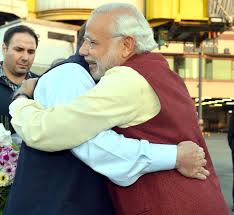
In fact, after Modi’s much-publicized bear hug of his Pakistani counterpart, Nawaz Sharif, in Lahore, it took barely a week for the terror masters controlling Pakistan to thank him for his visit by carrying out terror attacks through surrogate Jaish-e-Mohammad (JeM) on India’s Pathankot air base and on the Indian consulate in Mazar-i-Sharif, Afghanistan. The Pathankot attack was the military equivalent of the 2008 Mumbai strikes on civilian targets by terrorists from Pakistan.

After New Delhi began pressing the Sharif government for action against Azhar Masood and other JeM terrorist leaders for carrying out the New Year’s terror attacks at Pathankot and Mazar-i-Sharif, Pakistan used another terrorist proxy — the Lashkar-e-Taiba (LeT) group — to carry out an attack in Pampore, India. Afghan intelligence and former Afghan President Hamid Karzai have also linked the Jalalabad attack on the Indian consulate to Pakistan.

Yet the Modi government is preparing to welcome a Joint Investigation Team (JIT) from Pakistan that was set up to supposedly probe the Pathankot attack. It is like accepting arsonists as firefighters. Indeed, the JIT openly includes one officer of the rogue Inter-Services Intelligence (ISI) agency.

In truth, the JIT was set up not to bring the Pathankot masterminds to justice but to investigate the operational deficiencies of the Pathankot strike and to ensure that the next surrogate attack leaves no telltale signs of the involvement of Pakistanis. This is why Pakistan is seeking even more evidence from India. It was naïve of India to think that by supplying Pakistan communication intercepts and other evidence linking the Pathankot attackers with their handlers in that country, the terror masters there would go after their terror proxies.

Still, the Modi government continues to play into Pakistan’s hands. The latest example is the terror alert it has sounded across western and northern India after receiving a “tip-off” from Sharif’s National Security Adviser that 10 LeT and JeM terrorists had infiltrated into Gujarat state from across the international border.

The LeT and JeM are nothing but front organizations of the ISI. No cross-border infiltration of LeT or JeM terrorists happens without help from the Pakistani military. The alleged tipoff from Naseer Khan Janjua — an army general appointed as Sharif’s NSA at the military’s behest — helps to advertise Pakistan’s “cooperation” on terror while putting India knowingly on a wild-goose chase.

It is significant that the alleged Pakistani tipoff was leaked to the media not by the Pakistani government but by New Delhi. By leaking it in order to highlight Pakistan’s “cooperation” on terrorism, the Modi government might be seeking to create political space at home for a Modi-Sharif meeting in Washington this month-end on the sidelines of the Nuclear Security Summit. Creating political space for further top-level engagement with Pakistan has become necessary because Modi’s famous hug of Sharif in Lahore on Christmas Day backfired. That hug, like Atal Bihari Vajpayee’s hug of Sharif at the Wagah border in 1999, brought not peace but greater terrorism.

Make no mistake: Pakistan has little interest in honouring international norms or its own solemn commitments. When Sharif visited the White House in October 2015, the joint statement said the visiting Pakistani leader apprised U.S. President Barack Obama about Pakistan’s resolve to take “effective action against United Nations-designated terrorist individuals and entities, including Lashkar-e-Taiba and its affiliates, as per its international commitments and obligations under U.N. Security Council resolutions and the Financial Action Task Force (FATF).”

Obama did not question Sharif about the public activities of Hafiz Saeed, Azhar and other terrorist proxies or about Pakistan’s violation of the Security Council and FATF requirements in the case relating to Zakiur Rehman Lakhvi, a LeT leader whom Pakistan arrested and charged with involvement in the 2008 Mumbai attacks. Pakistan failed to investigate the source of funds used to bail out Lakhvi in April 2015.

Obama, however, has exerted Pakistan-related pressure on India. After Obama’s New Delhi visit in early 2015, Modi’s Pakistan policy transformed conspicuously. He resumed bilateral dialogue with Pakistan, only to invite new terror attacks in Punjab and Kashmir states. Still, he paid an unannounced visit to Pakistan.

The attack on the Pathankot base by Pakistani gunmen constituted an act of war. Yet Modi’s only public comment up until now on that attack has been to blame it on “enemies of humanity.” Even when he visited the base after the attack, Modi said nothing. If Obama had said nothing when he visited San Bernardino, California — where a married couple of Pakistani origin killed 14 people in December — he would have been roasted by his critics. Modi has stayed mum on Pakistan even in Parliament despite Rahul Gandhi’s taunt that he has “singlehandedly” bailed out the sponsor of terror by messing up Pakistan policy.

In fact, despite the Pathankot attack, the Modi government allowed the Pakistani high commissioner in New Delhi to meet a hardcore Kashmiri separatist, Ali Shah Geelani. Will Pakistan allow an Indian diplomat to meet a Pakistani separatist?

Today, Modi’s Pakistan policy looks little different than his predecessor’s, indicating that the more things change, the more they stay the same in India.

While welcoming Pakistani investigators in the Pathankot case, India has brushed aside the reality that Pakistan has failed to bring anyone to justice for the 2008 Mumbai terror attacks or even to commence trial in that case despite sending an investigation team to India in 2012 and 2013 that examined witnesses and collected other evidence. While Manmohan Singh rebuffed Pakistan’s request to allow its investigators visiting India to interrogate Ajmal Kasab, the lone surviving terrorist involved in the Mumbai attacks, Modi is considering granting the Pakistani team in the Pathankot case access to the Indian forward air base.

Assisting Pakistani investigators in the Pathankot case amounts to treating cross-border terrorism as a policing issue, as Islamabad wants, when, in reality, it is a strategic weapon that Pakistan diabolically wields to bleed India through a “war of a thousand cuts.” Indeed, helping Pakistan to investigate a terror attack in India is the equivalent of allowing a drug cartel to be in charge of counternarcotics.

When Pakistan openly permits United Nations-designated terrorist groups and terrorist leaders like Hafiz Saeed to operate from its soil and publicly threaten India with more terror attacks, it is nothing but foolhardiness to build counterterrorism cooperation with the Pakistani government. The risk is that, by expecting terror sponsors to go after their terror surrogates, Pakistan’s use of terrorism as a state instrument could be unwittingly legitimated by its victim, India.

More fundamentally, it is a false argument that India has only one choice — to continue useless talks with Pakistan or wage a full-fledged war. An extension of that argument is that India has no option but to keep battling Pakistan’s unconventional war on Indian territory. Such a self-injurious approach means treating cross-border terrorism as an internal law-and-order problem and bringing yourself under siege.

Wisdom actually lies in fighting an unconventional war with an unconventional war that is taken to the enemy’s own land so as to drive home the message that the foe’s aggression is not cost-free. According to Army chief General Dalbir Singh, 17 terrorist-training camps in Pakistan close to the border with India are still operating. If India remains directionless, further acts of cross-border terrorism will follow.

Unfortunately, India’s Pakistan policy has become unhinged. It remains unmoored in reality. If India wants history to stop repeating itself, it must tether its Pakistan policy to reality and develop a credible counterterrorism strategy.

Brahma Chellaney, a geostrategist and author of nine books, is professor of strategic studies at the New Delhi-based Centre for Policy Research.

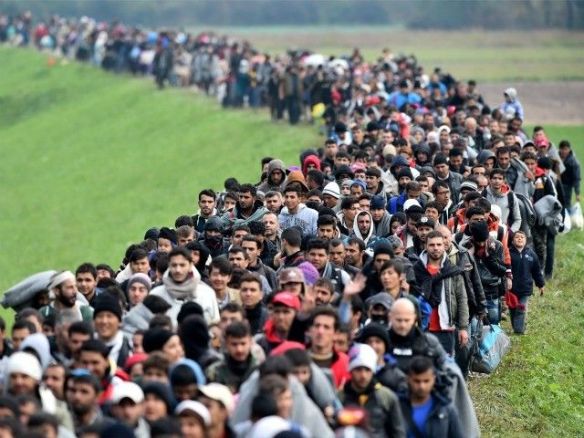
Refugees, jihad and the specter of terrorism

Migrants-Crowds-Cross-Into-Slovenia-Getty-640x480

Europe’s refugee crisis threatens to exact a security price as high as what nations next to the Afghanistan-Pakistan jihadist belt are paying

Brahma Chellaney, The National

Europe today is focused on the refugee crisis, with NATO instituting patrols in the Agean Sea to intercept migrants trying to reach Greece. But in some years, Europe’s focus could shift to internal-security threats. After all, the refugee flows from the Middle East, where grassroots radicalization and arms training are widespread in the war-torn states, hold important security implications for the destination countries.

Indeed, U.S. National Intelligence Director James Clapper has warned that the Islamic State terrorist group is infiltrating refugees escaping from Iraq and Syria so as to operate in the West, while Rob Wainwright, the head of the European Union’s law enforcement agency, Europol, has warned that Europe is facing its biggest terror threat in more than a decade. According to Clapper, Islamic State terrorists are “taking advantage of the torrent of migrants to insert operatives into that flow,” adding that they are “pretty skilled at phony passports so they can travel ostensibly as legitimate travelers.”

Germany, the prime destination of the current migrant flows, welcomed around one million refugees last year. But unlike the roughly three million migrants from Turkey that came to Germany from the 1960s onward to meet the demand for labor in the booming German economy, those arriving today are from countries battered by growing jihadist extremism and violence. Turkey itself is being Pakistanized, in keeping with the maxim: “If you light a fire in your neighborhood, it will engulf you.”

The refugee exodus is just one manifestation of a deeper problem — how interventionist policies of outside powers in recent years have unraveled fragile states, such as Libya, Syria, Iraq, Yemen and Afghanistan. Following World Wars I and II, European colonial powers and the United States sat around tables and redrew political frontiers in the Middle East, creating artificial new nations with no roots in history or preexisting identity.

The net effect of the latest round of interventionist policies is the emergence at Europe’s southern doorstep of a jihadist citadel that extends from the Maghreb to the Sahel, with Libya at its hub, and the rise of another jihadist stronghold in the Syria-Iraq belt. Dealing with the threats from these two jihadist citadels will challenge Europe in the coming years even more than the refugee crisis, in the same way that countries next to the Afghanistan-Pakistan jihadist belt are paying a high price in terms of their security.

In this context, the Paris terror attacks’ larger lesson should not be forgotten: Unless caution is exercised in training and arming Islamic militants in another region, the chickens could come home to roost. Jihad cannot be confined within the borders of a targeted nation, however distant, as the examples of Afghanistan, Syria and Libya indicate. The fact that French and Belgian nationals were behind the Paris attacks has shown how difficult it is to geographically contain the spread of the jihad virus.

Indeed, internal-security challenges in Europe have been compounded by Western foreign-policy missteps and misplaced priorities. Take the situation in battle-worn Syria and Iraq: Defeating the Islamic State is a pressing issue on which an international consensus — and coalition — can be built. But the Western-led camp first needs to get its act together, including by prioritizing the Islamic State’s eradication over regime change in Damascus and by stopping its members from working at cross-purposes. Saudi Arabia, Turkey and Qatar continue to aid al-Qaeda-linked militant groups in Syria and Iraq.

Even without considering the specter of Islamic State fighters hiding among innocent civilians to reach the West, the flow of refugees poses a security challenge for the countries they enter, because they are arriving from violence-scarred lands. In the refugee-producing conflict zones, the call to jihad has indoctrinated many to see violence as a sanctified tool of religion. Large numbers of men have not only received arms training but also used weapons in combat.

More than half of the slightly over one million refugees who flocked to Europe in 2015 were men of fighting age. This year, due to pressure for families to reunify, children and women make up 54 percent of the new arrivals up to now, according to United Nations data.

The risks from jihadist indoctrination cannot be discounted, as was highlighted by what happened in San Bernardino, California, where a married couple of Pakistani origin massacred 14 people in December.

Moreover, former combatants in a civil war — just like ground troops returning from a regular war — are prone to suffer from Post-Traumatic Stress Disorder (PTSD). According to medical research, about 30 percent of the men and women who have spent time in war zones experience PTSD, which is associated with an increased risk of violence.

In this light, addressing the refugee crisis will be no easy task for Europe. Building higher fences to secure Fortress Europe cannot be the answer by itself. Refugees will do anything to escape from war and chaos, including risking their lives, as they are doing by taking unseaworthy boats.

More fundamentally, how can any European nation ensure that the refugees it takes do not include radical jihadists who extol mass murder as a tool of jihad?  Integrating the refugees already admitted will be a major challenge, as Germany has experienced with its Turkish immigrants, who remain poorly integrated in German society.

Let us be clear: No country can accept an unrestrained influx of refugees, because it would get swamped economically, socially and culturally and face major political fallout domestically. The issue is how to control the migrant flow in a humane way, in accordance with international law, while admitting a limited number of genuine, properly vetted refugees.

However, there is no European or international policy on refugees. The two instruments of international law — the 1951 Refugee Convention and the 1967 Refugee Protocol — are scarcely adequate for dealing with the current refugee flows.

For Europe, the Mediterranean holds the key for its security. Yet little attention has been paid in European security policies to shoring up security along the continent’s southern flank. Instead, identity politics in the form of nationalism is back in Europe — a development set to accentuate internal-security challenges relating to refugees.

Long-time Japan Times contributor Brahma Chellaney is a geostrategist and the author, most recently, of “Water, Peace, and War” (Rowman & Littlefield, 2015). 

© The National, 2016.

When drama undercut diplomacy

BY , The Japan Times

downloadIt has taken just weeks for Indian Prime Minister Narendra Modi’s Pakistan policy to break down, thanks to his peace overture generating a boomerang effect. Modi thought he was making history by paying a surprise visit to Pakistan on Christmas Day. Few in India dared to ask whether visiting an adversary state unannounced and unprepared could really bring peace.
Today, Modi’s silence on Pakistan underscores the dilemma haunting his government — how to fix a broken Pakistan policy. New Delhi seems to be at a loss as to what to do next.

After Modi’s much-publicized hug of his Pakistani counterpart, Nawaz Sharif, in the Pakistani city of Lahore, it took the terror masters who rule the roost in Pakistan barely a week to thank him for his visit by carrying out terror attacks through their surrogate Jaish-e-Mohammad (JeM) group on an Indian air base at Pathankot and on the Indian consulate in Mazar-i-Sharif, Afghanistan. The Pathankot attack, which killed seven Indian troops, was the military equivalent of the 2008 Mumbai strikes on civilian targets by terrorists from Pakistan.

Now, as India presses the Sharif government for action against Azhar Masood and other JeM terrorist leaders for carrying out the New Year’s terror attacks at Pathankot and Mazar-i-Sharif, Pakistan has let loose Hafiz Saeed, the mastermind of the 2008 cataclysmic Mumbai terrorist strikes. The United States in 2012 put a $10 million bounty on the head of Saeed, a United Nations-designated terrorist who founded the Lashkar-e-Taiba group.

In an example of how the Pakistani military, including the rogue Inter-Services Intelligence (ISI) agency, uses terrorist surrogates, Saeed has justified the Pathankot attack and warned India of more terror strikes.

Saeed’s very public life mocks not just the Obama administration’s bounty but also the Modi government’s fond hope that Sharif — Pakistan’s impotent prime minister who has ceded key powers to the military — would rein in his country’s terrorist proxies. Indeed, Saeed’s latest actions, including staging rallies across Pakistan, including one that he himself led in the Pakistani capital, have helped to highlight the Modi government’s strategic naivete. They also show that the U.S. bounty on his head is just to placate New Delhi and buy its cooperation on Pakistan.

Pakistan has never honored international norms or its own solemn commitments. For example, when Sharif visited the White House in October, the joint statement said the visiting Pakistani leader apprised Obama about Pakistan’s resolve to take “effective action against U.N.-designated terrorist individuals and entities, including Lashkar-e-Taiba and its affiliates, as per its international commitments and obligations under U.N. Security Council resolutions and the Financial Action Task Force (FATF).”

U.S. President Barack Obama did not question Sharif about the public activities of Saeed, Azhar and other terrorist proxies or about Pakistan’s violation of the Security Council and FATF requirements in the case relating to Zakiur Rehman Lakhvi, a Lashkar-e-Taiba leader whom Pakistan arrested and charged with involvement in the Mumbai attacks. Pakistan failed to investigate the source of funds used to bail out Lakhvi in April 2015.

Modi took office in May 2014 with a prudent approach toward Pakistan — inviting Sharif to his inauguration but sidelining the Pakistan issue so as to keep the focus on foreign policy priorities where progress could be made. In September 2014, while addressing the U.N., Modi made clear that “a serious bilateral dialogue with Pakistan” was only possible “without the shadow of terrorism,” urging that country to “create an appropriate environment” for talks.

But later Modi succumbed to pressure from the lame-duck U.S. president, who has not only shielded Pakistan from international sanctions but has also boosted American aid significantly to that renegade state. The U.S. heavily funds the Pakistani military even as sections of the Pakistani Army and intelligence actually work against it, including aiding the killing of American troops next door in Afghanistan through their surrogates, the Taliban and the Haqqani network.

After Obama’s New Delhi visit in early 2015, Modi’s Pakistan policy transformed conspicuously. He resumed bilateral dialogue unconditionally, only to invite new terror attacks in India’s Punjab and Kashmir states. Still, he paid a surprise visit to Pakistan.

The attack on the Pathankot air base by Pakistani gunmen constituted an act of war. Yet Modi’s only public comment thus far on that attack has been to blame it on “enemies of humanity.” Even when he visited the air base after the attack, he said nothing. If Obama had said nothing when he visited San Bernardino, California — where a married couple of Pakistani origin killed 14 people in December — he would have been roasted by his critics.

It was naive of Modi to think that by supplying Pakistan communication intercepts and other evidence linking the Pathankot attackers with their handlers in that country, the terror masters there would go after their terror proxies. Pakistan is currently carrying out investigations into the Pathankot strike, not to prosecute those behind it but to identify the attack’s operational deficiencies so that the next attack by its terrorist proxies is better planned. That is why it is seeking even more evidence from India.

According to a flawed argument, the only choice for India is between continuing useless talks with Pakistan and waging a full-fledged war. Worse still, some Indians believe that India has no choice but to keep battling Pakistan’s unconventional war on Indian territory. This means treating cross-border terrorism as an internal law-and-order problem and bringing yourself under siege.

Wisdom lies in fighting an unconventional war with an unconventional war that is taken to the enemy’s own land so as to drive home the message that the foe’s aggression is not cost-free.

Today, however, Modi’s Pakistan policy lies in tatters. Modi’s Pakistan visit, in fact, illustrated the difference between diplomacy and drama. By putting the emphasis on drama, Modi undermined Indian diplomacy.

The Indian public is sick and tired of the national leadership’s acts of commission and omission that have made the country repeatedly relive history. According to Indian Army chief Gen. Dalbir Singh, 17 terrorist-training camps in Pakistan close to the border with India are still operating. So, India must brace itself to further cross-border terrorism. The enemy will strike at a time and place of its choosing.

With Modi’s credibility at stake, it is difficult to believe that he will continue with a business-as-usual approach toward Pakistan. But if his government wants history to stop repeating itself, it must develop a credible counterterrorism strategy.

Long-time Japan Times contributor Brahma Chellaney, a geostrategist and author of nine books, is a professor of strategic studies at the New Delhi-based Center for Policy Research and a Richard von Weizsacker Fellow of the Robert Bosch Academy in Berlin.

© The Japan Times, 2016.

It is déjà vu all over again

Brahma Chellaney, The Hindustan Times, February 2, 2016

hug

India’s hug-then-repent penchant

Spanish-born US philosopher George Santayana famously said, “Those who cannot remember the past are condemned to repeat it”. India’s propensity to act in haste and repent at leisure has run deep in its personality-driven foreign policy since independence. Even on an issue that poses an existential threat to it — Pakistan-sponsored terrorism — India finds that history is repeating itself.

Despite the unending aggression flowing from Pakistan’s foundational loathing of India, New Delhi has failed to evolve a coherent, long-term policy toward that country. If anything, India’s Pakistan policy has zigzagged under virtually every prime minister. In stark contrast, Pakistan has maintained the same policy since its creation — to spotlight Kashmir and undermine Indian security in every way possible.

Since Narendra Modi’s unannounced Christmas Day visit to Pakistan, New Delhi is relearning one fundamental reality — no amount of Indian hugging of Pakistan’s civilian leadership can blunt the Pakistani military’s strategy to bleed India through a “war of a thousand cuts”.

Consistency in policy or goals has never been India’s forte, given its hug-then-repent penchant. Indeed, successive Indian leaders have assumed that other nations will do what India is adept at pulling off — change beliefs and policies overnight. India has also distinguished itself by reposing trust in foes and then crying “betrayal” when they deceive it, as happened in 1962 and 1999 (Kargil). Another reason India relives history is that virtually every prime minister has sought to reinvent the foreign-policy wheel rather than learn the essentials of statecraft or heed past national mistakes.

Other than the tool of dialogue, India has little direct leverage over Pakistan. The dialogue instrument thus must be employed judiciously to help improve Pakistan’s conduct. For Islamabad, by contrast, talks with India are essential not to help normalize political and economic relations but to aid its hardball tactics to spotlight the revisionist issue that still serves as the glue to prevent a dysfunctional Pakistan from unravelling — Kashmir. Talks also provide Pakistan the equivalence with India it craves.

But with each Indian prime minister ingenuously thinking that he can make peace with Pakistan, successive governments have played into Islamabad’s hands by blundering.

Jawaharlal Nehru internationalized the Kashmir issue by taking it to the United Nations and implicitly accepting Pakistan’s takeover of more than one-third of Jammu and Kashmir (J&K). Lal Bahadur Shastri at Tashkent magnanimously returned Haji Pir, now a key staging ground in Pakistan’s war by terror. Indira Gandhi’s folly at Simla in securing nothing concrete from a vanquished Pakistan helped lay the foundation for Pakistan’s strategy to inflict death by a thousand cuts.

The sphinx-like Atal Bihari Vajpayee took Nawaz Sharif by surprise by embracing him at Wagah and then signing the Lahore Declaration that singled out J&K by name as a bilateral issue awaiting resolution. Not surprisingly, Kashmir and terror dominated Vajpayee’s tenure.

Vajpayee never learned from his serial blunders, which is why he paid another Pakistan visit just months before voters swept him out of office. It was under him that an ignominious episode unparalleled in modern world history occurred, with the Indian foreign minister flying to known terrorist territory to hand-deliver three leading terrorists from Indian jails. Just the way the terrorists-for-Rubaiya Sayed swap a decade earlier helped fuel the Pakistan-scripted Kashmir insurrection, the Kandahar cave-in before hijackers led to a qualitative escalation in cross-border terrorism, including on national emblems of power.

And just as Vajpayee’s 1999 bus journey to Lahore produced the Kargil War and the hijacking of Indian Airlines Flight IC-814, Modi’s Christmas hug of Sharif in Lahore yielded a quick payback from Pakistan as New Year’s gift: twin terror attacks, outsourced to Jaish-e-Mohammad (JeM) — one on the Pathankot airbase (in what was the military equivalent of the 2008 Mumbai strikes on civilian targets) and the other on the Indian consulate in Mazar-i-Sharif, Afghanistan.

Indeed, JeM — an Inter-Services Intelligence (ISI) front organization — typifies why India relives history. India jailed Masood Azhar for taking Western hostages in J&K in 1994 and then forgot about him until the IC-814 hijackers demanded his release. Once Azhar and the other two terrorists were traded for the hostages, the ISI brought him to Pakistan, arranging a hero’s welcome and installing him as the JeM head.

It did not take Azhar’s sponsors long to thank Vajpayee for his release by sending JeM gunmen to kill India’s elected leadership. The 2001 Parliament attack led India to mobilize its armed forces for war and demand that Pakistan shut down its state-run terrorist complex or face punishment. However, after keeping its forces in war-ready mode for months, India backed down meekly without securing anything from Islamabad.

Now, JEM’s sponsors have thanked Modi for his Pakistan visit by carrying out the Pathankot and Mazar-i-Sharif strikes. What has been Modi’s response? To supply Islamabad, even before the airbase siege ended, evidence of the Pathankot attackers’ Pakistani footprints and to tamely put up with Sharif’s charade of “preventively detaining” JEM leaders. If anything, the ISI will use the evidence to ensure that its next attack leaves no similar telltale signs.

By providing evidence and by offering to welcome Pakistani investigators, India has played into Pakistan’s hands by buying the myth that terror groups like JEM are independent of the Pakistani state. Any Indian policymaker who thinks this approach will help contain Pakistani terrorism has probably been spending more time than he should have reading about Alice in Wonderland. Pakistan’s terror masters will focus any Pakistani investigation on identifying their latest attack’s operational deficiencies.

After each terror attack, it is déjà vu all over again, with Pakistan promising to assist Indian investigations, only to take India round and round the mulberry bush. It is past time for India to recognize that escapism as policy is an invitation to never-ending trouble. Moreover, maintaining a peace dialogue with a renegade neighbour only lends legitimacy to its roguish ways because that nation will use such talks as a cover to undermine India’s security.

Brahma Chellaney is a geostrategist and author.

© The Hindustan Times, 2016.

Pathankot terror attack: 26/11 again, in different mode

opedweb-kerD--621x414@LiveMint

Brahma Chellaney, Mint

Make no mistake: The four-day terrorist siege of the Pathankot air base was the equivalent of the 26 November 2008 Mumbai terror strikes. In both cases, the Pakistani terrorists were professionally trained, heavily armed, and dispatched by their masters for a specific suicide mission. The main difference is that in Mumbai, the terrorist proxies struck civilian sites, while, in the latest case, their assigned target was a large military facility.

After the widespread anger and indignation triggered by the recent Paris and San Bernardino attacks, a Mumbai-style strike on civilian targets was not a credible option for the Pakistani military, especially because such an attack would risk Indian retaliation. So, it chose a military target in India, orchestrating the attack through a terror group it founded in 2000 by installing as its head one of the terrorists the Atal Bihari Vajpayee government unwisely released to end the hijacking of Indian Airlines Flight 814.

That a pivotal Indian air base against Pakistan came under an extended siege represented a bigger hit for the terror sponsors than the earlier coordinated attacks on soft targets in Mumbai. And this hit occurred without the international spotlight and outrage that the Mumbai strikes drew.

It was not an accident that the Pathankot attack coincided with a 25-hour gun and bomb siege of the Indian consulate in Mazar-i-Sharif, Afghanistan. The twin attacks, outsourced to Jaish-e-Muhammad, were designed as a New Year’s gift to India.

How did India come out from the crisis? Put simply, not looking good.

Leadership is the key to any country effectively combating the scourge of terrorism. India, however, has faced a protracted crisis of leadership for more than a generation since 1989. In this period, Pakistan has gone from inciting a Jammu and Kashmir insurrection, which ethnically cleansed the Kashmir Valley of its 300,000 Pandit residents, to scripting terror attacks across India.

Narendra Modi’s election win reflected the desire of Indians for a dynamic leader to end political drift. Yet, since Modi’s victory, cross-border terrorists have repeatedly tested India’s resolve — from Herat to Pathankot via Gurdaspur and Udhampur. And each time India flunked the test, as it has done since the Vajpayee era.

The Pathankot strike, above all, constituted an act of war, presenting Modi with his first serious national security challenge. Modi’s leadership, however, was found wanting in nearly every aspect — from leading from the front to reassuring the Indian public.

For almost the first two days of the siege, Modi chose to be away in Karnataka. And the only statement he made during the entire siege seemed to signify euphemism as escapism. Just as he called the Paris strikes an “attack on humanity,” he said the Pathankot terror siege was by “enemies of humanity” (he could not bring himself to even say “enemies of India”). Not a single meeting of the Cabinet Committee on Security was held during the crisis.

Operationally, the action to kill the terrorists in the air base stands out as a textbook example of how not to conduct such a mission. Despite New Delhi receiving advance intelligence of the attack, the terrorists not only gained entry to the base but the operation to flush them out was also poorly conceived and executed, without a unified operational command.

War needs good public relations. But the Modi government doesn’t appear to even have a peacetime communication strategy. During the Pathankot siege, officials gave confusing and conflicting accounts.

The crisis, if anything, highlighted the government’s strategic naïveté. While the gunbattles were still raging inside the base, the government supplied Islamabad communication intercepts and other evidence linking the attackers with their handlers in Pakistan. This was done in the fond hope that the terror masters will go after their terror proxies, despite India’s bitter experience in the Mumbai case where it presented dossiers of evidence to Pakistan.

More laughable was New Delhi’s disclosure on the siege’s final day that, in a telephone call from Nawaz Sharif, Modi asked Pakistan’s toothless prime minister for “firm and immediate action” on the “specific and actionable information” provided by India and that Sharif promised “prompt and decisive action against the terrorists.”

Decisive power in Pakistan rests with the military generals, with the army and Inter-Services Intelligence immune to civilian oversight. India is in no position to change Pakistan’s power dynamics. Yet the critical issues that India wants to discuss with Pakistan — terrorism, infiltration, border peace and nuclear security — are matters over which the Pakistani military has the final say.

So, how can Modi hope to buy peace with a powerless Pakistani government that has ceded its authority in foreign policy and national security to the military?

If Pakistan wants a détente with status-quoist India, it can easily get it. Its military, however, cannot afford peace with India. It employs terrorist surrogates as a highly cost-effective force multiplier to undermine India’s rise and regional clout, which explains why Indian diplomatic missions in Afghanistan have repeatedly been attacked and why Bangladesh and Nepal have become new gateways to India for Pakistan’s proxies.

Yet India, as if expecting the Pakistani security establishment to turn over a new leaf, supplied almost real-time evidence in the Pathankot case.

Modi’s Christmas gift to Pakistan in the form of a surprise Lahore stopover yielded, in return, a New Year’s terror surprise for India. Rather than heed the mistakes of his immediate two predecessors — who learned the hard way how peace overtures to Pakistan, by signalling weakness, invited cross-border aggression — Modi chose to commit the same folly, reposing his faith in Sharif who backstabbed Vajpayee.

Of the 35 countries visited by Modi in his first 19 months in office, no nation has provided a payback to India as quickly as Pakistan. In fact, in modern history, no head of government before Modi visited an enemy country without any preparatory work and with nothing to show in results. Grabbing international spotlight through a brief surprise visit just to have tea does not befit the leader of an aspiring power.

Sadly, Modi is showing that showmanship is to his foreign policy what statecraft is to the diplomacy of great powers.

The recent terror attack in San Bernardino, although not an act of international terrorism, has shaken up American politics. By contrast, multiple cross-border terror attacks have failed to galvanize India into devising a credible counterterrorism strategy. With the ISI using narcotics traffickers to send opiates and terrorists into India’s Punjab, the Pathankot killers — like the Gurdaspur attackers — came dressed in Indian army uniforms through a drug-trafficking route. The influx of narcotics is destroying Punjab’s public health.

When the next major terror strike occurs, India will go through the same cycle again, including a silly debate on whether to talk to Pakistan or not. As Army chief General Dalbir Singh emphasized, “India needs to change its security policy towards Pakistan. Every time Pakistan bleeds us … we just talk about it for a few days and after that it is business as usual.”

Indeed, New Delhi, forgetting Mumbai, wants Pakistan to act in the Pathankot case. And when the next major cross-border attack occurs, Pathankot will be forgotten. With New Delhi focused on the last terror strike, Pakistan has still to deliver even in the 1993 case internationally known as the Bombay bombings — the bloodiest terrorist attack in India.

While the Pakistani military has made the country’s government impotent by appropriating key powers, the Indian government, through inaction, is rendering its powerful military impotent to defeat terrorism. This was apparent even in the Pathankot siege, with precious time lost due to the government’s bungled decision to airlift National Security Guard commandos to the scene rather than immediately press readily available army commandos into action.

India’s biggest threat is from asymmetric warfare, waged across porous borders or gaps in Indian frontier defences. This asymmetric warfare takes different forms — from Pakistan’s proxy war by terror and China’s furtive, salami-style encroachments into the Himalayan borderlands, to Nepal serving as a conduit for India’s foes to funnel militants, arms, explosives and fake currency to India.

Yet India, far from focusing on neutralizing the asymmetric warfare, has sought to prepare for a full-fledged conventional war through improvident arms imports. Modi alone has sunk billions of dollars in such mega-deals. The more weapon systems India imports, the more insecure it feels.

There are several things India can do against the terror sponsors short of war. But first, it must have political will and clear strategic objectives. Today, unfortunately, there is no long-term strategic vision or even a Pakistan policy. Under Modi, India has already made at least six U-turns on Pakistan. For example, its October stance that “talks and terror cannot go together” lasted barely 10 weeks. Almost every season in New Delhi brings a new Pakistan policy.

An unconventional war must be countered with an unconventional war. Nuclear weapons have no deterrence value in an unconventional war. Nor can they guarantee Pakistan’s survival. The Soviet Union unravelled despite having the world’s most formidable nuclear arsenal in mega-tonnage. Why should India allow itself to be continually gored when it is seven times bigger demographically than Pakistan, almost 12 times larger in GDP terms, and militarily more powerful?

Let us be clear: No nation gets peace merely by seeking peace. To secure peace, India must be able to impose deterrent costs when peace is violated in order to tell the other side that the benefits of peaceful cooperation outweigh hostilities.

India, unfortunately, has shied away from imposing costs, although the right to retaliate is a right enshrined in international law. Defending one’s interests against a terrorism onslaught, in fact, is a constitutional and moral obligation for any self-respecting country. The right of self-defence is embedded as an “inherent right” in the United Nations Charter. India did not impose costs on the terror masters in Pakistan even for the bloody Mumbai attacks. Will it allow them to go scot-free again?

Brahma Chellaney is professor of strategic studies at the New Delhi-based Centre for Policy Research.

© Mint, 2016.

Saudi Arabia’s Phony War on Terror

Like a drug cartel claiming to have launched a counternarcotics drive, the Saudi-led “anti-terror” coalition includes all the world’s terror sponsors

A column internationally syndicated by Project Syndicate

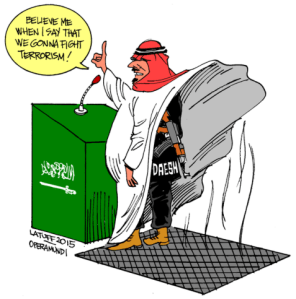
downloadBERLIN – Containing the scourge of Islamist terror will be impossible without containing the ideology that drives it: Wahhabism, a messianic, jihad-extolling form of Sunni fundamentalism whose international expansion has been bankrolled by oil-rich sheikhdoms, especially Saudi Arabia. That is why the newly announced Saudi-led anti-terror coalition, the Islamic Military Alliance to Fight Terrorism, should be viewed with profound skepticism.
Wahhabism promotes, among other things, the subjugation of women and the death of “infidels.” It is – to quote US President Barack Obama’s description of what motivated a married couple of Pakistani origin to carry out the recent mass shooting in San Bernardino, California – a “perverted interpretation of Islam,” and the ideological mother of jihadist terrorism. Its offspring include Al Qaeda, the Taliban, Boko Haram, al-Shabaab, and the Islamic State, all of which blend hostility toward non-Sunnis and anti-modern romanticism into nihilistic rage.

Saudi Arabia has been bankrolling Islamist terrorism since the oil-price boom of the 1970s dramatically boosted the country’s wealth. According to a 2013 European Parliament report, some of the $10 billion invested by Saudi Arabia for “its Wahhabi agenda” in South and Southeast Asia was “diverted” to terrorist groups, including Lashkar-e-Taiba, which carried out the 2008 Mumbai terror attacks.

Western leaders have recognized the Saudi role for many years. In a 2009 diplomatic cable, then-US Secretary of State Hillary Clinton identified Saudi Arabia as “the most significant source of funding to Sunni terrorist groups worldwide.” Thanks largely to the West’s interest in Saudi oil, however, the Kingdom has faced no international sanctions.

cwwaaiaxiaa7fidNow, with the growth of terrorist movements like the Islamic State, priorities are changing. As German Vice Chancellor Sigmar Gabriel said in a recent interview, “We must make it clear to the Saudis that the time of looking the other way is over.”
This shift has spurred the Kingdom to announce a “crackdown” on individuals and groups that fund terror. But, according to a recent US State Department report, some Saudi-based charities and individual donors continue to fund Sunni militants.

From this perspective, Saudi Arabia’s surprise announcement of a 34-country anti-terror alliance, with a joint operations center based in Riyadh, is a logical step, aimed at blunting growing Western criticism, while boosting Sunni influence in the Middle East. But, of course, the alliance is a sham – as a closer look at its membership makes clear.

Tellingly, the alliance includes all of the world’s main sponsors of extremist and terrorist groups, from Qatar to Pakistan. It is as if a drug cartel claimed to be spearheading a counternarcotics campaign. Listed as members of the alliance are also all of the jihadist citadels other than Afghanistan, including war-torn Libya and Yemen, both of which are not currently governed by a single authority.

Moreover, despite being touted as an “Islamic” alliance, with members coming from “all over the Islamic world,” the group includes predominantly Christian Uganda and Gabon, but not Oman (a fellow Gulf sheikdom), Algeria (Africa’s largest country), and Indonesia (the world’s most populous Muslim country).

The failure to include Indonesia, which has almost twice as many Muslims as the entire Middle East, is striking not only because of its size: Whereas most countries in the alliance are ruled by despots or autocrats, Indonesia is a robust democracy. Autocratic rule in Islamic countries tends to strengthen jihadist forces. But when democracy takes root, as in tolerant and secular Indonesia, the clash between moderates and extremists can be better managed.

Saudi Arabia’s dysfunctional approach is reflected in the fact that some alliance members – including Pakistan, Malaysia, Lebanon, and the Palestinian Authority – immediately declared that they had never actually joined. The Kingdom seemed to think that it could make that decision on behalf of the major recipients of its aid.

Add to that the unsurprising exclusion of Shia-governed Iran and Iraq, along with Alawite-ruled Syria, and it is clear that Saudi Arabia has merely crafted another predominantly Sunni grouping to advance its sectarian and strategic objectives. This aligns with the more hardline policy approach that has taken root since King Salman ascended the throne in January 2015.

At home, Salman’s reign so far has meant a marked increase in the number of sentences of death by decapitation, often carried out in public – a method emulated by the Islamic State. Abroad, it has meant a clear preference for violent solutions in Bahrain, Iraq, Syria, and Yemen.

A smaller Saudi-led Arab coalition has been bombing Yemen since March, with the goal of pushing back the Shia Houthi rebels who captured Sana’a, the capital, after driving the Saudi-backed government from power. Saudi warplanes have bombed homes, markets, hospitals, and refugee camps in Yemen, leading critics to accuse the Kingdom of deliberately terrorizing civilians to turn public opinion against the Houthis.

Saudi Arabia’s solutions have often controverted the objectives of its American allies. For example, the Kingdom and its Arab partners have quietly slipped out of the US-led air war in Syria, leaving the campaign largely in American hands.

But beyond Saudi Arabia’s strategic manipulations lies the fundamental problem with which we started: the Kingdom’s official ideology forms the heart of the terrorist creed. A devoted foe of Islamist terrorism does not promote violent jihadism. Nor does it arrest and charge with “terrorism” domestic critics of its medieval interpretation of Islam. Saudi Arabia does both.

This speaks to the main shortcoming of today’s militarized approach to fighting terrorism. Unless the expansion of dangerous ideologies like Wahhabism is stopped, the global war on terror, now almost a generation old, will never be won. No matter how many bombs the US and its allies drop, the Saudi-financed madrassas will continue to indoctrinate tomorrow’s jihadists.

© Project Syndicate, 2015.

How not to combat terror

By The Japan Times

imagesA terror attack by a married, Pakistan-origin couple in California has shaken up American politics and the presidential contest, setting in motion stricter restrictions on grant of some U.S. visas and prompting candidate Donald Trump to propose a temporary ban on Muslims entering the United States. But the attack and the reactions also raise a larger question: Has the U.S. evolved a clear and credible counterterrorism strategy after spearheading the global war on terror since 2001?

President Barack Obama’s first Oval Office address in five years, while aimed at calming a jittery American public after the California attack, has only widened the gap between U.S. rhetoric and the challenge of effectively combating the international spread of Islamist extremism and terrorism.

Obama admitted that, in recent years, “the terrorist threat has evolved into a new phase” and sought to reassure Americans that “we will overcome it.” Yet, as if to underscore his incoherent and ineffectual approach, his Dec. 6 speech was conspicuous by its omission of any reference on how to combat increasing Muslim radicalization, which is spawning violent jihadists.

The radicalization is linked to the role of some Gulf sheikhdoms in spreading Wahhabism, the source of modern Islamic fundamentalism. By exporting this fringe form of Islam, these petrodollar-laden states have gradually snuffed out more liberal Muslim traditions in regions extending from Asia and Africa to the Americas.

Saudi Arabia and Qatar, the two officially Wahhabi states, and the United Arab Emirates still continue to fund madrassas (Islamic schools), mercenaries and militants in other places.

In his speech, Obama said the U.S. is “at war” with the Islamic State (IS) and vowed to “destroy” that terrorist organization. How does he plan to do that? He said by sticking, in essence, to his present, 1½-old strategy that has allowed IS to thrive.

Despite the U.S. military carrying out more than 8,000 airstrikes thus far, it has failed, in the absence of ground forces, to score major gains.

To America’s embarrassment, its Arab allies have gradually sneaked out from the air war, leaving the campaign as a largely American effort — now supplemented by French and Britain bombing raids and Obama’s dispatch of special operations troops in support of CIA-trained Syrian rebels.

Some 10 million people are currently living under IS rule in Syria and Iraq in an area the size of Britain. By strategically capturing oil fields and towns along the Euphrates and Tigris rivers — the region’s lifelines — IS has sought to control oil and water resources. Yet Obama’s speech did little more than repackage a foundering strategy with tougher rhetoric.

Indeed, Obama’s missteps contributed to IS’ dramatic rise. Even as IS rapidly gained sway from 2013, Obama’s strategy remained focused on overthrowing Syria’s secular ruler, Bashar Assad. Obama’s glib dismissal of IS in early 2014 as a local “JV team” trying to imitate al-Qaida but without the capacity to directly threaten America allowed the group to become a monster. In fact, just a day before the recent Paris attacks, Obama claimed IS had been “contained.”

How can IS be contained when the Obama administration has failed to make Turkey seal its frontier to deny IS oil-export revenue and new foreign fighters and weapons? Russia has accused Turkey’s pro-Islamist president, Recep Tayyip Erdogan, and his family of profiting from the illicit oil trade with IS. Obama himself has acknowledged that a 98-km open stretch of the Turkey-Syria border permits IS to flourish.

Consider another element: Repeated U.S. failures to organize and arm a rebel force in Syria have been compounded by the defection of the vast majority of CIA-trained rebels to IS.

Obama said the couple involved in the California mass shooting “had gone down the dark path of radicalization, embracing a perverted interpretation of Islam that calls for war against America and the West.” But his speech shied away from identifying the main international imperative today — to get the sheikhdoms to stop financing the overseas spread of their fundamentalist, jihad-extolling strain of Islam.

It is the U.S.-backed Wahhabist monarchs that have funded the international spread of the “perverted interpretation of Islam.” The House of Saud in particular has used its custodianship of Islam’s holy places as a license to export the Wahhabi ideology.

The killer-couple in California — Syed Rizwan Farook, the U.S.-born son of Pakistani immigrants, and Pakistani national Tashfeen Malik — had been radicalized by Wahhabi ideology before IS gained prominence. Malik attended a Saudi-funded madrassa in Multan, the main city in Pakistan’s southern Punjab region. Multan is a historical center of Sufism, a liberal, mystical form of Islam that has come under open assault from the rapid spread of petrodollar-funded Wahhabism.

On the day Obama made his speech, it was the second-ranking official of one power that isn’t bombing Syria — Germany — that identified the key issue in the global war on terror. In a newspaper interview, German Vice Chancellor Sigmar Gabriel said the era of the West ignoring the Saudi sponsorship of radical Islam must come to an end.

“From Saudi Arabia, Wahhabi mosques are financed throughout the world,” Gabriel said, adding: “We must make it clear to the Saudis that the time of looking the other way is over.”

The reality is that the proliferating, petrodollar-financed Wahhabi mosques and madrassas in several countries have become incubators for terrorist and other militant groups. IS is just the symptom of a disease spawned by Wahhabism.

Indeed, Saudi Arabia shares a lot in common with IS, its ideological offspring. Wahhabism serves as the “complete ideology” of IS and “contributes in other countries to radicalization of moderate Muslims,” as the head of Germany’s Social Democratic Party parliamentary group, Thomas Oppermann, recently put it.

Like IS, Saudi Arabia is on a beheading spree. This year, under the new king Salman, Saudi executioners have been unusually busy as the number of public decapitations, according to Amnesty International, has reached the highest in two decades, with at least 151 executions having taken place as of November. While Saudi Arabia leads the world in barbaric execution practices, IS flaunts the lopped-off heads of its victims as trophies.

Against this background, how can the U.S. positively influence the ideological war now raging in Islam between moderates and extremists without bringing the jihad-exporting states to heel?

It must stop being in thrall to Gulf money and reconsider its long-standing alliance with tyrannical Arab monarchs wedded to jihadism. By backing the 2011 Saudi military intervention in Bahrain, which crushed the pro-democracy movement of the majority Shiite community, and by now aiding the Saudi-led bombing campaign in conflict-torn Yemen, the U.S. has allowed short-term calculations to trump long-term interests.

More fundamentally, without the U.S. embracing a holistic, long-term strategy, the global war on terror — already in its 15th year — has little chance of containing the growing threat from violent jihadism.

Geostrategist Brahma Chellaney is the author of nine books, including “Water, Peace, and War: Confronting the Global Water Crisis.”

© The Japan Times, 2015.