Brahma Chellaney, Open magazine
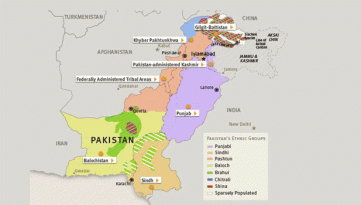 Does the military operation conducted by Indian para commandos across the Line of Control (LoC) in Jammu and Kashmir (J&K) in the wee hours of September 29 change the fundamentals of India’s strategic dynamic with Pakistan? The answer is no. A single military operation, however successful at the tactical level, cannot by itself impose sufficient deterrent costs on the enemy or demonstrate India’s strategic resolve, which has been found wanting for years. New Delhi has a long way to go before it can hope to reform the Pakistani military’s conduct or deter its rogue Inter-Services Intelligence (ISI) agency from staging more cross-border terrorist strikes, whether in India or on Indian targets in Afghanistan.
The Indian Army had conducted cross-LoC operations previously, often in reprisal to military provocations, such as when intruding Pakistani forces chopped three Indian soldiers in 2011, taking away the severed heads of two as a “trophies”. What broke new ground on September 29 was the scale of the cross-LoC military action (hitting multiple targets located several kilometres deep) and its public disclosure by the Indian Army and government.
Yet, despite the frenzied hype, the set of surgical strikes on cross-LoC terrorist launchpads was a limited military operation, with limited military objectives, and yielding limited military benefits. The operation cannot by itself dissuade the Pakistani military from continuing to wage an undeclared war against India through terrorist proxies. Indeed, the Indian military must now exercise utmost vigilance to ward off likely Pakistani retaliation, including through terrorist surrogates.
To be sure, the political, psychological, diplomatic and strategic benefits from the Indian surgical strikes are greater than the tactical military gains. The strikes represented a break from India’s “do nothing” approach, which came to define its policy for long. By symbolizing an end to Indian indecision and inaction, the action has helped lift the sense of despair that had gripped the country over the lack of any tangible response to Pakistan-backed terrorist attacks. Politically, by signalling an end to the era of Indian inaction, the operation has put the Pakistani military on notice that India would henceforth respond in punitive, hard-to-anticipate ways.
Still, the benefits accruing from the action can easily be frittered away if India does not stay the course to squeeze Pakistan in a calibrated but ever-increasing manner to help bring it to heel. The risk of India squandering the gains is real. After all, the biggest shortcoming in India’s Pakistan policy has been the country’s inability to maintain a consistent Pakistan policy. India finds it very difficult to stay its course for more than a few months, before the itch to win a Nobel peace prize or political pressure from the United States prompts whoever is the prime minister to reverse course and resume “peace” talks with Pakistan.
The focus of successive Indian governments on short-term considerations at the expense of India’s enduring interests has remained the country’s Achilles heel. This has exacerbated India’s Pakistan challenge, despite that country’s descent into a jihad-torn, dysfunctional state.
In fact, India’s own passivity and indecision played no small part in fuelling Pakistan’s proxy war by terror. There was little discussion in India as to why it should allow itself to be continually gored by a country that is much smaller than it economically, demographically and militarily. For long, India’s response to the Pakistani strategy to inflict death by a thousand cuts was survival by a thousand bandages.
The illogic of India’s long-suffering, “do nothing” approach to Pakistan’s unconventional war was exposed when it finally mustered the political courage and ordered a daring cross-LoC operation. The surprise action — staged at a time when the Pakistani military, after the Uri terrorist attack, was in a state of full combat readiness — demonstrated how military power can be smartly applied below the threshold of nuclear use and without creating an undue risk of conventional escalation. In doing so, India has created strategic space for staging repeated and more-intense military forays across the LoC to inflict pain and punishment on the terror masters and their surrogates.
In fact, the imperative for further cross-LoC punitive actions in a calibrated manner — not immediately but whenever tempting opportunities open up — has been underscored by the Pakistani military remaining in denial mode over India’s September 29 operation. With Pakistan’s military generals covering up the Indian strikes, Pakistanis seem sceptical of the Indian claims. Deterrence, to be effective, must be targeted not just at the military generals but also at the elected civilian leadership and the public. No military can sustainably operate without public support at home.
In this light, to deter Pakistan’s war by terror, India must carefully but convincingly re-demonstrate its punitive conventional capability in propitious settings. Deterrence, after all, is like beauty: It lies in the eyes of the beholder. It is not what India claims but what its adversary believes that constitutes deterrence (or the lack of it). A one-off cross-LoC operation, in any event, cannot keep the Pakistani military off balance and forestall further terrorist attacks.
For that reason, only time will tell whether the September 29 action constitutes a break with India’s passive, reactive and forbearing mindset or represents just a one-off operation to salvage the Indian leadership’s credibility, which had been dented by inaction on a series of Pakistan-backed terrorist strikes that have occurred over many years, fuelling public wrath. On Prime Minister Narendra Modi’s watch alone since his election in May 2014, Pakistan-scripted terrorist attacks have extended from Indian consulates at Herat, Mazar-i-Sharif and Jalalabad in Afghanistan to targets at Mohra, Gurdaspur, Udhampur, Pathankot, Pampore and Uri in India.
The attacks on Modi’s watch have suggested that the terror masters in Pakistan, learning from the international outrage over their November 2008 strikes on civilians in Mumbai, are concentrating their spectacular hits on symbols of the Indian state, including security forces.
For Modi, the pre-Uri inaction damaged his strongman image that helped bring him to power in the first place. Indeed, the apparent naiveté the government displayed in responding to the Pathankot air-base attack early this year, which killed seven Indian military men, invited public ridicule: It shared intelligence with Pakistan about the Pakistani origins of the attackers while the four-day siege of the base was still on, and then invited a Pakistani team, including at least one ISI officer, to visit the base — all in the fond hope of winning Pakistan’s anti-terrorism cooperation, despite India’s bitter experience in the Mumbai case where it presented dossiers of evidence to Pakistan.
Against this backdrop, the deadly Uri attack, by claiming the lives of 19 Indian soldiers, became Modi’s defining moment, putting his credibility at stake and eliminating inaction as a continuing option. The government had to act to redeem its image. In keeping with Modi’s fondness for springing surprises, the cross-LoC operation caught everyone by surprise, including analysts in India who had been claiming that the country had no military option even against transboundary terrorist bases.
If the latest developments bring consistency to Modi’s often erratic and meandering Pakistan policy, they would represent a potential game changer. But if India some months down the road were to return to “peace” talks with Pakistan, this would be clear proof not only that the Modi government largely designed the September 29 operation to politically save face, but also that the country is still unable to stay its course by kicking its principal weakness.
Let’s be clear: No short-term Indian strategy can help tame a scofflaw Pakistan. That country’s roguish actions spring from its foundational loathing of India. That loathing is rooted in its dual belief that it was created as an embodiment of the legacy of the medieval conquerors and plunderers who unfurled the standard of Islam over India and that Pakistanis, as the progeny of the conquerors and plunderers, are innately braver than the Indian “infidels.” Barely 10 weeks after its birth as the world’s first Islamic republic of the post-colonial era, Pakistan launched its first war against India by sending raiders into J&K while denying any such action. Today, the Pakistani military, steeped in jihadism, controls the deep state, rearing terrorists for cross-border missions and turning the country into the Mecca of terrorism.
India’s fight to tame Pakistan thus will be long and hard. India’s Pakistan dilemma is compounded by the lack of credible military options to inflict unbearable costs on the adversary in peacetime or, in the event of a full-fledged war, to impose peace on India’s terms by decisively defeating the Pakistani military on the battlefield. India thus must exercise its conventional reprisal options in peacetime cautiously and close to the LoC or risk the outbreak of a full-blown war. This may explain why India called its September 29 action an anti-terrorist operation “not aimed at the Pakistani military”, although the military, as the sponsor and protector of terrorist groups, is the root of all terrorism emanating from Pakistan.
Still, bearing in mind that Pakistan’s activities to undermine India are largely carried out across the LoC, a proactive India can make life difficult for the Pakistani military along the LoC, without its special forces having to penetrate too deeply. India, moreover, controls the escalation ladder. The burden is on Pakistan to take any step up on the escalation ladder, knowing that India will respond to such a move by inflicting severe pain and punishment on it.
More fundamentally, without imposing significant and direct costs on the Pakistani military and, by extension, on the Pakistani state, India cannot hope to deter Pakistan’s war by terror. This means India must initiate a comprehensive campaign that uses all employable instruments to squeeze Pakistan hard. Indeed, to organize sustained and mounting pressure on Pakistan, India will have to rely more on non-military tools of leverage than on cross-border operations by its special forces. And if India wants the rest of the world to act against Pakistan, it must first act itself against that country.
Thus far, India has taken no direct action to penalize the Pakistani state, other than informally suspend the Permanent Indus Commission and cause the collapse of the SAARC summit by withdrawing from it — an action that pre-empted Bangladeshi and Afghan moves to pull the plug on the summit. India’s diplomatic relations with Pakistan have not even been downgraded; the Most Favoured Nation status granted to Pakistan on a non-reciprocal basis for two decades has not been withdrawn; and New Delhi has made no move to designate Pakistan as a state sponsor of terrorism or to declare bounties on the heads of terrorist leaders operating openly from Pakistan.
How can India expect the rest of the world to isolate Pakistan while it maintains full diplomatic relations with that country and shies away from imposing sanctions on it? In fact, with Pakistan’s principal benefactors, China and America, continuing to prop it up, it will not be easy for India to internationally isolate Pakistan.
By repeatedly vetoing United Nations action against terrorist Masood Azhar since 2014, China is culpable in the killing of Indian soldiers at Uri and Pathankot. China has shown the extent to which it is willing to go to shield Pakistan’s patronage of terrorism in order to undermine Indian security. To make matters worse, Modi, by letting China double its trade surplus with India on his watch, has weakened his bargaining position with Chinese President Xi Jinping.
The U.S., for its part, enforces sanctions against a host of countries, from Russia and North Korea to Sudan and Syria, yet shields from sanctions the world’s top state sponsors of terrorism — Pakistan and Saudi Arabia. The White House recently went to the extent of shutting down an online petition calling for designating Pakistan as a state sponsor of terrorism, after the petition had garnered 625,723 signatures. America is indirectly subsidizing a renegade Pakistan with the soaring profits from its booming arms sales to India.
Leverage holds the key to effective diplomacy. Yet India has shied away from leveraging its weapon purchases or its recent early ratification of the Paris climate change agreement (weighted in favour of the world’s top two polluters, the U.S. and China) to bring about change in the American stance of opposing any sanctions on Pakistan. If Hillary Clinton is elected president in November, India can be sure that the U.S. will continue to shield its terrorist protégé, Pakistan.
In these circumstances, the onus is on the victim, India, to act against and discipline terror-exporting Pakistan on its own. This means India must stay its course, rebuffing U.S. pressure. As the American academic C. Christine Fair has said in a recent essay in the journal National Interest, the U.S., by exerting diplomatic pressure on India after each terrorist carnage to exercise restraint, “rewards Pakistan in numerous ways,” including “from the consequences of its illegal behaviour” and by implying that “there is a legitimate dispute and that both sides are equally culpable for the enduring nature of this dispute”.
India needs to pursue a doctrine of graduated escalation, applying multipronged pressure on the adversary’s vulnerable points to inflict pain and punishment through economic, diplomatic, riparian and political instruments and its special forces. Consistent with this doctrine, India should start imposing costs on Pakistan in a calibrated and gradually escalating manner.
If Pakistan can wage an undeclared war by terror for over three decades, India, with its greater economic, military and diplomatic resources, is better positioned to spearhead a more-potent undeclared war by other means. India’s objective should be to assist a quasi-failed Pakistan in becoming a failed state that no longer has the capacity to threaten regional and international security. Realizing this objective calls for an unrelenting silent war, employing multiple tools of leverage and coercion to squeeze Pakistan on all fronts, even if it takes years to defang it.
However, if, in a year’s time or so, New Delhi returns to “peace” talks with Pakistan, it will be crystal clear that India’s biggest enemy is India.
Brahma Chellaney is professor of strategic studies at the Centre for Policy Research in New Delhi and Richard von Weizsäcker Fellow of the Robert Bosch Academy in Berlin.
© Open, 2016.

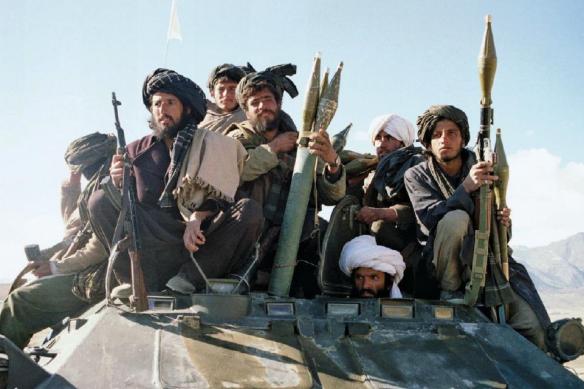

 When China joined hands with the United States earlier this year at the United Nations Security Council to approve the toughest new international sanctions in two decades against North Korea, it implicitly highlighted that Beijing now is left with just one real ally in Asia — Pakistan. Indeed, China has forged with Pakistan one of the closest and most-enduring relationships in international diplomacy.
 BRAHMA CHELLANEY
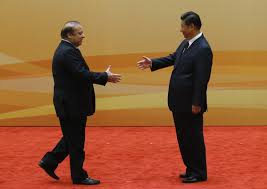 The implications for India of the growing strategic nexus between China and Pakistan are stark because the two are hostile, non-status-quo powers bent upon seizing additional Indian territory and undermining Indian security in different ways. Indeed, the nexus extends to shielding Pakistani terrorism at the United Nations. This makes China complicit in Pakistan’s proxy war by terror against India.
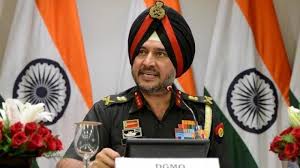 India has finally broken out of years of paralytic indecision and inaction on Pakistan’s proxy war by staging a swift, surgical military strike across the Line of Control — a line it did not cross even during the 1999 Kargil War. Although a limited but unprecedented action, in which Indian paratroopers destroyed multiple terrorist launchpads, it will help to dispel the sense of despair that had gripped India over its prolonged failure to respond to serial Pakistan-backed terrorist attacks.
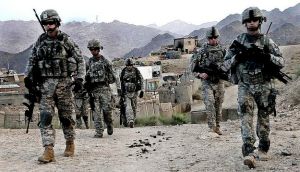 Despite the worsening Afghanistan quagmire, this month’s 15th anniversary of the longest war in American history attracted little attention. The raging battles cast a shadow over Afghanistan’s future and highlight the failure of U.S. President Barack Obama’s strategy to gradually wind down the conflict. The war now draws little international attention, except when a major militant attack occurs.
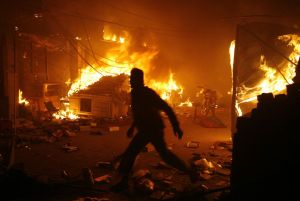 After the bloody cross-border terrorist attack on an army camp in Uri, near the Line of Control with Pakistan, it will be difficult for Prime Minister Narendra Modi’s government to return to business as usual. Uri is just the latest in a string of important Pakistan-orchestrated strikes on Indian targets since Modi’s 2014 election victory: The other attacks occurred at Herat, Mazar-i-Sharif and Jalalabad in Afghanistan and at Mohra, Gurdaspur, Udhampur, Pathankot and Pampore in India.
 Stagecraft and Statecraft
You must be logged in to post a comment.