How Pakistan’s army won over Trump — and staged a constitutional coup

Featured

By Brahma Chellaney, The Hill

Asim Munir (Photo AP)

Since its creation in 1947, Pakistan has rarely escaped the grip of its powerful army. Even when not ruling outright, generals have wielded authority from the shadows, making and breaking governments, shaping foreign and security policy, and ensuring that no civilian leader ever becomes truly independent.

Now, for the first time, the military has reasserted direct control in a novel way. Instead of staging a coup d’état, it has engineered something more durable and more insidious: a constitutional coup.

Army chief Asim Munir — extolled by President Trump as “my favorite field marshal,” “a great, great guy” and “an inspiring personality” — has effectively become Pakistan’s ruler behind a civilian façade.

This has been made possible by Pakistan’s 27th constitutional amendment, which formally enshrines the military’s supremacy over all state institutions. By codifying the army’s preeminence, the recent amendment legitimizes its status as the ultimate arbiter of foreign policy, national security and even economic strategy. Civilian leaders have been reduced to little more than figureheads, their authority hollowed out by constitutional design.

In effect, Munir has achieved what Pakistan’s past military dictators never quite managed: absolute power with legal cover.

He now exercises power without responsibility, enjoying the insulation of a civilian front government while maintaining control over all the levers of state power. Meanwhile, the country’s most popular politician — Imran Khan, who was removed as prime minister in 2022 after falling out with the generals — languishes in prison, even though his supporters won the most parliamentary seats in last year’s elections.

The U.S. has watched all this with striking silence. While Trump has chanted “I love Pakistan,” Pakistan’s already frail democracy is being strangled. Rather than push back against an action widely condemned by international human rights and legal bodies, Washington has effectively acquiesced.

The International Commission of Jurists has called the amendment a “full-frontal assault on the rule of law,” while UN High Commissioner for Human Rights Volker Türk warned that it gravely undermines judicial independence and raises serious concerns about the military’s accountability. Yet Trump is openly courting Pakistan’s generals.

This marks a remarkable reversal. During his first term, Trump cut off security assistance to Pakistan for failing to sever ties with terrorist groups. He charged that the country gave the U.S. “nothing but lies and deceit” in return for billions in aid, citing how Pakistan secretly sheltered Osama bin Laden for nearly a decade until U.S. Navy SEALs killed him in 2011.

What explains Trump’s pivot from punitive isolation to warm embrace?

Pakistan invested heavily this year in a targeted Washington lobbying campaign, hiring two of Trump’s closest confidants — George Sorial of the Trump Organization and former Oval Office director Keith Schiller. Pakistan also employed effusive flattery, claims of rare-earth reserves and a lucrative cryptocurrency partnership with the Trump family-controlled firm World Liberty Financial.

In June, Trump hosted Munir for a private White House luncheon — the first time a U.S. president had welcomed a Pakistani army chief who was not the country’s official leader. The symbolism was unmistakable: Washington was prepared to work directly with Pakistan’s real power center.

Emboldened, Munir moved to secure his dominance. Using a pliable government that he helped install, he maneuvered himself into the rank of field marshal — the first such promotion in almost six decades. Then came the constitutional amendment that elevated him to Pakistan’s first-ever “chief of defense forces,” giving him command over the nuclear arsenal, army, air force and navy. The amendment also hands him lifelong immunity from prosecution and an additional five years in office.

Perhaps most extraordinarily, it specifies that any general elevated to field marshal is a “national hero” who “shall retain his rank, privileges, and remain in uniform for life.” This is constitutionalized militarism — the formalization of a praetorian state.

Pakistan, a nation of 250 million, has often been compared to a one-party system akin to its longtime patron, China. But the analogy is imperfect. China’s People’s Liberation Army is an arm of the ruling Communist Party; Pakistan’s army is itself the ruling institution. It controls the state, not the other way around.

With the amendment, Pakistan has taken a decisive step: The military no longer needs to manipulate politics from the shadows. It can now dictate the direction of the government, economy and society openly, with constitutional legitimacy.

Former Prime Minister Nawaz Sharif warned in 2020 that the army was evolving from a “state within a state” into a “state above the state.” That prophecy has now come true. And as Sharif observed, this dominance is the “root cause” of Pakistan’s dysfunction — sustaining a violence-prone state that nurtures terrorist groups while suppressing democratic forces.

What has changed is not Pakistan’s military but Washington’s willingness to look away. By offering tacit approval, the U.S. risks being complicit in cementing a constitutional dictatorship in an unstable, nuclear-armed nation. The cost of that complicity will not be borne by Pakistan alone.

Brahma Chellaney is the author of nine books, including the award-winning “Water: Asia’s New Battleground.”

Trump’s Dangerous Liaison With Pakistan

Featured

With a combination of flattery, symbolic gestures, and promises of personal enrichment, Pakistan seems to have cracked the code for dealing with US President Donald Trump. Meanwhile, the United States has turned its back on India – and on a strategic partnership that is crucial for countering China.

Brahma ChellaneyProject Syndicate

Donald Trump’s first social-media post of 2018, during his initial presidential term, highlighted his mounting frustration with Pakistan. Over the preceding 15 years, he lamented, the United States had “foolishly” handed the country more than $33 billion in aid, and gotten “nothing but lies and deceit” in return. He subsequently suspended security assistance to Pakistan over its support for terrorists, including its concealment of Osama bin Laden for almost a decade after the September 11, 2001, terrorist attacks.

Today, Pakistan continues to provide safe haven, as well as military and intelligence aid, to terrorist groups. It also remains a close ally of China – which, despite reaching a trade truce with the Trump administration earlier this month, remains America’s leading rival. Yet, far from admonishing Pakistan, the US is now eagerly pursuing closer ties with it.

Trump administration officials have justified this reversal by casting Pakistan as a valuable partner in efforts to contain Iran and rein in terrorist groups that could threaten US interests in the region. But Pakistan has proved time and again that it is not a reliable security partner, and there is no reason to think this has changed. The real explanation for Trump’s embrace of Pakistan probably lies in the convergence of his personal financial interests and his transactional approach to foreign policy.

Consider the controversial investment deal Pakistan signed in April with World Liberty Financial, a cryptocurrency firm majority-owned by the Trump family. The firm’s CEO, Zach Witkoff – son of Steve Witkoff, Trump’s special envoy to the Middle East – leads a company in which both the Trumps and the Witkoff family are  the principal beneficiaries. The deal has alarmed ethics watchdogs and former US officials, who warn that Trump’s business entanglements are bleeding into US foreign policy (Trump insists that conflict-of-interest rules do not apply to him). It has also reinforced a regional perception that personal enrichment is Trump’s top foreign-policy priority, further undermining US credibility.

The romance continued in July, when the US and Pakistan announced that they had reached a trade agreement. While the details have not been fully disclosed, Pakistan has celebrated the reduction in US tariffs and the prospect of increased US investment. Pakistani officials declared that the deal “marks the beginning of a new era of economic collaboration especially in energy, mines and minerals, IT, cryptocurrency, and other sectors.”

Since then, Pakistan has sought to build an image as a potential supplier of critical minerals that could help the US reduce its dependence on China’s near-monopoly over rare earths. In September, its military-linked Frontier Works Organization signed a $500 million agreement with the private firm US Strategic Metals (USSM) to develop critical-mineral deposits in Pakistan.

For Pakistan, this was not so much a business deal as a diplomatic coup. When Prime Minister Shehbaz Sharif and Pakistan’s powerful military leader, Field Marshal Asim Munir, subsequently met with Trump in the Oval Office, they presented him with a polished wooden box containing mineral samples. Soon after, Pakistan dispatched a token shipment of enriched rare earths and other critical minerals to the US – a largely symbolic gesture meant to seal the new alignment.

But it is far from clear that Pakistan will be able to deliver meaningful quantities of rare earths to the US. The country’s oft-repeated assertion that it possesses $6-8 trillion in mineral wealth is based on unverified estimates, and most of the claimed reserves lie in Balochistan and Khyber Pakhtunkhwa provinces, where active insurgencies make large-scale extraction highly risky. As one analyst quipped, “Pakistan has long promised gold and delivered gravel.”

Trump is particularly susceptible to such grand promises, especially when they are accompanied by personal flattery. It is no accident that Pakistan’s leaders have lavished Trump with over-the-top praise, even nominating him for the Nobel Peace Prize he so covets. For a president whose diplomacy often hinges on personal rapport, such gestures can have an outsize impact. It seems that Pakistan has cracked the Trump code. Emboldened, Pakistan’s leaders have pushed through a constitutional amendment that elevates the army chief – whom Trump extols as his “favorite field marshal” – to the position of de facto ruler, reducing the elected government to little more than a civilian façade.

For India, the Trump administration’s embrace of Pakistan feels like betrayal. The country has spent over two decades cultivating a strategic partnership with the US, grounded in shared democratic values and a mutual desire to counter China. Now, the US is actively working against India’s diplomatic and security interests.

The problem extends beyond Trump’s deal-making with Pakistan. Last May, after a three-day military clash between India and Pakistan ended in a ceasefire, Trump publicly took credit for stopping the fighting. India flatly denied the claim, with Prime Minister Narendra Modi stating that he had never even spoken to Trump during the conflict. But Trump stuck to his story, crediting his own trade threats, rather than India’s targeted airstrikes, for the truce.

This undermined Modi’s standing at home and reinforced the view in India that the US cannot be trusted. Modi’s refusal to endorse Trump’s bid for a Nobel Peace Prize deepened the rift. Soon, the spat spiraled into a trade war, with Trump imposing a 25% tariff – later raised to 50% – on imports from India, supposedly over India’s own trade barriers and continued purchases of Russian oil.

In India’s view, the tariffs amounted to political retribution – an extension of the diplomatic feud over Pakistan. After all, the European Union, Japan, and Turkey have not faced secondary US sanctions over their large Russian energy purchases, and pro-Trump Hungary, which gets some 90% of its energy from Russia, received an explicit sanctions exemption from his administration.

For India, these are more than diplomatic setbacks. They threaten to unravel a hard-won strategic partnership, which successive US administrations have recognized as critical to Indo-Pacific security. By letting Pakistan win him over with flattery, symbolic gestures, and the promise of personal enrichment, Trump is putting the entire region at risk, much like America’s Cold War leaders did with their cynical policies toward South Asia.

Brahma Chellaney, Professor of Strategic Studies at the New Delhi-based Center for Policy Research and Fellow at the Robert Bosch Academy in Berlin, is the author of nine books, including Water: Asia’s New Battleground (Georgetown University Press, 2011), for which he won the 2012 Asia Society Bernard Schwartz Book Award.

© Project Syndicate, 2025.

India’s Kabul return may recast global Taliban policy

Featured

New Delhi’s embassy reopening reflects a realist approach to regional relations

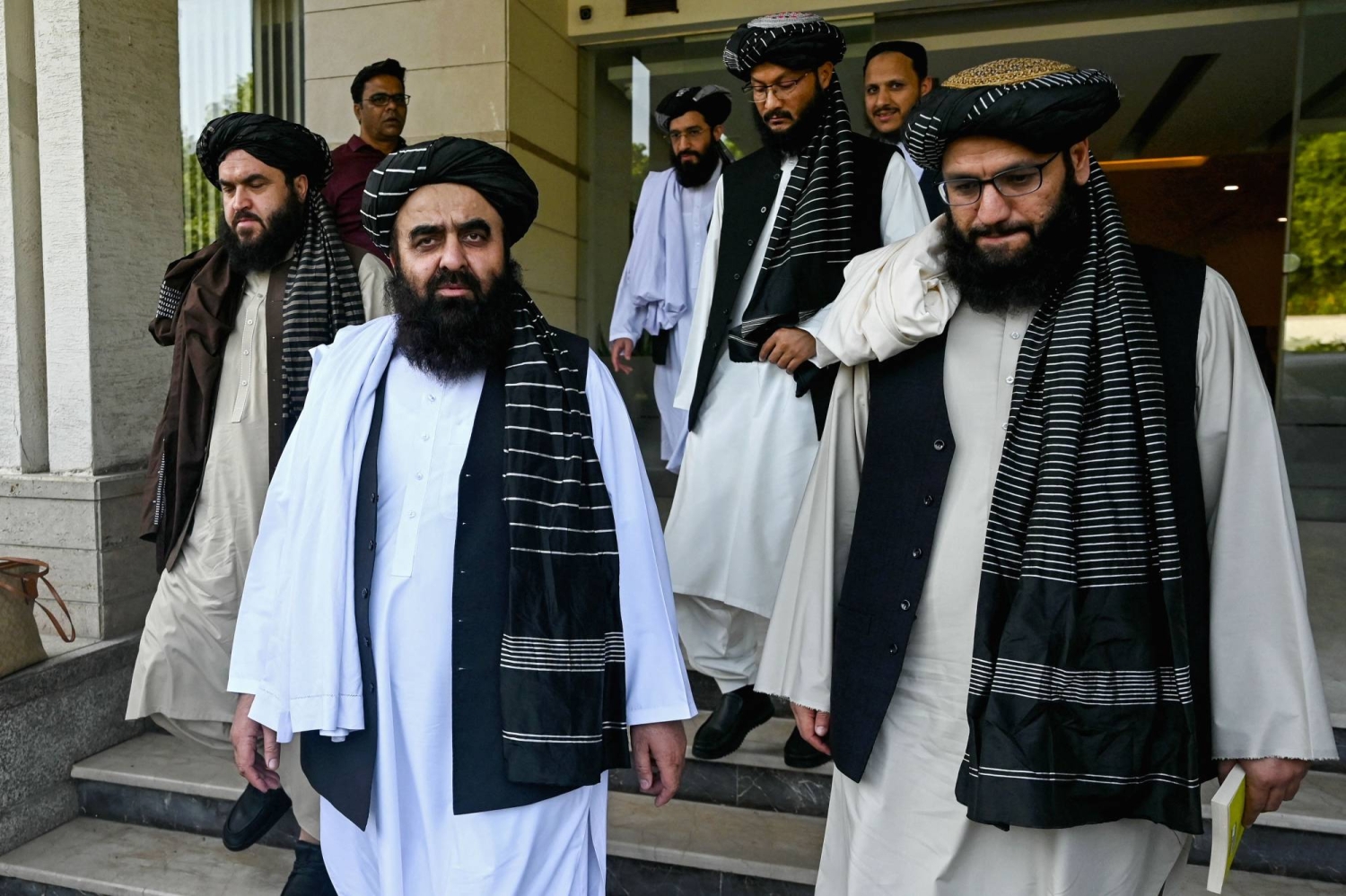
Afghan Foreign Minister Amir Khan Muttaqi (center) leaves after attending a news conference at the Embassy of Afghanistan in New Delhi on Oct. 12. The reopening of India's embassy in Kabul followed Muttaqi’s recent visit to India's capital.
Afghan Foreign Minister Amir Khan Muttaqi (center) leaves after attending a news conference at the Embassy of Afghanistan in New Delhi on Oct. 12. The reopening of India’s embassy in Kabul followed Muttaqi’s recent visit to India’s capital. | AFP-JIJI

By Brahma Chellaney, Contributing Writer, The Japan Times

By reopening its embassy in Kabul on Oct. 21, India has chosen engagement over isolation — a move that could prompt other major democracies, from Japan to the United States, to follow suit.

The decision restores direct communication with the Taliban rulers at a time when Pakistan’s airstrikes last month triggered several days of border conflict with Afghanistan, sharply worsening bilateral relations. India’s move also signals a readiness to deal with those in power — however unpalatable — to safeguard its long-term interests in Afghanistan and beyond.

The reopening followed Taliban Foreign Minister Amir Khan Muttaqi’s recent visit to India, enabled by a special United Nations sanctions exemption. While marking a cautious reset in India-Taliban relations, the visit indicated a shift in Afghanistan’s regional power dynamics as New Delhi and Kabul seek to counterbalance the influence of China and Pakistan.

The Taliban, meanwhile, are resisting U.S. President Donald Trump’s pressure to let America reclaim Bagram Airbase, which served as the nerve center of America’s 20-year war in Afghanistan. On Sept. 20, Trump warned that “bad things” would happen to Afghanistan if it did not return control of Bagram to the United States.

For New Delhi, the decision reflects a hard-nosed recognition of reality: The Taliban are in control and ignoring them would mean ceding ground to geopolitical rivals.

For more than three years, India maintained only a minimal presence in Afghanistan, limiting itself to humanitarian aid and discreet contacts through intermediaries. The cautious stance stemmed from India’s deep discomfort with the Taliban’s ideology and their historic ties to anti-India, Pakistan-backed terrorist groups. Yet as the regional landscape shifts, pragmatism is overtaking principle.

The embassy reopening suggests that the Taliban have provided credible assurances — both on the security of Indian personnel and on ensuring that Afghan territory will not be used by groups hostile to India. These guarantees, if honored, would mark a sharp break from the 1990s when the Taliban regime hosted Pakistani terrorist outfits like Lashkar-e-Taiba and Jaish-e-Mohammed.

Some skepticism is warranted. Critics argue that reopening the embassy lends de facto legitimacy to a regime that continues to suppress women’s rights and exclude minorities from governance. India has carefully avoided formally recognizing the Taliban regime. Yet, in practice, reopening the embassy implies a gradual normalization of relations.

India’s engagement rests less on trust than on calculation: It is safer to have a diplomatic foothold than to operate from the sidelines. For New Delhi, the calculus is strategic rather than moral: Regaining influence in Afghanistan is essential to India’s security and to balancing Pakistani and Chinese leverage.

India has long been among Afghanistan’s leading development partners. It has invested billions of dollars in infrastructure, education and health projects — from the Salma Dam and the Afghan Parliament building to the Indira Gandhi Children’s Hospital in Kabul. These investments won India enduring goodwill among Afghans and embodied its soft-power approach to regional influence.

The Taliban’s return in 2021 froze most projects and raised fears that India’s hard-won gains would erode. The return of Indian diplomats will help safeguard these assets and could revive stalled initiatives, especially in sectors that benefit ordinary Afghans rather than the Taliban leadership.

For India, economic engagement is also a means to reassert its strategic footprint. Trade and connectivity form the backbone of this renewed outreach. New Delhi is keen to expand the use of Iran’s Chabahar Port — a vital alternative to the China-run Gwadar Port in Pakistan — for trade with Afghanistan and Central Asia.

Facing isolation and sanctions, the Taliban have sought Indian participation in mining and infrastructure projects. Afghanistan’s vast untapped reserves of lithium, copper and rare earths could eventually become a new arena for cooperation, though the political risk remains high.

The timing is significant. The sharp deterioration in Afghanistan-Pakistan ties opened a window for India to reengage. The India-Taliban rapprochement represents a major setback for Pakistan, whose Inter-Services Intelligence agency spent over 25 years nurturing the Taliban as a strategic asset.

More broadly, India’s approach reflects a shift toward issue-based realism in its neighborhood policy. Across South Asia, New Delhi has been recalibrating its diplomacy — engaging whoever holds power, including the Islamist-leaning regimes in Bangladesh and the Maldives and Myanmar’s military junta. In Afghanistan, India will have to walk a fine line: supporting the rights and aspirations of the Afghan people while engaging the Taliban to ensure the country does not again become a sanctuary for anti-India terrorism.

That balancing act is complicated by the international community’s divided stance. While some countries — such as China, Russia, Turkey, Iran and Pakistan — have accredited ambassadors to the Taliban regime, others, especially in the West, remain unwilling to go beyond limited humanitarian engagement.

The Trump administration, however, has sent high-level officials to Kabul for meetings with the Taliban, signaling a shift toward more direct engagement on certain issues. U.S. officials like Special Envoy for Hostage Response Adam Boehler discussed possible economic arrangements, security cooperation and even an American presence at Bagram.

Like Washington’s pragmatic engagement with the Taliban, India’s return to Kabul represents a quiet but consequential recalibration. It reflects a recognition that in a volatile region, diplomatic absence is a luxury no major power can afford. Engagement gives India leverage, intelligence and access — tools indispensable for managing the crosscurrents of regional security.

India’s action could now lead other important players to also choose realism over principle, tacitly acknowledging that effective diplomacy often requires engaging regimes as they are, not as one wishes them to be. Strategic absence in Afghanistan is no longer a viable option.

Brahma Chellaney, a longstanding contributor to The Japan Times, is the author of nine books, including “Water: Asia’s New Battleground.”

Bangladesh Is a South Asian Time Bomb

Featured

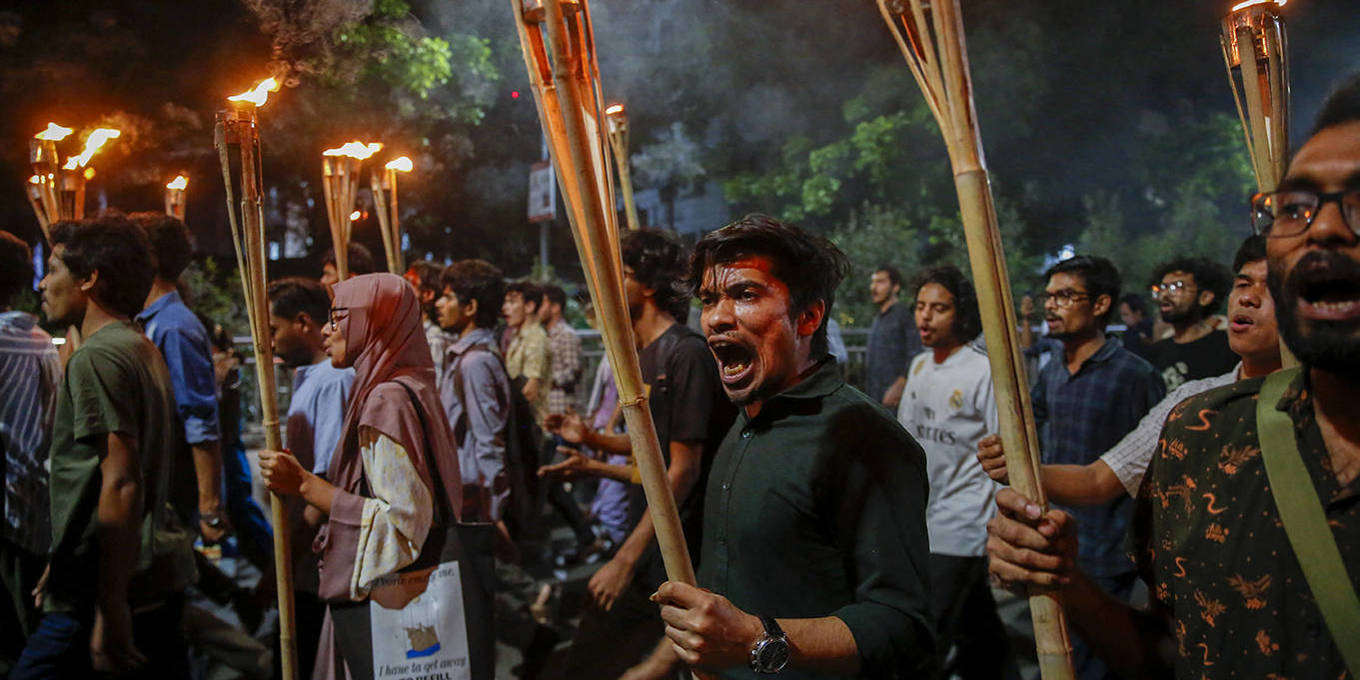
Many hoped that the overthrow of long-time leader Sheikh Hasina last year would open the way for Bangladesh to transition to democracy after an authoritarian lurch under the country’s “iron lady.” Instead, the country has faced proliferating human-rights abuses, intensifying repression, and widespread Islamist violence.

Brahma ChellaneyProject Syndicate

In the year since the violent, military-backed overthrow of Prime Minister Sheikh Hasina’s government, Bangladesh has descended into chaos. The economy is reeling, radical Islamist forces are gaining ground, young people are becoming increasingly radicalizedlawlessness is taking hold, and religious and ethnic minorities are under siege. The country’s future has never looked bleaker.

Many had hoped that Hasina’s ouster would open the way for Bangladesh to transition to democracy following an authoritarian lurch under the “iron lady.” After all, they reasoned, it was a student-led uprising that toppled her regime. But this narrative downplayed the decisive role of the powerful military, which had long chafed under Hasina’s attempts to curb its influence and ultimately forced her into exile in India. Similarly, Islamist forces – who provided much of the muscle behind the student protests – viewed her overthrow as an opportunity to end the marginalization they faced under her secular rule.

The illusory promise of Hasina’s overthrow was further enhanced by the installation of Muhammad Yunus – the 2006 Nobel Peace Prize laureate celebrated as a savior of the poor for pioneering microcredit through his Grameen Bank – as the nominal head of the interim government. But, again, the headline misrepresents reality.

In fact, the Nobel Committee’s choice was less about the Grameen Bank’s actual impact than it was about geopolitical signaling. In presenting the award, the Committee chair invoked Yunus as a symbolic bridge between Islam and the West, expressing hope that his selection would counter the “widespread tendency to demonize Islam” that had taken hold in the West after the US terrorist attacks of September 11, 2001. It is no coincidence that former US President Bill Clinton had lobbied for Yunus.

As the leader of Bangladesh’s interim government, Yunus has promised sweeping reforms and democratic elections. But elections have been repeatedly postponed. Meanwhile, despite lacking constitutional legitimacy, the interim government has launched sweeping purges of independent institutions, ousting the chief justice and the next five most-senior Supreme Court justices, and outlawing Hasina’s Awami League, the country’s oldest and largest political party, which led Bangladesh to independence.

The government has also presided over proliferating human-rights abuses and intensifying repression. Those identified as Hasina’s supporters – including lawyers, academics, journalists, artists, and opposition figures – are being jailed in droves, with thousands reportedly detained since February. International media watchdogs have sounded the alarm over escalating attacks on journalists, many of whom are charged with bogus crimes, from murder to abduction. Reports of extrajudicial killings and torture in custody have become commonplace.

But perhaps the most alarming development is the rehabilitation of Islamist extremists. The military-mullah regime that Yunus nominally leads has reversed bans on jihadist groups previously linked to terrorism, and has freed notorious Islamist leaders. Several extremists now occupy ministerial or other government posts, and mobs affiliated with them openly terrorize perceived opponents.

Buddhists, Christians, Hindus, tribal communities, and members of Islamic sects that Islamists consider heretical are being attacked with impunity. Women dressed “immodestly” face public shaming and assault. A culture of Taliban-style moral policing is rapidly taking root. The situation has gotten so bad that even the pro-regime Bangladesh Nationalist Party, long the Awami League’s arch-rival, has decried the erosion of basic freedoms, the “madness that erupted in the name of religion,” and the “terrifying violence” on the streets.

collapsing economy will only exacerbate these problems. GDP growth has tumbled, foreign debt has ballooned, and inflation has soared to a 12-year high. With investor confidence plummeting, the stock market has fallen to its lowest level in almost five years. Job losses and declining living standards create fertile ground for continued radicalization and social unrest.

Bangladesh once embodied the promise of secular democracy in a Muslim-majority country. Until the COVID-19 pandemic, it was making impressive progress on economic development and social stability. But now it risks slipping into the kind of military-sanctioned dysfunction that has long plagued Pakistan, the country it fought so hard to break away from.

The consequences will reverberate across the region. India, which borders Bangladesh on three sides and is home to millions of undocumented Bangladeshi migrants, will be hit particularly hard. Under Hasina, Bangladesh was one of India’s closest partners, especially on counterterrorism and regional connectivity. Her departure thus dealt a blow to India’s strategic interests. India’s government is now scrambling to manage the fallout, such as by stepping up border security to prevent infiltration by extremists.

Whereas India immediately recognized the risks posed by Hasina’s overthrow, the United States endorsed the regime change. But if Bangladesh continues on its current trajectory, it will significantly complicate US-led efforts to ensure a free, open, prosperous, and stable Indo-Pacific. Some have warned that Bangladesh could become another global flashpoint that draws in even faraway countries.

If the international community is serious about defending democratic values, religious freedom, and regional stability, it can no longer turn a blind eye to Bangladesh’s downward spiral.

Brahma Chellaney, Professor of Strategic Studies at the New Delhi-based Center for Policy Research and Fellow at the Robert Bosch Academy in Berlin, is the author of nine books, including Water: Asia’s New Battleground (Georgetown University Press, 2011), for which he won the 2012 Asia Society Bernard Schwartz Book Award.

© Project Syndicate, 2025.

Lessons from India-Pakistan war: Were China’s arms overrated?

Featured

China’s exported arsenal faced a real-world test in South Asia and may have fallen short

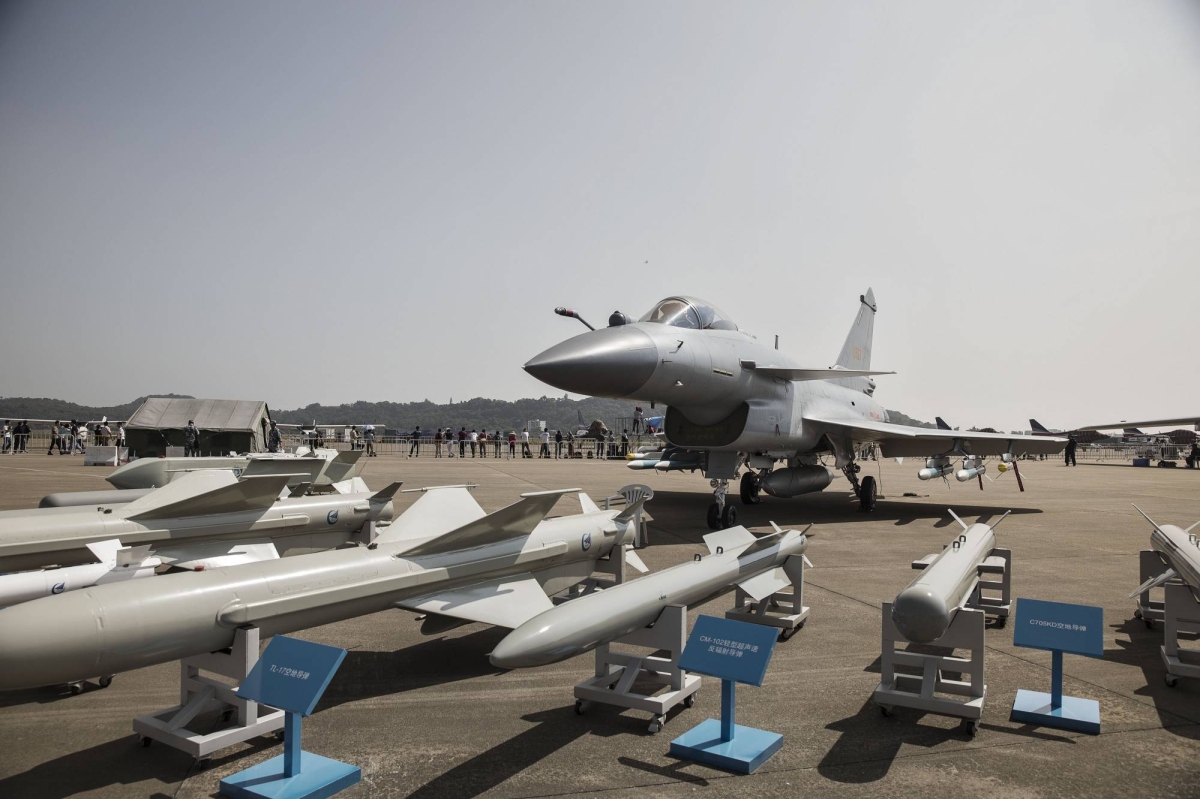
A Chinese J-10B fighter jet is put on display at the China International Aviation & Aerospace Exhibition in Zhuhai, China, in October 2016. The short May conflict between India and Pakistan became a live trial for Chinese arms, exposing vulnerabilities in its fighter aircraft and air defense systems.
A Chinese J-10B fighter jet is put on display at the China International Aviation & Aerospace Exhibition in Zhuhai, China, in October 2016. The short May conflict between India and Pakistan became a live trial for Chinese arms, exposing vulnerabilities in its fighter aircraft and air defense systems. | BLOOMBERG

By Brahma Chellaney
The Japan Times

The brief military conflict between India and Pakistan from May 7 to May 10 marked a turning point in South Asian security dynamics.

This was not a conventional border conflict, but a high-tech showdown featuring drones, cruise and ballistic missiles and long-range air defenses. While India and Pakistan were the primary belligerents, a third power — China — played a pivotal, if indirect, role.

Beijing’s involvement via the supply of advanced weapon systems and real-time satellite reconnaissance data to Pakistan turned the engagement into a revealing trial run for Chinese arms in a live combat setting.

This conflict offered the first real-world glimpse into how China’s premier military technologies perform under fire. The implications extend far beyond South Asia — to Taiwan, the East and South China Seas and global arms markets. The operational lessons drawn from this brief war matter not just for India and Pakistan, but for military planners from Tokyo to Washington.

Scrutinizing Chinese systems

Pakistan relied heavily on Chinese military hardware. Most notably, it deployed the J-10C “Vigorous Dragon” fighter jets armed with PL-15E air-to-air missiles and HQ-9 long-range surface-to-air missile systems with a 200-kilometer engagement envelope. These platforms were tested in actual combat for the first time. Chinese satellite reconnaissance reportedly supported Pakistani targeting, with Beijing even re-tasking satellites to enhance coverage over Indian military zones.

Yet despite the apparent sophistication of Pakistan’s imported arsenal, the results were far from decisive. The J-10Cs launched multiple PL-15E missiles at Indian targets, but there is no independent verification of successful hits. India’s integrated air defenses withstood the onslaught, gaining air superiority.

Indeed, by the conflict’s end, Indian airstrikes had crippled major Pakistani air bases — including Nur Khan and Bholari — without suffering any confirmed retaliatory damage. Nur Khan, near Pakistan’s nuclear command and army headquarters, was particularly symbolic. Its targeting by Indian cruise missiles signaled a calibrated message: Even high-value, well-defended assets are not beyond reach.

Disproportionate impact

While both sides employed drones and missiles, the quality of strikes proved more decisive than the quantity. Pakistan reportedly launched 300 to 400 drones in a single night, yet satellite imagery showed little damage on Indian soil. India, by contrast, relied on precision standoff weapons — especially the supersonic BrahMos cruise missile, codeveloped with Russia — which successfully hit high-value targets in Pakistan with minimal risk to Indian military personnel.

The BrahMos missile, already exported by India, emerged as the standout performer of the conflict. It demonstrated both survivability and pinpoint accuracy in a contested airspace, validating India’s investment in standoff precision platforms. These are designed to destroy critical infrastructure without needing to cross the enemy’s border.

India’s shift toward such systems reflects a broader strategic change: moving from reactive defense to a more assertive doctrine that punishes Pakistan’s transborder terrorism with calibrated strikes. This could have far-reaching implications for deterrence on the Indian subcontinent.

Global strategic significance

There are three major reasons why this short conflict merits serious international attention.

First, it offers a preview of what a future Chinese military operation might look like. Beijing has made no secret of its ambitions toward Taiwan and any effort to seize or blockade the self-governing island would likely rely on systems similar to those used by Pakistan. That makes the observed performance of the J-10C, PL-15E and HQ-9 systems particularly relevant to U.S. and allied military planners.

Second, in the South China Sea, China has grown increasingly aggressive, harassing Philippine and Vietnamese vessels with ramming, water cannons and even bladed weapons. If China were to escalate in this region, the same air and missile systems could come into play. The India-Pakistan conflict thus provides critical insight into their combat performance and vulnerabilities.

Third, in the Himalayas, India and China remain locked in a military standoff that was triggered in 2020 by Chinese encroachments on Indian borderlands. Despite diplomatic moves to ease tensions, both countries continue to mass troops and weaponry along their disputed frontier. The combat data generated from the conflict with Pakistan offers India an invaluable edge in anticipating Chinese capabilities and countermeasures.

Propaganda vs. reality

Predictably, the information war ran parallel to the actual conflict. Pakistan claimed to have shot down at least five Indian fighter jets on the first day. However, no wreckage has been presented and satellite imagery has not corroborated the claim. The Indian military dismissed the allegation, stating that all its pilots returned safely.

On the Indian side, Lt. Gen. Rajiv Ghai stated that some Pakistani aircraft were downed over Pakistan’s own territory. This claim, while more plausible given the precision of India’s strikes, similarly lacks independent verification.

What is evident, however, is the absence of traditional dogfights between rival warplanes. All air combat appears to have occurred beyond visual range, with neither side’s fighter jets crossing international borders. This reflects the international evolution in the nature of air warfare, emphasizing sensors, missiles and electronic warfare over maneuverability and pilot skill.

Electronic warfare and drones

Both sides deployed drones extensively, but with varying degrees of effectiveness. India primarily used small drones for ISR (intelligence, surveillance and reconnaissance), whereas Pakistan fielded swarms of drones for both reconnaissance and attack. However, Pakistan’s boast of neutralizing 85% of Indian drones seems overstated. Conversely, India’s robust electronic warfare systems, along with its multilayered air defenses, effectively intercepted or deflected most Pakistani projectiles, including a ballistic missile aimed at New Delhi.

Interestingly, China’s CM-401 missile — a hypersonic anti-ship missile launched in this conflict from upgraded JF-17 jets — was reportedly used by Pakistan against land targets. Yet there was no visible or confirmed impact, raising questions about the missile’s versatility outside its intended maritime role.

The geopolitical signaling

The tide of battle turned decisively after the explosions from the May 10 Indian strike on Nur Khan airbase triggered American alarm, especially given that Pakistani nuclear assets are located near this airbase. U.S. Secretary of State Marco Rubio intervened, urging Pakistan’s military leadership to de-escalate. Within hours, Pakistan’s director-general of military operations contacted his Indian counterpart to propose an immediate ceasefire, which India accepted.

This sequence underscores two points. First, Indian strikes achieved their objective of imposing costs without triggering an all-out war. Second, India effectively pierced the perceived immunity conferred by Pakistan’s nuclear deterrent — an umbrella under which Pakistan has long sponsored cross-border terrorism with relative impunity.

Final takeaways

For China, the conflict served as a valuable though sobering test of its exported weaponry. While some systems functioned adequately, others like the HQ-9 air defense system showed critical vulnerabilities when deployed without integrated support. Beijing will likely revise and upgrade these platforms based on the feedback from its client-state.

For India, the conflict validated its investment in precision strike capabilities and highlighted the importance of indigenous platforms like the BrahMos. It also signaled a new doctrinal posture — proactive, punitive and technologically assertive.

For the world, this short conflict provided a rare, real-world laboratory to observe how modern missile and drone warfare unfolds between technologically matched rivals. In an era of strategic ambiguity and hybrid threats, those lessons are not just instructive; they are indispensable.

Brahma Chellaney is a geostrategist and the author of nine books, including “Water: Asia’s New Battleground.”

Trump just undermined America’s strategic partnership with India

Featured

By Brahma Chellaney, The Hill

On May 7, India launched a calibrated military campaign against Pakistan in response to a brutal terrorist attack that killed 26 civilians in Indian-administered Kashmir. Islamist gunmen had deliberately targeted Hindu tourists, exemplifying the persistent cross-border terrorism that India has long endured.

Yet few anticipated that the decisive external actor to intervene, President Trump, would seek not to de-escalate tensions impartially, but to tilt the scales in favor of the state sponsor of terror.

Pakistan’s military has enabled terrorist groups to operate from its soil for decades. Its terrorist proxies have carried out attacks in India with the support — tacit or overt — of the Pakistani army, which has ruled the country directly or indirectly since its founding in 1947.

But this time, when India hit back with precision and restraint, it wasn’t Pakistan that reversed the tide of battle. It was Washington.

The Trump administration stepped in at a pivotal moment, using coercive leverage to compel India to cease its operation prematurely. In doing so, Trump not only spared Pakistan the consequences of its actions but also damaged the foundation of U.S.-India strategic trust.

Trump has publicly boasted about his role. From Riyadh to Doha during his Middle East tour, he declared he had “brokered a historic ceasefire” between India and Pakistan. But behind that triumphant spin lies a less savory truth: the U.S. intervention was not about peace — it was about shielding a longtime “major non-NATO ally” from the fallout of its proxy warfare.

The Indian campaign lasted just three days, one of the shortest modern military operations, yet it achieved notable success. Indian forces degraded Pakistan’s air defenses and struck key air bases. In a display of technological prowess, both nations relied heavily on drones and precision missiles. But while Pakistan launched more projectiles, it failed to inflict meaningful damage on any Indian military installation.

India’s turning point came on the morning of May 10, when its military hit major Pakistani air bases, including Nur Khan — located near the army headquarters, the prime minister’s office and Pakistan’s nuclear command. At this point, India had seized the battlefield initiative.

Yet, just hours later, a ceasefire was accepted — under direct U.S. pressure, with Trump announcing it even before India or Pakistan. The ceasefire took effect at 17:00 Indian Standard Time that same day.

Trump later revealed that he had threatened trade sanctions to halt India’s advance. “If you don’t stop, we are not going to do any trade,” he said during a White House press conference. He reiterated in Saudi Arabia, “I used trade to a large extent to do it.”

If true, the U.S. leveraged economic blackmail — not diplomacy — to protect a state that exports terrorism. That raises a chilling question: If Washington can use trade threats to dictate India’s conduct in a military crisis, what’s to stop it from weaponizing defense supply chains during the next one?

India has steadily increased purchases of U.S. military hardware. But this episode confirmed India’s greatest fear: in a real conflict, these systems could become liabilities if Washington turns off the tap. No country’s national security should hinge on platforms dependent on another power’s political whims.

Two days into India’s military campaign, the International Monetary Fund — under strong American influence — approved a $2.4 billion bailout for Pakistan, offering a financial lifeline to a country teetering on the brink of default. The timing of the bailout was telling, rewarding the most persistent terror sponsor in South Asia even as its proxies triggered a military crisis.

The bailout signaled to the world that you can export jihadist terror and still enjoy Western protection — if you’re geopolitically useful enough.

In fact, Trump has shown an unsettling willingness to engage with actors whom most nations deem beyond the pale. On May 14, he met with Syria’s self-declared president Ahmad al Sharaa — better known as Abu Mohammad al Jolani, a U.S.- and U.N.-designated terrorist and a former leader of Syria’s al Qaeda affiliate.

Meanwhile, Trump has turned his sights toward Kashmir as a geopolitical bargaining chip. While remaining conspicuously silent on Pakistan’s role in exporting terrorism, he has proposed to mediate the Kashmir dispute, saying that both India and Pakistan are “great nations” that need help resolving it.

Such false equivalence — between the target of terror and its perpetrator — has justifiably infuriated both the Indian government and public. New Delhi has firmly rejected Trump’s mediation offers, underscoring that there can be no talks under the shadow of terror.

Kashmir is one of the world’s most complex territorial disputes. India controls 45 percent of the former princely state, Pakistan 35 percent and China the remaining 20 percent. Yet Trump, despite failing to resolve conflicts in Ukraine or Gaza, believes he can now “work to see if a solution can be arrived at concerning Kashmir.”

In reality, Trump is playing into the hands of Pakistan, which has long weaponized the Kashmir issue to justify its “war of a thousand cuts” through terrorist proxies against India.

Even after bailing out Pakistan, Trump doubled down. On May 15, he rebuked Apple CEO Tim Cook for manufacturing iPhones in India, telling him, “I don’t want you building in India.” According to Trump, a chastened Cook promised to increase production in the U.S.

This pattern of behavior highlights the jarring truth that Trump’s America is not a reliable strategic partner for India. Paradoxically, India should be thankful for this wake-up call.

The U.S. likes to portray itself as India’s natural partner in the Indo-Pacific, a region that will determine the next world order. But trust in any partnership is forged during a crisis.

Trump may have forced India to pause its military campaign — but, in doing so, he accelerated the unraveling of trust between the world’s two largest democracies. That rupture, unless healed quickly, will not be easy to mend.

Brahma Chellaney is a geostrategist and the author of nine books, including the award-winning “Water: Asia’s New Battleground.”

Testing the limits of India’s water diplomacy

Featured

2025-03-17 Indus

Avatar

Brahma Chellaney, Nikkei Asia

The Indus Waters Treaty (IWT) between India and Pakistan has long been hailed as a rare success in transboundary water sharing. It has stood as a beacon of cooperation between two hostile neighbors.

Under the treaty, upstream India reserved for Pakistan more than 80% of the Indus Basin waters — a remarkable act of generosity, driven by the hope of promoting subcontinental peace. Sixty-five years on, the IWT remains the world’s most munificent water-sharing arrangement.

Yet over the decades, the geopolitical reality has changed. Pakistan’s powerful military establishment — including its Inter-Services Intelligence (ISI) agency — has continued to nurture jihadist groups for use in low-intensity asymmetric warfare against India and other neighbors.

Another grim reminder came on April 22, when Pakistan-backed Islamist terrorists singled out and killed 26 civilians at a Kashmir resort — the deadliest attack on Indians since the 2008 Mumbai carnage. The outrage triggered by the massacre led Prime Minister Narendra Modi to announce India would place the IWT “in abeyance” until Pakistan credibly and irreversibly ends its support for cross-border terrorism.

The message is clear: India’s water generosity has been repaid not with gratitude but with blood.

The killings followed a provocative Islamist speech by Pakistan’s army chief, Gen. Asim Munir, who declared that Muslims are “different from Hindus in every possible way.” His rhetoric outraged India’s secular polity, which includes a 200-million-strong Muslim population.

Pakistan’s nuclear weapons have emboldened its reliance on terrorism, shielding its military and its proxies from full retaliation. But when Pakistan harbors and facilitates terrorists striking across its borders, it flagrantly violates the principle of peaceful coexistence — the very basis on which the IWT was built.

Treaties are created not on paper alone but on trust. And trust is precisely what Pakistan has shattered, time and again, through its unwavering commitment to transborder terrorism.

International law is unequivocal: When a treaty’s fundamental conditions collapse, or one party persistently violates it, the other party has the right to suspend or withdraw. The Vienna Convention on the Law of Treaties, which codifies customary international law, permits suspension or withdrawal in cases of material breach or fundamental change of circumstances. Pakistan’s conduct meets both tests.

Yet India has not formally suspended or withdrawn from the IWT. By placing it “in abeyance” — a term neither defined in international law nor spelled out by India — New Delhi is signaling frustration without yet burning diplomatic bridges. It amounts to a strategic warning: Change your behavior or risk the treaty’s collapse.

India’s patience has been extraordinary. Despite enduring repeated Pakistan-backed terror attacks — including on Modi’s watch — India continued to honor the treaty. Modi, once an advocate of peace, even made an unannounced 2015 visit to Pakistan to court reconciliation. That overture was met with cross-border terrorist strikes orchestrated by Pakistan’s military.

After a major terrorist attack in 2016, Modi warned Pakistan that “blood and water cannot flow together.” Since then, India has signaled its growing exasperation by, among other steps, suspending some meetings of the Permanent Indus Commission and formally seeking negotiations to amend the IWT.

In Asia, India stands virtually alone in its commitment to water-sharing treaties. China, despite controlling the water-rich Tibetan Plateau — the source of most of Asia’s major rivers — refuses to negotiate a water-sharing treaty with any downstream neighbor. By contrast, India has water-sharing treaties with both its downriver neighbors, Pakistan and Bangladesh.

Despite Bangladesh’s descent into jihadist violence after last year’s regime change, India recently agreed to negotiate a renewal of the 1996 Ganges water-sharing treaty, which guarantees Bangladesh quantified dry-season flows — a first in international water law. But, in contrast to the 30-year Ganges treaty, the IWT is of indefinite duration.

Clearly, the open-ended framework of the IWT — based on unconditional trust — has failed. What was once a symbol of cooperation has been weaponized for hostility, with India left to bear the burdens of the treaty, without getting any tangible benefits in return.

Importantly, India’s latest legal move does not threaten disruption of river flows to Pakistan. India lacks the hydrological infrastructure to curb downstream flows. Its storage capacity on the Indus system’s three largest rivers, reserved for Pakistan, is a mere 0.3 million acre-feet (0.37 megaliters) — negligible compared to Pakistan’s annual receipt of 168 million acre-feet of water.

Unlike Pakistan, which has used terrorism as a weapon against Indian civilians, India has committed to ensuring that any actions it takes will be responsible and measured, with full consideration of the downstream impact on water availability for Pakistan’s population.

Looking ahead, India should push for a new, conditional water-sharing framework — one that links cooperation to peace and verifiable good behavior. Any future treaty must respect the sovereignty, security and well-being of both sides.

This will be a necessary recalibration — a recognition that the old framework is no longer tenable. Peace cannot flow from terrorism and hate.

As the Indus-system rivers flow from the Himalayas into the plains, so too must diplomacy flow from the reality on the ground. The reality is that there can be no cooperation without credibility, and no treaty without trust.

Brahma Chellaney, a professor of strategic studies at the independent New Delhi-based Centre for Policy Research and fellow at the Robert Bosch Academy in Berlin, is the author of nine books, including “Water: Asia’s New Battleground” (Georgetown University Press), which won the Bernard Schwartz Book Award.
India’s Warning to Pakistan

Featured

Despite the risks of tit-for-tat retaliation, India, as the stronger side, could escalate or de-escalate the conflict to its advantage. However, the threat India faces is not coming from Pakistan alone. China provides strategic and diplomatic cover for Pakistan’s export of terrorism.

Brahma ChellaneyProject Syndicate

NEW DELHI – Last month, Islamist gunmen – two of whom have been identified as Pakistani nationals – slaughtered 26 civilians in the Indian-administered part of divided Kashmir. It was a brutal attack, in which Hindu tourists, including one from Nepal, were singled out for slaughter. And yet, it was not surprising: terrorist groups have long operated freely from Pakistani soil, with the tacit or explicit support of Pakistan’s powerful military.

What might be different this time is that India may have finally found a way to push back, including through military strikes on Pakistani terror camps – strikes that Indian officials claimed were “measured, responsible, and designed to be non-escalatory in nature.” Despite the risks of tit-for-tat retaliation, India, as the stronger side, could escalate or de-escalate the conflict to its advantage.

The threat India faces, however, is not coming from Pakistan alone. China has consistently provided diplomatic and strategic cover for India’s terrorism-sponsoring neighbor. For example, China’s government has repeatedly blocked United Nations sanctions against top Pakistani terrorists. After the latest attack, it praised Pakistan’s counterterrorism efforts, calling the country an “all-weather” strategic partner. The enemy of China’s enemy is its “ironclad friend.”

That leaves India wedged between two closely aligned nuclear powers, both of which claim sizable swaths of Indian territory. Recent crises – from brutal Pakistani terror attacks to brazen Chinese land grabs in the Doklam and Ladakh regions – have highlighted just how acute a threat the Sino-Pakistani strategic axis poses to India.

During his 11 years in power, however, Indian Prime Minister Narendra Modi largely maintained a reactive security posture toward both China and Pakistan, with little strategic deterrence to be seen. The Sino-Indian military standoff that was triggered in 2020 by Chinese encroachments on India’s Ladakh borderlands still has not been fully resolved.

But this time, Modi has offered a calibrated and impactful response, pausing the Indus Waters Treaty (IWT), the world’s most-generous water-sharing pact, which grants downstream Pakistan access to over 80% of the Indus Basin waters. Brokered in 1960 by the World Bank, the IWT has long been hailed as a model of cross-border cooperation – one that China has not emulated. (Though its 1951 annexation of the water-rich Tibetan Plateau gave it control over the headwaters of Asia’s major rivers, China has refused to enter into a water-sharing treaty with any of its 18 downstream neighbors.)

But treaties are built on mutual trust and good faith – or, as the IWT’s preamble puts it, “a spirit of goodwill and friendship.” And while India has steadfastly adhered to the treaty for 65 years – even when it meant compromising development in its water-stressed regions – Pakistan has consistently acted in bad faith. For example, it has used the treaty’s dispute-resolution mechanisms to drag India repeatedly into international arbitration over minor engineering differences and obstruct India’s ability to use its rightful share of water. Last year, when India formally sought to update the IWT – to account for unanticipated factors like climate change, groundwater depletion, and population growth – Pakistan refused to negotiate.

Meanwhile, Pakistan has waged what is effectively a proxy war by terrorism against India. The 2008 Mumbai massacre, in particular, is still etched in India’s national memory. In fact, the latest killings occurred shortly after the United States extradited a key Mumbai plotter to India. Pakistan’s army chief, General Asim Munir, recently fanned the flames of conflict by urging Pakistanis to teach their children that Muslims are “different from Hindus in every possible way.”

International law is clear: when a treaty’s fundamental conditions collapse, or one party persistently violates them, the other party has the right to suspend or withdraw from the agreement. For now, India has stopped short of blowing up the IWT, instead placing the treaty “in abeyance,” a term undefined in international law. Modi has thus retained strategic ambiguity, while sending a resolute message: resource-sharing comes with conditions. This is a warning, not a rupture.

To be sure, Pakistan claims that suspending the IWT amounts to an “act of war,” and has retaliated by suspending all bilateral agreements, including the 1972 Simla treaty, which governs peaceful dispute resolution. But this response not only ignores the reasons for India’s decision; it also misrepresents the impact.

India is halting data sharing, design approvals, and inspections under the IWT, while opening the way for actions that Pakistani objections have obstructed, such as reservoir flushing and the desilting of riverbeds. But it is not disrupting current water flows. In fact, India does not have the infrastructure to divert the major rivers flowing to Pakistan, and its storage capacity on those rivers is negligible. So, while India is imposing costs on Pakistan, in an attempt to hold its leaders accountable for state-sponsored terrorism, it is not punishing the Pakistani people.

The six rivers of the Indus Basin have sustained local civilizations for millennia, and they can continue to do so. But no country can be expected to uphold a peacetime treaty while suffering the consequences of an undeclared war. If Pakistan does not want India to turn off its taps by building new hydrological infrastructure, it must demonstrate a verifiable commitment to peace, arrest terrorist leaders, shut down terrorist-training camps, and end its support for cross-border violence.

Brahma Chellaney, Professor of Strategic Studies at the New Delhi-based Center for Policy Research and Fellow at the Robert Bosch Academy in Berlin, is the author of nine books, including Water: Asia’s New Battleground (Georgetown University Press, 2011), for which he won the 2012 Asia Society Bernard Schwartz Book Award.

© Project Syndicate, 2025.

Blood for water? Why India is within its rights to withdraw from the Indus Waters Treaty

Featured

Brahma Chellaney, The Times of India

When the Indus Waters Treaty (IWT) was signed in 1960, it was an act of extraordinary generosity on India’s part. Despite being the upper riparian state, India reserved for Pakistan over 80% of the Indus Basin waters. Almost 65 years later, IWT remains the world’s most generous water-sharing treaty.

The treaty was a bet on peace — on the hope that India’s water largesse would help usher in subcontinental stability and collaboration. Pakistan, however, has repaid India’s generosity not with gratitude, but with grenades and guns.

From the 2001 attack on Parliament to the 2008 horrific Mumbai massacre, and from the 2016 Uri raid to the 2019 Pulwama bombing — the pattern of Pakistan-scripted terrorism has been unmistakable. The pattern underscores a strategic doctrine of asymmetric warfare, relying on terrorist proxies. And yet, even as Pakistan kept on repaying water munificence with blood, India continued to honour the treaty.

But now the national anger over the latest terrorist massacre in Pahalgam, where Hindu tourists were singled out and slaughtered, has compelled Prime Minister Narendra Modi to take a legal step — putting the IWT “in abeyance”. This is not about water alone. It is about principle, sovereignty and the right to protect one’s people. International law is clear: when a treaty’s foundational conditions collapse — or when one party persistently breaches it — the other party has the right to suspend or withdraw.

A country that repeatedly enables attacks on innocent civilians should forfeit the benefits of a legal arrangement designed for peaceful cooperation. The IWT is not a river-sharing agreement in isolation; it is a mechanism of trust, and trust has been systemically dismantled.

Moreover, the world is not unfamiliar with treaty withdrawals. The US unilaterally exited the Anti-Ballistic Missile (ABM) treaty in 2002 and the Intermediate-Range Nuclear Forces (INF) treaty in 2019 — citing national security threats both times. Sovereign states are entitled to defend themselves when cooperation becomes a cover for aggression. Why should India be any different?

Even within the bounds of the IWT, Pakistan has not acted in good faith. In fact, it has weaponized the IWT itself, abusing the treaty’s mechanisms to delay or sabotage Indian infrastructure projects and prevent India from utilising its legitimate share of the waters by repeatedly escalating minor engineering issues to international arbitration or adjudication. And still, India waited.

Now, India is signalling that endless patience should not be mistaken for weakness. Article 60 of the Vienna Convention on the Law of Treaties (VCLT) permits a state to suspend or withdraw from a treaty in the event of a material breach by the other party. International law also provides for a fundamental change in circumstances as a valid reason for treaty withdrawal, as laid out in Article 62 of the VCLT. India is not a party but the VCLT is reflective of customary international law.

However, India, despite citing both a fundamental change of circumstances and Pakistan’s material breach, has chosen neither to suspend nor withdraw from the IWT, deciding instead to place the treaty “in abeyance”, a term not formally defined in international law. The tentative step may suggest that the govt is seeking to deliver a strategic warning to compel behaviour change without burning diplomatic bridges just yet.

India has neither the intent nor the hydro-infrastructure to disrupt downstream flows. Its adversary is the Pakistani deep state, not the Pakistani people. India has thus made clear it will act responsibly, ensuring no humanitarian crisis is triggered.

Contrast India’s restraint and caution with China’s aggressive unilateralism. China has refused to negotiate a water-sharing treaty with any of its downstream neighbours. On the Brahmaputra, it is building a super-dam, the largest ever conceived, near the seismically active border with India, potentially creating a ticking water bomb.

Although India dwarfs Pakistan in terms of economic output, military spending and other material measures, successive Indian governments have allowed Pakistan to gore India with impunity by not pursuing a consistent Pakistan policy. Even today, after the Pakistani army chief’s recent call for civilizational war with India implied mortal combat, some policy-makers believe that India can compel a neighbour consumed by hatred to change behaviour. It is thus no wonder that — the latest horrific massacre notwithstanding — India appears loath to exit a treaty that hangs like the proverbial albatross from its neck.

India should offer an alternative water-sharing framework that is conditional on peace and verifiable conduct. The IWT model, based on unconditional trust, with India left to bear the burdens without any benefits, has failed.

More fundamentally, without India mustering the political will to impose sustained and multifaceted costs, Pakistan will remain Ground Zero for the international terrorist threat. India’s restraint has been historic. Now, history demands resolve.

The writer is a geostrategist.

As Trump meets with India’s Modi, Bangladesh demands attention

A mob demolished the national memorial museum where the country’s independence was proclaimed. (Photo courtesy The Daily Star)

By Brahma Chellaney, The Hill

Bangladesh’s recent descent into lawlessness poses a foreign policy challenge for President Trump, especially because his predecessor supported last August’s regime change there.

The world’s most densely populated country (excluding microstates and mini-states) risks sliding into jihadist chaos, threatening regional and international security.

Bangladesh has also emerged as a sore point in U.S.-India relations, with the issue likely to figure in Indian Prime Minister Narendra Modi’s discussions with Trump at the White House this week. New Delhi is smarting from the overthrow of Bangladesh Prime Minister Sheikh Hasina’s India-friendly government and the installation of a new military-chosen “interim” administration with ties to Islamists whom India sees as hostile.

The new regime is led by the 84-year-old Muhammad Yunus, who publicly lamented Trump’s 2016 election win as a “solar eclipse” and “black day.” Yunus received the 2006 Nobel Peace Prize after former President Bill Clinton lobbied for him, a fact the Norwegian Nobel Committee chairman acknowledged in his award ceremony speech.

Megadonor Alex Soros — who says that “Trump represents everything we don’t believe in” while vowing to “fight back” — has pledged continued support to the regime in Bangladesh, where he recently went by private jet to meet Yunus, despite the country’s downward spiral into violent jihadism. This was his second meeting with Yunus since September, when the two met in New York.

The lawlessness in Bangladesh was on stark display last week as regime supporters went on a rampage, setting ablaze or demolishing properties in a coordinated manner, including the national memorial to Hasina’s assassinated father, Sheikh Mujibur Rahman, the country’s charismatic founding leader. Mobs also looted and burned down Hasina’s private residence and the homes of several leaders of her Awami League party.

In a sign of regime complicity in the attacks, security forces stood by and watched quietly as mobs ran amok, including storming the memorial museum, where the country’s independence was proclaimed in 1971. The attackers, after failing to burn down the memorial with the fire they lit, brought excavators and manually tore down the memorial over two days, prompting Islamist celebrations at the site with an Islamic State banner. Only after the various attacks were over did Yunus appeal for calm.

The razing of the memorial museum, which was originally the founding leader’s residence and where he and much of his family were murdered in a 1975 predawn army coup, could help advance the current regime’s effort to redefine or erase key aspects of Bangladesh’s history. In fact, this was the second assault on the memorial since the regime change, with the first attack leaving it partially damaged and without family archives owing to looting and arson.

Last week’s spate of attacks across the nation showed why the regime, as Bangladeshi media highlighted, is struggling to restore law and order or reverse the downturn in a once-booming economy, which, under Hasina’s secular government, lifted millions of people out of poverty. Now, as foreign reserves plummet and foreign debt spirals upward, the country is seeking international bailouts.

Since its first coup in 1975, which led to more military interventions and counter-coups, Bangladesh has remained trapped in a cycle of violence and deadly retributions. The military-backed ouster of Hasina — the “iron lady” who kept both the military and Islamist movements in check, but who lurched toward authoritarianism — followed weeks of student-led, Islamist-dominated violent protests.

After police fired on rioting protesters, mobs captured dozens of policemen, beating them to death and hanging the bodies of some from bridges. A total of 858 people reportedly died in what the Yunus regime and its supporters have called a “revolution.” The military used the violence to pack Hasina off to neighboring India before she could even resign.

Violence, however, has only escalated under the Yunus administration, especially against political opponents, religious and ethnic minorities, and anyone seen as a critic of the regime. Just days before the American election in November, Trump posted, “I strongly condemn the barbaric violence against Hindus, Christians, and other minorities who are getting attacked and looted by mobs in Bangladesh, which remains in a total state of chaos.”

Islamist violence has gained ground largely because Yunus has lifted bans on jihadist groups with links to terrorism and freed violence-glorifying Islamist leaders. Hundreds of Islamists have escaped from prisons. Extremist groups — including Hizb ut-Tahrir, proscribed by several Western governments as an international terrorist threat — now operate freely in Bangladesh, from demolishing shrines of minorities to staging anti-Trump marches.

In fact, a dysfunctional Bangladesh is becoming a mirror image of its old nemesis, Pakistan, from which it seceded following a bloody war of liberation that left up to 3 million civilians dead in a genocide led by the Pakistani military.

Given the country’s porous borders, the current violence and chaos in Bangladesh affect India’s security. Already home to millions of illegally settled Bangladeshis, India faces growing pressure on its borders from those seeking to flee religious or political persecution in Bangladesh. Fearing infiltration by freed terrorists, India has sought to tighten border security. A lawless Bangladesh is also not in America’s interest.

As Trump seeks to build on his rapport with Modi to restore America’s fraying relationship with India, a shift away from the Biden policy of mollycoddling the Yunus regime could help ease Indian security concerns. If the U.S.-India strategic partnership is to advance a stable balance of power in Asia, the two powers must work in sync with one another in India’s own neighborhood to help build mutual trust.

Brahma Chellaney is a geostrategist and the author of nine books, including the award-winning “Water: Asia’s New Battleground.”