China’s exported arsenal faced a real-world test in South Asia and may have fallen short
A Chinese J-10B fighter jet is put on display at the China International Aviation & Aerospace Exhibition in Zhuhai, China, in October 2016. The short May conflict between India and Pakistan became a live trial for Chinese arms, exposing vulnerabilities in its fighter aircraft and air defense systems. | BLOOMBERG
The brief military conflict between India and Pakistan from May 7 to May 10 marked a turning point in South Asian security dynamics.
This was not a conventional border conflict, but a high-tech showdown featuring drones, cruise and ballistic missiles and long-range air defenses. While India and Pakistan were the primary belligerents, a third power — China — played a pivotal, if indirect, role.
Beijing’s involvement via the supply of advanced weapon systems and real-time satellite reconnaissance data to Pakistan turned the engagement into a revealing trial run for Chinese arms in a live combat setting.
This conflict offered the first real-world glimpse into how China’s premier military technologies perform under fire. The implications extend far beyond South Asia — to Taiwan, the East and South China Seas and global arms markets. The operational lessons drawn from this brief war matter not just for India and Pakistan, but for military planners from Tokyo to Washington.
Scrutinizing Chinese systems
Pakistan relied heavily on Chinese military hardware. Most notably, it deployed the J-10C “Vigorous Dragon” fighter jets armed with PL-15E air-to-air missiles and HQ-9 long-range surface-to-air missile systems with a 200-kilometer engagement envelope. These platforms were tested in actual combat for the first time. Chinese satellite reconnaissance reportedly supported Pakistani targeting, with Beijing even re-tasking satellites to enhance coverage over Indian military zones.
Yet despite the apparent sophistication of Pakistan’s imported arsenal, the results were far from decisive. The J-10Cs launched multiple PL-15E missiles at Indian targets, but there is no independent verification of successful hits. India’s integrated air defenses withstood the onslaught, gaining air superiority.
Indeed, by the conflict’s end, Indian airstrikes had crippled major Pakistani air bases — including Nur Khan and Bholari — without suffering any confirmed retaliatory damage. Nur Khan, near Pakistan’s nuclear command and army headquarters, was particularly symbolic. Its targeting by Indian cruise missiles signaled a calibrated message: Even high-value, well-defended assets are not beyond reach.
Disproportionate impact
While both sides employed drones and missiles, the quality of strikes proved more decisive than the quantity. Pakistan reportedly launched 300 to 400 drones in a single night, yet satellite imagery showed little damage on Indian soil. India, by contrast, relied on precision standoff weapons — especially the supersonic BrahMos cruise missile, codeveloped with Russia — which successfully hit high-value targets in Pakistan with minimal risk to Indian military personnel.
The BrahMos missile, already exported by India, emerged as the standout performer of the conflict. It demonstrated both survivability and pinpoint accuracy in a contested airspace, validating India’s investment in standoff precision platforms. These are designed to destroy critical infrastructure without needing to cross the enemy’s border.
India’s shift toward such systems reflects a broader strategic change: moving from reactive defense to a more assertive doctrine that punishes Pakistan’s transborder terrorism with calibrated strikes. This could have far-reaching implications for deterrence on the Indian subcontinent.
Global strategic significance
There are three major reasons why this short conflict merits serious international attention.
First, it offers a preview of what a future Chinese military operation might look like. Beijing has made no secret of its ambitions toward Taiwan and any effort to seize or blockade the self-governing island would likely rely on systems similar to those used by Pakistan. That makes the observed performance of the J-10C, PL-15E and HQ-9 systems particularly relevant to U.S. and allied military planners.
Second, in the South China Sea, China has grown increasingly aggressive, harassing Philippine and Vietnamese vessels with ramming, water cannons and even bladed weapons. If China were to escalate in this region, the same air and missile systems could come into play. The India-Pakistan conflict thus provides critical insight into their combat performance and vulnerabilities.
Third, in the Himalayas, India and China remain locked in a military standoff that was triggered in 2020 by Chinese encroachments on Indian borderlands. Despite diplomatic moves to ease tensions, both countries continue to mass troops and weaponry along their disputed frontier. The combat data generated from the conflict with Pakistan offers India an invaluable edge in anticipating Chinese capabilities and countermeasures.
Propaganda vs. reality
Predictably, the information war ran parallel to the actual conflict. Pakistan claimed to have shot down at least five Indian fighter jets on the first day. However, no wreckage has been presented and satellite imagery has not corroborated the claim. The Indian military dismissed the allegation, stating that all its pilots returned safely.
On the Indian side, Lt. Gen. Rajiv Ghai stated that some Pakistani aircraft were downed over Pakistan’s own territory. This claim, while more plausible given the precision of India’s strikes, similarly lacks independent verification.
What is evident, however, is the absence of traditional dogfights between rival warplanes. All air combat appears to have occurred beyond visual range, with neither side’s fighter jets crossing international borders. This reflects the international evolution in the nature of air warfare, emphasizing sensors, missiles and electronic warfare over maneuverability and pilot skill.
Electronic warfare and drones
Both sides deployed drones extensively, but with varying degrees of effectiveness. India primarily used small drones for ISR (intelligence, surveillance and reconnaissance), whereas Pakistan fielded swarms of drones for both reconnaissance and attack. However, Pakistan’s boast of neutralizing 85% of Indian drones seems overstated. Conversely, India’s robust electronic warfare systems, along with its multilayered air defenses, effectively intercepted or deflected most Pakistani projectiles, including a ballistic missile aimed at New Delhi.
Interestingly, China’s CM-401 missile — a hypersonic anti-ship missile launched in this conflict from upgraded JF-17 jets — was reportedly used by Pakistan against land targets. Yet there was no visible or confirmed impact, raising questions about the missile’s versatility outside its intended maritime role.
The geopolitical signaling
The tide of battle turned decisively after the explosions from the May 10 Indian strike on Nur Khan airbase triggered American alarm, especially given that Pakistani nuclear assets are located near this airbase. U.S. Secretary of State Marco Rubio intervened, urging Pakistan’s military leadership to de-escalate. Within hours, Pakistan’s director-general of military operations contacted his Indian counterpart to propose an immediate ceasefire, which India accepted.
This sequence underscores two points. First, Indian strikes achieved their objective of imposing costs without triggering an all-out war. Second, India effectively pierced the perceived immunity conferred by Pakistan’s nuclear deterrent — an umbrella under which Pakistan has long sponsored cross-border terrorism with relative impunity.
Final takeaways
For China, the conflict served as a valuable though sobering test of its exported weaponry. While some systems functioned adequately, others like the HQ-9 air defense system showed critical vulnerabilities when deployed without integrated support. Beijing will likely revise and upgrade these platforms based on the feedback from its client-state.
For India, the conflict validated its investment in precision strike capabilities and highlighted the importance of indigenous platforms like the BrahMos. It also signaled a new doctrinal posture — proactive, punitive and technologically assertive.
For the world, this short conflict provided a rare, real-world laboratory to observe how modern missile and drone warfare unfolds between technologically matched rivals. In an era of strategic ambiguity and hybrid threats, those lessons are not just instructive; they are indispensable.
Brahma Chellaney is a geostrategist and the author of nine books, including “Water: Asia’s New Battleground.”
Trump may have done India a favor by opening its eyes to strategic realities. India’s foreign policy should be defined by interests, not illusions. New Delhi must now pivot to strategic self-reliance.
U.S. President Donald Trump appears to be treating America’s allies more harshly than its rivals — a pattern underscored by his rollback of punitive tariffs on China while continuing to employ trade leverage against allies like Japan and India.
Even as Japan’s auto sector is reeling from the U.S. tariffs that the White House refuses to lift, Trump has boasted about using trade threats to compel India to halt its military reprisals against Pakistan following a transborder terrorist attack that killed 26 civilians in the Indian-administered part of divided Kashmir.
In a matter of days, Trump has undermined the U.S.-India strategic partnership — a relationship carefully cultivated by successive American administrations since Bill Clinton. His self-congratulatory remarks about coercing India during a military crisis not only belittle New Delhi’s security concerns but also damage the credibility of U.S. commitments in the Indo-Pacific region, a fast-emerging economic and geopolitical hub.
Trump’s assertion that he used trade as a lever to stop India’s brief military campaign raises troubling implications. If Washington can threaten bilateral trade to halt India’s calibrated response to terrorism, it could just as easily disrupt the supply of weapons, spare parts and critical technologies during a full-scale conflict.
This realization risks chilling India’s fast-growing defense trade with the United States, potentially costing American firms billions in future sales.
Speaking at a White House news conference, Trump crowed, “If you don’t stop, we are not going to do any trade.” Later, while in Saudi Arabia, he repeated, “I used trade to a large extent to do it.” If taken at face value, this was not diplomacy — it was strategic coercion, aiding Pakistan and undermining India’s fight against terrorism.
India’s three-day military operation from May 7 to 10 — one of the shortest campaigns in modern times — was a limited and measured response to Pakistani terrorism. It was U.S. special forces who in 2011 exposed Pakistan’s nexus with international terrorism by killing al-Qaida chief Osama bin Laden in his hideout located in the shadow of the top Pakistani military academy.
Yet, through his interventionist role this month, Trump gave Pakistan a reprieve. Compounding the damage, the International Monetary Fund, backed by the U.S., approved a $2.4 billion bailout for Pakistan on May 9, two days into India’s military campaign.
This sent a dangerous message: As long as you are a “major non-NATO ally” of the U.S., terrorism may carry no real cost. Pakistan has remained America’s “major non-NATO ally” since George W. Bush’s presidency.
Like Japan, India refrained from retaliating after Trump’s tariffs, choosing instead to negotiate a trade deal and commit to buying more American goods. But Trump has repaid this conciliatory posture with hostility.
During his recent Middle East tour, he derided India as a “tariff king” and wrongly claimed the U.S. isn’t among the top 30 countries exporting to India. (The U.S. is the fourth largest exporter to India.) Trump also mischaracterized the Indian position in the ongoing negotiations for a bilateral trade deal, claiming that India is going from high tariffs to offering “zero tariffs” to America — a claim New Delhi denied.
This wasn’t mere rhetoric. On May 15, just one day after India signed a major manufacturing deal with Foxconn to ramp up production of iPhones domestically, Trump publicly rebuked Apple CEO Tim Cook, saying, “I don’t want you building in India.”
This stunning intervention contradicts the stated goals of “the Quad,” which seeks to build resilient and diversified supply chains by shifting production away from China. If Trump opposes American firms investing in India, what does that say about U.S. strategic intent? Or how do Trump’s actions square with Washington’s assertion that U.S.-India ties are the defining relationship of the 21st century?
Meanwhile, Trump has shown little concern for the cross-border terrorism that prompted India’s military action. While remaining conspicuously silent on the transborder terrorism challenge that India confronts, he has turned his gaze to Kashmir, offering to mediate that dispute and pushing a narrative that downplays the core issue of Pakistani terrorism. New Delhi has firmly rejected his offer.
Trump calls Indian Prime Minister Narendra Modi a “great friend of mine” with whom, according to him, he shares “a wonderful relationship.” Trump’s actions, however, have sparked domestic criticism of Modi’s handling of the crisis. Trump’s claim to have “brokered a historic ceasefire” feeds that perception, portraying Modi as yielding to external pressure.
Successive U.S. administrations have viewed India as a vital counterweight to China. Helping India deter Pakistan’s use of terrorists in proxy warfare would have strengthened that role. Instead, Trump’s interventions have emboldened Pakistan — a setback for the shared Indo-Pacific objectives of both Washington and New Delhi.
Ironically, Trump may have done India a favor. His actions have exposed an uncomfortable truth: Under his leadership, the U.S. is not a dependable partner in matters of security and counterterrorism. Recognizing this reality is a strategic imperative for India.
New Delhi must now pivot to strategic self-reliance. Warm rhetoric cannot substitute for real trust. India’s foreign policy should be defined by interests, not illusions.
Brahma Chellaney is a geostrategist and the author of nine books, including “Water: Asia’s New Battleground.”
Taiwan represents the crucible in which the Indo-Pacific region’s future security order will be forged. If deterrence holds, a stable balance of power will emerge. But if deterrence fails, the consequences will reverberate across the world, upending the global balance of power.
As strategic tensions escalate across the vast Indo-Pacific region, Taiwan has emerged as more than a potential flashpoint. It is the fulcrum upon which the credibility of the evolving American-led strategy of integrated deterrence now rests.
How the US and regional powers like Japan respond to Taiwan’s defense, and how credible the deterrent against Chinese aggression proves to be, will profoundly shape the Indo-Pacific security architecture for years to come.
A successful defense of Taiwan through strengthened deterrence in the Indo-Pacific would enhance the credibility of the US-led alliance system and underpin America’s global preeminence, while a failure of integrated deterrence would not only embolden China but also pave the way for a Sino-centric regional order.
Integrated deterrence seeks to prevent conflict through a multidimensional approach that blends military strength, economic leverage, cyber capabilities, and diplomatic alignment. Such fusion is aimed at creating a web of interlocking deterrents, making any potential aggression too costly and complex to undertake.
But coherence remains the Achilles’ heel of integrated deterrence. Potential contradictions can arise between military signaling and economic interdependence, or between cyber operations and diplomatic outreach. This is apparent from US President Donald Trump’s recent claim of “a total reset” in trade relations with China following tariff talks in Geneva.
A Taiwan contingency would stress-test the architecture of integrated deterrence, where sanctions must align with naval deployments, and cyber defense must mesh with public diplomacy. The complexity of orchestrating a coordinated, multipronged response in real time may be daunting.
Nowhere is this challenge more acute than in the Taiwan Strait. Beijing’s increasingly aggressive posture — including incursions into Taiwan’s ADIZ, disinformation campaigns, and cyberattacks — is designed to undermine deterrence, sow doubt in regional security guarantees, and engineer a fait accompli. Responding to this gray-zone aggression demands far more than rhetorical solidarity; it requires calibrated, credible, and seamless deterrent action.
The strategic centrality of Taiwan is now indisputable. The US continues to fortify the island’s defenses through arms transfers, joint training, and intelligence sharing.
More consequentially, US allies such as Japan and the Philippines are recalibrating their strategic priorities. Japan’s 2022 National Security Strategy explicitly linked Taiwan’s security to its own, leading to a surge in Japanese defense spending and a new readiness by Tokyo to adopt a proactive regional posture. America’s Enhanced Defense Cooperation Agreement (EDCA) with the Philippines, meanwhile, enables the prepositioning of US assets near Taiwan, thereby significantly improving crisis responsiveness.
Trilateral coordination frameworks — like those involving the US, Japan, and the Philippines or South Korea — are strengthening intelligence sharing and joint operational planning.
Outside the formal US-led alliance system, pivotal regional powers remain cautious. India has quietly expanded ties with Taiwan but maintains strategic ambiguity. While it is a key member of the Quad grouping, India is wary of overt involvement in a Taiwan crisis so as to avoid further provoking China, with which it has been locked in military tensions since 2020.
India, however, is indirectly helping Taiwan’s defense by tying down a complete Chinese theater force, which could otherwise be employed against the island. While India is unlikely to get directly involved in defending Taiwan, it could potentially play a useful role in activating another front against China in the event of a Taiwan Strait crisis, but only in close collaboration with the US.
Russia’s war in Ukraine, meanwhile, offers sobering lessons. The West’s initial reactive posture gave Russia critical advantages.
Taiwan faces similar vulnerabilities: geographic isolation, dependence on external support, and an increasingly belligerent neighbor that has made clear its intent to absorb Taiwan. Integrated deterrence cannot afford to be reactive. Its credibility will be measured not by declarations, but by real-time readiness, logistical agility, and cross-domain coordination.
Adding to the uncertainty is Trump’s unpredictability, including a preference for transactional diplomacy focused on cutting business deals. Strategic vacillation will affect more than morale — it may even encourage the adversary to take risks.
The economic stakes are staggering. Taiwan is the linchpin of the global semiconductor supply chain. Any disruption would cripple critical industries worldwide, from electronics to automotive manufacturing. This alone underscores why preserving Taiwan’s autonomous status is so important internationally.
China’s internal pressures — economic stagnation, increasing repression, rising nationalism, and political centralization — further complicate the strategic calculus. These dynamics could restrain Beijing, but they might just as easily drive it toward military adventurism.
Nor is the Chinese threat confined to conventional military action. China’s information warfare — from cyberattacks to psychological operations — is already reshaping regional perceptions and weakening democratic resilience. Integrated deterrence must confront these non-kinetic threats head-on through enhanced cyber defense, strategic communications, and coordinated exposure of disinformation.
Taiwan is not just a territory that China seeks to annex. It is the proving ground for whether a collective defense posture — spanning democracies, economic partners, and strategic stakeholders — can hold the line against authoritarian revisionism.
In fact, Taiwan represents the crucible in which the Indo-Pacific’s future security order will be forged. If deterrence holds, it could promote a stable balance of power in the Indo-Pacific. If it fails, the consequences will reverberate across the world, imperiling the global balance of power.
In this light, integrated deterrence is no longer an abstract debate about military theory. Integrated deterrence needs to tangibly deliver — in deployments, in cyber and information resilience, in alliance solidarity, and in unambiguous political resolve. The moment to credibly operationalize integrated deterrence is now.
Brahma Chellaney, professor of strategic studies at the independent Center for Policy Research in New Delhi, is the author of nine books, including the award-winning Water: Asia’s New Battleground (Georgetown University Press).
On May 7, India launched a calibrated military campaign against Pakistan in response to a brutal terrorist attack that killed 26 civilians in Indian-administered Kashmir. Islamist gunmen had deliberately targeted Hindu tourists, exemplifying the persistent cross-border terrorism that India has long endured.
Yet few anticipated that the decisive external actor to intervene, President Trump, would seek not to de-escalate tensions impartially, but to tilt the scales in favor of the state sponsor of terror.
Pakistan’s military has enabled terrorist groups to operate from its soil for decades. Its terrorist proxies have carried out attacks in India with the support — tacit or overt — of the Pakistani army, which has ruled the country directly or indirectly since its founding in 1947.
But this time, when India hit back with precision and restraint, it wasn’t Pakistan that reversed the tide of battle. It was Washington.
The Trump administration stepped in at a pivotal moment, using coercive leverage to compel India to cease its operation prematurely. In doing so, Trump not only spared Pakistan the consequences of its actions but also damaged the foundation of U.S.-India strategic trust.
Trump has publicly boasted about his role. From Riyadh to Doha during his Middle East tour, he declared he had “brokered a historic ceasefire” between India and Pakistan. But behind that triumphant spin lies a less savory truth: the U.S. intervention was not about peace — it was about shielding a longtime “major non-NATO ally” from the fallout of its proxy warfare.
The Indian campaign lasted just three days, one of the shortest modern military operations, yet it achieved notable success. Indian forces degraded Pakistan’s air defenses and struck key air bases. In a display of technological prowess, both nations relied heavily on drones and precision missiles. But while Pakistan launched more projectiles, it failed to inflict meaningful damage on any Indian military installation.
India’s turning point came on the morning of May 10, when its military hit major Pakistani air bases, including Nur Khan — located near the army headquarters, the prime minister’s office and Pakistan’s nuclear command. At this point, India had seized the battlefield initiative.
Yet, just hours later, a ceasefire was accepted — under direct U.S. pressure, with Trump announcing it even before India or Pakistan. The ceasefire took effect at 17:00 Indian Standard Time that same day.
Trump later revealed that he had threatened trade sanctions to halt India’s advance. “If you don’t stop, we are not going to do any trade,” he said during a White House press conference. He reiterated in Saudi Arabia, “I used trade to a large extent to do it.”
If true, the U.S. leveraged economic blackmail — not diplomacy — to protect a state that exports terrorism. That raises a chilling question: If Washington can use trade threats to dictate India’s conduct in a military crisis, what’s to stop it from weaponizing defense supply chains during the next one?
India has steadily increased purchases of U.S. military hardware. But this episode confirmed India’s greatest fear: in a real conflict, these systems could become liabilities if Washington turns off the tap. No country’s national security should hinge on platforms dependent on another power’s political whims.
Two days into India’s military campaign, the International Monetary Fund — under strong American influence — approved a $2.4 billion bailout for Pakistan, offering a financial lifeline to a country teetering on the brink of default. The timing of the bailout was telling, rewarding the most persistent terror sponsor in South Asia even as its proxies triggered a military crisis.
The bailout signaled to the world that you can export jihadist terror and still enjoy Western protection — if you’re geopolitically useful enough.
In fact, Trump has shown an unsettling willingness to engage with actors whom most nations deem beyond the pale. On May 14, he met with Syria’s self-declared president Ahmad al Sharaa — better known as Abu Mohammad al Jolani, a U.S.- and U.N.-designated terrorist and a former leader of Syria’s al Qaeda affiliate.
Meanwhile, Trump has turned his sights toward Kashmir as a geopolitical bargaining chip. While remaining conspicuously silent on Pakistan’s role in exporting terrorism, he has proposed to mediate the Kashmir dispute, saying that both India and Pakistan are “great nations” that need help resolving it.
Such false equivalence — between the target of terror and its perpetrator — has justifiably infuriated both the Indian government and public. New Delhi has firmly rejected Trump’s mediation offers, underscoring that there can be no talks under the shadow of terror.
Kashmir is one of the world’s most complex territorial disputes. India controls 45 percent of the former princely state, Pakistan 35 percent and China the remaining 20 percent. Yet Trump, despite failing to resolve conflicts in Ukraine or Gaza, believes he can now “work to see if a solution can be arrived at concerning Kashmir.”
In reality, Trump is playing into the hands of Pakistan, which has long weaponized the Kashmir issue to justify its “war of a thousand cuts” through terrorist proxies against India.
Even after bailing out Pakistan, Trump doubled down. On May 15, he rebuked Apple CEO Tim Cook for manufacturing iPhones in India, telling him, “I don’t want you building in India.” According to Trump, a chastened Cook promised to increase production in the U.S.
This pattern of behavior highlights the jarring truth that Trump’s America is not a reliable strategic partner for India. Paradoxically, India should be thankful for this wake-up call.
The U.S. likes to portray itself as India’s natural partner in the Indo-Pacific, a region that will determine the next world order. But trust in any partnership is forged during a crisis.
Trump may have forced India to pause its military campaign — but, in doing so, he accelerated the unraveling of trust between the world’s two largest democracies. That rupture, unless healed quickly, will not be easy to mend.
U.S. President Donald Trump’s most consequential legacy may be his strategic pivot to confront China. For decades, successive American administrations pursued a policy of integrating China into the global economy, believing that economic liberalization would gradually lead to political reform. That gamble failed. Trump, during his first term, was the first U.S. president to openly acknowledge this failure and recalibrate policy accordingly.
Now, in his second term, Trump has launched a full-spectrum pushback against China’s expansionism and global ambitions. From curbing tech transfers to pressuring allies to reduce their reliance on Chinese supply chains, his administration has made confronting the communist behemoth the cornerstone of its foreign and economic policy.
By contrast, Trump’s predecessor, Joe Biden, maintained a more cautious or conciliatory approach, often prioritizing competition over confrontation with the People’s Republic of China. His Indo-Pacific strategy was to “manage competition with the PRC responsibly.” And in his last State of the Unionaddress, while likening Russia’s actions to Hitler’s, Bidendeclared, “I want competition with China, not conflict.”
Trump has shifted decisively from managing China to countering it — economically, militarily and ideologically.
A hallmark of this new posture is Trump’s effort to redefine the global trading system. His push to link trade agreements to “market-economy” status directly targets China’s state-capitalist model.
Washington now insists that allies consult with it before signing trade deals with “nonmarket economies” like China. This move aims to align allied trade policies with U.S. interests and isolate Beijing by spotlighting its economic practices that rely on heavy state subsidies, forced technology transfers and market manipulation.
This push to bind trade deals to market-economy status could reshape the rules of international commerce.
Trump has also signed a sweeping memorandum targeting Chinese investments in U.S. companies. Citing national security concerns, the policy identifies China as a foreign adversary attempting to access America’s “crown jewels,” from cutting-edge technologies and critical minerals to farmland and port infrastructure. It proposes stringent curbs on Chinese investment in strategic sectors and restricts U.S. capital from flowing into Chinese industries that support Beijing’s military-civil fusion strategy.
The administration, meanwhile, has further tightened export controls, especially in advanced sectors such as semiconductors and artificial intelligence. By blocking exports of cutting-edge chips to Beijing, Washington aims to slow China’s AI advances and blunt its military modernization.
Such weaponization of trade is designed not only to protect U.S. innovation but also to catalyze a broader global shift toward resilient and diversified supply chains.
Trump’s policies have spurred democracies worldwide to reassess their dependence on China, particularly in pharmaceuticals, critical minerals and electronics. If the world moves toward more robust and secure supply networks, it will be due in large part to Washington’s leadership.
Trump’s second-term strategy builds upon his first term’s actions, which included reversing a four-decade U.S. policy of aiding China’s economic rise that helped create the greatest strategic adversary America has ever faced.
His first-term actions extended to imposing tariffs on over $360 billion in Chinese goods, banning business with Chinese tech giants like Huawei and ZTE, and ramping up scrutiny of Chinese investments in the U.S. His administration also sanctioned several Chinese research institutions and tech companies involved in espionage or military-linked activities.
Strategically, Trump in 2017 unveiled the U.S. strategy for a “free and open Indo-Pacific” and resurrected the long-dormant Quad. And, signaling a break from decades of U.S. caution over the Taiwan question, he dramatically increased arms sales to Taiwan and elevated diplomatic engagement with Taipei through high-level visits.
Now, his administration is reorienting U.S. military architecture toward the Indo-Pacific to prepare for and, if necessary, prevail in a conflict with China.
A leaked “Interim National Defense Strategic Guidance” memorandum signed by Defense Secretary Pete Hegseth identifies China as the Department of Defense’s “sole pacing threat.” The Pentagon is not only boosting deterrence in the Taiwan Strait but also reinforcing its forward military presence and alliance cooperation across the Indo-Pacific.
Washington’s pressure is also nudging Europe to take greater responsibility for its own defense by boosting military spending. A more self-reliant Europe, one that cooperates with the U.S. but is not dependent on it for its security, would enable Washington to redirect its focus to the Indo-Pacific. A stronger transatlantic alliance, anchored in mutual responsibility, not one-sided reliance of Europe on America, would better serve Western interests.
In challenging China’s ambitions to displace the U.S. as the preeminent global power, Trump is employing a comprehensive, multipronged strategy. It includes deploying tariffs as a political tool to extract economic concessions, the possible revocation of China’s most-favored nation trade status, expanded export restrictions and an ideological offensive that portrays the Chinese Communist Party as predatory, authoritarian and illegitimate.
But Trump views himself as a dealmaker, and he is open to cutting deals with Beijing that help reduce China’s huge trade surplus with America. This explains the U.S. agreement with China in Geneva to suspend most tariffs on each other’s goods pending further negotiations.
Importantly, Trump is reinforcing strategic partnerships with key Indo-Pacific powers, especially Japan and India, to counterbalance China’s regional clout. His administration’s actions have helped solidify a de facto coalition of democracies determined to maintain a free and open Indo-Pacific.
By reversing decades of accommodationist U.S. policy, Trump has reset the terms of engagement with China. His second-term agenda makes clear that the era of hoping for China’s peaceful rise is over. Instead, his administration sees Beijing as the central challenge to global order and is determined to confront it with strength, coherence and resolve.
Containing China’s aggressive rise is no longer a peripheral issue in U.S. policy; it is the central axis around which Trump’s trade, technology, military and diplomatic strategies revolve. If this effort proves enduring, it may well define not just Trump’s legacy, but the trajectory of global geopolitics for decades to come.
Brahma Chellaney, a professor of strategic studies at the independent New Delhi-based Centre for Policy Research and fellow at the Robert Bosch Academy in Berlin, is the author of nine books, including “Water: Asia’s New Battleground” (Georgetown University Press), which won the Bernard Schwartz Book Award.
Despite the risks of tit-for-tat retaliation, India, as the stronger side, could escalate or de-escalate the conflict to its advantage. However, the threat India faces is not coming from Pakistan alone. China provides strategic and diplomatic cover for Pakistan’s export of terrorism.
NEW DELHI – Last month, Islamist gunmen – two of whom have been identified as Pakistani nationals – slaughtered 26 civilians in the Indian-administered part of divided Kashmir. It was a brutal attack, in which Hindu tourists, including one from Nepal, were singled out for slaughter. And yet, it was not surprising: terrorist groups have long operated freely from Pakistani soil, with the tacit or explicit support of Pakistan’s powerful military.
What might be different this time is that India may have finally found a way to push back, including through military strikes on Pakistani terror camps – strikes that Indian officials claimed were “measured, responsible, and designed to be non-escalatory in nature.” Despite the risks of tit-for-tat retaliation, India, as the stronger side, could escalate or de-escalate the conflict to its advantage.
The threat India faces, however, is not coming from Pakistan alone. China has consistently provided diplomatic and strategic cover for India’s terrorism-sponsoring neighbor. For example, China’s government has repeatedly blocked United Nations sanctions against top Pakistani terrorists. After the latest attack, it praised Pakistan’s counterterrorism efforts, calling the country an “all-weather” strategic partner. The enemy of China’s enemy is its “ironclad friend.”
That leaves India wedged between two closely aligned nuclear powers, both of which claim sizable swaths of Indian territory. Recent crises – from brutal Pakistani terror attacks to brazen Chinese land grabs in the Doklam and Ladakh regions – have highlighted just how acute a threat the Sino-Pakistani strategic axis poses to India.
During his 11 years in power, however, Indian Prime Minister Narendra Modi largely maintained a reactive security posture toward both China and Pakistan, with little strategic deterrence to be seen. The Sino-Indian military standoff that was triggered in 2020 by Chinese encroachments on India’s Ladakh borderlands still has not been fully resolved.
But this time, Modi has offered a calibrated and impactful response, pausing the Indus Waters Treaty (IWT), the world’s most-generous water-sharing pact, which grants downstream Pakistan access to over 80% of the Indus Basin waters. Brokered in 1960 by the World Bank, the IWT has long been hailed as a model of cross-border cooperation – one that China has not emulated. (Though its 1951 annexation of the water-rich Tibetan Plateau gave it control over the headwaters of Asia’s major rivers, China has refused to enter into a water-sharing treaty with any of its 18 downstream neighbors.)
But treaties are built on mutual trust and good faith – or, as the IWT’s preamble puts it, “a spirit of goodwill and friendship.” And while India has steadfastly adhered to the treaty for 65 years – even when it meant compromising development in its water-stressed regions – Pakistan has consistently acted in bad faith. For example, it has used the treaty’s dispute-resolution mechanisms to drag India repeatedly into international arbitration over minor engineering differences and obstruct India’s ability to use its rightful share of water. Last year, when India formally sought to update the IWT – to account for unanticipated factors like climate change, groundwater depletion, and population growth – Pakistan refused to negotiate.
Meanwhile, Pakistan has waged what is effectively a proxy war by terrorism against India. The 2008 Mumbai massacre, in particular, is still etched in India’s national memory. In fact, the latest killings occurred shortly after the United States extradited a key Mumbai plotter to India. Pakistan’s army chief, General Asim Munir, recently fanned the flames of conflict by urging Pakistanis to teach their children that Muslims are “different from Hindus in every possible way.”
International law is clear: when a treaty’s fundamental conditions collapse, or one party persistently violates them, the other party has the right to suspend or withdraw from the agreement. For now, India has stopped short of blowing up the IWT, instead placing the treaty “in abeyance,” a term undefined in international law. Modi has thus retained strategic ambiguity, while sending a resolute message: resource-sharing comes with conditions. This is a warning, not a rupture.
To be sure, Pakistan claims that suspending the IWT amounts to an “act of war,” and has retaliated by suspending all bilateral agreements, including the 1972 Simla treaty, which governs peaceful dispute resolution. But this response not only ignores the reasons for India’s decision; it also misrepresents the impact.
India is halting data sharing, design approvals, and inspections under the IWT, while opening the way for actions that Pakistani objections have obstructed, such as reservoir flushing and the desilting of riverbeds. But it is not disrupting current water flows. In fact, India does not have the infrastructure to divert the major rivers flowing to Pakistan, and its storage capacity on those rivers is negligible. So, while India is imposing costs on Pakistan, in an attempt to hold its leaders accountable for state-sponsored terrorism, it is not punishing the Pakistani people.
The six rivers of the Indus Basin have sustained local civilizations for millennia, and they can continue to do so. But no country can be expected to uphold a peacetime treaty while suffering the consequences of an undeclared war. If Pakistan does not want India to turn off its taps by building new hydrological infrastructure, it must demonstrate a verifiable commitment to peace, arrest terrorist leaders, shut down terrorist-training camps, and end its support for cross-border violence.
Brahma Chellaney, Professor of Strategic Studies at the New Delhi-based Center for Policy Research and Fellow at the Robert Bosch Academy in Berlin, is the author of nine books, including Water: Asia’s New Battleground (Georgetown University Press, 2011), for which he won the 2012 Asia Society Bernard Schwartz Book Award.
U.S. Vice President JD Vance talks with Indian Prime Minister Narendra Modi during a meeting in New Delhi, India, Monday, April 21, 2025. (AP)
President Trump’s return to the White House is reshaping America’s foreign policy with a nationalist, protectionist edge. While this shift has frayed relationships with some traditional allies — especially in Europe, whose importance for U.S. policy appears to be eroding — the dynamics in Asia tell a different story.
American ties with key Asian partners like Japan and South Korea remain steady. And Washington is rebuilding a once-strained relationship with India, the world’s largest democracy and an increasingly pivotal power in the Indo-Pacific.
President Joe Biden failed to grasp the long-term strategic significance of the U.S.-India partnership. His administration prioritized outreach to China, resumed indulgence of Pakistan, welcomed the overthrow of an India-friendly government in Bangladesh and stayed largely silent on Chinese encroachments on Indian borderlands, which triggered a tense Sino-Indian military standoff that has still not been fully resolved. These moves, coupled with ideological posturing, brought bilateral ties to a low point.
The change in administration, however, has opened the door for a course correction. Both nations are now working to reestablish mutual respect and trust. Vice President JD Vance’s visit to India this week — accompanied by Second Lady Usha Vance, their children and senior administration officials — signals a new chapter in the relationship.
In a sign of renewed counterterrorism cooperation, the FBI last week arrested a Sikh militant accused of involvement in multiple terrorist attacks in India. Meanwhile, India, one of the world’s fastest-growing economies, has committed to liberalizing trade with the U.S., following Prime Minister Narendra Modi’s White House visit in February. Modi, notably, was among the first world leaders to meet Trump after his return to office.
India’s appeal to American businesses is rising, especially as China’s economy falters and its demographic decline deepens. Long before the U.S. rekindled its trade war with Beijing, India’s massive consumer market was emerging as a vital alternative.
During Modi’s visit, he and Trump set an ambitious goal: more than doubling bilateral trade to $500 billion. The first phase of a U.S.-India trade agreement, expected to be finalized before Trump’s visit to India in the fall for the Quad grouping summit, is likely to see India slash tariffs on a wide range of American imports.
The Biden-era drift is clearly being reversed. Washington has cast Vance’s India trip as a key diplomatic mission aimed at strengthening strategic and economic ties with a nation that, like the U.S., views China as its principal adversary.
A robust India is key to maintaining a stable balance of power in the Indo-Pacific, where China seeks regional hegemony. The first Trump administration recognized India’s central role by giving the country pride of place in its “free and open Indo-Pacific” strategy.
Indeed, U.S.-India relations flourished in Trump’s first term. In 2019, Trump joined Modi at a massive rally in Houston attended by 50,000 Indian Americans and numerous U.S. lawmakers. The following year, Trump addressed more than 100,000 people at a rally in Ahmedabad, India — still the largest audience for any American president, at home or abroad. “America loves India, America respects India and America will always be faithful and loyal friends to the Indian people,” Trump declared.
The personal rapport between Trump and Modi — both unapologetic nationalists — has proven durable. That relationship is now instrumental not only in restoring bilateral ties but also in nudging India to reduce its relatively high tariffs. Although India cut some tariffs ahead of Modi’s February visit, Trump responded with a 27 percent tariff hike on Indian goods earlier this month as part of his global tariff campaign, before announcing a 90-day pause on all “reciprocal tariffs” to allow negotiations to proceed.
Trade remains a flashpoint. Trump’s “America First” agenda often collides with Modi’s “Make in India” initiative. At their joint White House news conference, Modi even borrowed from Trump’s own slogan, vowing to “Make India Great Again.”
Still, tensions that flared under Biden are beginning to ease. The arrest of the Sikh militant followed a Trump-Modi joint statement pledging “decisive action” against elements that “threaten public and diplomatic safety and security, and the sovereignty and territorial integrity of both nations.”
For the U.S. and India to coordinate effectively to keep the Indo-Pacific “free and open,” they must reconcile their policies toward India’s neighborhood. The divergence was stark under Biden, whose administration aided military-backed regimes in Pakistan and Bangladesh while trying to oust Myanmar’s junta — moves that undercut regional stability. The Trump administration is now reviewing these policies with an eye toward coherence and consistency.
Vance’s visit, following a similar trip by Director of National Intelligence Tulsi Gabbard, underscores that the U.S.-India relationship is already bouncing back. Vance’s discussions with Modi are expected to deepen cooperation in areas ranging from strategic technology to defense interoperability, with both sides welcoming the “significant progress” toward a trade deal.
There is also a personal dimension to Vance’s diplomacy. Usha Vance, the first Hindu second lady in American history, is the daughter of Indian immigrants. The Indian American community — one of the fastest-growing and most prosperous immigrant groups in the U.S. — commands outsized influence, boasting the highest median household income among all ethnic groups.
Looking ahead, a potential Trump-brokered end to the Ukraine war would allow the U.S. to shift focus toward the Indo-Pacific, further energizing its partnership with India. This pivot would accelerate U.S.-India collaboration on critical and emerging technologies and enhance interoperability between the two countries’ armed forces, especially in naval and air operations.
Trump’s return to power is not merely restoring the U.S.-India relationship — it is revitalizing it with fresh urgency, grounded in mutual interests and shared concerns. As the Indo-Pacific becomes the epicenter of global power competition, the world’s oldest and largest democracies are once again aligning their strategies and rediscovering their common cause.
A succession of U.S. presidents pursued global expansion, resulting in about 750 American military bases today in at least 80 countries. Even Biden reportedly sought to acquire a Bangladeshi island in the Bay of Bengal. But Trump is unique in articulating his expansionist goals openly.
Painting by Clyde De Land of the birth of the Monroe Doctrine
President Trump’s second term is proving even more disruptive than his first, especially for the world order.
In under 100 days, he has upended international norms, challenged key alliances and reasserted American power with blunt confidence. The emerging pattern reveals something deeper: a revival and global extension of the 19th-century Monroe Doctrine.
First declared in 1823 by President James Monroe, the Monroe Doctrine sought to prevent European powers from meddling in the Americas. Its premise was simple: The Western Hemisphere was a U.S. sphere of influence.
Under Trump, this idea is being reinterpreted, expanded and aggressively enforced — not just in the Americas but across the broader Western world.
Trump first cited the Monroe Doctrine in a 2018 speech at the United Nations, calling it “the formal policy of our country.” Now in his second term, he has moved from rhetoric to implementation. His administration has not only reasserted U.S. dominance in Latin America but is also reshaping relations with Europe, Africa, Asia, Australia, Canada and Arctic territories in ways that suggest a new, hemispherically-unbound version of American primacy.
Nowhere is this shift more evident than in Trump’s trade policy. He has weaponized tariffs — not just as bargaining tools, but as permanent instruments of economic nationalism. The Trump administration views protectionism not as a temporary phase but as a structural pillar of American renewal. Tariffs, in this framework, are both revenue generators and geopolitical levers, including against allies.
Trump’s ambitions extend well beyond trade. He has flirted openly with territorial expansion, expressing interest in acquiring Greenland, taking over the Panama Canal and even calling the U.S.-Canada border “an artificial line of separation.” He has also floated the idea of permanently resettling the entire population of Gaza, some 2 million people, in nearby Muslim countries so that the U.S. could take over the Strip and develop it into “the Riviera of the Middle East.”
Such proposals echo the Manifest Destiny ethos of the 19th century — a belief in America’s God-given right to expand its control and reach across land and sea.
In his inaugural address, Trump explicitly evoked Manifest Destiny, framing American expansion as a natural and noble pursuit. “The U.S. will once again consider itself a growing nation — one that increases our wealth, expands our territory, builds our cities, raises our expectations, and carries our flag into new and beautiful horizons,” Trump declared. He cited President William McKinley, who annexed the Philippines and Puerto Rico, as a model for coupling tariffs with U.S. expansion.
The message is clear: Trump sees America not just as a global power, but as an entitled hegemon.
To be sure, Trump is not the first post-World War II U.S. president pursuing American expansion. It was because of his predecessors’ global expansion that there are about 750 U.S. military bases today in at least 80 countries. Even the Biden administration reportedly sought to acquire from Bangladesh a strategic island in the Bay of Bengal — an effort that then-Prime Minister Sheikh Hasina claimed contributed to her overthrow last August.
But Trump is unique in his openness. He articulates his expansionist goals without diplomatic euphemism, often with provocative bluntness that shocks allies and adversaries alike.
One of the starkest expressions of this worldview is Trump’s treatment of America’s traditional alliances. He sees allies free-riding on American security and exploiting U.S. generosity, regarding them as leeches on the American economy. He views NATO not as a mutual defense pact but as a burdensome arrangement whereby the U.S. foots the bill for ungrateful allies.
Nowhere is the transatlantic divergence more visible than in the Ukraine war. While Europe remains fixated on the Russian threat, Trump wants to end what he calls the “savage conflict” and reset relations with Moscow. China is significantly stronger than Russia in economic output, military spending and other strategic metrics, and the Trump administration’s leaked defense guidance calls China “the sole pacing threat.”
Trump’s pivot from Europe to the Indo-Pacific region will represent a major reallocation of American attention and resources. The goal is to free up bandwidth for countering China’s aggressive rise — even if that means leaving Europe to manage Russia largely on its own. This marks the first time since 1945 that the U.S. has considered pulling back from its European security commitments to focus elsewhere.
But perhaps most revealing is how Trump’s foreign policy now resembles an updated Monroe Doctrine extended to the entire Western world. His bid to buy Greenland, a NATO territory under Danish control, symbolizes this shift. Greenland is far from the Americas, but its Arctic position makes it a strategic asset — and a candidate, in Trump’s eyes, for U.S. acquisition.
In this reimagined doctrine, the West is no longer a community of shared values, but a zone of expected compliance under American leadership.
This ideological shift reframes the Monroe Doctrine from a hemispheric defense policy to a global framework of dominance. Trump is not merely reviving an old doctrine — he is globalizing it. Under “Monroe 2.0,” the Western world is to be managed, not merely defended, by Washington. This is set to transform all of America’s long-standing alliances.
As the “Trump Revolution” unfolds, allies and rivals alike are being forced to recalibrate. If this new doctrine persists, the world could face not just a reassertion of American power but a redefinition of the West itself, with the U.S. as both guardian and gatekeeper.
Since the Myanmar military’s overthrow of a civilian government in 2021, the US has taken a punitive approach to the country, emphasizing broad-based sanctions and aid to rebel groups. But far from promoting a democratic transition, this approach has perpetuated violence and suffering, while strengthening China’s strategic foothold.
Myanmar needs help. After more than four years of brutal civil war, the country has been hit by a 7.7-magnitude earthquake, the strongest it has suffered since 1946. The resulting humanitarian crisis is dire, and continues to escalate, but despite an extraordinary appeal for international aid from Myanmar’s military ruler, Senior General Min Aung Hlaing, the United States has largely failed to deliver.
To be sure, President Donald Trump has said that the US is “going to be helping” with the crisis response. But while China, India, and Russiamoved swiftly to provide emergency relief, including deploying rescuers and medical teams, the US has fallen far short. The Trump administration’s gutting of foreign-assistance programs – including mass firings and contract terminations at the US Agency for International Development (USAID) – is one reason why. A more important reason is that stringent US sanctions against Myanmar remain in place.
Even before the recent USAID cuts, the US was poorly positioned to deliver emergency aid to Myanmar. Since the military’s overthrow of a civilian government in February 2021, the US has taken a punitive approach to Myanmar. Trump’s predecessor, Joe Biden, implemented increasingly harsh sanctions, while providing “non-lethal” military aid to rebels seeking to overthrow the junta – policies that the Trump administration has so far upheld. Now several Democratic senators have urged sanctions waivers to allow quake relief to go to Myanmar.
In recent years, USAID assistance essentially has been channeled to rebel-controlled areas, where it has been used largely to establish local governance structures and provide emergency relief for internally displaced civilians. But the regions hardest hit by the earthquake remain under government control. America’s refusal to engage constructively with the junta has thus directly hampered efforts to deliver assistance where it is needed most.
More broadly, US policy toward Myanmar has done nothing to promote stability, let alone a democratic transition. On the contrary, while sanctions have done little damage to the military rulers, they have contributed to rampant lawlessness, enabling warlords, human traffickers, drug syndicates, arms dealers, and poachers to thrive. Myanmar has now surpassed Afghanistan as the world’s leading opium producer, and according to the Global Organized Crime Index, it has emerged as the “biggest nexus of organized crime,” with destabilizing spillover effects on neighboring Bangladesh, India, and Thailand.
US support for Myanmar’s fragmented resistance has compounded the human-rights catastrophe. Tellingly, the latest wave of Rohingya refugees are fleeing not from the military, which has historically committed all manner of atrocities against the minority, but from an anti-junta rebel group, the Arakan Army. So brutal are the rebels’ attacks that Rohingya militias now work with their former oppressors, the county’s armed forces.
Meanwhile, China’s strategic foothold in Myanmar is becoming stronger. Strangled by broad-based US-led economic sanctions, Myanmar’s leadership has had little choice but to allow China to exploit its vast natural resources, from natural gas and mineral ores to precious stones and gems like rubies and jade.
The US has made this mistake before. During Myanmar’s previous military dictatorship, the US pursued a punitive, isolating, sanctions-based policy for more than 20 years – and nothing changed (other than China gaining influence). It was only when then-President Barack Obama embraced strategic engagement, encouraging democratic reform with the easing of sanctions, that the tide began to turn. In 2015, three years after Obama became the first US president to visit the country, Myanmar elected its first civilian-led government in more than 50 years.
The US applied this lesson in Thailand, where, as in Myanmar, the military has traditionally been the dominant political force, having seized power 12 times in the past 90 years. When Thailand’s army chief staged a coup in 2014, the US pursued diplomatic engagement with the regime – an approach that ultimately helped facilitate a return to civilian rule in 2023.
The Trump administration should embrace a similar approach toward Myanmar today. This means, for starters, leveraging the earthquake as an opportunity to initiate limited engagement with the regime. Such engagement could allow for greater humanitarian access, improved de-escalation efforts, and enhanced security, particularly along Myanmar’s eastern border, where Chinese criminal networks operate cyber-scam centers that have stolen billions of dollars from overseas retirees and others (including in the US).
Moreover, the US should replace broad-based economic restrictions with targeted sanctions against individuals and entities directly responsible for human-rights violations. It should also roll back its military support for insurgents, which perpetuates violence, and increase direct humanitarian aid to foster stability. And it should work with ASEAN and other key regional actors, such as India and Japan, to advance a diplomatic conclusion of the civil war, guided by the recognition that a sustainable peace can be achieved only through engagement with all relevant parties – starting with Myanmar’s military.
Treating regime change in Myanmar as a moral crusade can end only one way: with the country spiraling further into chaos, to the benefit of transnational crime syndicates, narcotics traffickers, and America’s geopolitical adversaries. With a more pragmatic policy approach, however, the Trump administration can mitigate Myanmar’s humanitarian crisis, facilitate dialogue between the junta and opposition forces, and counter China’s growing influence in a strategically important country. The choice could not be clearer.
Brahma Chellaney, Professor of Strategic Studies at the New Delhi-based Center for Policy Research and Fellow at the Robert Bosch Academy in Berlin, is the author of nine books, including Water: Asia’s New Battleground (Georgetown University Press, 2011), for which he won the 2012 Asia Society Bernard Schwartz Book Award.
The US president has forced America’s friends and foes alike to reassess their strategic and economic options
US President Donald Trump holds up the executive order he signed imposing tariffs on imported goods at the Rose Garden of the White House, April 2, 2025
Since his return to the White House, US President Donald Trump has unleashed a blitz of policy actions that has shocked the Washington establishment and roiled international relations, including sending stock markets swinging sharply worldwide. Trump is playing tariff roulette and threatening to take control of the Panama Canal, Greenland, Gaza and even Canada, whose border with the US, he says, constitutes an “artificial line of separation.”
At home, the ‘deep state’ hobbled Trump’s first presidency and then concealed the cognitive impairment of his successor Joe Biden until it burst into public view with a ruinous debate performance. Trump’s second-term barrage of domestic policy actions has targeted ‘deep state’ institutions, including the Federal Bureau of Investigation (FBI), Central Intelligence Agency (CIA), Department of Justice, USAID, and the National Intelligence Program.
More fundamentally, Trump is seeking a seismic shift in American governance, including by downsizing the federal bureaucracy to cut waste and fraud. And by introducing significant shifts in US trade policies and foreign relations, he has sought to revitalise America’s economic and military security and arrest its relative decline. As part of that effort, he is seeking to end American entanglement in the armed conflicts in Ukraine and the Middle East.
The speed and scale of the changes introduced by Trump—from freezing foreign aid to imposing tariffs on US allies after calling them leeches on the US economy—is unprecedented in American modern history.
In less than 100 days in office, Trump has upended international rules and the post-World War II, US-led global system, as he seeks to remake patterns of international trade and cooperation, as well as rejigger the world order. He has left the world reeling from his actions, often referred to as the “Trump Revolution”.
Trump’s approach to the world is vividly different from the one he pursued in the first term. His new administration is more nationalistic, more protectionist and more clear-headed about what it seeks to achieve in its second term.
For example, tariffs are front and centre on Trump’s agenda as he seeks to revamp the global trading regime in an effort to secure American advantage.
To be sure, Trump is not the first American president to deploy tariffs as a weapon against trading partners. His predecessors, including Biden, also employed tariffs as a handy tool. Indeed, in the 19th century and the first decades of the 20th century, high tariffs were an American norm with trading partners.
Trump is seeking a seismic shift in American governance, including by downsizing the federal bureaucracy to cut waste and fraud. And by introducing shifts in US trade policies and foreign relations, he has sought to revitalise America’s economic and military security and arrest its relative decline
Through tariffs, Trump is seeking to reverse US deindustrialisation, which resulted from outsourcing manufacturing to China and other countries, devastating America’s industrial heartland. Today, China continues to rapidly accumulate economic and military power as an industrial powerhouse.
Trump’s tariffs seek to beat back the flood of imports and force American companies to invest in domestic production capacity and bring supply chains back to the US. Also, he is deploying tariffs as a negotiating instrument to extract concessions from trading partners. And some of the trading partners have already wilted under his pressure or threats.
Trump’s tariff-related actions are in keeping with what he promised in his inaugural speech. “I will immediately begin the overhaul of our trade system… we will tariff and tax foreign countries to enrich our citizens. For this purpose, we are establishing the External Revenue Service to collect all tariffs, duties and revenues,” he declared, adding that “nothing will stand in our way.”
While some of his tariffs are designed to be a negotiating tool, other tariffs are expected to stay in place as a regular source of revenue for the US—to help cut the trade deficit and balance the budget.
REMAKING THE WORLD
With its profound international impacts, Trump’s second term is reshaping global dynamics. A new world is being ushered in, with little prospect of a return to the world we had before. The policy shifts in Washington are compelling other countries to make necessary adjustments.
A key component of Trump’s agenda is to reshape global trade patterns by punitively employing the tariff instrument. The aim is to reduce reliance on foreign goods and bring manufacturing back to the US. While his administration asserts that the tariffs and other economic measures will encourage domestic investment, American households face potential price increases and income reductions.
While some countries, from India to Britain, have sought to cut trade deals with Washington, other affected nations are responding with retaliatory measures. All this indicates that global economic uncertainty will likely linger.
The fact is that the Trump administration’s focus on what it calls “fair trade” and “reciprocity” has resulted in several developments. One is increased trade tensions and potential tariff wars, threatening to disrupt global supply chains. There is also some movement away from free trade agreements (FTAs) by embracing more protectionist policies. As part of readjustment, some countries are seeking alternative trade partnerships or to strengthen regional trade blocs.
Canadian Prime Minister Mark Carney (Photo: AFP)
Tensions between the US and Canada following Trump’s threats to annex Canada have altered the Canadian political landscape, including reviving the fortunes of the Liberal Party and helping Mark Carney to succeed Justin Trudeau as Prime Minister
Britain and the European Union (EU), for example, have stepped up efforts to clinch FTAs with India, one of the world’s largest markets and fast-growing economies. The outreach to India explains how Europe is attempting to establish stronger trade ties with the non-Western regions of the world.
The significant impacts from Trump’s policies are forcing Europe to make economic and defence readjustments.
US Vice President JD Vance shocked European leaders by questioning European values and then warning that Europe was at risk of “civilizational suicide”. Europe also received a jarring wake-up call in February from US Defense Secretary Pete Hegseth, who warned that “the US will no longer tolerate an imbalanced relationship which encourages dependency” and that Europe must take “responsibility for its own security” by leading “from the front” so that America prioritises “deterring war with China” in the Indo-Pacific region.
Alluding to the paradox that Europe today confronts, Polish Prime Minister Donald Tusk said recently, “500 million Europeans [are] begging 300 million Americans to defend them against 140 million Russians,” adding that Europe today lacks not economic power but the conviction to be truly a global force.
However, the blunt warning from Washington to cut reliance on the US for European security is forcing Europe’s hand. The EU is encouraging member states to increase their military budgets and issue debt for defence purposes. This shift towards stepped-up militarisation is likely to stimulate European economies, with European defence stocks already surging. For example, two German armament companies, Rheinmetall AG and Thyssenkrupp AG, have seen their share prices double in the first quarter of this year.
Meanwhile, tensions between the US and Canada following Trump’s veiled threats to annex Canada as America’s “51st state” have altered the Canadian political landscape, including reviving the sagging fortunes of the Liberal Party and helping Mark Carney to succeed Justin Trudeau as prime minister. The economic woes from Trump’s protectionist policies, including the new tariffs, have pushed Canada towards political and economic recalibration, underscoring the broader impacts of the “Trump Revolution”.
Trump has also upended US energy policies and international environmental agreements.
Just hours after he was inaugurated, Trump signed an executive order—titled ‘Putting America First in International Environmental Agreements’—that directed immediate US withdrawal from the Paris Agreement and other international climate commitments. And Trump’s new mantra of “drill, baby, drill” demands that more oil and gas be extracted in the US, thus keeping the world hooked on planet-warming fossil fuels. The US withdrawal from combating climate change has heightened concerns about the future among low-lying developing countries that are vulnerable to climate-related disasters.
Defense Secretary Pete Hegseth and Vice President JD Vance after Hegseth took his oath of office, January 25, 2025 (Photo: AP)
US Vice President JD Vance said Europe was at risk of ‘civilizational suicide’. Europe received a wake-up call in February from us Defense Secretary Pete Hegseth, who warned that ‘the US will no longer tolerate an imbalanced relationship which encourages dependency’
Meanwhile, the Trump administration’s scepticism towards multilateralism, by impinging on the ability of nations to work together on global issues, could affect efforts to address transnational challenges, provide humanitarian aid and enforce international norms.
Trump’s unilateralism also risks weakening American soft power and diminishing the attractiveness of the US as a global leader. The perception of the US as a reliable partner and defender of international norms has already eroded.
It is apparent that Trump and his team are reviving the interventionist Monroe Doctrine in US relations with the Western Hemisphere. The 19th-century Monroe Doctrine, unveiled by then-President James Monroe, declared the Western Hemisphere a US sphere of influence to the exclusion of other powers. In a first-term speech at the United Nations in 2018, Trump had called the Monroe Doctrine “the formal policy of our country”.
Trump’s ‘Monroe Doctrine 2.0’ today may explain his expansionist itch, including taking back the Panama Canal and buying Greenland from Denmark or just seizing that resource-rich, semi-autonomous territory, located strategically near Arctic waters used by Russia and China.
Asked days before his inauguration whether he would rule out employing coercion to achieve his expansionist goals in Greenland or Canada, Trump had said, “I’m not going to commit to that,” adding, “You might have to do something.” Trudeau, before leaving office, said that Trump was seeking “a total collapse of the Canadian economy because that will make it easier to annex us.”
In his inaugural speech, Trump invoked the notion of “Manifest Destiny” which drove America’s 19th‑century territorial expansion as a God-given right. “The US will once again consider itself a growing nation—one that increases our wealth, expands our territory, builds our cities, raises our expectations, and carries our flag into new and beautiful horizons,” Trump declared in the speech. Trump also praised William McKinley, the president who grabbed the Philippines in the Spanish-American War, saying “McKinley made our country very rich through tariffs and through talent.”
To be sure, Trump is not the first post-World War II US president to pursue American expansion. Almost a quarter million American troops are presently stationed in at least 172 countries and territories because of the global expansion undertaken by his predecessors since the second half of the 1940s. The Biden administration, seeking a military base in the Bay of Bengal, reportedly sought to acquire St Martin’s Island from Bangladesh, a factor that Sheikh Hasina claims contributed to her ouster from power.
CDU leader and Germany’s incoming chancellor Friedrich Merz at the Bundestag, Berlin, March 18, 2025 (Photo: AFP)
The erosion of trust between the US and its allies has been dramatic. For example, Carney, Canada’s new Prime Minister, has declared that ‘the old relationship we had with the United States’ is now ‘over’, while Friedrich Merz, the incoming German Chancellor, has said that his government would seek ‘independence from the USA’
The difference is that, unlike his predecessors, Trump has publicly outlined his expansionist agenda. Trump isn’t scripted, as his freewheeling speeches and news conferences underscore, with his complex personality blending refreshing candour with deliberate combativeness and braggadocio.
Today, the Trump administration is clearly reviving the “spheres of influence” concept, at least in relation to America’s dominance in the Western Hemisphere.
More fundamentally, Trump’s preoccupation with the problem of allies free-riding on American security and exploiting US generosity is having wide-ranging impacts. It is transforming the Transatlantic, Trans-Pacific and US-Canadian Alliances, which have been built on trade interdependencies and close security ties, including American nuclear umbrella protection.
The erosion of trust between the US and its allies has been dramatic. For example, Carney, Canada’s new prime minister, has declared that “the old relationship we had with the United States” is now “over”, while Friedrich Merz, the incoming German chancellor, has said that his government would seek “independence from the USA.” French President Emmanuel Macron, meanwhile, has signalled that France could extend its small nuclear umbrella over Europe because the US may no longer be relied upon. Trump, for his part, has said that the EU was formed “to screw” the US.
The split in the Western camp has been reinforced by fundamental differences between the Trump administration and many European states over the Ukraine war, especially Washington’s efforts to normalise relations with Russia in an effort to end the US-Russian proxy war in Ukraine.
The present divergence in the official US and European perspectives on the war is rooted partly in the fact that, for America, China is the main threat while much of Europe views adjacent Russia, not distant China, as its primary threat. Seen through the European lens, the Chinese threat is somewhat alleviated by Russia’s location between Europe and China. (The majority of Russians actually live in the European part of Russia that makes up almost one-quarter of the country’s total area.)
Biden, while deepening US involvement in the Ukraine war, acknowledged in his national security strategy that China, with its resolve and capability to surpass the US as the foremost world power, is America’s primary challenger. Trump, meanwhile, has portrayed his effort to end “the savage conflict in Ukraine” in altruistic terms—for the good of the world—but, in reality, he is seeking to cut America’s losses and prioritise the China challenge.
CHINA IS THE MAIN TARGET
Trump’s administration is seeking to shift US strategic focus from Europe to the Indo-Pacific, the world’s economic and geopolitical hub where America’s global pre-eminence is at stake. Ending the Ukraine war would free US military resources for the Indo-Pacific, particularly from Europe, where over 100,000 American troops remain stationed. The war, far from advancing the US objective to degrade Russia’s military power and derail its economy through unprecedented sanctions and military aid to Ukraine, is distracting Washington from more pressing challenges and promoting an unholy Sino-Russian alliance against America.
America’s status as the world’s preeminent power is under increasing challenge not from Russia, whose revanchist ambitions are largely confined to what it calls its “near abroad” (or the former Soviet space), but from a globally ascendant China. In this light, extricating the US from the Ukraine war and prioritising deterrence against Beijing makes strategic sense.
Today, the Trump administration is working to reorient the US military architecture towards the Indo-Pacific to prepare for and win a potential war with China, including deterring a Chinese attack on Taiwan, according to the leaked ‘Interim National Defense Strategic Guidance’ signed by Hegseth.
“China is the [Defense] Department’s sole pacing threat, and denial of a Chinese <fait accompli> seizure of Taiwan—while simultaneously defending the U.S. homeland is the Department’s sole pacing scenario,” Hegseth wrote in the guidance. In planning contingencies for a major power war, the US, according to the guidance, will consider conflict only with China, while leaving the Russia threat largely to European allies to address.
Russian President Vladimir Putin and Chinese President Xi Jinping, Beijing, May 16, 2024 (Photo: Reuters)
America’s status as the world’s preeminent power is under increasing challenge not from Russia, whose revanchist ambitions are largely confined to what it calls its ‘near abroad’, but from a globally ascendant China. In this light, extricating the US from the Ukraine war and prioritising deterrence against Beijing makes strategic sense
Trump, in his first term, reversed the 45-year US rapprochement with Beijing by identifying China in his national security strategy as an adversary and initiating a trade war with it by imposing tariffs on Chinese goods. This marked a significant shift towards a more confrontational approach.
Now, in his second term, Trump’s policies are increasingly focused on countering China. The new rounds of tariffs imposed since February reflect this shift, as does his emphasis on ending the Ukraine war in order for the US to pivot to the Indo-Pacific.
A recent Trump-signed memorandum on America’s investment policy was more about the China threat than about anything else. Singling out the People’s Republic of China (PRC) as a foreign adversary directing investments in American companies to obtain cutting-edge technologies, it said that “PRC-affiliated investors are targeting the crown jewels of US technology, food supplies, farmland, minerals, natural resources, ports and shipping terminals.” The memorandum has proposed imposing several economic restrictions—from stopping US companies and investors from investing in industries that advance Beijing’s military-civil fusion strategy to preventing “PRC-affiliated persons from buying up critical American businesses and assets.”
Trump has repeatedly described himself as a dealmaker, and he appears open to cutting deals with Beijing that would help reduce China’s huge trade surplus with America. His approach to China will be very different from Biden’s Cold War-style Russia policy. Trump is likely to seek to limit the influence and power of China without resorting to open hostility.
Instead of broad sanctions, Trump will likely deploy targeted economic restrictions, thus permitting continued engagement with Beijing in less sensitive areas while still applying pressure where needed.
Leveraging tariffs and trade policies to disrupt China’s export-driven economy could compel Beijing to negotiate on fairer terms or risk shrinking market access. Trump could also incentivise American companies to reshore manufacturing through tax breaks or subsidies, further weakening China’s role as the world’s factory.
The Trump administration has begun tightening controls on technology and capital flows to China. Such curbs could hinder Beijing’s ability to innovate in key industries. Washington has also proposed greater scrutiny of Chinese investments in US technology sectors to limit China’s access to American intellectual property.
The American military posture in the Indo-Pacific, for its part, is likely to be defined by deterrence, not provocation. Strengthening US alliances in the Indo-Pacific, especially with India, Japan and Australia, would create a formidable counterbalance to Chinese expansion through geopolitical encirclement.
In conclusion, the consequences of the ‘Trump Revolution’ are still unfolding, but many countries are beginning to reassess their strategic and economic positions.
Trump’s dramatic reorientation of US foreign policy, with its maelstrom of actions and responses, including recriminations and alienation, is having significant international impacts. This is apparent from the emerging shifts in global trade, geopolitical alignments, defence strategies, and environmental commitments. The impacts are being accentuated by Trump’s rejection of both the logic of multilateralism and any self-restraints on the exercise of American power.
Nations worldwide today are navigating the developments unleashed by the ‘Trump Revolution’, seeking to readjust their policies and strategies in response to the changing geopolitical and geo-economic landscape.
Brahma Chellaney is a geostrategist and the author of two award-winning books.

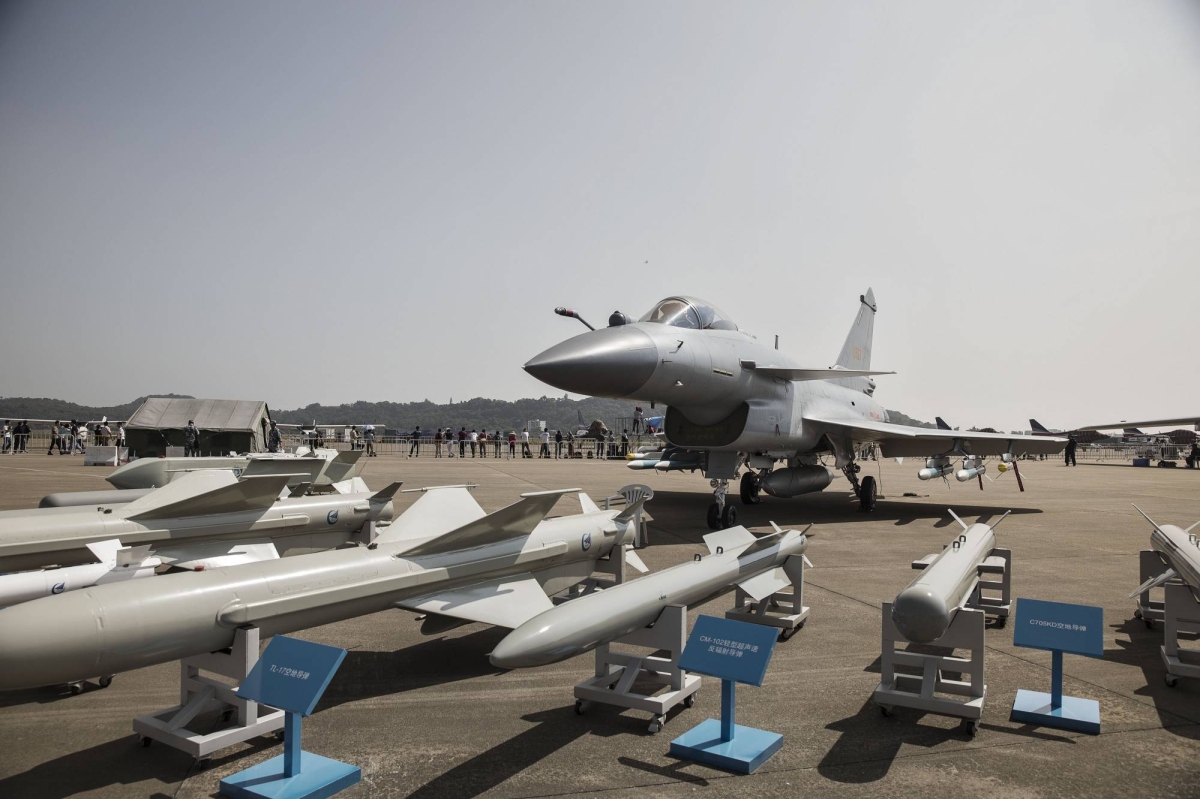
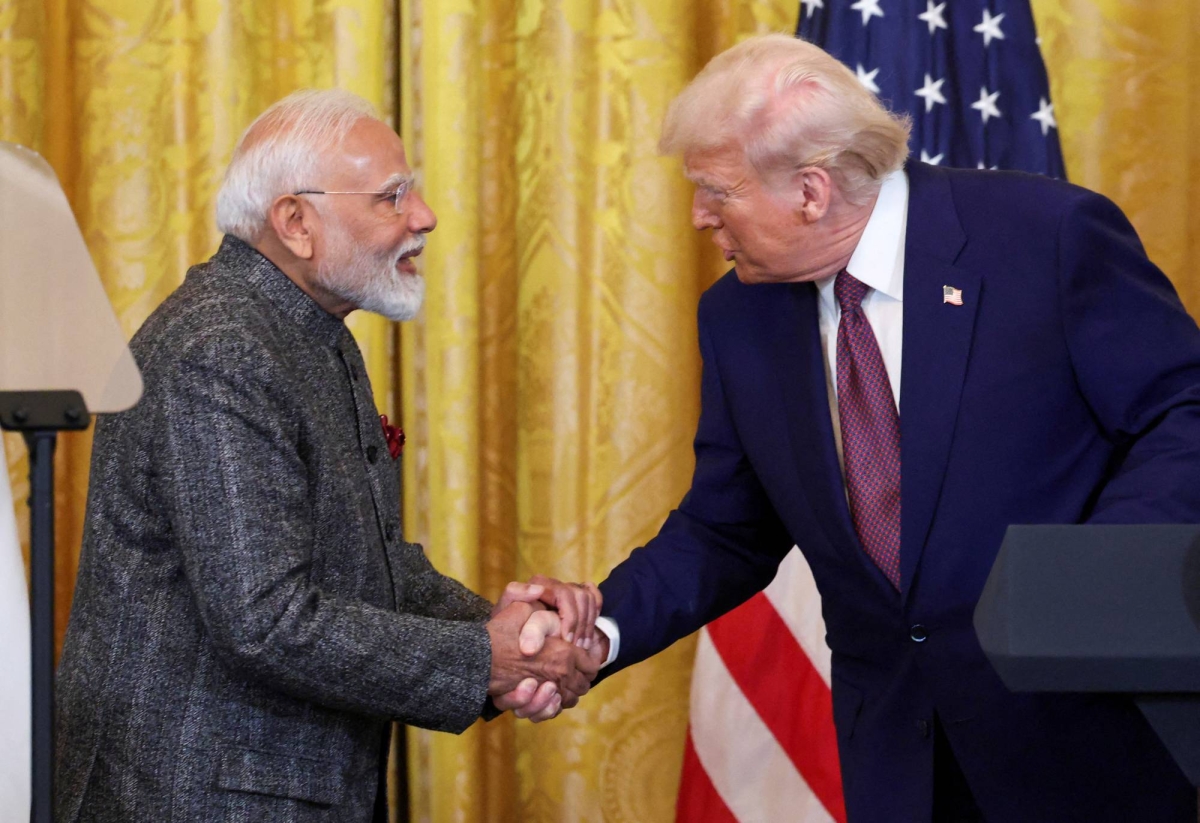
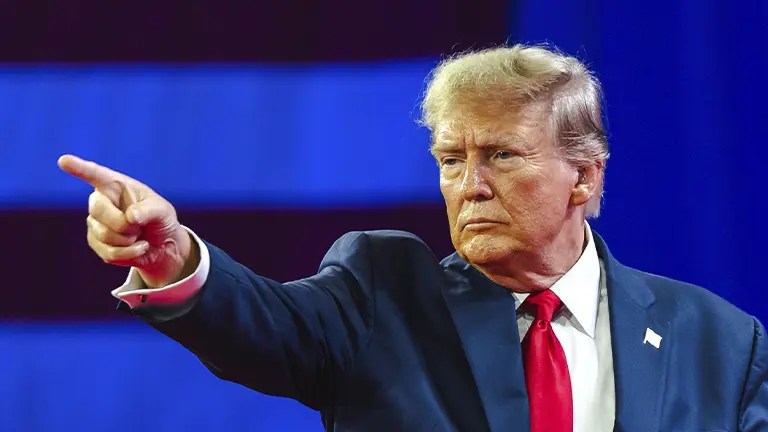

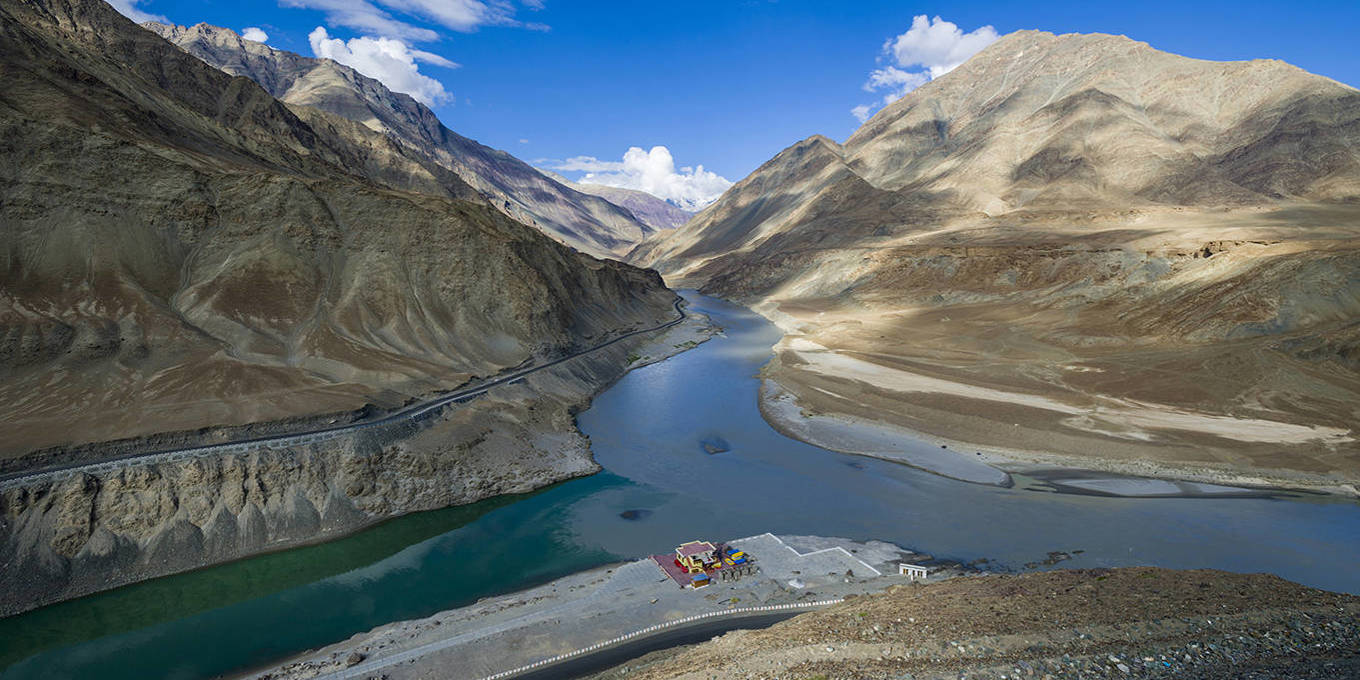


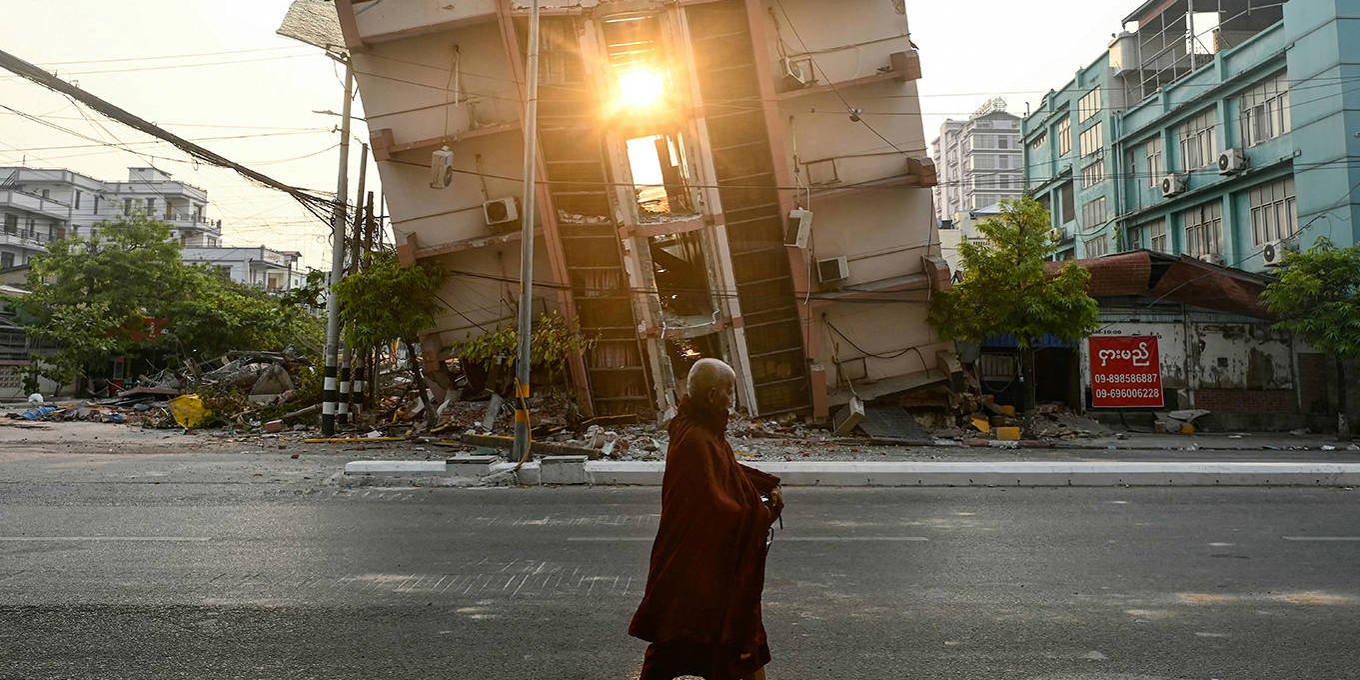
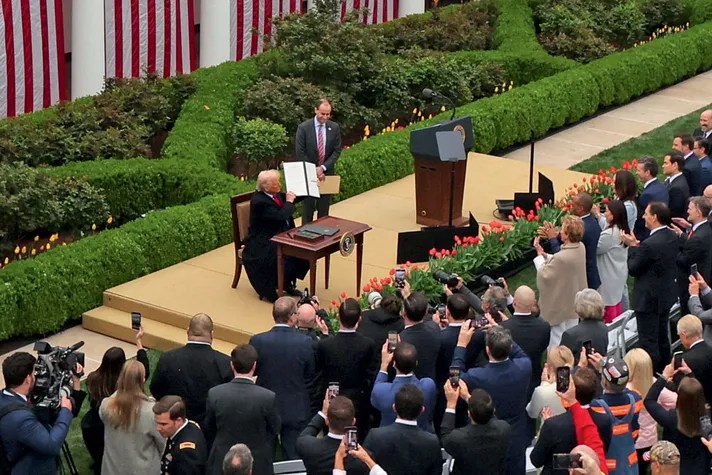
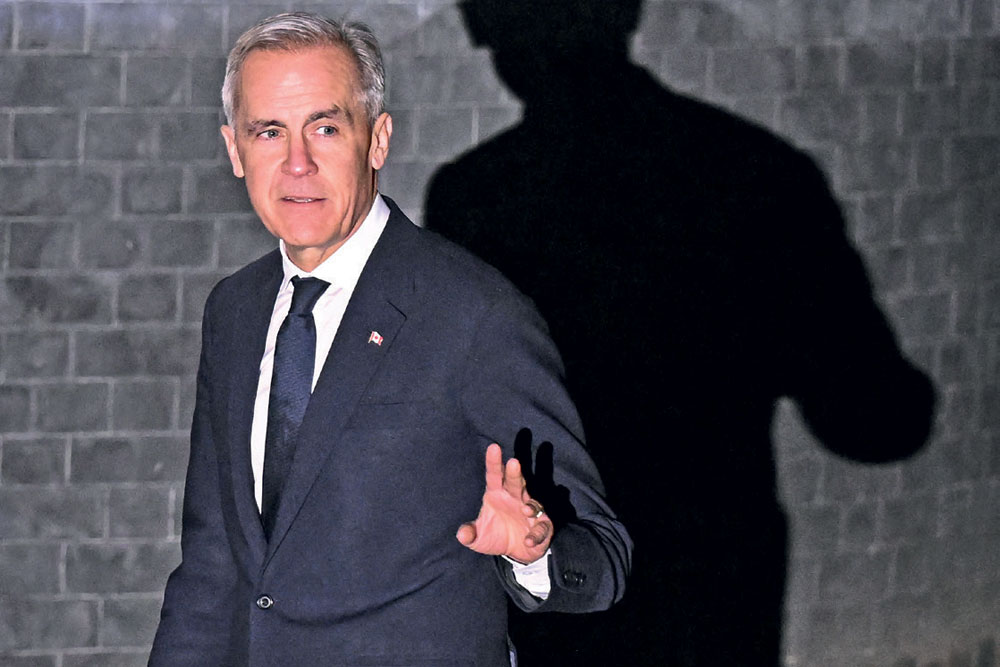
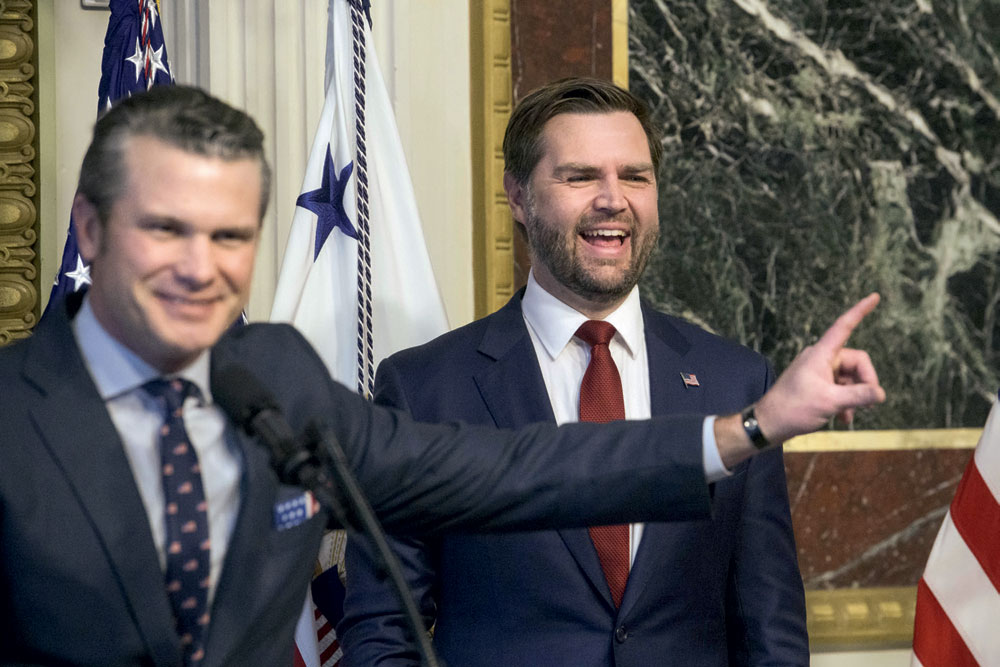
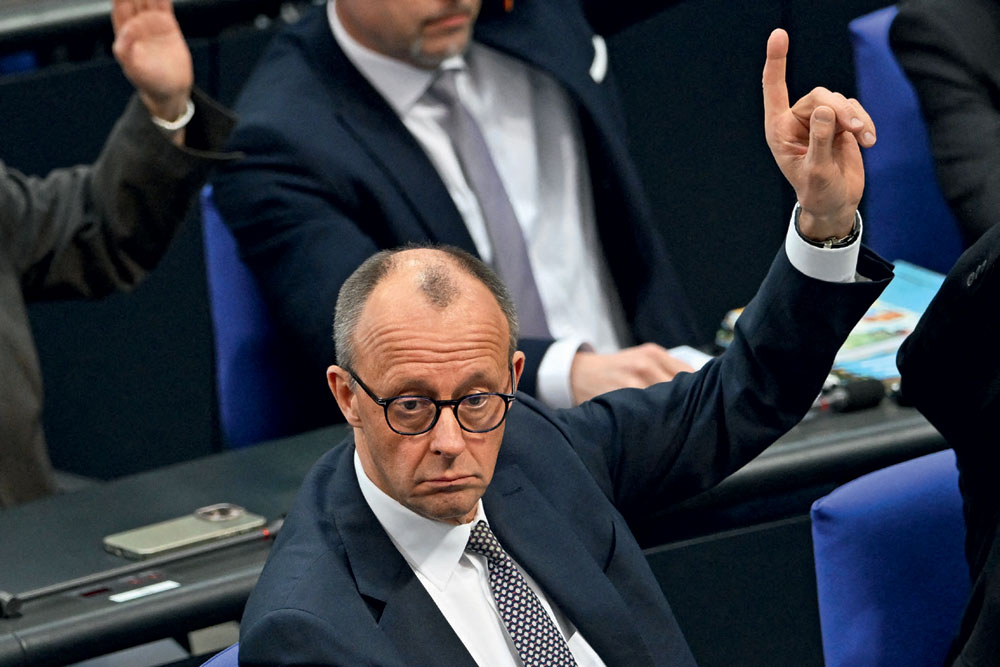
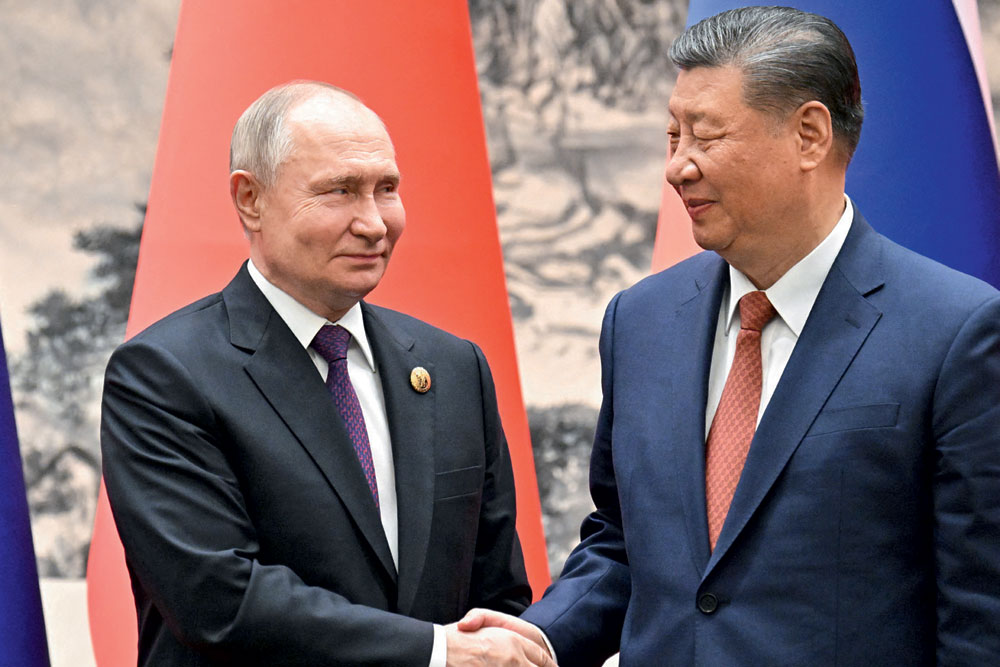
 Stagecraft and Statecraft
You must be logged in to post a comment.