Beijing’s Asia Pivot in 2016

In its own “pivot” of sorts, China looks set to pursue broader ties in the Asia-Pacific region in 2016, advancing initiatives such as the Asian Infrastructure Investment Bank and ramping up maritime and land trade corridors. Seven experts assess the challenges and opportunities in China’s relations with Southeast Asia, Japan, Central Asia, South Asia, the Korean Peninsula, and Australia in the next year.

Authors: Joshua Kurlantzick, Senior Fellow for Southeast Asia, Council on Foreign Relations Sheila A. Smith, Senior Fellow for Japan Studies, Council on Foreign Relations Alexander Gabuev, Senior Associate and Chair, Russia in the Asia-Pacific Program, Carnegie Moscow Center Brahma Chellaney, Professor of strategic studies, Centre for Policy Research James Reilly, Senior Lecturer in Northeast Asian Politics, Department of Government and International Relations, University of Sydney Scott A. Snyder, Senior Fellow for Korea Studies and Director of the Program on U.S.-Korea Policy, Council on Foreign Relations Merriden Varrall, Director, East Asia Program, Lowy Institute. Interviewer(s): Eleanor Albert, Online Writer/Editor

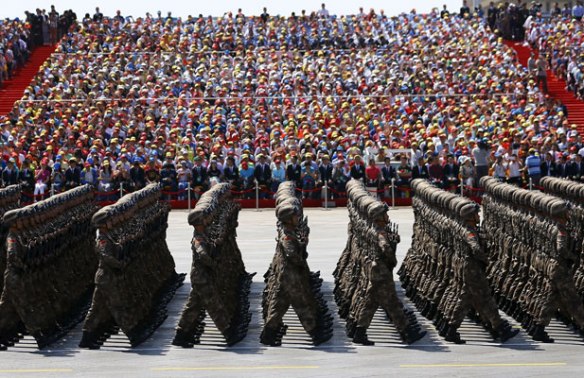
China-Military-Parade-617

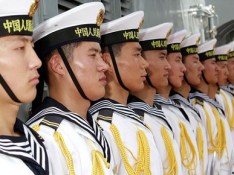
Soldiers of China’s People’s Liberation Army march during a military parade to mark the 70th anniversary of the end of World War II in Beijing, China. (Photo: Damir Sagolj/Reuters)

Brahma Chellaney, Professor of strategic studies, Centre for Policy Research

China has embarked on major initiatives to change the region’s geopolitical map with its own Asian pivot. The Silk Road initiative and the Asian Infrastructure Investment Bank epitomize Beijing’s efforts to reshape Asia’s security and financial architecture. In 2016, China appears determined to step up its efforts to fashion a Sino-centric Asia in place of the present regional order centered on a stable balance of power.

Chinese President Xi Jinping has articulated a more expansive role for China than any leader since Mao Zedong. His One Belt, One Road project, an expansive initiative to build up land and maritime trade routes,  is intended to extend the country’s commercial and strategic interests. The Maritime Silk Road and the overland Silk Road encompass Southern Asia and are linked by the $46-billion China-Pakistan Economic Corridor. Pakistan has given China exclusive rights to run the Chinese-built port at Gwadar for forty years, which, given its location at the mouth of the Strait of Hormuz, is expected to become a critical outpost for the Chinese navy. Beijing, in turn, has finalized the sale of eight submarines to Islamabad, a transfer that would more than double the size of Pakistan’s submarine force. China is clearly using Pakistan as a launch pad to play a bigger role in the Indian Ocean, the Middle East, and Central Asia.

China’s ambitions in the Indian Ocean are also reflected in its submarine forays in the region, which began in 2014, and the announcement that it would establish a naval hub in Djibouti, which overlooks the narrow Bab el-Mandeb Strait. Sina Military Network, a Beijing-based defense website with ties to the People’s Liberation Army, has claimed that ten Chinese attack submarines could blockade India’s eastern and western coastlines. The question of whether the Maritime Silk Road is just a benign-sounding new name for Beijing’s “string of pearls” strategy can no longer be dismissed.

Make no mistake: China’s strategic maneuvering in the Indian Ocean and Southern Asia draws strength from its muscular actions in the South China Sea, where it has incurred no international costs for creating artificial islands to host military facilities and expand its sea frontiers. Beijing’s territorial nibbling in the Himalayas and its damming of international rivers on the Tibetan plateau are also part of its effort to change the status quo.

© Council on Foreign Relations, January 5, 2016.

Loosening Japan’s pacifist bonds

The U.S. could benefit from a revision of Tokyo’s anti-defense constitution

By Brahma Chellaney – – Washington TimesJanuary 4, 2016

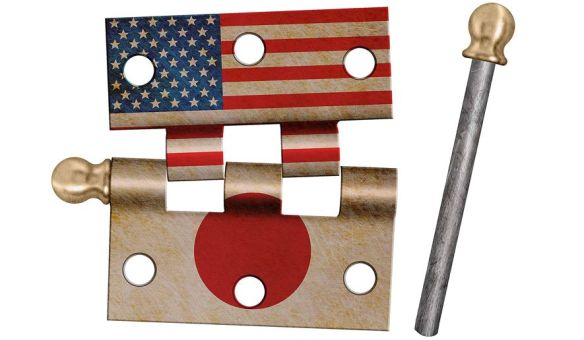
1_3_2016_b1-chel-us-japan-hi8201_c1-0-2933-1710_s885x516

The international spotlight on Japan’s prolonged economic woes has helped obscure one of Asia’s farthest-reaching but least-noticed developments — the political rise of the world’s third-largest economy. By initiating national-security reforms and seeking a more active role in shaping the evolving balance of power in Asia, Japan wants to stop punching below its weight and take its rightful place in the world.

Japan’s quiet political resurgence is reflected in various ways — from the government working to strengthen security arrangements with the United States and build close strategic partnerships with other major democracies in the Asia-Pacific to a grass-roots movement at home for changes in the country’s U.S.-imposed pacifist constitution.

Japan’s passive, checkbook diplomacy is giving way to a proactive, western-facing approach focused on the Asian mainland, the South China Sea and the Indian Ocean. The single biggest factor driving Japan’s political rise is the ascent of a muscular China.

Japan is the world’s first constitutionally pacifist nation. The constitution’s Article 9 says “land, sea and air forces, as well as other war potential, will never be maintained.” No other national constitution in the world goes so far as to bar acquisition of the means of war or to renounce “the threat or use of force as a means of settling international disputes.”

Japan’s increasingly vocal critics of the constitution say it does not reflect the values, culture and traditions of Japan.

In fact, the Japanese Constitution was hastily written and imposed by an occupying power. Supreme Allied Commander Douglas MacArthur made his occupation staff write the constitution in one week so that it was ready by Abraham Lincoln’s birth anniversary on Feb. 12, 1946, although it did not come into force until May 1947.

The American success in disarming Japan by disbanding its military, imposing a pacifist constitution, and overhauling its education system, however, engendered its own challenges. It did not take long for the United States to realize that it had gone too far in creating a demilitarized Japan. In 1953, Vice President Richard Nixon called the constitution “a mistake.”

America’s Cold War with the Soviet Union, the Communist takeover of China, and China’s entry into the Korean War helped change U.S. policy toward Japan. Through a major reinterpretation of the very constitution it had imposed, the U.S. encouraged Japan to reconstitute its military as “Self-Defense Forces” so as to make the country the lynchpin of America’s Asian strategy.

Japan’s recent reinterpretation of the constitution’s Article 9 to assert its right to collective self-defense was small in comparison. Tokyo has also relaxed its longstanding, self-imposed ban on export of arms, thus opening the path to building closer security cooperation with like-minded countries.

With Japan’s nationalist impulse to play a bigger international role now rising, its domestic debate on national security and constitutional reform is set to intensify.

Further national-security reform beyond what Prime Minister Shinzo Abe has carried out is, from a legal standpoint, linked to constitutional reform. For example, there is a limit to the extent to which the Article 9 prohibitions can be reinterpreted without enacting a constitutional amendment.

The Japanese Constitution is also unique in that it defines no head of state. It stripped the emperor of all but symbolic power. This was by design: The United States wanted to have the emperor as merely the symbol of Japan so that it could use him during the 1945-52 occupation years without the monarch being able to rally his people.

Likewise, the force-renouncing Article 9 was designed to keep Japan as America’s client state so that it would never pose a threat to the U.S. again.

But today, U.S. security interests would be better served by a more confident and secure Japan that assumes greater responsibility for its own defense and for regional security.

The Japanese Constitution, however, is among the hardest in the world to revise. It is doubtful that any proposed constitutional change — even after winning approval with the mandated two-thirds vote in both chambers of the Diet — can secure majority support in a national referendum in order to take effect.

The large protests against Mr. Abe’s 2015 security legislation permitting the Self-Defense Forces to engage in “collective defense” were a reminder that the U.S.-instilled pacifism remains deeply rooted in Japanese society. For example, a 2014 survey revealed that just 15 percent of Japanese (compared with almost 75 percent of Chinese) were willing to defend their country — the lowest figure in the world.

Let’s be clear: Enduring peace in Asia demands a proactive Japan. If Japan fails to carry out further reforms of its postwar institutions and policies to meet the new regional challenges, it could erode its security.

The United States spawned the problem that Japan confronts today — how to cast off the constitutional albatross. America must now be part of the solution because its own geostrategic interests demand that Japan play a proactive role in regional affairs and do more for its own defense. This Japan can do within the framework of the longstanding security treaty with Washington. If the U.S. were to openly support constitutional revision in Japan, it would help blunt criticism from the country’s powerful pacifist constituency and from China.

Constitutional and national-security reform in Japan would help underpin the central goal of America’s Asia-Pacific strategy — a stable balance of power. Although rising powers tend to be revisionist powers, a politically resurgent Japan, strikingly, is seeking to uphold the present Asian political and maritime order. Washington would do well to aid the continued political rise of this status quoist country, which is determined to reinvent itself as a more competitive and secure state.

Brahma Chellaney is the author of nine books, including, most recently, “Water, Peace, and War” (Rowman & Littlefield, 2015).

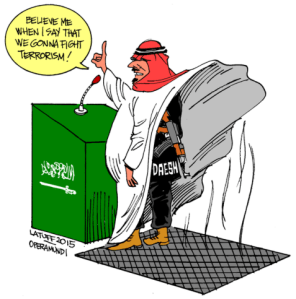
Saudi Arabia’s Phony War on Terror

Like a drug cartel claiming to have launched a counternarcotics drive, the Saudi-led “anti-terror” coalition includes all the world’s terror sponsors

A column internationally syndicated by Project Syndicate

downloadBERLIN – Containing the scourge of Islamist terror will be impossible without containing the ideology that drives it: Wahhabism, a messianic, jihad-extolling form of Sunni fundamentalism whose international expansion has been bankrolled by oil-rich sheikhdoms, especially Saudi Arabia. That is why the newly announced Saudi-led anti-terror coalition, the Islamic Military Alliance to Fight Terrorism, should be viewed with profound skepticism.

Wahhabism promotes, among other things, the subjugation of women and the death of “infidels.” It is – to quote US President Barack Obama’s description of what motivated a married couple of Pakistani origin to carry out the recent mass shooting in San Bernardino, California – a “perverted interpretation of Islam,” and the ideological mother of jihadist terrorism. Its offspring include Al Qaeda, the Taliban, Boko Haram, al-Shabaab, and the Islamic State, all of which blend hostility toward non-Sunnis and anti-modern romanticism into nihilistic rage.

Saudi Arabia has been bankrolling Islamist terrorism since the oil-price boom of the 1970s dramatically boosted the country’s wealth. According to a 2013 European Parliament report, some of the $10 billion invested by Saudi Arabia for “its Wahhabi agenda” in South and Southeast Asia was “diverted” to terrorist groups, including Lashkar-e-Taiba, which carried out the 2008 Mumbai terror attacks.

Western leaders have recognized the Saudi role for many years. In a 2009 diplomatic cable, then-US Secretary of State Hillary Clinton identified Saudi Arabia as “the most significant source of funding to Sunni terrorist groups worldwide.” Thanks largely to the West’s interest in Saudi oil, however, the Kingdom has faced no international sanctions.

cwwaaiaxiaa7fidNow, with the growth of terrorist movements like the Islamic State, priorities are changing. As German Vice Chancellor Sigmar Gabriel said in a recent interview, “We must make it clear to the Saudis that the time of looking the other way is over.”

This shift has spurred the Kingdom to announce a “crackdown” on individuals and groups that fund terror. But, according to a recent US State Department report, some Saudi-based charities and individual donors continue to fund Sunni militants.

From this perspective, Saudi Arabia’s surprise announcement of a 34-country anti-terror alliance, with a joint operations center based in Riyadh, is a logical step, aimed at blunting growing Western criticism, while boosting Sunni influence in the Middle East. But, of course, the alliance is a sham – as a closer look at its membership makes clear.

Tellingly, the alliance includes all of the world’s main sponsors of extremist and terrorist groups, from Qatar to Pakistan. It is as if a drug cartel claimed to be spearheading a counternarcotics campaign. Listed as members of the alliance are also all of the jihadist citadels other than Afghanistan, including war-torn Libya and Yemen, both of which are not currently governed by a single authority.

Moreover, despite being touted as an “Islamic” alliance, with members coming from “all over the Islamic world,” the group includes predominantly Christian Uganda and Gabon, but not Oman (a fellow Gulf sheikdom), Algeria (Africa’s largest country), and Indonesia (the world’s most populous Muslim country).

The failure to include Indonesia, which has almost twice as many Muslims as the entire Middle East, is striking not only because of its size: Whereas most countries in the alliance are ruled by despots or autocrats, Indonesia is a robust democracy. Autocratic rule in Islamic countries tends to strengthen jihadist forces. But when democracy takes root, as in tolerant and secular Indonesia, the clash between moderates and extremists can be better managed.

Saudi Arabia’s dysfunctional approach is reflected in the fact that some alliance members – including Pakistan, Malaysia, Lebanon, and the Palestinian Authority – immediately declared that they had never actually joined. The Kingdom seemed to think that it could make that decision on behalf of the major recipients of its aid.

Add to that the unsurprising exclusion of Shia-governed Iran and Iraq, along with Alawite-ruled Syria, and it is clear that Saudi Arabia has merely crafted another predominantly Sunni grouping to advance its sectarian and strategic objectives. This aligns with the more hardline policy approach that has taken root since King Salman ascended the throne in January 2015.

At home, Salman’s reign so far has meant a marked increase in the number of sentences of death by decapitation, often carried out in public – a method emulated by the Islamic State. Abroad, it has meant a clear preference for violent solutions in Bahrain, Iraq, Syria, and Yemen.

A smaller Saudi-led Arab coalition has been bombing Yemen since March, with the goal of pushing back the Shia Houthi rebels who captured Sana’a, the capital, after driving the Saudi-backed government from power. Saudi warplanes have bombed homes, markets, hospitals, and refugee camps in Yemen, leading critics to accuse the Kingdom of deliberately terrorizing civilians to turn public opinion against the Houthis.

Saudi Arabia’s solutions have often controverted the objectives of its American allies. For example, the Kingdom and its Arab partners have quietly slipped out of the US-led air war in Syria, leaving the campaign largely in American hands.

But beyond Saudi Arabia’s strategic manipulations lies the fundamental problem with which we started: the Kingdom’s official ideology forms the heart of the terrorist creed. A devoted foe of Islamist terrorism does not promote violent jihadism. Nor does it arrest and charge with “terrorism” domestic critics of its medieval interpretation of Islam. Saudi Arabia does both.

This speaks to the main shortcoming of today’s militarized approach to fighting terrorism. Unless the expansion of dangerous ideologies like Wahhabism is stopped, the global war on terror, now almost a generation old, will never be won. No matter how many bombs the US and its allies drop, the Saudi-financed madrassas will continue to indoctrinate tomorrow’s jihadists.

© Project Syndicate, 2015.

Unaccountable China

A column internationally syndicated by Project Syndicate. 

ac770042b59cb2a99b45442629188250.landscapeLargeHO CHI MINH CITY – Since late 2013, China has been engaged in the frenzied creation of artificial islands and the militarization of the South China Sea. This amounts to an alarming quest for control over a strategically crucial corridor through which $5.3 trillion in trade flows each year. But what is even more shocking – not to mention dangerous – is that China has incurred no international costs for its behavior.

Of course, the international community has a lot on its plate nowadays, not least a massive refugee crisis fueled by chaos in the Middle East. But the reality is that, as long as China feels free to maneuver without consequence, it will continue to do so, fueling tensions with its neighbors that could easily turn into all-out conflict, derailing Asia’s rise.

A key component of China’s strategy in the South China Sea is the dredging of low-tide elevations to make small islands, including in areas that, as China’s deputy foreign minister for Asian affairs, Liu Zhenmin, recently acknowledged, “are far from the Chinese mainland.” In China’s view, that distance makes it “necessary” to build “military facilities” on the islands. And, indeed, three of the seven newly constructed islets include airfields, from which Chinese warplanes could challenge the US Navy’s ability to operate unhindered in the region.

By militarizing the South China Sea, China is seeking to establish a de facto Air Defense Identification Zone like the one that it formally – and unilaterally – declared in 2013 in the East China Sea, where it claims islands that it does not control. China knows that, under international law, its claim to sovereignty over virtually all of the resource-endowed South China Sea, based on an “historic right,” is weak; that is why it has opposed international adjudication. Instead, it is trying to secure “effective control” – which, under international law, enhances significantly the legitimacy of a country’s territorial claim – just as it has done in the Himalayas and elsewhere.

But China’s ambitions extend beyond the South China Sea: It aims to create a strongly Sino-centric Asia. Thus, the country recently established its first overseas military base – a naval hub in Djibouti, on the Horn of Africa – and it has repeatedly sent submarines into the Indian Ocean. Moreover, China is engaging in far-reaching economic projects – such as the “One Belt, One Road” initiative, which entails the construction of infrastructure linking Asia to Europe – that will strengthen its presence in, and influence over, a number of countries, thereby recasting regional geopolitics in its image.

Meanwhile, US President Barack Obama’s administration remains hesitant to back up its much-publicized “pivot” toward Asia with meaningful action – especially action to constrain China. Instead of, say, imposing sanctions or exerting localized military pressure on China, the Obama administration has attempted to pass the buck. Specifically, it has stepped up military cooperation with other Asia-Pacific countries, encouraged other claimants to territory in the South China Sea to shore up their defenses, and supported a more active role in regional security for democratic powers like Australia, India, and even Japan.

To put it bluntly, that is not enough. Under the United Nations Convention on the Law of the Sea, unlike natural islands, China’s constructed islands – which were built on top of natural features that did not originally rise above the water at high tide – do not have sovereignty over 12 nautical miles of surrounding sea. Yet it was not until recently that the United States sent a warship within 12 nautical miles of an artificial island. And even then, it was just a sail-through that an official Chinese mouthpiece dismissed as a “political show.” The US did not challenge China’s territorial claims directly, or demand that China halt its island-building program.

In fact, even as China persists with its fast-paced dredging, which has already created more than 1,200 hectares of artificial land, US officials insist that the South China Sea issue should not be allowed to hijack Sino-American relations. This feckless approach to China’s quietly emerging hegemony in the South China Sea has heightened concerns of the region’s smaller countries. They know that when two great powers bargain with each other, it is countries like them that usually lose.

Some already have. In 2012, China seized the disputed Scarborough Shoal, located well within the Philippines’ exclusive economic zone. The US, which had just brokered an agreement requiring Chinese and Filipino vessels to withdraw from the area, did nothing, despite its mutual-defense treaty with the Philippines.

But Asia’s smaller countries are not the only ones that should be worried. Given the South China Sea’s strategic importance, disorder there threatens to destabilize the entire region. Moreover, if China gets its way, it will become more assertive in the Indian Ocean and the western Pacific. Perhaps most important, if Chinese bullying enables it to ignore international rules and norms, a very dangerous precedent will have been set. One can easily think of other countries that would be sure to embrace it.

© Project Syndicate, 2015.

How not to combat terror

By The Japan Times

imagesA terror attack by a married, Pakistan-origin couple in California has shaken up American politics and the presidential contest, setting in motion stricter restrictions on grant of some U.S. visas and prompting candidate Donald Trump to propose a temporary ban on Muslims entering the United States. But the attack and the reactions also raise a larger question: Has the U.S. evolved a clear and credible counterterrorism strategy after spearheading the global war on terror since 2001?

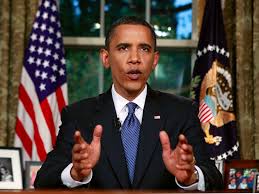
President Barack Obama’s first Oval Office address in five years, while aimed at calming a jittery American public after the California attack, has only widened the gap between U.S. rhetoric and the challenge of effectively combating the international spread of Islamist extremism and terrorism.

Obama admitted that, in recent years, “the terrorist threat has evolved into a new phase” and sought to reassure Americans that “we will overcome it.” Yet, as if to underscore his incoherent and ineffectual approach, his Dec. 6 speech was conspicuous by its omission of any reference on how to combat increasing Muslim radicalization, which is spawning violent jihadists.

The radicalization is linked to the role of some Gulf sheikhdoms in spreading Wahhabism, the source of modern Islamic fundamentalism. By exporting this fringe form of Islam, these petrodollar-laden states have gradually snuffed out more liberal Muslim traditions in regions extending from Asia and Africa to the Americas.

Saudi Arabia and Qatar, the two officially Wahhabi states, and the United Arab Emirates still continue to fund madrassas (Islamic schools), mercenaries and militants in other places.

In his speech, Obama said the U.S. is “at war” with the Islamic State (IS) and vowed to “destroy” that terrorist organization. How does he plan to do that? He said by sticking, in essence, to his present, 1½-old strategy that has allowed IS to thrive.

Despite the U.S. military carrying out more than 8,000 airstrikes thus far, it has failed, in the absence of ground forces, to score major gains.

To America’s embarrassment, its Arab allies have gradually sneaked out from the air war, leaving the campaign as a largely American effort — now supplemented by French and Britain bombing raids and Obama’s dispatch of special operations troops in support of CIA-trained Syrian rebels.

Some 10 million people are currently living under IS rule in Syria and Iraq in an area the size of Britain. By strategically capturing oil fields and towns along the Euphrates and Tigris rivers — the region’s lifelines — IS has sought to control oil and water resources. Yet Obama’s speech did little more than repackage a foundering strategy with tougher rhetoric.

Indeed, Obama’s missteps contributed to IS’ dramatic rise. Even as IS rapidly gained sway from 2013, Obama’s strategy remained focused on overthrowing Syria’s secular ruler, Bashar Assad. Obama’s glib dismissal of IS in early 2014 as a local “JV team” trying to imitate al-Qaida but without the capacity to directly threaten America allowed the group to become a monster. In fact, just a day before the recent Paris attacks, Obama claimed IS had been “contained.”

How can IS be contained when the Obama administration has failed to make Turkey seal its frontier to deny IS oil-export revenue and new foreign fighters and weapons? Russia has accused Turkey’s pro-Islamist president, Recep Tayyip Erdogan, and his family of profiting from the illicit oil trade with IS. Obama himself has acknowledged that a 98-km open stretch of the Turkey-Syria border permits IS to flourish.

Consider another element: Repeated U.S. failures to organize and arm a rebel force in Syria have been compounded by the defection of the vast majority of CIA-trained rebels to IS.

Obama said the couple involved in the California mass shooting “had gone down the dark path of radicalization, embracing a perverted interpretation of Islam that calls for war against America and the West.” But his speech shied away from identifying the main international imperative today — to get the sheikhdoms to stop financing the overseas spread of their fundamentalist, jihad-extolling strain of Islam.

It is the U.S.-backed Wahhabist monarchs that have funded the international spread of the “perverted interpretation of Islam.” The House of Saud in particular has used its custodianship of Islam’s holy places as a license to export the Wahhabi ideology.

The killer-couple in California — Syed Rizwan Farook, the U.S.-born son of Pakistani immigrants, and Pakistani national Tashfeen Malik — had been radicalized by Wahhabi ideology before IS gained prominence. Malik attended a Saudi-funded madrassa in Multan, the main city in Pakistan’s southern Punjab region. Multan is a historical center of Sufism, a liberal, mystical form of Islam that has come under open assault from the rapid spread of petrodollar-funded Wahhabism.

On the day Obama made his speech, it was the second-ranking official of one power that isn’t bombing Syria — Germany — that identified the key issue in the global war on terror. In a newspaper interview, German Vice Chancellor Sigmar Gabriel said the era of the West ignoring the Saudi sponsorship of radical Islam must come to an end.

“From Saudi Arabia, Wahhabi mosques are financed throughout the world,” Gabriel said, adding: “We must make it clear to the Saudis that the time of looking the other way is over.”

The reality is that the proliferating, petrodollar-financed Wahhabi mosques and madrassas in several countries have become incubators for terrorist and other militant groups. IS is just the symptom of a disease spawned by Wahhabism.

Indeed, Saudi Arabia shares a lot in common with IS, its ideological offspring. Wahhabism serves as the “complete ideology” of IS and “contributes in other countries to radicalization of moderate Muslims,” as the head of Germany’s Social Democratic Party parliamentary group, Thomas Oppermann, recently put it.

Like IS, Saudi Arabia is on a beheading spree. This year, under the new king Salman, Saudi executioners have been unusually busy as the number of public decapitations, according to Amnesty International, has reached the highest in two decades, with at least 151 executions having taken place as of November. While Saudi Arabia leads the world in barbaric execution practices, IS flaunts the lopped-off heads of its victims as trophies.

Against this background, how can the U.S. positively influence the ideological war now raging in Islam between moderates and extremists without bringing the jihad-exporting states to heel?

It must stop being in thrall to Gulf money and reconsider its long-standing alliance with tyrannical Arab monarchs wedded to jihadism. By backing the 2011 Saudi military intervention in Bahrain, which crushed the pro-democracy movement of the majority Shiite community, and by now aiding the Saudi-led bombing campaign in conflict-torn Yemen, the U.S. has allowed short-term calculations to trump long-term interests.

More fundamentally, without the U.S. embracing a holistic, long-term strategy, the global war on terror — already in its 15th year — has little chance of containing the growing threat from violent jihadism.

Geostrategist Brahma Chellaney is the author of nine books, including “Water, Peace, and War: Confronting the Global Water Crisis.”

© The Japan Times, 2015.

The geopolitical hub of international maritime challenges

Screen-Shot-2015-01-30-at-195348

The U.S. naval and air force base at the British-controlled atoll of Diego Garcia is located strategically in the middle of the Indian Ocean.

Brahma Chellaney, Nikkei Asian Review

The emerging centrality of the Indian Ocean for global trade and energy flows and for a stable balance of power in Asia is sharpening geopolitical competition in the wider region, home to prominent strategic chokepoints such as the Malacca and Hormuz straits. More than half of the world’s container traffic, 70% of its seaborne petroleum trade and a third of all maritime traffic traverses the Indian Ocean, the world’s third-largest body of water, which connects Asia with Africa and, via the Middle East, with Europe.

No less important, the Indian Ocean Rim may be poised to emerge as the world’s fastest-growing region in economic terms over the next decade, according to a recent assessment by the Center for International Development at Harvard University. After two centuries of Atlantic domination followed by the rise of the Pacific Rim, the Indian Ocean Rim could become the next growth engine, amid relatively slow growth in the mature economies and a relentless slowdown in China.

Meanwhile, as outside and local powers joust for access, influence and relative advantage in the region, the Indian Ocean is witnessing a maritime version of the 19th century Great Game — the rivalry between the British and Russian empires for influence in Central Asia. Four national strategies — China’s Maritime Silk Road project, America’s “pivot” to Asia, Japan’s western-facing approach, and India’s Act East Policy — intersect in the Indian Ocean.

China’s Maritime Silk Road — a catchy name for Beijing’s “string of pearls” policy of advancing strategic interests along its trade routes — is centered in the Indian Ocean, with China employing aid, investment and political leverage to pursue geostrategic objectives. A pet project of President Xi Jinping, its larger goal is to redraw Asia’s geopolitical map by pulling strategically located states closer to China’s orbit. It also seeks to deal with China’s problem of overproduction at home by winning lucrative overseas contracts for its state-run companies to build seaports, railroads, highways and energy pipelines in states located along the great trade arteries.

The U.S. has the largest military footprint of any power in the Indian Ocean, including a major naval and air force base at the British-controlled atoll of Diego Garcia, which is located halfway between Africa and Indonesia and serves as a logistic-support center for American military missions in Afghanistan, Syria and Iraq. America’s much-publicized “pivot” to Asia has drawn attention to the ocean’s critical importance. Preoccupied with the Middle East, Washington has yet to provide strategic heft to its pivot, but it has encouraged both India’s Act East policy of building economic and strategic partnerships with likeminded Asian countries and Japanese Prime Minister Shinzo Abe’s pursuit of a western-facing policy focused on mainland Asia and the Indian Ocean. Over the last few years, the U.S. has signed approximately $10 billion in defense sales to India, according to Rich Verma, U.S. ambassador to India.

Japanese reforms

Japan, which imports 96% of its energy requirements, has become increasingly concerned about maritime security in the Indian Ocean, through which three-fifths of its energy supplies pass. Japan’s ongoing national security reforms are opening the path for it to collaborate closely with friendly Indian Ocean Rim countries such as India and Indonesia, and to play a more active role in ensuring the security of the region’s critical sea lanes. Tokyo has already eased its long-standing self-imposed ban on arms exports and reasserted its right to exercise “collective self-defense.”

One manifestation of the increasing geopolitical competition in the Indian Ocean is a naval arms race, especially under the waves. China boasts one of the fastest-growing undersea fleets in the world. It has already surpassed the U.S. submarine fleet in quantity, although not quality. But as it works to further expand its force of diesel and nuclear attack submarines, China’s territorial and maritime assertiveness and muscular actions are prompting other countries to acquire submarines as well as submarine-hunting aircraft.

About a year ago, Chinese attack submarines undertook their first known voyages to the Indian Ocean, with a Song-class diesel-electric submarine and then a Type 091 Han-class nuclear-powered boat docking at a new Chinese-majority-owned container terminal in Colombo, Sri Lanka’s capital. This year, a Chinese submarine docked at the Pakistani port of Karachi. Earlier, Beijing conveyed to New Delhi its decision to deploy a Type-093 Shangclass nuclear-powered attack submarine for Indian Ocean patrol.

For New Delhi, China’s increasing naval forays into India’s maritime backyard carry long-term strategic implications. Just as China’s annexation of Tibet in 1951 created a northern, trans-Himalayan military threat for the first time in Indian history, its Maritime Silk Road promises to open an oceanic threat from the south for the first time since the European colonial depredations of the 18th and 19th centuries. Indeed, a Beijing-based defense website, Sina Military Network, claimed earlier this year that 10 Chinese attack submarines could blockade India’s eastern and western coastlines.

The larger strategic risk for India is that China, in partnership with its close ally Pakistan, could encircle it on land and at sea. Although trade through the Indian Ocean accounts for half of India’s gross domestic product and the bulk of its energy supplies, accidents and project delays have left its diesel submarine fleet severely depleted. India has one nuclear-powered sub on lease from Russia and is completing another domestically as it seeks to bolster its anti-submarine capabilities.

India has also stepped up its military diplomacy and is doling out billions of dollars in credit to key littoral states. At the recent India-Africa summit in New Delhi, attended by leaders of 54 African nations, India pledged $10 billion in new credit and $600-million grant aid, in addition to $7.4 billion in soft loans and $1.2 billion in aid provided since the first such summit in 2008.

Cultural Affinity

At the same time, New Delhi is working to revitalize relationships with Indian Ocean Rim states in the Persian Gulf and elsewhere, including neighboring Myanmar, Bangladesh, Sri Lanka and Indonesia, whose northern tip is close to India’s Nicobar Islands territory. Using cultural affinity — an asset China lacks in region — India has sought to revive linkages along the ancient Spice Route, which had the Indian peninsula as its hub. Indian Prime Minister Narendra Modi has been conveying the message: “Our destinies are linked by the currents of the Indian Ocean.”

Meanwhile, China has finalized the sale of eight diesel-electric submarines to Pakistan, a transfer that would more than double the size of that country’s submarine fleet. Thailand is also poised to buy Chinese submarines, paying more than $1 billion for three. Indonesia, like Vietnam previously, is procuring Kilo-class vessels from Russia. It was this class of Russian boats that launched China’s own submarine modernization program.

Indian Ocean security is also linked to developments in the South China Sea, where threats to freedom of navigation and maritime security have arisen from China’s creation of artificial islands, its effort to establish a major military base on one of them, and its declaration of an expansive exclusive economic zone. Indeed, Chinese Vice Admiral Yuan Yubai claimed on Sept. 14 that the South China Sea “belongs to China.”

The U.S., aware that China’s maneuvering in the Indian Ocean draws strength from its muscular actions in the South China Sea, has been working with its allies and partners to address these challenges. The U.S.-India Joint Strategic Vision for the Asia-Pacific and Indian Ocean Region — signed during President Barack Obama’s New Delhi visit in January — and the Pentagon’s subsequent Asia-Pacific Maritime Security Strategy emphasize the importance of greater maritime cooperation among democratic powers.

Yet, even at the risk of handing Beijing a fait accompli, the U.S. has restricted itself to lodging diplomatic protests over China’s creation of artificial islands in the South China Sea. It has thus far shied away from, on a regular basis, carrying out “freedom of navigation” flyovers or sail-throughs within a 12-nautical-mile zone of China’s recently constructed or expanded outposts. A recent symbolic sail-through does not change the larger picture.

The contest for influence in the Indian Ocean is pivotal to determining the direction of Asian security and shaping the international maritime order. As U.S. Admiral Samuel Locklear has noted, two-thirds of the world’s 300 submarines that are not part of the U.S. Navy (which deploys 73) are already in the Indo-Pacific region. This is a game that democratic powers must positively influence to underpin peace, stability and prosperity in the Indian Ocean and the wider Indo-Pacific region.

Brahma Chellaney is a geostrategist and author. He is currently professor of strategic studies at the Center for Policy Research in New Delhi; a fellow of the Robert Bosch Academy in Berlin; and an affiliate with the International Centre for the Study of Radicalization at King’s College London.

© Nikkei Asian Review, 2015.

How alliances of convenience spur deadly terrorism

p7-Chellaney-a-20151121

Brahma ChellaneyWith the horrific Paris attacks refocusing global spotlight on the scourge of international terrorism, we should not forget the factors that continue to aid the rise of jihadist forces. The international fight against transnational Islamic terrorism can never succeed as long as short-term geostrategic interests prompt Western powers to form alliances of convenience that strengthen fundamentalist forces extolling violence as a sanctified tool of religion.

Islamic terrorism poses an existential threat to liberal, pluralistic states everywhere, not just in the West. So, the interventionist policies of some powers that unwittingly bolster Islamist forces threaten not just their internal security but also that of other democracies with sizable Muslim populations.

Make no mistake: The war on terror cannot be credibly fought with treacherous allies, such as jihadist rebels and fundamentalism-exporting sheikhdoms. Indeed, the pursuit of near-term geostrategic goals at the cost of long-term interests has created an energized international jihadist threat and fostered greater transnational terrorism. The focus on securing short-term gains is helping to inflict long-term pain on the international community.

The notion that Western powers can aid “moderate” jihadists in faraway lands — training them in how to make and detonate bombs and arming them with lethal weapons — and yet not endanger their own security has repeatedly been shown to be false. The training and arming of such militants in collaboration with reactionary Islamist sheikhdoms has only allowed these countries’ cloistered royals to play double games and bankroll Muslim extremist groups and madrasas in many countries.

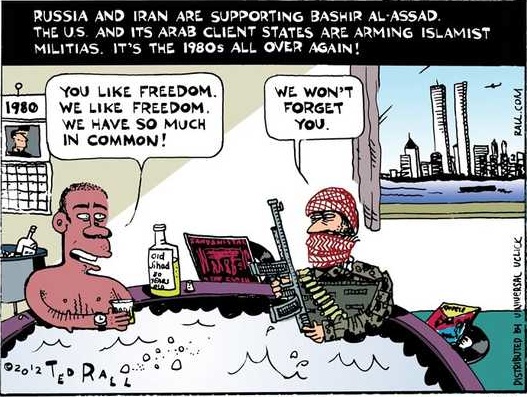
In fact, it is the state and non-state allies of convenience since the 1980s — when the CIA trained and armed thousands of anti-Soviet Afghan rebels with Arab petrodollars and the help of Pakistan’s rogue Inter-Services Intelligence (ISI) agency — that have come to haunt the security of Western and non-Western democracies alike.

In 1985, at a White House ceremony attended by several Afghan top-ranking “mujahedeen” — the jihadists out of which Al Qaeda emerged — President Ronald Reagan gestured toward his guests and declared, “These gentlemen are the moral equivalent of America’s Founding Fathers.” It was the Reagan administration’s use of Islam as an ideological tool to spur jihad against the Soviet military intervention in Afghanistan that created Al Qaeda, undermining the security of several regional states.

As secretary of state, Hillary Clinton admitted in a 2010 ABC News interview that, “We trained them, we equipped them, we funded them, including somebody named Osama bin Laden. And then when we finally saw the end of the Soviet Army crossing back out of Afghanistan, we all breathed a sigh of relief and said, okay, fine, we’re out of there. And it didn’t work out so well for us.”

Today, the Islamic State of Iraq and Syria, or ISIS, has emerged as a new international monster because the lesson from Al Qaeda’s rise has been ignored. This is apparent from President Barack Obama’s recent decision to ramp up U.S. support to Syrian rebels with nearly $100 million in fresh aid. The decision has come despite the vast majority of the CIA-trained “moderate” jihadists having defected with their weapons to ISIS. Now, ISIS wages its terror campaigns largely with Western weapons and with many Western-trained fighters.

France finds itself increasingly in the crosshairs of terrorism in large part because of President François Hollande’s interventionist impulse. A political lightweight who became president by accident in 2012, Hollande has shown himself to be one of the world’s most interventionist leaders, despite being a socialist. Serial interventions have come to define the “Hollande doctrine.”

Under Hollande’s leadership, France has conducted military operations in Ivory Coast, Somalia, Mali, Central African Republic and the Sahel, provided assistance to Syrian rebels as part of a U.S.-led effort to topple President Bashar al-Assad and, more recently, launched airstrikes in Iraq and Syria. When U.S. President Barack Obama considered sending the U.S. military into combat in Syria in 2013, one foreign leader egging him on was Hollande.

Hollande’s happy interventions, especially in the Middle East, have angered radical elements in France’s sizable Arab immigrant community. Hollande was singled out by name by some of those who carried out the November 13 attacks in Paris. Despite several new security measures being implemented after the Charlie Hebdo attack, including a sweeping surveillance law in the supposed cradle of liberty, France has become more vulnerable to terrorist strikes. Hollande now wants the French Constitution amended.

More broadly, almost every Western intervention in the wider Middle East has triggered unforeseen internal and cross-border consequences. Creating a vicious circle of action and reaction, the unintended effects have then prompted another Western intervention in due course to control the fallout.

For example, many of the Arab and other jihadists trained by the CIA in Pakistan, as part of the Reagan administration’s clandestine war against the Soviet Union in Afghanistan, later returned to their homelands to wage terror campaigns against governments they viewed as tainted by Western influence. Such Al Qaeda-linked militants were linked to Egyptian President Anwar Sadat’s assassination and to terrorist attacks on several U.S. targets in the Middle East in the 1990s. Large portions of the multibillion-dollar covert U.S. aid for anti-Soviet Islamic guerrillas were siphoned off by the conduit — Pakistan’s ISI — to ignite a bloody insurgency in the Jammu and Kashmir state of India, which bore the brunt of the unintended consequences of the Russian and U.S.-led interventions in Afghanistan from 1979 to 1989.

More than a decade after its proxy war drove Soviet forces out of Afghanistan, the U.S. — following the September 11, 2001, terror attacks at home — invaded Afghanistan. Over 14 years later, it is still embroiled in that war.

Take another example: The U.S.-French-British toppling of strongman Muammar Gaddafi in 2011 has turned Libya into a battle-worn wasteland that now serves as a happy hunting ground for ISIS, Al Qaeda and other jihadists. This has opened the door to the flow of arms and militants to other countries, leading to the French military’s antiterrorist operations from Mali to the Sahel.

No state has unravelled faster and become a terrorist haven due to foreign intervention than Libya. Yet the U.S. has endlessly debated the 2012 killing of four Americans in Benghazi, including its ambassador, but sidestepped the Obama-made disaster that Libya represents. Indeed, one of the first acts of the short-lived successor regime that the Western powers installed in Tripoli was to introduce Shariah — Islamic law rooted in the ultra-extreme Wahhabi form of Sunni Islam.

Today, a lawless Libya continues to export jihad and guns across the Sahel and undermine the security of fellow Maghreb countries and Egypt. As a jihadist stronghold, it also poses a potential threat to European security.

Likewise, the operation led by the U.S., France and Britain to overthrow Assad not only contributed to turning the once-peaceful, secular Syria into a jihadist bastion and vast killing field but also enabled ISIS to rise from its base in northern Syria as a powerful, marauding army that has gained control over vast swaths of territory extending to Iraq.

That, in turn, prompted Obama more than 14 months ago to launch an open-ended bombing campaign against ISIS in Syria and Iraq. According to Henry Kissinger, the “destruction of ISIS is more urgent than the overthrow of Bashar Assad, who has already lost over half of the area he once controlled. Making sure that this territory does not become a permanent terrorist haven must have precedence.”

Obama’s ineffectual air war, however, has done little to contain ISIS but prompted Russia to launch its own airstrikes. The bomb-triggered crash of a Russian jetliner over the Sinai Peninsula and the ISIS-linked Paris attacks now threaten to deepen outside powers’ military involvement in Syria and Iraq and thereby set off a fresh circle of action and reaction.

More fundamentally, the toppling of secular despots in Iraq and Libya and the attempt to overthrow a similar autocrat in Syria have paved the way for the rise of violent extremists in the Sunni arc that stretches from the Maghreb-Sahel region of North Africa to the Afghanistan-Pakistan belt. Several largely Sunni countries, including Syria, Iraq, Yemen, Libya, Somalia and Afghanistan, have become de facto partitioned, while Jordan and Lebanon face a similar spectre of succumbing to Sunni extremist violence.

In fact, the U.S.-French-British campaign to oust Assad — with the support of Wahhabi sheikhdoms like Saudi Arabia and Qatar — began on the wrong foot by seeking to speciously distinguish between “moderate” and “radical” jihadists. Those waging jihad by the gun can never be moderate, which is why many CIA-trained Syrian rebels have joined ISIS.

Western powers must reconsider their regional strategies, which have long depended on allies of convenience ranging from despotic Islamist rulers, as in the Persian Gulf, to Islamist militias of the type that were used to drive out Soviet forces from Afghanistan or to overthrow Gaddafi. By continuing to shower Pakistan with generous aid and lethal arms, the U.S. unwittingly enables Pakistani export of terrorism to India and Afghanistan.

The West’s dubious allies, ranging from Qatar to Pakistan, have made the international terrorism problem worse. How can the international community combat the ISIS ideology when a major Western ally like Saudi Arabia has played an important role in funding the spread of such ideology and Salafi jihadism?

Western powers must shine a light on their past mistakes so that they don’t repeat them. The Western focus ought to be on securing long-term goals rather than on achieving short-term victories through alliances of convenience.

The larger lesson that should not be forgotten is that unless caution is exercised in training and arming Islamic militants in any region, the chickens could come home to roost. Jihad cannot be confined within the borders of a targeted nation, however distant, as Afghanistan, Syria and Libya illustrate. The involvement of French and Belgian nationals in the Paris attacks indicates how difficult it is to geographically contain the spread of the jihad virus.

© Mint, 2015.

How the U.S. Bolsters China’s Pakistan Strategy at Its Own Expense

The U.S. highlights the rot in its Pakistan policy by feting Gen. Sharif in Washington, where he held talks with Vice President Biden, the secretaries of state and defense, and the CIA chief. The visit showed how the U.S. coddles Pakistani generals at the expense of Pakistan’s elected government.

995098-COAS-1447996768-510-640x480

Brahma Chellaney, China-US Focus

Strategic weapon transfers, loans, and political support allow China to use Pakistan as a relatively inexpensive counterweight to India. Yet, oddly, America also extends unstinted financial and political support to Pakistan, a country that has mastered the art of pretending to be a U.S. ally while hosting those that kill U.S. soldiers in Afghanistan. Washington’s present approach bolsters China’s Pakistan strategy but undercuts its own interests.

U.S. President Barack Obama’s decision to sell an additional eight nuclear-capable F-16 fighter jets to Pakistan is just the latest example of America persistently rewarding a country that still refuses to snap its ties with terrorists or observe other international norms. By showering Pakistan with billions of dollars in aid annually, the U.S. has made the financially-struggling country one of this century’s largest recipients of American assistance.

Terrorists reared by the Pakistani military’s Inter-Services Intelligence (ISI) agency continue to train inside Pakistan for cross-border operations in India and Afghanistan. The Afghan Taliban’s top leaders remain holed up in Pakistan, which also hosts sanctuaries for those waging hit-and-run campaigns in Afghanistan. Pakistan has not come clean even in regards to who helped Osama bin Laden hide for years in a military garrison town near its capital.

Yet, the U.S. has allowed itself to be repeatedly duped by Pakistan’s false promises. U.S. policy has not only turned Uncle Sam into Uncle Sucker but also made it easy for Pakistan to merrily run with the foxes and hunt with the hounds.

Over the past 13 years, the U.S. has given Pakistan more than $31 billion in aid and other financial support. And like China, it has been arming Pakistan with lethal weapons.

Under Obama and his predecessor, George W. Bush, the weapon systems that have flowed to Pakistan or are to be provided include eight P-3C Orion maritime aircraft, 18 new and 14 used F-16s, one Perry-class missile frigate,six C-130E Hercules transport aircraft, 100 Harpoon anti-ship missiles, 2,007 TOW anti-armor missiles, 500 AMRAAM air-to-air missiles, 500 Sidewinder air-to-air missiles, 1,450 2,000-pound bombs, six AN/TPS-77 surveillance radars, 115 M-109 self-propelled howitzers, 20 AH-1F Cobra attack helicopters, and 15 Scan Eagle unmanned aerial vehicles.

More recently, Washington, in a nearly $1 billion deal with Pakistan, agreed to supply 15 AH-1Z Viper attack helicopters, 1,000 Hellfire II missiles, and targeting and positioning systems. The U.S. justification for arming Pakistan with such sophisticated weapons has been that they are needed for counterterrorism, as if the “bad” terrorists that Pakistan seeks to battle (while taking care of the “good” ones) have acquired naval, air, and ground-force capabilities.

Consider another issue: Despite Pakistan’s duplicity in the fight against terrorism, Washington continues to extend carrots to Pakistani military commanders in hopes of convincing them to sever their ties with all terrorist groups and to bring the Taliban to Afghanistan peace talks. Hope seems to spring eternal.

Yet, the U.S.’s Pakistan policy has also failed to deliver on other fronts, including reining in Pakistan’s nuclear-weapons program and promoting a genuine democratic transition there. With the development of a robust civil society remaining stunted, jihad culture is now deeply woven into Pakistan’s national fabric. And despite an elected government in office, the military rules the roost in Pakistan.

Indeed, Prime Minister Nawaz Sharif has been forced to let the military take charge of foreign policy and national security. Army chief Gen. Raheel Sharif (not related to the prime minister) calls the shots on key issues. The government’s main responsibility is now limited to the economy, yet it cannot touch the financial prerogatives of the military, which, according to some estimates, consumes 26% of all tax receipts.

With the military, intelligence, and nuclear establishments not answerable to the government, Pakistan has been frenetically expanding its nuclear arsenal, building even low-yield tactical nukes for use on the battlefield against India. The arsenal provides the generals the nuclear shield to harbor terrorists without inviting military retaliation from India.

More than ever, Pakistan stands out as a military with a country, rather than a country with a military.

Against this background, if Pakistan is to become a moderate, stable country, the military’s viselike grip on power must be broken and the ISI made accountable. However, the U.S., far from seeking to address Pakistan’s skewed civil-military relations, has been mollycoddling Gen. Sharif, awarding him the U.S. Legion of Merit for his contributions to “peace and security.” Shortly, the general will pay another high-profile visit to Washington for talks with top officials.

More ominously, the U.S. has explored the idea of cutting a nuclear deal with Pakistan. Dangling the offer of a “nuclear mainstreaming” Pakistan — as advocates of the exploratory talks call it — carries a double risk: Incentivizing breach of norms by a state sponsor of terrorism, andlegitimizing a nuclear program built through theft of technology, deception, and clandestine transfers from China. A deal would also whitewash the biggest nuclear-proliferation scandal in history, known as the A.Q. Khan affair.

As long as Pakistan’s nuclear-weapons program remains outside government control, any American attempt to limit it would fail.

The U.S.’s Pakistan strategy, despite a long record of failure, remains focused too much on carrots and too little on sticks or disincentives.Obama has spurned congressional advice to suspend some aid to Pakistan and impose travel restrictions and other sanctions on Pakistani officials known to have ties to terrorists.

Worse still, Obama’s recent move to keep U.S. troops in Afghanistan indefinitely, leaving a withdrawal decision to his successor, means that the U.S. will continue to fight the war on the wrong side of the Afpak border while still rewarding the Taliban’s backer, Pakistan.

It is time for America to stop getting duped and fix its broken Pakistan policy, which permits the Pakistani military to nurture more transnational terrorists and Islamists. The policy also plays into China’s hands by unwittingly aiding Beijing’s designs and helping to cement the Sino-Pakistan nexus. Pakistan is a valued asset for China to keep India boxed in, but a burden for America’s geostrategic interests.

Washington must balance its carrots by employing an appropriate level of sticks to force change in Pakistan’s behavior. Sustained U.S. pressure is vital to encourage a reformed Pakistan at peace with itself.

© China-US Focus, 2015.

The Western Roots of Anti-Western Terror

By Brahma Chellaney

A column internationally syndicated by Project Syndicate.

unnamedThe Islamic State’s horrific attacks in Paris provide a stark reminder that Western powers cannot contain – let alone insulate themselves from – the unintended consequences of their interventions in the Middle East. The unraveling of Syria, Iraq, and Libya, together with the civil war that is tearing Yemen apart, have created vast killing fields, generated waves of refugees, and spawned Islamist militants who will remain a threat to international security for years to come. And the West has had more than a little to do with it.

Obviously, Western intervention in the Middle East is not a new phenomenon. With the exceptions of Iran, Egypt, and Turkey, every major power in the Middle East is a modern construct created largely by the British and the French. The United States-led interventions in Afghanistan and Iraq since 2001 represent only the most recent effort by Western powers to shape the region’s geopolitics.

But these powers have always preferred intervention by proxy, and it is this strategy – training, funding, and arming jihadists who are deemed “moderate” to fight against the “radicals” – that is backfiring today. Despite repeated proof to the contrary, Western powers have remained wedded to an approach that endangers their own internal security.

It should be obvious that those waging violent jihad can never be moderate. Yet, even after acknowledging that a majority of the Free Syrian Army’s CIA-trained members have defected to the Islamic State, the US recently pledged nearly $100 million in fresh aid for Syrian rebels.

France, too, has distributed aid to Syrian rebels, and it recently began launching airstrikes against the Islamic State. And that is precisely why France was targeted. According to witnesses, the attackers at Paris’s Bataclan concert hall – where most of the night’s victims were killed – declared that their actions were President François Hollande’s fault. “He didn’t have to intervene in Syria,” they shouted.

To be sure, France has a tradition of independent-minded and pragmatic foreign policy, reflected in its opposition to the 2003 US-led invasion and occupation of Iraq. But after Nicolas Sarkozy became President in 2007, France aligned its policies more firmly with the US and NATO, and participated actively in toppling Libyan leader Muammar el-Qaddafi in 2011. And after Hollande succeeded Sarkozy in 2012, France emerged as one of the world’s most interventionist countries, undertaking military operations in the Central African Republic, the Ivory Coast, Mali, the Sahel, and Somalia before launching its airstrikes in Syria.

Such interventions neglect the lessons of history. Simply put, nearly every Western intervention this century has had unforeseen consequences, which have spilled over borders and ultimately prompted another intervention.

It was no different in the late twentieth century. In the 1980s, under President Ronald Reagan, the US (with funding from Saudi Arabia) trained thousands of Islamic extremists to fight against the Soviet Union in Afghanistan. The result was Al Qaeda, whose actions ultimately prompted President George W. Bush’s invasion of Afghanistan and provided a pretext for invading Iraq. As then-Secretary of State Hillary Clinton admitted in 2010, “We trained them, we equipped them, we funded them, including somebody named Osama bin Laden….And it didn’t work out so well for us.”

And yet, disregarding this lesson, Western powers intervened in Libya to topple Qaddafi, effectively creating a jihadist citadel at Europe’s southern doorstep, while opening the way for arms and militants to flow to other countries. It was this fallout that spurred the French counter-terrorist interventions in Mali and the Sahel.

Having barely stopped to catch their breath, the US, France, and Britain – with the support of Wahhabi states like Saudi Arabia and Qatar – then moved to bring down Syrian President Bashar al-Assad, fueling a civil war that enabled the Islamic State to seize territory and flourish. With the group rapidly gaining control over vast areas extending into Iraq, the US – along with Bahrain, Jordan, Qatar, Saudi Arabia, and the United Arab Emirates – began launching airstrikes inside Syria last year. France joined the effort more recently, as has Russia.

Though Russia is pursuing its military campaign independently of the Western powers (reflecting its support for Assad), it, too, has apparently become a target, with US and European officials increasingly convinced that the Islamic State was behind October’s crash of a Russian airliner in the Sinai Peninsula. That incident, together with the Paris attacks, may spur even greater outside military involvement in Syria and Iraq, thereby accelerating the destructive cycle of intervention. Already, the danger that emotion, not reason, will guide policy is apparent in France, the US, and elsewhere.

What is needed most is a more measured approach that reflects the lessons of recent mistakes. For starters, Western leaders should avoid playing into the terrorists’ hands, as Hollande is doing by calling the Paris attacks “an act of war” and implementing unprecedented measures at home. Instead, they should heed Margaret Thatcher’s advice and starve terrorists of “the oxygen of publicity on which they depend.”

More important, they should recognize that the war on terror cannot credibly be fought with unsavory allies, such as Islamist fighters or fundamentalist-financing sheikhdoms. The risk of adverse unintended consequences – whether terrorist blowback, as in Paris, or military spillovers, as in Syria – is unjustifiably high.

It is not too late for Western powers to consider the lessons of past mistakes and recalibrate their counterterrorism policies accordingly. Unfortunately, this appears to be the least likely response to the Islamic State’s recent attacks.

© Project Syndicate, 2015.

Tail wags the dog

More than ever, Pakistan stands out as a military with a country, rather than a country with a military. In handling Pakistan, the U.S. must remember the old adage: “Fool me once, shame on you. Fool me twice, shame on me.”

Brahma Chellaney, Nikkei Asian Review

Having mastered the art of pretending to be an ally of the U.S. while working to undercut its interests, including aiding its battlefield foes, Pakistan has merrily been playing a double game. Yet, the U.S. continues to arm it with sophisticated weapons and provide multibillion-dollar aid to prop it up.

U.S. President Barack Obama meets Pakistan’s Prime Minister Nawaz Sharif at the White House in Washington on Oct. 22. © Reuters

President Barack Obama’s decision to sell an additional eight nuclear-capable F-16 fighter jets to Pakistan is just the latest example of the U.S. persistently rewarding a country that refuses to cut its ties with violent jihadists or observe other international norms. Indeed, by showering a financially struggling Pakistan with generous aid, the U.S. has made the country one of the largest recipients of U.S. assistance.

Through its financial and political support, the U.S. unwittingly enables Pakistan’s export of terrorism. As two American scholars, C. Christine Fair and Sumit Ganguly, suggested in the journal Foreign Affairs, “If Washington cannot end Pakistan’s noxious behaviors, it should at least stop sponsoring them.”

The Pakistani military’s Inter-Services Intelligence agency continues to aid the Afghan Taliban, which has killed hundreds of U.S. troops in Afghanistan, while nurturing other terrorists for cross-border operations in India and Afghanistan.

Yet, over the past 13 years, the U.S. has given Pakistan more than $18 billion in economic and military aid and $13 billion from the Coalition Support Funds. U.S. policy has made it easy for Pakistan to free ride, turning Uncle Sam into Uncle Sucker.

Since President George W. Bush upgraded U.S. relations with Pakistan by designating it a Major Non-NATO Ally, a lot of U.S. weapon systems have flowed to the country, which has encouraged it to ratchet up hostility with India.

The weapon supplies include eight P-3C Orion maritime aircraft, 18 new and 14 used F-16s, one Perry-class missile frigate, six C-130E Hercules transport aircraft, 100 Harpoon anti-ship missiles, 2,007 TOW anti-armor missiles, 500 AMRAAM air-to-air missiles, 500 Sidewinder air-to-air missiles, 1,450 2,000-pound bombs, six AN/TPS-77 surveillance radars, 115 M-109 self-propelled howitzers, 20 AH-1F Cobra attack helicopters, and 15 Scan Eagle unmanned aerial vehicles.

The Obama administration, in a nearly $1 billion deal with Pakistan, recently agreed to supply 15 AH-1Z Viper attack helicopters, 1,000 Hellfire II missiles, and targeting and positioning systems. However, its move a year ago to equip the Pakistani navy with eight GRC43M cutter vessels for medium to long endurance coverage of the northern Arabian Sea has run into congressional opposition.

The U.S. justification for arming Pakistan with such lethal weapons has been that they are needed for counterterrorism, as if the “bad” terrorists that Pakistan seeks to fight (while taking care of the “good” ones) have acquired sophisticated naval, air and ground-force capabilities. In reality, the U.S., despite emerging as India’s largest arms supplier, has sought to equip Pakistan with specific systems to offset some of India’s military advantages, even though Pakistan refuses to accept the territorial status quo on the subcontinent and continues to train and export terrorists.

While emboldening Pakistan’s antagonism and intransigence, U.S. policy, paradoxically, pushes for an India-Pakistan “peace” dialogue.

Consider another issue. Despite Pakistan’s duplicity in the fight against terrorism, Washington, largely because of its interests in Afghanistan and other regional considerations, has shied away from imposing any costs on the Pakistani military for nurturing jihadist forces. Instead, it continues to extend carrots to Pakistani military leaders in hopes of convincing them to sever ties with all terrorist groups and to bring the Taliban to the Afghan peace talks.

Short-term factors have led the U.S. to forge even closer institutional ties with the Pakistani army and the ISI, the main wielders of power in Pakistan. The F-16 decision followed Obama’s U-turn on U.S. troop withdrawal from Afghanistan.

Significantly, Washington’s Pakistan policy has failed to deliver on other fronts as well, including curbing Pakistan’s nuclear weapons program and promoting a genuine democratic transition there. While the development of a robust civil society remains stunted, jihadist culture is now deeply woven into Pakistan’s national fabric. Despite an elected government in office, the military rules the roost in Pakistan.

The most powerful person is not Prime Minister Nawaz Sharif, but Army chief General Raheel Sharif. Gen. Sharif, who is not related to the prime minister, calls the shots on key issues. Without staging an overt military coup, Gen. Sharif has encroached on the authority of the elected civilian leadership.

In fact, the prime minister has been compelled to let the military take charge of foreign policy and national security, including all aspects of internal security. So the government’s main responsibility is limited to the economy, yet it cannot touch the financial prerogatives of the military, which consumes 26% of all tax receipts, according to some estimates.

With the military, intelligence and nuclear establishments not answerable to an elected government, Pakistan has been expanding its nuclear arsenal, building even low-yield tactical nukes for battlefield use against India. The arsenal provides the generals the nuclear shield to harbor terrorists without inviting military retaliation from India.

More than ever, Pakistan stands out as a military with a country, rather than a country with a military.

If Pakistan is to become a moderate, stable country, the military’s viselike grip on power must be broken and the ISI made accountable. However, far from seeking to address Pakistan’s skewed civil-military relations, the U.S. has been mollycoddling Gen. Sharif, awarding him the U.S. Legion of Merit for his contributions to “peace and security.” Washington will soon host the general on another high-profile visit.

This behavior has also encouraged U.S. allies to pamper Gen. Sharif. British Prime Minister David Cameron held talks with Gen. Sharif earlier this year at Downing Street, while new Afghan President Ashraf Ghani started his Pakistan visit by meeting the general first.

More ominously, the U.S. has explored the idea of cutting a nuclear deal with Pakistan. Dangling the offer of “nuclear mainstreaming” Pakistan, as advocates of the exploratory talks call it, carries a double risk: Incentivizing breach of norms by a state sponsor of terrorism, and legitimizing a nuclear program built through the theft of technology, deception, and clandestine transfers from China. A deal would also whitewash the biggest nuclear proliferation scandal in history, known as the A.Q. Khan affair after the Pakistani nuclear scientist who supplied nuclear know-how to rogue states such as Libya and North Korea.

The irony is that those in Washington who worry about a rogue commander in Pakistan seizing control of a nuclear bomb seem oblivious to the fact that the Pakistani military has already been radicalized and the ISI has turned rogue, with its jihadist rampages spawning more dangerous Islamists.

As long as Pakistan’s nuclear weapons program remains outside government control, any U.S. attempt to limit it will remain a false hope.

The real problem with U.S. policy is that it refuses to learn from past mistakes. For example, the U.S. failure or unwillingness to bring the ISI to heel parallels its ineffectual air war against Islamic State in Iraq and Syria, which bears an acronymic affinity with the ISI. ISI and ISIS became powerful, respectively, because of misguided U.S. policies of arming jihadists in Afghanistan in the 1980s and in Syria in recent years.

Washington’s Pakistan strategy, despite a long record of failure, remains focused too much on carrots and too little on sticks. Obama has spurned congressional advice earlier this year to suspend some aid to Pakistan and impose travel restrictions and other sanctions on Pakistani officials known to have ties to terrorists. Even those that harbored Osama bin Laden in a Pakistani military garrison town have gone scot-free.

Worse still, Obama’s recent move to keep U.S. troops in Afghanistan indefinitely, leaving any withdrawal decision to his successor, means that the U.S. will continue to fight the war on the wrong side of the Afghan-Pakistani border while rewarding the Taliban’s backer, Pakistan.

It is time for the U.S. to stop being duped and instead fix its broken Pakistan policy. It must begin by bridging the gap between policy and practice, including employing some sticks. Sustained U.S. pressure is vital to encourage a reformed Pakistan.

In handling Pakistan, U.S. policymakers must remember the old adage: “Fool me once, shame on you. Fool me twice, shame on me.”

Brahma Chellaney is a geostrategist and the author of nine books, including the award-winning “Water: Asia’s New Battleground.”

© Nikkei Asian Review, 2015.