
Brahma Chellaney, The Hindustan Times, March 28, 2017
 It is often said that China could become the first country in the world to age before it gets rich. India faces no such spectre. However, India has already become the first important economy in the world to take on onerous climate-related obligations before it has provided electricity to all its citizens.
This reality has greatly accentuated India’s energy challenge, which is unique in some respects. Consider the scale of its challenge: Before its population stabilizes, India will add at least as many people as the U.S. currently has. Even if India provided electricity to its projected 1.6 billion population in 2050 at today’s abysmally low per capita energy consumption level, it will have to increase its electricity production by about 40% of the total global output at present.
India’s domestic energy resources are exceptionally modest in comparison to population size and the demands of a fast-growing economy, with energy demand projected to rise 90% just over the next 13 years. And, unlike China, India does not share common borders with any energy-exporting country and thus must rely on imports from beyond its neighbourhood, making it vulnerable to unforeseen supply disruptions.
Still, under the Paris Agreement, India has committed to reduce the carbon intensity of its economy by about a third by 2030, including by generating 40% of its electricity from non-fossil fuels. The single-minded focus on carbon threatens to exacerbate India’s water crisis, given the water-guzzling nature of the energy sector — the largest user of water by far in the West.
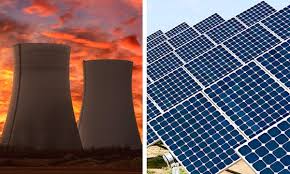
What may be “clean” from a carbon angle could be “dirty” from a water-resource perspective. For example, “clean” coal, with carbon capture and sequestration, ranks along with nuclear power at the top of the water intensity chart. Also, some renewables, such as solar thermal power and geothermal energy, are notoriously water-intensive. By contrast, two renewable technologies increasingly being employed in India — solar photovoltaic and wind plants — need little water for their normal operations.
In choosing its energy options, India must strike a prudent balance between carbon intensity and water intensity, or else it will get caught in a vicious circle, with attempts to address the energy crisis worsening the water crisis, and vice versa. The nexus between energy, water and even food demands a holistic, integrated policy approach.
The share of renewables in India’s energy mix is set to considerably increase, given the tax and other incentives on offer. In contrast to the intermittent nature of renewables like solar and wind, hydro and nuclear power can be used both to cover the electrical base load and for peak load operations. Yet hydro and nuclear power face increasingly strong headwinds. Activist NGOs — many foreign funded — have made it difficult for India to build large dams, blighting the promise of hydropower. It is virtually certain that India (which generates more power from wind alone than from nuclear) will slip badly on its 2030 target to produce 12% of electricity from atomic sources.
Nuclear power growth is falling victim to larger factors. The first factor is the increasingly poor economics of nuclear power across the world. Skyrocketing construction costs, made worse by the post-Fukushima safety upgrades, and reliance on massive government subsidies are making nuclear power uncompetitive.
A second factor is the dire financial state of the foreign companies that were planning to build nuclear power plants in India — Toshiba-Westinghouse and Areva. Their very survival is at stake today. France’s state-owned Areva needs a government-led €5 billion bailout to stay afloat. It also set to be split, with its reactor unit being sold to EDF, also state-owned.
For Toshiba, the US nuclear market is proving to be its graveyard. On the brink of disintegration, Toshiba has posted a $6.2 billion nuclear-business loss, mainly from its US subsidiary, Westinghouse. Its 2006 blunder in acquiring Westinghouse has been compounded by its 2015 purchase of nuclear plant builder CB&I Stone & Webster. Now Toshiba is jettisoning its lead role in projects to build nuclear plants in India and Britain, a move that would leave it merely as a nuclear equipment supplier.
Add to the picture a third factor: Grassroots resistance in India to new nuclear power plants — a fact that resulted in considerable delay in commissioning the Kudankulam plant and forced the shifting of Westinghouse’s first planned project from Gujarat to Andhra Pradesh.
India, duped by its own hype over the 2005 nuclear deal with the US, announced plans for a huge expansion of nuclear power at a time when this energy source was already in decline globally. Its plans indeed motivated Toshiba to acquire Westinghouse. Now India faces an embarrassing situation: The nuclear power promise is visibly fading before it has signed a single reactor contract as part of the nuclear deal.
More broadly, India’s energy conundrum has been compounded by unrealistic targets, embrace of carbon-reduction goals at a time when Donald Trump was vowing to take America in the opposite direction, and inability to stem disruptive NGO activism. But for the near bankruptcy of Areva and Toshiba, Indian taxpayers would have been saddled with white-elephant projects similar to Areva’s Finnish reactor at Olkiluoto, whose construction is running almost a decade behind schedule and incurring billions of euros in cost overruns.
Brahma Chellaney is a geostrategist and author.
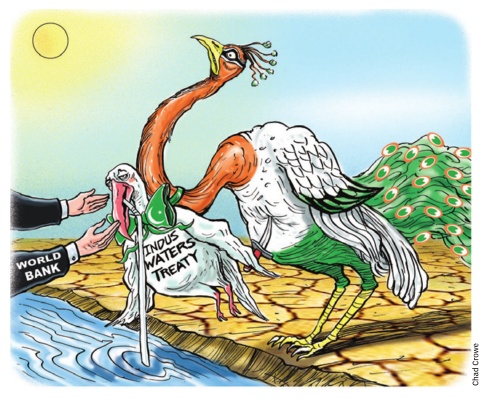


 The inter-ministerial task force set up by Prime Minister Narendra Modi for correcting India’s under-utilization of its allocated share of waters under the Indus Waters Treaty (IWT) has just held its first meeting. The water-related issue facing India, however, is much larger: The continuing absence of institutionalized, integrated policymaking in India, which has prevented proper management of the country’s increasingly scarce water resources. Indeed, India stands out for its lack of a national action plan to build water security.
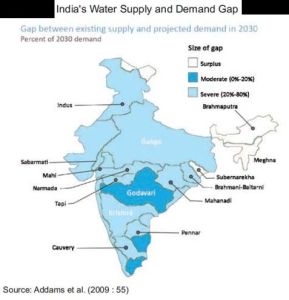 Today, the national water situation in India is far worse than in China. China’s population is not even 10 per cent larger than India’s but its internally renewable water resources (2,813 BCM) are almost twice as large as India’s. In aggregate water availability, including external inflows (which are sizeable in India’s case), China boasts virtually 50 per cent larger resources than India.
 The linkages between water stress, sharing disputes and environmental degradation threaten to trap Asia in a vicious cycle. In a continent where China’s unilateralism stands out as a destabilizing factor, only four of the 57 transnational river basins have a treaty on water sharing or institutionalized cooperation. Indeed, the only Asian treaties incorporating specific sharing formulas are between India and its downriver neighbours, Pakistan and Bangladesh.
 BRAHMA CHELLANEY
 Brahma Chellaney,
 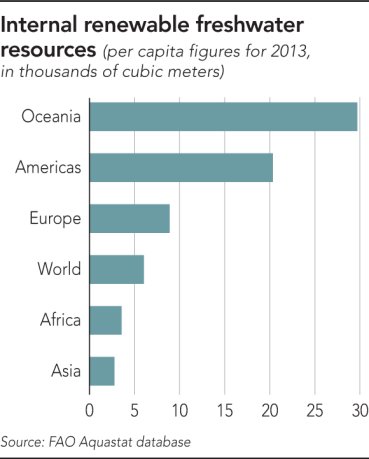 Asia’s per capita water availability is already the lowest of any continent. Fast economic growth, coupled with breakneck urbanization and changing lifestyles, has made a difficult situation worse. In 2012, slightly over half of the world’s population lived in urban areas. By 2050, that ratio is projected to jump to more than two-thirds, with much of that growth taking placing in Asia.
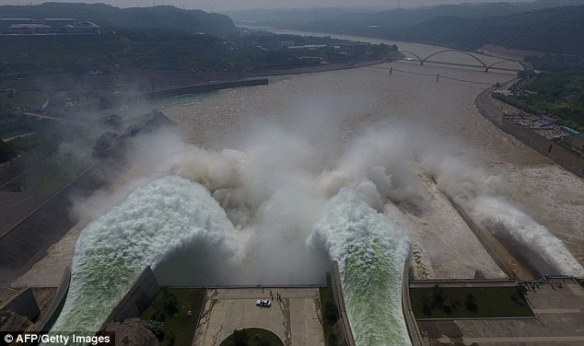 China’s cutting off the flow of a Brahmaputra tributary is just the latest example of its emergence as the upstream water controller through a globally unparalleled hydro-engineering infrastructure centred on dams.
 Stagecraft and Statecraft
You must be logged in to post a comment.