The Uneasy U.S.-India-Iran Triangle

India’s American Friends and Iranian Partners

By Brahma Chellaney

A column internationally syndicated by Project Syndicate

The United States recently took the Iran-sanctions monkey off India’s back: it granted India an exemption from Iran-related financial sanctions in exchange for significant cuts in Indian purchases of Iranian oil. Nevertheless, Iran continues to cast a pall over an otherwise brightening U.S.-India relationship.

From India’s perspective, Iran is an important neighbor with which it can ill afford to rupture its relationship. Indeed, India already seems locked geographically in an arc of failing or dysfunctional states, confronting it with external threats from virtually all directions.

If India joined the U.S. containment strategy against Iran, it would have to bear serious strategic costs. For starters, it would lose access to Afghanistan via Iran, which has served as a conduit for the substantial flow of Indian aid to Kabul. Moreover, containment would undermine India’s energy interests.

Few countries are as dependent on the Persian Gulf region’s hydrocarbons as is India, which imports almost 80% of its consumption. Iran is the world’s third-largest net oil exporter (with the world’s second-largest natural-gas reserves as well), and it is a strategically located gateway to other energy suppliers in Central Asia and the Middle East.

Iraq and Iran used to be India’s principal oil suppliers. But the first fell prey to a long U.S. occupation, and the second currently faces a U.S.-led oil-export embargo designed to throttle it financially. As a result, America’s efforts to give international effect to its new Iran Sanctions Act constitute a double whammy for India.

First, it threatens to sabotage India’s energy-import diversification strategy by making it overly dependent on the Islamist-bankrolling oil monarchies — including Saudi Arabia, the United Arab Emirates, and Qatar — which have managed to ride out the Arab Spring. Second, further isolation of Iran will make it very difficult for India to play a more active role in Afghanistan at a time when the U.S. is hastening its military disengagement there and seeking to cut a deal with the Taliban.

India, one of the largest aid donors to Afghanistan, has no contiguous corridor to that country and must rely on Iran for access. Both countries share a common goal in Afghanistan — to ensure that the Pakistan-backed Taliban does not return to power. If the already-unstable situation there deteriorates after the end of U.S.-led combat operations, India and Iran may be compelled to revive their strategic cooperation of the 1990’s. It was the Northern Alliance, backed by India, Iran, and Russia, that overthrew the Taliban regime in Kabul in late 2001 with the help of America’s air war.

For the U.S. today, containment of Iran is dictated by several geopolitical considerations. One consideration is the need to neutralize the strategic advantage that Iran gained from the U.S. overthrow of Saddam Hussein in neighboring Iraq — a development that helped to empower Iraq’s Shia majority. President George W. Bush called Iran part of an “axis of evil,” yet his decision to invade and occupy Iraq benefited Shia-dominated Iran above all.

Moreover, regional geopolitics pits the powerful “Sunni Crescent,” led by Turkey, Saudi Arabia, Qatar, and the UAE, against the beleaguered “Shia Crescent” states — Iran, Iraq, Syria, and Lebanon. The U.S. has profited from a longstanding alliance with the Sunni bloc. In addition to the strategic advantages, America’s close ties with the oil sheikhdoms — which are among the world’s leading holders of foreign-exchange reserves — contribute to propping up the dollar.

It is against this background that the Iranian nuclear program has come to symbolize the larger geopolitical tensions underlying the confrontation between the U.S. and Iran. Indeed, the nuclear issue has served to rationalize the face-off, with Iran’s leaders playing to their domestic audience by whipping up nuclear nationalism and the U.S. playing to the international audience by harping on the proliferation threat.

India should seek to play the role of honest broker to defuse the threat of military hostilities, which would most likely shut down the world’s most important oil-export route, the Strait of Hormuz (a danger that Iran has said is also implicit in an oil-export embargo against it). But, far from being able to play the role of bridge-builder between the U.S. and Iran, India is being forced to walk a policy tightrope, and its desire to chart a neutral course has annoyed both sides.

Every time a senior Indian delegation visits Iran, or vice versa, the U.S. warns India that its cozying up to Iran “raises obstacles” to building a closer strategic partnership. Yet, by voting against Iran at the International Atomic Energy Agency’s governing board meetings in 2005 and 2006, India invited Iranian reprisal in the form of cancellation of a highly favorable 25-year, $22-billion liquefied-natural-gas deal.

The Iran issue, in effect, has turned into a diplomatic litmus test: Will India stand up for its strategic and energy interests in the region, or will it be co-opted to serve the short-term interests of its friend, the U.S.? The U.S., for its part, must reconcile its Iran-related pressure on India, which is likely to continue despite the 180-day sanctions waiver, with the imperative to build deeper defense ties with India, thereby giving strategic heft to its declared “pivot” to Asia.

Brahma Chellaney is Professor of Strategic Studies at the Center for Policy Research in New Delhi and the author of “Asian Juggernaut” (HarperCollins) and “Water: Asia’s New Battleground” (Georgetown University Press).

(C) Project Syndicate, 2012.

Parched and Thirsty, yet Most Generous in Water Diplomacy

Brahma Chellaney, The Times of India, July 3, 2012

Reciprocity is the first principle of diplomacy. But not for India, if one goes by its record. India has walked the extra mile to befriend neighbours, yet today it lives in the world’s most-troubled neighbourhood.

India’s generosity on land issues has been well documented, including its surrender of British-inherited extraterritorial rights in Tibet in 1954, the giving back of strategic Haji Pir to Pakistan after the 1965 war, and the similar return of territorial gains plus 93,000 prisoners after 1971 — all without securing any tangible reciprocity. Despite that record, there are still calls within India today for it to unilaterally cede control over the Siachin Glacier.

Even though India is reeling under a growing water crisis — with hospitals in its capital postponing surgeries because of lack of water and much of the country parched and thirsty — few seem to know that India’s generosity has extended not just to land but also to river waters.

The world’s most generous water-sharing pact is the 1960 Indus Waters Treaty, under which India agreed to set aside 80.52% of the waters of the six-river Indus system for Pakistan, keeping for itself just the remaining 19.48% share. Both in terms of the sharing ratio as well as the total quantum of waters reserved for a downstream state, this treaty’s munificence is unsurpassed in scale in the annals of international water treaties. Indeed, the volume of water earmarked for Pakistan is more than 90 times greater than the 1.85 billion cubic metres the US is required to release for Mexico under the 1944 US-Mexico Water Treaty.

The unparalleled water generosity has only invited trouble for India. Within five years of the Indus treaty, Pakistan launched its second war against India to grab the rest of Kashmir when India had still not recovered from its humiliating rout in 1962 at the hands of the Chinese.

Today, Pakistan expects eternal Indian munificence on water even as its military establishment (with blood of innocent Indians on its hands) continues to export terror. Yet, with all the water flowing downstream under the treaty, the same question must haunt the Pakistani generals as Lady Macbeth in William Shakespeare’s Macbeth: “Will all great Neptune’s ocean wash this blood clean from my hand?” Meanwhile, India’s own Indus basin, according to the 2030 Water Resources Group, confronts a massive 52% deficit between water supply and demand.

India’s 1996 Ganges treaty with Bangladesh guarantees minimum cross-border flows in the dry season — a new principle in international water law. In fact, the treaty almost equally divides the downstream Ganges flows between the two countries. Because of that precedent, India seems now ready to reserve almost half of the Teesta River waters for Bangladesh in what will be the world’s first water-sharing treaty of the 21st century.

Water is a state issue, not a federal matter, in the Indian Constitution, yet Prime Minister Manmohan Singh has sought to strong-arm West Bengal into accepting a Teesta River treaty on terms dictated by New Delhi. Existing water-sharing treaties elsewhere in the world, by contrast, do not come anywhere close to allocating half of all basin waters to the downstream state. Another key fact is that unlike Bangladesh, India is already a seriously water-stressed country. Whereas the annual per-capita water availability in Bangladesh averages 8,252 cubic metres, it has fallen to a paltry 1,560 cubic metres in India.

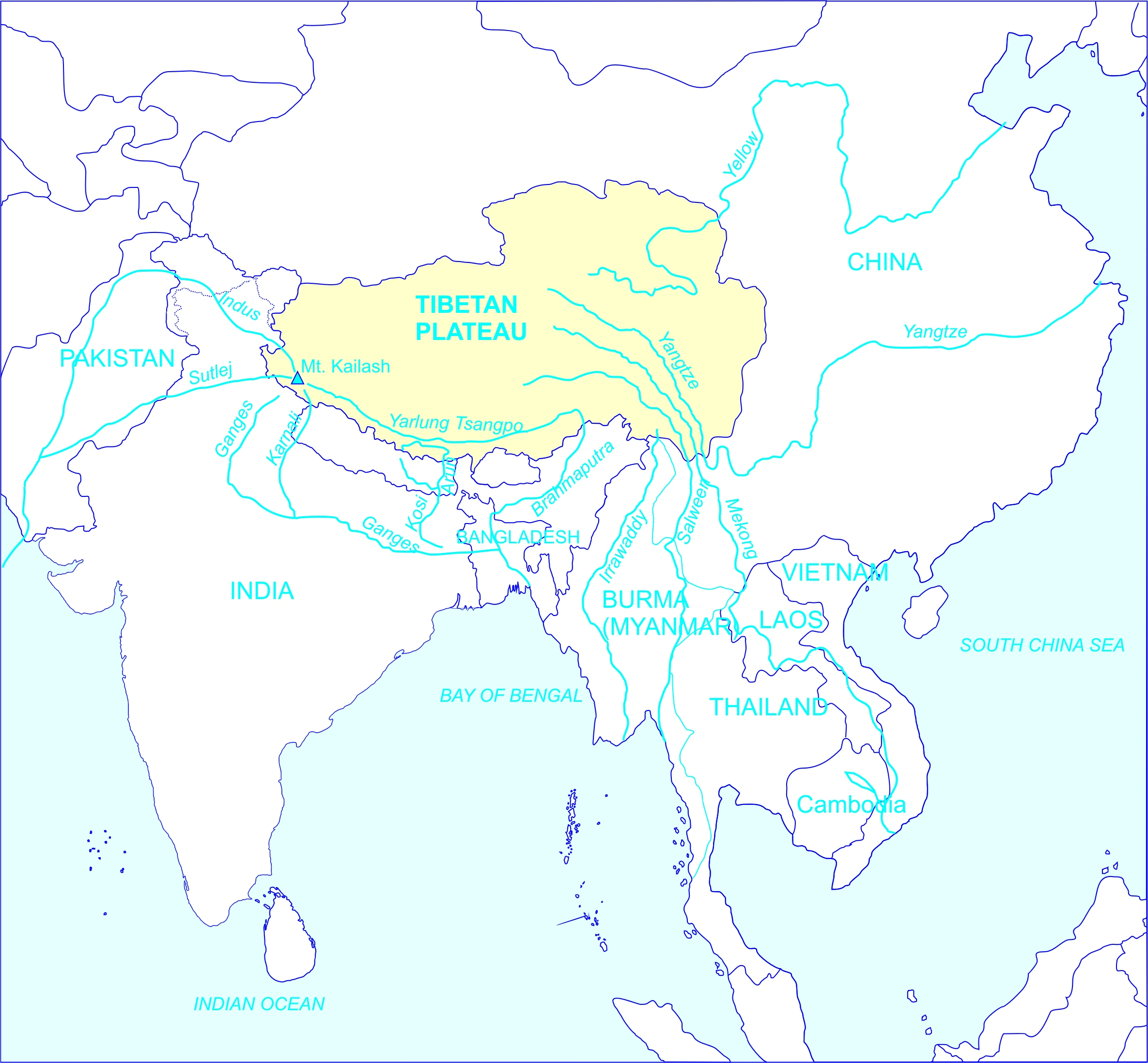
Lost in such big-hearted diplomacy is the fact that India is downriver to China, which, far from wanting to emulate India’s Indus or Ganges style water munificence, rejects the very concept of water sharing. Instead, the construction of upstream dams on international rivers such as the Mekong, Salween, Brahmaputra, Arun, Sutlej, Indus, Irtysh, Illy and Amur shows China is increasingly bent on unilateral actions, impervious to the concerns of downstream nations. Over the next decade, as if to underscore the strategic importance it gives to controlling water resources, China plans to build more large dams than the US or India has managed in its entire history.

By seeking to have its hand on Asia’s water tap through an extensive upstream infrastructure, China challenges India’s interests more than any other country’s. Although a number of nations stretching from Afghanistan to Vietnam receive waters from the Tibetan Plateau, India’s direct dependency on Tibetan waters is greater than of any other country. With about a dozen important rivers flowing in from the Tibetan Himalayan region, India gets almost one-third of all its yearly water supplies of 1,911 cubic kilometres from Tibet, according to the latest UN data.

In this light, it is fair to ask: Is India condemned to perpetual generosity toward its neighbours? This question has assumed added urgency because India has started throwing money around as part of its newly unveiled aid diplomacy — $1 billion in aid to Bangladesh, one-fifth as grant; $500 million to Myanmar; $300 million to Sri Lanka; $140 million to the Maldives; and generous new aid to Afghanistan and Nepal. If pursued with wishful thinking, such aid generosity is likely to meet the same fate as water munificence.

Generosity in diplomacy can yield rich dividends if it is part of a strategically geared outreach designed to ameliorate the regional-security situation so that India can play a larger global role. But if it is not anchored in the fundamentals of international relations — including reciprocity and leverage building — India risks accentuating its tyranny of geography, even as it is left holding the bag.

The writer is a geostrategist.

(c) The Times of India, 2012.

Water Diplomacy: Skating on Thin Ice

Brahma Chellaney, The Economic Times, May 10, 2012

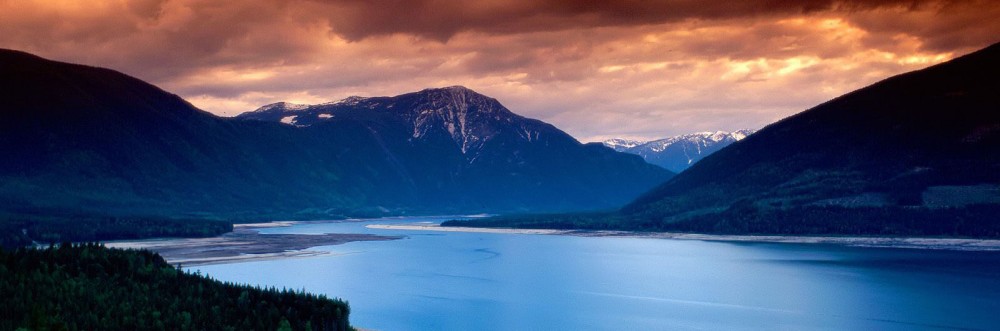
The Teesta River flowing through the northern part of India’s West Bengal state

With power in India shifting to the states due to an increasingly weak central government, Secretary of State Hillary Clinton chose Calcutta as the first stop of her India tour to advance U.S. foreign-policy interests. In a televised interview before meeting with West Bengal Chief Minister Mamta Banerjee, Ms. Clinton pushed for India permitting foreign direct investment in multi-brand retail and for an “amicable” water-sharing arrangement with Bangladesh on the Teesta River — issues stalled by Ms. Banerjee’s opposition.

The art of persuasion and co-option is central to leadership — a capability Prime Minister Manmohan Singh has failed to demonstrate, even as his politically precarious government lurches from one crisis to another. The result has been a series of delays on critical decisions as well as policy reversals — all conveniently blamed on allies, including powerful regional satraps. This tendency to pass the buck has prompted foreign leaders to directly woo key chief ministers.

Take the water issue. The Indian Constitution has left water as a state-level subject, rather than making it a federal issue. Yet Singh’s government has sought to dictate the terms of a Teesta water-sharing treaty with Bangladesh to West Bengal, although that state’s interests are directly at stake. Indeed, New Delhi first negotiated the terms of the pact with Dhaka — generously loaded in Bangladesh’s favour — and then sought to present West Bengal with a fait accompli.

Respect for states and their interests is the essence of federalism.  Yet this inclination to ride roughshod over states harks back to the days when the central government was exceptionally strong.

Jawaharlal Nehru ignored the interests of Jammu and Kashmir and, to a lesser extent, Punjab when he signed the 1960 Indus Waters Treaty, under which India bigheartedly agreed to the exclusive reservation of the largest three of the six Indus-system rivers for downstream Pakistan. In effect, India signed an extraordinary treaty indefinitely setting aside 80.52 percent of the Indus-system waters for Pakistan — the most generous water-sharing pact thus far in modern world history.

In fact, the volume of waters earmarked for Pakistan from India under the Indus treaty is more than 90 times greater that what the U.S. is required to release for Mexico under the 1944 U.S.-Mexico Water Treaty, which stipulates a minimum transboundary delivery of 1.85 billion cubic meters of the Colorado River waters yearly. While Ms. Clinton’s advocacy of a Teesta treaty is understandable, the U.S. hasn’t set a good example in the Colorado Basin. The  waters of the once-mighty Colorado River are siphoned by seven American states, leaving only a trickle for Mexico.

The Indus treaty was negotiated in a period when water shortages were relatively unknown in most parts of India. Nehru did not envisage that water resources would come under serious strain due to developmental and population pressures. Today, as the bulk of the Indus system’s waters continue to flow to an adversarial Pakistan waging a war by terror, India’s own Indus basin, according to the 2030 Water Resources Group, is reeling under a massive 52 percent deficit between water supply and demand.

Worse still, the Indus treaty has deprived Jammu and Kashmir of the only resource it has — water. The state’s three main rivers — the Chenab and the Jhelum (which boast the largest cross-border discharge of all the six Indus-system rivers) and the main Indus stream — have been reserved for Pakistan’s use, thereby promoting alienation and resentment in the Indian state.

This led the Jammu and Kashmir state legislature to pass a bipartisan resolution in 2002 calling for a review and annulment of the Indus treaty. To help allay popular resentment in the state over the major electricity shortages that are hampering its development, the central government subsequently embarked on hydropower projects like Baglihar and Kishenganga. But Pakistan — as if seeking to perpetuate the popular alienation in the Indian state — took the Baglihar project to a World Bank-appointed international neutral expert and Kishenganga to the International Court of Arbitration, which last year stayed all further work on the project.

The proposed Teesta pact suggests that India has learned no lesson from its experience over the Indus treaty. The Teesta originates in Sikkim state and meets the Brahmaputra in Bangladesh. The long-term interests of northern West Bengal, for which the Teesta is a lifeline, must be protected.

Water, as an indispensable resource that is increasingly in short supply, tends to raise emotive and politically surcharged issues. Singh’s government has unwisely brought India under pressure by portraying Ms. Banerjee as the sole holdout on the Teesta treaty. It has also fed the media attacks on Ms. Banerjee over that issue. Meanwhile, seeking to up the ante by latching on Ms. Clinton’s comments, Bangladesh Foreign Minister Dipu Moni has warned that Indo-Bangladesh ties “will take a huge hit” if India does not deliver on the Teesta issue.

India, which has just announced a decision to magnanimously write off $200 million of its $1 billion new loan to Dhaka, must continue to generously help Bangladesh — but on the basis of concrete reciprocity. India is already a party to a water-sharing treaty with Bangladesh involving a bigger river, the Ganges.

Its 1996 Ganges treaty guarantees Bangladesh minimum cross-border flows in the dry season — a new principle in international water relations. In fact, the treaty almost equally divides the downstream Ganges flows between the two countries. In concluding the treaty, India climbed down from its long-stated position that it needed a minimum of 40,000 cubic feet of water per second of time (“cusecs”) to flush silt from the Calcutta port. India settled for each side getting 35,000 cusecs of water in alternative ten-day periods during the driest period from March to May.

The treaty helped bury the hatchet over India’s diversion of water through the Farakka Barrage to a Ganges tributary, the Bhagirathi-Hooghly, to help flush silt and keep the Calcutta Harbour operational during the dry season. The treaty’s complex water-sharing arrangement is pivoted on joint oversight of flows to help build mutual trust. And unlike the Indus treaty, which was brokered by the U.S. and the World Bank, the Ganges treaty emerged without the involvement of a third party, despite a U.S. offer of mediation.

Bangladesh and India are also likely to sign — without any third-party role — a Teesta treaty in what will be the world’s first water-sharing pact of the 21st century. Bangladesh insists it get half of the Teesta waters, although most of the river’s waters are generated in India. Existing water-sharing treaties elsewhere in the world do not come anywhere close to allocating half of all waters to the downstream state. India has the dubious distinction of signing the most generous water-sharing pacts with downstream states, even as it has failed to get upstream China to  accept the very concept of water sharing.

India faces difficult choices on water. Unlike Bangladesh, it is already a water-stressed country. Whereas the per-capita water availability in Bangladesh is 8,252 cubic meters per year, according to United Nations data, it has fallen to a paltry 1,560 cubic meters in India.

(c) The Economic Times, 2012.

Dam-building disputes roil Asia

By BRAHMA CHELLANEY

The Japan Times, April 18, 2012

The Centrality of the Tibetan Plateau in Asia's Water Map
(c) Brahma Chellaney, "Water: Asia's New Battleground" (Georgetown University Press).

Dam building on shared rivers has emerged as the leading source of water disputes and tensions in Asia, the world’s driest continent whose freshwater availability is less than half the global annual average of 6,380 cubic meters per inhabitant. Dam-building activities by China and Central, South and Southeast Asian states have roiled inter-riparian relations, intensifying water discord and impeding broader regional cooperation and integration.

Dam building has largely petered out in the West, but continues in full swing in Asia.

According to international projections, the total number of dams in the developed countries in the next one decade is likely to remain about the same, while much of the dam building in the developing world, in terms of aggregate storage-capacity buildup, is expected to be concentrated in just one country — China. Indeed, about four-fifths of all dams currently under construction in Asia are just in China, which already boasts slightly more than half of all existing large dams in the world.

In the United States — the world’s second most dammed country after China — the rate of decommissioning of dams has overtaken the pace of building new ones. Yet the numerous new dam projects in Asia show that the damming of rivers is still an important priority for national and provincial policymakers. This reflects their insistence on engineering potential solutions to the water shortages.

Dams bring important benefits. If adequately sized and designed, dams can aid economic and social development by regulating water supply, controlling floods, facilitating irrigation and storing water in the wet season for release in the dry season. In addition, they can help generate hydroelectricity and bring drinking water to cities, when designed for such purposes.

But upstream dams on shared rivers in an era of growing water stress often carry broader political and social implications, especially because they can affect the quality and quantity of downstream flows. Dams, by often altering fluvial ecosystems and damaging biodiversity, also carry other environmental costs.

At a number of sites in Asia, dam building has triggered grassroots opposition over the submergence of land and the displacement of residents. Such opposition tends to be effectively stifled in autocracies. Democracies, by contrast, struggle to placate the local resistance.

For example, the future of the $5.62-billion Yanba Dam project in Japan remains uncertain. Popular opposition led to a two-year freeze before the project was recently resurrected by the government, although the ruling Democratic Party of Japan had labeled the dam in its election manifesto as a “wasteful public-works scheme.” Plans for this dam were conceived six decades ago, but public controversies have continued to weigh down the project.

The Yanba Dam — Japan’s largest dam-construction project by value — is designed to combat Agatsuma River flooding and supply drinking water to Tokyo and surrounding areas.

In another democracy, South Korea, the so-called Four Major Rivers Restoration Project launched by President Lee Myung Bak in early 2009 has proven a nationally divisive issue. The project has involved the building of more dams and barrages in a country that already boasts more than 800 large dams and 18,000 small irrigation reservoirs, with artificial lakes making up almost 95 percent of all the lakes.

The project’s high price tag — it will cost taxpayers almost $20 billion — has also fueled public controversies. The project was originally centered on the country’s four main rivers — the Han, the Nag Dong, the Kuem, and the Young San — but later the southern Seom Jin River was also added.

In India, a large, raucous democracy, such is the power of nongovernment organizations and citizens groups to organize grassroots protests that it has now become virtually impossible to build a large dam, blighting the promise of hydropower. Proof of this was the Indian government’s decision in 2010 to abandon three dam projects on the Bhagirathi River, including one midway. That project was scrapped on environmental grounds after authorities had already spent $139 million at the project site and ordered equipment worth $288 million. The decision represented a huge loss of taxpayer money.

The largest dam India has constructed since independence is the 2,000 megawatt (MW) Tehri, which pales in comparison to the giant Chinese projects, such as the more than nine-times-bigger Three Gorges Dam or even the new Chinese dams built or under construction on the Mekong.

The 1,450 MW Narmada Dam in west-central India has been under construction for decades. The project has sparked an unending war between environmental groups and authorities. Like Japan’s Yanba Dam, the Indian plan to harness the 1,300-km Narmada River dates back to the 1940s.

The legal, logistical, bureaucratic, political and NGO-activist hurdles the Narmada project has faced reflect the true reality in building any large dam in a country as politically diverse and open as India. Yet the country’s Supreme Court recently ordered the government to revive a decade-old plan to link up the important rivers in two separate grids — one in the north and the other in the south. Given India’s troubles over the Narmada Dam, it is an open question whether the grand river-linking plans will be realized.

In Southeast Asia, dam-building disputes fall in two categories. First, there is a clear divide between the lower-riparian states and China over the unilateral Chinese harnessing of the resources of the Mekong, with the smaller and weaker down-river states unable to persuade Beijing to halt or even slow its construction of dams on that transnational river. Second, dam building in the lower basin — although on a much smaller scale than by China — has also stoked controversies.

The damming plans of Laos, which wants to be the “battery” of Southeast Asia, have been driven by a desire to earn hydro-dollars through the export of electricity, mainly to China. Indeed, most of the planned Laotian and Cambodian dams involve Chinese financial, design or engineering assistance. Thailand’s own hydro-development plans have further muddied the picture.

Vietnam, located farthest downstream, has the most to lose. Laos, responding to growing regional concerns, agreed last year to defer building its largest project, the 1,260 MW Sayabouly Dam, until an expert review has been completed.

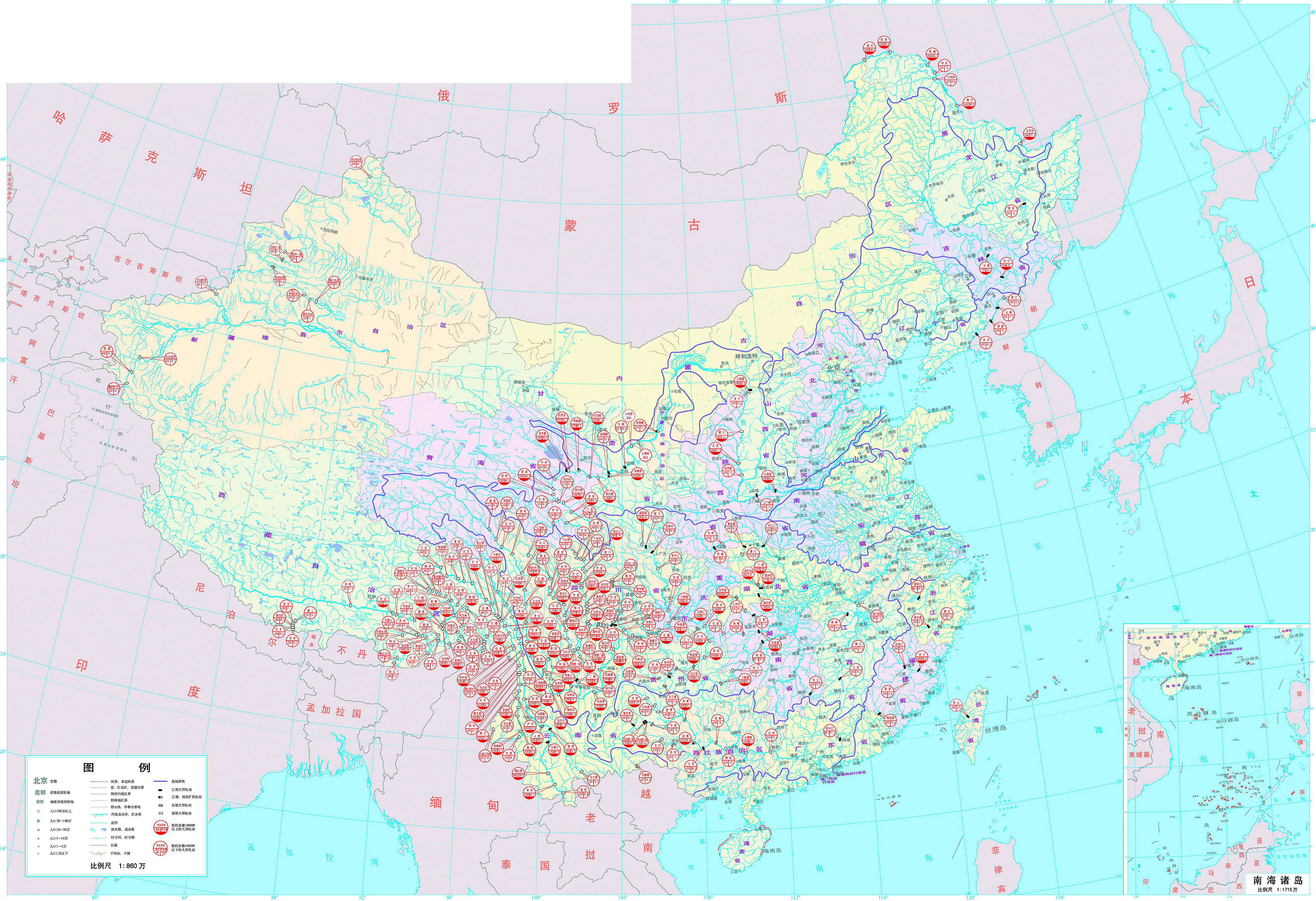
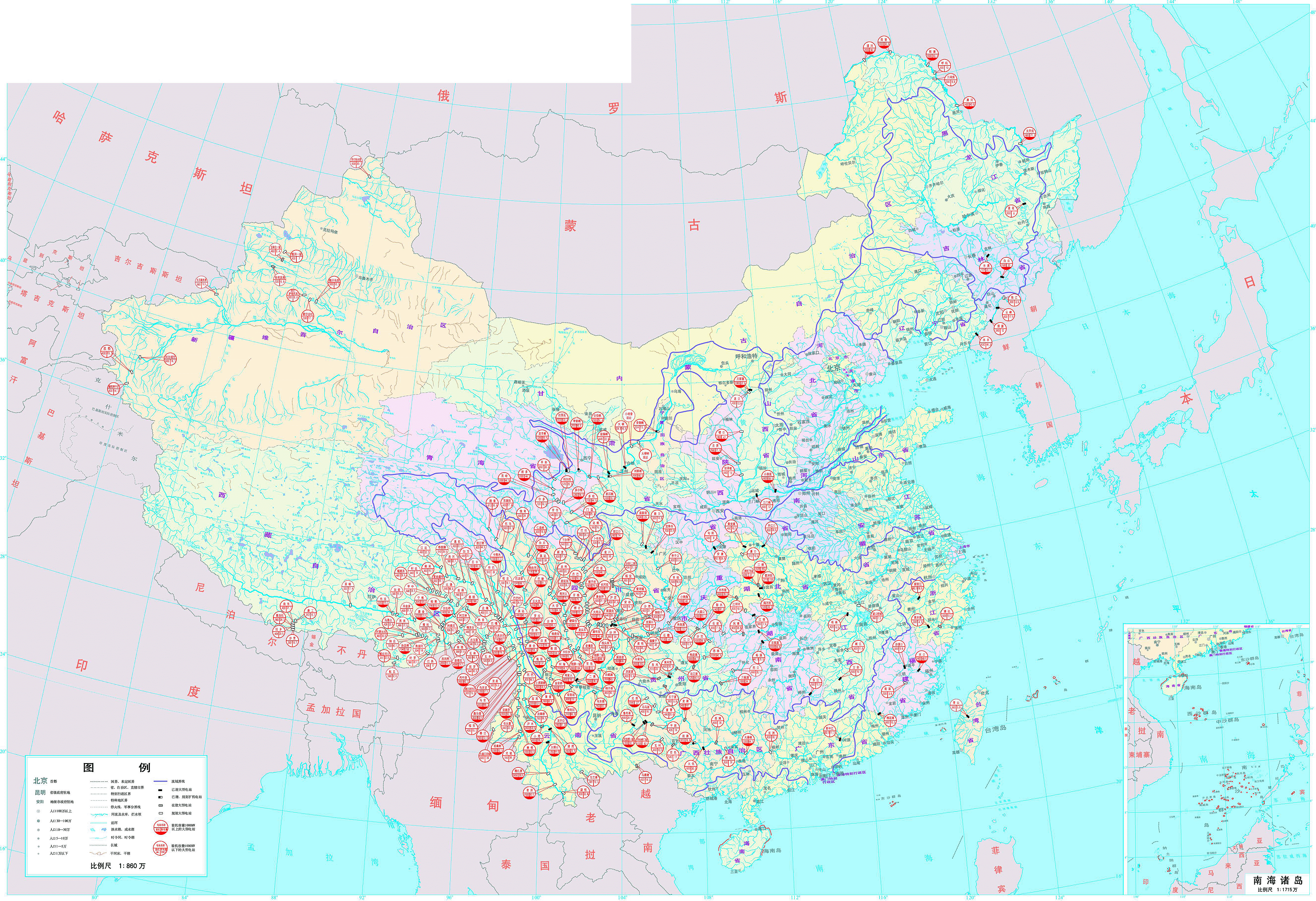
China’s construction of mega-dams, however, continues unabated. After recently commissioning the 4,200 MW Xiaowan, which dwarfs Paris’ Eiffel Tower in height, it is racing to complete yet another giant dam on the Mekong — the 5,850 MW Nuozhadu. The state-run HydroChina Corporation has unveiled a plan to build a dam more than two times as large as the Three Gorges Dam at Metog (“Motuo” in Chinese), close to the disputed, heavily militarized border with India.

Such is the growing interstate competition over water resources that even run-of-river projects have become a source of inter-riparian tensions, although, unlike multipurpose storage dams, they generally do not alter cross-border flows. Such dams are mostly small in scale and employ a river’s natural flow and elevation drop to produce electricity, without the aid of a large reservoir or dam. Even their environmental impact is minimal.

In recent years, Pakistan invoked provisions of the 1960 Indus Waters Treaty to take one Indian run-of-river project to a World Bank-appointed neutral expert and another subsequently to the International Court of Arbitration. Whereas the neutral expert rejected Pakistan’s contentions, the arbitration proceedings are still on in the second case, the 330 MW Kishenganga plant.

Under this treaty, India has set aside 80 percent of the waters of the six-river Indus system for downstream Pakistan — the most generous water-sharing pact thus far in modern world history. India, however, is downriver to China, which rejects the very concept of water sharing.

Asia is the hub of the global water challenges. To contain the associated security risks, Asian states must build institutionalized water cooperation, based on transparency, information sharing, equitable distribution of benefits, dispute settlement, pollution control, and a mutual commitment to refrain from any project that could materially diminish transboundary flows.

Brahma Chellaney is the author of the recently published Water: Asia’s New Battleground (Georgetown University Press).

India’s Looming Water Crisis

The growing water shortages carry economic risks that are as damaging as political corruption.

Brahma Chellaney, The Economic Times, March 2, 2012

Water is the most critical of all natural resources on which modern economies depend. Water scarcity and rapid economic advance cannot go hand-in-hand. Yet, with its per capita water availability falling to 1,582 cubic metres per year, India has become water-stressed.
In 1960, India signed a treaty indefinitely setting aside 80% of the Indus-system waters for downstream Pakistan — the most generous water-sharing pact thus far in modern world history. Its 1996 Ganges treaty with Bangladesh guarantees minimum cross-border flows in the dry season — a new principle in international water law. In fact, the treaty almost equally divides the downstream Ganges flows between the two countries. And now India is under pressure to reserve about half of the Teesta River waters for Bangladesh in what will be the world’s first water-sharing treaty of the 21st century. Existing water-sharing treaties elsewhere in the world, by contrast, do not come anywhere close to allocating half of all waters to the downstream state.

India, however, is downriver to China and, with about a dozen important rivers flowing in from the Tibetan Himalayan region, it gets almost one-third of all its yearly water supplies from Tibet, according to United Nations Food and Agriculture Organization figures. Although a number of nations stretching from Afghanistan to Vietnam receive waters from the Tibetan Plateau, India’s direct dependency on Tibetan waters is greater than any other country’s. But Beijing, far from wanting to emulate India’s Indus-style water munificence, rejects the very concept of water sharing and is building large dams on rivers flowing to other nations, with little regard for downriver interests. An extensive Chinese water infrastructure in Tibet will have a serious impact on India.

India thus faces difficult choices on water. It must manage its water resources wisely, including by building greater storage capacity, improving quality, and raising water efficiency and productivity levels.

Its ambitious, Vajpayee-era National River Linking Programme — which has remained on paper for the last 10 years — is designed to help connect 37 Himalayan and peninsular rivers in a pan-Indian water grid to reduce water shortages. Publicly ridiculed by Rahul Gandhi as a “disastrous idea,” it has now been ordered to be implemented by the Supreme Court in “a time-bound manner.” Will that really happen? The experience on the Supreme Court-overseen Narmada project doesn’t leave much room for optimism.

The Supreme Court indeed is burdened by multiple water disputes. With water increasingly at the centre of inter-provincial feuds, the Court has sought to keep peace between warring states. It has struggled for years to resolve water wrangles, only to find the parties returning to litigate again on new grounds.

Plans for large water projects usually run into stiff opposition from influential NGOs. Such is the power of these organizations to organize grassroots protests that it has now become virtually impossible to build a large dam, blighting the promise of hydropower. Proof of this was New Delhi’s 2010 decision to abandon three dam projects on River Bhagirathi, including one project midway, which resulted in the loss of several hundred million dollars of taxpayer money.

The largest dam India has built since independence is the 2,000 MW Tehri, which pales in comparison to the giant Chinese projects, such as the 18,300 MW Three Gorges Dam and the latest dam on the Mekong — the Xiaowan, taller than the Eiffel Tower. China’s proposed Metog (Motuo) Dam, to be built almost on the disputed border with India, is to produce 38,000 MW of power.

At a time when industrial and food production demands are putting increasing pressure on local water resources, NGOs have led grassroots protests also against the setting up of water-intensive industries, delaying the plans of giant corporations like ArcelorMittal and Posco, for example. Add to the picture India’s labyrinthine political and bureaucratic processes, which are slow-moving and bendable to public pressures, however contrived.

In this light, the National River Linking Programme looks like a plan of the dream world: A colossal water grid to handle 178 billion cubic meters of inter-basin water transfers a year through the construction of 12,500 kilometres of new canals, generating 34 GW of hydropower, creating 35 million hectares of additional irrigated land, and opening extended navigation networks. This is the kind of programme that only a large, ruthless autocracy like China can launch and implement.

To be sure, it was the Supreme Court that prodded the government in 2002 to embark on this water-grid programme. It is also true that partisan politics has been at play, with the UPA government loath to endorse its predecessor’s programme. It told Parliament in 2009 that the $120-billion programme — centred on the separate linking of the Himalayan and peninsular rivers — is cost-prohibitive.

Yet it has not tried to put forward a cost-effective alternative to a programme that the National Water Development Agency and the National Commission for Integrated Water Resource Development vouch is essential to stem droughts and floods and to double India’s annual grain production to more than 450 million tons to meet the demands of increasing prosperity and a growing population. Without expanding its irrigated land and adopting new plant varieties and farming techniques, India is likely to become a net food importer in the coming years — a development that will roil the already-tight international food markets.

With the water situation worsening, the Supreme Court has rightly decided to intercede. But given that India has struggled for decades to complete the Narmada project — less than 12½ times the hydropower capacity of China’s Three Gorges project — it is an open question whether the grand river-linking plans will be realized.

More fundamentally, the growing water shortages threaten to slow economic growth and fuel social tensions, unless the government fixes its disjointed policy approach and develops a long-term vision on managing water resources. Water must be treated as a key strategic issue.

(c) The Economic Times, 2012.

A double whammy for India

Brahma Chellaney

India’s energy and diplomatic dilemmas have been compounded by murky big-power geopolitics, which has allowed the oil monarchies to ride out the Arab Spring but brought the region’s two remaining anti-Western regimes in Iran and Syria under intensifying pressure. The sharpening U.S.-Israeli geopolitical confrontation with Iran risks escalating to military hostilities. After all, even as Israel steps up its “shadow war” with Tehran, the U.S. has declared indirect war through an oil embargo designed to financially throttle Iran.

The risks of India getting sucked into this geopolitical fight or becoming a proxy battleground are real. Israel’s instant accusation that Iran was behind the New Delhi car bombing serves as a reminder. Why would Iran target someone unimportant — an Israeli diplomat’s wife — just when the West is breathing down India’s neck to cease importing Iranian oil? This is the worst possible time for Iran to alienate one of its last-remaining economic lifelines, India. Despite the explosive device’s sophistication, the car incident in New Delhi (like the one in Tbilisi) bore the characteristics of an amateurish job.

If Iran indeed was behind the attack, it connotes sheer recklessness and incompetence. There has been no instance of Iranian terrorism in India in the past but several instances of Pakistan-based terrorists targeting Israelis or other Jews in areas ranging from Jammu and Kashmir to Mumbai. Yet, with Israeli Prime Minister Benjamin Netanyahu blaming Iran even before the police in New Delhi could complete the initial examination of the car-blast scene and consequently the media following just that angle, a possible link between Pakistan-aided terrorists and the attack has escaped public scrutiny. Significantly, the U.S., while condemning the bomb incidents in New Delhi, Tbilisi and Bangkok, has stopped short of endorsing the Netanyahu-led claims that Iran is behind the bombings.

Still, even as India faces the spectre of a proxy war between Israel and Iran on its soil, the blast incident only adds to the external pressures on New Delhi to break its energy ties with Iran.

More broadly, the narrow logic driving U.S. and Israeli policies has trumped larger considerations. Instead of seeking to reap long-term benefits by promoting genuine democratic transition across the Arab world, the U.S., for example, has deepened its alliance with oil monarchies, including the tyrannical House of Saud and the ambitious Qatari royalty, and winked at Bahrain’s brutal suppression of its Arab Spring movement. The long-term risks of aiding Islamist rulers or groups also have been overlooked.

This explains why the Arab Spring has brought no change to the oil monarchies. It is the Arab states with a presidential form of government that are at the centre of the ongoing profound changes, which, paradoxically, are sought to be influenced by the iron-fisted but deep-pocketed oil sheikhdoms.

Their already-swelling coffers — thanks to the U.S. energy embargo against Iran and rising oil prices — are set to overflow, increasing their leverage in the region and beyond.

The experience of the past half a century shows that the greater the transfer of oil wealth to these monarchies, the more they have funded fundamentalism and extremism, thereby contributing to the rise of international terrorism. In fact, the more wealth they have accumulated, the more the price of freedom has risen in the region.

In this light, the U.S. attempt to give international effect to its new Iran Sanctions Act threatens a double whammy for strategic-partner India. First, it will sabotage India’s energy-import-diversification strategy by making it place most of its eggs in the basket of the Islamist-bankrolling oil monarchies. India will become overly reliant on the wrong types of regimes and thus exposed to the games they play.

Over the years, the share of Iranian crude in India’s total oil imports has declined to barely 11 percent as part of a conscious Indian effort to reduce supply-disruption risks linked with the lurking potential for conflict. Given India’s soaring oil imports and search for new sources of supply, the Iranian share — even if the total quantity remains constant — will likely decline further. Still, as the nearest oil source for India, Iran offers lower shipment costs.

If India joins the total U.S. oil embargo against Iran, Indian refineries with a technical capacity to process only Iranian crude will be left high and dry. Oils from different countries vary in terms of two basic properties — specific gravity and sulphur content. Retrofitting those old refineries to process crude from other countries will be uneconomical.

Second, at a time when the U.S. is quickening its Afghanistan disengagement and seeking to cut a deal with the Taliban with little regard for Indian interests, jumping on the American sanctions bandwagon will rupture India’s relations with the very country central to its Afghanistan strategy — Iran, a conduit for the substantial Indian aid flow to Afghanistan. America’s Afghanistan-exit strategy — which is beginning to look like a sprint — only reinforces Iran’s geopolitical importance for India.

It should not be forgotten that India already has paid a heavy price for taking America’s side on some critical issues in its long-running battle against Iran, even though Washington doesn’t take India’s side in its disputes with China or Pakistan.

The Bush administration persuaded India not to conclude any new long-term oil and gas contracts with Iran and — in return for a civil nuclear deal with the U.S. — abandon the idea of a gas pipeline from Iran. By voting against Iran at the International Atomic Energy Agency’s governing board in 2005 and 2006, New Delhi invited Iranian reprisal in the form of cancellation of a 25-year, $22-billion liquefied natural gas deal which had terms highly favourable to India. That deal’s scrapping alone left India poorer by several billion dollars.

Now the U.S. embargo against Iran — the world’s third-largest net exporter of oil — has pushed international oil prices higher, increasing the oil-import bill of India and a number of other countries, while undercutting civil society in Iran and strengthening the clerical regime there. The embargo indeed is having a negative impact on the global economy by placing additional strain on oil supplies and threatening to slow economic growth.

Significantly, those states in favour of the total oil embargo on Iran (including the U.S., Britain, France and Germany) buy little oil from that country, while those countries advising caution (such as India, Japan, South Korea and China) are important importers of Iranian oil. These four Asian economies account for 60 percent of Iran’s oil sales. The U.S., in fact, stopped importing Iranian oil way back in 1987. The international division thus is between those that have nothing to lose and those that have much to lose.

Yet without offering any credible alternatives, Washington is mounting more pressures related to oil sourcing and payments that strike at the heart of energy-poor India’s efforts to secure stable, assured supplies. The Iran issue, in effect, has turned into a diplomatic litmus test as to whether India will stand up for its energy and geopolitical interests in the region or be co-opted to serve the short-term interests of its friends, particularly the U.S. and Israel.

A version of this article appeared in the Mint, February 17, 2012.

The world’s most “dammed” country

The map of planned new dams released by state-run HydroChina Corporation in 2010 shows that China's dam-building spree is anything but slowing. It reveals the planned construction of a dam twice as large as the Three Gorges Dam at Metog (‘‘Motuo’’ in Chinese), just before the Brahmaputra River enters India.

Brahma Chellaney

India Today, December 26, 2011

China’s frenzied dam building recently hit a wall in Myanmar, whose bold decision to halt a controversial Chinese dam project on its territory has acted as a catalyst to a series of developments, including the first visit of a US secretary of state to that country in more than half a century. Despite the setback in Myanmar, China remains the world’s biggest dam builder at home and abroad. No country in history has built more dams than China. In fact, China today boasts more dams at home than the rest of the world combined. 

Before the Communists came to power in 1949, there were only 22 dams of any significant size in China. But now China has more than half of the almost 50,000 dams in the world that are classified as “large” because they have a height of at least 15 m or a storage capacity of more than 3 million cubic metres. This feat means that China has completed on an average at least one large dam per day since 1949. If dams of all sizes are counted, the number in China surpasses 85,000.

Another striking fact is that China is also the global leader in exporting dams. Its state-run companies today are building more dams overseas than the other international dam builders put together. As many as 37 Chinese financial and corporate entities are involved in more than 100 major dam projects in the developing world. Profit motives and a diplomatic effort to showcase its engineering prowess drive China to build dams overseas. China’s declaratory policy of “non-interference in domestic affairs” actually serves as a virtual licence to pursue dam projects that flood ethnic-minority lands and forcibly uproot people in other countries, just as it is doing at home by shifting its dam-building focus from the dam-saturated internal rivers to the international rivers originating in the Tibetan plateau, Xinjiang, Inner Mongolia, and Manchuria.

China contends that its role as the global leader in exporting dams has created a “win-win” situation for the host countries and its companies. Yet evidence from a number of project sites shows that those dams are imposing serious costs. These projects, in fact, often serve to inflame anti-Chinese sentiment, as underscored by grassroots protests at several sites in Asia, Africa and Latin America. Indeed, by taking much of the workforce from home to build dams and other projects abroad-a practice that runs counter to its own 2006 regulations that call for “localisation”-China reinforces a perception that it is engaged in exploitative practices. Chinese convicts have also been used as labourers on projects in countries too poor and weak to protest.

As the world’s most “dammed” country, China is already the     world’s largest producer of hydropower, with an installed generating capacity of more than 170 gigawatts. Yet its ambitious plans to significantly boost hydro-generating capacity by damming international rivers have embroiled it in water disputes with almost all neighbours, even North Korea. More broadly, China’s dam-building passion has spawned two developments. First, Chinese companies now dominate the global hydropower-equipment export market. And second, the growing clout of the state-run hydropower industry within China has led Beijing to aggressively seek dam projects overseas by offering attractive, low-interest loans to other governments. At home, it recently unveiled a mammoth $635-billion fresh investment in water infrastructure over the next decade, more than a third of which is to be channelled for building dams, reservoirs, and other supply structures.

China’s over-damming of rivers and its inter-river and inter-basin water transfers have already wreaked havoc on the natural ecosystems, causing fragmentation and depletion of rivers and thereby promoting exploitation of groundwater beyond the nature’s replenishment capacity. The social costs have been even more staggering, a fact reflected in Prime Minister Wen Jiabao’s stunning admission in 2007 that China relocated a total of 22.9 million Chinese since 1949 to make way for water projects-a number bigger than the entire population of Australia, Romania or Chile. Since that admission, another 3,50,000 residents, mostly poor villagers, have been officially uprooted. So, by official count alone, 1,035 citizens on an average have been forcibly evicted daily in the past 62 years for water projects.

With Beijing now increasingly damming transnational rivers such as the Mekong, Salween, Brahmaputra, Irtysh, Illy and Amur, the new projects threaten to “export” the serious degradation haunting China’s internal rivers to those rivers. The time has come to exert concerted external pressure on Beijing to rein in its dam frenzy and embrace international environmental standards. 

Brahma Chellaney is the author of the newly released Water: Asia’s New Battleground. (c) India Today, 2011.

Asia’s water stress challenges growth and security

Growing water shortages threaten Asia’s economic and political rise by creating obstacles to continued rapid economic growth, by stoking interstate and intrastate tensions over shared resources, and by raising new security risks. 
Japan Times, December 3, 2011

Water, the most vital of all resources, has emerged as a key issue that will determine whether Asia is headed toward cooperation or competition. After all, the driest continent in the world is not Africa, but Asia, where availability of freshwater is not even half the global annual average of 6,380 cubic meters per inhabitant.

When the estimated reserves of rivers, lakes and aquifers are added up, Asia has less than one-tenth of the waters of South America, Australia and New Zealand, not even one-fourth of North America, almost one-third of Europe and moderately less than Africa per inhabitant. Yet the world’s fastest-growing demand for water for food and industrial production and for municipal supply is in Asia, which now serves as the locomotive of the world economy.

Today, the fastest-growing Asian economies are all at or near water-stressed conditions, including China, India, South Korea, Vietnam and Indonesia. But just three or four decades ago, these economies were relatively free of water stress. Now if we look three or four decades ahead, it is clear that the water situation will only exacerbate, carrying major implications for rapid economic growth and inter-riparian relations.

Yet Asia continues to draw on tomorrow’s water to meet today’s needs. Worse still, Asia has one of the lowest levels of water efficiency and productivity in the world. Against this background, it is no exaggeration to say that the water crisis threatens Asia’s economic and political rise and its environmental sustainability. For investors, it carries risks that potentially are as damaging as nonperforming loans, real estate bubbles and political corruption. Water has also emerged as a source of increasing competition and discord within and between nations, spurring new tensions over shared basin resources and local resistance to governmental or corporate decisions to set up water-intensive industries.

These developments raise the question whether the risks of water conflict are higher in Asia than elsewhere in the world. With Asia becoming the scene of increasingly fierce intrastate and interstate water competition, the answer clearly is yes. Water is a new arena in the Asian Great Game.

In fact, water wars — in a political, diplomatic, or economic sense — are already being waged between riparian neighbors in several Asian regions, fuelling a cycle of bitter recrimination and fostering mistrust that impedes broader regional cooperation and integration. Without any shots being fired, rising costs continue to be exacted. The resources of transnational rivers, aquifers and lakes have become the target of rival appropriation plans.

With a river or groundwater basin often becoming tied with a nation’s identity, ownership and control over its resources is considered crucial to national interests. That has helped give rise to grand but environmentally questionable ideas — from China’s Great Western Route to divert river waters from the Tibetan Plateau to its parched north and South Korea’s politically divisive four-rivers project, to India’s now-stalled proposal to link up its important rivers and Jordan’s plan to save the dying Dead Sea by bringing water from the Red Sea through a 178-km canal, which is also to serve as a source for desalinated drinking water.

Several factors have contributed to the Asian water crisis, which is leading to river and aquifer degradation. One is that Asia is not only the largest and most-populous continent but also the fastest developing. How the swift economic rise of Asia has brought water resources under increasing pressure can be seen from the fact that most Asian economies now are water-stressed.

The exceptions are few: Bhutan, Burma, Papua New Guinea, Laos, Cambodia, Brunei and Malaysia.

Unlike the fossils fuels, mineral ores and timber that they import even from distant lands, the Asian economies must make do with their own water resources, a significant share of which is in transnational watercourses. This fact only serves as a strong incentive for some nations to try and commandeer internationally shared waters before they leave their national borders. Given the critical role of water in economic modernization, this continent has emerged at the centre of the global water challenges.

Another factor is consumption growth, as a consequence of rising prosperity. The plain fact is that on average Asians are consuming more resources, including water, food, oil and energy. The consumption growth is best illustrated by the changing diets, especially the greater intake of meat, whose production is notoriously water-intensive.

A third factor is the role of irrigation in accentuating the Asian water stress. Asia more than doubled its total irrigated cropland just between 1960 and 2000. Once a continent of serious food shortages and recurrent famines, Asia opened the path to its dramatic economic rise by emerging as a net food exporter on the back of this unparalleled irrigation expansion.

Asia now boasts the leonine proportion of the world’s surface land under irrigation. About 70 percent of the world’s 301 million hectares of land equipped for irrigation is in Asia alone, making it the global irrigation hub. Just three sub-regions of Asia — South Asia, China and Southeast Asia — by themselves account for about 50 percent of the world’s total irrigated land.

It is thus hardly a surprise that Asia leads the world in the total volume of freshwater withdrawn for agriculture. Indeed, almost 74 percent of the total global freshwater withdrawals for agriculture by volume are made in Asia alone.

Water literally is food in Asia. Yet the growth of rice and wheat output in Asia, after the dramatic increases of the previous quarter-century, has actually slowed since the late 1990s, raising concerns that Asian countries will become major food importers, roiling the international market. The international food market is not large enough to meet major import demands from Asia.

A fourth factor is that the fastest increase in water demand in Asia is now coming not from agriculture but from the industrial sector and urban households, in keeping with the fact that this continent has become the seat of the world’s fastest industrialization and urbanization.

A final factor linked to Asia’s water stress is the large-scale impoundment of water resources through dams, barrages, reservoirs and other human-made structures without factoring in long-term environmental considerations. Dams, to be sure, bring important benefits. But upstream dams on rivers shared by two or more nations or provinces in an era of growing water stress often carry broader political and social implications, especially because they can affect water quality and quantity downstream. Dams can also alter fluvial ecosystems, damage biodiversity and promote coastal erosion and saltwater intrusion.

Asia is not just the global irrigation hub; it is also the world’s most dam-dotted continent. China, the world’s biggest dam builder, alone has slightly more than half of the approximately 50,000 large dams on the planet. Most of the best dam sites in Asia already have been taken. Yet the numerous new dam projects in Asia show that the damming of rivers is still an important priority for policymakers. Such a focus on dam building has only intensified intrastate and interstate water disputes and tensions in Asia, with implications for regional security and stability.

The countries likely to bear the brunt of upstream diversion of waters are those located farthest downstream on rivers like the Brahmaputra, Mekong and Tigris-Euphrates: Bangladesh, whose very future is threatened by climate and environmental change; Vietnam, a rice bowl of Asia; and Iraq, still internally torn. Cross-border water appropriations from the Illy River threaten to turn Kazakhstan’s Lake Balkhash into another Aral Sea, which is dying.

So, the big question is: How can Asian nations prevent the sharpening struggle for water resources from becoming a tipping point for overt conflict? To contain the security risks, Asian states must invest more in institutionalized cooperation on trans-boundary basin resources in order to underpin strategic stability, protect continued economic growth and promote environmental sustainability.

The harsh truth is that only four of the 57 transnational river basins in Asia have a treaty covering water sharing or other institutionalized cooperation. These are the Mekong, Ganges, Indus and Jordan river basins. The absence of a cooperative arrangement in most Asian transnational basins is making inter-country water competition a major security risk, increasing the likelihood of geopolitical tensions and instabilities.

With its multitude of inter-country basins, Asia cannot continue to prosper without building political and technological partnerships to help stabilize inter-riparian relations, encourage greater water efficiency, promote environmental sustainability, take on practicable conservation strategies, and invest in clean-water technologies. If Asian states are to address their water challenges, they will need to embrace good practices on the strategic planning and management of water resources.

This article is excerpted from Brahma Chellaney’s latest book, “Water: Asia’s New Battleground” (Georgetown University Press, 2011).

Dams muddy China’s image

The global leader in dam building faces a backlash.

Brahma Chellaney
The Japan Times, October 6, 2011

https://i0.wp.com/www.rfa.org/english/news/burma/dam-08112011182157.html/burmaMyitsoneDam081211-400.jpg

China’s frenzied dam building at home and abroad is emerging as a flashpoint in interstate and intrastate relations in Asia. Burma’s decision to suspend work on a controversial Chinese-funded dam marks a tactical retreat on a project that has symbolized China’s resource greed and is a trigger for renewed ethnic insurgency in areas of northern Burma (aka Myanmar).

The Myitsone Dam, where work is being halted, is one of seven dam projects in northern Burma sponsored by China to generate electricity for export to its own market, even as much of Burma suffers from long power outages every day. China also has been erecting dams on its side of the border on the rivers flowing to Burma and other neighboring countries — from Russia to India.

The projects have drawn attention to their mounting environmental and human costs. In Burma, the submergence of vast tracts of land and the forced displacement of thousands of residents have instigated new intrastate disputes, leading to renewed fighting and ending a 17-year ceasefire between the Kachin Independence Army and government forces.

The giant, 3,200-megawatt Myitsone Dam — at the headwaters of the Irrawaddy River, the cradle of the Burmese civilization — was conceived as China’s project for China. The suspension of work on the largest dam project, so as to help stem a groundswell of public anger, represents a blow for China and a victory for local communities who had battled to protect their livelihoods and environment.

Burma is just one of several countries where hydropower projects financed and built by China have triggered local backlashes. China — the world’s biggest dam builder at home and abroad — is currently erecting giant dams in a number of countries in Asia, Africa and Latin America, besides damming transnational rivers on its territory and thereby spurring growing concerns in downstream countries.

China contends that its role as the global leader in exporting dams has created a “win-win” situation for the host countries and its companies.

Yet, evidence from a number of project sites shows that, with Chinese dam builders still to embrace environmental-sustainability standards, those dams are imposing serious social and environmental costs. Indeed, China is demonstrating that it has no qualms about building dams in disputed territories, such as Pakistan-held Kashmir, or in areas torn by ethnic separatism, like northern Burma, or in other human rights-abusing countries.

In Pakistan-held Kashmir, it has even deployed thousands of People’s Liberation Army troops at dam and other strategic projects. Yet it loudly protests when foreign firms seek to explore for oil in blocks offered by Vietnam and others in the disputed South China Sea.

China’s declaratory policy of “noninterference in domestic affairs” actually serves as a virtual license to pursue dam projects that flood ethnic-minority lands and forcibly uproot people in other countries, just as it is doing at home by shifting its dam-building focus from internal rivers to international rivers that originate in the Tibetan Plateau, Xinjiang, Inner Mongolia and Manchuria.

Today, as many as 37 Chinese financial and corporate entities are involved in more than 100 dam projects in the developing world. Some of these entities are very large and have multiple subsidiaries. For instance, Sinohydro Corporation — which is under the supervision of the State-Owned Assets Supervision and Administration Commission of China’s State Council, and is made up of 10 holdings companies and 18 wholly owned subsidiaries — boasts 59 overseas branches.

The frenzied dam-building at home and abroad has spawned two developments:

(1) Chinese companies now dominate the global hydropower-equipment export market. Sinohydro alone claims to control half the market.

(2) The growing clout of the state-run hydropower industry in policymaking has led China to aggressively seek dam projects overseas by offering attractive, low-interest loans and to increasingly tap the resources of rivers flowing to other countries from Chinese-ruled territories.

It was HydroChina, the country’s largest dam builder, that last year revealed government-approved sites for new mega-dams in China, including one larger than the Three Gorges Dam to be built virtually on the disputed border with India.

In a number of nations, ranging from Burma and Congo to Laos and Zambia, Chinese dam construction also is aimed at creating the energy infrastructure to extract mineral ores and other resources to feed the voracious demand in China.

Burma is not the only case where Chinese dam building has triggered violence. From Sudan to the restive, Shiite-dominated areas of Pakistan-held Kashmir, such projects have sparked violent clashes and even police shootings. In Burma, however, the violence spread from the Myitsone Dam — where several small bombs went off in April 2010 — to other Chinese projects, including the Dapein and Shweli dams.

For China, its dam projects in the developing countries showcase its growing economic ties with them. In reality, however, these projects often serve to inflame growing anti-Chinese sentiment in those countries.

China has contributed to such sentiment by refusing to abide by international standards or its own regulations, including the State Council’s 2006 directives that Chinese overseas businesses, among other things, “pay attention to environmental protection” and “support local community and people’s livelihood cause.”

The perception that China is engaged in exploitative practices abroad has been reinforced by the fact that it brings much of the workforce from home to build dams and other projects. This practice runs counter to the Chinese Commerce Ministry’s 2006 regulations — promulgated after anti-Chinese riots in Zambia — that called for “localization,” including hiring local workers and respecting local customs.

China can stop its dam builders from further undermining its image by enforcing its regulations and embracing internationally accepted standards.

Brahma Chellaney is professor of strategic studies at the independent Center for Policy Research in New Delhi and the author of the newly released Water: Asia’s New Battleground.

DC Events with Brahma Chellaney

From Georgetown University Press
http://georgetownup.files.wordpress.com/2011/09/chellaney.jpg?w=300&h=199
This past week Brahma Chellaney, author of Water: Asia’s New Battleground, visited Washington, DC, on a book tour. He stopped by the Woodrow Wilson Center, the Carnegie Endowment for International Peace, the East-West Center, John Hopkins University’s SAIS, American University’s SIS, and the Transatlantic Academy. In sum, Dr. Chellaney spoke to 300 audience members, and numerous copies of his book were carried away by their delighted new owners. Those who did not get the chance to hear him speak may watch the video from the Wilson Center here and the Carnegie Endowment for International Peace here.

Book-related address at the Hong Kong University here.

Talk at the East-West Center here.

The New Delhi release of the book by the Vice President of India here.

Interview conducted by the Georgetown University Press here.

Writeup on the presentation at the Transatlantic Academy here.