The China Factor in Modi’s Mission to Moscow

The alliance of convenience between Russia and China threatens not only to accelerate an increasingly overstretched America’s relative decline, but also to erode Indian security. India now must take advantage of its relationship with Russia to mediate an end to the Ukraine war and drive a wedge between Russia and China.
BRAHMA CHELLANEYProject Syndicate

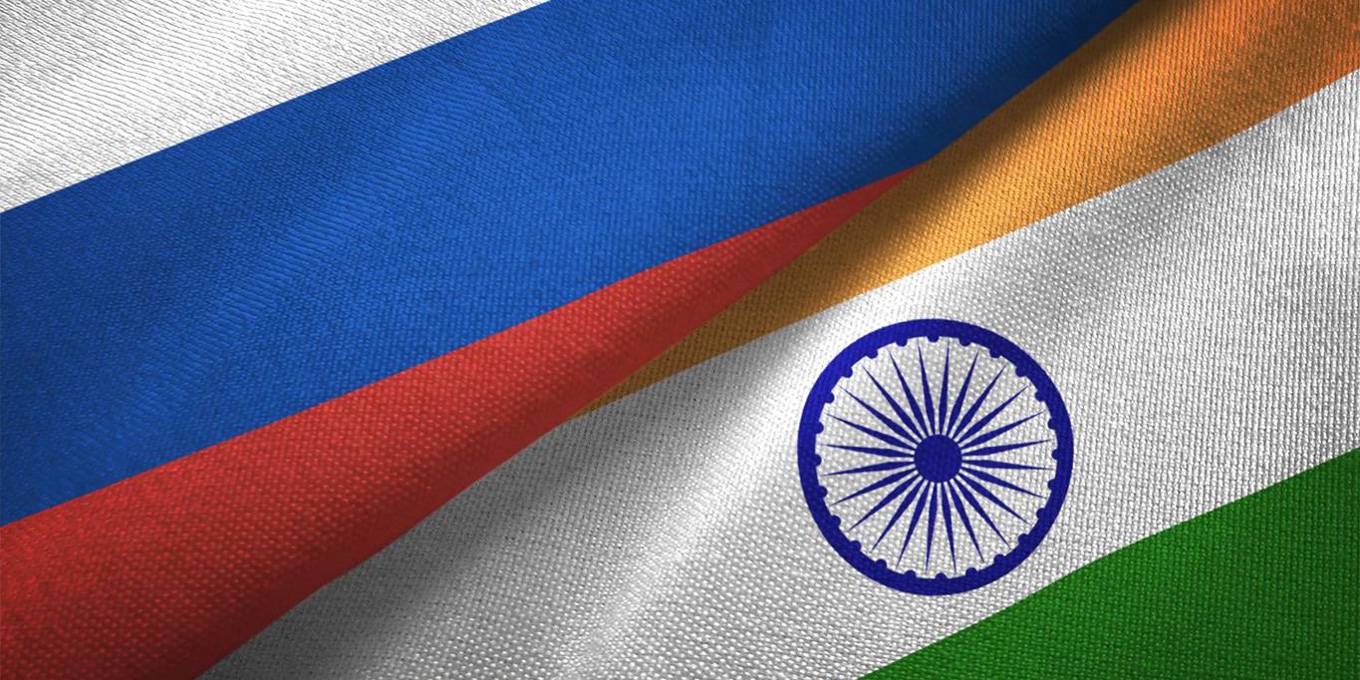
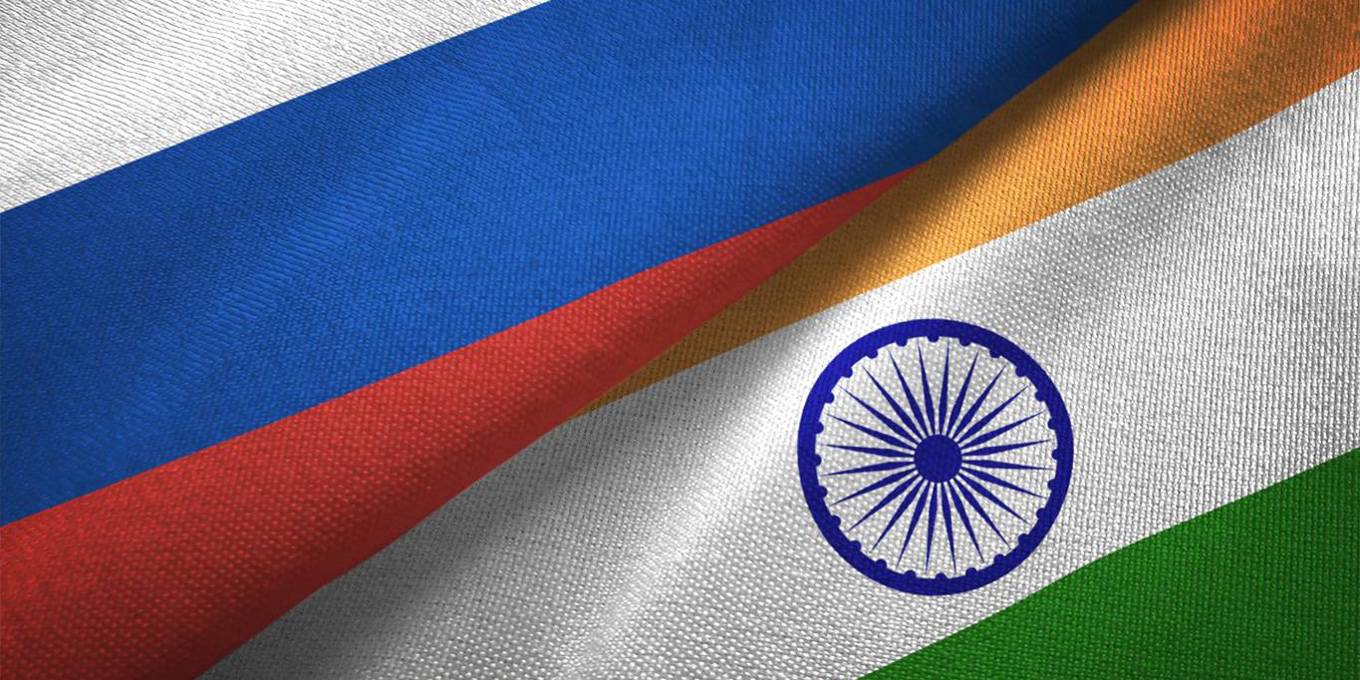
Indian Prime Minister Narendra Modi’s first visit to Russia in five years underscored the strategic importance India attaches to its relationship with Moscow. Indian leaders view that relationship as essential to a balanced foreign policy – especially at a time when India seems, at least to some, to be subtly tilting toward the West – and to provide strategic leverage against China.

Russia and India started holding annual summits in 2000. After Russian President Vladimir Putin’s 2021 trip to New Delhi, it was Modi’s turn to visit Moscow in 2022. But in the wake of Russia’s full-scale invasion of Ukraine – which spurred the United States and its partners to impose unprecedented sanctions on the country – Modi kept deferring his visit. (He did meet Putin in 2022 on the sidelines of a regional summit in Uzbekistan, where he told the Russian leader that it was no time for war.)

Today it is apparent that Russia has neither been isolated internationally nor hobbled economically, despite the West’s best efforts. So, after narrowly winning a third term last month, Modi announced that he would take his long-delayed trip to Moscow. The objective is not to take Russia’s side; on the contrary, at last month’s G7 meeting in Italy, Modi embraced Ukrainian President Volodymyr Zelensky and engaged in bilateral discussions with him. Rather, Modi seeks to affirm India’s enduring foreign-policy independence, while reaping the strategic benefits of closer ties with Russia.

India’s relationship with Russia dates back to 1971, when India was at its most vulnerable. The Pakistani military was attempting to crush the independence movement in then-East Pakistan – now Bangladesh – by any means necessary. Up to three million Bangladeshi civilians (mainly Hindus singled out by Pakistan’s Muslim army) were slaughtered, some 200,000 women were coerced into rape camps, and about ten million people fled to India.

The US was more than complicit in the carnage. Far from pushing back against Pakistan’s military dictator, General Yahya Khan, US President Richard Nixon’s administration maintained friendly relations with him, in order to advance US interests in Asia. While Khan’s army carried out the genocide in East Pakistan, Nixon sent his national security adviser, Henry Kissinger, from Pakistan to Beijing on his now-famous secret trip, which led to Nixon’s own visit to China in February 1972.

At a White House meeting, Kissinger credited Khan for the success of his “cloak and dagger” diplomacy with China, joking coldheartedly, “Yahya hasn’t had such fun since the last Hindu massacre!” On a memorandum from Kissinger regarding the crisis, Nixon wrote, “To all hands: Don’t squeeze Yahya at this time.”

But that was not all. In an effort to prevent Bangladesh from achieving independence, Nixon pressed China to open a military front against India. It was Kissinger’s job to goad the Chinese into initiating troop movements toward the Indian border, according to declassified White House tapes and documents. Nixon went so far as to tell Kissinger that India needed a “mass famine.”

Faced with such hostility, India’s then-Prime Minister Indira Gandhi concluded a friendship treaty with the Kremlin. The pact’s security provisions helped to deter China from opening a front against India when Indian forces eventually intervened to help Bangladesh gain independence in a swift, 13-day operation.

Nixon’s dissatisfaction was obvious: in a show of force aimed at coercing India into limiting its involvement, the US deployed a nuclear-capable naval task force off the southern tip of India. This gunboat diplomacy led India to conduct its first underground nuclear test in 1974; the US responded by imposing technology sanctions on India that remained in place for almost three decades. Meanwhile, the US and China helped Pakistan to build its own nuclear bomb.

Today, India maintains deeper and broader ties with the US than with Russia, but Nixon’s China opening still haunts the bilateral relationship. With its decades-long policy of aiding China’s economic rise, the US not only created the greatest strategic adversary it has ever faced, but also saddled India with a formidable military foe that is aggressively striving for regional hegemony. One manifestation of this is the Sino-Indian military standoff in the Himalayas, which is now in its fifth year.

This is a key motivation behind India’s efforts to strengthen its relationship with Russia, which India believes can counterbalance China. After all, Russia extends across 11 time zones and possesses huge reserves of natural resources, an enormous nuclear arsenal, increasing space prowess, and veto power at the United Nations Security Council. Moreover, Russia and China are natural competitors, with sharply diverging interests in Central Asia, Northeast Asia, and the Arctic, which each country regards as part of its strategic backyard.

Even so, Russia and China have been growing progressively closer in recent years – and it is largely America’s fault. This alliance of convenience – which Putin and Chinese President Xi Jinping have termed a “no-limits partnership” – threatens not only to accelerate an overstretched America’s relative decline, but also to erode Indian security. Already, China has leveraged its position as an economic lifeline for Russia to gain access to advanced Russian military technologies, which were previously sold only to India. In fact, no country is profiting more from the Ukraine war than China.

Someone must drive a wedge between Russia and China. With the US unwilling to take the lead, it is up to India to convince Russia not to align itself too closely with the People’s Republic. Fortunately, this is hardly an unrealistic proposition: though Russia’s promise to provide North Korea with immediate military assistance in the case of war is not good news, its new defense pact with China’s estranged client does suggest that Putin is willing to chart his own course.

The first step for India must be to try to mediate an end to the Ukraine war. This would allow the US to focus on bolstering security in the Indo-Pacific, thereby improving Taiwan’s chances of survival.

Brahma Chellaney, Professor of Strategic Studies at the New Delhi-based Center for Policy Research and Fellow at the Robert Bosch Academy in Berlin, is the author of nine books, including Water: Asia’s New Battleground (Georgetown University Press, 2011), for which he won the 2012 Asia Society Bernard Schwartz Book Award.

© Project Syndicate, 2024.

India’s global role will grow in Modi’s third term

Photo by AFP: Supporters of Narendra Modi, India’s Prime Minister and leader of Bharatiya Janata Party (BJP), celebrate vote counting results for India’s general election, at BJP headquarters in New Delhi on June 4, 2024.

BY BRAHMA CHELLANEY, The Hill

India’s election, the world’s largest democratic exercise, may have delivered a stunning surprise by denying Prime Minister Narendra Modi’s party an outright majority in parliament, but this setback is unlikely to affect the stability or direction of his third-term government.

The primary reason is that the ruling Bharatiya Janata Party, or BJP, contested the election in alliance with several small political groups, with the coalition winning a majority of seats in parliament’s ruling lower house.

Still, the BJP’s loss of its commanding majority in the lower house represents a blow to Modi’s political standing, including puncturing his air of invincibility. After stacking up political win after win, an overconfident Modi had predicted even before the campaign formally began that the BJP would secure more than two-thirds of the seats in the lower house.

The BJP’s failure to win a simple majority on its own, however, is unlikely to have a direct bearing on Modi’s national agenda or foreign policy. The allied parties Modi will depend on are provincial groups with no national vision or ideas.

Moreover, while the fragmented opposition may have unified to stop Modi’s juggernaut in the election, it lacks a common agenda or leader, which raises the question of whether its unity will endure. In fact, the combined number of seats won by the multiple parties in the opposition coalition is slightly less than what the BJP secured on its own.

Modi, 73, is entering a second decade as prime minister, despite a strong anti-incumbency sentiment in Indian society. Only one other Indian leader, Jawaharlal Nehru, secured a third term decades ago.

Modi’s leadership has given India political stability, robust economic growth and accelerated military modernization. India’s international profile and geopolitical weight are rising, partly because the end of China’s economic boom has thrown into relief the emergence of Asia’s other demographic giant as a geopolitical and economic force. India is now the world’s fastest-growing major economy.

After the election results, Modi declared that his third term would represent a “new chapter of big decisions.” But, given India’s fractious politics, big decisions often tend to fuel division and polarization, especially when they challenge entrenched interests. In his second term, Modi, for example, was compelled to repeal farm reform laws after a year of opposition-backed grassroots protests.

With his pro-growth and pro-market agenda, Modi is aiming to transform India into a global manufacturing hub at a time when Western companies are interested in shifting production away from China. Consequently, his new term is likely to see greater government spending not just in manufacturing and infrastructure but also on human capital, particularly in education and training.

The new government will have to urgently consider the nation’s foreign policy challenges, above all the military standoff with China, which recently entered its fifth year. The tense standoff, triggered by furtive Chinese encroachments on some Indian borderlands, may not be grabbing international headlines, but China persists with a frenzied buildup of force deployments along the Himalayan border, as if it is preparing for war. China recently deployed its most advanced J-20 stealth fighter jets near the India frontier.

India’s most-pressing foreign policy challenges relate to its troubled neighborhood, not least a strengthening strategic axis between China and Pakistan, with both these nuclear-armed allies staking claims to swaths of Indian territory. India is already the world’s third-largest defense spender, behind the U.S. and China.

More fundamentally, Modi has helped shape a pragmatic foreign policy vision. Shorn of ideology, Indian foreign policy has sought to revitalize the country’s economic and military security, while avoiding having to overtly choose one power over another as a dominant partner.

In practice, however, closer cooperation with the U.S. has remained Modi’s signature foreign policy initiative, despite some new irritants in the bilateral relationship, including the role of U.S.- and Canada-based Sikh militants.

While tilting toward the West, India remains loath to enter into a formal military alliance with the Western bloc. President Joe Biden’s reluctance to say anything on the Sino-Indian military standoff, let alone side with New Delhi, reminds India that it must defend itself all on its own.

India’s independent approach to international affairs is unlikely to change given that New Delhi believes in friendship without dependence. This makes India the world’s ultimate “swing state” in the current transition from the post–World War II American-led order to a new global order whose contours are still not clearly visible.

In contending with China, its sole challenger at the global level, the U.S. needs a degree of adaptability in forging partnerships, instead of hewing to the Cold War–style “us versus them” approach. A country as large as India cannot become just another Japan or Britain to America. Yet no anti-China alliance can play a strategically meaningful role without India, which has locked horns with the Chinese military in a way no other power has done in this century.

To be sure, India’s size and diversity pose enormous challenges. It is now the world’s most populous nation and is demographically and culturally very heterogeneous.

Still, as the latest election highlights, India’s democratic framework serves as a pillar of inclusion, stability and strength. By empowering people at the grassroots level through participatory processes and open dialogue, the Indian political system has enabled members of historically marginalized classes and castes to gradually gain prominence in politics and bureaucracy. Modi’s own humble beginnings illustrate this.

India today is an ascendant global player, and Modi’s focus in the third term will likely be on enabling India to play a bigger role on the world stage. India’s accelerated rise will not only increase its salience in the global balance of power but also help advance American goals in the Indo-Pacific region, the world’s new economic and geopolitical hub.

Brahma Chellaney is a geostrategist and the author of nine books, including the award-winning “Water: Asia’s New Battleground” (Georgetown University Press).

Growing China-Russia alignment signifies Biden policy failure

U.S. has pushed natural competitors into becoming strategic collaborators

Russian President Vladimir Putin, right, and Chinese President Xi Jinping in Beijing on May 16: Their countries are more firmly aligned now than at any time since the 1950s. (Pool via Reuters)

Brahma Chellaney, Nikkei Asia

The strategy of driving a wedge between China and Russia helped the West win the Cold War, not militarily, but geopolitically.

Richard Nixon’s most lasting achievement as U.S. president was orchestrating a diplomatic opening to China two years after Beijing had engaged in seven months of bloody border clashes with the Soviet Union.

Nixon’s co-optation of China, crowned by his February 1972 visit to Beijing, resulted in an informal alliance geared toward containing and rolling back Soviet influence and power. This two-against-one tag-teaming contributed to the Soviet Union’s imperial overstretch and ultimately to the West’s triumph in the Cold War without global combat.

Today, however, the U.S., instead of playing China off against Russia, is becoming the glue that holds the pair together. As a result, an already overextended U.S. seriously risks accelerating its relative decline through strategic overreach.

Alas, it is U.S. President Joe Biden’s foreign policy that has helped turn two natural competitors into strategic collaborators.

A forward-looking approach would have avoided confronting Russia and China simultaneously, lest it drive the two nuclear-armed powers into an unholy alliance. But Biden has managed to lock horns with both Moscow and Beijing simultaneously, though it should be noted that his China policy is comparatively softer and more conciliatory.

It is striking that China and Russia today are more firmly aligned than at any time since the 1950s. Chinese President Xi Jinping and Russian counterpart Vladimir Putin openly share a vision of reshaping the world by ending the era of Western dominance.

The outcome of the recent Xi-Putin meeting marked a defining moment in the two leaders’ commitment to bringing about a “new era.” Their joint statement cast the U.S. as an aggressive hegemon with a Cold War mindset that fosters global insecurity and divisions. “The U.S. must abandon this behavior,” the statement demanded.

China and Russia seem to be providing cover to each other’s expansionism, with Putin extending support to Beijing over Taiwan and Xi endorsing Russia’s efforts to ensure its “sovereignty and territorial integrity” in oblique reference to Putin’s war on Ukraine.

Meanwhile, the rapid advance of Chinese and Russian space capabilities has prompted the Pentagon to quietly embark on a new “Star Wars” plan.

At the global level, the U.S. has only one real challenger — China, which dwarfs Russia in terms of economic output, military spending and other material measures. It is Beijing that seeks to supplant America as the world’s foremost power.

Yet China has been the main beneficiary of Biden’s forceful response to Russia’s invasion of Ukraine. Unprecedented sanctions, which have included the weaponization of international finance, have been a boon for Beijing, turning it into Russia’s banker and expanding international use of the yuan. Russia now generates much of its international export earnings in the Chinese currency and keeps these proceeds mostly in Chinese banks, in effect giving Beijing a share of the returns.

The sanctions, and America’s deepening involvement in the Ukraine war, have left Russia with little choice but to move closer to China, with which it has had a checkered history marked by periods of both cooperation and bloodstained rivalry.

Bilateral trade reached $240 billion last year, a jump from 2020’s $108 billion level. In return for providing a lifeline to the sanctions-stricken Russian economy, China has gained access to some of Russia’s most advanced military technologies.

China has racked up strategic win after win. Nixon’s rapprochement with Beijing led to a 45-year U.S. policy of aiding China’s economic rise, which resulted in the creation of the greatest strategic adversary America has ever faced.

Biden’s punitive approach toward Russia is now effectively further strengthening an aggressive and expansionist China by helping it to accumulate greater economic and military power.

With Russia’s Ukraine aggression tying the U.S. down in Europe, Xi might believe that China has a window of opportunity to achieve the “historic mission” of forcibly annexing Taiwan. Xi recently made his Taiwan goal clearer by declaring that the essence of his national rejuvenation drive is “the unification of the motherland.”

Still, there are limits to how far Beijing is likely to go to cement its “no limits” partnership with Moscow, given the underlying competitive dynamics between the two neighboring powers, including in regions like Central Asia, Northeast Asia and the Artic which each side regards as part of its strategic backyard.

America’s sanctions on Moscow might have spurred China to strengthen its energy security through greater overland imports from Russia that could not be interrupted even if Xi invaded Taiwan. Yet China is wary of overreliance on Russia, which is why it continues to look to other sources of energy supply, in the Middle East and even the U.S.

Russia, for its part, is doing what it can to avoid being seen as China’s junior partner. To Xi’s chagrin, Putin has openly co-opted North Korea as a strategic partner.

Yet the perceived strategic imperative to join forces against their common American enemy, is tying Beijing and Moscow closer together.

Biden’s personal diplomacy with Xi has achieved little in terms of stemming Beijing’s growing alignment with Moscow, which threatens to unravel America’s global preeminence and undermine its national security.

A formal strategic and military alliance between China and Russia, by effectively spawning a pan-Eurasian colossus, would be America’s worst geopolitical nightmare come true.

To forestall that scenario, the U.S. must recalibrate its foreign policy by focusing its attention less on regionally revanchist Russia and more on globally ascendant China. This should include shoring up its deterrent posture in the Indo-Pacific region. If it puts its mind to it, Washington can find a strategy to exploit the historical strategic mistrust between Moscow and Beijing.

Brahma Chellaney is professor emeritus of strategic studies at the Centre for Policy Research in New Delhi and a former adviser to India’s National Security Council. He is the author of nine books, including “Water: Asia’s New Battleground.”

Biden’s focus on Ukraine risks Indo-Pacific security

The U.S. should use diplomacy to achieve a cease-fire in Ukraine as a prolonged conflict could reshape global power dynamics and strengthen China.
The U.S. should use diplomacy to achieve a cease-fire in Ukraine as a prolonged conflict could reshape global power dynamics and strengthen China. | RIA NOVOSTI / VIA REUTERS

BY BRAHMA CHELLANEY
CONTRIBUTING WRITER, The Japan Times

U.S. President Joe Biden has steadily deepened America’s involvement in what is now a war of attrition with Russia in Ukraine. The U.S. congressional approval, after months of wrenching debate, of a $95.3 billion foreign assistance package came after CIA Director Bill Burns warned that, without additional American aid, Ukraine could lose the war to Russia by this year-end.

The assistance package reflects the Biden administration’s skewed strategic priorities: It provides $60.8 billion to help sustain Ukraine’s war effort (with much of the funding going to U.S. defense contractors and the Pentagon), $26.4 billion for Israel and America’s supporting military operations in the Middle East and a stepmotherly $8.1 billion for Taiwan and other security challenges in the Indo-Pacific region, the world’s center of gravity.

Strategic challenges in the Indo-Pacific are mounting, with China stepping up coercive pressures on Taiwan and pursuing aggressive tactics in the South and East China Seas. Meanwhile, the tense military standoff along the long Himalayan frontier between China and India — triggered by furtive Chinese encroachments — is entering its fifth year.

Chinese President Xi Jinping, after snuffing out Hong Kong’s autonomy and redrawing the geopolitical map of the South China Sea, appears to be preparing his country to unify Taiwan by force, although that self-governing island, for most of its history, had no relationship with China and has remained fully outside Chinese control for the last almost 130 years.

Under Xi, China has invested heavily in building up amphibious-assault and other sea power and missile capabilities to overwhelm Taiwan’s defenses and deter the U.S. from coming to its aid. Xi bluntly told Biden at their summit meeting last November that his regime will absorb Taiwan and that the only matter left to be decided is when to take over the island. And recently, Xi cautioned Biden during a phone conversation that Taiwan is “the first red line that must not be crossed in China-U.S. relations.”

One would expect the Biden administration to respond to the looming threat by strengthening deterrence, including urgently bolstering Taiwan’s defenses. Yet, there is a huge backlog in U.S. military sales to Taiwan, with weapons deals announced as long ago as 2017 still unfulfilled.

In fact, Biden is the third straight U.S. president to commit to shifting America’s primary strategic focus to Asia and the wider Indo-Pacific, a region central to the global balance of power and peace. Yet, as he nears the end of his term, Biden, too, has been unable to make that pivot, with U.S. attention and resources now focused squarely on the conflicts in Europe and the Middle East.

The congressional breakthrough on the security assistance package, after a monthslong logjam, will help to shore up Biden’s credibility when his leadership has been questioned on the global stage. But this likely will be a short-lived boost unless Biden uses his new political capital to persuade Europe to take a leadership role on Ukraine and get Israel to end its devastating war in Gaza, whose staggering human toll is also affecting America’s moral standing in the world.

The new Ukraine-related funding can become a significant political asset for Biden in his reelection campaign if he leverages it to push Moscow toward a peace deal, thereby yielding a cease-fire before November. If not, Biden could open himself to political attack at home for sinking tens of billions of additional tax dollars in an endless war that, by deflecting America’s attention away from the pressing Indo-Pacific challenges, is making Taiwan more vulnerable to Chinese aggression.

Indeed, without a peacemaking component, Washington’s new funding for Kyiv could take the pressure off European governments to step up and take primary responsibility for Ukraine.

Without a cease-fire effort, there is also the risk — given how Russia’s military-industrial complex is churning out new missiles and munitions at a frenetic pace — that Russian forces could triumph over Ukraine in a longer war of attrition, despite the fresh U.S. assistance package.

The Biden administration has already provided Ukraine more than $44 billion worth of weapons, maintenance, training and spare parts since the 2022 Russian invasion. Ukraine has also been receiving battlefield targeting data from Western powers.

German Chancellor Olaf Scholz has faced some flak for inadvertently exposing the role of Britain, France and possibly the U.S. in militarily helping direct attacks on Russian targets from Ukraine through “target control.” Scholz said that if Germany followed Britain and France in supplying Ukraine long-range missiles, it would make it a “participant in the war,” too.

Ukraine, however, is losing hope of regaining the 20% of its territory already occupied by Russia. The additional massive U.S. assistance of $60.8 billion may help Ukraine to stave off defeat but it is unlikely to dramatically reverse its fortunes. Indeed, the longer the war extends, the greater the devastation in Ukraine, making reconstruction very costly and onerous.

It would be in America’s own interest to encourage quiet, back-channel diplomacy to explore ways to bring about a cease-fire in a war that continues to have an adverse global impact, including through higher energy and food prices.

A long war could profoundly reshape America’s position in the world, especially by further emboldening its main rival, China, which, despite U.S. threats of punitive action, has become the principal contributor to strengthening the Russian military-industrial complex.

An extended Ukraine war could even formalize a Sino-Russian strategic axis while opening greater space for Xi to accomplish his “historic mission” of incorporating Taiwan.

The plain fact is that the more the U.S. has deepened its involvement in the proxy war against Russia, the more it has hamstrung its China policy, compelling the White House to pursue an approach that is now clearly more carrot than stick.

Faced with difficult choices, leveraging the latest $60.8 billion U.S. funding for Ukraine to bring Russia to the negotiating table is the least bad option for Biden. A cease-fire will create a frozen Ukraine conflict that will keep Moscow preoccupied while letting the U.S. focus less on Russia, the world’s most-sanctioned country, and more on a globally expansionist China.

Brahma Chellaney, a longtime contributor to The Japan Times, is a geostrategist and the author of nine books, including the award-winning “Water: Asia’s New Battleground.”

Is the Quad Becoming a Potemkin Alliance?

With conflicts in Europe and the Middle East draining US attention and resources, US President Joe Biden seems to hope that a more conciliatory approach toward China will be enough to maintain stability in the Indo-Pacific. Strengthening the Quad grouping of regional democracies would be a much better bet.

BRAHMA CHELLANEYProject Syndicate

When four of the Indo-Pacific’s leading democracies – Australia, India, Japan, and the United States – revived the long-dormant Quad in 2017, their objective was clear: to create a strategic bulwark against Chinese expansionism and reinforce a stable regional balance of power. But the coalition is now adrift, and the security risks this poses should not be underestimated.

The Quad’s resurrection reflected a paradigm shift in US foreign policy. After decades of engagement with China, including aiding its economic rise, US policymakers – Democrats and Republicans alike – realized that America’s biggest trade partner had become its biggest strategic adversary, bent on replacing it as global hegemon. As US President Joe Biden indicated in his 2022 National Security Strategy, China is “the only competitor with both the intent to reshape the international order and, increasingly, the economic, diplomatic, military, and technological power to advance that objective.”

Biden, like his predecessor, Donald Trump, viewed the Quad as an essential instrument to uphold a “free and open Indo-Pacific” – a concept formulated by the late Japanese Prime Minister Abe Shinzō. So, Biden elevated Quad discussions from the level of foreign ministers – who had been meeting annually since 2019 – to heads of state or government, initiating a flurry of leaders’ summits in 2021-23. But it has been more than a year since the Quad leaders last met, and with the US focused on the upcoming presidential election, their next summit is unlikely to be held before 2025.

The reason for this drop-off is simple: America’s priorities have changed. Russia’s war of aggression against Ukraine – together with the hybrid war the West is waging in response, not to mention renewed conflict in the Middle East – has stymied US efforts to position the Indo-Pacific at the “heart” of its grand strategy. It is striking that the latest US foreign-assistance package provides $60.8 billion for Ukraine but only $8.1 billion for security in the Indo-Pacific, including Taiwan, on which China has set its sights.

With limited resources to dedicate to the Indo-Pacific, Biden seems to hope that he can prevent a war over Taiwan through personal diplomacy with Chinese President Xi Jinping. Last month, in a telephone call with his Chinese counterpart, he stressed the importance of maintaining peace across the Taiwan Strait.

Biden seems to believe that a more conciliatory approach toward China can also forestall the emergence of a comprehensive Sino-Russian alliance. The “no-limits partnership” between China and Russia, reaffirmed during Russian President Vladmir Putin’s recent visit to Beijing, is problematic enough; China already has undercut Western sanctions by providing an economic lifeline to Russia, in exchange for cheap energy and some of Russia’s most advanced military technologies, including air-defense and early-warning systems. A full military alliance, with China supporting the Kremlin’s war machine directly, would be America’s worst geopolitical nightmare.

The problem for Biden is that appeasing China and strengthening the Quad – which Chinese Foreign Minister Wang Yi has decried as the “Indo-Pacific version of NATO” – are fundamentally incompatible. It might not be a coincidence that the Quad leaders have not met since Biden sent a series of cabinet officials to Beijing and met with Xi in California last November.

In fact, Biden has lately shifted his focus to less provocative initiatives like the “Squad,” an emerging unofficial regional grouping involving Australia, Japan, and the Philippines – countries that already have mutual defense treaties with the US. But what good is an anti-China alliance without India? It is, after all, the only power that has truly locked horns with the People’s Liberation Army this century: the tense military standoff along the disputed Himalayan border, triggered by China’s stealthy territorial encroachments, has just entered its fifth year. Moreover, as the leading maritime power in the Indian Ocean, India must play a central role in checking China’s westward naval march from its new citadel, the South China Sea.

The US has also been touting its AUKUS security partnership with Australia and the United Kingdom. But this grouping will not be able to play a meaningful role in Indo-Pacific security until Australia is equipped with nuclear-powered submarines, and that will not happen for another decade.

So far, Biden’s overtures to China have yielded few positive results. On the contrary, Xi has lately intensified coercive pressure on Taiwan, and Chinese provocations in the South China Sea have been increasing. Unless the US changes its approach, it may well fail to deter China from attacking Taiwan or cementing a strategic axis with Russia, just as it failed to deter Russia from invading Ukraine.

To maintain security in the Indo-Pacific, there is no substitute for a strong Quad with a clear strategic mission. Rather than unraveling years of efforts to build a coherent and credible regional strategy, thereby enabling yet more Chinese expansionism, Biden and his fellow Quad leaders must get to work defining such a mission and then commit to pursuing it. Otherwise, the Quad risks becoming a kind of Potemkin grouping. The façade of an alliance will not fool China.

Brahma Chellaney, Professor of Strategic Studies at the New Delhi-based Center for Policy Research and Fellow at the Robert Bosch Academy in Berlin, is the author of nine books, including Water: Asia’s New Battleground (Georgetown University Press, 2011), for which he won the 2012 Asia Society Bernard Schwartz Book Award.
© Project Syndicate, 2024.

The West Is Hastening Its Own Decline

The West’s strategic overreach vis-à-vis Russia is not only alienating much of the rest of the world, but also providing a windfall for its real rival, China. Unless it changes course, the West is likely to lose its global supremacy, including its hold on the international financial architecture.

BRAHMA CHELLANEYProject Syndicate

MUNICH – Since Russia launched its full-scale invasion of Ukraine more than two years ago, the West has desperately sought ways to punish Russia without harming itself in the process. It has mostly failed.

So far, not even unprecedented sanctions have derailed Russia’s economy, let alone compelled the Kremlin to change its behavior. Instead, Russia has pivoted to a war economy: it now produces nearly three times as many munitions as NATO, including more missiles than it was producing before the war began.

Much of the West, by contrast, is facing economic stagnation, owing not least to the switch away from cheap Russian energy to costlier supplies from elsewhere. The United Kingdom is officially in recession, and there has been no growth in the eurozone since the third quarter of 2022, when gas prices surged, leading the European Central Bank to start raising interest rates to stem runaway inflation. Higher fuel prices have helped turn former economic powerhouse Germany into the worst-performing developed economy.

European growth is not the only casualty of Western sanctions against Russia. The US dollar – which was already facing “stealth erosion” before the Ukraine war – appears to have lost some of its global influence, even in oil markets, as countries pursue alternatives to the greenback in response to the West’s decision to weaponize finance. Meanwhile, rising gold purchases by central banks in China, Turkey, India, Kazakhstan, and Eastern Europe, coupled with greater geopolitical uncertainty, have helped drive prices to a record high.

The European Commission’s move to seize the profits generated by frozen Russian central-bank assets would reinforce these trends. Given the centrality of central banks in the global financial system, their assets have historically been considered sacrosanct. But Russia’s assets – over two-thirds of which are held by the Brussels-based clearing house Euroclear – were frozen unilaterally by Western governments, without authorization from the International Court of Justice or the United Nations Security Council, as required by international law.

Now, with “Ukraine fatigue” weakening Western support for continued military and financial aid, the European Commission wants to start tapping the €3.25 billion ($3.45 billion) in annual accrued interest on the frozen assets. Under its current proposal, most of the revenues would be channeled through the European Peace Facility, which refunds EU states for sending arms to Ukraine, with the rest going to the EU’s central budget, to be used to strengthen Ukraine’s weapons-manufacturing capacity.

But such a move would be unlikely to help turn the tide in the Ukraine war. What Ukraine really needs more than weapons and funds are new recruits to replenish the ranks of its exhausted and depleted forces. Here, its options are limited: not even draconian conscription practices have been able to offset the growing troop shortfall.

What seizing Russia’s earnings would do is set a dangerous precedent in international law and deal a blow to Europe’s credibility as a champion of a rules-based world order; the Commission’s proposed “legal pathway” amounts to lawfare, pure and simple. It would also signal to other countries that their money is not safe in the West, thereby strengthening further their incentive to seek alternatives to Western institutions and currencies. If this trend continues, the West’s financial-sanctions arsenal will be weakened considerably. Already, the West’s routine use of sanctions is reducing their impact.

Not only do Western sanctions fail to change the behavior of the government being targeted, whether Russia, Iran, Myanmar, or Syria; they also almost invariably advance China’s commercial and strategic interests. In fact, no country is profiting more from Russia’s invasion of Ukraine – and the West’s response to it – than China.

Beyond expanding the international use of the renminbi, Western sanctions against Russia created an opportunity for China to secure greater cheap supplies of Russian oil, gas, and grains. Transported along secure overland routes, these supplies would likely continue being delivered even in the event of a war with the West, easing a major source of anxiety for China over its designs on Taiwan.

Moreover, China has more than doubled its nuclear-weapons arsenal since 2020, and it is expanding its conventional forces faster than any other country has since World War II. Yet the West is so fixated on punishing Russia that China has managed to avoid much scrutiny, let alone pushback. US President Joe Biden, for example, is now attempting to “manage competition” with China by laying greater stress on diplomacy than on deterrence, with his latest budget woefully underfunding key enabling capabilities for the Indo-Pacific and even slashing the production target for Virginia-class submarines from two per year to just one. Small wonder that China is quietly oiling the Kremlin’s war machine. For China, the longer the West stays distracted, the better.

Make no mistake: China poses a far greater threat to Western interests and the rules-based world order than Russia. Whereas Russia’s designs are largely confined to its neighborhood, China has the ambition to supplant the US as the preeminent global power. It may well also have the means: China’s population and economy are about ten times larger than Russia’s, and China spends some four times as much as Russia on its military.

The West, which accounts for just 12% of the global population, should not underestimate the potential consequences of simultaneously enabling China’s increasingly aggressive rise and alienating the rest of the world. Unless it abandons its strategic overreach vis-à-vis Russia and turns its attention to its real rival, China, the West is likely to lose its global supremacy, including its hold on the international financial architecture.

Brahma Chellaney, Professor of Strategic Studies at the New Delhi-based Center for Policy Research and Fellow at the Robert Bosch Academy in Berlin, is the author of nine books, including Water: Asia’s New Battleground (Georgetown University Press, 2011), for which he won the 2012 Asia Society Bernard Schwartz Book Award.

© Project Syndicate, 2024.

China’s Indian land grab has become a strategic disaster

Xi Jinping faces dilemma in resolving crisis without losing face

An Indian fighter plane flies over a mountain range in Ladakh: The Chinese army would be hard put to get the better of India’s armed forces in a Himalayan war. © Reuters

Brahma Chellaney, Nikkei Asia

The military standoff along the long Himalayan frontier between China and India may not be grabbing international headlines these days given the open warfare raging elsewhere in the world, but the threat of the confrontation returning to armed conflict cannot be discounted.

Last week, Indian Foreign Minister S. Jaishankar called the Chinese border situation “very tense and dangerous.” Both sides have been significantly ramping up deployments of troops and weapons, girding for the possibility of war.

Soon to enter its fifth year, the current standoff was triggered by furtive Chinese encroachments into India’s northernmost territory of Ladakh in April 2020, just before thawing ice would normally reopen Himalayan access routes after the brutal winter.

Ahead of this year’s spring thaw and possible new Chinese provocations, India moved an additional 10,000 troops to the frontier. “The possibility that we may face a similar situation that we faced in 2020 is keeping us active all the time,” Indian Defense Secretary Giridhar Aramane said last month.

China has also been expanding its troop presence and frenetically building warfare-related infrastructure along the inhospitable frontier. This has included boring tunnels and shafts in mountainsides to set up command positions, reinforced troop shelters and weapons-storage facilities.

In addition, it has planted settlers in new militarized border villages that are becoming the equivalent of the artificial islands it created in the South China Sea to serve as forward military bases.

About 100,000 troops remain locked in a faceoff along the border’s westernmost Ladakh sector. Another key sector is the vulnerable area where the borders of Tibet, Bhutan and India’s Sikkim state meet, a 22-kilometer-wide corridor known as “the chicken neck” due to the crooked way it connects India’s northeast to the country’s heartland.

The corridor’s vulnerability has been increased by Chinese encroachments on Bhutan’s southwest borderlands, with the chicken neck now potentially within striking distance of China’s long-range conventional weapons.

There are also troop faceoffs in the eastern Himalayas along Tibet’s long border with India’s Arunachal Pradesh state. This has long been a heavily militarized area, largely because China claims the Indian state is part of Tibet, although the Dalai Lama, the exiled Tibetan leader, says this has no historical basis.

Talks to de-escalate tensions along the frontier have made little progress. In January, Indian Army chief Gen. Manoj Pande said the standoff would continue until China rolled back from its Ladakh encroachments, calling restoration of the previous frontier line “our first aim to achieve.”

Despite taking some flak at home for losing border areas to Chinese encroachment, Indian Prime Minister Narendra Modi continues to seek a negotiated end to the crisis.

While his government has banned numerous Chinese apps, blocked investments by certain Chinese companies and launched enforcement actions against others over alleged tax and foreign exchange violations, it has not imposed broad sanctions against its northern neighbor.

Consequently, despite the border confrontation, China’s annual trade surplus with India has continued to rise; it is now larger than India’s annual defense spending.

Modi discussed the crisis in brief with Chinese President Xi Jinping on the sidelines of multilateral summits in November 2022 and August 2023. Jaishankar reiterated earlier this month that New Delhi remains “committed to finding a fair, reasonable” agreement.

Now Xi is faced with the challenge of resolving the Himalayan military crisis without losing face.

Indian Prime Minister Narendra Modi, right, has discussed the Himalayan crisis with Chinese President Xi Jinping at two separate multilateral summits. © Reuters

For four years, tens of thousands of Chinese troops have remained deployed in extremely harsh conditions along the Himalayan frontier. If Xi somehow came to an agreement with Modi about undoing China’s territorial encroachments, he would face questions about why he embarked on the aggression in the first place.

The longer the standoff persists, though, the greater the risk that Beijing turns India into an enduring enemy, a development that would weigh down China’s global and regional ambitions.

Xi has already been confronted by his failure to anticipate India’s robust military and strategic response, with the standoff driving New Delhi closer to Washington. It also set in motion a major military buildup and modernization drive, as illustrated by a flight test last week to demonstrate that India now can put multiple independently targetable nuclear warheads on a single intercontinental ballistic missile.

Since the standoff began, India has tested several other leading-edge missile systems, including a hypersonic cruise missile, a hybrid missile-torpedo for use against submarines and aircraft carriers, an anti-radiation missile for destroying radar-equipped air defense systems and a new generation, intermediate-range ballistic missile capable of carrying nuclear or conventional warheads.

India has also been importing major weapon systems from the U.S. as well as France and other sources. In November, Defense Minister Rajnath Singh told his U.S. counterpart that their two governments are “in agreement on strategic issues, including countering China’s aggression.” India’s growing alignment with the U.S. undoubtedly worries Xi.

Without the elements of stealth, deception and surprise that characterized China’s 2020 encroachments, the People’s Liberation Army would be hard put to get the better of India’s armed forces in a Himalayan war. While the PLA relies heavily on conscripts, India has an all-volunteer force that is considered the world’s most experienced in mountain warfare.

As two of the world’s most ancient civilizations, China and India need to find ways to peacefully coexist as neighbors and to cooperate on shared objectives. But it is far from certain that reconciliation between the two most populous nations will be possible while Xi and the Chinese Communist Party remain in power.

Brahma Chellaney is professor emeritus of strategic studies at the Centre for Policy Research in New Delhi and a former adviser to India’s National Security Council. He is the author of nine books, including “Water: Asia’s New Battleground.”

The Coming Taiwan Crisis

When US President Joe Biden was asked last September whether American forces would defend Taiwan from a Chinese attack, he replied in the affirmative, but included a caveat: “if, in fact, there was an unprecedented attack.” But an “unprecedented attack” is precisely what Chinese President Xi Jinping is likely to avoid.

GREG BAKER/AFP via Getty Images

BRAHMA CHELLANEYProject Syndicate

The more US President Joe Biden’s administration has sought to ease tensions with China through high-level dialogue, the more brazenly Chinese President Xi Jinping has applied coercive pressure to Taiwan. Never was this pattern more obvious than late last month, when China sent 33 warplanes and seven combat ships toward Taiwan, just as Chinese Foreign Minister Wang Yi and US National Security Adviser Jake Sullivan were holding talks in Bangkok. Fears that Xi will soon launch an even more overt push for “reunification” with Taiwan are rising. 

Taiwan was never part of the People’s Republic of China. It is a self-governing island that, for most of its history, had no relationship with China and has remained fully outside Chinese control for the last 129 years. Even so, Xi has made no secret of his intention to enforce China’s claim to the island. In fact, Xi has called “reunification” with Taiwan his “historic mission.” 

Xi reportedly reaffirmed his intentions to Biden at their recent summit in San Francisco, noting that the only matter left to be decided is when to take over the island. And there are good reasons to believe that the time might be near. With the wars in Ukraine and Gaza claiming America’s attention and resources, and the world undergoing a broader geopolitical reconfiguration, Xi might see a window of opportunity. And Taiwanese voters’ delivery of a third consecutive presidential term to the pro-sovereignty Democratic Progressive Party has likely bolstered Xi’s motivation to assert control over the island. 

Already, Xi has been stepping up intrusions into Taiwan’s air-defense zone and encircling the island with warships. China has also fired missiles into the waters around the island and carried out large-scale war gamessimulating attacks on it. According to a recent survey by the Center for Strategic and International Studies, two-thirds of US experts now believe that a Taiwan Strait crisis is likely this year. In November, the bipartisan US-China Economic and Security Review Commission warned that China is preparing to wage war over Taiwan – and position itself to launch cyberattacks against the United States that would “wreak havoc” during such a conflict. 

One might expect the Biden administration to respond to such developments by strengthening deterrence, by both bolstering Taiwan’s defenses and stating unambiguously that the US has the strategic intent and political will to defend the island against a Chinese attack. Yet there is a $14 billion backlog in US military sales to Taiwan, with weapons deals announced as long ago as 2017 still unfulfilled. And Biden has repeatedly declared that the US is “not looking for conflict” with China. 

Although Biden’s policy of engagement with China – including two face-to-face meetings and five virtual talks or phone calls with Xi since 2021 – has so far yielded no dividends, his administration apparently is unwilling to change course. The result is a paradox: the stronger established power, in attempting to preserve the status quo, is seeking to appease the revisionist power, which continues to expand its frontiers. In the South China Sea, China has turned its contrived historical claims into reality without incurring any international costs. 

The ineffectiveness of US-led sanctions against Russia has probably emboldened Xi yet further. If unprecedented Western sanctions cannot bring down Russia’s economy, they certainly cannot destroy China’s, especially given Chinese countermeasures. Even if the West could crush China economically, doing so would amount to shooting itself in the foot. China’s central position in the global economy may well explain why the country has faced no meaningful Western sanctions for maintaining its Xinjiang gulag, where it is holding more than one million Muslim detainees, or for snuffing out Hong Kong’s autonomy

To be sure, when Biden was asked last September whether US forces would defend Taiwan from a Chinese attack, he replied in the affirmative. But he added a caveat: “if, in fact, there was an unprecedented attack.” And an “unprecedented attack” is precisely what Xi is likely to avoid. Not only does China probably lack the amphibious-assault capability to seize all of Taiwan; a full-scale attack, akin to Russia’s invasion of Ukraine, would also be out of character for the country, which has typically preferred quieter, more gradual aggression anchored in stealth, deception, and surprise

Just as China has made great strides in the South China Sea and the Himalayas with this strategy of incremental expansionism, it will probably use hybrid warfare to squeeze Taiwan. The Chinese military has already simulated the imposition of a quarantine or blockade on the island. China could also announce the “lawful” closure of the Taiwan Strait to foreign vessels or periodically block shipping routes to choke the Taiwanese economy. 

As former US Defense Secretary Robert Gates has warned, such measures could, over time, “bring Taiwan to its knees and create huge incentives for Taiwan to have a very different attitude toward China.” But the measures are also subtle enough that they are unlikely to elicit a concerted US-led response until it is too late. 

A majority of Taiwanese believe that, in the face of a Chinese invasion, the US would abandon them, just as it did in 1979, when it terminated bilateral diplomatic relations and a mutual defense treaty with the island, in order to restore ties with China. If the US were to forsake Taiwan again, the international credibility of US security assurances would lie in tatters, effectively ending America’s global preeminence.

Brahma Chellaney, Professor of Strategic Studies at the New Delhi-based Center for Policy Research and Fellow at the Robert Bosch Academy in Berlin, is the author of nine books, including Water: Asia’s New Battleground (Georgetown University Press, 2011), for which he won the 2012 Asia Society Bernard Schwartz Book Award.

© Project Syndicate, 2024.

Kissinger’s corrosive legacy still weighs on U.S. policy in Asia

Strategy of aiding China’s rise has come back to bite Washington and its allies

Chinese President Xi Jinping, right, with Henry Kissinger in Beijing in 2018: A lingering Kissingerian mindset still crimps U.S. policy toward an increasingly muscular China. (Pool via Reuters)

Brahma Chellaney, Nikkei Asia

Henry Kissinger’s biggest diplomatic achievement — orchestrating America’s opening to China — led to a 45-year U.S. policy of aiding Beijing’s economic rise which, in turn, created the greatest strategic adversary Washington has ever faced.

The costs of this approach included empowering a more aggressive and expansionist China and perpetuating Communist Party rule.

When strongman Deng Xiaoping brutally crushed a student-led, pro-democracy movement in Beijing in 1989 through the military assault that came to be known as the Tiananmen Square massacre, Kissinger opposed imposing sanctions on China.

“China remains too important to U.S. national security to risk the relationship on emotions of the moment,” the former secretary of state wrote in a Washington Post op-ed. “The U.S. needs China as a possible counterweight to Soviet aspirations in Asia, and needs China to remain relevant in Japanese eyes as a key shaper of Asian events.” He added a prediction: “China will exercise a moderating influence in Asia and not challenge America in other areas of the world.”

By that point, Kissinger had accumulated not just influence with the Chinese leadership but also personal financial interests.

Shortly before the fateful events of June 4, 1989, he had established a $75 million investment fund together with Chinese state-owned group CITIC. In addition, his private advisory company, Kissinger Associates, had already then been working in China on behalf of American businesses for seven years.

More fundamentally, the flawed policy initiated by Kissinger led the U.S. to continue strengthening China even after the Cold War had ended with the Soviet Union’s disintegration in 1991. By the time the U.S. began reversing course during the presidency of Donald Trump, its relative decline had already set in.

Kissinger’s foreign policy was based on the rampant exercise of American power but was devoid of concern for human lives. Across large sections of Asia, Kissinger’s legacy still rankles because of disastrous decisions that resulted in the deaths of countless numbers of people and destruction across vast regions.

As national security adviser to then-President Richard Nixon, Kissinger extended the Vietnam War by derailing a planned peace conference and ordered the carpet-bombing of Cambodia and Laos. The U.S. dropped more than7.5 million tons of bombs on Vietnam, Laos and Cambodia, twice the amount dropped around Europe and Asia during World War II.

Under the following administration of President Gerald Ford, Kissinger aided Indonesia’s bloody invasion and occupation of East Timor as secretary of state.

Indian Prime Minister Narendra Modi, right, and U.S. President Joe Biden in June: Despite an improved relationship, U.S. strategic objectives still diverge from core Indian interests. © Reuters

The corrosive legacy of this modern Machiavelli has long weighed on U.S. policy in Asia. Nowhere is this truer than in America’s relations with India, the world’s largest democracy.

Developments during 1971 had a profound impact on the bilateral relationship and India’s strategic calculus. That year, the Pakistani military brutally resisted Bangladeshi efforts to seek independence, slaughtering up to 3 million people, holding 200,000 women in rape camps and forcing 10 million to flee to India.

Kissinger and Nixon were more than complicit in the Pakistani military’s rampage. They provided political cover for then-military dictator Gen. Yahya Khan to continue the massacres. With the help of Khan’s regime, Kissinger then made a secret trip from Pakistan to China in July 1971, paving the way for a Sino-U.S. rapprochement.

The opening to China thus came at a fatal cost to untold numbers of Bengalis while others were forced to flee to India. But that was not all. To try to prevent Bangladesh from breaking away from Pakistan, Nixon and Kissinger even urged China to take military action against India.

In December 1971, after the massive refugee influx led India to intervene in the final stage of the nine-month independence conflict, the U.S. deployed a nuclear-capable naval task force led by the aircraft carrier USS Enterprise off the southern tip of India in a show of force.

Anticipating Sino-U.S. collusion, India’s then-Prime Minister Indira Gandhi had concluded a friendship treaty with the Soviet Union barely four months before Indian forces midwifed the birth of Bangladesh. The friendship treaty signed with Moscow in August 1971 helped deter China from military action against India.

The developments of that year cast a long shadow over U.S.-India ties. The U.S. tilt toward Pakistan and its opening to China not only spawned Indo-Soviet strategic cooperation, but America’s gunboat diplomacy also spurred India into conducting its first underground nuclear test just two and a half years later. This, in turn, led the U.S. and China to help Pakistan build its own nuclear bomb.

For the following quarter century, India remained under U.S.-led technology sanctions, as America cozied up to China and Pakistan, New Delhi’s regional adversaries.

The U.S.-India relationship has been dramatically transformed in this century. But Kissinger’s legacy has not been fully purged from the relationship.

In India’s neighborhood, U.S. strategic objectives continue to diverge from core Indian interests, especially in regard to Pakistan, Bangladesh, Myanmar and counterterrorism.

The U.S. maintains close ties with Pakistan’s domineering military, condoning its current indirect rule over the country. Under a $450 million deal, it is modernizing the cash-strapped country’s fleet of Lockheed Martin F-16 fighter jets, which will make the aircraft more lethal to India.

There may be a greater convergence now of U.S. and Indian interests on China. Yet Kissinger’s China fantasies, to some extent, persist in U.S. policy, complicating the pursuit of a clear-eyed strategy to deter Chinese President Xi Jinping from moving against Taiwan.

For over 42 months, Indian and Chinese troops have been locked in a standoff along the two countries’ Himalayan frontier, but U.S. President Joe Biden has yet to utter a word about the confrontation, despite fatal clashes. This is a reminder that a lingering Kissingerian mindset still crimps U.S. policy toward an increasingly muscular China.

With the Kissinger-initiated rapprochement with Beijing having paved the way for China’s rise to dominance over parts of Asia, only India and Japan are today in a position to forestall Beijing’s hegemony across the continent. It did not have to be this way.

Brahma Chellaney is professor emeritus of strategic studies at the Centre for Policy Research in New Delhi and a former adviser to India’s National Security Council. He is the author of nine books, including “Water: Asia’s New Battleground.”

Bhutan is not giving in to China’s hardball diplomacy

Beijing uses talks to deflect attention from its territorial encroachments

Brahma Chellaney, Nikkei Asia

Bhutanese Prime Minister Lotay Tshering, left, with Indian counterpart Narendra Modi in New Delhi in 2018: India is the de facto security guarantor of Bhutan, a diplomatic minnow. © Reuters

The latest round of talks between China and Bhutan over their unsettled border concluded last week with an agreement about the responsibilities and functions of a new joint technical team set up to demarcate the frontier. 

The team was formed as the result of an agreement the two governments reached in August. That in turn followed a 2021 memorandum of understanding to expedite the border talks, which have been going on since 1984.

Despite these recent outward signs of accord, however, China and Bhutan in fact remain far apart and a resolution to the border talks is not imminent.

For China, the talks are a way to deflect attention from its incremental encroachments into Bhutanese territory, one pasture and one valley at a time. Beijing has linked fundamental resolution of its border claims to the establishment of bilateral diplomatic relations and securing permission to open an embassy in Thimphu.

That is a sensitive point. Under a 1949 treaty of friendship, Bhutan pledged “to be guided by the advice of the government of India in regard to its external relations.” In a revised 2007 treaty, this promise was reframed as a commitment by both countries to “cooperate closely with each other on the issues relating to their national interests.”

India, however, remains the de facto security guarantor of Bhutan, which is a diplomatic minnow. It has no official diplomatic relations with any of the five permanent members of the U.N. Security Council and only India, Bangladesh and Kuwait have embassies in the Bhutanese capital.

To be sure, China has also dragged out the border settlement talks it launched with India in 1981. Seeking to replicate in the Himalayas its expansionism in the South China Sea, Beijing has made stealth encroachments on Indian borderlands. China’s ongoing military standoff with India at multiple points along their frontier was triggered by Chinese incursions into the northernmost Indian territory of Ladakh in April 2020.

In Bhutan, Beijing is seeking to carve out a strategic footprint in the way it has done in nearby Nepal, which also has close ties to India. China’s influence has been on the rise in recent years in Nepal, as it has poured money into loans and infrastructure projects despite concerns from observers about the sustainability of the debt Kathmandu is taking on.

A banner erected by the Indian army near Pangong Tso lake along the country’s frontier with China. © AP

It was Mao Zedong’s 1951 annexation of Tibet, whose religion and culture have shaped Bhutanese society, that made China the neighbor of Bhutan as well as of Nepal and India.

Mao considered Tibet to be the palm of China’s right hand. In turn, he saw the “fingers” of that hand, “to be liberated” in due course, as Bhutan, Nepal, and what are now the Indian territories of Ladakh, Sikkim and Arunachal Pradesh. Chinese incursions into the borderlands of the five fingers in recent years suggest that President Xi Jinping may be seeking to complete Mao’s expansionist vision.

Beijing has previously signaled a willingness to withdraw from areas it has occupied in northern Bhutan, including the sacred, monastery-rich valley of Beyul Khenpajong, if Thimphu were to give up some of its western borderlands. Since 2017, China has been encroaching on Bhutan’s western regions as well, including the Doklam Plateau, a Sino-Indian strategic flashpoint, despite a 1998 commitment “not to resort to unilateral action to alter the status quo of the border.”

By building military roads through Bhutanese territory and planting settlers on encroached land, China has effectively opened a new front on India’s most vulnerable point, the Siliguri Corridor that connects the country’s remote northeast to its heartland. The corridor, sandwiched between Tibet, Nepal, Bhutan and Bangladesh, is barely 22 kilometers wide at its narrowest point.

The settlements, roads and military facilities China has constructed on occupied land suggest that the encroachments may not be rolled back, even if Beijing eventually reached a border settlement with Bhutan.

If anything, Beijing has continued to up the ante against Bhutan. In 2020, it laid claim to the Sakteng Wildlife Sanctuary, home to some of the world’s most-endangered mammals, in the east of Bhutan. The fact that this sanctuary can be accessed only through the Indian state of Arunachal Pradesh suggests that the move was directed against both Bhutan and India. Chinese maps already show Arunachal Pradesh — more than twice the size of Bhutan — as part of China.

Against this backdrop, it is scarcely a surprise that a Sino-Bhutanese border settlement is still not on the cards. Indeed, Bhutanese Prime Minister Lotay Tshering said in March that demarcation of the frontiers of Bhutan, China and India where they converge at the Doklam Plateau can be done only trilaterally.

“It is not up to Bhutan alone to solve the problem,” he told an interviewer. “We are three.”

Bhutan remains treaty-bound to respect Indian interests. India remains opposed to the cession of Bhutanese territory to China, particularly around the Doklam Plateau. So while Bhutan and China may reach more incremental agreements on how to take forward their talks, the end still appears nowhere in sight.

Brahma Chellaney is professor emeritus of strategic studies at the Centre for Policy Research in New Delhi and a former adviser to India’s National Security Council. He is the author of nine books, including “Water: Asia’s New Battleground.”