China’s stealth wars in the Himalayas

Beijing’s military advance into Bhutan-claimed territory leaves New Delhi floundering, raising concern over India’s own borders.

CCTV image

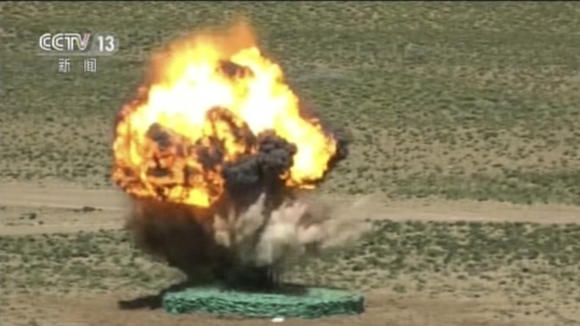
China’s CCTV in August shows a target exploding during a live-fire drill by the Chinese army near its border with India. © CCTV/AP

Brahma Chellaney, Nikkei Asian Review

Operating in the threshold between peace and war, China has pushed its borders far out into international waters in the South China Sea in a way no other power has done elsewhere. Less known is that China is using a similar strategy in the Himalayas to alter facts on the ground — meter by meter — without firing a single shot.

India is facing increasingly persistent Chinese efforts to intrude into its desolate borderlands. China, however, has not spared even one of the world’s smallest countries, Bhutan, which has barely 8,000 men in its security forces. In the disputed Himalayan plateau of Doklam, claimed by both Bhutan and China, the People’s Liberation Army has incrementally changed the status quo since last fall.

Doklam became a defining event in a 10-week standoff between Chinese and Indian troops last summer after the PLA started building a highway on that plateau to the India border: For the first time since China’s success in the South China Sea, a rival power stalled Chinese construction activity to change the status quo in a disputed territory.

India intervened as Bhutan’s security guarantor to thwart a threat to its own security. Despite almost daily Chinese threats to “teach it a lesson,” India refused to back down, forcing a humiliated Beijing to eventually accept a mutual-withdrawal deal to end the standoff with a country it sees as economically and militarily inferior.

But as happened with the 2012 U.S.-brokered deal for Chinese and Philippine naval vessels to withdraw from around the Scarborough Shoal, China did not faithfully comply with the Doklam accord. If anything, China applied the Scarborough “model” to Doklam — agree to disengage and, after the standoff is over, quietly send in forces to occupy the territory.

Doklam thus illustrates that while India may be content with a tactical win, China has the perseverance and guile to win at the strategic level. Camouflaging offense as defense, China hews to ancient military theorist Sun Tzu’s advice, “The ability to subdue the enemy without any battle is the ultimate reflection of the most supreme strategy.” As Sun Tzu said, “All warfare is based on deception.”

India tried for months to obfuscate the PLA’s increasing control of Doklam so as not to dilute the “victory” it had sold to its public. Even as commercially available satellite images showed China’s rapidly expanding military infrastructure in Doklam, India’s foreign ministry tried pulling the wool over the public’s eyes by repeatedly saying there were “no new developments at the faceoff site or its vicinity,” located at the plateau’s southern edge. Meanwhile, China continued to build permanent military structures and forward deploy troops across much of Doklam.

This month, Indian Defense Minister Nirmala Sitharaman grudgingly admitted China has constructed helipads and other military structures in Doklam so as to “maintain” troop deployments even in winter. Previously, there were no force deployments or permanent military structures on the uninhabited plateau, which was visited by nomadic shepherds and Bhutanese and Chinese mobile patrols other than in the harsh winter.

To be sure, China has dictated a Hobson’s choice to India on Doklam, like it did to the Philippines over Scarborough: Go along with the changed status quo or face the risk of open war. Clearly, New Delhi didn’t anticipate that an end to the faceoff would result in rapid Chinese encroachments that now virtually preclude India intervening again in Doklam at Bhutan’s behest.

In effect, Beijing has shown Bhutan that India cannot guarantee its territorial integrity.

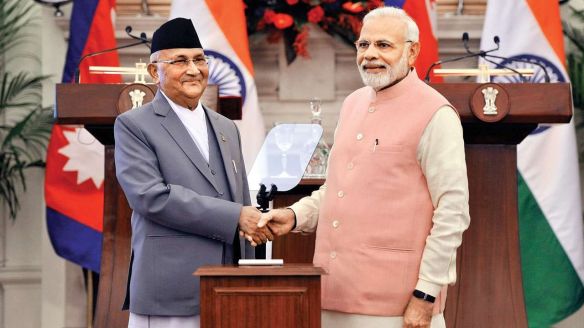
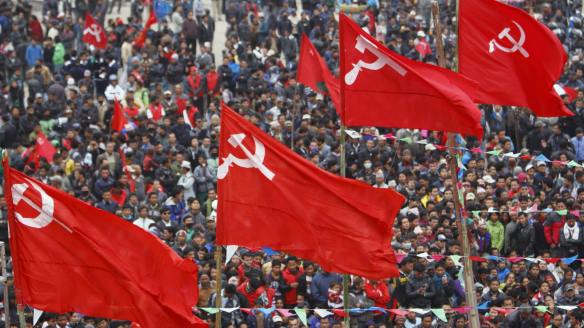
China’s objective unmistakably is to undercut India’s influence in Bhutan in the way Beijing has succeeded in another Himalayan nation, Nepal, where a Chinese-backed communist government took office earlier this year. It was Beijing that persuaded Nepal’s two main communist parties to overcome their bitter squabbles and join hands in national and local elections.

China’s new control over much of Doklam, however, effectively overturns the land-swap deal it has long offered Bhutan. Under the offer, the tiny kingdom was to cede its claim to that plateau in return for Beijing renouncing its claim to a slice of northern Bhutan.

Beijing has held some 24 rounds of border talks with Bhutan since 1984, just as its negotiations with India on territorial and boundary issues have gone on interminably since 1980 without tangible progress. In fact, the largest real estate China covets in Asia is in India — Arunachal Pradesh, a resource-rich Himalayan territory almost three times as large as Taiwan.

Today, China has stepped up military pressure on India, including beefing up its ground and air assets in the Himalayan region. The Indian government recently told Parliament that the number of Chinese military intrusions into India’s vulnerable borderlands jumped 56% in one year — from 273 in 2016 to 426 in 2017, or more than one per day. It seems that just as China’s trade surplus with India has doubled since Indian Prime Minister Narendra Modi took office in 2014, its border incursions are also on a similar rising trajectory.

India’s perennially reactive mode allows the PLA to keep the initiative in the Himalayas. More fundamentally, China — by mounting strategic pressure on multiple Indian flanks while raking in a fast-growing trade surplus (currently running at nearly $5 billion a month) — is able to have its cake and eat it too.

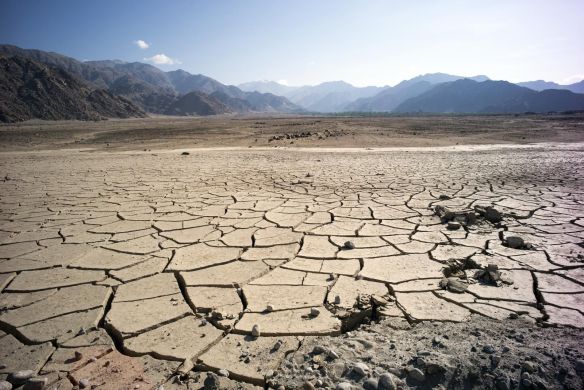
Add to the picture another important element of China’s Himalayan strategy — reengineering transboundary flows of rivers originating in Tibet through dams and other projects. A third of India’s total freshwater supply comes from rivers that start in Tibet. Last year, China breached two bilateral accords with India by withholding upstream river flow data, which is necessary for flood forecasting and warning. Supply of such data could have prevented some of the deaths in the record flooding that ravaged India’s northeast.

Some 67 years after China eliminated the historical buffer with India by annexing Tibet, it is transforming Himalayan geopolitics to its advantage. China’s strategic penetration of Nepal, which has an open border with India permitting passport-free passage, carries major implications for Indian security. Having lost the outer buffer, Tibet, India now risks losing the inner buffer, Nepal.

In the absence of a coherent strategy to counter China’s aggressive Himalayan strategy, an increasingly defensive India has now sought to make peace with Beijing. For example, it not only advised its officials to stay away from events marking the 60th anniversary this month of the Dalai Lama’s flight to India, but also got Tibetan exiles to move those events from New Delhi to remote Dharamsala, in the Himalayan foothills. Modi’s attention is focused on returning to power in the next national election, which is due to be held in April-May 2019 but might be advanced to this year-end.

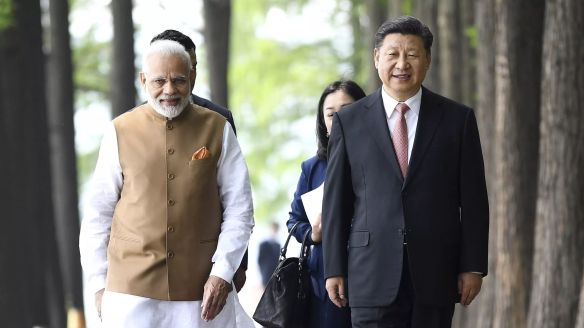
Just when Chinese President Xi Jinping’s lurch toward one-man rule has led to a rethink in the West on its relationship with China, India has signaled its intent to go soft on China, with its foreign ministry saying that New Delhi was willing to develop relations with Beijing “based on commonalities.” Salvaging Modi’s China visit for last September’s BRICS (Brazil, China, India, Russia and South Africa) summit prompted New Delhi to cut the Doklam deal with Beijing, paving the way for the Chinese advance into the plateau. Now Modi is again set to go to China, this time for a bilateral summit with Xi. But India will likely not only come away empty-handed from its new propitiatory approach but also give cover to China’s designs against it.

Brahma Chellaney, a geostrategist and author, is professor of strategic studies at the New Delhi-based Center for Policy Research.

© Nikkei Asian Review, 2018.

A New Order for the Indo-Pacific

China has transformed the Indo-Pacific region’s strategic landscape in just five years. If other powers do not step in to counter further challenges to the territorial and maritime status quo, the next five years could entrench China’s strategic advantages.

BRAHMA CHELLANEY, Project Syndicate

SYDNEY – Security dynamics are changing rapidly in the Indo-Pacific. The region is home not only to the world’s fastest-growing economies, but also to the fastest-increasing military expenditures and naval capabilities, the fiercest competition over natural resources, and the most dangerous strategic hot spots. One might even say that it holds the key to global security.

The increasing use of the term “Indo-Pacific” – which refers to all countries bordering the Indian and Pacific oceans – rather than “Asia-Pacific,” underscores the maritime dimension of today’s tensions. Asia’s oceans have increasingly become an arena of competition for resources and influence. It now seems likely that future regional crises will be triggered and/or settled at sea.

The main driver of this shift has been China, which over the last five years has been working to push its borders far out into international waters, by building artificial islands in the South China Sea. Having militarized these outposts – presented as a fait accompli to the rest of the world – it has now shifted its focus to the Indian Ocean.

Already, China has established its first overseas military base in Djibouti, which recently expropriated its main port from a Dubai-based company, possibly to give it to China. Moreover, China is planning to open a new naval base next to Pakistan’s China-controlled Gwadar port. And it has leased several islands in the crisis-ridden Maldives, where it is set to build a marine observatory that will provide subsurface data supporting the deployment of nuclear-powered attack submarines (SSNs) and nuclear-powered ballistic missile subs (SSBNs) in the Indian Ocean.

In short, China has transformed the region’s strategic landscape in just five years. If other powers do not step in to counter further challenges to the territorial and maritime status quo, the next five years could entrench China’s strategic advantages. The result could be the ascendancy of a China-led illiberal hegemonic regional order, at the expense of the liberal rules-based order that most countries in the region support. Given the region’s economic weight, this would create significant risks for global markets and international security.

To mitigate the threat, the countries of the Indo-Pacific must confront three key challenges, beginning with the widening gap between politics and economics. Despite a lack of political integration and the absence of a common security framework in the Indo-Pacific, free-trade agreements are proliferating, the latest being the 11-country Comprehensive and Progressive Agreement for Trans-Pacific Partnership (CPTPP). China has emerged as the leading trade partner of most regional economies.

But booming trade alone cannot reduce political risks. That requires a framework of shared and enforceable rules and norms. In particular, all countries should agree to state or clarify their territorial or maritime claims on the basis of international law, and to settle any dispute by peaceful means – never through force or coercion.

Establishing a regional framework that reinforces the rule of law will require progress on overcoming the second challenge: the region’s “history problem.” Disputes over territory, natural resources, war memorials, air defense zones, and textbooks are all linked, in one way or another, with rival historical narratives. The result is competing and mutually reinforcing nationalisms that imperil the region’s future.

The past continues to cast a shadow over the relationship between South Korea and Japan – America’s closest allies in East Asia. China, for its part, uses history to justify its efforts to upend the territorial and maritime status quo and emulate the pre-1945 colonial depredations of its rival Japan. All of China’s border disputes with 11 of its neighborsare based on historical claims, not international law.

This brings us to the third key challenge facing the Indo-Pacific: changing maritime dynamics. Amid surging maritime trade flows, regional powers are fighting for access, influence, and relative advantage.

Here, the biggest threat lies in China’s unilateral attempts to alter the regional status quo. What China achieved in the South China Sea has significantly more far-reaching and longer-term strategic implications than, say, Russia’s annexation of Crimea, as it sends the message that defiant unilateralism does not necessarily carry international costs.

Add to that new challenges – from climate change, overfishing, and degradation of marine ecosystems to the emergence of maritime non-state actors, such as pirates, terrorists, and criminal syndicates – and the regional security environment is becoming increasingly fraught and uncertain. All of this raises the risks of war, whether accidental or intentional.

As the most recent US National Security Strategy report put it, “A geopolitical competition between free and repressive visions of world order is taking place in the Indo-Pacific region.” And yet while the major players in the region all agree that an open, rules-based order is vastly preferable to Chinese hegemony, they have so far done far too little to promote collaboration.

There is no more time to waste. Indo-Pacific powers must take stronger action to strengthen regional stability, reiterating their commitment to shared norms, not to mention international law, and creating robust institutions.

For starters, Australia, India, Japan, and the US must make progress in institutionalizing their Quadrilateral Security Dialogue, so that they can better coordinate their policies and pursue broader collaboration with other important players like Vietnam, Indonesia, and South Korea, as well as with smaller countries.

Economically and strategically, the global center of gravity is shifting to the Indo-Pacific. If the region’s players don’t act now to fortify an open, rules-based order, the security situation will continue to deteriorate – with consequences that are likely to reverberate worldwide.

Brahma ChellaneyBrahma Chellaney, Professor of Strategic Studies at the New Delhi-based Center for Policy Research and Fellow at the Robert Bosch Academy in Berlin, is the author of nine books, including Asian JuggernautWater: Asia’s New Battleground, and Water, Peace, and War: Confronting the Global Water Crisis. © Project Syndicate.


India’s Choice in the Maldives

72c3405b293d7d1dbbdc7e24438ace91.2-1-super.1

As the political situation in the Maldives deteriorates, peace and security in the Indian Ocean is increasingly in jeopardy. With China seeking to capitalize on its support for the authoritarian president, Abdulla Yameen, to expand its influence in the region, the crisis has become a defining moment for India.

BRAHMA CHELLANEY, Project Syndicate

The Maldives – that beautiful Indian Ocean country comprising more than 1,000 coral islands – is known the world over as a tranquil and luxurious travel destination. But the country is now being roiled by a political crisis so severe that international advisories are cautioning against travel there.

The rule of law in the Maldives has been steadily deteriorating ever since President Abdulla Yameen came to power in 2013. The situation escalated sharply earlier this month, when Yameen refused to comply with the Supreme Court’s unanimous order quashing the convictions, which he had engineered, of nine opposition figures – including the exiled former president, Mohamed Nasheed – on terrorism charges. Instead of freeing those whose sentences were nullified, Yameen declared a state of emergency and jailed two of the Supreme Court’s five judges, including the chief justice.

To be sure, authoritarianism is not new to the Maldives. Indeed, Nasheed is the only democratically elected, non-autocratic president the country has had since it gained independence from Britain in 1965. His tenure lasted just over three years, until, in 2012, he was forced at gunpoint to resign.

But the Maldives’ sordid politics is having an increasingly far-reaching impact, not least because it is closely linked to radical Islam. On the day Nasheed was overthrown, Islamists ransacked the Maldives’ main museum, smashing priceless Buddhist and Hindu statues and erasing all evidence of the country’s pre-Islamic roots. On a per capita basis, the Maldives has sent the highest number of foreign fighters to support terrorist groups in Syria and Iraq.

Moreover, the Maldives sits astride critical shipping lanes in the Indian Ocean, making it vital to security in the region. As a result, the country’s deteriorating political conditions are increasingly capturing the international community’s attention. Democratic powers, from the United States to India, are calling upon the United Nations to intervene in the crisis, while China, seeking to advance its own interests in the Indian Ocean, is defending the graft-tainted Yameen.

The increasingly close relationship between China and the Maldives represents a significant shift from the past, when India was the country’s primary regional partner. Maldivians are mainly of Indian and Sri Lankan origin, and have strong cultural and economic ties to those countries. Their country has traditionally been viewed as part of India’s sphere of influence.

But, in recent years, China has been eroding India’s influence in the Maldives, as part of its effort to build its “string of pearls”: a chain of military installations and economic projects aimed at projecting Chinese power in the Indian Ocean. Just as China recently secured the Sri Lankan port of Hambantota on a 99-year lease, it has, according to Nasheed, quietly acquired 17 islands in the heavily indebted Maldives for investment purposes.

But, betraying its strategic objectives, China has also sent warships to visit the Maldives. If China, which has stepped up military pressure on India along their Himalayan frontier, turned one of the Maldivian islands into a naval base, it would effectively open a maritime front against India – a milestone in China’s strategic encirclement of its neighbor.

The Maldivian crisis thus is a defining moment for India. Will India intervene militarily, as Nasheed and other Maldivian opposition leaders have requested, or will it allow Yameen to continue to enable China to pursue its strategic objectives in the region?

There is some precedent for an Indian military intervention in the Maldives. In 1988, India snuffed out a coup attempt against the autocratic Maumoon Abdul Gayoom engineered by a Maldivian businessman with the aid of armed mercenaries, especially Sri Lankan Tamil separatists. Thanks to India’s swift military action, Gayoom would hold onto power for another two decades.

Yet when the country’s first and only democratically elected president beseeched India in 2012 to rescue him from the Islamist forces laying siege to his office, India looked the other way. India’s government felt betrayed by Nasheed’s own burgeoning relationship with China. Not only had Nasheed awarded China its first infrastructure contracts; just three months before his ouster, he had inaugurated the new Chinese embassy in the capital, Malé, on the same day that India’s then-prime minister, Manmohan Singh, arrived for a regional summit.

Today, an Indian intervention could be dicey, not least because no legitimate authority is inviting India to send in forces. Indian paratroopers could gain effective control of Malé within a few hours. But what would the endgame be? Amid rising Islamist influence and shifting political allegiances among the handful of powerful families that dominate the Maldives’ economy and politics, finding reliable allies committed to – much less capable of – protecting democratic freedoms would prove a daunting challenge.

Moreover, even if Yameen were ousted and the country held a democratic election, it is unlikely that China’s influence could be contained. As the experiences of Bangladesh, Myanmar, Nepal, and Sri Lanka illustrate, China has outmaneuvered India diplomatically, even when dealing with democratically elected governments. Indeed, it did so in the Maldives itself, with Nasheed. Because the country’s debt will continue to rise, regardless of its leadership, China will retain its favorite source of leverage.

India, with its proximity and historical ties to the Maldives, may seem to hold a strong hand. But it has a lot to lose if it aggravates an already volatile political situation in its maritime backyard by intervening militarily.

India’s best option is to hold out a credible threat of military action, while imposing, together with other democratic powers, economic sanctions that undercut support for Yameen among the Maldivian elite, many of whom own the luxury resorts that now have far too many empty rooms. With them on side, perhaps the international community would be able to ensure that the presidential election scheduled for later this year is fair and inclusive – and supervised by the UN. That is the only way to end the crisis, and restore peace to an Indian Ocean paradise.

Brahma ChellaneyBrahma Chellaney, Professor of Strategic Studies at the New Delhi-based Center for Policy Research and Fellow at the Robert Bosch Academy in Berlin, is the author of nine books, including Asian JuggernautWater: Asia’s New Battleground, and Water, Peace, and War: Confronting the Global Water Crisis.

© Project Syndicate, 2018.

India has forgotten its own realist strategic thought

India’s tradition of realist strategic thought is probably the oldest in the world. Yet India has forgotten its own realist strategic thought, as propounded before Christ by the strategist Kautilya (also known as Chanakya). So, despite growing realism in foreign policy, quixotic traditions from the Nehruvian era still persist to this day. 

Chanakya

Brahma Chellaney, DNA, January 26, 2018

Madeleine Albright famously said that, “The purpose of foreign policy is to persuade other countries to do what you want or, better yet, to want what we want.” How has Indian foreign policy done when measured against such a standard of success?

In this century, India’s growing geopolitical weight, impressive economic-growth rate, rising military capabilities, increasing maritime role, abundant market opportunities, and favourable long-term demographics have helped increase its international profile. India is widely perceived to be a key “swing state” in the emerging international order. Yet Indian foreign policy offers little clue as to whether India is a world power in the making or just a sub-regional power with global-power pretensions.

India has yet to resolve an underlying tension in policy between realism and idealism. The struggle between idealism and pragmatism has bedevilled its diplomacy since independence, imposing serious costs. For example, Jawaharlal Nehru, the idealist, rejected a U.S. suggestion in the 1950s that India take China’s vacant seat in the United Nations Security Council. The officially blessed selected works of Nehru quote him as saying that India could not accept the American proposal because it meant “falling out with China and it would be very unfair for a great country like China not to be in the [Security] Council.” The selected works also quote Nehru as telling Soviet Premier Marshal Nikolai A. Bulganin in 1955 on the same U.S. offer that “we should first concentrate on getting China admitted.”

Such have been the national-security costs for future Indian generations that just in the first seven years after independence, India allowed Pakistan to seize and retain one-third of Jammu and Kashmir; looked the other way when the newly established People’s Republic of China gobbled up the large historical buffer, the Tibetan Plateau; and tamely surrendered its British-inherited extra-territorial rights in Tibet without any quid pro quo, not even Beijing’s acceptance of the then-prevailing Indo-Tibetan border. The 1954 surrender of extra-territorial rights in Tibet included India shutting its military outposts at Yatung and Gyantse in Tibet and handing over Tibet’s postal, telegraph and public telephone services that it had been running to the Chinese government.

India thought that if it sought peace, it would get peace. In reality, a nation gets peace only if it can defend peace. This reality did not sink in until China humiliated India in 1962.

The 1962 invasion, however, did not change another characteristic of Indian diplomacy — it has been driven not by integrated, institutionalized policymaking but by largely an ad hoc, personality-driven approach. This remains the bane of Indian foreign policy, precluding the establishment of a strategic framework for pursuit of goals. The reliance by successive prime ministers on ad hoc, personal initiatives and decisions has helped marginalize the national security establishment and compounded India’s challenges.

This needs to be corrected. The ministry of external affairs, for example, must play its assigned role in the formulation and execution of key aspects of foreign policy — a role that has increasingly been usurped by the Prime Minister’s Office.

Today, India confronts a “tyranny of geography” — that is, serious external threats from virtually all directions. To some extent, it is a self-inflicted tyranny. India’s concerns over China, Nepal, Bangladesh, Sri Lanka, the Maldives and even Pakistan stem from the failures of its past policies. An increasingly unstable neighbourhood also makes it more difficult to promote regional cooperation and integration.

With its tyranny of geography putting greater pressure on its external and internal security, India needs to develop more innovative approaches to diplomacy. The erosion of its influence in its own backyard should serve as a wake-up call. Only through forward thinking and a dynamic foreign policy can India hope to ameliorate its regional-security situation, freeing it to play a larger global role. Otherwise, it will continue to be weighed down by its region.

While India undoubtedly is imbibing greater realism in its foreign policy, it remains intrinsically cautious and reactive, rather than forward-looking and proactive. And as illustrated by Narendra Modi’s unannounced Lahore visit or by his government’s reluctance to impose any sanctions on a country it has called “Terroristan,” India hasn’t fully abandoned its quixotic traditions from the Nehruvian era.

India’s tradition of realist strategic thought is probably the oldest in the world. The realist doctrine was propounded by the strategist Kautilya, also known as Chanakya, who wrote the Arthashastra before Christ. This ancient manual on great-power diplomacy and international statecraft remains a must-read classic. Yet India, ironically, has forgotten Arthashastra.

© DNA, 2018.

Water shortages could trigger Asia conflicts

A number of factors threaten environmental stability and spur climate change

Clipboard01

Asia exemplifies that dams and democracy do not go well together. Dam building has run into major grassroots opposition in major Asian democracies. But it continues unhindered in countries where grassroots empowerment is absent.

Brahma Chellaney, Nikkei Asian Review

In recent weeks, one of the most pristine Himalayan rivers has mysteriously turned black when entering India from Tibet, highlighting how China’s upstream tunneling, damming and mining activities might be causing major environmental contamination. The plight of the Siang, the central artery of the Brahmaputra river system — the lifeline of northeastern India and Bangladesh — is a stark reminder that transboundary river water issues in Asia are no less important than the regional maritime issues of the South and East China seas and the Indian Ocean, which have attracted greater global attention.

Freshwater, or water that is not salty, is a life-supporting resource. But it is increasingly in short supply in Asia. Although home to 60% of the world’s population, Asia has less freshwater per capita than any other continent. Its annual freshwater availability of 2,697 cubic meters per person is less than half the global average of 5,829 cubic meters. Yet Asia has experienced the world’s most rapid growth in freshwater withdrawals from rivers, lakes and aquifers since its economic rise.

The region’s freshwater usage rate exceeds its renewable stocks. By digging deeper wells and overexploiting river resources, combined with irrigation subsidies, Asia is accelerating water resource depletion and environmental degradation.

Transboundary problem

Water contamination until now has been mainly a domestic issue as highlighted by the pollution problems affecting the Yellow River in China and the Ganges in India. But the contamination of the Siang signals that this problem is becoming a transboundary problem, which will increase tensions and discord between neighboring countries.

Sino-India tensions have already increased due to freshwater disputes. Beijing has withheld hydrological data from New Delhi on upstream river flows in 2017 in breach of two bilateral accords. This undermined India’s flood early-warning systems during the critical monsoon season. In India’s Assam state, which suffered record flooding despite below-normal monsoon rainfall, many deaths were preventable. The data denial was apparently intended to punish India for boycotting China’s Belt and Road summit and for the border standoff on the remote Himalayan plateau of Doklam.

Asia’s water crisis, meanwhile, has given rise to grand but environmentally problematic projects such as China’s South-to-North Water Diversion Project. China has already completed two of the three legs of the world’s most ambitious water transfer program, which is now diverting billions of cubic meters of river waters yearly to its parched north. Because this program’s highly controversial third leg is to divert waters from rivers flowing to other countries from the Tibetan Plateau, China refuses to divulge any details about it.

More broadly, even as threats to Asia’s sustainable water supply are intensifying, geostrategic factors are raising the specter of water wars. Dam building and other diversions are often at the center of tensions and recriminations between states.

Asia illustrates that once shared water becomes a political and diplomatic battleground between countries, it begins to insidiously exact geopolitical costs in ways not dissimilar to the legacy of an armed conflict. The casualty usually is sub-regional stability and cooperation.

Asia also exemplifies another important trend — that dams and democracy do not go well together. Dam building has run into major grassroots opposition in Asian democracies like Japan, South Korea and India, driving up project costs and acting as a damper on hydropower expansion. In the absence of grassroots empowerment, however, there are few impediments to dam construction in Laos, Myanmar, Pakistan, China and elsewhere.

Indeed, China has become the global leader in dam building, boasting more large dams than the rest of the world combined. What is intensifying concern among downstream nations about China’s dam frenzy is the shift in its focus from domestic rivers to ones that cross borders. The Siang River’s contamination triggered a political furor and grassroots protests in India’s northeast, forcing Beijing to break its long silence and claim that a Nov. 18 earthquake in southeastern Tibet “might have led to the turbidity (clouding)” of the river. But the river waters turned dirty and gray before the quake struck.

The plain fact is that the environmental futures of China and its many neighbors are inextricably linked. Environmental degradation on the world’s largest and highest plateau — Tibet (which is warming at a rate three times the global average) — carries pan-Asian implications. With its height and other unique features, the Tibetan Plateau influences climatic and rainfall patterns across Asia.

Several other developments are also undermining Asia’s hydrological and climatic stability and fostering a cycle of chronic flooding and droughts. In many Asian countries, watersheds, watercourses, coastal ecosystems and the broader environment are being degraded, resulting in shrinking wetlands and forests, increased water pollution and other ecological problems.

These developments spur global warming. Natural water flows, evaporation and condensation help to propel the earth’s biogeochemical cycles and regulate its climate. Environmental degradation creates a vicious circle. It affects the hydrological cycle that shapes regional climate. A warming climate, in turn, has a significant impact on water resources.

Demand-side options

Jakarta illustrates how Asia’s mounting threats from climate change are fostered by changes in the hydrological cycle. The Indonesian capital, home to nearly 30 million people, is sinking faster than any other major city in the world because of accelerated groundwater depletion. Tens of thousands of wells across Jakarta pump out groundwater at such a rate that it is causing large-scale subsidence, with as much as 40% of the city now said to be below sea level. Groundwater depletion is also contributing to the rise of the Java Sea, thus exacerbating Jakarta’s troubles. Some of the waters extracted from Jakarta’s underground aquifers ultimately end up in the sea.

A surfeit of water but not enough to drink is a scenario likely to confront many coastal Asian cities. One study estimates that groundwater depletion contributes 0.8 millimeters per year to the rise of ocean levels globally, or about a quarter of the total rise. Groundwater depletion, by inviting seawater intrusion into aquifers, is already compounding freshwater shortages in some Asian cities. Meanwhile, the plethora of upstream dams on rivers is causing a perceptible retreat of Asia’s heavily populated deltas that are home to megacities like Bangkok, Dhaka, Guangzhou, Kolkata, Shanghai and Tianjin.

Given that Asia is likely to face a hotter, drier future, governments there must initiate action to mitigate the impacts. The freshwater crisis that many Asian countries already confront should be tackled in a way that contributes to combating climate change. The imperative is to move from purely supply-side approaches to demand-side options that emphasize water conservation and quality as much as quantity. Even on the supply side, nontraditional measures, from recycling of water to rainwater capture, must be embraced.

If unsustainable practices and mismanagement of water resources are not addressed, freshwater will become a precious commodity whose control will spark conflicts in Asia. The rise of water nationalism at a time of increasing water stress highlights the linkage between water and peace. Cooperative institutional mechanisms and sustainable resource utilization constitute the building blocks of water peace. Water is a key test of whether Asian leaders have the political will and good sense to think and act long term. What Asia confronts today, other continents are likely to face tomorrow.

Brahma Chellaney is a geostrategic and author of nine books, including “Water: Asia’s New Battleground,” which won the Bernard Schwartz Award.

© Nikkei Asian Review, 2017.

China’s actions risk creating a coalition of democratic powers

Brahma Chellaney, Professor, Center for Policy Research

The United States, Japan, India and Australia have renewed efforts toward a strategic constellation of democracies in the Indo-Pacific region, with their diplomatic officials meeting jointly on the sidelines of the recent East Asia Summit in Manila. The future of this currently low-key quadrilateral initiative (or “quad”) will be shaped largely by China’s actions, which are acting as a spur to establish what Japanese Prime Minister Shinzo Abe once called a “democratic security diamond.”

If China moderates its behavior by respecting international law, the quad is unlikely to gain traction. But if Beijing continues to flout established rules and norms on territorial, maritime and trade issues, the apparition of what it sees as an “Asian NATO” might eventually come true.

Today, the specter of a destabilizing power imbalance looms large in the world’s most dynamic region. In this light, close strategic collaboration among the major democracies can help institute power stability in the Indo-Pacific region and contain the challenges that threaten to disrupt stability and impede economic growth.

Let’s be clear: the alternative to a liberal, inclusive, rules-based order is an illiberal, hegemonic order with Chinese characteristics. Few would like to live in such an order.

Yet, this is precisely what the Indo-Pacific region might get if regional states do not work to counter the growing challenge to the rules-based order. China has prospered under the present order. But having accumulated economic and military power, it is now insidiously challenging that order through its actions.

Before the Manila summit, U.S. Secretary of State Rex Tillerson pitched for a concert of democracies. “The world’s center of gravity is shifting to the heart of the Indo-Pacific,” a development that demands “greater engagement and cooperation” among democratic powers, Tillerson said in his first Asia-Pacific policy speech since taking office.

To succeed, such an endeavor must reckon with certain realities, including by drawing lessons from the failed effort a decade ago to sustain a similar quadrilateral initiative. After the original quad held its inaugural meeting in May 2007, Beijing was quick to cry foul and mount intense diplomatic and economic pressure on the member-states. Ultimately, it succeeded in unraveling the quad.

From the beginning, Australia appeared ill at ease in the original quad, given that its economic boom was tied to China’s ravenous commodity imports. America’s own support to the quad was less than unreserved, in light of its economic co-dependency with China. As for India, its approach was low-key — tacitly supportive of the quad, but hesitant to do anything openly that could instigate China to step up direct or surrogate military pressure on it. That left Japan as the only enthusiastic member of the original quad. Indeed, the quad idea was conceived by Abe in his book, Utsukushii Kuni-e (Toward A Beautiful Country), which was published just months before he became prime minister for the first time in 2006.

Eventually, the Kevin Rudd government in Australia pulled the rug from under the quad in a vain attempt to appease Beijing. With his visiting Chinese counterpart by his side, then Australian Foreign Minister Stephen Smith said, “I indicated when I was in Japan that Australia would not be proposing to have a dialogue of that nature.” He went on to label the inaugural quad meeting as “a one-off” affair.

Did the disbanding of the original quad help change China’s behavior in a positive direction? Actually China’s behavior changed for the worse.

Had the quad members stood up to the Chinese pressure, China would likely have had less space to strategically alter the status quo in the South China Sea in its favor. China’s success in extending its control in the South China Sea by artificially creating seven islands and militarizing them has only emboldened its aggressive designs in the Himalayas and the East China Sea.

The lost decade since the first quad experiment means that democratic powers cannot afford to fail again. They need to come together through meaningful collaboration and coordination, because no single power on its own has been able to stop China’s territorial and maritime creep or rein in its increasingly muscular approach. The rebirth of the quad is an attempt to provide an initial framework to institute such collaboration among an expanding group of democracies.

To be sure, a democratic coalition is unlikely to take the shape of a formal alliance. A loose coalition of democracies can draw strength from the concept of democratic peace, which holds special relevance for the region. Shared values and interests are likely to drive democratic powers to promote maritime security, stability, connectivity, freedom of navigation, respect for international law, and the peaceful settlement of disputes in the region.

Democratic powers must proceed slowly, but surely, without unduly publicizing their meetings or intentions, in view of their failed experiment a decade ago and the current geopolitical challenges that are largely centered on China’s recidivist actions.

Japan and India, facing direct Chinese military pressure, have a much greater interest in the formation of a concert of democracies than the geographically distant U.S. and Australia.

An ongoing political crisis in Australia could trigger an election early next year, potentially bringing to power the opposition Labor Party, which seemingly favors a China-friendly foreign policy. Prime Minister Malcolm Turnbull’s job approval rating has slumped to a new low. Australia, having caused the collapse of the first quad experiment, remains the weak link in the reconstituted quad.

Meanwhile, the praise Trump lavished on China and its neo-Leninist dictator, Xi Jinping, during his Beijing visit raised the question of whether he fully shares Tillerson’s Indo-Pacific vision. To be sure, the success of the reconstituted quad depends on the U.S. being fully on board.

Major Asia-Pacific powers, of course, will continue to seek opportunities to balance against China, with or without the U.S. being on board. Two recent examples from the region — the revival of the quad and the movement toward concluding a final Trans-Pacific Partnership (TPP) agreement among the 11 remaining members — indicate a clear determination to block the emergence of a China-led future.

The plain fact is that the Indo-Pacific democracies are natural allies. And given that contrasting political values have become the main geopolitical dividing line in the Asia-Pacific region, establishing a community of values can help underpin regional stability and power equilibrium. Such a community can also ensure that China’s defiant unilateralism is no longer cost-free.

But whether a constellation of democracies actually emerges or remains just an attractive concept hinges on China’s willingness to play by the rules. In that sense, the ball is in Beijing’s court.

© China-US Focus, 2017.

Abe propels a potential constellation of democracies

p7-chellaney-a-20171117-870x726
BY , The Japan Times

With the specter of a destabilizing power imbalance looming large in the world’s most dynamic region, the Indo-Pacific, the imperative to establish what Prime Minister Shinzo Abe once called a “democratic security diamond” has prompted Australia, India, Japan and the United States to renew efforts toward a strategic constellation of democracies.

Close strategic collaboration among key democracies can help institute power stability and contain the challenges that threaten to disrupt stability and impede economic growth in the Indo-Pacific, a region marked by the confluence of the Indian and Pacific oceans. At the core of a potential constellation of democracies is the strategic quadrilateral of Australia, India, Japan and the U.S.

On the sidelines of the East Asia Summit in Manila, U.S. President Donald Trump, Indian Prime Minister Narendra Modi, Australian Prime Minister Malcolm Turnbull and Abe held bilateral and trilateral meetings between themselves. Diplomatic officials from the four countries also held a joint meeting there to examine “ways to achieve common goals and address common challenges in the region,” with the quadrilateral partners agreeing to defend the rules-based order, according to the U.S. State Department.

Let’s be clear: The alternative to a liberal, inclusive, rules-based order is an illiberal, hegemonic order with Chinese characteristics. Few would like to live in such an order.

Yet this is precisely what the Indo-Pacific region might get if regional states do not work to counter the growing challenge to the rules-based order. China has prospered under the present order. But having accumulated economic and military power, it is now challenging that order, including by flouting established rules and norms on territorial, maritime and trade issues.

Before the Manila summit, U.S. Secretary of State Rex Tillerson pitched for a concert of democracies. “The world’s center of gravity is shifting to the heart of the Indo-Pacific,” a development that demands “greater engagement and cooperation” among democratic powers, Tillerson said in his first Asia-Pacific policy speech since taking office.

To succeed, such an endeavor must reckon with certain realities, including by drawing lessons from the failed effort a decade ago to sustain the exploratory Quadrilateral Initiative. After the “quad” held its inaugural meeting in May 2007, Beijing was quick to cry foul and see the apparition of an “Asian NATO.” Through intense diplomatic and economic pressure, Beijing sought to unravel the quad. Ultimately, it succeeded.

Australia appeared ill at ease in the quad, given that its economic boom was tied to China’s commodity imports. America’s support to the quad was less than unreserved, in light of its economic co-dependency with China. India was tacitly supportive of the quad but hesitant to do anything openly that could instigate China to step up direct or surrogate military pressure on it.

That left Japan as the only enthusiastic quad member. Indeed, the quad idea was conceived by Abe in his book “Utsukushii Kuni-e” (“Toward A Beautiful Country”), which was published before he became prime minister for the first time in 2006.

Eventually, the Kevin Rudd government in Australia pulled the rug from under the quad in a vain attempt to appease Beijing. With his visiting Chinese counterpart by his side, then-Foreign Minister Stephen Smith said, “I indicated when I was in Japan that Australia would not be proposing to have a dialogue of that nature” and labeled the inaugural quad meeting as “a one-off” affair.

Did the quad’s disbanding help change China’s behavior in a positive direction? Actually China’s behavior changed for the worse. Had the quad members stood up to the Chinese pressure, China would likely have had less space to strategically alter the status quo in the South China Sea in its favor. China’s success in extending its control in the South China Sea by artificially creating seven islands and militarizing them has only emboldened its aggressive designs in the Himalayas and the East China Sea.

The lost decade since the first quad experiment means that democratic powers cannot afford to fail again. They need to come together through meaningful collaboration and coordination because no single power on its own has been able to stop China’s territorial and maritime creep or rein in its increasingly muscular approach.

To be sure, a democratic coalition is unlikely to take the shape of a formal alliance. A loose coalition of democracies can draw strength from the concept of democratic peace, which holds special relevance for the region. Shared values and interests are likely to drive democratic powers to promote maritime security, stability, connectivity, freedom of navigation, respect for international law and the peaceful settlement of disputes in the region.

Democratic powers must proceed slowly but surely, without unduly publicizing their meetings or intentions, in view of their failed experiment a decade ago and the current geopolitical challenges that are largely centered on China.

Japan and India, facing direct Chinese military pressure, have a much greater interest in the formation of a concert of democracies than the geographically distant U.S. and Australia.

An ongoing political crisis in Australia could trigger an election early next year, potentially bringing to power the opposition Labor Party, which seemingly favors a China-friendly foreign policy. Turnbull’s job approval rating has hit a new low. Having caused the collapse of the first quad experiment, Australia is the weak link in the reconstituted quad.

Meanwhile, the praise Trump lavished on China and its neo-Leninist dictator, Xi Jinping, during his recent Beijing visit raises the question whether he fully shares Tillerson’s Indo-Pacific vision. Despite his praise and flattery, Trump failed to secure any important Chinese concession. In fact, his visit, far from highlighting U.S. leadership, unwittingly spotlighted China’s strength and power to potentially shape a post-American order in the Asia-Pacific region.

To be sure, the success of the reconstituted quad hinges on the U.S. being fully on board. Of course, major Asia-Pacific powers will continue to seek opportunities to balance against China, with or without the U.S. being on board. Two recent examples from the region — the revival of the quad and the movement toward concluding a final Trans-Pacific Partnership agreement among the 11 remaining members — indicate a clear determination to block the emergence of a China-led future.

Still, the absence of a joint statement after the Nov. 12 quad meeting in Manila underscores the challenge the nascent initiative faces. Each quad member-state issued its own statement.

The resurrected quad — the result of Abe’s diplomatic doggedness — is intended to serve as an initial framework to promote a four-way security dialogue and set in motion a web of interlocking partnerships among an expanding group of democracies.

Given that contrasting political values have become the main geopolitical dividing line in the Asia-Pacific region, establishing a community of values can help underpin regional stability and power equilibrium. Such a community can also ensure that China’s defiant unilateralism is no longer cost-free.

The plain fact is that the Indo-Pacific democracies are natural allies. The Japan-U.S.-India-Australia strategic trapezium is best placed to lead the effort to build freedom, prosperity and stability in the Indo-Pacific region and to make sure that liberalism prevails over illiberalism.

Brahma Chellaney is a geostrategist and the author of nine books.

© The Japan Times, 2017.

Asia-Pacific democracies’ new entente

816bd9a41245d46c0ac6be8a809023ff.2-1-super.1

Just as Germany’s rapid ascent prior to WWI spurred a “triple entente” among France, Russia, and the UK, China’s increasingly aggressive behavior is creating strong impetus for the Asia-Pacific democracies to build a more powerful strategic coalition. This goal should become the centerpiece of these countries’ regional policies.

Project Syndicate

PERTH – US President Donald Trump toured Asia at a moment when the region’s security situation was practically white-hot. US Secretary of State Rex Tillerson, recognizing that the world’s “center of gravity is shifting to the heart of the Indo-Pacific,” called on the region’s democratic powers to pursue “greater engagement and cooperation.” They – including Trump’s US – should heed that call. In fact, only an alliance of democracies can ensure the emergence of a strong rules-based order and a stable balance of power in the world’s most economically dynamic region.

In recent years, as Tillerson acknowledged, China has taken “provocative actions,” such as in the South China Sea, that challenge international law and norms. And this behavior is set to continue, if not escalate. Last month’s 19th National Congress of the Communist Party of China effectively crowned President Xi Jinping – who has spearheaded a more muscular foreign policy, in service of his goal of establishing China as a global superpower – as the country’s emperor.

Just as Germany’s rapid ascent prior to World War I spurred a “triple entente” among France, Russia, and the United Kingdom, China’s increasingly assertive behavior is creating strong impetus for the Asia-Pacific democracies to build a more powerful coalition. After all, as recent experience in the South China Sea has made clear, no single power can impose sufficient costs on China for its maritime and territorial revisionism, much less compel Chinese leaders to change course.

This is not to say that no country has been able to challenge China. Just this summer, India stood up to its muscle-flexing neighbor in a ten-week border standoff. China has been using construction projects to change the status quo on the remote Himalayan plateau of Doklam, just as it has so often done in the South China Sea. India intervened, stalling China’s building activity. Had US President Barack Obama’s administration shown similar resolve in the South China Sea, perhaps China would not now be in possession of seven militarized artificial islands there.

In any case, securing a broader shift in China’s foreign policy and stabilizing the Asia-Pacific region’s power dynamics will require more than one country holding the line on any one issue. A US that is willing to employ new tools, a more confident Japan and India, and an Australia vexed by China’s meddling in its domestic affairs must work together to constrain Chinese behavior.

The good news is that an entente has already begun to emerge among the region’s key democracies. America’s relationship with India, in particular, has been undergoing what Tillerson called a “profound transformation,” as the two countries become “increasingly global partners with growing strategic convergence.” The US now holds more joint defense exercises with India than with any other country. Such cooperation puts the two countries in a strong position to fulfill Tillerson’s vision of serving “as the eastern and western beacons of the Indo-Pacific.”

Engagement with Japan, too, has deepened. This year’s Malabar exercise – an annual naval exercise in the Indian Ocean involving the US, India, and Japan – was the largest and most complex since it began a quarter-century ago. Focused on destroying enemy submarines, it involved more than 7,000 personnel from the US alone, and featured for the first time aircraft carriers from all three navies: America’s nuclear-powered USS Nimitz, Japan’s Izumo helicopter carrier, and India’s aircraft carrier INS Vikramaditya.

As Tillerson pointed out, this trilateral engagement among the US, India, and Japan is already bringing important benefits. But “there is room to invite others, including Australia, to build on the shared objectives and initiatives.”

So far, Australia has sought to avoid having to choose between its security ally, the US, and its main economic partner, China. Despite Defense Minister Marise Payne’s recent declaration that “Australia is very interested in a quadrilateral engagement with India, Japan, and the United States,” the government seems to be hedging its bets. For example, while it sought this year to rejoin the Malabar exercise – from which it withdrew a decade ago to appease China – it sought to do so only as an “observer.”

This approach is untenable. If Australia is to free itself of Chinese meddling, it will need to go beyond implementing new domestic safeguards to take a more active role in defending rules and norms beyond its borders, both on land and at sea.

In the coming years, the Indo-Pacific power balance will be determined, first and foremost, by events in the Indian Ocean and East Asia. Containing China will therefore require, first, efforts to restrict the country’s maritime activities – such as measures to safeguard vital sea lines and build maritime domain awareness – and, second, geo-economic initiatives to counter China’s coercive leverage over smaller countries. All of Asia’s democratic powers must be on board.

Calls by the US for closer cooperation bode well for this process, though the US still needs to focus more on the globally ascendant and aggressive China than on a declining Russia. The overwhelming victory of Japanese Prime Minister Shinzo Abe – who has touted the idea of establishing a “democratic security diamond” in the Asia-Pacific – in his country’s recent general election is also likely to help to drive cooperation forward.

To be sure, any entente among Asian democracies is unlikely to take the shape of a formal alliance. Rather, the objective should be for democratic powers to reach a broad strategic understanding, based on shared values. It is those values, after all, that set them apart: as Tillerson recognized, while Trump’s upcoming visit to Beijing will undoubtedly draw much global attention, the US cannot have the kind of relationship with non-democratic China that it can have with a major democracy.

By pursuing cooperation, the Indo-Pacific’s democratic powers can shore up an inclusive, rules-based order that underpins peace, prosperity, stability, and freedom of navigation in the region. That is the only way to thwart China’s effort to establish itself as the hegemon of an illiberal regional order.

Brahma Chellaney

Brahma Chellaney, Professor of Strategic Studies at the New Delhi-based Center for Policy Research and Fellow at the Robert Bosch Academy in Berlin, is the author of nine books, including Asian JuggernautWater: Asia’s New Battleground, and Water, Peace, and War: Confronting the Global Water Crisis.

© Project Syndicate, 2017.

Xi’s newfound strength obscures China’s internal risks

BY , The Japan Times

2de5fc1e-bbb4-11e7-affb-32c8d8b6484e_1280x720_121210

China, the world’s communist behemoth, is at a turning point in its history, one that will have profound implications for the rest of the world, but especially for Asia. Neighboring countries, from Japan to India, are already bearing the brunt of China’s recidivist policies.

The just-concluded 19th Chinese Communist Party congress put its imprimatur on President Xi Jinping’s centralization of power by naming no clear successor to him and signaling the quiet demise of the collective leadership system that has governed China for more than a quarter century. The congress, in essence, was about Xi’s coronation as China’s new emperor.

By enshrining the “Xi Jinping Thought on Socialism with Chinese Characteristics in a New Era” in its constitution, the party has made this new “ideology” — just like Marxism-Leninism and Mao Zedong’s thoughts — compulsory learning for Chinese students at all levels.

To be sure, the lurch toward absolutism didn’t happen suddenly. Xi spent his first five-year term tightening control on society. While strengthening censorship and using anti-corruption probes to take down political enemies, he steadily concentrated powers in himself. A year ago, he got the party to bestow on him the title of “core” leader.

Now, in his second term, Xi will likely centralize power in a way China hasn’t seen since Mao. Xi has already made himself in some ways more powerful than even Mao. Today, everyone is dispensable except Xi, who appears set to remain in power indefinitely.

Domestic politics in any country, including a major democracy like the United States, has a bearing on its foreign policy. The link between China’s traditionally cut-throat internal politics and its external policy has been apparent since the Mao era.

For example, China launched the 1962 Himalayan war with India after Mao’s “Great Leap Forward” created the worst manmade famine in history, with the resulting damage to his credibility, according to the Chinese scholar Wang Jisi, serving as a strong incentive for him to reassert leadership through a war. The Great Leap Forward policy led to the deaths of up to 45 million Chinese, according to the historian Frank Dikötter.

In the run-up to the latest party congress, two senior military generals disappeared from public view, including the top general holding the position equivalent to the chairman of the U.S. Joint Chiefs of Staff. It is unthinkable that in any other major country in the twenty-first century, the top-ranking general can just vanish and later is said to be under detention for alleged abuse of office.

Xi has ruthlessly cut to size any institution or group that could pose a potential challenge to his authority. By purging and jailing countless number of generals on corruption charges, he has sought to tame the powerful People’s Liberation Army, which traditionally has sworn fealty to the party, not the nation. More recently, Xi has also gone after China’s new tycoons in order to block the rise of Russia-style oligarchs.

Control and nationalism are the guiding themes in Xi’s approach, which centers on the state being in charge of all aspects of public life, including culture, religion and the digital realm. But such an approach risks creating a pressure cooker syndrome — cool on the outside but so pressurized on the inside that it could not be deftly managed.

It is true that even before Xi assumed power in 2012, China began gradually discarding Deng Xiaoping’s dictum to “keep a low profile and bide one’s time.” An increasingly nationalistic, assertive China staked out a more muscular role, including resurrecting territorial and maritime disputes and asserting new sovereignty claims.

China’s proclivity to bare its claws, however, has become more pronounced under Xi, who sees the West in retreat and wants China to gain the upper hand globally. His government has aggressively used construction activity to change the status quo in Asia in relation to land and sea frontiers and cross-border river flows. In his marathon, three-and-a-half-hour speech to the party congress, Xi actually bragged of his “successful prosecution of maritime rights,” citing “South China Sea reef and island construction” as one of his major achievements.

In fact, Xi aspires to become modern China’s most transformative leader. Just as Mao helped to create a reunified and independent China through a communist “revolution,” and Deng set in motion China’s economic rise through reforms, Xi wants to make China the central player in the international order.

Now that Xi’s pet “One Belt, One Road” (OBOR) project has been officially enshrined in the party’s constitution, the world will likely witness a greater Chinese propensity to use geo-economic tools to achieve larger geostrategic objectives. The $1 trillion OBOR, however, symbolizes the risk of China’s strategic overreach: The majority of the nations in OBOR are junk rated or not graded by international rating firms. China’s OBOR drive is actually beginning to encounter a backlash in several partner countries.

Even so, the sycophancy with which senior officials abased themselves to extol Xi at the party congress indicates that there is no room for debate in a one-man-led China. Indeed, Xi’s gaining of virtually absolute power demonstrates — if any evidence were needed — that there is no linear path between rising prosperity and political pluralism.

Internationally, Xi’s neo-Maoist dictatorship will likely spell trouble for the free world, especially Asian democracies like India, Japan, Taiwan, South Korea and the Philippines. We will likely see a China more assertive in the Indo-Pacific region, more determined to achieve global superpower status, and more prone to employing instruments of coercive diplomacy and breaching established norms and rules. A restrained and stable Chinese foreign policy could become more difficult.

Xi’s vision, which he has called the “Chinese dream,” is essentially to make China the world’s preeminent power by 2049 — the centennial of the communist “revolution.” The longest any autocratic system has survived in modern history was 74 years in the Soviet Union. Xi’s grip on power may still be intact when China is expected to overtake that record in less than seven years.

Still, with the party’s ideological mask no longer credible, the longer-term prospects of continued communist rule are far from certain. After all, China’s future is likely to be determined not so much by its hugely successful economy as by its murky domestic politics.

Xi’s new strength and power helps obscure China’s internal risks, including the fundamental challenge of how to avoid a political hard-landing. As for Xi, he needs to watch his back, having made many enemies at home in his no-holds-barred effort to concentrate power in his own hands.

Brahma Chellaney is a geostrategist and the author of nine books.

© The Japan Times, 2017.

The long history of Rohingya Islamist militancy

Brahma Chellaney, Mail Today

4f659e10-145e-11e7-8424-32eaba91fe03_1280x720_171752

Inside Myanmar’s Rakhine state: Members of the well-oiled Arakan Rohingya Salvation Army, also known as Harakah al-Yaqin, which is aided by militant organizations in Saudi Arabia and Pakistan.

The current international narrative on the plight of Myanmar’s persecuted Rohingya minority has failed to recognize the roots of the present crisis or the growing transnational jihadist links of Rohingya militants, who have stepped up attacks. Contrary to the perception that the Rohingya militancy has arisen from military repression in recent years, Myanmar’s jihad scourge is decades old, with Rohingya Islamist violence beginning even before Myanmar gained independence in 1948.

Rohingya militants have actually been in the vanguard of the global rise of Islamic radicalism since the early 1940s, when they joined the campaign to press the British to establish Pakistan by partitioning India. It was the British who earlier moved large numbers of Rohingyas from East Bengal to work on rubber and tea plantations in Burma, now Myanmar, which was administered as a province of India until 1937 before it became a separate, self-governing colony. Rohingya migrants settled mainly in Myanmar’s East Bengal-bordering Arakan region (now renamed Rakhine state).

Between 1942 and the early 1950s, a civil war raged in Arakan between Muslims and Buddhists. Communal hatred spilled into violence during World War II as the Japanese military advanced into Arakan in 1942 and the British launched a counter-offensive, with local Buddhists largely siding with the Japanese and Rohingyas with the British.

Britain recruited Rohingya Muslims into its guerrilla force — the so-called “V” Force — to ambush and kill Japanese troops. When the British eventually regained control of Arakan in 1945, they rewarded Rohingya Muslims for their loyalty by appointing them to the main posts in the local government.

Emboldened by the open British support, Rohingya militants set out to settle old scores with Buddhists. And in July 1946, they formed the North Arakan Muslim League to seek the Muslim-dominated northern Arakan’s secession from Myanmar. In the religious bloodletting that preceded and followed the partition of India, Rohingya attacks sought to drive out Buddhists from northern Arakan as part of the campaign to join East Pakistan.

Failure to achieve that goal turned many Rohingyas to armed jihadism, with mujahideen forces in 1948 gaining effective control of northern Arakan. Government forces suppressed the revolt in the early 1950s, although intermittent mujahideen attacks continued until the early 1960s. From the 1970s onwards, however, Rohingya Islamist movements re-emerged, with a series of insurgent groups rising and fading away. The aim of the groups was to establish an Islamist state within a Buddhist state, principally through demographic change and jihad.

Now history has come full circle, with the Myanmar military being accused of driving Rohingyas out of Rakhine state. But in a development that carries ominous security implications for the region, especially Myanmar, India and Bangladesh, Rakhine is becoming a magnet for the global jihadist movement, with Rohingya radicals increasingly being aided by militant organizations in Pakistan and Saudi Arabia.

The new breed of Rohingya insurgents is suspected of having links with ISIS, Lashkar-e-Taiba, al-Qaeda and even Pakistan’s Inter-Services Intelligence (ISI) agency. Ata Ullah, the Pakistani who heads the Rohingya terrorist group, the well-oiled Arakan Rohingya Salvation Army, reportedly returned to Pakistan from an extended stay in Saudi Arabia with millions of dollars to wage jihad against Myanmar after the 2012 deadly communal riots in Rakhine.

Against this background, India is legitimately concerned about the illegal entry of over 40,000 Rohingyas since 2012, with the government telling the Supreme Court that their arrival poses a “serious security threat” because of the links of Rohingya militants with terrorist outfits and the ISI agency. Some of these militants have become active in India, according to the government.

What is particularly disturbing is the organized manner in which the Rohingyas have sneaked into India from multiple routes and then settled across the length and breadth of the country, including in sensitive places like Jammu, Kashmir Valley, Mewat and Hyderabad. Rohingya settlements have come up even in New Delhi. Because they entered India unlawfully, the Rohingas are illegal aliens, not refugees.

Normally, those fleeing a conflict-torn zone tend to camp just across an international border. But in this case the Rohingyas entered India via a third nation, Bangladesh. And then large numbers of them dispersed from West Bengal and Tripura states to different parts of India. Many of them, as the government admits, have obtained Aadhaar and other identity cards.

Still, the government is reluctant to order an inquiry into the role of internal forces in assisting the Rohingyas’ entry, dispersal and settlement across India. Worse yet, it has passed the buck to the Supreme Court, with Home Minister Rajnath Singh saying the government would await the Court’s hearing and decision on the Rohingyas’ plea against possible deportation to Bangladesh, from where they entered. Thus far, New Delhi has been all talk and no action.

Make no mistake: India is a crowded country that, nonetheless, has generously admitted asylum seekers or refugees over the years from a host of places, including Tibet, Afghanistan, Iran, Pakistan, Sri Lanka, Myanmar and mainland China. India is already home to some 20 million illegal migrants from Bangladesh.

But the Rohingya aliens pose a special challenge because of the escalating jihad in Rakhine and some Rohingyas’ militant activities on Indian soil. The external forces fomenting jihadist attacks in Rakhine bear considerable responsibility for the Rohingyas’ current plight.

© Mail Today, 2017.