If China can bully Japan, it can bully anyone

Featured

If China can punish Japan — economically powerful, diplomatically influential and protected by a U.S. defense treaty — then no other country should imagine itself beyond Beijing's reach.

If China can punish Japan — economically powerful, diplomatically influential and protected by a U.S. defense treaty — then no other country should imagine itself beyond Beijing’s reach. 

By Brahma Chellaney
Contributing Writer, The Japan Times

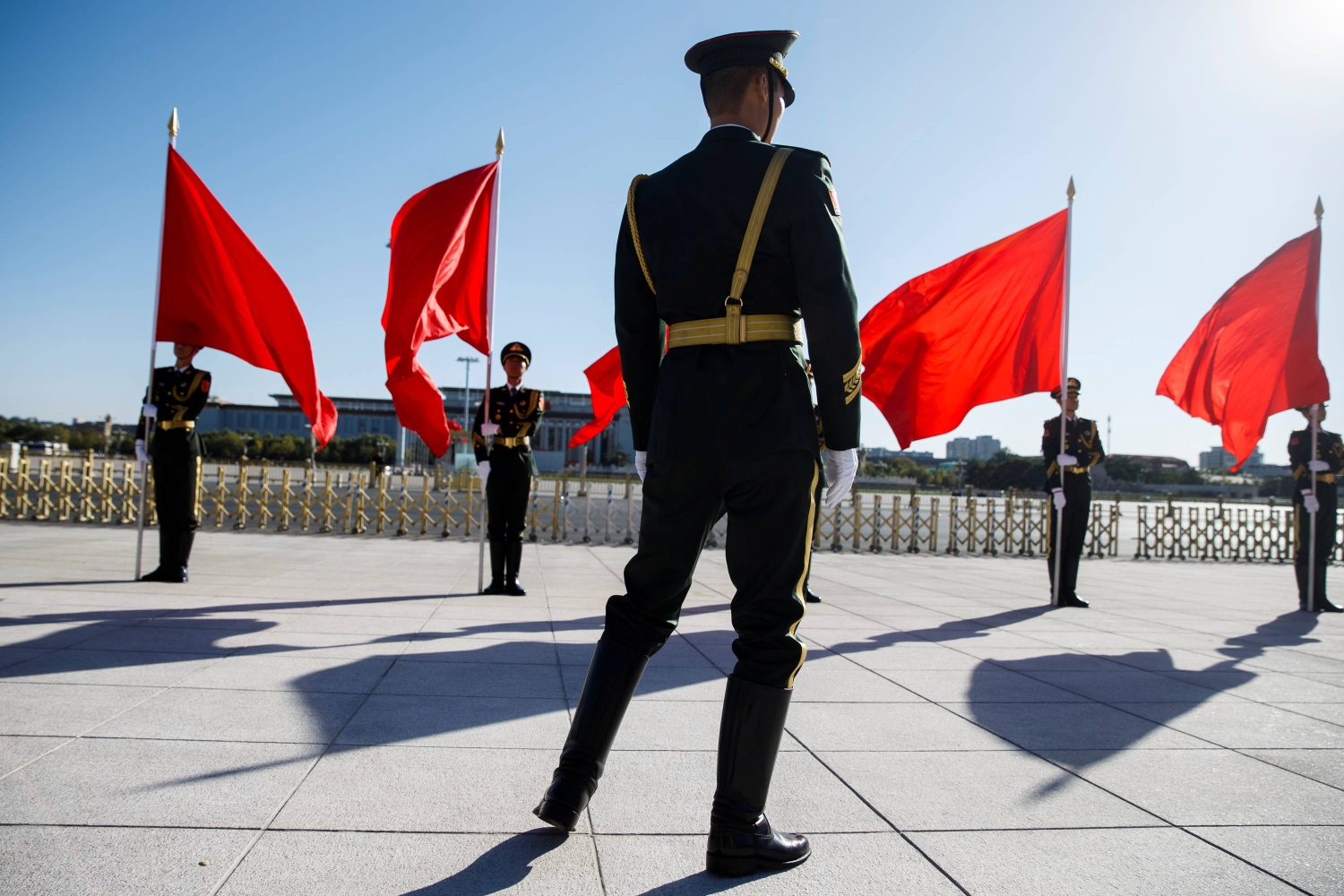
China’s latest confrontation with Japan is more than a bilateral spat. It is a warning shot to all of Asia — and to the U.S., Japan’s treaty ally.

By trying to bludgeon a major democracy into accepting its “red lines,” above all on Taiwan, China is exposing the raw coercive logic now powering its foreign policy. Its willingness to target Japan — a historic great power and today the world’s third-largest economy — telegraphs how Beijing intends to deal with the rest of Asia: through intimidation, economic punishment and calibrated use of nationalist fury.

Prime Minister Sanae Takaichi’s warning that a Chinese assault on Taiwan could constitute a “survival-threatening situation” for Japan — enabling the country to exercise its right to collective self-defense — provoked not a routine diplomatic protest but a ferocious, full-spectrum backlash. Beijing answered with a sweeping coercive campaign that showcases its new playbook — and its growing willingness, as it earlier demonstrated against India, to impose costs even on countries far too large and powerful to be cowed easily.

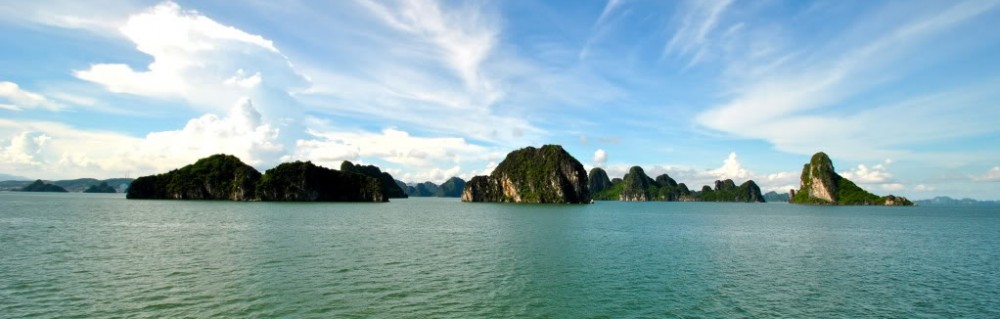
Beijing’s reprisals against Japan have been broad, theatrical and unmistakably punitive. Officials have issued warnings to Chinese tourists and students to avoid Japan, dispatched naval vessels to the waters of the Japanese-administered Senkaku Islands, suspended diplomatic engagements and threatened further freezes in economic and cultural exchanges.

The now-deleted threat by the Chinese consul general in Osaka to “chop off” Takaichi’s “filthy head” was extraordinary not only for its crudity. It showed how emboldened China’s “wolf warrior” apparatus has become, with state media amplifying the incitement rather than disavowing it.

The escalation is deliberate. Beijing is not merely signaling displeasure; it is trying to shock Japanese society, especially business and political elites, into pressuring Takaichi to back off her Taiwan stance. Intimidation is the strategy by seeking to weaponize Japan’s economic dependence on China and making an example of a country others consider too powerful to be pushed around.

China is waging an economic war on Japan in all but name — slapping de facto bans on seafood imports, freezing group tours, stalling Japanese film releases and even scrapping trilateral summits. Airline cancellations have gutted winter travel bookings. For the Japanese economy, these are not pinpricks but calculated moves to hurt and to coerce.

This is not new behavior. Beijing has repeatedly used trade as a weapon against countries that defy its wishes — from Australia and South Korea to Norway, Lithuania, Mongolia, the Philippines and India. But until now it has typically calibrated such punishment to avoid meaningful blowback to its own business interests. Going after Japan marks a bolder escalation: an effort to show that crossing Beijing carries a price even for a major power, and that no state — however large — is beyond China’s coercive reach.

By inflicting economic pain, China is seeking to marshal political challengers and business lobbies in Japan against Takaichi, who heads a narrow conservative coalition. Beijing’s objective is to try and reshape Japan’s political landscape from the outside. This is a tactic it has used to strong-arm smaller neighbors, but now it is brazenly attempting it against a Group of Seven power.

China has intensified the pressure by also reviving its familiar historical narrative of Japan as an aggressive, unrepentant militarist state. By invoking World War II “victory,” questioning Okinawa’s sovereignty and accusing Japan of “remilitarization,” Beijing is recasting Takaichi’s remarks as dangerous provocations rather than straightforward defensive clarifications. The messaging is aimed at two audiences: to stir renewed nationalism at home by portraying Xi Jinping’s regime as standing firm against Japanese “aggression,” and to make it harder for other nations to align openly with Japan’s concerns over Taiwan.

Weaponizing history in this way is classic wolf-warrior diplomacy — a tactic meant to force the target onto the defensive and to reframe Chinese coercion as justified self-protection.

The most ominous element of Beijing’s campaign is its geopolitical message. If China can punish Japan — economically powerful, diplomatically influential and protected by a U.S. defense treaty — then no other country should imagine itself beyond reach. The lesson Beijing wants others to absorb is clear: Stay silent on Taiwan, on Chinese expansionism from the South and East China Seas to the Himalayas and on human rights abuses in China — or pay a steep price. This is coercive diplomacy elevated into a foreign-policy doctrine.

Tokyo, however, has not buckled. Takaichi has held her ground, clarifying but not retracting her statement, and polls show broad public unease over China’s behavior.

If Japan withstands the pressure until Beijing is forced to scale back, it will send an unmistakable signal that China’s coercion can be resisted. Indeed, Beijing may be accelerating the very alignments it fears — including tighter U.S.-Japan strategic coordination, deeper informal links among Tokyo, Taipei, Canberra and New Delhi, and a greater appetite in Asia for pushback against Chinese coercion.

What was meant as a warning to Asia may instead become a rallying cry. Japan is teaching the region that standing up to coercion is not only necessary — it is possible. And reinforcing the perception that China’s aggressive rise poses an expanding threat to Asian and global security.

Brahma Chellaney, a longtime contributor to The Japan Times, is the author of nine books, including “Water: Asia’s New Battleground.”

Taiwan in the age of Trump: Navigating the perils of US unpredictability

Featured

Brahma Chellaney, Taipei Times

Donald Trump’s return to the White House has offered Taiwan a paradoxical mix of reassurance and risk. Trump’s visceral hostility toward China could reinforce deterrence in the Taiwan Strait. Yet his disdain for alliances and penchant for transactional bargaining threaten to erode what Taiwan needs most: a reliable US commitment.

Taiwan’s security depends less on US power than on US reliability, but Trump is undermining the latter. Deterrence without credibility is a hollow shield.

Trump’s China policy in his second term has oscillated wildly between confrontation and conciliation. One day, he threatens Beijing with “massive” tariffs and calls China America’s “greatest geopolitical threat”; the next day, he boasts of his “beautiful friendship” with strongman Xi Jinping (習近平) and dangles the prospect of a “big, beautiful trade deal.”

This policy whiplash now defines Taiwan’s strategic dilemma. For Xi, inconsistency in Washington is not confusion — it is a potential opportunity for Beijing.

The most immediate concern for Taiwan is security. Trump’s national security team may be hawkish on China, but the president’s own words send mixed signals. His claim that Taiwan has “stolen” the US semiconductor industry, and his suggestion that the island must “pay” America for its defense, reveal a mindset that treats a democratic partner as a negotiable asset.

Consider his deliberate ambiguity on whether the United States would defend Taiwan. Trump prizes flexibility and wields unpredictability as leverage. But in the Taiwan context, such volatility invites miscalculation. It emboldens Beijing to probe US resolve while forcing Taipei to prepare for both extremes — an American president who might sell arms one day and trade them away the next.

America’s commitment to Taiwan is not an act of charity but a crucial test of Washington’s strategy for ensuring a free and open Indo-Pacific region. If Washington were to treat Taiwan’s defense as a matter for negotiation, every US ally in Asia would take note. A president who views security commitments as liabilities rather than force multipliers risks unraveling US-led alliances.

Economically, Trump’s aggressive trade stance toward China also cuts both ways for Taiwan. The Washington-Beijing trade war has accelerated the relocation of supply chains away from China, benefiting Taiwan’s manufacturing and high-tech sectors and making TSMC indispensable to the global economy.

Yet the US unpredictability driving decoupling also threatens Taiwan’s prosperity. Trump’s tariff policies have rarely spared allies. His hints at new duties on foreign-made semiconductors and his relentless “America First” rhetoric make clear that strategic alignment offers no immunity from economic nationalism. Taiwan’s lesson is straightforward: it must continue to diversify export markets and deepen trade ties with other democracies.

Diplomatically, Trump’s instincts make it harder for Taiwan to boost its international profile. Under President Joe Biden, the United States worked closely with allies through the G7 and Quad to underscore that peace and stability in the Taiwan Strait are shared global interests. That coordination gave Taipei indirect backing. Trump, by contrast, prefers bilateral deals that showcase US leverage, not collective purpose. He often sees allies not as partners but as free riders.

If this unilateralist approach takes hold, Taiwan could face a grim scenario: sharper US-China rivalry without the stabilizing framework of coordinated US-led deterrence. Japan and South Korea, wary of being dragged into a US-China clash, might hedge — leaving Taiwan more isolated just when it needs a united front.

Taiwan cannot control the impulses of a mercurial American president. But it can — and must — control how it responds.

To help offset presidential unpredictability, one imperative is to institutionalize ties with the stable pillars of US policymaking — Congress, the Pentagon, and the State Department. Expanding those linkages, especially through defense dialogues, arms co-production, and high-level exchanges, will help Taiwan hedge against sudden policy reversals.

More importantly, Taiwan must double down on self-reliance. Its shift toward asymmetric defense, civil resilience, and whole-of-society preparedness is the right strategy. Trump’s volatility only heightens the need for Taiwan to hold the line alone — at least until US support arrives, if it arrives. A deterrence posture built on self-defense credibility reduces both temptation and opportunity for Chinese adventurism.

Taiwan’s best safeguard against US unpredictability is to make itself indispensable to the democratic world. Stronger partnerships with Japan, India, Australia, and Europe can transform it from a regional flashpoint into a global stake in the balance of power. Once embedded in the world’s economic and security networks, Taiwan becomes not a chip to be bargained but a cornerstone of the free world’s credibility.

More fundamentally, Taiwan’s challenge under Trump 2.0 is to harness the deterrent benefits of a tougher US posture toward China while insulating itself from the risks of a volatile presidency. This requires balancing strategic alignment with strategic autonomy: staying close enough to Washington to strengthen deterrence, yet independent enough to withstand political mood swings there.

Trump’s unpredictability may not be new, but its consequences for Taiwan could be fateful. The island’s security, economy, and diplomacy all hinge on navigating a US policy that can suddenly shift with a social media post. The paradox is that a more assertive America may deter China, but a more erratic one could also embolden it.

For Taiwan, the challenge is not just to weather US unpredictability, but to rise above it — by anchoring its destiny to the shared purpose of the free world.

Brahma Chellaney, professor of strategic studies at the independent Center for Policy Research in New Delhi, is the author of nine books, including the award-winning Water: Asia’s New Battleground (Georgetown University Press).

Xi’s Purges Reveal His Insecurity

Featured

From surveilling and repressing Chinese citizens to firing and prosecuting potential rivals, Chinese President Xi Jinping seems able to rule only through fear. But fear is not a foundation for long-term stability, and the more Xi seeks to consolidate power, the more vulnerable his position becomes.

Brahma ChellaneyProject Syndicate

During his 13 years in power, Xi Jinping has steadily tightened his grip on all levers of authority in China – the Communist Party of China (CPC), the state apparatus, and the military – while expanding surveillance into virtually every aspect of society. Yet his recent purge of nine top-ranking generals, like those before it, shows that he still sees enemies everywhere.

After taking power in 2012, Xi launched a crackdown on corruption within the CPC and the People’s Liberation Army (PLA). The campaign was initially popular, because China’s one-party system is rife with graft and abuse of power. But it soon became clear that enforcement was highly selective – a tool not for building a more transparent or effective system, but for consolidating power in Xi’s hands. In Xi’s China, advancement depends less on competence or integrity than on earning the leader’s personal trust.

But even after more than a decade of promoting only loyalists, Xi continues to dismiss officials regularly, including top military commanders. According to the US Office of the Director of National Intelligence, nearly five million officials at all levels of government have been indicted for corruption under Xi. And this is to say nothing of those who simply disappear without explanation.

True to form, Xi’s regime claims that the military leaders swept up by his latest purge – including General He Weidong, a member of the Politburo, Vice Chair of the Central Military Commission, and the third-highest-ranking figure in China’s military hierarchy – committed “disciplinary violations” and “duty-related crimes.” But a more plausible explanation is that Xi is playing an interminable game of Whac-a-Rival, desperately trying to preserve his grip on power.

Xi’s fears are not entirely misplaced: each new purge deepens mistrust among China’s elite and risks turning former loyalists into enemies. From Mao Zedong to Joseph Stalin, there is ample evidence that one-man rule breeds paranoia. By now, Xi may well have lost the ability to distinguish allies from foes. At 72, Xi remains so insecure in his position that, unlike even Mao, he has refused to designate a successor, fearing that a visible heir could hasten his own downfall.

None of this bodes well for China. By refusing to lay the groundwork for an eventual leadership transition, Xi sharply increases the risk that the end of his rule – however that comes – will usher in political instability. In the meantime, Xi’s emphasis on personal fealty over ideological conformity is weakening institutional cohesion in a system once grounded in collective leadership. Coupled with his arbitrary firings and prosecutions, Chinese governance is now increasingly defined by sycophancy and anxiety, rather than competence and consistency.

China’s military is paying a particularly steep price for Xi’s insecurity. In recent years, the PLA has undergone sweeping structural reforms aimed at transforming it into a modern fighting force capable of “winning informationized wars.” But Xi’s purges risk undermining this effort by disrupting military planning and leadership. For example, his abrupt removal in 2023 of the leaders of the PLA’s Rocket Force, which oversees China’s arsenal of nuclear and conventional missiles, may have jeopardized China’s strategic deterrent.

Replacing experienced commanders with untested loyalists might ensure Xi’s political survival – and Chinese leaders have often used the military to safeguard their own power – but it does nothing for national security. And when generals are preoccupied primarily with political survival, both morale and operational readiness suffer. Can the PLA fight and win a war against a major adversary like the United States or India while operating under the political constraints Xi has imposed on it?

So far, Xi has advanced his expansionist agenda through stealth and coercion rather than open warfare. But a paranoid leader surrounded by sycophants unwilling or unable to challenge him is always at risk of strategic miscalculation. Recall that Stalin decimated the Red Army’s leadership on the eve of the Nazi invasion – with disastrous results. In Xi’s case, it might be China that does the invading, if he orders an amphibious assault on Taiwan.

For all the pomp surrounding China’s rise, the country is beset by structural problems, including a slowing economy, rising youth unemployment, and an aging and declining population. Popular discontent may well be growing, but it is masked by repression, just as any potential challenge to Xi’s leadership is preempted by purges and prosecutions. Ultimately, Xi seems able to rule only through fear.

But fear is not a foundation for long-term stability. A leader consumed by fear of disloyalty may command obedience but not genuine fidelity. Obedience is not merely a poor substitute for strength; it can become a source of fragility, as it leaves little room for creativity, competency, or collaboration. The great irony of Xi’s approach is that the more he seeks to consolidate power in his own hands, the more vulnerable his rule becomes.

Mao’s purges culminated in chaos and national trauma. Xi’s methods are more sophisticated, but the underlying logic is the same – as could be the results.

Brahma Chellaney, Professor of Strategic Studies at the New Delhi-based Center for Policy Research and Fellow at the Robert Bosch Academy in Berlin, is the author of nine books, including Water: Asia’s New Battleground (Georgetown University Press, 2011), for which he won the 2012 Asia Society Bernard Schwartz Book Award.

© Project Syndicate, 2025.

China’s Himalayan mega-dam is a global threat

Featured

The largest dam ever conceived symbolizes China’s bid, from oil to water, for 21st-century dominance

Avatar

Brahma Chellaney

Nikkei Asia

20250912 dam

China is about to upend the world’s hydrological balance — with consequences as far-reaching as climate change itself.

Its $168 billion Himalayan super-dam represents not merely the world’s costliest infrastructure project but also one of its riskiest. What Beijing portrays as an engineering marvel is in fact an ecological disaster in the making.

The dam is being constructed on the Yarlung Zangbo River (also known as the Brahmaputra), just before it curves into India. The project’s significance was underscored by the fact that Chinese Premier Li Qiang, flanked by senior officials and leaders of major state-owned enterprises, formally announced the groundbreaking in July, although satellite imagery had indicated activity at the site for some time.

The last time a Chinese leader inaugurated a dam project was 1994, when then-Premier Li Peng presided over the groundbreaking ceremony for the Three Gorges Dam on the Yangtze River. That symbolic parallel underscores the magnitude of the Brahmaputra mega-dam — an undertaking that will surpass the Three Gorges in scale, ambition and peril.

The Three Gorges Dam was initially celebrated as a modern wonder but is now widely recognized as an environmental and social disaster: It displaced more than a million people, triggered recurrent landslides, degraded water quality and disturbed seismic stability. Its mammoth reservoir has even slightly slowed the Earth’s rotation.

China’s new megaproject is in an even more fragile setting: one of the world’s most seismically active zones, straddling a heavily militarized frontier where Beijing claims India’s sprawling Arunachal Pradesh state as “South Tibet.” Constructing the world’s largest dam atop a geological fault line is more than reckless — it is a calculated gamble with catastrophic potential. Any collapse, whether from structural weakness or reservoir-induced seismicity, would devastate India’s northeast and Bangladesh, placing tens of millions at risk.

The dam, designed to generate nearly three times the electricity of the Three Gorges Dam, was approved by the National People’s Congress in March 2021. Yet the project remained cloaked in secrecy until the recent announcement, true to Beijing’s pattern of concealing work on major dams along international rivers until commercially available satellite imagery makes it impossible to hide.

The Brahmaputra, unlike most rivers, is an ecological lifeline, sustaining one of the world’s most biodiverse regions as it descends sharply from Himalayan heights to form the longest and steepest canyon on Earth — twice as deep as America’s Grand Canyon. It is here that China is constructing the behemoth dam to tap the unparalleled concentration of river energy.

Originating in Tibet’s mountain springs, the world’s highest-altitude major river flows through India and Bangladesh, supporting agriculture, fisheries and dense populations. Its annual floods, while destructive, flush toxins, recharge groundwater and deposit nutrient-rich sediment vital for farming. The super-dam will upend this rhythm, trapping silt, shrinking Bangladesh’s delta already imperiled by rising seas and depriving Indian farmers of natural fertilization cycles. Saltwater intrusion and catastrophic floods would become more frequent.

But Beijing sees water not just as a resource; it sees it as power. By placing a mega-dam just before the river leaves Tibet, China would acquire a hydraulic chokehold over hundreds of millions downstream.

Control over oil once defined global power. And, in the 21st century, control over transboundary rivers may prove just as decisive. With the dam, China would hold the ability to weaponize water without firing a shot.

The dam’s enormous price tag reflects not just ambition to generate enormous amounts of electricity but a determination to cement China’s hydro-hegemony through dominance over Asia’s lifelines. This would give Beijing the same strategic leverage over water as OPEC once enjoyed over oil — but with far greater immediacy for the daily survival of populations.

In fact, since annexing Tibet in 1951, China has become the source of cross-border river flows to more countries than any other upstream power. It has built more large dams than the rest of the world combined, with its spree since the 1990s focused on international rivers. Its 11 giant dams on the Mekong have already wreaked havoc downstream, deepening droughts and undercutting livelihoods in Thailand, Laos, Cambodia and Vietnam.

Yet Beijing continues to reject any form of water sharing. It has signed no water-sharing treaty with any neighbor, nor joined the 1997 U.N. Watercourses Convention — the only global treaty governing shared rivers — preferring instead to assert “indisputable sovereignty” over all waters within its borders.

The stakes extend beyond Asia. Tibet is warming twice as fast as the global average, accelerating glacier melt and permafrost thaw. With its towering height rising into the troposphere, the Tibetan Plateau shapes the Asian monsoons, stabilizes climate across Eurasia and influences the Northern Hemisphere’s atmospheric general circulation — the vast system of winds that helps define different climate zones by transporting warm air from the equator toward higher latitudes.

Tampering with the plateau’s hydrology is not just a regional gamble; it is a planetary risk. Altered river flows from Tibet will ripple outward into weather systems, food security and even migration patterns far beyond Asia.

If Beijing succeeds in monopolizing transboundary rivers, other states may be tempted to follow, eroding fragile cooperative frameworks elsewhere — from the Nile Basin to the Tigris-Euphrates. The mega-dam is thus not merely Asia’s problem but the world’s. The precedent it sets could destabilize water security worldwide at a moment when droughts and extreme weather are already straining societies.

This gargantuan dam is a geopolitical and ecological catastrophe in waiting, with its dangers already coming into view. Silence is complicity: The international community must press China to respect international water norms.

Brahma Chellaney, a professor of strategic studies at the independent New Delhi-based Centre for Policy Research and fellow at the Robert Bosch Academy in Berlin, is the author of nine books, including “Water: Asia’s New Battleground,” which won the Bernard Schwartz Book Award.

Taiwan at the crossroads: Adapt or be absorbed

Featured

Brahma Chellaney, Taipei Times

Taiwan stands at the epicenter of a seismic shift that will determine the Indo-Pacific’s future security architecture. Whether deterrence prevails or collapses will reverberate far beyond the Taiwan Strait, fundamentally reshaping global power dynamics.

The stakes could not be higher. Today, Taipei confronts an unprecedented convergence of threats from an increasingly muscular China that has intensified its multidimensional pressure campaign. Beijing’s strategy is comprehensive: military intimidation, diplomatic isolation, economic coercion, and sophisticated influence operations designed to fracture Taiwan’s democratic society from within.

This challenge is magnified by Taiwan’s internal political divisions, which extend to fundamental questions about the island’s identity and future relationship with China. As political polarization deepens, Taiwan’s ability to forge consensus on critical security decisions becomes increasingly constrained — precisely when unity is most essential.

For decades, Taiwan’s security rested on an implicit guarantee: that American military superiority and democratic solidarity would shield the island from Chinese aggression. That certainty has crumbled under the weight of changing geopolitical realities.

The Trump administration’s disruptive approach to Indo-Pacific partnerships — including launching what amounts to an economic war against India, America’s key strategic partner — has introduced dangerous unpredictability into Asian security calculations. Meanwhile, growing American domestic political constraints and strategic exhaustion raise uncomfortable questions about Washington’s willingness to risk direct conflict with China over Taiwan.

These doubts emerge at the worst possible moment. China’s military provocations have become routine, with fighter jets and naval vessels regularly crossing the median line of the Taiwan Strait in brazen displays of force. Diplomatically, Beijing has relentlessly chipped away at Taiwan’s international space, including poaching several of its diplomatic allies. Simultaneously, China wages an unprecedented influence campaign, deploying disinformation, economic inducements, and cyber operations to undermine Taiwan’s democratic institutions and social cohesion.

Perhaps most ominously, China has embarked on the most rapid and ambitious peacetime military expansion in human history. Beijing’s defense industrial complex produces warships, missiles, combat aircraft, and drones at a pace that dwarfs Cold War arms races. Its missile arsenal — now comprising thousands of precision-guided ballistic and cruise missiles — can potentially devastate Taiwan’s military infrastructure.

The Chinese navy has become the world’s largest fleet by ship count, while China’s nuclear weapons stockpile expands at speeds unseen since the 1960s. Through such a buildup, Beijing is signaling to Taipei that absorption of Taiwan is inevitable and resistance futile. Beijing may calculate that overwhelming military superiority provides multiple pathways to absorption — either through direct invasion, economic strangulation via blockade, or gradual political capitulation under the weight of unsustainable military pressure.

Against this backdrop, Taiwan’s survival depends on abandoning outdated security assumptions and embracing harsh realities. Deterrence cannot rely solely on external guarantees; it must begin with credible self-defense capabilities that exploit Taiwan’s inherent geographic advantages.

In fact, Taiwan’s geography is its greatest asset. The island’s mountainous terrain, limited beaches suitable for amphibious landings, and rough waters around it for much of the year create natural defensive barriers — but only if Taiwan adopts the right military strategy.

This means prioritizing asymmetric capabilities over conventional big-ticket systems: mobile anti-ship missiles that can sink invasion fleets, naval mines to seal off landing zones, swarms of defensive drones, and distributed coastal defense units that can operate independently under intense missile bombardment.

Equally important is abandoning investments in vulnerable high-value targets. Advanced fighter jets and large surface ships become expensive liabilities when facing China’s missile barrages. Instead, Taiwan should focus on survivable, cost-effective systems that deny China quick victory and impose prohibitive costs on any invasion attempt.

Civilian resilience forms the other pillar of effective deterrence. Ukraine’s experience offers a lesson: resilience is as much about civilian preparedness as about frontline firepower.

Taiwan must expand reserve training programs, conduct regular civil defense drills, and establish distributed stockpiles of critical supplies including fuel, medical equipment, and communications gear. The goal is ensuring that Chinese missiles or a blockade cannot paralyze civilian infrastructure or break social cohesion.

China’s influence operations represent an equally dangerous threat that demands sophisticated countermeasures. Beijing’s strategy targets Taiwan’s democratic vulnerabilities through cyberattacks, disinformation campaigns, and covert political funding designed to polarize society and erode faith in democratic institutions.

Taiwan’s response must be equally comprehensive. Enhanced media literacy programs can inoculate citizens against online manipulation tactics. Electoral laws require strengthening to prevent covert Chinese financing of political candidates and parties. Cybersecurity capabilities must extend beyond government agencies to encompass private operators of critical infrastructure.

Most crucially, Taiwan’s democratic institutions must remain resilient, transparent, and trusted. The stronger its democracy, the less fertile ground exists for China’s influence operations.

While American support remains vital, Taiwan cannot afford complete dependence on Washington’s commitment. Instead, Taipei should cultivate deeper partnerships with other democracies that share interests in preventing Chinese hegemony.

Japan increasingly views Taiwan’s security as inseparable from its own national defense. India, which faces its own border pressures from China, shares an abiding interest in keeping the Indo-Pacific free from Chinese domination. Australia and Europe, too, are recognizing that Taiwan’s fate is an international concern.

Taiwan’s diplomatic strategy should operate on three levels: informal security dialogues and exercises that build cooperation habits with regional democracies; international legal frameworks emphasizing Taiwanese people’s right to chart their own future free from coercion; and expanded economic partnerships that make Taiwan’s isolation or conquest economically prohibitive for the international community.

None of these measures diminishes the importance of American deterrence, which remains the most significant counterweight to Chinese coercion. However, while continuing to deepen security ties with Washington, Taiwan must also hedge against the possibility that US intervention may be delayed, partial, or politically constrained.

The challenge is maximizing partnership while avoiding dependence. If Taiwan shows genuine resolve and capability, it strengthens the case for international support. Conversely, complacency will breed doubts about Taiwan’s commitment, undermining others’ willingness to take risks on its behalf.

China’s goal to absorb Taiwan is undeniable. What remains uncertain is whether Taiwan will take sufficient steps to ensure this ambition never succeeds. A strategy of layered deterrence — combining robust self-defense, democratic resilience, and expanded global partnerships — can make Chinese aggression far costlier and significantly less likely to achieve its objectives.

Brahma Chellaney, professor of strategic studies at the independent Center for Policy Research in New Delhi, is the author of nine books, including the award-winning Water: Asia’s New Battleground (Georgetown University Press).

China’s super-dam is an ecological and geopolitical time bomb

Featured

By Brahma Chellaney, The Hill

China has built more dams than any other country and more large dams than the rest of the world combined. This month, it officially acknowledged construction of the biggest dam ever conceived in human history — although satellite imagery suggests the groundwork began much earlier, following the megaproject’s approval by China’s rubber-stamp parliament in 2021.

Located on the Brahmaputra River just before it curves into India, this super-dam is being developed with little transparency in a seismically active and ecologically fragile region near the heavily militarized Tibetan-Indian frontier. Once completed, the massive structure will dwarf the Three Gorges Dam on the Yangtze, and is expected to generate nearly three times as much hydropower by harnessing the Brahmaputra’s sharp descent from Himalayan peaks into the world’s deepest canyon.

Yet far beyond electricity production, the project portends a looming geopolitical and environmental crisis. It stands to disrupt the hydrological balance for millions of people downstream, destabilize a delicate Himalayan ecosystem and provide Beijing with a potent new lever over India, its strategic rival.

China appears to have learned nothing from its own cautionary tale: the Three Gorges Dam, currently the world’s largest. Once hailed as an engineering marvel, the dam has become an environmental nightmare — eroding riverbanks and deltas, degrading water quality, triggering frequent landslides and causing lasting ecological damage.

The new super-dam’s site is on a geologic fault line — a recipe for catastrophe. Scientists warn that large dam reservoirs can trigger seismic activity, a phenomenon known as reservoir-triggered seismicity. In this quake-prone region, the tectonic stresses induced by such a megastructure could lead to devastating earthquakes.

The Brahmaputra — the world’s highest-altitude major river — draws its perennial flow from Himalayan springs, glacial melt, upland wetlands and tributaries. The vast majority of these sources lie within Chinese-occupied Tibet, where the river is known as the Yarlung Zangbo. In contrast, India contributes modestly to the river’s year-round volume, though it plays a greater role in its monsoonal surge. After flowing through India’s Arunachal Pradesh and Assam states, the river enters Bangladesh before draining into the Bay of Bengal.

But a river’s flow is not just about water — it also carries nutrient-rich sediment, serving as the ecological lifeblood of entire regions.

By building a gigantic dam just before the river exits Chinese-controlled territory, Beijing gains the power to manipulate cross-border flows, including during the critical dry season. It can withhold or release water at will, trap sediment and potentially weaponize water in future disputes.

By capturing silt-laden waters before they reach India and Bangladesh, the dam will starve downstream floodplains of nourishing sediment that replenishes farmland and sustains fisheries. Bangladesh’s delta, already threatened by rising seas, will shrink further and become more prone to saltwater intrusion and catastrophic flooding.

Equally alarming is the likely disruption of the Brahmaputra’s natural flooding cycle. Seasonal floods during the summer monsoon serve vital ecological functions. Disrupting this rhythm could spell disaster for northeast India’s agrarian economy and for millions in Bangladesh who depend on the river’s pulse.

Moreover, by trapping sediment and altering flows, the $168 billion dam could erode riverbeds, degrade habitats and accelerate coastal loss. China would gain not only hydropower but also hydraulic power — the ability to influence political and ecological outcomes in neighboring nations.

China’s dam-building frenzy on rivers originating on the Tibetan Plateau has long alarmed downstream nations, from Vietnam and Thailand to Nepal. What makes this project uniquely concerning is its sheer scale, high-risk location and the strategic signal it sends.

For India, the dam represents more than just a hydrological threat. It is a potential geopolitical stranglehold. If tensions escalate again — as they did following China’s stealth incursions into Indian territory in 2020 — Beijing could exploit its upstream control to exert pressure. This is especially ominous given China’s claim to India’s sprawling Arunachal Pradesh state, which it labels “South Tibet.”

Hydropower generation is only one aspect of the dam’s utility. Its greater value lies in strategic dominance.

Despite the grave implications, international response has been muted. India has voiced concern, but its political response has been measured. The stark reality is that India possesses few diplomatic or legal tools to counter China’s upstream assertiveness. Nevertheless, India could take the lead in advocating international recognition of Tibet’s status as Asia’s “water tower” and push for binding norms on transboundary river development.

China’s unilateralism deepens distrust and reinforces strategic asymmetry in the region. Beijing is not party to any binding water-sharing treaty with its neighbors. Nor has it conducted credible environmental or seismic assessments for a project of this magnitude — despite its location in one of Earth’s most geologically unstable regions.

The Brahmaputra super-dam thus raises profound questions about regional stability. It epitomizes China’s strategy of “hydro-hegemony” — using upstream control of water to exercise geopolitical influence.

This is not just another dam. In an era when control over water is becoming as consequential as control over oil was in the 20th century, China is methodically locking in future geopolitical leverage.

Brahma Chellaney is a geostrategist and the author of nine books, including the award-winning “Water: Asia’s New Battleground.”
A world in flux offers Taiwan both perils and opportunities

Featured

The world has become less predictable, less rules-based, and more shaped by the impulses of strongmen and short-term dealmaking. Against this backdrop, the fate of democratic Taiwan hinges on how global powers deal with an increasingly assertive China.

Brahma Chellaney, Taipei Times

The world has become less predictable, less rules-based, and more shaped by the impulses of strongmen and short-term dealmaking.

Nowhere is this more consequential than in East Asia, where the fate of democratic Taiwan hinges on how global powers manage — or mismanage — tensions with an increasingly assertive China.

The return of Donald Trump to the White House has deepened the global uncertainty, with his erratic, highly personalized foreign-policy approach unsettling allies and adversaries alike. Trump appears to treat foreign policy like a reality show.

Yet, paradoxically, the global unpredictability may offer Taiwan unexpected deterrence. For China, the risk of provoking the United States may now outweigh the temptation of taking Taiwan by force.

Trump’s foreign policy is less about strategy than instinct. Unlike past American presidents who embedded US commitments in alliances and treaties, Trump approaches diplomacy as a real estate mogul might: transactional, impulsive, and often devoid of historical context. For Taiwan, this raises uncomfortable questions. Can it continue to rely on a US security umbrella under a president who has questioned the value of NATO, threatened to pull US troops from South Korea, and hinted in the past at making deals with China at Taiwan’s expense?

Under a president whose loyalty to democratic norms is ambiguous and whose geopolitical thinking centers on short-term leverage, Taiwan could easily become a pawn in a larger bargain — or worse, left to fend for itself. Trump has previously oscillated between fiery rhetoric on China and overtures of camaraderie with Chinese President Xi Jinping (習近平). His unpredictability breeds confusion in Taipei, and, perhaps more dangerously, could encourage miscalculation in Beijing.

However, unpredictability is not always a strategic liability. In the context of Taiwan’s security, it can act as a form of deterrence — especially when facing an increasingly authoritarian and repressive regime like China’s that prizes control and risk management.

Trump’s military strike on Iran last month, executed with little consultation or warning, sent a jolt through global capitals. For Beijing, it was a sharp reminder that a Trump-led America could respond to Chinese aggression not with diplomatic caution, but with military intervention.

This lesson is not lost on China’s leadership, especially at a time when intra-party power struggles in Beijing are raising questions about Xi’s one-man dictatorship.

Despite its military build-up and increasingly bellicose rhetoric on Taiwan, China remains fundamentally cautious about entering a war it cannot control. The US military still possesses unmatched power projection capabilities in the Indo-Pacific. And now, with Trump in office again, the risks of a US military response to a Taiwan invasion — while not guaranteed — appear less abstract than they might under a more cautious administration in Washington.

Indeed, the combination of Trump’s volatility and America’s military reach could force China to recalibrate its timetable on Taiwan.

Xi may still view “reunification” as a historic mission, but he must weigh that ambition against a backdrop of rising internal vulnerabilities — including economic stagnation, demographic decline, eroding international goodwill and sharpening power rivalries within the Chinese Communist Party. Trump’s return to power, with its promise of intensified economic confrontation and strategic pressure, only accentuates those challenges.

At the same time, the broader geopolitical environment is shifting in ways that offer Taiwan both risks and opportunities. On one hand, Trump’s disdain for traditional alliances weakens the cohesion of the democratic front that has helped shield Taiwan diplomatically and militarily. On the other hand, growing concerns about Chinese assertiveness — from Japan and South Korea to the Philippines and India — have created a more favorable regional climate for closer defense cooperation with Taiwan, even if done quietly and informally.

Europe, too, is awakening to the Taiwan question. While Trump’s disdain for the EU may hinder transatlantic coordination, the European Parliament and several key EU member states have become more vocal in opposing any change to the status quo across the Taiwan Strait. These diplomatic gains, while modest, offer Taiwan a broader base of international sympathy in the event of a crisis.

Ultimately, Taiwan is navigating a world in flux — one where neither deterrence nor diplomacy can be taken for granted. Trump’s second term has added a layer of strategic fog to an already unstable international order.

But this fog is not entirely to Taiwan’s disadvantage. The fear that Trump might launch a military response to a Chinese invasion — not out of alliance loyalty, but out of rage or opportunism — may be precisely the uncertainty that keeps Beijing at bay.

Still, deterrence rooted in unpredictability is fragile and cannot substitute for a coherent long-term strategy.

Taiwan must be vigilant as it continues to strengthen its asymmetric defense capabilities, deepen its informal security partnerships and build public resilience. It must also avoid putting all its eggs in Washington’s basket, especially when that basket is being carried by a man who has repeatedly broken with tradition, institutions, and norms.

In an age where geopolitics is shaped as much by personality as by policy, Taiwan’s fate will hinge not just on its own resolve, but on its ability to read and adapt to a rapidly shifting international landscape.

In this precarious balancing act, Taiwan remains both a frontline of democracy and a test case for how smaller powers can survive — and even thrive — amid great-power struggles and global uncertainty.

Brahma Chellaney, professor of strategic studies at the independent Center for Policy Research in New Delhi, is the author of nine books, including the award-winning Water: Asia’s New Battleground (Georgetown University Press).

China’s threat to Tibet’s future should be a global concern

Featured

China continues to militarize and repress Tibet while intensifying efforts to erase Tibetan culture, language and identity. Tibet’s imperiled future is a challenge to the global order, to religious freedom, and to Asia’s environmental security. And the time to act is now.

By Brahma Chellaney, The Hill

(AP Photo/Ashwini Bhatia) Tibetan spiritual leader the Dalai Lama prays at the Tsuglakhang temple in Dharamshala, India, Wednesday, May 7, 2025.

Three decades ago, China abducted the Panchen Lama — then a six-year-old boy — shortly after his recognition by the Dalai Lama, and installed a regime-picked imposter in his place. That abduction, one of the most audacious acts of spiritual and cultural repression in modern history, still haunts the Tibetan people.

Yet Chinese President Xi Jinping’s meeting with the false Panchen Lama this month has served only to remind the world of the genuine Panchen Lama’s continued disappearance. That makes the Panchen Lama — the second-highest spiritual leader in Tibetan Buddhism — arguably the longest-held political prisoner anywhere.

Now, Xi is preparing to repeat that sinister act on a much grander scale. He is waiting for the Dalai Lama, who turns 90 on July 6, to pass away so that Beijing can impose its own puppet as the next spiritual leader of Tibetan Buddhism. This would be akin to the Italian government installing a state-appointed pope to lead the Catholic Church, a brazen affront to religious freedom and cultural sovereignty.

China’s ambitions go far beyond symbolism. With Xi’s regime intensifying efforts to erase Tibetan culture, language and identity, the looming succession of the Dalai Lama marks a pivotal and dangerous turning point. Although the Dalai Lama has yet to clarify the exact process for selecting his successor, Beijing is zealously laying the groundwork to seize control of Tibetan Buddhism from within.

The paradox is stark: The atheistic Chinese Communist Party is preparing to hand-pick the next Dalai Lama, even while escalating its crackdown on Tibetan religion and culture. Xi has called on Communist Party cadres to become “unyielding Marxist atheists,” effectively elevating communism to the level of a state religion. The goal is clear: to fashion a successor who pledges loyalty not to Tibetan Buddhism, but to the Chinese Communist Party.

But Tibet’s plight is not just spiritual or cultural — it is also ecological and geopolitical. The Tibetan Plateau, often dubbed the “Third Pole,” is Asia’s primary freshwater source and a cradle of biodiversity. It is the starting point of the continent’s major river systems, which sustain over 2 billion people downstream. China’s aggressive exploitation of Tibet’s natural resources, particularly water and minerals, has created long-term environmental risks for all of Asia.

Beijing is building mega-dams and water diversion projects that threaten to destabilize ecosystems and disrupt hydrological flows far beyond its borders. Tibet’s high altitude also plays a critical role in shaping monsoonal patterns and global atmospheric circulation. A 2023 scientific study even found an atmospheric connection between the Tibetan Plateau and the Amazon rainforest — proof that the world’s environmental fate is tied to Tibet’s future.

Despite its annexation in 1951, Tibet maintains a vibrant spirit of resistance. The Dalai Lama, viewed by Tibetans as the living embodiment of compassion and wisdom, remains their moral and spiritual leader. His renunciation of political power in 2011 in favor of a democratically elected government-in-exile only reinforced his legacy as a global symbol of nonviolent resistance.

That legacy remains untainted by any link to terrorism, even as China continues to militarize and repress Tibet. Under Xi, repression has intensified, with mass surveillance, religious restrictions and the forced assimilation of Tibetan children into Mandarin-language boarding schools — more than a million children are now separated from their families and culture. The unmistakable goal is to breed loyalty to the Communist Party by obliterating the Tibetan identity.

Meanwhile, the Dalai Lama’s health has declined. Following radiation therapy for prostate cancer in 2016 and knee replacement surgery in the U.S. last year, his international travel has drastically reduced.

Adding to the challenge is Beijing’s success in pressuring many countries — including Western democracies and Buddhist-majority states in Asia — to deny him entry. Only Japan has held firm. India, to its credit, remains the Tibetan leader’s sanctuary and moral ally, with New Delhi referring to him as “our most esteemed guest.” The Dalai Lama himself calls India his spiritual and cultural home.

Against this backdrop, China’s strategy to engineer the next Dalai Lama must be met with firm resistance. The stakes could not be higher — the continuity of Tibetan Buddhism as a living spiritual tradition hangs in the balance. To counter Beijing’s plan, a coordinated international response is urgently needed to affirm the right of Tibetan Buddhists to determine their own spiritual leadership without interference.

Fortunately, the U.S. has taken some meaningful steps. Its 2020 Tibetan Policy and Support Act affirms that the selection of the next Dalai Lama is solely a Tibetan religious matter. It explicitly warns of sanctions against Chinese officials who meddle in the process. In July 2024, President Joe Biden signed into law the bipartisan Resolve Tibet Act, which strengthens American policy in support of Tibetan self-determination and seeks to counter Chinese disinformation campaigns on Tibet.

But more must be done. The U.S. and India should forge a united front and rally other democracies to support the Dalai Lama’s vision and the Tibetan people’s rights. The Dalai Lama’s succession should be protected through a multilateral framework that involves Buddhist leaders, legal protections and diplomatic safeguards.

China’s effort to manipulate the centuries-old institution of the Dalai Lama is not merely a religious affront. It is a geopolitical gambit designed to consolidate control and extend influence across Asia. If Tibet’s voice is silenced and its future dictated by authoritarian fiat, the global costs — in spiritual, ecological and political terms — will be immense.

Tibet’s imperiled future is not just a Tibetan problem. It is a challenge to the international order, to religious freedom and to the environmental security of an entire continent. And the time to act is now.

Brahma Chellaney is a geostrategist and the author of nine books, including the award-winning “Water: Asia’s New Battleground.”

Trump’s China reset shakes up global geopolitics

Featured

Avatar

Brahma Chellaney, Nikkei Asia

U.S. President Donald Trump’s most consequential legacy may be his strategic pivot to confront China. For decades, successive American administrations pursued a policy of integrating China into the global economy, believing that economic liberalization would gradually lead to political reform. That gamble failed. Trump, during his first term, was the first U.S. president to openly acknowledge this failure and recalibrate policy accordingly.

Now, in his second term, Trump has launched a full-spectrum pushback against China’s expansionism and global ambitions. From curbing tech transfers to pressuring allies to reduce their reliance on Chinese supply chains, his administration has made confronting the communist behemoth the cornerstone of its foreign and economic policy.

By contrast, Trump’s predecessor, Joe Biden, maintained a more cautious or conciliatory approach, often prioritizing competition over confrontation with the People’s Republic of China. His Indo-Pacific strategy was to “manage competition with the PRC responsibly.” And in his last State of the Union address, while likening Russia’s actions to Hitler’s, Biden declared, “I want competition with China, not conflict.”

Trump has shifted decisively from managing China to countering it — economically, militarily and ideologically.

A hallmark of this new posture is Trump’s effort to redefine the global trading system. His push to link trade agreements to “market-economy” status directly targets China’s state-capitalist model.

Washington now insists that allies consult with it before signing trade deals with “nonmarket economies” like China. This move aims to align allied trade policies with U.S. interests and isolate Beijing by spotlighting its economic practices that rely on heavy state subsidies, forced technology transfers and market manipulation.

This push to bind trade deals to market-economy status could reshape the rules of international commerce.

Trump has also signed a sweeping memorandum targeting Chinese investments in U.S. companies. Citing national security concerns, the policy identifies China as a foreign adversary attempting to access America’s “crown jewels,” from cutting-edge technologies and critical minerals to farmland and port infrastructure. It proposes stringent curbs on Chinese investment in strategic sectors and restricts U.S. capital from flowing into Chinese industries that support Beijing’s military-civil fusion strategy.

The administration, meanwhile, has further tightened export controls, especially in advanced sectors such as semiconductors and artificial intelligence. By blocking exports of cutting-edge chips to Beijing, Washington aims to slow China’s AI advances and blunt its military modernization.

Such weaponization of trade is designed not only to protect U.S. innovation but also to catalyze a broader global shift toward resilient and diversified supply chains.

Trump’s policies have spurred democracies worldwide to reassess their dependence on China, particularly in pharmaceuticals, critical minerals and electronics. If the world moves toward more robust and secure supply networks, it will be due in large part to Washington’s leadership.

Trump’s second-term strategy builds upon his first term’s actions, which included reversing a four-decade U.S. policy of aiding China’s economic rise that helped create the greatest strategic adversary America has ever faced.

His first-term actions extended to imposing tariffs on over $360 billion in Chinese goods, banning business with Chinese tech giants like Huawei and ZTE, and ramping up scrutiny of Chinese investments in the U.S. His administration also sanctioned several Chinese research institutions and tech companies involved in espionage or military-linked activities.

Strategically, Trump in 2017 unveiled the U.S. strategy for a “free and open Indo-Pacific” and resurrected the long-dormant Quad. And, signaling a break from decades of U.S. caution over the Taiwan question, he dramatically increased arms sales to Taiwan and elevated diplomatic engagement with Taipei through high-level visits.

Now, his administration is reorienting U.S. military architecture toward the Indo-Pacific to prepare for and, if necessary, prevail in a conflict with China.

A leaked “Interim National Defense Strategic Guidance” memorandum signed by Defense Secretary Pete Hegseth identifies China as the Department of Defense’s “sole pacing threat.” The Pentagon is not only boosting deterrence in the Taiwan Strait but also reinforcing its forward military presence and alliance cooperation across the Indo-Pacific.

Washington’s pressure is also nudging Europe to take greater responsibility for its own defense by boosting military spending. A more self-reliant Europe, one that cooperates with the U.S. but is not dependent on it for its security, would enable Washington to redirect its focus to the Indo-Pacific. A stronger transatlantic alliance, anchored in mutual responsibility, not one-sided reliance of Europe on America, would better serve Western interests.

In challenging China’s ambitions to displace the U.S. as the preeminent global power, Trump is employing a comprehensive, multipronged strategy. It includes deploying tariffs as a political tool to extract economic concessions, the possible revocation of China’s most-favored nation trade status, expanded export restrictions and an ideological offensive that portrays the Chinese Communist Party as predatory, authoritarian and illegitimate.

But Trump views himself as a dealmaker, and he is open to cutting deals with Beijing that help reduce China’s huge trade surplus with America. This explains the U.S. agreement with China in Geneva to suspend most tariffs on each other’s goods pending further negotiations.

Importantly, Trump is reinforcing strategic partnerships with key Indo-Pacific powers, especially Japan and India, to counterbalance China’s regional clout. His administration’s actions have helped solidify a de facto coalition of democracies determined to maintain a free and open Indo-Pacific.

By reversing decades of accommodationist U.S. policy, Trump has reset the terms of engagement with China. His second-term agenda makes clear that the era of hoping for China’s peaceful rise is over. Instead, his administration sees Beijing as the central challenge to global order and is determined to confront it with strength, coherence and resolve.

Containing China’s aggressive rise is no longer a peripheral issue in U.S. policy; it is the central axis around which Trump’s trade, technology, military and diplomatic strategies revolve. If this effort proves enduring, it may well define not just Trump’s legacy, but the trajectory of global geopolitics for decades to come.

Brahma Chellaney, a professor of strategic studies at the independent New Delhi-based Centre for Policy Research and fellow at the Robert Bosch Academy in Berlin, is the author of nine books, including “Water: Asia’s New Battleground” (Georgetown University Press), which won the Bernard Schwartz Book Award.

Vance’s visit to India shows Trump is rebuilding ties

Featured

By Brahma Chellaney, The Hill

U.S. Vice President JD Vance talks with Indian Prime Minister Narendra Modi during a meeting in New Delhi, India, Monday, April 21, 2025. (AP)

President Trump’s return to the White House is reshaping America’s foreign policy with a nationalist, protectionist edge. While this shift has frayed relationships with some traditional allies — especially in Europe, whose importance for U.S. policy appears to be eroding — the dynamics in Asia tell a different story.

American ties with key Asian partners like Japan and South Korea remain steady. And Washington is rebuilding a once-strained relationship with India, the world’s largest democracy and an increasingly pivotal power in the Indo-Pacific.

President Joe Biden failed to grasp the long-term strategic significance of the U.S.-India partnership. His administration prioritized outreach to China, resumed indulgence of Pakistan, welcomed the overthrow of an India-friendly government in Bangladesh and stayed largely silent on Chinese encroachments on Indian borderlands, which triggered a tense Sino-Indian military standoff that has still not been fully resolved. These moves, coupled with ideological posturing, brought bilateral ties to a low point.

The change in administration, however, has opened the door for a course correction. Both nations are now working to reestablish mutual respect and trust. Vice President JD Vance’s visit to India this week — accompanied by Second Lady Usha Vance, their children and senior administration officials — signals a new chapter in the relationship.

In a sign of renewed counterterrorism cooperation, the FBI last week arrested a Sikh militant accused of involvement in multiple terrorist attacks in India. Meanwhile, India, one of the world’s fastest-growing economies, has committed to liberalizing trade with the U.S., following Prime Minister Narendra Modi’s White House visit in February. Modi, notably, was among the first world leaders to meet Trump after his return to office.

India’s appeal to American businesses is rising, especially as China’s economy falters and its demographic decline deepens. Long before the U.S. rekindled its trade war with Beijing, India’s massive consumer market was emerging as a vital alternative.

During Modi’s visit, he and Trump set an ambitious goal: more than doubling bilateral trade to $500 billion. The first phase of a U.S.-India trade agreement, expected to be finalized before Trump’s visit to India in the fall for the Quad grouping summit, is likely to see India slash tariffs on a wide range of American imports.

The Biden-era drift is clearly being reversed. Washington has cast Vance’s India trip as a key diplomatic mission aimed at strengthening strategic and economic ties with a nation that, like the U.S., views China as its principal adversary.

A robust India is key to maintaining a stable balance of power in the Indo-Pacific, where China seeks regional hegemony. The first Trump administration recognized India’s central role by giving the country pride of place in its “free and open Indo-Pacific” strategy.

Indeed, U.S.-India relations flourished in Trump’s first term. In 2019, Trump joined Modi at a massive rally in Houston attended by 50,000 Indian Americans and numerous U.S. lawmakers. The following year, Trump addressed more than 100,000 people at a rally in Ahmedabad, India — still the largest audience for any American president, at home or abroad. “America loves India, America respects India and America will always be faithful and loyal friends to the Indian people,” Trump declared.

The personal rapport between Trump and Modi — both unapologetic nationalists — has proven durable. That relationship is now instrumental not only in restoring bilateral ties but also in nudging India to reduce its relatively high tariffs. Although India cut some tariffs ahead of Modi’s February visit, Trump responded with a 27 percent tariff hike on Indian goods earlier this month as part of his global tariff campaign, before announcing a 90-day pause on all “reciprocal tariffs” to allow negotiations to proceed.

Trade remains a flashpoint. Trump’s “America First” agenda often collides with Modi’s “Make in India” initiative. At their joint White House news conference, Modi even borrowed from Trump’s own slogan, vowing to “Make India Great Again.”

Still, tensions that flared under Biden are beginning to ease. The arrest of the Sikh militant followed a Trump-Modi joint statement pledging “decisive action” against elements that “threaten public and diplomatic safety and security, and the sovereignty and territorial integrity of both nations.”

For the U.S. and India to coordinate effectively to keep the Indo-Pacific “free and open,” they must reconcile their policies toward India’s neighborhood. The divergence was stark under Biden, whose administration aided military-backed regimes in Pakistan and Bangladesh while trying to oust Myanmar’s junta — moves that undercut regional stability. The Trump administration is now reviewing these policies with an eye toward coherence and consistency.

Vance’s visit, following a similar trip by Director of National Intelligence Tulsi Gabbard, underscores that the U.S.-India relationship is already bouncing back. Vance’s discussions with Modi are expected to deepen cooperation in areas ranging from strategic technology to defense interoperability, with both sides welcoming the “significant progress” toward a trade deal.

There is also a personal dimension to Vance’s diplomacy. Usha Vance, the first Hindu second lady in American history, is the daughter of Indian immigrants. The Indian American community — one of the fastest-growing and most prosperous immigrant groups in the U.S. — commands outsized influence, boasting the highest median household income among all ethnic groups.

Looking ahead, a potential Trump-brokered end to the Ukraine war would allow the U.S. to shift focus toward the Indo-Pacific, further energizing its partnership with India. This pivot would accelerate U.S.-India collaboration on critical and emerging technologies and enhance interoperability between the two countries’ armed forces, especially in naval and air operations.

Trump’s return to power is not merely restoring the U.S.-India relationship — it is revitalizing it with fresh urgency, grounded in mutual interests and shared concerns. As the Indo-Pacific becomes the epicenter of global power competition, the world’s oldest and largest democracies are once again aligning their strategies and rediscovering their common cause.

Brahma Chellaney is a geostrategist and the author of nine books, including the award-winning “Water: Asia’s New Battleground.”