

Over the last couple of years, the China-policy debate in the US has begun to reflect more realism, with a growing number of voices recognizing China’s ambition to supplant its American benefactor as the leading global superpower. But is it too late to rein in America’s main geopolitical rival?
BRAHMA CHELLANEY, a column internationally syndicated by Project Syndicate
A long-overdue shift in America’s China policy is underway. After decades of “constructive engagement” – an approach that has facilitated China’s rise, even as the country has violated international rules and norms – the United States is now seeking active and concrete counter-measures. But is it too late to rein in a country that has emerged, with US help, as America’s main geopolitical rival?
From Richard Nixon to Barack Obama, successive US presidents regarded aiding China’s economic rise as a matter of national interest; indeed, Jimmy Carter once issued a presidential memo declaring as much. Even as China defied world trade rules, forced companies to share their intellectual property, and flexed its military muscles, the US held onto the naive hope that, as China became increasingly prosperous, it would naturally pursue economic and even political liberalization.
America’s “China fantasy,” as James Mann calls it, was exemplified by Bill Clinton’s argument in favor of allowing China’s admission to the World Trade Organization. Citing Woodrow Wilson’s vision of “free markets, free elections, and free peoples,” Clinton declared that China’s WTO entry would herald “a future of greater openness and freedom for the people of China.”
That is not what happened. Instead, China established itself at the center of global manufacturing value chains, as countless companies moved their production to the country – including from the US – while keeping its markets, politics, and people under tight control. In fact, China’s dictatorship has become even more entrenched in recent years, as the Communist Party of China has used digital technologies to build a surveillance state. Meanwhile, the US has run up trillions of dollars in bilateral trade deficits.
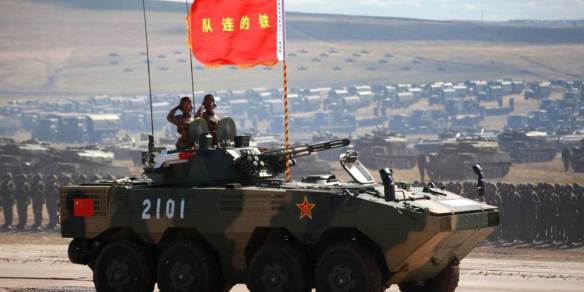
Nonetheless, America’s China fantasy endured, leading Obama to look on as the country created and militarized artificial islands in the South China Sea. At the height of the Chinese government’s island-building, Obama argued that “we have more to fear from a weakened, threatened China than a successful, rising China.” As a result, China seized de facto control of a highly strategic sea corridor through which one-third of global maritime trade passes – all without incurring any international costs.
Over the last couple of years, however, the China-policy debate in the US has begun to reflect more realism, with a growing number of voices recognizing China’s ambition to supplant its American benefactor as the leading global superpower. The US finally called China what it is: a “revisionist power” and “strategic competitor.” And, just this month, Vice President Mike Pence bluntly accused China of “using political, economic, and military tools, as well as propaganda, to advance its influence and benefit its interests” in the US.
This rhetorical shift is being translated into action. President Donald Trump’s trade war, in particular, has grabbed headlines, though many observers have failed to discern the strategy behind the tariffs.
Whereas Trump has used tariffs against allies as leverage to secure concessions and clinch new trade deals, US tariffs targeting China – which could endure for years – are intended to bring about more fundamental and far-reaching change. Even the revised deals with US allies are intended partly to isolate China, thereby forcing it to abandon its mercantilist trade practices, such as forced technology transfer.
But what the Trump administration has initiated goes beyond tariffs; it amounts to a structural change in America’s China policy that promises to reshape global geopolitics and trade. Because this change aligns with an incipient US bipartisan consensus in favor of more assertive action to constrain China, it is likely to outlast Trump’s presidency.
To be sure, this does not mean that the US is going to adopt an overtly confrontational China policy. Nor does it necessarily mean that, as many speculate, a new cold war is in the offing. For example, China still gets a free pass on human-rights abuses, from holding up to a million Muslims from Xinjiang province in internment camps to effectively kidnapping Interpol President Meng Hongwei. And, despite his assertions that the Obama administration’s response to China’s activities in the South China Sea was “impotent,” Trump has done little to counter Chinese expansionism.
Instead, the US seems to hope that it can use primarily economic levers to weaken China – a kind of death from a thousand cuts. But will it be enough? Or is the US effectively shutting the stable door after the horse has bolted?
China is already challenging the US for technological and geopolitical primacy, and flaunting its authoritarian capitalism as an alternative to democracy. Communism couldn’t pose a credible challenge to liberal democracy, but authoritarian capitalism might. In that sense, China’s model represents the first major challenge to liberal democracy since the rise of Nazism.
Thanks to its great strides in strengthening its technological prowess and geopolitical clout, China is in a strong position to withstand US pressure to change its ways. It will have to sacrifice some economic growth. But for President Xi Jinping, such a sacrifice would be worth it, if it meant protecting not only his own position, but also his “Chinese dream” of global preeminence. Even if US pressure escalates significantly, China will likely adopt a “two steps forward, one step back” strategy to keep progressing toward its ambitious goals.
This is not to say that US efforts are for naught. On the contrary, its policy shift amounts to its last chance to stop China before it secures the critical technologies it needs to gain the upper hand geopolitically in Asia and beyond. Even if it is too late to force China to respect international rules and human rights, it is never too soon to end China’s damaging free ride.
 The newly appointed US Special Representative for Afghanistan Reconciliation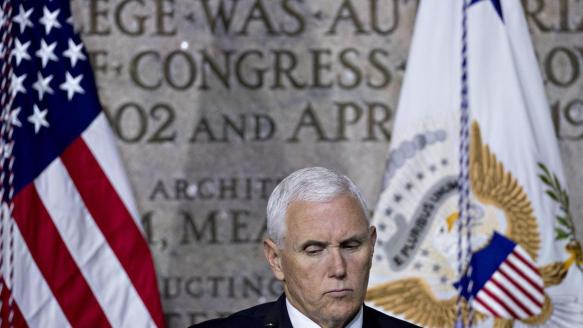



 Pakistan has turned into the Mecca of international terrorism even as its new prime minister, Imran “Taliban” Khan, has promised to make his country a Medina-like welfare state. Pakistan, however, is battling a deepening financial crisis, largely exacerbated by its “all-weather” ally, China. Beijing has imposed unfair deals on, and stepped up capital-goods exports to, Pakistan under its so-called Belt and Road Initiative.
 Stagecraft and Statecraft
The backlash against China can be seen elsewhere, too. The recent annual Pacific Islands Forum meeting was one of the most contentious in its history. Chinese policies in the region, together with the Chinese delegation leader’s behavior at the event itself, drove the president of Nauru – the world’s smallest republic, with just 11,000 inhabitants – to condemn China’s “arrogant” presence in the South Pacific. China cannot, he declared, “dictate things to us.”
When it comes to trade, US President Donald Trump’s escalating trade war with China is grabbing headlines, but Trump is far from alone in criticizing China. With policies ranging from export subsidies and nontariff barriers to intellectual-property piracy and tilting the domestic market in favor of Chinese companies, China represents, in the words of Harvard’s Graham Allison, the “most protectionist, mercantilist, and predatory major economy in the world.”
As the largest merchandise exporter in the world, China is many countries’ biggest trading partner. Beijing has leveraged this role by employing trade to punish those that refuse to toe its line, including by imposing import bans on specific products, halting strategic exports (such as rare-earth minerals), cutting off tourism from China, and encouraging domestic consumer boycotts or protests against foreign businesses.
The fact is that China has grown strong and rich by flouting international trade rules. But now its chickens are coming home to roost, with a growing number of countries imposing antidumping or punitive duties on Chinese goods. And as countries worry about China bending them to its will by luring them into debt traps, it is no longer smooth sailing for the BRI.
Beyond Trump’s tariffs, the European Union has filed a complaint with the World Trade Organization about China’s practices of forcing technology transfer as a condition of market access. China’s export subsidies and other trade-distorting practices are set to encounter greater international resistance. Under WTO rules, countries may impose tariffs on subsidized goods from overseas that harm domestic industries.
Now, Chinese President Xi Jinping finds himself not only defending the BRI, his signature foreign-policy initiative, but also confronting domestic criticism, however muted, for flaunting China’s global ambitions and thereby inviting a US-led international backlash. Xi has discarded one of former Chinese strongman Deng Xiaoping’s most famous dicta: “Hide your strength, bide your time.” Instead, Xi has chosen to pursue an unabashedly aggressive strategy that has many asking whether China is emerging as a new kind of imperialist power.
International trade has afforded China enormous benefits, enabling the country to become the world’s second-largest economy, while lifting hundreds of millions of people out of poverty. The country cannot afford to lose those benefits to an international backlash against its unfair trade and investment practices.
China’s reliance on large trade surpluses and foreign-exchange reserves to fund the expansion of its global footprint makes it all the more vulnerable to the current pushback. In fact, even if China shifts its strategy and adheres to international rules, its trade surplus and foreign-currency reserves will be affected. In short, whichever path it chooses, China’s free ride could be coming to an end.
© Project Syndicate, 2018.