

Brahma Chellaney, The Japan Times
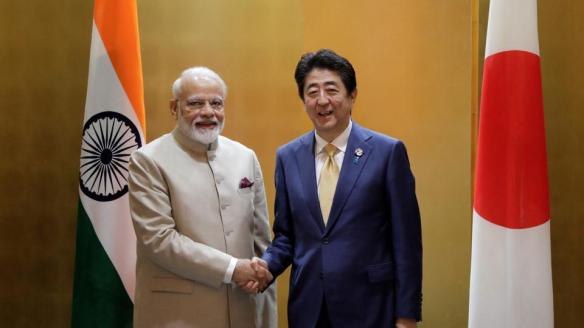
In his second term, Indian Prime Minister Narendra Modi has sought to initiate a new practice on New Year’s Day: To discuss a shared vision of peace and prosperity in India’s subregion, Modi on Jan. 1 telephoned leaders of all neighboring nations other than his country’s two adversaries, China and Pakistan.
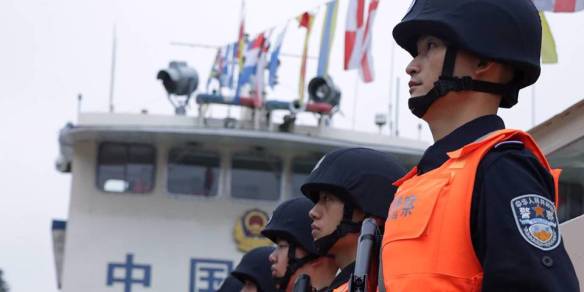
Modi’s exclusion of India’s two closely aligned neighbors that routinely flout international norms was intended to underscore the threat to regional peace from their growing axis. China, for example, kicked off the new year (and the new decade) by launching a major combat exercise along the Himalayan border with India, deploying its lightweight Type 15 tank, a new 155-mm howitzer, and other weapons from the Tibetan capital of “Lhasa to border defense frontlines.”
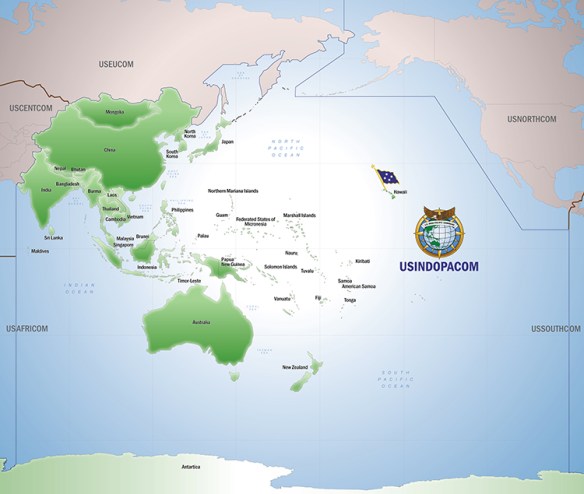
China’s challenge to norms and rules, of course, extends across the Indo-Pacific region.
For example, China’s recent aggressive move in the waters off Indonesia’s northern Natuna Islands that Beijing claims are its “traditional fishing grounds,” as well as the ongoing Chinese coercion against Vietnamese hydrocarbon exploration within Vietnam’s exclusive economic zone, exemplify China’s expansionism in the South China Sea. That sea constitutes a critical missing link in the “free and open Indo-Pacific” (FOIP) strategy of U.S. President Donald Trump’s administration.
How can the Indo-Pacific region be free and open if its most-important sea corridor, which links the Indian and Pacific oceans, is neither free nor open? China continues to incrementally extend its control in this critical corridor.
The Trump administration’s FOIP policy held great promise when it was unveiled by the president in a speech at the Asia Pacific Economic Cooperation forum in November 2017 in the Vietnamese beach resort of Danang. The FOIP policy was seen as a much-needed successor to the U.S. Obama administration’s “pivot” to Asia, which failed to take concrete shape.
The broadening of the U.S. policy focus to a wider region — the Indo-Pacific — was a response to the expanding ambitions of China, which, after building and militarizing artificial islands in the South China Sea, has started focusing on the Indian Ocean and the western Pacific.
The concept of a “free and open Indo-Pacific” was authored by Prime Minister Shinzo Abe and embraced by India and the United States. India has been including the “free and open” phrase in joint statements with strategic partners.
For example, India, the world’s second-largest peninsula, and Indonesia, the world’s largest archipelagic state, last year identified a shared vision for “a free, open, transparent, rules-based, peaceful, prosperous and inclusive Indo-Pacific region.” As U.S. Deputy Assistant Secretary of State Alex Wong put it, “India as a nation has invested in a free and open order.”
Today, it has become imperative to build a pluralistic, rules-based Indo-Pacific order, free of coercion and open to unhindered navigation and overflight. Establishing such an order is the goal of the Australia-India-Japan-U.S. “Quad.” The Quad’s future, however, is linked to the U.S.-led FOIP strategy.
The Trump administration has still to provide strategic heft to its FOIP policy. It has defined the policy’s objectives but is still searching for the effective means to achieve the ends. Indeed, like Tokyo, Washington no longer refers to its FOIP vision as a “strategy.” Without strategic content, the U.S.-led FOIP policy is unlikely to yield meaningful results.
In this light, there is a real risk that Trump’s FOIP policy, like Obama’s pivot to Asia, could fail to gain traction.
Indeed, as highlighted by Trump’s escalation of America’s conflict with Iran by taking out the powerful head of Iran’s Quds Force, Gen. Qassem Soleimani, the U.S. risks getting further mired in the Islamic world.
Soleimani, considered the most important person in Iran after Ayatollah Khamenei, was the first major foreign military leader the U.S. has killed since 1943, when it eliminated Adm. Isoroku Yamamoto, the supposed architect of the Pearl Harbor attack.
Trump may have won the first round against Iran, which retaliated weakly to the Soleimani assassination. But make no mistake: A second round seems inevitable.
In this light, developments in the Middle East could distract American policymakers and result in Trump’s FOIP policy — like Obama’s pivot to Asia — remaining more rhetorical than real. In fact, the pivot got lost somewhere in the arc stretching from the Middle East to Ukraine.
To be sure, Trump’s lasting legacy will be the paradigm change in America’s China policy — a shift that will outlast his presidency as it enjoys bipartisan support in Washington.
According to the philanthropist George Soros, “The greatest — and perhaps only — foreign policy accomplishment of the Trump administration has been the development of a coherent and genuinely bipartisan policy toward Xi Jinping’s China.”
The Trump administration has sought to primarily employ economic levers to rein in China, including through a gradual decoupling of the American and Chinese economies in key strategic sectors. However, it must also employ strategic levers, or else China’s territorial and maritime revisionism will remain untamed. Beijing has changed the South China Sea’s geopolitical map without firing a single shot or incurring any international costs.
U.S. leadership and resolve are essential to build a credible counter to Chinese expansionism. But the roles of the other major democracies are also important.
In this context, Abe’s postponement of his India visit due to unrest in the northeastern Indian state of Assam could only have pleased Beijing. A Modi-Abe summit in the Assamese capital of Guwahati, followed by the two leaders’ visit to a new peace museum in Manipur state that commemorates the Battle of Imphal between the Imperial Japanese Army and Allied forces during World War II, would have highlighted northeast India’s role as the bridge to the rest of Asia.
The Assam violence, although short-lived, will make already-wary Japanese companies more reluctant to invest in India’s remote northeast — to the delight of China, which doesn’t want any foreign investment or even multilateral lending going there. China actually claims an entire northeastern Indian state — Arunachal Pradesh, which is almost three times larger than Taiwan.
With private Japanese investors averse to taking risks, Japan must provide greater Official Development Assistance (ODA) loans in order to finance socioeconomic projects in India’s northeast. India, however, is already Japan’s largest ODA recipient. Japan has the distinction of being the only foreign power that has been allowed to undertake projects in India’s sensitive northeast, as well as in that country’s strategic Andaman and Nicobar Islands.
Against this background, an Indo-Pacific concert of democracies isn’t on the horizon. But if democratic powers leverage their bilateral and trilateral partnerships to generate progress toward such a concert of democracies, the vision of a free and open Indo-Pacific may be achievable in the years ahead.
Longtime Japan Times contributor Brahma Chellaneyis a geostrategist and the author of nine books, including the award-winning “Water: Asia’s New Battleground.”
 Brahma Chellaney, Professor of Strategic Studies at the New Delhi-based Center for Policy Research and Fellow at the Robert Bosch Academy in Berlin, is the author of nine books, including
 Brahma Chellaney is a geostrategist and author of “Water: Asia’s New Battleground,” the winner of the Bernard Schwartz Award.
 The Mamallapuram summit between India and China cannot obscure the fact that the power behind Pakistan is China. Nor can the summit hype cloak the strengthening axis between a muscular communist power and a terrorism-exporting Islamist neighbour, with both the revanchist partners staking claims to different Indian territories.
 Stagecraft and Statecraft
When the Cold War ended, many pundits anticipated a new era in which geo-economics would determine geopolitics. As economic integration progressed, they predicted, the rules-based order would take root globally. Countries would comply with international law or incur high costs.
Today, such optimism looks more than a little naive. Even as the international legal system has ostensibly grown increasingly robust – underpinned, for example, by United Nations conventions, global accords like the 2015 Paris climate agreement, and the International Criminal Court – the rule of force has continued to trump the rule of law. Perhaps no country has taken more advantage of this state of affairs than China.
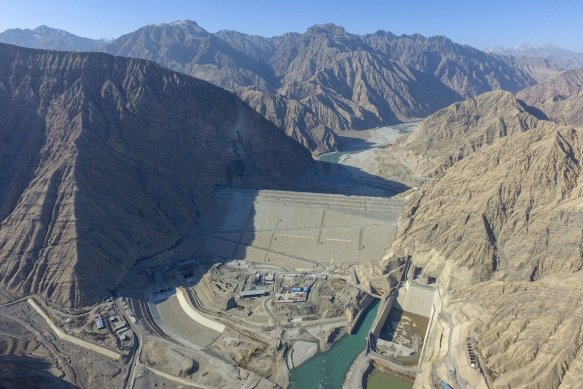
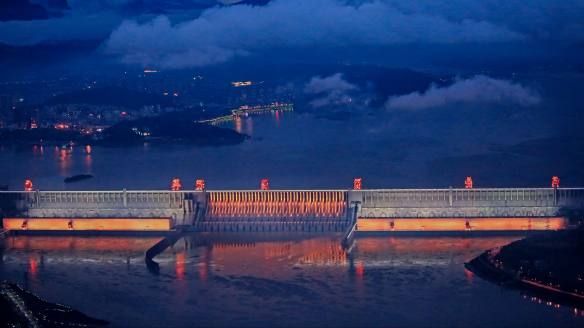
Consider China’s dam projects in the Mekong River, which flows from the Chinese-controlled Tibetan Plateau to the South China Sea, through Myanmar, Laos, Thailand, Cambodia, and Vietnam. By building 11 mega-dams near the border of the Tibetan Plateau, just before the river crosses into Southeast Asia, China has irreparably damaged the river system and wreaked broader environmental havoc, including saltwater intrusion in the Mekong Delta that has caused the delta to retreat.
Today, the Mekong is running at its lowest level in 100 years, and droughts are intensifying in downriver countries. This gives China powerful leverage over its neighbors. And yet China has faced no consequences for its weaponization of the Mekong’s waters. It should thus be no surprise that the country is building or planning at least eight more mega-dams on the Mekong.
China’s actions in the South China Sea may be even more brazen. This month marks the sixth anniversary of the country’s launch of a massive land-reclamation program in the highly strategic corridor, which connects the Indian and Pacific oceans. By constructing and militarizing artificial islands, China has redrawn the region’s geopolitical map without firing a shot – or incurring any international costs.
To be sure, in July 2016, an international arbitral tribunal set up by the Permanent Court of Arbitration (PCA) in The Hague ruled that China’s territorial claims in the South China Sea lacked legitimacy under international law. But China’s leaders simply disregarded the ruling, calling it a “farce.” Unless something changes, the United States-led plan to establish a “free and open Indo-Pacific” will remain little more than a paper vision.
China’s open contempt for the PCA’s ruling stood in sharp contrast with India’s response to a 2014 ruling by a PCA-established tribunal awarding Bangladesh nearly 80% of 25,602 square kilometers (9,885 square miles) of disputed territory in the Bay of Bengal. Although the decision was split (unlike the South China Sea tribunal’s unanimous verdict) and included obvious flaws – it left a sizable “gray area” in the bay – India accepted it readily.
In fact, between 2013 and 2016 – while the Philippines-initiated proceedings on China’s claims in the South China Sea were underway – three different PCA-established tribunals ruled against India in disputes with Bangladesh, Italy, and Pakistan. India complied with all of them.
The implication is clear: for large and influential countries, respecting the rules-based order is a choice – one that China, with its regime’s particular character, is unwilling to make. Against this background, Vietnam’s possible legal action on its own territorial disputes with China – which has been interfering in Vietnam’s longstanding oil and gas activities within its exclusive economic zone in the South China Sea – is unlikely to amount to much. Vietnam knows that China will ignore any ruling against it and use its trade leverage to punish its less powerful neighbor.
That is why an enforcement mechanism for international law is so badly needed. Disputes between states will always arise. Peace demands mechanisms for resolving them fairly and effectively, and reinforcing respect for existing frontiers.
Yet such a mechanism seems unlikely to emerge anytime soon. After all, China is not alone in violating international law with impunity: its fellow permanent members of the UN Security Council – France, Russia, the United Kingdom, and the US – have all done so. These are the very countries that the UN Charter entrusted with upholding international peace and security.
Nowadays, international law is powerful against the powerless, and powerless against the powerful. Despite tectonic shifts in the economy, geopolitics, and the environment, this seems set to remain true, with the mightiest states using international law to impose their will on their weaker counterparts, while ignoring it themselves. As long as this is true, a rules-based global order will remain a fig leaf for the forcible pursuit of national interests.
© Project Syndicate, 2019.