
Why can’t Indian immigrants influence policy in America? As U.S.-India ties fray, America’s most successful immigrants still lack a voice in Washington.
By Brahma Chellaney
The Japan Times
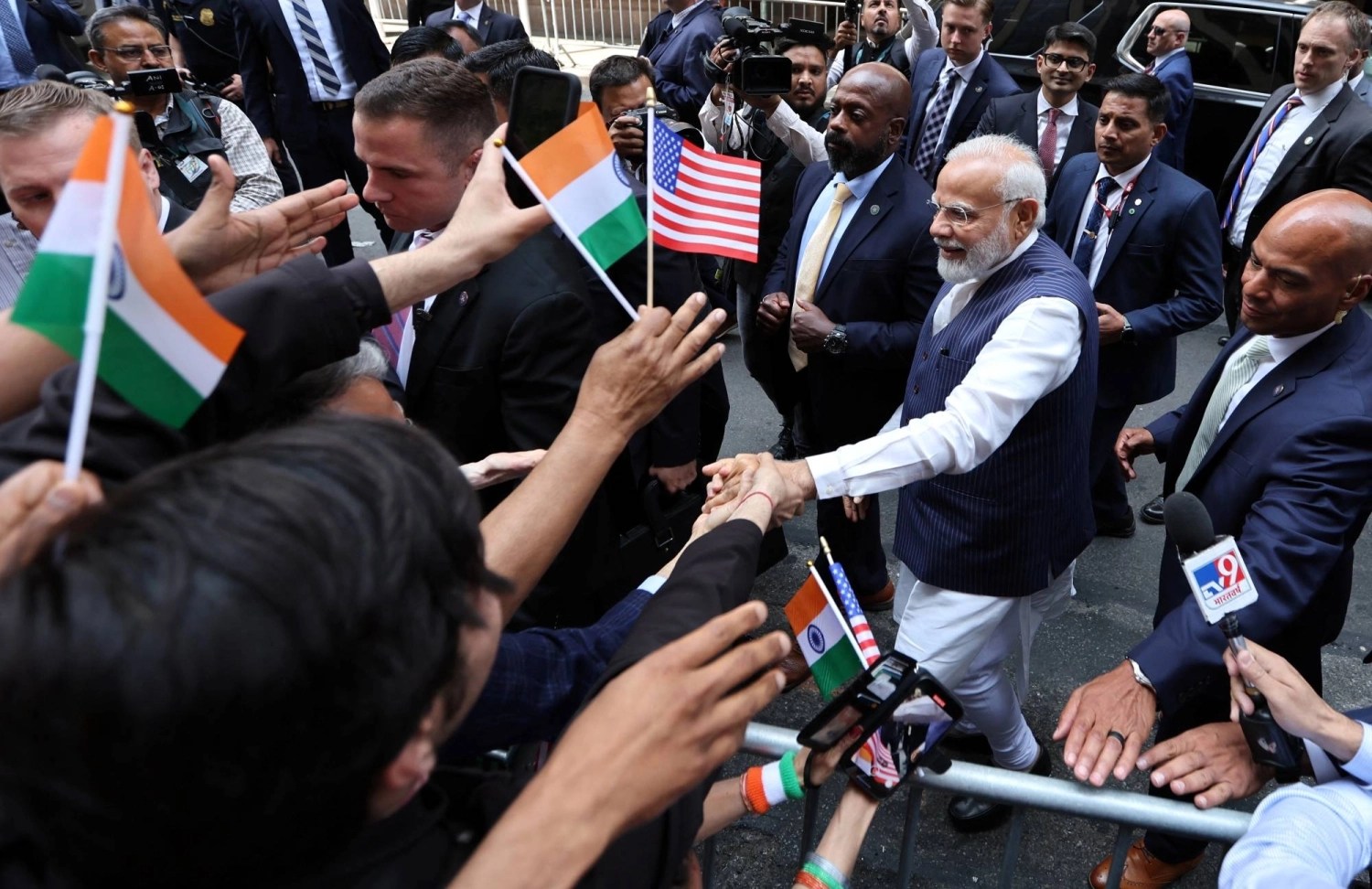
As America’s congressional midterm campaigns gather momentum, politicians from both parties will once again court Indian-American voters, donors and volunteers. They have good reason to do so.
Indian Americans have become one of the greatest immigrant success stories in American history. They are among the country’s wealthiest and most highly-educated communities. They lead Silicon Valley, dominate large segments of the medical profession, head some of America’s iconic corporations like Google and Microsoft, and are emerging as an increasingly visible force in electoral politics, with growing influence in several battleground states that could determine control of Congress.
Yet, despite this remarkable ascent, Indian Americans have failed where it arguably matters most for a diaspora: influencing Washington’s policy toward their country of origin — or even preventing a succession of U.S. actions since last year that have disproportionately hurt Indians.
Over the past four years, the U.S.-India relationship has steadily deteriorated under two successive American administrations. The Biden administration allowed bilateral frictions to accentuate and strain ties. President Donald Trump’s second administration has accelerated the decline through trade and energy coercion, tighter restrictions on student and work visas, and a more openly transactional approach that is effectively demoting India in American grand strategy.
Taken together, these measures represent the most sustained period of policy setbacks affecting India and Indians in decades. Yet they have encountered little organized resistance from the increasingly influential Indian-American community.
This paradox deserves attention because it exposes a central reality of Washington: economic success and political visibility do not automatically translate into foreign-policy influence.
Measured by conventional indicators, Indian Americans should possess considerable leverage. Numbering just over five million, they have the highest median household income of any major ethnic group in America. They have impressive voter participation and growing electoral significance in battleground states such as Georgia, Pennsylvania, North Carolina, Arizona and Michigan. Members of Congress, governors, mayors and nationally known political figures now come from the Indian-American community across both parties.
Indian Americans have mastered nearly every arena of American life except the one that matters most in foreign policy — organized political power. Consequently, there is no effective India lobby.
Unlike the American Israel Public Affairs Committee (AIPAC) or the influential Cuban-American organizations, Indian Americans have never built a durable, bipartisan, single-issue lobbying infrastructure capable of changing political incentives in Congress or the White House.
Instead, the community is represented by an assortment of business councils, cultural associations, advocacy groups and political action committees pursuing multiple, sometimes competing, objectives. They excel at networking, philanthropy and promoting commercial ties, but they have never developed the institutional cohesion needed to influence high-stakes decisions on trade, immigration or strategic policy.
Washington rewards focus. The most successful foreign-policy lobbies do not merely contribute campaign money. They create political consequences. They identify a small number of priorities, cultivate relationships with lawmakers of both parties, and reward — or punish — politicians according to how they vote. Most importantly, they persuade American policymakers that supporting their objectives advances U.S. national interests, not simply the interests of another country. Indian-American advocacy has rarely operated that way.
The community also suffers from an internal divergence of interests. Naturalized citizens and second-generation Indian Americans understandably vote like other Americans. Their priorities are inflation, taxes, crime, healthcare, schools and local governance — not bilateral diplomacy or immigration policy. The Indians most directly affected by recent policy changes — professionals on H-1B visas, students (the largest from any country) and green-card applicants — cannot vote.
This creates an unusual political asymmetry. The people with electoral influence are often insulated from the policies affecting Indians most severely. Those bearing the greatest burden possess virtually no electoral leverage.
Trump’s second presidency has made this structural weakness increasingly evident. His administration no longer treats India primarily as a strategic counterweight to China. Instead, it increasingly views India through a transactional commercial lens — as a fast-growing market for American exports and an economic competitor whose technological rise should be carefully managed through tariffs and tech-transfer controls. U.S. restrictions affecting skilled immigration, tighter student visa rules, pressure over energy imports, and disputes over technology transfers all reflect that recalibration.
Nor can Democrats claim a better record. The once-blossoming bilateral relationship began losing momentum before Trump returned to office.
The comforting assumption that the Indo-U.S. strategic partnership would inevitably deepen has proved misplaced. For all the talk of an “indispensable partnership” with India, Washington has shown that diaspora goodwill carries little weight when it conflicts with electoral or strategic priorities.
If Indian Americans wish to acquire greater influence over Washington’s India policy, they may need to rethink their approach fundamentally.
That does not mean replicating another community’s political model. Every diaspora has its own history and priorities. But successful lobbying in Washington invariably requires certain ingredients: bipartisan engagement, institutional continuity, disciplined messaging, coordinated fundraising and, above all, a willingness to frame policy objectives as advancing America’s own strategic interests.
Indian Americans already possess the financial resources, professional networks and intellectual capital needed to build political infrastructure. What they lack is sustained collective action.
That distinction helps explain why a community that has become indispensable to America’s innovation economy remains largely dispensable when Washington makes decisions affecting India.
Until that changes, Indian Americans are likely to remain a political paradox: one of America’s most accomplished immigrant communities, yet unable to translate that success into meaningful influence over one of the world’s most important bilateral relationships.
Brahma Chellaney, a longstanding contributor to The Japan Times, is the author of nine books, including “Water: Asia’s New Battlefield,” which won the Bernard Schwartz Award.


You must be logged in to post a comment.