Xi’s newfound strength obscures China’s internal risks

BY , The Japan Times

2de5fc1e-bbb4-11e7-affb-32c8d8b6484e_1280x720_121210

China, the world’s communist behemoth, is at a turning point in its history, one that will have profound implications for the rest of the world, but especially for Asia. Neighboring countries, from Japan to India, are already bearing the brunt of China’s recidivist policies.

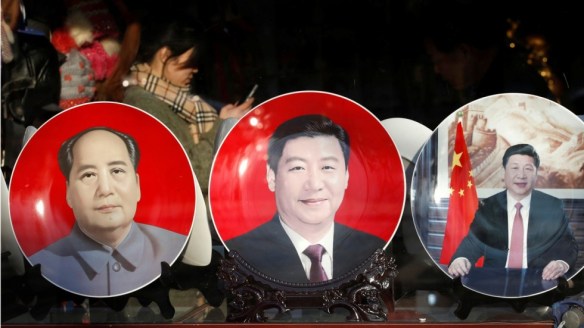
The just-concluded 19th Chinese Communist Party congress put its imprimatur on President Xi Jinping’s centralization of power by naming no clear successor to him and signaling the quiet demise of the collective leadership system that has governed China for more than a quarter century. The congress, in essence, was about Xi’s coronation as China’s new emperor.

By enshrining the “Xi Jinping Thought on Socialism with Chinese Characteristics in a New Era” in its constitution, the party has made this new “ideology” — just like Marxism-Leninism and Mao Zedong’s thoughts — compulsory learning for Chinese students at all levels.

To be sure, the lurch toward absolutism didn’t happen suddenly. Xi spent his first five-year term tightening control on society. While strengthening censorship and using anti-corruption probes to take down political enemies, he steadily concentrated powers in himself. A year ago, he got the party to bestow on him the title of “core” leader.

Now, in his second term, Xi will likely centralize power in a way China hasn’t seen since Mao. Xi has already made himself in some ways more powerful than even Mao. Today, everyone is dispensable except Xi, who appears set to remain in power indefinitely.

Domestic politics in any country, including a major democracy like the United States, has a bearing on its foreign policy. The link between China’s traditionally cut-throat internal politics and its external policy has been apparent since the Mao era.

For example, China launched the 1962 Himalayan war with India after Mao’s “Great Leap Forward” created the worst manmade famine in history, with the resulting damage to his credibility, according to the Chinese scholar Wang Jisi, serving as a strong incentive for him to reassert leadership through a war. The Great Leap Forward policy led to the deaths of up to 45 million Chinese, according to the historian Frank Dikötter.

In the run-up to the latest party congress, two senior military generals disappeared from public view, including the top general holding the position equivalent to the chairman of the U.S. Joint Chiefs of Staff. It is unthinkable that in any other major country in the twenty-first century, the top-ranking general can just vanish and later is said to be under detention for alleged abuse of office.

Xi has ruthlessly cut to size any institution or group that could pose a potential challenge to his authority. By purging and jailing countless number of generals on corruption charges, he has sought to tame the powerful People’s Liberation Army, which traditionally has sworn fealty to the party, not the nation. More recently, Xi has also gone after China’s new tycoons in order to block the rise of Russia-style oligarchs.

Control and nationalism are the guiding themes in Xi’s approach, which centers on the state being in charge of all aspects of public life, including culture, religion and the digital realm. But such an approach risks creating a pressure cooker syndrome — cool on the outside but so pressurized on the inside that it could not be deftly managed.

It is true that even before Xi assumed power in 2012, China began gradually discarding Deng Xiaoping’s dictum to “keep a low profile and bide one’s time.” An increasingly nationalistic, assertive China staked out a more muscular role, including resurrecting territorial and maritime disputes and asserting new sovereignty claims.

China’s proclivity to bare its claws, however, has become more pronounced under Xi, who sees the West in retreat and wants China to gain the upper hand globally. His government has aggressively used construction activity to change the status quo in Asia in relation to land and sea frontiers and cross-border river flows. In his marathon, three-and-a-half-hour speech to the party congress, Xi actually bragged of his “successful prosecution of maritime rights,” citing “South China Sea reef and island construction” as one of his major achievements.

In fact, Xi aspires to become modern China’s most transformative leader. Just as Mao helped to create a reunified and independent China through a communist “revolution,” and Deng set in motion China’s economic rise through reforms, Xi wants to make China the central player in the international order.

Now that Xi’s pet “One Belt, One Road” (OBOR) project has been officially enshrined in the party’s constitution, the world will likely witness a greater Chinese propensity to use geo-economic tools to achieve larger geostrategic objectives. The $1 trillion OBOR, however, symbolizes the risk of China’s strategic overreach: The majority of the nations in OBOR are junk rated or not graded by international rating firms. China’s OBOR drive is actually beginning to encounter a backlash in several partner countries.

Even so, the sycophancy with which senior officials abased themselves to extol Xi at the party congress indicates that there is no room for debate in a one-man-led China. Indeed, Xi’s gaining of virtually absolute power demonstrates — if any evidence were needed — that there is no linear path between rising prosperity and political pluralism.

Internationally, Xi’s neo-Maoist dictatorship will likely spell trouble for the free world, especially Asian democracies like India, Japan, Taiwan, South Korea and the Philippines. We will likely see a China more assertive in the Indo-Pacific region, more determined to achieve global superpower status, and more prone to employing instruments of coercive diplomacy and breaching established norms and rules. A restrained and stable Chinese foreign policy could become more difficult.

Xi’s vision, which he has called the “Chinese dream,” is essentially to make China the world’s preeminent power by 2049 — the centennial of the communist “revolution.” The longest any autocratic system has survived in modern history was 74 years in the Soviet Union. Xi’s grip on power may still be intact when China is expected to overtake that record in less than seven years.

Still, with the party’s ideological mask no longer credible, the longer-term prospects of continued communist rule are far from certain. After all, China’s future is likely to be determined not so much by its hugely successful economy as by its murky domestic politics.

Xi’s new strength and power helps obscure China’s internal risks, including the fundamental challenge of how to avoid a political hard-landing. As for Xi, he needs to watch his back, having made many enemies at home in his no-holds-barred effort to concentrate power in his own hands.

Brahma Chellaney is a geostrategist and the author of nine books.
© The Japan Times, 2017.

A New Front in Asia’s Water War

For decades, China has been dragging its neighbors into high-stakes games of geopolitical poker over water-related issues. But the country’s politically motivated decision to withhold hydrological data from India amounts to an escalation of China’s efforts to exploit its status as the world’s hydro-hegemon to gain strategic leverage over its neighbors.

504530da203c35b7eb6cf6cee7797f6c.2-1-super.1

BRAHMA CHELLANEYProject Syndicate

China has long regarded freshwater as a strategic weapon — one that the country’s leaders have no compunction about wielding to advance their foreign-policy goals. After years of using its chokehold on almost every major transnational river system in Asia to manipulate water flows themselves, China is now withholding data on upstream flows to put pressure on downstream countries, particularly India.

For decades, China has been dragging its neighbors into high-stakes games of geopolitical poker over water-related issues. Thanks to its forcible annexation of Tibet and other non-Han Chinese ethnic homelands — territories that comprise some 60% of its landmass — China is the world’s unrivaled hydro-hegemon. It is the source of cross-border riparian flows to more countries than any other state.

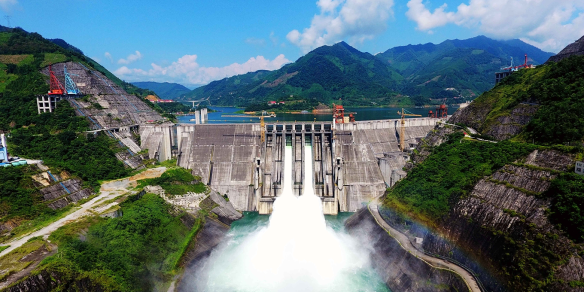
In recent years, China has worked hard to exploit that status to increase its leverage over its neighbors, relentlessly building upstream dams on international rivers. China is now home to more dams than the rest of the world combined, and the construction continues, leaving downstream neighbors — especially the vulnerable lower Mekong basin states, Nepal, and Kazakhstan — essentially at China’s mercy.

So far, China has refused to enter into a water-sharing treaty with a single country. It does, however, share some hydrological and meteorological data — essential to enable downstream countries to foresee and plan for floods, thereby protecting lives and reducing material losses.

Yet, this year, China decided to withhold such data from India, undermining the efficacy of India’s flood early-warning systems — during Asia’s summer monsoon season, no less. As a result, despite below-normal monsoon rains this year in India’s northeast, through which the Brahmaputra River flows after leaving Tibet and before entering Bangladesh, the region faced unprecedented flooding, with devastating consequences, especially in Assam state.

China’s decision to withhold crucial data is not only cruel; it also breaches the country’s international obligations. China is one of just three countries that voted against the 1997 United Nations Watercourse Convention, which called for the regular exchange of hydrological and other data between co-basin states. But China did enter into a five-year bilateral accord, which expires next year, requiring it to transfer to India hydrological and meteorological data daily from three Brahmaputra-monitoring stations in Tibet during the risky flood season, from May 15 to October 15. A similar agreement, reached in 2015, covers the Sutlej, another flood-prone river. Both accords arose after flash floods linked to suspected discharges from Chinese projects in Tibet repeatedly ravaged India’s Arunachal and Himachal states.

Unlike some other countries, which offer hydrological data to their downstream counterparts for free, China does so only for a price. (The Watercourse Convention would have required that no charges be levied, unless the data or information was “not readily available” — a rule that may also have contributed to China’s “no” vote.)

But it was a price India was willing to pay. And this year, as always, India sent the agreed amount. Yet it received no data, with the Chinese foreign ministry claiming after almost four months that upstream stations were being “upgraded” or “renovated.” That claim was spurious: China did supply data on the Brahmaputra to Bangladesh.

Three weeks earlier, the state-controlled newspaper Global Times offered a more plausible explanation for China’s failure to deliver the promised data to India: the data transfer had been intentionally halted, owing to India’s supposed infringement on Chinese territorial sovereignty in a dispute over the remote Himalayan region of Doklam. For much of the summer, that dispute took the form of a border standoff where Bhutan, Tibet, and the Indian state of Sikkim meet.

But even before the dispute flared in mid-June, China was seething over India’s boycott of its May 14-15 summit promoting the much-vaunted “Belt and Road” initiative. The denial of data apparently began as an attempt to punish India for condemning China’s massive, cross-border infrastructure agenda as an opaque, neocolonial enterprise. China’s desire to punish India was then reinforced by the Doklam standoff.

For China, it seems, international agreements stop being binding when they are no longer politically convenient. This reading is reinforced by China’s violations of its 1984 pact with the United Kingdom, under which China gained sovereignty over Hong Kong in 1997. China claims that the agreement, based on the formula “one country, two systems,” had lost “practical significance” over the last 20 years.

Were the roles reversed, a downstream China would have stridently accused an upstream India of exacerbating flood-related death and destruction by breaching its international obligations. But just as China has unilaterally and aggressively asserted its territorial and maritime claims in Asia, it is using the reengineering of cross-border riparian flows and denial of hydrological data to deepen its regional power.

In fact, China’s cutoff of water data, despite the likely impact on vulnerable civilian communities, sets a dangerous precedent of indifference to humanitarian considerations. It also highlights how China is fashioning unconventional tools of coercive diplomacy, whose instruments already range from informally boycotting goods from a targeted country to halting strategic exports (such as of rare-earth minerals) and suspending Chinese tourist travel.

Now, by seizing control over water — a resource vital to millions of lives and livelihoods — China can hold another country hostage without firing a single shot. In a water-stressed Asia, taming China’s hegemonic ambition is now the biggest strategic challenge.

© Project Syndicate, 2017.

The long history of Rohingya Islamist militancy

Brahma Chellaney, Mail Today

4f659e10-145e-11e7-8424-32eaba91fe03_1280x720_171752

Inside Myanmar’s Rakhine state: Members of the well-oiled Arakan Rohingya Salvation Army, also known as Harakah al-Yaqin, which is aided by militant organizations in Saudi Arabia and Pakistan.

The current international narrative on the plight of Myanmar’s persecuted Rohingya minority has failed to recognize the roots of the present crisis or the growing transnational jihadist links of Rohingya militants, who have stepped up attacks. Contrary to the perception that the Rohingya militancy has arisen from military repression in recent years, Myanmar’s jihad scourge is decades old, with Rohingya Islamist violence beginning even before Myanmar gained independence in 1948.

Rohingya militants have actually been in the vanguard of the global rise of Islamic radicalism since the early 1940s, when they joined the campaign to press the British to establish Pakistan by partitioning India. It was the British who earlier moved large numbers of Rohingyas from East Bengal to work on rubber and tea plantations in Burma, now Myanmar, which was administered as a province of India until 1937 before it became a separate, self-governing colony. Rohingya migrants settled mainly in Myanmar’s East Bengal-bordering Arakan region (now renamed Rakhine state).

Between 1942 and the early 1950s, a civil war raged in Arakan between Muslims and Buddhists. Communal hatred spilled into violence during World War II as the Japanese military advanced into Arakan in 1942 and the British launched a counter-offensive, with local Buddhists largely siding with the Japanese and Rohingyas with the British.

Britain recruited Rohingya Muslims into its guerrilla force — the so-called “V” Force — to ambush and kill Japanese troops. When the British eventually regained control of Arakan in 1945, they rewarded Rohingya Muslims for their loyalty by appointing them to the main posts in the local government.

Emboldened by the open British support, Rohingya militants set out to settle old scores with Buddhists. And in July 1946, they formed the North Arakan Muslim League to seek the Muslim-dominated northern Arakan’s secession from Myanmar. In the religious bloodletting that preceded and followed the partition of India, Rohingya attacks sought to drive out Buddhists from northern Arakan as part of the campaign to join East Pakistan.

Failure to achieve that goal turned many Rohingyas to armed jihadism, with mujahideen forces in 1948 gaining effective control of northern Arakan. Government forces suppressed the revolt in the early 1950s, although intermittent mujahideen attacks continued until the early 1960s. From the 1970s onwards, however, Rohingya Islamist movements re-emerged, with a series of insurgent groups rising and fading away. The aim of the groups was to establish an Islamist state within a Buddhist state, principally through demographic change and jihad.

Now history has come full circle, with the Myanmar military being accused of driving Rohingyas out of Rakhine state. But in a development that carries ominous security implications for the region, especially Myanmar, India and Bangladesh, Rakhine is becoming a magnet for the global jihadist movement, with Rohingya radicals increasingly being aided by militant organizations in Pakistan and Saudi Arabia.

The new breed of Rohingya insurgents is suspected of having links with ISIS, Lashkar-e-Taiba, al-Qaeda and even Pakistan’s Inter-Services Intelligence (ISI) agency. Ata Ullah, the Pakistani who heads the Rohingya terrorist group, the well-oiled Arakan Rohingya Salvation Army, reportedly returned to Pakistan from an extended stay in Saudi Arabia with millions of dollars to wage jihad against Myanmar after the 2012 deadly communal riots in Rakhine.

Against this background, India is legitimately concerned about the illegal entry of over 40,000 Rohingyas since 2012, with the government telling the Supreme Court that their arrival poses a “serious security threat” because of the links of Rohingya militants with terrorist outfits and the ISI agency. Some of these militants have become active in India, according to the government.

What is particularly disturbing is the organized manner in which the Rohingyas have sneaked into India from multiple routes and then settled across the length and breadth of the country, including in sensitive places like Jammu, Kashmir Valley, Mewat and Hyderabad. Rohingya settlements have come up even in New Delhi. Because they entered India unlawfully, the Rohingas are illegal aliens, not refugees.

Normally, those fleeing a conflict-torn zone tend to camp just across an international border. But in this case the Rohingyas entered India via a third nation, Bangladesh. And then large numbers of them dispersed from West Bengal and Tripura states to different parts of India. Many of them, as the government admits, have obtained Aadhaar and other identity cards.

Still, the government is reluctant to order an inquiry into the role of internal forces in assisting the Rohingyas’ entry, dispersal and settlement across India. Worse yet, it has passed the buck to the Supreme Court, with Home Minister Rajnath Singh saying the government would await the Court’s hearing and decision on the Rohingyas’ plea against possible deportation to Bangladesh, from where they entered. Thus far, New Delhi has been all talk and no action.

Make no mistake: India is a crowded country that, nonetheless, has generously admitted asylum seekers or refugees over the years from a host of places, including Tibet, Afghanistan, Iran, Pakistan, Sri Lanka, Myanmar and mainland China. India is already home to some 20 million illegal migrants from Bangladesh.

But the Rohingya aliens pose a special challenge because of the escalating jihad in Rakhine and some Rohingyas’ militant activities on Indian soil. The external forces fomenting jihadist attacks in Rakhine bear considerable responsibility for the Rohingyas’ current plight.

© Mail Today, 2017.

The danger of all talk and no action

Brahma Chellaney, The Hindustan Times, October 3, 2017

obliterating-terrorism-in-pakistan-hinges-on-state-fulfilling-its-pledge-1454069531-1848Recently, India branded Pakistan a “Terroristan”. And its external affairs minister told the United Nations that Pakistan, as the world’s “pre-eminent terror export factory”, has just one national accomplishment to boast of. Yet New Delhi is loath to back its words with even modest action, such as downsizing Pakistan’s bloated, Inter-Services Intelligence (ISI)-infested high commission in New Delhi, withdrawing the unilaterally granted “most favoured nation” status, leveraging the Indus Waters Treaty (IWT), or halting the barter trade across the line of control (LoC) that the National Investigation Agency has identified as financing terrorism.

Despite playing to the public gallery at home, India has done nothing to treat Pakistan as a terrorist nation. Indeed, behind its rhetoric, India pursues a cautious approach. Successive governments have shied away from slapping sanctions of any kind on Pakistan, yet not been coy to press other powers and the United Nations for sanctions.

India seems reluctant not just to back words with action but also to back words with just words on some issues. Take Balochistan, Pakistan’s Achilles heel that is becoming the new East Pakistan because of military killings and mass graves. When Prime Minister Narendra Modi raised Balochistan in his Independence Day speech in 2016, it seemed to signal an important policy shift. Yet India has remained conspicuously mum on the Balochistan issue. Even as Pakistan uses fake photographs to peddle a false narrative on Jammu and Kashmir (J&K), India is unwilling to spotlight the brutal Pakistani campaign against the Baloch people.

Another example is India’s rhetorical stance that the only outstanding issue on J&K relates to the part occupied by Pakistan. Other than slamming China’s “One Belt, One Road” initiative for infringing its sovereignty, India has said precious little to show that it is serious about its claim to that occupied region. It has actually kept quiet on matters of substance, including China’s new dam and other strategic projects in Pakistan-held J&K. Had China been in India’s place, it would have raised a hue and cry over each and every project.

As for lack of Indian action, look no further than the IWT issue. Modi vowed that “blood and water cannot flow together”. But instead of action, what has followed is visible backsliding — from reviving the suspended Permanent Indus Commission to allowing the partisan World Bank to insert itself as a mediator between India and Pakistan. The IWT grants the World Bank no mediatory role. Such mediation, besides setting a dangerous precedent, breaches India’s traditional policy of not allowing a third party to intercede in bilateral disputes. Worse still, the Modi-appointed committee of secretaries on the Indus waters has fallen by the wayside, with not a single new project launched.

On the issue of cross-border terrorism, Modi, after the deadly attacks that followed his surprise Lahore visit, sought to salvage his credibility by launching a cross-LoC surgical strike on militant launch pads. But it was always clear that such a limited, one-off operation by itself would not be able to tame Pakistan. The surgical strike was followed by a terror attack on yet another military base. India must mount sustained pressure to keep Pakistan off balance and deny it room to pursue its strategy of seeking to inflict death by a thousand cuts.

The battle against Pakistan’s state terrorism is India’s fight alone. Why would the United States designate Pakistan a terrorist state when the main victim of Pakistan-scripted terror, India, is reluctant to impose any sanctions on its scofflaw neighbour? Indeed, the Modi government persuaded Rajeev Chandrasekhar to withdraw his private member’s bill in Rajya Sabha for declaring Pakistan a terrorism sponsor. New Delhi is even unwilling to declare the rogue ISI a terrorist organization. Actually, in a stunning display of naiveté, India hosted an ISI-linked Pakistani team at Pathankot so that it could probe the attack ISI orchestrated there.

The plain fact is that India is all talk when it comes to imposing costs on the “Terroristan” next door. India is not the United Nations that can remain content with all talk and no action.

Words not backed by action carry unquantifiable costs. They not only affect India’s credibility but also undermine its deterrent posture. Isn’t it telling that Pakistan continues to gore India although it is seven times smaller demographically, eight times lesser in GDP terms, and militarily weaker? Such aggression is the bitter fruit of India’s all-talk-no-action approach under successive governments. It is still not late to reverse course. The best actions to deter a congenitally hostile foe will be those that speak for themselves.

Brahma Chellaney is a geostrategist and author.

© The Hindustan Times, 2017.