Years of Indian indecision and inaction ends

Brahma Chellaney, The Hindustan Times

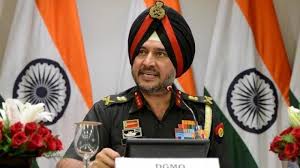
downloadIndia has finally broken out of years of paralytic indecision and inaction on Pakistan’s proxy war by staging a swift, surgical military strike across the Line of Control — a line it did not cross even during the 1999 Kargil War.  Although a limited but unprecedented action, in which Indian paratroopers destroyed multiple terrorist launchpads, it will help to dispel the sense of despair that had gripped India over its prolonged failure to respond to serial Pakistan-backed terrorist attacks.

At the same time, the action represents a loss of face for Pakistan’s all-powerful military, which was quick to deny any such strike. The denial, however, will carry little credibility even within Pakistan, given the military’s long record of refusing to own up to its own actions — from sending raiders into Jammu and Kashmir in 1947 and staging Operation Gibraltar in 1965 to sending light infantry soldiers into Kargil in 1999. When the Pakistani military even denies training and arming terrorists for cross-border missions, how can it admit that Indian paratroopers targeted terrorist launchpads it maintains?

Still, a one-off surgical attack can do little to help reform the Pakistani military’s conduct or deter its rogue Inter-Services Intelligence agency from staging more terrorist strikes on Indian targets. The critical question to ask is whether India, having shaken off its diffidence, will be willing to stage more raids by its special forces across the LoC — not immediately, but in the months to come, so as to forestall terrorist attacks by keeping the Pakistani military off balance.

However, the proxy war by terror is unlikely to end without India imposing significant costs directly on the Pakistani military and the Pakistani state. Militarily, that is a challenging task.

In general, the purpose of any major military action ought to be twofold: to inflict unbearable costs on the enemy; and, if the action escalates to a full-fledged war, to decisively defeat the foe on the battlefield in order to impose peace on it on one’s own terms.

The current military situation is such that India cannot have full confidence in achieving these objectives. For example, any major military action needs the surprise element to take the enemy unawares and gain a significant early advance. With Pakistan in a state of full combat readiness after scripting the Uri attack, there is no surprise element that can be exploited by India to launch a major offensive.

In these circumstances, applying sustained, multipronged pressure on the enemy’s vulnerable points to inflict pain and punishment through economic, diplomatic, riparian and political instruments and special forces is a better option than waging an open war that might not produce a decisive result.

That India managed to stage a daring cross-border raid despite Pakistan’s full military alertness is a reminder that smart application of military force yields better results than a heavy-handed, knee-jerk military response.

Make no mistake: India’s fight to tame a scofflaw Pakistan will be long and hard. The tendency to seek quick results must be eschewed. Indeed, the biggest enemy of India’s goals has been the failure to maintain a consistent Pakistan policy. Rhetoric is no substitute for clear-eyed policy and deterrent action.

Today, from reviewing the lopsided Indus Waters Treaty to staging the raid across the LoC, India is signalling that enough is enough and that it will do whatever it takes to beat back Pakistan’s terrorism onslaught. India must use every lever of leverage and coercion in a relentless, all-out silent war to bring Pakistan to heel.

Brahma Chellaney is a geostrategist and author.

© The Hindustan Times, 2016.

Why India must reclaim its water leverage in the Indus basin

For India, reclaiming its Indus leverage is a cheaper, more-potent option to reform Pakistan’s behaviour than fighting a war.

cs8tdqxuiaabjep

From Brahma Chellaney, Water: Asia’s New Battleground (Washington, DC: Georegetown University Press).

Brahma Chellaney, The Hindustan Times, September 28, 2016

Be careful what you wish for: Not content with Pakistan enjoying a water-sharing arrangement with India that is by far the world’s most generous, the country’s Senate passed a unanimous resolution in March that declared: “This House recommends that the Government should revisit Indus Waters Treaty (IWT), 1960, in order to make new provisions in the treaty so that Pakistan may get more water for its rivers.” Little did the parliamentarians know that India would heed that call by revisiting the pact, which lopsidedly reserves for the lower riparian 80.52% of the total waters of the six-river Indus system, or 167.2 billion cubic metres of the aggregate 207.6 billion cubic metres average yearly flows. A naïve India, thinking it was trading water for peace through the IWT, even contributed $173.63 million for dam and other water projects in Pakistan.

Prime Minister Narendra Modi’s decision to review IWT arrangements, including India’s rights and obligations, extends to suspending the Permanent Indus Commission. The commission has done little more than run regular consultative meetings between its two commissioners, each of whom acts on behalf of his country. In the aftermath of the December 2001 Parliament attack by five Pakistani gunmen, India suspended any commission meeting. But this marks the first occasion that India has set in motion a reappraisal of the IWT, forming an inter-ministerial panel.

If an inherently unequal water treaty is to endure, the direction of the Pakistan-India relationship needs to change toward respecting all bilateral commitments. Pakistan cannot expect the IWT to survive eternally if it refuses to honour the terms of the central treaty governing bilateral relations — the 1972 peace pact signed at Simla. It also flouts its subsequent commitments not to allow its territory to be used for cross-border terrorism. Rights and obligations under the older IWT cannot override the terms of the Simla treaty, which provides the essential basis for all peaceful cooperation, including mandating the Line of Control’s inviolability and dispute settlement by bilateral means.

Today, Pakistan, refusing to accept international norms of interstate behaviour, demands rights without responsibilities. It wages an undeclared war by terror to bleed the upper riparian while insisting that its target perpetually be munificent on water sharing. Just because a scofflaw state has enjoyed unparalleled water largesse for 56 years does not mean that such generosity by the upper riparian must last forever. Indeed, Pakistan challenges the very fundamentals of international law by seeking to repay its co-riparian’s water munificence with blood.

Like Lady Macbeth in William Shakespeare’s Macbeth, Pakistan’s terrorism-exporting generals must ask themselves whether all the waters flowing in the Indus system would “wash this blood clean” from their hands. Modi has rightly warned: “Blood and water cannot flow simultaneously.” In fact, Pakistan’s roguish conduct has armed India with the lawful option to invoke Article 62 of the Vienna Convention on the Law of Treaties to dissolve the IWT. In the interim, it could suspend the treaty’s implementation.

The purpose of any potential IWT-related action by India would not be to cut off water flows to Pakistan. Rivers flow from mountains to oceans or large lakes, and no nation can completely undo the laws of nature. Rather, the action would be aimed at India regaining sovereignty over the Jammu and Kashmir rivers, which the IWT has reserved for Pakistan’s use by limiting India’s full sovereignty to the three smaller rivers flowing south of J&K. No other modern treaty has partitioned rivers in such a blatant, neo-colonial manner.

By reclaiming its basic right over the J&K rivers, India could fashion water as an instrument of leverage to bring Pakistan to heel. Even a 10% diminution in transboundary water flows would hurt Pakistan, whose debt-ridden economy is reliant on earnings from agricultural exports, especially water-intensive rice and cotton. Pakistan’s per capita water use is almost 80% higher than India’s.

To deter India from employing its water leverage, the bugbear of Chinese retaliation has been invented. The plain fact is that China has little clout in the Indus basin: Four of the six rivers (including the two with the largest transboundary flows into Pakistan, the Chenab and the Jhelum) originate in India — three of them in Himachal Pradesh alone. The other two, the main Indus stream and the Sutlej, begin as small rivers in Tibet and collect their main water in India.

China, which rejects water sharing even as a concept, is already doing whatever it wishes in other transnational basins. From the Brahmaputra and the Arun (Kosi) to the Mekong and the Salween, China is reengineering transboundary flows by building cascades of dams, with little regard for downstream impacts in Asia.

For India, reclaiming its leverage in the Indus basin is a cheaper option to reform Pakistan’s behaviour than fighting a war. Indeed, India’s best bet to end cross-border terrorism is employing ‘peaceful’ options — from diplomatically isolating Pakistan and mounting riparian pressures to waging economic, cyber and asymmetric warfare. Modi’s IWT re-examination is a step in the right direction.

Brahma Chellaney is the author of “Water, Peace, and War” and “Water: Asia’s New Battleground.”

© The Hindustan Times, 2016.

Fifteen years on, the Afghanistan war still rumbles

Brahma Chellaney, The Globe and Mail
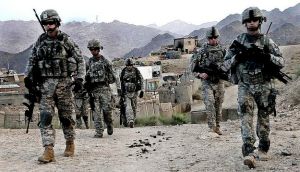
dod-photo-by-staff-sgt-william-tremblay-u-s-army1Despite the worsening Afghanistan quagmire, this month’s 15th anniversary of the longest war in American history attracted little attention. The raging battles cast a shadow over Afghanistan’s future and highlight the failure of U.S. President Barack Obama’s strategy to gradually wind down the conflict. The war now draws little international attention, except when a major militant attack occurs.

The current situation in Afghanistan is worse than at any time since 2001, when the U.S. invasion helped oust the Taliban from power, forcing them to set up their command-and-control structure in neighboring Pakistan, their creator and steadfast sponsor.

Today, the resurgent Taliban hold more Afghan territory than before, the civilian toll is at a record high and Afghan military casualties are rising to a level that American commanders warn is unsustainable. From sanctuaries in Pakistan and from the Afghan areas they hold, the militants are carrying out increasingly daring attacks, including in the capital Kabul, as illustrated by the recent strike on the American University of Afghanistan.

In declaring war in Afghanistan on September 21, 2001 after the world’s worst terrorist attack in modern history ten days earlier in the United States, President George W. Bush explained why 9/11 was a turning point for America: “Americans have known wars — but for the past 136 years, they have been wars on foreign soil, except for one Sunday in 1941 [Pearl Harbor]. Americans have known the casualties of war — but not at the center of a great city on a peaceful morning. Americans have known surprise attacks — but never before on thousands of civilians. All of this was brought upon us in a single day…”

Yet before he could accomplish his war objectives in Afghanistan, Bush invaded and occupied Iraq — one of the greatest and most-calamitous military misadventures in modern history that destabilized the Middle East and fueled Islamist terrorism.

Obama came to office with the pledge to end the Bush-era wars in Afghanistan and Iraq. In Iraq, he ended the Bush war, only to start a new war in the Syria-Iraq belt.

In Afghanistan, Obama thought that he could end the war simply by declaring it over. This is what he did in December, 2014, when he famously declared that the war “is coming to a responsible conclusion.” But the Afghan Taliban had little interest in peace, despite Washington allowing them to set up a de facto diplomatic mission in Qatar and then trading five senior Taliban leaders jailed at Guantanamo Bay for a captured U.S. Army sergeant.

As a result, Obama repeatedly has had to change his plans in Afghanistan. In July 2011, he declared that by 2014 “the Afghan people will be responsible for their own security,” adding seven months later that, “By the end of next year, our war in Afghanistan will be over.” Then in May 2014, he promised that, “One year later … our military will draw down to a normal embassy presence.”

But just two months ago, he decided to keep 8,400 U.S. troops in Afghanistan indefinitely and leave any withdrawal decision to his successor. Some 26,000 American military contractors also remain in Afghanistan, doing many jobs that troops would normally do, according to the U.S. House Armed Services Committee.

In fact, the deteriorating Afghan security situation has forced Obama to reverse course on ending U.S. combat operations and give the American military wider latitude to support Afghan forces. For example, he has now allowed American troops to accompany regular Afghan troops into combat. He has also allowed greater use of U.S. air power, particularly close air support. It is a clear recognition that his strategy to end the war lies in tatters.

This raises the key question: Why is the U.S. still stuck in the war? In large part, it is because it has fought the war on just one side of the Afghanistan-Pakistan divide and been reluctant to go after the Pakistan-based sanctuaries of the Afghan Taliban and its affiliate, the Haqqani network, which enjoys tacit Pakistani intelligence support.

The U.S. assassination in May of Afghan Taliban chief Akhtar Mohammad Mansour by a drone strike inside Pakistani territory was a rare exception — a one-off decapitation attack that did little to change the military realities on the ground.

Research shows that terrorist or militant groups are generally resilient to the loss of a top leader, unless their cross-border sanctuaries are systematically targeted. Indeed, as Israel’s record and America’s own experiences in Somalia, Syria and Yemen show, decapitation can actually help a militant group to rally grassroots support in its favor and against the side that did the killing.

The fact is that no counterterrorism campaign has ever succeeded when the militants have enjoyed cross-border havens. The Afghan Taliban are unlikely to be defeated or genuinely seek peace as long as they can operate from sanctuaries in Pakistan. Indeed, their battlefield victories give them little incentive to enter into serious peace negotiations.

As for Pakistan, Mansour’s killing near where its borders meet with Iran and Afghanistan exposed years of denials by Pakistani officials that they were sheltering Taliban leaders. Like in the 2011 raid by U.S. Navy SEALs that killed Osama bin Laden, Mansour’s assassination involved the U.S. violating the sovereignty of a country that is one of the largest recipients of American aid.

Although Obama hailed the Mansour killing as “an important milestone,” the decapitation cast an unflattering light on U.S. policy: America took nearly 15 years to carry out its first – and thus far only – drone strike in Pakistan’s sprawling Balochistan province, the seat of the Afghan Taliban’s command-and-control structure.

In order to preserve the option of reaching a Faustian bargain with the Afghan Taliban, the U.S. over the years has concentrated its drone strikes in Pakistan’s Federally Administered Tribal Areas (FATA), often targeting the Pakistani Taliban — the Pakistani military’s nemesis. The U.S. military has failed to disrupt the Haqqani network because Pakistan, with the intent to keep this group’s leadership out of the reach of American drones, has moved these militants from FATA to safe houses in its major cities. Meanwhile, the Afghan Taliban leadership, with the Pakistani military’s acquiescence, has stayed ensconced in Balochistan, located to the south of FATA.

Tellingly, the United States has not designated the Afghan Taliban as a terrorist organization. The Obama White House has engaged in semantic jugglery to explain why the group is missing from the U.S. list of Foreign Terrorist Organizations.

In truth, the Obama administration is willing, as part of a peace deal, to accommodate the medieval Taliban in a power-sharing arrangement in Afghanistan. It assassinated the Taliban leader because he defiantly refused to revive long-paralyzed peace negotiations.

For almost eight years, Obama has pursued the same unsuccessful Afghanistan-related strategy, changing just the tactics. His strategy essentially has sought to use inducements to prod the Pakistani military and its rogue Inter-Services Intelligence agency to go after the Haqqani network and get the Afghan Taliban to agree to a peace deal. The inducements have ranged from billions of dollars in military aid to the supply of lethal weapons that could eventually be used against India.

However, the carrots-without-sticks approach has only encouraged the Pakistani military to run with the hare and hunt with the hounds.

Barack Obama’s successor will have to make some difficult choices on Afghanistan. To do so, she or he will have to face up to a stark truth: The war in Afghanistan can only be won in Pakistan. With the Afghan government’s hold on many districts looking increasingly tenuous, the next president, however, will not have the time like President Obama to experiment.

Brahma Chellaney is a geostrategist and the author of nine books, including, most recently, “Water, Peace, and War” (Rowman & Littlefield).

© The Globe and Mail, 2016.

Mending Pakistan’s behaviour

Brahma Chellaney, Mint, September 20, 2016

ypicAfter the bloody cross-border terrorist attack on an army camp in Uri, near the Line of Control with Pakistan, it will be difficult for Prime Minister Narendra Modi’s government to return to business as usual. Uri is just the latest in a string of important Pakistan-orchestrated strikes on Indian targets since Modi’s 2014 election victory: The other attacks occurred at Herat, Mazar-i-Sharif and Jalalabad in Afghanistan and at Mohra, Gurdaspur, Udhampur, Pathankot and Pampore in India.
New Delhi’s response to all the attacks has been characterized by one common element — all talk and no action. This is no different than the response of the governments of Manmohan Singh and Atal Bihari Vajpayee to major terrorist strikes on their watch, including at Mumbai and on Parliament and the Red Fort. It would seem that Indian leaders live up to the biblical adage, “Let every man be swift to hear, slow to speak, slow to wrath”.

With successive governments failing to pursue a coherent, resolute and unflinching strategy to combat Pakistan’s proxy war by terror, India continues to be terrorized, assaulted and bled by a smaller neighbour. A scofflaw Pakistan believes it can continue to gore India with minimal or manageable risks of inviting robust Indian retaliation. The Indian public’s patience, however, has worn thin, putting pressure on the government to start imposing deterrent costs on Pakistan so as to stem the increasingly daring terrorist strikes.

Modi’s own credibility is now at stake. Modi responded to the terrorist storming of the Pathankot air force station at the beginning of this year by sharing intelligence about the attackers with Islamabad and allowing a Pakistani team to visit the base for investigations. This was done in the naïve hope of winning Pakistan’s anti-terror cooperation. Modi’s exchange of saris and shawls with his Pakistani counterpart, Nawaz Sharif — as well as his surprise visit to Lahore to wish Sharif on his birthday and attend his granddaughter’s wedding — attested to how New Delhi was focused on optics rather than on outcomes.

The Uri attack offers Modi a chance to redeem himself on the anti-terror front. How he responds to the latest terror outrage could help shape his political legacy.

Let’s dispel with the fiction that a country can get peace by seeking peace with a renegade, terrorism-exporting neighbour. Each time terrorists sent from Pakistan carry out a barbaric attack in India, Indians circle back to a familiar question: What makes Pakistan sponsor terrorism across its borders? The answer is simple: Waging an unconventional war remains an effective, low-cost option for Pakistan against a larger, more-powerful India. The real question Indians must debate is whether India is making Pakistan bear costs for scripting cross-border terrorism.

India has a range of options in the military, economic and diplomatic realms to start imposing costs on Pakistan, in a calibrated and gradually escalating manner. Strategically, an unconventional war waged by a nuclear-armed nation can be effectively countered only through an unconventional war. Let’s be clear: Pakistan is more vulnerable to asymmetric warfare than India, which also has greater economic and diplomatic resources to squeeze that country.

If India jettisons the 1960 Indus Waters Treaty (IWT), it can fashion water into its most-potent tool of leverage to mend Pakistan’s behaviour. Pakistan has consistently backed away from bilateral agreements with India — from the Simla accord to the commitment not to allow its territory to be used for cross-border terrorism. So why should India honour the IWT?

When Pakistan refuses to observe the terms of the 1972 peace treaty signed at Simla, it undercuts the IWT. It cannot selectively demand India’s compliance with one treaty while it flouts a peace pact serving as the essential basis for all peaceful cooperation, including sharing of river waters.

The IWT ranks as the world’s most lopsided and inequitable water pact: It denies India the basic right to utilize the waters of the rivers of its own state of Jammu and Kashmir for industrial and agricultural production. The main J&K rivers — the Chenab, Jhelum and Indus — and their tributaries have been reserved for Pakistani use, with India’s sovereignty limited to the three smaller rivers of the Indus basin flowing south of J&K: the Beas, Ravi and Sutlej. In effect, the IWT kept for India just 19.48% of the total waters of the six-river Indus system.

Pakistan, by repeatedly invoking the IWT’s conflict-resolution provisions to mount pressure on India, is already undermining the treaty, the world’s most-generous sharing arrangement. Waging water war by such means carries the danger of a boomerang effect.

A balance between rights and obligations is at the heart of how to achieve harmonious, rules-based cooperation between co-riparian states. In the Indus basin, however, Pakistan wants rights without responsibilities: It expects eternal Indian water munificence, even as its military generals export terrorists to India and its civilian government wages a constant propaganda campaign against India’s water “hegemony” and seeks to internationalize every dispute.

The IWT has become an albatross around India’s neck. If India wishes to dissuade Pakistan from continuing with its proxy war, it must link the IWT’s future to Islamabad honouring its anti-terror commitment, or else the treaty collapses. Indeed, a Pakistani senate resolution passed earlier this year, calling for Pakistan to “revisit” the IWT, offers India an opening to renegotiate a more balanced and fair Indus treaty — and, if Pakistan refuses, to stop respecting the terms of the existing pact.

In the absence of an enforcement mechanism in international law, nothing can stop India from emulating Pakistan’s example in not honouring its bilateral commitments.  For example, Pakistan has flouted the Simla treaty’s key terms, including respecting the inviolability of the Line of Control as the essential basis for durable peace.

Guile, dexterity and diligence often can achieve more in international relations than the use of overt force. India can still bring Pakistan to heel without overtly employing force. By employing a mix of military, economic and political tools to squeeze Pakistan, India must wage a silent war to eliminate the threat from a quasi-failed nation that has mocked its patience as cowardice.

Brahma Chellaney is a professor at the Centre for Policy Research.

© Mint, 2016.

A watershed moment for India

Brahma Chellaney, The Hindustan Times, September 19, 2016

pakterrorFrom Atal Bihari Vajpayee’s Lahore Declaration to Manmohan Singh’s peace-at-any-price doctrine and Narendra Modi’s Lahore visit statement, India’s readiness to trust Pakistan’s anti-terrorism assurances draws attention to the adage: “Fool me once, shame on you. Fool me twice, shame on me”. India has been fooled repeatedly.

The bloody attack by Pakistan-backed terrorists on yet another military camp in Jammu and Kashmir, however, represents double shame for India: Coming after the dramatic terrorist storming of the Pathankot air base at the beginning of this year, the attack on the army headquarters at Uri near the line of control with Pakistan highlights defence-related incompetence. If Modi wishes to send a clear message, he must begin at home by firing his bumbling defence minister and fixing the drift in his Pakistan policy.

For more than a quarter-century, India has been gripped by a vacillating leadership and a paralytic sense of indecision and despair over cross-border terrorism. India’s own passivity and indecision have played no small part in fuelling Pakistan’s proxy war by terror. The rogue Inter-Services Intelligence’s “S” branch — tasked specifically with exporting terrorism to India and Afghanistan — operates through terrorist surrogates.

This year’s series of terrorist attacks on Indian targets — from Jalalabad and Mazar-i-Sharif to Pampore and Uri — signals that the ISI terror masterminds, learning from the international outrage over their November 2008 strikes on civilians in Mumbai, are now concentrating their spectacular hits on symbols of the Indian state, including security forces. For example, as New Year’s gift to India, the four-day terrorist siege of the Pathankot base coincided with a 25-hour gun and bomb attack on the Indian consulate in Mazar-i-Sharif.

The Uri attack is similarly intended to make India feel vulnerable and weak while seeking to minimize the risk of Indian retaliation. This attack, however, is likely to represent a turning point for India, especially given the number of soldiers killed. Indeed, the lesson for India from its restraint despite Pathankot is that all talk and no action invites more deadly terrorism, besides encouraging Pakistan to fuel unrest in the Kashmir Valley and “internationalize” the J&K issue.

For Modi in particular, the Uri attack constitutes a defining moment. He has completed half of his five-year term with his Pakistan policy in a mess.

Indeed, despite terrorists testing India’s resolve from Herat to Gurdaspur and Udhampur after his election victory, Modi’s response to the Pathankot siege underscored continuing strategic naïveté. Even before the siege ended, New Delhi supplied Islamabad communication intercepts and other evidence linking the attackers with their handlers in Pakistan. This was done in the hope that the terror masters will go after their terror proxies, despite India’s bitter experience in the Mumbai case where it presented dossiers of evidence to Pakistan.

India later granted Pakistani investigators access to the Pathankot base. It was like treating arsonists as firefighters. Pakistan set up its investigation team not to bring the Pathankot masterminds to justice but to probe the operational deficiencies of the Pathankot strike and to ensure that the next proxy attack left no similar telltale signs of Pakistani involvement.

Today, India has little choice but to overhaul its strategy as both diplomacy and restraint have failed to stem Pakistan’s relentless efforts to export terrorism and intermittently engage in border provocations. India must shed is focus on the last terror attack:  For example, after Pathankot, India, forgetting Mumbai, asked Pakistan to act in that case. And after Uri, Pathankot could fade into the background. Consequently, Pakistan has still to deliver even in the 1993 ‘Bombay bombings’ case.

India needs a comprehensive, proactive approach. The choice is not between persisting with a weak-kneed approach and risking an all-out war. This is a false, immoral choice that undermines the credibility of India’s nuclear and conventional deterrence and encourages the enemy to sustain aggression. It is also a false argument that India has no choice but to keep battling Pakistan’s unconventional war on its own territory. Seeking to combat cross-border terrorism as an internal law-and-order issue is self-injurious and self-defeating.

Make no mistake: India’s response to the Pakistani strategy to inflict death by a thousand cuts should no longer be survival by a thousand bandages. Rather, India must impose calibrated costs to bolster deterrence and stem aggression. Why should India allow itself to be continually gored by a country that is much smaller than it demographically, economically and militarily and on the brink of becoming dysfunctional? Just because India shied away from imposing costs on the terror masters in Pakistan for their past attacks on Indian targets, from Mumbai to Kabul, is no reason for it to stay stuck in a hole.

To deter Pakistan’s unconventional warfare, India’s response must be spread across a spectrum of unconventional options that no nation will discuss in public. Nuclear weapons have no deterrence value in an unconventional war. If the Pakistani security establishment is to get the message that the benefits of peace outweigh hostilities, it should be made to bear most of the costs that India seeks to impose. India should employ asymmetric instruments to strike hard where the opponent doesn’t expect to be hit. New Delhi should also be ready to downgrade diplomatic relations with Pakistan and mount pressure on its three benefactors, China, America and Saudi Arabia.

India’s goal is narrow: to halt cross-border terrorist attacks. In keeping with the United Nations Charter, which recognizes self-defence as an “inherent right” of every nation, India must impose measured and pointed costs on the terror exporters without displaying overt belligerence or brinkmanship.

The writer is a geostrategist and author.

© The Hindustan Times, 2016.

Wrangles over water

As Karnataka and Tamil Nadu slug it out, Pakistan wages a water war on India

Brahma Chellaney, The Times of India, September 16, 2016

p822ggnuThe violence-marred water feud between Karnataka and Tamil Nadu illustrates how water stress is fuelling bitter discord between Indian states over sharing the most vital of all natural resources. India’s Supreme Court intervened this year too in the Punjab-Haryana dispute in the Indus Basin over the Sutlej-Yamuna Link Canal.
The growing inter-provincial water wrangles draw attention to India’s great water folly in 1960: It signed a treaty that allocated to an enemy state, Pakistan, most of the Indus river system waters, without any quid pro quo. The Indus Waters Treaty (IWT) reserved for India just 19.48% of the total waters of the six-river Indus system.

An emboldened Pakistan, having secured what still ranks as the world’s most generous water-sharing treaty, set its sights on capturing the Indian part of Jammu and Kashmir through which the three large rivers reserved for Pakistani use by the IWT flowed. In more recent years, Pakistan has also found novel ways to turn the IWT into a weapon against India.

From waging conventional wars against India from almost the time it was created to sustaining a protracted proxy war by terror against it, Pakistan has for over a decade now been pursuing a “water war” strategy against India. This strategy centres on repeatedly invoking the IWT’s conflict-resolution provisions to “internationalize” any perceived disagreement so as to mount pressure on India.

In its latest move to corner India, Pakistan has initiated steps to haul it before a seven-member international arbitral tribunal in The Hague for pursuing two hydropower projects in J&K. Twice before in the past decade, Pakistan triggered international intercession by similarly invoking the treaty’s conflict-resolution provisions.

Pakistan’s strategy, coupled with its use of state-reared terrorists, could potentially force India’s hand. If India begins to view the IWT as a liability and sees itself as the suffering loser, little can save the treaty. After all, India has the option in international law to dissolve the lopsided but indefinite treaty. The Anti-Ballistic Missile Treaty was also of indefinite duration but the U.S. unilaterally withdrew from it after Russia opposed its revision.

The withdrawal option, however, cannot be exercised by a risk-averse nation. India may be parched today but there is still no national discussion about how Pakistan is repaying India’s water largesse with blood by sponsoring cross-border acts of grisly terrorism. The water card is probably the most-potent instrument India has in its arsenal — more powerful than the nuclear option, which essentially is for deterrence.

India’s belated moves to address the problem of electricity shortages and underdevelopment in J&K by building modestly sized, run-of-river hydropower plants have rankled Pakistan, although the IWT permits such projects (which use a river’s natural flow energy and elevation drop to produce electricity, without the need for any dam reservoir). The treaty requires India to provide Pakistan with prior notification, including design information, of any new project. Although prior notification does not mean the other party’s prior consent, Pakistan has construed the condition as arming it with a veto power over Indian works. To keep unrest in J&K simmering, it has objected to virtually every Indian project. Its obstruction has delayed Indian projects for years, driving up their costs substantially.

Not surprisingly, there have been repeated calls in the J&K Assembly for revision or abrogation of the IWT. By gifting the state’s river waters to Pakistan, the treaty has hampered development there and fostered popular grievance.

J&K’s total hydropower-generating capacity in operation or under construction does not equal the size of a single mega-dam that Pakistan is currently pursuing, such as the 7,000-megawatt Bunji Dam or the 4,500-megawatt Bhasha Dam. Indeed, while railing against India’s run-of-river projects, Pakistan has invited China to build mega-dams in the Pakistani-occupied part of J&K, itself troubled by discontent, including against the growing Chinese footprint there, especially in Gilgit-Baltistan.

A 2011 report prepared for the U.S. Senate Foreign Relations Committee called the IWT “the world’s most successful water treaty” for having withstood conflicts and wars. The treaty has been a success mainly because of India, which has continued to uphold the pact even when Pakistan has repeatedly waged aggression and fundamentally altered the circumstances of cooperation.

International law recognizes that a party may withdraw from a treaty in the event of fundamentally changed circumstances. Pakistan’s continuing use of state-reared terrorist groups against India constitutes reasonable grounds for the injured party to unilaterally withdraw from the IWT. Sustained sponsorship of cross-border terrorism over many years has created fundamentally changed circumstances that undermine the essential basis of India’s original consent to the IWT, while significantly altering the balance of obligations.

The Indus is Pakistan’s jugular vein. If India wishes to improve Pakistan’s behaviour and dissuade it from exporting more terrorists, it should hold out a credible threat of dissolving the IWT, drawing a clear linkage between Pakistan’s right to unimpeded water inflows and its responsibility not to cause harm to its upper riparian. A failure to respect that linkage should free India, for example, to link the Chenab (which has the largest transboundary flow) with the Ravi-Beas-Sutlej system to address water scarcity in its north.

Brahma Chellaney is Professor of Strategic Studies at the Centre for Policy Research, New Delhi.

© The Times of India, 2016.

China’s Dam Problem With Myanmar

A column internationally syndicated by Project Syndicate

e75112196a1f438f93612ac9eb9443ff-landscapelargeChina is a big fan of dams. Indeed, over the last 50 years, the country has constructed more dams than all other countries combined. But there is one dam that China never managed to get built: the Myitsone Dam in Myanmar. And Chinese leaders can’t seem to let it go.

The Myitsone Dam was to stand at the headwaters of the Irrawaddy River, Myanmar’s lifeline. It was designed as a hydroelectric power project that would generate energy mainly for export to China, at a time when Myanmar’s economy depended on its giant neighbor. Ruled by a brutal military junta, Myanmar faced crippling United States-led sanctions and broad international isolation.

Where others saw human-rights violations, China saw an opportunity to advance its own strategic and resource interests. When the Myitsone Dam project was introduced, China was also establishing a foothold in Myanmar’s Kyaukpyu port on the Bay of Bengal, from which it would build energy pipelines to southern China.

A stronger presence in Myanmar’s Irrawaddy, which flows from near the Chinese border to the Andaman Sea, promised to provide China with a shorter, cheaper trade route to Europe. As an added benefit, the Myitsone project  and, more broadly, China’s relationship with Myanmar  would advance China’s ambition of challenging India’s advantage around the Indian Ocean.

Everything seemed to be going according to plan. But in 2011, just two years after the $3.6 billion project got underway, Myanmar’s government suddenly suspended the dam’s construction  a slap in the face to China. Moving toward democratic reform, President Thein Sein’s government was eager to cast off the view of Myanmar as a Chinese client state.

Sein got what he wanted. Myanmar’s reversal on the Myitsone Dam became a watershed moment for the country’s democratic transition. It helped to bring an end to Myanmar’s international isolation, and an easing of the long-standing Western sanctions that made Myanmar so dependent on China in the first place. In 2012, Barack Obama became the first US president ever to visit Myanmar.

Last year, Myanmar elected its first civilian-led government. The National League for Democracy, led by the former political prisoner Aung San Suu Kyi, won the election in a landslide. Though Suu Kyi was blocked from running for the presidency directly, she is the most powerful figure in Myanmar’s ten-month-old government.

Alongside all of this democratic progress, however, Myanmar’s relations with China cooled considerably. After work on the Myitsone Dam halted, several other dam and energy projects were also put on hold, though Chinese firms did manage to complete multibillion-dollar oil and gas pipelines from Myanmar’s western coast to southern China in 2013-2014.

But China has not given up on the Myitsone project. Indeed, President Xi Jinping seems to be trying to seize the opening created by Suu Kyi’s efforts to defuse bilateral tensions  her first diplomatic trip since the election was to Beijing  to pressure her to reverse Sein’s decision.

China has warned that if Myanmar fails to resume the Myitsone project, it will be liable to pay $800 million to China. Hong Liang, China’s ambassador to Myanmar, declared three months ago that Myanmar should be paying $50 million in interest alone for each year the project is suspended. But if the project were completed, Hong continued, Myanmar could reap high returns by exporting much of the electricity to China.

The threats have not fallen on deaf ears. Before her visit to Beijing, Suu Kyi tasked a 20-member commission to review proposed and existing hydropower projects along the Irawaddy, including the suspended Myitsone deal.

But Suu Kyi, who disparaged the dam project when she led the opposition to the junta, remains unlikely to restart the Myitsone project. As much as she wants China off her back  an objective that surely drove the decision to launch the commission – actually agreeing to resume work on the deeply unpopular Myitsone Dam would be too politically compromising to consider.

In fact, within Myanmar, the Myitsone project is widely regarded as a yet another neo-colonial policy, designed to expand China’s influence over smaller countries, while feeding its own resource greed, regardless of local conditions or needs. And there is plenty of evidence to support this reading – beginning with China’s demand for most of the electricity, even as much of Myanmar suffers from long daily power outages.

Moreover, the construction that did take place had serious consequences for the people of Myanmar. By flooding a large swath of land, the project displaced many subsistence farmers and fishermen, fueling a popular backlash that contributed to the end of a 17-year ceasefire between the Kachin Independence Army and government forces. (Ironically, as part of its effort to get Suu Kyi on their side, the Chinese are now seeking to mediate peace talks between the government and the rebels, who, it has long been believed, receive arms from China.)

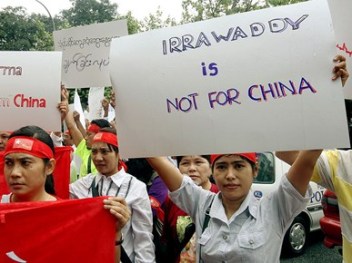
Chinese pressure to revive the Myitsone project is reviving anti-Chinese sentiment in Myanmar. Indeed, while Suu Kyi was in Beijing, anti-Chinese protests flared anew back home. At a time when Myanmar is being wooed by all major powers and eager international investors, there is no incentive for the government much less the public to ignore the environmental and human costs of China’s projects.

It is time for China to recognize that the decision to end the Myitsone project will not be reversed. It can hope that Suu Kyi’s commission makes some face-saving recommendations, such as paying compensation to China or making new deals for smaller, more environmentally friendly power plants. But, with Suu Kyi committed to a neutral foreign policy, China’s days of sucking resources from Myanmar, without any regard for the environmental or human costs, are over.

© Project Syndicate, 2016.