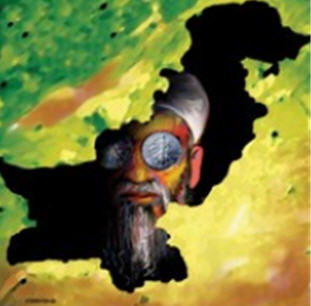
China-Pakistan strategic ties deepen

By BRAHMA CHELLANEY
Japan Times, June 9, 2011

After the daring U.S. raid that killed Osama bin Laden in his hideout next to Pakistan’s premier military academy, Islamabad has openly played its China card to caution Washington against pushing it too hard. And China has been more than eager to show itself as Pakistan’s staunchest ally.

China’s deepening strategic penetration of Pakistan — and the joint plans to set up new oil pipelines, railroads, and even a naval base on the Arabian Sea that will serve as the first overseas location offering support to the Chinese navy for out-of-area missions — are spurring greater U.S. and Indian concerns. For India, the implications of the growing strategic nexus are particularly stark because both China and Pakistan refuse to accept the territorial status quo and lay claim to large tracts of Indian land.

An influx of up to 11,000 soldiers of the People’s Liberation Army into Pakistan’s Himalayan regions of Gilgit and Baltistan to supposedly work on new projects, including a railroad, an upgraded highway, dams and secret tunnels, has raised concerns that those strategic borderlands could come under the Chinese sway. The predominantly Shiite Gilgit and Baltistan are in Kashmir, where the borders of China, India and Pakistan converge.

The PLA influx has resulted, according to India, in the presence of Chinese troops close to Pakistan’s line of control in Kashmir with India. This presents India with a two-front theater in the event of a war with either country.

Despite the bin Laden affair, the United States is seeking to repair its relationship with — not discipline — Pakistan, the largest recipient of American aid. Yet Pakistan and China have made a public show of their close strategic bonds.

Within days of bin Laden’s killing, Pakistani Prime Minister Yousaf Raza Gilani traveled to Beijing. The accompanying defense minister, Ahmed Mukhtar, reported that whatever requests for assistance the Pakistani side made, the Chinese government was more than happy to oblige, including agreeing to take over operation of the strategically positioned but underused port of Gwadar on the Arabian Sea upon expiry of an existing contract with a Singaporean government company. Beijing also decided to gift Pakistan 50 JF-17 fighter jets.

More important, Mukhtar disclosed that Pakistan had asked China to begin building a naval base at Gwadar, where Beijing funded and built the port. “We would be … grateful to the Chinese government if a naval base is … constructed at the site of Gwadar for Pakistan,” he said in a statement. He later told a British newspaper in an interview: “We have asked our Chinese brothers to please build a naval base at Gwadar.”

Mukhtar’s comments on the naval base embarrassed Beijing, which wants no publicity.

China usually makes strategic moves by stealth. It launched work even on the Gwadar port quietly. So how can plans on a naval base be publicized?

After Pakistan spilled the beans on the Gwadar naval base, China responded with equivocation, saying “this issue was not touched upon” during the visit. But the Chinese Communist Party’s hawkish Global Times was not shy about advertising China’s interest in setting up bases overseas. In an editorial titled, “China Needs Overseas Bases for Global Role,” the newspaper urged the outside world to “understand the need of China to set up overseas military bases.”

Opened in 2007, the port at Gwadar — which overlooks Gulf shipping lanes and is near the Iran border — was intended from the beginning to represent China’s first strategic foothold in the Arabian Sea and to eventually double up as a Chinese-built naval base. It was widely seen as part of China’s efforts to assemble a “string of pearls” along the Indian Ocean rim. Yet until Mukhtar’s recent statements unmasked the larger plans, China and Pakistan continued to deny that Gwadar had any role other than commercial.

Whereas Pakistan wants to help the Chinese navy counterbalance India’s naval forces, China’s aim is to have important naval presence in the Indian Ocean to underpin its larger geopolitical ambitions and get into great-power maritime game. It thus needs Gwadar to plug its main weakness — the absence of a naval anchor in the region.

China’s plan also is to make Gwadar a major energy hub transporting Gulf and African oil by pipeline to the Chinese heartland via Pakistan-held Kashmir and Xinjiang. Such piped oil would not only cut freight costs and supply time but also lower China’s reliance on U.S.-policed shipping lanes through the Malacca and Taiwan Straits.

Significantly, as China’s involvement in strategic projects in Pakistan has grown, it has started openly started needling India on Kashmir, one-fifth of which is under Chinese occupation. It has used the visa issue and other innovative ways to question India’s sovereignty over Indian-controlled Kashmir. It also has shortened the length of the Himalayan border it claims to share with India by purging the 1,597-km line separating Indian Kashmir from the Chinese-held Kashmir part.

By deploying troops in Pakistani-held Kashmir near the line of control with India and playing the Kashmir card against India, China is clearly signaling that Kashmir is where the Sino-Pakistan nexus can squeeze India. The military pressure China has built up against India’s Arunachal Pradesh state — at the opposite end of the Himalayas — seems more like a diversion.

In truth, the more Pakistan has slipped into a jihadist dungeon, the more China has increased its strategic footprint in that country. And 2011 has been proclaimed the year of China-Pakistan friendship.

Brahma Chellaney, professor at the New Delhi-based Center for Policy Research, is the author of “Asian Juggernaut: The Rise of China, India and Japan” (Harper, New York) and “Water: Asia’s New Battlefield” (Georgetown University Press).

The Japan Times: Thursday, June 9, 2011. (C) All rights reserved

The silent water wars have begun

By Santha Oorjitham
New Straits Times, May 25, 2011

Tension over precious water resources in Asia is already rising, warns Brahma Chellaney in an interview with SANTHA OORJITHAM
https://chellaney.net/wp-content/uploads/2011/05/riversintibet.jpg?w=300
Q: The Tibetan plateau supplies water to 47 per cent of the world’s population. How would you rate cooperation between upstream and downstream countries on managing water resources?

A: There are treaties among riparian neighbours in South and Southeast Asia, but not between China and its neighbours.

For example, the lower Mekong states of Thailand, Cambodia, Laos, and Vietnam have a water treaty. India has water-sharing treaties with both the countries located downstream — Bangladesh and Pakistan.

There are also water treaties between India and its two small upstream neighbours, Nepal and Bhutan. But China, the dominant riparian power of Asia, refuses to enter into water-sharing arrangements with any of its neighbours.

Yet China enjoys an unrivalled global status as the source of trans-boundary river flows to the largest number of countries, ranging from Vietnam and Afghanistan to Russia and Kazakhstan.

Significantly, the important international rivers in China all originate in ethnic-minority homelands, some of them wracked by separatist movements. The traditional homelands of ethnic minorities, extending from the Tibetan Plateau and Xinjiang to Inner Mongolia and Manchuria, actually span three-fifths of the landmass of the People’s Republic of China.

Q: What are the main sources of water stress in the Asia-Pacific region?

A: Many of Asia’s water sources cross national boundaries, and as less and less water is available, international tensions will rise.

The sharpening hydropolitics in Asia is centred on international rivers such as the Amu Darya, Syr Darya, Brahmaputra, Mekong, Salween, Indus, Jordan, Tigris-Euphrates, Irtysh-Illy, and Amur. There is also the stoking of political tensions over the resources of transnational aquifers, such as al-Disi, which is shared between Saudi Arabia and Jordan, or the ones that link Israel and the occupied Palestinian territories.

Q: Are there intra-state tensions over location and approval of dam sites?

A: Intra-state water disputes are rife across Asia. The more democratic a country, the more raucous the intra-country water disputes tend to be.

In repressive political systems, water protests are quickly muffled. Yet China is discovering the hard way that it is difficult even for an autocracy to fully suppress grassroots protests over new water projects that displace residents or over diversion of water from farmlands to industries and cities.

Q: You have also written about possible interstate tension over reduced water flows. Has this already happened?

A: According to the United Nations, growing competition over water resources has “led to an increase in conflicts over water” in Asia between provinces, communities, and countries. Asia illustrates how rapid rates of population growth, development, and urbanisation, together with shifts in production and consumption patterns, can place unprecedented demands on water resources, bringing them under growing pressure and fostering domestic discord.

Water conflict within nations, especially those that are multiethnic and culturally diverse, often assumes ethnic or sectarian dimensions, thereby accentuating internal security challenges.

If the feuding provinces or areas are ethnically distinct, their water dispute also rages along ethnic lines. This pattern has been most visible on the Indian subcontinent and Central Asia and between Han settlers and ethnic minority people in Xinjiang.

In Central Asia, much of the freshwater comes from the Pamir and Tian Shan snowmelt and glacier melt that feed the region’s two main rivers, the Amu Darya and the Syr Darya. The resources of these two overexploited rivers have become the target of appropriation and competition.

One of the underlying causes of the mid-2010 bloody riots in the Fergana Valley — a minefield of religious fundamentalism and ethnic animosities — was the local ethnic-Kyrgyz fear that Uzbekistan wanted to absorb that water-rich region of Kyrgyzstan.

Q: What are the policies and strategies you suggest in “Water: Asia’s New Battleground” (to be released in Asia in June) to prevent “water wars”?

A: The water crisis and competition test Asia’s ability to forge a more cooperative future. How Asia handles this challenge will shape not only its water future, but also its economic and political future.

Given that Asia has the fastest-growing economies and the fastest-rising demand for food, its water shortages will only worsen without major efficiency gains in use.

Three strategies are specifically recommended.

The first is to build Asian norms and rules that cover trans-boundary water resources. The second is to develop inclusive basin organisations encompassing transnational rivers, lakes, and aquifers in order to manage the water competition.

And the third is to develop integrated planning to promote sustainable practices, conservation, water quality, and an augmentation of water supplies through nontraditional sources.

Q: Should water be “securitised”?

A: Whether we like it or not, the “securitisation” of water resources has been going on for years. Indeed, in a silent hydrological warfare, the resources of transnational rivers, aquifers, and lakes have become the target of rival appropriation, with these watercourses being treated as national-security assets.

Water has become an important security issue in several important bilateral relationships in Asia, including those between China and India; between China and the other Mekong River basin states; and among states in South Asia, Central Asia, and West Asia.

Singapore also “securitised” the water issue, using its concerns over a potential Malaysian cut-off of water supply to build a stronger military capability.

Brahma Chellaney, professor at New Delhi’s Centre for Policy Research, will be speaking at the 25th Asia Pacific Roundtable next week

(c) New Straits Times, 2011.

Chilling Echoes From 26/11

Brahma Chellaney
The Economic Times, May 24, 2011
https://i0.wp.com/graphics8.nytimes.com/images/2011/05/23/world/524Pakistan_cnd/524Pakistan_cnd-popup.jpg
Pakistan, the world’s leading terror sponsor and haven, loves to calls itself a victim of terrorism, with President Asif Ali Zardari going to the extent of saying his country is “perhaps the world’s greatest victim of terrorism.” More than $3.2 billion in annual U.S. aid has not been enough to persuade Pakistan to sever its rogue links with terrorists or slow down its rapidly expanding rogue nuclear-weapons programme. Instead, Pakistan has created a convenient narrative of victimhood at home to help cloak its self-deception.

The terrorist assault on Pakistan’s main naval air base is a chilling reminder that those who play with fire will get burnt and, ultimately, be consumed by fire. The attack was carried out in the coldblooded, professional style taught by Inter-Services Intelligence to its proxies, including those that struck Mumbai in November 2008. Having created a terrorist manual and a sprawling terror infrastructure, the Pakistani military and its spy agency are now reaping a bitter harvest.

The Pakistani Taliban, which staged the attack on the naval base in Karachi, is the illegitimate child, like the Afghan Taliban, of the Pakistani military establishment. The difference is that the Pakistani Taliban has become the principal nemesis of the Pakistani military, whose favourite proxies now are the Afghan Taliban headed by the one-eyed Mullah Omar, Sirajuddin Haqqani, head of the eponymous network aligned with the Afghan Taliban, and Hafiz Saeed and his Laskhar-e-Taiba.

While continuing to provide succour and sanctuary to the Afghan Taliban, the Pakistani military has waged offensives in Bajaur, Mohmand, Buner and other tribal districts against the Pakistani Taliban. It was at Pakistan’s instance that a U.S. missile strike killed that group’s chief, Baitullah Mehsud, in August 2009 — a slaying that prompted his successor, Hakimullah Mehsud, to orchestrate a suicide bombing of a CIA base in southeast Afghanistan in late 2009 that killed five agency officers and two American contractors.

The more the Pakistani military has gone after the Pakistan Taliban, the more the latter has retaliated against the former, staging daring attacks on Pakistani military and ISI facilities across the country, including on the army headquarters in Rawalpindi in 2009.

More important, these attacks, including the latest, have been aided by elements within the Pakistani military establishment. Without such insider support, the attackers simply would not been able to deeply penetrate the naval air base, easily locate key targets, and systematically wreck installations and aircraft, including two P-3C maritime surveillance planes. The P-3C aircraft, along with Harpoon anti-ship missiles and F-16s, have been supplied by the U.S. to help counterbalance conventional Indian military power.

The insiders’ role highlights a larger concern — the jihadist threat to Pakistan’s nuclear weapons (its “crown jewels”) comes not from non-state actors but from within the jihadist-infiltrated military, nuclear and intelligence establishments. In fact, the more Pakistan has begun to look like a failing state, the more it has accelerated its nuclear-weapons programme.

Nuclear weapons are for deterrence, they are not an answer to failed national-building, which is what Pakistan confronts. Yet Pakistan values nuclear weapons more for their political utility than their military utility.

Let’s be clear: Nuclear weapons have not prevented Pakistan’s slide into a jihadist dungeon. Nor can they stop Pakistan from imploding. Today, the very viability of Pakistan as a nation-state is at stake. In its existing frontiers, Pakistan has proven an ungovernable and unmanageable state.

China and the U.S., however, continue to prop up the Pakistani state in different ways. A reminder of that was the presence at the Karachi naval base of six Americans and 11 Chinese aviation engineers who escaped unharmed during the terrorist assault.

To ensure that the Pakistani state does not unravel, the U.S. has kept sending more money to Islamabad, turning it into the largest recipient of American aid in the world.

China has played a more dubious game. This is best illustrated by its actions in the aftermath of the Osama bin Laden affair, which caught the Pakistani military with pants down. To blunt U.S. pressure on Pakistan and tie down India, it has decided to gift Islamabad a second batch of 50 JF-17 fighter jets and agreed to run Gwadar port, which Pakistan now says will double up as a Chinese-built naval base. After repeated denials by Islamabad and Beijing that the Gwadar project had any military or strategic significance, the mask has finally fallen.

Brahma Chellaney is the author of Asian Juggernaut (Harper, New York) and Water: Asia’s New Battlefield (Georgetown University Press, forthcoming).

(c) Economic Times, 2011.

Some sticks yet more carrots for Pakistan

A fundamental shift in the failed U.S. policy approach that has inadvertently turned Pakistan into Ground Zero for global terrorism seems unlikely despite the bin Laden affair.

Brahma Chellaney
The Hindu, May 6, 2011
https://i0.wp.com/0.tqn.com/d/politicalhumor/1/7/5/4/4/Pakistan-Shocked.jpg

For the United States, Pakistan poses a particularly difficult challenge. Despite providing more than $20 billion to Pakistan in counterterrorism and other aid since 9/11, the U.S. has received grudging assistance, at best, and duplicitous cooperation, at worst. Today, amid a rising tide of anti-Americanism, U.S. policy on Pakistan is rapidly crumbling. Yet Pakistan, with one of the world’s lowest tax-to-GDP ratios, has become more dependent on U.S. aid than ever.

While Americans rejoice over the daring helicopter assault that killed Osama bin Laden in his hideout in Abbottabad — the cradle of the Pakistan army — U.S. policy must recognize how its failed approach on Pakistan has inadvertently made that country Ground Zero for global terrorism. Rather than helping to build robust civilian institutions there, the U.S. has invested heavily in the jihadist-penetrated Pakistani military establishment. After dictator Pervez Musharraf was driven out of office, the new Pakistani civilian government ordered the ISI — the only spy agency in the world charged with sponsoring international terrorism — to report to the interior ministry, but received no support from the U.S. for this effort to assert civilian control, allowing the army to quickly frustrate the move.

No sooner had U.S. President Barack Obama assumed office than he implemented a military surge in Afghanistan. In Pakistan, however, he implemented an aid surge, turning it into the largest recipient of American aid. This only deepened U.S. involvement in the wrong war and emboldened Pakistan to fatten the Afghan Taliban, even as sustained U.S. drone and other attacks in Waziristan continued to severely weaken the already-fragmented Al Qaeda.

Make no mistake: the scourge of Pakistani terrorism emanates more from the country’s Scotch whisky-sipping generals than from the bead-rubbing mullahs. It is the self-styled secular generals who have reared the forces of jihad. Yet, by passing the blame for their ongoing terrorist-proxy policy to their mullah puppets, the generals made many in the U.S. believe that the key was to contain the religious fringe, not the puppeteers. In fact, Pakistan’s descent into a jihadist dungeon occurred not under civilian rule, but under two military dictators — Zia ul-Haq who nurtured and let loose jihadist forces, and Musharraf who took his country to the very edge of the precipice.

The bin Laden affair spotlights a fundamental reality — the fight against international terrorism cannot be won without demilitarizing and de-radicalizing Pakistan, including rebalancing civil-military relations there. Without reform of the Pakistani army and the ISI, there can be no end to transnational terrorism — and no genuine nation-building in Pakistan. How can Pakistan be a “normal” state if its army and intelligence agency remain outside civilian oversight and decisive power remains with military generals?

According to classified U.S. diplomatic cables released by WikiLeaks, Pakistani President Asif Ali Zardari told U.S. Vice President Joe Biden of his fear that the Pakistani military might “take me out.” And the United Arab Emirates’ foreign minister told U.S. special envoy Richard C. Holbrooke in early 2010 that Zardari had asked “that his family be allowed to live in the UAE in the event of his death.” In such a deviant setting, the risks that jihadists within the military could gain control of Pakistan’s arsenal of nuclear and biological weapons are real.

History attests that decisive opportunities rarely repeat themselves. The U.S. let go of one historic opportunity to help bring the ISI under civilian oversight in July 2008 when, in the aftermath of a dictator’s ouster by people’s power, it did not back the new government’s decision. Now, with the military establishment’s complicity in sheltering bin Laden laid bare, the U.S. has a chance to force reforms on the defensive Pakistani generals by holding out the threat of punitive sanctions and stepped-up drone strikes.

Yet it is very likely the U.S. will miss this opportunity too. After all, what is logical may not be practical at the altar of political expediency.

The U.S. has long been aware of Pakistan’s Janus-faced approach to fighting terrorism, and the discovery of bin Laden’s years-long residence in the shadow of Pakistan’s premier military academy has given Washington fresh evidence of Pakistani duplicity and aroused its anger but without affecting the fundamentals of U.S. policy. That the U.S. has little trust in the Pakistani army and ISI became evident when it deployed a number of CIA operatives, Special Operations forces and contractors deep inside Pakistan without the knowledge of Pakistani authorities — a deployment that triggered the showdown over Raymond Davis but helped open the trail to bin Laden. Indeed, in a damning statement, the CIA director said the Pakistanis were given no advance knowledge of the raid because they might have tipped bin Laden off.

Washington has enough evidence of the terrorist infrastructure in Pakistan and the cosy relationship between state and non-state actors there. The problem is that U.S. policy continues to be driven by short-term regional interests, in which Pakistan remains central to facilitating a U.S. military exit from Afghanistan, shaping the post-2014 Afghan political landscape, and aiding U.S. squeeze of Iran. In fact, Obama’s narrowing of the Afghan war goals has made the U.S. only more dependent on Pakistan.

By moving away from the Bush-era counterinsurgency strategy toward limited objectives centred on political reconciliation with the Afghan Taliban and ending all combat operations by 2014, Obama now needs the Pakistani generals to bring the Taliban to the negotiating table. After all, these generals provide a haven to the top Afghan Taliban leadership, besides allowing Taliban fighters to use Pakistan as a sanctuary from which to launch cross-border attacks. A face-saving U.S. withdrawal from Afghanistan is simply inconceivable without Pakistani cooperation.

After bin Laden’s elimination, pressure is already growing on the U.S. and its NATO allies for a quicker withdrawal of troops from Afghanistan, making the Pakistani generals an even more critical factor in facilitating America’s reconciling with the Taliban. Although the Taliban was ISI procreation, its birth in the early 1990s was midwifed by the CIA. This is the reason why Washington fervently believes reconciliation with an estranged ex-ally is possible. And this is also the reason why — despite its main foe on the Afghan battlefield being the Taliban, not Al Qaeda — the U.S. military never attempted to wipe out the Quetta shura, eschewing any drone or commando strikes to decapitate the Afghan Taliban.

Significantly, just two-and-a-half months ago, the U.S. publicly eased its terms for reconciliation with the Taliban shura, dropping three key preconditions — renounce violence, embrace the Afghan Constitution, and snap links with al-Qaeda. What were preconditions were turned into “necessary outcomes of any negotiation.” The U.S. National Security Council then formally endorsed the new reconciliation strategy, which offers the Taliban power sharing in Afghanistan. No less significant is that America’s new Af-Pak envoy, Marc Grossman — despite the U.S. outrage over the bin Laden affair — travelled to Islamabad this week and reached agreement to set up a U.S.-Pakistani-Afghan “core group for promoting and facilitating the process of reconciliation and peace in Afghanistan.”

Obama actually believes that bin Laden’s killing serves as a potential catalyst to soften the Pakistani generals and the Taliban shura so as to clinch a peace deal, besides providing an opportunity to quickly conclude a post-2014 Permanent U.S. Bases Agreement with Afghan President Hamid Karzai. Obama indeed is set to announce a substantial reduction in U.S. forces starting this summer.

In this light, far from unravelling the remaining threads in the strained U.S.-Pakistan relationship, the bin Laden affair is likely to prove a temporary setback, even if a serious one. Some heads in the Pakistani military establishment may roll to placate Washington, with the blame being conveniently put (as in the past) on rogue elements within what itself is a rogue agency — the ISI. Washington may brandish new sticks, but carrots would still weigh more, with U.S. policy doling out further multibillion-dollar awards to Islamabad. British Prime Minister David Cameron has candidly said that it is “in our national interest” not to have “a flaming great row with Pakistan over this” but rather to “engage with Pakistan.” And Obama’s chief counterterrorism adviser has pledged that Pakistan will remain a critical partner in the U.S. counterterrorism strategy.

Narrow geopolitical interests thus are likely to trump the imperative for externally supported Pakistani reforms to help cut the ISI down to size, loosen the military’s vice-like grip on power, rein in militant Islamist groups, and build a moderate, stable Pakistan.

Brahma Chellaney is the author of Asian Juggernaut (Harper Paperbacks, New York) and Water: Asia’s New Battlefield (Georgetown University Press, forthcoming).

(c) The Hindu, 2011

A “kill” highlights flawed policies

After Osama: Triumph for one, but lessons for all

When the dust settles, it is likely to be business as usual: Indians impotent as ever, Pakistanis playing both ally and enemy, and the US doling out further multibillion-dollar awards to Pakistan

Brahma Chellaney
Mint, May 4, 2011
https://i0.wp.com/i.telegraph.co.uk/multimedia/archive/01416/osamaBinLaden_1416164c.jpg
Conducted without the cooperation or even advance knowledge of Pakistan, the US helicopter assault that killed Osama bin Laden in his hideout beside a Pakistani military academy has exposed that country’s Janus-faced policy — a supposed ally on counterterrorism that in reality acts as an ally of transnational terrorists, harbouring them in its bosom covertly. The new spotlight on Islamabad’s duplicitous role raises uncomfortable questions for US policy, including about the billions of dollars in annual aid still being lavished on Pakistan. Yet the US is unlikely to heed the renewed call, among others, of Amrullah Saleh, Afghanistan’s intelligence director until last summer, to “wake up to the fact that Pakistan is a hostile state exporting terror”.

In a potential lesson for India, which has stoically put up with Pakistan-orchestrated acts of cross-border terrorism for years without retaliating even once, the US assault team managed to breach Pakistani defences by slipping deep inside Pakistan, with President Barack Obama informing his Pakistani counterpart about the successful operation only after the mission crew safely crossed back into Afghan airspace with Osama’s body.

In fact, the breakthrough came only after the US, even at the risk of rupturing its longstanding ties with the Pakistani army and ISI, deployed a number of CIA operatives, Special Operations forces and contractors deep inside Pakistan without the knowledge of the Pakistani military. Just last month, Pakistan’s main power brokers, generals Ashfaq Parvez Kayani and Ahmed Shuja Pasha, were stridently demanding the removal of all “undeclared” CIA operatives and contractors. But the prized “kill” has only reinforced the need for independent US intelligence operations in the Pakistani heartland, where the real terrorist sanctuaries are located, not on Pakistan’s borders.

In different ways, Osama in death has paradoxically exposed Pakistani, US and Indian policies. After all, a raid — even if spectacularly triumphant for one side, mortifying for another, and welcomed by the third party — cannot cover up or atone for flawed policies.

Take India: With the Hafiz Saeeds and Dawood Ibrahims in Pakistan mocking this country, the raid inadvertently shows up the naivety of Prime Minister Manmohan Singh’s basic assumptions about why refraining from exerting pressure and relying merely on engagement is the best way to persuade Pakistan to stop sponsoring terror.

Whereas Obama proudly declared that the US had “kept its commitment to see that justice is done”, India believes in delivering not justice but dossiers. That is why India’s reaction to 26/11 was to avoid taking the smallest of small steps — such as the recall of its own high commissioner from Islamabad — as just a token expression of outrage over Pakistan’s role as the staging ground for those daring terrorist attacks.

As for Pakistan, it can no longer be regarded as a reliable US ally. But no one has been more exposed than the two generals there who were making stroppy demands of the US until recently. Although the superannuated Kayani and Pasha have succeeded in staying on in office, their credibility at home and abroad is set to take a beating.

More important, the raid has exposed US policy, underlining a failed strategy that has unintentionally turned Pakistan into Ground Zero for global terrorism.

Obama, after taking office, implemented a military surge in Afghanistan, but an aid surge to Pakistan, turning the latter into the largest recipient of US aid, although the Afghan Taliban leadership and Al Qaeda remnants remained ensconced in Pakistan. That only deepened US involvement in the wrong war and emboldened Pakistan to fatten the Afghan Taliban even as US drone strikes in Waziristan continued to severely weaken Al Qaeda. Rather than help build robust civilian institutions in Pakistan, Washington has continued to pamper the jihadist-penetrated Pakistani military establishment, best illustrated by the fresh $3 billion military aid package earmarked for next fiscal.

Logically, there must now be a redefinition of the US-Pakistan relationship. After all, the US military’s main foe in Afghanistan is not the badly fragmented and incapacitated Al Qaeda, but a resurgent Taliban enjoying safe havens in Pakistan, which has brazenly egged on the Afghan president to dump the Americans for Chinese support. Yet Obama’s narrowing of the Afghan war goals has ironically made the US more dependent on Pakistan. By moving away from the Bush-era counterinsurgency strategy towards limited objectives centred on political reconciliation with the Afghan Taliban, Obama now needs Pakistan’s Scotch whisky-sipping but jihadist-rearing military generals to bring the Taliban to the negotiating table.

That is why when the dust settles, it is likely to be business as usual: Indians impotent as ever, Pakistanis playing both an ally and an enemy, and Americans doling out further multibillion-dollar awards to Islamabad. With Osama’s death boosting his flagging political fortunes, Obama no longer looks like a one-termer, but rather a president who will last to shape the endgame in Afghanistan.

Brahma Chellaney is professor of strategic studies at the Centre for Policy Research in New Delhi.
Comment at views@livemint.com

Osama bin Laden’s Pakistan

After bin Laden, spotlight on Pakistan

Brahma Chellaney

Column internationally syndicated by Project Syndicate
http://elmoderador.files.wordpress.com/2011/05/osama-el-moderador.jpg?w=311&h=306
The killing of Osama bin Laden by United States special forces in a helicopter assault on a sprawling luxury mansion near Islamabad recalls the capture of other Al Qaeda leaders in Pakistani cities. Once again, we see that the real terrorist sanctuaries are located not along Pakistan’s borders with Afghanistan and India, but in the Pakistani heartland.

This, in turn, underlines another fundamental reality — that the fight against international terrorism cannot be won without demilitarizing and de-radicalizing Pakistan, including by rebalancing civil-military relations there and reining in the country’s rogue Inter-Services Intelligence agency.

Other terrorist leaders captured in Pakistan since 9/11 — including Khalid Sheikh Mohammed, Al Qaeda’s third in command; Abu Zubeida, the network’s operations chief; Yasser Jazeeri; Abu Faraj Farj; and Ramzi Binalshibh, one of the coordinators of 9/11 — were also found living in cities across Pakistan. If there is any surprise about bin Laden’s hideout, it is its location in a military town, Abbottadad, in the shadow of an army academy.

This only underscores the major protection that bin Laden must have received from elements of the Pakistani security establishment to help him elude the US dragnet for nearly a decade. The breakthrough in hunting him down came only after the US, even at the risk of rupturing its longstanding ties with the Pakistani army and ISI, deployed a number of CIA operatives, Special Operations forces, and contractors deep inside Pakistan without the knowledge of the Pakistani military.

In recent years, with its senior operations men captured or killed and bin Laden holed up in Pakistan, the badly splintered Al Qaeda had already lost the ability to mount a major international attack or openly challenge US interests. With bin Laden’s death, Al Qaeda is likely to wither away as an organization.

Yet its dangerous ideology is expected to live on and motivate state-sponsored non-state actors. It will be mainly such elements that will have the capacity to launch major transnational terrorist attacks, like the 2008 Mumbai strikes. Even in Afghanistan, the US military’s main foe is not Al Qaeda but a resurgent Taliban, which enjoys safe haven in Pakistan.

That is why the spotlight is likely to turn on the terrorist nexus within Pakistan and the role of, and relationship between, state and non-state actors there. Significantly, as the CIA closed in on bin Laden, the chairman of the US Joint Chiefs of Staff, Admiral Mike Mullens, for the first time publicly linked the Pakistani military with some of the militants attacking US forces in Afghanistan. Pakistan’s homegrown Islamist militias continue to operate openly, and the Pakistani army and intelligence remain loath to sever their cozy ties with extremist and terrorist elements.

For the US, Pakistan poses a particularly difficult challenge. Despite providing $20 billion to Pakistan in counterterrorism aid since 9/11, the US has received grudging assistance, at best, and duplicitous cooperation, at worst. Today, amid a rising tide of anti-Americanism, US policy on Pakistan is rapidly unraveling. Yet Pakistan, with one of the world’s lowest tax-to-GDP ratios, has become more dependent than ever on US aid.

Even as Americans exult over bin Laden’s killing, the US government must recognize that its failed policy on Pakistan has inadvertently made that country the world’s main terrorist sanctuary. Rather than helping to build robust civilian institutions there, the US has pampered the jihadist-penetrated Pakistani military establishment, best illustrated by the fresh $3 billion military aid package earmarked for the next fiscal year. After dictator Pervez Musharraf was driven out of office, the new Pakistani civilian government ordered the ISI to report to the interior ministry, but received no support from the US for this effort to assert civilian control, allowing the army to quickly frustrate the effort.

After coming to office, US President Barack Obama implemented a military surge in Afghanistan. In Pakistan, however, he implemented an aid surge, turning it into the largest recipient of US aid, even though the Afghan Taliban leadership and Al Qaeda remnants remained ensconced in the country. This only deepened US involvement in the wrong war and emboldened Pakistan to fatten the Afghan Taliban, even as sustained US attacks continued to severely weaken Al Qaeda.

Make no mistake: the scourge of Pakistani terrorism emanates more from the country’s Scotch whisky-sipping generals than from the bead-rubbing mullahs. It is the self-styled secular generals who have reared the forces of jihad and fathered the Taliban, Lashkar-e-Taiba, Jalaluddin Haqqani militia, and other groups. Yet, by passing the blame for their ongoing terrorist-proxy policy to their mullah puppets, the generals have made the US believe that the key is to contain the religious fringe, not the puppeteers.

In fact, Pakistan’s descent into a jihadist dungeon occurred not under civilian rule, but under two military dictators — one who nurtured and let loose jihadist forces, and another who took his country to the very edge of the precipice.

Without reform of the Pakistani army and ISI, there can be no end to transnational terrorism — and no genuine nation-building in Pakistan. How can Pakistan be a “normal” state if its army and intelligence agency remain outside civilian oversight and decisive power remains with military generals?

With bin Laden dead, the only way that Al Qaeda can reconstitute itself is if the Pakistani military succeeds in reinstalling a proxy regime in Afghanistan. Until the Pakistani military’s vise-like grip on power is broken and the ISI cut down to size, Pakistan is likely to remain Ground Zero for the terrorist threat that the world confronts.

Brahma Chellaney, Professor of Strategic Studies at the New Delhi-based Center for Policy Research, is the author of Asian Juggernaut and the forthcoming Water: Asia’s New Battlefield.

Copyright: Project Syndicate, 2011.

Aging leadership, ailing foreign policy

Foreign policy on its knees

Brahma Chellaney
Mint, April 20, 2011
https://i0.wp.com/epaper.livemint.com/Web/Photographs/2011/04/20/023/20_04_2011_023_002_014.jpg
The “incredible India” of the tourism ad campaign is increasingly showing itself in reality as a “credulous India” — one that refuses to learn from past mistakes or realize the costs of a meandering, personality-driven approach to policymaking. India’s foreign policy kowtows to two of its neighbours on the same day last week highlight this.

It has become tradition for any Indian prime minister visiting China to make an important concession to his hosts. Though Manmohan Singh travelled to Sanya ostensibly for the BRICS (Brazil, Russia, India, China and South Africa) meeting held last Wednesday, he still delivered a gift-wrapped, two-in-one concession to Chinese President Hu Jintao — a double Indian climbdown on bilateral defence exchanges.

In resuming defence talks, India agreed both to delink them from the stapled-visa issue and, in deference to Beijing, to dilute the makeup of representation in its military delegation to China. Recall that India had frozen defence exchanges in response to two Chinese actions. One was Beijing’s policy of questioning India’s sovereignty in the Indian-controlled part of Jammu and Kashmir (China controls one-fifth of the original princely state) by issuing visas on a separate leaf to its residents. The other was its refusal to issue a normal visa to the Indian Army’s Northern Command chief, who was to lead the military team to China last summer.

Singh travelled to China just days after the new Northern Command chief publicly said that an influx of People’s Liberation Army troops into Pakistan-occupied Kashmir had created a Chinese military presence along Pakistan’s line of control with India. He wondered, “If there were to be hostilities between us and Pakistan, what would be the complicity of the Chinese?”

Singh, however, ignored all that by blithely delinking the resumption of military talks from China’s use of the J&K card against India. Beijing has not yielded even on the stapled-visa issue, with Singh’s national security adviser acknowledging that the matter remains under discussion.

Furthermore, New Delhi has agreed to leave out the leader of the military delegation to China — again the Northern Command chief. Instead, it will send in June a team led by a less-senior Northern Command officer, but also including representatives from other military commands.

If India is so ready to appreciate Chinese sensitivities on multiple matters, why did it suspend military exchanges in the first place? After all, in the months since the exchanges were frozen, China has only tightened its iron fist, extending its military footprint in Pakistan-held Kashmir to the line of control. Should respect for another country’s sensitivities produce abject spinelessness?

Take the second kowtow — the decision to resume bilateral cricket ties with Pakistan without having secured any anti-terror commitment. Indeed, Islamabad has had the last laugh: the Pakistan-based masterminds of the Mumbai terror attacks remain untouched and the terrorist-training camps near the border with India continue to operate. Yet, New Delhi has returned to square one by resuming cricket ties and political dialogue at all levels.

The use of cricket to re-engage Pakistan at the highest level, with Mohali representing only the first step, mocks the memory of 26/11. Since Pakistan launched its proxy war against India in the 1980s, New Delhi has blended cricket with politics to court Pakistan on three separate occasions, with Singh the architect of two of those.

Tellingly, only the victim of terror has practised cricket diplomacy, not the terrorist sponsor, which refuses to make any amends. In doing so, the victim has in fact rubbed salt in its own wounds. The decision to resume cricket ties, for example, followed Tahawwur Hussain Rana’s disclosure before a U.S. court that he had acted on behalf of Pakistani state agencies in carrying out advance reconnaissance for the 26/11 attacks.

Whereas the culpability of the Pakistani state in scripting, aiding and abetting 26/11 is clear, the culpability of Indian decision-makers in letting Islamabad off the hook over those attacks has received little public attention. New Delhi actually responded to 26/11 by fashioning a new and unique tool — dossier bombing. The weighty dossiers, delivered at regular intervals, only persuaded Pakistan to stick to its ground, with India eventually climbing down.

The cyclical pattern of dealing with Pakistan — terror strikes, followed by suspension of talks, renewed bonhomie after a gap, and more terror attacks — predates Singh. In fact, no prime minister followed a more frequently shifting policy on Pakistan than the weak-in-the-knees Atal Bihari Vajpayee, who went down on his knees to propitiate Pakistan, only to get kicked in the face. In a mid-2003 visit to Beijing, he even surrendered India’s remaining leverage on Tibet.

For more than two decades, scandal-tarred geriatric leaders have fostered an ailing foreign policy. In truth, India is paying the wages of corruption, which is softening the state, hollowing out institutions, and undermining national security. The more corruption has grown, the more national security has come under pressure.

Today, amid the unending carousel of mega-corruption scandals, an important distinction has been lost: It’s one thing to seek peaceful relations with scofflaw neighbours, but it’s entirely different to invite more pressures by presenting India as a weak, vacillating, inconsistent state that is unable to uphold principles, objectives or even national self-respect.

Brahma Chellaney is professor of strategic studies at the Centre for Policy Research in New Delhi.

Comments are welcome at theirview@livemint.com

America’s third war plays into China’s hands

The Geopolitical Message from Libya
https://i0.wp.com/www.project-syndicate.org/author_photo/6/7/e/2939_thumb.jpg
Brahma Chellaney
Column internationally syndicated by Project Syndicate

Will “mission creep” in the West’s intervention in Libya end up creating, inadvertently, a jihadist citadel at Europe’s southern doorstep?

Of course, the Western powers must be applauded for their efforts, with the support of Qatar and the United Arab Emirates, to prevent a slaughter of Libya’s civilian population. The democratic world should never stand by idly while a tyrant uses military force to massacre civilians. But, if despots are to be deterred from untrammeled repression, any intervention — whether military or in the form of economic and diplomatic sanctions — must meet the test of impartiality.

The current political upheaval in the Arab world could transform the Middle East and North Africa in the same way that the fall of the Berlin Wall in 1989 fundamentally changed Europe. Indeed, 1989 was a watershed, producing the most profound global geopolitical changes in the most compressed timeframe in history. But, in the decades since, the Arab world’s rulers, regimes, and practices seemed to have remained firmly entrenched.

In 1989, Francis Fukuyama claimed in a famous essay that the Cold War’s end marked the end of ideological evolution, “the end of history,” with the “universalization of Western liberal democracy as the final form of human government.” Yet, two decades on, the global spread of democracy has been encountering increasingly strong headwinds. Only a small minority of states in Asia, for example, are true democracies.

In fact, a new bipolar, Cold War-style ideological divide has emerged. The rise of authoritarian capitalism — best symbolized by China, but also embraced by countries as disparate as Malaysia, Singapore, Kazakhstan, and Qatar — has created a new model that competes with (and challenges) liberal democracy.

The popular upsurge in the Arab world shows that democratic empowerment hinges on two key internal factors: the role of security forces and the technological sophistication of the state’s repressive capacity. In recent weeks, security forces have shaped developments in different ways in three Arab states.

Yemen’s popular uprising has splintered the security establishment, with different military factions now in charge of different neighborhoods in the capital, Sana. In Bahrain, by contrast, the monarchy has used the foreign Sunni mercenaries that dominate its police force to fire on demonstrators, who are predominantly Shia.

In Egypt, it was the military’s refusal to side with former President Hosni Mubarak that helped end his 30-year dictatorship. Long used to wielding power, the military had become increasingly wary of Mubarak’s efforts to groom his son as his successor. Yet today’s heady talk of freedom cannot obscure the reality that the people’s “revolution” has so far led only to a direct military takeover, with the decades-old emergency law still in force and the country’s political direction uncertain.

As for the second key internal factor, a state’s ability to police mobile and electronic communications and Internet access has become as important as jackboots and truncheons. China, for example, is a model of despotic efficiency: its internal-security system extends from state-of-the-art surveillance and extralegal detention centers to an army of paid informants and neighborhood patrols that look out for troublemakers.

In response to calls by some overseas Chinese for people to gather on Sundays at specific sites in Shanghai and Beijing to help launch a molihua (jasmine) revolution, China has revealed a new strategy: preemptively flood the protest-designated squares with police to leave no room for protesters. More importantly, as the world’s leader in stringent, real-time censorship of electronic communications, China is strongly placed to block any Arab contagion from reaching its shores.

External factors are especially important in smaller, weaker countries. Nothing illustrates this better than Bahrain, where Saudi Arabia — which has contributed more than any other country to the spread of global jihad — sent forces under the Gulf Cooperation Council banner to crush peaceful protests. Indeed, Saudi Arabia’s effort to prop up the Bahraini regime parallels the Soviet Union’s intervention in Afghanistan in 1979 to bolster a besieged allied regime — an invasion that led to the multibillion-dollar, CIA-scripted arming of Afghan rebels and the consequent rise of transnational Islamic terrorists.

Libya, too, is a weak, divided country. Indeed, with the CIA conducting covert operations inside Libya and aiding the rebels there, the danger is that the West could be creating another jihadist haven. After all, the broadening of the NATO-led mission from a limited, humanitarian goal to an all-out assault on Libya’s military signals to some Arabs that this war is really about ensuring that the region does not slip out of Western control. The intervention has seemingly been driven by a geopolitical imperative to bottle up or eliminate Col. Muammar el-Qaddafi so that his regime cannot exploit the political vacuum in neighboring Egypt and Tunisia.

While it is now clear that much of the Arab world is in transition, the end point is not yet clear. But Barack Obama’s administration apparently has concluded that Arab monarchs are likely to survive, whereas Arab presidents are more likely to fall, and that it is acceptable for the United States to continue to coddle tyrannical kings.

Unfortunately, this double standard sends a message that democratic empowerment in any society is possible only if it is in the interest of the great powers. No one has a greater interest in broad acceptance of this noxious idea — that promotion of human freedom is nothing more than a geopolitical tool — than the world’s largest, oldest, and most powerful autocracy, China.

Brahma Chellaney is Professor of Strategic Studies at the Center for Policy Research in New Delhi and the author of Asian Juggernaut: The Rise of China, India, and Japan (Harper Paperbacks, 2010) and Water: Asia’s New Battlefield (Georgetown University Press, 2011).

Copyright: Project Syndicate, 2011.

Specious distinctions between “good” and “bad” despots

Thursday, April 7, 2011

West is on a slippery slope

By BRAHMA CHELLANEY
Japan Times

From initially seeking to protect civilians to now aiming for a swift, total victory in Libya, the mission creep that has characterized the Western powers’ military attack raises troubling questions about their Libyan strategy and the risks that it could end up creating — however inadvertently — a jihadist citadel at the southern doorsteps of Europe.

After having tacitly encouraged and endorsed the Saudi military intervention in Bahrain to crush peaceful protests against a totalitarian monarchy, the military intervention in a tribally divided Libya indeed has helped highlight a selective approach to the promotion of freedom and the protection of civilians — an approach reinforced by these powers’ continuing support to other Western-backed Arab regimes that have employed disproportionate force to quell popular uprisings or unrest.

The Western powers must be applauded for enunciating the goal to prevent civilian slaughter. The free world cannot stand by while tyrants use military forces to massacre civilians. But any intervention — whether military in nature or in the form of economic and diplomatic sanctions — must meet the test of impartiality, if despots are to be stopped from unleashing untrammeled repression.

Ivory Coast — where rampant abuses and widespread killings have led up to one million residents to flee Abidjan, as strongman Laurent Gbagbo openly defies the international community — was clearly a more-pressing case for international intervention than Libya. But because it lacks strategic importance or oil, the exodus of Ivorians into Liberia and the influx of Liberian mercenaries have continued unchecked.

The political upheaval in the Arab world is tectonic in nature, with the potential to transform the Middle East and North Africa in the same way that the 1989 Berlin Wall’s fall fundamentally changed Europe. Indeed, 1989 was such a watershed in world history that the most profound geopolitical change has occurred in the period since in the most compressed historical time frame. Yet, with the same regimes and practices firmly entrenched for decades, the Arab world had escaped change.

Now, the tumult in the Arab world represents a belated reaction — a yearning for change that signals a grassroots democratic awakening. But will this awakening lead to democratic empowerment of the masses? After all, there is a wide gulf between democratic awakening and democratic empowerment.

The air of expectancy in the Arab world today parallels the new hope that emerged in the East bloc in 1989. Yet history rarely moves in a linear or predictable fashion. While it is now clear that much of the Arab world is in transition from the present order, it is not clear what it is in transition to.

In 1989, an American scholar, Francis Fukuyama, smugly claimed in an essay that made him famous that the Cold War’s end marked the end of ideological evolution, “the end of history,” with the “universalization of Western liberal democracy as the final form of human government.” Yet two decades after the Cold War’s end, the global spread of democracy is still encountering strong head winds, with only a small minority of states in Asia, for example, being true democracies.

In fact, a new bipolar, Cold War-style ideological divide has re-emerged in the world. The rise of authoritarian capitalism — best symbolized by China but embraced by countries as disparate as Malaysia, Singapore, Kazakhstan and Qatar in different forms, soft or hard — has created a new international model that competes with (and openly challenges) liberal democracy.

Latest developments indeed are a reminder that democratic empowerment hinges on complex factors in any society — both endogenous and exogenous. Internally, two factors usually hold the key: the role of security forces, and the technological sophistication of a state’s repressive capacity.

In recent weeks, security forces have helped shape developments in different ways in three Arab states. While the popular uprising in Yemen has splintered the security establishment there, with different military factions now in charge of different neighborhoods in the capital San’a, the Bahraini monarchy has employed foreign Sunni mercenaries that dominate its police force to fire on the predominantly Shiite demonstrators.

In Egypt, it was the military’s refusal to side with Hosni Mubarak that helped end that ex-air force commander’s three-decade-long dictatorial rule. The military, long part of the political power structure, had become increasingly wary of Mubarak’s efforts to groom his son as his successor.

Today, the heady talk of freedom cannot obscure the reality that the people’s revolution in Egypt thus far has spawned only a direct military takeover, with the 30-year emergency law still in force and the country’s political direction uncertain. Although the ruling military council has scheduled parliamentary elections in September, the fact is that is no country has the military voluntarily ceded power without mass protests or other pressures.

As for the second key internal factor, an autocracy’s ability to effectively police cell-phone calls, electronic messages, e-mail and access to the Internet has become as important as a well-oiled security apparatus. The use of social networking sites and instant messaging to organize mass protests has made national capability to enforce stringent, real-time censorship of electronic communications critical.

Take China: its internal-security system extends from state-of-the-art surveillance and extralegal detention centers to an army of paid informants and neighborhood patrols looking out for troublemakers. In response to Internet calls for people to gather on Sundays at specific sites in Shanghai and Beijing to help launch a jasmine revolution, China has bared a new strategy: pre-emptively flood the protest-designated squares with police to leave no room for protesters.

As the world leader in stringent, real-time censorship of electronic communications, China appears strongly placed to block the contagion from the Arab world reaching its shores.

External factors are especially important in small or internally weak countries. Nothing illustrates this better than Bahrain: The House of Saud sent forces into that nation under the Gulf Cooperation Council banner to crush peaceful protests, yet it is civil war-torn Libya that became the target of an international military attack.

The blunt fact is that no nation has contributed more to the spread of global jihad than Saudi Arabia. Indeed, this terror-bankrolling state’s military intervention to prop up the Bahraini regime parallels the 1979 Soviet intervention to bolster a besieged Afghan regime in Kabul — an invasion that led to the multibillion-dollar, CIA-scripted arming of Afghan rebels and the consequent rise of transnational Islamic terrorists, including al-Qaida.

Yet, as the CIA conducts covert operations in Libya to aid rebels, Washington is in danger of coming full circle and spurring the rise of a jihadist haven at Europe’s southern gates.

The broadening of the Libya intervention from a limited, humanitarian mission to an all-out assault on the Libyan military suggests that this war is really about ensuring that the Arab world does not slip out of Western control. The intervention has seemingly been driven by a cold geopolitical calculation: to bottle up or eliminate Moammar Gadhafi so that his regime doesn’t exploit the political vacuum in neighboring Egypt and Tunisia.

Yet few have examined the costs the free world is made to pay — in the form of rising Islamic extremism and terrorism — for the overpowering U.S. intent to have only puppet Arab regimes, an objective that has fostered an alliance with inimical Wahhabi forces.

At a time when America needs comprehensive domestic renewal, it has slid — under a president who won a Nobel peace prize in his first year in office — into a third war when the other two wars already carry an aggregate $150 billion annual price tag. A quick military victory in Libya is what President Barack Obama badly needs to reverse his declining popularity at home and win re-election.

But even if the Gadhafi regime collapses quickly under the mounting military attacks, re-creating a unified, stable Libya free of Islamist groups may prove difficult. Saddam Hussein’s ouster by the invading U.S. forces did not yield the desired results. Instead, a once-stable, secular Iraq has been destabilized, radicalized and effectively partitioned.

With Libya set to become Obama’s Iraq, a plausible scenario there is a protracted stalemate, coupled with a tribally partitioned country. The paradox is that while aiding Libyan contras even at the risk of creating another Afghanistan, the U.S. is desperately seeking a deal with medieval forces — the Taliban — to stave off certain defeat in the decade-long Afghan war.

U.S. Defense Secretary Robert Gates recently rebuked allies for effectively abandoning the Afghan war. Why blame allies when the U.S. itself has abandoned the goal of victory and now seeks only a face-saving exit? And even as the U.S. fires hundreds of missiles at Libyan targets, its policy on Pakistan — the main sanctuary for transnational terrorists — is unraveling fast, with Washington clueless on how to stem the rising tide of anti-Americanism in a country that is now its largest aid recipient.

In fact, with popular revolts sweeping much of the Arab world, the White House has concluded that the Arab monarchs are likely to survive but the Arab presidents are more likely to fall and, therefore, it is OK for the U.S. to continue to coddle tyrannical kings.

The effort to draw specious distinctions between “good” or valuable despots and “bad” or discardable despots is redolent of the manner in which the arming of “good” contras has exacted heavy international costs.

The resort to different standards and practices in the name of promoting human freedom, unfortunately, sends the message that democratic empowerment in any society is possible only if it is in the great powers’ geopolitical interest. This also plays into the hands of the world’s largest, oldest and most-powerful autocracy, China, which has long accused the West of using promotion of democracy as a geopolitical tool.

More fundamentally, the issue is whether there should be a rules-based international order or an order pivoted on military might and driven by the narrow interests of the most powerful.

Brahma Chellaney is the author of “Asian Juggernaut” (Harper Paperbacks) and “Water: Asia’s New Battlefield” (Georgetown University Press, forthcoming).

The Japan Times: Thursday, April 7, 2011

Geopolitics behind humanitarian cover

Saving civilians: Murky geopolitics

The mission creep in the Western military intervention in Libya shows how narrow geopolitical interests, even at the risk of creating another Iraq or Afghanistan, are driving a professed humanitarian campaign.

Brahma Chellaney
The Hindu, April 6, 2011
https://i0.wp.com/www.thehindu.com/multimedia/dynamic/00522/Libya_522065f.jpg
From initially seeking to protect civilians to now aiming for a swift, total victory in Libya, the mission creep that has characterized the Western powers’ military attack raises troubling questions about their Libyan strategy and the risk that it could end up creating a jihadist citadel at Europe’s southern doorstep. After having tacitly encouraged and endorsed the Saudi military intervention in Bahrain to crush peaceful protests against a totalitarian monarchy, the military intervention in a tribally divided Libya indeed has helped highlight a selective approach to the promotion of freedom and the protection of civilians — an approach reinforced by these powers’ continuing support to other Western-backed Arab regimes that have employed disproportionate force to quell popular uprisings or unrest.

Ivory Coast — where rampant abuses and widespread killings have led about one million residents to flee Abidjan city alone — was clearly a more pressing case for international intervention than Libya, given strongman Laurent Gbagbo’s months-old defiance of the United Nations writ. But because Ivory Coast lacks strategic importance or oil, the exodus of Ivorians to Liberia and the influx of Liberian mercenaries continued unchecked, triggering civilian massacres.

The political upheaval in the Arab world is tectonic in nature, with the potential to transform the Middle East and North Africa in the same way as the 1989 Berlin Wall’s fall fundamentally changed Europe. Indeed, 1989 was a watershed, producing the most-profound global geopolitical changes in the most compressed timeframe in history. But the Arab world, with the same regimes and practices firmly entrenched for decades, had escaped change. Now, the tumult represents a belated reaction — a yearning for change that signals a grassroots democratic awakening.

But will this awakening lead to democratic empowerment of the masses? After all, there is a wide gulf between democratic awakening and democratic empowerment. The air of expectancy in the Arab world today parallels the new hope that emerged in the East bloc in 1989. Yet history rarely moves in a linear or predictable fashion. While it is now clear that much of the Arab world is in transition, the end point is not yet clear.

In 1989, an American scholar, Francis Fukuyama, smugly claimed in a famous essay that the Cold War’s end marked the end of ideological evolution, “the end of history,” with the “universalization of Western liberal democracy as the final form of human government.” Yet two decades after the Cold War’s end, the global spread of democracy is still encountering strong headwinds.

Latest developments indeed are a reminder that democratic empowerment hinges on complex factors in any society — both endogenous and exogenous. Internally, two factors usually hold the key: the role of security forces, and the technological sophistication of an autocracy’s repressive capacity.

In recent weeks, security forces have helped shape developments in different ways in three Arab states. While the popular uprising in Yemen has splintered the security establishment there, with different military factions now in charge of different neighbourhoods in the capital Sanaa and the United States seeking to replace the Yemeni president with his No. 2, the Bahraini monarchy has employed foreign Sunni mercenaries that dominate its police force to fire on the predominantly Shiite demonstrators.

In Egypt, it was the military’s refusal to side with Hosni Mubarak that helped end that ex-air force commander’s three-decade-long dictatorial rule. The military, long part of the political power structure, had become increasingly wary of Mubarak’s efforts to groom his son as his successor. Today, the heady talk of freedom cannot obscure the reality that the people’s revolution in Egypt thus far has spawned only a direct military takeover, with the 30-year emergency law still in force and the country’s political direction uncertain. Although the ruling military council has scheduled parliamentary elections in September, the fact is that in no country has the military voluntarily ceded power without mass protests or other pressures.

As for the second key internal factor, an autocracy’s ability to police cellphone calls, electronic communications and Internet access has become as important as jackboots and truncheons. The use of social networking sites and instant messaging to organize mass protests has made a nation’s capability to enforce stringent, real-time censorship of electronic communications critical.

External factors are especially important in small or internally weak countries. The House of Saud sent forces into Bahrain under the Gulf Cooperation Council banner to crush peaceful protests, yet it is civil war-torn Libya that became the target of a Western military attack. The blunt fact is that no nation has contributed more to the spread of global jihad than Saudi Arabia. Indeed, this terror-bankrolling state’s military intervention to prop up the Bahraini regime parallels the 1979 Soviet intervention to bolster a besieged Afghan regime in Kabul — an invasion that led to the multibillion-dollar, CIA-sponsored arming of Afghan rebels and the consequent rise of transnational Islamic terrorists, including Al Qaeda.

Yet today, with the CIA conducting covert operations inside Libya and aiding rebels, Washington is in danger of coming full circle, having failed to learn from past mistakes in Afghanistan and Iraq, where quick initial military victories proved deceptive.

The broadening of the Libya intervention from a limited, humanitarian mission to an all-out assault on the Libyan military suggests that this war is really about ensuring that the Arab world does not slip out of Western control. The intervention has seemingly been driven by a cold geopolitical calculation: to bottle up or eliminate Muammar Qaddafi so that his regime doesn’t exploit the political vacuum in neighboring Egypt and Tunisia. Yet few have examined the costs that democracies are being made to pay — in the form of rising Islamic extremism and terrorism — for the overpowering U.S. intent to have only puppet Arab regimes, an objective that has fostered an alliance with inimical Wahhabi forces.

At a time when America needs comprehensive domestic renewal, it has slid — under a president who won a Nobel peace prize in his first year in office — into a third war when the other two wars already carry an aggregate $150-billion annual price tag. A quick military victory in Libya is what Barack Obama badly needs to reverse his declining popularity at home and win re-election.

But even if the Qaddafi regime collapses quickly under the mounting military attacks, recreating a unified, stable Libya free of Islamist groups may prove difficult. Saddam Hussein’s ouster by the invading U.S. forces did not secure the desired political objectives; rather a once-stable, secular Iraq has been destabilized, radicalized and effectively partitioned. With Libya set to become Obama’s Iraq, a plausible scenario there is a protracted stalemate, coupled with a tribally partitioned country.

The paradox is that while aiding Libyan contras even at the risk of creating another Afghanistan, the U.S. is desperately seeking a deal with medieval forces — the Taliban — to stave off certain defeat in the decade-long Afghan war. U.S. Defence Secretary Robert Gates recently rebuked allies for effectively abandoning the Afghan war. Why blame allies when the U.S. itself has abandoned the goal of victory and now seeks only a face-saving exit? And even as the U.S. fires hundreds of missiles at Libyan targets, its policy on Pakistan — the main sanctuary for transnational terrorists — is crumbling, with Washington clueless on how to stem the rising tide of anti-Americanism in a country that is now its largest aid recipient.

Still, with popular revolts sweeping much of the Arab world, the White House has concluded that Arab monarchs are likely to survive, whereas Arab presidents are more likely to fall, and that it is acceptable for the U.S. to continue to coddle tyrannical kings. The effort to draw specious distinctions between “good” or valuable despots and “bad” or discardable despots is redolent of the manner in which the arming of “good” contras has exacted heavy international costs.

If tyrants are to be stopped from unleashing untrammelled repression, any international intervention — whether military in nature or in the form of economic and diplomatic sanctions — must meet the test of impartiality.

The resort to different standards and practices in the name of promoting human freedom, unfortunately, sends the message that any society’s democratic empowerment is possible only if it jibes with the great powers’ geopolitical interest. The fundamental issue is whether there should be a rules-based international order or an order pivoted on military might and driven by narrow, politically expedient interests of the most powerful.

Brahma Chellaney is the author of Asian Juggernaut (Harper Paperbacks) and Water: Asia’s New Battlefield (Georgetown University Press, forthcoming).