Peace overtures to Pakistan: India reaps a bitter harvest

Brahma Chellaney

The Economic Times, January 10, 2013

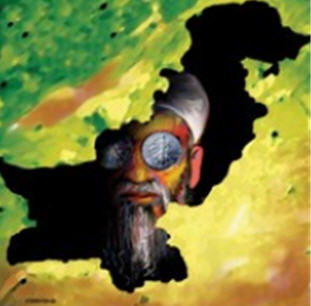
Words like “brutal,” “heinous” and “savage” aptly describe the way a Pakistani army unit raided Indian territory and chopped two soldiers, taking away one severed head as a “trophy.” The Indian outrage, however, must not blind us to the unpalatable truth: India is reaping what it sowed. New Delhi is staring at the bitter harvest of a decade-long policy seeking to appease a recalcitrant neighbour with unilateral concessions and gestures.

The “peace-at-any-price diplomacy” was started by Prime Minister Atal Bihari Vajpayee in an abrupt policy U-turn in 2003, and has been pursued with greater vigour by his successor, Manmohan Singh — interrupted only by the Pakistan-orchestrated Mumbai terrorist rampage of 2008. Regrettably, no policy lessons were drawn by New Delhi from the Mumbai terrorist siege, which occurred because India presented itself as weak and a tempting target.

The latest episode — one of the worst acts of Pakistani savagery in peacetime ever — has followed a dozen Pakistani violations of the line of control in the past one month. The question to ask is what has prompted the Pakistani military establishment to adopt an overtly aggressive posture vis-à-vis India of late.

The Pakistani military is drawing encouragement from two factors. The first factor is that the US-Pakistan relationship, after being on the boil for more than a year, has gradually returned to normalcy. That the US-Pakistan rift has healed is apparent from Washington’s resumption of large-scale military aid and its coddling of the Pakistan army and ISI. US aid to Pakistan is now at a historic high — at more than 3 billion dollars a year.

US policy — because of the exigencies of an exit strategy from Afghanistan — has permitted political expediency to trump long-term interests vis-à-vis Pakistan. The US has allowed even a key issue to fade away: how was Osama bin Laden able to hide deep inside Pakistan? The reason for that is the same as to why the US didn’t pursue the A.Q. Khan case.

The second factor is the series of unilateral political concessions by India, including delinking dialogue from terrorism, and recognizing Pakistan, the sponsor of terror, as a victim of terror. Whereas US policy has increased the Pakistani military’s room for manoeuvre against India, Indian policy has both solidified Pakistani reluctance to bring the Mumbai-attack masterminds to justice and emboldened the Pakistani military to commit yet another act of aggression.

India has considerably eased pressure on Pakistan, both on the Mumbai-attack issue and on Hafiz Saeed, the militant leader who still preaches terrorism against India. India has also pursued a host of goodwill gestures, including resuming high-level political exchanges and cricketing ties and introducing a less-restricted visa regime for Pakistanis. All these moves, unfortunately, have sent the wrong message to Islamabad.

Being nice with a determined adversary in the hope that this will change its behaviour is not strategy. With Singh dreaming of open borders with terror-exporting Pakistan, India’s Pakistan policy remains driven by hopes and gushy expectations, not statecraft.

In fact, some of the public statements Singh has made in recent years have not only been insensitive in relation to those slain by Pakistan-trained terrorists but may also have inadvertently encouraged Pakistani intransigence and aggression. Consider the following examples:

  • “We both [Pakistani Prime Minister Gilani and myself] recognize that if there is another attack like Mumbai, it will be a setback to the normalization of relations.” In other words, if there were another Mumbai-style terrorist attack, it will merely be a “setback” to ties — that too, as past experience shows, a temporary setback followed by Indian concessions.
  • “India-Pakistan relations are prone to accidents.” Were the attacks on the Indian Parliament and Red Fort, the Mumbai terrorist strikes, and the myriad other Pakistan-scripted outrages just “accidents”? Will the latest savagery also be treated as another “accident” after the current public indignation fades?
  • “We cannot wish away the fact that Pakistan is our neighbour.” And therefore “a stable, peaceful and prosperous Pakistan” is in India’s “own interest.” But the breaking away of South Sudan, East Timor, and Eritrea and the disintegration of the Soviet Union and Yugoslavia since the 1990s have shown that political maps are not carved in stone. In fact, the most profound global events in recent history have been the fragmentation of several countries. Didn’t Indira Gandhi change political geography in 1971?
  • India and Pakistan are locked by a “shared destiny,” and thus “our objective must be a permanent peace with Pakistan, where we are bound together by a shared future and a common prosperity.” How can a plural, inclusive and democratic India share a common destiny with a theocratic, militarized, fundamentalist and failing Pakistan?
  • “It is in our vital interest to make sincere efforts to live in peace with Pakistan … Unless we want to go to war with Pakistan, dialogue is the only way out.” This reflects the classically flawed argument that the only alternative to one extreme (appeasement) is another extreme — war. The simple truth is that any country must avoid either extreme. After all, between bending backwards to please Pakistan and waging war lie a hundred different practical options for India.

For more than two decades now, every Pakistani aggression against India — covert or overt — has been greeted with Indian inaction. India has shied away from employing even non-military options to discipline a wayward Pakistan. Will the latest strike also evoke mere Indian condemnation and no reprisal?

Any right-minded citizen would want peace between India and Pakistan. India indeed has tried everything possible to build peace with Pakistan, but the Pakistani military establishment in particular has construed India’s overtures as signs of the Indian republic’s weakness.

Today, India’s Pakistan policy is adrift because it is not backed by any goal-oriented strategy. It is past time for India to inject greater realism into its Pakistan policy.

(c) The Economic Times, 2013.

Escaping Afghanistan, the graveyard of empires

BRAHMA CHELLANEY

The Japan Times, January 21, 2012

Since coming to office, President Barack Obama has pursued an Afghan war strategy summed up in just four words: “surge, bribe and run.” The U.S.-led military mission has now entered the “run” part, or what euphemistically is being called the “transition to 2014” — the year Obama arbitrarily chose as the deadline to wind down all NATO combat operations.

The central aim is to cut a deal with the Taliban — even if Afghanistan and the region pay a heavy price — so that the United States and its NATO partners exit the “Graveyard of Empires” without losing face. This effort to withdraw as part of a political settlement without admitting defeat is being dressed up as a “reconciliation” process, with Qatar, Germany and Britain getting lead roles to help facilitate a U.S.-Taliban deal.

Yet what stands out is how little the U.S. has learned from past mistakes. In some critical respects, it is actually beginning to repeat past mistakes, whether by creating or funding new local militias in Afghanistan or striving to cut a deal with the Taliban. As in the covert war it waged against the nearly nine-year Soviet military intervention in Afghanistan, so too in the current overt war, U.S. policy has been driven by short-term considerations, without much regard for the interests of friends in the wider region.

To be sure, Obama was right to seek an end to this protracted war. But he blundered by laying out his cards in public and emboldening the enemy.

Within weeks of assuming office, Obama publicly declared his intent to exit Afghanistan, before he even asked his team to work out a strategy. He quickly moved from the Bush-initiated counterinsurgency strategy to limited war objectives centered on finding a face-saving exit. A troop surge that lasted up to 2010 was designed not to militarily rout the Taliban but to strike a political deal with the enemy from a position of strength. But even before a deal could be negotiated, rising U.S. casualties and war fatigue prompted him to publicly unveil a troop drawdown, stretching from 2011 to 2014. If the surge failed to militarily contain the Taliban, it was largely because its purpose had been undermined by Obama at the very outset.

A withdrawing power that first announces a phased exit and then pursues deal-making with the enemy undermines its regional leverage. It speaks for itself that the sharp deterioration in U.S. ties with the Pakistani military has occurred in the period after the drawdown timetable was unveiled. The phased exit has encouraged the Pakistani generals to play hardball.

Worse, there is still no clear U.S. strategy on how to ensure that the endgame does not undermine the interests of the free world or further destabilize the region. It is also unclear whether the U.S. after 2014 will be willing to rely on its air power and special forces to keep Afghanistan in the hands of a friendly government and army — or whether it will do what it has just done in Iraq: pull out completely and wash its hands off the country.

Think of a scenario where Obama had not played his cards in public. Immediately after coming to office, Obama could have used his predecessor’s diversion of resources to the Iraq war to justify a troop surge in Afghanistan while exerting full pressure on the Pakistani generals to tear down insurgent sanctuaries. Had that happened without the intent to exit being made public, not only would many Afghan and American lives have been saved, but also the side desperate for a deal today would have been the Taliban, not the U.S.

The outcome of the current effort to clinch a deal with a resurgent Taliban is uncertain. Even if a deal materializes and is honored by the Taliban on the ground, it cannot by itself pacify Afghanistan.

Although Afghanistan historically was designed as a buffer state, it does not today separate empires and conflicts. Rather, it is the center of not one but multiple conflicts with cross-border dimensions. Given Afghanistan’s major ethnic and political divides, genuine national reintegration and reconciliation would make a lot of sense.

However, instead of opening parallel negotiating tracks with all key actors, with the aim of eventually bringing them together at the same table, the U.S. is pursuing a single-track approach focused on achieving a deal with the Taliban. Such is its single-mindedness that a conscious effort is under way to keep out representatives of the National Front (formerly Northern Alliance) from even international conferences on Afghanistan.

In fact, the choice of Doha, Qatar, as the seat of U.S.-Taliban negotiations has been made with the intent to cut out the still-skeptical Afghan government and to insulate the Taliban negotiators from Pakistani and Saudi pressures. The choice also meshes with U.S. efforts to build Qatar as a major promoter of Western interests in the Arab world, on the lines of Saudi Arabia.

Just as oil wealth has propelled the Saudi role, gas wealth is driving the Qatari role — best illustrated by Qatar’s military and financial contributions to regime change in Libya and its current involvement in fomenting a Sunni insurrection in Alawite-ruled Syria, the last remaining beacon of secularism in an increasingly Islamist-oriented Arab world.

Meanwhile, the new U.S. containment push against Iran threatens to compound the internal situation in Afghanistan. Iran’s nuclear program is a factor behind the new containment drive. But a bigger factor is the intent not to allow Iran to be the main beneficiary of the end of U.S. military operations in Iraq and the planned NATO exit from Afghanistan. Yet, without getting Iran on board, building a stable Iraq or Afghanistan will be difficult.

In truth, U.S. policy is coming full circle again on the Pakistan-fathered Afghan Taliban, in whose birth the CIA had played midwife. President Bill Clinton’s administration acquiesced in the Taliban’s ascension to power in Kabul in 1996 and turned a blind eye as that thuggish militia, in league with Pakistan’s Inter-Services Intelligence, fostered narco-terrorism and swelled the ranks of the Afghan war alumni waging transnational terrorism. With 9/11, however, the chickens came home to roost. In declaring war on the Taliban in October 2001, U.S. policy came full circle.

Now, U.S. policy is coming another full circle on the Taliban in its frantic search for a deal. This has been underscored by a series of secret U.S. meetings with the Taliban last year and the current moves to restart talks in Qatar by meeting the Taliban’s demand for the release of five of its officials who are held at Guantánamo Bay. Mohammed Tayeb al-Agha, an aide to the one-eyed Taliban chief Mohammad Omar, has emerged as the Taliban’s chief negotiator with Marc Grossman, America’s Afghanistan-Pakistan (Afpak) envoy.

The Qatar-based negotiations serve as another reminder why the U.S. political leadership has refrained from decapitating the Taliban’s top command-and-control. The U.S. military has had ample opportunities to eliminate the Taliban’s Rahbari Shura, or leadership council, often called the Quetta Shura because it relocated to the Pakistani city in 2002.

Yet, tellingly, the U.S. military has not carried out a single drone, air or ground strike against the shura. All the U.S. strikes have occurred farther north in Pakistan’s tribal Waziristan region, although the leadership of the Afghan Taliban or its allied groups like the Haqqani network and the Hekmatyar band is not holed up there.

The sanctity of existing borders has become a powerful norm in world politics. Border fixity is seen as essential for peace and stability. Yet, paradoxically, the norm has allowed the emergence of weak states, whose internal wars spill over and create wider regional tensions and insecurities. In other words, a norm intended to build peace and stability may be creating conditions for greater regional conflict and instability. This norm is likely to come under challenge in the Afpak belt, where the dangers of political fragmentation cannot be lightly dismissed.

When history is written, the legacy of the NATO war in Afghanistan will mirror the legacy of the U.S. occupation of Iraq — to leave an ethnically fractured nation. Just as Iraq today stands ethnically partitioned in a de facto sense, it will be difficult to establish a government in Kabul post-2014 whose writ runs across Afghanistan.

More important, Afghanistan is not Vietnam. An end to NATO combat operations will not mean the end of the war because the enemy will target Western interests wherever they may be. The U.S. hope to regionally contain terrorism is nothing more than self-delusion. If anything, this objective promises to keep the Afpak belt as a festering threat to regional and global security.

Brahma Chellaney is an Asian geostrategist and the author of six books.
The Japan Times: Saturday, Jan. 21, 2012

America’s troubling support for oil-rich Islamist regimes

1982: U.S. President Ronald Reagan dedicates the Space Shuttle Columbia to the resistance fighters — the jihadists — in Afghanistan. He proclaimed: “Just as the Columbia, we think, represents man’s finest aspirations in the field of science and technology, so too does the struggle of the Afghan people represent man’s highest aspirations for freedom. I am dedicating, on behalf of the American people, the March 22nd launch of the Columbia to the people of Afghanistan.” Watch his announcement on YouTube.

1983: “To watch the courageous Afghan freedom fighters battle modern arsenals with simple hand-held weapons is an inspiration to those who love freedom,” President Reagan publicly declared on March 21, 1983.

1985: “These gentlemen are the moral equivalent of America’s Founding Fathers.” — President Reagan, introducing the Afghan mujahedeen leaders to the media at the White House. Two such moral equivalents, Osama bin Laden and Taliban chief Mullah Mohammed Omar, later became America’s nemesis.

By BRAHMA CHELLANEY
The Japan Times, November 8, 2011

https://i0.wp.com/www.twfigurines.de/modern/muj/muj07.jpg

When Libya’s interim government announced the “liberation” of the country on October 23, it declared that a system based on the Islamic Sharia, including polygamy, will replace the secular dictatorship that Moammar Gadhafi ran for 42 years. “We, as a Muslim nation, have taken Islamic Sharia as the source of legislation; therefore, any law that contradicts the principles of Islam is legally nullified,” declared interim leader Mustafa Abdul Jalil.

Swapping one evil for another may seem a cruel political comedown after seven months of relentless NATO airstrikes in the name of promoting democracy in Libya — an air war, with special-forces support, that enabled the ragtag rebel militias to triumph but left a vast trail of death and destruction.

The Western powers that militarily effected the regime change in Libya have made little effort to stop its new rulers from establishing a theocratic system founded on Islamic jurisprudence.

For the United States, Britain and France, such a political turn is an unavoidable price to pay to have their own men in power. The Islamist embrace indeed helps protect the credibility of men who otherwise may be seen as foreign puppets in their society.

This is the same reason why these powers have condoned the rulers of the oil sheikdoms for their long-standing alliance with radical clerics. For example, the U.S.-backed House of Saud not only practices the century-old political tradition of Wahhabi Islam — the source of modern Islamic fundamentalism — but also exports this fringe form of Islam, with the result that the more liberal Islamic traditions elsewhere are being gradually snuffed out.

Yet when the Saudi crown prince died recently, Washington did not seek to encourage a more reform-oriented replacement. Now named as next in line to the king is Nayef bin Abdul Aziz, seen in Washington as a dependable ally despite his close ties with jihad-extolling clerics and his role as the head of the kingdom’s well-oiled security apparatus, which routinely carries out beheadings, floggings, and eye-gougings. Nayef has been dubbed the new “crown prince of darkness.”

So critical have the Arab monarchs become to U.S. interests that Washington has failed to stop these cloistered kings from continuing to fund Muslim extremist groups and madrasas in other countries. From Africa to South and Southeast Asia, Arab petrodollars have played a key role in fomenting militant Islamic fundamentalism that targets the West, Israel, and India as its enemies.

In fact, U.S. policy winked at this year’s Saudi military intervention in Bahrain to help crush the prodemocracy movement of the majority Shiite community. The Saudi intervention actually paralleled the 1979 Soviet intervention to bolster a besieged regime in Kabul — an invasion that led to the multibillion-dollar, CIA-led arming of Afghan rebels and the consequent rise of transnational Islamic terrorists, including al-Qaida.

The plain fact is that the U.S.-led regional strategy, far from being forward-looking, is driven by narrowly defined geopolitical interests. The imperative to have pliant regimes in oil-rich countries trumps other considerations and concerns, including political repression and the costs that women pay in Islamist-oriented states.

As a result, the U.S. still props up the Wahhabist monarchs in the Arab world, even as the relatively secular Arab states — Syria, Libya and Iraq — have fallen victim to U.S.-sponsored regime change or sanctions. The absence of oil resources in another more-secular Arab state — Egypt — made its long-standing ruler, Hosni Mubarak, dispensable for U.S. policy when he came under a popular siege domestically.

With the U.S. support they enjoy, the most-tyrannical regimes — the oil monarchies — have been able to ride out the Arab Spring, emerging virtually unscathed. For the U.S., the six monarchical states that make up the Gulf Cooperation Council — Saudi Arabia, Kuwait, Bahrain, Qatar, the United Arab Emirates, and Oman — are also critical for strategic interests.

After withdrawing its forces from Iraq, Washington plans to use Kuwait as a new military hub to expand its military presence in the Persian Gulf region and foster a U.S.-led “security architecture,” under which its air and naval patrols would be regionally integrated.

NATO’s regime change in Libya — which has the world’s largest reserves of light sweet crude, the top-notch oil that American and European refineries prefer — was clearly not about ushering in an era of liberal democracy.

Having been born in blood, the new Libya faces uncertain times. The only certain element is that its new rulers will remain beholden to those that helped install them.

U.S. Senator John McCain has already announced after meeting the new Libyan rulers that they are “willing to reimburse us and our allies” for the costs of effecting the regime change. Given that the U.S. Treasury Department alone holds $37 billion worth of frozen Libyan assets, paying the estimated $1.2-billion bill for the NATO military mission may seem a small price for Libya.

More fundamentally, America’s troubling ties with Islamist rulers and groups were cemented in the 1980s when the Reagan administration openly employed Islam as an ideological tool to spur the spirit of jihad against the Soviet intervention in Afghanistan.

The blatant use of Islam for geopolitical aims fostered a series of developments that have come to haunt the security of the free world, including the rise of the mujahideen, or “holy warriors,” the inculcation of a jihad culture in Pakistan by a U.S.-backed military ruler, Zia ul-Haq, and the birth of the Pakistan-fathered Afghan Taliban in which the CIA served as the midwife.

It was at a White House ceremony attended by some “holy warriors” from the Afghanistan-Pakistan belt in the mid-1980s that President Ronald Reagan proclaimed the mujahideen as the “moral equivalent of America’s Founding Fathers.”

Two such moral equivalents, Osama bin Laden and Taliban chief Mullah Mohammed Omar, later became America’s nemesis. Whereas the U.S. finally killed bin Laden in a daring raid deep inside Pakistan this year, it is still seeking to cut a deal with Mullah Omar and his Quetta Shura to help secure a face-saving exit from the decade-long war in Afghanistan.

Make no mistake: International terrorism and the modern-day Frankenstein monsters are the haunting by-products of the war against atheism and communism that the U.S. was supposed to have won.

Yet the lessons from that war have already been forgotten, including the need to keep the focus on long-term goals and not be carried away by political expediency and narrow geopolitical objectives.

The current attempt to strike a Faustian bargain with the Taliban, for example, ignores the very lesson from the creation of this evil force.

Another lesson that has fallen by the wayside is the need for caution in training Islamic insurgents and funneling lethal arms to them to help overthrow a regime. In Libya, bringing the myriad rebel militias under government control is likely to prove difficult, potentially creating a jihadist citadel at the southern doorsteps of Europe. Yet the regime-change success in Libya is likely to encourage greater Western indirect military support to Sunni rebels seeking to oust Syrian President Bashar Assad’s authoritarian but secular regime, which has banned face veils in universities.

It has been argued by exponents of the U.S. policy approach that because a war runs on expediency, with strange bedfellows involved as partners, unsavory allies are unavoidable — ranging from Islamist militias to regimes that bankroll militant Islamic fundamentalism overseas. After all, to get rid of Nazism, the allies needed Soviet leader Josef Stalin.

However, these advocates overlook the fact that Stalin did not create Hitler or foster Nazism; nor was Stalin’s removal necessary to eradicate Nazism.

Paradoxically, the U.S. practice of propping up malleable but Islamist rulers in the Middle East creates a street-level situation not only laden with strong anti-U.S. sentiment but also support for more authentically Islamist and independent forces. So, if elections are held, it is such autonomous Islamists that often emerge as winners, as the diverse cases of Gaza and Tunisia attest.

This trend, in turn, encourages U.S. policy to back rulers that espouse Islamist beliefs as the legitimating credo of their hold on power.

Let’s be clear: The global fight against terrorism can succeed only by ensuring that states do not contribute in any way to the rise of virulent Islamic fundamentalism extolling violence as a sanctified religious tool. Yet today, history is in danger of repeating itself.

The brutal killing of Gadhafi by his NATO-backed captors and the macabre public display of his body for several days in another city populated by a rival tribe were redolent of the manner in which former Afghan President Najibullah was dragged out of the United Nations compound in Kabul by the Taliban in 1996, beaten, shot dead, and hung from a traffic barricade.

What followed was unending bloodletting that has turned Afghanistan into an open sore for regional and international security.

In this light, will Libya become another jihadist haven?

Brahma Chellaney is author of “Asian Juggernaut” (Harper, 2010) and “Water: Asia’s New Battleground” (Georgetown University Press, 2011).

The Japan Times: Tuesday, Nov. 8, 2011. (C) All rights reserved

Why Mumbai Was Attacked

India is an easy terrorist target

Brahma Chellaney
The Daily Beast, July 14, 2011

https://i0.wp.com/www.thedailybeast.com/content/dailybeast/articles/2011/07/14/mumbai-terror-attacks-india-is-powerless/_jcr_content/body/inlineimage.img.jpg/1310640936906.jpg

It is not a mere coincidence that Mumbai, India’s commercial hub, has repeatedly been struck by terrorists since 1993. Mumbai has become the favored target because the terrorist aim is to undermine India’s booming economy and its status as a rising power by rattling foreign investors and driving away tourists.

India’s economic rise has intersected with Pakistan’s descent into chaos. Each terror strike on Mumbai raises fresh international concerns about security in India and prompts a sizable number of foreign tourists to abandon or delay travel plans.

Undercutting India’s strength by repeatedly targeting its economic capital is a geopolitical objective that only a state sponsor of terrorism can seek to pursue, not street gangs, underworld figures, or local fundamentalists. And that sponsor — which made the mistake of leaving its marks on the three-day Mumbai terrorist siege in November 2008 that killed 166 people — is the Inter-Services Intelligence (ISI), Pakistan’s notorious military intelligence agency.

The latest explosions that ripped through Mumbai at the height of the evening rush may have had an additional objective behind them — to blunt international pressure to bring the Pakistan-based coordinators of the 2008 siege to justice. With India now saddled with another terrorist attack to investigate, the international profile of the 2008 siege is bound to decline.

At a time when the U.S. has ratcheted up pressure on the Pakistani army and ISI, including by putting the release of further military aid on hold, those behind the latest bombings may have had yet another motive — to shift the focus from the deteriorating U.S.-Pakistan relations to the India-Pakistan context so as to raise concerns in Washington about potential subcontinental hostilities and to persuade the U.S. not to lean too heavily on the Pakistani military establishment.

But unlike the 2008 siege by heavily armed commandos from Pakistan on a suicide mission, the bombs in the latest attack were planted and detonated stealthily. This marks a return to an earlier pattern witnessed, for example, in the 1993 and 2006 Mumbai serial blasts. This pattern not only obviates the need for a high level of training and logistical sophistication, but also precludes telltale signs of external involvement by permitting a terrorist undertaking to be outsourced to proxy figures in the criminal or fundamentalist world in Mumbai.

The latest bombings actually raise wrenching questions about India’s Pakistan and counterterrorism policies. The unparalleled 2008 siege was supposed to be India’s 9/11 and serve as a tipping point in India’s forbearance with terrorist violence. This week’s explosions are a reminder that little has changed.

For New Delhi, the chickens have come home to roost. Its decision early this year to resume political dialogue with Pakistan at all levels was made without having secured any anti-terror commitment. Even though the Pakistan-based masterminds of the 2008 siege remain untouched and Pakistani terrorist-training camps near the border with India, according to Indian officials, continue to operate with impunity, New Delhi returned to square one by resuming comprehensive dialogue.

After the 2008 attack, an array of options was available to India, especially in the diplomatic, economic and political spheres. Between the two extremes — empty talk and war — New Delhi could have invoked measures commonly available to nations to step up pressure, such as recalling its ambassador from Islamabad and invoking trade sanctions. Yet a feckless Indian leadership did not take the smallest of small steps even as a symbolic expression of India’s outrage over Pakistan’s role as the staging ground for that attack.

New Delhi actually responded to the 2008 siege by fashioning a new and unique tool — dossier bombing. The weighty dossiers — delivered at regular intervals and containing documented evidence of the involvement of the ISI and its front organization, the Lashkar-i-Taiba terrorist group, in that attack — only persuaded Pakistan to stay its ground, with India eventually climbing down.

Today, the now-familiar Indian cycle of empty rhetoric is repeating itself — ritual condemnation of the latest bombings and a worn-out promise to defeat terror. Yet the bombers have driven home a clear message: India, despite its rising international stature, is powerless to stop terror attacks. The bombings also have the potential to further undercut the flagging credibility of Prime Minister Manmohan Singh. Singh is the latest in a succession of weak, aging prime ministers whose absence of decisive leadership over the past 22 years has resulted in India’s failure to formulate a prudent counterterror strategy backed by firm resolve.

The fundamental mistake Singh’s government has made is to separate its Pakistan policy and counterterrorism strategy and put them on separate tracks. The two are simply not separable.

Increasingly, terrorism has been treated as a law-and-order issue requiring more policing and better intelligence. To regard terrorism as a law-and-order problem is to do what the terrorists want — to sap national strength. No amount of security can stop terrorism if India is reluctant to go after terrorist cells and networks and those that harbor extremists.

The ugly truth is that transnational terrorists see India as an easy target because it imposes no costs on them and their patrons.

What India needs is a concerted, sustained campaign against the forces of terror. But what a succession of leaders has offered are only words to comfort the nation. If India does not break out of this straitjacket, it will only be a matter of time before terrorists strike yet again.

Brahma Chellaney, professor of strategic studies at the privately funded Center for Policy Research in New Delhi, is the author of Asian Juggernaut (Harper, 2010) and Water: Asia’s New Battlefield (Georgetown University Press, 2011).

(c) The Daily Beast, 2011

A “kill” highlights flawed policies

After Osama: Triumph for one, but lessons for all

When the dust settles, it is likely to be business as usual: Indians impotent as ever, Pakistanis playing both ally and enemy, and the US doling out further multibillion-dollar awards to Pakistan

Brahma Chellaney
Mint, May 4, 2011
https://i0.wp.com/i.telegraph.co.uk/multimedia/archive/01416/osamaBinLaden_1416164c.jpg
Conducted without the cooperation or even advance knowledge of Pakistan, the US helicopter assault that killed Osama bin Laden in his hideout beside a Pakistani military academy has exposed that country’s Janus-faced policy — a supposed ally on counterterrorism that in reality acts as an ally of transnational terrorists, harbouring them in its bosom covertly. The new spotlight on Islamabad’s duplicitous role raises uncomfortable questions for US policy, including about the billions of dollars in annual aid still being lavished on Pakistan. Yet the US is unlikely to heed the renewed call, among others, of Amrullah Saleh, Afghanistan’s intelligence director until last summer, to “wake up to the fact that Pakistan is a hostile state exporting terror”.

In a potential lesson for India, which has stoically put up with Pakistan-orchestrated acts of cross-border terrorism for years without retaliating even once, the US assault team managed to breach Pakistani defences by slipping deep inside Pakistan, with President Barack Obama informing his Pakistani counterpart about the successful operation only after the mission crew safely crossed back into Afghan airspace with Osama’s body.

In fact, the breakthrough came only after the US, even at the risk of rupturing its longstanding ties with the Pakistani army and ISI, deployed a number of CIA operatives, Special Operations forces and contractors deep inside Pakistan without the knowledge of the Pakistani military. Just last month, Pakistan’s main power brokers, generals Ashfaq Parvez Kayani and Ahmed Shuja Pasha, were stridently demanding the removal of all “undeclared” CIA operatives and contractors. But the prized “kill” has only reinforced the need for independent US intelligence operations in the Pakistani heartland, where the real terrorist sanctuaries are located, not on Pakistan’s borders.

In different ways, Osama in death has paradoxically exposed Pakistani, US and Indian policies. After all, a raid — even if spectacularly triumphant for one side, mortifying for another, and welcomed by the third party — cannot cover up or atone for flawed policies.

Take India: With the Hafiz Saeeds and Dawood Ibrahims in Pakistan mocking this country, the raid inadvertently shows up the naivety of Prime Minister Manmohan Singh’s basic assumptions about why refraining from exerting pressure and relying merely on engagement is the best way to persuade Pakistan to stop sponsoring terror.

Whereas Obama proudly declared that the US had “kept its commitment to see that justice is done”, India believes in delivering not justice but dossiers. That is why India’s reaction to 26/11 was to avoid taking the smallest of small steps — such as the recall of its own high commissioner from Islamabad — as just a token expression of outrage over Pakistan’s role as the staging ground for those daring terrorist attacks.

As for Pakistan, it can no longer be regarded as a reliable US ally. But no one has been more exposed than the two generals there who were making stroppy demands of the US until recently. Although the superannuated Kayani and Pasha have succeeded in staying on in office, their credibility at home and abroad is set to take a beating.

More important, the raid has exposed US policy, underlining a failed strategy that has unintentionally turned Pakistan into Ground Zero for global terrorism.

Obama, after taking office, implemented a military surge in Afghanistan, but an aid surge to Pakistan, turning the latter into the largest recipient of US aid, although the Afghan Taliban leadership and Al Qaeda remnants remained ensconced in Pakistan. That only deepened US involvement in the wrong war and emboldened Pakistan to fatten the Afghan Taliban even as US drone strikes in Waziristan continued to severely weaken Al Qaeda. Rather than help build robust civilian institutions in Pakistan, Washington has continued to pamper the jihadist-penetrated Pakistani military establishment, best illustrated by the fresh $3 billion military aid package earmarked for next fiscal.

Logically, there must now be a redefinition of the US-Pakistan relationship. After all, the US military’s main foe in Afghanistan is not the badly fragmented and incapacitated Al Qaeda, but a resurgent Taliban enjoying safe havens in Pakistan, which has brazenly egged on the Afghan president to dump the Americans for Chinese support. Yet Obama’s narrowing of the Afghan war goals has ironically made the US more dependent on Pakistan. By moving away from the Bush-era counterinsurgency strategy towards limited objectives centred on political reconciliation with the Afghan Taliban, Obama now needs Pakistan’s Scotch whisky-sipping but jihadist-rearing military generals to bring the Taliban to the negotiating table.

That is why when the dust settles, it is likely to be business as usual: Indians impotent as ever, Pakistanis playing both an ally and an enemy, and Americans doling out further multibillion-dollar awards to Islamabad. With Osama’s death boosting his flagging political fortunes, Obama no longer looks like a one-termer, but rather a president who will last to shape the endgame in Afghanistan.

Brahma Chellaney is professor of strategic studies at the Centre for Policy Research in New Delhi.
Comment at views@livemint.com

Osama bin Laden’s Pakistan

After bin Laden, spotlight on Pakistan

Brahma Chellaney

Column internationally syndicated by Project Syndicate
http://elmoderador.files.wordpress.com/2011/05/osama-el-moderador.jpg?w=311&h=306
The killing of Osama bin Laden by United States special forces in a helicopter assault on a sprawling luxury mansion near Islamabad recalls the capture of other Al Qaeda leaders in Pakistani cities. Once again, we see that the real terrorist sanctuaries are located not along Pakistan’s borders with Afghanistan and India, but in the Pakistani heartland.

This, in turn, underlines another fundamental reality — that the fight against international terrorism cannot be won without demilitarizing and de-radicalizing Pakistan, including by rebalancing civil-military relations there and reining in the country’s rogue Inter-Services Intelligence agency.

Other terrorist leaders captured in Pakistan since 9/11 — including Khalid Sheikh Mohammed, Al Qaeda’s third in command; Abu Zubeida, the network’s operations chief; Yasser Jazeeri; Abu Faraj Farj; and Ramzi Binalshibh, one of the coordinators of 9/11 — were also found living in cities across Pakistan. If there is any surprise about bin Laden’s hideout, it is its location in a military town, Abbottadad, in the shadow of an army academy.

This only underscores the major protection that bin Laden must have received from elements of the Pakistani security establishment to help him elude the US dragnet for nearly a decade. The breakthrough in hunting him down came only after the US, even at the risk of rupturing its longstanding ties with the Pakistani army and ISI, deployed a number of CIA operatives, Special Operations forces, and contractors deep inside Pakistan without the knowledge of the Pakistani military.

In recent years, with its senior operations men captured or killed and bin Laden holed up in Pakistan, the badly splintered Al Qaeda had already lost the ability to mount a major international attack or openly challenge US interests. With bin Laden’s death, Al Qaeda is likely to wither away as an organization.

Yet its dangerous ideology is expected to live on and motivate state-sponsored non-state actors. It will be mainly such elements that will have the capacity to launch major transnational terrorist attacks, like the 2008 Mumbai strikes. Even in Afghanistan, the US military’s main foe is not Al Qaeda but a resurgent Taliban, which enjoys safe haven in Pakistan.

That is why the spotlight is likely to turn on the terrorist nexus within Pakistan and the role of, and relationship between, state and non-state actors there. Significantly, as the CIA closed in on bin Laden, the chairman of the US Joint Chiefs of Staff, Admiral Mike Mullens, for the first time publicly linked the Pakistani military with some of the militants attacking US forces in Afghanistan. Pakistan’s homegrown Islamist militias continue to operate openly, and the Pakistani army and intelligence remain loath to sever their cozy ties with extremist and terrorist elements.

For the US, Pakistan poses a particularly difficult challenge. Despite providing $20 billion to Pakistan in counterterrorism aid since 9/11, the US has received grudging assistance, at best, and duplicitous cooperation, at worst. Today, amid a rising tide of anti-Americanism, US policy on Pakistan is rapidly unraveling. Yet Pakistan, with one of the world’s lowest tax-to-GDP ratios, has become more dependent than ever on US aid.

Even as Americans exult over bin Laden’s killing, the US government must recognize that its failed policy on Pakistan has inadvertently made that country the world’s main terrorist sanctuary. Rather than helping to build robust civilian institutions there, the US has pampered the jihadist-penetrated Pakistani military establishment, best illustrated by the fresh $3 billion military aid package earmarked for the next fiscal year. After dictator Pervez Musharraf was driven out of office, the new Pakistani civilian government ordered the ISI to report to the interior ministry, but received no support from the US for this effort to assert civilian control, allowing the army to quickly frustrate the effort.

After coming to office, US President Barack Obama implemented a military surge in Afghanistan. In Pakistan, however, he implemented an aid surge, turning it into the largest recipient of US aid, even though the Afghan Taliban leadership and Al Qaeda remnants remained ensconced in the country. This only deepened US involvement in the wrong war and emboldened Pakistan to fatten the Afghan Taliban, even as sustained US attacks continued to severely weaken Al Qaeda.

Make no mistake: the scourge of Pakistani terrorism emanates more from the country’s Scotch whisky-sipping generals than from the bead-rubbing mullahs. It is the self-styled secular generals who have reared the forces of jihad and fathered the Taliban, Lashkar-e-Taiba, Jalaluddin Haqqani militia, and other groups. Yet, by passing the blame for their ongoing terrorist-proxy policy to their mullah puppets, the generals have made the US believe that the key is to contain the religious fringe, not the puppeteers.

In fact, Pakistan’s descent into a jihadist dungeon occurred not under civilian rule, but under two military dictators — one who nurtured and let loose jihadist forces, and another who took his country to the very edge of the precipice.

Without reform of the Pakistani army and ISI, there can be no end to transnational terrorism — and no genuine nation-building in Pakistan. How can Pakistan be a “normal” state if its army and intelligence agency remain outside civilian oversight and decisive power remains with military generals?

With bin Laden dead, the only way that Al Qaeda can reconstitute itself is if the Pakistani military succeeds in reinstalling a proxy regime in Afghanistan. Until the Pakistani military’s vise-like grip on power is broken and the ISI cut down to size, Pakistan is likely to remain Ground Zero for the terrorist threat that the world confronts.

Brahma Chellaney, Professor of Strategic Studies at the New Delhi-based Center for Policy Research, is the author of Asian Juggernaut and the forthcoming Water: Asia’s New Battlefield.

Copyright: Project Syndicate, 2011.

From nation-building to militia-building

Obama’s review risks Afghan partition


By Brahma Chellaney

Financial Times

Published: December 16, 2010


US plan is degenerating into militia-building, writes Brahma Chellaney


Since coming to office US president Barack Obama has pursued an Afghan strategy summed up in three words: surge, bribe and run. It was translated into a military plan at Nato’s Lisbon summit in November, and confirmed by Thursday’s release of the administration’s Afghan review, which claims “our strategy in Afghanistan is setting the conditions to begin the responsible reduction of US forces in July 2011”. But it is a plan that will only increase the turmoil next year – and, in effect, result in the partition of Afghanistan, at great cost to India in particular.

As the US and other coalition partners gradually draw down their combat role from next year, their place is to be taken by Afghan security forces, whose strength is to be boosted to 300,000 through crash training of recruits. But it is unlikely such local forces will be able to hold Afghanistan together. So the US plan to wind down combat operations by 2014 will lead to a serious increase in terrorism within the Afghanistan-Pakistan belt and create a destabilising Afghan power vacuum.

In fact, despite a big increase in US troop levels since 2009, coalition forces are increasingly relying on local militias and warlords, not on the regular Afghan army and police. In the face of a faltering war effort, the US has been funding or creating local militias in as many Afghan provinces as possible.

A new array of US-backed provincial warlords has emerged across Afghanistan, receiving millions of dollars to provide highway security and run missions with US special forces.

Against that background, the transition optimistically outlined in today’s review will only intensify the Afghan power struggle. The most likely post-war scenario is now the partition of Afghanistan along ethnic lines. That means that while the Taliban will call the shots in the Pashtun-dominated south and east, the non-Pashtun northern and western regions will retain their present de facto autonomy.

If a resurgent Afghan Taliban is now on the offensive and unwilling to cut a peace deal, it is largely because of the fillip it got from the US search for a face-saving exit; and the sustenance it still draws from Pakistan’s military. Militarily, the US has erred by not removing the Afghan Taliban leadership, located in Pakistan’s Quetta and Karachi areas.

The ongoing plan to retreat will only embolden jihadists to stage more daring attacks, leaving India in particular on the front line. Indeed, the approach outlined today formalises a vital (but so far unstated) shift in the war strategy: to contain terrorism regionally rather than to defeat it.

Even if distant America and Europe can afford this, India will suffer the consequences. India has felt most of the blowback from past failed US policies in the region. With today’s announcement showing the US preparing to end another intervention, while showering billions of dollars on the Pakistani military, history is again coming full circle.

The writer is professor of strategic studies at the New Delhi-based Centre for Policy Research and author, most recently, of Asian Juggernaut

Copyright The Financial Times Limited 2010.

Can terrorism really be confined to the Af-Pak belt?

THE ASIAN CENTURY

NATO’s Dangerous Afghan Dream

Brahma Chellaney

2010-11-22
Project Syndicate

The agreement at the NATO summit meeting in Lisbon on a transition plan to help end the war in Afghanistan within the next four years raises troubling questions about regional security and the global fight against transnational terrorism. As the US and other coalition partners gradually wind down their combat role, Afghan security forces – to number 300,000 after crash training of new recruits – are to take their place. But these local forces are unlikely to be able to hold the country together.

The most likely post-war scenario is a partition of Afghanistan, with the Taliban calling the shots in the Pashtun-dominated south and east, and the non-Pashtun northern and western regions retaining their current de factoautonomy.

Regionally, there is likely to be greater turmoil. The withdrawal of NATO forces before the job is done will leave India on the front lines to face the brunt of greater terror from the Afghanistan-Pakistan belt. In fact, NATO’s retreat is expected to embolden jihadists in the region – and beyond it – to stage transnational attacks.

The 2014 withdrawal plan, however, comes as no surprise, given US President Barack Obama’s expressed desire to end combat operations in Afghanistan. Indeed, his defense secretary, Robert Gates, made clear last year that the US will now seek to contain terrorism regionally rather than defeat it. The transition plan cements that strategic shift.

The problem, however, is that the US war effort is already faltering, with Afghan President Hamid Karzai exploring the possibility of cutting his own deals with the Taliban and other warlords. And that is largely the result of Obama’s botched strategy, whose twin troop surges were designed not to rout the Taliban militarily, but to strike a political deal with them from a position of strength. But, as CIA director Leon Panetta admitted, “We have seen no evidence that [the Taliban] are truly interested in reconciliation.”

Why would the Taliban be interested in negotiating a deal with the Americans, given Obama’s public declaration, just weeks after coming to office, that he was interested in a military exit from Afghanistan? The Afghan Taliban and their sponsors, the Pakistan military, simply want to wait out the Americans.

Last year, with the stroke of his pen, Obama ended his predecessor’s “global war on terror.” But renaming it a “struggle” or a “strategic challenge” has not changed the grim realities on the ground.

The US has been lucky to escape further terrorist strikes since September 11, 2001, despite several attempts. By contrast, India’s location next to the Af-Pak has left it far more vulnerable, and the country has since suffered a series of major attacks – from the assault on its parliament in December 2001 to the terrorist siege of Mumbai in 2008.

Afghanistan and Pakistan, two artificially created states with no roots in history, have searched endlessly for a national identity. Today, they have emerged as the global epicenter of transnational terrorism and the heroin trade. Although Pakistan is now the largest recipient of US aid in the world, the Failed States Index 2010, created by Foreign Policy and the Fund for Peace, ranks the country 10th, between Guinea and Haiti. Unlike in other failed states, however, in Pakistan state-nurtured terrorism and state-supported nuclear smuggling uniquely intersect.

To compound the situation, the political border between Afghanistan and Pakistan has now ceased to exist in practice. The 2,640-kilometer Durand Line, a British-colonial invention that divided the large Pashtun community when it was established in 1893 as the border between British-led India and Afghanistan, has long been despised and rejected by Afghanistan.

Today, the Durand Line exists only on maps. On the ground, it has little political, ethnic, or economic relevance, even as the Af-Pak region has become a magnet for the world’s jihadists. A de facto Pashtunistan, long sought by Pashtuns, has now grown up on the ruins of an ongoing Islamist militancy, but without any political authority in charge. The disappearance of the Af-Pak political border seems irreversible, undermining Pakistan’s own territorial integrity.

Yet, as if the forces of terror could be neatly boxed in, the US has scaled back its objective to contain terrorism regionally – a strategy that promises to keep the Af-Pak problem a festering threat to global security. Indeed, NATO’s withdrawal plan is likely to lead to a realignment of ethnic forces, and thus to greater volatility.

Afghanistan is not Vietnam. A withdrawal of US and other NATO troops will not mean the end of the war, because the enemy will continue to target Western interests, wherever they may be. The hope that terrorism can be regionally contained is a dangerous exercise in self-delusion.

Brahma Chellaney, a professor of strategic studies at the New Delhi-based Center for Policy Research, is the author, most recently, of Asian Juggernaut.

Copyright: Project Syndicate, 2010.
http://www.project-syndicate.org

Failed talks at Islamabad

Pakistan turns the tables on India


Brahma Chellaney

The Economic Times, July 20, 2010


In the blame-game over the botched Islamabad talks, it is India that comes out looking poorer. First, it resumed talks with Pakistan without having secured anything on the central issue of terrorism. Second, having made a diplomatic climbdown, India found itself being publicly put in the dock at the conclusion of the Islamabad talks.


The upshot is that a defensive India has had to respond to public accusations by a country whose state agencies continue to orchestrate acts of terror against Indian targets. This, however, is not the first time Pakistan has turned the tables on India.


Whether it was the Agra summit, or the Sharm el-Sheikh meeting, or the latest talks, it was a “hurt” India that came out defending itself. As long as India continues to cling to a diplomacy of hope and dreams, Pakistan, although a failing state, will continue to reap the diplomatic advantage.


Few states put as much faith in diplomacy alone as India does. Yet, in the absence of realistic, goal-oriented statecraft, the propensity to act in haste and repent at leisure runs deep in Indian foreign policy. Gushy expectations and wishful thinking have blighted Indian foreign policy and condemned the nation to relive history.


The previous BJP-led government took India on a roller-coaster ride, with an ever-shifting policy course on Pakistan. The present government is taking India on another jarring roller-coaster ride, having learned no lesson from the Sharm el-Sheikh blunder or its earlier action in designating Pakistan as a “fellow victim of terror” like India.


Pretty much everyone in the Indian delegation returned from Sharm el-Sheikh with egg on his face — from the prime minister, who claimed incredulously that he had done nothing to change anything, to the foreign secretary, who blamed “poor drafting” for causing the furor in India. Yet, no sooner had the uproar subsided than the PM sought to redo exactly what had angered the nation.


What prompted New Delhi this year to resume dialogue with Pakistan, first at the foreign-secretary level and then at the foreign-minister level? Mum is the word. Confusion and contradiction marks India’s current Pakistan policy. Just take one example.


On the one hand, New Delhi blames Pakistan‘s powerful Inter-Services Intelligence (ISI) agency for "controlling and coordinating" the Mumbai terror attacks “from the beginning to the end.” And on the other hand, it institutes “peace talks” with a Pakistani government whose India policy is controlled by the army and ISI. What does India seek to gain from such talks? Mum again is the word.


If New Delhi really has evidence to implicate the ISI in the Mumbai attacks, shouldn’t it, at a minimum, designate that rogue agency as a terrorist organization?


But that may be expecting too much from a government that thus far has not taken the smallest of small steps in response to the Mumbai attacks, not even as a mere token of India’s outrage over the role of Pakistani state actors in those strikes. Apart from sending Pakistan dossier after dossier pleading for action against the masterminds (and, in the process, fashioning a new counterterrorism tool — dossier-bombing), New Delhi has not lifted a finger.


In fact, the PM has been continuously shifting his Pakistan-related goalpost. After the Mumbai attacks, Singh first sought the dismantlement of Pakistan’s terror infrastructure against India. His benchmark then narrowed to bringing to justice the “perpetrators” (the actual executors, not the masterminds) of the Mumbai attacks. Next, Singh further watered down his stance by saying India was “willing to walk more than half the distance” if Pakistan undertook not actual action but merely offered “a renewed reaffirmation” to “bring the perpetrators of the Mumbai massacre to justice”. That is exactly what happened: In exchange for Pakistan’s mere reaffirmation of its anti-terror commitments, Singh resumed talks, only to suffer an embarrassing debacle in Islamabad.


But don’t expect the PM to give up on his make-peace-with-Pakistan line. In fact, after returning from Islamabad, the Indian foreign minister publicly blames the home secretary for ruining the talks. “Everyone who was privy to whatever was happening in government ought to have known that the right kind of atmosphere from India’s side should have been created for the talks to go on in a very normal manner, but unfortunately this episode happened,” he said.


Dangerous delusions characterize the Indian policy approach. One is that, “We cannot wish away the fact that Pakistan is our neighbor,” as the PM says. So, “a stable, peaceful and prosperous Pakistan” is in India’s “own interest.” But political maps are never carved in stone, as the breaking away of Eritrea, East Timor and others have shown. Didn’t Indira Gandhi change political geography in 1971? In fact, the most-profound global events in recent history have been the fragmentation of several states, including the Soviet Union and Yugoslavia. If Pakistan is on the path to self-destruct, why does India want “a stable, peaceful and prosperous Pakistan”?


Another delusion is that India and Pakistan are locked by a shared destiny. How can a plural, inclusive and democratic India share a common future with a theocratic, militarized and radicalized Pakistan?


 Randall L. Schweller, in his study Deadly Imbalances, labels revisionist nations “wolves” and “jackals”, while status quo states are either “lambs” or “lions”.  India certainly qualifies as a “lamb”, surrounded by “jackal” Pakistan and “wolf” China.  The “lamb” status is in keeping with its intrinsic disposition and meek objectives.  Although its borders have shrunk since independence, India is lamb-like content with the status quo.  Only a “lamb” state will make unilateral concessions.  Also, only a “lamb” will assume that others change their beliefs and policies as rapidly as it meanders to a new course.


Brahma Chellaney is Professor of Strategic Studies at the Centre for Policy Research in New Delhi.

Needed: A new political order in the Hindu-Kush region

Time has come to accept the de facto partition of Afghanistan

Brahma Chellaney

The Sunday Guardian, July 18, 2010 

As the Afghanistan war approaches its 10th anniversary, it
is a reminder that this is the longest foreign war in American history. The
U.S. war effort is clearly faltering, to the extent that Afghan President Hamid
Karzai has started exploring the possibility of cutting his own deal with the
Taliban.

If defeat is beginning to stare the U.S. in the face, it is
largely because of President Barack Obama’s botched strategy. Obama has
designed his twin troop surges not to militarily rout the Afghan Taliban but to
strike a political deal with the enemy from a position of strength. But as CIA
director Leon Panetta admitted recently about the Taliban, “We have seen no
evidence that they are truly interested in reconciliation.”

Why would the Taliban be interested in negotiating a deal
with the Americans when Obama publicly declared, just weeks after coming to
office, that he was interested in a military exit from Afghanistan? The Taliban
and their sponsors, the Pakistan military, simply want to wait out the Americans.

Unable to bring the Taliban to the negotiating table, the
Obama administration is searching for credible options to fend off defeat.
While the U.S. has no cost-free option, its least bad option, according to
Robert Blackwill, is to accept the de facto partition of Afghanistan.
Blackwill, who served as U.S. ambassador to India, deputy national security
advisor for strategic planning and presidential envoy to Iraq in the George W.
Bush administration, says in an article that de facto partition offers the only
alternative to strategic defeat. That option means that the U.S. will end
ground operations in Afghanistan but use air power and its special forces to
attack Taliban strongholds in Afghanistan’s Pashtun-dominated south and east
while ensuring that the non-Pashtun northern and western Afghan regions retain
their present de facto autonomy.

Blackwill has picked up the de facto partition idea from
M.J. Akbar, who has been advocating it for a while. This idea meshes with the
thesis this writer has been propounding that the way to contain the scourge of
international terrorism is to stop treating as sacrosanct the existing
political borders of Afghanistan and Pakistan. There is continuing reluctance
in the international policy discourse to face up to a central reality: The
political border between these two problem countries has now ceased to exist in
practice.

The so-called Durand Line, in any event, was an artificial,
British-colonial invention that left the large Pashtun community divided into
two. Set up in 1893 as the border between British-led India and Afghanistan,
the Durand Line had been despised and rejected by Afghanistan for long as a
colonial imposition.

Today, that line exists only in maps. On the ground, it has
little political, ethnic and economic relevance, even as the
Afghanistan-Pakistan region has become a magnet for the world’s jihadists. A de
facto Pashtunistan, long sought by Pashtuns, now exists on the ruins of an
ongoing Islamist militancy but without any political authority in charge.

The disappearance of the Af-Pak political border seems
irreversible. While the writ of the Pakistani state no longer extends to nearly
half of that country (much of Baluchistan, large parts of the North-West
Frontier Province and the whole of the Federally Administered Tribal Areas),
ever-larger swaths of Afghanistan are outside the control of the government in
Kabul. The Pakistani army has lost increasing ground to insurgents in the
western regions not because it is weaker than the armed extremists and
insurgents but because an ethnic, tribal and militant backlash has resulted in
the state withering away in the Pashtun and Baluch lands. Forced to cede
control, the jihadist-infiltrated Pakistani military and its infamous
Inter-Services Intelligence agency have chosen to support proxy militant
groups, in addition to the Taliban.

The international reluctance to come to terms with the new
reality is because of the fundamental, far-reaching issues such acceptance
would throw open. It is simpler to just keep up the pretense of wanting to
stabilize Pakistan and Afghanistan within their existing political frontiers.

Take U.S. policy. As if determined to hide from this
reality, Washington is now pursuing, at least outwardly, a military approach
toward Afghanistan through a troop “surge” and a political strategy toward
Pakistan centered on the tripling of non-military aid. The plain fact is that
the entire war effort has been focused on the wrong side of the Durand Line. A
forward-looking Af-Pak policy demands consistency in approach toward these two
interlinked countries and recognition of the 2,640-kilometer Durand Line’s
disappearance. The ethnic genie cannot be put back in the bottle.

To arrest further deterioration in the Afghan war, the U.S.
military needs to focus less on al-Qaeda — a badly splintered and weakened
organization whose leadership operates out of mountain caves — and more on an
increasingly resurgent Taliban that operates openly and has sanctuaries and a
command-and-control structure in Pakistan.

The Obama administration complains that a weak, corrupt
government in Kabul is driving Afghans into the Taliban’s clutches. So, it has
sought to do business directly with provincial governors and tribal leaders and
seek their help to set up local, Iraq-style militias to assist the U.S. forces.
Yet in Pakistan it is doing the opposite: propping up a shaky, inept central
government while pampering the military establishment that is working to
undermine the civilians in power. Despite the generous U.S. aid, the
2010
Failed States Index
ranks Pakistan as the 10th most failed state on Earth.

Let’s be clear: Pakistan and Afghanistan, two artificially
created states with no roots in history that have searched endlessly for a
national identity, constitute the most dangerous region on earth. They have
emerged as the global epicenter of transnational terrorism and narcotics trade.
Additionally, Pakistan is where state-nurtured terrorism and state-reared
nuclear smuggling uniquely intersect.

Yet, as if the forces of terror can be boxed in, the U.S. is
now scaling back its objective to regionally contain rather than defeat
terrorism — a strategy that promises to keep the Af-Pak problem as a festering
threat to global security.

Given that this region has become ungovernable
and borderless, it seems pointless to treat the existing political frontiers of
Afghanistan and Pakistan as sacrosanct when the Af-Pak fusion term itself
implies the two are no longer separate entities. The time has come to start
debating what kind of a new political order in the Hindu-Kush region could
create stable, moderate, governable and ethnically more harmonious states.
Accepting the de facto partition of Afghanistan can serve as a first step in
that direction.