Resource crisis threatens Asia’s rise

BRAHMA CHELLANEY

Asian economies facing a domestic resource crunch are being forced increasingly to rely on imported mineral ores, timber and fossil fuels, bringing international supplies under pressure and triggering price volatility. Yet Asia, paradoxically, is the world’s economic locomotive. Its resource constraints raise the question of whether the region can continue to spearhead global economic growth.

Essentially, Asia’s rise has fueled an insatiable appetite for resources it does not have. Unlike North America and Europe, which are well endowed with natural capital, Asia is the world’s most resource-poor continent in per-capita terms.

Resource-poor

This is best exemplified by the world’s two most populous countries, China and India. India has 17.8% of the world’s population but just 0.8% of its known oil and gas reserves. In water resources, India must make do with only 4.3% of the world’s water.

China, for its part, supports 19% of the world’s population on its territory with a 6.6% share of global water resources. It has fairly rich hydrocarbon reserves in Xinjiang, a territory it forcibly absorbed, along with Tibet, a treasure-trove of natural resources. Yet China is a leading importer of oil and gas — a fact that has shaped its aggressive international and domestic strategies to lock up long-term resource supplies.

Even as resource-wealthy countries such as Australia, Brazil, Canada and Russia enjoy commodities export booms, Asia’s resource struggle has brought it to a treacherous point of growing external dependency, geopolitical tensions and environmental degradation.

On the security front, sharpening Asian competition over natural resources has served to aggravate disputes over resource-rich territories, including in the East and South China Seas and in southern and central Asia. For instance, the Japanese-controlled Senkaku Islands that China now assertively covets occupy just 7 sq. km but are surrounded by rich hydrocarbon reserves. Similarly, the disputed Spratly Islands sprawl over more than 425,000 sq. km of the South China Sea but contain less than 4 sq. km of land area.

The common factor in territorial issues over Kashmir, the Golan Heights, the West Bank, Tibet and Central Asia’s divided Ferghana Valley is that they are more about resources than about land. These territories are desirable as wellsprings of natural resources.

Asia’s overexploitation of its own natural resources, meanwhile, has spurred an environmental crisis which, in turn, is contributing to regional climate change. Asia confronts three interlinked crises — focused on resources, environment and climate change — that threaten its economic, social, and ecological future. From Asian cities that dominate the list of the world’s most polluted cities to many urban areas suffering acute water shortages, the region faces intensifying resource-related stresses.

Whereas Asian economies can import fossil fuels, mineral ores and timber, they cannot import the most vital resource — water, shortages of which are accentuating food-security challenges. Increases in crop yields and overall food production in Asia are now lagging demand growth. Rising incomes have driven a shift in diets, especially towards meat, which requires a notoriously water-intensive production process.

The resource competition has also intensified interstate tensions over the direction of oil and gas pipelines. China has managed to secure new hydrocarbon supplies through pipelines from Russia, Kazakhstan and Myanmar. But other major Asian economies, such as Japan, India and South Korea lack direct access to such pipeline supply routes and will remain largely dependent on energy imports by sea from the increasingly unstable Persian Gulf region.

Strained relations

Historically, access to resources has been a critical factor in both war and peace. For example, Japan — a U.S. ally in World War I — became America’s principal foe in World War II after launching a sneak attack on Pearl Harbor in desperation over U.S. oil, steel and scrap-metal embargoes. America’s invasion of oil-rich Iraq a decade ago had a resource motive. Today, natural resources are at the hub of various Asian conflicts.

Asia’s resource-related “Great Game” can be prevented from injecting greater instability only by establishing rules-based cooperation and competition. Lamentably, there has been little headway in this direction. For example, 53 of Asia’s 57 transnational river basins have no water-sharing arrangement or other cooperative mechanisms. This reality needs to be seen in the context of strained political relations in most Asian subregions.

Those who believe that Asia’s continued rise is unstoppable and the West’s decline inevitable should consider whether Asian economies can keep making impressive economic strides without mitigating their resource challenges through greater efficiency of use, recycling and other innovative means. Ultimately, Asia must find ways to build a more sustainable and peaceful future for itself.

Brahma Chellaney, a geostrategist, is professor of strategic studies at the New Delhi-based Center for Policy Research and is an author, most recently, of “Water, Peace, and War” (Rowman & Littlefield, 2013).

 (c) Nikkie Asian Review, 2013.

Creeping China

By Brahma Chellaney

Project Syndicate column internationally syndicated

Brahma Chellaney picks apart China’s self-described “cabbage” strategy, designed to secure hegemony in Asia.

DSCF5649China’s growing geopolitical heft is emboldening its territorial creep in Asia. After laying claim formally to more than 80% of the South China Sea, it has just established a so-called air defense identification zone in the East China Sea, raising the odds of armed conflict with Japan and threatening the principle of freedom of navigation of the seas and skies. Meanwhile, the People’s Republic continues to nibble furtively at territory across the long, disputed Himalayan border with India.

Few seem to fathom the logic behind China’s readiness to take on several neighbors simultaneously. China is seeking to alter the status quo gradually as part of a high-stakes effort to extend its control to strategic areas and resources. President Xi Jinping’s promise of national greatness — embodied in the catchphrase “China dream” — is tied as much to achieving regional hegemony as to internal progress.

China’s approach reflects what the Chinese general Zhang Zhaozhong this year called a “cabbage” strategy: assert a territorial claim and gradually surround the area with multiple layers of security, thus denying access to a rival. The strategy relies on a steady progression of steps to outwit opponents and create new facts on the ground.

This approach severely limits rival states’ options by confounding their deterrence plans and making it difficult for them to devise proportionate or effective counter-measures. This is partly because the strategy — while bearing all the hallmarks of modern Chinese brinkmanship, including reliance on stealth, surprise, and a disregard for the risks of military escalation — seeks to ensure that the initiative remains with China.

The pattern has become familiar: construct a dispute, initiate a jurisdictional claim through periodic incursions, and then increase the frequency and duration of such intrusions, thereby establishing a military presence or pressuring a rival to cut a deal on China’s terms. What is ours is ours, the Chinese invariably claim, and what is yours is negotiable. For example, China says “no foundation for dialogue” with Japan exists unless the Japanese accept the existence of a territorial dispute over the uninhabited Senkaku Islands.

Here, as elsewhere, China has painted its rival as the obstructionist party. As Chinese Foreign Minister Wang Yi put it, “Japan needs to recognize that there is such a dispute. The whole world knows that there is a dispute.” But there is a dispute only because China has succeeded in shaking the status quo in recent years by popularizing the islands’ Chinese name (“Diaoyu”) and staging incursions into their territorial waters and airspace.

After steadily increasing the frequency of those incursions since September 2012, China has recently begun increasing their duration. The establishment of a new air defense identification zone extending over the islands is its latest cabbage-style security “layer” — a unilateral power grab that US Defense Secretary Chuck Hagel quickly branded “a destabilizing attempt to alter the status quo in the region.” The zone even covers the sky over the Leodo (Suyan) Reef, a submerged rock that both South Korea and China claim. As China escalates its campaign of attrition against a resolute Japan, it increases the risk of armed conflict, whether by accident or miscalculation.

China’s strategy has had more success — without provoking serious risks — against the weaker Philippines. This is apparent from China’s effective seizure last year of Scarborough Shoal, located well within the Philippines’ exclusive economic zone, and the controlling presence of Chinese vessels this year around the Second Thomas Shoal, part of the disputed Spratly Islands. China has not yet tried to evict the eight Filipino marines still living on the Second Thomas Shoal, but Zhang has included this shoal in the country’s “series of achievements” in the South China Sea.

China is not aiming for control of just a few shoals or other tiny outcroppings; it seeks to dominate the South and East China Seas strategically and corner maritime resources, including seabed minerals. The combined land area of the Senkaku and Spratly Islands amounts to barely 11 square kilometers; but the islands are surrounded by rich hydrocarbon reserves. While seeking to enlarge incrementally its military footprint in the more than 80% of the South China Sea that it claims, China’s aim in the East China Sea is to break out of the so-called “first island chain,” a string of archipelagos along the East Asian coast that includes the Senkaku Islands and Taiwan.

By contrast, vast tracts of disputed land are at stake in the resource-rich Himalayan region. Here, too, China’s incursions, after increasing in frequency, are now being staged intermittently for longer periods.

Make no mistake: China’s territorial creep is contributing to Asian insecurity, fueling political tension, and turning the world’s economically most vibrant continent into a potentially global hot spot.

To be sure, China is careful to avoid any dramatic action that could become a casus belli by itself. Indeed, it has repeatedly shown a knack for disaggregating its strategy into multiple parts and then pursuing each element separately in such a manner as to allow the different pieces to fall into place with minimal resistance.

This shrewdness not only keeps opponents off balance; it also undercuts the relevance of US security assurances to allies and the value of building countervailing strategic partnerships in Asia. In fact, by camouflaging offense as defense, China casts the burden of starting a war on an opponent, while it seeks to lay the foundation — brick by brick  — of a hegemonic Middle Kingdom. Chinese leaders’ stated desire to resolve territorial disputes peacefully simply means achieving a position strong enough to get their way without having to fire a shot.

Brahma Chellaney, Professor of Strategic Studies at the New Delhi-based Center for Policy Research, is the author of Asian Juggernaut; Water: Asia’s New Battleground; and Water, Peace, and War: Confronting the Global Water Crisis.

(c) Project Syndicate, 2013.

Irredentist China Ups The Ante

Brahma ChellaneyForbes

China’s territorial creep is now on open display: After laying a formal claim to more than 80 percent of the South China Sea, it has established in the East China Sea a so-called air defense identification zone that encompasses Japanese-controlled islands. China has also ratcheted up territorial tensions with the Philippines, Vietnam, and India. For example, it persists with efforts to disturb the status quo along the long, disputed Himalayan border by repeatedly sending military patrols into Indian territory.

China’s behavior in the South and East China Seas reflects its conduct along the land borders it disputes — a strategy to assert its claims by incrementally changing facts on the ground, with little regard for international norms and rules.

Its incremental encroachments into neighbors’ borderlands can be described as a “salami-slice” strategy — or what Maj. Gen. Zhang Zhaozhong of the People’s Liberation Army (PLA) last May called a “cabbage” strategy. This involves asserting a claim, launching furtive incursions into the coveted territory, and erecting — one at a time — cabbage-style multiple layers of security around a contested area so as deny access to a rival. The establishment of an expansive air-defense zone in the East China Sea is its latest cabbage-style security layer move.

By moving quietly and gradually to achieve a strategic transformation in its favor, China undercuts both the relevance of U.S. security assurances to allies like Japan and the Philippines and the value of building countervailing strategic partnerships between and among Asian states and the United States.

The pace at which China’s bit-by-bit strategy proceeds depends on the extent to which the opponents marshal political will and capability to resist it. The strategy, for example, has run into stiffer obstacles vis-à-vis a resolute Japan than with a weak Philippines.

Let’s be clear: Changing the territorial status quo has been the unfinished business of the People’s Republic of China since its founding in 1949, when it set out to forcibly absorb the sprawling Xinjiang and Tibetan plateau — actions that increased the landmass of China by 44 percent.

An emboldened China then went on to seize the Switzerland-size Aksai Chin plateau of the original princely state of Jammu and Kashmir in the 1950s, the Paracel Islands in 1974, the Johnson South Reef in 1988, the Mischief Reef in 1995 and, most recently, the Scarborough Shoal (2012) and the Second Thomas Shoal (2013). Propelled by its growing military might, China is still working to redraw political boundaries.

Along land frontiers, rodent-style surreptitious attacks usually precede its salami slicing. The aim is to start eating into enemy land like giant rodents and thereby facilitate the slicing. The use of this strategy is becoming increasingly apparent along the Himalayan border with India, the world’s longest disputed frontier.

Here one form of attacks has involved the Chinese military bringing ethnic Han pastoralists to the valleys along the Himalayan line of control and giving them cover to range across it, in the process driving Indian herdsmen from their traditional pasturelands and opening the path to land grab. This strategy, which can also begin with the Chinese army directly nibbling at an unprotected border area, has been especially employed in the two highly strategic Buddhist regions located on opposite ends of the Himalayan frontier — Ladakh and Arunachal Pradesh.

While the Chinese army flexes its muscles in the mountainous borderlands with India, China’s navy and new coast guard assert territorial and maritime claims in the South and East China Seas.

In the East China Sea, China has employed paramilitary agencies, such as the Maritime Safety Administration, the Fisheries Law Enforcement Command, and the State Oceanic Administration, in a campaign of attrition against Japan over the Senkaku Islands — a campaign that has already succeeded in shaking the status quo by making the rest of the world accept that a dispute exists.

This has emboldened Beijing to step up the frequency and duration of its incursions into the uninhabited islands’ territorial waters and to violate the airspace over them. The November 23 establishment of an air-defense zone extending to the Senkakus (which it calls the Diaoyu Islands) is just the latest example of its jurisdictional creep and increasingly muscular approach.

Taking on Japan, its former occupier and historical rival, is part of Beijing’s larger search for new seabed resources and for strategic ascendancy in the western Pacific by breaking out of what it perceives to be “first island chain” — a string of islands and atolls extending along China’s eastern periphery that includes the Senkakus, Taiwan, and the Paracel and Spratly Islands in the South China Sea. Its longer-term objective is to push U.S. military assets to the “second island chain,” farther out to the Pacific.

In the South China Sea, China aims to gradually legitimize its presence in the more than 80 percent of the sea it now claims formally. Through repeated and growing acts, China is etching a lasting presence in the claimed areas.

Among the ways Beijing has sought to establish new facts on the ground in the South China Sea is to lease hydrocarbon and fishing blocks inside other disputant states’ 200-nautical-mile exclusive economic zones (EEZs), as defined by the United Nations Convention on the Law of the Sea (UNCLOS). Such leases are designed to limit the UNCLOS-granted economic rights of the other claimant states while expanding China’s control of the region’s resource wealth, including hydrocarbon reserves.

China has even established “Sansha City” on Woody Island in the Paracels as its administrative base for the South China Sea, setting up a local civilian government and a military garrison there to oversee the entire region. And in its latest effort to present a fait accompli over its occupation of the Paracels, it has started tourist cruises to those disputed islands.

To be sure, Beijing, as a skillful salami slicer, is usually careful to slice very thinly so as to avoid any dramatic action that could become a casus belli by itself. China proceeds in ways not only to undercut its opponents’ deterrence strategy but also to cast the burden of starting a war on them.

Any targeted state is presented with a strategic Hobson’s choice: either put up with China’s territorial creep or face a dangerous and costly war. This is the choice, for example, Manila has faced over China’s 2012 seizure of the Scarborough Shoal, located well within the Philippines’ EEZ, and the controlling presence of Chinese vessels this year near Second Thomas Shoal, part of the Spratly Islands.

China’s strategic aim is not to merely gain control of some shoals (essentially rocks) but to dominate the South China Sea, a critical waterway linking East Asia with the Indian Ocean region and beyond to the Persian Gulf and Europe. In the East China Sea, too, the issue at stake is who will exercise influence over the vast region.

Against this background, China’s tactics and strategy pose an increasing challenge to several of its neighbors, who face a deepening dilemma over how to thwart its expansionism. China’s strategy of constant outward pressure on its borders also threatens to destabilize the economically vibrant but politically volatile Asia.

China’s neighbors must overcome their differences and collaborate strategically.  Separately, they are outclassed by China but, collectively, they have the potential means to rein in China and defend their territorial and economic rights against its expansionism.

(c) Forbes.com, 2013.

Obama’s risky post-2014 Afghan gambit

BY BRAHMA CHELLANEYThe Japan Times, November 30, 2013

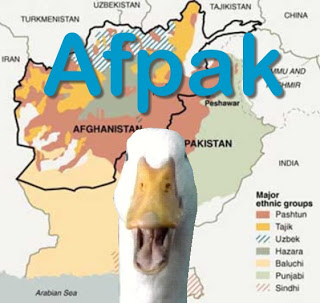
afpakU.S. President Barack Obama’s administration has decided to keep U.S. military bases and conduct counterterrorism operations in Afghanistan after bringing the longest war in America’s history there to an end in 2014. But its decision, centered on keeping a substantial residual military force, risks locking the United States in a low-intensity but never-ending war in that lawless, rugged country.

The Bilateral Security Agreement (BSA) reached between Washington and Afghan President Hamid Karzai recently defines a U.S.-led counterterrorism and training mission involving up to 12,000 NATO troops, mostly American, lasting “until the end of 2024 and beyond” unless terminated with two years’ advance notice. This will mean virtually an indefinite U.S. troop presence in Afghanistan with a mandate, as the text says, to “conduct combat operations.”

Obama’s decision in favor of strong military basing in Afghanistan — where there are currently about 45,000 American troops — stands in sharp contrast to his earlier action in pulling out all U.S. forces from Iraq after a decade-long American occupation of that country.

While there has been little U.S. debate about the merits of extended military engagement in Afghanistan, the Loya Jirga, or assembly of Afghan tribal leaders, on November 24 put its imprimatur on the BSA, which grants the U.S. important concessions, including a controversial immunity for American troops from Afghan law and permitting U.S. special operations forces to conduct antiterrorism raids on private Afghan homes. Washington leveraged a pledge of more than $4 billion in annual security aid to secure these provisions.

However, rejecting Washington’s demand that the deal be signed by yearend, Karzai — concerned over leaving behind a legacy as the main facilitator of a long-term U.S. military presence — has threatened to delay that action until his successor is elected in next April’s presidential election. Washington has warned it would begin planning for a complete troop withdrawal if the BSA was not signed by yearend.

In any event, the U.S. needs a separate deal with the Afghan Taliban, or else its military bases would likely come under intense insurgent attacks after 2014. Indeed, the Obama administration is seeking to cut a broader deal with the Taliban to allow it to “honorably end” combat operations next year — an objective that has prompted it to kiss and make up with Pakistan, which shelters the top Taliban leadership.

The U.S. recently restored its $1.6 billion aid flow to Pakistan, which had been blocked because that country never came clean over who helped Osama bin Laden hide for years in a military garrison town near its capital, Islamabad. The aid was suspended also because the Pakistani military establishment harbors the Afghan Taliban’s one-eyed chief, Mullah Mohammed Omar, and other senior Taliban leaders and aids jihadists who carry out cross-border attacks in India and Afghanistan.

Imperial Britain created many unnatural political constructs, including two countries that have searched vainly to shape a national identity — Afghanistan and Pakistan (or “Afpak” in Washingtonese). The Afpak belt, for the foreseeable future, is likely to remain a bastion of transnational terrorists, with the Durand Line legacy making Afghanistan and Pakistan virtual Siamese twins.

The Durand Line — arbitrarily bisecting ethnic Pashtun and Baloch homelands — is the Afghan-Indian border the British demarcated in 1893 and which later became the frontier between Afghanistan and Pakistan. Decades after Pakistan’s creation in 1947, the Durand Line remains a mythical border, with successive Afghan governments refusing to recognize it and the validity of the porous line challenged by daily cross-frontier movement of people and extremists.

America’s post-2014 strategy risks perpetuating the same mistake that has led it to falter in the ongoing 12-year war, which has cost it nearly a trillion dollars — limiting its military operations to Afghanistan in a binational region that has become a single geopolitical unit, with militant sanctuaries, command-and-control structure and support infrastructure for the Afghan insurgency located on the other side of the Durand Line. Terrorism and insurgency have never been defeated anywhere in the world without cutting off transboundary sustenance and support.

waziristanIn recent years, the U.S. has carried out from Afghanistan a series of air and drone strikes in Pakistan’s tribal Waziristan region, targeting the nemesis of the Pakistani military — the Pakistani Taliban. But to preserve the option of reaching a Faustian bargain with its main battlefield opponent — the Afghan Taliban — the U.S. has not carried out a single air, drone or ground attack against that militia’s leadership, which is ensconced in Pakistan’s sprawling Baluchistan province, located to the south of Waziristan.

The Afghan Taliban was created in the early 1990s by the Pakistani intelligence as part of Pakistan’s strategy to install a pliable regime in Kabul and acquire “strategic depth” against India. In reality, it is the Afghan Taliban — enjoying a safe haven across the border after its ouster from power by the U.S.-led military intervention — that has secured “strategic depth.”

In seeking to co-opt the Afghan Taliban, the Obama administration seems unconcerned that it is bestowing legitimacy on a terrorist militia that enforces medieval practices in the areas currently under its control and which, according to a recent United Nations report, raised $155 million last year from illicit opium production, besides skimming profit off illegally mined gemstones, including rubies and emeralds.

Even if Washington succeeded in cutting a deal with the motley Afghan Taliban, powerful factions within the militia may not honor it. As the U.N. report has pointed out, an increasingly fragmented insurgency has led to the rise of a new generation of local commanders operating largely independent of the Taliban’s command and control. A better U.S. strategy would be to try and undermine ethnic-Pashtun support for the Taliban by clinching a series of deals with local tribal chieftains and commanders.

Obama, who had earlier promised to bring all troops home, has not explained how a residual American force, even if sizable, would make a difference in Afghanistan when a much larger force is staring at defeat. In fact, last May, he recalled the warning of James Madison — America’s fourth president — that “no nation could preserve its freedom in the midst of continual warfare.”

A long-term U.S. military engagement, besides compelling Washington to work with Afpak elements that have a long record of duplicitous conduct, could boost the militants’ cause. Yet if the U.S. completely washed its hands of Afghanistan, Afpak could sink deeper into a jihadist dungeon. The U.S. faces difficult choices, compounded by the White House’s failure to clarify strategic goals.

With violence soaring, Afpak’s future remains more uncertain than ever. There is considerable risk of an Iraq-style “soft” ethnic partition of Afghanistan.

The worst scenario would be the Taliban’s return to power in Kabul, with the thuggish militia’s control extending across much of Afghanistan. That would not only unleash a fresh reign of Islamist terror but also allow transnational terrorists to re-establish a major operational base, thereby sucking U.S. forces into bloody counterterrorism missions. It would be as if history had come full circle.

Brahma Chellaney is a geostrategist and author.

(c) The Japan Times, 2013.

Bridge between Europe and Asia — Strategic Challenges in the Indian Ocean

Brahma Chellaney, Körber Policy Brief No. 1

  • Geopolitical rivalry in the Indian Ocean has increased. Several boundary, sovereignty and jurisdiction disputes threaten freedom of navigation. China has become the most active power in the region and is challenging the existing balance of power.
  • With interstate competition over resources in the Indian Ocean sharpening, the EU should assist in creating a predictable regulatory regime and contribute to monitoring and enforcement of internationally agreed rules.
  • The EU is already playing a limited security and political role in the Indian Ocean region, where it has important economic interests at stake. It should support regional cooperation to reduce the risks of unilateral action by any side and to help build long-term regional crisis stability.

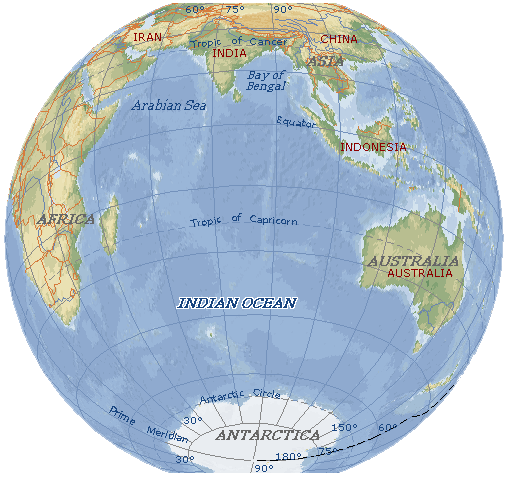
The Indian Ocean, which links Europe with Asia, is becoming the new global center of trade and energy flows. Spanning more than 73 million square kilometers, this critical ocean region is likely to determine the wider geopolitics, maritime order, and balance of power in Asia and beyond. In fact, in no part of the world is the security situation so dynamic and in such flux as in the Indian Ocean. This region, extending from Australia to the Middle East and Southern Africa, promises to become the hub of global geopolitical competition.
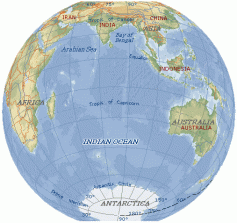
indian-oceanThe challenges in this region extend from traditional security threats to nontraditional and emerging challenges. The challenges are linked to its vast size: It is home to a third of the global population, with the littoral states there also accounting for 25 percent of the world’s landmass, 55 percent of its proven oil reserves, and 40 percent of its gas reserves. As symbolized by the 2004 Christmas-eve tsunami and by recurrent cyclones, the region is regularly battered by natural disasters. According to one estimate, 70 percent of the world’s natural disasters occur in this region alone.

The region’s littoral states are linked by a common history of sea faring. Yet, given that it has the world’s largest concentration of fragile or failing states, as exemplified by Somalia, Pakistan and the Maldives, this region represents the symbolic center of the global challenges of the 21st-century world — from terrorism and extremism to piracy and safety of sea lanes of communication. The Indian Ocean indeed covers the entire arc of Islam — from the Horn of Africa and the Saudi Arabian desert to Malaysia and the Indonesian archipelago — and is racked by the world’s highest incidence of transnational terrorism.

The region is on the frontlines of climate change. It thus has states whose future is imperiled by global warming. Such states extend from the island-nations of Mauritius and the Maldives to Bangladesh, whose land area is less than half the size of Germany but with a population more than double. Because it is made up largely of low-lying floodplains and deltas, Bangladesh risks losing 17 percent of its land and 30 percent of its food production by 2050 due to saltwater incursion resulting from the rising ocean level, according to the Intergovernmental Panel on Climate Change. If, in the future, states like the Maldives and Mauritius were submerged, what would be the legal status of their Exclusive Economic Zones (EEZs) and the mineral wealth that these zones hold?

In the Indian Ocean region the old world order coexists uneasily with the new order.

The Indian Ocean illustrates other nontraditional security challenges as well — from environmental pollution, as exemplified by the brown cloud of sooty haze hanging over South Asia, and degradation of coastal ecosystems to a mercantilist approach to energy supplies and the juxtapositioning of energy interests with foreign-policy interests. Put simply, this is the region where old and new security challenges converge. In this region, the old order — as epitomized by the Anglo-American military base at Diego Garcia and the French-administered Réunion and other islands — coexists uneasily with the new order.

Because of the Indian Ocean’s importance to global trade and energy flows and the potential vulnerability of the chokepoints around it, sea-lane security has become a pressing concern. Important regional and extra-regional powers have sought to build maritime security by forging strategic partnerships with key littoral states in the Indian Ocean rim. The partnerships, principally aimed at safeguarding the various “gates” to the Indian Ocean, incorporate trade accords, naval training and joint exercises, counter-piracy operations, energy cooperation, and strategic dialogue.

The chokepoints, and the states adjacent to them, include the Strait of Malacca (Singapore, Indonesia and Malaysia), the Strait of Hormuz (Iran and Oman), the Horn of Africa (Djibouti, Eritrea and Yemen), as well as the Cape of Good Hope and the Mozambique Channel (South Africa, Mozambique and Madagascar).

There are, however, a range of other strategic concerns in the Indian Ocean. Some players, including Iran and the United States, are not yet party to the 1982 UN Convention on the Law of the Sea (UNCLOS). China, although a party, has sought to unilaterally interpret UNCLOS’s provisions in its favor to assert maritime claims, while refusing to accept the Convention’s dispute-settlement mechanism. The Philippines, with apparent U.S. support, has filed a complaint against China with the International Tribunal for the Law of the Sea (ITLOS), but China has simply declined to participate in the proceedings. Iran seized an Indian oil tanker in the autumn of 2013, holding it for nearly a month, but India could not file a case against Teheran with the International Tribunal for the Law of the Sea.

Boundary, sovereignty, and jurisdiction issues carry serious conflict potential.

There are outstanding boundary, sovereignty, and jurisdiction issues, some of which carry serious conflict potential. Bangladesh and Myanmar have set an example by peacefully resolving a dispute over the delimitation of their maritime boundaries in the Bay of Bengal. They took their dispute to the International Tribunal for the Law of the Sea for adjudication. The Tribunal’s verdict, delivered in 2012, ended a potentially dangerous dispute that was fuelled in 2008 when, following the discovery of gas deposits in the Bay of Bengal, Myanmar authorized exploration in a contested area, prompting Bangladesh to dispatch warships to the area.

The threats to navigation and maritime freedoms in the Indian Ocean, including in critical straits and exclusive economic zones (EEZs), can be countered only through adherence to international rules by all parties as well as through monitoring, regulation, and enforcement. Significantly, several states in the region have sought to deny other powers freedom of navigation in their EEZs when they are engaged in military activity, such as surveillance by ship.

Deep seabed mining has emerged as a major new strategic issue.

Deep seabed mining has emerged as a major new strategic issue, given the region’s mineral wealth. Interstate competition over seabed minerals is sharpening. From seeking to tap sulfide deposits — containing valuable metals such as silver, gold, copper, manganese, cobalt, and zinc — to phosphorus nodule mining for phosphor-based fertilizers used in food production, the competition is underscoring the imperative for creating a predictable regulatory regime, developing safe and effective ocean-development technologies, finding ways to share benefits of the common heritage, and ensuring environmental protection. Even China, an extra-regional power, has secured an international deep-seabed block in southwestern Indian Ocean from the International Seabed Authority to explore for polymetallic sulphides.

Great-power rivalries, meanwhile, are complicating maritime-security issues. The rivalries are mirrored in foreign-aided port-building projects along vital sea lanes; attempts to assert control over energy supplies and transport routes as part of a 21st-century-version of the Great Game; the building of inter-country energy corridors involving the construction of pipelines to transport oil or gas sourced by sea from third countries, as China is doing in Myanmar and Pakistan; and strategic plans to assemble a “string of pearls” in the form of listening posts and special naval-access arrangements along the great trade arteries.

China has become the most active power in the Indian Ocean and is challenging the existing balance of power.

Of all the powers, China has become the most active in the Indian Ocean, as underscored by the new port it has built in Pakistan at Gwadar (which sits strategically at the mouth of the Strait of Hormuz) and in Sri Lanka at Hambantota; a Chinese container facility in Chittagong (Bangladesh); and Chinese port projects in Myanmar, including developing a deep-sea port at Kyaukpyu as its international gateway. Such developments have sharpened China’s geopolitical rivalry with India, which enjoys an immense geographic advantage in the Indian Ocean.

With this region having the most-adverse ratio between land size, population, and natural resources, environmental degradation has emerged as an important challenge. The degradation is extending to coastal ecosystems, which sustain diverse species of marine life and are the source of livelihood for many people. The increasing role of external states in overexploiting the region’s marine resources has underscored the need for conservation and management of the biological diversity of the seabed in areas that are beyond national jurisdiction. There is also need for enforcing coastal-protection regulations and for surveillance and policing to stop illegal fishing and to protect structures for deep-sea mining.

Against this background, it is apparent that maritime-security challenges in the Indian Ocean need to be addressed in a holistic strategic framework. Nontraditional issues — from energy security and climate security to transnational terrorism and environmental degradation — have become as important as traditional issues, such as freedom of navigation, security of sea lanes, maritime boundary and domain security, arms proliferation, and challenges to law and order (including piracy and sea robbery, criminal activities like drug, people, and arms smuggling, illicit fishing, illegal immigration, and maritime terrorism).

The Indian Ocean is the maritime center of the world and of critical importance to the European Union’s economic and energy interests. The flow of trade through the maritime Silk Road of the Indian Ocean follows the same route and pattern from which the littoral states drew wealth and strength in history.

Europe could serve as a guide on how to build institutionalized cooperation in this region, where, with maritime boundaries still to be finalized, jurisdictional “creep” threatens to impede freedom of navigation. Seabed mining, for its part, is presenting both new challenges and opportunities on the high seas.

Europe has a role to play on environmental protection and resource sustainability. Environmental degradation in the Indian Ocean, after all, can influence climatic patterns and atmospheric general circulation in the entire Northern Hemisphere. Good governance, built through interstate cooperation and collaboration, can help stem the threats to maritime security and ecosystems.

France and Britain, through their military presence in the Indian Ocean, are promoting their own geopolitical interests in the region. European states, however, can collectively play a role to support peace and stability and environmental sustainability in the Indian Ocean. After all, the Indian Ocean, which accounts for 50 percent of the world’s container traffic and 66 percent of its seaborne trade in oil, is of critical importance to European trade.

The EU should help promote rules-based cooperation in the Indian Ocean region.

The European Union, by citing its own efforts to resolve maritime-boundary questions and other issues in Europe, can lend a helping hand to create a regulatory regime and to promote environmental protection in the Indian Ocean region. In this endeavor, the EU must collaborate with the Indian Ocean Rim Association (IORA), which consists of 20 diverse member-nations ranging from India, Indonesia, and Australia to small island-countries such as the Comoros and Seychelles.

Given its own institutionalized framework of cooperation, the EU, more than any other institution in the world, can help promote rules-based cooperation in the Indian Ocean region. The threats to navigation and maritime freedoms, including in critical straits and EEZs in the Indian Ocean region, can be countered only through adherence to international rules by all parties, as well as through monitoring, regulation and enforcement. In this context, NATO is already playing a limited security and political role in the region, with its contribution to combating piracy in the Horn of Africa.

The EU can also encourage collaborative projects between regional states so that they adopt new technologies and best practices to protect environmental security and build maritime cooperation. Collaborative projects will yield significant peace dividends by helping to reduce the risks of unilateral action by any side and by contributing to building regional crisis stability. European wealth is dependent on peace and stability in the Indian Ocean. This region serves as a test case of Europe’s ability to translate its economic heft into political influence to help shape regional developments in a positive direction.

Brahma Chellaney is Professor of Strategic Studies at the independent Center for Policy Research in New Delhi and the author, most recently, of “Water, Peace, and War” (Rowman & Littlefield, 2013).

© Körber Foundation, Hamburg 2013. All rights reserved

Körber Policy Briefs solely reflect the author’s views.

www.koerber-stiftung.de

Obama’s security deal dooms U.S. to endless war

By Brahma Chellaney, The Washington Times, November 27, 2013

President Obama has decided to maintain U.S. military bases and conduct counterterrorism operations in Afghanistan after bringing the longest war in America’s history there to an end next year. His decision, though, centered on keeping a substantial residual military force, risks locking the United States in a never-ending, low-intensity war in that lawless, rugged country post-2014, including continued cross-border drone strikes on targets in Pakistan.

The Bilateral Security Agreement reached between Washington and Afghan President Hamid Karzai last week defines a U.S.-led counterterrorism and training mission involving up to 12,000 NATO troops, mostly American, and lasting “until the end of 2024 and beyond” unless terminated with two years’ advance notice. This will make the U.S. military presence in Afghanistan virtually indefinite.

Mr. Obama’s decision in favor of strong military basing in Afghanistan — where there are currently about 45,000 American troops — stands in sharp contrast to his earlier action in pulling out all U.S. forces from Iraq after a decade-long American occupation of that country.

Afghanistan’s Loya Jirga, or assembly of tribal leaders, put its imprimatur last Sunday on the agreement, which grants the United States important concessions, including a controversial immunity for American troops from Afghan law and permission for U.S. special operations forces to conduct antiterrorism raids on private Afghan homes. Washington leveraged the more than $4 billion annual security aid it has promised to secure these provisions.

However, rejecting Washington’s demand that the deal be signed by year’s end, Mr. Karzai — concerned over leaving behind a legacy as the key facilitator of a long-term U.S. military presence — has threatened to delay that action until his successor is elected in next April’s presidential election.

In any event, the United States needs a separate deal with the Afghan Taliban, or else its military bases would likely come under intense insurgent attacks post-2014. Indeed, the Obama administration is seeking to cut a broader deal with the Taliban to allow it to “honorably” end combat operations next year — an objective that has prompted it to kiss and make up with Pakistan, which shelters the top Taliban leadership.

The United States recently restored its $1.6 billion aid flow to Pakistan, which had been blocked because that country never came clean over who helped Osama bin Laden hide for years in a military garrison town near its capital, Islamabad. The aid was suspended also owing to the fact that the Pakistani military establishment harbors the leaders of the Afghan Taliban, who kill American troops, and aids jihadists who carry out cross-border attacks in India and Afghanistan.

Imperial Britain created many unnatural political constructs, including two countries that have searched vainly to shape a national identity — Afghanistan and Pakistan (or “Afpak” in Washington-speak). The Afpak belt, for the foreseeable future, is likely to remain a bastion of transnational terrorists, with the Durand Line legacy making Afghanistan and Pakistan virtual Siamese twins.

The Durand Line — arbitrarily bisecting ethnic Pashtun and Baloch homelands — is the Afghan-Indian border the British demarcated in 1893 and which later became the frontier between Afghanistan and Pakistan. Decades after Pakistan’s creation in 1947, the Durand Line remains a mythical border, with successive Afghan governments refusing to recognize it and the validity of the porous line challenged by daily cross-frontier movement of people and extremists.
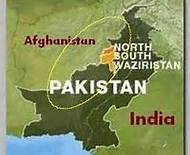
America’s post-2014 strategy risks perpetuating the same mistake that has led it to falter in the ongoing 12-year war, which has cost nearly $1 trillion and killed tens of thousands of people — limiting its military operations to Afghanistan in a binational region that has become a single geopolitical unit, with militant sanctuaries, command-and-control structure and support infrastructure located on the other side of the Durand Line. Terrorism and insurgency have never been defeated anywhere in the world without cutting off transboundary sustenance and support.

In recent years, the United States has carried out from Afghanistan a series of air and drone strikes on Pakistan’s tribal Waziristan region, targeting the nemesis of the Pakistani military, the Pakistani Taliban. To preserve the option of reaching a Faustian bargain with its main battlefield opponent — the Afghan Taliban — America has not carried out a single air, drone or ground attack against that militia’s leadership, which is ensconced in Pakistan’s sprawling Baluchistan province, located to the south of Waziristan.

In seeking to co-opt the Afghan Taliban, the Obama administration seems unconcerned that it is bestowing legitimacy on a terrorist militia that enforces medieval practices in the areas currently under its control. Even if the administration succeeded in cutting a deal with the motley Afghan Taliban, powerful factions within it may not honor it. A better strategy would be to undermine ethnic-Pashtun support for the Taliban by clinching a series of deals with local tribal chieftains.

Mr. Obama, who had earlier promised to bring all troops home, has not explained how a residual American force, even if sizable, would make a difference in Afghanistan when a much larger force is staring at defeat.

A long-term U.S. military presence, besides compelling Washington to work with Afpak elements that have a long record of duplicitous conduct, could boost the militants’ cause. Yet if the United States completely washed its hands of Afghanistan, Afpak could sink deeper into a jihadist dungeon. The White House faces difficult choices, compounded by the administration’s failure to clarify long-term goals.

Afpak’s future remains more uncertain than ever, with considerable risk of an Iraq-style “soft” ethnic partition of Afghanistan.

The worst scenario would be the Taliban’s return to power in Kabul, with the militia’s control extending across much of Afghanistan. That would not only unleash a fresh reign of Islamist terror, but also allow transnational terrorists to re-establish a major operational base, thereby sucking U.S. forces into bloody counterterrorism missions. It would be as if history had come full circle.

Brahma Chellaney is a geostrategist and author.

(c) The Washington Times, 2013.

@washtimes on Twitter

Arming the Elephant

BRAHMA CHELLANEY

A column internationally syndicated by Project Syndicate

The rise in US arms sales to India is being widely cited as evidence of the two countries’ deepening defense relationship. But the long-term sustainability of the relationship, in which India is more a client than a partner, remains a deep concern for Indians. Does the recently issued Joint Declaration on Defense Cooperation, which establishes intent to move beyond weapons sales to the co-production of military hardware,mark a turning point, or is it merely a contrivance to placate India?

The factors driving the strategic relationship’s development are obvious. Since 2006, bilateral trade has quadrupled, reaching roughly $100 billion this year. And, over the last decade, US defense exports to India have skyrocketed from just $100 million to billions of dollars annually.

With US military spending slowing and other export markets remaining tight, American defense firms are eager to expand sales to India, which is now the world’s largest arms importer. And the political environment is amenable to their plans: India now conducts more joint military exercises with the US than with any other country.

For the US, displacing Russia as India’s leading arms supplier was a major diplomatic triumph, akin to Egypt’s decision during the Cold War to shift its allegiance – and its arms supplier – from the Soviet Union to America. The difference is that India can actually pay for the weapons that it acquires.

And the bills are substantial. In recent years, India has ordered American arms worth roughly $9 billion. It is now purchasing additional US weapons systems – 22 Apache attack helicopters, six C-130J turbo military transport aircraft, 15 Chinook heavy-lift helicopters, and 145 M-777 ultra-light howitzers – worth $5 billion. The value of India’s arms contracts with US firms exceeds that of American military aid to any country except Israel.

Nirupama Rao, India’s ambassador to the US, has called such defense transactions “the new frontier” in US-India relations and “a very promising one at that.” But, while it is certainly a positive development for the US, for India, it represents a new frontier of dependency.

The problem is that India’s defense sector has virtually nothing that it can sell to the US. The country has yet to develop a credible armament-production base like that of, say, Japan, which is co-developing advanced weapons systems with the US. In fact, India depends on imports – not only from major suppliers like the US and Russia, but also from Israel, the world’s sixth-largest arms exporter – to meet even basic defense needs.

Moreover, India’s leaders have not leveraged the bargaining power afforded by its massive arms purchases to advance national interests. They could, for example, try to persuade the US to stop selling arms to Pakistan, or secure better access to the American market for India’s highly competitive IT and pharmaceutical sectors, which are facing new US non-tariff barriers.

Applying the recent declaration on defense cooperation will not be easy. For example, efforts to identify specific opportunities for collaborative weapons-related projects are to be pursued in accordance with “national policies and procedures.” But the two sides cannot truly “place each other at the same level as their closest partners” unless national policies and procedures – especially in the US – evolve sufficiently.

Similarly, the declaration merely reiterates America’s position that it supports India’s “full membership” in the four US-led technology-control regimes: the Wassenaar Arrangement, the Nuclear Suppliers Group, the Missile Technology Control Regime, and the Australia Group. Given that US policy is to deny sensitive technologies to those outside these regimes, India’s admission would make all the difference in facilitating technology sharing. But the declaration does not include any commitment from the US to expedite India’s admission.

All of this suggests that the US is pandering to India’s desire for a more equal defense relationship. It is willing to co-produce with India some smaller defensive systems, such as Javelin anti-tank missiles, in order to pave the way for more multi-billion-dollar deals for US-made systems. The Indian media are doing their part to strengthen the illusion of progress, latching onto the phrase “closest partners” in their acclaim for the agreement.

The irony is that, while America’s pursuit of a stronger defense relationship with India is aimed largely at offsetting an increasingly assertive China, US President Barack Obama has charted a neutral course in Sino-Indian disputes. For example, the US has declined to hold joint military exercises in the northeastern Indian state of Arunachal Pradesh, which China has claimed as “South Tibet” since 2006.

As it stands, the US sells mainly defensive weapons systems to India, while Russia, for example, offers India offensive weapons, including strategic bombers, an aircraft carrier, and a lease on a nuclear submarine. Would the US be willing to sell India offensive weapons – including high-precision conventional arms, anti-submarine systems, and long-range air- and sea-launched cruise missiles – that could help to deter Chinese military preemption?

As US-India defense cooperation broadens, this question will loom ever larger.

(c) Project Syndicate, 2013.

Tackling new maritime challenges

The international maritime order will continue to gradually but fundamentally change as new powers acquire greater economic and naval heft

BRAHMA CHELLANEY, The Hindu, November 5, 2013

Maritime challenges are being fundamentally transformed by new technological and geopolitical realities, shifting trade and energy patterns, and the rise of unconventional threats. The fact that about 50 per cent of the maritime boundaries in the world are still not demarcated accentuates the challenges.

Water covers more than seven-tenths of the planet’s surface, and almost half the global population lives within 200 km of a coastline. It may thus surprise few that 90 per cent of the world’s trade uses maritime routes. With countless freighters, fishing boats, passenger ferries, leisure yachts, and cruise ships plying the waters, a pressing concern is maritime security — a mission tasked to national navies, coast guards, and harbour police forces.

Altering equations

The maritime order has entered a phase of evolutionary change in response to global power shifts. Maritime power equations are beginning to alter. The shifts actually symbolize the birth-pangs of a new world order.

Emerging changes in trade and energy patterns promise to further alter maritime power equations. For example, energy-related equations are being transformed by a new development: the centre of gravity in the hydrocarbon world is beginning to quietly shift from the Persian Gulf to the Americas, thanks to the shale boom, hydrocarbon extraction in the South Atlantic and Canada’s Alberta Province, and other developments.

The United States, for the foreseeable future, will remain the dominant sea power, while Europe will stay a significant maritime player. Yet, the international maritime order will continue to gradually but fundamentally change as new powers acquire greater economic and naval heft.

According to a projection by the recently released Global Marine Trends 2030 report, as the global GDP doubles over the next 17 years, China will come to own a quarter of the world’s merchant fleet. Several other maritime states in the Asia-Pacific, including Japan, South Korea, India, and Vietnam, are also set to significantly enlarge their maritime footprints.

Admittedly, there are real threats to maritime peace and security from the changing maritime power equations and the sharpening competition over resources and geopolitical influence. The Asia-Pacific region — with its crowded and, in some cases, contested sea lanes — is becoming the centre of global maritime competition. Maritime tensions remain high in this region due to rival sovereignty claims, resource-related competition, naval buildups, and rising nationalism.

A lot of attention has focussed on the maritime implications of China’s rise. President Xi Jinping has championed efforts to build China into a global maritime power, saying his government will do everything possible to safeguard China’s “maritime rights and interests” and warning that “in no way will the country abandon its legitimate rights and interests.” China’s increasing emphasis on the oceans was also evident from the November 2012 report to the 18th national congress of the Chinese Communist Party that outlined the country’s maritime power strategy. It called for safeguarding China’s maritime rights and interests, including building improved capacity for exploiting marine resources and for asserting the country’s larger rights.

The risks of maritime conflict arising from mistake or miscalculation are higher between China and its neighbours than between China and the United States.

There has been a course correction in the Obama administration’s “pivot” toward Asia, lest it puts it on the path of taking on Beijing. Washington has bent over backward to tamp down the military aspects of that policy. Even the term “pivot” has been abandoned in favour of the softer new phrase of “rebalancing.”

The U.S., moreover, has pointedly refused to take sides in sovereignty disputes between China and its neighbours. It has sought the middle ground between seeking to restrain China and reassure allies but, as former U.S. Deputy Secretary of State James Steinberg has put it, “without getting ourselves into a shooting war.”

China has also shied away from directly challenging U.S. interests. It has been careful not to step on America’s toes. Its assertiveness has been largely directed at its neighbours.

After all, China is seeking to alter the territorial and maritime status quo in Asia little by little. This can be described as a “salami-slice” strategy or, what a Chinese general, Zhang Zhaozhong, this year called a “cabbage” strategy — surround a contested area with multiple security layers to deny access to a rival nation.

Bit-by-bit strategy

This bit-by-bit strategy increases the risk of maritime conflict through overreach, and the inadvertent encouragement it provides to neighbouring countries to overcome their differences and strategically collaborate.

The new international maritime challenges, however, go beyond China’s jurisdictional “creep.”

The oceans and seas not only have become pivotal to any power’s security and engagement with the outside world but they also constitute the strategic hub of the global geopolitical competition. The growing importance of maritime resources and of sea-lane safety, as well as the concentration of economic boom zones along the world’s coastlines, has made maritime security more critical than ever.

The maritime challenges extend to non-traditional threats such as climate security, transnational terrorism, illicit fishing, human trafficking, and environmental degradation. The overexploitation of marine resources has underscored the need for conservation and prudent management of the biological diversity of the seabed.

Deep seabed mining has emerged as a major new strategic issue. From seeking to tap sulphide deposits — containing valuable metals such as silver, gold, copper, manganese, cobalt and zinc — to phosphorus nodule mining for phosphor-based fertilizers used in food production, the interstate competition over seabed-mineral wealth underscores the imperative for creating a regulatory regime, developing safe and effective ocean-development technologies, finding ways to share benefits of the common heritage, and ensuring environmental protection.

Interstate competition over seabed minerals is sharpening in the Indian Ocean, for example. Even China, an extra-regional power, has secured an international deep-seabed block in southwestern Indian Ocean from the International Seabed Authority to explore for polymetallic sulphides.

More broadly, some of the outstanding boundary, sovereignty and jurisdiction issues — extending from the Arctic to the Indian Ocean — carry serious conflict potential. The recrudescence of territorial and maritime disputes, largely tied to competition over natural resources, will increasingly have a bearing on maritime peace and security.

Bangladesh and Myanmar have set an example by peacefully resolving a dispute over the delimitation of their maritime boundaries in the Bay of Bengal. They took their dispute to the International Tribunal for the Law of the Sea for adjudication. The Tribunal’s verdict, delivered in 2012, ended a potentially dangerous dispute that was fuelled in 2008 when, following the discovery of gas deposits in the Bay of Bengal, Myanmar authorized exploration in a contested area, prompting Bangladesh to dispatch warships to the area.

However, some important maritime powers, including the U.S., are still not party to the 1982 U.N. Convention on the Law of the Sea (UNCLOS).

Iran recently seized an Indian oil tanker, holding it for about a month, but India could not file a complaint with the International Tribunal for the Law of the Sea because Tehran has not ratified UNCLOS. The seizure of the tanker, carrying Iraqi oil, appeared to be an act of reprisal against India’s sharp reduction of Iranian oil purchases, under U.S. pressure.

The threats to navigation and maritime freedoms, including in critical straits and exclusive economic zones (EEZs), can be countered only through adherence to international rules by all parties as well as through monitoring, regulation and enforcement.

Great-power rivalries, however, continue to complicate international maritime security. The rivalries are mirrored in foreign-aided port-building projects; attempts to assert control over energy supplies and transport routes as part of a 21st-century-version of the Great Game; and the establishment of listening posts and special naval-access arrangements along the world’s great trade arteries.

The evolving architecture of global governance will determine how the world handles the pressing maritime challenges it confronts. The assertive pursuit of national interest for relative gain in an increasingly interdependent world is hardly a recipe for harmonious maritime relations. Another concern is the narrow, compartmentalized approach in which each maritime issue is sought to be dealt with separately, instead of addressing the challenges in an integrated framework.

(Brahma Chellaney, a geostrategist, is the author, most recently, of Water, Peace, and War — Rowman & Littlefield, 2013)

(c) The Hindu, 2013.

Age of the water wars

As competition for this precious resource grows, water will be a key to war and peace 

BRAHMA CHELLANEY, The Globe and Mail, Published Wednesday, Oct. 09, 2013

In an increasingly water-stressed world, shared water resources are becoming an instrument of power, fostering competition within and between nations and exacerbating impacts on ecosystems. This week’s Budapest World Water Summit is the latest initiative in the search for ways to mitigate the pressing challenges.

Consider some sobering facts: Bottled water at the grocery store is already more expensive than crude oil on the spot market. More people today own or use a cellphone than have access to water-sanitation services.

Unclean water is the greatest killer on the globe, yet a fifth of humankind still lacks easy access to potable water. More than half of the global population currently lives under water stress — a figure projected to increase to two-thirds during the next decade.

Potentially calamitous water shortages in the coming decades in the densely populated parts of Asia, the Middle East and North Africa — the world’s most-parched regions — could produce large numbers of “water refugees” and overwhelm some states’ institutional capacity to contain the effects. The struggle for water is already escalating interstate and intrastate tensions.

108_2013_b1-chellany-water-w8201_s640x467Downstream Egypt, for example, uses the bulk of the Nile River’s water, yet it is now threatening unspecified reprisals against Ethiopia’s ongoing construction of the Grand Renaissance Dam. China, already the world’s most-dammed nation and unrivaled hydro-hegemon, has approved the construction of 54 new dams — many of them on rivers that are the lifeblood for countries in Southeast and South Asia — as it seeks to build a strategic grip on transboundary water flows.

Turkey, like China, is trying to reinforce its regional riparian dominance by accelerating an ambitious dam-building program, which threatens to diminish cross-border flows into Syria and Iraq. The internal war in Syria and the continuing sectarian bloodletting in Iraq have muted regional opposition to Turkey’s dam-building spree.

Meanwhile, intrastate water-sharing disputes have become common, although they receive little coverage in the international media. Water conflicts within culturally diverse nations, such as Afghanistan, Pakistan, Yemen and Sudan, often assume ethnic dimensions, thereby accentuating internal-security challenges.

But as illustrated by the disputes, for example, within the United States, Spain and Australia, intra-country water conflict is not restricted to the developing world. Water conflicts in America have spread from the arid west to the east. Violent water struggles, however, occur mostly in developing nations, with resource scarcity often promoting environmental degradation and perpetuating poverty.

Adequate access to natural resources has been a key factor, historically, in peace and war. Water, however, is very different from other natural resources. A person can live without love but not without water.

There are substitutes for a number of resources, including oil, but none for water. Countries can import, even from distant lands, fossil fuels, mineral ores, and resources originating in the biosphere, such as fish and timber. But they cannot import the most vital of all resources, water — certainly not in a major or sustainable manner. Water is essentially local and very expensive to ship across seas.

Scarce water resources generate conflict. Even the origin of the word “rival” is tied to water competition. It comes from the Latin rivalis, or one who uses the same stream.

Water’s paradox is that it is a life preserver, but it can also be a life destroyer when it becomes a carrier of deadly bacteria or comes in the deluge of a tsunami, a flash flood, or a hurricane. Many of the greatest natural disasters of our time have been related to water. A recent example is the Fukushima disaster, which triggered a triple nuclear meltdown.

Because of global warming, potable water is set to come under increasing strain even as oceans rise and the intensity and frequency of storms and other extreme weather events increases.

Rapid economic and demographic expansion has already turned potable water into a major issue across large parts of the world. Lifestyle changes, for example, have spurred increasing per-capita water consumption in the form of industrial and agricultural products.

It is against this background that water wars, in a political and economic sense, are already being waged between competing states in several regions, including by building dams on international rivers or, if the country is located downstream, by resorting to coercive diplomacy to prevent such construction. U.S. intelligence has warned that such water conflicts could turn into real wars.

According to a report reflecting the joint judgment of U.S. intelligence agencies, the use of water as a weapon of war or a tool of terrorism appears more likely in the next decade in some regions. The InterAction Council, comprising more than 30 former heads of state or government, meanwhile, has called for urgent action, saying some countries battling severe water shortages risk failing. The U.S. State Department, for its part, has upgraded water to “a central U.S. foreign policy concern.”

Water stress is also imposing mounting socioeconomic costs. Commercial or state decisions in many countries on where to set up new manufacturing or energy plants are increasingly being constrained by inadequate local water availability.

The World Bank has estimated the economic cost of China’s water problems at 2.3 percent of its GDP. But thus far China isn’t even under water stress — a term internationally defined as the availability of less than 1,700 cubic meters of water per head per year. Economies that are already water-stressed, ranging from South Korea and India to Egypt and Morocco, are paying a higher price.

Water is a renewable but finite resource. Nature’s fixed water-replenishment capacity limits the world’s renewable freshwater resources to nearly 43 trillion cubic meters per year. But the human population has almost doubled since 1970 alone, while the global economy has grown even faster.

Consumption growth has become the single biggest driver of water stress. Rising incomes, for example, have promoted changing diets, especially a greater intake of meat, the production of which is notoriously water-intensive. It is about 10 times more water-intensive to produce beef than to produce plant-based calories and proteins.

In this light, water is becoming the world’s next major security and economic challenge.

Although no modern war has been fought just over water, this resource has been an underlying factor in several armed conflicts. With the era of cheap, bountiful water having been replaced by increasing supply and quality constraints, the risks of overt water wars are now increasing.

Avoiding water wars will require rules-based cooperation, water sharing and dispute-settlement mechanisms. However, there is still no international water law in force, and most of the regional water agreements are toothless, lacking monitoring and enforcement rules and provisions formally dividing water among users. Worse still, unilateralist appropriation of shared resources is endemic in the parched world, especially where despots rule.

The international community thus confronts a problem more pressing than peak oil, economic slowdown and other oft-cited challenges. Indeed, this core problem holds the key to other challenges because of water’s nexuses with global warming, energy shortages, stresses on food supply, population, pollution, environmental degradation, global epidemics and natural disasters.

Brahma Chellaney is a geostrategist and the author, most recently, of “Water, Peace, and War”(Rowman & Littlefield, 2013).

(c) The Global and Mail, 2013.

Another Afghanistan in the making?

By Brahma Chellaney, Washington Times, October 1, 2013

Clipboard01

President Obama has aborted his planned military attack on Syria, but the proxy war that pits America and its allies against Russia is set to intensify in that critically located nation, with further horrific consequences for civilians and the likely proliferation of transnational terrorists.

The proxy war injects greater volatility into the Arab world, where internal tumult risks recasting the entire Arab state system, centered on a series of artificial states created in the last century by departing colonial powers.

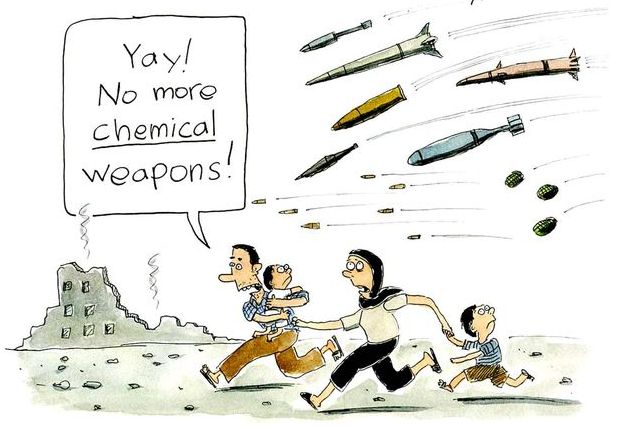
The Washington-Moscow deal to strip Syria of its chemical arms will have little effect on the internal war there, one of the world’s bloodiest conflicts. This conflict has been fueled by Russian and Western arms supplies to rival sides. Indeed, Russia and the U.S.-British-French combination are determined to continue their 2-year-old proxy war in an already fractured Syria. Who cares for civilians?

Most of the estimated 100,000 deaths in the Syrian violence have been caused by foreign-origin weapons, largely made in the proxy-war-waging countries that have shed crocodile tears over civilian deaths in an Aug. 21 sarin attack in suburban Damascus. The U.S. arms supply to rebels is primarily bankrolled by the oil sheikdoms.

In this light, the key questions relate to Syria’s future: Will a new international-terrorist hub emerge that stretches across much of northern Syria and into the Sunni areas of Iraq? Will Syria’s fate be different from that of Afghanistan?

The Syria issue is about more than just President Bashar Assad or chemical weapons: It is integral to the geopolitical clash between the Sunni Middle East, which remains under the U.S.-British-French sway, and the Shiite crescent stretching from Iran through Iraq, Syria and Lebanon to the Mediterranean Syrian port of Tartus, Russia’s only military base outside the former Soviet Union. With Russia emerging as a great-power patron in the Shiite crescent, the United States and the region’s two former colonial powers, Britain and France, are seeking to safeguard the regional geopolitical hegemony that they have enjoyed since the early 1970s, when Egypt switched sides.

Over the decades, the United States has cemented close ties with Sunni Islamist rulers, including the cloistered Arab monarchs who fund Muslim extremist groups and madrassas overseas. Washington has already forgotten the main lesson from the Sept. 11, 2001, terrorist strikes — that it must focus on long-term strategic goals rather than short-term tactical victories. One reminder of that is President Obama’s current effort to strike a Faustian bargain with the thuggish Afghan Taliban.

Since the 1990s, espousing military action as humanitarianism has been the common leitmotif uniting American neoconservatives and liberal interventionists — the hawks on the left who were most vocal recently in promoting a war against Syria. The serial interventionists have failed to take a good, hard look at the lessons of America’s past interventions. For example, those who took the United States to war in Libya have ignored how that “humanitarian” intervention has boomeranged, creating a lawless Islamist state affecting its neighbors’ security.

In backing jihad against Mr. Assad’s autocratic rule, Mr. Obama’s policy has inadvertently strengthened the hands of radical Islamists. The CIA-aided, faction-ridden Free Syrian Army is in danger of being eclipsed by the pro-al Qaeda insurgent groups designated as terrorist organizations by the U.S. State Department — the al-Nusra Front and the Islamic State of Iraq and the Levant.

The risk of an Iraq-style “soft” partition of Syria is high. Indeed, in a July 18 briefing, Mr. Obama’s spokesman, Jay Carney, declared that Mr. Assad “will never rule all of Syria again.” This was a reminder that the unstated goal of Mr. Obama’s military stalemate in Syria is an eventual partition, with Mr. Assad’s power confined to a rump Syria. As former National Security Adviser Zbigniew Brzezinski has acknowledged, “A stalemate is in our interest” — a Machiavellian scenario to lock regime and rebel forces in mutually debilitating combat.

However, with jihadists already in control of much of northern Syria, the danger, as the CIA’s former deputy director, Michael J. Morell, has warned, is that an al Qaeda haven could emerge. This is exactly what happened earlier in Afghanistan as an unintended byproduct of America’s proxy war against the Soviet forces there.

In fact, the transition from covert to overt aid to Syrian rebels by the CIA has occurred much faster than it did in the 1980s Afghanistan, although Syria has already become a magnet for foreign Sunni jihadists. As happened when the United States armed the Afghan mujahedeen, the CIA’s arms supply — far from winning loyal surrogates in Syria — is likely to end up empowering radical forces with transnational ties that extol and perpetrate violence as a religious tool.

For some in Washington and for America’s regional allies — the petro-sheikdoms, Israel and Turkey — the proxy war in Syria is really part of a larger proxy war to contain Iran. The grinding proxy war in Syria thus promises to exact increasing costs regionally and internationally while allowing the U.S.-allied regional autocrats from Abu Dhabi to Ankara to step up their repression at home without fear of international censure. Russia, meanwhile, will continue to prop up the Assad regime.

Given the increasingly murky geopolitics in spite of a rising tide of Syrian civilian displacement, suffering and death, Syria seems set to meet the fate of Afghanistan, a source of regional instability for more than a generation and where the United States is seeking to end its longest-ever military conflict, which has already cost it nearly $1 trillion dollars.

Brahma Chellaney is a geostrategist and the author of “Water, Peace, and War” (Rowman & Littlefield Publishers, 2013).

(c) The Washington Times, 2013.