
An Iranian Bomb Just Became More Likely

Military strikes might slow down a nuclear program, but they cannot impose long-term restraint – especially when they are carried out by powers that flout the very rules they claim to be enforcing. The US and Israel are likely to learn this the hard way, as Iran abandons all doubts about pursuing nuclear breakout.
Brahma ChellaneyProject Syndicate

Israel and the United States have dealt punishing blows to Iran’s nuclear infrastructure. “Operation Rising Lion” and “Operation Midnight Hammer” have been portrayed as precision strikes that will stop the Islamic Republic’s nuclear program in its tracks. But whatever the bombings might have achieved tactically, they risk forfeiting strategically, as Iran is now more convinced than ever that nuclear weapons are the only way to deter future aggression and ensure the regime’s survival.

Iran was once brought to the negotiating table through a carefully calibrated mix of pressure and incentives. Despite its imperfections, that approach worked. In 2015, the Joint Comprehensive Plan of Action was agreed, with Iran agreeing to limit its nuclear program in exchange for sanctions relief and other concessions. But – at Israel’s urging and despite Iran’s apparent compliance – Donald Trump abandoned the JCPOA during his first term as president, destroying whatever mutual trust had been built over the course of 20 months of painstaking diplomacy.

Now, despite pursuing new nuclear negotiations with Iran, the US has joined Israel in abandoning strategic patience in favor of spasmodic force. Some argue that Iran invited the attacks by deceiving the international community, stoking regional conflicts, and enriching uranium to levels well beyond those needed for any civilian application. These are legitimate complaints.

Even the International Atomic Energy Agency (IAEA), in a report released just before Israel’s campaign began, raised concerns about Iran’s compliance with its international obligations. Indeed, an analysis of this report by the Institute for Science and International Security argued that “Iran can convert its current stock of 60 percent enriched uranium into 233 kg of [weapon-grade uranium] in three weeks at the Fordow Fuel Enrichment Plant (FFEP), enough for 9 nuclear weapons.” That conclusion may well have lit a fire under the Trump administration.

But the IAEA also concluded that it had “no credible indications of an ongoing, undeclared structured nuclear program” in Iran, while underscoring the urgency of reaching a nuclear deal. “Iran,” the agency warned, “is the only non-nuclear-weapon state in the world that is producing and accumulating uranium enriched to 60%” – just a short technical step away from the 90% purity needed for weapons-grade material.

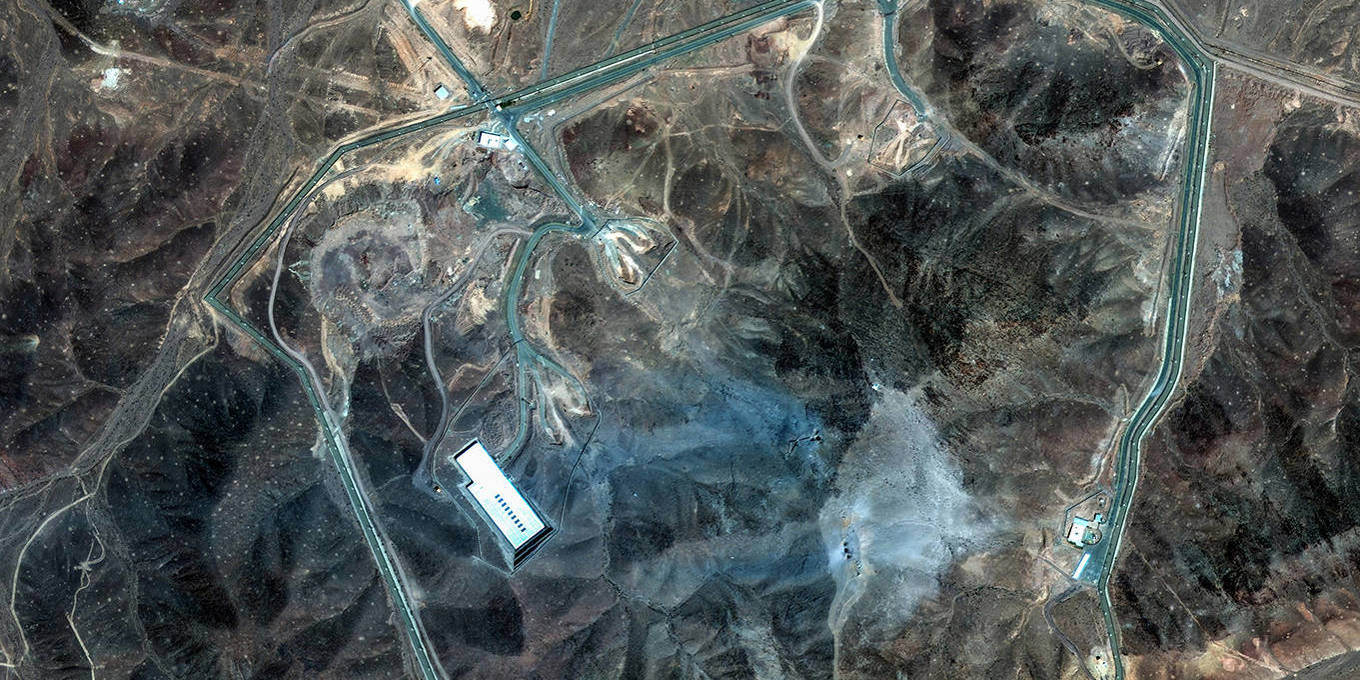
Even so, US and Israeli decision-makers green-lit attacks on Iranian nuclear sites at Fordow, Natanz, and Isfahan – facilities that are subject to IAEA safeguards and monitored under Iran’s Non-Proliferation Treaty (NPT) commitments. With that, they unraveled the legal and verification framework that exists precisely to prevent weaponization.

Beyond undermining the authority of the IAEA and its inspection regime, the attacks violated the NPT’s principle of peaceful nuclear use (Article IV) and breachedinternational law, including the United Nations Charter. The US, a nuclear superpower with a record of catastrophic wars aimed at regime change, and Israel, a clandestine nuclear-armed state that refuses to sign the NPT, have thus sent an unmistakable message: only the weak follow rules, and only the strong are safe. In fact, as long as you have nuclear weapons, you can violate international law at will. 

This is true not only for major powers, but also for smaller states. Pakistan, for example, nurtures cross-border terrorism and exports proxy war with impunity, threatening nuclear retaliation for anyone who crosses it. This poses a more acute threat to regional peace than Iran’s hypothetical bomb, but the US remains silent. 

This hypocrisy is deeply rooted. It was the US, after all, that aided and abettedPakistan’s covert pursuit of the bomb. Throughout the 1980s and 1990s, successive US administrations ignored mounting evidence that Pakistan was secretly enriching uranium and building nuclear weapons – and continued funneling billions of dollars in aid to the country. The result is a fragile state armed with an “Islamic bomb.” 

Today, with diplomacy derailed, inspections discredited, coercion normalized, and double standards embraced, what tools remain to convince Iran that remaining non-nuclear is wise and strategically viable? After years of debate over the value of a nuclear deterrent – with Supreme Leader Ayatollah Ali Khamenei even issuing religious edicts against nuclear weapons – Iranian decision-makers are almost certain to decide that there is no other way to keep the country safe from attack. 

Iran now has every incentive to exit – or at least limit – the IAEA framework and race toward nuclear breakout. Just as Saddam Hussein took his nuclear program underground following Israel’s 1981 bombing of Iraq’s IAEA-monitored Osirak reactor, Iran is likely to reject transparency and oversight in favor of secrecy and ambiguity. That would not be some dramatic act of defiance, but rather a rational response to a serious – even existential – threat. 

And it is not just Iran. If powerful states can bomb safeguarded nuclear facilities with impunity, why should any country put its faith in the global nonproliferation regime? Any government that wants to avoid the fateof Saddam’s Iraq or Muammar el-Qaddafi’s Libya (or, for that matter, democratic Ukraine), will seek to acquire the bomb – or at least come close enough to keep adversaries guessing. 

The only viable path to nonproliferation is and always will be diplomacy, not destruction. Military strikes might slow down a nuclear program, but they cannot impose long-term restraint – especially when they are carried out by powers that flout the very rules they claim to be enforcing. In the end, Operation Rising Lion and Operation Midnight Hammer may be remembered not as preemptive strikes against Iran’s nuclear breakout, but as catalysts for it.

Brahma Chellaney, Professor of Strategic Studies at the New Delhi-based Center for Policy Research and Fellow at the Robert Bosch Academy in Berlin, is the author of nine books, including Water: Asia’s New Battleground (Georgetown University Press, 2011), for which he won the 2012 Asia Society Bernard Schwartz Book Award.

© Project Syndicate, 2025.

Posted in WMD

China’s threat to Tibet’s future should be a global concern

China continues to militarize and repress Tibet while intensifying efforts to erase Tibetan culture, language and identity. Tibet’s imperiled future is a challenge to the global order, to religious freedom, and to Asia’s environmental security. And the time to act is now.

By Brahma Chellaney, The Hill

(AP Photo/Ashwini Bhatia) Tibetan spiritual leader the Dalai Lama prays at the Tsuglakhang temple in Dharamshala, India, Wednesday, May 7, 2025.

Three decades ago, China abducted the Panchen Lama — then a six-year-old boy — shortly after his recognition by the Dalai Lama, and installed a regime-picked imposter in his place. That abduction, one of the most audacious acts of spiritual and cultural repression in modern history, still haunts the Tibetan people.

Yet Chinese President Xi Jinping’s meeting with the false Panchen Lama this month has served only to remind the world of the genuine Panchen Lama’s continued disappearance. That makes the Panchen Lama — the second-highest spiritual leader in Tibetan Buddhism — arguably the longest-held political prisoner anywhere.

Now, Xi is preparing to repeat that sinister act on a much grander scale. He is waiting for the Dalai Lama, who turns 90 on July 6, to pass away so that Beijing can impose its own puppet as the next spiritual leader of Tibetan Buddhism. This would be akin to the Italian government installing a state-appointed pope to lead the Catholic Church, a brazen affront to religious freedom and cultural sovereignty.

China’s ambitions go far beyond symbolism. With Xi’s regime intensifying efforts to erase Tibetan culture, language and identity, the looming succession of the Dalai Lama marks a pivotal and dangerous turning point. Although the Dalai Lama has yet to clarify the exact process for selecting his successor, Beijing is zealously laying the groundwork to seize control of Tibetan Buddhism from within.

The paradox is stark: The atheistic Chinese Communist Party is preparing to hand-pick the next Dalai Lama, even while escalating its crackdown on Tibetan religion and culture. Xi has called on Communist Party cadres to become “unyielding Marxist atheists,” effectively elevating communism to the level of a state religion. The goal is clear: to fashion a successor who pledges loyalty not to Tibetan Buddhism, but to the Chinese Communist Party.

But Tibet’s plight is not just spiritual or cultural — it is also ecological and geopolitical. The Tibetan Plateau, often dubbed the “Third Pole,” is Asia’s primary freshwater source and a cradle of biodiversity. It is the starting point of the continent’s major river systems, which sustain over 2 billion people downstream. China’s aggressive exploitation of Tibet’s natural resources, particularly water and minerals, has created long-term environmental risks for all of Asia.

Beijing is building mega-dams and water diversion projects that threaten to destabilize ecosystems and disrupt hydrological flows far beyond its borders. Tibet’s high altitude also plays a critical role in shaping monsoonal patterns and global atmospheric circulation. A 2023 scientific study even found an atmospheric connection between the Tibetan Plateau and the Amazon rainforest — proof that the world’s environmental fate is tied to Tibet’s future.

Despite its annexation in 1951, Tibet maintains a vibrant spirit of resistance. The Dalai Lama, viewed by Tibetans as the living embodiment of compassion and wisdom, remains their moral and spiritual leader. His renunciation of political power in 2011 in favor of a democratically elected government-in-exile only reinforced his legacy as a global symbol of nonviolent resistance.

That legacy remains untainted by any link to terrorism, even as China continues to militarize and repress Tibet. Under Xi, repression has intensified, with mass surveillance, religious restrictions and the forced assimilation of Tibetan children into Mandarin-language boarding schools — more than a million children are now separated from their families and culture. The unmistakable goal is to breed loyalty to the Communist Party by obliterating the Tibetan identity.

Meanwhile, the Dalai Lama’s health has declined. Following radiation therapy for prostate cancer in 2016 and knee replacement surgery in the U.S. last year, his international travel has drastically reduced.

Adding to the challenge is Beijing’s success in pressuring many countries — including Western democracies and Buddhist-majority states in Asia — to deny him entry. Only Japan has held firm. India, to its credit, remains the Tibetan leader’s sanctuary and moral ally, with New Delhi referring to him as “our most esteemed guest.” The Dalai Lama himself calls India his spiritual and cultural home.

Against this backdrop, China’s strategy to engineer the next Dalai Lama must be met with firm resistance. The stakes could not be higher — the continuity of Tibetan Buddhism as a living spiritual tradition hangs in the balance. To counter Beijing’s plan, a coordinated international response is urgently needed to affirm the right of Tibetan Buddhists to determine their own spiritual leadership without interference.

Fortunately, the U.S. has taken some meaningful steps. Its 2020 Tibetan Policy and Support Act affirms that the selection of the next Dalai Lama is solely a Tibetan religious matter. It explicitly warns of sanctions against Chinese officials who meddle in the process. In July 2024, President Joe Biden signed into law the bipartisan Resolve Tibet Act, which strengthens American policy in support of Tibetan self-determination and seeks to counter Chinese disinformation campaigns on Tibet.

But more must be done. The U.S. and India should forge a united front and rally other democracies to support the Dalai Lama’s vision and the Tibetan people’s rights. The Dalai Lama’s succession should be protected through a multilateral framework that involves Buddhist leaders, legal protections and diplomatic safeguards.

China’s effort to manipulate the centuries-old institution of the Dalai Lama is not merely a religious affront. It is a geopolitical gambit designed to consolidate control and extend influence across Asia. If Tibet’s voice is silenced and its future dictated by authoritarian fiat, the global costs — in spiritual, ecological and political terms — will be immense.

Tibet’s imperiled future is not just a Tibetan problem. It is a challenge to the international order, to religious freedom and to the environmental security of an entire continent. And the time to act is now.

Brahma Chellaney is a geostrategist and the author of nine books, including the award-winning “Water: Asia’s New Battleground.”

Israel’s preemptive war could finally push Iran to go nuclear

By Brahma Chellaney, The Hill

(AP Photo/Abdolrahman Rafati/Tasnim News Agency): Mourners carry the flag-draped coffins of men who were reportedly killed in Israeli strikes in the city of Asadabad, Iran, on Monday, June 16, 2025.

Israel has long pursued a strategy to remain the Middle East’s sole nuclear-armed state, using military force to preempt or prevent other regional powers from acquiring nuclear-weapons capabilities. But Israel’s strikes on Iran risk backfiring, with a wounded foe more determined than ever to acquire the nuclear bomb. 

Israel’s strategic posture, institutionalized as the “Begin Doctrine” after former Prime Minister Menachem Begin, holds that it will not allow any neighboring state to even approach nuclear-weapons capability. In practice, Israel has expanded this doctrine to block even peaceful nuclear programs under international safeguards.

The Begin Doctrine was first operationalized in 1981 with the bombing of Iraq’s Osirak nuclear reactor, which was built by France for peaceful research and subject to International Atomic Energy Agency inspections. Though Iraq was a party to the Nuclear Non-Proliferation Treaty and had agreed to stringent safeguards extending beyond international inspections to prevent reactor misuse, Israel claimed Baghdad harbored military ambitions and struck preemptively.

The attack, which destroyed the $275 million reactor just before it was to become operational, was carried out with U.S.-supplied F-16 and F-15 aircraft. One French engineer and 10 Iraqi soldiers were killed. The operation triggered minimal diplomatic fallout for Israel, but pushed Saddam Hussein’s nuclear program underground — an outcome that would later lead to the 2003 U.S. invasion and occupation of Iraq under the false pretext of dismantling weapons of mass destruction.

In 2007, Israel again invoked the Begin Doctrine to destroy a suspected nuclear reactor under construction in Syria. The al-Kibar facility was flattened in an airstrike dubbed Operation Orchard. Israeli intelligence claimed the project, allegedly aided by North Korea, had covert military dimensions. The IAEA concluded three years later that the destroyed facility was “very likely” a nuclear reactor under development.

These precedents pale in comparison to Israel’s current military campaign against Iran, dubbed Operation Rising Lion, which aims to wipe out Iran’s nuclear program. The stakes are exponentially higher: Iran is a larger, more capable adversary located beyond Israel’s immediate neighborhood. And unlike Iraq or Syria in decades past, Iran has already accumulated significant nuclear know-how and material.

Prime Minister Benjamin Netanyahu, invoking the Begin Doctrine, claimed that Iran was on the verge of developing nuclear weapons and vowed that Israeli strikes would continue “as long as necessary” to neutralize the threat. But this assertion lacks backing from key intelligence assessments.

On March 25, U.S. Director of National Intelligence Tulsi Gabbard testified that the American intelligence community had assessed that “Iran is not building a nuclear weapon.” However, Gabbard — and the IAEA separately in a recent report — expressed concern over Iran’s stockpile of uranium enriched to 60 percent purity, which, if enriched further to 90 percent, would become weapons-grade material. The IAEA, like Gabbard, concluded there was no evidence of a structured nuclear-weapons program underway.

Yet Israel pressed ahead with its military strikes. Netanyahu’s government, in coordination with the Trump administration, seems to believe that such force will buy leverage at the diplomatic table.

In reality, the attacks are likely to achieve the opposite. Far from forcing concessions, the Israeli strikes have derailed nuclear diplomacy. Tehran has suspended talks indefinitely, accusing Washington of coordinating and authorizing the Israeli operation. This mirrors a pattern from Trump’s first term, when his “maximum pressure” campaign on Iran backfired, hardening Iranian resolve rather than moderating it.

Indeed, if Israel’s goal is to eliminate the Iranian nuclear threat, this strategy may prove deeply counterproductive.

Two key factors make this preemptive war particularly perilous. First, Israel cannot destroy Iran’s nuclear program by military means alone. Tzachi Hanegbi, Netanyahu’s own national security adviser, acknowledged on Israeli television on June 13 that Iran’s program “cannot be destroyed through kinetic means.” A negotiated settlement, he suggested, was the only sustainable option.

But with the collapse of diplomacy and deepening Iranian hostility, Israel may be forcing Iran toward the very nuclear path it wants to prevent. Tehran could emulate North Korea’s playbook: withdraw from the NPT, eject IAEA inspectors and weaponize its nuclear assets at speed. North Korea withdrew from the NPT in 2003 and tested a nuclear bomb just three years later, becoming a de facto nuclear-weapons state.

Iran, heavily sanctioned and increasingly isolated, may now conclude that it has little to lose from following suit. If Iran raises enrichment from 60 percent to 90 percent purity — a short technical leap — it could rapidly convert its uranium stockpile into bomb-grade material. That would mark a historic failure of U.S. and Israeli nonproliferation strategy and hand Tehran the strategic deterrent it long claimed not to seek.

Second, the underlying logic of the Israeli campaign may no longer be about nuclear rollback but rather regime change. Netanyahu has openly called for the fall of the Iranian regime, and Israeli strikes have expanded beyond nuclear and military sites to include economic infrastructure, energy facilities and civilian aviation hubs.

This broadening of war aims could lock Israel into a prolonged military confrontation with Iran — a campaign that could exact heavy human and economic costs. Even before the Iran operation, Israeli society was showing signs of war fatigue, with growing numbers of reservists declining to report for duty.

Meanwhile, U.S. forces are increasingly entangled in the conflict. In defending Israel from retaliatory missile and drone attacks, American troops are already operating in air, land and naval roles. A broader U.S. intervention remains a distinct risk.

Israel has long justified its aggressive posture on existential grounds. Its small size and hostile environment, it argues, require proactive and sometimes disproportionate defense measures. But the line between deterrence and provocation is perilously thin — and it may now have been crossed.

History shows that Israel’s pursuit of short-term tactical victories often undermines its long-term strategic interests. The Osirak attack contributed to decades of conflict in Iraq. The al-Kibar strike delayed but did not eliminate Syria’s nuclear ambitions. And now, Operation Rising Lion could go down as the moment when Israel’s policy of preemption made an Iranian bomb inevitable.

Israel remains the Middle East’s preeminent military power, possessing not only superior conventional forces but also undeclared nuclear weapons. That should afford it the confidence to pursue measured strategies.

Instead, by trying to preserve its nuclear monopoly through force, Israel risks fueling the very proliferation spiral it has long sought to prevent.

Brahma Chellaney is a geostrategist and the author of nine books, including the award-winning “Water: Asia’s New Battleground.”

Posted in WMD

Catastrophe on the Roof of the World

It is impossible to know the full extent of China’s destruction of the Tibetan Plateau, not least because the area is off limits to international observers. But there is no doubt that the region’s ecosystem is becoming increasingly fragile, with far-reaching social, environmental, and geopolitical consequences.

Brahma ChellaneyProject Syndicate

The Tibetan Plateau is home to vast glacial reserves, which amount to the largest store of fresh water outside the Arctic and the Antarctic. It is also the source of ten major Asian river systems – including the Yellow and Yangtze rivers of mainland China, the Mekong, Salween, and Irrawaddy rivers of Southeast Asia, and the Indus and Brahmaputra of South Asia – which supply water to nearly 20% of the global population. And, now, it is the site of a slow-burning environmental calamity that is threatening the water security, ecological balance, and geopolitical stability of the entire Asian continent.

For over two decades, China has been engaged in an aggressive and opaque dam-building spree, centered on – though not limited to – the Tibetan Plateau. Yet China’s government has refused to negotiate a water-sharing treaty with any of the downriver countries, which must suffer the consequences of their upstream neighbor’s whims.

Already, Chinese-built mega-dams near the Plateau’s border have brought water levels in the Mekong River to unprecedentedly low levels, with devastating effects on fisheries and livelihoods across Cambodia, Laos, Thailand, and Vietnam. As the Mekong Delta in southern Vietnam retreats – driven partly by Chinese dams – rice farmers are being forced to abandon their traditional livelihoods, instead farming shrimp or growing reeds.

Yet China’s dam ambitions continue to grow. The Three Gorges Dam, which runs along the Yangtze River, is the largest in the world. But it will be dwarfed by the dam China is now building on the Yarlung Zangbo river, also known as the Brahmaputra, in a seismically active region of the Tibetan Plateau. If completed, this project would drastically alter water flows into India and Bangladesh, threaten the region’s food security and ecological balance, and increase China’s geopolitical leverage over downstream countries.

The specter of water weaponization looms large. In fact, water is fast becoming the new oil – a strategic resource with the potential to trigger conflicts. Already, water disputes within and between countries are intensifying.

But China’s assault on the Tibetan Plateau extends beyond water. Its avaricious mining of Tibet’s mineral-rich lands – which boast critical resources like lithium, gold, and copper – is contributing to deforestation and producing toxic-waste discharge, while providing cover for China’s militarization of the Plateau.

It is impossible to know the full extent of China’s destruction. The area is off limits to international observers, and efforts by members of indigenous Tibetan communities – whose cultural reverence for nature has underpinned a long history of sound environmental stewardship – to sound the alarm are quickly quelled, often through imprisonment or exile.

But there is no doubt that the Tibetan Plateau’s ecosystem is becoming increasingly fragile, especially given its heightened vulnerability to climate change. The Plateau is warming at twice the global average rate, and its ice is melting faster than at the poles – trends that are reducing its water-storage capacity and reshaping river flows.

The implications are far-reaching. The Tibetan Plateau, which towers over the rest of Asia (rising into the troposphere), profoundly influences Asian climatic, weather, and monsoonal patterns, and even affects atmospheric general circulation – the system of winds that transports warm air from the equator toward higher latitudes – in the Northern Hemisphere. Its degradation will exacerbate droughts and floods, accelerate biodiversity loss, contribute to agricultural collapse, and fuel mass migration across Asia and beyond.

Despite these risks, the international community, from global climate forums to multilateral institutions like the United Nations and World Bank, has been deafeningly silent about Tibet. The reason is not ignorance, but fear: China has used its clout to suppress meaningful criticism of its actions on the “roof of the world.”

Given the stakes, the international community cannot afford to let itself be cowed by China. Countries must relentlessly press for transparency about China’s activities on the Tibetan Plateau. Specifically, China must share real-time hydrological data and submit its projects for international environmental assessment. Independent environmental researchers and monitors must be granted unfettered access to the Plateau to gather vital data and conduct unbiased analyses.

China must also be held accountable for its violations of the rights of indigenous communities – including the nearly one million Tibetans who have been forcibly relocated from their ancestral lands since 2000. Western governments and multilateral institutions have leverage here. By tying environmental transparency, respect for indigenous rights, and equitable management of shared river systems to trade agreements and climate cooperation, they can compel China to change its behavior. Direct support for indigenous Tibetan voices and civil-society networks would also help boost transparency.

Ignoring the unfolding crisis on the Tibetan Plateau might seem expedient; after all, China has plenty of economic and geopolitical clout – and it is not afraid to use it. But the costs of inaction would be staggering. Tibet is Asia’s ecological lifeline. China must not be allowed to use it in ways that threaten to upend the lives of people throughout the continent and beyond.

Brahma Chellaney, Professor of Strategic Studies at the New Delhi-based Center for Policy Research and Fellow at the Robert Bosch Academy in Berlin, is the author of nine books, including Water: Asia’s New Battleground (Georgetown University Press, 2011), for which he won the 2012 Asia Society Bernard Schwartz Book Award.

© Project Syndicate, 2025.