Brahma Chellaney, The Japan Times
In his second term, Indian Prime Minister Narendra Modi has sought to initiate a new practice on New Year’s Day: To discuss a shared vision of peace and prosperity in India’s subregion, Modi on Jan. 1 telephoned leaders of all neighboring nations other than his country’s two adversaries, China and Pakistan.
Modi’s exclusion of India’s two closely aligned neighbors that routinely flout international norms was intended to underscore the threat to regional peace from their growing axis. China, for example, kicked off the new year (and the new decade) by launching a major combat exercise along the Himalayan border with India, deploying its lightweight Type 15 tank, a new 155-mm howitzer, and other weapons from the Tibetan capital of “Lhasa to border defense frontlines.”
China’s challenge to norms and rules, of course, extends across the Indo-Pacific region.
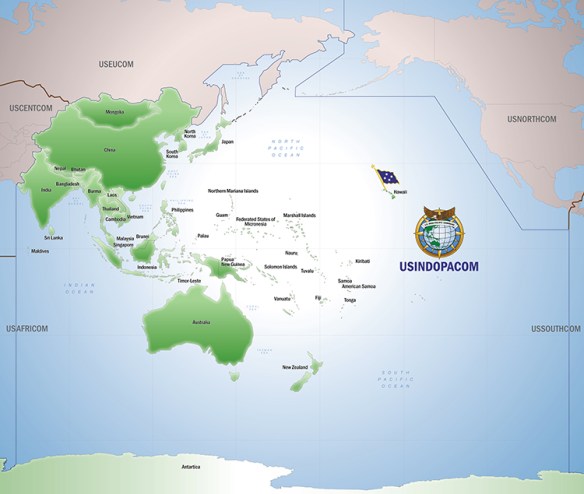
For example, China’s recent aggressive move in the waters off Indonesia’s northern Natuna Islands that Beijing claims are its “traditional fishing grounds,” as well as the ongoing Chinese coercion against Vietnamese hydrocarbon exploration within Vietnam’s exclusive economic zone, exemplify China’s expansionism in the South China Sea. That sea constitutes a critical missing link in the “free and open Indo-Pacific” (FOIP) strategy of U.S. President Donald Trump’s administration.
How can the Indo-Pacific region be free and open if its most-important sea corridor, which links the Indian and Pacific oceans, is neither free nor open? China continues to incrementally extend its control in this critical corridor.
The Trump administration’s FOIP policy held great promise when it was unveiled by the president in a speech at the Asia Pacific Economic Cooperation forum in November 2017 in the Vietnamese beach resort of Danang. The FOIP policy was seen as a much-needed successor to the U.S. Obama administration’s “pivot” to Asia, which failed to take concrete shape.
The broadening of the U.S. policy focus to a wider region — the Indo-Pacific — was a response to the expanding ambitions of China, which, after building and militarizing artificial islands in the South China Sea, has started focusing on the Indian Ocean and the western Pacific.
The concept of a “free and open Indo-Pacific” was authored by Prime Minister Shinzo Abe and embraced by India and the United States. India has been including the “free and open” phrase in joint statements with strategic partners.
For example, India, the world’s second-largest peninsula, and Indonesia, the world’s largest archipelagic state, last year identified a shared vision for “a free, open, transparent, rules-based, peaceful, prosperous and inclusive Indo-Pacific region.” As U.S. Deputy Assistant Secretary of State Alex Wong put it, “India as a nation has invested in a free and open order.”
Today, it has become imperative to build a pluralistic, rules-based Indo-Pacific order, free of coercion and open to unhindered navigation and overflight. Establishing such an order is the goal of the Australia-India-Japan-U.S. “Quad.” The Quad’s future, however, is linked to the U.S.-led FOIP strategy.
The Trump administration has still to provide strategic heft to its FOIP policy. It has defined the policy’s objectives but is still searching for the effective means to achieve the ends. Indeed, like Tokyo, Washington no longer refers to its FOIP vision as a “strategy.” Without strategic content, the U.S.-led FOIP policy is unlikely to yield meaningful results.
In this light, there is a real risk that Trump’s FOIP policy, like Obama’s pivot to Asia, could fail to gain traction.
Indeed, as highlighted by Trump’s escalation of America’s conflict with Iran by taking out the powerful head of Iran’s Quds Force, Gen. Qassem Soleimani, the U.S. risks getting further mired in the Islamic world.
Soleimani, considered the most important person in Iran after Ayatollah Khamenei, was the first major foreign military leader the U.S. has killed since 1943, when it eliminated Adm. Isoroku Yamamoto, the supposed architect of the Pearl Harbor attack.
Trump may have won the first round against Iran, which retaliated weakly to the Soleimani assassination. But make no mistake: A second round seems inevitable.
In this light, developments in the Middle East could distract American policymakers and result in Trump’s FOIP policy — like Obama’s pivot to Asia — remaining more rhetorical than real. In fact, the pivot got lost somewhere in the arc stretching from the Middle East to Ukraine.
To be sure, Trump’s lasting legacy will be the paradigm change in America’s China policy — a shift that will outlast his presidency as it enjoys bipartisan support in Washington.
According to the philanthropist George Soros, “The greatest — and perhaps only — foreign policy accomplishment of the Trump administration has been the development of a coherent and genuinely bipartisan policy toward Xi Jinping’s China.”
The Trump administration has sought to primarily employ economic levers to rein in China, including through a gradual decoupling of the American and Chinese economies in key strategic sectors. However, it must also employ strategic levers, or else China’s territorial and maritime revisionism will remain untamed. Beijing has changed the South China Sea’s geopolitical map without firing a single shot or incurring any international costs.
U.S. leadership and resolve are essential to build a credible counter to Chinese expansionism. But the roles of the other major democracies are also important.
In this context, Abe’s postponement of his India visit due to unrest in the northeastern Indian state of Assam could only have pleased Beijing. A Modi-Abe summit in the Assamese capital of Guwahati, followed by the two leaders’ visit to a new peace museum in Manipur state that commemorates the Battle of Imphal between the Imperial Japanese Army and Allied forces during World War II, would have highlighted northeast India’s role as the bridge to the rest of Asia.
The Assam violence, although short-lived, will make already-wary Japanese companies more reluctant to invest in India’s remote northeast — to the delight of China, which doesn’t want any foreign investment or even multilateral lending going there. China actually claims an entire northeastern Indian state — Arunachal Pradesh, which is almost three times larger than Taiwan.
With private Japanese investors averse to taking risks, Japan must provide greater Official Development Assistance (ODA) loans in order to finance socioeconomic projects in India’s northeast. India, however, is already Japan’s largest ODA recipient. Japan has the distinction of being the only foreign power that has been allowed to undertake projects in India’s sensitive northeast, as well as in that country’s strategic Andaman and Nicobar Islands.
Against this background, an Indo-Pacific concert of democracies isn’t on the horizon. But if democratic powers leverage their bilateral and trilateral partnerships to generate progress toward such a concert of democracies, the vision of a free and open Indo-Pacific may be achievable in the years ahead.
Longtime Japan Times contributor Brahma Chellaneyis a geostrategist and the author of nine books, including the award-winning “Water: Asia’s New Battleground.”
© The Japan Times, 2019.


 Stagecraft and Statecraft
“Great nations do not fight endless wars,” US President Donald Trump declared in his 2019 State of the Union speech. He had a point: military entanglements in the Middle East have contributed to the relative decline of American power and facilitated China’s muscular rise. And yet, less than a year after that speech, Trump ordered the assassination of Iran’s most powerful military commander, General Qassem Suleimani, bringing the United States to the precipice of yet another war. Such is the power of America’s addiction to interfering in the chronically volatile Middle East.
The US no longer has vital interests at stake in the Middle East. Shale oil and gas have made the US energy independent, so safeguarding Middle Eastern oil supplies is no longer a strategic imperative. In fact, the US has been supplanting Iran as an important source of crude oil and petroleum products for India, the world’s third-largest oil consumer after America and China. Moreover, Israel, which has become the region’s leading military power (and its only nuclear-armed state), no longer depends on vigilant US protection.
The US does, however, have a vital interest in resisting China’s efforts to challenge international norms, including through territorial and maritime revisionism. That is why Trump’s predecessor, Barack Obama, promised a “pivot to Asia” early in his presidency.
But Obama failed to follow through on his plans to shift America’s foreign-policy focus from the Middle East. On the contrary, the Nobel Peace Prize laureate staged military campaigns everywhere from Syria and Iraq to Somalia and Yemen. In Libya, his administration sowed chaos by overthrowing strongman Muammar el-Qaddafi in 2011. In Egypt, Obama hailed President Hosni Mubarak’s 2011 ouster.
Yet in 2013, when the military toppled Mubarak’s democratically elected successor, Mohamed Morsi, Obama opted for non-intervention, refusing to acknowledge it as a coup, and suspended US aid only briefly. This reflected the Obama administration’s habit of selective non-intervention – the approach that encouraged China, America’s main long-term rival, to become more aggressive in pursuit of its claims in the South China Sea, including building and militarizing seven artificial islands.
Trump was supposed to change this. He has repeatedly derided US military interventions in the Middle East as a colossal waste of money, claiming the US has spent $7 trillion since the terrorist attacks of September 11, 2001. (Brown University’s Costs of War Project puts the figure at $6.4 trillion.) “We have nothing – nothing except death and destruction. It’s a horrible thing,” Trump said in 2018.
Furthermore, the Trump administration’s national-security strategy recognizes China as a “strategic competitor” – a label that it subsequently replaced with the far blunter “enemy.” And it has laid out a strategy for curbing Chinese aggression and creating a “free and open” Indo-Pacific region stretching “from Bollywood to Hollywood.”
Yet, as is so often the case, Trump’s actions have directly contradicted his words. Despite his anti-war rhetoric, Trump appointed war-mongering aides like Secretary of State Mike Pompeo, who has been described as a “hawk brimming with bravado and ambition,” and former National Security Adviser John Bolton, who in 2015 wrote an op-ed called “To Stop Iran’s Bomb, Bomb Iran.”
Perhaps it should be no surprise, then, that Trump has pursued a needlessly antagonistic approach to Iran. The escalation began early in his presidency, when he withdrew the US from the 2015 Iran nuclear deal (which Iran had not violated), re-imposed sanctions, and pressured America’s allies to follow suit. Furthermore, since last May, Trump has deployed 16,500 additional troops to the Middle East and sent an aircraft-carrier strike group to the Persian Gulf, instead of the South China Sea. The assassination of Suleimani was part of this pattern.
Like virtually all of America’s past interventions in the Middle East, its Iran policy has been spectacularly counterproductive. Iran has announced that it will disregard the nuclear agreement’s uranium-enrichment limits. Trump’s sanctions have increased the oil-import bill of US allies like India and deepened Iran’s ties with China, which has continued to import Iranian oil through private companies and invest billions of dollars in Iran’s oil, gas, and petrochemical sectors.
Beyond Iran, Trump has failed to extricate the US from Afghanistan, Syria, or Yemen. His administration has continued to support the Saudi-led bombing campaign against Yemen’s Houthi rebels with US military raids and sorties. As a result, Yemen is enduring the world’s worst humanitarian crisis.
Trump did order troops to leave Syria last October, but with so little strategic planning that the Kurds – America’s most loyal ally in the fight against the Islamic State (ISIS) – were left exposed to an attack from Turkey. This, together with his effort to strike a Faustian bargain with the Afghan Taliban (which is responsible for the world’s deadliest terrorist attacks), threatens to reverse his sole achievement in the Middle East: dramatically diminishing ISIS’s territorial holdings.
Making matters worse, after ordering the Syrian drawdown, Trump approved a military mission to secure the country’s oil fields. The enduring oil fixation also led Trump last April to endorse Libyan warlord Khalifa Haftar, just as Haftar began laying siege to the capital, Tripoli.
The Trump administration is unlikely to change course any time soon. In fact, it has now redefined the Indo-Pacific region as extending “from California to Kilimanjaro,” thus specifically including the Persian Gulf. With this change, the Trump administration is attempting to uphold the pretense that its interventions in the Middle East serve US foreign-policy goals, even when they undermine those goals.
As long as the US remains mired in “endless wars” in the Middle East, it will be unable to address in a meaningful way the threat China poses. Trump was supposed to know this. And yet, his administration’s commitment to a free and open Indo-Pacific seems likely to lose credibility, while the cycle of self-defeating American interventionism in the Middle East appears set to continue.
© Project Syndicate, 2019.